词汇表

英语词汇词典 | 单词含义、定义和示例

noun
/ˌɛərəˈstætɪks/
气球力学 (qìqiú lìxué)

The branch of physics that deals with the equilibrium of air and gases and the forces acting on bodies in them.

"Aerostatics is essential for understanding how balloons float."

"气球力学对于理解气球如何漂浮至关重要。" (qìqiú lìxué duìyú lǐjiě qìqiú rúhé piāofú zhìguān zhòngyào.)
noun
/ˈɪəri/ or /ˈɛəri/
鹰巢 (yīng cháo)

An eagle’s nest, or a lofty, airy dwelling.

"The eagle perched proudly near its aery high on the cliff."

"鹰骄傲地停在悬崖上的它的巢附近。" (Yīng jiāo'ào dì tíng zài xuán yá shàng de tā de cháo fù jìn.)
noun
/ˈiːsθiːt/ or /ˈɛsθiːt/
审美家 (shenmeijia)

A person who has a special appreciation of art and beauty.

"The aesthete admired the subtle details of the painting."

"艾斯泰特欣赏了画作的细节。" (Aisaiteti xīnshǎngle huàzuò de xìjié.)
Aesthetic definition card — visual illustration of the meaning
adjective
/ɛsˈθɛtɪk/
审美的 (shenmei de)

concerned with beauty or the appreciation of beauty

"The room was decorated in an aesthetic style that pleased everyone."

"房间以审美风格装饰,让每个人都感到愉悦。" (Fángjiān yǐ shěnměi fēnggé zhuāngshì, ràng měi gèrén dōu gǎndào yúyuè.)
adjective
/iːsˈθɛθɪkəl/
美学的 (meixuede)

concerned with beauty or the appreciation of beauty; related to artistic taste or appearance

"The architect focused on the aesthetical balance of the building."

"建筑师注重建筑的美学平衡。" (Jianzhushi zhuzhong jianzhu de meixue pingheng)
adverb
/iːsˈθetɪkli/
从审美角度 (cong shenmei jiaodu)

in a way that is concerned with beauty or visual appeal

"The building is aesthetically pleasing despite its simple design."

"尽管设计简单,这座建筑在审美上很吸引人。" (jinguan sheji jiandan zhezuo jianzhu zai shenmei shang hen xiyin ren)
aesthetics definition card — visual illustration of the meaning
noun
esˈθet.ɪks
美学 (meixue)

A set of principles concerned with the nature and appreciation of beauty, especially in art and design.

"Interior design focuses on aesthetics and functionality."

"室内设计专注于美学和功能性。" (Shìnèi shèjì zhuānzhù yú měixué hé gōngnéngxìng.)
adjective
/ˈæfəbəl/
和蔼可亲 (hé'ǎi kě qīn)

friendly, easy to talk to, and pleasant in manner

"He is such an affable host that everyone feels comfortable at his parties."

"他是一个和蔼可亲的主人,每个人在他的聚会上都感到很舒适。" (Tā shì yīgè hé'ǎi kě qīn de zhǔrén, měi gè rén zài tā de jùhuì shàng dōu gǎndào hěn shūshì.)
noun
/əˈfɛər/
事件 / 关系 (shijian / guanxi)

an event, situation, or relationship, often one that is private or romantic

"The scandal became the most talked-about affair of the year."

"丑闻成为了这一年最受讨论的事件。" (Chou wen chengwei le zhe yi nian zui shou taolun de shijian.)
verb
/əˈfɛkt/
影响 (yingxiang)

to influence or make a difference to something

"The weather can greatly affect our mood."

"天气可以极大地影响我们的情绪。" (Tianqi keyi jidali yingxiang women de qingxu.)
noun
/ˌæfɛkˈteɪʃən/

an unnatural behavior or speech intended to impress others

"Her British accent was just an affectation to sound sophisticated."
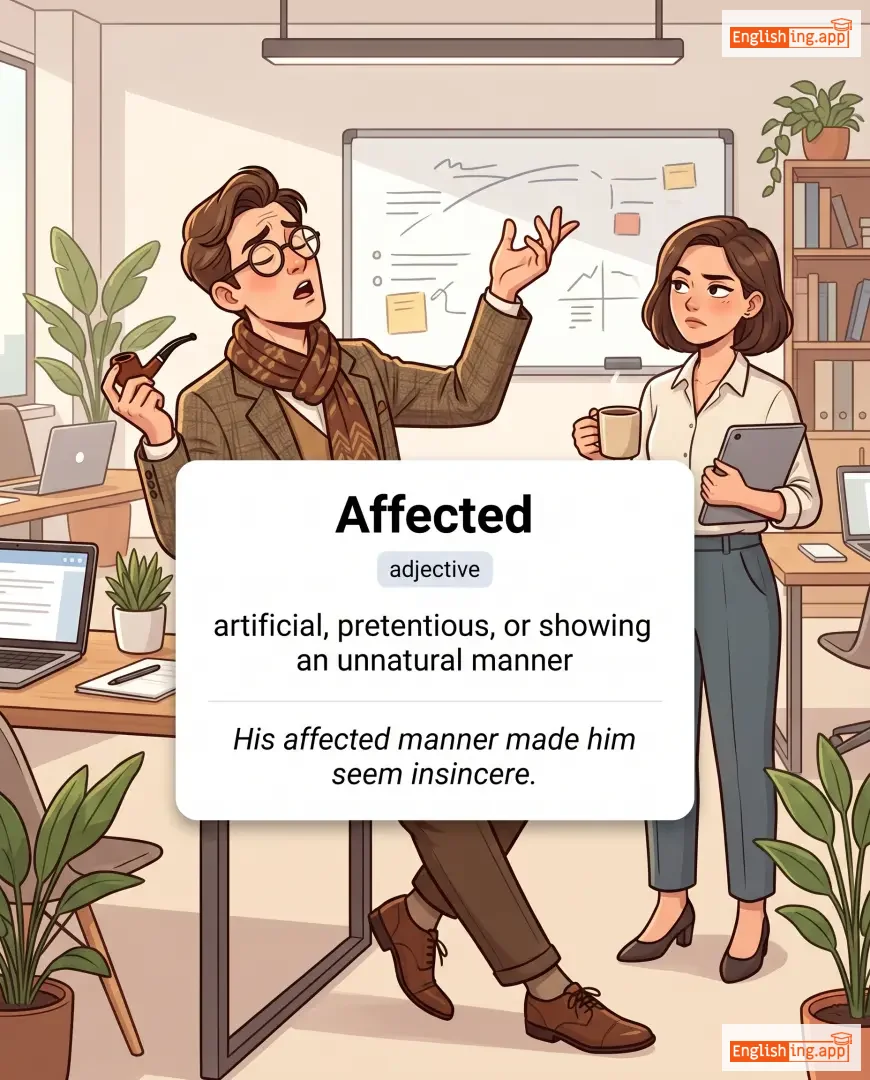
Affected definition card — visual illustration of the meaning
adjective
/əˈfɛktɪd/
做作的 (zuòzuo de)

artificial, pretentious, or showing an unnatural manner

"His affected manner made him seem insincere."

"他的做作方式让他看起来不真诚。" (Tā de zuòzuo fāngshì ràng tā kàn qǐlái bù zhēnchéng.)
noun
/əˈfɛkʃən/

a gentle feeling of fondness or liking

"She showed great affection for her younger brother."

adjective
/əˈfekʃənət/
亲切的; 爱心的; 温柔的; 表现出关爱 (qīnqiè de; àixīn de; wēnróu de; biǎoxiàn chū guān'ài)

loving; caring; tender; showing affection

"She is very affectionate towards her children."

"她对她的孩子非常温柔。" (Tā duì tā de háizi fēicháng wēnróu.)
adverb
/əˈfek.ʃən.ət.li/
亲切地 (qīnqiè de)

in a way that shows feelings of liking or love; with fondness and care

"She hugged her grandmother affectionately."

"她温柔地拥抱了她的祖母。" (Tā wēnróu de yǒngbào le tā de zǔmǔ.)
adjective
/ˈæfərənt/
传入 (chuan ru)

carrying impulses toward a central organ or part, especially toward the brain or spinal cord

"Afferent nerves carry signals from the body to the brain."

"传入神经将信号从身体传送到大脑。" (Chuan ru shenjing jiang xinhao cong shenti chuansong dao dalu.)
verb
/əˈfaɪəns/
订婚 (dinghun)

to promise or pledge marriage; to formally engage

"They decided to affiance after years of friendship."

"多年友谊之后,他们决定订婚。" (duonian youyi zhihou tamen jueding dinghun)
noun
/ˌæfəˈdeɪvɪt/
宣誓书 (xuānshìshū)

a written statement confirmed by oath or affirmation, used as evidence in court

"The witness submitted an affidavit to the court."

"证人向法院提交了一份宣誓书。" (Zhengren xiang fayuan tijiang le yifen xuanshishu.)
verb
/əˈfɪliˌeɪt/
附属 (fùshǔ)

to officially attach or connect (a group or organization) to a larger body

"The school is affiliated with the local university."

"学校与当地大学有合作关系。" (Xuéxiào yǔ dāngdì dàxué yǒu hézuò guānxì.)
affiliation definition card — visual illustration of the meaning
noun
/əˌfɪliˈeɪʃən/
隶属 (lishu)

the state of being officially attached to an organization

"His political affiliation is with the reformist party."
"他的政治隶属与改革派党派有关。" (Tā de zhèngzhì lìshǔ yǔ gǎigé pài dǎngpài yǒu guānxì.)
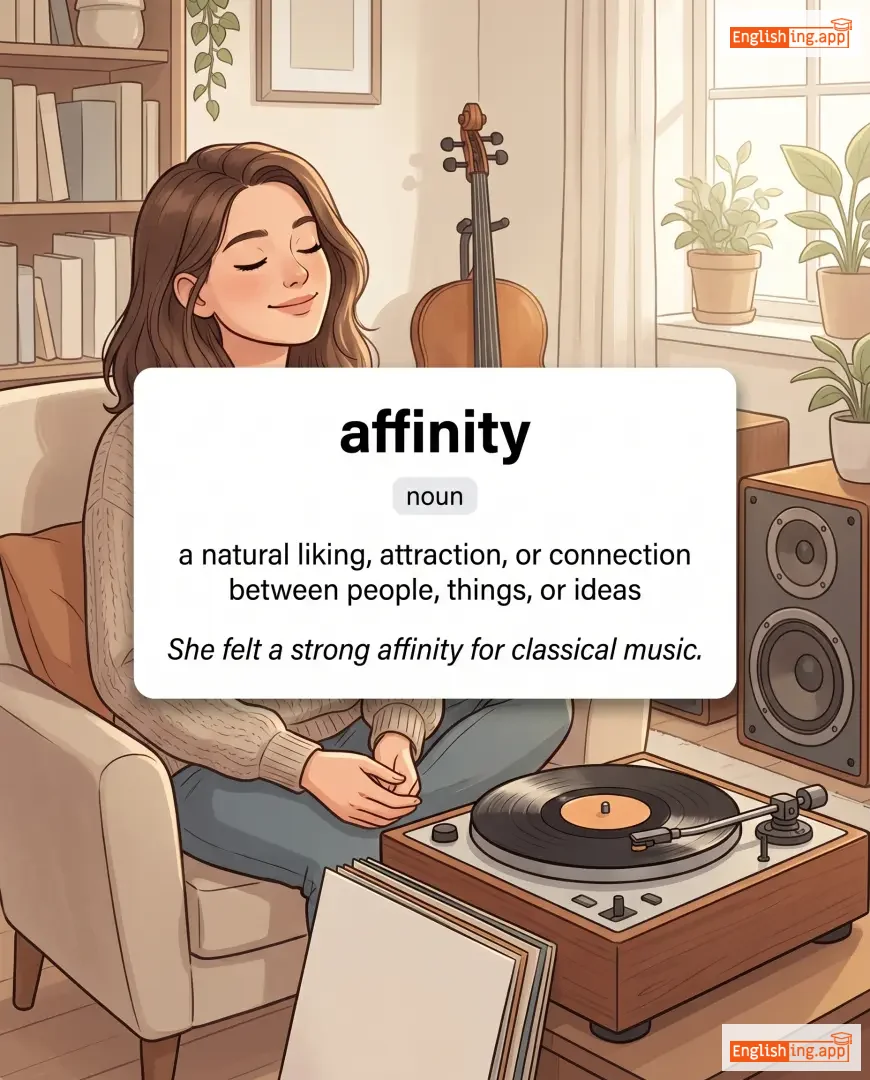
affinity definition card — visual illustration of the meaning
noun
/əˈfɪnɪti/
亲和力 (qīnhélì)

a natural liking, attraction, or connection between people, things, or ideas

"She felt a strong affinity for classical music."

"她对古典音乐有着强烈的亲和力。" (Tā duì gǔdiǎn yīnyuè yǒuzhe qiángliè de qīnhélì.)
affirmation definition card — visual illustration of the meaning
noun
/ˌæfərˈmeɪʃən/

the act of confirming or stating something positively; a declaration of support or belief

"Daily affirmation helps to build confidence and positivity."

adjective
/əˈfɜːrmətɪv/
肯定的 (kěndìng de)

expressing agreement, approval, or a positive response

"She gave an affirmative answer to the proposal."

"她对提案做出了肯定的回答。" (Tā duì tí'àn zuòchūle kěndìng de huídá.)
verb
/əˈfɪks/
附加 / 粘贴 (fùjiā / zhāntiē)

to attach or stick something firmly to another thing

"Please affix the stamp to the envelope."

"请将邮票粘在信封上。" (Qǐng jiāng yóupiào zhāntiē zài xìnfēng shàng.)
noun
/əˈfleɪtəs/
神圣的灵感 (shensheng de linggan)

a sudden divine inspiration or creative impulse

"The poet wrote the verses under a sudden afflatus of inspiration."

"诗人在突然的神圣灵感下写下了诗句。" (Shiren zai tulu de shensheng linggan xia xiexia le shiju.)
verb
/əˈflɪkt/
使痛苦 (shi tongku)

to cause pain, suffering, or distress to someone or something

"Many people are afflicted by seasonal allergies."

"许多人受到季节性过敏的困扰。" (Xǔduō rén shòudào jìjiéxìng guòmǐn de kùnrǎo.)
noun
/əˈflɪkʃən/
痛苦 (tòngkǔ)

a state of pain, suffering, or distress

"Poverty is a common affliction in many parts of the world."

"贫困是世界许多地方的常见痛苦。" (Pínkùn shì shìjiè xǔduō dìfāng de chángjiàn tòngkǔ.)
affluence definition card — visual illustration of the meaning
noun
/ˈæfluəns/
富裕 (fùyù)

the state of having a great deal of money or wealth

"His lifestyle shows signs of great affluence."

"他的生活方式显示出极大的富裕。" (Tā de shēnghuó fāngshì xiǎnshì chū jí dà de fùyù.)
adjective
/ˈæfluənt/
富裕 (fùyù)

having a great deal of money; wealthy

"She grew up in an affluent neighborhood."

"她在一个富裕的社区长大。" (Tā zài yīgè fùyù de shèqū zhǎngdà.)
afford definition card — visual illustration of the meaning
verb
/əˈfɔːrd/
负担得起 (fùdān dé qǐ)

to have enough money or resources to buy or do something

"We can’t afford to buy a new car right now."

"我们现在负担不起买新车。" (Wǒmen xiànzài fùdān bù qǐ mǎi xīnchē.)
adjective
/əˈfɔːdəbl/
实惠 (shíhuì)

inexpensive and within one's financial means

"This restaurant offers affordable meals for families."
"这家餐厅为家庭提供实惠的餐点。" (Zhè jiā cāntīng wèi jiātíng tígōng shíhuì de cāndiǎn.)
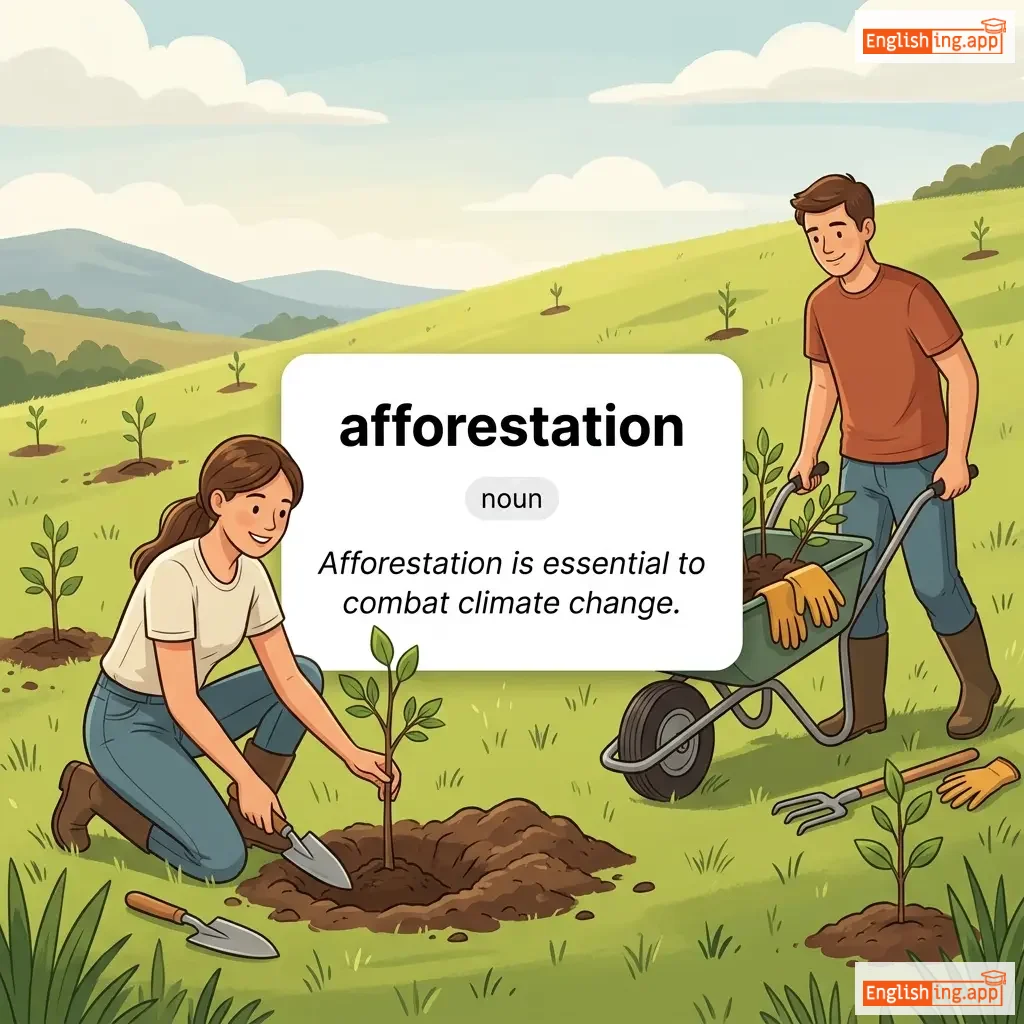
afforestation definition card — visual illustration of the meaning
noun
ˌæfɔːˈreɪʃən
造林 (zaolin)

The process of establishing a forest, especially on land that was not recently forested.

"Afforestation is essential to combat climate change."

"造林对应对气候变化至关重要。" (Zaolin dui yingdui qihou bianhua zhi guan zhongyao.)
noun
/əˈfreɪ/
公开斗殴 (gongkai douou)

A public fight or noisy disturbance that causes alarm.

"The police were called to break up an affray outside the stadium."

"警方被叫去制止体育场外的一场打斗。" (Jǐngfāng bèi jiàoqù zhìzhǐ tǐyùchǎng wài de yī chǎng dǎdòu.)
noun, verb
/əˈfrʌnt/
侮辱 (wuluru)

An action or remark that causes outrage or offense.

"He took her criticism as a personal affront."

"他把她的批评当作个人的侮辱。" (Ta ba ta de pping dangzuo geren de wuluru.)
adjective, adverb
/əˈfʊt/
进行中 (jinxing zhong)

In progress; happening or being prepared.

"There are several new projects afoot in the company."

"公司有几个新的项目正在进行中。" (Gongsi you jige xinde xiangmu zhengzai jinxing zhong.)
adjective
/əˈfɔːrˌsɛd/
前述 (qiánshù)

Mentioned earlier; previously stated.

"The aforesaid conditions must be met before the contract is signed."

"签署合同前,必须满足上述条件。" (Qiānshǔ hé tóng qián, bìxū mǎnzú shàngshù tiáojiàn.)
adjective
/əˈfreɪd/
害怕 (haipa)

feeling fear or anxiety; worried that something undesirable will happen

"She was afraid of the dark."

"她害怕黑暗。" (Tā hàipà hēi'àn.)
adverb
/əˈfrɛʃ/
重新 (chongxin)

From the beginning, in a new way.

"After the failure, they started the project afresh."

"在失败后,他们重新开始了这个项目。" (Zai shibai hou, tamen chongxin kaishi le zhege xiangmu.)
adjective
/ˈæfrɪkən/
非洲的 (fēizhōu de)

relating to Africa or its people

"She studied African culture in university."

"她在大学学习了非洲文化。" (Tā zài dàxué xuéxíle fēizhōu wénhuà.)
noun/adjective
/ˌæfrɪkən əˈmɛrɪkən/
非洲裔美国人 (feizhouyi meiguoren)

A person of African descent living in or originating from the United States; relating to such people.

"She is proud of her African-American heritage."

"她为自己的非洲裔美国人身份感到自豪。" (Ta wei ziji de feizhouyi meiguoren shenfen gandao zihu.)
preposition, conjunction, adverb
/ˈæftər/
之后 (zhīhòu)

in the time following an event or another action

"We went for ice cream after the movie."

"我们看完电影后去吃冰淇淋。" (Wǒmen kàn wán diànyǐng hòu qù chī bīngqílín.)
noun
/ˈæftərˌlaɪf/

Life or existence that some believe continues after physical death.

"Many cultures have different beliefs about the afterlife."

noun
/ˈɑːftərmɑːθ/
后果 (houguo)

the consequences or aftereffects of an event or situation, especially a disastrous one

"The aftermath of the earthquake was devastating."

"地震的后果是毁灭性的。" (Dizhen de houguo shi huimiexing de.)
noun
/ˌæftərˈnuːn/
下午 (xiawu)

The part of the day between noon and evening.

"We met in the afternoon for coffee."

"我们下午见面喝咖啡。" (Wo men xiawu jian mian he kafei.)
noun
/ˈæftərˌθɔːt/

Something added or considered later than originally planned.

"The gift seemed like an afterthought rather than a genuine gesture."

adverb
/ˈɑːftərwərd/
之后 (zhīhòu)

at a later or subsequent time

"She went home afterward."

"她之后回家了。" (Tā zhīhòu huí jiā le.)
adverb
/ˈɑːf.tə.wərdz/
之后; 然后; 后来 (zhī hòu; rán hòu; hòu lái)

at a later time; after an event or time that has already been mentioned

"We had dinner and afterwards we watched a movie."

"我们吃了晚餐,然后看了一部电影。" (Wǒmen chīle wǎncān, ránhòu kànle yī bù diànyǐng.)
adverb
/əˈɡɛn/ or /əˈɡeɪn/
(zài)

Once more; another time.

"She read the book again to understand it better."

"她又读了一遍书,以更好地理解它。" (Tā yòu dúle yī biàn shū, yǐ gèng hǎo de lǐjiě tā.)
preposition
/əˈɡɛnst/ or /əˈɡeɪnst/

In opposition to; contrary to; touching or resting on.

"They voted against the proposal."

adjective
/əˈɡeɪp/ or /əˈɡɑːp/
目瞪口呆 (mù dèng kǒu dāi)

With the mouth wide open in surprise or wonder.

"She stood agape at the breathtaking view."

"她站在那里,惊讶地看着那令人叹为观止的景象。" (tā zhàn zài nàlǐ, jīng yà de kàn zhe nà lìng rén tàn wéi guān zhǐ de jǐng xiàng.)