词汇表

英语词汇词典 | 单词含义、定义和示例

adjective
/ˌɑːrbəˈrɛsənt/
树状的 (shù zhuàng de)

having the appearance or characteristics of a tree; tree-like

"The coral had an arborescent form that resembled a miniature forest."

"珊瑚有一种树状的形态,看起来像一个小型森林。" (Shānhú yǒu yī zhǒng shù zhuàng de xíngtài, kàn qǐlái xiàng yīgè xiǎoxíng sēnlín.)
noun
/ˌɑːrbəˈriːtəm/
植物园 (zhíwùyuán)

a place where trees, shrubs, and plants are grown for scientific study or public display

"We visited the city’s arboretum to learn about exotic trees."

"我们参观了城市的植物园,了解异国树木。" (Wǒmen cānguānle chéngshì de zhíwùyuán, liǎojiě yìguó shùmù.)
noun
/ˈɑːrbərɪˌkʌltʃər/
树艺学 (shuyixue)

the cultivation and management of trees and shrubs

"He studied arboriculture to improve urban green spaces."

"他学习了树艺学以改善城市绿地。" (Ta xuexi le shuyixue yi gaishan chengshi lüdi.)
noun
/ɑːrˈkeɪd/
游乐场 (yóulèchǎng)

a covered passage with arches along one or both sides; also a place with coin-operated games

"The children spent the afternoon playing games at the arcade."

"孩子们在游戏中心度过了下午。" (Háizimen zài yóuxì zhōngxīn dùguòle xiàwǔ.)
adjective
/ɑːrˈkeɪn/
深奥的 (shen'ao de)

understood by few; mysterious or secret

"The professor’s lecture was full of arcane details that only specialists could follow."

"教授的讲座充满了只有专家才能理解的深奥细节。" (Jiàoshòu de jiǎngzuò chōngmǎnle zhǐyǒu zhuānjiā cáinéng lǐjiě de shēn'ào xìjié.)
prefix
/ɑːrtʃ-/
主要的 / 极端的 (zhuyao de / jiduande)

a prefix meaning chief, principal, or extreme in rank, importance, or degree

"The word 'archenemy' uses the prefix 'arch-' to mean the main enemy."

"'Archenemy' 一词使用了前缀 'arch-' 来表示主要的敌人。" ('Archenemy' yi ci shiyong le qianzui 'arch-' lai biaoshi zhuyao de di ren.)
noun
/ˌɑːrkiˈɑːlədʒi/
考古学 (kaoguxue)

the study of human history and prehistory through excavation and analysis of artifacts, monuments, and other physical remains

"She studied archaeology to learn about ancient civilizations."

"她学习考古学以了解古代文明。" (Ta xuexi kaoguxue yi liaojie gudai wenming.)
adjective
/ɑːrˈkeɪɪk/

very old or old-fashioned; belonging to an earlier time

"Some laws are considered archaic and no longer relevant."

noun
/ˈɑːrkeɪˌɪzəm/
古词 (gu ci)

a word, expression, or style of language that is no longer in everyday use

"The poem is full of archaisms that give it an old-fashioned flavor."

"这首诗充满了古词,使其带有一种过时的味道。" (Zhe shou shi chongman le gu ci, shi qi dai you yi zhong guoshi de weidao.)
noun
/ˈɑːrkeɪndʒəl/

A high-ranking angel, often considered a chief messenger or leader among angels.

"Michael is often depicted as the most powerful archangel."

noun
/ˌɑːrtʃˈbɪʃəp/
大主教 (dà zhǔjiào)

A senior bishop in charge of an archdiocese in the Christian Church.

"The archbishop delivered a sermon to thousands of people."

"大主教对成千上万的人发表了布道。" (Da zhujiao dui chengqian shangwan de ren fabiaole budao.)
noun
/ˌɑːrtʃˈdiːkən/
大执事 (dà zhíshì)

A senior clergyman in the Christian Church ranking below a bishop.

"The archdeacon assisted the bishop in administrative duties."
"大执事协助主教完成行政事务。" (Dà zhíshì xiézhù zhǔjiào wánchéng xíngzhèng shìwù.)
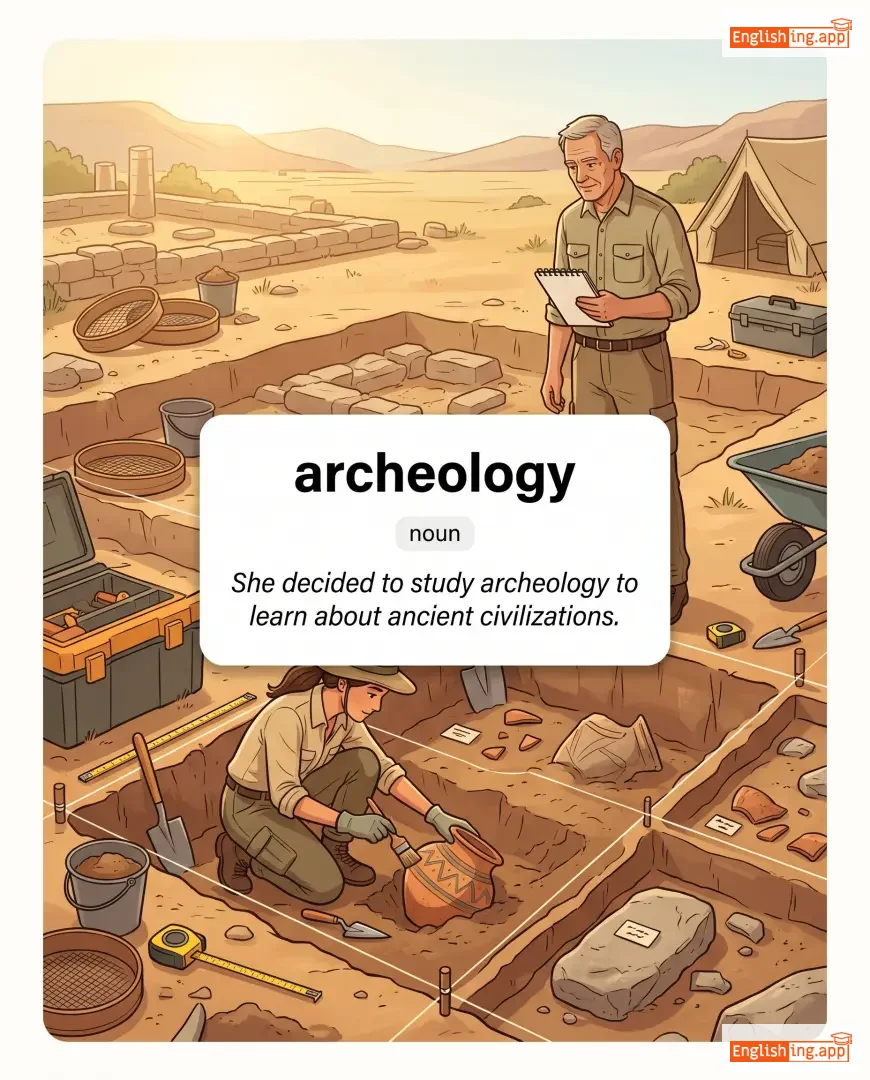
archeology definition card — visual illustration of the meaning
noun
/ˌɑːr.kiˈɑː.lə.dʒi/
考古学 (kaoguxue)

the study of human history and prehistory through excavation and analysis of artifacts and structures

"She decided to study archeology to learn about ancient civilizations."

"她决定学习考古学,以了解古代文明。" (Ta jueding xuexi kaoguxue, yi liaojie gudai wenming.)
archetype definition card — visual illustration of the meaning
noun
/ˈɑːrkɪtaɪp/
原型 (yuanxing)

The original model or perfect example from which others are copied or derived.

"He is the archetype of a successful entrepreneur."
"他是一个成功企业家的原型。" (Tā shì yīgè chénggōng qǐyèjiā de yuánxíng.)
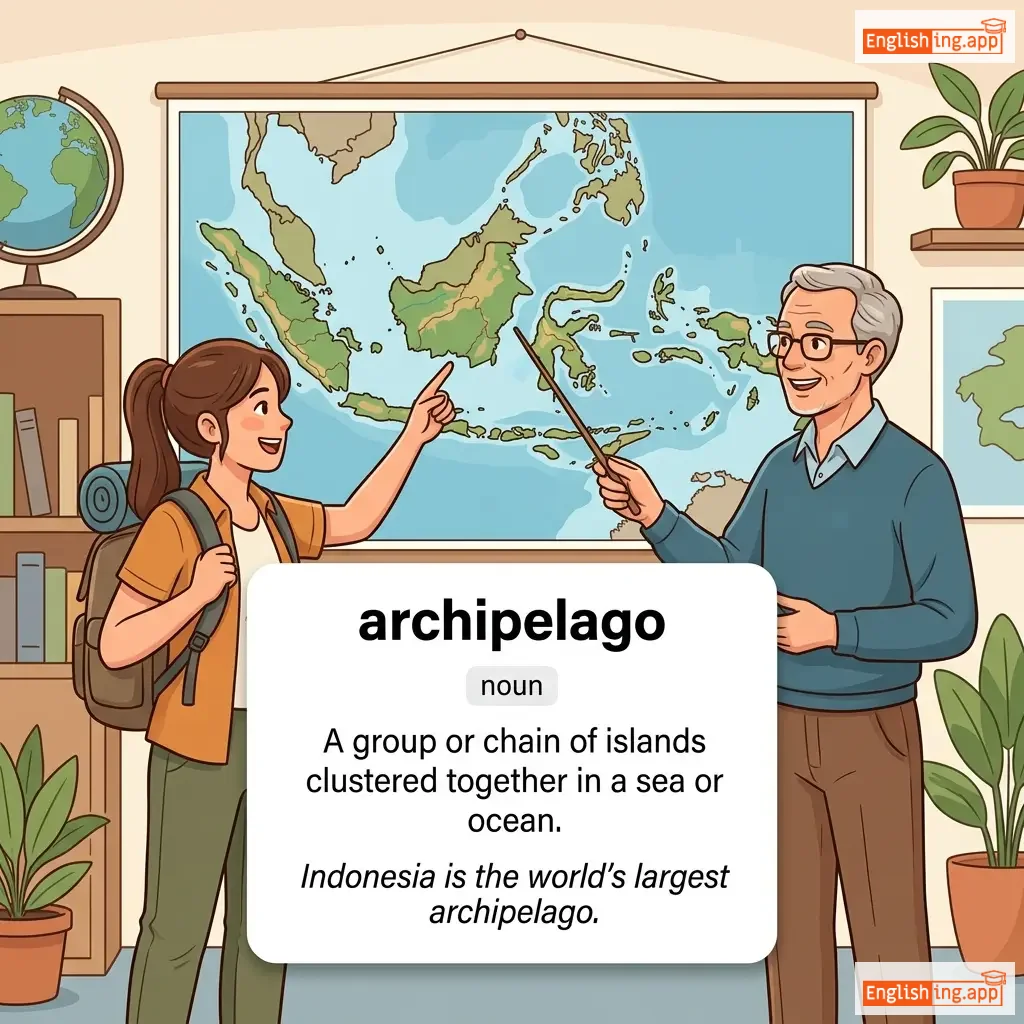
archipelago definition card — visual illustration of the meaning
noun
/ˌɑːrkəˈpɛləɡoʊ/
群岛 (qundao)

A group or chain of islands clustered together in a sea or ocean.

"Indonesia is the world’s largest archipelago."

"印度尼西亚是世界上最大的群岛。" (Yindunexiya shi shijie shang zui da de qundao.)
noun
/ˈɑː.kɪ.tekt/
建筑师 (jianzhushi)

a person who designs buildings and oversees their construction

"The architect designed a modern office building."

"建筑师设计了一座现代的办公楼。" (Jianzhushi sheji le yi zuo xiandai de bangonglou.)
adjective
/ˌɑːrkɪˈtɛktʃərəl/
建筑的 (jiànzhù de)

relating to the design and style of buildings and structures

"The city is known for its beautiful architectural designs."

"这座城市因其美丽的建筑设计而闻名。" (Zhè zuò chéngshì yīn qí měilì de jiànzhù shèjì ér wénmíng.)
architecture definition card — visual illustration of the meaning
noun
/ˈɑːkɪˌtɛktʃər/
建筑学 (jianzhuxue)

the art and practice of designing and constructing buildings

"The ancient temples of Greece are famous for their architecture."

"古希腊的古代寺庙以其建筑学闻名。" (Gu Xila de gudai simiao yi qi jianzhu xue wenming.)
🗄️

archive

noun, verb
/ˈɑːrkaɪv/

A collection of historical documents or records; to store or preserve information for future use.

"The library decided to archive all the old manuscripts."

noun
/ˈɑːrkaɪvz/
档案 (dang'an)

A place or collection where historical records and documents are stored.

"She visited the national archives to research her family history."

"她参观了国家档案馆,研究家族历史。" (Tā cānguānle guójiā dàng'àn guǎn, yánjiū jiāzú lìshǐ.)
adjective
/ˈɑːrdənt/
热心的,激情的 (ardent)

Having or showing very strong feelings or passion.

"He is an ardent supporter of environmental protection."

"他是环保保护的热心支持者。" (Tā shì huánbǎo bǎohù de rèxīn zhīchí zhě.)
ardor definition card — visual illustration of the meaning
noun
/ˈɑːrdər/
热情,激情 (ardor)

Great enthusiasm or passion.

"She spoke with ardor about her new project."

"她用热情谈论她的新项目。" (Tā yòng rèqíng tánlùn tā de xīn xiàngmù.)
arduous definition card — visual illustration of the meaning
adjective
/ˈɑːrdʒuəs/
艰难 (jian nan)

Involving or requiring a lot of effort; very difficult and tiring.

"Climbing the mountain was an arduous task."

"爬山是一个艰难的任务。" (Pa shan shi yi ge jian nan de ren wu.)
📍

area

noun
/ˈeə.ri.ə/

a particular region or space; the extent of a surface

"This area is known for its beautiful parks."

noun
/əˈriːnə/
竞技场, 场地 (jingji chang, changdi)

a large area surrounded by seats for sports, entertainment, or other events

"The basketball game will be held in the new arena downtown."

"篮球比赛将在市中心的新竞技场举行。" (Lanqiu bisai jiang zai shizhongxin de xin jingji chang juxing.)
argot definition card — visual illustration of the meaning
noun
/ˈɑːrɡoʊ/
特定群体的行话 (tèdìng qúntǐ de xínghuà)

the specialized vocabulary or jargon of a particular group, especially one with a common interest or occupation

"The thieves communicated in an argot that outsiders could not understand."

"小偷们用一种外人无法理解的阿尔戈语言交流。" (Xiǎotōu men yòng yī zhǒng wàirén wúfǎ lǐjiě de ā'ěr gē yǔyán jiāoliú.)
adjective
/ˈɑːrɡjuəbl/
有争议的 (you zhengyi de)

open to debate or discussion; not certain and capable of being argued for or against

"It is arguable that technology has improved our quality of life."

"可以说,科技改善了我们的生活质量。" (keyi shuo keji gaishan le women de shenghuo zhiliang)
adverb
/ˈɑːɡjuːəbli/
可以说 (keyi shuo)

used to say that a statement is open to argument or is considered true by many people

"She is arguably the most talented player on the team."

"她可以说是队里最有天赋的球员。" (Ta keyi shuo shi duili zui you tianfu de qiuyuan)
argue definition card — visual illustration of the meaning
verb
/ˈɑːrɡjuː/
争论 (zhēnglùn)

to give reasons for or against something; to dispute or debate

"They often argue about politics during dinner."

"他们常在晚餐时就政治问题争论。" (Tāmen cháng zài wǎncān shí jiù zhèngzhì wèntí zhēnglùn.)
argument definition card — visual illustration of the meaning
noun
/ˈɑːrɡjumənt/
争执, 论点 (zhenglun, lundian)

a disagreement, or a reason given to support or oppose an idea

"They had a heated argument about money."

"他们就钱问题发生了激烈的争执。" (tamen jiu qian wenti fashengle jilie de zhengzhi.)
noun
/ˈɑːriə/
独唱曲 (dúchàng qū)

a solo vocal piece with instrumental accompaniment, typically in an opera

"The soprano performed a moving aria during the second act."

"女高音在第二幕演唱了一首感人的阿丽娅。" (Nǚ gāoyīn zài dì èr mù yǎnchàngle yī shǒu gǎnrén de ālìyà.)
adjective
/ˈærɪd/
干旱的 (gānhàn de)

extremely dry; lacking in interest or excitement

"The desert is known for its arid climate."
"沙漠以其干旱的气候而闻名。" (Shāmò yǐ qí gānhàn de qìhòu ér wénmíng.)
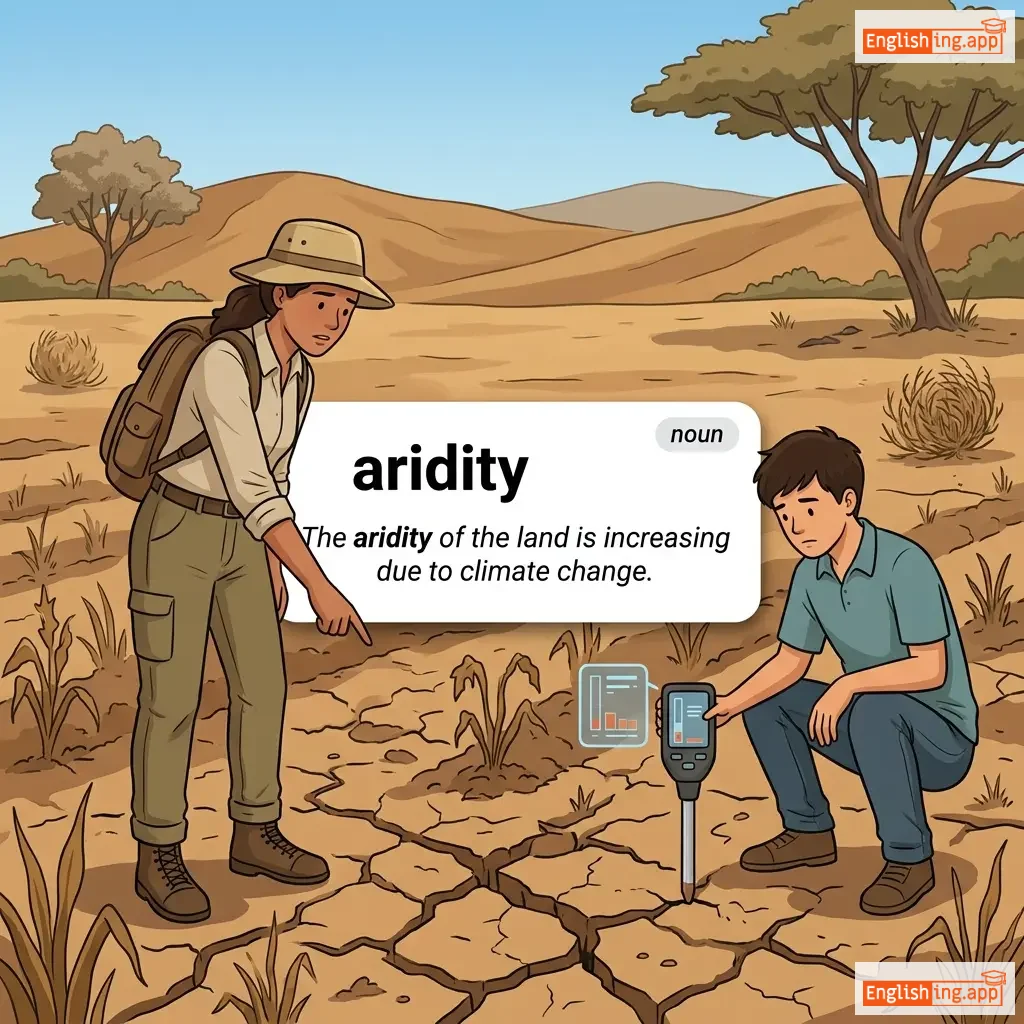
aridity definition card — visual illustration of the meaning
noun
əˈrɪd.ɪ.ti
干旱 (ganhan)

The state of being extremely dry, especially having insufficient rainfall to support vegetation.

"The aridity of the land is increasing due to climate change."

"由于气候变化,土地的干旱正在加剧。" (Yóuyú qìhòu biànhuà, tǔdì de gān hàn zhèngzài jiājù.)
verb
/əˈraɪz/
出现 (chūxiàn)

to begin to exist or to happen

"Problems may arise if you don't plan ahead."

"如果你没有提前计划,问题可能会出现。" (Rúguǒ nǐ méiyǒu tíqián jìhuà, wèntí kěnéng huì chūxiàn.)
noun
/ˌærɪˈstɑːkrəsi/
贵族 (guìzú)

a class of people holding exceptional rank and privileges, especially hereditary nobility

"The aristocracy often had influence over political decisions."

"贵族往往对政治决策有影响。" (Guìzú wǎngwǎng duì zhèngzhì juécè yǒu yǐngxiǎng.)
noun
/ˈærɪstəkræt/
贵族 (guizu)

a member of the aristocracy; a nobleman or woman

"The aristocrat lived in a lavish mansion."

"贵族住在豪华的庄园里。" (Guizu zhu zai haohua de zhuangyuan li.)
adjective
/ˌærɪˈstɒkrætɪk/
贵族的; 上层社会的 (guìzú de)

noble; having the manners of the upper class

"She had an aristocratic bearing that commanded respect."

"她有着贵族的风度,赢得了尊重。" (Tā yǒu zhe guìzú de fēngdù, yíngdéle zūnzhòng.)
noun
/ɑːrm/
手臂 (shoubi)

the part of the body from the shoulder to the hand; also a branch or division of an organization

"She broke her arm while playing football."

"她在踢足球时摔断了手臂。" (ta zai ti zuqiu shi shuai duan le shoubi.)
noun
/ɑːrˈmɑːdə/
战舰舰队 (zhànjiàn jiànduì)

A large fleet of warships.

"The Spanish Armada sailed against England in 1588."

"西班牙的阿尔马达在1588年向英国进发。" (Xībānyá de Ā'ěr mǎ dá zài 1588 nián xiàng Yīngguó jìnfā.)
adjective
/ɑːrmd/
武装的 (wǔzhuāng de)

equipped with or carrying weapons

"The bank was robbed by armed men."
"银行被武装分子抢劫了。" (Yínháng bèi wǔzhuāng fēnzǐ qiǎngjiéle.)
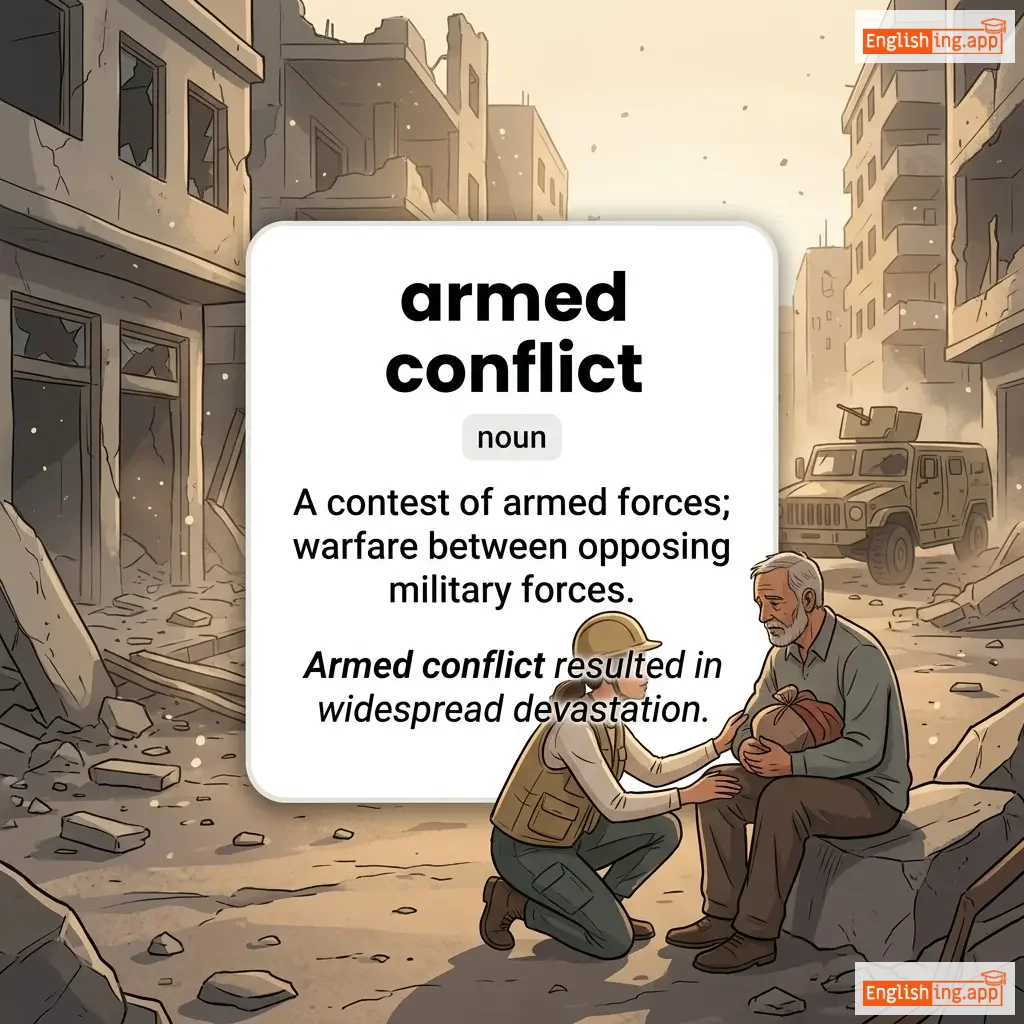
armed conflict definition card — visual illustration of the meaning
noun
ɑːmd ˈkɒn.flɪkt
武装冲突 (wǔzhuāng chōngtú)

A contest of armed forces; warfare between opposing military forces.

"Armed conflict resulted in widespread devastation."

"武装冲突导致了广泛的破坏。" (Wǔzhuāng chōngtú dǎozhì le guǎngfàn de pòhuài.)
noun
/ˈɑːrmfʊl/
一臂之力 (yī bì zhī lì)

As much as can be carried in one or both arms.

"She carried an armful of books into the library."

"她带着一臂之力的书走进了图书馆。" (Tā dàizhe yī bì zhī lì de shū zǒu jìnle túshūguǎn.)
noun
/ˈɑːm.lət/
臂环 (bì huán)

a band worn around the upper arm as an ornament

"The traditional dancer wore golden armlets that gleamed in the spotlight."

"传统舞者佩戴着金色的臂环,在聚光灯下闪闪发光。" (chuántǒng wǔ zhě pèidài zhe jīnsè de bì huán, zài jùguāngdēng xià shǎnshǎn fāguāng.)
noun
/ˈɑːrməri/
军械库 (junxieku)

A place where weapons are stored; a supply of resources or skills.

"The soldiers kept their weapons in the armory."

"士兵们把武器存放在军械库里。" (Shìbīng men bǎ wǔqì cúnfàng zài junxieku lǐ.)
noun
/ˈɑːr.mər/
盔甲 (kuījiǎ)

protective covering worn by soldiers; metal plating for military vehicles

"The knight wore heavy armour to protect himself in battle."

"骑士穿着沉重的盔甲以保护自己在战斗中。" (qíshì chuānzhuó chénzhòng de kuījiǎ yǐ bǎohù zìjǐ zài zhàndòu zhōng.)
noun
/ˈɑːrm.pɪt/
腋下 (yexia)

the hollow area under the arm where it joins the shoulder

"He applied deodorant to his armpit."

"他在腋下涂了除臭剂。" (tā zài yèxià túle chúchòu jì)
noun
/ɑːrmz/
武器 / 手臂 (wǔqì / shǒubì)

weapons and ammunition; or the upper limbs of the human body

"The country decided to reduce its stock of arms."

"该国决定减少其武器库存。" (Gai guo jueding jianshao qi wuqi kucun.)
noun
/ˈɑːrmi/
军队 (jundui)

a large organized military force trained for war

"The army protected the border from attack."

"军队保护了边境免受攻击。" (jundui baohule bianjing mian shou gongji.)
noun
/əˈroʊmə/
香味 (xiangwei)

A pleasant, distinctive smell.

"The aroma of freshly baked bread filled the kitchen."

"新鲜烤制的面包的香味弥漫在厨房里。" (Xinxian kaozhi de miantao de xiangwei miman zai chufang li.)
verb
/əˈdɔːrn/
装饰 (zhuangshi)

to decorate or add beauty to something

"The hall was adorned with flowers for the wedding."

"婚礼上大厅用花卉装饰。" (Hunli shang dating yong huahui zhuangshi.)