वोकैबुलरीज

इंग्लिश वोकैबुलरी डिस्कवर, लर्न और मास्टर करें

adjective
/ˌɑːrbəˈrɛsənt/
वृक्षाकार (vrikshakar)

having the appearance or characteristics of a tree; tree-like

"The coral had an arborescent form that resembled a miniature forest."

"कोरल का एक वृक्षाकार रूप था जो एक छोटे जंगल जैसा दिखता था।" (Koral ka ek vrikshakar roop tha jo ek chhote jangal jaisa dikhta tha.)
noun
/ˌɑːrbəˈriːtəm/
वृक्ष उद्यान (vriksh udyan)

a place where trees, shrubs, and plants are grown for scientific study or public display

"We visited the city’s arboretum to learn about exotic trees."

"हमने विदेशी पेड़ों के बारे में जानने के लिए शहर के आर्बोरेटम का दौरा किया।" (Hamne videshi pedon ke baare mein jaanne ke liye shahar ke arboretum ka daura kiya.)
noun
/ˈɑːrbərɪˌkʌltʃər/
वृक्ष विज्ञान (vriksh vigyan)

the cultivation and management of trees and shrubs

"He studied arboriculture to improve urban green spaces."

"उन्होंने शहरी हरे-भरे स्थानों को सुधारने के लिए वृक्ष विज्ञान का अध्ययन किया।" (Unhone shahri hare-bhare sthanon ko sudharne ke liye vriksh vigyan ka adhyayan kiya.)
noun
/ɑːrˈkeɪd/
आर्केड (arked)

a covered passage with arches along one or both sides; also a place with coin-operated games

"The children spent the afternoon playing games at the arcade."

"बच्चों ने आर्केड में खेलते हुए दोपहर बिताई।" (Bachchon ne arked mein khelte hue dopahar bitayi.)
adjective
/ɑːrˈkeɪn/
रहस्यमय (rahasyamay)

understood by few; mysterious or secret

"The professor’s lecture was full of arcane details that only specialists could follow."

"प्रोफेसर का लेक्चर आर्केन विवरणों से भरा था जिन्हें केवल विशेषज्ञ ही समझ सकते थे।" (Professor ka lecture arcane vivarno se bhara tha jinhein keval visheshagya hi samajh sakte the.)
prefix
/ɑːrtʃ-/
प्रधान / प्रमुख (pradhan / pramukh)

a prefix meaning chief, principal, or extreme in rank, importance, or degree

"The word 'archenemy' uses the prefix 'arch-' to mean the main enemy."

"'आर्चएनिमी' शब्द में 'आर्च-' उपसर्ग का उपयोग मुख्य दुश्मन का मतलब है।" ('archenemy' shabd mein 'arch-' upasarg ka upyog mukhya dushman ka matlab hai.)
noun
/ˌɑːrkiˈɑːlədʒi/
पुरातत्वशास्त्र (puratatvashastra)

the study of human history and prehistory through excavation and analysis of artifacts, monuments, and other physical remains

"She studied archaeology to learn about ancient civilizations."

"उसने प्राचीन सभ्यताओं के बारे में जानने के लिए पुरातत्वशास्त्र का अध्ययन किया।" (Usne prachin sabhyataon ke baare mein jaanne ke liye puratatvashastra ka adhyayan kiya.)
adjective
/ɑːrˈkeɪɪk/
पुरातन (puratan)

very old or old-fashioned; belonging to an earlier time

"Some laws are considered archaic and no longer relevant."

"कुछ कानून पुरातन माने जाते हैं और अब प्रासंगिक नहीं हैं." (kuch kanoon puratan mane jaate hain aur ab prasangik nahin hain.)
noun
/ˈɑːrkeɪˌɪzəm/
प्राचीन शब्दप्रयोग (prachin shabdprayog)

a word, expression, or style of language that is no longer in everyday use

"The poem is full of archaisms that give it an old-fashioned flavor."

"कविता में प्राचीन शब्दप्रयोगों से भरपूर है जो इसे पुराने जमाने का स्वाद देती है।" (Kavita mein prachin shabdprayogon se bharpoor hai jo ise purane zamane ka swad deti hai.)
noun
/ˈɑːrkeɪndʒəl/
प्रधान दूत (aarchaangel)

A high-ranking angel, often considered a chief messenger or leader among angels.

"Michael is often depicted as the most powerful archangel."

"माइकल को अक्सर सबसे शक्तिशाली आर्चएंजेल के रूप में दर्शाया जाता है." (Michael ko aksar sabse shaktishaali aarchaangel ke roop me darshaya jata hai.)
noun
/ˌɑːrtʃˈbɪʃəp/
आर्चबिशप (aarchbishop)

A senior bishop in charge of an archdiocese in the Christian Church.

"The archbishop delivered a sermon to thousands of people."

"आर्चबिशप ने हजारों लोगों को उपदेश दिया।" (Aarchbishop ne hazaron logon ko updesh diya.)
noun
/ˌɑːrtʃˈdiːkən/
महाधर्मयाजक (mahadhramyajak)

A senior clergyman in the Christian Church ranking below a bishop.

"The archdeacon assisted the bishop in administrative duties."

"आर्चडीकन ने प्रशासनिक कार्यों में बिशप की मदद की।" (Archdeacon ne prashasanik karyon mein bishop ki madad ki.)
archeology definition card — visual illustration of the meaning
noun
/ˌɑːr.kiˈɑː.lə.dʒi/
पुरातत्वशास्त्र (puratatvashastra)

the study of human history and prehistory through excavation and analysis of artifacts and structures

"She decided to study archeology to learn about ancient civilizations."

"उसने प्राचीन सभ्यताओं के बारे में जानने के लिए पुरातत्वशास्त्र अध्ययन करने का निर्णय लिया।" (Usne prachin sabhyataon ke baare mein jaanne ke liye puratatvashastra adhyayan karne ka nirnay liya.)
archetype definition card — visual illustration of the meaning
noun
/ˈɑːrkɪtaɪp/
आदर्श रूप (adarsh roop)

The original model or perfect example from which others are copied or derived.

"He is the archetype of a successful entrepreneur."

"वह एक सफल उद्यमी का आदर्श रूप है।" (Vah ek safal udyami ka adarsh roop hai.)
archipelago definition card — visual illustration of the meaning
noun
/ˌɑːrkəˈpɛləɡoʊ/
द्वीपसमूह (dweepsamuh)

A group or chain of islands clustered together in a sea or ocean.

"Indonesia is the world’s largest archipelago."

"इंडोनेशिया दुनिया का सबसे बड़ा द्वीपसमूह है।" (Indonesia duniya ka sabse bada dweepsamuh hai.)
noun
/ˈɑː.kɪ.tekt/
वास्तुकार (vastukaar)

a person who designs buildings and oversees their construction

"The architect designed a modern office building."

"वास्तुकार ने एक आधुनिक कार्यालय भवन का डिज़ाइन किया।" (Vastukaar ne ek aadhunik kaaryalay bhawan ka design kiya.)
adjective
/ˌɑːrkɪˈtɛktʃərəl/
वास्तुशिल्पीय (vaastushilpiya)

relating to the design and style of buildings and structures

"The city is known for its beautiful architectural designs."

"शहर अपनी सुंदर वास्तुशिल्पीय डिज़ाइनों के लिए जाना जाता है।" (Shahar apni sundar vaastushilpiya dizainon ke liye jana jata hai.)
architecture definition card — visual illustration of the meaning
noun
/ˈɑːkɪˌtɛktʃər/
वास्तुकला (vastukala)

the art and practice of designing and constructing buildings

"The ancient temples of Greece are famous for their architecture."

"प्राचीन ग्रीस के मंदिर अपनी वास्तुकला के लिए प्रसिद्ध हैं।" (Prachin Greece ke mandir apni vastukala ke liye prasiddh hain.)
noun, verb
/ˈɑːrkaɪv/
आर्काइव (arkaiv)

A collection of historical documents or records; to store or preserve information for future use.

"The library decided to archive all the old manuscripts."

"लाइब्रेरी ने सभी पुराने पांडुलिपियों को आर्काइव करने का निर्णय लिया।" (Library ne sabhi purane pandulipiyon ko arkaiv karne ka nirnay liya.)
noun
/ˈɑːrkaɪvz/
आर्काइव्स (arkaivs)

A place or collection where historical records and documents are stored.

"She visited the national archives to research her family history."

"वह अपने परिवार का इतिहास शोधने के लिए राष्ट्रीय आर्काइव्स गई थी।" (Vah apne parivar ka itihas shodhne ke liye rashtriya arkaivs gayi thi.)
adjective
/ˈɑːrdənt/
उत्साही, प्रबल (ardent)

Having or showing very strong feelings or passion.

"He is an ardent supporter of environmental protection."

"वह पर्यावरण संरक्षण का एक प्रबल समर्थक है।" (Vah paryavaran sanrakshan ka ek prabal samarthak hai.)
ardor definition card — visual illustration of the meaning
noun
/ˈɑːrdər/
जोश, उत्साह (ardor)

Great enthusiasm or passion.

"She spoke with ardor about her new project."

"वह अपने नए प्रोजेक्ट के बारे में जोश से बोल रही थी।" (Vah apne naye project ke baare mein josh se bol rahi thi.)
arduous definition card — visual illustration of the meaning
adjective
/ˈɑːrdʒuəs/
कठिन (kathin)

Involving or requiring a lot of effort; very difficult and tiring.

"Climbing the mountain was an arduous task."

"पहाड़ चढ़ना एक कठिन काम था।" (Pahaad chadhna ek kathin kaam tha.)
noun
/ˈeə.ri.ə/
इलाका (eriya)

a particular region or space; the extent of a surface

"This area is known for its beautiful parks."

"यह क्षेत्र अपने सुंदर पार्कों के लिए जाना जाता है।" (yah kshetra apane khubsoorat parkon ke liye jana jata hai.)
noun
/əˈriːnə/
मैदान, मंच (maidan, manch)

a large area surrounded by seats for sports, entertainment, or other events

"The basketball game will be held in the new arena downtown."

"बास्केटबॉल खेल नए एरेना में शहर के डाउनटाउन में आयोजित होगा।" (Basketball khel naye arena mein sheher ke downtown mein aayojit hoga.)
argot definition card — visual illustration of the meaning
noun
/ˈɑːrɡoʊ/
विशेषज्ञ शब्दावली (visheshagya shabdavali)

the specialized vocabulary or jargon of a particular group, especially one with a common interest or occupation

"The thieves communicated in an argot that outsiders could not understand."

"चोरों ने एक आर्गोट में संवाद किया जिसे बाहरी लोग समझ नहीं पाए।" (Choron ne ek argot mein samvad kiya jise baahari log samajh nahi paaye.)
adjective
/ˈɑːrɡjuəbl/
तर्कसंगत (tarksangat)

open to debate or discussion; not certain and capable of being argued for or against

"It is arguable that technology has improved our quality of life."

"यह तर्कसंगत है कि तकनीक ने हमारे जीवन की गुणवत्ता सुधारी है।" (yah tarksangat hai ki taknik ne hamare jeevan ki gunavatta sudhari hai)
adverb
/ˈɑːɡjuːəbli/
तर्कसंगत रूप से (tarksangat roop se)

used to say that a statement is open to argument or is considered true by many people

"She is arguably the most talented player on the team."

"वह तर्कसंगत रूप से टीम की सबसे प्रतिभाशाली खिलाड़ी है।" (vah tarksangat roop se team ki sabse pratibhashali khiladi hai)
argue definition card — visual illustration of the meaning
verb
/ˈɑːrɡjuː/
तर्क करना (tark karna)

to give reasons for or against something; to dispute or debate

"They often argue about politics during dinner."

"वे अक्सर रात के खाने के दौरान राजनीति पर तर्क करते हैं।" (ve aksar raat ke khane ke dauran rajniti par tark karte hain.)
argument definition card — visual illustration of the meaning
noun
/ˈɑːrɡjumənt/
बहस, तर्क (bahas, tark)

a disagreement, or a reason given to support or oppose an idea

"They had a heated argument about money."

"उनके बीच पैसे को लेकर गर्म बहस हो रही थी।" (unke beech paise ko lekar garm bahas ho rahi thi.)
noun
/ˈɑːriə/
एकल संगीत रचना (ekal sangeet rachna)

a solo vocal piece with instrumental accompaniment, typically in an opera

"The soprano performed a moving aria during the second act."

"सोप्रानो ने दूसरे अंक के दौरान एक भावनात्मक आरीआ प्रदर्शन किया।" (Soprano ne doosre ank ke dauran ek bhavnatmak aria pradarshan kiya.)
adjective
/ˈærɪd/
बंजर (banjar)

extremely dry; lacking in interest or excitement

"The desert is known for its arid climate."

"रेगिस्तान अपने बंजर जलवायु के लिए जाना जाता है।" (Registan apne banjar jalvayu ke liye jana jata hai.)
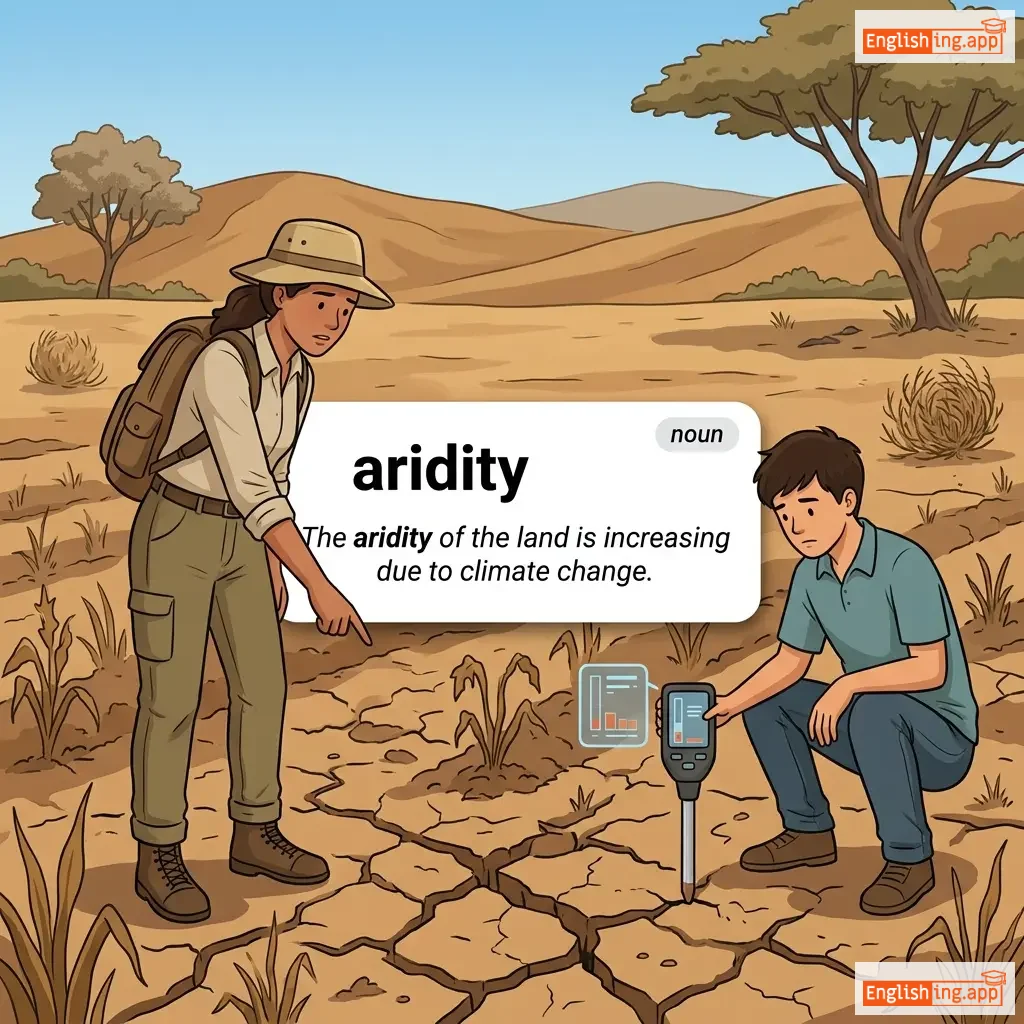
aridity definition card — visual illustration of the meaning
noun
əˈrɪd.ɪ.ti
सूखा (sukha)

The state of being extremely dry, especially having insufficient rainfall to support vegetation.

"The aridity of the land is increasing due to climate change."

"भूमि की सूखापन जलवायु परिवर्तन के कारण बढ़ रही है।" (Bhoomi ki sukhapan jalvayu parivartan ke karan badh rahi hai.)
verb
/əˈraɪz/
उठना (uthna)

to begin to exist or to happen

"Problems may arise if you don't plan ahead."

"अगर आप पहले से योजना नहीं बनाते हैं तो समस्याएँ उत्पन्न हो सकती हैं।" (Agar aap pehle se yojna nahi banate hain to samasyaayein utpann ho sakti hain.)
noun
/ˌærɪˈstɑːkrəsi/
उच्च वर्ग (ucch varg)

a class of people holding exceptional rank and privileges, especially hereditary nobility

"The aristocracy often had influence over political decisions."

"उच्च वर्ग का राजनीतिक निर्णयों पर अक्सर प्रभाव होता था।" (Ucch varg ka raajnaitik nirnayon par aksar prabhav hota tha.)
noun
/ˈærɪstəkræt/
अरिस्टोक्रेट (aristokret)

a member of the aristocracy; a nobleman or woman

"The aristocrat lived in a lavish mansion."

"अरिस्टोक्रेट एक भव्य हवेली में रहते थे।" (Aristokret ek bhavya haveli mein rehte the.)
adjective
/ˌærɪˈstɒkrætɪk/
आभिजात्यपूर्ण; उच्च वर्ग के तरीके (aristocratic)

noble; having the manners of the upper class

"She had an aristocratic bearing that commanded respect."

"उसकी एक आभिजात्यपूर्ण आभा थी जो सम्मान प्राप्त करती थी।" (uski ek abhijatypurn abha thi jo sammaan praapt karti thi.)
noun
/ɑːrm/
हाथ (haath)

the part of the body from the shoulder to the hand; also a branch or division of an organization

"She broke her arm while playing football."

"वह फुटबॉल खेलते समय अपना हाथ तोड़ बैठी।" (vah football khelte samay apna haath tod baithi.)
noun
/ɑːrˈmɑːdə/
युद्धपोतों का बेड़ा (yuddhapoton ka beda)

A large fleet of warships.

"The Spanish Armada sailed against England in 1588."

"स्पेनिश आर्माडा 1588 में इंग्लैंड के खिलाफ चला था।" (Spanish Armada 1588 mein England ke khilaf chala tha.)
adjective
/ɑːrmd/
सशस्त्र (sashastr)

equipped with or carrying weapons

"The bank was robbed by armed men."

"बैंक को सशस्त्र लोगों ने लूटा था।" (bank ko sashastr logon ne lootaa tha.)
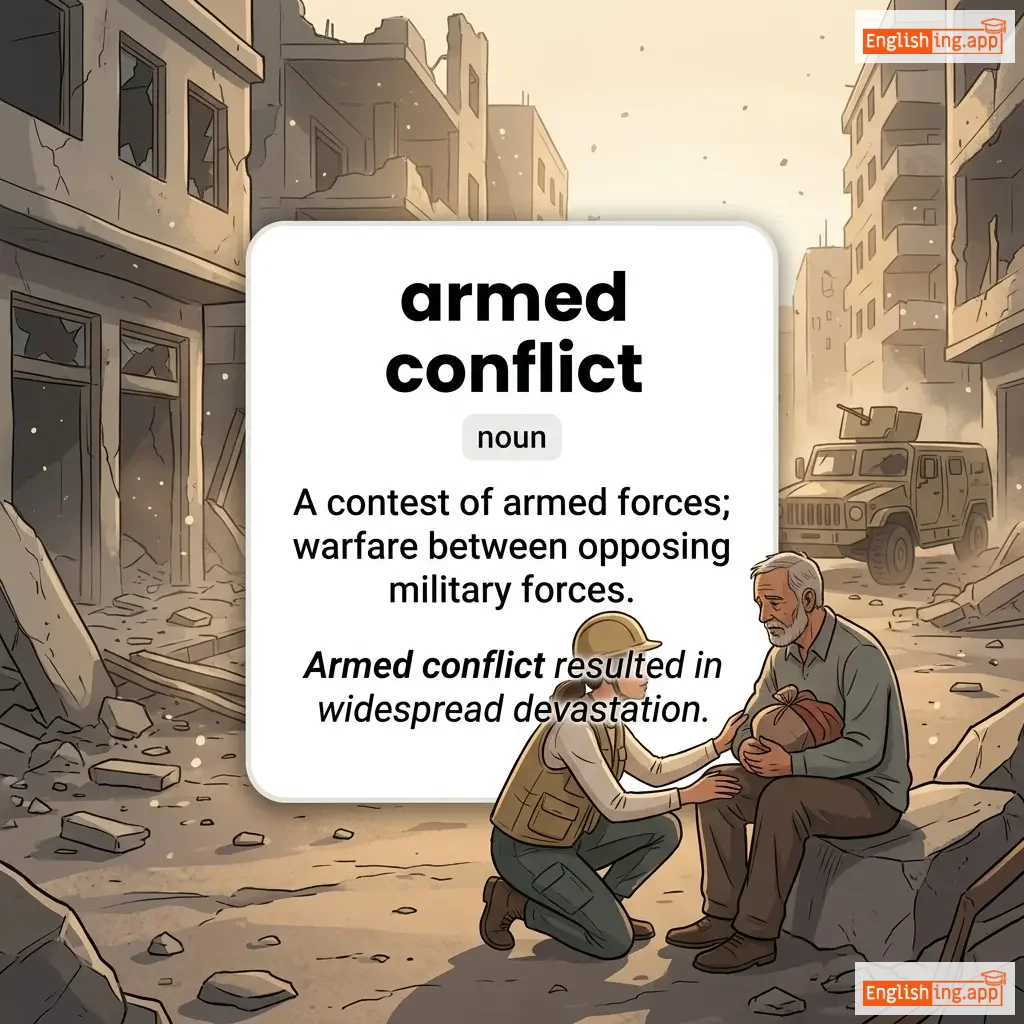
armed conflict definition card — visual illustration of the meaning
noun
ɑːmd ˈkɒn.flɪkt
सशस्त्र संघर्ष (sashastr sangharsh)

A contest of armed forces; warfare between opposing military forces.

"Armed conflict resulted in widespread devastation."

"आर्मड कॉन्फ्लिक्ट के कारण व्यापक तबाही हुई।" (Armd conflict ke karan vyapak tabahi hui.)
noun
/ˈɑːrmfʊl/
आर्मफुल (armful)

As much as can be carried in one or both arms.

"She carried an armful of books into the library."

"उसने पुस्तकालय में एक आर्मफुल किताबें ले जाकर रखी।" (Usne pustakalay mein ek armful kitaabein le jaakar rakhi.)
noun
/ˈɑːm.lət/
आर्मलेट (armlet)

a band worn around the upper arm as an ornament

"The traditional dancer wore golden armlets that gleamed in the spotlight."

"परंपरागत नर्तकी ने सोने की आर्मलेट पहनी थी जो स्पॉटलाइट में चमक रही थी।" (da paramparagat nartaki ne sone ki armlet pehni thi jo spotlight mein chamak rahi thi.)
noun
/ˈɑːrməri/
गोदाम (godam)

A place where weapons are stored; a supply of resources or skills.

"The soldiers kept their weapons in the armory."

"सैनिकों ने अपने हथियार गोदाम में रखे थे।" (Sainiko ne apne hathiyar godam mein rakhe the.)
noun
/ˈɑːr.mər/
बख़्तरबंद (bakhtarbund)

protective covering worn by soldiers; metal plating for military vehicles

"The knight wore heavy armour to protect himself in battle."

"नाइट ने युद्ध में अपनी सुरक्षा के लिए भारी बख़्तरबंद पहना।" (knight ne yudh mein apni suraksha ke liye bhari bakhtarbund pehna.)
noun
/ˈɑːrm.pɪt/
बग़ल (bagal)

the hollow area under the arm where it joins the shoulder

"He applied deodorant to his armpit."

"उसने अपनी बग़ल में डियोडोरेंट लगाया।" (usne apni bagal mein deodorant lagaya)
noun
/ɑːrmz/
हथियार / बांह (hathiyar / baah)

weapons and ammunition; or the upper limbs of the human body

"The country decided to reduce its stock of arms."

"देश ने अपने हथियारों के भंडार को घटाने का निर्णय लिया।" (Desh ne apne hathiyaron ke bhandar ko ghatane ka nirnay liya.)
noun
/ˈɑːrmi/
सेना (sena)

a large organized military force trained for war

"The army protected the border from attack."

"सेना ने सीमा को हमले से बचाया।" (sena ne seema ko hamle se bachaya.)
noun
/əˈroʊmə/
खुशबू (khushboo)

A pleasant, distinctive smell.

"The aroma of freshly baked bread filled the kitchen."

"ताजा बेक किया हुआ रोटी की खुशबू रसोई में भर गई।" (Taza bek kiya hua roti ki khushboo rasoi mein bhar gayi.)
verb
/əˈdɔːrn/
सजाना (sajana)

to decorate or add beauty to something

"The hall was adorned with flowers for the wedding."

"विवाह के लिए हॉल को फूलों से सजाया गया था।" (Vivah ke liye hall ko phoolon se sajaya gaya tha.)