Словари

Словарь английского языка | Значения слов, определения и примеры

adjective
/ˌɑːrbəˈrɛsənt/
деревоподобный (derevopodobny)

having the appearance or characteristics of a tree; tree-like

"The coral had an arborescent form that resembled a miniature forest."

"Кораллы имели деревоподобную форму, напоминающую миниатюрный лес." (Korally imeli derevopodobnuyu formu, napominayushchuyu miniatyurnyy les.)
noun
/ˌɑːrbəˈriːtəm/
арборетум (arborétum)

a place where trees, shrubs, and plants are grown for scientific study or public display

"We visited the city’s arboretum to learn about exotic trees."

"Мы посетили городской арборетум, чтобы узнать о экзотических деревьях." (My posetili gorodskoy arboretum, chtoby uznat' o ekzoticheskikh derev'yakh.)
noun
/ˈɑːrbərɪˌkʌltʃər/
арборикультура (arborikultura)

the cultivation and management of trees and shrubs

"He studied arboriculture to improve urban green spaces."

"Он изучал арборикультуру, чтобы улучшить городские зеленые зоны." (On izuchal arborikulturu, chtoby uluchshit' gorodskie zelyonye zony.)
noun
/ɑːrˈkeɪd/
аркада (arkada)

a covered passage with arches along one or both sides; also a place with coin-operated games

"The children spent the afternoon playing games at the arcade."

"Дети провели день, играя в аркаде." (Deti proveli den', igrya v arkade.)
adjective
/ɑːrˈkeɪn/
арканный (arkanny)

understood by few; mysterious or secret

"The professor’s lecture was full of arcane details that only specialists could follow."

"Лекция профессора была полна арканных деталей, которые могли понять только специалисты." (Lektsiya professora byla polna arkatnykh detalei, kotorye mogli ponyat' tol'ko spetsialisty.)
prefix
/ɑːrtʃ-/
главный / высший (glavny / vysshiy)

a prefix meaning chief, principal, or extreme in rank, importance, or degree

"The word 'archenemy' uses the prefix 'arch-' to mean the main enemy."

"Слово 'архенемий' использует приставку 'арх-' для обозначения главного врага." (Slovo 'arh-enemiy' ispol'zuyet pristavku 'arh-' dlya oboznacheniya glavnogo vraga.)
noun
/ˌɑːrkiˈɑːlədʒi/
археология (arkheologiya)

the study of human history and prehistory through excavation and analysis of artifacts, monuments, and other physical remains

"She studied archaeology to learn about ancient civilizations."

"Она изучала археологию, чтобы узнать о древних цивилизациях." (Ona izuchala arkheologiyu, chtoby uznat' o drevnikh tsivilizatsiyakh.)
adjective
/ɑːrˈkeɪɪk/
архаичный (arkayik)

very old or old-fashioned; belonging to an earlier time

"Some laws are considered archaic and no longer relevant."

"Некоторые законы считаются архаичными и больше не актуальны." (Nekotorye zakony schitayutsya arhaichnymi i bolshe ne aktualny)
noun
/ˈɑːrkeɪˌɪzəm/
архаизм (arkhaizm)

a word, expression, or style of language that is no longer in everyday use

"The poem is full of archaisms that give it an old-fashioned flavor."

"Это стихотворение полно архаизмов, которые придают ему старомодный привкус." (Eto stikhotvorenie polno arkhaizmov, kotorye pridayut yemu staromodnyy privkus.)
noun
/ˈɑːrkeɪndʒəl/
архангел (arkhangel)

A high-ranking angel, often considered a chief messenger or leader among angels.

"Michael is often depicted as the most powerful archangel."

"Майкл часто изображается как самый могущественный архангел." (Maykl chasto izobrazhaetsya kak samyy moguschestvennyy arkhangel.)
noun
/ˌɑːrtʃˈbɪʃəp/
архиепископ (arkhiepiskop)

A senior bishop in charge of an archdiocese in the Christian Church.

"The archbishop delivered a sermon to thousands of people."

"Архиепископ произнес проповедь перед тысячами людей." (Arkhiepiskop proiznes propoved' pered tysyachami lyudej.)
noun
/ˌɑːrtʃˈdiːkən/
архидиакон (arkhidiakon)

A senior clergyman in the Christian Church ranking below a bishop.

"The archdeacon assisted the bishop in administrative duties."
"Архидиакон помог епископу в административных обязанностях." (Arkhidiakon pomog yepiskopu v administrativnykh obyazannostyakh.)
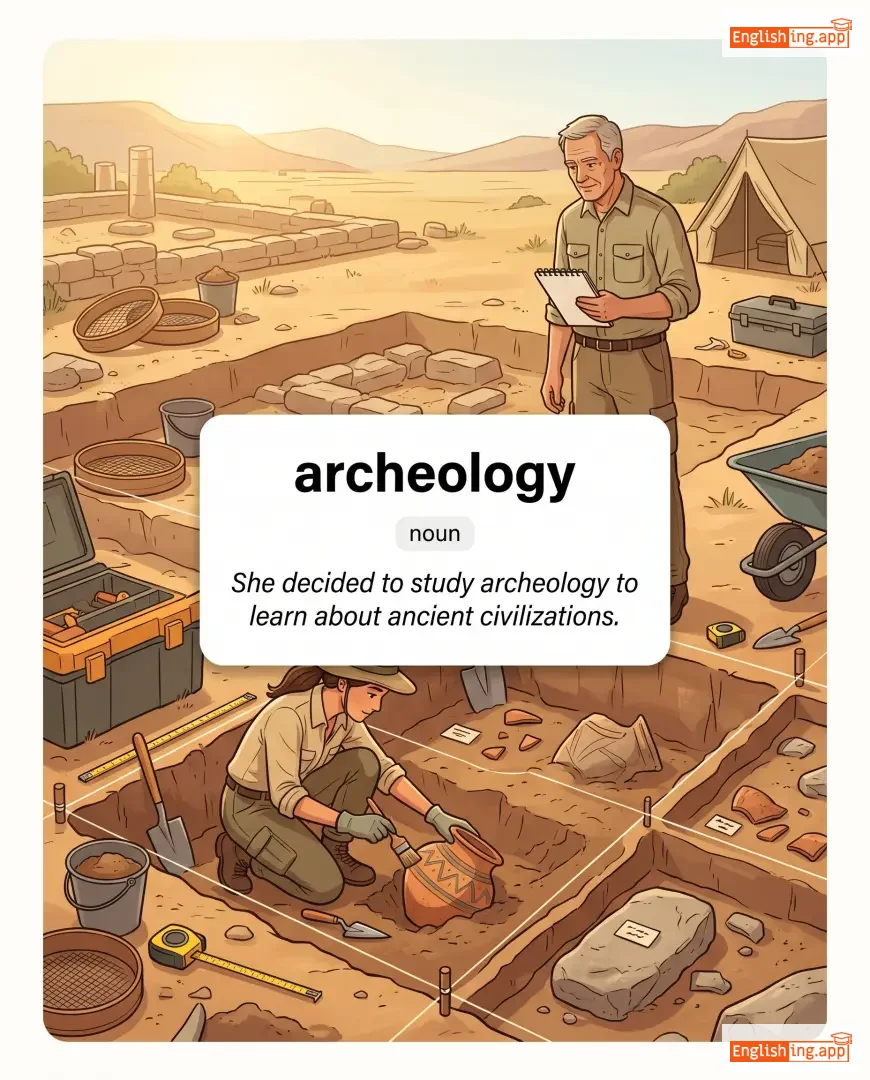
archeology definition card — visual illustration of the meaning
noun
/ˌɑːr.kiˈɑː.lə.dʒi/
археология (arkheologiya)

the study of human history and prehistory through excavation and analysis of artifacts and structures

"She decided to study archeology to learn about ancient civilizations."

"Она решила изучать археологию, чтобы узнать о древних цивилизациях." (Ona reshil izuchat' arkheologiyu, chtoby uznat' o drevnikh tsivilizatsiyakh.)
archetype definition card — visual illustration of the meaning
noun
/ˈɑːrkɪtaɪp/
архетип (arkhetip)

The original model or perfect example from which others are copied or derived.

"He is the archetype of a successful entrepreneur."
"Он является архетипом успешного предпринимателя." (On yavyayetsya arkhetipom uspeshnogo predprinimatelya.)
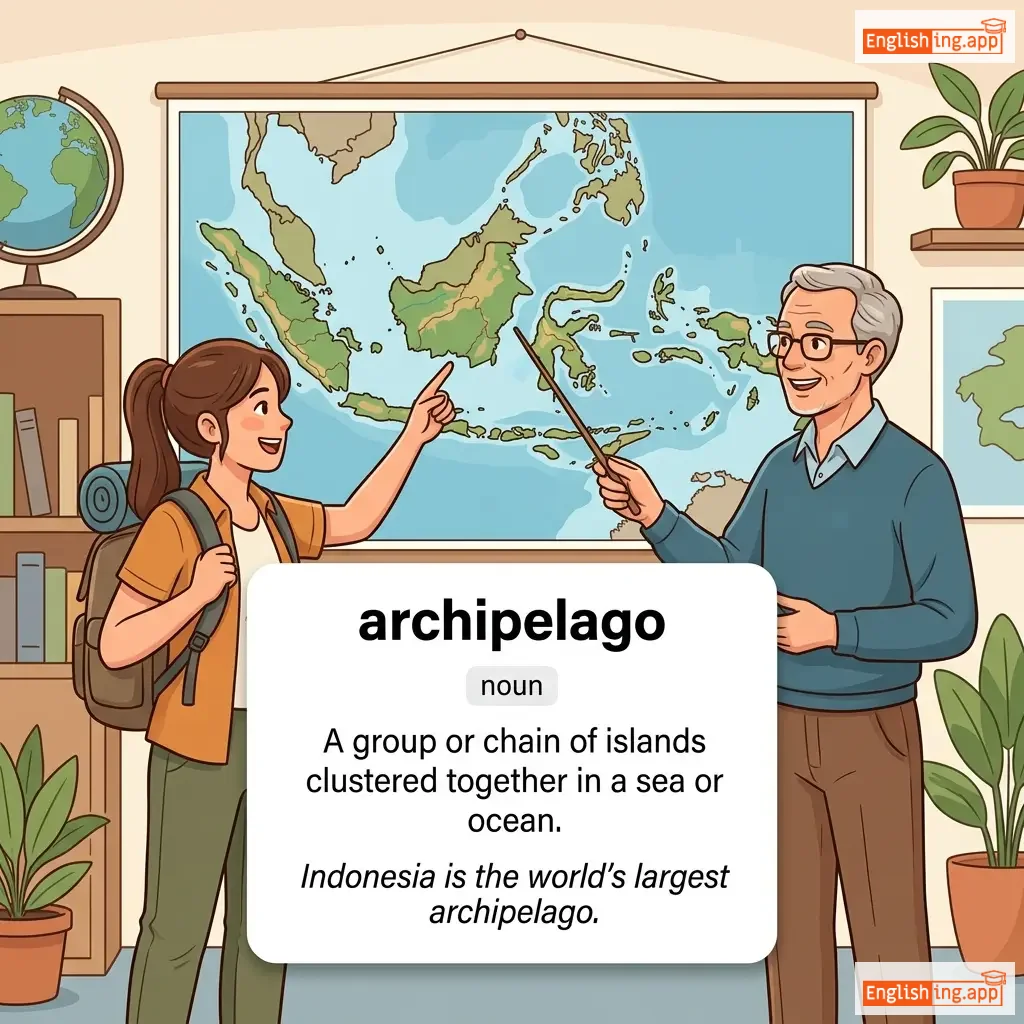
archipelago definition card — visual illustration of the meaning
noun
/ˌɑːrkəˈpɛləɡoʊ/
архипелаг (arkhipelag)

A group or chain of islands clustered together in a sea or ocean.

"Indonesia is the world’s largest archipelago."

"Индонезия — крупнейший архипелаг в мире." (Indoneziya — krupneyshiy arhipelag v mire.)
noun
/ˈɑː.kɪ.tekt/
архитектор (arkhitektor)

a person who designs buildings and oversees their construction

"The architect designed a modern office building."

"Архитектор спроектировал современное офисное здание." (Arkhitektor spроектировал sovremennoye ofisnoye zdaniye.)
adjective
/ˌɑːrkɪˈtɛktʃərəl/
архитектурный (arkhitekturnyy)

relating to the design and style of buildings and structures

"The city is known for its beautiful architectural designs."

"Город известен своими красивыми архитектурными проектами." (Gorod izvesten svoimi krasivymi arkhitekturnymi proyektami.)
architecture definition card — visual illustration of the meaning
noun
/ˈɑːkɪˌtɛktʃər/
архитектура (arkhitektura)

the art and practice of designing and constructing buildings

"The ancient temples of Greece are famous for their architecture."

"Древние храмы Греции знамениты своей архитектурой." (Drevnie khramy Gretsii znamenity svoey arkhitekturoy.)
🗄️

archive

noun, verb
/ˈɑːrkaɪv/

A collection of historical documents or records; to store or preserve information for future use.

"The library decided to archive all the old manuscripts."

noun
/ˈɑːrkaɪvz/
архивы (arkayvz)

A place or collection where historical records and documents are stored.

"She visited the national archives to research her family history."

"Она посетила национальные архивы, чтобы исследовать историю своей семьи." (Ona posetila natsional'nye arkhivy, chtoby issledovat' istoriyu svoey sem'i.)
adjective
/ˈɑːrdənt/
страстный, рьяный (ardent)

Having or showing very strong feelings or passion.

"He is an ardent supporter of environmental protection."

"Он является рьяным сторонником защиты окружающей среды." (On yavlyaetsya ryanym storonnikom zashchity okruzhayushchey sreedy.)
ardor definition card — visual illustration of the meaning
noun
/ˈɑːrdər/
страсть, энтузиазм (ardor)

Great enthusiasm or passion.

"She spoke with ardor about her new project."

"Она говорила с страстью о своем новом проекте." (Ona govorila s strast'yu o svoem novom proyekte.)
arduous definition card — visual illustration of the meaning
adjective
/ˈɑːrdʒuəs/
трудный (trudnyy)

Involving or requiring a lot of effort; very difficult and tiring.

"Climbing the mountain was an arduous task."

"Подъем на гору был трудной задачей." (Podyem na goru byl trudnoy zadachey.)
📍

area

noun
/ˈeə.ri.ə/

a particular region or space; the extent of a surface

"This area is known for its beautiful parks."

noun
/əˈriːnə/
арена, сцена (arena, stsena)

a large area surrounded by seats for sports, entertainment, or other events

"The basketball game will be held in the new arena downtown."

"Матч по баскетболу пройдет в новой арене в центре города." (Match po basketbolu proydet v novoy arene v tsentre goroda.)
argot definition card — visual illustration of the meaning
noun
/ˈɑːrɡoʊ/
специальный жаргон (spetsial'nyy zhargon)

the specialized vocabulary or jargon of a particular group, especially one with a common interest or occupation

"The thieves communicated in an argot that outsiders could not understand."

"Воры общались на арго, которое незнакомцы не могли понять." (Vory obshchalis' na argo, kotoroye neznamtsony ne mogli ponyat'.)
adjective
/ˈɑːrɡjuəbl/
спорный (spornyy)

open to debate or discussion; not certain and capable of being argued for or against

"It is arguable that technology has improved our quality of life."

"Можно спорить, что технологии улучшили качество нашей жизни." (mozhno sporit chto tekhnologii uluchshili kachestvo nashey zhizni)
adverb
/ˈɑːɡjuːəbli/
возможно (vozmozhno)

used to say that a statement is open to argument or is considered true by many people

"She is arguably the most talented player on the team."

"Она, возможно, самый талантливый игрок в команде." (Ona, vozmozhno, samyi talantlivyi igrok v komande)
argue definition card — visual illustration of the meaning
verb
/ˈɑːrɡjuː/
спорить (sporit)

to give reasons for or against something; to dispute or debate

"They often argue about politics during dinner."

"Они часто спорят о политике за ужином." (Oni chasto sporyat o politike za uzhinom.)
argument definition card — visual illustration of the meaning
noun
/ˈɑːrɡjumənt/
спор, аргумент (spor, argument)

a disagreement, or a reason given to support or oppose an idea

"They had a heated argument about money."

"У них был горячий спор о деньгах." (U nikh byl goryachiy spor o den'gah.)
noun
/ˈɑːriə/
сольный вокальный номер (sol'nyy vokal'nyy nomer)

a solo vocal piece with instrumental accompaniment, typically in an opera

"The soprano performed a moving aria during the second act."

"Сопрано исполнила трогательную арию во втором акте." (Soprano ispolnila trogatelnuyu ariyu vo vtoromakte.)
adjective
/ˈærɪd/
засушливый (zasushlivyj)

extremely dry; lacking in interest or excitement

"The desert is known for its arid climate."
"Пустыня известна своим засушливым климатом." (Pustynya izvestna svoim zasushlivym klimatom.)
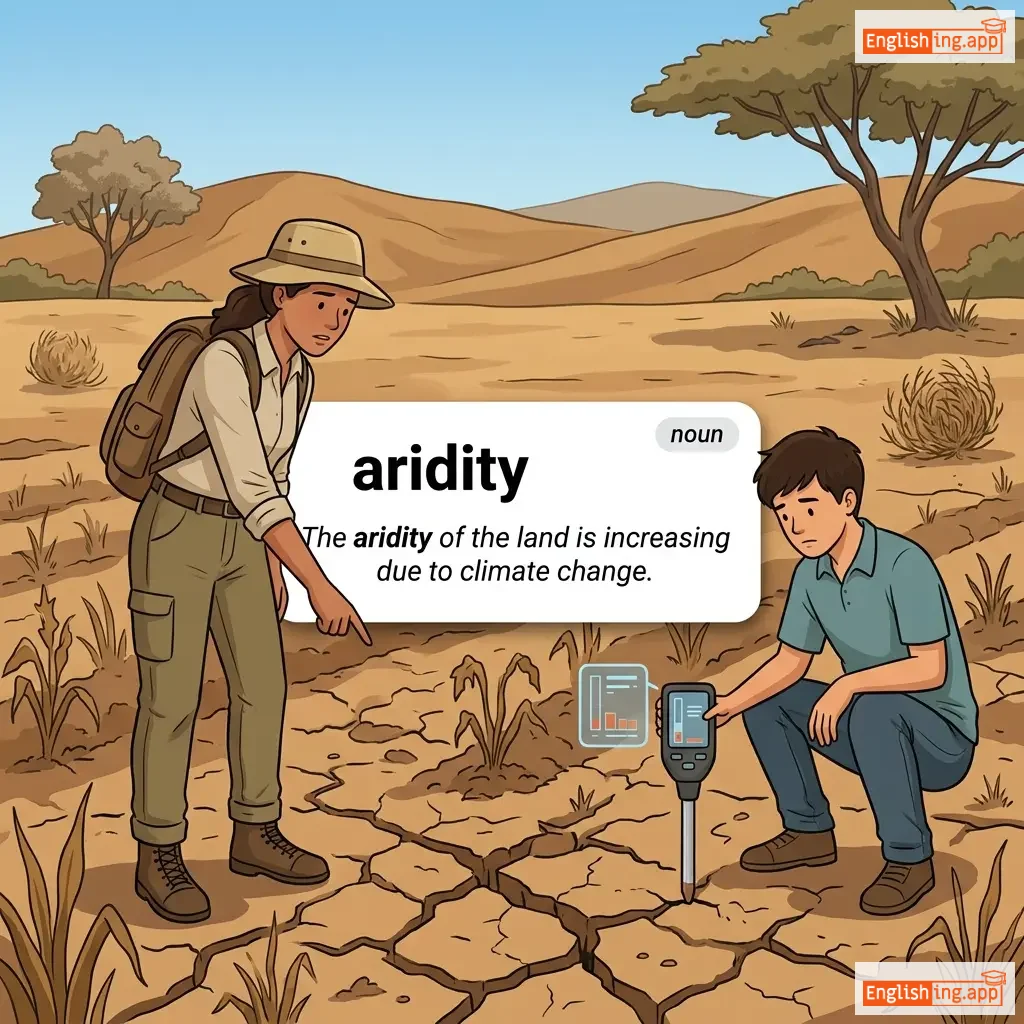
aridity definition card — visual illustration of the meaning
noun
əˈrɪd.ɪ.ti
засуха (zasukha)

The state of being extremely dry, especially having insufficient rainfall to support vegetation.

"The aridity of the land is increasing due to climate change."

"Засуха на земле усиливается из-за изменения климата." (Zasukha na zemle usilivayetsya iz-za izmeneniya klimata.)
verb
/əˈraɪz/
возникать (voznikat')

to begin to exist or to happen

"Problems may arise if you don't plan ahead."

"Проблемы могут возникнуть, если вы не спланируете заранее." (Problemy mogut vozniknut', esli vy ne splanirovate zaraneye.)
noun
/ˌærɪˈstɑːkrəsi/
аристократия (aristokratiya)

a class of people holding exceptional rank and privileges, especially hereditary nobility

"The aristocracy often had influence over political decisions."

"Аристократия часто имела влияние на политические решения." (Aristokratiya chasto imela vliyaniye na politicheskiye resheniya.)
noun
/ˈærɪstəkræt/
аристократ (aristokrat)

a member of the aristocracy; a nobleman or woman

"The aristocrat lived in a lavish mansion."

"Аристократ жил в роскошном особняке." (Aristokrat zhiv v roskoshnom osobnyake.)
adjective
/ˌærɪˈstɒkrætɪk/
аристократический; принадлежащий к аристократии (aristokraticheskiy)

noble; having the manners of the upper class

"She had an aristocratic bearing that commanded respect."

"Она имела аристократическое поведение, которое вызывало уважение." (Ona imela aristokraticheskoe povedenie, kotoroe vyzyvalo uzhazhenie.)
noun
/ɑːrm/
рука (ruka)

the part of the body from the shoulder to the hand; also a branch or division of an organization

"She broke her arm while playing football."

"Она сломала руку, играя в футбол." (Ona slomala ruku, igrya v futbol.)
noun
/ɑːrˈmɑːdə/
флотилия военных кораблей (flotiliya voyennykh korabley)

A large fleet of warships.

"The Spanish Armada sailed against England in 1588."

"Испанская Армада отправилась против Англии в 1588 году." (Ispanskaya Armada otpravilas' protiv Anglii v 1588 godu.)
adjective
/ɑːrmd/
вооружённый (vooruzhyonny)

equipped with or carrying weapons

"The bank was robbed by armed men."
"Банк был ограблен вооружёнными людьми." (Bank byl ograblen vooruzhyonnymi lyud'mi.)
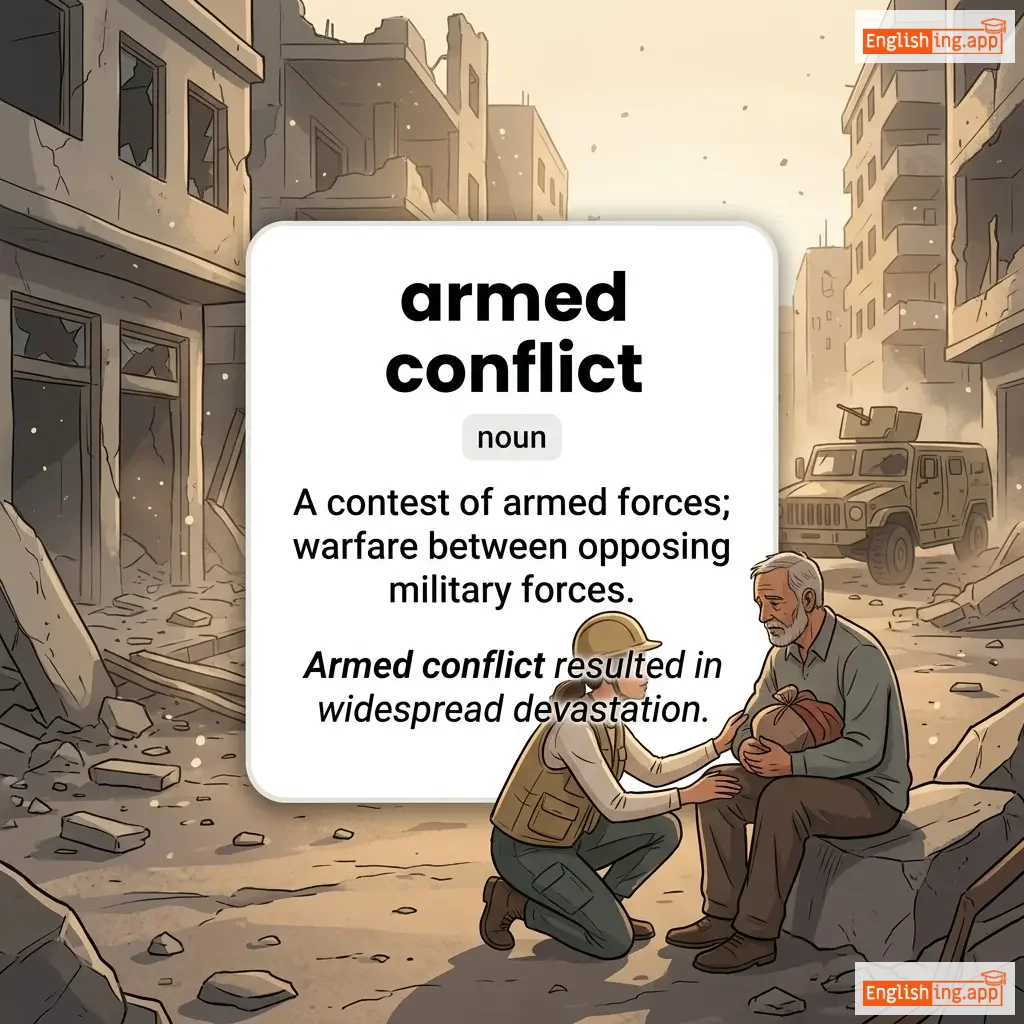
armed conflict definition card — visual illustration of the meaning
noun
ɑːmd ˈkɒn.flɪkt
вооружённый конфликт (vooruzhyonny konflikt)

A contest of armed forces; warfare between opposing military forces.

"Armed conflict resulted in widespread devastation."

"Вооружённый конфликт привёл к широкомасштабному разрушению." (Vooruzhyonny konflikt privyol k shirokomasshtabnomu razrusheniyu.)
noun
/ˈɑːrmfʊl/
плечо (plecho)

As much as can be carried in one or both arms.

"She carried an armful of books into the library."

"Она несла плечо книг в библиотеку." (Ona nesla plecho knig v biblioteku.)
noun
/ˈɑːm.lət/
повязка на руку (povyazka na ruku)

a band worn around the upper arm as an ornament

"The traditional dancer wore golden armlets that gleamed in the spotlight."

"Традиционная танцовщица носила золотые браслеты, которые сверкали в свете прожекторов." (Traditsionnaya tantsovshchitsa nosila zolotye braslety, kotorye sverkali v svete prozhektorov.)
noun
/ˈɑːrməri/
арсенал (arsenal)

A place where weapons are stored; a supply of resources or skills.

"The soldiers kept their weapons in the armory."

"Солдаты хранили оружие в арсенале." (Soldaty khranili oruzhiye v arsenale.)
noun
/ˈɑːr.mər/
бронирование (bronirovanie)

protective covering worn by soldiers; metal plating for military vehicles

"The knight wore heavy armour to protect himself in battle."

"Рыцарь носил тяжелую броню, чтобы защитить себя в бою." (Ritsar' nosil tyazheluyu bron'yu, chtoby zashchitit' sebya v boyu.)
noun
/ˈɑːrm.pɪt/
подмышка (podmyshka)

the hollow area under the arm where it joins the shoulder

"He applied deodorant to his armpit."

"Он нанес дезодорант на свою подмышку." (On nanes deodorant na svoyu podmyshku)
noun
/ɑːrmz/
оружие / руки (oruzhie / ruki)

weapons and ammunition; or the upper limbs of the human body

"The country decided to reduce its stock of arms."

"Страна решила сократить свои запасы оружия." (Strana reshilas sokratit svoi zapasy oruzhiya.)
noun
/ˈɑːrmi/
армия (armiya)

a large organized military force trained for war

"The army protected the border from attack."

"Армия защитила границу от атаки." (Armiya zashchitila granitsu ot ataki.)
noun
/əˈroʊmə/
аромат (aromat)

A pleasant, distinctive smell.

"The aroma of freshly baked bread filled the kitchen."

"Аромат свежевыпеченного хлеба заполнил кухню." (Aromat svezhevypechennogo khleba zapolnil kukhnyu.)
verb
/əˈdɔːrn/
украшать (ukrashat)

to decorate or add beauty to something

"The hall was adorned with flowers for the wedding."

"Зал был украшен цветами для свадьбы." (Zal byl ukrashen tsvetami dlya svad'by.)