Vocabularios

Descubra, aprenda y domine el vocabulario en inglés

adjective
/ˌɑːrbəˈrɛsənt/
arborescente (arborescente)

having the appearance or characteristics of a tree; tree-like

"The coral had an arborescent form that resembled a miniature forest."

"El coral tenía una forma arbórea que se parecía a un pequeño bosque." (El coral tenia una forma arborea que se parecia a un pequeno bosque.)
noun
/ˌɑːrbəˈriːtəm/
arborétum (arboretum)

a place where trees, shrubs, and plants are grown for scientific study or public display

"We visited the city’s arboretum to learn about exotic trees."

"Visitamos el arborétum de la ciudad para aprender sobre árboles exóticos." (Visitamos el arboretum de la ciudad para aprender sobre arboles exoticos.)
noun
/ˈɑːrbərɪˌkʌltʃər/
arboricultura (arboricultura)

the cultivation and management of trees and shrubs

"He studied arboriculture to improve urban green spaces."

"Estudió arboricultura para mejorar los espacios verdes urbanos." (Estudió arboricultura para mejorar los espacios verdes urbanos.)
noun
/ɑːrˈkeɪd/
arcade (arkeyd)

a covered passage with arches along one or both sides; also a place with coin-operated games

"The children spent the afternoon playing games at the arcade."

"Los niños pasaron la tarde jugando en el arcade." (Los niños pasaron la tarde jugando en el arcade.)
adjective
/ɑːrˈkeɪn/
arcano (arcano)

understood by few; mysterious or secret

"The professor’s lecture was full of arcane details that only specialists could follow."

"La conferencia del profesor estaba llena de detalles arcanos que solo los especialistas podían seguir." (La conferencia del profesor estaba llena de detalles arcanos que solo los especialistas podían seguir.)
prefix
/ɑːrtʃ-/
principal / supremo (principal / supremo)

a prefix meaning chief, principal, or extreme in rank, importance, or degree

"The word 'archenemy' uses the prefix 'arch-' to mean the main enemy."

"La palabra 'archienemigo' usa el prefijo 'arch-' para significar el enemigo principal." (La palabra 'archienemigo' usa el prefijo 'arch-' para significar el enemigo principal.)
noun
/ˌɑːrkiˈɑːlədʒi/
arqueología (arqueologia)

the study of human history and prehistory through excavation and analysis of artifacts, monuments, and other physical remains

"She studied archaeology to learn about ancient civilizations."

"Ella estudió arqueología para aprender sobre civilizaciones antiguas." (Ella estudió arqueología para aprender sobre civilizaciones antiguas.)
adjective
/ɑːrˈkeɪɪk/
arcaico (arkeik)

very old or old-fashioned; belonging to an earlier time

"Some laws are considered archaic and no longer relevant."

"Algunas leyes se consideran arcaicas y ya no son relevantes." (Algunas leyes se consideran arcaicas y ya no son relevantes.)
noun
/ˈɑːrkeɪˌɪzəm/
arcaísmo (arcaismo)

a word, expression, or style of language that is no longer in everyday use

"The poem is full of archaisms that give it an old-fashioned flavor."

"El poema está lleno de arcaísmos que le dan un sabor anticuado." (El poema esta lleno de arcaismos que le dan un sabor anticuado.)
noun
/ˈɑːrkeɪndʒəl/
arcángel (arcangel)

A high-ranking angel, often considered a chief messenger or leader among angels.

"Michael is often depicted as the most powerful archangel."

"Miguel suele ser representado como el arcángel más poderoso." (Miguel suele ser representado como el arcangel mas poderoso.)
noun
/ˌɑːrtʃˈbɪʃəp/
arzobispo (arzobispo)

A senior bishop in charge of an archdiocese in the Christian Church.

"The archbishop delivered a sermon to thousands of people."

"El arzobispo dio un sermón a miles de personas." (El arzobispo dio un sermón a miles de personas.)
noun
/ˌɑːrtʃˈdiːkən/
archidiácono (archidiacono)

A senior clergyman in the Christian Church ranking below a bishop.

"The archdeacon assisted the bishop in administrative duties."

"El archidiácono ayudó al obispo en los deberes administrativos." (El archidiacono ayudo al obispo en los deberes administrativos.)
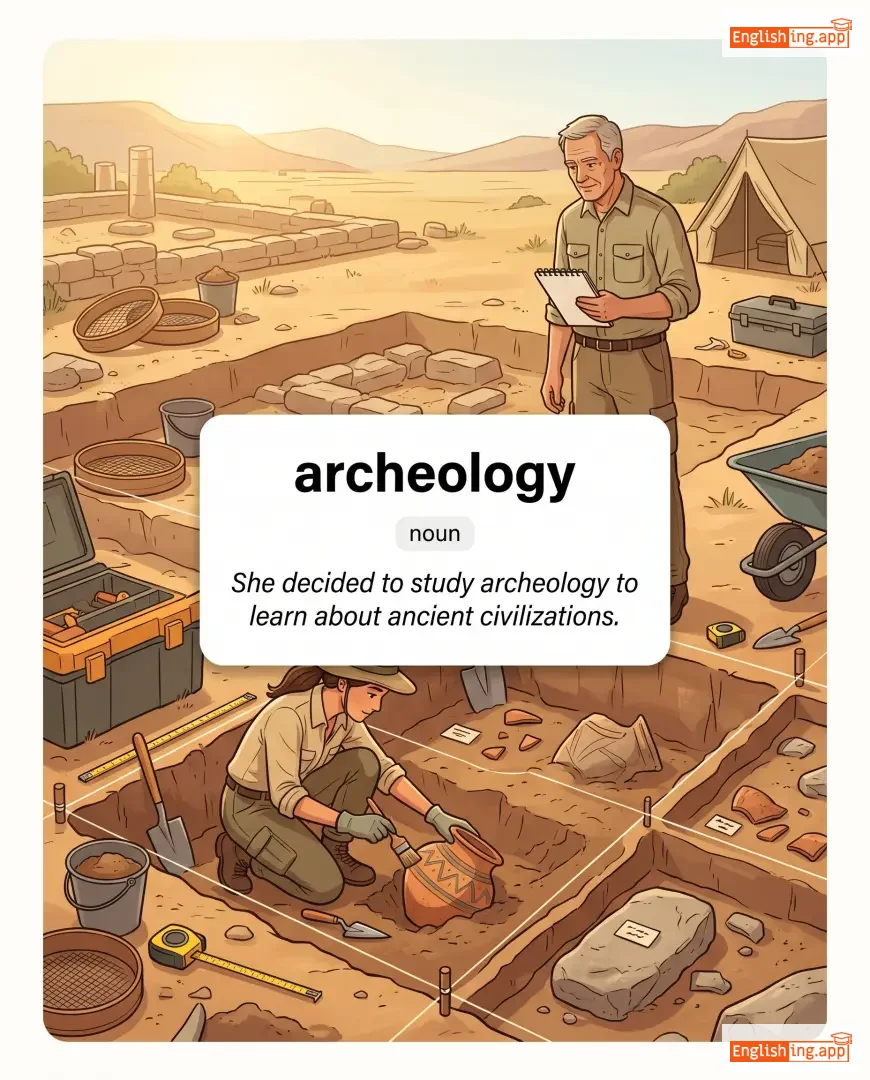
archeology definition card — visual illustration of the meaning
noun
/ˌɑːr.kiˈɑː.lə.dʒi/
arqueología (arqueologia)

the study of human history and prehistory through excavation and analysis of artifacts and structures

"She decided to study archeology to learn about ancient civilizations."

"Decidió estudiar arqueología para aprender sobre civilizaciones antiguas." (Decidio estudiar arqueologia para aprender sobre civilizaciones antiguas.)
archetype definition card — visual illustration of the meaning
noun
/ˈɑːrkɪtaɪp/
arquetipo (arquetipo)

The original model or perfect example from which others are copied or derived.

"He is the archetype of a successful entrepreneur."

"Él es el arquetipo de un emprendedor exitoso." (Él es el arquetipo de un emprendedor exitoso.)
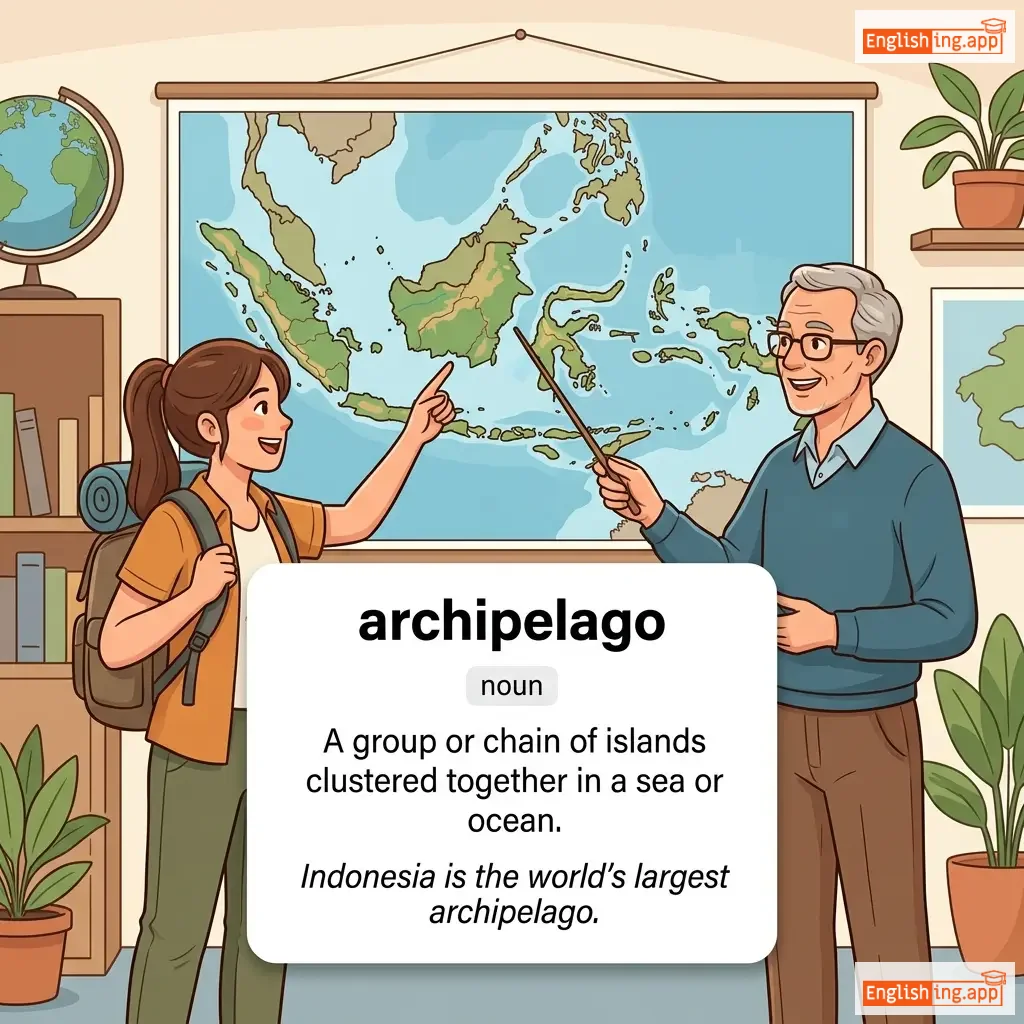
archipelago definition card — visual illustration of the meaning
noun
/ˌɑːrkəˈpɛləɡoʊ/
archipiélago (archipielago)

A group or chain of islands clustered together in a sea or ocean.

"Indonesia is the world’s largest archipelago."

"Indonesia es el archipiélago más grande del mundo." (Indonesia es el archipielago mas grande del mundo.)
noun
/ˈɑː.kɪ.tekt/
arquitecto (arquitecto)

a person who designs buildings and oversees their construction

"The architect designed a modern office building."

"El arquitecto diseñó un moderno edificio de oficinas." (El arquitecto diseñó un moderno edificio de oficinas.)
adjective
/ˌɑːrkɪˈtɛktʃərəl/
arquitectónico (arquitectonico)

relating to the design and style of buildings and structures

"The city is known for its beautiful architectural designs."

"La ciudad es conocida por sus hermosos diseños arquitectónicos." (La ciudad es conocida por sus hermosos diseños arquitectonicos.)
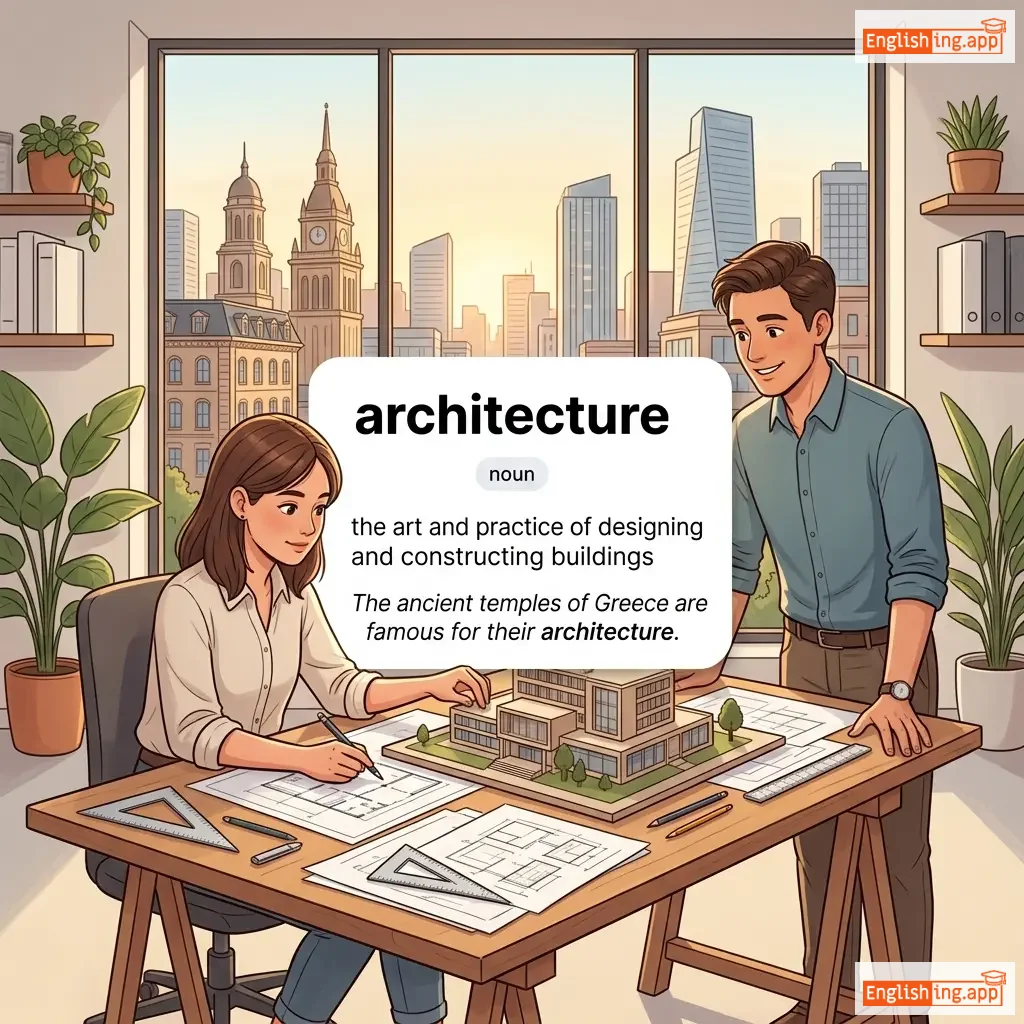
architecture definition card — visual illustration of the meaning
noun
/ˈɑːkɪˌtɛktʃər/
arquitectura (arquitectura)

the art and practice of designing and constructing buildings

"The ancient temples of Greece are famous for their architecture."

"Los antiguos templos de Grecia son famosos por su arquitectura." (Los antiguos templos de Grecia son famosos por su arquitectura.)
noun, verb
/ˈɑːrkaɪv/
archivo (archivo)

A collection of historical documents or records; to store or preserve information for future use.

"The library decided to archive all the old manuscripts."

"La biblioteca decidió archivar todos los antiguos manuscritos." (La biblioteca decidio archivar todos los antiguos manuscritos.)
noun
/ˈɑːrkaɪvz/
archivos (arkaivs)

A place or collection where historical records and documents are stored.

"She visited the national archives to research her family history."

"Ella visitó los archivos nacionales para investigar la historia de su familia." (Ella visito los archivos nacionales para investigar la historia de su familia.)
adjective
/ˈɑːrdənt/
apasionado, fervoroso (ardent)

Having or showing very strong feelings or passion.

"He is an ardent supporter of environmental protection."

"Él es un fervoroso defensor de la protección del medio ambiente." (Él es un fervoroso defensor de la protección del medio ambiente.)
ardor definition card — visual illustration of the meaning
noun
/ˈɑːrdər/
pasión, entusiasmo (ardor)

Great enthusiasm or passion.

"She spoke with ardor about her new project."

"Ella habló con ardor sobre su nuevo proyecto." (Ella hablo con ardor sobre su nuevo proyecto.)
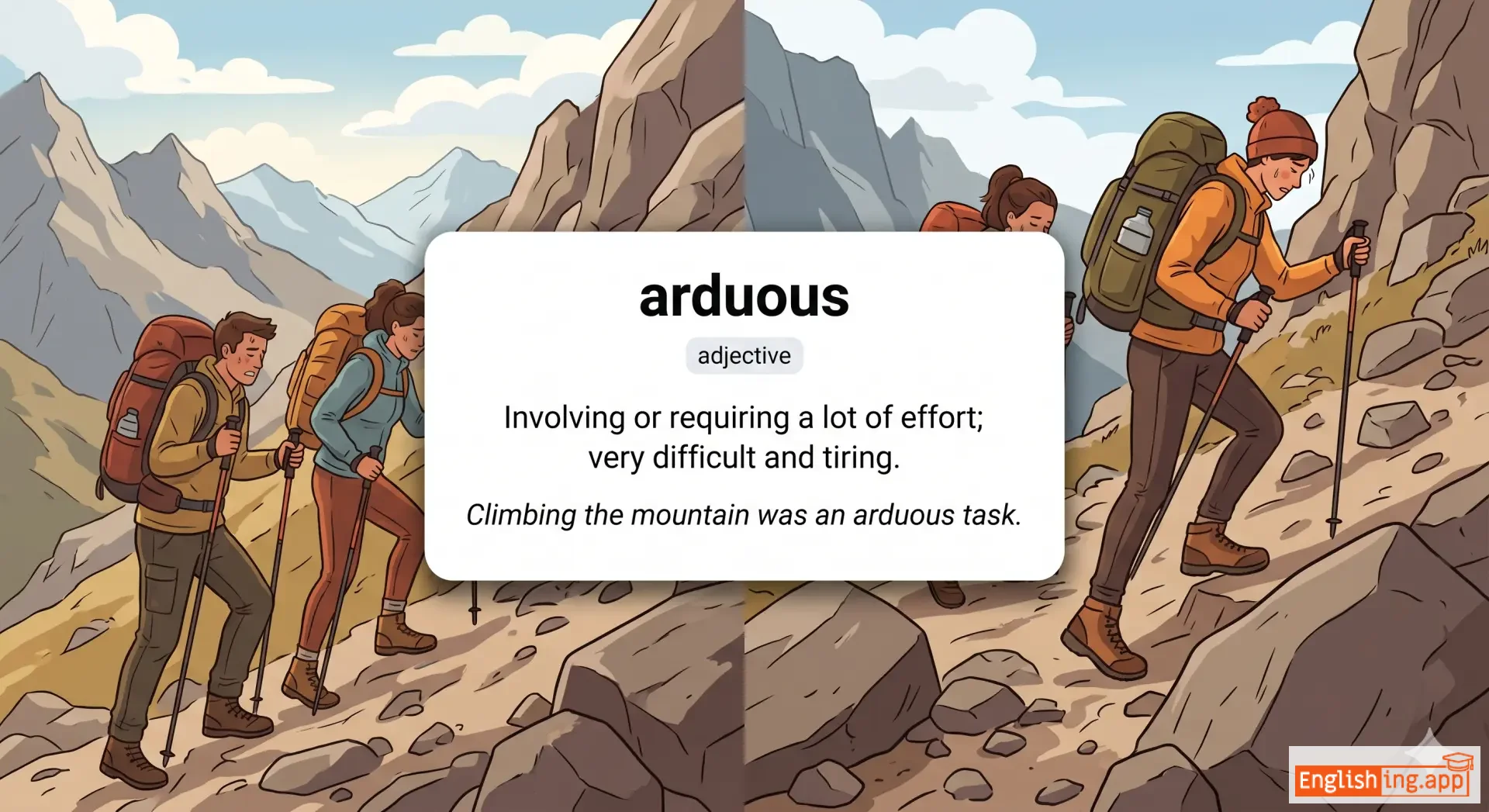
arduous definition card — visual illustration of the meaning
adjective
/ˈɑːrdʒuəs/
arduo (arduo)

Involving or requiring a lot of effort; very difficult and tiring.

"Climbing the mountain was an arduous task."

"Subir la montaña fue una tarea ardua." (Subir la montaña fue una tarea ardua.)
noun
/ˈeə.ri.ə/
área (area)

a particular region or space; the extent of a surface

"This area is known for its beautiful parks."

"Esta área es conocida por sus hermosos parques." (Esta area es conocida por sus hermosos parques.)
noun
/əˈriːnə/
campo, escenario (campo, escenario)

a large area surrounded by seats for sports, entertainment, or other events

"The basketball game will be held in the new arena downtown."

"El partido de baloncesto se celebrará en la nueva arena en el centro de la ciudad." (El partido de baloncesto se celebrara en la nueva arena en el centro de la ciudad.)
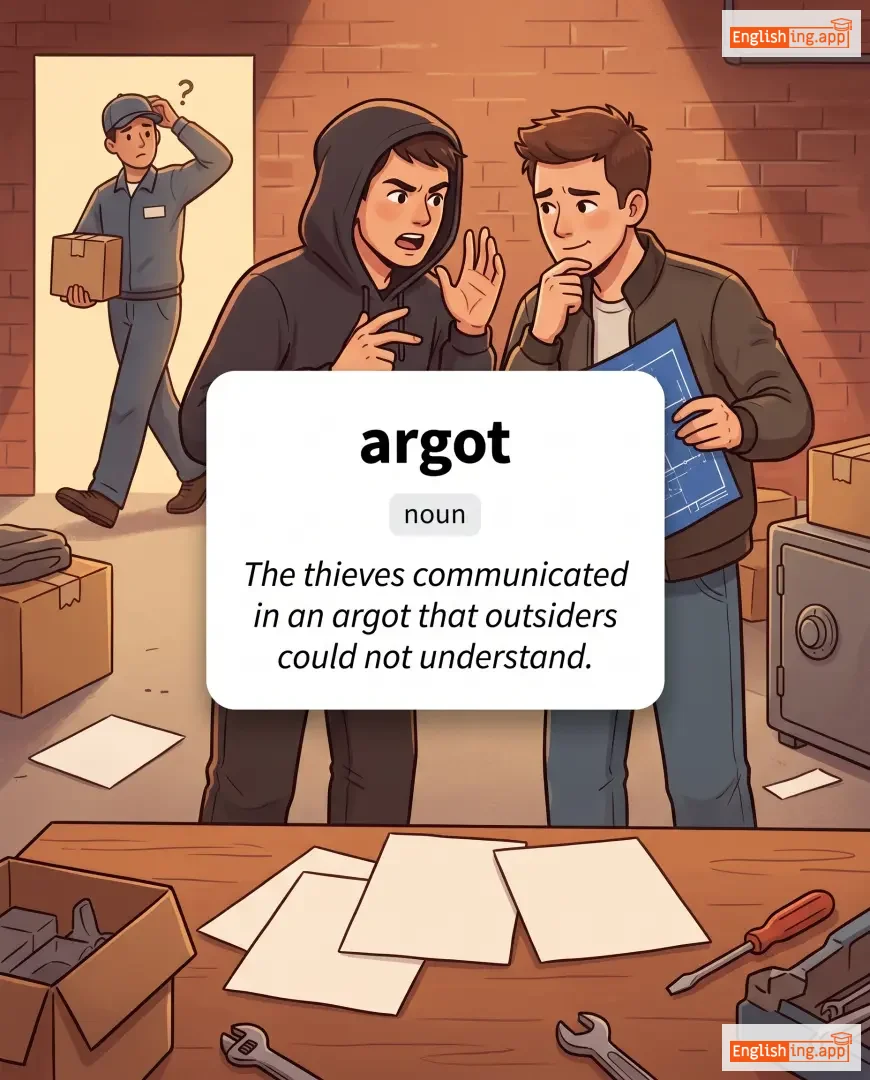
argot definition card — visual illustration of the meaning
noun
/ˈɑːrɡoʊ/
jerga especializada (jerga especializada)

the specialized vocabulary or jargon of a particular group, especially one with a common interest or occupation

"The thieves communicated in an argot that outsiders could not understand."

"Los ladrones se comunicaron en un argot que los forasteros no pudieron entender." (Los ladrones se comunicaron en un argot que los forasteros no pudieron entender.)
adjective
/ˈɑːrɡjuəbl/
discutible (discutible)

open to debate or discussion; not certain and capable of being argued for or against

"It is arguable that technology has improved our quality of life."

"Es discutible que la tecnología haya mejorado nuestra calidad de vida." (es discutible que la tecnologia haya mejorado nuestra calidad de vida)
adverb
/ˈɑːɡjuːəbli/
posiblemente (posiblemente)

used to say that a statement is open to argument or is considered true by many people

"She is arguably the most talented player on the team."

"Ella es posiblemente la jugadora más talentosa del equipo." (Ella es posiblemente la jugadora mas talentosa del equipo)
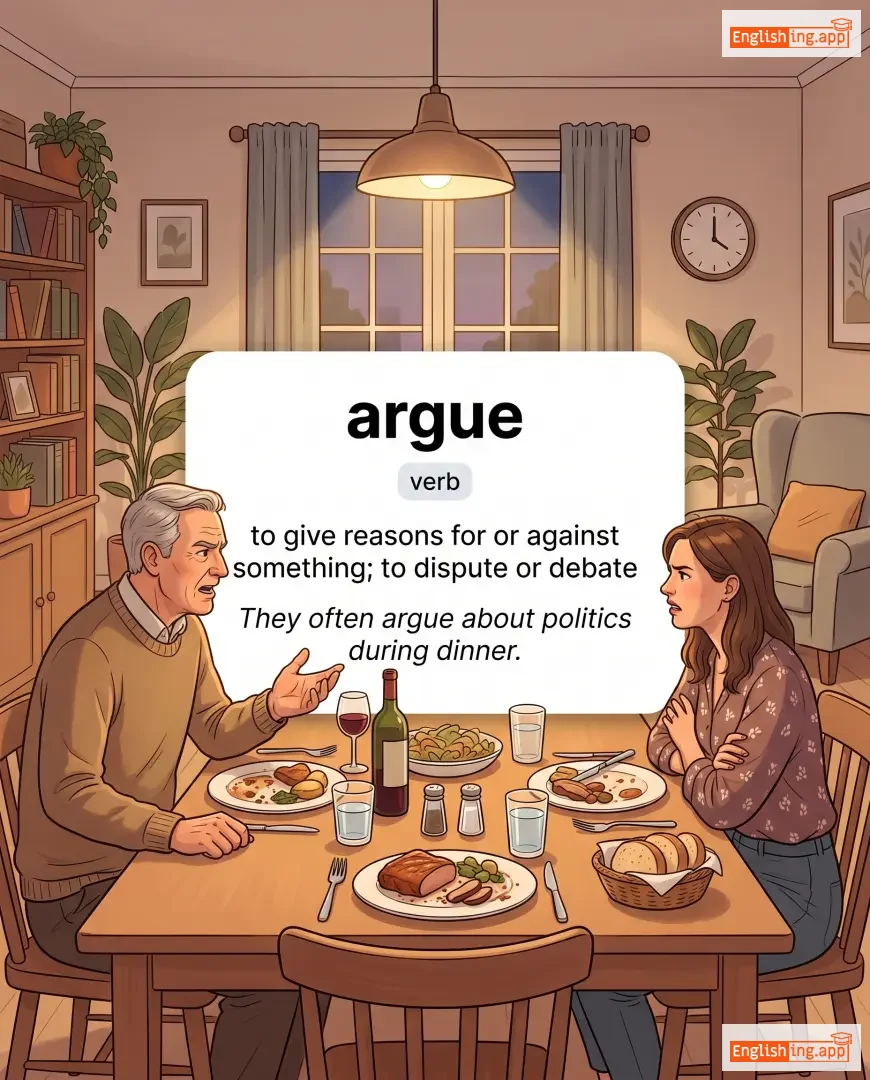
argue definition card — visual illustration of the meaning
verb
/ˈɑːrɡjuː/
discutir (discutir)

to give reasons for or against something; to dispute or debate

"They often argue about politics during dinner."

"Ellos a menudo discuten sobre política durante la cena." (Ellos a menudo discuten sobre política durante la cena.)
argument definition card — visual illustration of the meaning
noun
/ˈɑːrɡjumənt/
discusión, argumento (discusion, argumento)

a disagreement, or a reason given to support or oppose an idea

"They had a heated argument about money."

"Tuvieron una discusión acalorada sobre el dinero." (Tuvieron una discusion acalorada sobre el dinero.)
noun
/ˈɑːriə/
pieza vocal en solitario (pieza vocal en solitario)

a solo vocal piece with instrumental accompaniment, typically in an opera

"The soprano performed a moving aria during the second act."

"La soprano interpretó un aria conmovedora durante el segundo acto." (La soprano interpreto un aria conmovedora durante el segundo acto.)
adjective
/ˈærɪd/
árido (arido)

extremely dry; lacking in interest or excitement

"The desert is known for its arid climate."

"El desierto es conocido por su clima árido." (El desierto es conocido por su clima arido.)
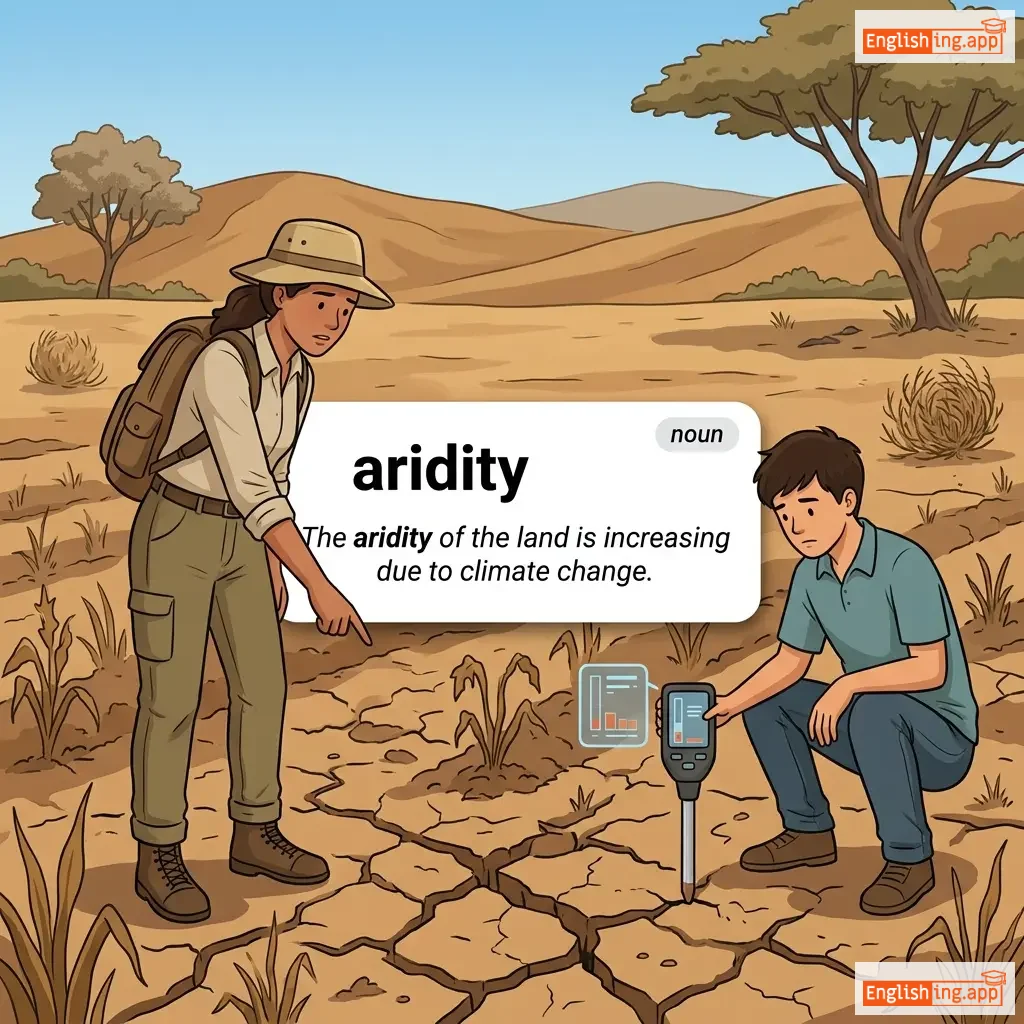
aridity definition card — visual illustration of the meaning
noun
əˈrɪd.ɪ.ti
aridez (aridez)

The state of being extremely dry, especially having insufficient rainfall to support vegetation.

"The aridity of the land is increasing due to climate change."

"La aridez de la tierra está aumentando debido al cambio climático." (La aridez de la tierra está aumentando debido al cambio climático.)
verb
/əˈraɪz/
surgir (surgir)

to begin to exist or to happen

"Problems may arise if you don't plan ahead."

"Pueden surgir problemas si no planeas con anticipación." (Pueden surgir problemas si no planeas con anticipación.)
noun
/ˌærɪˈstɑːkrəsi/
aristocracia (aristocracia)

a class of people holding exceptional rank and privileges, especially hereditary nobility

"The aristocracy often had influence over political decisions."

"La aristocracia a menudo tenía influencia sobre las decisiones políticas." (La aristocracia a menudo tenía influencia sobre las decisiones políticas.)
noun
/ˈærɪstəkræt/
aristócrata (aristokrata)

a member of the aristocracy; a nobleman or woman

"The aristocrat lived in a lavish mansion."

"El aristócrata vivía en una mansión lujosa." (El aristócrata vivía en una mansión lujosa.)
adjective
/ˌærɪˈstɒkrætɪk/
aristocrático; perteneciente a la nobleza (aristocratico)

noble; having the manners of the upper class

"She had an aristocratic bearing that commanded respect."

"Ella tenía una actitud aristocrática que imponía respeto." (Ella tenía una actitud aristocrática que imponía respeto.)
noun
/ɑːrm/
brazo (brazo)

the part of the body from the shoulder to the hand; also a branch or division of an organization

"She broke her arm while playing football."

"Ella se rompió el brazo mientras jugaba al fútbol." (Ella se rompio el brazo mientras jugaba al futbol.)
noun
/ɑːrˈmɑːdə/
flota de guerra (flota de guerra)

A large fleet of warships.

"The Spanish Armada sailed against England in 1588."

"La Armada Española navegó contra Inglaterra en 1588." (La Armada Española navegó contra Inglaterra en 1588.)
adjective
/ɑːrmd/
armado (armado)

equipped with or carrying weapons

"The bank was robbed by armed men."

"El banco fue robado por hombres armados." (El banco fue robado por hombres armados.)
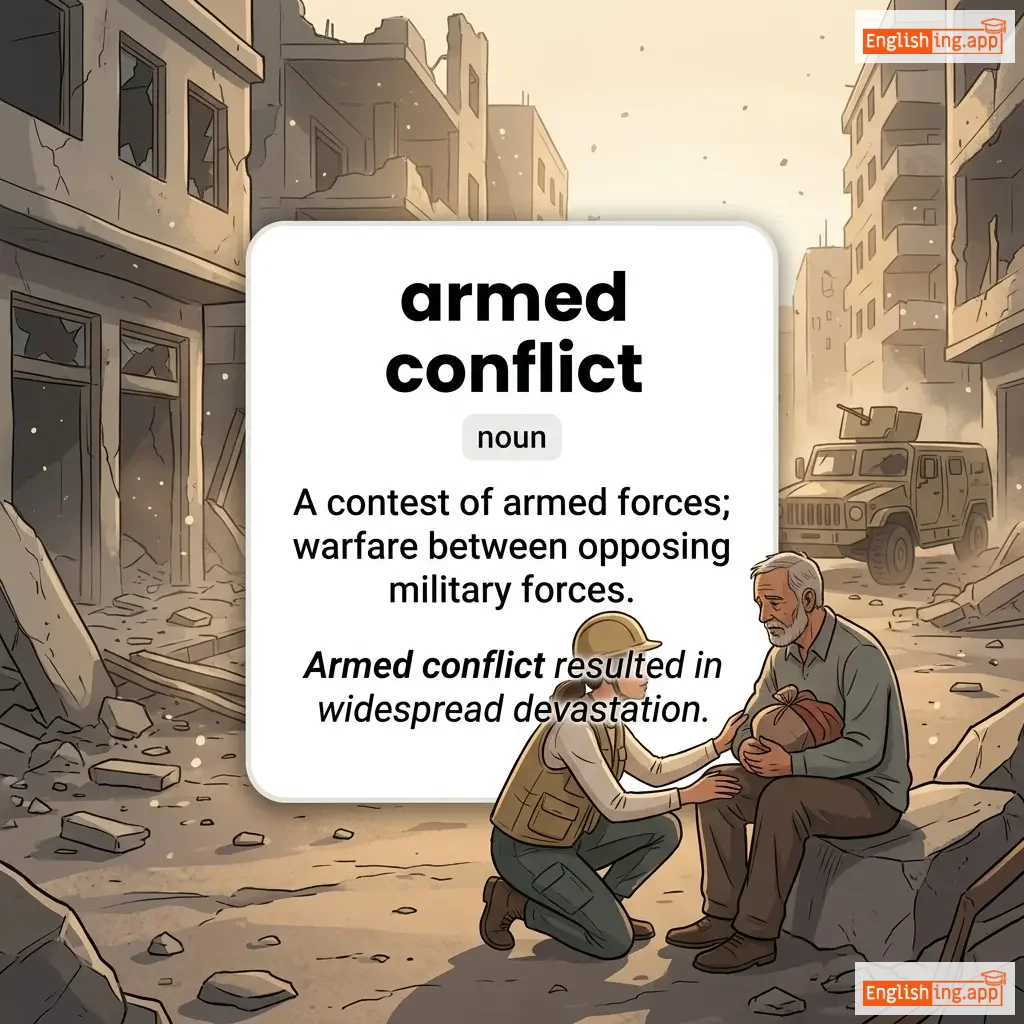
armed conflict definition card — visual illustration of the meaning
noun
ɑːmd ˈkɒn.flɪkt
conflicto armado (conflicto armado)

A contest of armed forces; warfare between opposing military forces.

"Armed conflict resulted in widespread devastation."

"El conflicto armado resultó en una devastación generalizada." (El conflicto armado resultó en una devastación generalizada.)
noun
/ˈɑːrmfʊl/
brazo lleno (brazo lleno)

As much as can be carried in one or both arms.

"She carried an armful of books into the library."

"Ella llevó un brazo lleno de libros a la biblioteca." (Ella llevó un brazo lleno de libros a la biblioteca.)
noun
/ˈɑːm.lət/
brazalete (brazalete)

a band worn around the upper arm as an ornament

"The traditional dancer wore golden armlets that gleamed in the spotlight."

"La bailarina tradicional llevaba brazaletes dorados que brillaban bajo el reflector." (La bailarina tradicional llevaba brazaletes dorados que brillaban bajo el reflector.)
noun
/ˈɑːrməri/
arsenal (arsenal)

A place where weapons are stored; a supply of resources or skills.

"The soldiers kept their weapons in the armory."

"Los soldados guardaron sus armas en el arsenal." (Los soldados guardaron sus armas en el arsenal.)
noun
/ˈɑːr.mər/
armadura (armadura)

protective covering worn by soldiers; metal plating for military vehicles

"The knight wore heavy armour to protect himself in battle."

"El caballero llevaba una armadura pesada para protegerse en la batalla." (El caballero llevaba una armadura pesada para protegerse en la batalla.)
noun
/ˈɑːrm.pɪt/
axila (axila)

the hollow area under the arm where it joins the shoulder

"He applied deodorant to his armpit."

"Se aplicó desodorante en su axila." (Se aplicó desodorante en su axila)
noun
/ɑːrmz/
armas / brazos (armas / brazos)

weapons and ammunition; or the upper limbs of the human body

"The country decided to reduce its stock of arms."

"El país decidió reducir su stock de armas." (El pais decidio reducir su stock de armas.)
noun
/ˈɑːrmi/
ejército (ejercito)

a large organized military force trained for war

"The army protected the border from attack."

"El ejército protegió la frontera de un ataque." (El ejercito protegió la frontera de un ataque.)
noun
/əˈroʊmə/
aroma (aroma)

A pleasant, distinctive smell.

"The aroma of freshly baked bread filled the kitchen."

"El aroma de pan recién horneado llenó la cocina." (El aroma de pan recien horneado lleno la cocina.)
verb
/əˈdɔːrn/
adornar (adornar)

to decorate or add beauty to something

"The hall was adorned with flowers for the wedding."

"El salón fue adornado con flores para la boda." (El salon fue adornado con flores para la boda.)