词汇表

英语词汇词典 | 单词含义、定义和示例

noun
/ˈæf.ə.rɪ.zəm/

a short, witty saying that expresses a general truth or principle

"He began his speech with an aphorism about life and success."

adjective
/ˌæf.əˈrɪs.tɪk/
格言风格 (gé yán fēng gé)

expressed in the style of a short, witty saying

"Her writing style is concise and aphoristic."

"她的写作风格简洁而格言式。" (Tā de xiě zuò fēng gé jiǎn jié ér gé yán shì.)
noun
/ˈeɪ.pi.ə.rɪst/
养蜂人 (yǎng fēng rén)

a person who keeps and tends bees for honey production

"The apiarist collected fresh honey from the hives."

"养蜂人从蜂巢中收集了新鲜的蜂蜜。" (Yǎng fēng rén cóng fēngcháo zhōng shōují le xīnxiān de fēngmì.)
noun
/ˈeɪ.pi.ˌɛr.i/
蜂箱养殖场 (fēngxiāng yǎngzhíchǎng)

A place where beehives are kept, especially for commercial purposes.

"The farmer built a new apiary to produce organic honey."

"农民建造了一个新的蜂箱养殖场,以生产有机蜂蜜。" (Nóngmín jiànzào le yīgè xīn de fēngxiāng yǎngzhíchǎng, yǐ shēngchǎn yǒujī fēngmì.)
noun
/ˈæp.ɪˌkʌl.tʃər/
养蜂 (yǎngfēng)

The practice of keeping and raising bees for honey and other products.

"Apiculture plays a vital role in agriculture by supporting pollination."

"养蜂在农业中起着至关重要的作用,支持授粉。" (Yǎngfēng zài nóngyè zhōng qǐzhe zhìguān zhòngyào de zuòyòng, zhīchí shòufěn.)
noun
/əˈplɒm/

Complete and confident self-assurance or poise.

"She handled the difficult questions with aplomb."

adjective
/əˌpɒk.əˈlɪp.tɪk/
末日的 (mòrì de)

Describing the end of the world, or something catastrophic and disastrous.

"The movie depicts an apocalyptic future after a nuclear war."

"这部电影描绘了核战争后的末日未来。" (Zhè bù diànyǐng miáohuìle hé zhànzhēng hòu de mò rì wèilái.)
adjective
/əˈpɒ.krɪ.fəl/
可疑的 (kěyí de)

Of doubtful authenticity, though widely circulated as true.

"The story about him saving the village is probably apocryphal."

"他救村庄的故事可能是可疑的。" (Tā jiù cūnzhuāng de gùshì kěnéng shì kěyí de.)
apogee definition card — visual illustration of the meaning
noun
/ˈæpədʒiː/
顶点 (ding dian)

the highest or most distant point; the climax or peak of something

"The empire reached its apogee during the 18th century."

"帝国在18世纪达到了它的顶点。" (Diguo zai 18 shiji daduo le ta de ding dian.)
adjective
/ˌeɪpəˈlɪtɪkəl/
不关心政治 (bù guānxīn zhèngzhì)

not interested in or not connected with politics

"She prefers to stay apolitical and focus on her work."

"她更喜欢保持不关心政治的态度,专注于自己的工作。" (Tā gèng xǐhuān bǎochí bù guānxīn zhèngzhì de tàidù, zhuānzhù yú zìjǐ de gōngzuò.)
noun
/əˈpɒlədʒɪst/
辩护者 (bianhuzhe)

a person who defends or justifies something, often a controversial belief or institution

"He is known as an apologist for authoritarian regimes."

"他被认为是独裁政权的辩护者。" (Ta bei renwei shi duicai zhengquan de bianhuzhe.)
verb
/əˈpɒlədʒaɪz/
道歉 (dàoqiàn)

to say sorry for something wrong you have done

"He apologized for being late to the meeting."

"他因迟到而道歉。" (Tā yīn chídào ér dàoqiàn.)
noun
/ˈæpəˌlɔːɡ/
道德故事 (daode gushi)

a short moral story or fable intended to teach a lesson

"The teacher used an old apologue to explain honesty to the children."

"老师用一个旧的道德故事向孩子们解释诚实。" (Lǎoshī yòng yī gè jiù de dào dé gùshì xiàng háizimen jiěshì chéngshí.)
noun
/əˈpɒlədʒi/

a statement expressing regret for something wrong or hurtful

"He offered an apology for being late to the meeting."

🗣️

apophasis

noun
/əˈpɒfəsɪs/

A rhetorical device where the speaker brings up a subject by denying it or pretending to pass over it.

"The politician used apophasis by saying, 'I won’t even mention my opponent’s scandals.'"

noun
/ˈæpəfθɛm/
简短、机智且富有教育意义的谚语或格言 (apofthem)

A short, pithy, and instructive saying or maxim.

"She always had a witty apophthegm to share at meetings."

"她总是有一个机智的阿波夫塞姆,在会议上分享。" (Tā zǒng shì yǒu yīgè jīzhì de ā bō fū sāi mǔ, zài huìyì shàng fēnxiǎng.)
adjective
/ˌæpəˈplɛktɪk/
愤怒的 (fennu de)

Extremely angry; furious.

"He was apoplectic when he heard about the unfair decision."

"当他听到关于不公正决定的消息时,他愤怒得几乎要爆炸。" (Dang ta tingdao guanyu bugongzheng jueding de xiaoxi shi, ta fennu de jihu yao baozha.)
noun
/ˈæpəplɛksi/
由于中风或极端愤怒而导致的突然失去意识或控制 (zhōngfēng)

A sudden loss of consciousness or control due to stroke or extreme anger.

"The old man nearly had apoplexy when he heard the shocking news."

"那位老人听到震惊的消息时差点昏厥。" (nà wèi lǎorén tīng dào zhènjīng de xiāoxī shí chàdiǎn hūnjué.)
noun
/əˈpɒstəsi/
背教 (beijiao)

The abandonment or renunciation of a religious or political belief.

"His public apostasy shocked his followers."

"他的公开背教震惊了他的追随者。" (Tā de gōngkāi bèijiào zhènjīngle tā de zhuīsuí zhě.)
noun
/ˈæpəˌsteɪt/
叛教者 (pànjiàozhě)

A person who renounces a religious or political belief or principle.

"He was labeled an apostate after abandoning the faith of his community."

"他在放弃自己社群的信仰后,被贴上了叛教者的标签。" (Tā zài fàngqì zìjǐ shèqū de xìnyǎng hòu, bèi tiē shàngle pànjiàozhě de biāoqiān.)
noun
/əˈpɒsəl/
使徒, 擁護者 (shǐtú, yōnghù zhě)

A vigorous and pioneering advocate or supporter of a particular cause, often used for the early Christian disciples.

"He became an apostle of environmental protection."

"他成為了環保的使徒。" (Tā chéngwéi le huánbǎo de shǐtú.)
noun
/əˈpɒstrəfi/

A punctuation mark (') used to indicate possession or the omission of letters or numbers.

"You need an apostrophe in the word 'children’s'."

noun
/əˈpɒθəˌkɛri/
药剂师 (yao jishi)

A historical term for a person who prepared and sold medicines and drugs.

"The village apothecary provided remedies for many common illnesses."

"村里的药剂师为许多常见的疾病提供了治疗。" (Cun li de yao jishi wei xu duo changjian de jibing tigong le zhiliaozhi.)
apothegm definition card — visual illustration of the meaning
noun
/ˈæpəˌθɛm/
格言, 名言 (géyán, míngyán)

A short, witty, and instructive saying or maxim.

"His speech was filled with apothegms about life and success."

"他的演讲充满了关于生活和成功的格言。" (Tā de yǎnjiǎng chōngmǎnle guānyú shēnghuó hé chénggōng de géyán.)
noun
/əˌpɒθiˈoʊsɪs/
神化, 顶峰 (shénhuà, dǐngfēng)

The highest point of development; the perfect example of something; the elevation of someone to divine status.

"Many see the Renaissance as the apotheosis of art and culture in Europe."

"许多人认为文艺复兴是欧洲艺术和文化的巅峰。" (Xǔduō rén rènwéi wényì fùxīng shì Ōuzhōu yìshù hé wénhuà de diānfēng.)
verb
/əˈpɔːl/
震惊 (zhenjing)

To shock or horrify someone with something unpleasant or bad.

"The cruelty of the crime appalled the entire community."
"犯罪的残忍让整个社区震惊。" (Fànzuì de cánrěn ràng zhěnggè shèqū zhènjīng.)
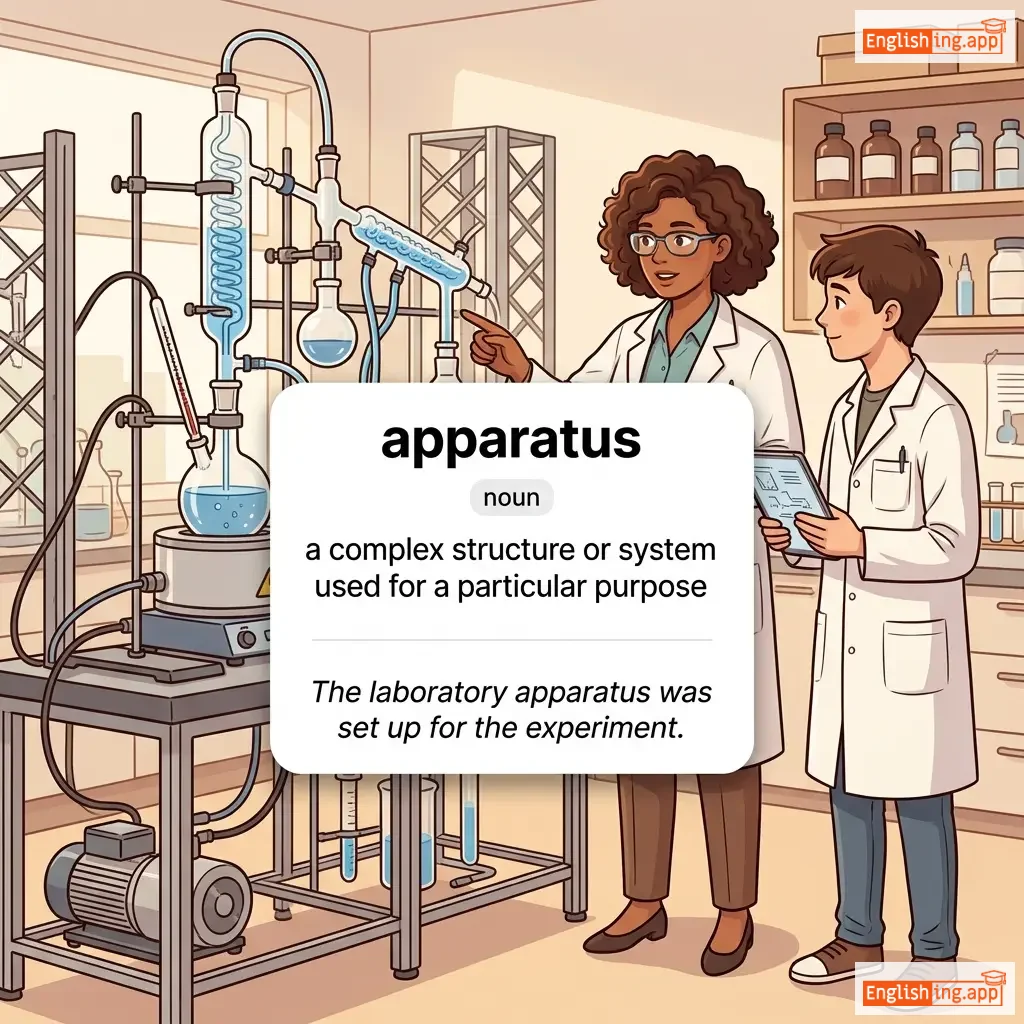
apparatus definition card — visual illustration of the meaning
noun
/ˌæpəˈreɪtəs/
设备 (shebei)

a complex structure or system used for a particular purpose

"The laboratory apparatus was set up for the experiment."

"实验室的设备已设置好进行实验。" (Shíyàn shì de shèbèi yǐ shèzhì hǎo jìnxíng shíyàn.)
noun
/əˈpærəl/
衣服 (yīfu)

Clothing, especially formal or special clothes.

"The store specializes in wedding apparel."

"商店专门出售婚礼服装。" (Shāngdiàn zhuānmén chūshòu hūnlǐ fúzhuāng.)
adjective
/əˈpærənt/
显而易见 (xian er yi jian)

Clearly visible or understood; obvious.

"It soon became apparent that he was not telling the truth."

"很快就变得显而易见,他没有说实话。" (Hěn kuài jiù biàn dé xiǎn ér yì jiàn, tā méiyǒu shuō shíhuà.)
adverb
/əˈpærəntli/
显然 (xianran)

as far as one knows or can see; seemingly

"Apparently, she forgot about the meeting."

"显然,她忘记了会议。" (Xianran, ta wangji le huiyi.)
noun
/ˌæpəˈrɪʃən/
幽灵现身 (yōulíng xiànshēn)

A ghostly figure or an unusual or unexpected appearance.

"The children were frightened by the sudden apparition in the old house."

"孩子们被老房子里突然出现的幽灵吓坏了。" (Háizimen bèi lǎo fángzi lǐ túrán chūxiàn de yōulíng xià huàile.)
verb, noun
/əˈpiːl/
呼吁 / 吸引 (hūyù / xīyǐn)

to make a serious request; to be attractive or interesting; a formal request to a higher authority for a decision to be changed

"The charity appealed to the public for donations."

"慈善机构向公众呼吁捐款。" (Císhàn jīgòu xiàng gōngzhòng hūyù juānkuǎn.)
adjective
/əˈpiːlɪŋ/

attractive or interesting

"The design of the house is very appealing."

verb
/əˈpɪə/
出现 (chūxiàn)

to become visible or come into sight; to seem

"She appeared suddenly at the door."

"她突然出现在门口。" (Tā túrán chūxiàn zài ménkǒu.)
noun
/əˈpɪərəns/
外貌 (waimào)

the way that someone or something looks

"His sudden appearance surprised everyone."
"他突然的出现让所有人都吃惊。" (Tā tūrán de chūxiàn ràng suǒyǒu rén dōu chī jīng.)
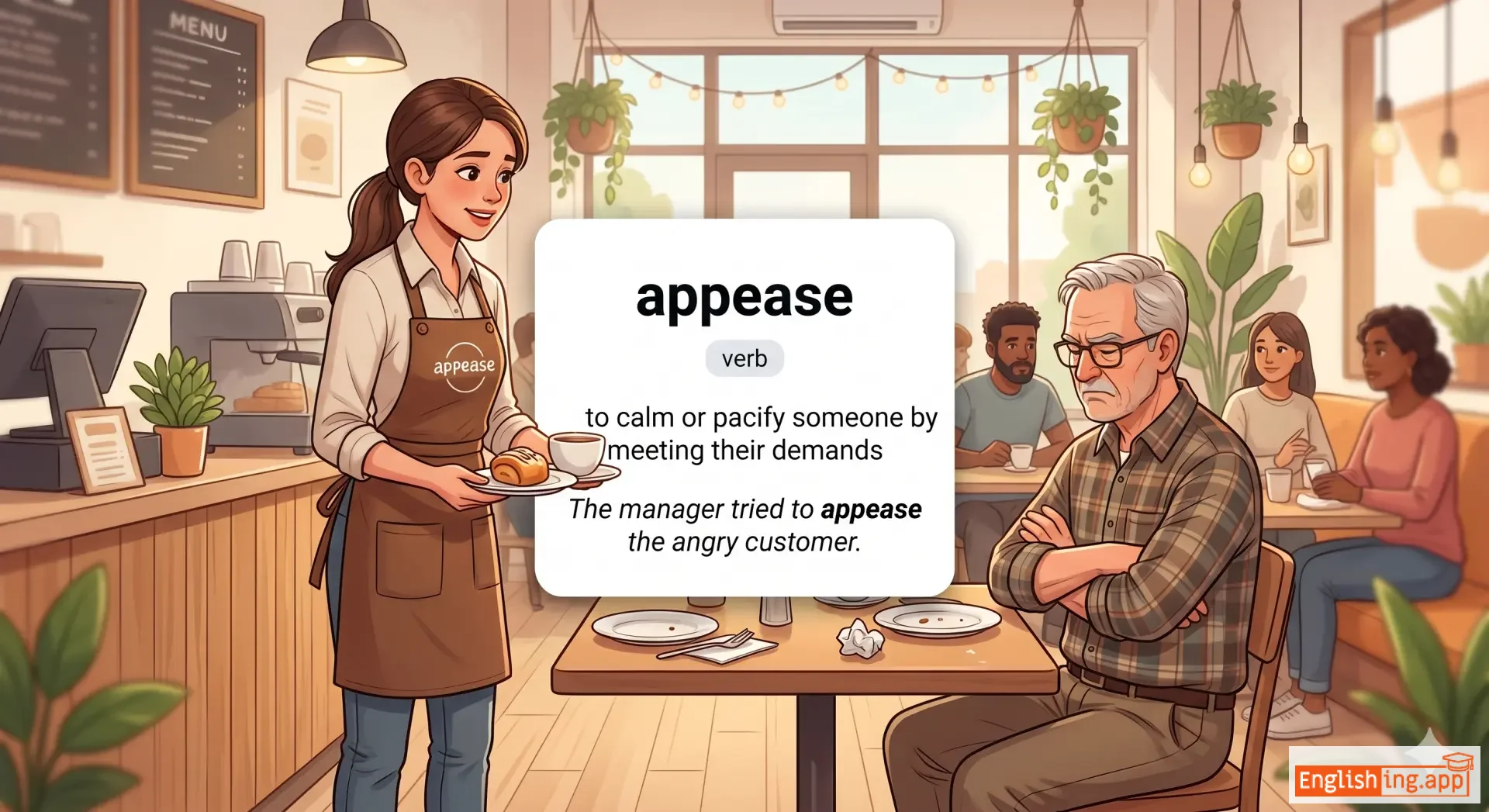
appease definition card — visual illustration of the meaning
verb
/əˈpiːz/
安抚 / 满足 (ānfǔ / mǎnzú)

to calm or pacify someone by meeting their demands

"The manager tried to appease the angry customer."

"经理试图安抚愤怒的顾客。" (Jīnglǐ shìtú ānfǔ fènnù de gùkè.)
adjective
/ˈæpəˌleɪt/
与上诉有关 (yǔ shàngsù yǒuguān)

relating to appeals in a court of law

"The case was taken to an appellate court."
"案件被提交给了上诉法院。" (Ànjiàn bèi tíjiāo gěi le shàngsù fǎyuàn.)
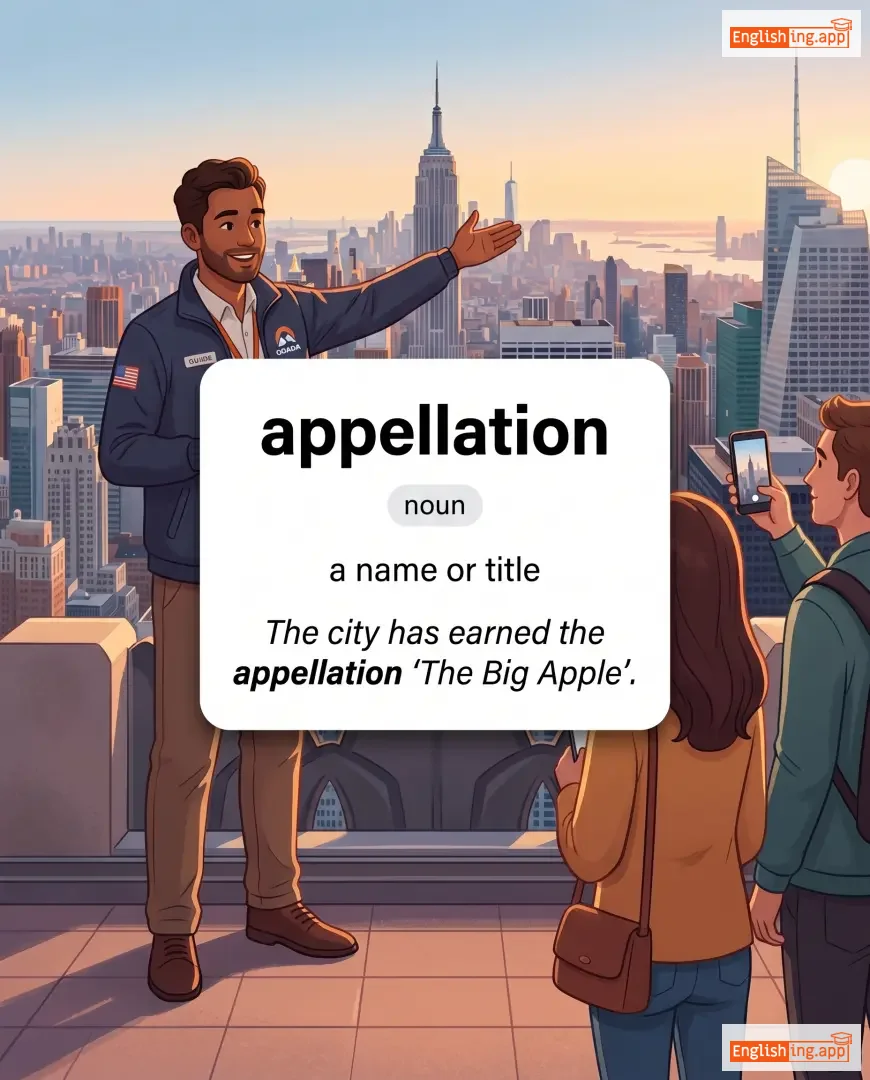
appellation definition card — visual illustration of the meaning
noun
/ˌæpəˈleɪʃən/
名称 / 称号 (mingcheng / chenghao)

a name or title

"The city has earned the appellation 'The Big Apple'."

"这座城市获得了‘大苹果’的称号。" (Zhe zuo chengshi huodele 'Da Pingguo' de chenghao.)
verb
/əˈpɛnd/
附加 (fujia)

to add something as an attachment or supplement, usually at the end of a document or list

"She decided to append a note to the end of the report."

"她决定在报告的末尾添加一条注释。" (Ta jue ding zai baogao de mowei tianjia yi tiao zhushi.)
verb
/ˌæpərˈteɪn/
属于 (shuyu)

to relate to or be connected with something

"The rules only appertain to members of the club."

"规则只适用于俱乐部的成员。" (Guize zhi shiyong yu julebu de chengyuan.)
appetite definition card — visual illustration of the meaning
noun
/ˈæpɪtaɪt/
食欲 (shí yù)

a natural desire for food; a strong desire for something

"After the long walk, I had a huge appetite."

"长时间散步后,我感到非常饿。" (Cháng shíjiān sànbù hòu, wǒ gǎndào fēicháng è.)
verb
/ˈæpɪtaɪz/
刺激食欲 (ciji shiyu)

to stimulate the appetite; to make someone eager or interested

"The aroma of fresh bread will appetize the guests before dinner."

"新鲜面包的香味会刺激客人的食欲。" (xinxian mianbao de xiangwei hui ciji keren de shiyu)
verb
/əˈplɔːd/
鼓掌 (gǔ zhǎng)

to show approval by clapping or expressing admiration

"The audience applauded the performance."

"观众为表演鼓掌。" (Guānzhòng wèi biǎoyǎn gǔzhǎng.)
noun
/əˈplɔːz/
掌声 (zhǎngshēng)

the sound of people clapping their hands to show approval or enjoyment

"The actor received loud applause after his performance."

"演员在表演后收到了热烈的掌声。" (Yǎnyuán zài biǎoyǎn hòu shōudàole rèliè de zhǎngshēng.)
noun
/ˈæpəl/
苹果 (pingguo)

a round fruit with red, green, or yellow skin

"She ate a red apple for breakfast."
"她早餐吃了一个红苹果。" (Tā zǎocān chīle yīgè hóng píngguǒ.)
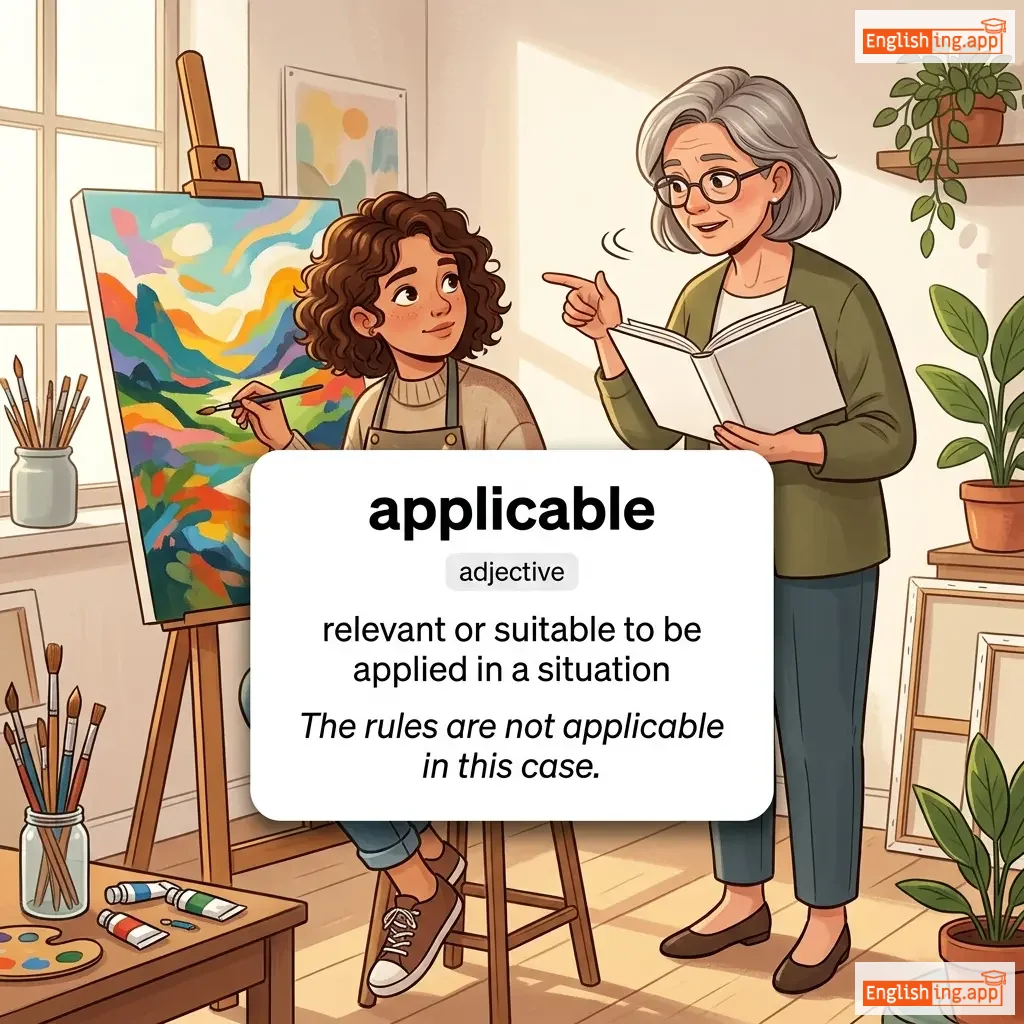
applicable definition card — visual illustration of the meaning
adjective
/ˈæplɪkəbl/
适用的 (shiyong de)

relevant or suitable to be applied in a situation

"The rules are not applicable in this case."

"在这种情况下规则不适用。" (Zai zhezhong qingkuang xia guize bu shiyong.)
noun
/ˈæplɪkənt/
申请者 (shenqingshe)

a person who applies for something, such as a job or a position

"The applicant was interviewed for the position."

"申请者已被面试以获取该职位。" (Shenqingshe yi bei mianshi yi huoqu gai zhiwei.)
noun
/ˌæplɪˈkeɪʃən/
申请 / 应用 / 软件 (shenqing / yingyong / ruanjian)

a formal request for something; the act of putting something into operation; or a software program

"She submitted her application for the scholarship."

"她提交了奖学金申请。" (Ta tijiao le jiangxuejin shenqing.)
verb
/əˈplaɪ/
申请 / 应用 (shēnqǐng / yìngyòng)

to make a formal request for something; to put into practice

"He decided to apply for the scholarship."

"他决定申请奖学金。" (Tā juédìng shēnqǐng jiǎngxuéjīn.)
appoint definition card — visual illustration of the meaning
verb
/əˈpɔɪnt/
任命 (rènmìng)

to officially assign a job or role to someone

"The board decided to appoint her as the new manager."

"董事会决定任命她为新经理。" (Dǒngshìhuì juédìng rènmìng tā wéi xīn jīnglǐ.)