词汇表

英语词汇词典 | 单词含义、定义和示例

verb
/əˈnaʊns/
宣布 (xuanbu)

to make a formal public statement about something

"The company will announce the new product tomorrow."

"公司明天将宣布新产品。" (Gongsi mingtian jiang xuanbu xin chanpin.)
announced definition card — visual illustration of the meaning
verb
əˈnaʊnst
宣布 (xuān bù)

To make a public and typically formal declaration about a fact, occurrence, or intention.

"The mission was announced publicly."

"任务已公开宣布。" (Rènwù yǐ gōngkāi xuānbù.)
noun
/əˈnaʊnsmənt/
公告 (gonggao)

a public or formal statement giving information

"The principal made an important announcement about the new schedule."

"校长关于新时间表做了一个重要的公告。" (xiaozhang guanyu xin shijianbiao zuo le yi ge zhongyao de gonggao.)
verb
/əˈnɔɪ/
惹恼 (renao)

to irritate or bother someone and make them feel a little angry or uncomfortable

"His constant humming started to annoy everyone in the room."

"他的持续哼唱开始让房间里的每个人都不耐烦。" (Ta de chíxù hēngchàng kāishǐ ràng fángjiān lǐ de měi gè rén dōu bù nàifán.)
adjective
/əˈnɔɪd/
恼火的 (naohuo de)

feeling slightly angry or irritated

"She felt annoyed by the constant noise."

"她对持续的噪音感到恼火。" (ta dui chixu de zaoyin gandao naohuo)
adjective
/əˈnɔɪɪŋ/
烦人的 (fanren de)

causing irritation or mild anger; bothersome or troublesome

"The constant noise from the street was extremely annoying."

"街道传来的持续噪音非常烦人。" (jiedao chuanlai de chixu zaoyin feichang fanren)
adjective
/ˈæn.ju.əl/
年度 (niandu)

happening once every year

"The company holds an annual meeting for all its shareholders."

"公司每年为所有股东举办年度会议。" (Gongsi mei nian wei suoyou gudong juban niandu huiyi.)
adverb
/ˈænjuəli/
每年一次 (mei nian yi ci)

once every year; yearly

"The company holds a general meeting annually."

"公司每年举行一次全体会议。" (Gongsi mei nian juxing yi ci quanti huiyi.)
noun
/əˈnjuː.ɪ.ti/
年金 (nianjin)

a fixed sum of money paid to someone each year, typically for the rest of their life

"She receives an annuity from her late husband's insurance policy."

"她从她已故丈夫的保险政策中获得年金。" (Ta cong ta yigu zhangfu de baoxian zhengce zhong huode nianjin.)
verb
/əˈnʌl/
取消 (qǔxiāo)

to declare something legally invalid or cancel it

"The court decided to annul the marriage due to fraud."

"法院决定因欺诈取消婚姻。" (fǎyuàn juédìng yīn qīzhà qǔxiāo hūnyīn.)
noun
/əˌnʌn.siˈeɪ.ʃən/
宣布,好消息 (xuānbù, hǎo xiāoxī)

The announcement of something; in Christianity, the announcement by the angel Gabriel to Mary that she would conceive Jesus.

"The church celebrated the Feast of the Annunciation with a special service."

"教堂通过特别的服务庆祝了报喜节。" (Jiàotáng tōngguò tèbié de fúwù qìngzhùle bào xǐ jié.)
noun
/ˈæn.oʊd/
正极 (zhèng jí)

The positive electrode in a device such as a battery, where current flows into a polarized electrical device.

"The anode of the battery was corroded after long use."
"电池的正极在长时间使用后被腐蚀了。" (Diànchí de zhèngjí zài cháng shíjiān shǐyòng hòu bèi fǔshíle.)
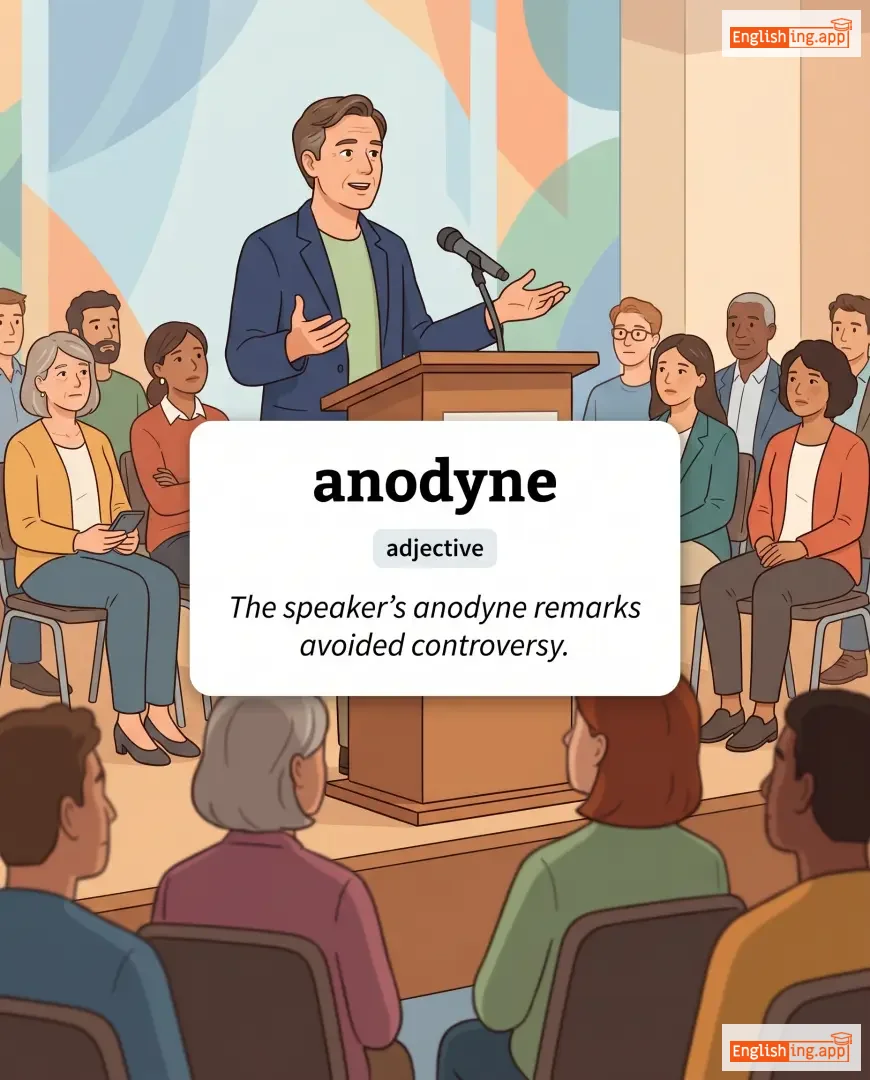
anodyne definition card — visual illustration of the meaning
adjective
/ˈæn.ə.daɪn/
无害的,缓解疼痛的 (wúhài de, huǎnjiě téngtòng de)

Not likely to cause offense; bland or harmless. Also refers to something that relieves pain.

"The speaker’s anodyne remarks avoided controversy."

"演讲者的无害评论避免了争议。" (Yǎnjiǎng zhě de wúhài pínglùn bìmiǎnle zhēngyì.)
verb
/əˈnɔɪnt/
涂油, 奉献 (tú yóu, fèngxiàn)

To smear or rub with oil, often as part of a religious ceremony or as a sign of consecration.

"The priest anointed the king with holy oil."

"神父用圣油涂抹国王。" (Shénfù yòng shèng yóu túmǒ guówáng.)
noun
/əˈnɔɪnt.mənt/
涂抹仪式 (túmǒ yíshì)

The act of anointing, usually with oil, as part of a ritual or ceremony.

"The anointment of the new leader was a sacred ritual."
"新领导人的涂抹仪式是一项神圣的仪式。" (Xīn lǐngdǎo rén de túmǒ yíshì shì yī xiàng shèngshèng de yíshì.)
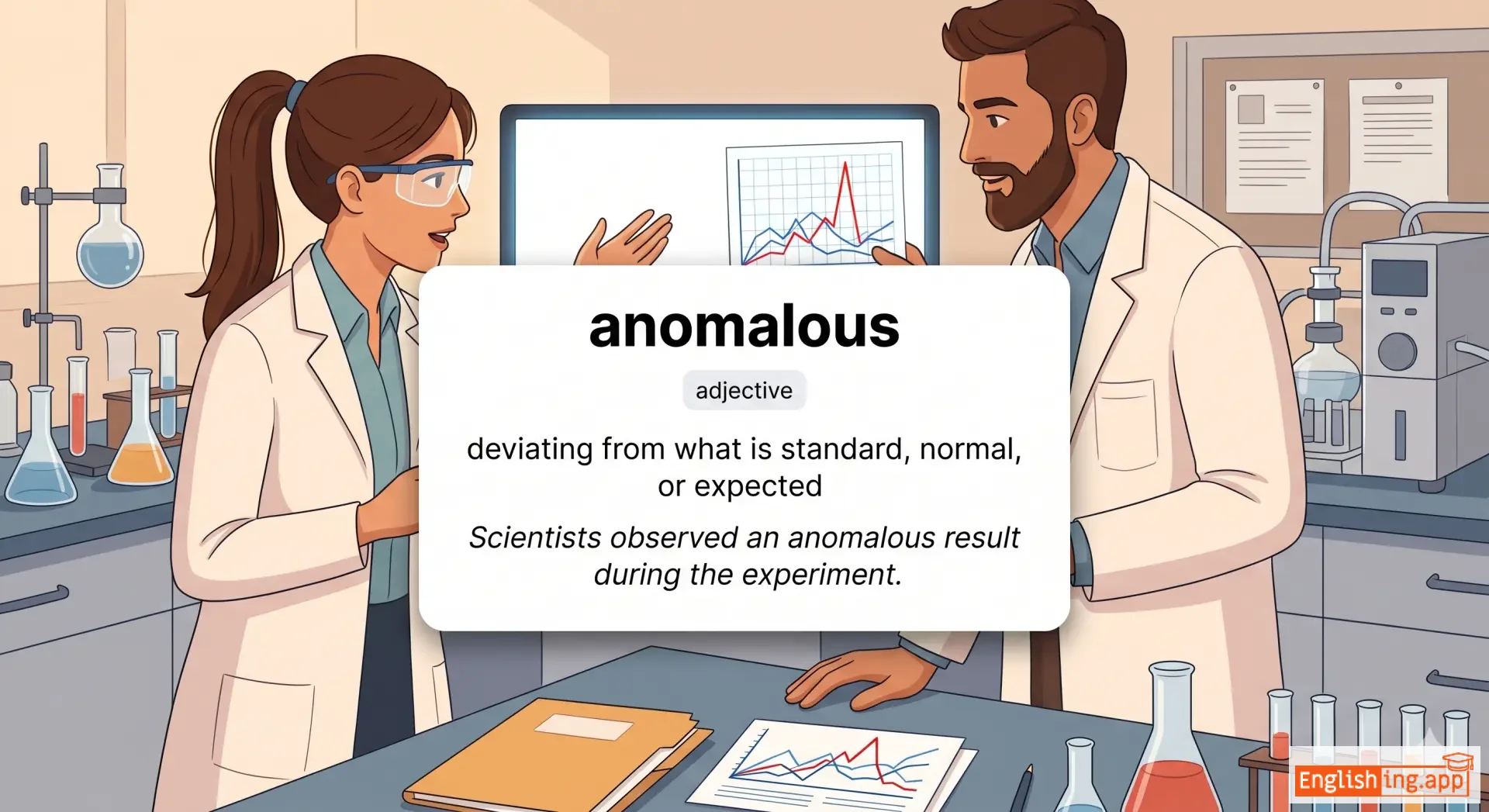
anomalous definition card — visual illustration of the meaning
adjective
/əˈnɒmələs/
异常 (yichang)

deviating from what is standard, normal, or expected

"Scientists observed an anomalous result during the experiment."

"科学家在实验中观察到了一个异常的结果。" (Kexuejia zai shiyan zhong guancha dao le yige yichang de jieguo.)
noun
/əˈnɒməli/
异常 (yichang)

something that deviates from the norm or expected result

"The sudden drop in temperature was considered an anomaly."

"温度的突然下降被认为是一种异常。" (Wendu de turan xiajiang bei renwei shi yizhong yichang.)
anonymity definition card — visual illustration of the meaning
noun
/ˌænəˈnɪməti/
匿名 (nìmí)

the condition of being anonymous; lack of identity or recognition

"The internet allows people to speak with anonymity."

"互联网使人们能够以匿名方式交谈。" (Hùliánwǎng shǐ rénmen nénggòu yǐ nìmí fāngshì jiāotán.)
adjective
/əˈnɒnɪməs/
匿名 (nìmíng)

without a name; not identified by name

"The donation was made by an anonymous benefactor."

"捐款是由匿名捐助者做出的。" (Juānkuǎn shì yóu nìmíng juānzhù zhě zuò chū de.)
determiner/pronoun
/əˈnʌðər/
另一个 (ling yi ge)

one more person or thing of the same type

"Can I have another cup of tea?"

"我可以再来一杯茶吗?" (Wǒ kěyǐ zài lái yī bēi chá ma?)
answer definition card — visual illustration of the meaning
noun, verb
/ˈænsər/
答案 (dá'àn)

a response to a question; to respond to a question or situation

"She answered the phone immediately."

"她立即接了电话。" (Tā lìjí jiēle diànhuà.)
noun
/ænt/
蚂蚁 (ma yi)

a small insect that lives in organized colonies and is known for hard work

"The ant carried a crumb that was twice its size."

"这只蚂蚁搬动了一块比它大两倍的面包屑。" (zhe zhi ma yi bandong le yi kuai bi ta da liang bei de mianbao xie)
noun
/ænˈtæɡənɪzəm/
对立 (duìlì)

active hostility or opposition

"There was clear antagonism between the two political parties."

"两党之间有明显的对立。" (Liǎng dǎng zhījiān yǒu míngxiǎn de duìlì.)
verb
/ænˈtæɡənaɪz/
激怒 (jī nù)

to cause someone to become hostile or angry; to provoke opposition

"His rude remarks only served to antagonize his colleagues."

"他粗鲁的言辞只会使同事们产生敌对情绪。" (Tā cūlǔ de yáncí zhǐ huì shǐ tóngshìmen chǎnshēng díduì qíngxù.)
adjective
/ænˈtɑːrktɪk/
南极的 (nánjí de)

relating to the region around the South Pole

"The Antarctic region is known for its extreme cold and icy landscapes."

"南极地区因其极端的寒冷和冰雪覆盖的景观而闻名。" (Nánjí dìqū yīn qí jíduān de hánlěng hé bīngxuě fùgài de jǐngguān ér wénmíng.)
🎲

ante

noun
/ˈænti/

a stake put up by a player in poker or similar games before receiving cards; also used figuratively to mean an initial investment or contribution

"Each player placed an ante before the game began."

verb
/ˌæntɪˈsiːd/
先来 (xiān lái)

to come before in time or order

"A short introduction usually antecedes the main text."
"简短的介绍通常先于正文。" (Jiǎnduǎn de jièshào tōngcháng xiān yú zhèngwén.)
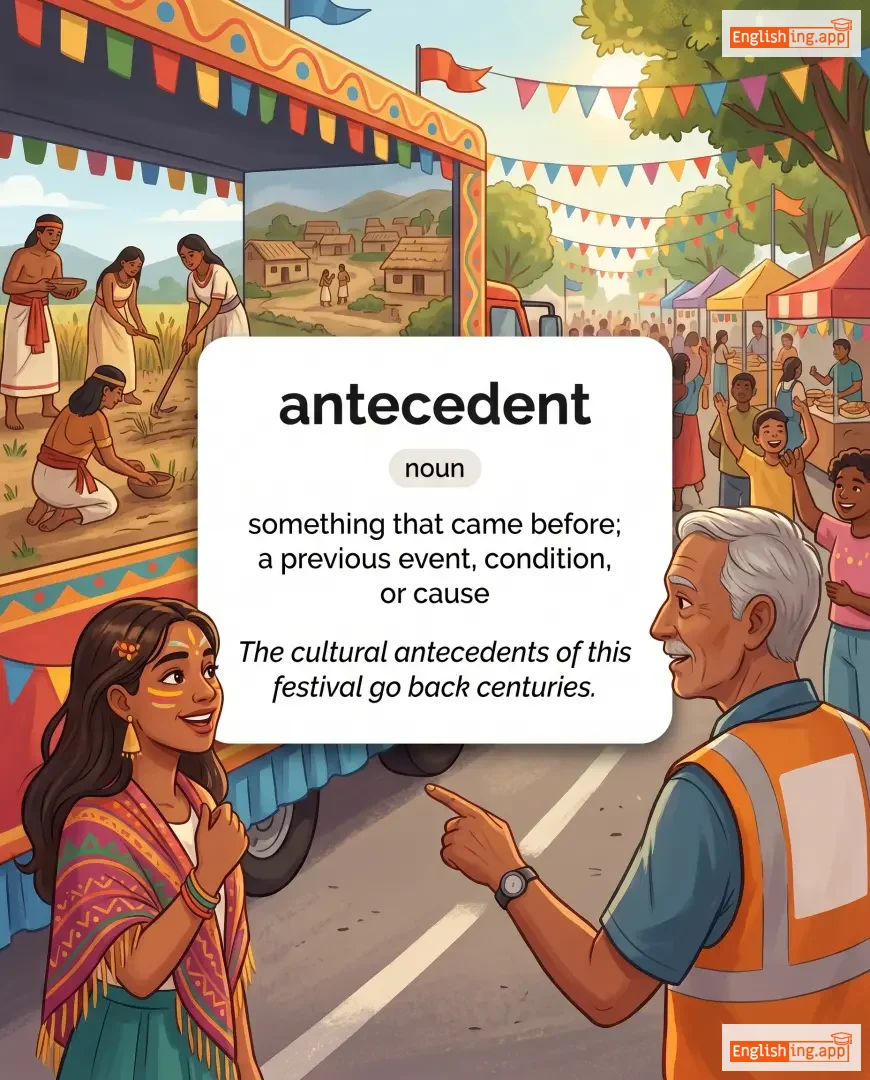
antecedent definition card — visual illustration of the meaning
noun
/ˌæntɪˈsiːdənt/
先例 (xiànlì)

something that came before; a previous event, condition, or cause

"The cultural antecedents of this festival go back centuries."

"这个节日的文化先例可以追溯到几个世纪前。" (Zhège jiérì de wénhuà xiànlì kěyǐ zhuīsù dào jǐ gè shìjì qián.)
noun
/ˌæntɪˈsiːdənts/
前事 (qian shi)

previous events, conditions, or people that influence or serve as a basis for something that follows

"The lawyer examined the criminal antecedents of the suspect."

"律师检查了嫌疑人的犯罪前事。" (Lǜshī jiǎnchá le xiányí rén de fànzuì qiánshì.)
noun
/ˈæntɪˌtʃeɪmbər/
前厅 (qian ting)

a small room serving as an entry to a larger one

"The guests waited in the antechamber before being admitted to the hall."

"客人们在进入大厅之前,先在前厅等待。" (Kèrénmen zài jìnrù dàtīng zhīqián, xiān zài qiántīng děngdài.)
verb
/ˈæntɪdeɪt/
提前 (tiqian)

to be earlier in time; to assign a date earlier than the actual one

"The manuscript antedates the modern printing press."

"手稿比现代印刷机更早。" (Shougou bi xiandai yinshua ji geng zao.)
verb
/ˈæntɪdeɪtɪd/
提前日期 (tiqian riqi)

assigned to an earlier date than the actual one; happened earlier

"The letter was antedated to appear more official."

"信件被提前日期化,以使其看起来更官方。" (Xinjian bei tiqian riqi hua, yi shi qing kan qi geng guanfang.)
antediluvian definition card — visual illustration of the meaning
adjective
/ˌæntɪdəˈluːviən/
极为古老 (jí wéi gǔ lǎo)

extremely old-fashioned; belonging to the time before the biblical flood

"His views on women are positively antediluvian."

"他对女性的看法是完全过时的。" (Tā duì nǚxìng de kànfǎ shì wánquán guòshí de.)
adjective
/ˌæntɪməˈrɪdiən/
中午前的时间 (zhong wu qian de shi jian)

Relating to the time before noon; occurring in the morning.

"She scheduled all her important meetings during the antemeridian hours."

"她安排了所有重要的会议在中午前的时间。" (Ta an pai le suo you zhong yao de hui yi zai zhong wu qian de shi jian.)
adjective
/ˌæntɪˈmʌndeɪn/
世界创造之前 (shijie chuangzao zhiqian)

Existing or occurring before the creation of the world.

"Some myths speak of an antemundane chaos before order was established."

"一些神话讲述了在秩序建立之前的安特蒙丹混乱。" (Yixie shenhua jiangshu le zai zhixu jianli zhihou de antemundan hunluan.)
adjective
/ˌæntiˈneɪtl/
产前 (chǎnqián)

Relating to the medical care and treatment given to a pregnant woman before the birth of her child.

"She attended regular antenatal checkups throughout her pregnancy."

"她在怀孕期间定期参加产前检查。" (Tā zài huáiyùn qījiān dìngqī cānjiā chǎnqián jiǎnchá.)
adjective
/ænˈtɪriər/
前部的 (qián bù de)

Situated at or toward the front; coming before in position or time.

"The anterior part of the brain controls logical thinking."

"大脑的前部控制逻辑思维。" (Dànǎo de qiánbù kòngzhì luójí sīwéi.)
noun
/ˈæntiruːm/
前厅 (qianting)

A small room leading to a main one, often used as a waiting area.

"The guests waited in the anteroom before being called inside."

"客人在被叫进去之前在前厅等待。" (ke ren zai bei jiao jinqu zhiqian zai qianting dengdai.)
noun
/ˈænθəm/
国歌 (guó gē)

A song that is identified with a particular group, movement, or nation, often expressing pride or unity.

"The national anthem was played before the football match."

"国歌在足球比赛前奏响。" (Guó gē zài zúqiú bǐsài qián zòu xiǎng.)
noun
/ænˈθɒlədʒi/
选集 (xuanji)

A collection of literary works, such as poems, short stories, or essays, compiled into one volume.

"She contributed a poem to the new poetry anthology."

"她为新的诗歌选集贡献了一首诗。" (Ta wei xin de shige xuanji gongxian le yi shou shi.)
noun
/ˈænθrəsaɪt/
硬煤 (ying mei)

A hard, shiny form of coal that burns with little smoke and a high heat value.

"The factory used anthracite as its primary fuel source."

"工厂使用海棉石作为主要燃料来源。" (Gongchang shiyong haimian shi zuo wei zhuyao ranliao laiyuan.)
noun
/ˌænθrəpəˈsɛntrɪzəm/
人类中心主义 (rénlèi zhōngxīn zhǔyì)

The belief that human beings are the most important or central element of existence.

"Anthropocentrism often shapes environmental policies."
"人类中心主义常常塑造环境政策。" (Rénlèi zhōngxīn zhǔyì chángcháng sùzào huánjìng zhèngcè.)
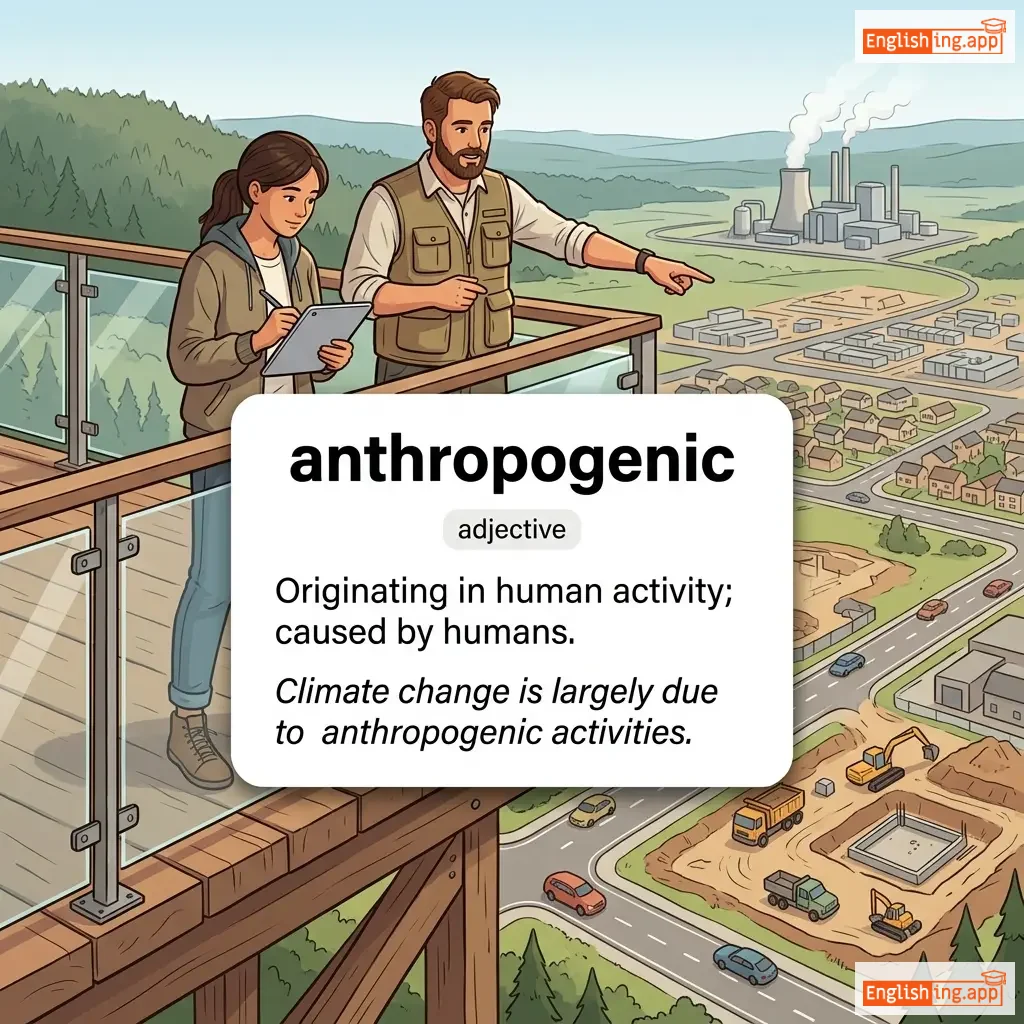
anthropogenic definition card — visual illustration of the meaning
adjective
/ˌæn.θrə.pəˈdʒen.ɪk/
人类起源的 (rénlèi qǐyuán de)

Originating in human activity; caused by humans.

"Climate change is largely due to anthropogenic activities."

"气候变化在很大程度上是由人类起源的活动引起的。" (Qìhòu biànhuà zài hěn dà chéngdù shàng shì yóu rénlèi qǐyuán de huódòng yǐnqǐ de.)
adjective, noun
/ˈænθrəpɔɪd/
人猿类 (rén yuán lèi)

Resembling a human being in form; a primate such as apes and monkeys.

"The gorilla is considered an anthropoid ape."

"大猩猩被认为是人猿类的猩猩。" (Dà xīngxīng bèi rènwéi shì rén yuán lèi de xīngxīng.)
noun
/ˌænθrəˈpɒlədʒɪst/
人类学家 (renleixuejia)

a person who studies human societies, cultures, and their development

"The anthropologist spent years studying the tribal community."

"人类学家花了几年时间研究部落社区。" (Renleixuejia hua le jinnian shijian yanjiu buluo shequ.)
noun
/ˌænθrəˈpɒlədʒi/
人类学 (rénlèixué)

the scientific study of humans, their societies, cultures, and development

"She decided to major in anthropology at university."

"她决定在大学主修人类学。" (Tā juédìng zài dàxué zhǔxiū rénlèixué.)
adjective
/ˌænθrəpəˈmɔːrfɪk/
拟人化的 (nǐ rén huà de)

attributing human characteristics to non-human things, like animals or objects

"The cartoon shows an anthropomorphic cat walking on two legs."

"动画片展示了一只拟人化的猫,走在两条腿上。" (Dòng huà piàn zhǎn shì le yī zhī nǐ rén huà de māo, zǒu zài liǎng tiáo tuǐ shàng.)
adjective
/ˌænθrəpəˈmɔːrfəs/
人形的 (rénxíng de)

having the form or attributes of a human

"The statue had an anthropomorphous shape resembling a human."

"这座雕像有着类似人类的形状。" (Zhè zuò diāoxiàng yǒu zhe lèisì rénlèi de xíngzhuàng.)
noun
/ˈænti ˈeəkræft ɡʌn/
防空炮 (fangkong pao)

a weapon designed to attack aircraft from the ground

"The anti-aircraft gun was positioned to defend the military base."
"防空炮被布置在军用基地以进行防御。" (fangkong pao bei buzhi zai junyong jidi yi jinxing fangyu.)
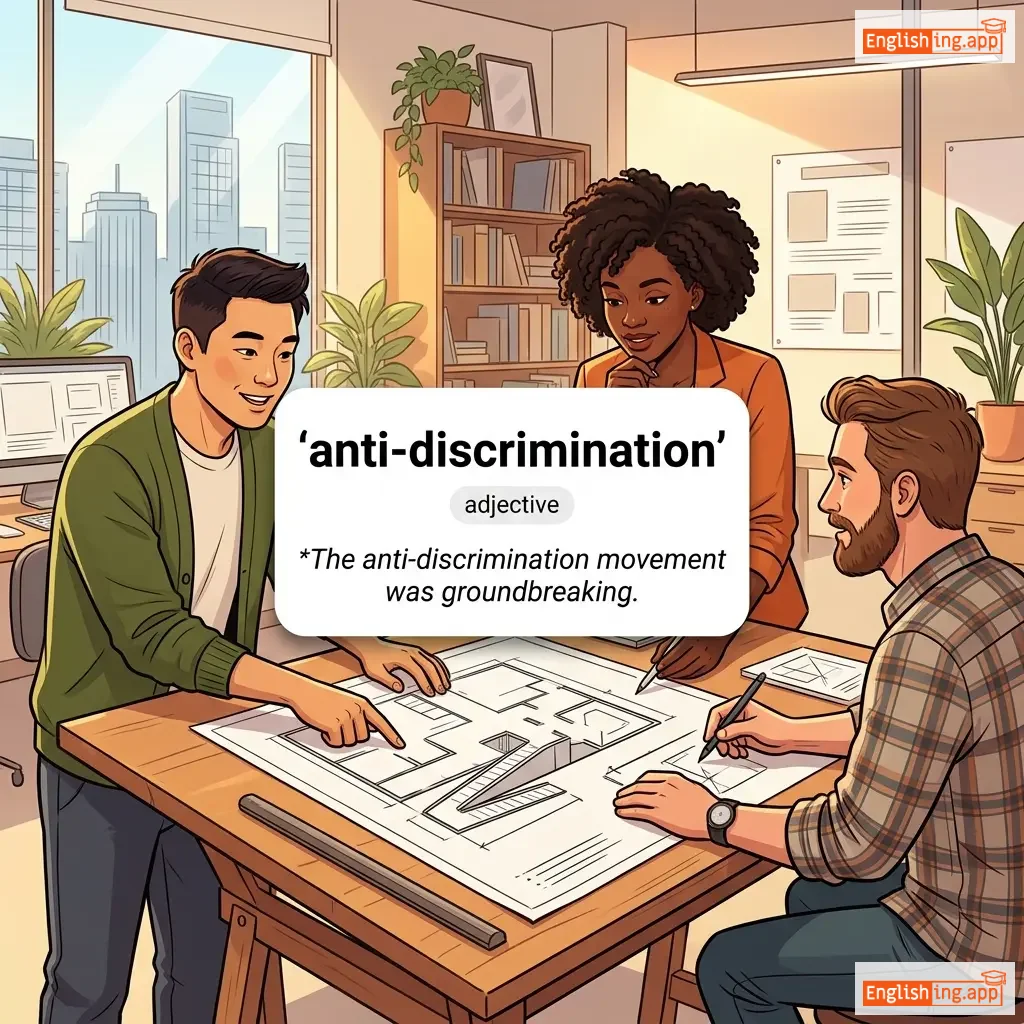
anti-discrimination definition card — visual illustration of the meaning
adjective
ˌæn.tiˌdɪs.krɪˈmɪn.eɪ.ʃən
反歧视的 (fan qi shi de)

Opposed to or working against discrimination; promoting equal treatment regardless of differences.

"The anti-discrimination movement was groundbreaking."

"反歧视运动是突破性的。" (Fan qishi yundong shi tupoxing de.)