词汇表

英语词汇词典 | 单词含义、定义和示例

noun
/ˌɔːtəbaɪˈɒɡrəfi/
自传 (zìzhuàn)

An account of a person's life written by that person.

"She published an autobiography about her journey to success."

"她发布了一本关于她成功之路的自传。" (Tā fābùle yī běn guānyú tā chénggōng zhī lù de zìzhuàn.)
noun
/ɔːˈtɒkrəsi/
独裁 (dúcái)

A system of government in which one person has absolute power.

"The country suffered under decades of autocracy."

"该国在几十年的专制下受苦。" (Gāi guó zài jǐ shí nián de zhuānzhì xià shòukǔ.)
noun
/ˈɔːtəkræt/
独裁者 (dúcáizhě)

A ruler with absolute power.

"The autocrat controlled the country with an iron fist."

"这个独裁者以铁拳统治着国家。" (Zhège dúcáizhě yǐ tiěquán tǒngzhì zhe guójiā.)
adjective
/ˌɔːtəˈkrætɪk/
专制 (zhuānzhì)

Relating to a ruler who has absolute power and does not consult others.

"The manager’s autocratic style discouraged employees from sharing their ideas."

"经理的专制风格使员工不愿意分享他们的想法。" (Jīnglǐ de zhuānzhì fēnggé shǐ yuángōng bù yuànyì fēnxiǎng tāmen de xiǎngfǎ.)
automate definition card — visual illustration of the meaning
verb
/ˈɔːtəmeɪt/

To use machines or computers to control or operate a process, making it automatic.

"The company decided to automate its customer service operations."

adjective
/ˌɔːtəˈmætɪk/
自动 (zidong)

working by itself without direct human control

"This car has an automatic transmission."

"这辆车有自动变速器。" (Zhe liang che you zidong biansuqi.)
adverb
/ˌɔːtəˈmætɪkli/
自动 (zidong)

without human control or intervention; done by itself

"The door closes automatically after you enter."
"门在你进入后自动关闭。" (Men zai ni jinru hou zidong guanbi.)
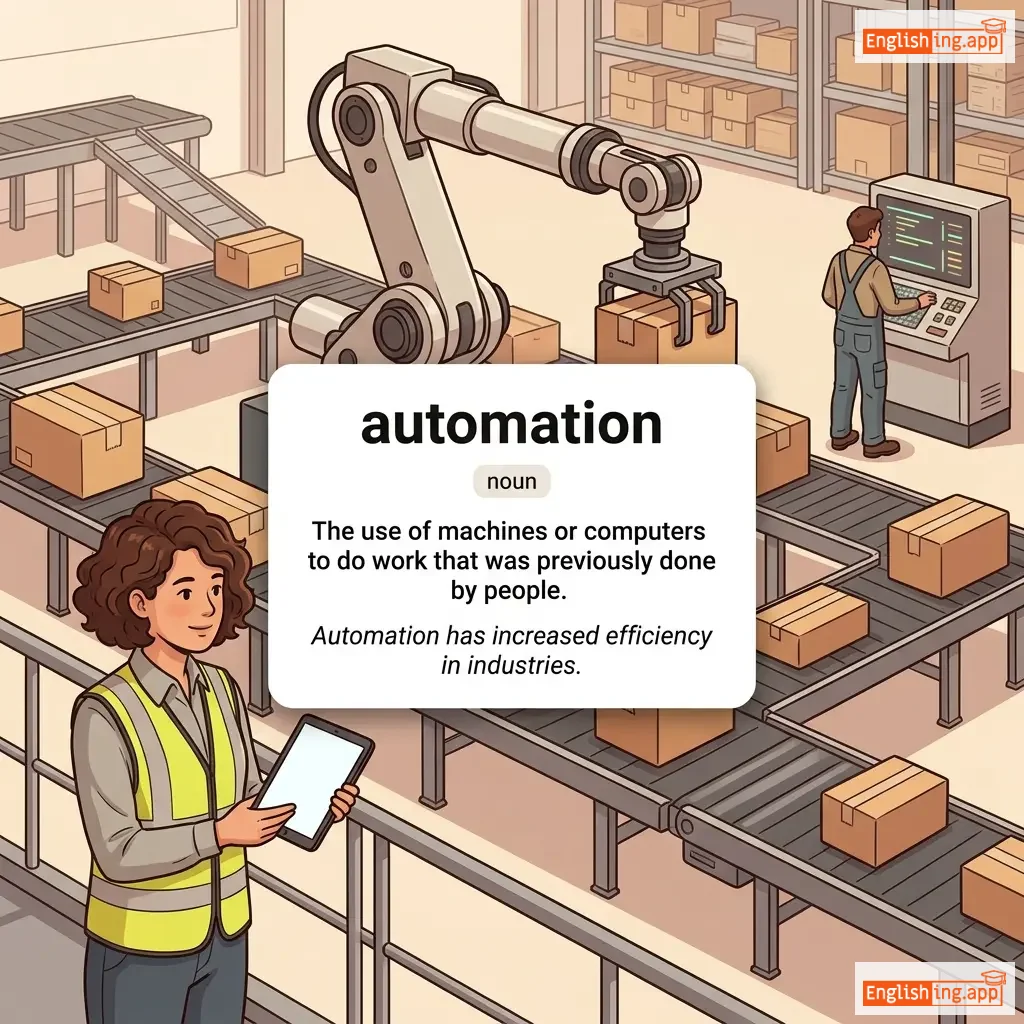
automation definition card — visual illustration of the meaning
noun
ˌɔː.təˈmeɪ.ʃən
自动化 (zidonghua)

The use of machines or computers to do work that was previously done by people.

"Automation has increased efficiency in industries."

"自动化提高了工业的效率。" (Zidonghua tigao le gongye de xiaolv.)
noun
/ɔːˈtɒmətən/
自动机器 (zidong jiqi)

A machine that works automatically; also refers to a person who behaves like a machine, without thinking.

"He worked like an automaton, without showing any emotion."

"他像自动机一样工作,没有表现出任何情感。" (Ta xiang zidong ji yiyang gongzuo, meiyou biaoxian chu renhe qinggan.)
noun
/ˈɔːtəmoʊbiːl/
汽车 (qiche)

a road vehicle powered by an engine, typically with four wheels

"He bought a new automobile last week."
"他上周买了一辆新车。" (Ta shangzhou mai le yi liang xin che.)
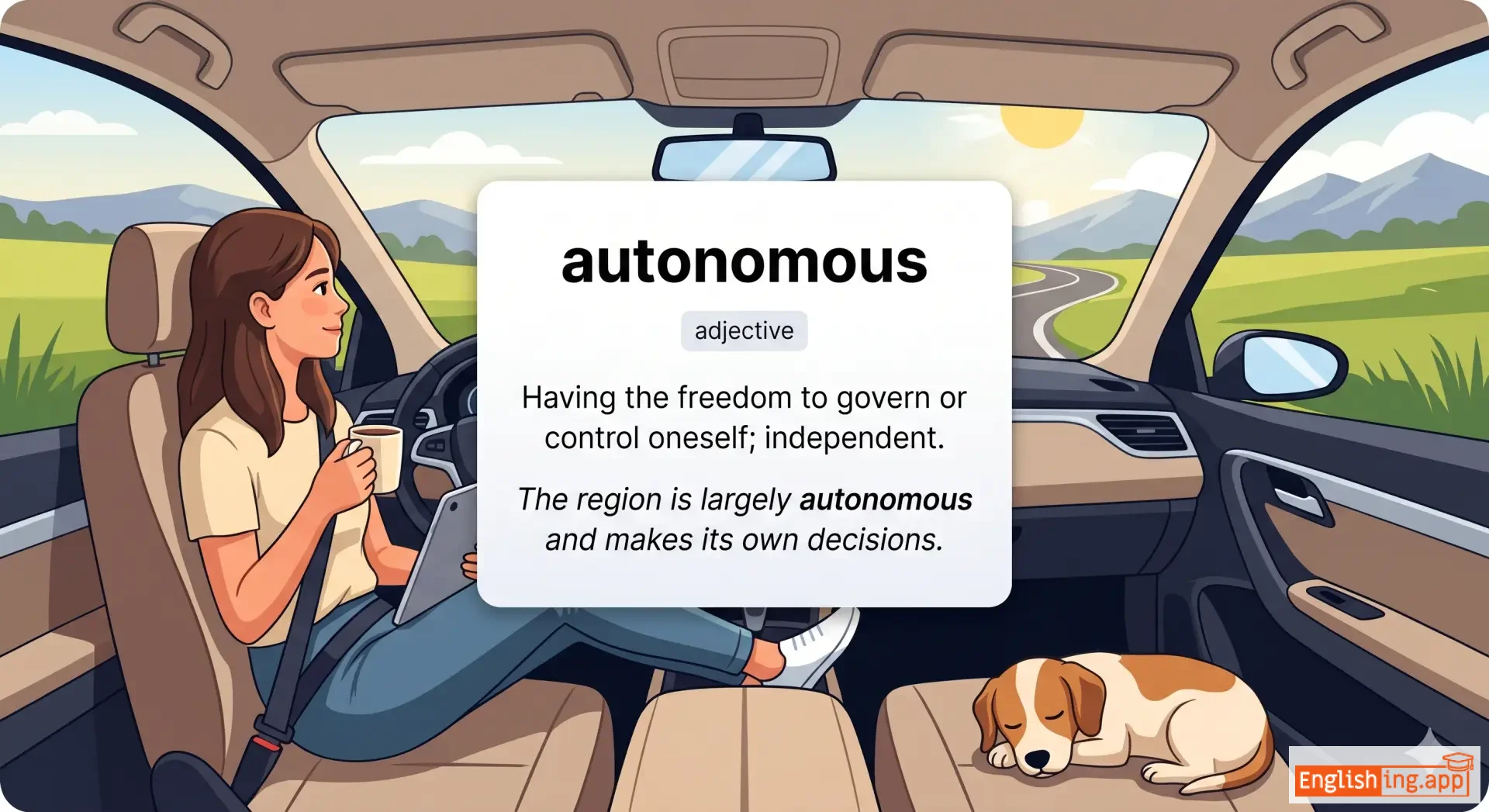
autonomous definition card — visual illustration of the meaning
adjective
/ɔːˈtɒnəməs/
自动 (zidong)

Having the freedom to govern or control oneself; independent.

"The region is largely autonomous and makes its own decisions."
"该地区在很大程度上是自治的,并自行做出决定。" (Gai diqu zai hendà chéngdù shàng shì zìzhì de, bìng zìxíng zuòchū juédìng.)
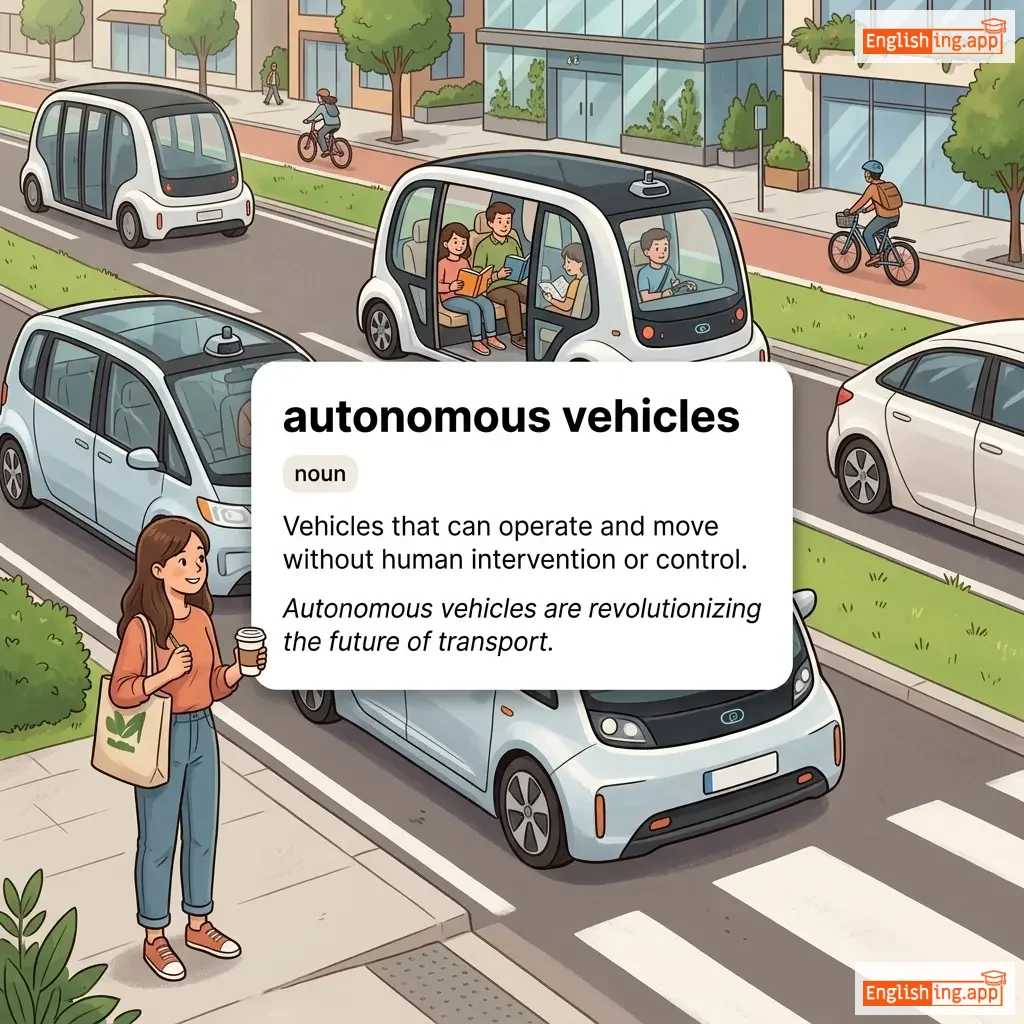
autonomous vehicles definition card — visual illustration of the meaning
noun
/ɔːˈtɒn.ə.məs ˈviː.ɪ.kəlz/
自动驾驶车辆 (zidong jia shi cheliang)

Vehicles that can operate and move without human intervention or control.

"Autonomous vehicles are revolutionizing the future of transport."

"自动驾驶车辆正在革新交通运输的未来。" (Zi dong jia shi che liang zheng zai ge xin jiao tong yun shu de wei lai.)
adverb
/ɔːˈtɒnəməsli/
自动地 (zìdòng de)

In an independent or self-governing manner.

"The robot can operate autonomously without human intervention."
"机器人可以在没有人工干预的情况下自动工作。" (Jīqìrén kěyǐ zài méiyǒu réngōng gānyù de qíngkuàng xià zìdòng gōngzuò.)
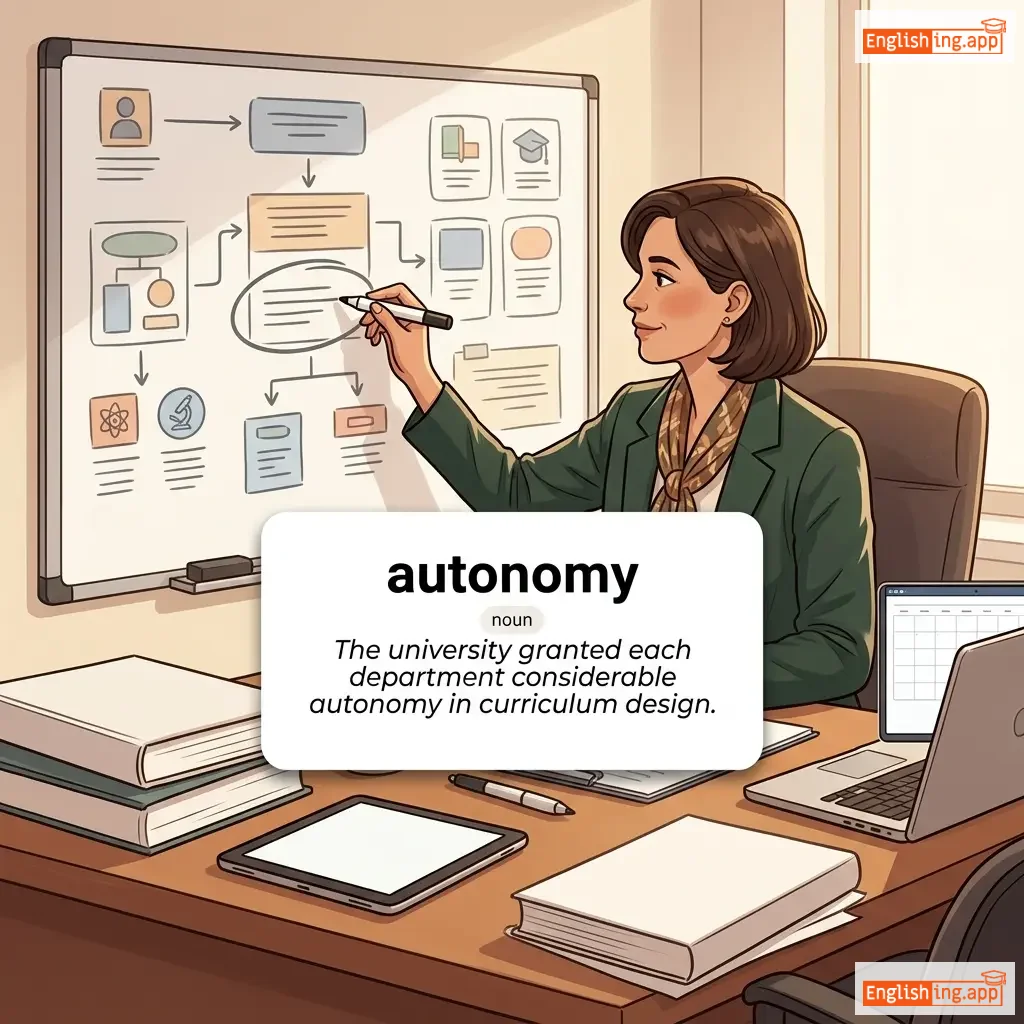
autonomy definition card — visual illustration of the meaning
noun
/ɔːˈtɒnəmi/
自治 (zizhi)

the right or condition of self-government; independence or freedom to act or make decisions

"The university granted each department considerable autonomy in curriculum design."

"大学给予每个部门在课程设计中相当大的自治权。" (Dàxué jǐyǔ měi gè bùmén zài kèchéng shèjì zhōng xiāngdāng dà de zìzhì quán.)
noun, verb
/ˈɔːtɒpsi/
尸检 (shijian)

a post-mortem examination to discover the cause of death or the extent of disease

"The autopsy revealed that the victim had died from poisoning."

"尸检显示受害者死于中毒。" (Shijian xianshi shouhaizhe siyu zhongdu.)
noun
/ˈɔːtəm/
秋天 (qiutian)

the season between summer and winter, when leaves fall from trees

"The trees look beautiful in autumn, with colorful leaves falling."

"秋天的树木看起来很美,五彩斑斓的树叶正在掉落。" (Qiutian de shumu kan qilai hen mei, wucai banlan de shuye zhengzai diaoluo.)
adjective
/ɔːˈtʌmnəl/
秋天的 (qiū tiān de)

relating to or characteristic of autumn; occurring in autumn

"The autumnal colors of red and gold filled the forest."

"红色和金色的秋天的颜色填满了森林。" (hóng sè hé jīn sè de qiū tiān de yán sè tián mǎn le sēn lín.)
adjective, noun
/ɔːɡˈzɪliəri/
辅助 (fuzhu)

(adjective) providing supplementary or additional help and support; (noun) a person or thing that provides auxiliary support

"The hospital has an auxiliary power generator in case of emergencies."

"医院有一个备用发电机,以防紧急情况。" (Yīyuàn yǒu yīgè bèiyòng fādiànjī, yǐ fáng jǐnjí qíngkuàng.)
verb
/əˈveɪl/
利用 (liyong)

to make use of something; to be of use or benefit

"You should avail yourself of this opportunity."

"你应该利用这个机会。" (ni yinggai liyong zhege jihui)
noun
/əˌveɪləˈbɪləti/
可用性 (keyongxing)

the state of being able to be used or obtained

"The availability of clean water is crucial for health."

"清洁水的可用性对健康至关重要。" (Qingjie shui de keyongxing dui jiankang zhiguo zhongyao.)
adjective
/əˈveɪləbl/
可用的 (keyong de)

Able to be used, obtained, or accessed.

"The product is now available in all stores."
"该产品现在在所有商店均可用。" (Gai chanpin xianzai zai suoyou shangdian jun keyong.)
noun, verb
/ˈævəlæntʃ/

(noun) a mass of snow, ice, and rocks falling rapidly down a mountainside; a sudden overwhelming quantity; (verb) to descend like an avalanche

"The avalanche buried the mountain road under tons of snow."

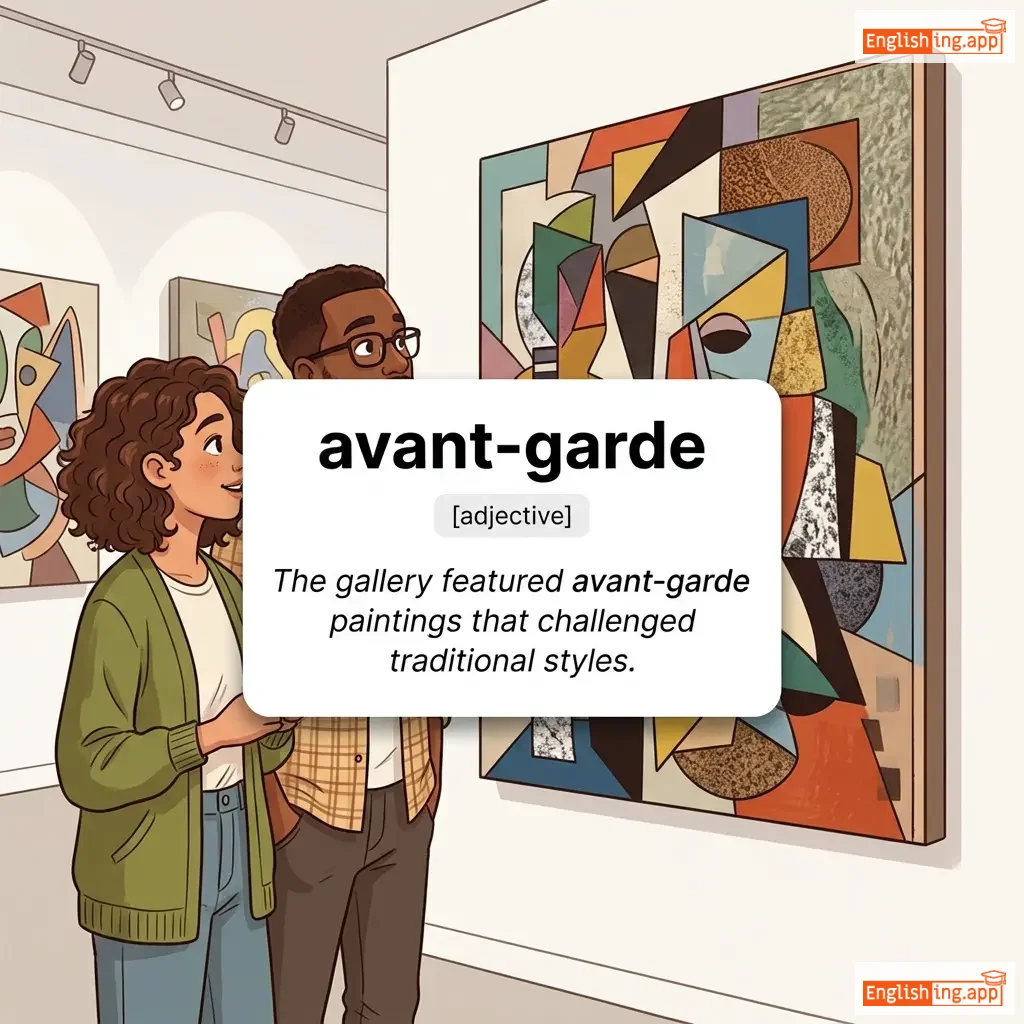
avant-garde definition card — visual illustration of the meaning
adjective
/ˌævɒ̃ˈɡɑːrd/
前卫 (qianwei)

innovative, experimental, or ahead of its time, especially in the arts and culture

"The gallery featured avant-garde paintings that challenged traditional styles."

"画廊展示了挑战传统风格的前卫画作。" (Hualang zhanshi le tiaozhan chuantong fengge de qianwei huazuo.)
noun
/ˌævɒ̃ˈɡɑːrd/
先锋派 (xiānfēng pài)

people or works that are innovative, experimental, and ahead of their time

"The avantgarde of the 20th century reshaped modern art."
"20世纪的先锋派重新塑造了现代艺术。" (20 shìjì de xiānfēng pài chóngxīn sùzào le xiàndài yìshù.)
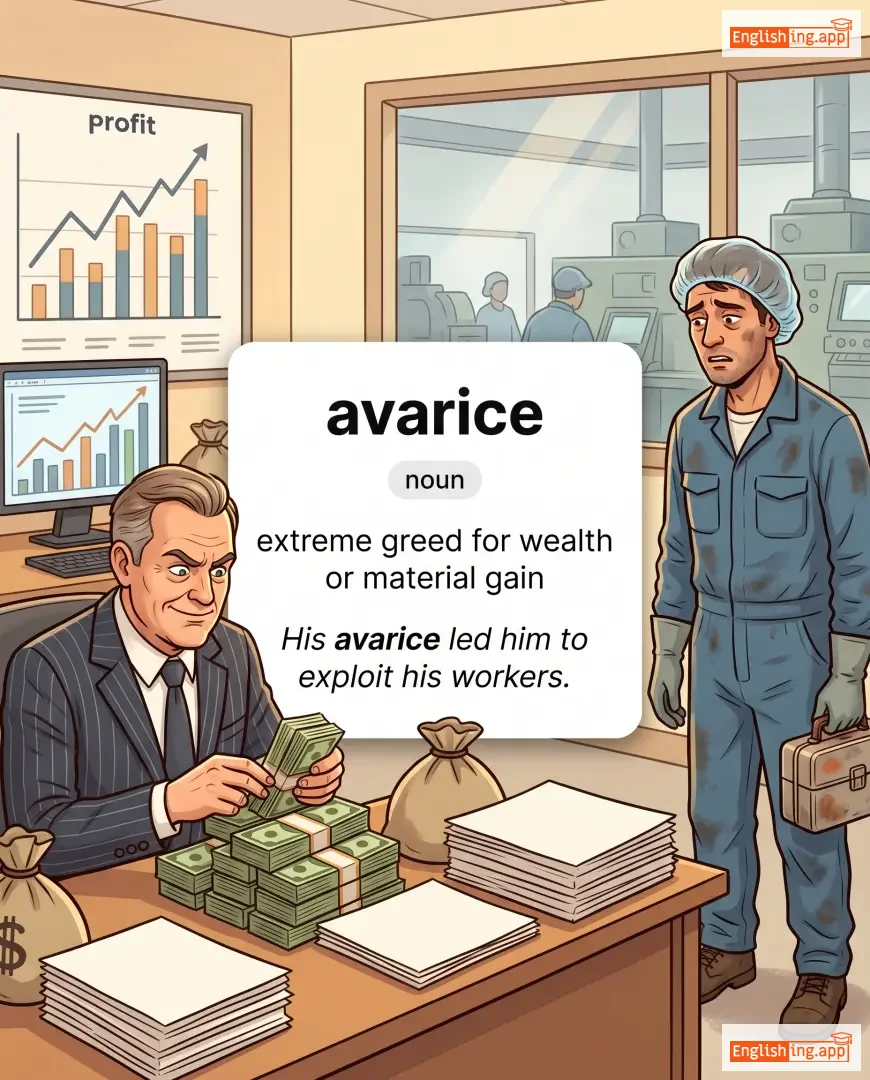
avarice definition card — visual illustration of the meaning
noun
/ˈævərɪs/
贪婪 (tanlan)

extreme greed for wealth or material gain

"His avarice led him to exploit his workers."

"他的贪婪导致他剥削工人。" (Tā de tánlán dǎozhì tā bōxuē gōngrén.)
adjective
/ˌævəˈrɪʃəs/
贪婪的 (tān lán de)

having or showing extreme greed for wealth or material gain

"The avaricious landlord increased the rent unfairly."

"贪婪的房东不公正地提高了租金。" (Tānlán de fángdōng bù gōngzhèng dì tígāo le zūjīn.)
noun
/ˈævətɑːr/
阿凡达 (avatar)

an icon or figure representing a person in digital contexts; in Hinduism, a divine incarnation

"She changed her social media avatar to a new cartoon image."

"她将自己的社交媒体头像更换为新的卡通形象。" (Tā jiāng zìjǐ de shèjiāo méitǐ tóuxiàng gēnghuàn wéi xīn de kǎtōng xíngxiàng.)
verb
/əˈvɛndʒ/
报仇 (bàochóu)

to inflict harm in return for an injury or wrong done to oneself or another

"He vowed to avenge his brother's death."
"他发誓为自己兄弟的死亡报仇。" (Tā fāshì wèi zìjǐ xiōngdì de sǐwáng bàochóu.)
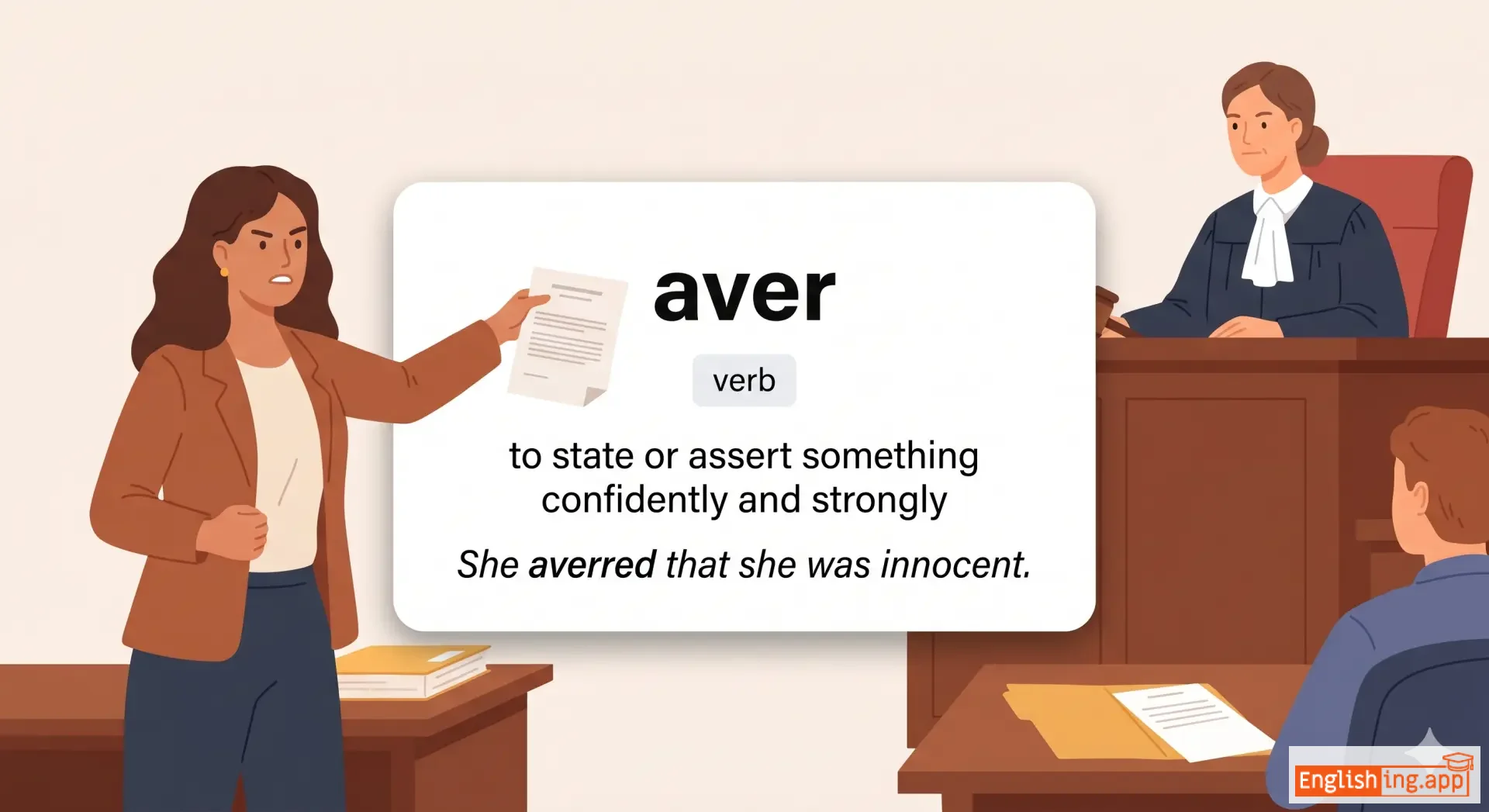
aver definition card — visual illustration of the meaning
verb
/əˈvɜːr/
坚称 (jiancheng)

to state or assert something confidently and strongly

"She averred that she was innocent."
"她坚称她是无辜的。" (Ta jiancheng ta shi wugu de.)
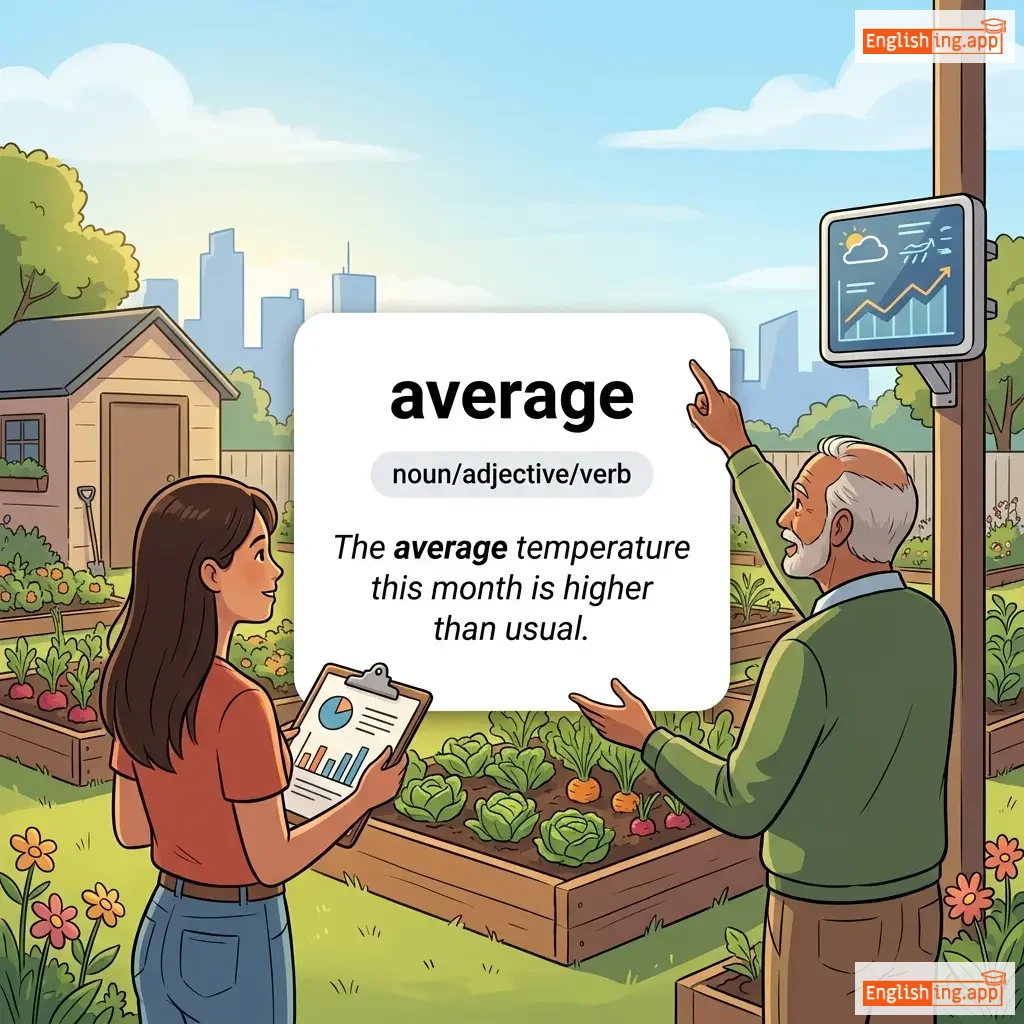
average definition card — visual illustration of the meaning
noun/adjective/verb
/ˈævərɪdʒ/
平均 (píngjūn)

the result obtained by adding several quantities together and then dividing by the number of quantities; typical or normal level

"The average temperature this month is higher than usual."

"这个月的平均气温高于正常水平。" (Zhège yuè de píngjūn qìwēn gāo yú zhèngcháng shuǐpíng.)
adjective
/əˈvɜːrs/
反感 (fǎn gǎn)

having a strong dislike of or opposition to something

"He was averse to taking unnecessary risks."

"他不愿意承担不必要的风险。" (Tā bù yuànyì chéngdān bù bì yào de fēngxiǎn.)
noun
/əˈvɜːrʒən/
厌恶 (yànwù)

a strong feeling of dislike or unwillingness towards something

"She has a strong aversion to smoking."

"她对吸烟有强烈的反感。" (Tā duì xīyān yǒu qiángliè de fǎngǎn.)
verb
/əˈvɜːrt/
避免 (bìmiǎn)

to prevent something bad from happening or to turn away one's eyes or thoughts

"Quick action helped avert a disaster."

"快速的行动帮助避免了灾难。" (Kuàisù de xíngdòng bāngzhù bìmiǎnle zāinàn.)
noun
/ˈeɪ.viˌɛr.i/
鸟舍 (niaoshe)

a large enclosure for keeping birds

"The zoo built a new aviary for exotic parrots."

"动物园为外来鹦鹉建了一个新的鸟舍。" (Dòngwùyuán wèi wàilái yīngwǔ jiàn le yīgè xīn de niǎoshè.)
adjective
/ˈæv.ɪd/
热衷的 (rèzhōng de)

having an eager desire or enthusiasm for something

"She is an avid reader of mystery novels."

"她是一个狂热的神秘小说读者。" (Tā shì yī gè kuángrè de shénmì xiǎoshuō dúzhě.)
noun
/əˈvɪdəti/
热情 (rèqíng)

extreme eagerness or enthusiasm

"He accepted the offer with avidity."

"他带着热情接受了这个提议。" (Tā dàizhe rèqíng jiēshòule zhège tíyì.)
noun
/ˌæv.əˈkɑː.doʊ/
牛油果 (niuyouguo)

a green pear-shaped fruit with creamy flesh and high fat content, often used in healthy diets

"Avocado is rich in healthy fats and is popular in salads and toast."

"牛油果富含健康脂肪,在沙拉和吐司中很受欢迎。" (niuyouguo fuhan jiankang zhifang zai shala he tusi zhong hen shou huanying)
avocation definition card — visual illustration of the meaning
noun
/ˌæv.oʊˈkeɪ.ʃən/
副业 (fuyi)

a hobby or minor occupation pursued in addition to one's main work

"Painting is his avocation after office hours."

"绘画是他下班后的副业。" (Huìhuà shì tā xiàbān hòu de fùyè.)
verb
/əˈvɔɪd/
避免 (bìmiǎn)

To keep away from or stop oneself from doing something.

"He tries to avoid junk food."

"他尽量避免吃垃圾食品。" (Tā jǐnliàng bìmiǎn chī lājī shípǐn.)
adjective
/əˈvɔɪdəbl/
可避免的 (ke bimian de)

able to be prevented or avoided

"Most of the damage was avoidable with proper planning."

"如果有适当的计划,大部分损失是可以避免的。" (ruguo you shidang de jihua dabufen sunshi shi keyi bimian de)
noun
/əˈvɔɪdəns/
回避 (huibi)

the act of staying away from something; deliberate prevention of contact or confrontation

"Avoidance of difficult conversations can create bigger problems later."

"回避困难的对话可能会在以后造成更大的问题。" (huibi kunnan de duihua keneng hui zai yihou zaocheng gengda de wenti)
verb
/əˈvaʊtʃ/
确认 (quèrèn)

to affirm or assert something as true

"He avouched his innocence before the judge."

"他在法官面前确认了自己的清白。" (Tā zài fǎguān miànqián quèrènle zìjǐ de qīngbái.)
verb
/əˈvaʊ/
公开宣誓 (gongkai xuanshi)

to openly declare or admit something, often publicly and firmly

"He avowed his loyalty to the cause without hesitation."

"他毫不犹豫地公开宣誓忠诚于事业。" (Ta haobu youyu di gongkai xuanshi zhongcheng yu shiye.)
verb
/əˈvʌls/
撕裂 (silie)

to tear away or separate forcibly, especially in medical or geological contexts

"The surgeon had to avulse the damaged tissue during the operation."

"外科医生在手术中必须把受损的组织撕裂。" (Wàikē yīshēng zài shǒushù zhōng bìxū bǎ shòusǔn de zǔzhī sīliè.)
avuncular definition card — visual illustration of the meaning
adjective
/əˈvʌŋkjələr/
像叔叔一样友善 (xiàng shūshu yīyàng yǒushàn)

kind and friendly, like an uncle

"He had an avuncular manner that made everyone feel comfortable."

"他有一种让每个人都感到舒适的阿冯库拉尔风度。" (Tā yǒu yī zhǒng ràng měi gèrén dōu gǎndào shūshì de ā fēng kù lā ěr fēng dù.)
await definition card — visual illustration of the meaning
verb
/əˈweɪt/
等待 (deng dai)

to wait for something or someone

"We eagerly await your response."

"我们热切等待您的回复。" (Wo men re qie deng dai nin de hui fu.)
verb/adjective
/əˈweɪk/
清醒 (qīngxǐng)

to stop sleeping; not asleep

"She was still awake when I got home."

"她回家时还没睡觉。" (Tā huí jiā shí hái méi shuìjiào.)
verb
/əˈweɪkən/
唤醒 (huanxing)

to stop sleeping; to cause to become aware

"The loud noise awakened the entire neighborhood."

"大声的噪音唤醒了整个邻里。" (Dà shēng de zàoyīn huànxǐngle zhěnggè línlǐ.)
noun/verb
/əˈwɔːrd/
奖项 (jiangxiang)

a prize or recognition given for an achievement; to give a prize or recognition

"She received an award for her outstanding performance."

"她因出色的表现获得了奖项。" (Ta yin chusuo de biaoxian huodele jiangxiang.)
adjective
/əˈwɛər/
意识到 (yìshí dào)

having knowledge or perception of a situation or fact

"She is aware of the risks involved."

"她意识到其中的风险。" (Tā yìshí dào qízhōng de fēngxiǎn.)