词汇表

英语词汇词典 | 单词含义、定义和示例

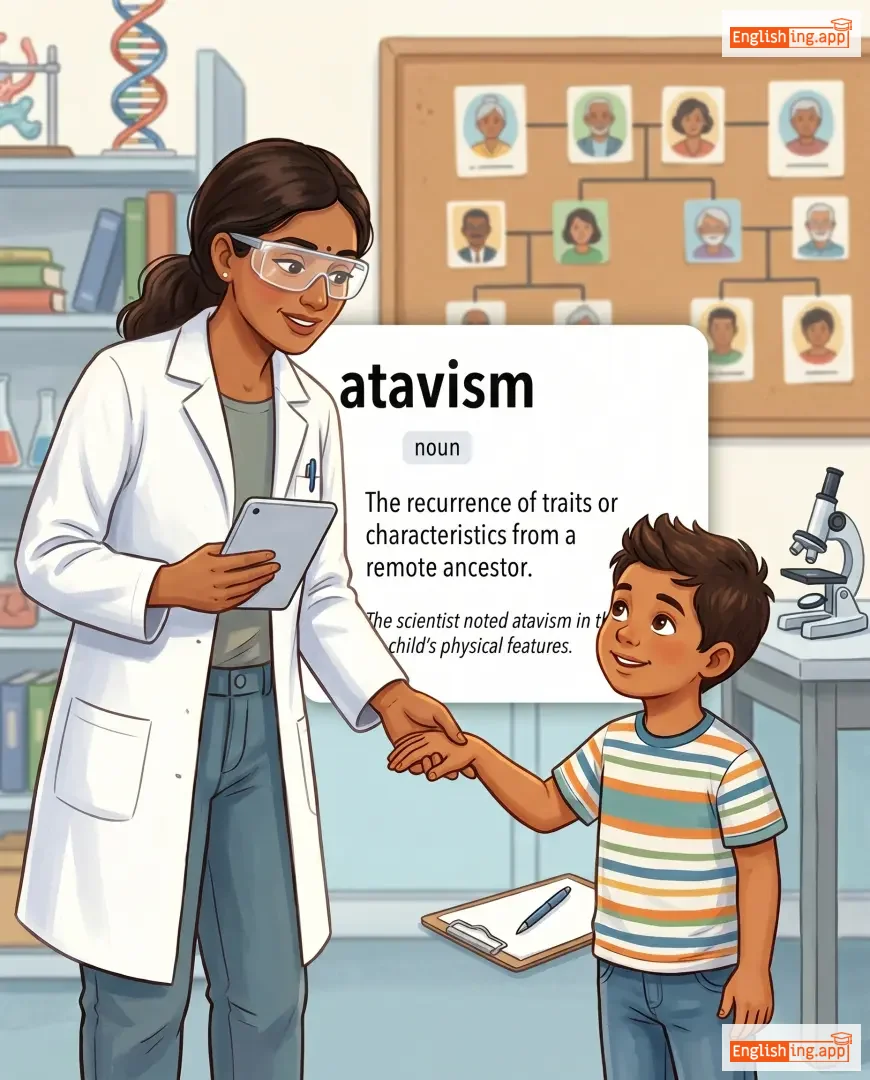
atavism definition card — visual illustration of the meaning
noun
/ˈætəvɪzəm/
返祖现象 (fǎn zǔ xiànxiàng)

The recurrence of traits or characteristics from a remote ancestor.

"The scientist noted atavism in the child’s physical features."

"科学家在孩子的生理特征中观察到返祖现象。" (Kēxuéjiā zài háizi de shēnglǐ tèzhēng zhōng guānchá dào fǎn zǔ xiànxiàng.)
noun
/ˌætəlˈjeɪ/
工作室(艺术家或设计师的工作室) (gongzuoshi (yishujia huo shejishi de gongzuoshi))

A workshop or studio, especially for an artist or designer.

"The painter invited us to his atelier to view his new collection."

"画家邀请我们去他的工作室,观看他的最新系列作品。" (Huajia yaoqing women qu tade gongzuoshi, guankan tade zuixin xilie zuopin.)
noun
/ˈeɪθiɪzəm/
无神论 (wú shén lùn)

The belief that there is no God or gods.

"He declared his atheism openly despite social pressure."

"他在社会压力下公开宣称自己的无神论。" (Tā zài shèhuì yālì xià gōngkāi xuānchēng zìjǐ de wú shén lùn.)
adjective
/ˌeɪθiˈɪstɪk/
无神论的 (wú shén lùn de)

Relating to or characteristic of atheists or atheism.

"She grew up in an atheistic household with no religious rituals."

"她在一个无神论家庭长大,那里没有宗教仪式。" (Tā zài yīgè wú shén lùn jiātíng zhǎng dà, nàlǐ méiyǒu zōngjiào yíshì.)
adjective
/əˈθɜːrst/
渴望, 渴求 (kěwàng, kěqiú)

Very eager or desirous for something.

"The explorer was athirst for adventure."

"探险家渴望冒险。" (Tànxiǎnjiā kěwàng màoxiǎn.)
noun
/ˈæθliːt/
运动员 (yùndòngyuán)

a person who is trained or skilled in physical exercises, sports, or games requiring strength, agility, or stamina

"The athlete trained hard for the upcoming Olympic Games."

"运动员为即将到来的奥林匹克运动会进行了艰苦训练。" (Yùndòngyuán wèi jíjiāng dào lái de àolínpǐkè yùndònghuì jìnxíngle jiānkǔ xùnliàn.)
adjective
/æθˈlɛtɪk/
运动员的,强壮的 (yundongyuan de, qiangzhuang de)

physically strong, fit, and active; related to athletes or sports

"She has an athletic body because she exercises regularly."

"她有一个运动员的身体,因为她定期锻炼。" (Ta you yige yundongyuan de shenti, yinwei ta dingqi duanlian.)
adverb
/əˈθwɔːrt/
横向地, 反对 (hengxiang de, fandui)

Across or in opposition to something.

"A fallen tree lay athwart the road, blocking traffic."

"一棵倒下的树横在路上,阻碍了交通。" (Yi ke daoxia de shu heng zai lù shàng, zǔ'ài le jiāotōng.)
noun
/ˈætməsfɪər/
大气层 (daqicheng)

the layer of gases surrounding the Earth; the mood or feeling of a place

"The restaurant had a warm and welcoming atmosphere."

"餐厅有一种温暖和热情的氛围。" (Cāntīng yǒu yī zhǒng wēnnuǎn hé rèqíng de fēnwéi.)
adjective
/əˈtɒm.ɪk/
原子 (yuanzi)

relating to atoms or atomic energy; extremely small

"The atomic structure of hydrogen is the simplest."
"氢的原子结构是最简单的。" (qīng de yuánzǐ jiégòu shì zuì jiǎndān de.)
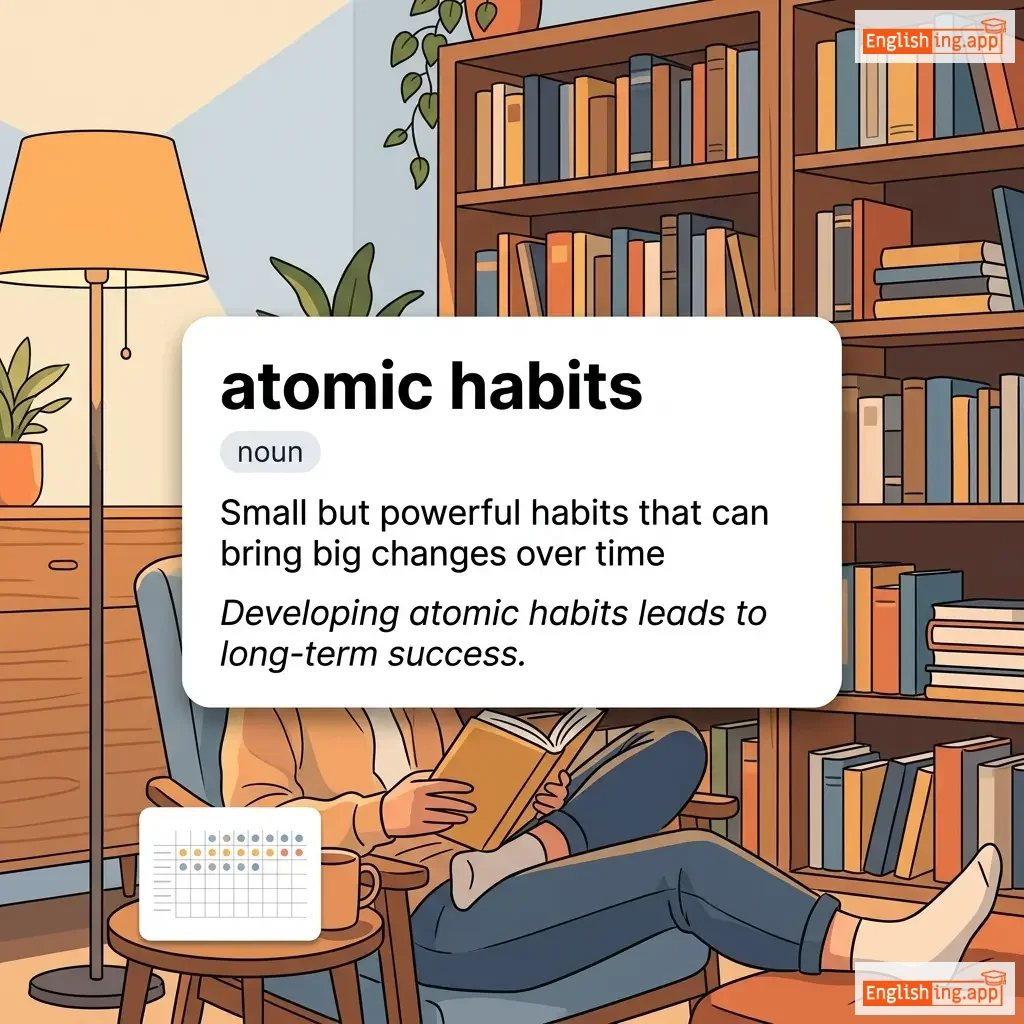
atomic habits definition card — visual illustration of the meaning
noun
/əˈtɒm.ɪk ˈhæb.ɪts/
原子习惯 (yuánzǐ xíguàn)

Small but powerful habits that can bring big changes over time

"Developing atomic habits leads to long-term success."

"养成原子习惯带来长期的成功。" (Yǎngchéng yuánzǐ xíguàn dàilái chángqī de chénggōng.)
noun
/ˈætəmaɪzər/
喷雾器 (penwuyi)

A device that sprays liquid into a fine mist.

"She used an atomizer to apply the perfume evenly."
"她使用喷雾器均匀地涂抹香水。" (Ta shiyong penwuyi junyun de tupo xiangshui.)
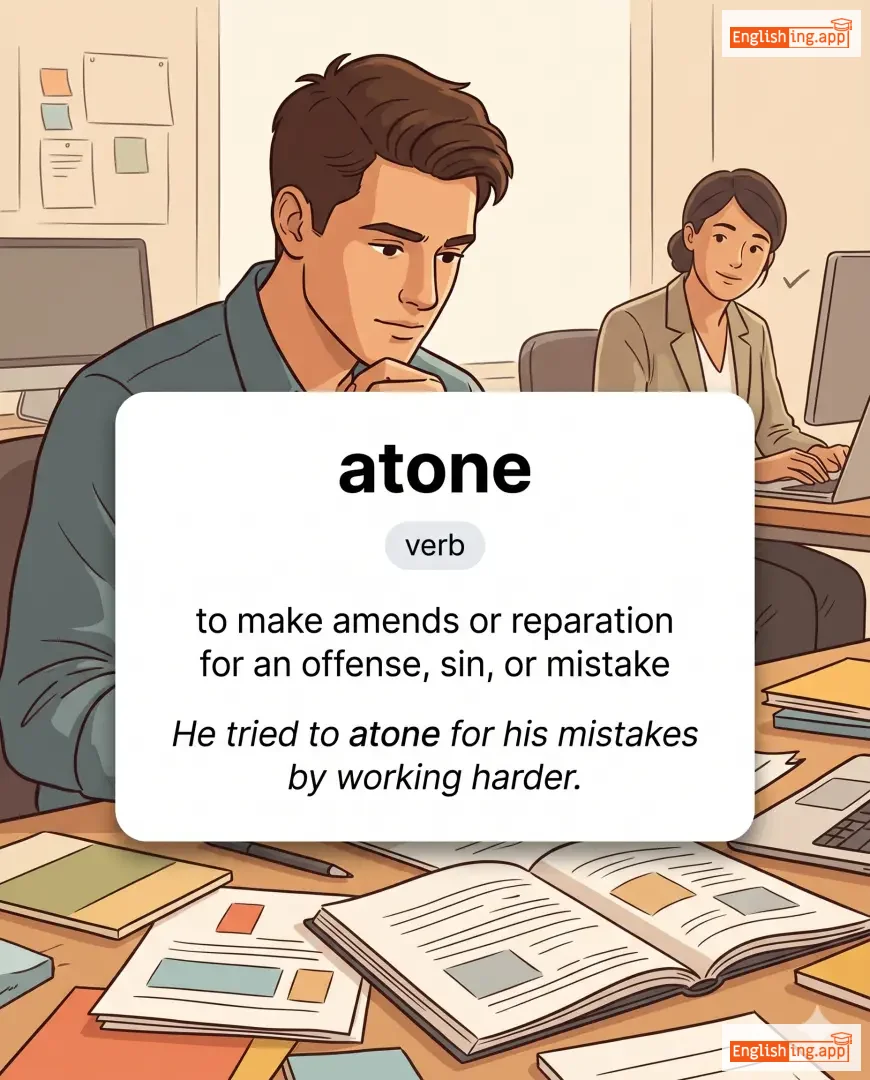
atone definition card — visual illustration of the meaning
verb
/əˈtoʊn/
赎回 (shuhuí)

to make amends or reparation for an offense, sin, or mistake

"He tried to atone for his mistakes by working harder."

"他试图通过更加努力地工作来赎回自己的错误。" (Ta shitu tongguo gengjia nuli de gongzuo lai shuhuí ziji de cuowu.)
noun
/əˈtoʊnmənt/
赎罪 (shuzuì)

the act of making amends for a wrong, sin, or injury

"The festival was celebrated as a day of atonement."

"该节日被庆祝为赎罪的日子。" (Gāi jiérì bèi qìngzhù wèi shúzuì de rìzi.)
preposition
/əˈtɒp/
顶部 (dingbu)

on the top of something

"A flag was placed atop the tower."

"一面旗帜被放置在塔顶。" (Yi mian qizhi bei fangzhi zai ta ding.)
adjective
/əˈtroʊʃəs/
可怕的 (kěpà de)

extremely bad, unpleasant, or cruel

"The prisoners were kept in atrocious conditions."

"囚犯被关押在可怕的条件下。" (Qiúfàn bèi guānyā zài kěpà de tiáojiàn xià.)
adverb
/əˈtroʊʃəsli/
极其糟糕地 (jiqi zaogao de)

in a very cruel, shocking, or extremely bad manner

"The service at the restaurant was atrociously slow."

"这家餐馆的服务慢得极其糟糕。" (Zhe jia canguan de fuwu man de jiqi zaogao)
atrocities definition card — visual illustration of the meaning
noun
əˈtrɒs.ɪ.tiz
暴行 (baoxing)

Extremely wicked or cruel acts, typically involving physical violence or injury.

"The atrocities shocked the international community."

"这些暴行震惊了国际社会。" (Zhe xie baoxing zhenjing le guoji shehui.)
noun
/əˈtrɑːsəti/
暴行 (baoxing)

an extremely cruel or violent act, often involving physical violence

"The world condemned the atrocity committed against civilians."

"世界谴责对平民犯下的暴行。" (Shijie qianze dui pingmin fansha de baoxing.)
noun/verb
/ˈætrəfi/
萎缩 (wěisuō)

a decrease in size or wasting away of a body part, tissue, or ability due to lack of use

"Without regular exercise, muscles may atrophy over time."

"没有规律的锻炼,肌肉随着时间的推移可能会萎缩。" (Méiyǒu guīlǜ de duànliàn, jīròu suízhe shíjiān de tuīyí kěnéng huì wěisuō.)
verb
/əˈtætʃ/
附加 (fujia)

to join or fasten something to another thing

"Please attach the document to the email before sending."

"请在发送之前将文件附加到电子邮件中。" (Qǐng zài fāsòng zhīqián jiāng wénjiàn fùjiā dào diànzǐ yóujiàn zhōng.)
noun
/ˌætəˈʃeɪ/
外交参赞 (wai jiao can zan)

A person officially assigned to the staff of a diplomatic mission, often with a specific area of responsibility.

"The cultural attache organized an art exhibition in the embassy."

"文化参赞在大使馆组织了一场艺术展览。" (Wenhua canzan zai dashiguan zuzhi le yi chang yishu zhanlan.)
adjective
/əˈtætʃt/
附加的 (fujia de)

joined or fastened to something; emotionally connected or fond of someone or something

"The file is attached to the email."

"文件已附加在电子邮件中。" (Wenjian yi fujia zai dianzi youjian zhong)
noun
/əˈtæʧmənt/
依附 (yīfù)

a strong feeling of affection or connection

"The attachment he felt to his hometown was undeniable."
"他对家乡的依附感是不可否认的。" (Tā duì jiāxiāng de yīfù gǎn shì bù kě fǒu rèn de.)
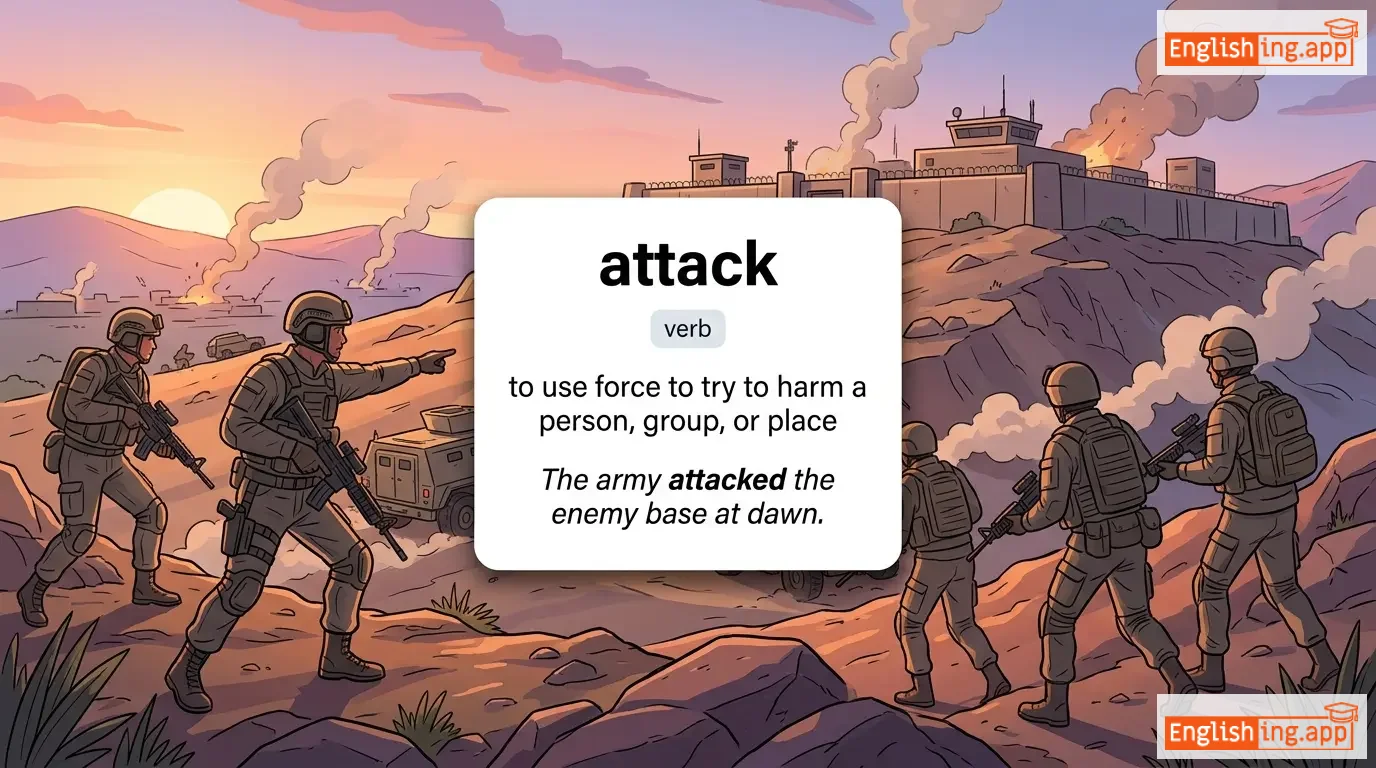
attack definition card — visual illustration of the meaning
verb
/əˈtæk/
攻击 (gōngjī)

to use force to try to harm a person, group, or place

"The army attacked the enemy base at dawn."

"军队在黎明时攻击了敌方基地。" (Jūn duì zài límíng shí gōngjīle dí fāng jī dì.)
verb
/əˈtækt/
攻击了 (gongji le)

physically or verbally assaulted someone or something; launched an aggressive action against a target

"The soldiers attacked the enemy at dawn."

"士兵在黎明时攻击了敌人。" (shibing zai liming shi gongji le diren)
verb
/əˈteɪn/
达到 (dádào)

to achieve or reach something

"She worked hard to attain her goals."
"她努力工作以达到她的目标。" (Tā nǔlì gōngzuò yǐ dádào tā de mùbiāo.)
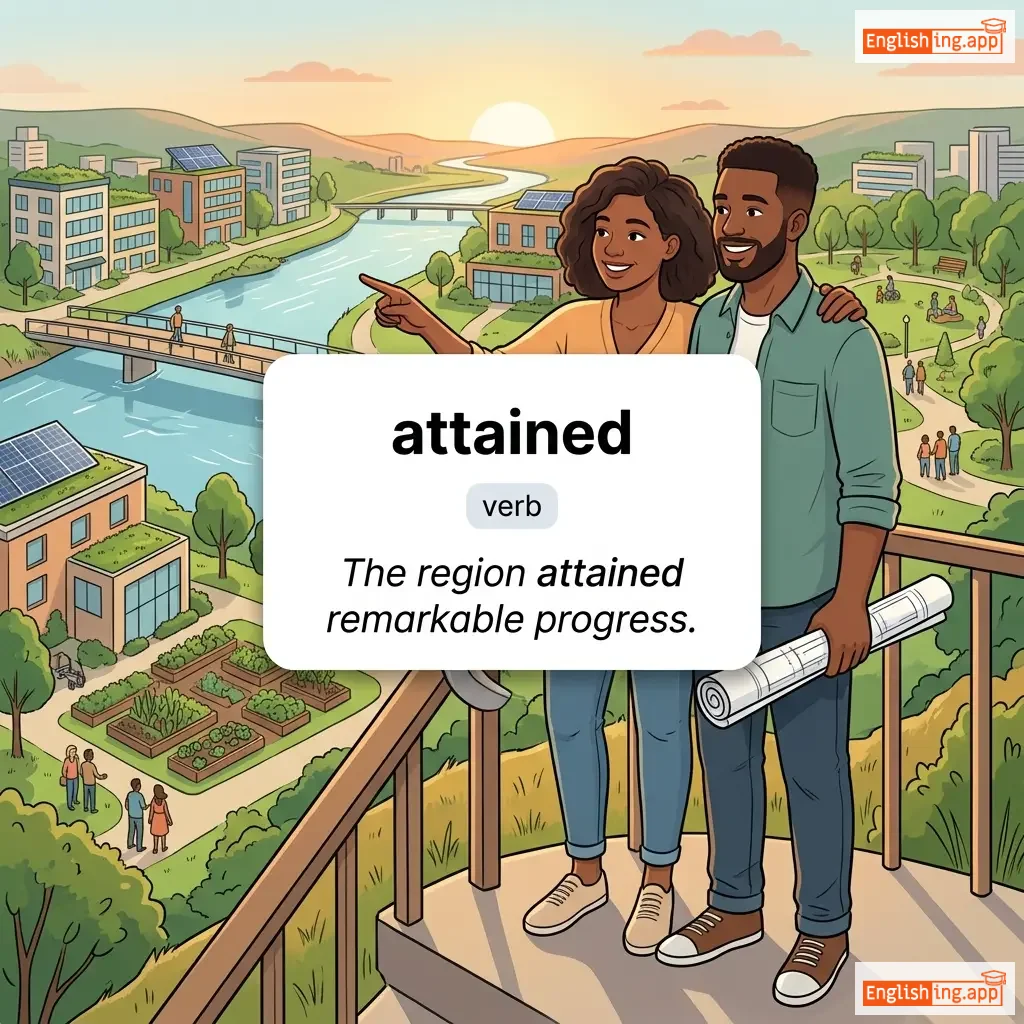
attained definition card — visual illustration of the meaning
verb
əˈteɪnd
获得 (huòdé)

Succeeded in achieving (something that one desires and has worked for); reached a specified age, size, or amount.

"The region attained remarkable progress."
"该地区取得了显著的进展。" (Gāi dìqū qǔdéle xiǎnzhù de jìnzhǎn.)
verb
/əˈtɛmpt/

to make an effort to achieve or complete something difficult

"He attempted to climb the mountain despite the bad weather."

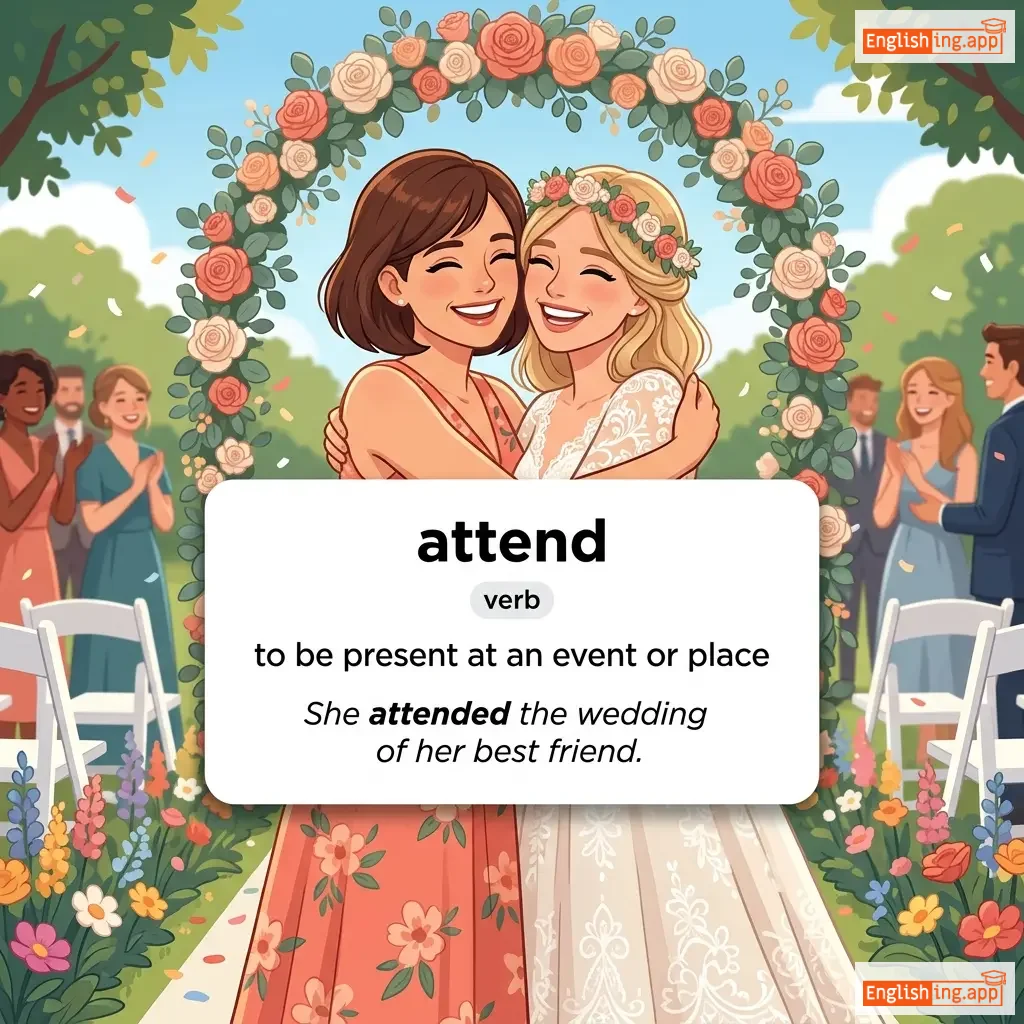
attend definition card — visual illustration of the meaning
verb
/əˈtɛnd/
参加 (canjia)

to be present at an event or place

"She attended the wedding of her best friend."

"她参加了她最好的朋友的婚礼。" (Ta canjia le ta zuihao de pengyou de hunli.)
noun
/əˈtɛndəns/
出席 (chūxí)

the act of being present at a place or event

"The teacher checked the students’ attendance every morning."

"老师每天早上检查学生的出席情况。" (Lǎoshī měitiān zǎoshang jiǎnchá xuéshēng de chūxí qíngkuàng.)
noun
/əˈtɛnʃən/
注意 (zhuyi)

the act of focusing on something or someone

"The teacher asked for the students' attention."

"老师要求学生们的注意。" (Lǎoshī yāoqiú xuéshēngmen de zhùyì.)
adjective
/əˈtɛntɪv/
专心 (zhuānxīn)

Paying close attention to something or someone; being considerate and alert.

"The teacher praised the students for being attentive during the lesson."

"老师表扬了学生们在课堂上专心听讲。" (Lǎoshī biǎoyángle xuéshēngmen zài kètáng shàng zhuānxīn tīngjiǎng.)
adverb
/əˈten.tɪv.li/
专心 (zhuānxīn)

with careful attention; in a focused manner

"She listened attentively to her teacher's instructions."
"她专心听取了老师的指示。" (Tā zhuānxīn tīngqǔ le lǎoshī de zhǐshì.)
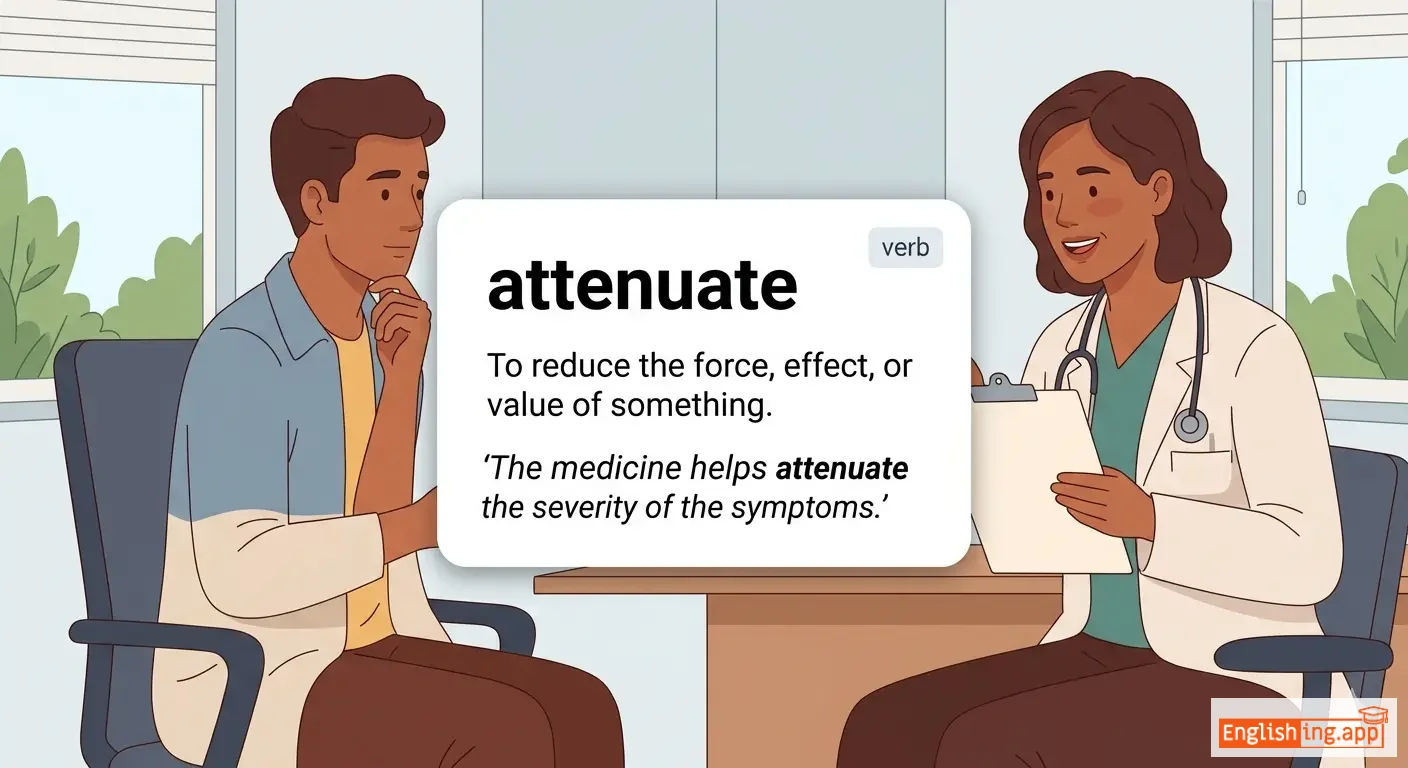
attenuate definition card — visual illustration of the meaning
verb
/əˈtɛnjueɪt/
减弱 (jian ruo)

To reduce the force, effect, or value of something.

"The medicine helps attenuate the severity of the symptoms."
"这种药物有助于减轻症状的严重性。" (Zhe zhong yao wu you zhu yu jian qing zheng zhuang de yan zhong xing.)
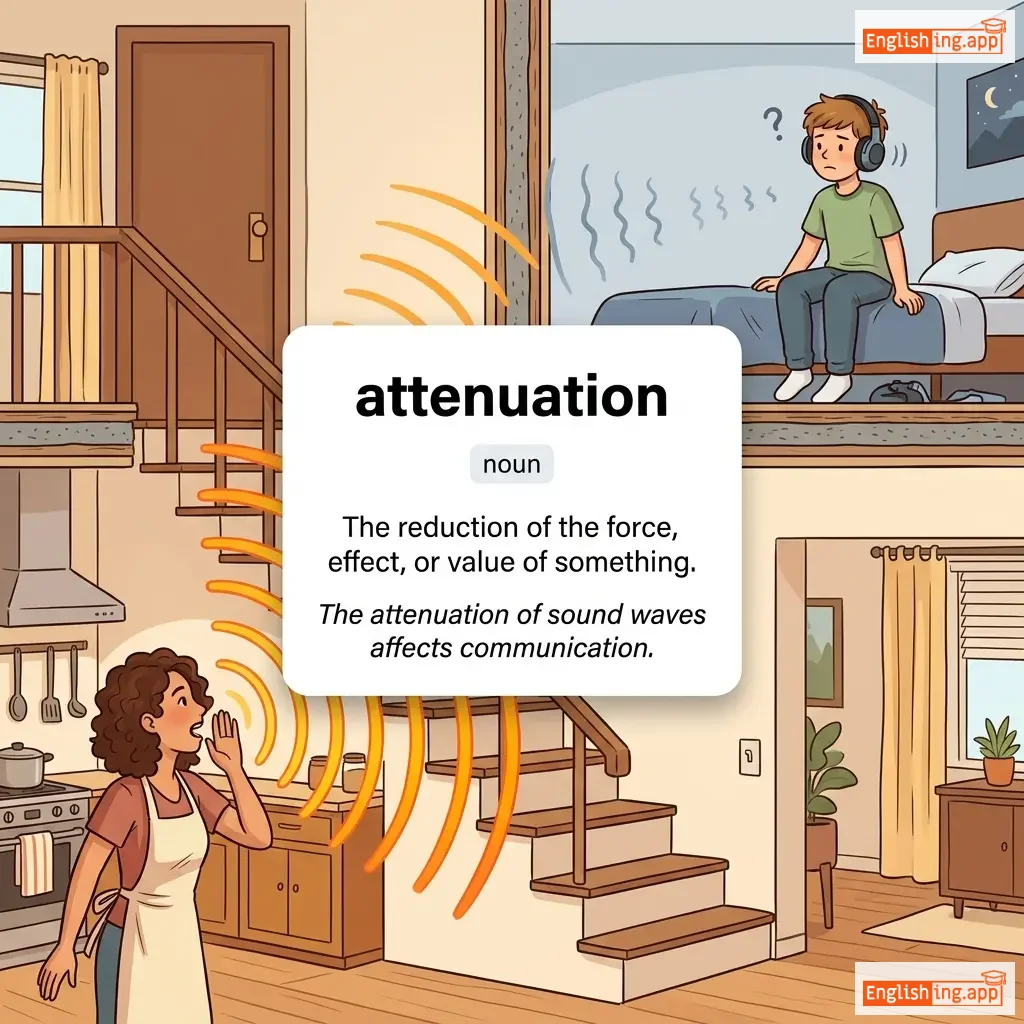
attenuation definition card — visual illustration of the meaning
noun
əˌten.juˈeɪ.ʃən
衰减, 减弱, 缩小 (shuāi jiǎn, jiǎn ruò, suō xiǎo)

The reduction of the force, effect, or value of something.

"The attenuation of sound waves affects communication."

"声音波的衰减会影响通讯。" (Shēngyīn bō de shuāijiǎn huì yǐngxiǎng tōngxùn.)
verb
/əˈtɛst/
证实 (zhèngshí)

To provide or serve as clear evidence of; to confirm or certify the truth of something.

"The witness attested to the accuracy of the report."

"证人证明报告的准确性。" (Zhèngrén zhèngmíng bàogào de zhǔnquèxìng.)
noun
/əˈtaɪər/
服装 (fuzhuang)

Clothing, especially formal or elegant wear.

"She wore traditional attire at the wedding ceremony."

"她在婚礼仪式上穿着传统服装。" (Tā zài hūnlǐ yíshì shàng chuānzhuó chuántǒng fúzhuāng.)
noun
/ˈætɪˌtjuːd/

A settled way of thinking or feeling about someone or something, often reflected in behavior.

"Her positive attitude helped her overcome many challenges."

noun
/əˈtɜːrni/
律师 (lüshi)

a person who practices law; a lawyer

"She hired an attorney to represent her in court."

"她聘请了一位律师来代表她出庭。" (Ta pinxian le yi wei lushi lai daibiao ta chutian.)
noun
/əˌtɜːni ˈdʒɛnərəl/
总检察长 (zong jian cha zhang)

The chief legal officer of a state or country.

"The attorney-general announced new reforms to strengthen justice."

"总检察长宣布了加强司法的新的改革。" (Zong jian cha zhang xuan bu le jia qiang si fa de xin de ge gao.)
verb
/əˈtrækt/
吸引 (xīyǐn)

to cause someone to have interest or draw something towards

"The flowers attract bees with their bright colors."

"花朵用它们鲜艳的颜色吸引蜜蜂。" (Huāduǒ yòng tāmen xiānyàn de yánsè xīyǐn mìfēng.)
verb (past tense / past participle)
/əˈtræktɪd/
被吸引 (bei xiyin)

felt interest or liking toward someone or something; was drawn by appeal or force

"She was attracted to the idea of studying abroad."

"她被出国留学的想法吸引了。" (ta bei chuguo liuxue de xiangfa xiyin le)
noun
/əˈtrækʃən/
吸引 (xī yǐn)

something that draws attention, interest, or enjoyment

"The Eiffel Tower is a major tourist attraction in Paris."

"埃菲尔铁塔是巴黎的主要旅游景点。" (Āi fēi ěr tiě tǎ shì bā lí de zhǔ yào lǚ yóu jǐng diǎn.)
adjective
/əˈtræktɪv/
吸引人的 (xī yǐn rén de)

pleasing or appealing to the senses or mind; having qualities that arouse interest or admiration

"The attractive design of the house caught everyone's attention."

"房子的吸引人设计引起了大家的注意。" (Fángzi de xī yǐn rén shèjì yǐnqǐ le dàjiā de zhùyì.)
adverb
/əˈtræktɪvli/
有吸引力地 (you xiyinli de)

in a pleasing or appealing way; in a manner that draws interest or admiration

"The room was attractively decorated with soft lights and plants."
"这个房间用柔和的灯光和植物装饰得很有吸引力。" (zhe ge fangjian yong rouhe de dengguang he zhiwu zhuangshi de hen you xiyinli)
attribute definition card — visual illustration of the meaning
noun, verb
/ˈætrɪˌbjuːt/ (noun), /əˈtrɪbjuːt/ (verb)

As a noun: a quality or characteristic of someone or something. As a verb: to regard something as being caused by someone or something.

"Her kindness is her greatest attribute, and many attribute her success to hard work."

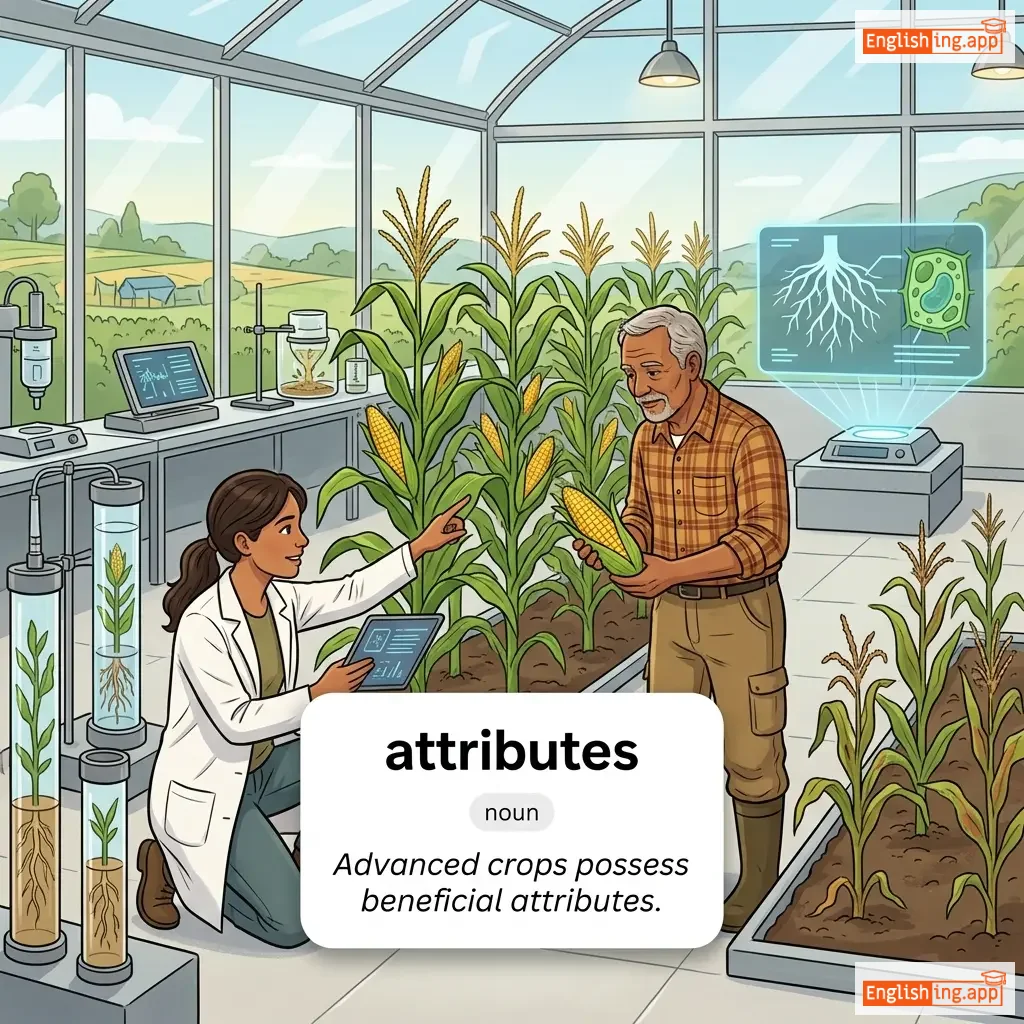
attributes definition card — visual illustration of the meaning
noun
ˈæt.rɪ.bjuːts
属性 (shuxing)

A quality or feature regarded as a characteristic or inherent part of someone or something.

"Advanced crops possess beneficial attributes."
"先进的作物具有有益的属性。" (Xiānjìn de zuòwù jùyǒu yǒuyì de shǔxìng.)
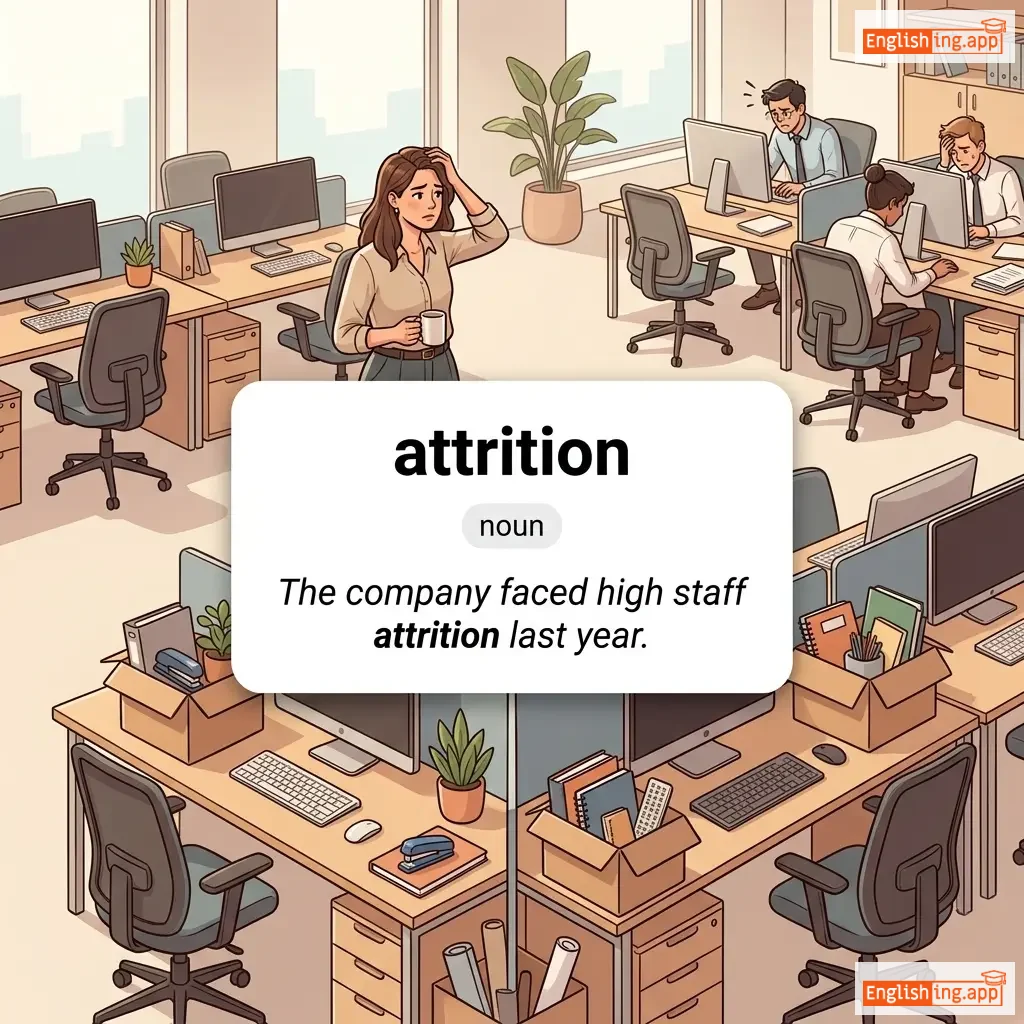
attrition definition card — visual illustration of the meaning
noun
/əˈtrɪʃən/
逐渐减少 (zhujian jianshao)

The gradual reduction in the number or strength of something, often due to constant stress, conflict, or loss.

"The company faced high staff attrition last year."

"该公司去年面临了高员工流失率。" (Gāi gōngsī qùnián miànlínle gāo yuángōng liúshī lǜ.)
verb
/əˈtjuːn/
使适应 (shi shiying)

to make someone or something aware of or responsive to something; to adjust or harmonize

"She quickly attuned herself to the needs of her new team."

"她很快适应了新团队的需求。" (Ta hen kuai shiying le xin tuandui de xuqiu)