語彙集

英単語辞書 | 単語の意味、定義、例文

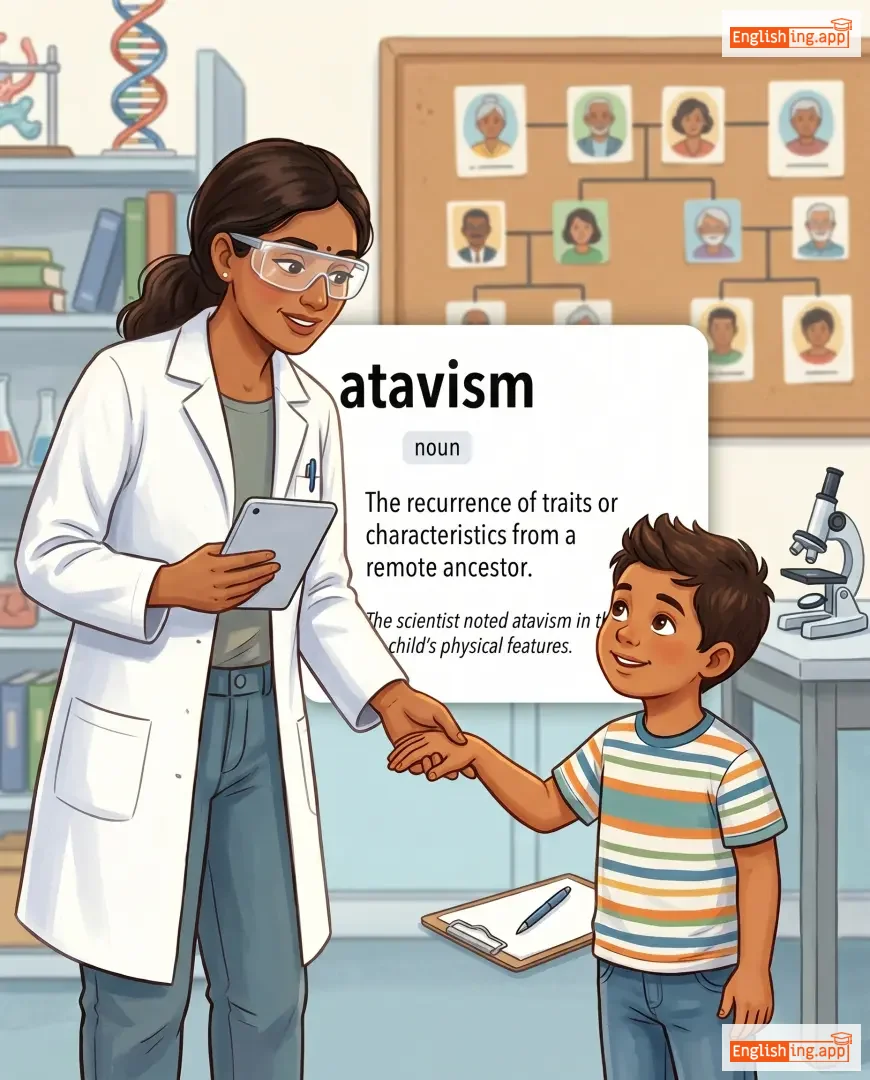
atavism definition card — visual illustration of the meaning
noun
/ˈætəvɪzəm/
先祖返り (senzo gaeri)

The recurrence of traits or characteristics from a remote ancestor.

"The scientist noted atavism in the child’s physical features."

"科学者は子供の身体的特徴に先祖返りを観察しました。" (Kagakusha wa kodomo no shintai-teki tokuchou ni senzo gaeri o kansatsu shimashita.)
noun
/ˌætəlˈjeɪ/
アトリエ(アーティストやデザイナーのスタジオ) (atorie (aatisuto ya dezainaa no sutajio))

A workshop or studio, especially for an artist or designer.

"The painter invited us to his atelier to view his new collection."

"画家は私たちを彼のアトリエに招待し、新しいコレクションを見せてくれました。" (Gaka wa watashitachi o kare no atorie ni shoutai shi, atarashī korekushon o misete kuremashita.)
noun
/ˈeɪθiɪzəm/
無神論 (mushinron)

The belief that there is no God or gods.

"He declared his atheism openly despite social pressure."

"彼は社会的圧力にもかかわらず、自分の無神論を公に宣言した。" (Kare wa shakaiteki atsuryoku ni mo kakawarazu, jibun no mushinron o kō ni sengen shita.)
adjective
/ˌeɪθiˈɪstɪk/
無神論的 (musenronteki)

Relating to or characteristic of atheists or atheism.

"She grew up in an atheistic household with no religious rituals."

"彼女は宗教的な儀式のない無神論的な家庭で育ちました。" (Kanojo wa shūkyō-tekina gishiki no nai mushinrontena katei de sodachimashita.)
adjective
/əˈθɜːrst/
渇望している, 熱望している (katsubō shite iru, netsubō shite iru)

Very eager or desirous for something.

"The explorer was athirst for adventure."

"探検家は冒険に渇望していた。" (Tankenka wa bōken ni katsubō shite ita.)
noun
/ˈæθliːt/
アスリート (asurīto)

a person who is trained or skilled in physical exercises, sports, or games requiring strength, agility, or stamina

"The athlete trained hard for the upcoming Olympic Games."

"アスリートは、来たるオリンピック大会のために厳しい訓練を積んだ。" (Asurīto wa, kitaru Orinpikku taikai no tame ni kibishī kunren o tsunda.)
adjective
/æθˈlɛtɪk/
アスレチックな、力強い (asuretikkuna, chikara-zuyoi)

physically strong, fit, and active; related to athletes or sports

"She has an athletic body because she exercises regularly."

"彼女は定期的に運動しているので、アスレチックな体を持っています。" (Kanojo wa teikiteki ni undō shiteiru node, asurettikku na karada o motteimasu.)
adverb
/əˈθwɔːrt/
横断, 反対 (ōdan, hantai)

Across or in opposition to something.

"A fallen tree lay athwart the road, blocking traffic."

"倒れた木が道路を横断して、交通を妨げていた。" (Taoreta ki ga dōro o ōdan shite, kōtsū o samatage te ita.)
noun
/ˈætməsfɪər/
大気 (taiki)

the layer of gases surrounding the Earth; the mood or feeling of a place

"The restaurant had a warm and welcoming atmosphere."

"レストランには温かくて歓迎的な雰囲気がありました。" (Resutoran ni wa atatakakute kangei-teki na fun'iki ga arimashita.)
adjective
/əˈtɒm.ɪk/
原子 (genshi)

relating to atoms or atomic energy; extremely small

"The atomic structure of hydrogen is the simplest."
"水素の原子構造は最も単純です。" (Suizo no genshi kōzō wa mottomo tanjun desu.)
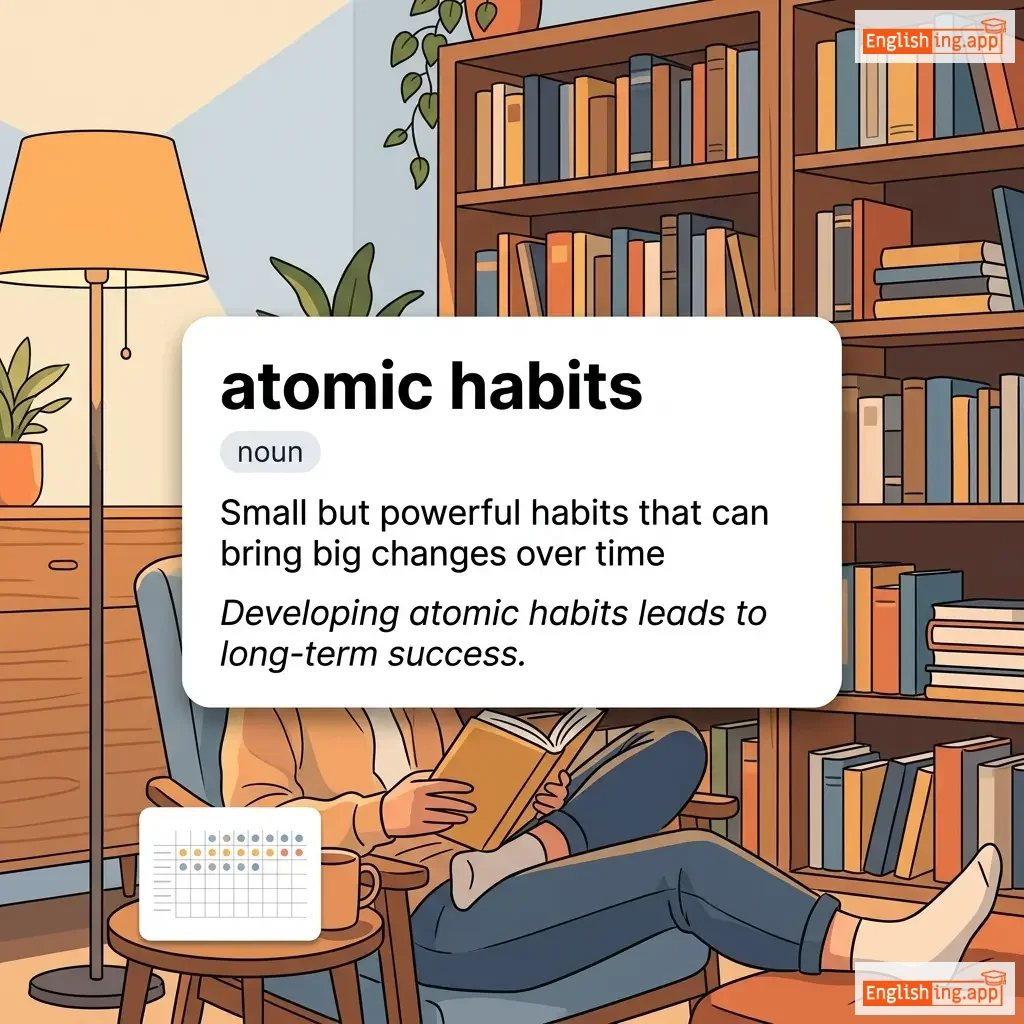
atomic habits definition card — visual illustration of the meaning
noun
/əˈtɒm.ɪk ˈhæb.ɪts/
アトミック・ハビッツ (atomikku habittsu)

Small but powerful habits that can bring big changes over time

"Developing atomic habits leads to long-term success."

"アトミック・ハビッツを育むことが長期的な成功に繋がる。" (Atomikku habittsu o hagukumu koto ga chōkitekina seikō ni tsunagaru.)
noun
/ˈætəmaɪzər/
アトマイザー (atomizer)

A device that sprays liquid into a fine mist.

"She used an atomizer to apply the perfume evenly."
"彼女は香水を均等に塗るためにアトマイザーを使いました。" (Kanojo wa kousui o kintou ni nuru tame ni atomizer o tsukaimashita.)
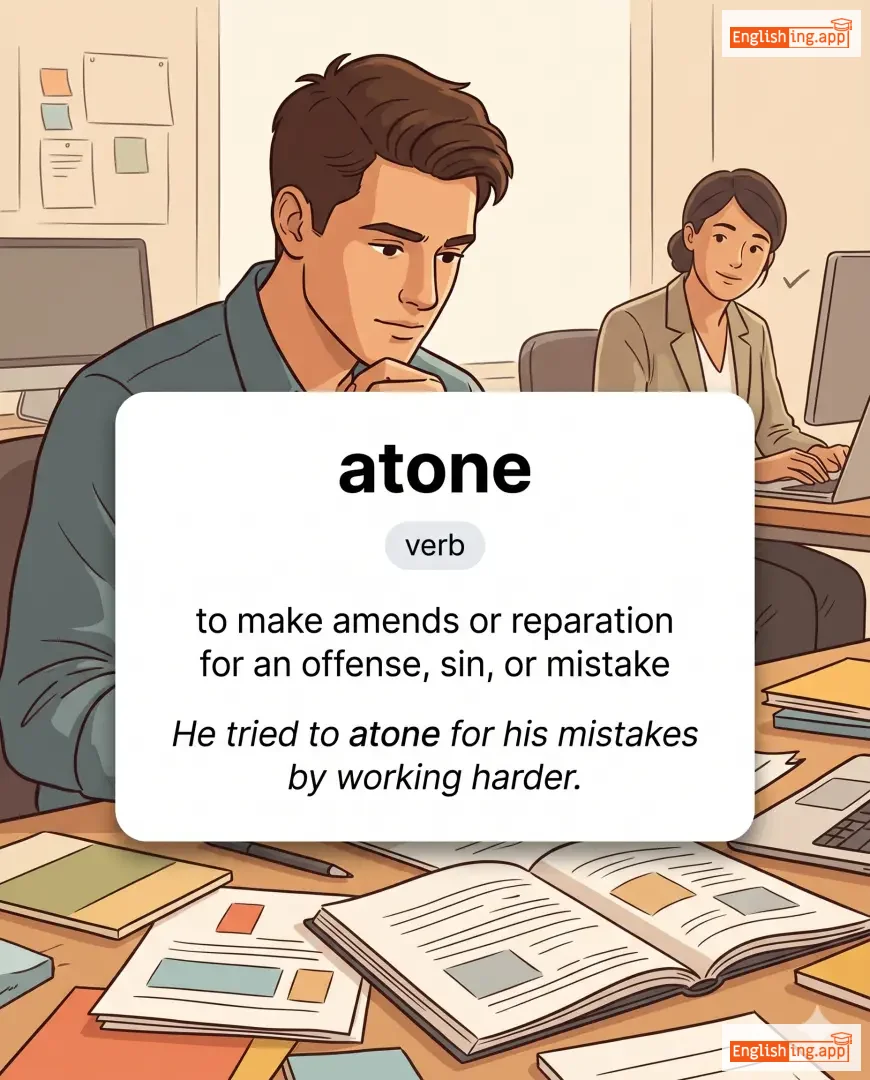
atone definition card — visual illustration of the meaning
verb
/əˈtoʊn/
償う (tsugunau)

to make amends or reparation for an offense, sin, or mistake

"He tried to atone for his mistakes by working harder."

"彼は自分のミスを補うためにもっと一生懸命働こうとしました。" (Kare wa jibun no misu wo oginau tame ni motto isshoukenmei hatarakou to shimashita.)
noun
/əˈtoʊnmənt/
贖罪 (shokuzai)

the act of making amends for a wrong, sin, or injury

"The festival was celebrated as a day of atonement."

"その祭りは贖罪の日として祝われました。" (Sono matsuri wa shokuzai no hi toshite iwaremashita.)
preposition
/əˈtɒp/
上に (ue ni)

on the top of something

"A flag was placed atop the tower."

"旗は塔の上に置かれました。" (Hata wa tō no ue ni okaremashita.)
adjective
/əˈtroʊʃəs/
ひどい (hidoi)

extremely bad, unpleasant, or cruel

"The prisoners were kept in atrocious conditions."

"囚人たちはひどい状況で収容されていた。" (Shūjin-tachi wa hidoi jōkyō de shūyō sarete ita.)
adverb
/əˈtroʊʃəsli/
ひどく (hidoku)

in a very cruel, shocking, or extremely bad manner

"The service at the restaurant was atrociously slow."

"そのレストランのサービスはひどく遅かった。" (Sono resutoran no saabisu wa hidoku osokatta)
atrocities definition card — visual illustration of the meaning
noun
əˈtrɒs.ɪ.tiz
残虐行為 (zangyaku koui)

Extremely wicked or cruel acts, typically involving physical violence or injury.

"The atrocities shocked the international community."

"その残虐行為は国際社会を震撼させた。" (Sono zangyaku koui wa kokusai shakai wo shinkansaseta.)
noun
/əˈtrɑːsəti/
残虐行為 (zangyaku koui)

an extremely cruel or violent act, often involving physical violence

"The world condemned the atrocity committed against civilians."

"世界は市民に対して行われた残虐行為を非難しました。" (Sekai wa shimin ni taishite okonawareta zangyaku koui wo hinan shimashita.)
noun/verb
/ˈætrəfi/
萎縮 (ishuku)

a decrease in size or wasting away of a body part, tissue, or ability due to lack of use

"Without regular exercise, muscles may atrophy over time."

"定期的な運動がないと、筋肉は時間とともに萎縮する可能性があります。" (Teikitekina undō ga nai to, kinniku wa jikan to tomo ni ishuku suru kanōsei ga arimasu.)
verb
/əˈtætʃ/
添付する (tenpu suru)

to join or fasten something to another thing

"Please attach the document to the email before sending."

"送信する前に、ドキュメントをメールに添付してください。" (Sōshin suru mae ni, dokyumento o mēru ni tenpu shite kudasai.)
noun
/ˌætəˈʃeɪ/
外交官補 (gaikoukanho)

A person officially assigned to the staff of a diplomatic mission, often with a specific area of responsibility.

"The cultural attache organized an art exhibition in the embassy."

"文化担当のアタッシェが大使館で芸術展を開催しました。" (Bunka tanto no atasshe ga taishikan de geijutsu ten o kaisai shimashita.)
adjective
/əˈtætʃt/
添付された (tenpu sareta)

joined or fastened to something; emotionally connected or fond of someone or something

"The file is attached to the email."

"ファイルはメールに添付されています。" (Fairu wa meeru ni tenpu sarete imasu)
noun
/əˈtæʧmənt/
愛着 (aichaku)

a strong feeling of affection or connection

"The attachment he felt to his hometown was undeniable."
"故郷に対する愛着は否定できないものでした。" (Kokyou ni taisuru aichaku wa hitei dekinai mono deshita.)
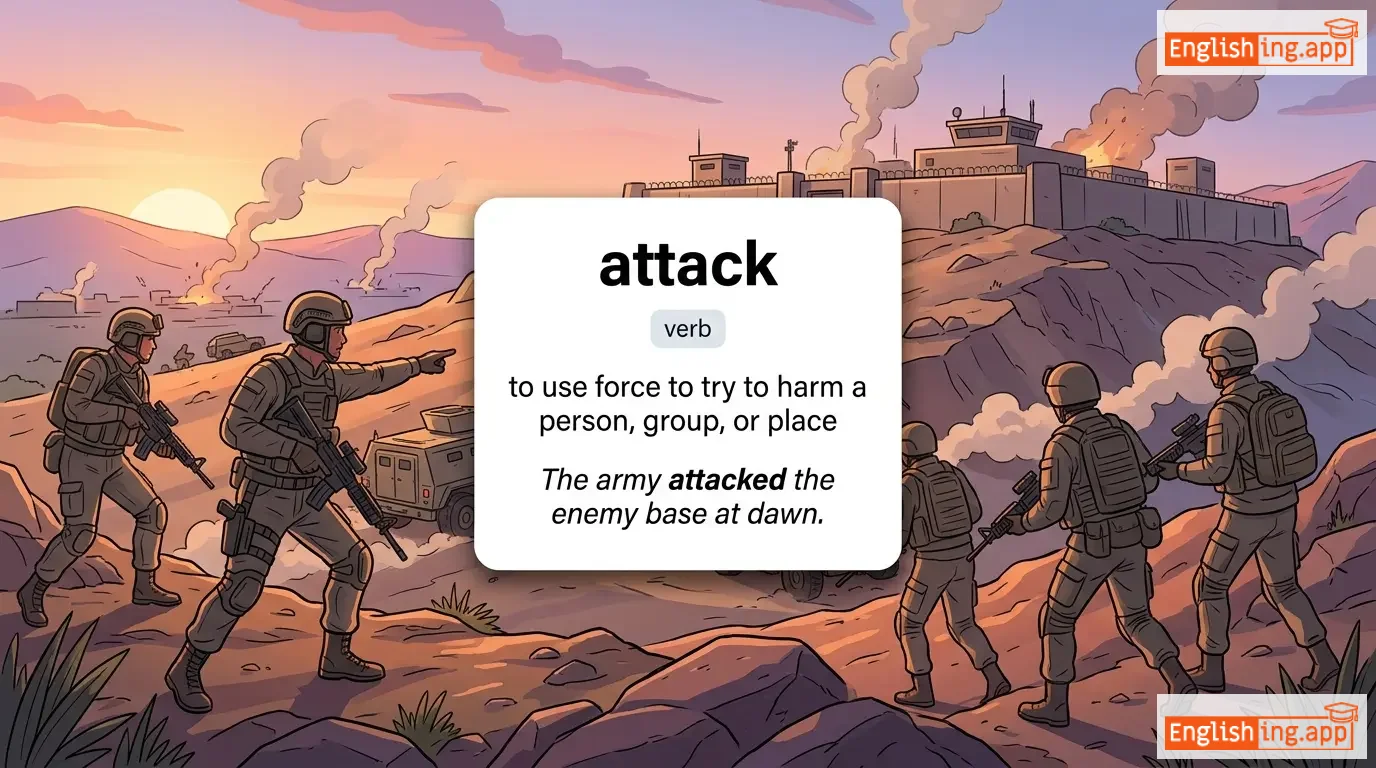
attack definition card — visual illustration of the meaning
verb
/əˈtæk/
攻撃する (kōgeki suru)

to use force to try to harm a person, group, or place

"The army attacked the enemy base at dawn."

"軍隊は夜明けに敵基地を攻撃した。" (Guntai wa yoake ni teki kichi o kōgeki shita.)
verb
/əˈtækt/
攻撃した (kougeki shita)

physically or verbally assaulted someone or something; launched an aggressive action against a target

"The soldiers attacked the enemy at dawn."

"兵士たちは夜明けに敵を攻撃した。" (heishitachi wa yoake ni teki o kougeki shita)
verb
/əˈteɪn/
達成する (tassei suru)

to achieve or reach something

"She worked hard to attain her goals."
"彼女は目標を達成するために一生懸命働きました。" (Kanojo wa mokuhyō o tassei suru tame ni isshōkenmei hatarakimashita.)
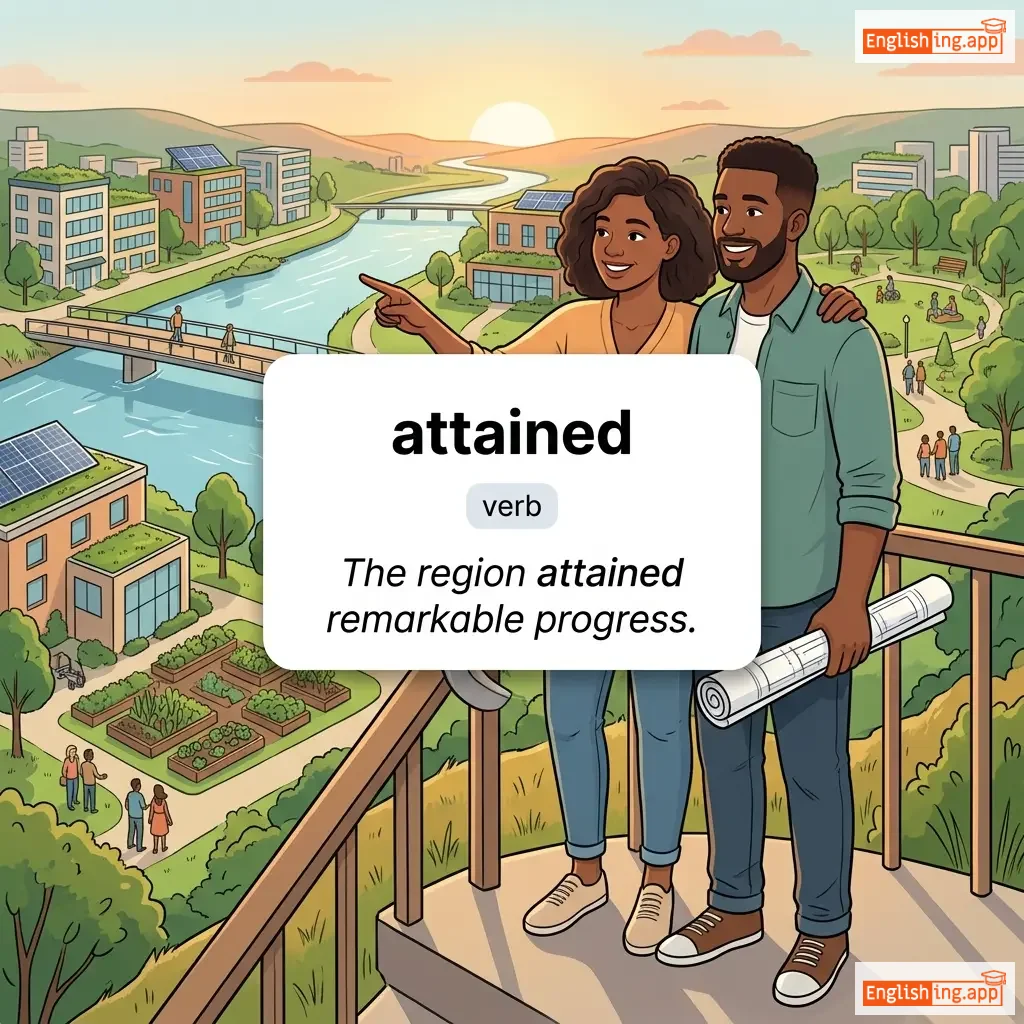
attained definition card — visual illustration of the meaning
verb
əˈteɪnd
達成した (tassei shita)

Succeeded in achieving (something that one desires and has worked for); reached a specified age, size, or amount.

"The region attained remarkable progress."
"その地域は顕著な進展を達成しました。" (Sono chiiki wa kencho na shinten o tassei shimashita.)
verb
/əˈtɛmpt/

to make an effort to achieve or complete something difficult

"He attempted to climb the mountain despite the bad weather."

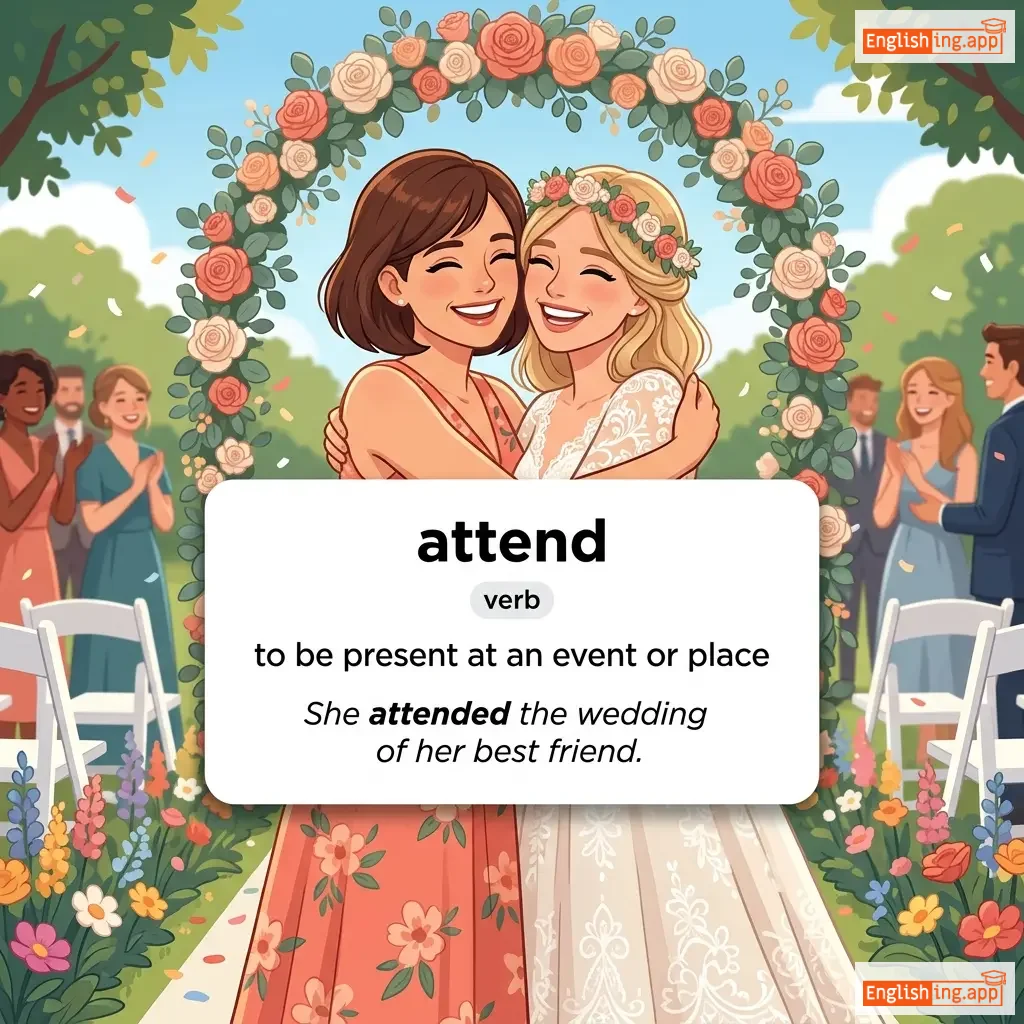
attend definition card — visual illustration of the meaning
verb
/əˈtɛnd/
参加する (sanka suru)

to be present at an event or place

"She attended the wedding of her best friend."

"彼女は親友の結婚式に出席しました。" (Kanojo wa shinyuu no kekkonshiki ni shusseki shimashita.)
noun
/əˈtɛndəns/
出席 (shusseki)

the act of being present at a place or event

"The teacher checked the students’ attendance every morning."

"教師は毎朝生徒の出席を確認していました。" (Kyōshi wa maiasa seito no shusseki o kakunin shite imashita.)
noun
/əˈtɛnʃən/
注意 (chuui)

the act of focusing on something or someone

"The teacher asked for the students' attention."

"先生は学生の注意を求めました。" (Sensei wa gakusei no chuui o motomemashita.)
adjective
/əˈtɛntɪv/
注意深い (chūibukai)

Paying close attention to something or someone; being considerate and alert.

"The teacher praised the students for being attentive during the lesson."

"先生は授業中に注意深くしていた学生たちを褒めました。" (Sensei wa jugyō-chū ni chūibukai shite ita gakusei-tachi o homemashita.)
adverb
/əˈten.tɪv.li/
注意深く (chūibukaku)

with careful attention; in a focused manner

"She listened attentively to her teacher's instructions."
"彼女は先生の指示を注意深く聞いた。" (Kanojo wa sensei no shiji o chūibukaku kiita.)
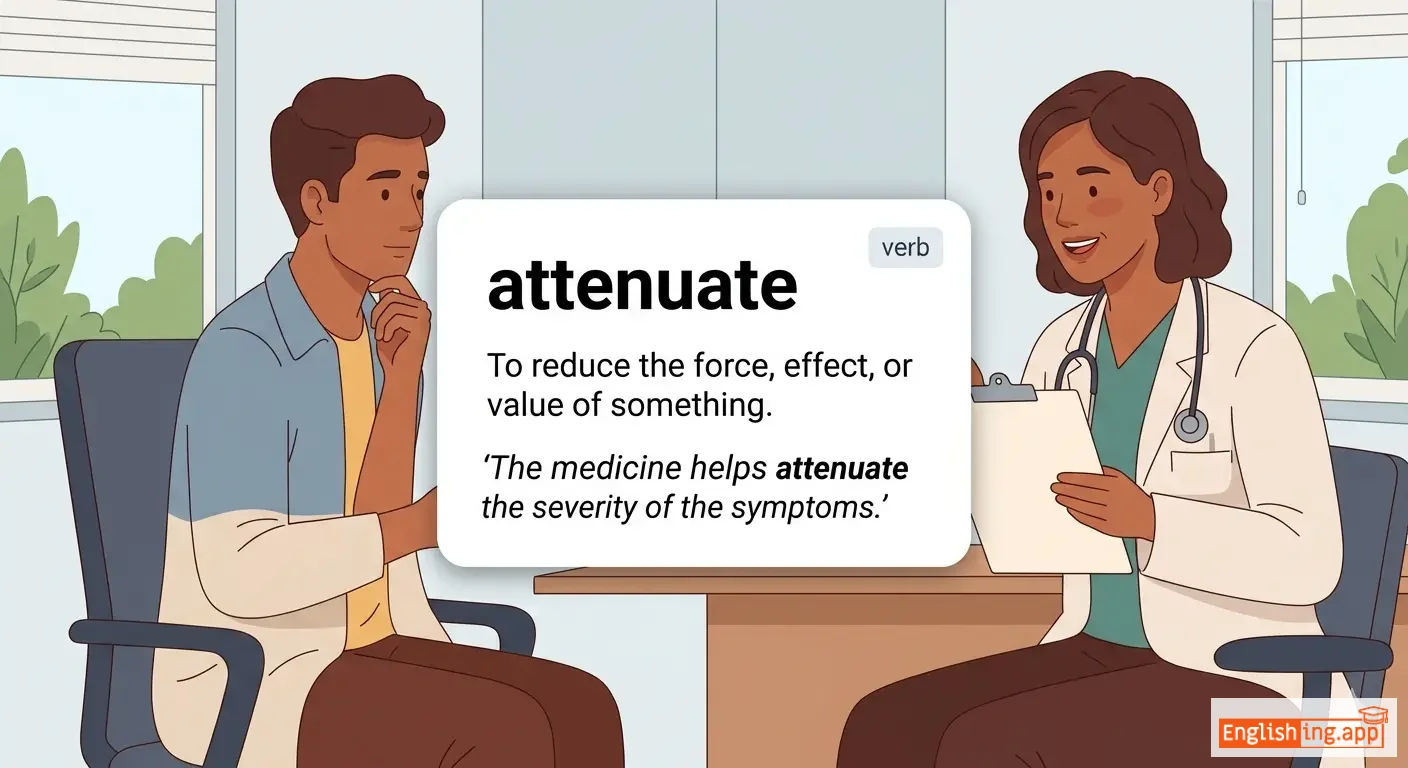
attenuate definition card — visual illustration of the meaning
verb
/əˈtɛnjueɪt/
和らげる (yawarageru)

To reduce the force, effect, or value of something.

"The medicine helps attenuate the severity of the symptoms."
"その薬は症状の重症度を和らげるのに役立ちます。" (Sono kusuri wa shoujou no jyuushoudo o yawarageru no ni yakudachimasu.)
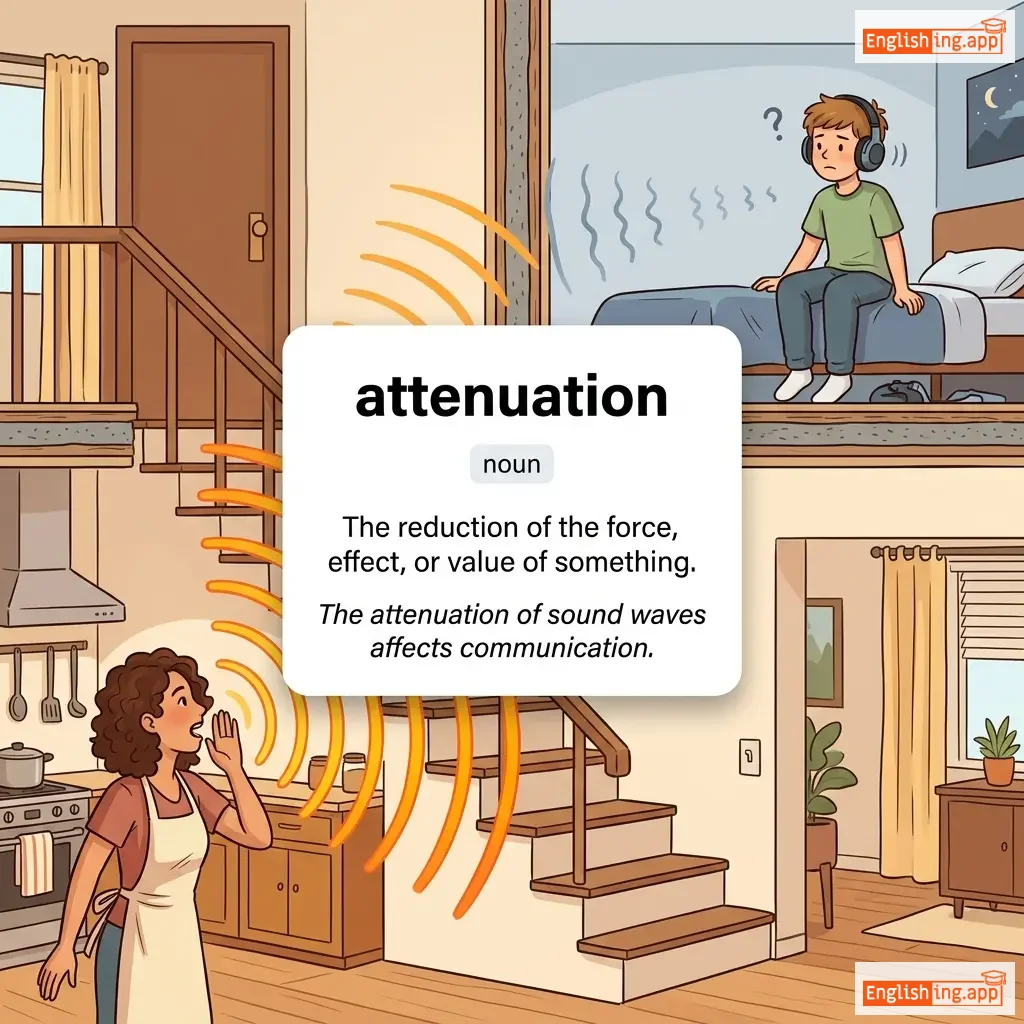
attenuation definition card — visual illustration of the meaning
noun
əˌten.juˈeɪ.ʃən
減衰、減少、弱化 (gensui, genshō, jakuka)

The reduction of the force, effect, or value of something.

"The attenuation of sound waves affects communication."

"音波の減衰はコミュニケーションに影響を与えます。" (Onpa no gensui wa komyunikēshon ni eikyō o ataemasu.)
verb
/əˈtɛst/
証明する (shōmei suru)

To provide or serve as clear evidence of; to confirm or certify the truth of something.

"The witness attested to the accuracy of the report."

"証人は報告書の正確さを証明しました。" (Shōnin wa hōkokusho no seikakusa o shōmei shimashita.)
noun
/əˈtaɪər/
衣装 (ishou)

Clothing, especially formal or elegant wear.

"She wore traditional attire at the wedding ceremony."

"彼女は結婚式で伝統的な衣装を着ていた。" (Kanojo wa kekkonshiki de dentōteki na ishō o kite ita.)
noun
/ˈætɪˌtjuːd/

A settled way of thinking or feeling about someone or something, often reflected in behavior.

"Her positive attitude helped her overcome many challenges."

noun
/əˈtɜːrni/
弁護士 (bengoshi)

a person who practices law; a lawyer

"She hired an attorney to represent her in court."

"彼女は裁判所で彼女を代表するために弁護士を雇いました。" (Kanojo wa saibansho de kanojo o daihyō suru tame ni bengoshi o yatomimashita.)
noun
/əˌtɜːni ˈdʒɛnərəl/
司法長官 (shihou chōkan)

The chief legal officer of a state or country.

"The attorney-general announced new reforms to strengthen justice."

"司法長官は司法の強化のための新しい改革を発表しました。" (Shihou chōkan wa shihou no kyouka no tame no atarashii kaikaku wo happyou shimashita.)
verb
/əˈtrækt/
引き付ける (hikitsukeru)

to cause someone to have interest or draw something towards

"The flowers attract bees with their bright colors."

"花はその鮮やかな色で蜂を引き寄せます。" (Hana wa sono azayakana iro de hachi o hikiyosemasu.)
verb (past tense / past participle)
/əˈtræktɪd/
惹かれた (hikareta)

felt interest or liking toward someone or something; was drawn by appeal or force

"She was attracted to the idea of studying abroad."

"彼女は留学するという考えに惹かれた。" (kanojo wa ryuugaku suru to iu kangae ni hikareta)
noun
/əˈtrækʃən/
アトラクション (atorakushon)

something that draws attention, interest, or enjoyment

"The Eiffel Tower is a major tourist attraction in Paris."

"エッフェル塔はパリの主要な観光名所です。" (Efferu tō wa Pari no shuyō na kankō meisho desu.)
adjective
/əˈtræktɪv/
魅力的 (miryokuteki)

pleasing or appealing to the senses or mind; having qualities that arouse interest or admiration

"The attractive design of the house caught everyone's attention."

"その家の魅力的なデザインは、誰もが注目することを引きました。" (Sono ie no miryokuteki na dezain wa, daremo ga chūmoku suru koto o hikimashita.)
adverb
/əˈtræktɪvli/
魅力的に (miryokuteki ni)

in a pleasing or appealing way; in a manner that draws interest or admiration

"The room was attractively decorated with soft lights and plants."
"その部屋は柔らかい照明と植物で魅力的に飾られていた。" (sono heya wa yawarakai shoumei to shokubutsu de miryokuteki ni kazararete ita)
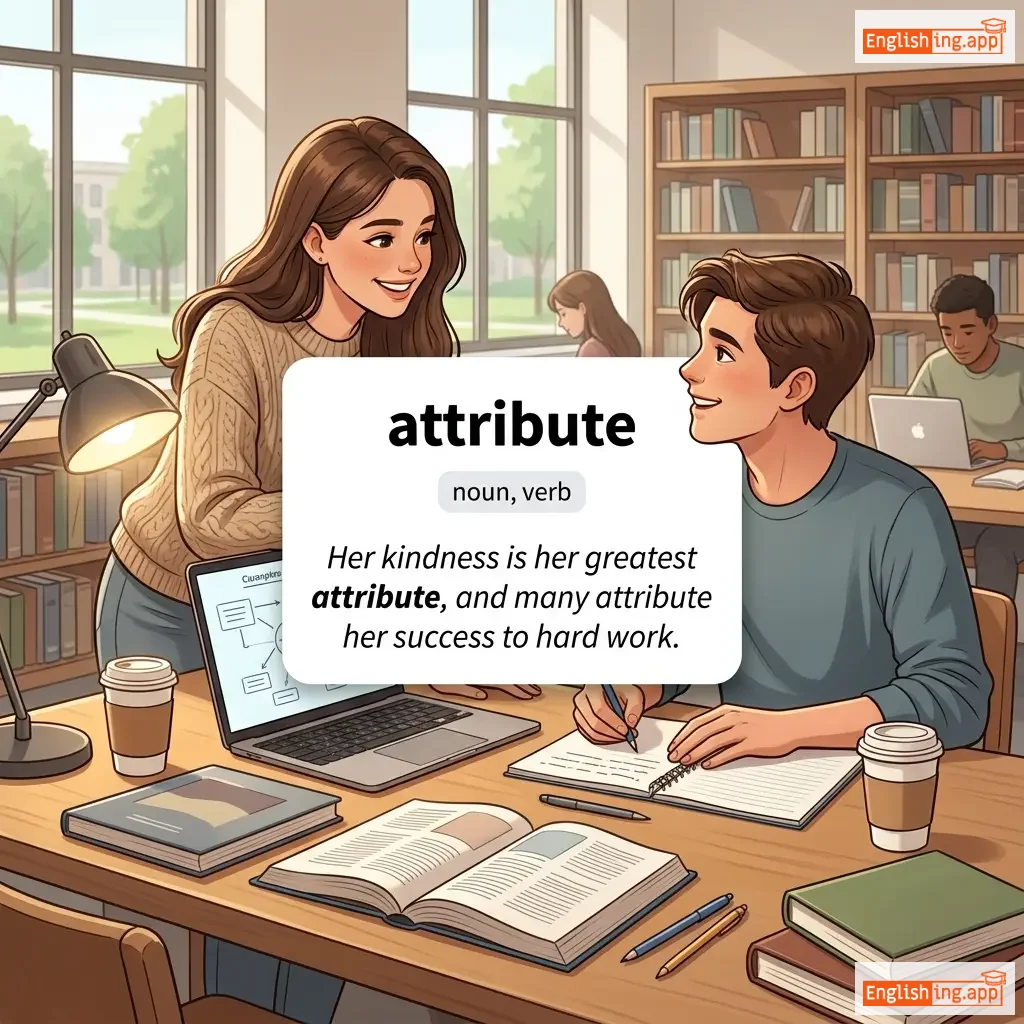
attribute definition card — visual illustration of the meaning
noun, verb
/ˈætrɪˌbjuːt/ (noun), /əˈtrɪbjuːt/ (verb)

As a noun: a quality or characteristic of someone or something. As a verb: to regard something as being caused by someone or something.

"Her kindness is her greatest attribute, and many attribute her success to hard work."

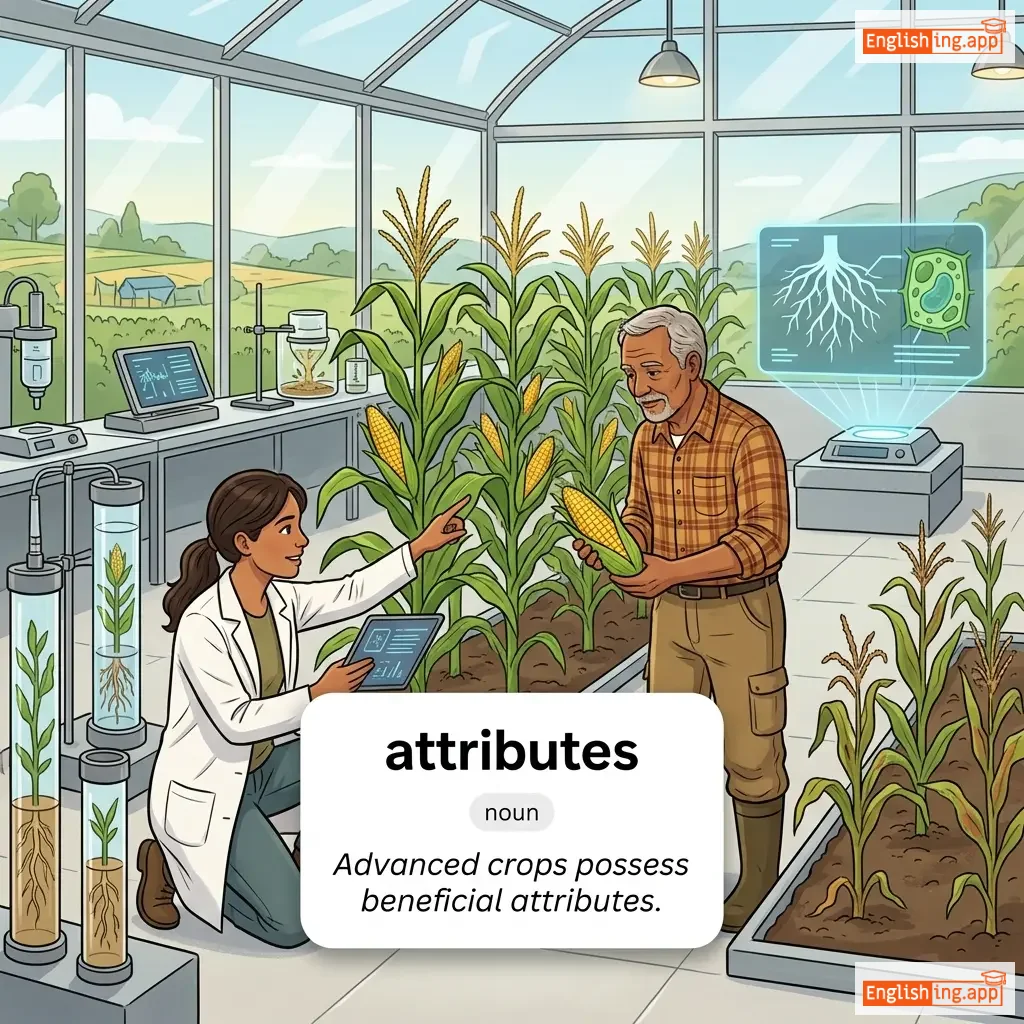
attributes definition card — visual illustration of the meaning
noun
ˈæt.rɪ.bjuːts
属性 (zokusei)

A quality or feature regarded as a characteristic or inherent part of someone or something.

"Advanced crops possess beneficial attributes."
"高度な作物は有益な属性を持っています。" (Kōdo na sakumotsu wa yūeki na zokusei o motteimasu.)
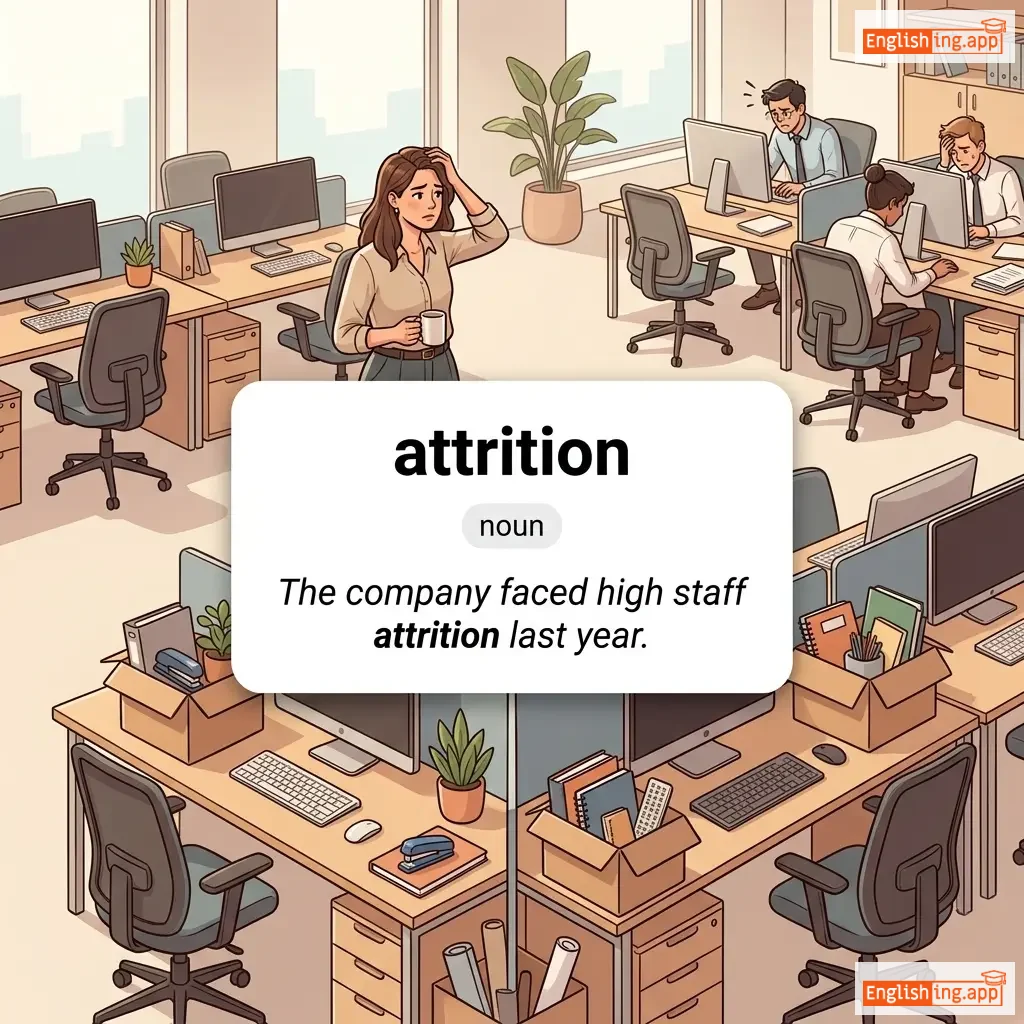
attrition definition card — visual illustration of the meaning
noun
/əˈtrɪʃən/
徐々に減少 (jojo ni genshō)

The gradual reduction in the number or strength of something, often due to constant stress, conflict, or loss.

"The company faced high staff attrition last year."

"その会社は昨年、高い従業員離職率に直面しました。" (Sono kaisha wa sakunen, takai jūgyōin rishokuritsu ni chokumen shimashita.)
verb
/əˈtjuːn/
順応させる (junou saseru)

to make someone or something aware of or responsive to something; to adjust or harmonize

"She quickly attuned herself to the needs of her new team."

"彼女は新しいチームのニーズにすぐ順応した。" (Kanojo wa atarashii chiimu no niizu ni sugu junou shita)