語彙集

英単語辞書 | 単語の意味、定義、例文

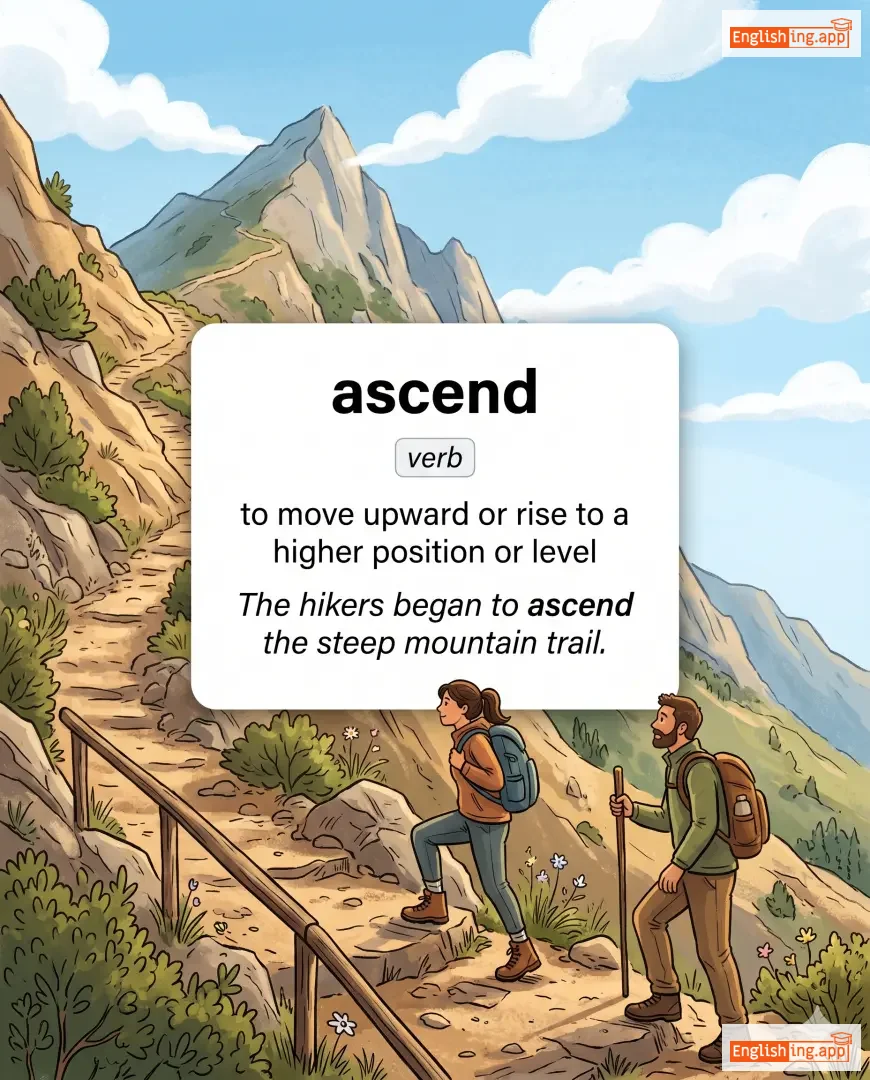
ascend definition card — visual illustration of the meaning
verb
/əˈsɛnd/
登る (noboru)

to move upward or rise to a higher position or level

"The hikers began to ascend the steep mountain trail."

"ハイカーたちは急な山道を登り始めました。" (Haikā-tachi wa kyū na yamamichi o nobori hajimemashita.)
noun
/əˈsɛndənsi/
優位, 支配 (yūi, shihai)

A position of power, influence, or control over others.

"The company gained ascendancy in the market through innovation."

"その会社は革新を通じて市場で優位を獲得しました。" (Sono kaisha wa kakushin o tōjite shijō de yūi o kakutoku shimashita.)
adjective
/əˈsɛndənt/
上昇する、支配的な (jōshō suru, shihai-teki na)

Rising in power or influence; dominant.

"She is an ascendant leader in the political party."

"彼女は政治党の中で上昇するリーダーです。" (Kanojo wa seiji tō no naka de jōshō suru rīdā desu.)
noun
/əˈsɛnʃən/
昇進 (shoushin)

The act of rising or going up, often to an important position or a higher place.

"His rapid ascension in the company surprised everyone."
"会社での彼の急速な昇進は、皆を驚かせた。" (Kaisha de no kare no kyūsokuna shoushin wa, mina wo odorokaseta.)
noun
/əˈsɛnt/

The act of rising or climbing to a higher position or level.

"The climbers began their ascent to the mountain peak at dawn."

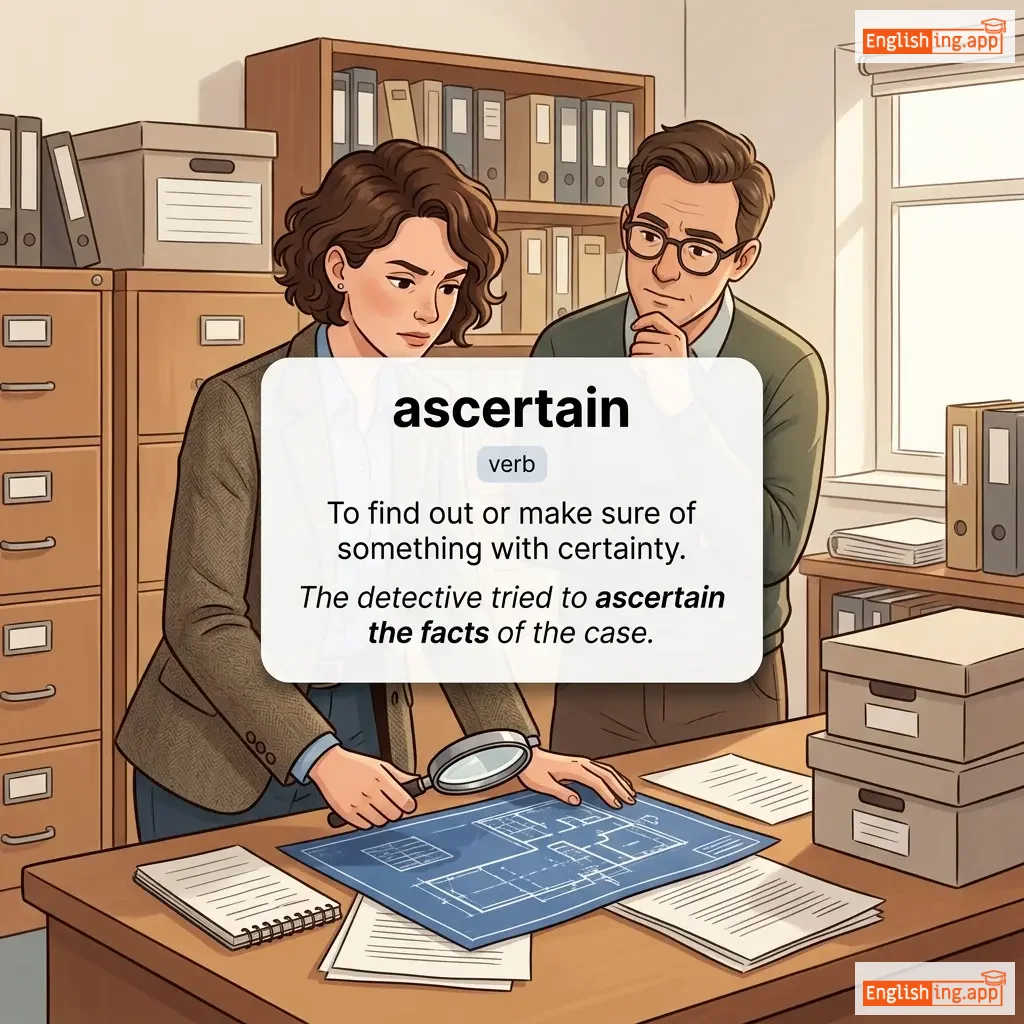
ascertain definition card — visual illustration of the meaning
verb
/ˌæs.ərˈteɪn/
確認する, 特定する (kakunin suru, tokutei suru)

To find out or make sure of something with certainty.

"The detective tried to ascertain the facts of the case."
"探偵は事件の事実を確認しようとした。" (Tantei wa jiken no jijitsu o kakunin shiyou to shita.)
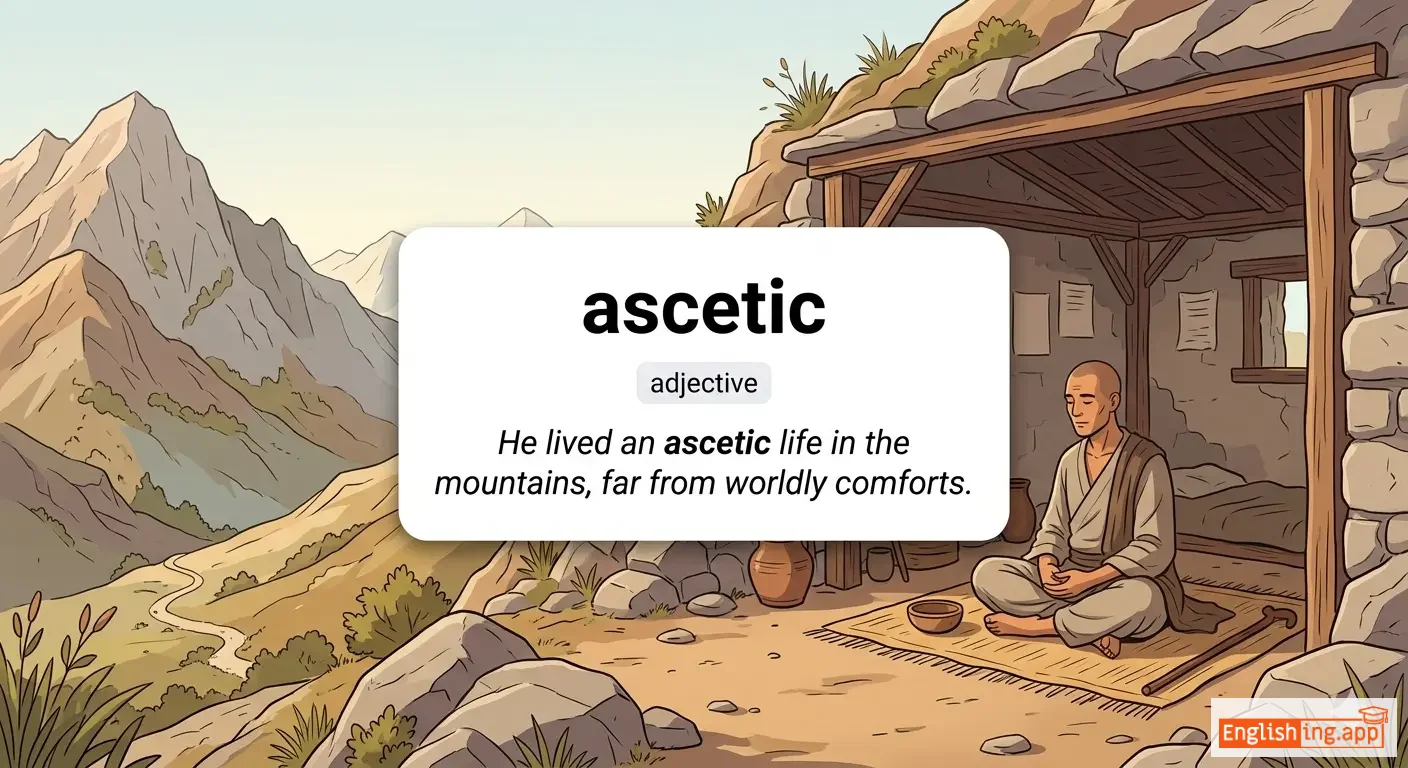
ascetic definition card — visual illustration of the meaning
adjective
/əˈsɛt.ɪk/
禁欲的 (kinyoku teki)

Practicing strict self-denial and abstaining from worldly pleasures, often for religious reasons.

"He lived an ascetic life in the mountains, far from worldly comforts."

"彼は山の中で禁欲的な生活を送り、世俗的な快適さから遠ざかっていた。" (Kare wa yama no naka de kinyoku teki na seikatsu o okuri, sezokuteki na kaitekisa kara tōzakatte ita.)
noun
/əˈsɛt.ɪˌsɪz.əm/
禁欲主義, 自制 (kinyoku shugi, jisei)

The practice of severe self-discipline and abstaining from indulgence, typically for religious or spiritual reasons.

"Asceticism has been a part of many religious traditions throughout history."

"禁欲主義は歴史を通じて多くの宗教的伝統の一部でした。" (Kinyoku shugi wa rekishi o tōjite ōku no shūkyō-teki dentō no ichibu deshita.)
verb
/əˈskraɪb/
帰属する、割り当てる (kisoku suru, wariante ru)

To attribute something to a cause, source, or person.

"Many scholars ascribe the poem to an unknown author."

"多くの学者はこの詩を未知の作者に帰属させている。" (Ōku no gakusha wa kono shi o michi no sakusha ni kizoku sasete iru.)
adjective
/eɪˈsɛptɪk/
無菌 (mukin)

Free from contamination caused by harmful microorganisms; sterile.

"Surgeons must work in an aseptic environment to prevent infection."

"外科医は感染を防ぐために無菌環境で作業しなければならない。" (Geka-i wa kansen o fusegu tame ni mukin kankyō de sagyō shinakereba naranai.)
adjective
/ˌeɪˈsɛkʃuəl/
無性愛 (musei ai)

Without sexual feelings, associations, or reproduction through sex.

"Many plants reproduce through asexual methods like budding or splitting."

"多くの植物は芽生えや分裂のような無性愛的方法で繁殖します。" (Ooku no shokubutsu wa mebae ya bunretsu no youna musei ai no houhou de hanshoku shimasu.)
noun
/æʃ/
(hai)

the powdery residue left after the burning of a substance

"After the fire, only ash remained of the house."

"火事の後、家の灰だけが残った。" (Kaji no ato, ie no hai dake ga nokotta.)
adjective
/æʃ ˈkʌl.ər/
灰色 (haizoku)

a grayish color resembling ash

"The old building had ash-colour walls that needed painting."

"古い建物には灰色の壁があり、塗り直す必要がありました。" (Furui tatemono ni wa haizoku no kabe ga ari, nurinaosu hitsuyō ga arimashita)
noun
/ˈæʃ.treɪ/
灰皿 (haizara)

a receptacle for tobacco ash and cigarette butts

"Please use the ash tray for your cigarette."

"あなたのタバコのために灰皿を使ってください。" (Anata no tabako no tame ni haizara o tsukatte kudasai.)
adjective
/əˈʃeɪmd/
恥ずかしい (hazukashii)

feeling embarrassed or guilty because of one's actions

"He was ashamed of his poor performance."

"彼は自分の悪い成績に恥ずかしさを感じていた。" (Kare wa jibun no warui seiseki ni hazukashisa o kanjite ita.)
adjective
/ˈæʃən/
青白い (aoshiroi)

Very pale in appearance, often due to shock, fear, or illness.

"His face turned ashen when he heard the terrible news."

"彼は恐ろしいニュースを聞いたとき、顔が青白くなった。" (Kare wa osoroshī nyūsu o kiita toki, kao ga aoshīroku natta.)
adjective, noun
/ˈeɪʒən/
アジアの (ajia no)

relating to Asia or its people

"She loves Asian culture."

"彼女はアジア文化が好きです。" (Kanojo wa Ajia bunka ga suki desu.)
noun
/ˈeɪʒən siː bæs/
アジアスズキ (ajia suzuki)

a large predatory fish found in coastal waters and estuaries of the Indo-Pacific region, prized for its white meat

"Asian sea bass is highly valued in aquaculture for its fast growth."

"アジアスズキは成長が早いため、養殖業で高く評価されています。" (ajia suzuki wa seichou ga hayai tame youshokugyou de takaku hyouka sarete imasu)
noun
/ˈeɪʒən swɒmp iːl/
アジアドジョウウナギ (ajia dojou unagi)

a snake-like freshwater fish that can survive in muddy waters and is considered a delicacy in South Asian cuisine

"Asian swamp eel can breathe air and survive in shallow muddy waters."

"アジアドジョウウナギは空気を吸い、浅い泥の水で生き残ることができます。" (ajia dojou unagi wa kuuki o sui asai doro no mizu de ikinokoru koto ga dekimasu)
adverb, noun
/əˈsaɪd/
(waki)

to or on one side; a remark not intended for everyone

"He stepped aside to let her pass."

"彼は彼女を通すために脇に寄った。" (Kare wa kanojo o toosu tame ni waki ni yotta.)
adjective
/ˈæsɪnaɪn/
愚かな (orokana)

Extremely foolish or stupid.

"It was an asinine idea to drive into the storm without checking the weather."

"天気を確認せずに嵐の中を車で走るのは愚かな考えだった。" (Tenki o kakunin sezu ni arashi no naka o kuruma de hashiru no wa orokana kangae datta.)
verb
/æsk/
尋ねる (tazuneru)

to request information or seek an answer

"She asked him about his new job."

"彼女は彼に新しい仕事について尋ねた。" (Kanojo wa kare ni atarashii shigoto ni tsuite tazuneta.)
adverb
/əˈskæns/
疑いの目で (utagai no me de)

With suspicion, mistrust, or disapproval.

"She looked askance at his unusual proposal."

"彼女は彼の異常な提案を疑いの目で見た。" (Kanojo wa kare no ijou na teian wo utagai no me de mita.)
adjective
/əˈskjuː/
傾いている (katamuiteiru)

Not in a straight or level position; crooked or tilted.

"The picture on the wall hung slightly askew."

"壁の絵は少し傾いていた。" (Kabe no e wa sukoshi katamuiteita.)
adjective
/əˈsliːp/
眠っている (nemutte iru)

in a state of sleep

"The baby is fast asleep."

"赤ちゃんはぐっすり眠っています。" (Akachan wa gussuri netutemasu.)
noun
/əˈspær.ə.ɡəs biːn/
アスパラガス豆 (asuparagasu mame)

a long, thin green vegetable pod that grows on vines; also known as yard-long bean

"The asparagus bean grows up to three feet long and is commonly used in Asian cooking."

"アスパラガス豆は最大で三フィートの長さになり、アジア料理で一般的に使用されます。" (asuparagasu mame wa saidai de san fīto no nagasa ni nari, ajia ryōri de ippanteki ni shiyō saremasu.)
noun
/ˈæs.pekt/
側面 (sokumen)

A particular part, feature, or view of something.

"One important aspect of health is regular exercise."
"健康の重要な側面は定期的な運動です。" (Kenko no jūyōna sokumen wa teikiteki na undō desu.)
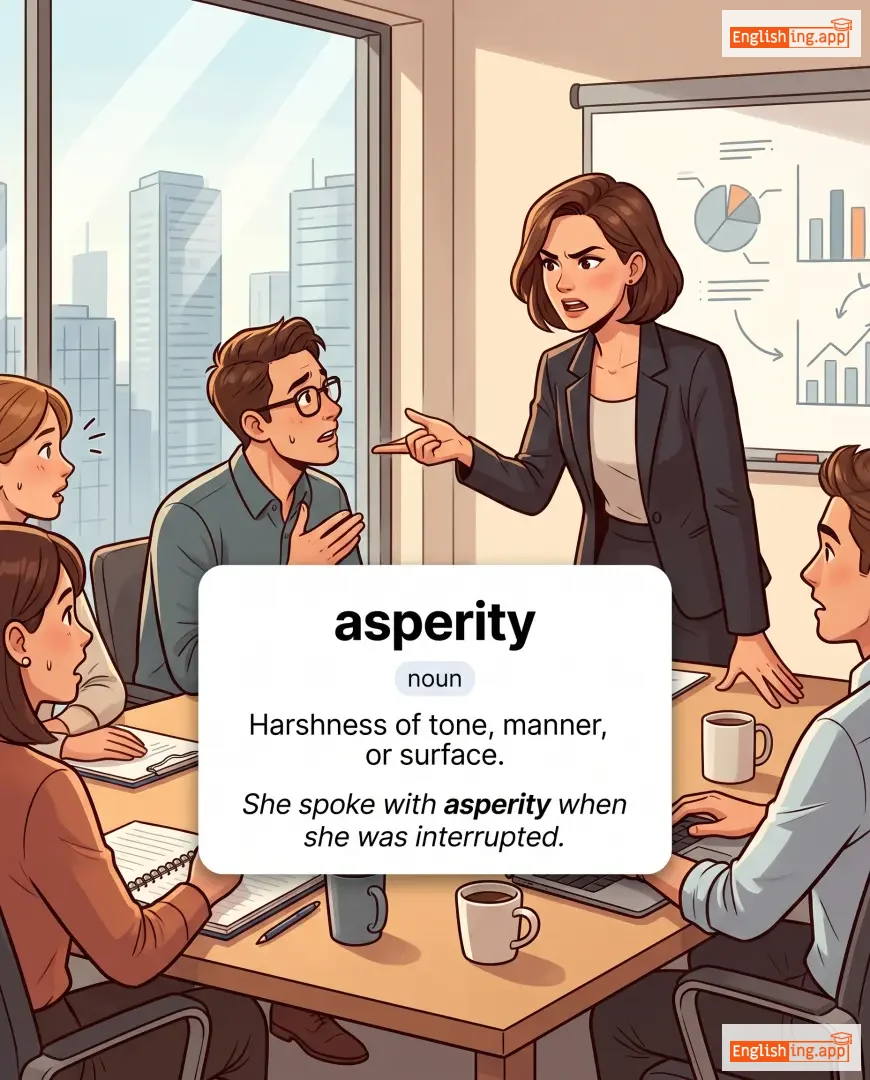
asperity definition card — visual illustration of the meaning
noun
/əˈsper.ɪ.ti/

Harshness of tone, manner, or surface.

"She spoke with asperity when she was interrupted."

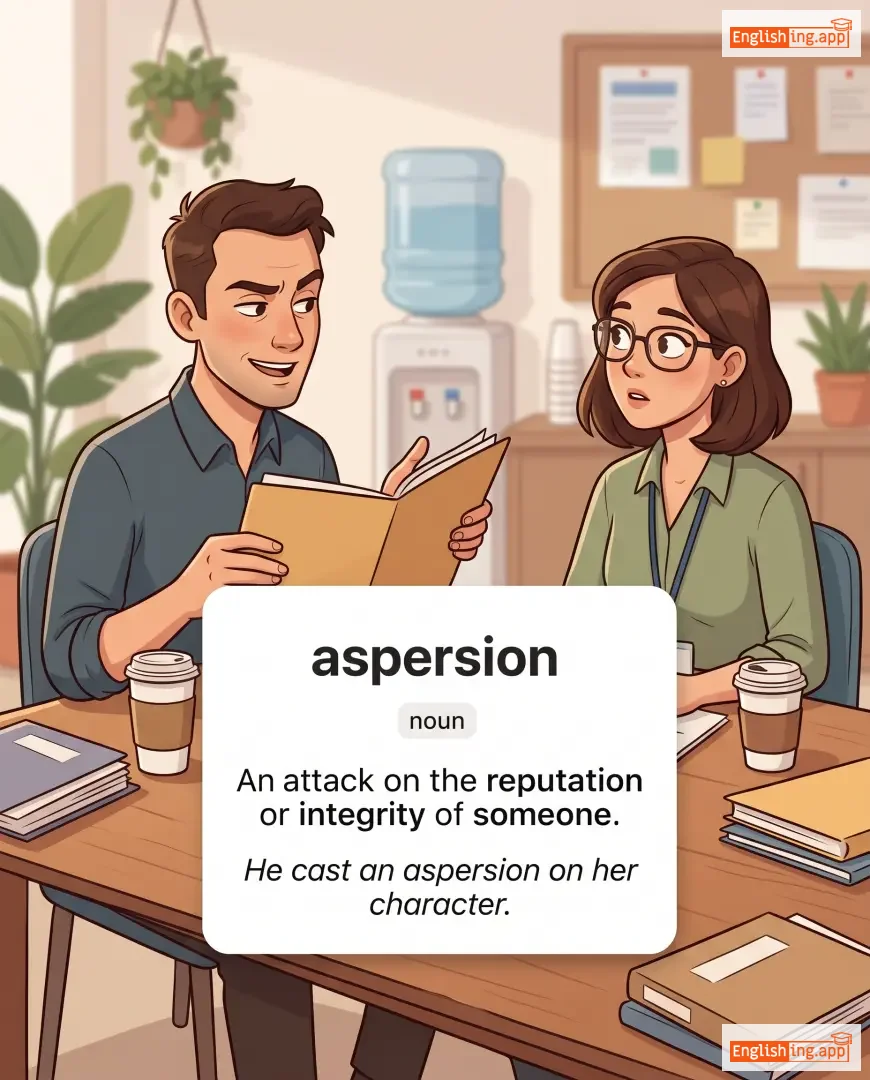
aspersion definition card — visual illustration of the meaning
noun
/əˈspɜːr.ʒən/
中傷 (chūshō)

An attack on the reputation or integrity of someone.

"He cast an aspersion on her character."

"彼は彼女の性格に中傷をしました。" (Kare wa kanojo no seikaku ni chūshō o shimashita.)
noun (plural)
/əˈspɜːr.ʒənz/
中傷 (chūshō)

Critical or slanderous remarks; multiple attacks on reputation.

"The politician rejected the aspersions cast against him."

"政治家は彼に対してなされた中傷を拒否した。" (Seijika wa kare ni taishite nasareta chūshō o kyohi shita.)
noun
/ˈæspɪrənt/
志願者 (shigansha)

a person who seeks or hopes to achieve a position of honor or advancement

"She is an aspirant for the university's top scholarship."

"彼女は大学の最優秀奨学金の志願者です。" (Kanojo wa daigaku no sai yuushuu shougakukin no shigansha desu.)
aspiration definition card — visual illustration of the meaning
noun
/ˌæspəˈreɪʃən/
志望 (shibou)

a strong desire to achieve something; ambition

"Her aspiration is to become a doctor."

"彼女の志望は医者になることです。" (Kanojo no shibou wa isha ni naru koto desu.)
verb
/əˈspaɪər/
志す (kokorozasu)

to have a strong desire to achieve something

"Many students aspire to study abroad."

"多くの学生が海外で勉強することを目指しています。" (Ookuno gakusei ga kaigai de benkyou suru koto o mezashiteimasu.)
noun
/æs/
ロバ (roba)

a donkey; also an informal term for a foolish person or one's buttocks

"He acted like an ass during the meeting."

"彼は会議中にロバのように振る舞った。" (Kare wa kaigi-chuu ni roba no you ni furumatta.)
verb
/əˈseɪl/
攻撃する (kōgeki suru)

to attack violently, either physically or with words

"The politician was assailed with difficult questions."

"政治家は難しい質問で攻撃された。" (Seijika wa muzukashī shitsumon de kōgeki sareta.)
noun
/əˈseɪlənt/
攻撃者 (kougeki-sha)

a person who attacks another

"The police arrested the assailant at the scene."

"警察は現場で攻撃者を逮捕しました。" (Keisatsu wa genba de kougeki-sha wo taiho shimashita.)
noun
/əˈsæsɪn/
暗殺者 (ansatsusha)

A person who kills someone, usually for political or religious reasons, often secretly.

"The assassin fled the scene after carrying out the attack."

"暗殺者は攻撃を実行した後、その場を離れました。" (Ansatsusha wa kougeki o jikkou shita ato, sono ba o hanaremashita.)
verb
/əˈsæsɪneɪt/
暗殺 (ansatsu)

To murder someone important, often a political or religious leader, usually by surprise attack.

"The rebels planned to assassinate the king."

"反乱者たちは王を暗殺する計画を立てた。" (Hanran-sha-tachi wa ō o ansatsu suru keikaku o tateta.)
noun
/əˌsæsɪˈneɪʃən/
暗殺 (ansatsu)

The act of killing someone important, often for political or ideological reasons.

"The assassination of the president shocked the nation."

"大統領の暗殺は国全体を驚かせた。" (Daitōryō no ansatsu wa kuni zentai o odorokaseta.)
noun, verb
/əˈsɔːlt/
暴行 (bōkō)

a physical attack or to attack someone violently

"He was charged with assault after the fight."

"喧嘩の後で暴行の罪で起訴されました。" (Kenka no ato de bōkō no tsumi de kisosaremashita.)
noun, verb
/ˈæseɪ/
分析 (bunseki)

To test or analyze the quality, purity, or content of a substance; the act of such testing.

"The scientists assayed the mineral sample for gold content."

"科学者たちは金の含有量を調べるために鉱物サンプルをアセイしました。" (Kagakusha-tachi wa kin no gan'yuryou o shiraberu tame ni koumoku sanpuru o asei shimashita.)
verb
/əˈsɛmbəl/
集める (atsumeru)

to gather or bring together in one place

"The students assembled in the hall for the meeting."

"学生たちは会議のためにホールに集まりました。" (Gakusei-tachi wa kaigi no tame ni hōru ni atsumarimashita.)
noun
/əˈsɛmbli/
集会 (shūkai)

a group of people gathered together for a common purpose or the act of putting parts together to form something

"The school held an assembly to discuss the new rules."
"学校は新しい規則について話し合うために集会を開きました。" (Gakkou wa atarashī kisoku ni tsuite hanashiau tame ni shūkai o hirakimashita.)
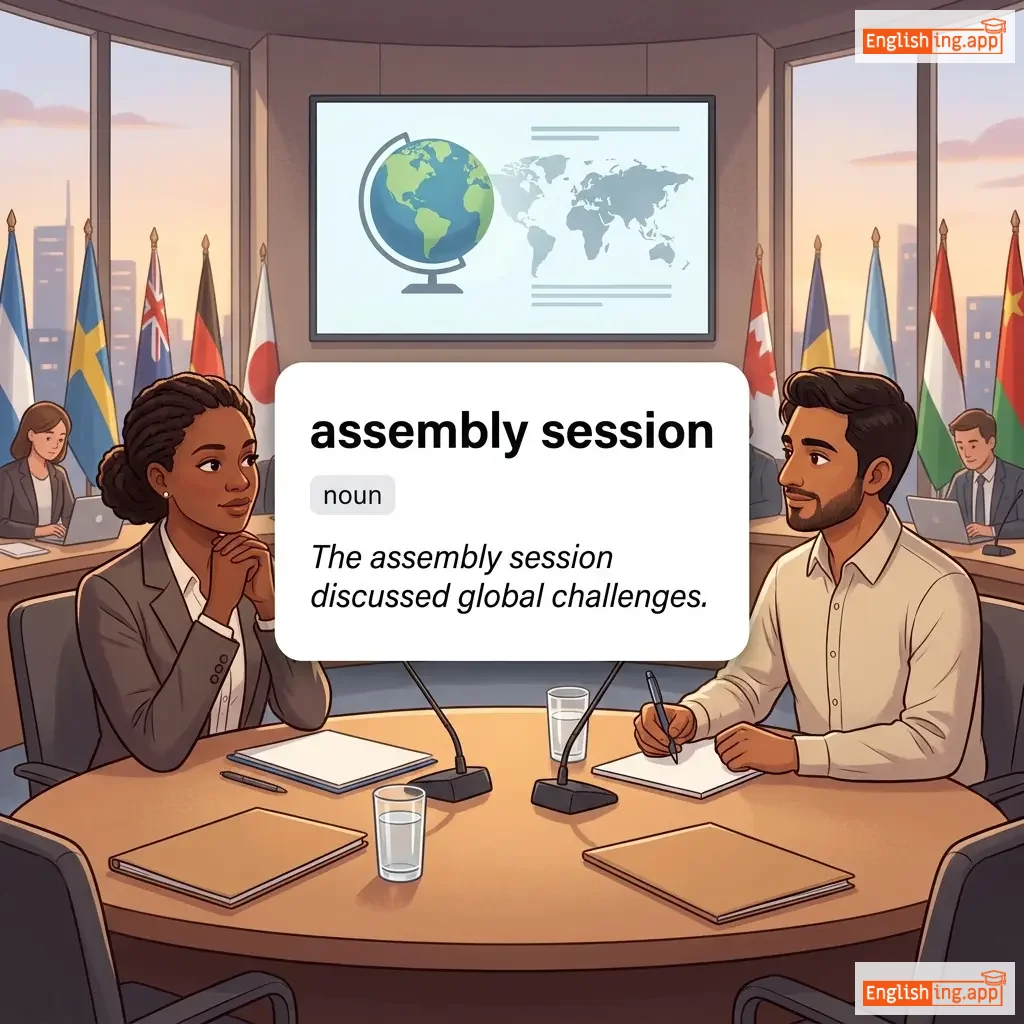
assembly session definition card — visual illustration of the meaning
noun
/əˈsem.bli ˈseʃ.ən/
アセンブリ セッション (Asenburi Sesshon)

A formal meeting where representatives gather to discuss and make decisions on important matters.

"The assembly session discussed global challenges."

"アセンブリ セッションは、世界的な課題について議論しました。" (Asenburi Sesshon wa, sekaiteki na kadai ni tsuite giron shimashita.)
noun, verb
/əˈsɛnt/
同意 (doui)

To agree to something, especially after careful consideration; an expression of approval.

"She nodded her head in silent assent."
"彼女は静かにうなずいた。" (Kanojo wa shizuka ni unazuita.)
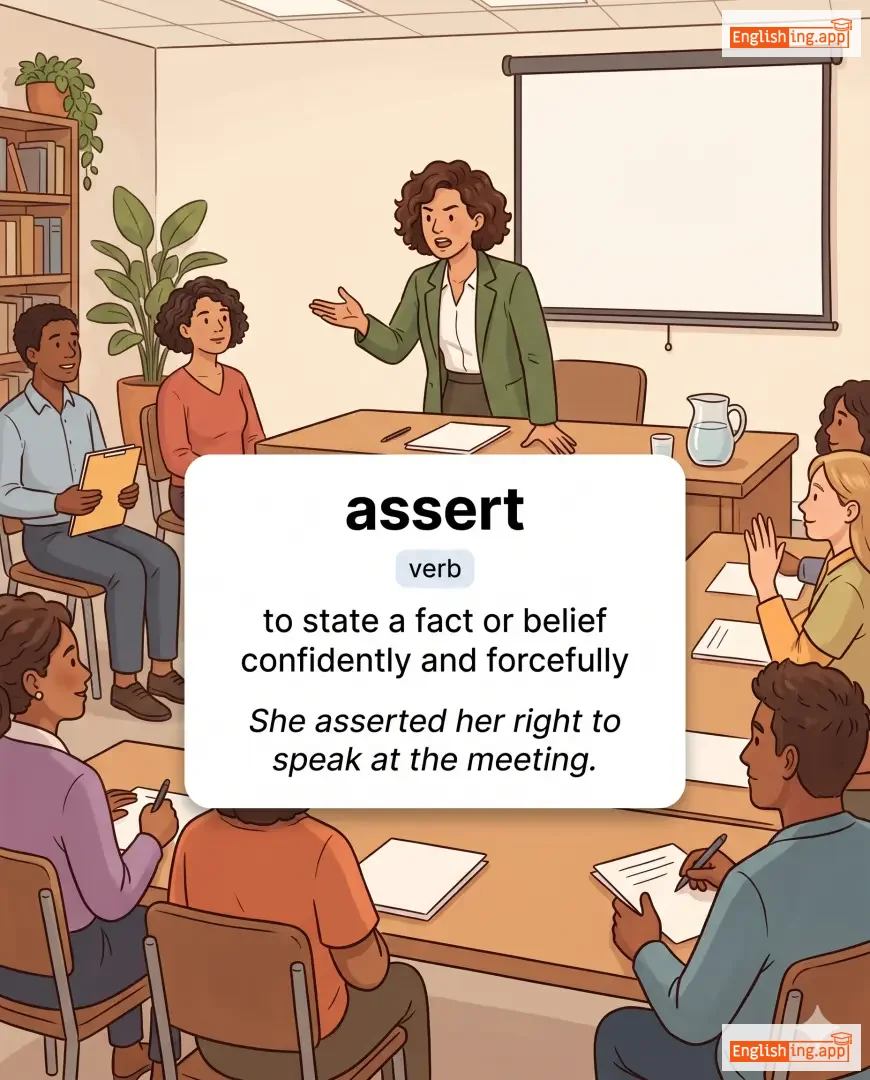
assert definition card — visual illustration of the meaning
verb
/əˈsɜːrt/
主張する (shuchou suru)

to state a fact or belief confidently and forcefully

"She asserted her right to speak at the meeting."

"彼女は会議で発言する権利を主張した。" (Kanojo wa kaigi de hatsugen suru kenri wo shuchou shita.)
noun
/əˈsɜːʃən/
主張 (shuchou)

a confident and forceful statement of fact or belief

"Her assertion that she was right was met with silence."

"彼女の自分が正しいという主張は、沈黙とともに受け入れられました。" (Kanojo no jibun ga tadashii to iu shuchou wa, chinmoku to tomo ni ukeireraremashita.)
adjective
/əˈsɜːrtɪv/
積極的な (sekkyokuteki na)

having or showing a confident and forceful personality

"He is very assertive in expressing his opinions."

"彼は自分の意見を表現するのに非常に積極的です。" (Kare wa jibun no iken o hyōgen suru no ni hijō ni sekkyokuteki desu.)
verb
/əˈsɛs/
評価する (hyousa suru)

to evaluate or estimate the nature, ability, or quality of something

"The teacher assessed the students' progress."
"教師は学生の進捗を評価しました。" (Kyoushi wa gakusei no shinchoku o hyouka shimashita.)
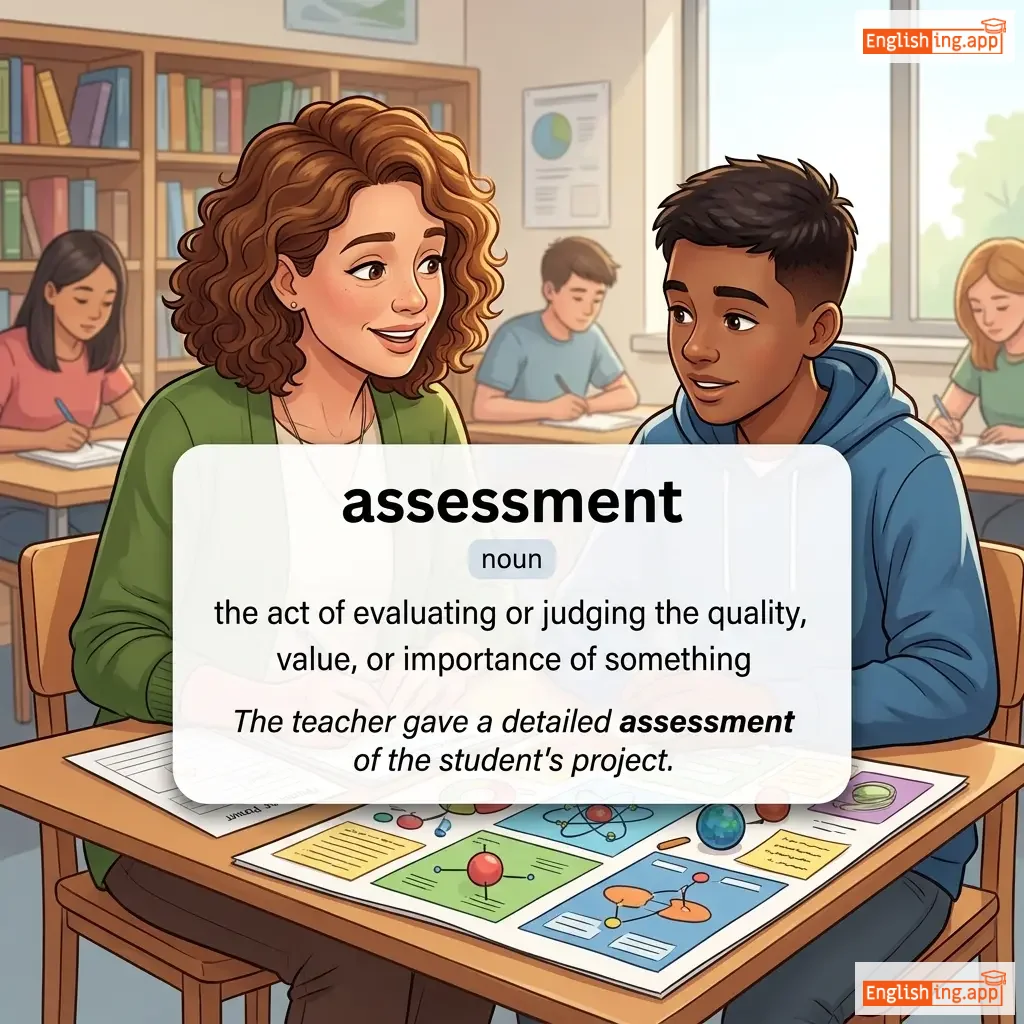
assessment definition card — visual illustration of the meaning
noun
/əˈsɛsmənt/
評価 (hyouka)

the act of evaluating or judging the quality, value, or importance of something

"The teacher gave a detailed assessment of the student's project."

"先生は学生のプロジェクトの詳細な評価を行いました。" (Sensei wa gakusei no purojekuto no shousai na hyouka o okonaimashita.)