語彙集

英単語辞書 | 単語の意味、定義、例文

noun
/əˈsɛsər/
評価者 (hyōkasha)

a person who evaluates or estimates the nature, ability, or quality of something

"An external assessor reviewed the project report."

"外部の評価者がプロジェクトの報告書を確認しました。" (Gaibu no hyōkasha ga purojekuto no hōkokusho o kakunin shimashita.)
asset definition card — visual illustration of the meaning
noun
/ˈæsɛt/
資産 (shisan)

a valuable person, skill, or resource; something owned that has value

"Her communication skills are a great asset to the company."
"彼女のコミュニケーション能力は会社にとって大きな資産です。" (Kanojo no komyunikēshon nōryoku wa kaisha ni totte ōkina shisan desu.)
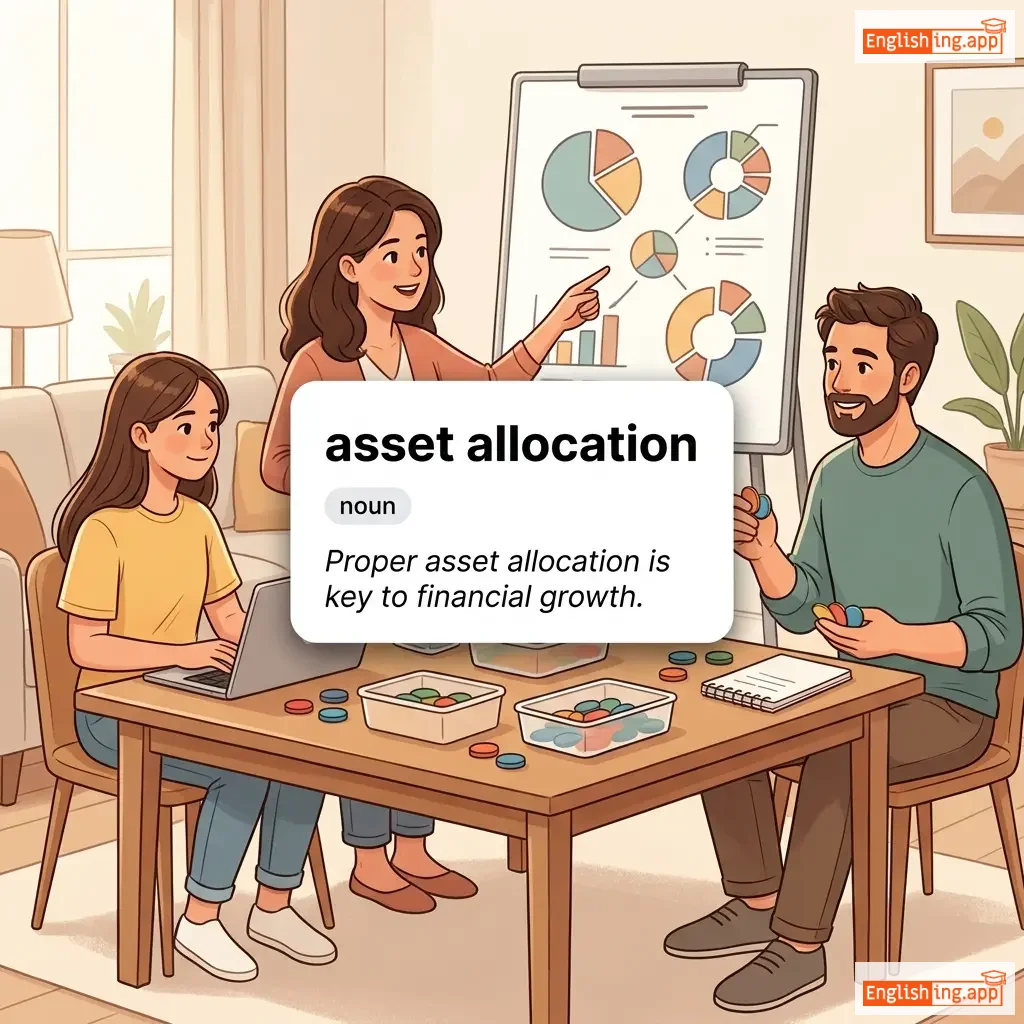
asset allocation definition card — visual illustration of the meaning
noun
ˈæ.sɛt ˌæl.əˈkeɪ.ʃən
資産配分 (shisan haibun)

An investment strategy that aims to balance risk and reward by apportioning a portfolio's assets according to an individual's goals, risk tolerance, and investment horizon.

"Proper asset allocation is key to financial growth."

"正しい資産配分は、金融成長の鍵です。" (Tadashī shisan haibun wa, kin'yū seichō no kagi desu.)
verb
/əˈsɛvəˌreɪt/
断言する (dangen suru)

to affirm or declare positively and earnestly

"He asseverated that he had never seen the man before."
"彼はその男を以前見たことがないと断言した。" (Kare wa sono otoko o izen mita koto ga nai to dangen shita.)
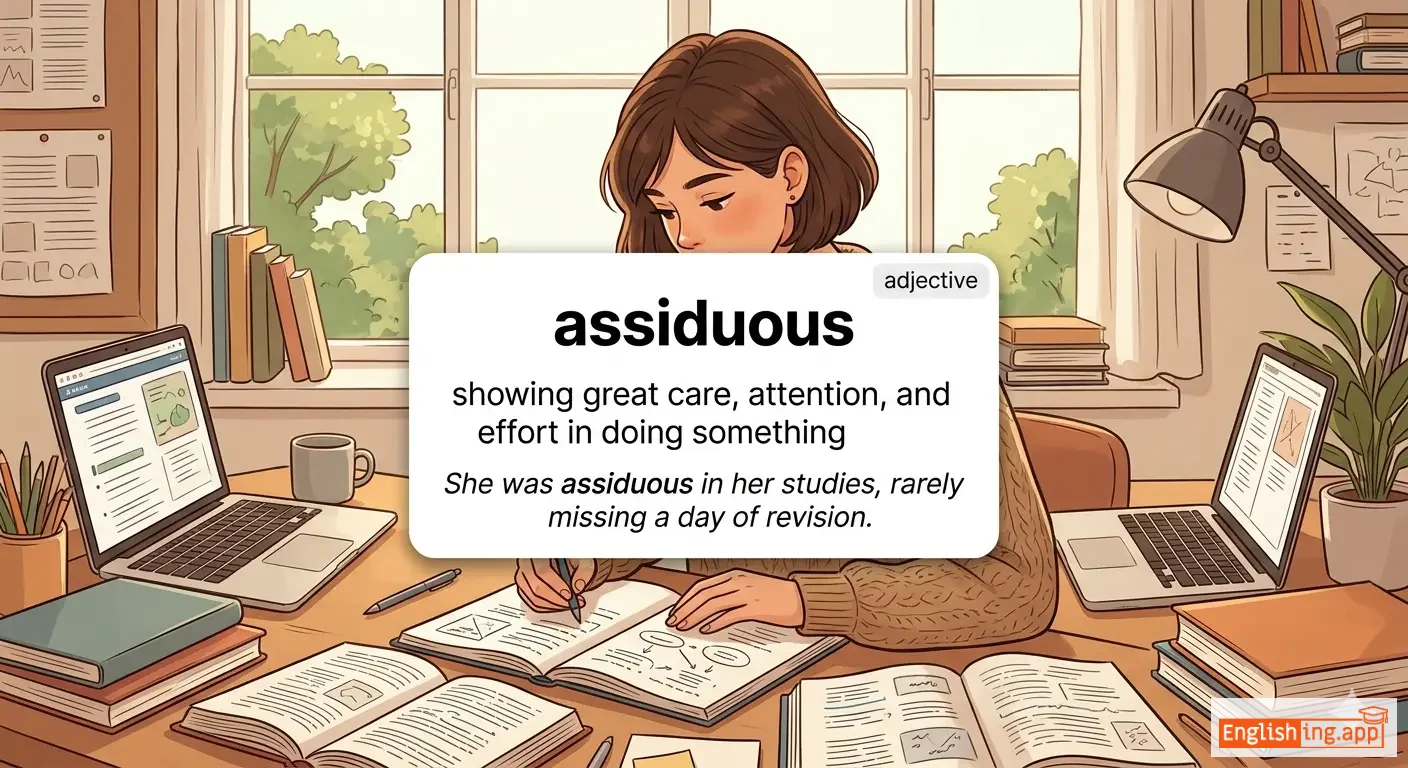
assiduous definition card — visual illustration of the meaning
adjective
/əˈsɪdʒuəs/
勤勉な (kinben na)

showing great care, attention, and effort in doing something

"She was assiduous in her studies, rarely missing a day of revision."

"彼女は勉強に勤勉で、復習を欠かすことはほとんどなかった。" (Kanojo wa benkyou ni kinben de, fukushuu o kakasu koto wa hotondo nakatta.)
adverb
/əˈsɪdʒuəsli/
熱心に (nesshin ni)

with great care and persistence

"He worked assiduously to complete the project before the deadline."

"彼は締め切り前にプロジェクトを完了するために熱心に働きました。" (Kare wa shimekiri mae ni purojekuto o kanryō suru tame ni nesshin ni hatarakimashita.)
verb
/əˈsaɪn/
割り当てる (wariateru)

to give someone a task, duty, or responsibility

"The manager will assign tasks to the new employees."

"マネージャーは新しい従業員に仕事を割り当てる予定です。" (Manējā wa atarashī jūgyōin ni shigoto o wariateru yotei desu.)
noun
/əˌsaɪˈniː/
受領者 (juryōsha)

a person to whom a right or property is legally transferred

"The assignee of the contract is responsible for all future obligations."

"契約のアサイニーはすべての将来の義務に責任を負います。" (Keiyaku no asainī wa subete no shōrai no gimu ni sekinin o oimasu.)
noun
/əˈsaɪnmənt/
課題 (kadai)

a task or piece of work given to someone as part of their duties

"The students completed their homework assignment on time."
"学生たちは時間通りに宿題を終わらせました。" (gakusei-tachi wa jikan doori ni shukudai o owarasemashita.)
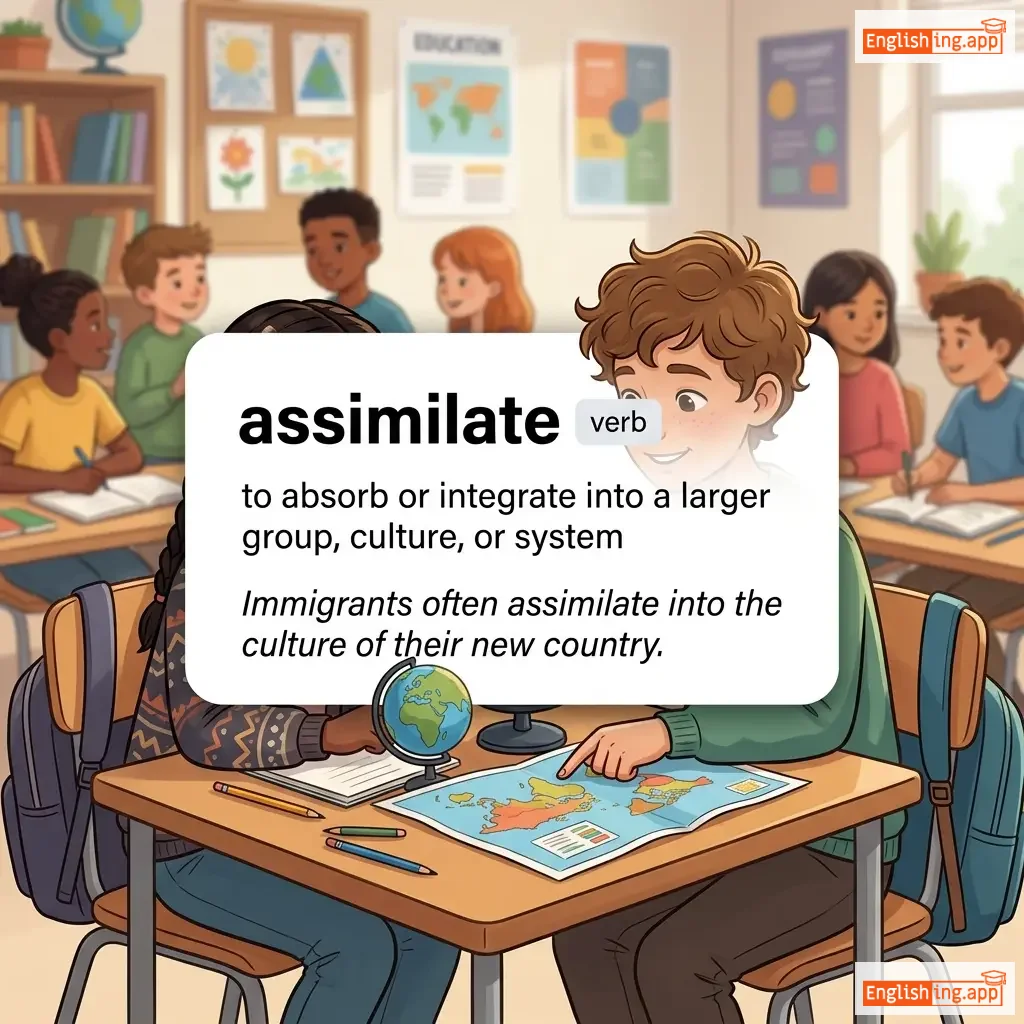
assimilate definition card — visual illustration of the meaning
verb
/əˈsɪməˌleɪt/
同化 (dōka)

to absorb or integrate into a larger group, culture, or system

"Immigrants often assimilate into the culture of their new country."
"移民はしばしば新しい国の文化に同化する。" (Imin wa shibashiba atarashī kuni no bunka ni dōka suru.)
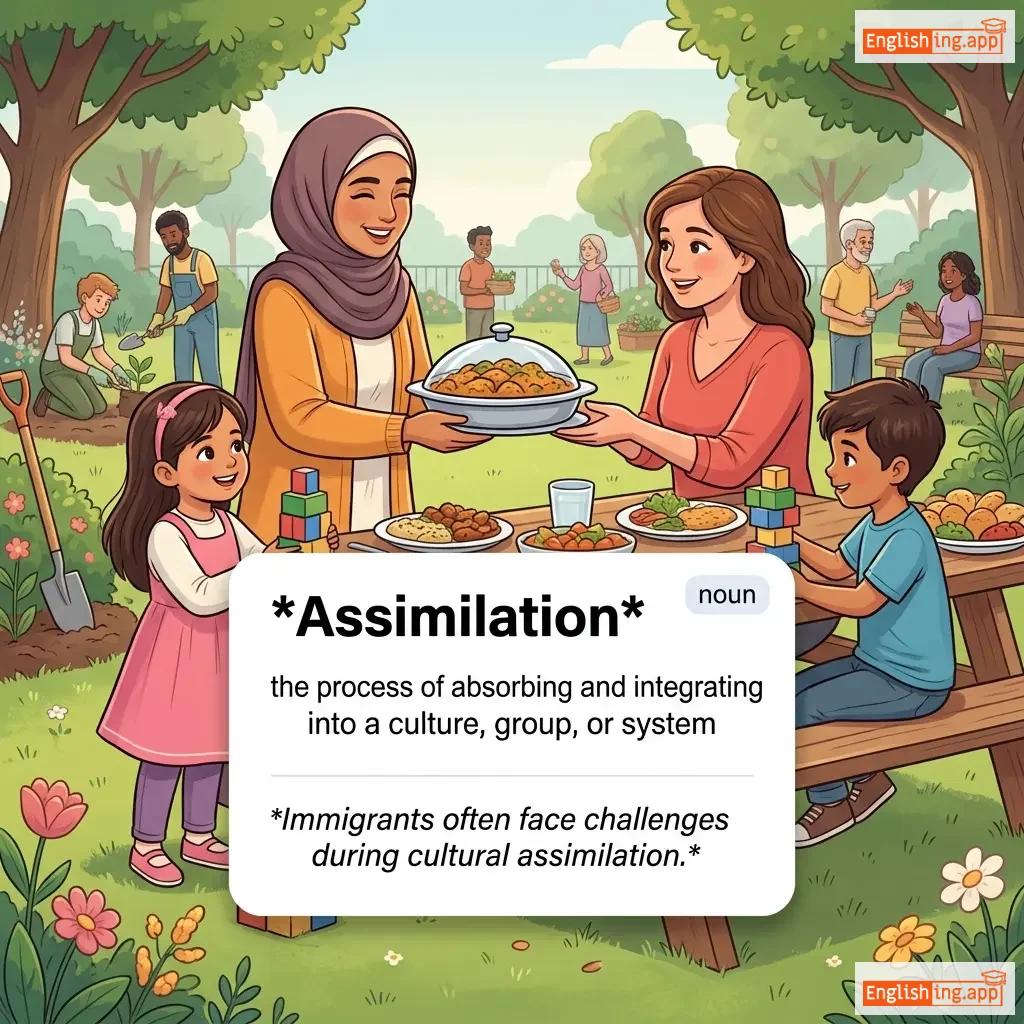
Assimilation definition card — visual illustration of the meaning
noun
/əˌsɪməˈleɪʃən/
同化 (dōka)

the process of absorbing and integrating into a culture, group, or system

"Immigrants often face challenges during cultural assimilation."

"移民は文化的同化の過程でしばしば挑戦に直面します。" (Imin wa bunkateki dōka no katei de shibashiba chōsen ni chokumen shimasu.)
verb
/əˈsɪst/
助ける (tasukeru)

to help or support someone in doing something

"The nurse will assist the doctor during the surgery."

"看護師は手術中に医者をアシストします。" (Kangoshi wa shujutsuchu ni isha wo ashisuto shimasu.)
noun
/əˈsɪstəns/
支援 (shien)

help or support given to someone in need

"The organization provides financial assistance to students."

"その団体は学生に財政的支援を提供しています。" (Sono dantai wa gakusei ni zaiseiteki shien o teikyō shiteimasu.)
noun
/əˈsɪstənt/
アシスタント (ashisutanto)

a person who helps or supports another, often in a job

"She works as an assistant in a law firm."
"彼女は法律事務所でアシスタントとして働いています。" (Kanojo wa hōritsu jimushō de ashisutanto toshite hataraiteimasu.)
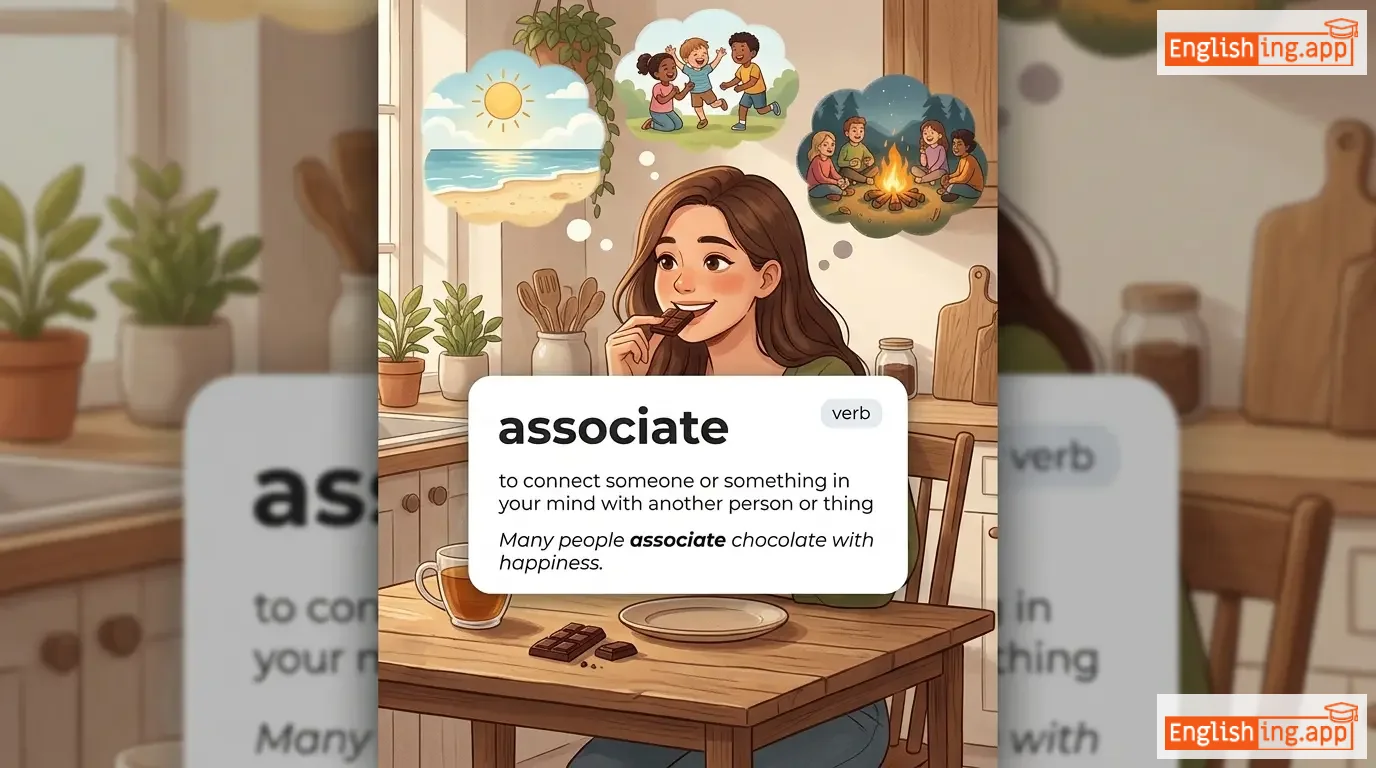
associate definition card — visual illustration of the meaning
verb
/əˈsoʊsieɪt/
関連付ける (kanrendenzukeru)

to connect someone or something in your mind with another person or thing

"Many people associate chocolate with happiness."

"多くの人々がチョコレートと幸せを関連付けます。" (Ooku no hitobito ga chokoreeto to shiawase o kanrendenzukemasu.)
adjective
/əˈsoʊsieɪtɪd/
関連した (kanren shita)

connected or related to something or someone

"She is closely associated with environmental movements."

"彼女は環境運動に密接に関連しています。" (Kanojo wa kankyō undō ni missetsu ni kanren shiteimasu.)
noun
/əˌsoʊsiˈeɪʃən/
協会 (kyoukai)

an organized group of people who have joined together for a common purpose

"She is a member of the local teachers' association."

"彼女は地元の教師協会のメンバーです。" (Kanojo wa jimoto no kyoushi kyoukai no menbā desu.)
noun
/ˈæsənəns/
アソナンス (asonansu)

the repetition of vowel sounds in nearby words in poetry or prose

"The poet used assonance to create a musical effect in his verse."

"詩人は自分の詩の中で音楽的効果を生み出すためにアソナンスを使用しました。" (Shijin wa jibun no shi no naka de ongakuteki kōka o umidasu tame ni asonansu o shiyō shimashita.)
adjective
/ˈæsənənt/
アソナンス (asonansu)

Having or characterized by assonance; repeating similar vowel sounds.

"The poem is filled with assonant words that create a musical rhythm."

"その詩は音楽的なリズムを生み出すアソナンスの言葉で満ちています。" (Sono shi wa ongakuteki na rizumu o umidasu asonansu no kotoba de michiteimasu.)
verb
/ˈæsəneɪt/
韻を踏む (in o fumu)

To correspond or agree in sound, especially by vowel sounds; to rhyme approximately.

"The lines assonate beautifully, giving the song a unique flow."
"その行は美しく韻を踏んでおり、歌に独特の流れを与えています。" (Sono gyō wa utsukushiku in o funde ori, uta ni dokutoku no nagare o ataeteimasu.)
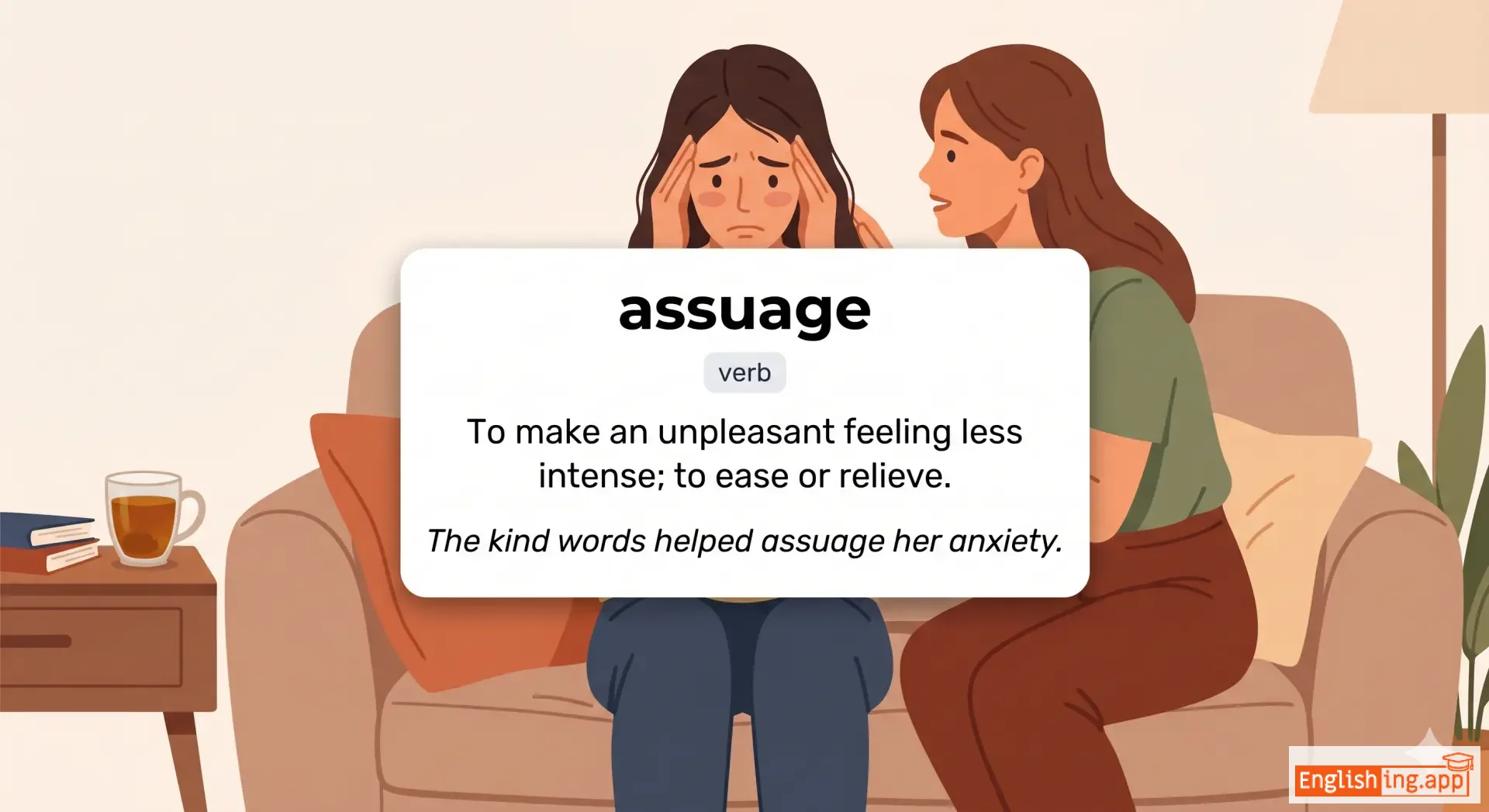
assuage definition card — visual illustration of the meaning
verb
/əˈsweɪdʒ/
和らげる (yawarageru)

To make an unpleasant feeling less intense; to ease or relieve.

"The kind words helped assuage her anxiety."

"優しい言葉が彼女の不安を和らげるのに役立ちました。" (Yasashī kotoba ga kanojo no fuan o yawarageru no ni yakudachimashita.)
verb
/əˈsuːm/
仮定する (katei suru)

to think that something is true without proof

"I assume he will be late to the meeting."

"私は彼が会議に遅れると仮定しています。" (Watashi wa kare ga kaigi ni okureru to katei shiteimasu.)
noun
/əˈsʌmpʃən/
仮定 (katei)

A belief or statement taken for granted without proof.

"His assumption about the results turned out to be wrong."
"彼の結果に関する仮定は間違っていることが証明された。" (Kare no kekka ni kansuru katei wa machigatte iru koto ga shōmei sareta.)
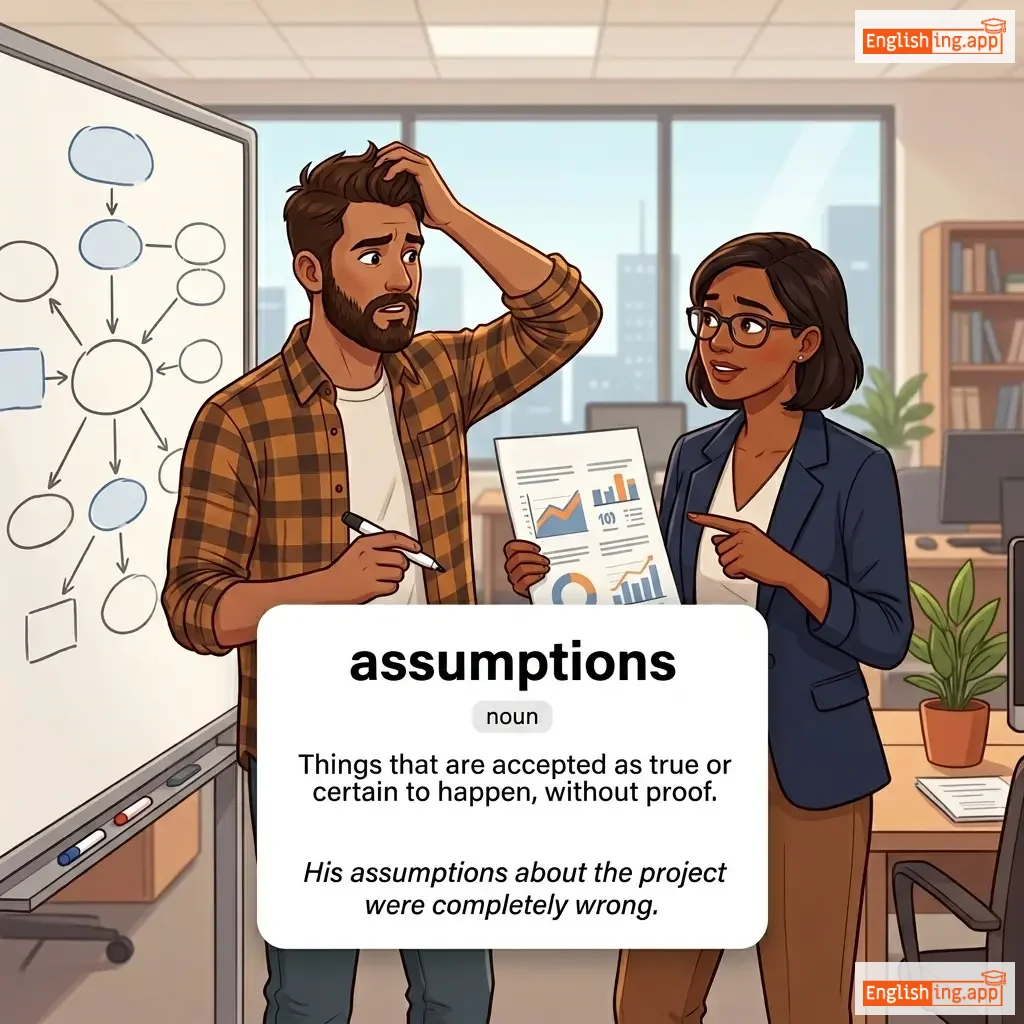
assumptions definition card — visual illustration of the meaning
noun
əˈsʌmp.ʃənz
仮定 (katei)

Things that are accepted as true or certain to happen, without proof.

"His assumptions about the project were completely wrong."
"彼のプロジェクトに関する仮定は完全に間違っていた。" (Kare no purojekuto ni kansuru katei wa kanzen ni machigatte ita.)
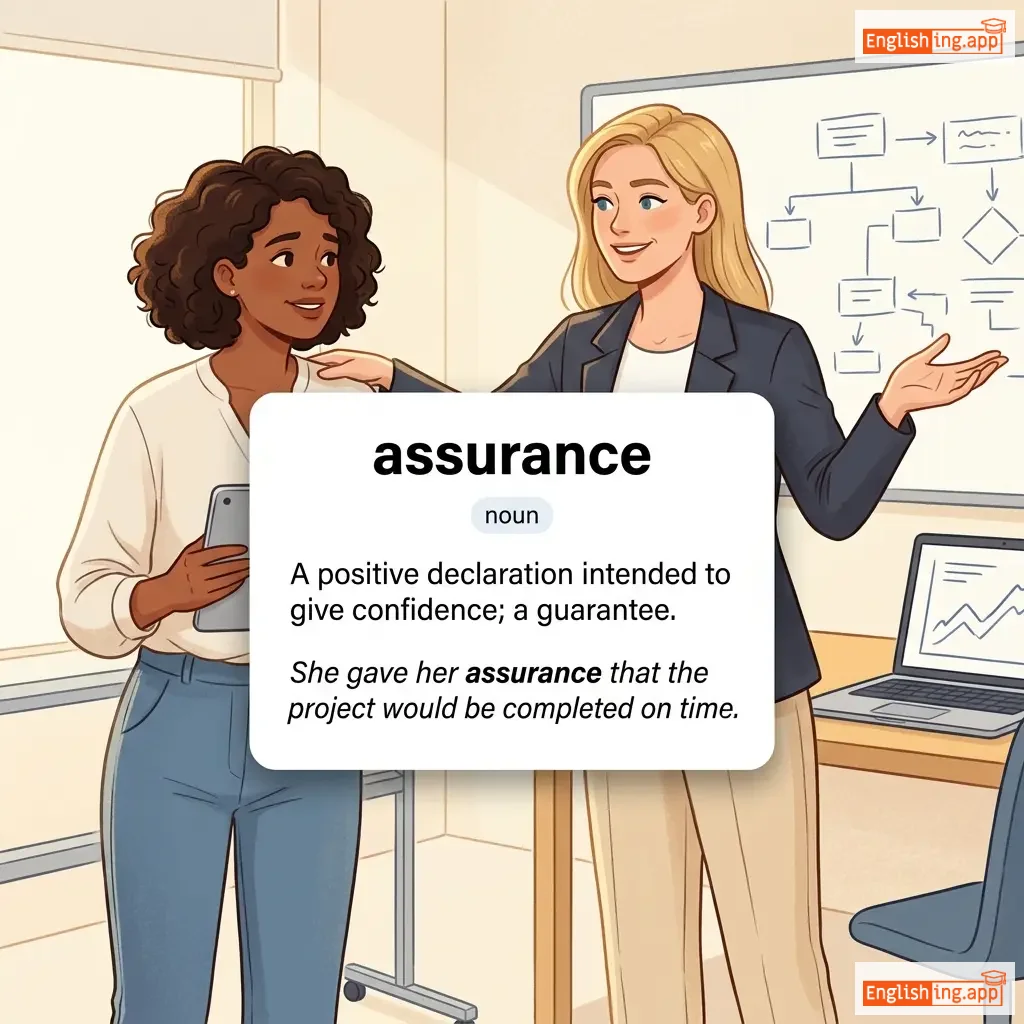
assurance definition card — visual illustration of the meaning
noun
/əˈʃʊərəns/
保証 (hoshō)

A positive declaration intended to give confidence; a guarantee.

"She gave her assurance that the project would be completed on time."

"彼女はプロジェクトが時間通りに完了することを保証しました。" (Kanojo wa purojekuto ga jikan dōri ni kanryō suru koto o hoshō shimashita.)
verb
/əˈʃʊr/
保証する (hoshō suru)

to make someone feel certain or confident about something

"He assured her that everything would be fine."

"彼はすべてがうまくいくと彼女に確信を与えた。" (Kare wa subete ga umaku iku to kanojo ni kakushin o ataeta.)
adjective; verb (past/participle)
/əˈʃʊrd/
確信している;自信のある (kakushin shite iru; jishin no aru)

confident and certain; guaranteed or made certain

"She felt assured that everything would work out."

"彼女はすべてうまくいくと確信していた。" (kanojo wa subete umaku iku to kakushin shite ita)
noun
/ˈæstər/
アスターの花 (asutā no hana)

a flowering plant with daisy-like flowers that typically bloom in fall

"The purple asters bloomed beautifully in the autumn garden."

"秋の庭で紫のアスターの花が美しく咲きました。" (aki no niwa de murasaki no asutā no hana ga utsukushiku sakimashita.)
noun
/ˈæstərɔɪd/
アステロイド (asteroid)

A small rocky body orbiting the sun, mostly found in the asteroid belt between Mars and Jupiter.

"The asteroid belt lies between the orbits of Mars and Jupiter."

"小惑星帯は火星と木星の軌道の間にあります。" (Shōwakusei-tai wa kasei to mokusei no kidō no aida ni arimasu.)
noun
/əˈstɪɡmətɪzəm/
乱視 (ranshi)

An eye defect causing blurred vision due to irregular curvature of the cornea or lens.

"She wears glasses to correct her astigmatism."

"彼女は乱視を矯正するために眼鏡をかけています。" (Kanojo wa ranshi o kyousei suru tame ni megane o kaketeimasu.)
verb
/əˈstɒnɪʃ/
驚かせる (odorokaseru)

to surprise someone greatly; to fill with sudden wonder or amazement

"The magician’s final trick astonished the entire audience."

"そのマジシャンの最後のトリックは観客全員を驚かせた。" (sono majishan no saigo no torikku wa kankyaku zenin o odorokaseta)
adjective
/əˈstɒnɪʃt/
驚いた (odoita)

feeling very surprised or amazed

"She was astonished by the magician's incredible trick."
"彼女はその魔術師の信じられない手品に驚いた。" (kanojo wa sono majutsushi no shinjirarenai tejina ni odoita)
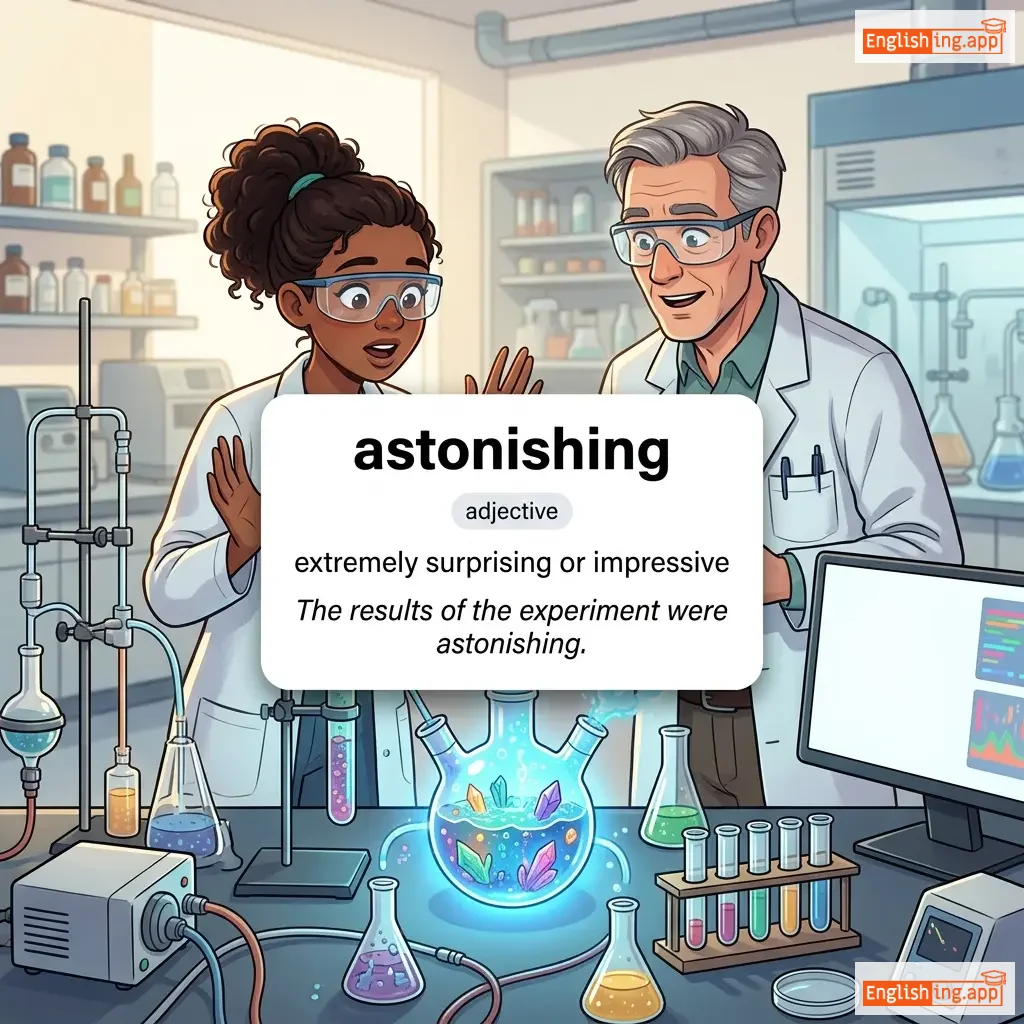
astonishing definition card — visual illustration of the meaning
adjective
/əsˈtɒnɪʃɪŋ/
驚くべき (odorokubeki)

extremely surprising or impressive

"The results of the experiment were astonishing."

"実験の結果は驚くべきものでした。" (Jikken no kekka wa odorokubeki mono deshita.)
noun
/əˈstɒnɪʃmənt/
驚き (odoroki)

Great surprise or amazement.

"She looked at the magician with astonishment."

"彼女は魔法使いを驚きの目で見つめた。" (Kanojo wa mahou tsukai o odoroki no me de mitsumeta.)
verb
/əˈstaʊnd/
仰天させる (gyouten saseru)

to greatly surprise or amaze someone

"The magician's final trick astounded the audience."
"そのマジシャンの最後の手品は観客を仰天させた。" (Sono majishan no saigo no tejina wa kankyaku o gyouten saseta)
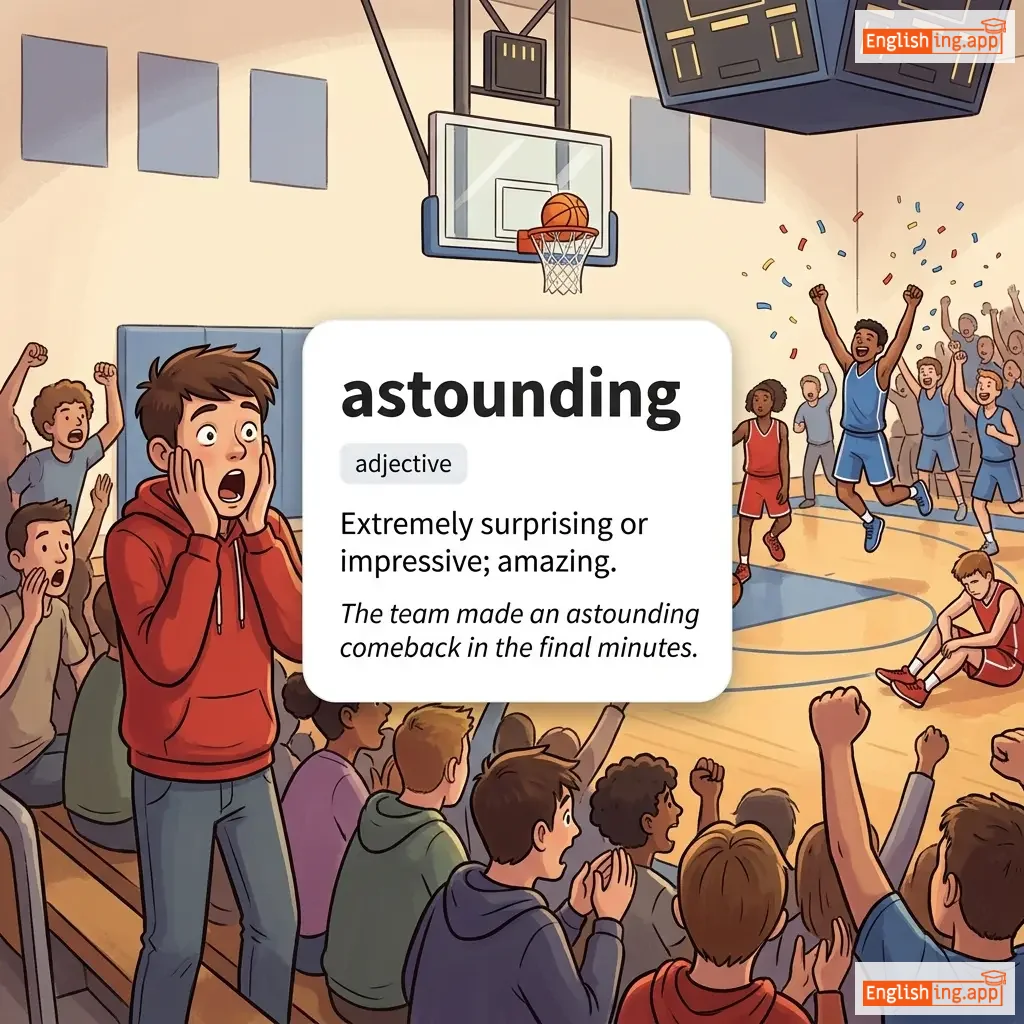
astounding definition card — visual illustration of the meaning
adjective
/əˈstaʊndɪŋ/
驚異的な (kyōiteki na)

Extremely surprising or impressive; amazing.

"The team made an astounding comeback in the final minutes."
"チームは最後の瞬間に驚くべきカムバックを果たしました。" (Chīmu wa saigo no shunkan ni odorokubeki kamubakku o hatashimashita.)
adjective
/ˈæstrəl/

Relating to the stars or to spiritual, non-physical realms.

"Some believe in astral projection, the ability to leave the body and travel spiritually."

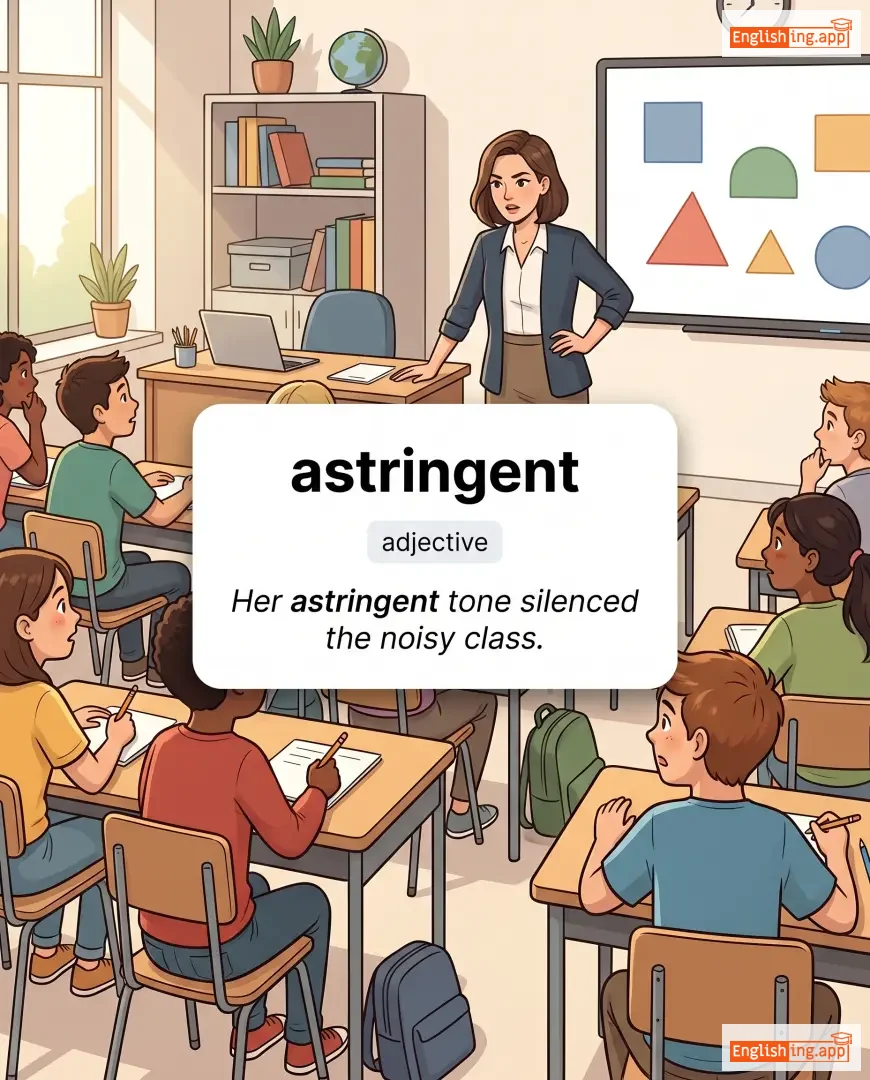
astringent definition card — visual illustration of the meaning
adjective
/əˈstrɪndʒənt/
厳しい (kibishii)

sharp or severe in manner or style; also describes a substance that contracts skin or body tissues

"Her astringent tone silenced the noisy class."

"彼女の厳しい口調は、騒々しいクラスを静めた。" (kanojo no kibishii kuchō wa, sawagashii kurasu o shizumeta)
noun
/əˈstrɑː.lə.dʒər/
占星術師 (senseijutsushi)

a person who studies astrology and makes predictions based on the positions of stars and planets

"The astrologer predicted good fortune in her future."

"その占星術師は、彼女の未来に良い運命があると予測しました。" (Sono senseijutsushi wa, kanojo no mirai ni yoi unmei ga aru to yosoku shimashita.)
noun
/əˈstrɒlədʒi/
占星術 (senseijutsu)

the study of the movements and relative positions of celestial bodies interpreted as having an influence on human affairs

"She studied astrology to understand her future."

"彼女は未来を理解するために占星術を勉強した。" (Kanojo wa mirai o rikai suru tame ni senseijutsu o benkyō shita.)
noun
/əˈstrɒnəmər/
天文学者 (tenmongakusha)

a scientist who studies the stars, planets, and the universe

"The astronomer observed the new comet through his telescope."
"天文学者は望遠鏡を使って新しい彗星を観察しました。" (Tenmongakusha wa bouenkyou o tsukatte atarashii suisei o kansatsu shimashita.)
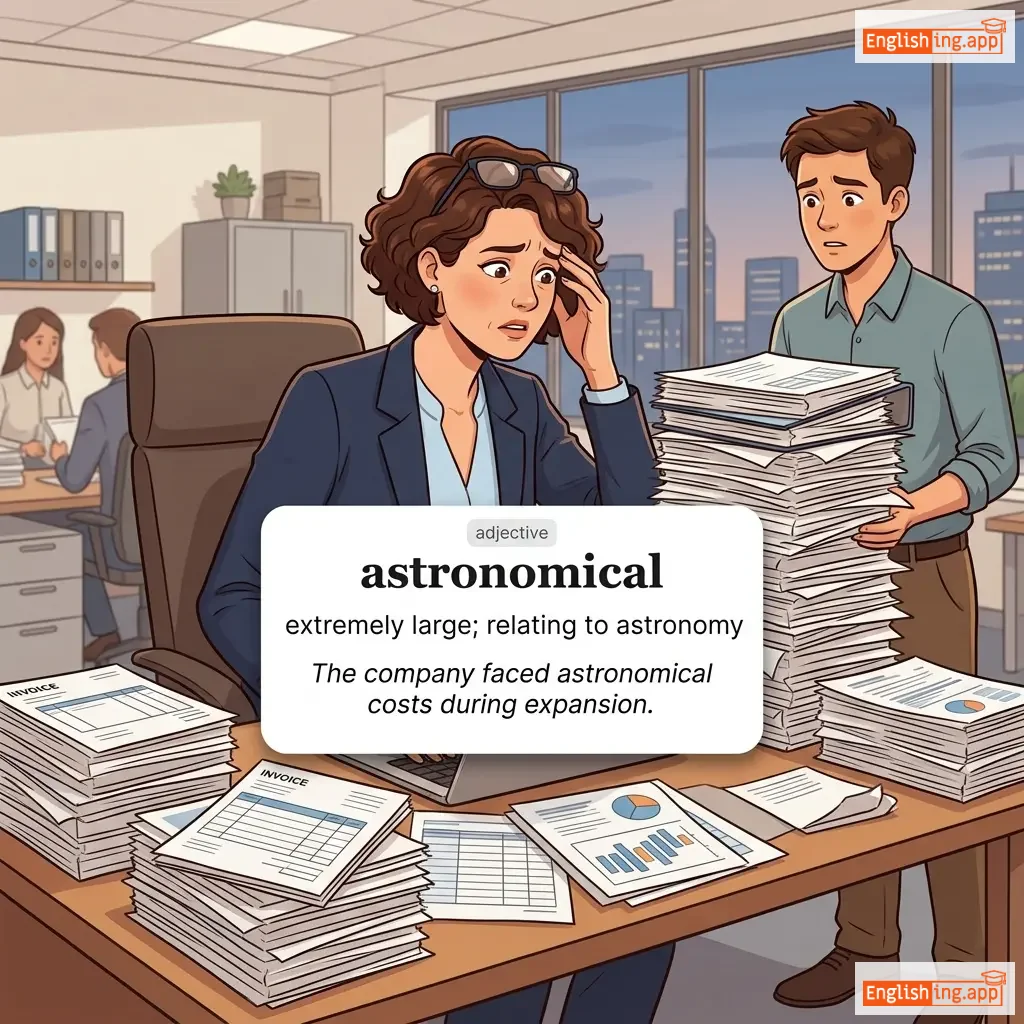
astronomical definition card — visual illustration of the meaning
adjective
/ˌæstrəˈnɒmɪkəl/
天文学的 (tenmongakuteki)

extremely large; relating to astronomy

"The company faced astronomical costs during expansion."
"その会社は拡大中に天文学的なコストに直面しました。" (Sono kaisha wa kakudai-chuu ni tenmongakuteki na kosuto ni chokumen shimashita.)
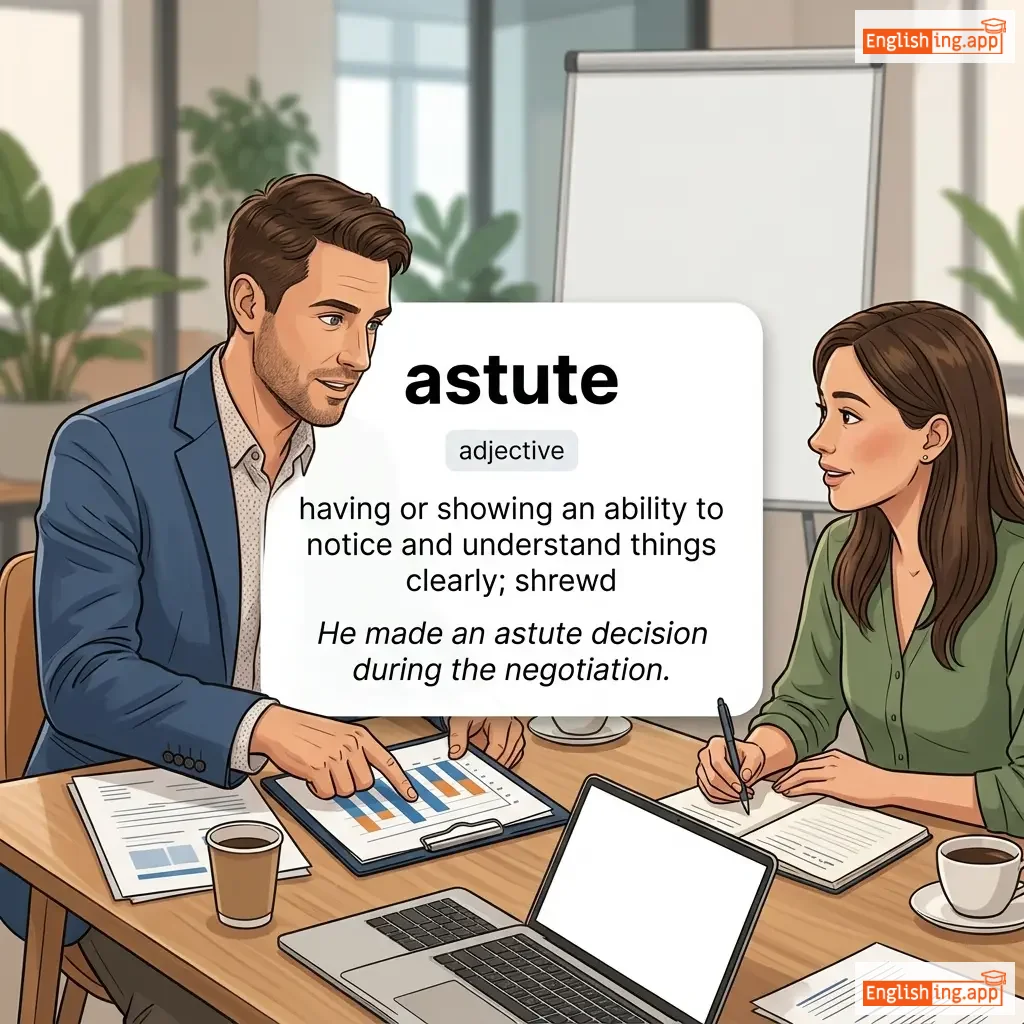
astute definition card — visual illustration of the meaning
adjective
/əˈstjuːt/
鋭敏 (eibin)

having or showing an ability to notice and understand things clearly; shrewd

"He made an astute decision during the negotiation."
"交渉中に彼は鋭い決断を下しました。" (Kōshō-chū ni kare wa surudoi ketsudan o kudashimashita.)
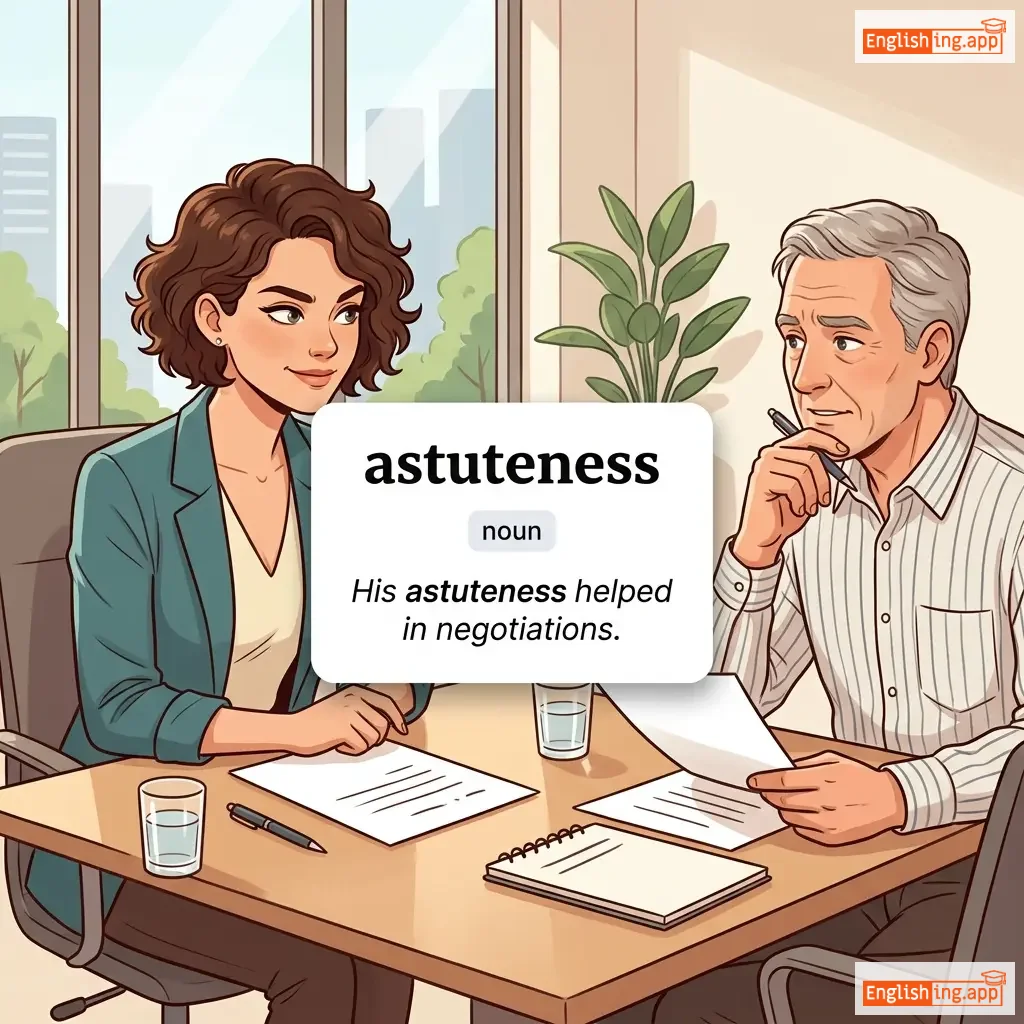
astuteness definition card — visual illustration of the meaning
noun
/əˈstuːt.nəs/
洞察力 (dousatsuryoku)

The ability to accurately assess situations or people and turn this to one's advantage.

"His astuteness helped in negotiations."

"彼の洞察力は交渉で役立った。" (Kare no dousatsuryoku wa koushou de yakudatta.)
adverb
/əˈsʌndər/
バラバラに (barabara ni)

into separate parts; apart

"The ancient empire was torn asunder by war."
"古代の帝国は戦争でバラバラにされてしまった。" (Kodai no teikoku wa sensō de barabara ni sarete shimatta.)
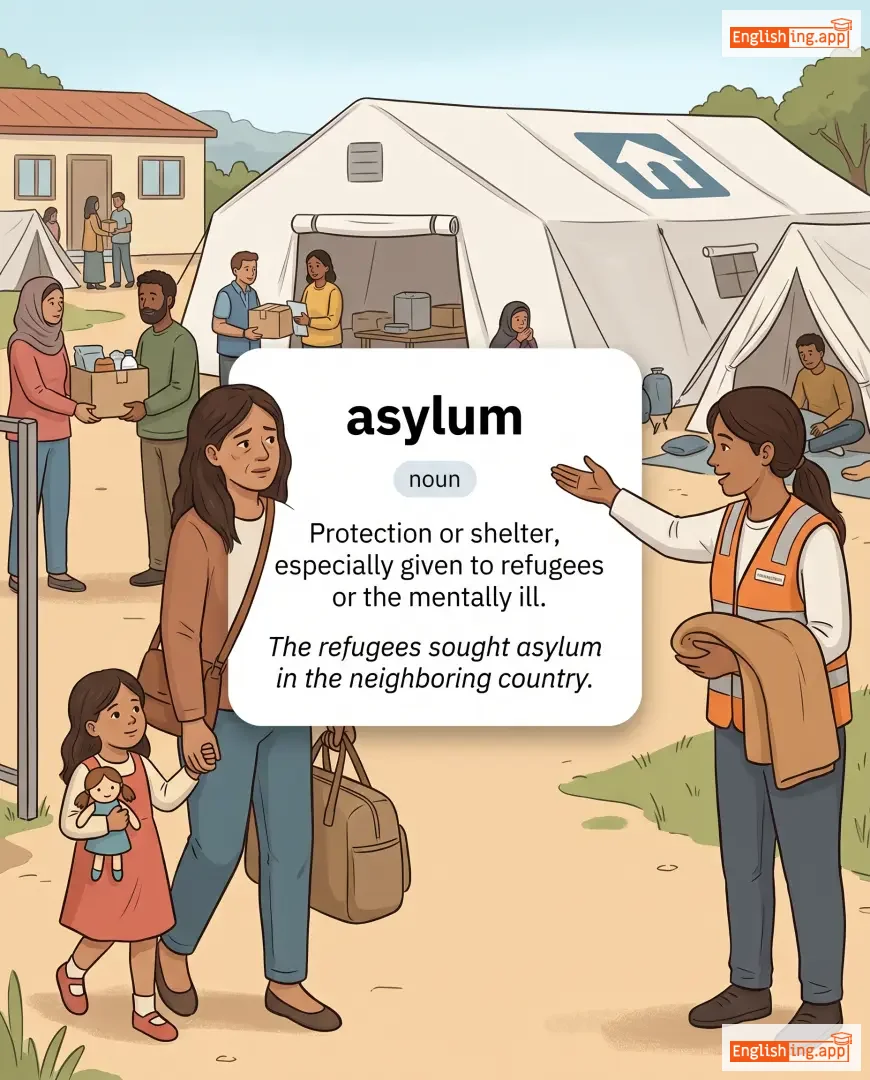
asylum definition card — visual illustration of the meaning
noun
/əˈsaɪləm/
亡命 (bōmei)

Protection or shelter, especially given to refugees or the mentally ill.

"The refugees sought asylum in the neighboring country."

"難民は隣国で亡命を求めた。" (Nanmin wa ringoku de bōmei o motometa.)
adjective
/ˌeɪsɪˈmɛtrɪk/
非対称 (hitaisen)

Not having equal or corresponding parts; lacking symmetry.

"The design of the building is asymmetric and unusual."

"その建物のデザインは非対称であり、珍しいです。" (Sono tatemono no dezain wa hitaisen de ari, mezurashī desu.)
adjective
/ˌeɪsɪˈmɛtrɪkəl/
非対称 (hitaisyou)

Having parts that are not the same in size, shape, or arrangement.

"She wore an asymmetrical dress that drew everyone’s attention."
"彼女は非対称のドレスを着て、皆の注目を集めていた。" (Kanojo wa hitaisyou no doresu o kite, mina no chūmoku o atsume te ita.)
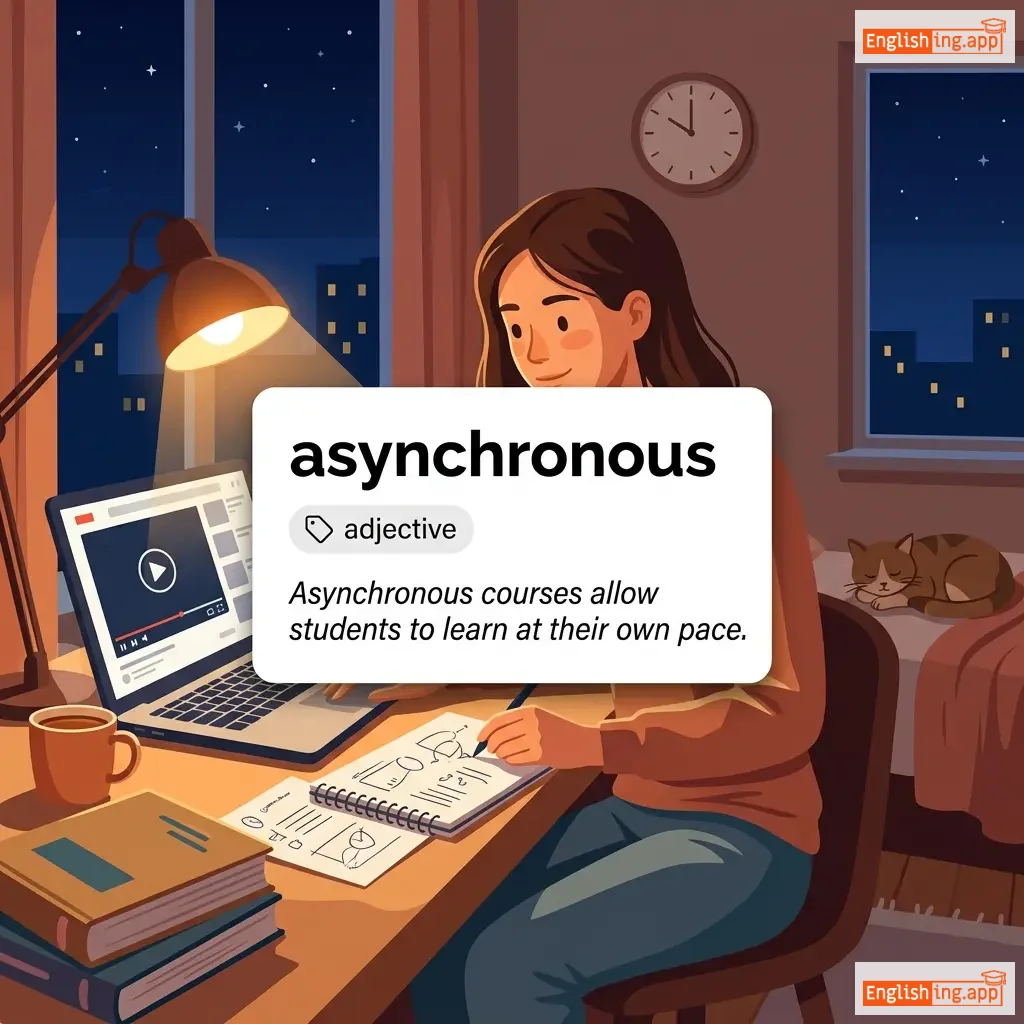
asynchronous definition card — visual illustration of the meaning
adjective
eɪˈsɪŋ.krə.nəs
非同期の (hidōki no)

Of or requiring a form of computer control timing protocol in which a specific operation begins upon receipt of an indication that the preceding operation has been completed.

"Asynchronous courses allow students to learn at their own pace."

"非同期コースは学生が自分のペースで学べるようにします。" (Hidōki kōsu wa gakusei ga jibun no pēsu de manaberu yō ni shimasu.)
preposition
/æt/
(de)

used to indicate a specific time, place, or direction

"She arrived at the airport on time."

"彼女は時間通りに空港に到着しました。" (Kanojo wa jikan dōri ni kūkō ni tōchaku shimashita.)