Словари

Словарь английского языка | Значения слов, определения и примеры

noun
/əˈsɛsər/
оценщик (otsenschik)

a person who evaluates or estimates the nature, ability, or quality of something

"An external assessor reviewed the project report."

"Внешний оценщик рассмотрел отчет по проекту." (Vneshniy otsenschik rassmotreł otchet po proyektu.)
asset definition card — visual illustration of the meaning
noun
/ˈæsɛt/
актив (aktiv)

a valuable person, skill, or resource; something owned that has value

"Her communication skills are a great asset to the company."
"Её коммуникативные навыки — большое активное преимущество для компании." (Eё kommunikativnye navyki — bol'shoe aktivnoe preimushchestvo dlya kompanii.)
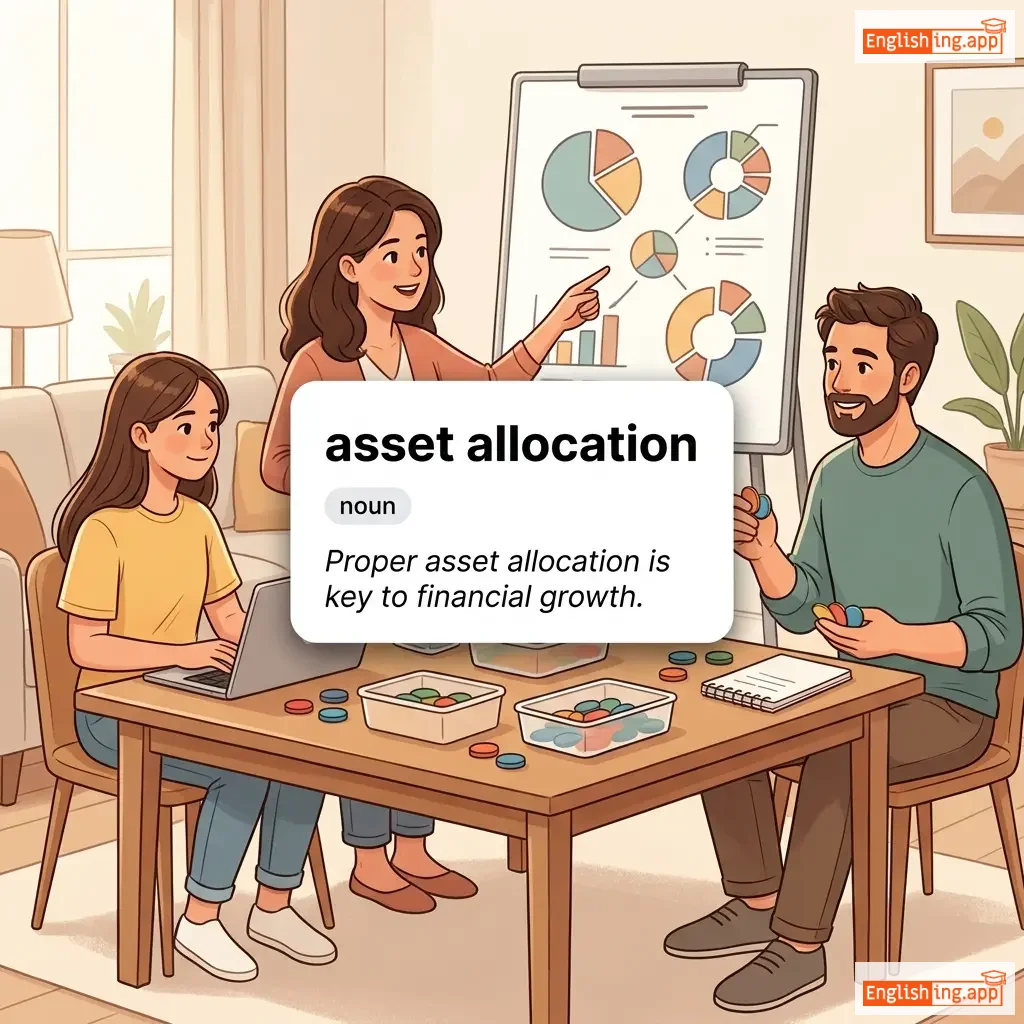
asset allocation definition card — visual illustration of the meaning
noun
ˈæ.sɛt ˌæl.əˈkeɪ.ʃən
распределение активов (raspredelenie aktivov)

An investment strategy that aims to balance risk and reward by apportioning a portfolio's assets according to an individual's goals, risk tolerance, and investment horizon.

"Proper asset allocation is key to financial growth."

"Правильное распределение активов — ключ к финансовому росту." (Pravil'noe raspredelenie aktivov - klyuch k finansovomu rostu.)
verb
/əˈsɛvəˌreɪt/
утверждать (utverzhdat)

to affirm or declare positively and earnestly

"He asseverated that he had never seen the man before."
"Он утверждал, что никогда не видел этого человека раньше." (On utverzhdal, chto nikogda ne videl etogo cheloveka ran'she.)
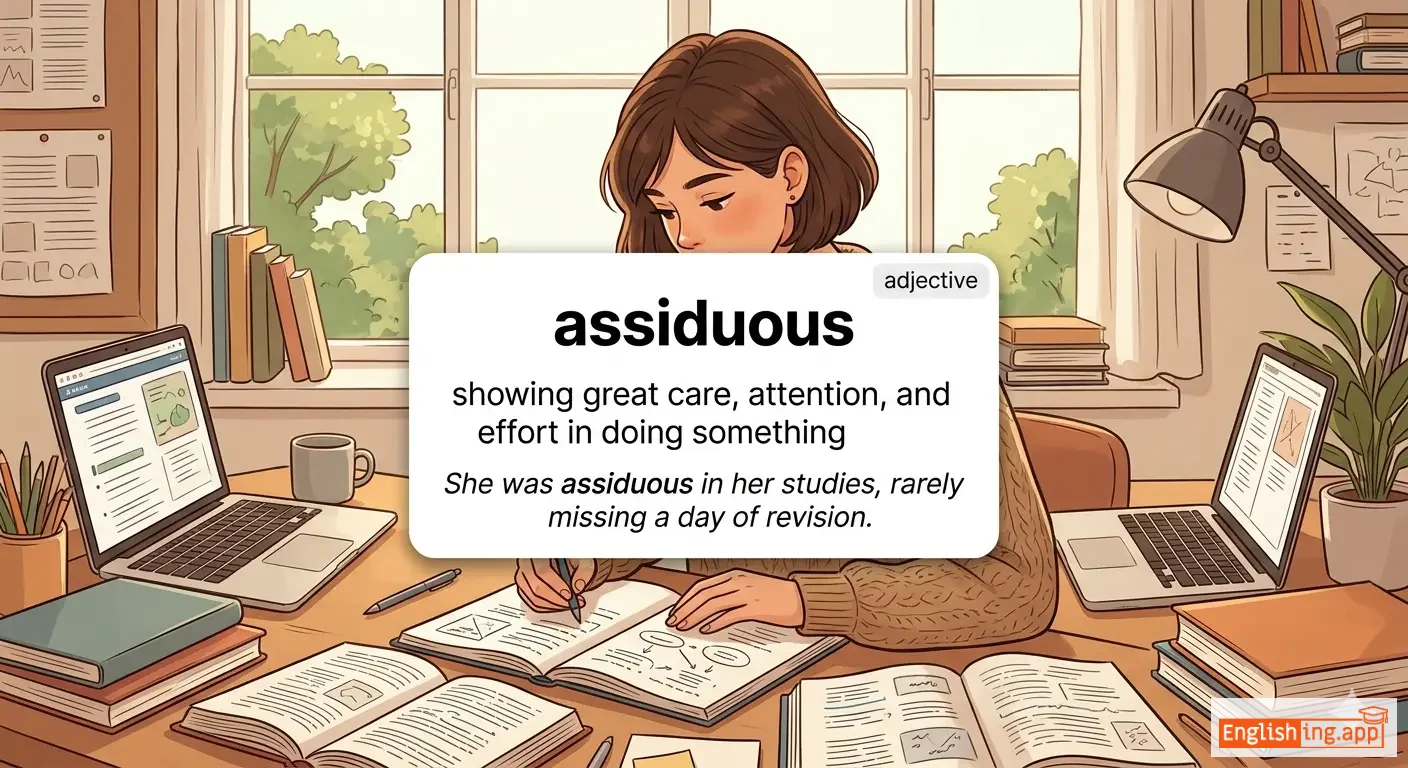
assiduous definition card — visual illustration of the meaning
adjective
/əˈsɪdʒuəs/
усердный (usyerudny)

showing great care, attention, and effort in doing something

"She was assiduous in her studies, rarely missing a day of revision."

"Она была усердной в своих учебных занятиях, редко пропускала день занятий." (Ona byla usyernoy v svoikh uchebnykh zanyatiyakh, redko propuskala den' zanyatiy.)
adverb
/əˈsɪdʒuəsli/
усердно (usyeradno)

with great care and persistence

"He worked assiduously to complete the project before the deadline."

"Он работал усердно, чтобы закончить проект до срока." (On rabotal usyeradno, chtoby zakonchit' proyekt do sroka.)
verb
/əˈsaɪn/
назначить (naznachit)

to give someone a task, duty, or responsibility

"The manager will assign tasks to the new employees."

"Менеджер назначит задачи новым сотрудникам." (Menedzher naznačit zadachi novym sotrudnikam.)
noun
/əˌsaɪˈniː/
назначенное лицо (naznachennoe lico)

a person to whom a right or property is legally transferred

"The assignee of the contract is responsible for all future obligations."

"Назначенный по контракту несет ответственность за все будущие обязательства." (Naznachenniy po kontraktu neset otvetstvennost za vse budushchie obyazatel'stva.)
noun
/əˈsaɪnmənt/
задание (zadanie)

a task or piece of work given to someone as part of their duties

"The students completed their homework assignment on time."
"Студенты выполнили свое домашнее задание вовремя." (Studenty vypolnili svoe domashnee zadanie vovremya.)
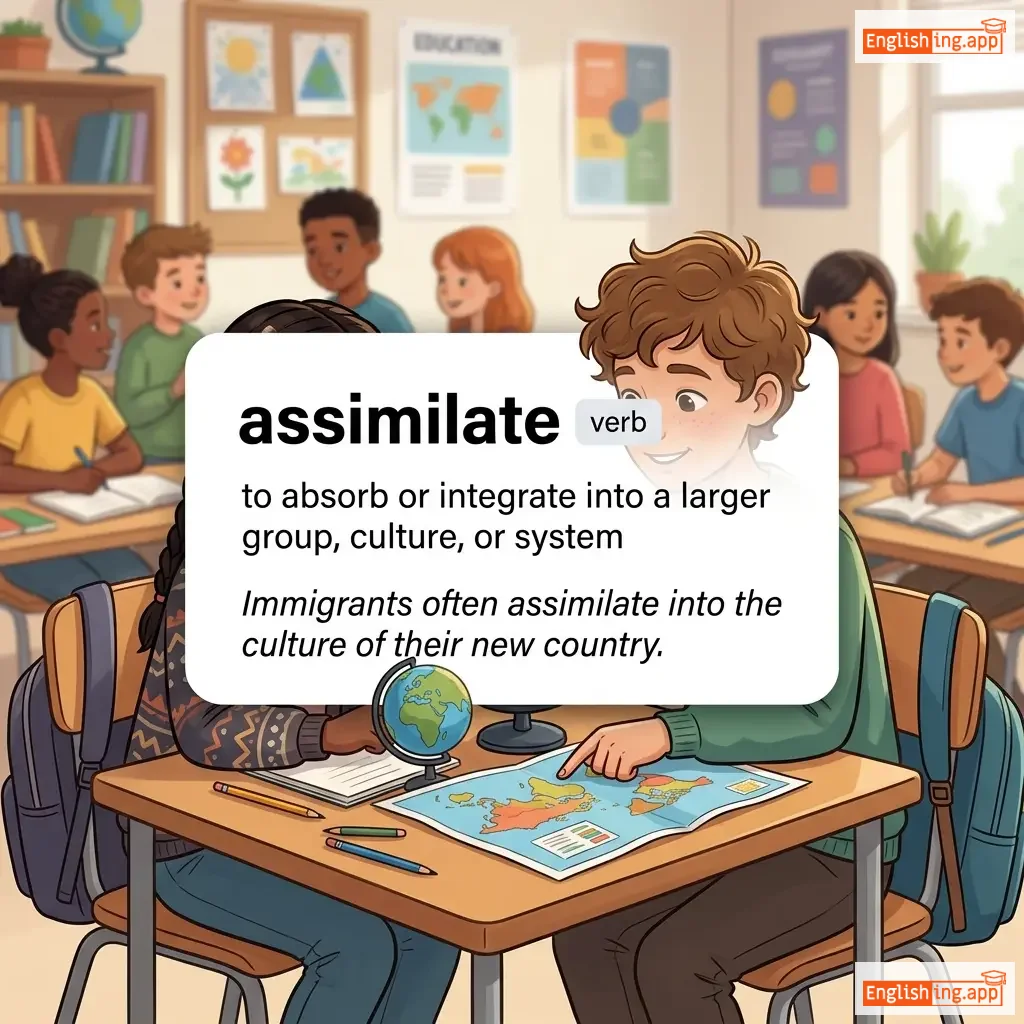
assimilate definition card — visual illustration of the meaning
verb
/əˈsɪməˌleɪt/
ассимилировать (assimil'irovat')

to absorb or integrate into a larger group, culture, or system

"Immigrants often assimilate into the culture of their new country."
"Иммигранты часто ассимилируются в культуру своей новой страны." (Immigranti chasto assimiliruyutsya v kul'turu svoey novoy strany.)
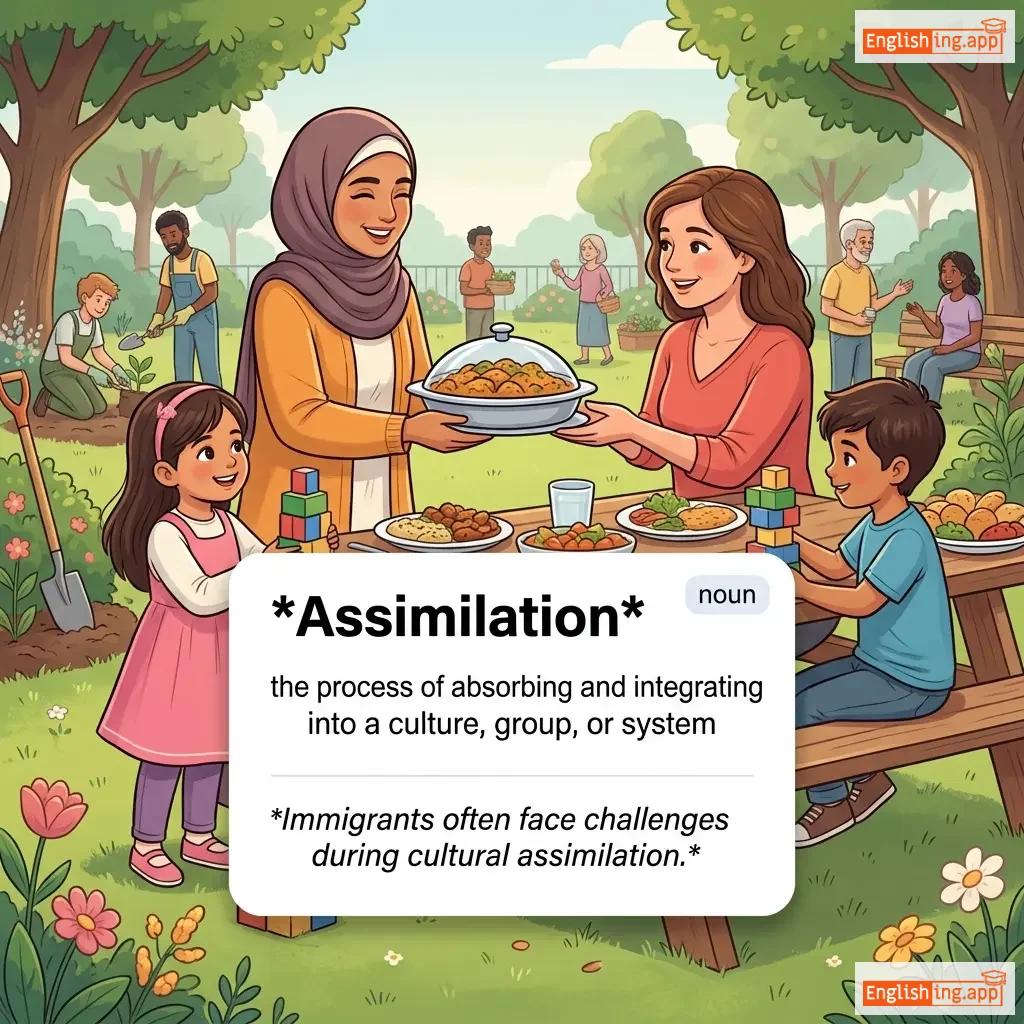
Assimilation definition card — visual illustration of the meaning
noun
/əˌsɪməˈleɪʃən/
ассимиляция (assimilatsiya)

the process of absorbing and integrating into a culture, group, or system

"Immigrants often face challenges during cultural assimilation."

"Иммигранты часто сталкиваются с проблемами во время культурной ассимиляции." (Immigranti chasto stalkivayutsya s problemami vo vremya kul'turnoy assimilyatsii.)
verb
/əˈsɪst/
помогать (pomogat)

to help or support someone in doing something

"The nurse will assist the doctor during the surgery."

"Медсестра будет ассистировать врачу во время операции." (Medsestra budet assistirovat vrachu vo vremya operatsii.)
noun
/əˈsɪstəns/
помощь (pomoshch)

help or support given to someone in need

"The organization provides financial assistance to students."

"Организация предоставляет финансовую помощь студентам." (Organizatsiya predostavlyaet finansovuyu pomoshch studentam.)
noun
/əˈsɪstənt/
ассистент (assistent)

a person who helps or supports another, often in a job

"She works as an assistant in a law firm."
"Она работает ассистентом в юридической фирме." (Ona rabotayet assistentom v yuridicheskoy firme.)
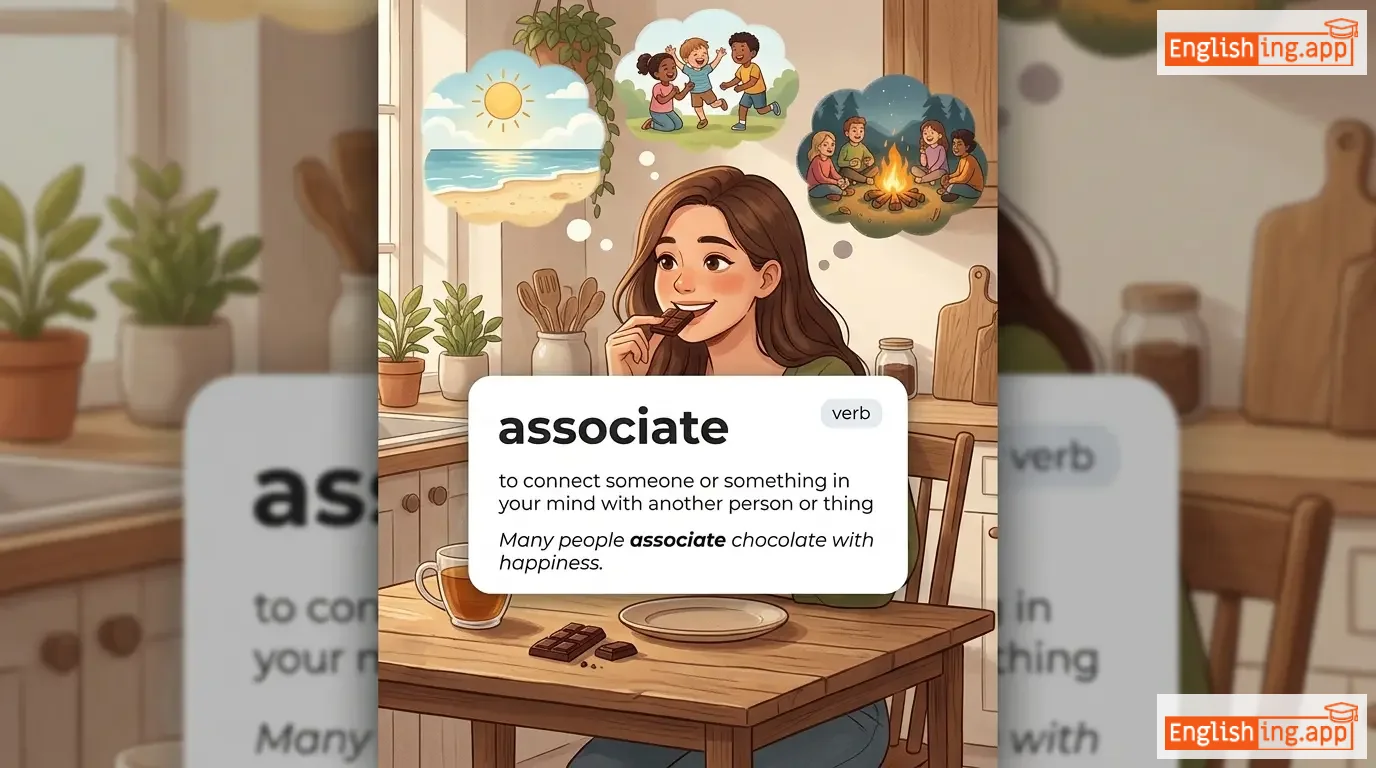
associate definition card — visual illustration of the meaning
verb
/əˈsoʊsieɪt/
ассоциировать (assotsiirovat')

to connect someone or something in your mind with another person or thing

"Many people associate chocolate with happiness."

"Многие люди ассоциируют шоколад с счастьем." (Mnogie lyudi assotsiirovat' shokolad s schast'yem.)
adjective
/əˈsoʊsieɪtɪd/
ассоциированный (associirovannyi)

connected or related to something or someone

"She is closely associated with environmental movements."

"Она тесно связана с экологическими движениями." (Ona tesno svyazana s ekologicheskimi dvizhneniyami.)
noun
/əˌsoʊsiˈeɪʃən/
ассоциация (assotsiatsiya)

an organized group of people who have joined together for a common purpose

"She is a member of the local teachers' association."

"Она является членом местной ассоциации учителей." (Ona yavyayetsya chlenom mestnoy assotsiatsii uchiteley.)
noun
/ˈæsənəns/
ассонанс (assonans)

the repetition of vowel sounds in nearby words in poetry or prose

"The poet used assonance to create a musical effect in his verse."

"Поэт использовал ассонанс, чтобы создать музыкальный эффект в своем стихе." (Poet ispol'zoval assonans, chtoby sozdats' muzykal'nyy effekt v svoem stihe.)
adjective
/ˈæsənənt/
ассонансный (assonansnyy)

Having or characterized by assonance; repeating similar vowel sounds.

"The poem is filled with assonant words that create a musical rhythm."

"Стихотворение наполнено словами с ассонансом, создающими музыкальный ритм." (Stikhotvorenie napolneno slovami s assonansom, sozdajushchimi muzykal'nyj ritm.)
verb
/ˈæsəneɪt/
асонировать (asonirovat)

To correspond or agree in sound, especially by vowel sounds; to rhyme approximately.

"The lines assonate beautifully, giving the song a unique flow."
"Строки асонируют красиво, придавая песне уникальный поток." (Stroki asoniruyut krasivo, pridaya pesne unikal'nyy potok.)
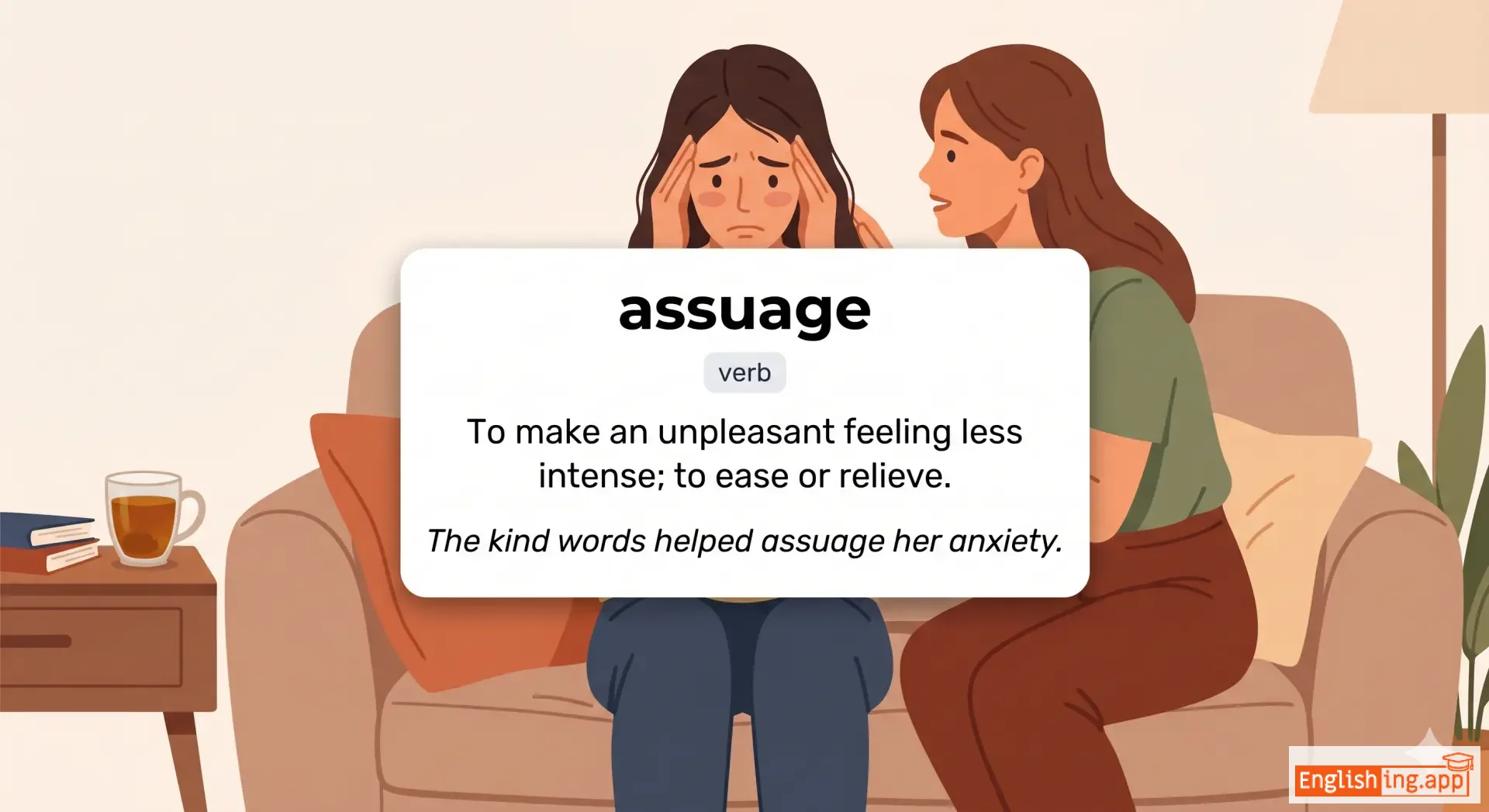
assuage definition card — visual illustration of the meaning
verb
/əˈsweɪdʒ/
успокаивать (uspokaivat)

To make an unpleasant feeling less intense; to ease or relieve.

"The kind words helped assuage her anxiety."

"Добрые слова помогли облегчить её тревогу." (Dobrye slova pomogli oblegchit' yeyo trevogu.)
verb
/əˈsuːm/
предполагать (predpolagat)

to think that something is true without proof

"I assume he will be late to the meeting."

"Я предполагаю, что он опоздает на встречу." (Ya predpolagayu, chto on opozdáet na vstrechu.)
noun
/əˈsʌmpʃən/
предположение (predpolozhenie)

A belief or statement taken for granted without proof.

"His assumption about the results turned out to be wrong."
"Его предположение о результатах оказалось неверным." (Yego predpolozhenie o rezul'tatakh okazalos' nevernym.)
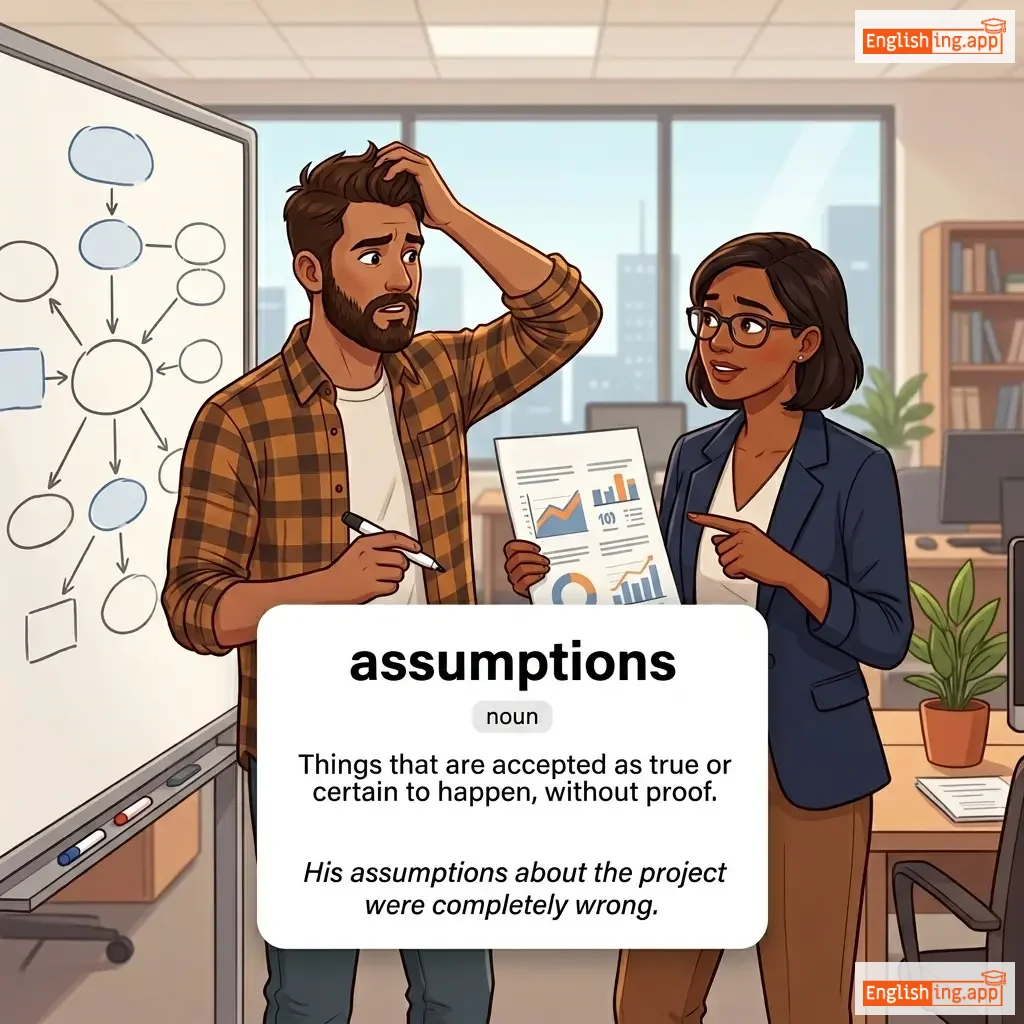
assumptions definition card — visual illustration of the meaning
noun
əˈsʌmp.ʃənz
предположения (predpolozheniya)

Things that are accepted as true or certain to happen, without proof.

"His assumptions about the project were completely wrong."
"Его предположения о проекте были совершенно неверными." (Ego predpolozheniya o proyekte byli sovershenno nevernymi.)
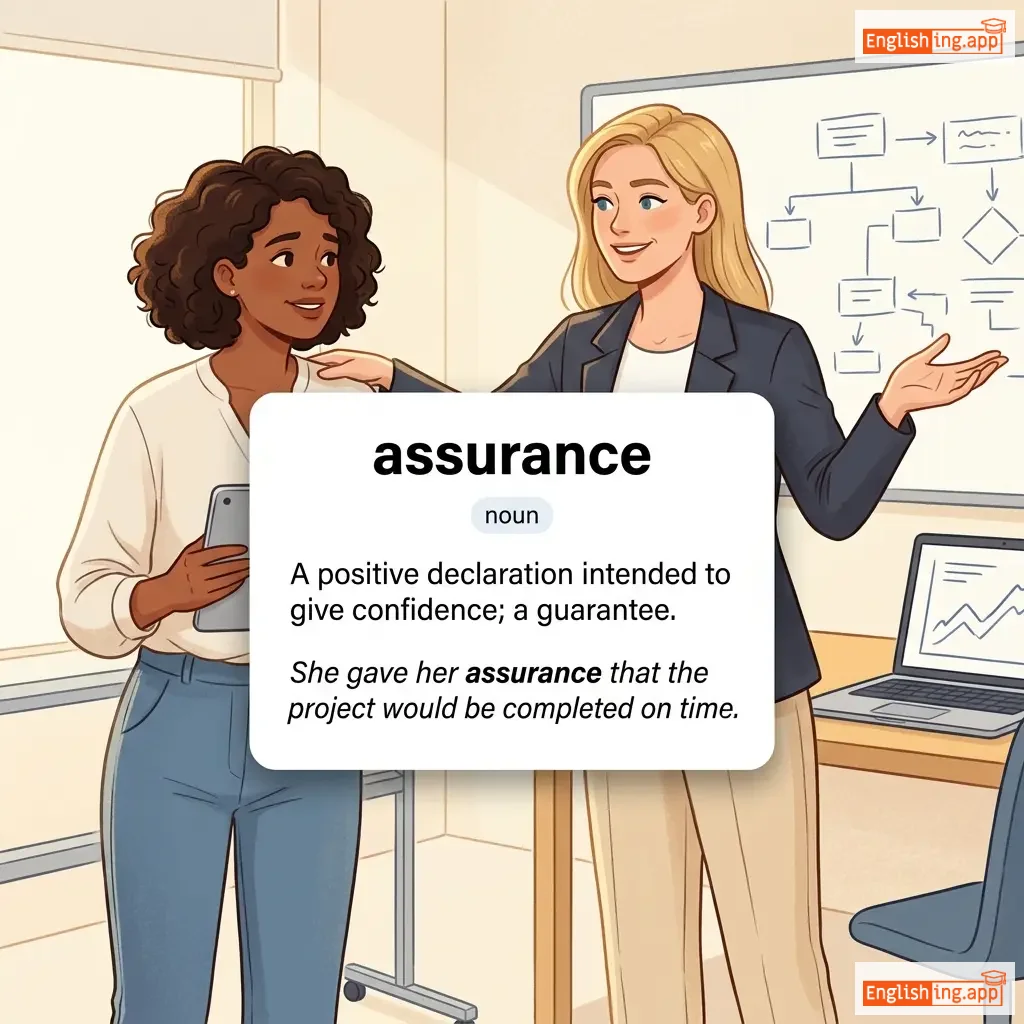
assurance definition card — visual illustration of the meaning
noun
/əˈʃʊərəns/
уверенность (uverennost)

A positive declaration intended to give confidence; a guarantee.

"She gave her assurance that the project would be completed on time."

"Она дала свою уверенность, что проект будет завершен вовремя." (Ona dala svoiu uverennost, chto proiekt budet zavershen vovremya.)
verb
/əˈʃʊr/
уверять (uveriat')

to make someone feel certain or confident about something

"He assured her that everything would be fine."

"Он уверил её, что всё будет хорошо." (On uveril yeye, chto vsyo budet khorosho.)
adjective; verb (past/participle)
/əˈʃʊrd/
уверенный; гарантированный (uverennyy; garantirovannyy)

confident and certain; guaranteed or made certain

"She felt assured that everything would work out."

"Она была уверена, что всё будет хорошо." (Ona byla uverena chto vsyo budet khorosho)
noun
/ˈæstər/
астра (astra)

a flowering plant with daisy-like flowers that typically bloom in fall

"The purple asters bloomed beautifully in the autumn garden."

"Фиолетовые астры красиво зацвели в осеннем саду." (Fioletovyye astra krasivo zatsveli v osennom sadu.)
noun
/ˈæstərɔɪd/
астероид (asteroid)

A small rocky body orbiting the sun, mostly found in the asteroid belt between Mars and Jupiter.

"The asteroid belt lies between the orbits of Mars and Jupiter."

"Пояс астероидов находится между орбитами Марса и Юпитера." (Poyas asteroidyov nakhoditsya mezhdu orbitami Morsa i Yupiterom.)
noun
/əˈstɪɡmətɪzəm/
астигматизм (astigmatizm)

An eye defect causing blurred vision due to irregular curvature of the cornea or lens.

"She wears glasses to correct her astigmatism."

"Она носит очки, чтобы исправить свой астигматизм." (Ona nosit ochki, chtoby ispravit' svoy astigmatizm.)
verb
/əˈstɒnɪʃ/
поражать (porazhat)

to surprise someone greatly; to fill with sudden wonder or amazement

"The magician’s final trick astonished the entire audience."

"Финальный трюк фокусника поразил всю аудиторию." (Finalny tryuk fokusnika porazil vsyu auditoriyu)
adjective
/əˈstɒnɪʃt/
поражённый (porazhyonnyy)

feeling very surprised or amazed

"She was astonished by the magician's incredible trick."
"Она была поражена невероятным трюком фокусника." (ona byla porazhena neveroyatnym tryukom fokusnika)
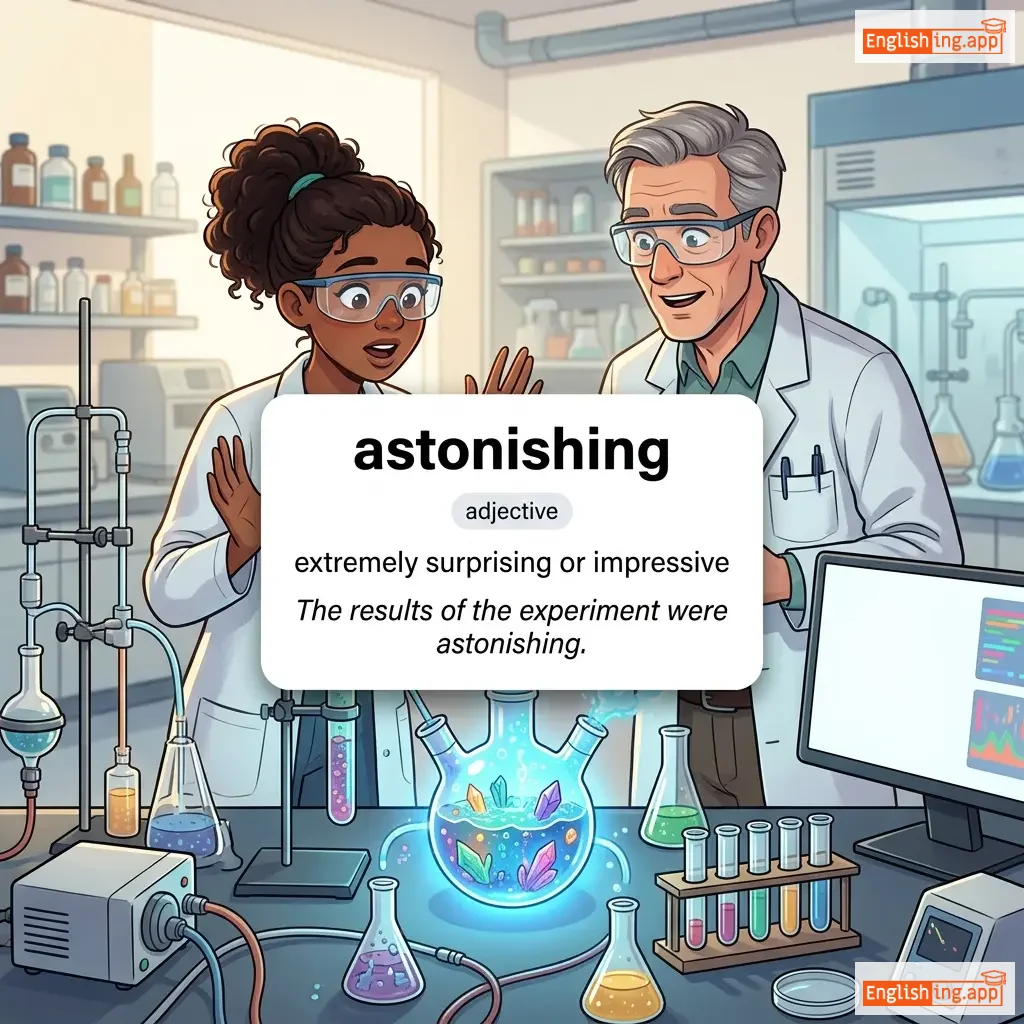
astonishing definition card — visual illustration of the meaning
adjective
/əsˈtɒnɪʃɪŋ/
удивительный (udivitel'nyy)

extremely surprising or impressive

"The results of the experiment were astonishing."

"Результаты эксперимента были удивительными." (Rezultaty eksperimenta byli udivitel'nymi.)
noun
/əˈstɒnɪʃmənt/
удивление (udivlenie)

Great surprise or amazement.

"She looked at the magician with astonishment."

"Она посмотрела на фокусника с удивлением." (Ona posmotrela na fokussnika s udivleniem.)
verb
/əˈstaʊnd/
изумлять (izumlyat)

to greatly surprise or amaze someone

"The magician's final trick astounded the audience."
"Последний трюк фокусника изумил публику." (Posledniy tryuk fokusnika izumil publiku)
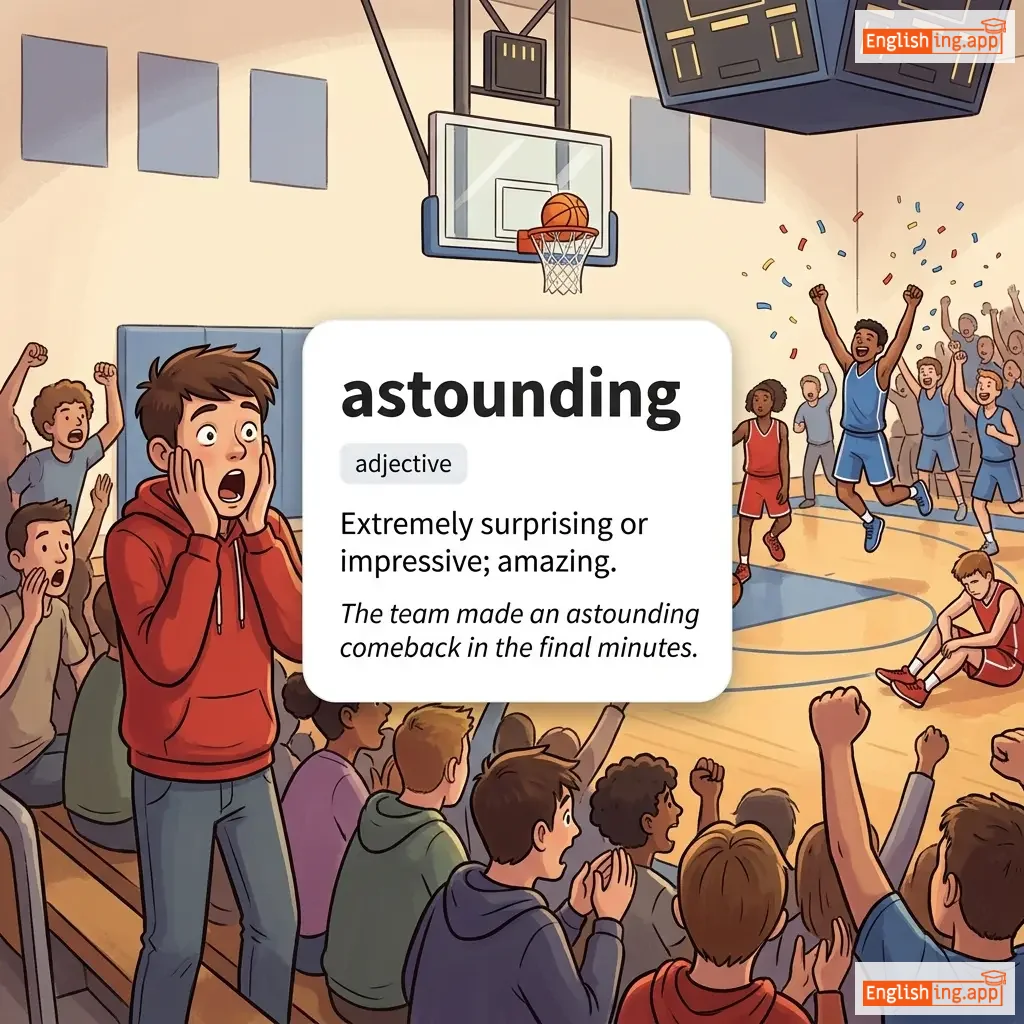
astounding definition card — visual illustration of the meaning
adjective
/əˈstaʊndɪŋ/
поразительный (po-ra-zi-tel-nyi)

Extremely surprising or impressive; amazing.

"The team made an astounding comeback in the final minutes."

"Команда совершила ошеломляющий камбек в последние минуты." (Komanda sovershila oshelomlyayushchiy kambek v poslednie minuty.)
adjective
/ˈæstrəl/

Relating to the stars or to spiritual, non-physical realms.

"Some believe in astral projection, the ability to leave the body and travel spiritually."
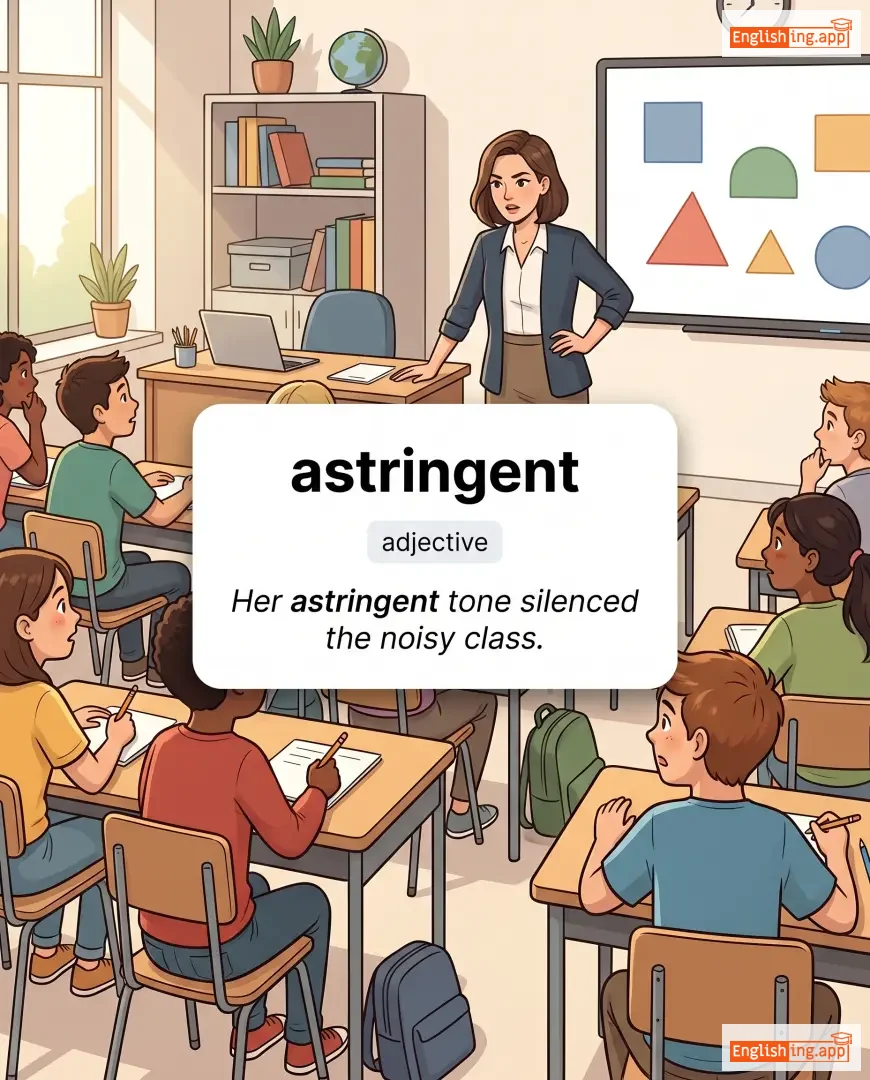
astringent definition card — visual illustration of the meaning
adjective
/əˈstrɪndʒənt/
строгий (stroh-giy)

sharp or severe in manner or style; also describes a substance that contracts skin or body tissues

"Her astringent tone silenced the noisy class."

"Ее строгий тон заставил шумный класс замолчать." (ye-yo stro-giy ton zas-til shum-nee klass zamol-chat)
noun
/əˈstrɑː.lə.dʒər/
астролог (astrolog)

a person who studies astrology and makes predictions based on the positions of stars and planets

"The astrologer predicted good fortune in her future."

"Астролог предсказал хорошее будущее." (Astrolog predskazal khoroshee budushchee.)
noun
/əˈstrɒlədʒi/
астрология (astrologiya)

the study of the movements and relative positions of celestial bodies interpreted as having an influence on human affairs

"She studied astrology to understand her future."

"Она изучала астрологию, чтобы понять свое будущее." (Ona izuchala astrologiyu, chtoby ponyat' svoyo budushcheye.)
noun
/əˈstrɒnəmər/
астроном (astronom)

a scientist who studies the stars, planets, and the universe

"The astronomer observed the new comet through his telescope."
"Астроном наблюдал новый комету через свой телескоп." (Astronom nablyudal novyj kometu cherez svoj teleskop.)
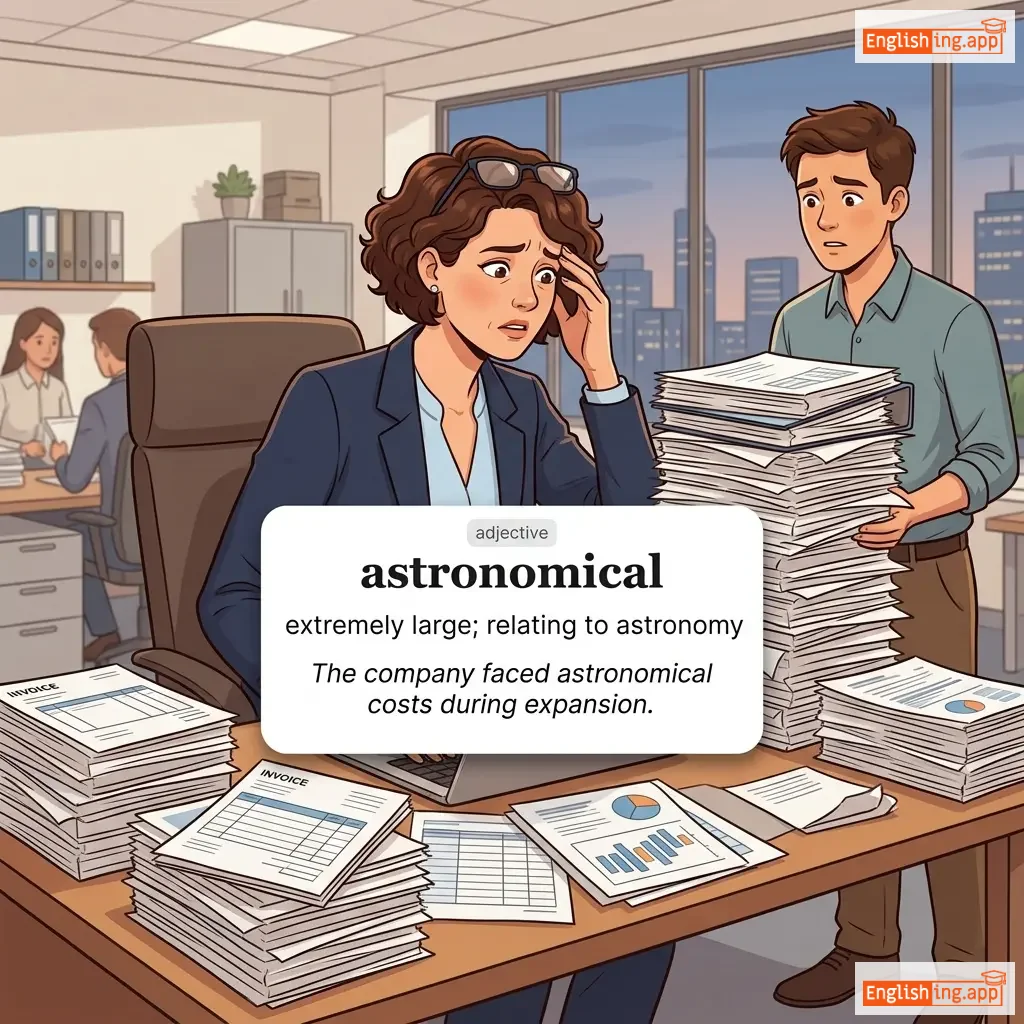
astronomical definition card — visual illustration of the meaning
adjective
/ˌæstrəˈnɒmɪkəl/
астрономический (astronomicheskiy)

extremely large; relating to astronomy

"The company faced astronomical costs during expansion."
"Компания столкнулась с астрономическими затратами во время расширения." (Kompaniya stolknulas' s astronomicheskimi zatratami vo vremya rasshireniya.)
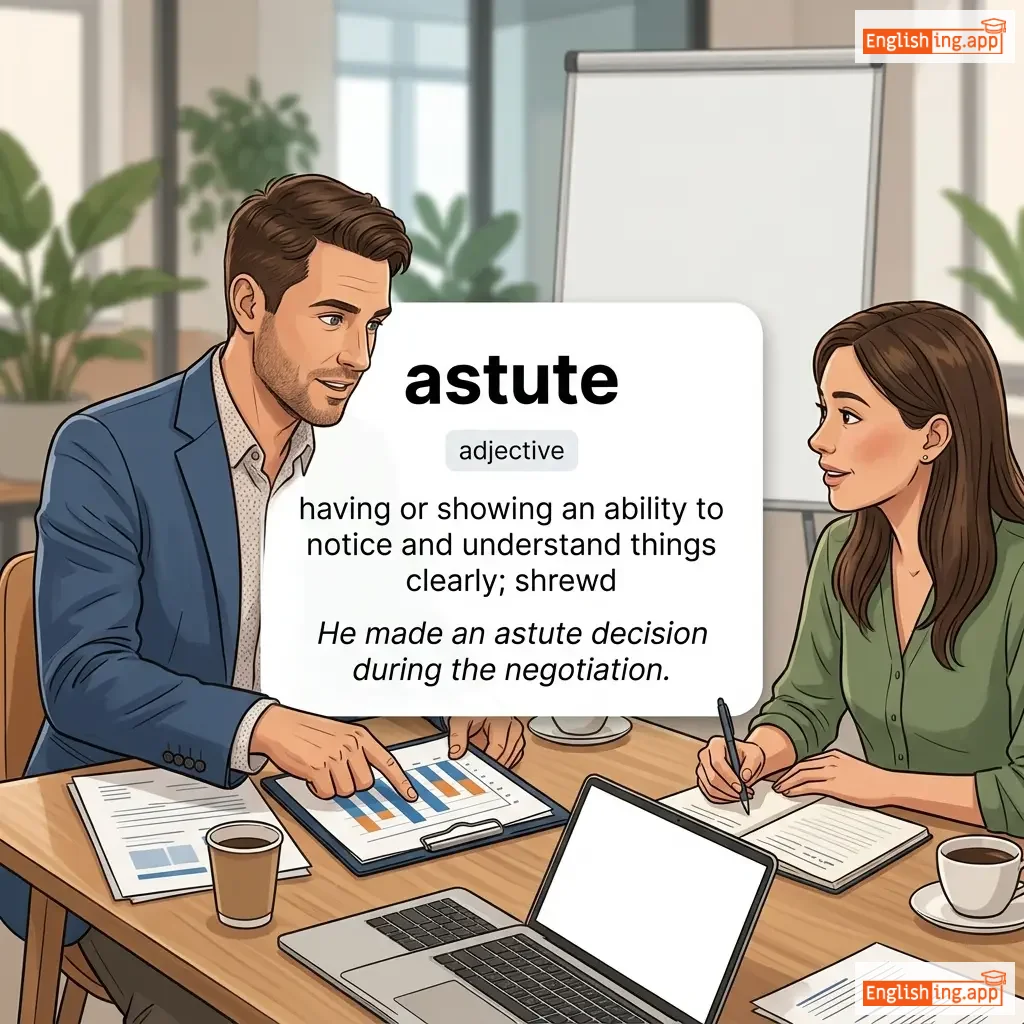
astute definition card — visual illustration of the meaning
adjective
/əˈstjuːt/
проницательный (pronitsatel'nyj)

having or showing an ability to notice and understand things clearly; shrewd

"He made an astute decision during the negotiation."
"Он принял острое решение во время переговоров." (On prinyal ostroye resheniye vo vremya peregovorov.)
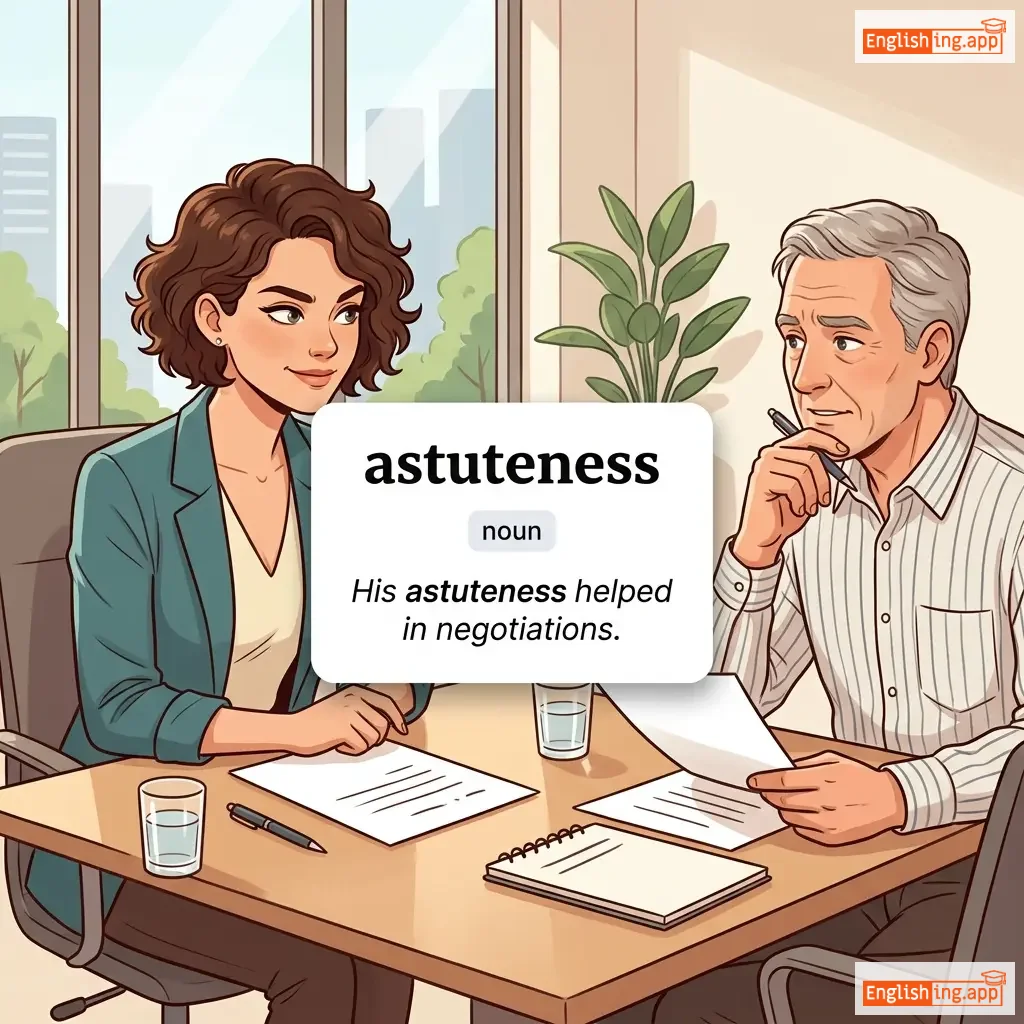
astuteness definition card — visual illustration of the meaning
noun
/əˈstuːt.nəs/
проницательность (pronicatel'nost')

The ability to accurately assess situations or people and turn this to one's advantage.

"His astuteness helped in negotiations."

"Его проницательность помогла в переговорах." (Ego pronicat'elnosť pomogla v peregovorah.)
adverb
/əˈsʌndər/
на части (na chasti)

into separate parts; apart

"The ancient empire was torn asunder by war."
"Древняя империя была разорвана войной на части." (Drevnyaya imperiya byla razorvana voynoy na chasti.)
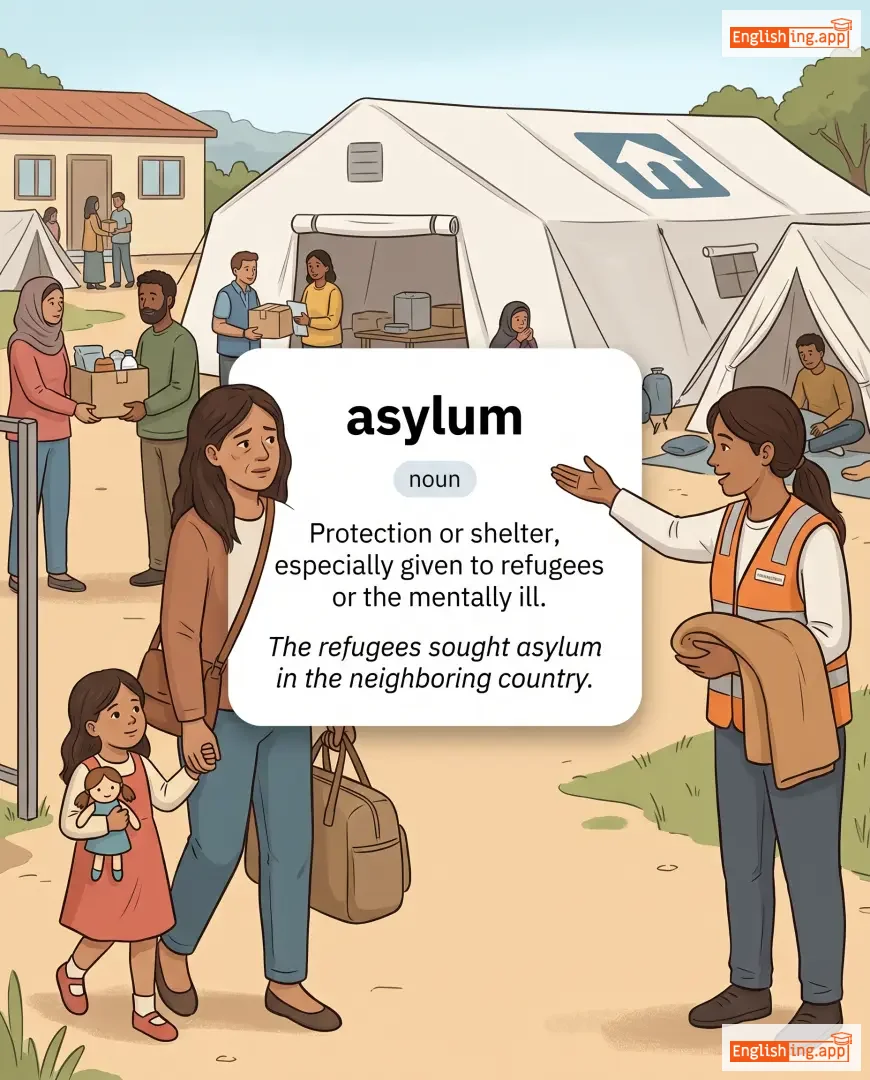
asylum definition card — visual illustration of the meaning
noun
/əˈsaɪləm/
убежище (ubezhishche)

Protection or shelter, especially given to refugees or the mentally ill.

"The refugees sought asylum in the neighboring country."

"Беженцы искали убежище в соседней стране." (Bezhtsy iskali ubezhishche v sosedney strane.)
adjective
/ˌeɪsɪˈmɛtrɪk/
асимметричный (asimmetrichny)

Not having equal or corresponding parts; lacking symmetry.

"The design of the building is asymmetric and unusual."

"Дизайн здания асимметричен и необычен." (Dizayn zdaniya asimmetrichen i neobyichen.)
adjective
/ˌeɪsɪˈmɛtrɪkəl/
асимметричный (asimmetrichnyy)

Having parts that are not the same in size, shape, or arrangement.

"She wore an asymmetrical dress that drew everyone’s attention."
"Она носила асимметричное платье, которое привлекло внимание всех." (Ona nosila asimmetrichnoye plat'ye, kotorye privelklo vnimaniye vsekh.)
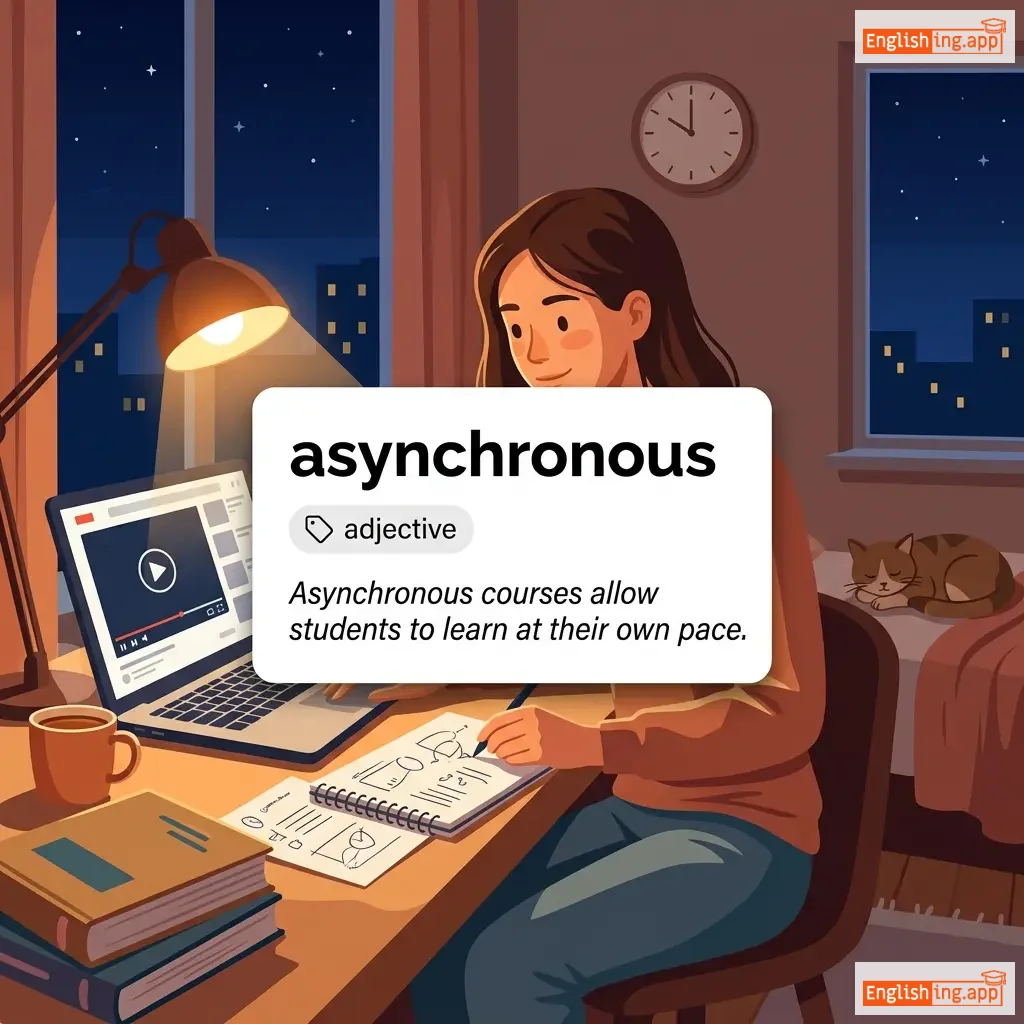
asynchronous definition card — visual illustration of the meaning
adjective
eɪˈsɪŋ.krə.nəs
асинхронный (asinhronny)

Of or requiring a form of computer control timing protocol in which a specific operation begins upon receipt of an indication that the preceding operation has been completed.

"Asynchronous courses allow students to learn at their own pace."

"Асинхронные курсы позволяют студентам учиться в своем собственном темпе." (Asinkhronnyye kursy pozvolyayut studentam uchit'sya v svoem sobstvennom tempe.)
preposition
/æt/
на (na)

used to indicate a specific time, place, or direction

"She arrived at the airport on time."

"Она приехала в аэропорт вовремя." (Ona priekhala v aeroport vovremya.)