Словари

Словарь английского языка | Значения слов, определения и примеры

adjective
/bɪˈnɪɡnənt/
добрый, благосклонный (dobryy, blagosklonnyy)

Kindly and benevolent in nature.

"The teacher’s benignant attitude made the students feel comfortable."

"Бенигнантное отношение учителя заставило студентов чувствовать себя комфортно." (Benignantnoye otnosheniye uchitelya zastavilo studentov chuvstvovat' sebya komfortno.)
noun
/bɪˈnɪɡnəti/
доброта, мягкость (dobrota, myagkost)

The quality of being kind and gentle.

"She treated everyone with benignity and respect."

"Она относилась ко всем с добротой и уважением." (Ona otnosilas' ko vsem s dobrotoy i uvazheniem.)
noun
/ˈbɛnɪsən/
благословение (blagoslovenie)

A blessing or benefit.

"The rain was a benison for the drought-stricken farmers."

"Дождь был благословением для фермеров, пострадавших от засухи." (Dozhd' byl blagosloveniem dlya fermyerov, postradavshikh ot zasukh.)
adjective
/bɛnt/
решительный / склонность (reshitel'nyj / sklonnost')

strongly determined or having a natural talent or inclination for something

"She is bent on becoming a successful lawyer."

"Она решительно настроена стать успешным юристом." (Ona reshitel'no nastroena stat' uspeshnym juristom.)
verb
/bɪˈnʌm/
онеметь (onemet)

to make physically numb or without sensation; to make mentally dull or insensitive

"The freezing wind seemed to benumb his fingers within minutes."

"Ледяной ветер за считанные минуты онемел его пальцы." (Ledyanoy veter za schitannye minuty onemel ego paltsy)
adjective
/ˌærəˈmætɪk/
ароматный (aromatyj)

Having a pleasant and distinctive smell.

"The chef used aromatic herbs to flavor the dish."

"Шеф-повар использовал ароматные травы для придания вкуса блюду." (Shef-povar ispol'zoval aromatnye travy dlya pridaniya vkusa blyudu.)
adverb, preposition
/əˈraʊnd/
вокруг (vokrug)

situated on every side; in a circular way; approximately

"There are many restaurants around the park."

"Вокруг парка много ресторанов." (Vokrug parka mnogo restoranov.)
verb
/əˈreɪn/
предъявить обвинение (predyavit obvineniye)

to formally accuse someone in a court of law and ask them to respond to the charges

"The suspect was arraigned before the judge this morning."
"Подозреваемого привлекли к ответственности перед судьей этим утром." (Podozrevaemogo privlekli k otvetstvennosti pered sud'ey etim utrom.)
arrange definition card — visual illustration of the meaning
verb
/əˈreɪndʒ/
упорядочить, организовать (uporyadochit', organizovat')

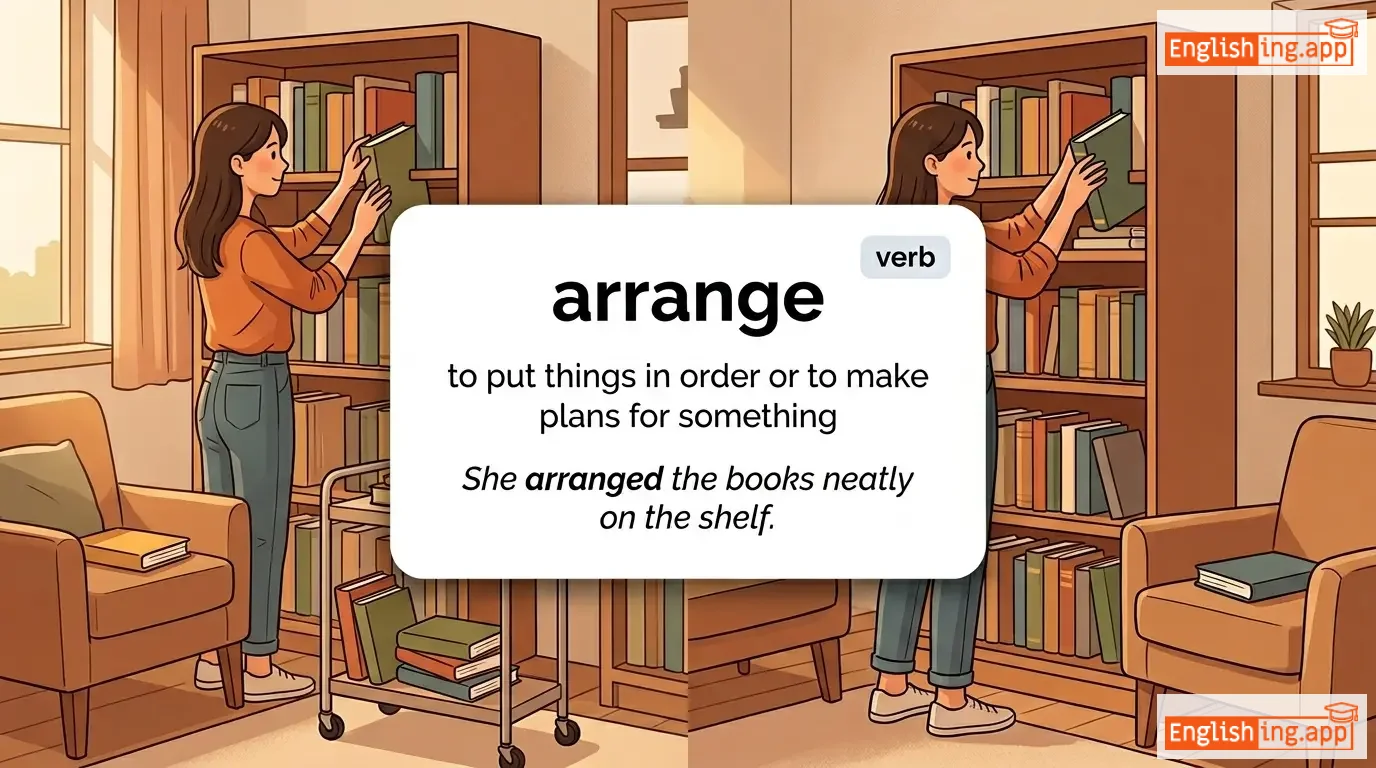
to put things in order or to make plans for something

"She arranged the books neatly on the shelf."
"Она аккуратно расставила книги на полке." (Ona akuratno rastavila knigi na polke.)
arrangement definition card — visual illustration of the meaning
noun
/əˈreɪndʒmənt/
договоренность, организация (dogovorennost', organizatsiya)

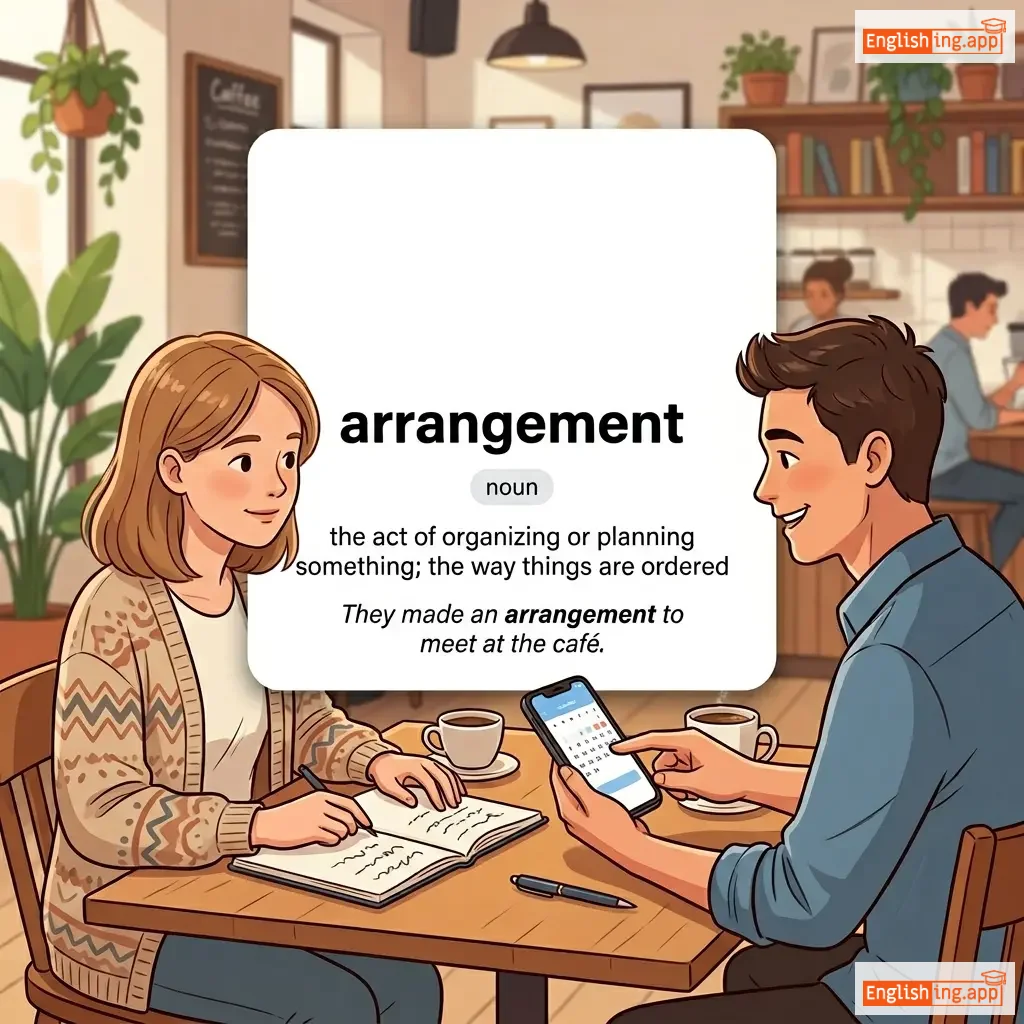
the act of organizing or planning something; the way things are ordered

"They made an arrangement to meet at the café."

"Они договорились встретиться в кафе." (Oni dogovorilis' vstrechatsya v kafe.)
adjective
/ˈærənt/
полный, абсолютный (polny, absolutny)

complete or utter (used negatively, e.g., 'arrant nonsense')

"His excuse was arrant nonsense."

"Его оправдание было полным бредом." (Ego opravdanie bylo polnym bredom.)
noun
/əˈreɪ/
массив, выставка (massiv, vystavka)

an impressive display or arrangement of things

"The shop displayed an array of colorful dresses."

"Магазин продемонстрировал впечатляющую выставку ярких платьев." (Magazin prodemonstriroval vpechatlyayushchuyu vystavku yarkikh plat'yev.)
noun
/əˈrɪə/
задолженность (zadolzhennost)

A debt or payment that is overdue and unpaid.

"He was sued for an arrear of rent."

"Его подали в суд за задолженность по аренде." (Ego podali v sud za zadolzhennost' po arende.)
noun
/əˈrɪəz/
задолженность (zadolzhennost)

Money that is owed and should have been paid earlier.

"She was months in arrears with her electricity bill."
"Она была в долгах по электрическому счету на несколько месяцев." (Ona byla v dolgakh po elektricheskomu schetu na neskol'ko mesyatsev.)
arrest definition card — visual illustration of the meaning
verb
/əˈrɛst/
арестовать (arestovat)

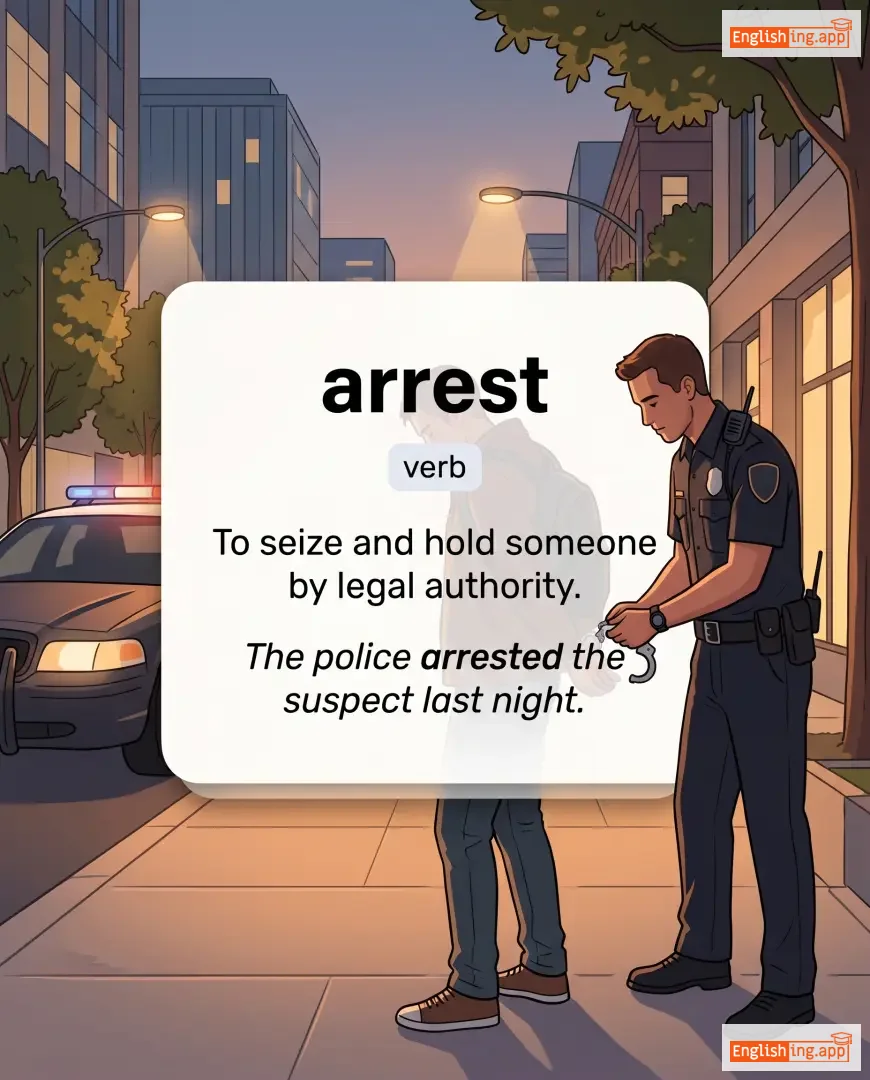
To seize and hold someone by legal authority.

"The police arrested the suspect last night."

"Полиция арестовала подозреваемого прошлой ночью." (Politsiya arestovala podozrevaemogo proshloy noch'yu.)
adjective
/əˈrɛstɪŋ/
поразительный (porazitel'nyj)

Attracting attention in a striking or impressive way.

"The actress gave an arresting performance."

"Актриса дала поразительное выступление." (Aktrisa dala porazitel'noe vystuplenie.)
adjective
/eɪˈrɪðmɪk/
аритмический (aritmicheskiy)

Lacking a regular rhythm or beat.

"The patient had an arrhythmic heartbeat."

"У пациента был аритмический пульс." (U patsienta byl aritmicheskiy pul's.)
noun
/əˈraɪvəl/
прибытие (pribytiye)

The act of coming to a place, especially at the end of a journey.

"The train's arrival was delayed by two hours."

"Прибытие поезда было задержано на два часа." (Pribytiye poezda bylo zaderzhano na dva chasa.)
arrive definition card — visual illustration of the meaning
verb
/əˈraɪv/
прибывать (pribivat)

to reach a place, especially at the end of a journey

"She will arrive at the airport in the evening."

"Она приедет в аэропорт вечером." (Ona priedet v aeroport vecherom.)
noun
/ˌæriˈviːst/
новые богатые (novye bogatye)

A person who has recently gained wealth or status but is considered arrogant or socially unsophisticated.

"The business world is full of ambitious arrivistes."

"Деловой мир полон амбициозных новых богатых." (Delovoy mir polon ambitsioznykh novykh bogatykh.)
noun
/ˈærəɡəns/
аррогантность (arrogantnost)

The quality of being overly proud and having a sense of superiority.

"His arrogance made him unpopular among his colleagues."

"Его аррогантность сделала его непопулярным среди коллег." (Ego arrogantnost' sdelala ego nepopulyarnym sredi kolleg.)
adjective
/ˈærəɡənt/

Having an exaggerated sense of one's own importance or abilities.

"The arrogant manager dismissed the workers' complaints."

verb
/ˈærəˌɡeɪt/
несправедливо присваивать (nespravedlivo prisvaivat)

To claim or take something without justification.

"The dictator arrogated all powers to himself."

"Диктатор несправедливо присвоил все полномочия себе." (Diktator nespravedlivo prisvoil vse polnomochiya sebe.)
noun
/ˈæroʊ/
стрела (strela)

a thin, straight weapon with a pointed tip, shot from a bow

"The hunter shot an arrow at the target."

"Охотник выстрелил стрелой в цель." (Okhotnik vystrelil streloy v tsel'.)
noun
/əˈrɔɪ.oʊ/
сухая долина (sukhaya dolina)

A dry creek or stream bed that temporarily fills with water after heavy rain.

"After the storm, the arroyo quickly filled with rushing water."

"После шторма аройо быстро заполнился водой." (Posle shtorma arroyo bystro zapolnilsya vodoy.)
noun
/ˈɑːr.sən.əl/
арсенал (arsenal)

A collection or storage place for weapons and military equipment.

"The army kept its weapons in a secure arsenal."

"Армия хранила свое оружие в безопасном арсенале." (Armiya khranila svoe oruzhiye v bezopasnom arsenale.)
noun
/ɑːrt/
искусство (iskusstvo)

the expression or application of human creative skill and imagination

"She studied art at the university."

"Она изучала искусство в университете." (Ona izuchala iskusstvo v universitete.)
noun
/ˈɑːr.tər.i/
артерия (arteriya)

A blood vessel that carries blood away from the heart; also a main route or channel of communication or transport.

"The doctor explained how arteries supply blood to the body."

"Доктор объяснил, как артерии поставляют кровь в тело." (Doktor ob'yasnil, kak arteriï postavlyayut krov' v telo.)
adjective
/ˈɑːrt.fəl/
хитрый (khitryy)

Skillful, clever, or crafty, often in a cunning way.

"She gave an artful reply that avoided the real issue."

"Она дала хитрый ответ, который избегал настоящей проблемы." (Ona dala khitryy otvet, kotoryy izbegal nastoyashchey problemy.)
adjective
/ɑːrˈθʊr.i.ən/
связанный с Артуром (svyazannyy s Arturom)

Relating to the legendary King Arthur and the stories surrounding him.

"The novel is set in an Arthurian world of knights and castles."

"Роман происходит в артуровском мире рыцарей и замков." (Roman proiskhodit v arturovskom mire rytsarey i zamkov.)
noun
/ˈɑːrtɪkl/
статья (statya)

a piece of writing included in a newspaper, magazine, or journal

"He wrote an article about climate change."

"Он написал статью о изменении климата." (On napisal stat'yu o izmenenii klimata.)
verb/adjective
/ɑːrˈtɪkjʊlət/
артикулировать (artikulirovat)

to express thoughts or ideas clearly; having the ability to speak fluently and clearly

"She was able to articulate her ideas during the meeting."
"Она смогла артикулировать свои идеи на встрече." (Ona smogla artikulirovat' svoi idei na vstreche.)
articulation definition card — visual illustration of the meaning
noun
/ɑːrˌtɪkjʊˈleɪʃən/
ясная артикуляция (yasnaya artikulyatsiya)

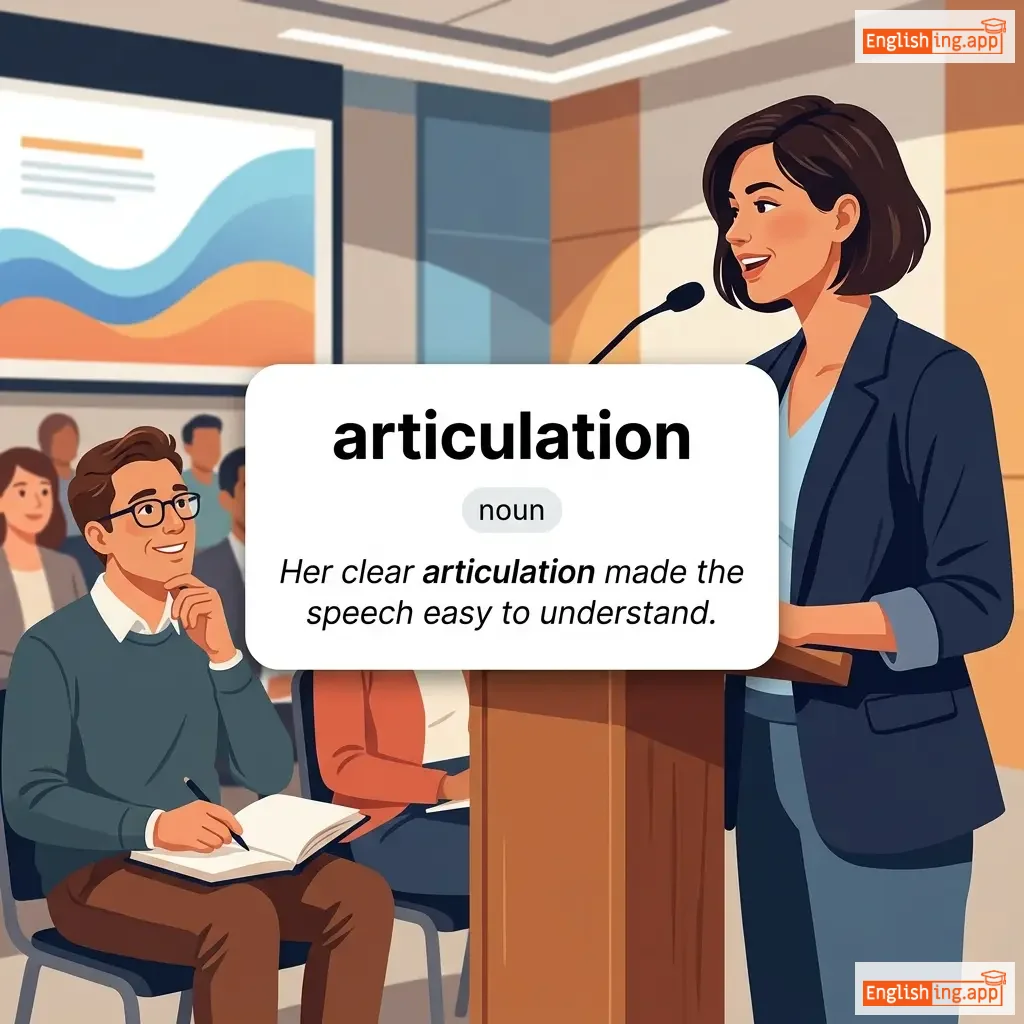
the act of expressing something clearly in speech or the way in which words are pronounced

"Her clear articulation made the speech easy to understand."
"Ее ясная артикуляция сделала речь легкой для понимания." (Eyo yasnaya artikulyatsiya sdelala rech legkoy dlya ponimaniya.)
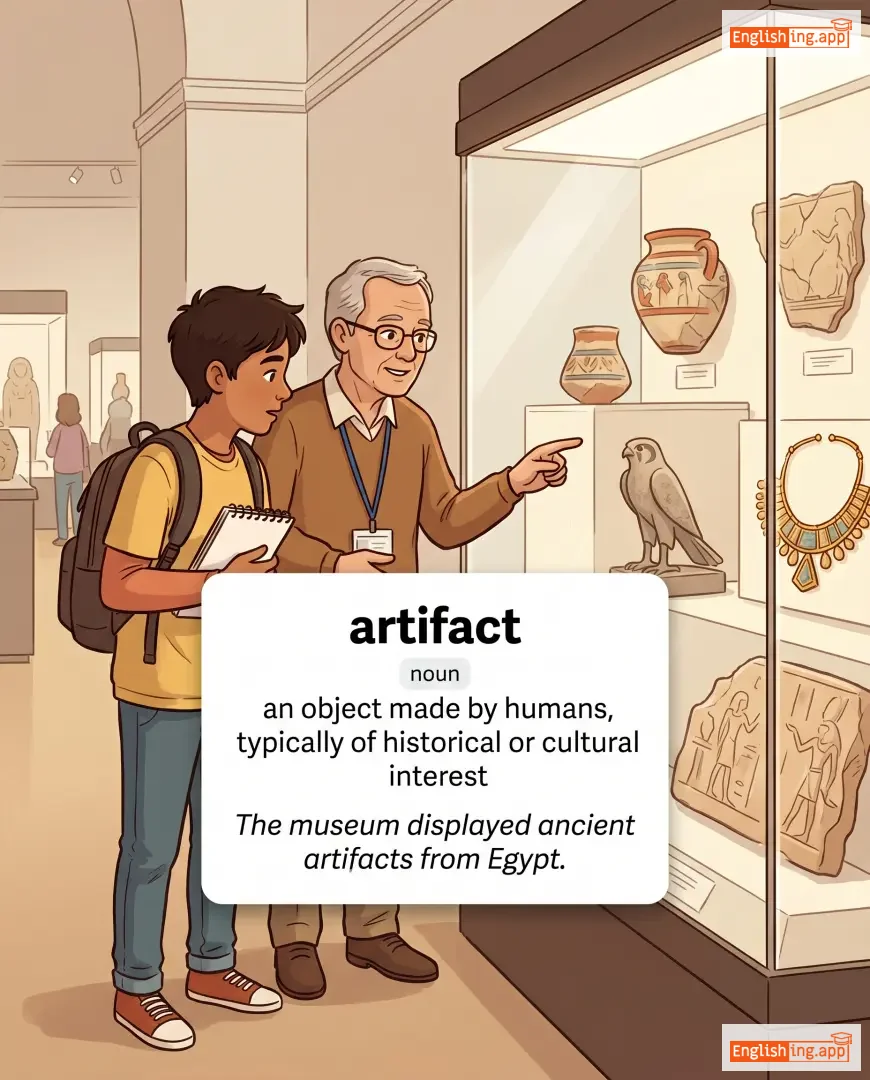
artifact definition card — visual illustration of the meaning
noun
/ˈɑːrtɪˌfækt/
артефакт (artefakt)

an object made by humans, typically of historical or cultural interest

"The museum displayed ancient artifacts from Egypt."

"Музей выставил древние артефакты из Египта." (Muzey vystavil drevnie artefakty iz Egipta.)
noun (plural)
/ˈɑːrtɪˌfæks/
артефакты (artefakty)

objects made by humans, often of historical or cultural importance

"Archaeologists discovered valuable artifacts in the ruins."

"Археологи обнаружили ценные артефакты в руинах." (Arheologi obnaruzhili tsennye artefakty v ruinakh.)
noun
/ˈɑːrtɪfɪs/
искусство (iskusstvo)

clever or cunning devices or tricks used to deceive others

"The politician's charm was nothing but artifice."
"Очарование политика было ничем иным, как искусством." (Ocharovanie politika bylo nishchem inym, kak iskusstvom.)
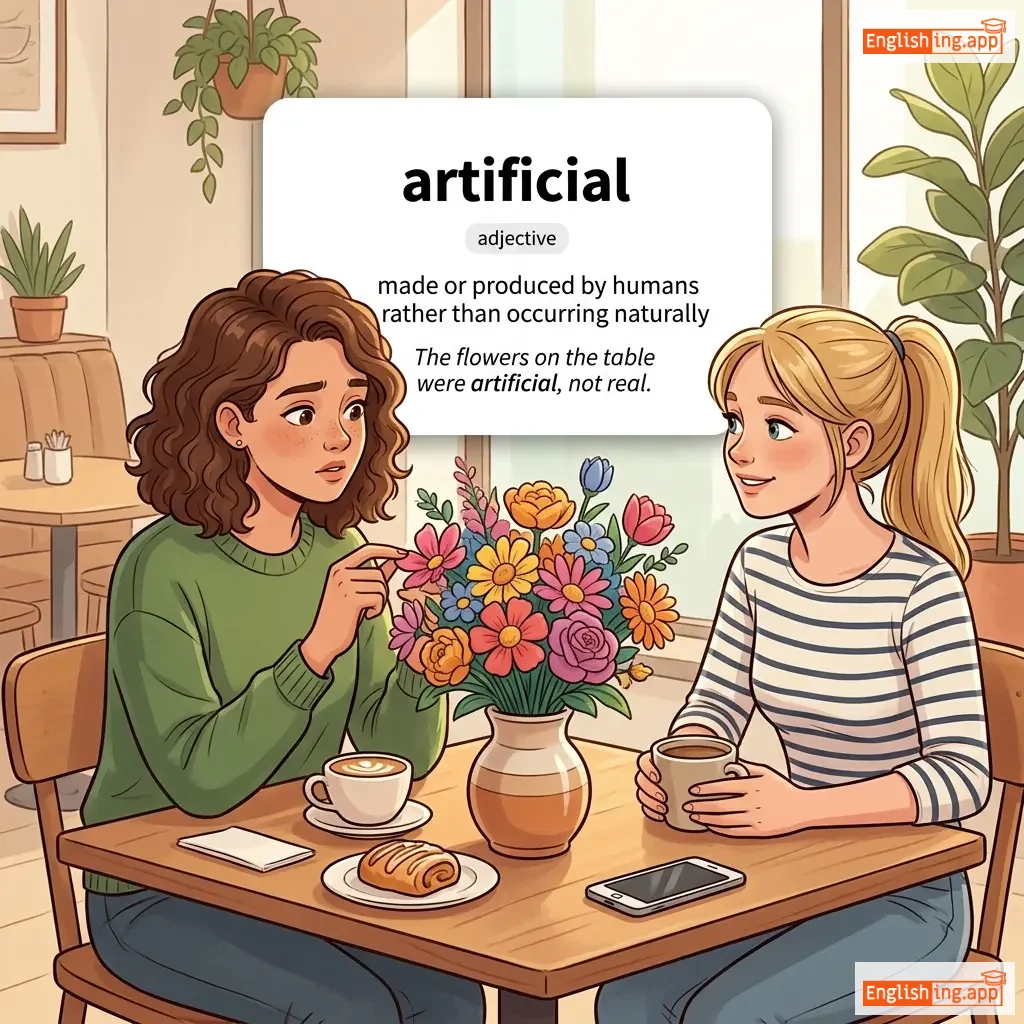
artificial definition card — visual illustration of the meaning
adjective
/ˌɑːrtɪˈfɪʃəl/
искусственный (iskusstvenny)

made or produced by humans rather than occurring naturally

"The flowers on the table were artificial, not real."

"Цветы на столе были искусственными, не настоящими." (Tsvety na stole byli iskusstvennymi, ne nastoyashchimi.)
artificial intelligence definition card — visual illustration of the meaning
noun
ˌɑː.tɪˈfɪʃ.əl ɪnˈtɛl.ɪ.dʒəns
искусственный интеллект (iskusstvennyy intellekt)

The simulation of human intelligence in machines that are programmed to think and learn.

"Artificial intelligence is reshaping modern industries."

"Искусственный интеллект меняет современные индустрии." (Iskusstvennyy intellekt menyayet sovremennye industrii.)
adverb
/ˌɑːrtɪˈfɪʃəli/
искусственно; (iskusstvenno)

by artificial means; not naturally; in a fake manner

"The lake was artificially created for irrigation purposes."

"Озеро было создано искусственно для орошения." (Ozyero bylo sozdano iskusstvenno dlya orosheniya.)
noun
/ˈɑːrtɪzən/
ремесленник (remeslennik)

a skilled craftsperson who makes things by hand

"The artisan crafted a beautiful wooden chair."

"Ремесленник создал красивое деревянное кресло." (Remeslennik sozdál krasivoye derevyannoye kreslo.)
noun
/ˈɑːr.tɪ.zən/
ремесленник (remeslennik)

a skilled craftsperson who makes things by hand

"The artisan created a beautiful wooden sculpture."

"Ремесленник создал красивую деревянную скульптуру." (Remeslennik sozdaval krasivuyu derevyannuyu skul'pturu.)
noun
/ˈɑːrtɪst/
художник (khudozhnik)

a person who creates art, especially paintings or drawings

"The artist painted a beautiful landscape."

"Художник написал красивый пейзаж." (Khudozhnik napisal krasivyy peyzazh.)
adjective
/ɑːrˈtɪstɪk/
артистический (artisticheskiy)

having or revealing natural creative skill

"She has an artistic sense of design."
"У нее есть художественное чувство дизайна." (U neyo est' khudozhestvennoe chuvstvo dizayna.)
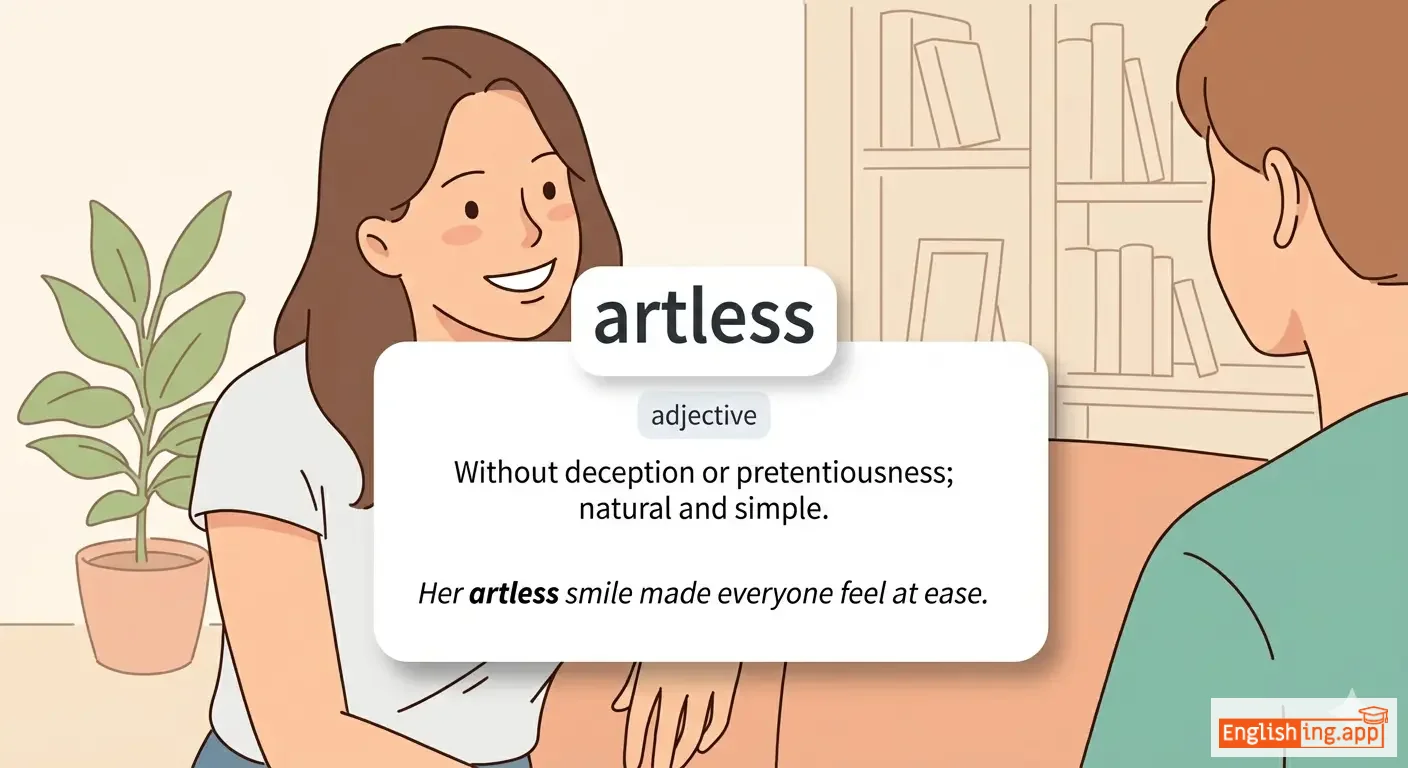
artless definition card — visual illustration of the meaning
adjective
/ˈɑːrtləs/
простодушный, естественный (prostodushnyy, yestestvennyy)

Without deception or pretentiousness; natural and simple.

"Her artless smile made everyone feel at ease."

"Её простодушная улыбка заставила всех почувствовать себя комфортно." (eyo prostodushnaya ulybka zastavila vsekh pochuvstvovat' sebya komfortno.)
noun
/ˈɑːrtləsnəs/
простота, натуральность (prostota, natural'nost')

The quality of being natural and simple without deceit or pretension.

"Her artlessness made her beloved by all."

"Ее артлесснесс сделала ее любимой всеми." (Eyo artlessness sdelala yeye lyubimoy vsemiy.)
noun
/ˈɑːrtwɜːrk/
произведение искусства (proizvedenie iskusstva)

a piece of art, such as a painting, sculpture, or drawing

"The gallery displayed an impressive artwork by a local artist."

"Галерея выставила впечатляющее произведение искусства местного художника." (Galereya vystavila vpechatlyayushchee proizvedenie iskusstva mestnogo khudozhnika.)
noun
/ˈeə.rəm/
арум (arum)

a plant with large arrow-shaped leaves and a white spathe, also known as taro

"Arum leaves are commonly used in Bengali cuisine for cooking."

"Листья арума часто используются в индийской кухне для приготовления пищи." (List'ya aruma chasto ispol'zuyutsya v indijskoj kuxne dlya prigotovleniya pishhi.)
conjunction, adverb, preposition
/æz/
как (kak)

used to compare, to indicate the role or function of something, or to introduce clauses of time or reason

"She works as a teacher."

"Она работает как учительница." (Ona rabotaet kak uchitelnitsa.)
adverb
/æz ˈjuː.ʒu.əl/
как обычно (kak obychno)

in the way that is normal or typical; customarily

"As usual, he arrived late to the meeting."

"Как обычно, он опоздал на встречу." (Kak obychno, on opozdal na vstrechu.)
noun
/ˌæs.əˈfet.ɪ.də/
асафетида (asafetida)

a pungent spice derived from the resin of a plant, commonly used in Indian cooking

"A pinch of asafoetida adds a distinctive flavor to the lentil curry."

"Щепотка асафетиды добавляет уникальный вкус чечевичному карри." (Shchepotka asafetidy dobavlyayet unikal'nyy vkus chechevichnomu karri.)