词汇表

英语词汇词典 | 单词含义、定义和示例

adjective
/bɪˈnɪɡnənt/
仁慈的, 善良的 (réncí de, shànliáng de)

Kindly and benevolent in nature.

"The teacher’s benignant attitude made the students feel comfortable."

"老师的仁慈态度让学生感到舒适。" (Lǎoshī de réncí tàidù ràng xuéshēng gǎndào shūshì.)
noun
/bɪˈnɪɡnəti/
善良, 温柔 (shànliáng, wēnróu)

The quality of being kind and gentle.

"She treated everyone with benignity and respect."

"她以善良和尊重对待每一个人。" (Tā yǐ shànliáng hé zūnzhòng duìdài měi yīgè rén.)
noun
/ˈbɛnɪsən/
祝福 (zhufu)

A blessing or benefit.

"The rain was a benison for the drought-stricken farmers."

"这场雨对受旱灾影响的农民来说是一种祝福。" (Zhe chang yu dui shou hanzai yingxiang de nongmin lai shuo shi yizhong zhufu.)
adjective
/bɛnt/
决心 / 倾向 (juéxīn / qīngxiàng)

strongly determined or having a natural talent or inclination for something

"She is bent on becoming a successful lawyer."

"她决心成为一名成功的律师。" (Tā juéxīn chéngwéi yī míng chénggōng de lǜshī.)
verb
/bɪˈnʌm/
使麻木 (shi mamu)

to make physically numb or without sensation; to make mentally dull or insensitive

"The freezing wind seemed to benumb his fingers within minutes."

"刺骨的寒风几分钟内就使他的手指麻木了。" (Cigu de hanfeng ji fenzhong nei jiu shi ta de shouzhi mamu le)
adjective
/ˌærəˈmætɪk/
芳香的 (fangxiang de)

Having a pleasant and distinctive smell.

"The chef used aromatic herbs to flavor the dish."

"厨师使用芳香的草药来调味这道菜。" (Chúshī shǐyòng fāngxiāng de cǎoyuán lái tiáowèi zhè dào cài.)
adverb, preposition
/əˈraʊnd/
周围 (zhōuwéi)

situated on every side; in a circular way; approximately

"There are many restaurants around the park."

"公园周围有很多餐馆。" (Gōngyuán zhōuwéi yǒu hěn duō cānguǎn.)
verb
/əˈreɪn/
起诉 (qǐsù)

to formally accuse someone in a court of law and ask them to respond to the charges

"The suspect was arraigned before the judge this morning."

"嫌疑人在今天早晨被指控出庭。" (Xiányí rén zài jīntiān zǎochén bèi zhǐkòng chūtíng.)
arrange definition card — visual illustration of the meaning
verb
/əˈreɪndʒ/
安排, 整理 (ānpái, zhěnglǐ)

to put things in order or to make plans for something

"She arranged the books neatly on the shelf."
"她把书本整齐地放在书架上。" (Tā bǎ shūběn zhěngqí de fàng zài shūjià shàng.)
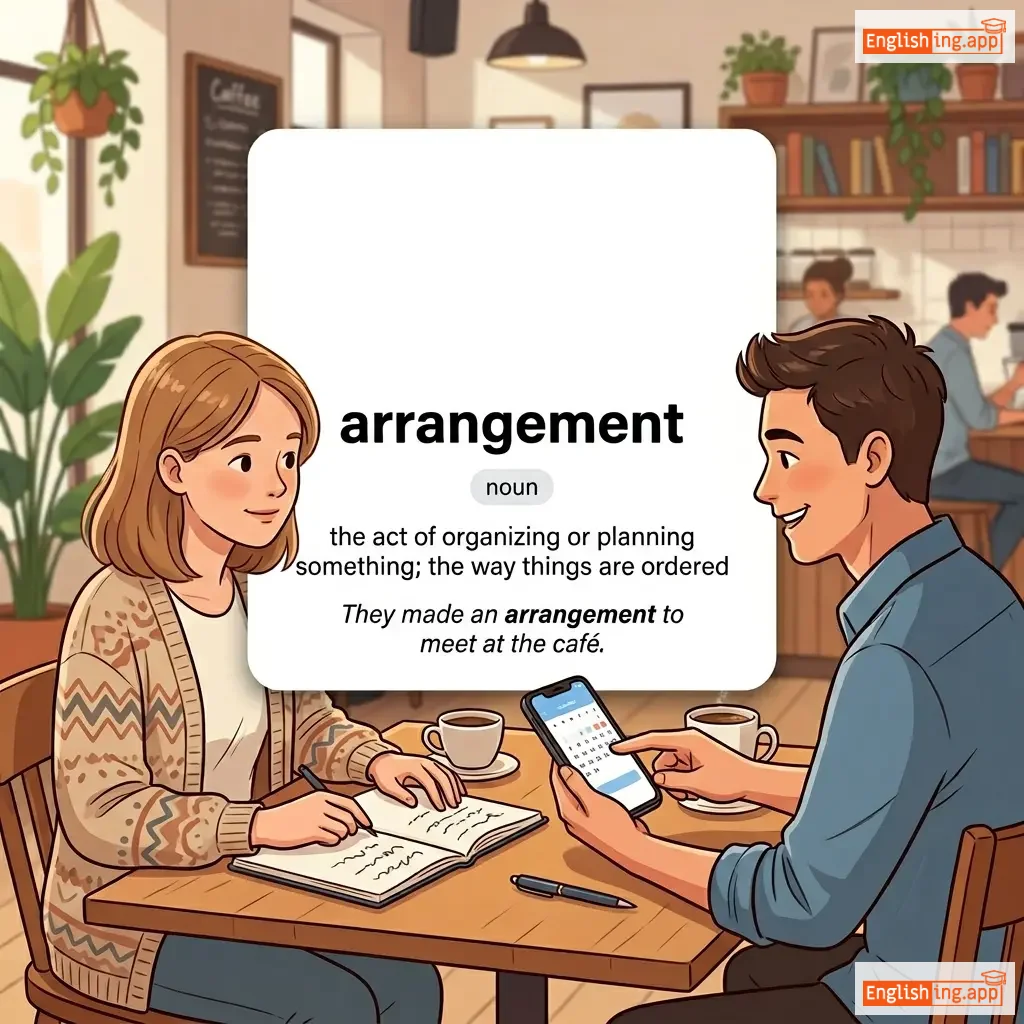
arrangement definition card — visual illustration of the meaning
noun
/əˈreɪndʒmənt/
安排, 组织 (anpai, zuzhi)

the act of organizing or planning something; the way things are ordered

"They made an arrangement to meet at the café."

"他们安排在咖啡馆见面。" (Tamen anpai zai kafei guan jianmian.)
adjective
/ˈærənt/
完全的, 绝对的 (wánquán de, juéduì de)

complete or utter (used negatively, e.g., 'arrant nonsense')

"His excuse was arrant nonsense."

"他的借口是完全的胡说八道。" (Tā de jièkǒu shì wánquán de húshuō bādào.)
noun
/əˈreɪ/
数组,展示 (shùzǔ, zhǎnshì)

an impressive display or arrangement of things

"The shop displayed an array of colorful dresses."

"商店展示了一场五颜六色的连衣裙展示。" (Shāngdiàn zhǎnshì le yī chǎng wǔyánliùsè de liányīqún zhǎnshì.)
noun
/əˈrɪə/
欠款 (qiàn kuǎn)

A debt or payment that is overdue and unpaid.

"He was sued for an arrear of rent."

"他因未付租金的欠款被起诉。" (Tā yīn wèi fù zūjīn de qiàn kuǎn bèi qǐsù.)
noun
/əˈrɪəz/
欠款 (qian kuan)

Money that is owed and should have been paid earlier.

"She was months in arrears with her electricity bill."

"她的电费账单已经拖欠了好几个月。" (Tā de diàn fèi zhàng dān yǐ jīng tuō qiàn le hǎo jǐ gè yuè.)
arrest definition card — visual illustration of the meaning
verb
/əˈrɛst/
逮捕 (dàibǔ)

To seize and hold someone by legal authority.

"The police arrested the suspect last night."

"警察昨晚逮捕了嫌疑人。" (Jǐngchá zuówǎn dàibǔ le xiányí rén.)
adjective
/əˈrɛstɪŋ/
引人注目的 (yǐn rén zhù mù de)

Attracting attention in a striking or impressive way.

"The actress gave an arresting performance."

"这位女演员给出了引人注目的表演。" (Zhe wei nv yan yuan gei chu le yin ren zhu mu de biao yan.)
adjective
/eɪˈrɪðmɪk/
心律不齐 (xinlv buqi)

Lacking a regular rhythm or beat.

"The patient had an arrhythmic heartbeat."

"病人的心跳不规律。" (Bingren de xintiao bugui lv.)
noun
/əˈraɪvəl/
到达 (daoda)

The act of coming to a place, especially at the end of a journey.

"The train's arrival was delayed by two hours."

"火车的到达晚了两个小时。" (Huoche de daoda wanle liangge xiaoshi.)
arrive definition card — visual illustration of the meaning
verb
/əˈraɪv/
到达 (dàodá)

to reach a place, especially at the end of a journey

"She will arrive at the airport in the evening."

"她将在晚上到达机场。" (Tā jiāng zài wǎnshàng dào dá jīchǎng.)
noun
/ˌæriˈviːst/
新贵 (xīn guì)

A person who has recently gained wealth or status but is considered arrogant or socially unsophisticated.

"The business world is full of ambitious arrivistes."

"商业世界充满了雄心勃勃的新贵。" (Shāngyè shìjiè chōngmǎnle xióngxīn bóbó de xīn guì.)
noun
/ˈærəɡəns/
傲慢 (àomàn)

The quality of being overly proud and having a sense of superiority.

"His arrogance made him unpopular among his colleagues."

"他的傲慢使他在同事中不受欢迎。" (Tā de àomàn shǐ tā zài tóngshì zhōng bù shòu huānyíng.)
adjective
/ˈærəɡənt/

Having an exaggerated sense of one's own importance or abilities.

"The arrogant manager dismissed the workers' complaints."

verb
/ˈærəˌɡeɪt/
不正当地索取 (buzhengdang de suoqv)

To claim or take something without justification.

"The dictator arrogated all powers to himself."

"独裁者不正当地把所有权力据为己有。" (Dúcáizhě bù zhèngdàng de bǎ suǒyǒu quánlì jù wéi jǐ yǒu.)
noun
/ˈæroʊ/
(jian)

a thin, straight weapon with a pointed tip, shot from a bow

"The hunter shot an arrow at the target."

"猎人向目标射出了一支箭。" (Lièrén xiàng mùbiāo shè chūle yī zhī jiàn.)
noun
/əˈrɔɪ.oʊ/
干河床 (gān héchuáng)

A dry creek or stream bed that temporarily fills with water after heavy rain.

"After the storm, the arroyo quickly filled with rushing water."

"风暴过后,干河床迅速被水填满。" (Fēngbào guò hòu, gān héchuáng xùnsù bèi shuǐ tiánmǎn.)
noun
/ˈɑːr.sən.əl/
军械库 (junxieku)

A collection or storage place for weapons and military equipment.

"The army kept its weapons in a secure arsenal."

"军队将武器保存在一个安全的军械库中。" (Jundui jiang wuqi baocun zai yi ge anquan de junxieku zhong.)
noun
/ɑːrt/
艺术 (yishu)

the expression or application of human creative skill and imagination

"She studied art at the university."

"她在大学学习艺术。" (Ta zai daxue xuexi yishu.)
noun
/ˈɑːr.tər.i/
动脉 (dongmai)

A blood vessel that carries blood away from the heart; also a main route or channel of communication or transport.

"The doctor explained how arteries supply blood to the body."

"医生解释了动脉如何向身体供应血液。" (Yisheng jieshi le dongmai ruhe xiang shenti gongying xueye.)
adjective
/ˈɑːrt.fəl/
巧妙的 (qiǎo miào de)

Skillful, clever, or crafty, often in a cunning way.

"She gave an artful reply that avoided the real issue."

"她给出了一个巧妙的回答,避开了真正的问题。" (Tā gěi chūle yīgè qiǎomiào de huídá, bìkāile zhēnzhèng de wèntí.)
adjective
/ɑːrˈθʊr.i.ən/
与亚瑟王相关的 (yǔ Yà sè wáng xiāngguān de)

Relating to the legendary King Arthur and the stories surrounding him.

"The novel is set in an Arthurian world of knights and castles."

"这部小说设定在一个亚瑟王的世界里,充满了骑士和城堡。" (Zhè bù xiǎoshuō shèdìng zài yīgè Yà sè wáng de shìjiè lǐ, chōngmǎnle qíshì hé chéngbǎo.)
noun
/ˈɑːrtɪkl/
文章 (wenzhang)

a piece of writing included in a newspaper, magazine, or journal

"He wrote an article about climate change."

"他写了一篇关于气候变化的文章。" (Ta xie le yi pian guanyu qihou bianhua de wenzhang.)
🗣️

articulate

verb/adjective
/ɑːrˈtɪkjʊlət/

to express thoughts or ideas clearly; having the ability to speak fluently and clearly

"She was able to articulate her ideas during the meeting."
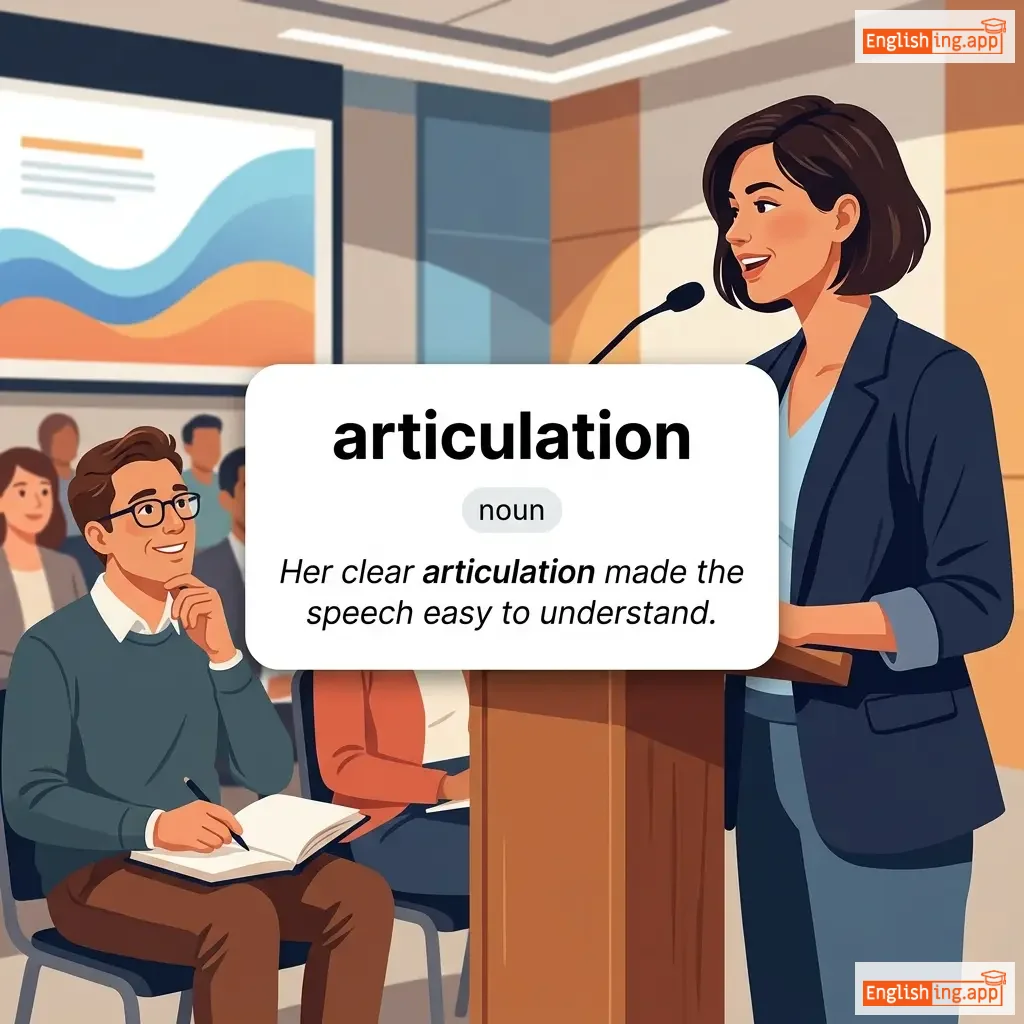
articulation definition card — visual illustration of the meaning
noun
/ɑːrˌtɪkjʊˈleɪʃən/
清晰的发音 (qingxi de fayin)

the act of expressing something clearly in speech or the way in which words are pronounced

"Her clear articulation made the speech easy to understand."
"她清晰的发音让演讲易于理解。" (Ta qingxi de fayin rang yanjiang yiyu lijie.)
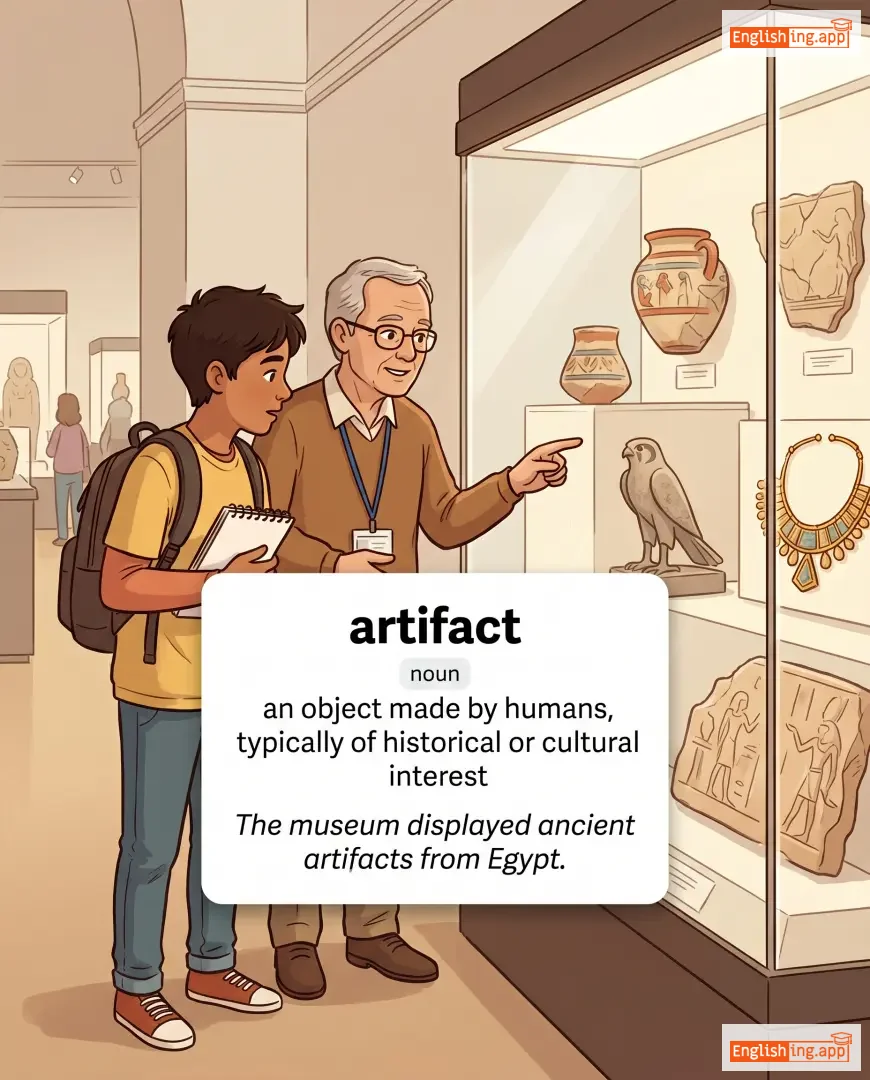
artifact definition card — visual illustration of the meaning
noun
/ˈɑːrtɪˌfækt/
文物 (wenwu)

an object made by humans, typically of historical or cultural interest

"The museum displayed ancient artifacts from Egypt."

"博物馆展示了来自埃及的古代文物。" (Bówùguǎn zhǎnshìle láizì āijí de gǔdài wénwù.)
noun (plural)
/ˈɑːrtɪˌfæks/
文物 (wenwu)

objects made by humans, often of historical or cultural importance

"Archaeologists discovered valuable artifacts in the ruins."

"考古学家在废墟中发现了宝贵的文物。" (Kǎogǔxuéjiā zài fèixū zhōng fāxiànle bǎoguì de wénwù.)
noun
/ˈɑːrtɪfɪs/
诡计 (guǐjì)

clever or cunning devices or tricks used to deceive others

"The politician's charm was nothing but artifice."
"那位政治家的魅力不过是个诡计。" (Nà wèi zhèngzhìjiā de mèilì bùguò shì gè guǐjì.)
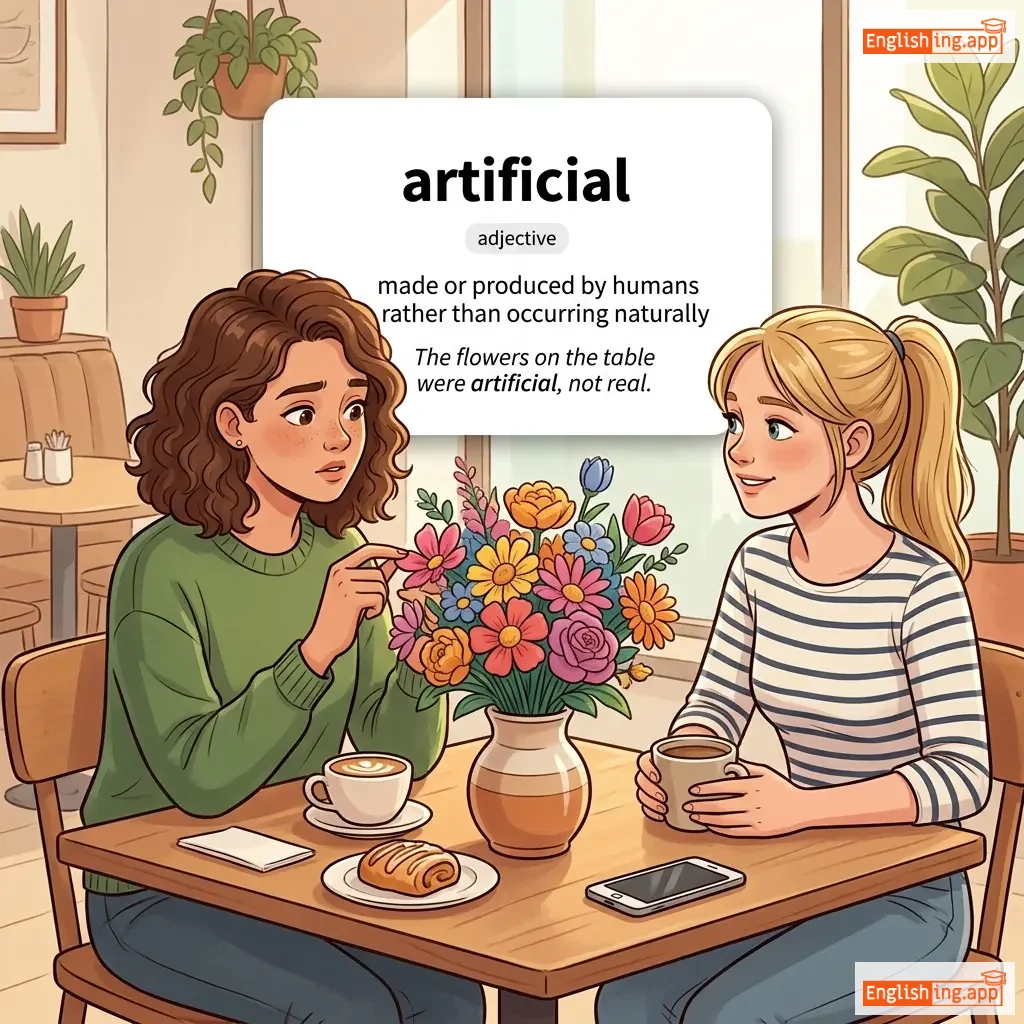
artificial definition card — visual illustration of the meaning
adjective
/ˌɑːrtɪˈfɪʃəl/
人造的 (rénzào de)

made or produced by humans rather than occurring naturally

"The flowers on the table were artificial, not real."

"桌子上的花是人造的,不是真的。" (Zhuōzi shàng de huā shì rénzào de, bù shì zhēn de.)
artificial intelligence definition card — visual illustration of the meaning
noun
ˌɑː.tɪˈfɪʃ.əl ɪnˈtɛl.ɪ.dʒəns
人工智能 (rén gōng zhì néng)

The simulation of human intelligence in machines that are programmed to think and learn.

"Artificial intelligence is reshaping modern industries."

"人工智能正在重新塑造现代产业。" (Rén gōng zhì néng zhèngzài chóngxīn sùzào xiàndài chǎnyè.)
adverb
/ˌɑːrtɪˈfɪʃəli/
人工地; (rengong de)

by artificial means; not naturally; in a fake manner

"The lake was artificially created for irrigation purposes."

"湖泊是人工创建的,旨在灌溉。" (Hubo shi rengong chuangjian de, zhi zai guan gai.)
noun
/ˈɑːrtɪzən/
工匠 (gōngjiàng)

a skilled craftsperson who makes things by hand

"The artisan crafted a beautiful wooden chair."

"工匠制作了一把漂亮的木椅子。" (Gōngjiàng zhìzuòle yī bǎ piàoliang de mù yǐzi.)
noun
/ˈɑːr.tɪ.zən/
工匠 (gongjiang)

a skilled craftsperson who makes things by hand

"The artisan created a beautiful wooden sculpture."

"工匠创造了一件美丽的木雕。" (Gongjiang chuangzuo le yi jian meili de mudiao.)
noun
/ˈɑːrtɪst/
艺术家 (yishujia)

a person who creates art, especially paintings or drawings

"The artist painted a beautiful landscape."

"艺术家画了一幅美丽的风景画。" (Yìshùjiā huàle yī fú měilì de fēngjǐnghuà.)
adjective
/ɑːrˈtɪstɪk/
艺术的 (yishu de)

having or revealing natural creative skill

"She has an artistic sense of design."
"她有艺术的设计感。" (Ta you yishu de sheji gan.)
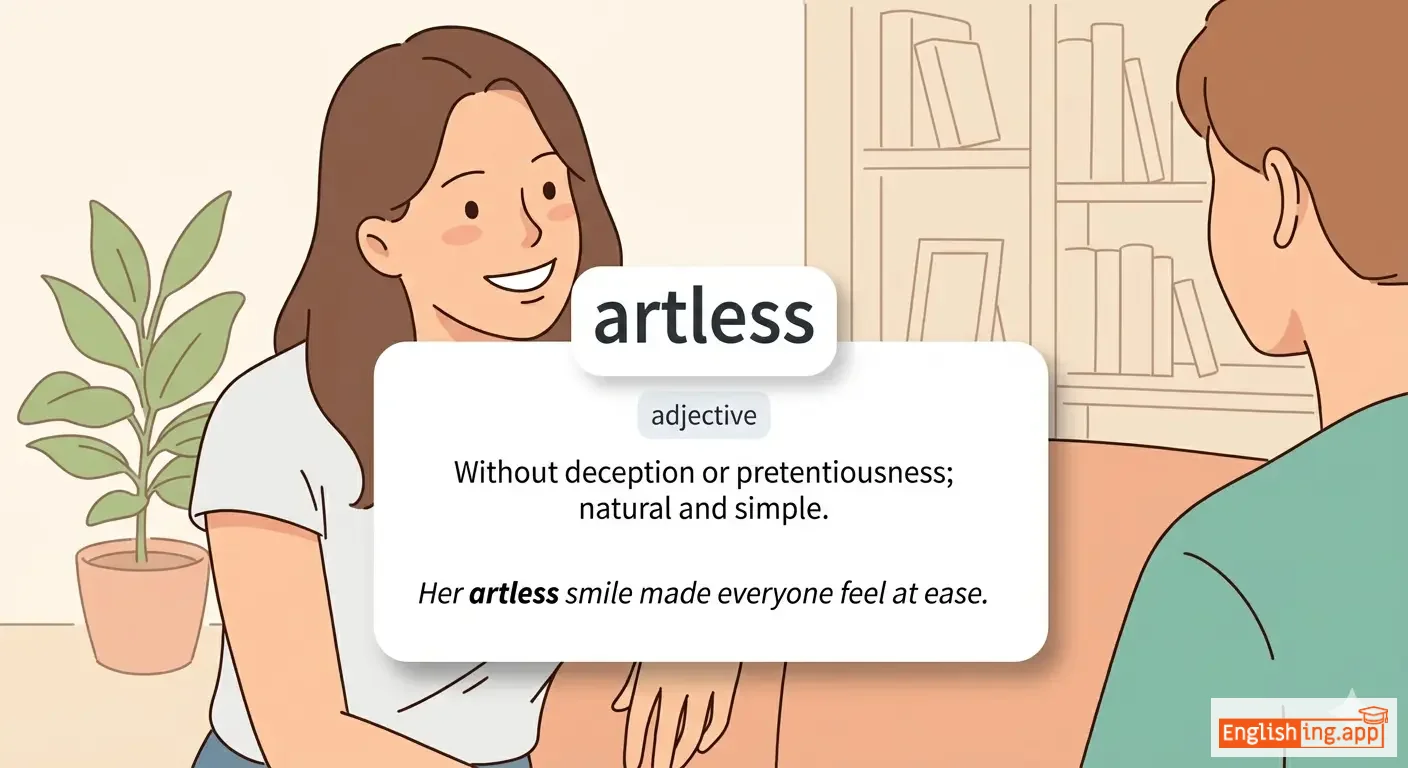
artless definition card — visual illustration of the meaning
adjective
/ˈɑːrtləs/
天真, 简单 (tianzhen, jiandan)

Without deception or pretentiousness; natural and simple.

"Her artless smile made everyone feel at ease."

"她天真的微笑让每个人都感到轻松。" (ta tianzhen de weixiao rang meige ren dou gandao qingsong.)
noun
/ˈɑːrtləsnəs/
简朴, 自然 (jiǎnpǔ, zìrán)

The quality of being natural and simple without deceit or pretension.

"Her artlessness made her beloved by all."

"她的artlessness使她受到所有人的喜爱。" (Tā de artlessness shǐ tā shòudào suǒyǒu rén de xǐ'ài.)
noun
/ˈɑːrtwɜːrk/
艺术品 (yishupin)

a piece of art, such as a painting, sculpture, or drawing

"The gallery displayed an impressive artwork by a local artist."

"画廊展示了一件本地艺术家创作的令人印象深刻的艺术品。" (Hualang zhanshi le yi jian bendian yishujia chuangzuo de lingren yinxiang shenke de yishupin.)
noun
/ˈeə.rəm/
阿罗姆 (a luo mu)

a plant with large arrow-shaped leaves and a white spathe, also known as taro

"Arum leaves are commonly used in Bengali cuisine for cooking."

"阿罗姆叶子常用于印度菜肴中进行烹饪。" (A luo mu yezi chang yongyu yindu caiyao zhong jinxing pengren.)
conjunction, adverb, preposition
/æz/
作为 (zuòwéi)

used to compare, to indicate the role or function of something, or to introduce clauses of time or reason

"She works as a teacher."

"她作为一名教师工作。" (Tā zuòwéi yī míng jiàoshī gōngzuò.)
adverb
/æz ˈjuː.ʒu.əl/
像往常一样 (xiàng wǎngcháng yīyàng)

in the way that is normal or typical; customarily

"As usual, he arrived late to the meeting."

"像往常一样,他迟到了会议。" (Xiàng wǎngcháng yīyàng, tā chídào le huìyì.)
noun
/ˌæs.əˈfet.ɪ.də/
阿萨福提达 (asafuotida)

a pungent spice derived from the resin of a plant, commonly used in Indian cooking

"A pinch of asafoetida adds a distinctive flavor to the lentil curry."

"一撮阿萨福提达为扁豆咖喱增添了独特的风味。" (Yi cuo asafuotida wei biandou gāli zengtianle dutede fengwei.)