語彙集

英単語辞書 | 単語の意味、定義、例文

adjective
/bɪˈnɪɡnənt/
慈悲深い, 親切な (jihi fukai, shinsetsu na)

Kindly and benevolent in nature.

"The teacher’s benignant attitude made the students feel comfortable."

"先生の寛大な態度が学生たちを快適にさせた。" (Sensei no kandaina taido ga gakuseitachi o kaiteki ni saseta.)
noun
/bɪˈnɪɡnəti/
親切, 優しさ (shinsetsu, yasashisa)

The quality of being kind and gentle.

"She treated everyone with benignity and respect."

"彼女はすべての人に対して親切と尊敬を持って接しました。" (Kanojo wa subete no hito ni taishite shinsetsu to sonkei o motte sesshimashita.)
noun
/ˈbɛnɪsən/
祝福 (shukufuku)

A blessing or benefit.

"The rain was a benison for the drought-stricken farmers."

"その雨は干ばつに苦しむ農民たちにとって祝福でした。" (Sono ame wa kanbatsu ni kurushimu noumin-tachi ni totte shukufuku deshita.)
adjective
/bɛnt/
決意 / 傾向 (ketsui / keikou)

strongly determined or having a natural talent or inclination for something

"She is bent on becoming a successful lawyer."

"彼女は成功した弁護士になる決意を固めている。" (Kanojo wa seikou shita bengoshi ni naru ketsui o katamete iru.)
verb
/bɪˈnʌm/
麻痺させる (mahi saseru)

to make physically numb or without sensation; to make mentally dull or insensitive

"The freezing wind seemed to benumb his fingers within minutes."

"凍える風が数分で彼の指を麻痺させた。" (Kogoeru kaze ga sufun de kare no yubi o mahi saseta)
adjective
/ˌærəˈmætɪk/
香り高い (kaori takai)

Having a pleasant and distinctive smell.

"The chef used aromatic herbs to flavor the dish."

"シェフは料理の味を引き立てるために香り高いハーブを使いました。" (Shefu wa ryōri no aji o hikitateru tame ni kaori takai hābu o tsukaimashita.)
adverb, preposition
/əˈraʊnd/
周り (mawari)

situated on every side; in a circular way; approximately

"There are many restaurants around the park."

"公園の周りに多くのレストランがあります。" (Kōen no mawari ni ōku no resutoran ga arimasu.)
verb
/əˈreɪn/
起訴する (kiso suru)

to formally accuse someone in a court of law and ask them to respond to the charges

"The suspect was arraigned before the judge this morning."
"容疑者は今朝、裁判官の前で起訴されました。" (Yōgisha wa kesa, saiban-kan no mae de kiso saremashita.)
arrange definition card — visual illustration of the meaning
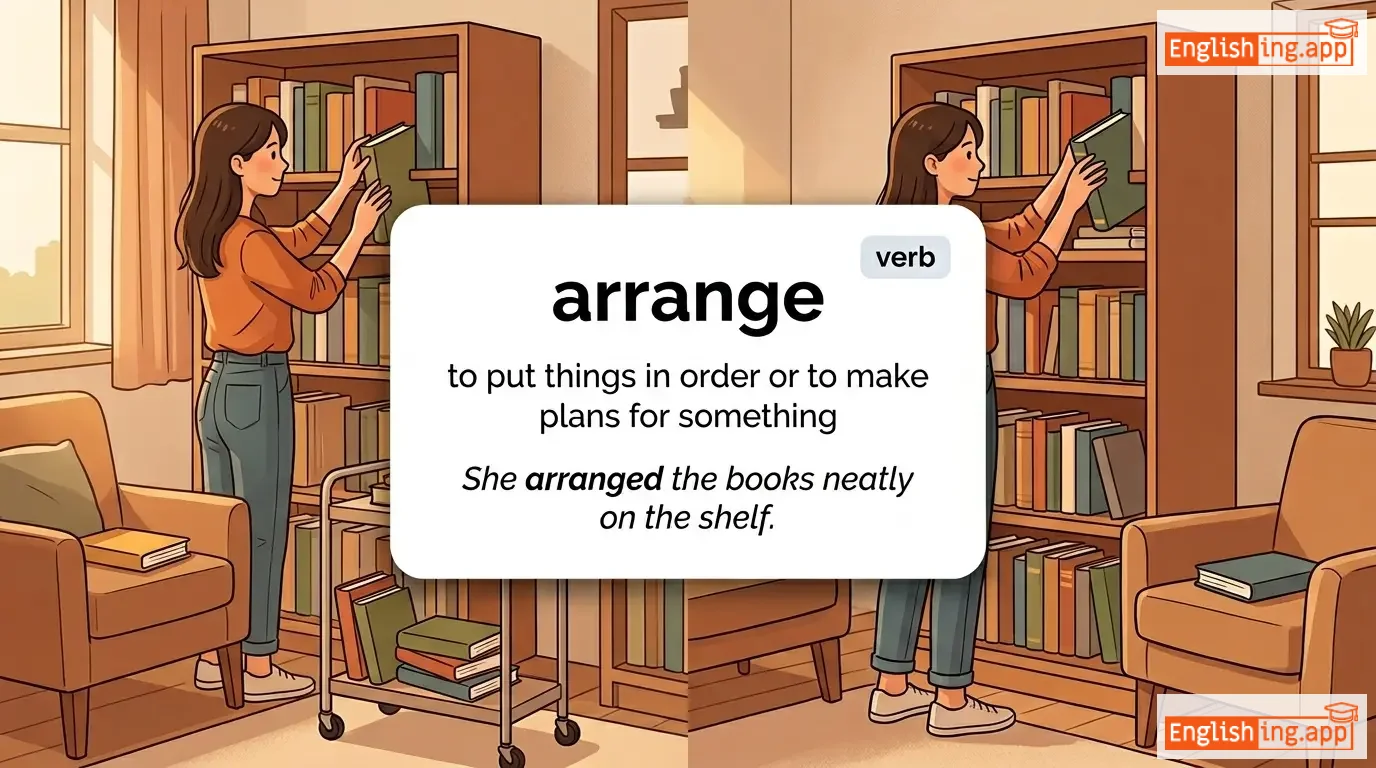
verb
/əˈreɪndʒ/
整理する, 手配する (seiri suru, tehai suru)

to put things in order or to make plans for something

"She arranged the books neatly on the shelf."
"彼女は本を棚にきれいに並べました。" (Kanojo wa hon o tana ni kirei ni narabemashita.)
arrangement definition card — visual illustration of the meaning
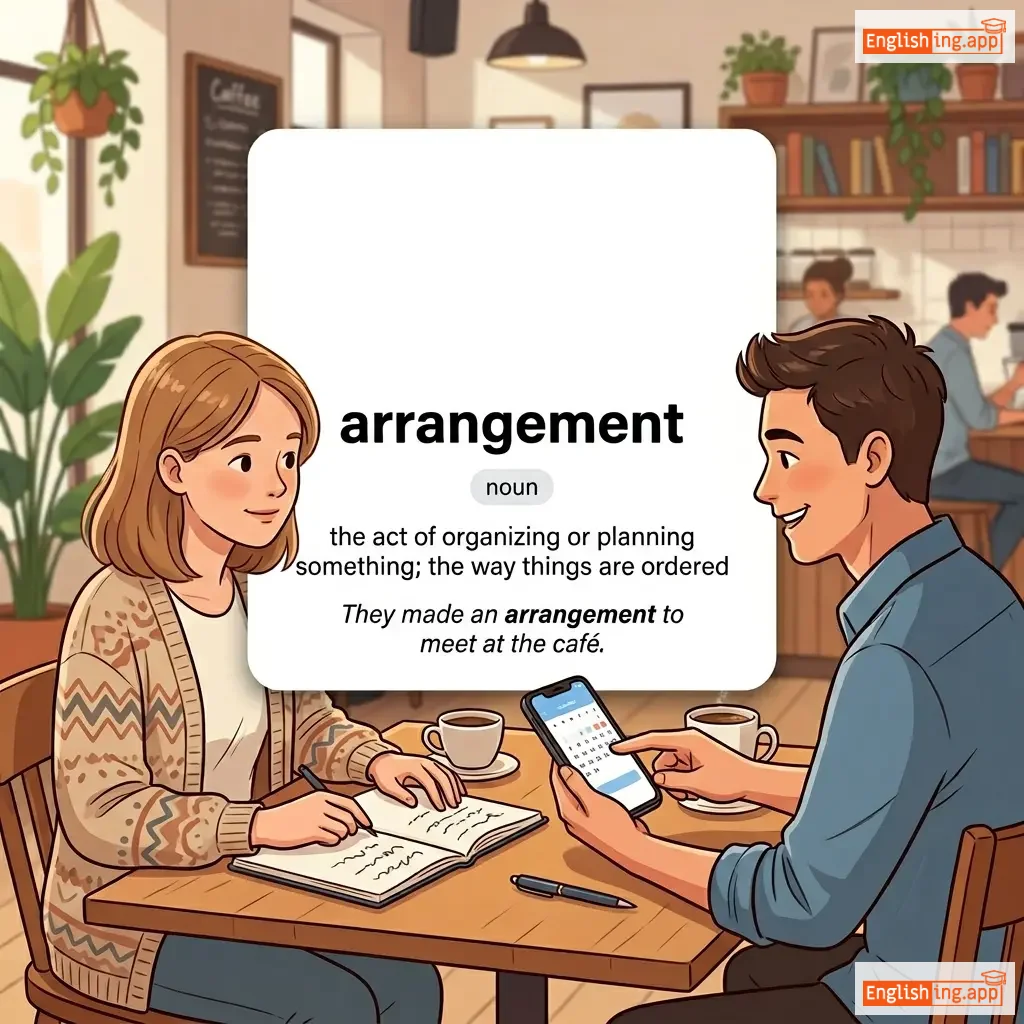
noun
/əˈreɪndʒmənt/
取り決め, 配置 (torikime, haichi)

the act of organizing or planning something; the way things are ordered

"They made an arrangement to meet at the café."

"彼らはカフェで会うために取り決めをした。" (Karera wa kafe de au tame ni torikime o shita.)
adjective
/ˈærənt/
完全な, 全くの (kanzen na, mattaku no)

complete or utter (used negatively, e.g., 'arrant nonsense')

"His excuse was arrant nonsense."

"彼の言い訳は完全なナンセンスだった。" (Kare no iiwake wa kanzen na nanse-nsu datta.)
noun
/əˈreɪ/
配列、展示 (hairetsu, tenji)

an impressive display or arrangement of things

"The shop displayed an array of colorful dresses."

"ショップはカラフルなドレスの印象的な展示をしました。" (Shoppu wa karafuru na doresu no inshō-teki na tenji o shimashita.)
noun
/əˈrɪə/
未払い (miharai)

A debt or payment that is overdue and unpaid.

"He was sued for an arrear of rent."

"彼は家賃の未払いで訴えられました。" (Kare wa yachin no miharai de uttaeraremashita.)
noun
/əˈrɪəz/
未払い (miharai)

Money that is owed and should have been paid earlier.

"She was months in arrears with her electricity bill."

"彼女は電気代の未払いが数ヶ月遅れていた。" (Kanojo wa denki dai no miharai ga suukagetsu okurete ita.)
arrest definition card — visual illustration of the meaning
verb
/əˈrɛst/
逮捕する (taiho suru)

To seize and hold someone by legal authority.

"The police arrested the suspect last night."

"警察は昨晩、容疑者を逮捕した。" (Keisatsu wa sakuban, yōgisha o taiho shita.)
adjective
/əˈrɛstɪŋ/
魅力的な (miryokuteki na)

Attracting attention in a striking or impressive way.

"The actress gave an arresting performance."

"女優は魅力的な演技をしました。" (Joyū wa miryokuteki na engi wo shimashita.)
adjective
/eɪˈrɪðmɪk/
不整脈 (fuseimyaku)

Lacking a regular rhythm or beat.

"The patient had an arrhythmic heartbeat."

"患者は不整脈を持っていた。" (Kanja wa fuseimyaku o motte ita.)
noun
/əˈraɪvəl/
到着 (touchaku)

The act of coming to a place, especially at the end of a journey.

"The train's arrival was delayed by two hours."

"電車の到着は2時間遅れました。" (Densha no touchaku wa 2 jikan okuremashita.)
arrive definition card — visual illustration of the meaning
verb
/əˈraɪv/
到着する (tōchaku suru)

to reach a place, especially at the end of a journey

"She will arrive at the airport in the evening."

"彼女は夕方に空港に到着するでしょう。" (Kanojo wa yūgata ni kūkō ni tōchaku suru deshō.)
noun
/ˌæriˈviːst/
成金 (seikin)

A person who has recently gained wealth or status but is considered arrogant or socially unsophisticated.

"The business world is full of ambitious arrivistes."

"ビジネスの世界には野心的な成金が溢れています。" (Bijinesu no sekai ni wa yashinteki na seikin ga afureteimasu.)
noun
/ˈærəɡəns/
傲慢 (ōman)

The quality of being overly proud and having a sense of superiority.

"His arrogance made him unpopular among his colleagues."

"彼の傲慢は同僚の間で不人気を招いた。" (Kare no ōman wa dōryō no aida de funinki o manaita.)
adjective
/ˈærəɡənt/

Having an exaggerated sense of one's own importance or abilities.

"The arrogant manager dismissed the workers' complaints."

verb
/ˈærəˌɡeɪt/
不当な要求 (futou na youkyuu)

To claim or take something without justification.

"The dictator arrogated all powers to himself."

"独裁者は不当な要求で全ての権力を自分のものにした。" (Dokusai-sha wa futou na youkyuu de subete no kenryoku o jibun no mono ni shita.)
noun
/ˈæroʊ/
(ya)

a thin, straight weapon with a pointed tip, shot from a bow

"The hunter shot an arrow at the target."

"猟師はターゲットに矢を射った。" (Ryoushi wa tāgetto ni ya o itta.)
noun
/əˈrɔɪ.oʊ/
乾いた小川 (kawaita ogawa)

A dry creek or stream bed that temporarily fills with water after heavy rain.

"After the storm, the arroyo quickly filled with rushing water."

"嵐の後、小川は急速に水で満たされました。" (Arashi no ato, ogawa wa kyūsoku ni mizu de mitasaremashita.)
noun
/ˈɑːr.sən.əl/
兵器庫 (heikiko)

A collection or storage place for weapons and military equipment.

"The army kept its weapons in a secure arsenal."

"軍隊は武器を安全な兵器庫に保管していた。" (Guntai wa buki wo anzen na heikiko ni hokan shiteita.)
noun
/ɑːrt/
芸術 (geijutsu)

the expression or application of human creative skill and imagination

"She studied art at the university."

"彼女は大学で芸術を学びました。" (Kanojo wa daigaku de geijutsu wo manabimashita.)
noun
/ˈɑːr.tər.i/
動脈 (doumyaku)

A blood vessel that carries blood away from the heart; also a main route or channel of communication or transport.

"The doctor explained how arteries supply blood to the body."

"医者は動脈がどのようにして体に血液を供給するかを説明しました。" (Isha wa doumyaku ga dono you ni shite karada ni ketsueki o kyoukyuu suru ka o setsumei shimashita.)
adjective
/ˈɑːrt.fəl/
巧妙な (kōmyōna)

Skillful, clever, or crafty, often in a cunning way.

"She gave an artful reply that avoided the real issue."

"彼女は本当の問題を避ける巧妙な返答をした。" (Kanojo wa hontō no mondai o sakeru kōmyōna hentō o shita.)
adjective
/ɑːrˈθʊr.i.ən/
アーサー王に関連する (Āsā wō ni kanren suru)

Relating to the legendary King Arthur and the stories surrounding him.

"The novel is set in an Arthurian world of knights and castles."

"その小説は、騎士と城が存在するアーサリアンの世界に設定されています。" (Sono shōsetsu wa, kishi to shiro ga sonzai suru Āsārian no sekai ni settei sareteimasu.)
noun
/ˈɑːrtɪkl/
記事 (kiji)

a piece of writing included in a newspaper, magazine, or journal

"He wrote an article about climate change."

"彼は気候変動に関する記事を書きました。" (Kare wa kikō hendō ni kansuru kiji o kakimashita.)
🗣️

articulate

verb/adjective
/ɑːrˈtɪkjʊlət/

to express thoughts or ideas clearly; having the ability to speak fluently and clearly

"She was able to articulate her ideas during the meeting."
articulation definition card — visual illustration of the meaning
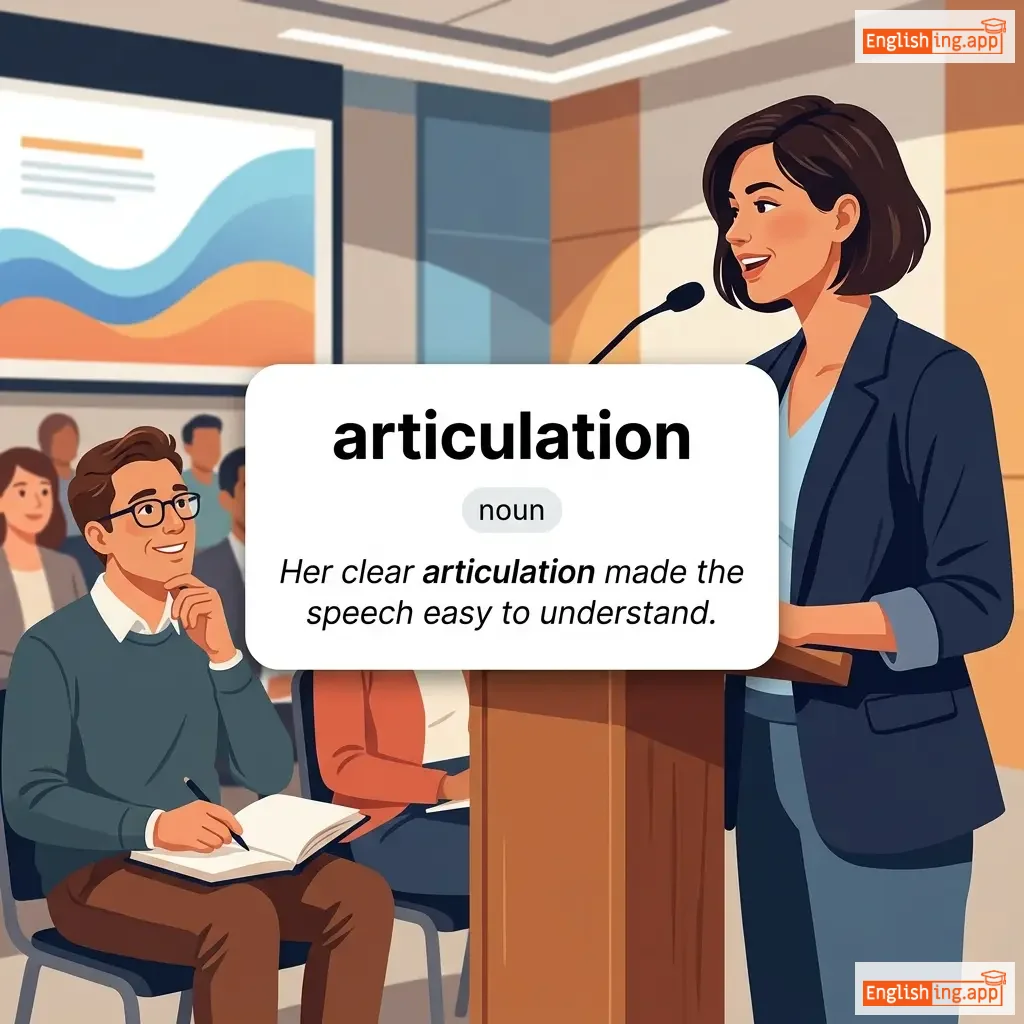
noun
/ɑːrˌtɪkjʊˈleɪʃən/
明確な発音 (meikaku na hatsuon)

the act of expressing something clearly in speech or the way in which words are pronounced

"Her clear articulation made the speech easy to understand."
"彼女の明確な発音はスピーチを理解しやすくしました。" (Kanojo no meikaku na hatsuon wa supīchi wo rikai shiyasuku shimashita.)
artifact definition card — visual illustration of the meaning
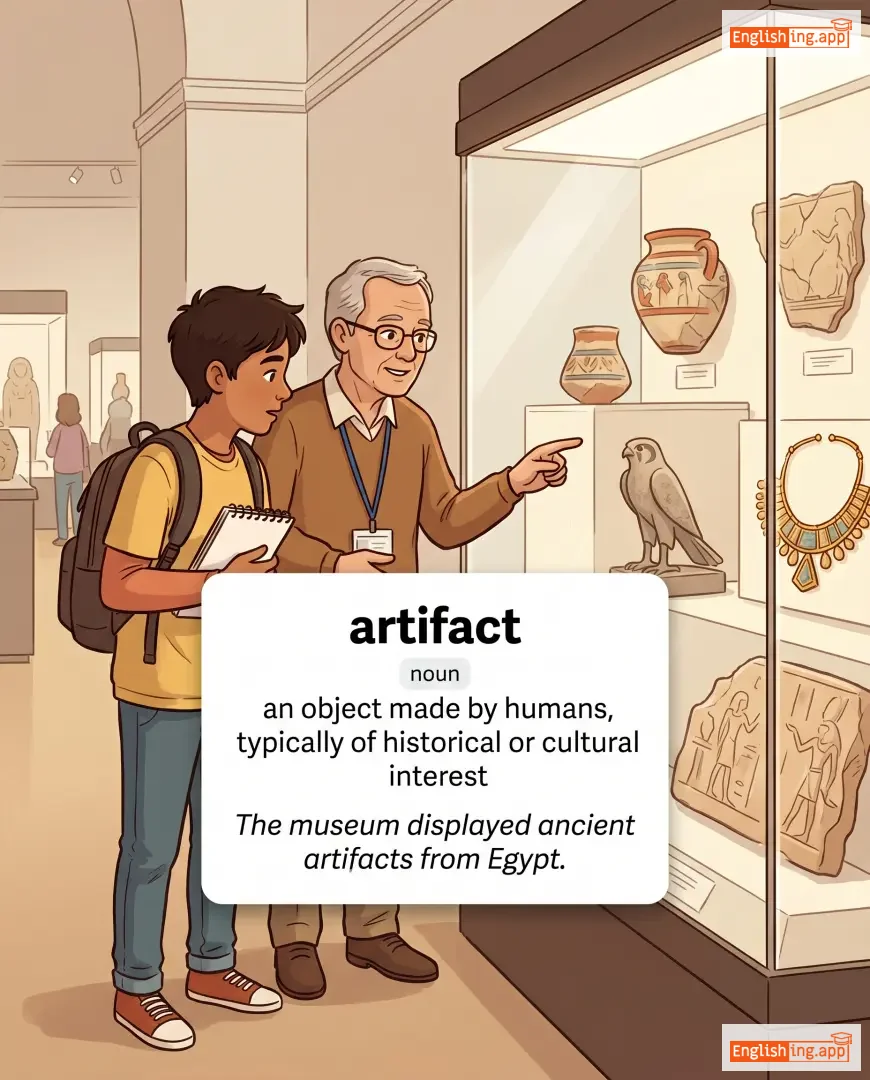
noun
/ˈɑːrtɪˌfækt/
遺物 (ibutsu)

an object made by humans, typically of historical or cultural interest

"The museum displayed ancient artifacts from Egypt."

"博物館はエジプトの古代のアーティファクトを展示しました。" (Hakubutsukan wa Ejiputo no kodai no ātofakuto o tenji shimashita.)
noun (plural)
/ˈɑːrtɪˌfæks/
遺物 (ibutsu)

objects made by humans, often of historical or cultural importance

"Archaeologists discovered valuable artifacts in the ruins."

"考古学者たちは遺跡で貴重な遺物を発見しました。" (Kōkogakusha-tachi wa iseki de kichōna ibutsu o hakken shimashita.)
noun
/ˈɑːrtɪfɪs/
策略 (sakuriki)

clever or cunning devices or tricks used to deceive others

"The politician's charm was nothing but artifice."
"その政治家の魅力は単なる策略にすぎなかった。" (Sono seijika no miryoku wa tannaru sakuriki ni suginakatta.)
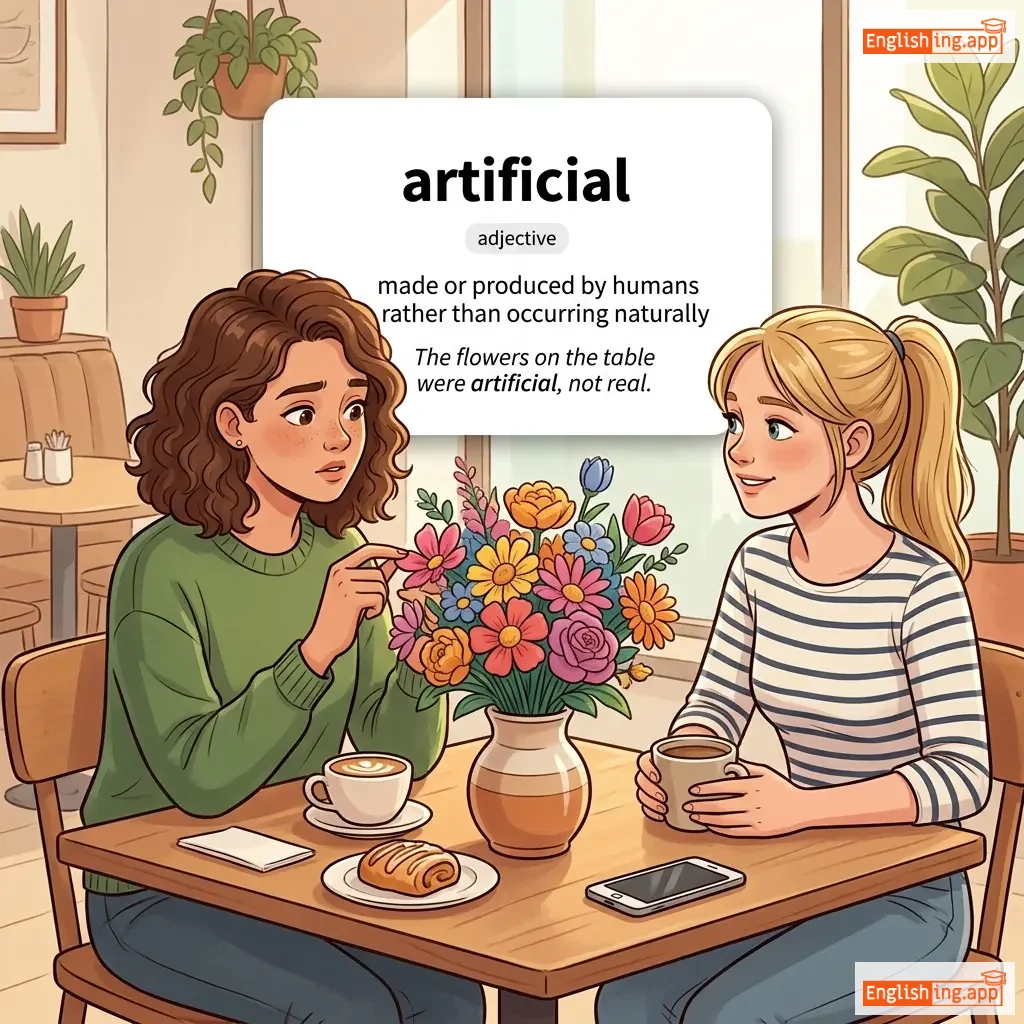
artificial definition card — visual illustration of the meaning
adjective
/ˌɑːrtɪˈfɪʃəl/
人工 (jinkō)

made or produced by humans rather than occurring naturally

"The flowers on the table were artificial, not real."

"テーブルの上の花は人工のもので、本物ではありません。" (Tēburu no ue no hana wa jinkō no mono de, honmono de wa arimasen.)
artificial intelligence definition card — visual illustration of the meaning
noun
ˌɑː.tɪˈfɪʃ.əl ɪnˈtɛl.ɪ.dʒəns
人工知能 (jinkō chinō)

The simulation of human intelligence in machines that are programmed to think and learn.

"Artificial intelligence is reshaping modern industries."

"人工知能は現代の産業を再構築しています。" (Jinkō chinō wa gendai no sangyō o saikōchiku shiteimasu.)
adverb
/ˌɑːrtɪˈfɪʃəli/
人工的に; (jinkouteki ni)

by artificial means; not naturally; in a fake manner

"The lake was artificially created for irrigation purposes."

"その湖は灌漑目的で人工的に作られました。" (Sono mizuumi wa kangai mokuteki de jinkouteki ni tsukuraremashita.)
noun
/ˈɑːrtɪzən/
職人 (shokunin)

a skilled craftsperson who makes things by hand

"The artisan crafted a beautiful wooden chair."

"職人は美しい木製の椅子を作りました。" (Shokunin wa utsukushī mokusei no isu o tsukurimashita.)
noun
/ˈɑːr.tɪ.zən/
職人 (shokunin)

a skilled craftsperson who makes things by hand

"The artisan created a beautiful wooden sculpture."

"職人は美しい木彫りの彫刻を作りました。" (Shokunin wa utsukushii kibori no chokoku wo tsukurimashita.)
noun
/ˈɑːrtɪst/
アーティスト (ātisuto)

a person who creates art, especially paintings or drawings

"The artist painted a beautiful landscape."

"アーティストは美しい風景を描きました。" (Ātisuto wa utsukushī fūkei o kakimashita.)
adjective
/ɑːrˈtɪstɪk/
芸術的 (geijutsuteki)

having or revealing natural creative skill

"She has an artistic sense of design."
"彼女はデザインに対するアーティスティックな感覚を持っています。" (Kanojo wa dezain ni taisuru geijutsuteki na kankaku wo motteimasu.)
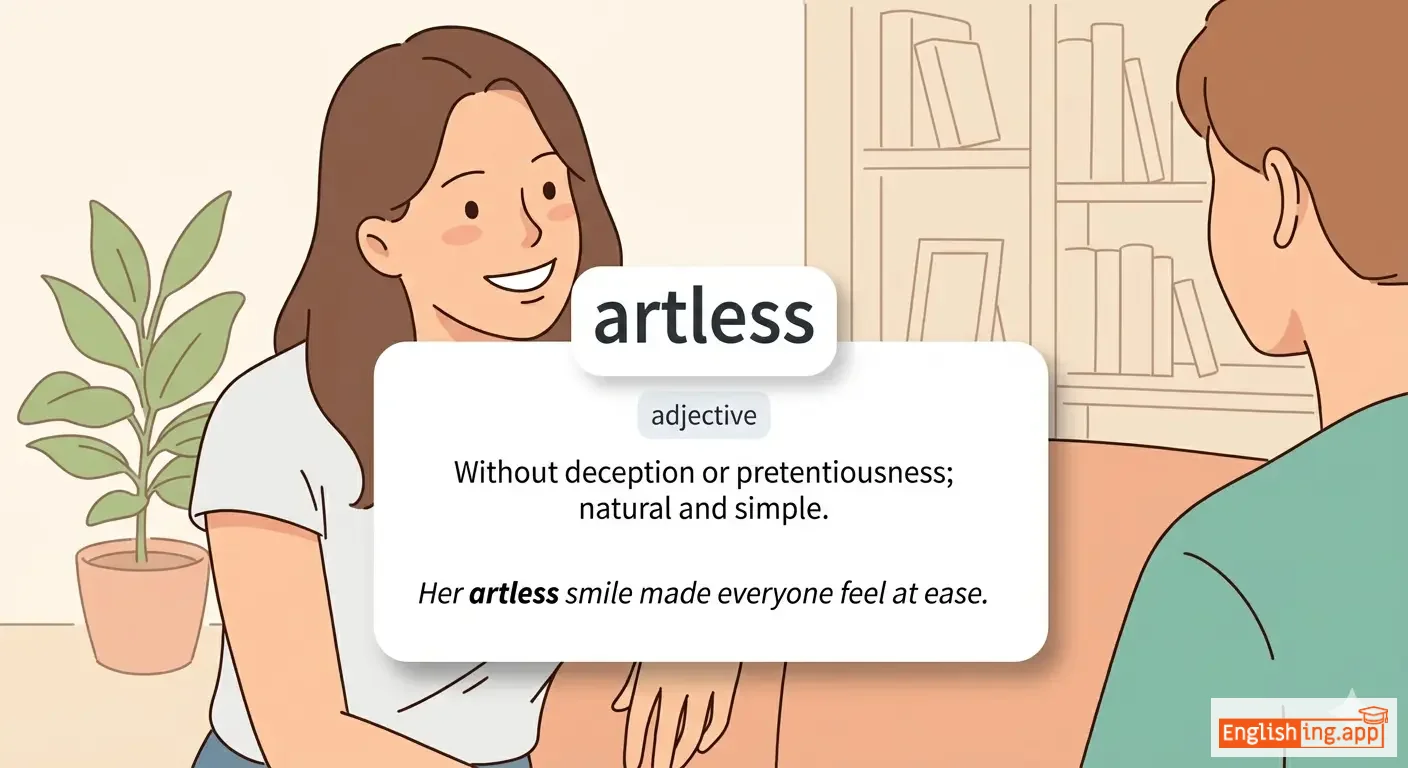
artless definition card — visual illustration of the meaning
adjective
/ˈɑːrtləs/
素朴, 自然 (soboku, shizen)

Without deception or pretentiousness; natural and simple.

"Her artless smile made everyone feel at ease."

"彼女の素朴な笑顔は、みんなを安心させました。" (kanojo no soboku na egao wa, minna o anshin saseru mashita.)
noun
/ˈɑːrtləsnəs/
素朴さ, 自然さ (sobokusa, shizensā)

The quality of being natural and simple without deceit or pretension.

"Her artlessness made her beloved by all."

"彼女のartlessnessは、彼女をみんなに愛される存在にした。" (Kanojo no artlessness wa, kanojo o minna ni aisareru sonzai ni shita.)
noun
/ˈɑːrtwɜːrk/
アート作品 (aato sakuhin)

a piece of art, such as a painting, sculpture, or drawing

"The gallery displayed an impressive artwork by a local artist."

"ギャラリーは地元のアーティストによる印象的なアート作品を展示しました。" (Gyararii wa jimoto no aatisuto ni yoru inshouteki na aato sakuhin wo tenji shimashita.)
noun
/ˈeə.rəm/
アラム (aramu)

a plant with large arrow-shaped leaves and a white spathe, also known as taro

"Arum leaves are commonly used in Bengali cuisine for cooking."

"アラムの葉はインディア料理でよく使われます。" (Aramu no ha wa India ryouri de yoku tsukawaremasu.)
conjunction, adverb, preposition
/æz/
として (toshite)

used to compare, to indicate the role or function of something, or to introduce clauses of time or reason

"She works as a teacher."

"彼女は教師として働いています。" (Kanojo wa kyoushi toshite hataraiteimasu.)
adverb
/æz ˈjuː.ʒu.əl/
いつも通り (itsumo doori)

in the way that is normal or typical; customarily

"As usual, he arrived late to the meeting."

"いつも通り、彼は会議に遅れて到着しました。" (Itsumo doori, kare wa kaigi ni okurete touchakushimashita.)
noun
/ˌæs.əˈfet.ɪ.də/
アサフェティダ (asafetida)

a pungent spice derived from the resin of a plant, commonly used in Indian cooking

"A pinch of asafoetida adds a distinctive flavor to the lentil curry."

"アサフェティダを少し加えると、レンズ豆カレーに独特の風味が加わります。" (Asafetida wo sukoshi kuwaeru to, renzudou karee ni dokutoku no fuumi ga kuwari masu.)