語彙集

英単語辞書 | 単語の意味、定義、例文

noun
/bɛk/
合図 / 小川 (aizu / ogawa)

a gesture of beckoning; a small stream or brook (chiefly Northern English)

"The servant came at his master's beck and call."

"召使いは主人の合図に即座に来ました。" (Shoukai wa shujin no aizu ni sokuza ni kimashita.)
verb
/ˈbɛkən/
手招きする (temaneki suru)

to signal or call someone to come closer, often with a gesture; to attract or invite

"She beckoned him to come closer with a wave of her hand."

"彼女は手を振って彼に近くへ来るよう合図した。" (kanojo wa te o futte kare ni chikaku e kuru you aizushita)
verb
/bɪˈkʌm/
なる (naru)

to begin to be; to develop into

"He became a successful doctor after years of hard work."

"彼は何年もの努力の末、成功した医者になった。" (Kare wa nan-nen mono doryoku no sue, seikou shita isha ni natta.)
adjective
/bɪˈkʌmɪŋ/
似合う (niau)

attractive, suitable, or flattering to the wearer or situation

"That dress is very becoming on her."

"そのドレスは彼女にとても似合っています。" (Sono doresu wa kanojo ni totemo niautemasu.)
🛏️

Bed

noun
/bɛd/

a piece of furniture for sleeping or resting on

"She lay down on the bed and fell asleep quickly."

noun
/ˈbed ˌkʌv.ər/
ベッドカバー (beddo kabā)

a protective covering for a bed, typically a bedspread or comforter

"She pulled the bed cover up to her chin to stay warm."

"彼女は暖かさを保つためにベッドカバーを顎まで引き上げました。" (Kanojo wa atatakasa o tamotsu tame ni beddo kabā o ago made hikiagemashita.)
noun
/ˈbed ʃiːt/
ベッドシーツ (beddoshītsu)

a large rectangular piece of cloth used as bedding to lie on or under

"The clean white bed sheet felt soft against her skin."

"清潔な白いベッドシーツは彼女の肌に柔らかく感じました。" (Seiketsu na shiroi beddo shītsu wa kanojo no hada ni yawarakaku kanjimashita.)
noun
/ˈbed sted/
ベッドフレーム (beddo fureemu)

the framework of a bed; a bed frame without bedding

"The wooden bed stead was very sturdy."

"木製のベッドフレームは非常に丈夫でした。" (Mokusei no beddo fureemu wa hijō ni jōbu deshita)
verb
/bɪˈdɔːb/
塗る (nuru)

to smear or cover with a sticky or dirty substance

"The children bedaubed the wall with paint."

"子供たちは壁にペンキを塗った。" (Kodomotachi wa kabe ni penki o nutta.)
verb
/bɪˈdɛk/
飾る (kazaru)

to decorate or adorn something in a showy way

"The hall was bedecked with flowers for the wedding."

"ホールは結婚式のために花で飾られました。" (Hooru wa kekkonshiki no tame ni hana de kazara remashita.)
bedizen definition card — visual illustration of the meaning
verb
/bɪˈdaɪzən/
派手に飾る (hade ni kazaru)

to dress up or decorate in a showy or tasteless way

"She was bedizened with cheap jewelry."

"彼女は安いジュエリーで派手に飾られていた。" (Kanojo wa yasui juērī de hade ni kazararete ita.)
noun
/ˈbɛdləm/
混乱 (konran)

a scene of uproar and confusion; chaos

"There was bedlam in the market after the news spread."

"ニュースが広まった後、市場は混乱していた。" (Nyūsu ga hiromatta ato, ichiba wa konran shite ita.)
verb
/bɪˈdræɡəl/
泥や水を引きずって物を濡らし、汚し、乱れさせる (doro ya mizu o hikizutte mono o nurashi, yogoshi, midare saseru)

to make something wet, dirty, and untidy by dragging it through mud or water

"The children came home bedraggled after playing in the rain."

"子供たちは雨の中で遊んだ後、濡れて泥だらけで家に帰った。" (Kodomotachi wa ame no naka de asonda ato, nurete doro darake de ie ni kaetta.)
adjective
/ˈbed.rɪd.ən/
寝たきり (netakiri)

confined to bed; unable to leave one's bed due to illness or infirmity

"The elderly man has been bedridden for several months."

"高齢の男性は数ヶ月間寝たきりになっています。" (Kourei no dansei wa suukagetsukan netakiri ni natteimasu.)
noun
/ˈbɛd.rɒk/
基盤 (kiban)

the solid rock layer beneath the soil; the fundamental basis of something

"Trust is the bedrock of a healthy relationship."

"信頼は健康な関係の基盤です。" (Shinrai wa kenkou na kankei no kiban desu.)
noun
/ˈbɛdruːm/
寝室 (shinshitsu)

A room used for sleeping in.

"The children were playing in the bedroom."

"子供たちは寝室で遊んでいました。" (Kodomotachi wa shinshitsu de asonde imashita.)
noun
/biː/
(hachi)

a flying insect that collects nectar and produces honey

"A bee landed on the flower to collect nectar."

"蜂が花に止まって花蜜を集めていました。" (Hachi ga hana ni tomatte hanmitsu wo atsume te imashita.)
noun
/biːf/
牛肉 (gyūniku)

the flesh of a cow, bull, or ox, used as food; also a complaint or dispute

"He ordered a plate of grilled beef for dinner."

"彼は夕食にグリルした牛肉のプレートを注文しました。" (Kare wa yūshoku ni guriru shita gyūniku no purēto o chūmon shimashita.)
noun
/ˈbiːlaɪn/
一直線 (icchokusen)

a straight, direct route to a destination

"He made a beeline for the food table as soon as he entered the party."

"彼はパーティーに入ったとたん、食べ物のテーブルに直行しました。" (Kare wa pātī ni haitta totan, tabemono no tēburu ni chikō shimashita.)
noun
/bɪər/
ビール (biiru)

An alcoholic drink made from yeast-fermented malt flavored with hops.

"He ordered a glass of cold beer at the bar."

"彼はバーで冷たいビールを注文した。" (Kare wa bā de tsumetai biiru o chūmon shita.)
noun
/biːt/
ビート (bīto)

a plant with a round dark red root that is eaten as a vegetable

"Roasted beet with goat cheese makes a delicious salad."

"ゴートチーズとローストビートが美味しいサラダを作ります。" (Gōto chīzu to rūsuto bīto ga oishī sarada o tsukurimasu.)
noun
/ˈbiː.təl/
カブトムシ (kabutomushi)

a hard-bodied insect with wing covers

"The black beetle scurried across the garden path."

"黒いカブトムシが庭の道を走っていました。" (Kuroi kabutomushi ga niwa no michi o hashitte imashita.)
verb
/bɪˈfɪt/
ふさわしい (fusawashii)

to be suitable for; to be appropriate to

"Formal attire befits the seriousness of the occasion."

"フォーマルな服装はその場の厳粛さにふさわしい。" (fomaru na fukuso wa sono ba no genshukusa ni fusawashii)
adjective
/bɪˈfɪt.ɪŋ/
適切な; ふさわしい; 特定の状況や人に適している (bifiting)

appropriate; suitable; proper for a particular situation or person

"He wore formal attire befitting the important occasion."

"彼は重要な機会にふさわしい正式な服を着ていた。" (Kare wa juuyou na kikai ni fusawashii seishiki na fuku o kiteita.)
verb
/bɪˈfɒɡ/
ぼやけさせる (boyakesaseru)

to confuse or make unclear; to cover with fog or mist

"His mind was befogged by exhaustion."

"彼の心は疲れによってぼやけていた。" (Kare no kokoro wa tsukare ni yotte boyakete ita.)
adjective
/bɪˈfɒɡd/
混乱した, ぼんやりした (konran shita, bonyari shita)

Confused or clouded in mind; made unclear like being surrounded by fog.

"His mind felt befogged after the long and exhausting meeting."

"長く疲れる会議の後、彼の心は混乱しているように感じた。" (Nagaku tsukareru kaigi no ato, kare no kokoro wa konran shite iru you ni kanjita.)
verb
/bɪˈfuːl/
だます (damasu)

to deceive or trick someone into believing something false; to make someone appear foolish

"The scammer tried to befool innocent people with fake promises."

"詐欺師は偽の約束で無実の人々をだまそうとした。" (sagishi wa nise no yakusoku de mujitsu no hitobito o damasou to shita)
preposition/adverb/conjunction
/bɪˈfɔːr/
前に (mae ni)

At an earlier time; in front of in order or place.

"She arrived before the meeting started."

"彼女は会議が始まる前に到着した。" (Kanojo wa kaigi ga hajimaru mae ni tōchaku shita.)
adverb
/bɪˈfɔːr.hænd/
前もって; 事前に; あらかじめ (maemotte; jizen ni; arakajime)

in advance; ahead of time; earlier

"We prepared everything beforehand."

"私たちは前もってすべて準備しました。" (watashitachi wa maemotte subete junbi shimashita)
verb
/bɪˈfaʊl/
汚染する (osen suru)

to make dirty or polluted; to disgrace or corrupt

"The factory waste befouled the river."

"工場の廃棄物が川を汚染した。" (kojo no haikibutsu ga kawa o osen shita)
verb
/bɪˈfrɛnd/
友達になる (tomodachi ni naru)

to act as a friend to someone; to make friends with

"She befriended the new student at school."

"彼女は学校で新しい生徒と友達になった。" (Kanojo wa gakkou de atarashii seito to tomodachi ni natta.)
verb
/bɪˈfʌdəl/
混乱させる (konran saseru)

to confuse someone completely; to make someone unable to think clearly

"The complex instructions befuddled the students."

"複雑な指示が学生たちを混乱させました。" (Fukuzatsu na shiji ga gakuseitachi o konran sasemashita.)
adjective
/bɪˈfʌdld/
困惑した (konwaku shita)

confused, unable to think clearly

"He looked befuddled after hearing the complex instructions."

"彼は複雑な指示を聞いた後、困惑したように見えました。" (Kare wa fukuzatsu na shiji o kiita ato, konwaku shita yō ni miemashita.)
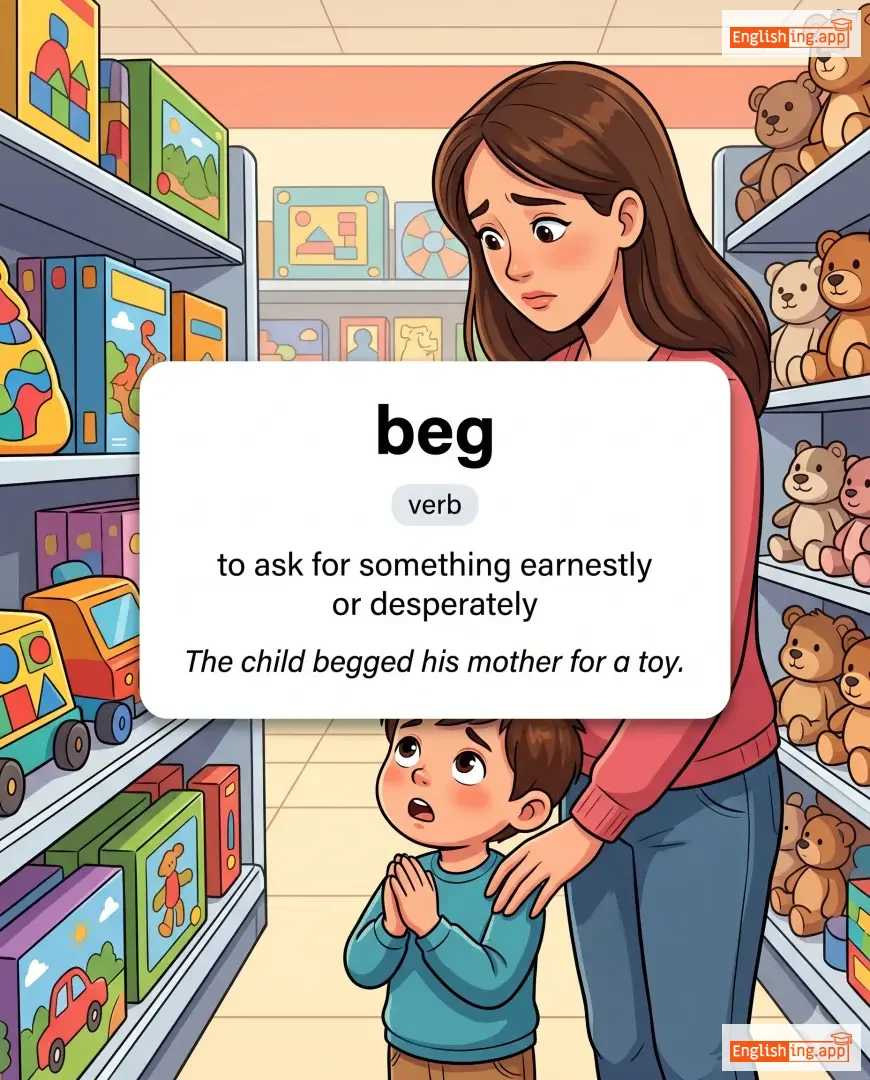
beg definition card — visual illustration of the meaning
verb
/bɛɡ/
乞う / 頼む (kou / tanomu)

to ask for something earnestly or desperately

"The child begged his mother for a toy."

"その子供はおもちゃを頼んだ。" (Sono kodomo wa omocha o tanonda.)
verb
/bɪˈɡɛt/
生む / 引き起こす (umu / hikiokosu)

to bring about or give rise to; to father or produce

"Violence begets more violence."

"暴力はさらなる暴力を生む。" (Bōryoku wa saranaru bōryoku o umu.)
noun
/ˈbeɡər/
乞食 (kojiki)

a person who lives by asking for money or food

"The beggar sat by the temple asking for alms."
"その乞食は寺の近くで施しを求めて座っていました。" (sono kojiki wa tera no chikaku de hodokoshi o motomete suwatte imashita)
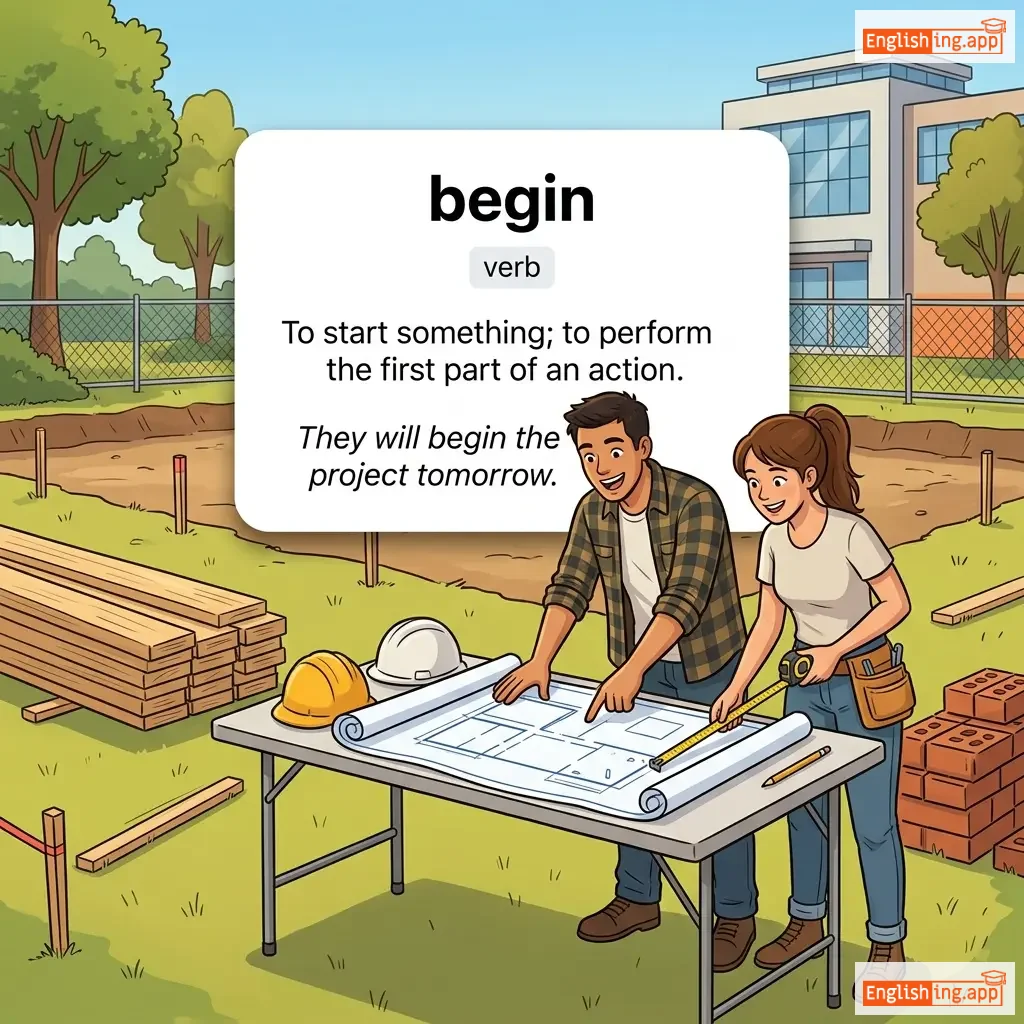
begin definition card — visual illustration of the meaning
verb
/bɪˈɡɪn/
始める (hajimeru)

To start something; to perform the first part of an action.

"They will begin the project tomorrow."

"彼らは明日プロジェクトを開始する予定です。" (Karera wa ashita purojekuto o kaishi suru yotei desu.)
noun
/bɪˈɡɪnɪŋ/
始まり (hajimari)

The start or first part of something.

"The beginning of the story was very interesting."

"物語の始まりはとても興味深かった。" (Monogatari no hajimari wa totemo kyōmibukatta.)
verb
/bɪˈɡrʌdʒ/
誰かが何かを持っていることに対して妬む / 何かを嫌々与える (dareka ga nanika o motteiru koto ni taishite netamu / nanika o iya iya ataeru)

to resent someone for having something; to give reluctantly

"She did not begrudge him his success."

"彼女は彼の成功に嫉妬しなかった。" (Kanojo wa kare no seikō ni shitto shinakatta.)
verb
/bɪˈɡaɪl/
魅了する / 欺いて引きつける (miryō suru / azamete hiki tsukeru)

to charm or enchant someone, often in a deceptive way

"She beguiled the audience with her storytelling."

"彼女はストーリーテリングで観客を魅了した。" (Kanojo wa sutōrī teringu de kankyaku o miryō shita.)
noun
/bɪˈhɑːf/
を代表して (wo daihyō shite)

as a representative of someone; in the interest of someone

"She accepted the award on behalf of her team."
"彼女はチームを代表して賞を受け取りました。" (Kanojo wa chīmu o daihyō shite shō o uketorimashita.)
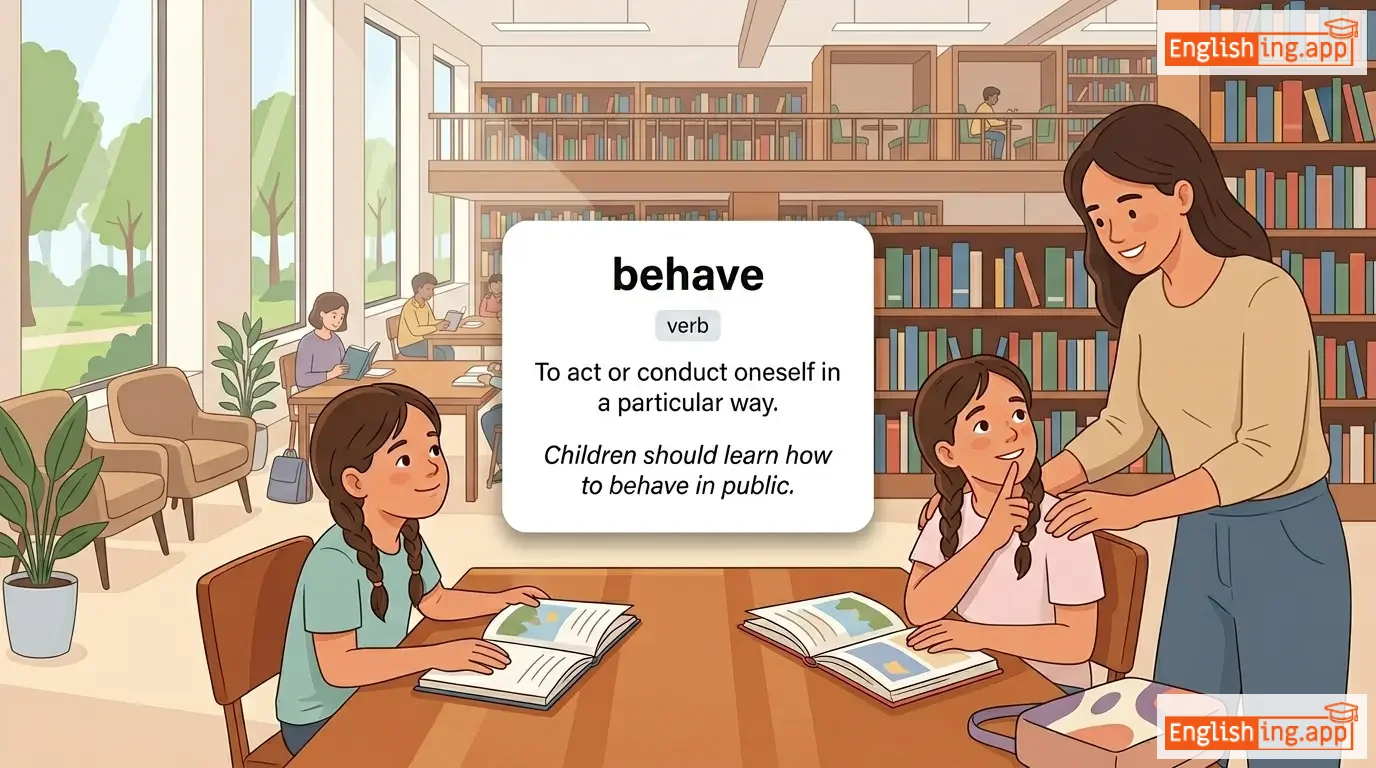
behave definition card — visual illustration of the meaning
verb
/bɪˈheɪv/
振る舞う (furumau)

To act or conduct oneself in a particular way.

"Children should learn how to behave in public."

"子供たちは公共の場でどう振る舞うかを学ぶべきです。" (kodomotachi wa kōkyō no ba de dō furumau ka o manabu beki desu.)
noun
/bɪˈheɪvjər/
行動 (koudou)

The way in which one acts or conducts oneself, especially toward others.

"The teacher praised her good behavior in class."

"先生はクラスで彼女の良い行動を称賛しました。" (Sensei wa kurasu de kanojo no yoi koudou o shousan shimashita.)
adjective
/bɪˈheɪvjərəl/
行動的 (kōdō-teki)

relating to the way a person or animal acts

"The psychologist studied the child's behavioral patterns."

"心理学者は子供の行動パターンを研究した。" (Shinrigakusha wa kodomo no kōdō patān o kenkyū shita.)
noun
/bɪˈheɪ.vjər/
行動 (kōdō)

the way a person or animal acts or conducts themselves

"His behaviour at the meeting was very professional."

"彼の会議での行動は非常にプロフェッショナルでした。" (Kare no kaigi de no kōdō wa hijō ni purofesshonaru deshita.)
verb
/bɪˈhɛd/
斬首する (zanshu suru)

to cut off a person's or animal's head; to remove the leader or most important part

"The historical account describes how the traitor was beheaded as punishment."
"歴史的記録は、罰として裏切り者が斬首された様子を描写している。" (Rekishiteki kiroku wa, batsu to shite uragirimono ga zanshu sareta yousu o byousha shite iru)
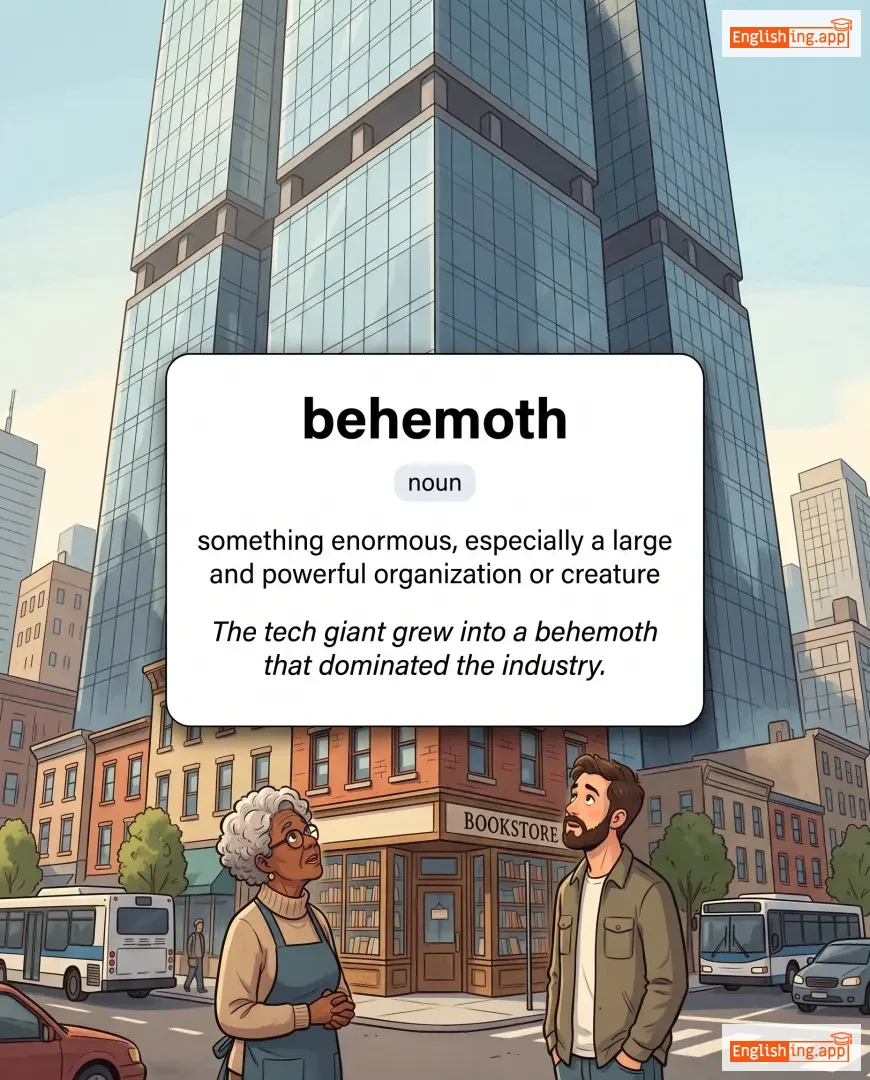
behemoth definition card — visual illustration of the meaning
noun
/bɪˈhiːməθ/
巨大な生物または組織 (kyodaina seibutsu matawa soshiki)

something enormous, especially a large and powerful organization or creature

"The tech giant grew into a behemoth that dominated the industry."

"そのテクノロジー企業は、業界を支配するビヘモスに成長した。" (Sono tekunorojī kigyō wa, gyōkai o shihai suru bihēmosu ni seichō shita.)
preposition/adverb
/bɪˈhaɪnd/
後ろ (ushiro)

At or to the back of something; in a position further back.

"The cat is hiding behind the curtain."

"猫はカーテンの後ろに隠れています。" (Neko wa kaaten no ushiro ni kakurete imasu.)
verb
/bɪˈhoʊld/
見る;目にする (miru; me ni suru)

to see or observe something, especially something remarkable or impressive

"She stood quietly to behold the sunrise over the hills."

"彼女は丘の上の日の出を見るために静かに立っていた。" (kanojo wa oka no ue no hinode o miru tame ni shizuka ni tatte ita)
adjective
/bɪˈhoʊldən/
恩義を感じている、または借りがある (ongi o kanjite iru, mata wa kari ga aru)

indebted or obliged to someone for a service or help

"He felt beholden to his mentor for all the guidance."

"彼はすべての指導に対してメンターに恩義を感じていました。" (Kare wa subete no shidō ni taishite mentā ni ongi o kanjite imashita.)