語彙集

英単語辞書 | 単語の意味、定義、例文

noun
/ˈbeɪlɪf/
裁判所の執行官 (saibansho no shikkōkan)

An official who keeps order in a court, carries out court orders, or collects debts.

"The bailiff asked everyone to rise as the judge entered the courtroom."

"裁判官が法廷に入ったとき、執行官は皆に立ち上がるように言いました。" (Saibankan ga hōtei ni haitta toki, shikkōkan wa mina ni tachiagaru yō ni iimashita.)
noun
/ˈbeɪlɔːr/
寄託者 (kitakusha)

a person who temporarily transfers possession of goods or property to another under a bailment agreement

"The bailor entrusted the valuable artwork to the museum for safekeeping."

"寄託者は美術品を博物館に預けた。" (Kitakusha wa bijutsuhin o hakubutsukan ni azuketa)
🎣

bait

noun/verb
/beɪt/

Food or lure used to attract fish or animals; to deliberately provoke or annoy.

"He used worms as bait to catch fish."

noun
/beɪz/
粗いウールの布の一種 (arai ūru no nuno no isshu)

A type of coarse woolen cloth, often green, used for covering tables such as billiard tables.

"The old card table was covered with worn baize."

"古いカードテーブルは、擦り切れたベイズで覆われていました。" (Furui kādo tēburu wa, surikireta beizu de ōwarete imashita.)
verb
/beɪk/
焼く (yaku)

to cook food using dry heat, usually in an oven

"She baked a cake for her friend's birthday."

"彼女は友達の誕生日のためにケーキを焼きました。" (Kanojo wa tomodachi no tanjōbi no tame ni kēki o yakimashita.)
noun
/beɪkt miːt/
焼き肉 (yakiniku)

meat that has been cooked in an oven using dry heat

"The baked meat was tender and flavorful."

"焼き肉は柔らかくて美味しい。" (Yakiniku wa yawarakakute oishii.)
noun
/ˈbeɪ.kɪŋ ˈpaʊ.dər/
ベーキングパウダー (bēkingu paudā)

a dry chemical leavening agent used to increase volume and lighten texture in baked goods

"The recipe calls for two teaspoons of baking powder."

"レシピにはベーキングパウダーを小さじ2杯使います。" (Reshipi ni wa bēkingu paudā o kosaji 2-hai tsukaimasu.)
noun
/ˈbeɪ.kɪŋ ˈsoʊ.də/
ベーキングソーダ (bēkingu sōda)

sodium bicarbonate used in cooking and baking as a leavening agent

"Add a teaspoon of baking soda to make the cake fluffy."

"ケーキをふわふわにするためにベーキングソーダを小さじ1杯加えます。" (Kēki o fuwafuwa ni suru tame ni bēkingu sōda o chīsaji ippai kuwaemasu.)
noun
/bəˈkuːl/
バクルの花 (bakuru no hana)

a fragrant white flower native to South Asia, scientifically known as Mimusops elengi

"The sweet fragrance of bakul flowers filled the evening air in the village."
"バクルの花の甘い香りが村の夕方の空気を満たしていた。" (Bakuru no hana no amai kaori ga mura no yūgata no kūki o mitashite ita.)
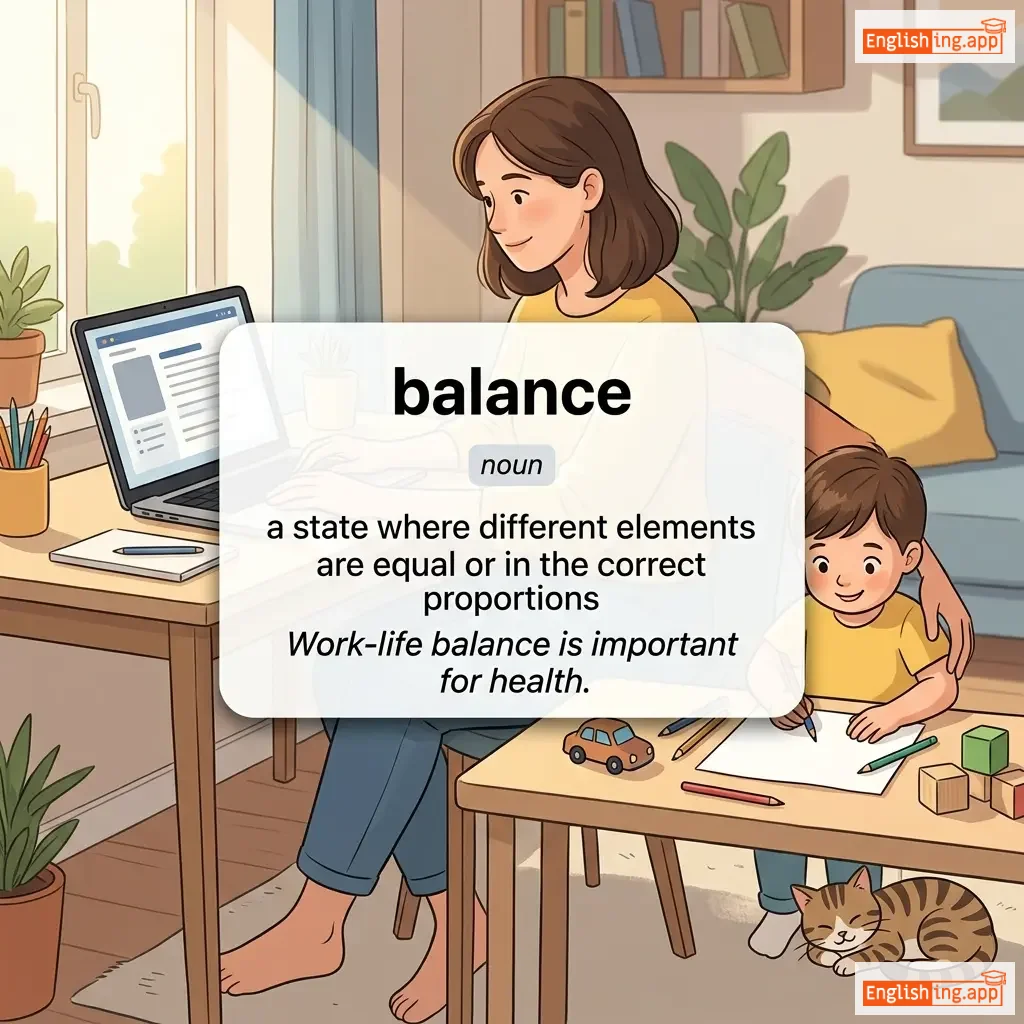
balance definition card — visual illustration of the meaning
noun
/ˈbæləns/
バランス (baransu)

a state where different elements are equal or in the correct proportions

"Work-life balance is important for health."

"仕事と生活のバランスは健康にとって重要です。" (Shigoto to seikatsu no baransu wa kenkō ni totte jūyō desu.)
adjective
/ˈbælənst/
バランスの取れた (baransu no toreta)

keeping or showing a sensible and fair view or position; evenly arranged

"A balanced diet is essential for good health."
"健康のためにはバランスの取れた食事が重要です。" (Kenkō no tame ni wa baransu no toreta shokuji ga jūyō desu.)
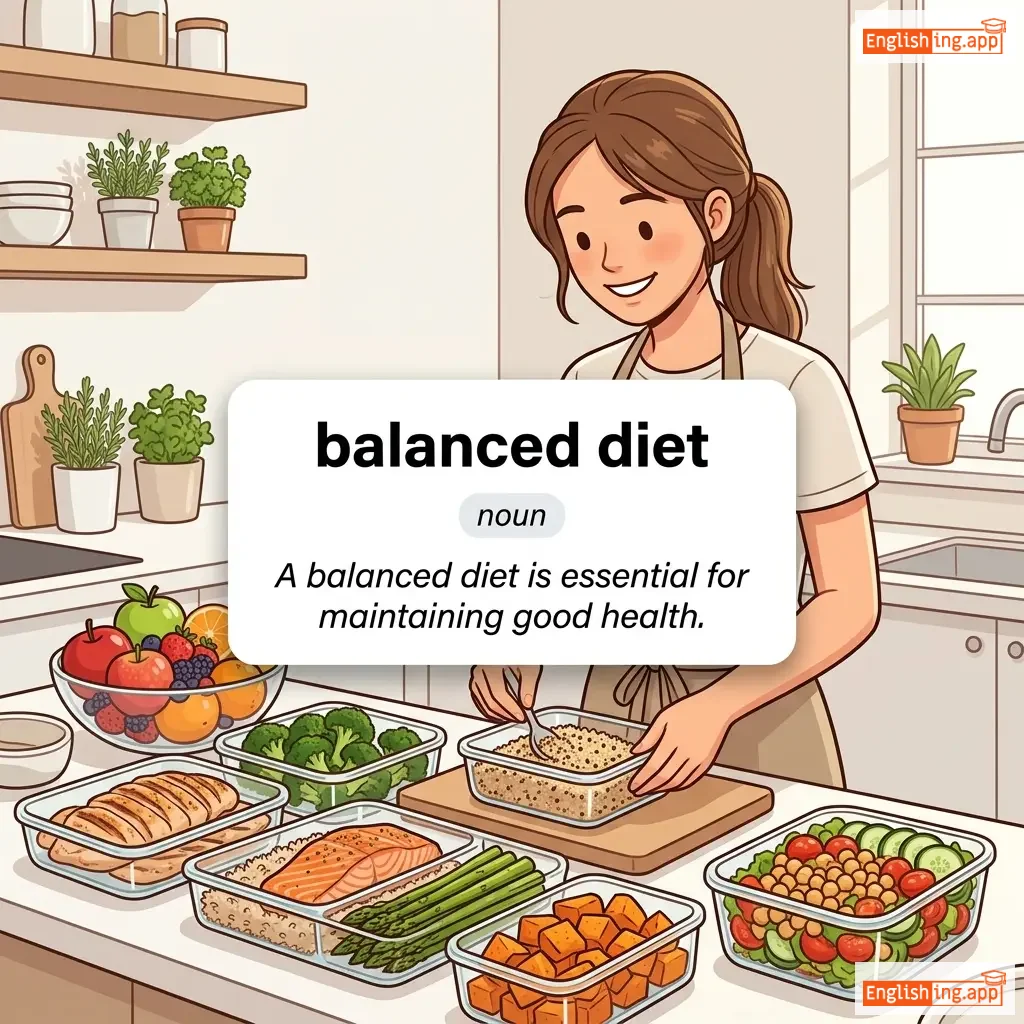
balanced diet definition card — visual illustration of the meaning
noun
ˈbæl.ənst daɪ.ət
バランスの取れた食事 (baransu no toreta shokuji)

A diet consisting of the proper quantities and proportions of foods needed to maintain health or growth.

"A balanced diet is essential for maintaining good health."

"バランスの取れた食事は健康維持に不可欠です。" (Baransu no toreta shokuji wa kenkō iji ni fukaketsu desu.)
noun
/beɪl/
(taba)

A large bundle of goods tightly wrapped and bound.

"The workers loaded the bale of cotton onto the truck."

"作業員は綿の束をトラックに積み込んだ。" (Sagyouin wa wata no taba o torakku ni tsumikonda.)
adjective
/ˈbeɪlfəl/
威圧的な (iatsuteki na)

Threatening harm; menacing or expressing hatred.

"She gave him a baleful look after the insult."

"侮辱の後、彼女は彼に威圧的な目を向けた。" (Bojoku no ato, kanojo wa kare ni iatsuteki na me o muketa.)
verb
/bɔːk/
拒否する (kyohi suru)

to hesitate or refuse to proceed or comply

"She balked at signing the contract without reading it fully."

"彼女は契約書を完全に読まずに署名することをためらった。" (Kanojo wa keiyakusyo o kanzen ni yomazu ni shomei suru koto o tameratta.)
adjective
/ˈbɔːlki/
頑固 (ganko)

difficult, uncooperative, or stubborn

"The balky printer refused to work when needed most."

"頑固なプリンターは最も必要な時に動作を拒否しました。" (Ganko na purintaa wa mottomo hitsuyou na toki ni dousa o kyohi shimashita.)
noun
/bɔːl/
ボール (booru)

a round object used in games or sports

"The children played with a ball in the park."

"子供たちは公園でボールで遊びました。" (Kodomotachi wa kouen de booru de asobimashita.)
noun
/ˈbæləd/
叙事歌 (jogi uta)

a narrative song or poem, often sentimental or romantic

"The singer performed a moving ballad about lost love."

"歌手は失われた愛について感動的なバラッドを披露しました。" (Kashu wa ushinawareta ai ni tsuite kandoutekina ballad o hirou shimashita.)
noun
/ˈbælæst/
バラスト (barasuto)

heavy material used to stabilize a ship or vehicle

"The ship was loaded with ballast to remain steady in the storm."

"嵐の中で船が安定を保つためにバラストが積まれていました。" (Arashi no naka de fune ga antei o tamotsu tame ni barasuto ga tsumareteimashita.)
noun
/bæˈleɪ/
バレエ (ballet)

a highly stylized and artistic form of dance

"She has trained for years in classical ballet."

"彼女は何年もクラシックバレエを練習してきました。" (Kanojo wa nannen mo kurashikku baree o renshū shite kimashita.)
noun/verb
/bəˈluːn/
風船 (fūsen)

A small bag made of thin rubber or similar material that can be inflated with air or gas; as a verb, to expand rapidly.

"The children played with a red balloon at the party."

"子供たちはパーティーで赤い風船で遊んでいました。" (Kodomotachi wa pātī de akai fūsen de asonde imashita.)
noun
/ˈbælət/
投票用紙 (touhyou youshi)

a process of voting, usually in secret; the paper used to record a vote

"Voters cast their ballot in the election."

"有権者は選挙で投票用紙を投じました。" (yuukensha wa senkyo de touhyou youshi wo toujimashita.)
noun
/bɑːm/
軟膏 (nankou)

A soothing ointment or something that provides comfort or relief.

"The balm helped relieve the pain from her sunburn."

"そのバームは日焼けの痛みを和らげるのに役立ちました。" (Sono bāmu wa hiyake no itami wo yawarageru no ni yakudachimashita.)
adjective
/ˈbɑːmi/
穏やかで心地よい温かさ;癒し。 (odayakade kokochi yoi atatakasa; iyashi.)

Mild and pleasantly warm; soothing.

"We enjoyed a walk on a balmy summer evening."

"私たちは穏やかな夏の夕方に散歩を楽しみました。" (Watashitachi wa odayakana natsu no yuugata ni sanpo o tanoshimimashita.)
noun
/ˈbɔːlsəm/
芳香樹脂 (hōkō shushi)

An aromatic resinous substance or plant used for healing or soothing.

"The tree produced a fragrant balsam used in medicine."

"その木は医学で使用される芳香のあるバルサムを生産しました。" (Sono ki wa igaku de shiyō sareru hōkō no aru barusamu o seisan shimashita.)
noun
/ˈbɔːl.səm ˈæp.əl/
苦瓜 (nikukō)

a bitter gourd vegetable with a bumpy green skin, also known as bitter melon

"Balsam apple is cooked with spices to reduce its bitter taste."
"苦瓜はその苦味を減らすために香辛料と一緒に調理されます。" (Nikukō wa sono nigami o herasu tame ni kōshinryō to issho ni chōri saremasu)
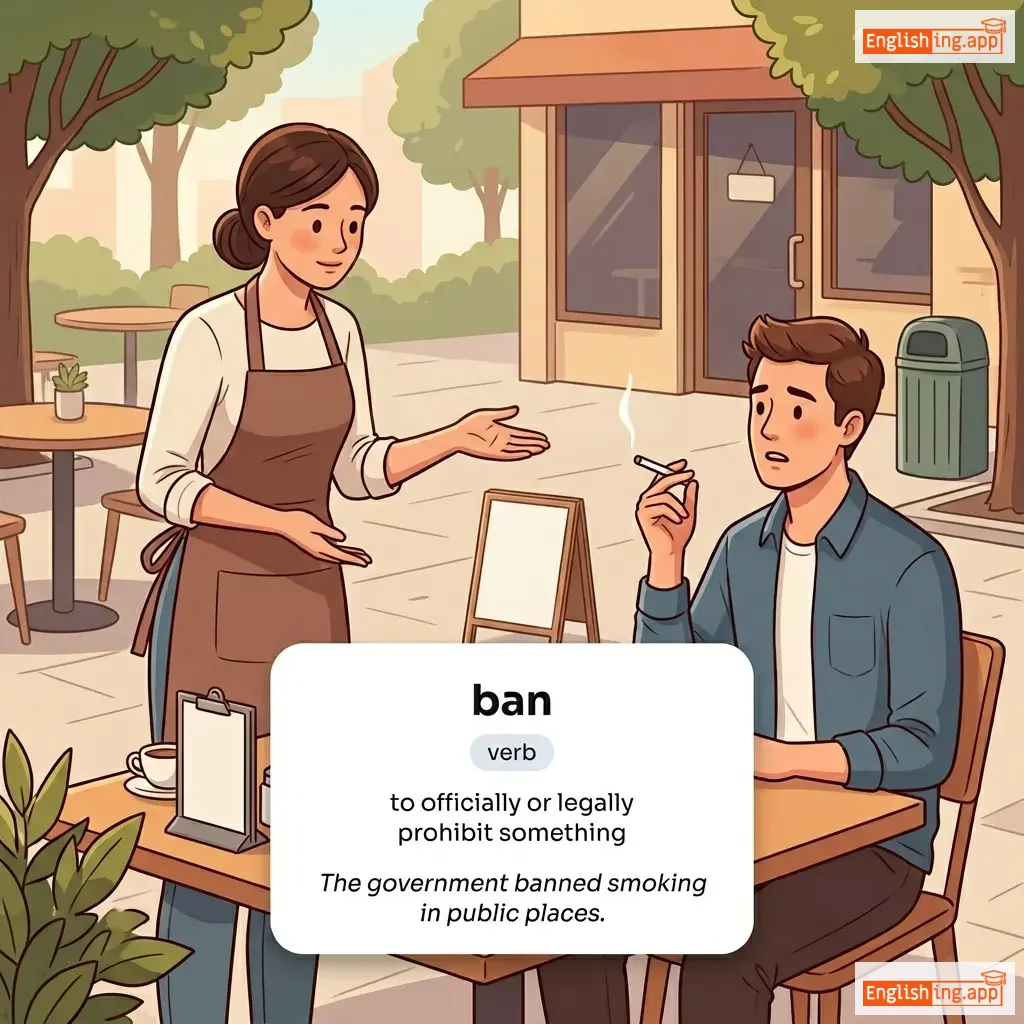
ban definition card — visual illustration of the meaning
verb
/bæn/
禁止する (kinshi suru)

to officially or legally prohibit something

"The government banned smoking in public places."

"政府は公共の場での喫煙を禁止しました。" (Seifu wa kōkyō no ba de no kitsuen o kinshi shimashita.)
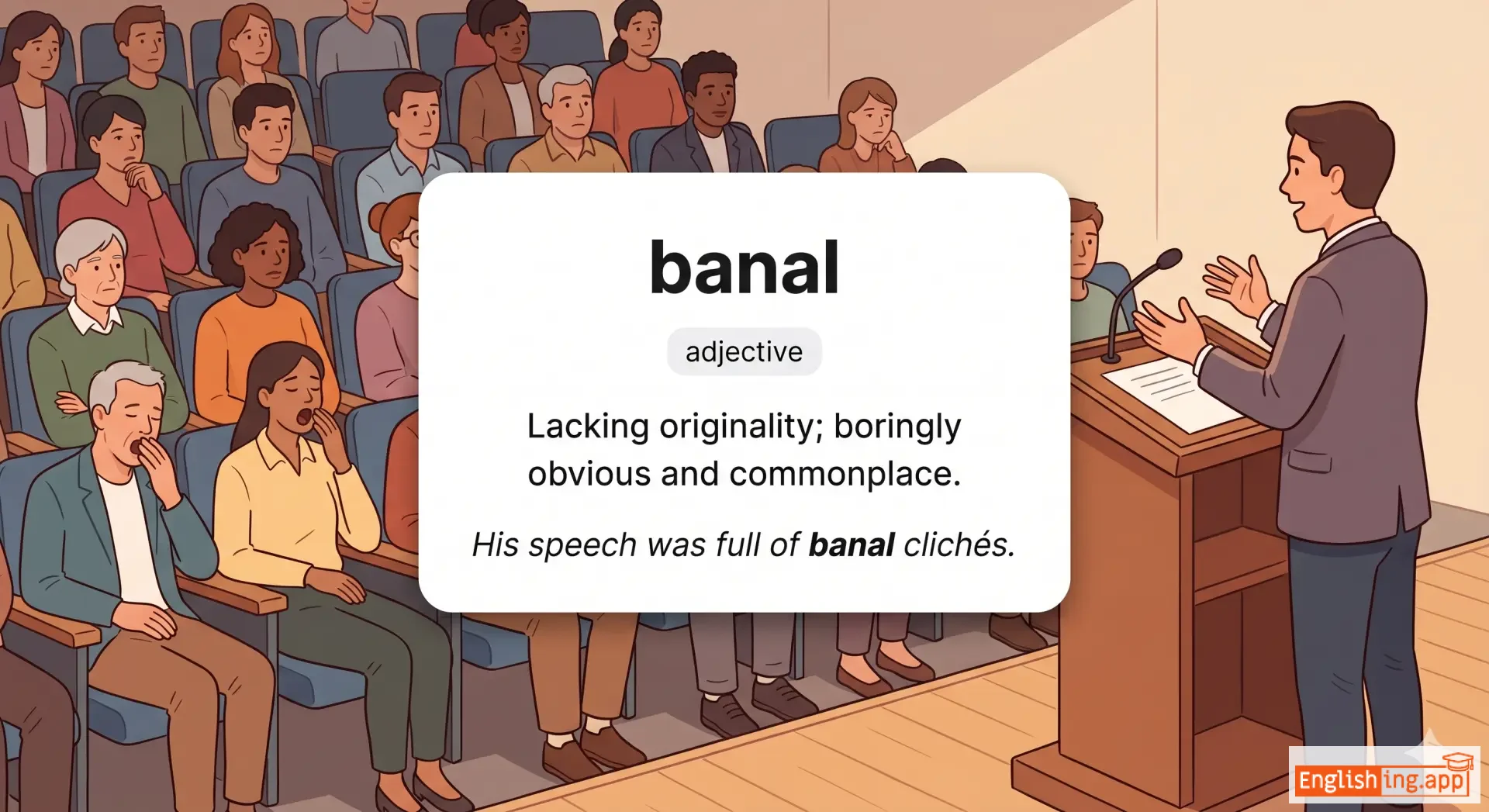
banal definition card — visual illustration of the meaning
adjective
/bəˈnɑːl/ or /ˈbeɪnəl/
平凡 (heibon)

Lacking originality; boringly obvious and commonplace.

"His speech was full of banal clichés."

"彼のスピーチは平凡なクリシェでいっぱいだった。" (Kare no supīchi wa heibon na kurishē de ippai datta.)
noun
/bəˈnæləti/
陳腐 (chinpu)

The condition of being unoriginal, boring, or obvious; trite remark or quality.

"The speech was criticized for its banality and lack of originality."

"そのスピーチは陳腐と独創性の欠如で批判されました。" (Sono supīchi wa chinpu to dokusousei no ketsujo de hihan saremashita.)
noun
/bəˈnænə/
幸せ (shiawase)

a long curved fruit with a yellow skin and soft sweet flesh inside

"She ate a ripe banana for breakfast."

"彼女は賞を受け取ったとき、幸せを隠せなかった。" (Kanojo wa shō o uketotta toki, shiawase o kakusenakatta.)
noun
/bænd/
バンド (bando)

a group of musicians who play music together

"The band performed live at the concert."

"バンドはコンサートでライブパフォーマンスをしました。" (Bando wa konsāto de raibu pafōmansu o shimashita.)
noun, verb
/ˈbændɪdʒ/
包帯 (houtai)

a strip of material used to cover or protect a wound; to cover or wrap a wound with such material

"The nurse carefully bandaged his injured arm."

"看護師は彼のけがをした腕に包帯を巻いた。" (Kangoshi wa kare no kega o shita ude ni houtai o maita)
noun
/bænˈdænə/
大きなカラフルなバンダナ (ōkina karafuru na bandana)

A large, often brightly colored handkerchief, typically worn on the head or around the neck.

"He tied a red bandanna around his neck."

"彼は首に赤いバンダナを結んだ。" (Kare wa kubi ni akai bandana o musunda.)
bandwidth definition card — visual illustration of the meaning
noun
ˈbænd.wɪdθ
帯域幅 (taiikihaba)

A range of frequencies within a given band, in particular that used for transmitting a signal; the maximum amount of data that can be transmitted in a fixed amount of time.

"Increasing bandwidth enhances internet speed."

"帯域幅を増やすとインターネットの速度が向上します。" (taiikihaba o fuyasu to intaanetto no sokudo ga koujoushimasu.)
💬

bandy

verb
/ˈbændi/

To pass (words, ideas, or gossip) back and forth in a casual or argumentative way.

"They bandied jokes across the table."

noun
/beɪn/
災い (wazawai)

A cause of great distress, harm, or annoyance.

"Traffic jams are the bane of city life."

"交通渋滞は都市生活の災いです。" (Kōtsū jūtai wa toshi seikatsu no wazawai desu.)
adjective
/ˈbeɪnfəl/
有害な (yūgaina)

Causing harm, ruin, or destruction; deadly or poisonous.

"His baneful influence ruined the community."

"彼の有害な影響がコミュニティを破壊した。" (Kare no yūgaina eikyō ga komyuniti o hakai shita.)
noun
/bæŋ/
突然の大きな音; 強い衝撃や打撃 (totsuzen no ōkina oto; tsuyoi shōgeki ya dageki)

a sudden loud noise; a hard blow or hit

"The door closed with a loud bang that woke everyone up."

"ドアが大きな音を立てて閉まり、皆を起こしました。" (Doa ga ōkina oto o tatete shimari, mina o okoshimashita.)
noun
/ˈbæŋ.ɡəl/
バングル (banguru)

a rigid bracelet or anklet worn as jewelry

"She wore beautiful gold bangles on her wrists."

"彼女は腕に美しい金のバングルを着けていた。" (kanojo wa ude ni utsukushii kin no banguru o tsukete ita)
noun
/ˈbæn.jən/
ランニングシャツ (ranningu shatsu)

a sleeveless undergarment worn next to the skin; vest

"He put on a cotton banian under his shirt."

"彼はシャツの下に綿のバニアンを着ました。" (Kare wa shatsu no shita ni men no banyan o kimashita.)
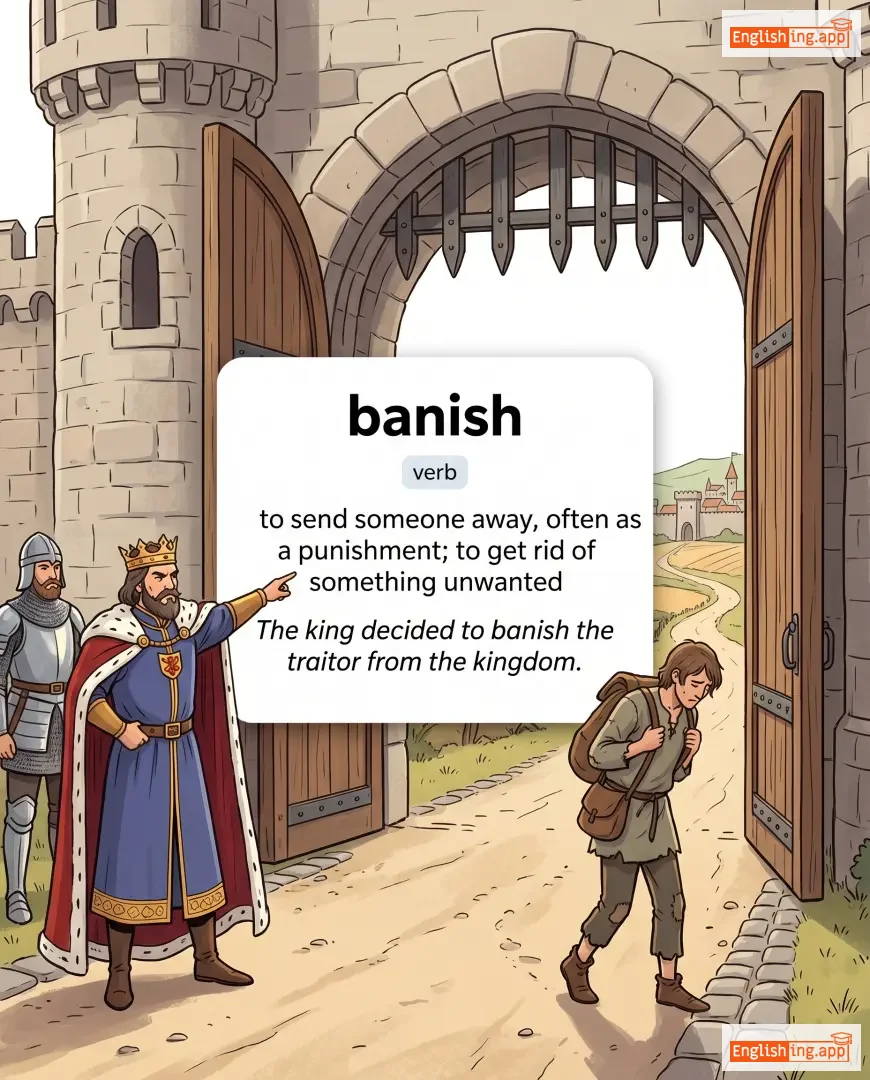
banish definition card — visual illustration of the meaning
verb
/ˈbænɪʃ/

to send someone away, often as a punishment; to get rid of something unwanted

"The king decided to banish the traitor from the kingdom."

noun
/ˈbænɪstər/
手すり (tesuri)

a railing supported by posts at the side of a staircase or balcony

"She held the banister tightly while going down the stairs."

"彼女は階段を降りる時、手すりをしっかりと握っていた。" (Kanojo wa kaidan o oriru toki, tesuri o shikkari to nigitte ita.)
noun/verb
/bæŋk/
銀行 (ginkou)

an institution where money is kept and managed; or to tilt in movement (like an airplane or riverbank)

"She deposited the money in the bank."

"彼女は銀行にお金を預けました。" (Kanojo wa ginkou ni okane wo azukemashita.)
noun
/ˈbæŋkər/
銀行家 (ginkōka)

a person who works in or manages a bank

"The banker approved the loan after reviewing the documents."

"銀行家は書類を確認した後、ローンを承認しました。" (Ginkōka wa shorui o kakunin shita ato, rōn o shōnin shimashita.)
noun
/ˈbæŋkɪŋ/
銀行業務または銀行サービス (ginkou gyoumu matawa ginkou saabisu)

the business or services provided by a bank

"Online banking has made financial transactions easier."

"オンラインバンキングは金融取引を簡単にしました。" (Onrain banking wa kin'yū torihiki o kantan ni shimashita.)
noun
/ˈbæŋkrʌpt/
破産 (hasan)

a person unable to pay debts; having no money; completely lacking in something

"The company went bankrupt after years of poor financial management."

"その会社は、長年の不良な財務管理の後、破産しました。" (Sono kaisha wa, naganen no furyō na zaimu kanri no ato, hasan shimashita.)
noun
/ˈbæŋkrʌptsi/
破産 (hasan)

the state of being unable to pay debts owed, declared by a legal process

"The company declared bankruptcy after months of financial struggles."
"その会社は数ヶ月にわたる財務的な困難の後、破産を宣言しました。" (Sono kaisha wa suukagetsu ni wataru zaimuteki na konnan no ato, hasan o sengen shimashita.)
🖼️

banner

noun
/ˈbænər/

a large printed sign used for advertisements or announcements

"The company displayed a banner to advertise their new product."

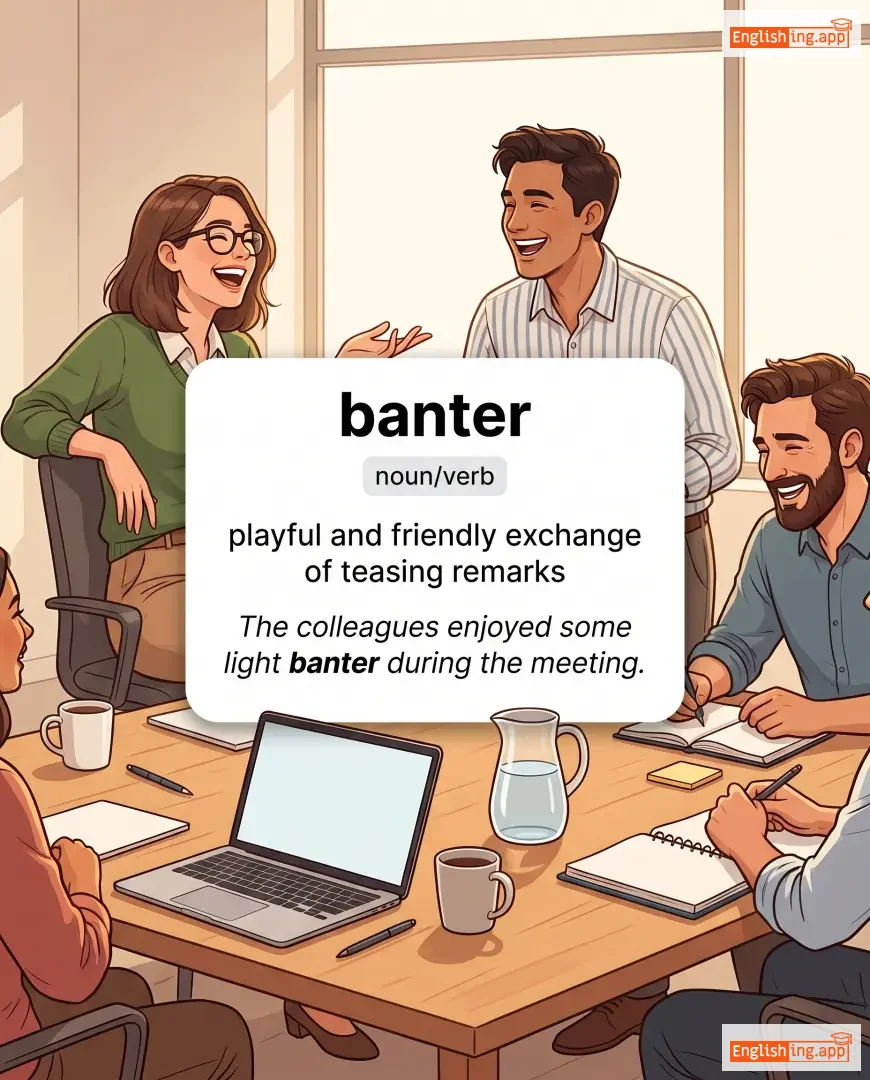
banter definition card — visual illustration of the meaning
noun/verb
/ˈbæntər/
冗談 (joudan)

playful and friendly exchange of teasing remarks

"The colleagues enjoyed some light banter during the meeting."

"同僚たちは会議中に軽いバンターを楽しんだ。" (Douryoutachi wa kaigi chuu ni karui bantaa wo tanoshinda.)
adjective/verb
/ˈbæntərɪŋ/
冗談を言う (joudan wo iu)

characterized by good-humored teasing or joking

"They had a bantering conversation at the café."

"彼らはカフェで冗談交じりの会話をしていた。" (Karera wa kafe de joudan majiri no kaiwa o shiteita.)