語彙集

英単語辞書 | 単語の意味、定義、例文

noun
/ˈboʊlər/
ボウラー (bowuraa)

a person who delivers the ball in cricket; also a type of hard felt hat with a rounded crown

"The bowler took three wickets in the first over."

"ボウラーは最初のオーバーで3つのウィケットを取った。" (Bowuraa wa saisho no oobaa de mittsu no uiketto o totta.)
noun
/əˈwɛərnəs/

knowledge or perception of a situation, fact, or issue

"Public awareness of climate change is increasing."

adjective
/əˈwɒʃ/
水浸し (mizumashi)

covered or flooded with water or something in large quantities

"The market was awash with cheap imported goods."

"市場は安価な輸入品で水浸しだった。" (Shijō wa anka na yunyūhin de mizumashi datta.)
🏃‍♂️

Away (アウェイ)

adverb
/əˈweɪ/
遠く (tōku)

at a distance from a particular place, person, or thing

"She walked away without saying a word."

"彼女は一言も言わずに歩いて行った。" (Kanojo wa hitokoto mo iwazu ni aruite itta.)
noun
/ɔː/
驚嘆 (kyoutan)

a feeling of deep respect mixed with fear or wonder

"The children looked at the fireworks in awe."

"子供たちは花火を驚嘆して見ていました。" (Kodomotachi wa hanabi wo kyoutan shite miteimashita.)
adjective
/ˈɔːfəl/
ひどい (hidoi)

very bad or unpleasant

"The weather was awful during our trip."

"旅行中、天気はひどかった。" (Ryokō-chū, tenki wa hidokatta.)
adverb
/ˈɔːfəli/
とても (totemo)

in a very great degree; extremely; in a way that is very bad or unpleasant

"I am awfully glad to see you again."

"また会えてとても嬉しいです。" (mata aete totemo ureshii desu)
adjective
/ˈɔːkwəd/
気まずい (kimazui)

causing or feeling embarrassment; difficult to deal with

"There was an awkward silence after his joke."

"彼のジョークの後、気まずい沈黙がありました。" (Kare no jōku no ato, kimazui chinmoku ga arimashita.)
noun
/ɔːl/
(kiri)

a small pointed tool used for making holes, especially in leather

"The cobbler used an awl to punch holes in the leather."

"靴屋は革に穴を開けるために錐を使った。" (Kutsuya wa kawa ni ana wo akeru tame ni kiri wo tsukatta.)
noun
/ˈɔːnɪŋ/
オーニング (ōningu)

a sheet of canvas or material stretched on a frame to shelter a place from the sun or rain

"We sat under the awning to avoid the heavy rain."

"私たちは大雨を避けるためにオーニングの下に座っていました。" (Watashitachi wa ōame o sakeru tame ni ōningu no shita ni suwatteimashita.)
adverb
/əˈraɪ/
失敗 (shippai)

away from the expected or proper direction; wrong or amiss

"The plan went awry when the weather suddenly changed."

"天気が突然変わったとき、計画は失敗した。" (Tenki ga totsuzen kawatta toki, keikaku wa shippai shita.)
noun
/æks/
(ono)

a tool with a heavy blade for cutting wood

"The lumberjack swung his axe to chop the tree."
"木こりは木を切るために斧を振った。" (Kikori wa ki wo kiru tame ni ono wo futta.)
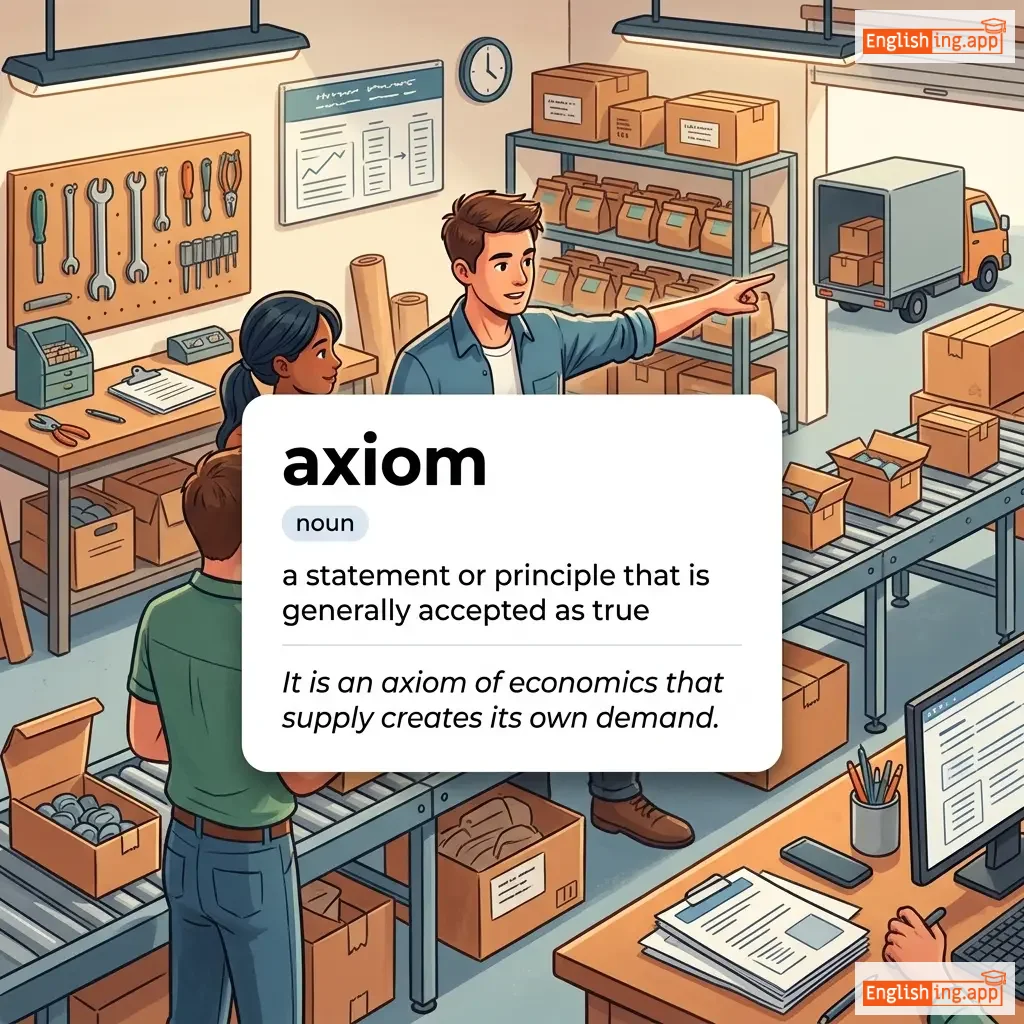
axiom definition card — visual illustration of the meaning
noun
/ˈæk.si.əm/
公理 (kōri)

a statement or principle that is generally accepted as true

"It is an axiom of economics that supply creates its own demand."

"経済学の公理は供給が自分の需要を生み出すことです。" (Keizaigaku no kōri wa kyōkyū ga jibun no juyō o umidasu koto desu.)
axiomatic definition card — visual illustration of the meaning
adjective
/ˌæk.si.əˈmæt.ɪk/
公理的 (kōriteki)

self-evident or unquestionable

"It is axiomatic that hard work leads to success."

"それは自明であり、努力は成功に繋がることを示している。" (Sore wa jimēn de ari, doryoku wa seikō ni tsunagaru koto o shimeshite iru.)
noun
/aɪ/
賛成 (sansei)

an affirmative vote or expression of agreement

"The committee voted aye on the proposal."

"委員会は提案に賛成票を投じました。" (Iinkai wa teian ni sansei-hyō o tōjimashita.)
noun
/əˈzeɪ.li.ə/
アザレアの花 (azarea no hana)

a flowering shrub with brightly colored blooms, often grown ornamentally

"The garden was full of blooming azaleas in spring."

"春にはアザレアの花が咲いていました。" (Haru ni wa azarea no hana ga saiteimashita.)
adjective
/ˈæʒər/
空色 (sora iro)

A bright blue color like that of a clear sky.

"The clear sky was painted in a deep shade of azure."

"澄んだ空は深い空色で塗られていました。" (Sunda sora wa fukai sora iro de nurarete imashita.)
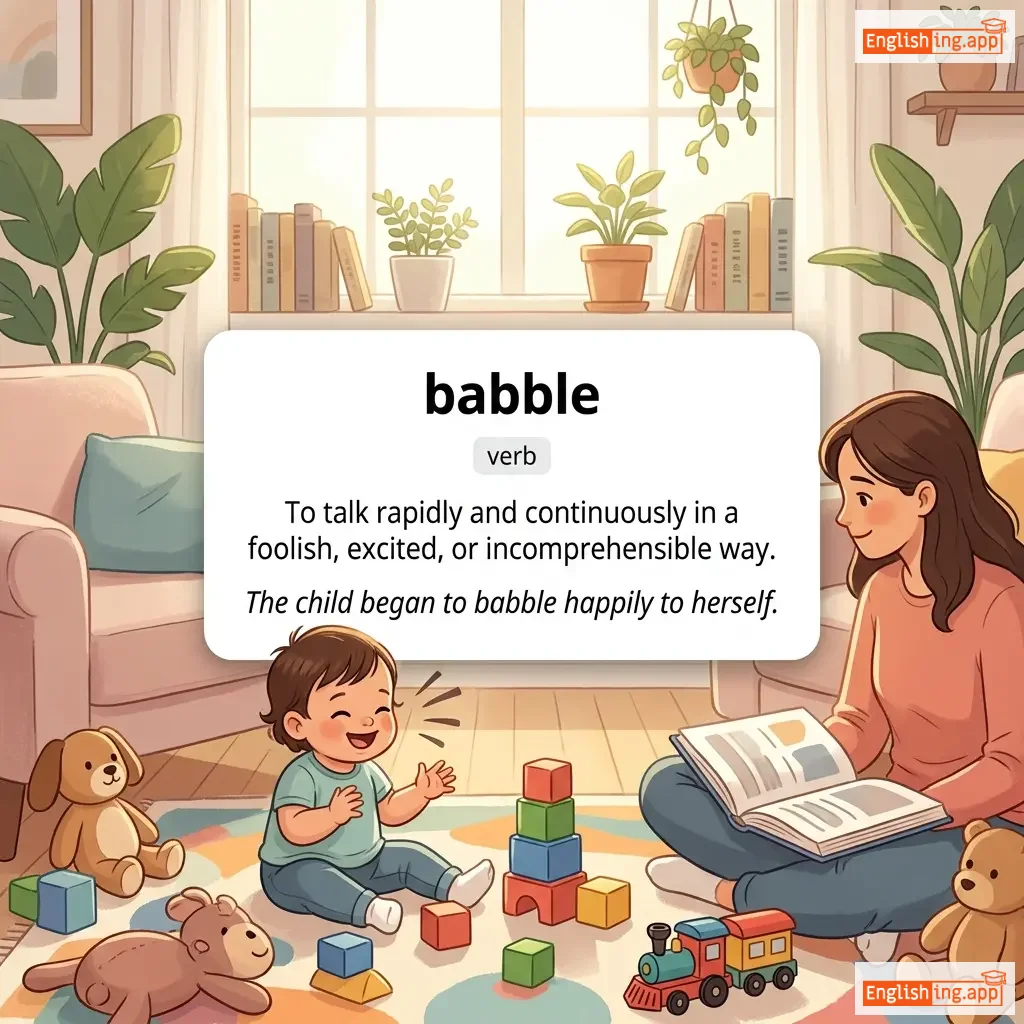
babble definition card — visual illustration of the meaning
🗣️

babble

verb
/ˈbæbəl/

To talk rapidly and continuously in a foolish, excited, or incomprehensible way.

"The child began to babble happily to herself."

noun
/bəˈbuːn/
バブーン (baboon)

a large African and Arabian primate with a dog-like snout and colorful buttocks

"The baboon troop gathered around the watering hole in the savanna."

"バブーンの群れはサバンナの水場の周りに集まりました。" (Baboon no mure wa sabanna no mizuba no mawari ni atsumarimashita.)
noun
/ˈbeɪbi/
赤ちゃん (akachan)

a very young child, especially one newly or recently born

"The baby is sleeping peacefully in the crib."

"赤ちゃんはベビーベッドで静かに寝ています。" (Akachan wa bebiibeddo de shizuka ni neteimasu.)
noun
/ˈbækənæl/
狂乱のパーティ (kyōran no pāti)

A noisy party involving drinking and revelry.

"The festival turned into a wild bacchanal by midnight."

"祭りは真夜中に狂乱のパーティに変わった。" (Matsuri wa mayonaka ni kyōran no pāti ni kawatta.)
noun
/ˌbækəˈneɪliə/
酒と楽しみの祭り (sake to tanoshimi no matsuri)

A Roman festival of Bacchus celebrated with dancing, drinking, and revelry; any occasion of wild and drunken revelry.

"The novel describes the party as a bacchanalia of excess and joy."
"小説はそのパーティーを過剰と喜びのバッカナリアとして描いています。" (Shousetsu wa sono paatii o kajou to yorokobi no Bakkanaria toshite kaitaimasu.)
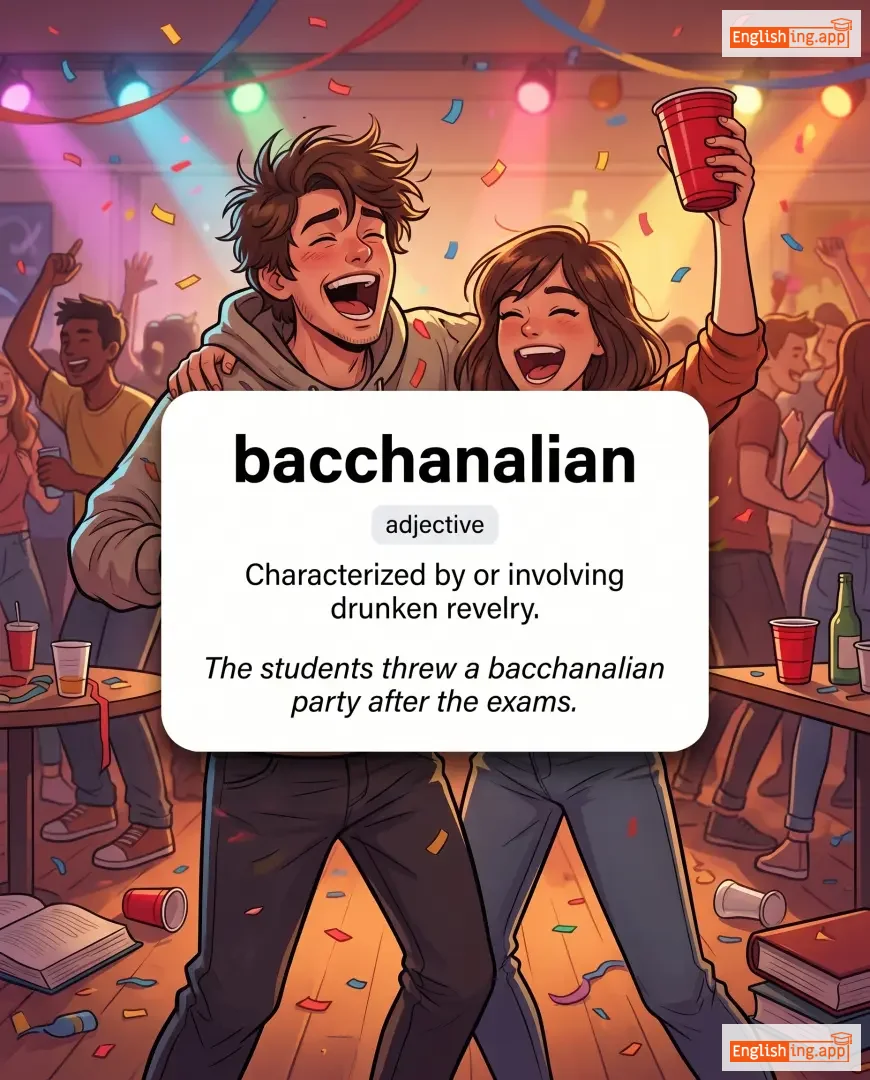
bacchanalian definition card — visual illustration of the meaning
adjective
/ˌbækəˈneɪliən/
酔っ払いの祭りに関連する (yopparai no matsuri ni kanren suru)

Characterized by or involving drunken revelry.

"The students threw a bacchanalian party after the exams."

"学生たちは試験後に酔っ払いの祭りを開いた。" (Gakusei-tachi wa shiken-go ni yopparai no matsuri o hiraita.)
noun
/ˈbætʃələr/
独身男性; 大学の学位を持つ人 (dokushin dansei; daigaku no gakui o motsu hito)

an unmarried man; a person who holds a first degree from a university

"He remained a bachelor all his life and earned a bachelor's degree in engineering."

"彼は一生独身で、工学の学位を取得しました。" (Kare wa isshou dokushin de, kougaku no gakui o shutoku shimashita.)
noun/verb/adverb/adjective
/bæk/
背中 / 戻る (senaka / modoru)

the rear surface of the human body; to support; to return to a place

"He turned back to help his friend."

"彼は友達を助けるために戻った。" (Kare wa tomodachi o tasukeru tame ni modotta.)
phrasal verb
/bæk ʌp/
支援する;バックアップする;後退する (shien suru; bakkuappu suru; koutai suru)

to support or help someone; to make a copy of data for safety; to move backward

"Please back up your files before updating the system."

"システムを更新する前にファイルをバックアップしてください。" (Shisutemu o koshin suru mae ni fairu o bakkuappu shite kudasai)
verb
/ˈbækbaɪt/
陰口を言う (kageguchi o iu)

to speak negatively about someone who is not present; to slander behind someone’s back

"It is wrong to backbite your colleagues behind their backs."

"同僚の陰口を言うのはよくない。" (doryo no kageguchi o iu no wa yokunai)
noun
/ˈbækboʊn/
背骨 (sebone)

the spine; the chief support or mainstay; strength of character

"Education is the backbone of a nation."

"教育は国の背骨です。" (Kyouiku wa kuni no sebone desu.)
noun
/ˈbækdrɒp/
背景 (haikei)

a painted cloth or other structure used behind a stage

"The backdrop for the play was a beautiful mountain scene."

"その舞台の背景は美しい山の景色でした。" (Sono butai no haikei wa utsukushii yama no keshiki deshita.)
noun
/ˈbækɡraʊnd/
背景 (haikei)

the circumstances, environment, or past history of a person or thing; the part behind the main subject in an image

"She comes from a strong academic background."

"彼女は強力な学問的背景を持っています。" (Kanojo wa kyōryokuna gakumon-teki haikei o motteimasu.)
adjective
/ˈbækˌhændɪd/
間接的または皮肉な (kansetsuteki matawa hinikuna)

Indirect or sarcastic, often appearing as praise but actually insulting.

"She gave him a backhanded compliment about his work."

"彼女は彼の仕事に対して間接的な褒め言葉を言った。" (Kanojo wa kare no shigoto ni taishite kansetsuteki na homekotoba o itta.)
noun
/ˈbækɪŋ/
支援 (shien)

support or approval for a plan, person, or idea

"The project received strong backing from the investors."

"そのプロジェクトは投資家から強力な支援を受けました。" (Sono purojekuto wa tōshika kara kyōryoku na shien o ukemashita.)
noun
/ˈbækˌsaɪd/
背中 (senaka)

the rear part or surface of something; informal term for the buttocks

"The kids slid down the hill on their backside."

"子供たちは丘を背中で滑り降りました。" (Kodomotachi wa oka o senaka de suberi orimashita.)
verb
/ˈbækˌslaɪd/
後退 (koutai)

To relapse into bad habits, undesirable practices, or moral decline.

"After months of progress, he began to backslide into old habits."

"数ヶ月の進展の後、彼は古い習慣に戻り始めた。" (Sū kagetsu no shinten no ato, kare wa furui shūkan ni modori hajimeta.)
noun
/ˈbækʌp/
バックアップ (bakkappu)

a copy of data stored separately to protect against loss

"Make sure to have a backup of your important files."

"重要なファイルのバックアップを取ることを確認してください。" (Jūyōna fairu no bakkappu o toru koto o kakunin shite kudasai.)
adverb
/ˈbækwərdz/
後ろ向き (ushiro muki)

Toward the back or in the reverse direction.

"He accidentally fell backwards into the chair."

"彼は椅子に後ろ向きに転倒しました。" (Kare wa isu ni ushiromuki ni tentō shimashita.)
noun
/ˌbækˈjɑːrd/
幸せ (shiawase)

an area of land behind a house, typically used for recreation or gardening

"The children played football in the backyard."

"彼女は賞を受け取ったとき、自分の幸せを隠すことができませんでした。" (Kanojo wa shō o uketotta toki, jibun no shiawase o kakusu koto ga dekimasen deshita.)
adjective
/beɪˈkoʊniən/
ベコニアン (Bekonian)

Relating to the philosopher Francis Bacon or his method of scientific reasoning.

"The researcher followed a Baconian approach to observation and experimentation."
"研究者は観察と実験のためにベコニアンアプローチを採用しました。" (Kenkyūsha wa kansatsu to jikken no tame ni Bekonian apurōchi o saiyō shimashita.)
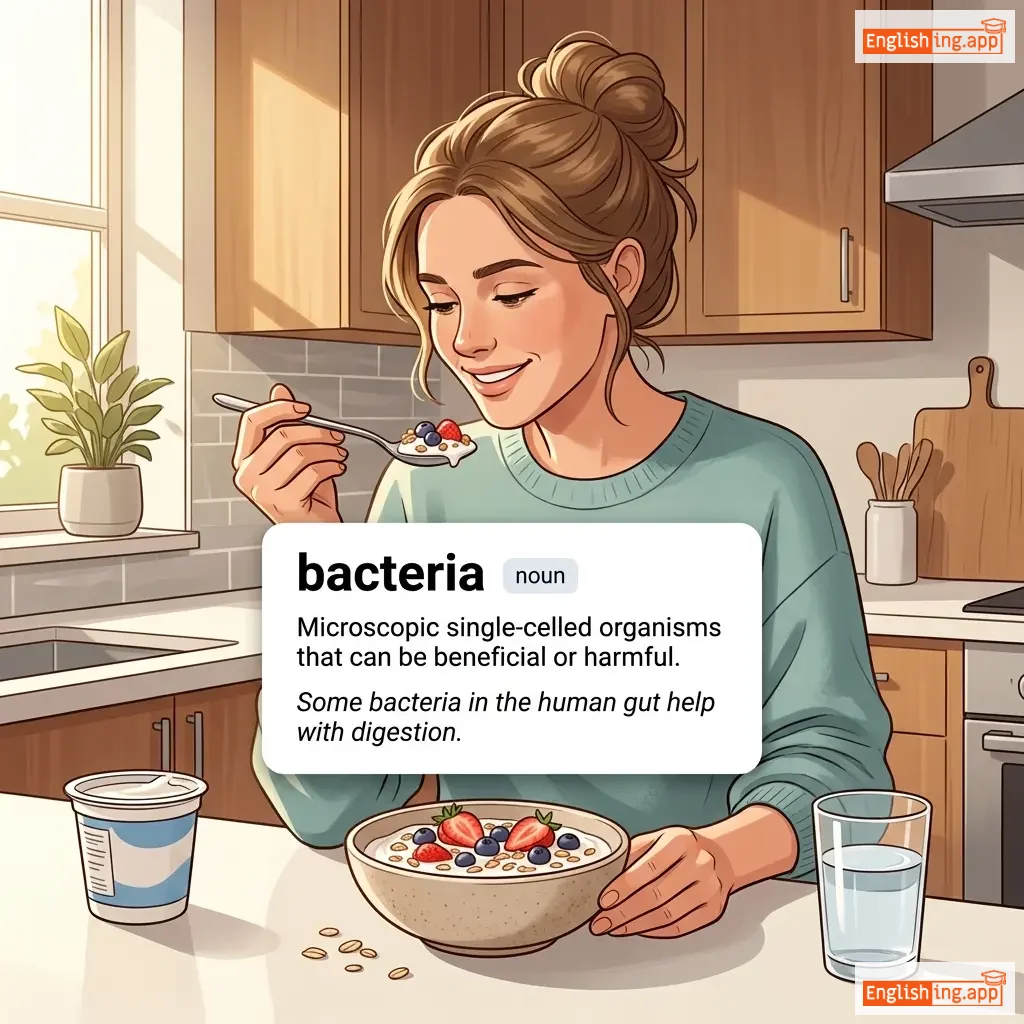
bacteria definition card — visual illustration of the meaning
noun
/bækˈtɪəriə/
バクテリア (bakteria)

Microscopic single-celled organisms that can be beneficial or harmful.

"Some bacteria in the human gut help with digestion."

"いくつかのバクテリアは、人間の腸内で消化を助けます。" (Ikutsuka no bakteria wa, ningen no chōnai de shōka o tasukemasu.)
noun
/bækˈtɪəriəm/
バクテリア (bakuteria)

A single microscopic organism belonging to the group of bacteria.

"The doctor explained that a single bacterium can multiply rapidly under the right conditions."

"医者は、1つのバクテリウムが適切な条件下で急速に増殖できることを説明しました。" (Isha wa, 1tsu no bakuteriumu ga tekisetsuna jokenka de kyūsoku ni zōshoku dekiru koto o setsumei shimashita.)
adjective
/bæd/
悪い (warui)

not good; unpleasant, harmful, or of poor quality

"The milk smells bad, so don’t drink it."

"牛乳は悪臭がするので飲まないでください。" (Gyuunyuu wa akushuu ga suru node nomanaide kudasai.)
noun
/bædʒ/
バッジ (bajji)

A small emblem or sign worn to show membership, authority, or achievement.

"The police officer showed his badge to identify himself."

"警察官は自分を識別するためにバッジを見せた。" (Keisatsukan wa jibun o shikibetsu suru tame ni bajji o misemashita.)
verb
/ˈbædʒər/
うるさくする, しつこくする (urusaku suru, shitsukoku suru)

To repeatedly ask or annoy someone with demands or questions.

"The reporter kept badgering the politician with questions."

"記者は政治家に質問をし続けて嫌がらせをした。" (Kisha wa seijika ni shitsumon o shi tsuzukete iyagarase o shita.)
noun
/ˌbædɪˈnɑːʒ/
冗談、遊び心のある会話 (joudan, asobigokoro no aru kaiwa)

Playful and humorous conversation; banter.

"The friends enjoyed a light badinage over coffee."

"友達はコーヒーを飲みながら軽い冗談を楽しみました。" (Tomodachi wa kōhī o nominagara karui jōdan o tanoshimimashita.)
adverb
/ˈbædli/
悪く (waruku)

in a way that is not good; poorly or severely

"He performed badly in the exam."
"彼は試験でひどい成績を取った。" (Kare wa shiken de hidoi seiseki wo totta.)
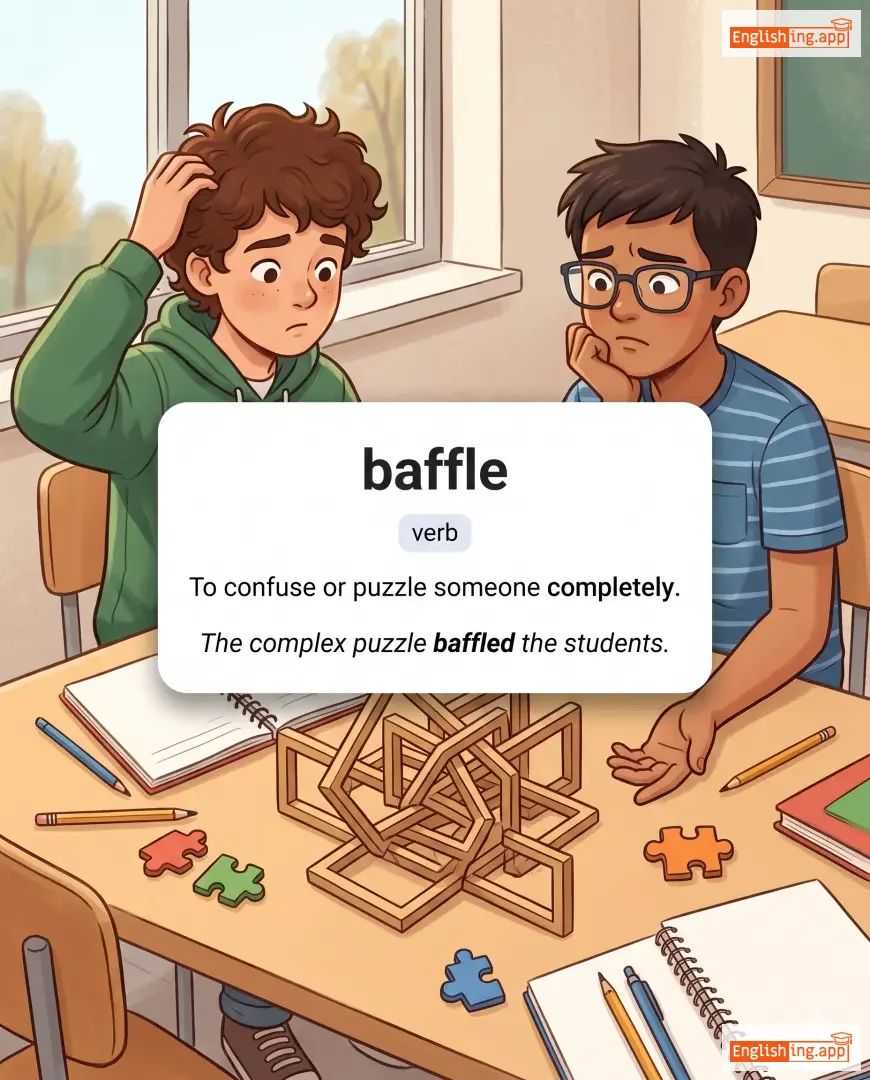
baffle definition card — visual illustration of the meaning
verb
/ˈbæfəl/
困惑させる (konwaku saseru)

To confuse or puzzle someone completely.

"The complex puzzle baffled the students."

"複雑なパズルは学生たちを困惑させた。" (Fukuzatsu na pazuru wa gakusei-tachi wo konwaku saseta.)
noun
/bæɡ/
バッグ (baggu)

a container made of flexible material, used for carrying items

"She carried her books in a bag."

"彼女は本をバッグに入れて持ち運んだ。" (Kanojo wa hon o baggu ni irete mochi hakonda.)
noun
/ˈbæɡɪdʒ/
荷物; 所持品; (nimotsu; shojihin;)

suitcases and bags containing personal belongings; past experiences or problems that affect behavior

"Please collect your baggage from the conveyor belt at the airport."

"空港のコンベヤーベルトから荷物をお取りください。" (Kūkō no konbeyā beruto kara nimotsu o otori kudasai.)
noun
/beɪl/
保釈 (hoshaku)

the temporary release of an accused person awaiting trial, often with a financial guarantee

"He was granted bail after his arrest."

"逮捕後、彼は保釈されました。" (Taiho go, kare wa hoshaku saremashita.)
noun
/ˌbeɪˈliː/
受寄者 (jukisha)

a person or party who temporarily receives possession of goods or property from another under a legal agreement

"The bailee must take reasonable care of the goods while they are in his possession."

"受寄者は財産を適切に管理する義務がある。" (jukisha wa zaisan o tekisetsu ni kanri suru gimu ga aru)