ভোকাবুলারিসমূহ

ইংরেজি শব্দের বাংলা অর্থ | English to Bangla Word Meaning Dictionary

noun
/ˈboʊlər/
বোলার (bolar)

a person who delivers the ball in cricket; also a type of hard felt hat with a rounded crown

"The bowler took three wickets in the first over."

"প্রথম ওভারে বোলার তিনটি উইকেট নিয়েছিল।" (prothom over e bolar tin ti wicket niechhilo.)
noun
/əˈwɛərnəs/
সচেতনতা (sochonota)

knowledge or perception of a situation, fact, or issue

"Public awareness of climate change is increasing."

"জলবায়ু পরিবর্তন সম্পর্কে জনসচেতনতা বাড়ছে।" (Jolbayu poriborton somporke jonsocchonota barche.)
adjective
/əˈwɒʃ/
প্লাবিত (plabito)

covered or flooded with water or something in large quantities

"The market was awash with cheap imported goods."

"বাজার সস্তা আমদানি করা পণ্যে প্লাবিত ছিল।" (Bazar sosta amdani kora ponye plabito chhilo.)
adverb
/əˈweɪ/
দূরে (dure)

at a distance from a particular place, person, or thing

"She walked away without saying a word."

"সে একটি কথাও না বলে চলে গেল।" (Se ekti kotha o na bole chole gelo.)
noun
/ɔː/
বিস্ময় (bismoy)

a feeling of deep respect mixed with fear or wonder

"The children looked at the fireworks in awe."

"শিশুরা আতশবাজি দেখে বিস্ময়ে তাকিয়ে ছিল।" (Shishura atoshbaji dekhe bismoye takiye chilo.)
adjective
/ˈɔːfəl/
ভয়ঙ্কর (bhoyonkor)

very bad or unpleasant

"The weather was awful during our trip."

"আমাদের ভ্রমণের সময় আবহাওয়া ভয়ঙ্কর ছিল।" (Amader vromoner somoy abohawa bhoyonkor chilo.)
adverb
/ˈɔːfəli/
ভীষণভাবে (bhishonbhabe)

in a very great degree; extremely; in a way that is very bad or unpleasant

"I am awfully glad to see you again."

"তোমাকে আবার দেখে আমি ভীষণভাবে খুশি।" (tomake abar dekhe ami bhishonbhabe khushi)
adjective
/ˈɔːkwəd/
বেমানান (bemanano)

causing or feeling embarrassment; difficult to deal with

"There was an awkward silence after his joke."

"তার কৌতুকের পর এক অস্বস্তিকর নীরবতা তৈরি হয়েছিল।" (Tar koutuker por ek oshwostikor nirobota toiri hoyechilo.)
noun
/ɔːl/
ছিদ্র করার সরঞ্জাম (chhidro korar soronjam)

a small pointed tool used for making holes, especially in leather

"The cobbler used an awl to punch holes in the leather."

"মুচি চামড়ায় ছিদ্র করতে অল ব্যবহার করেছিল।" (Muchi chamray chhidro korte ol byabohar korechilo.)
noun
/ˈɔːnɪŋ/
ছাউনি (chauni)

a sheet of canvas or material stretched on a frame to shelter a place from the sun or rain

"We sat under the awning to avoid the heavy rain."

"আমরা ভারী বৃষ্টি এড়াতে ছাউনির নিচে বসেছিলাম।" (Amra bhari brishti erate chaunir niche boshechilam.)
adverb
/əˈraɪ/
বিপর্যস্ত (biporjosto)

away from the expected or proper direction; wrong or amiss

"The plan went awry when the weather suddenly changed."

"আবহাওয়া হঠাৎ পরিবর্তন হলে পরিকল্পনা বিপর্যস্ত হয়ে গেল।" (Abahawa hotat poriborton hole porikolpona biporjosto hoye gelo.)
noun
/æks/
কুঠার (kuthar)

a tool with a heavy blade for cutting wood

"The lumberjack swung his axe to chop the tree."

"কাঠুরে তার কুঠার দিয়ে গাছটি কাটার জন্য আঘাত করেছিল।" (kathure tar kuthar diye gach-ti katar jonno aghat korechilo.)
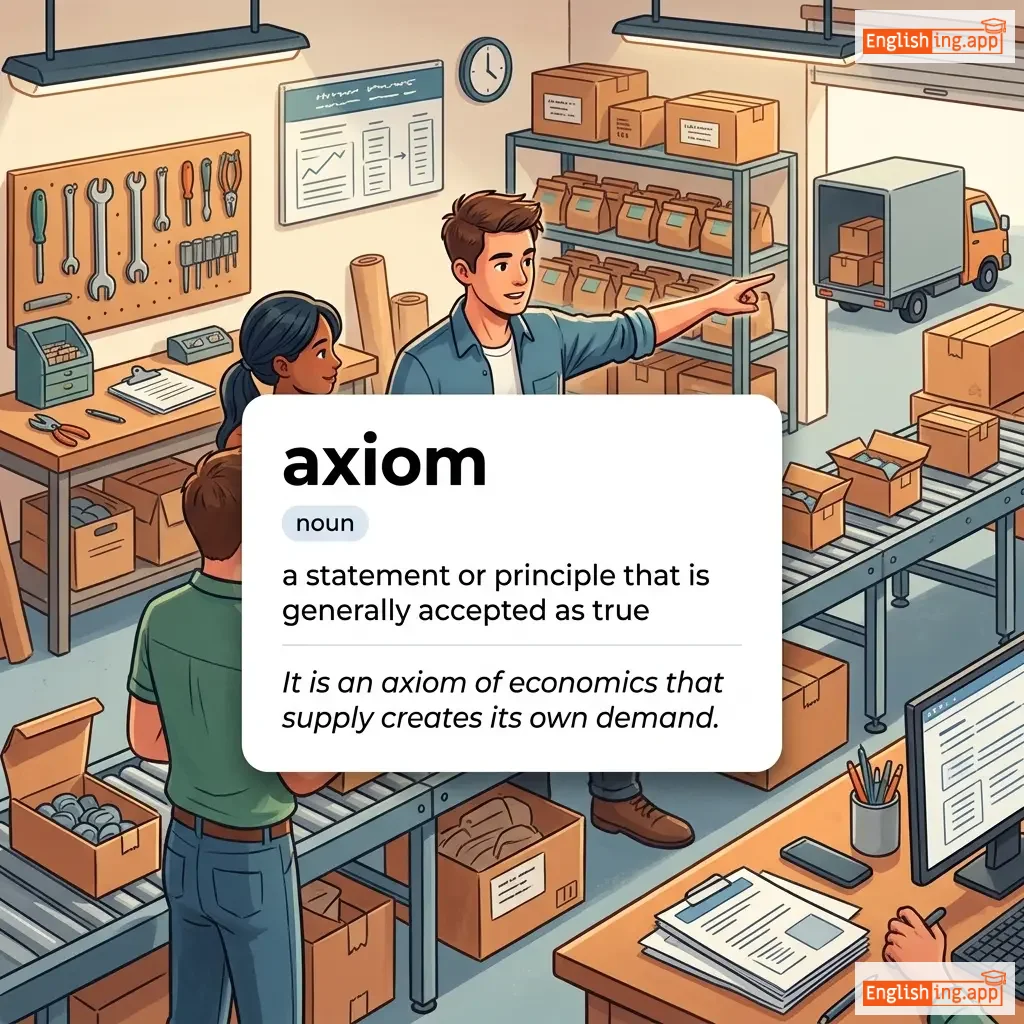
axiom definition card — visual illustration of the meaning
noun
/ˈæk.si.əm/
অভিধান (obhidan)

a statement or principle that is generally accepted as true

"It is an axiom of economics that supply creates its own demand."

"এটি অর্থনীতির একটি নীতি যে যোগান নিজস্ব চাহিদা তৈরি করে।" (Eti orthonitir ekti niti je jogan nijsho chahida toiri kore.)
axiomatic definition card — visual illustration of the meaning
adjective
/ˌæk.si.əˈmæt.ɪk/
স্বতঃসিদ্ধ (swatosiddho)

self-evident or unquestionable

"It is axiomatic that hard work leads to success."

"এটি স্বতঃসিদ্ধ যে কঠোর পরিশ্রম সফলতার দিকে নিয়ে যায়।" (Eti swatosiddho je kothor porishrom sofolotar dike niye jay.)
noun
/aɪ/
হ্যাঁ (hya)

an affirmative vote or expression of agreement

"The committee voted aye on the proposal."

"কমিটি প্রস্তাবে হ্যাঁ ভোট দিয়েছে।" (Komiti prostabe hya vote diyeche.)
noun
/əˈzeɪ.li.ə/
আজালিয়া ফুল (ajalia ful)

a flowering shrub with brightly colored blooms, often grown ornamentally

"The garden was full of blooming azaleas in spring."

"বসন্তে বাগানটি আজালিয়া ফুলে ভরে গিয়েছিল।" (Boshonte baganti ajalia fule bhore giyechhilo.)
adjective
/ˈæʒər/
আকাশি নীল (akash niil)

A bright blue color like that of a clear sky.

"The clear sky was painted in a deep shade of azure."

"পরিষ্কার আকাশ গভীর আকাশি নীলে রঙিন ছিল।" (Porishkar akash gobhir akashi nile rongin chilo.)
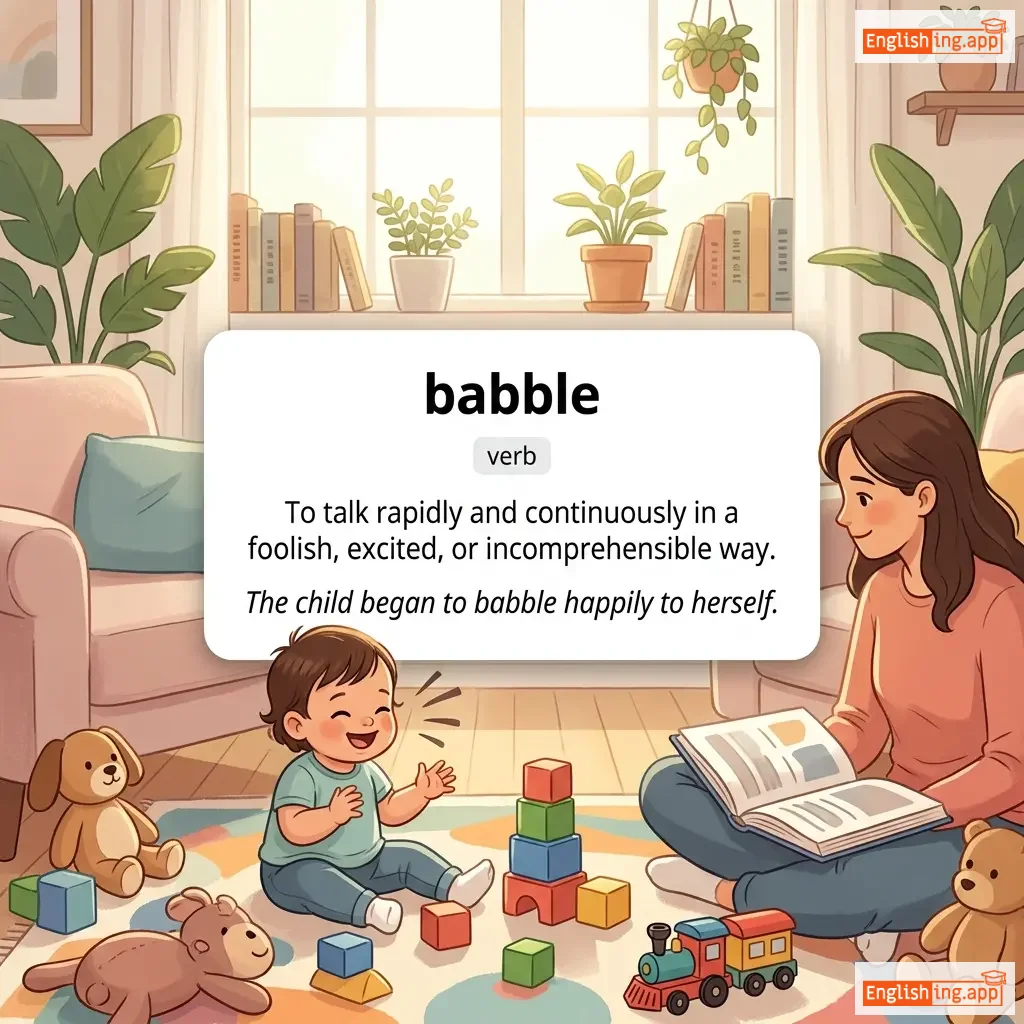
babble definition card — visual illustration of the meaning
verb
/ˈbæbəl/
অর্থহীনভাবে বকবক করা (orthihinvabe bokbok kora)

To talk rapidly and continuously in a foolish, excited, or incomprehensible way.

"The child began to babble happily to herself."

"শিশুটি খুশি হয়ে নিজেই বকবক করতে লাগল।" (Shishuti khushi hoye nijei bokbok korte laglo.)
noun
/bəˈbuːn/
বেবুন (bebun)

a large African and Arabian primate with a dog-like snout and colorful buttocks

"The baboon troop gathered around the watering hole in the savanna."

"বেবুনের দলটি সাভানার পানির গর্তের চারপাশে জড়ো হয়েছিল।" (bebunir dolto savanaar paanir gorter charpaashe joro hoyechilo.)
noun
/ˈbeɪbi/
শিশু (shishu)

a very young child, especially one newly or recently born

"The baby is sleeping peacefully in the crib."

"শিশুটি খাটে শান্তভাবে ঘুমাচ্ছে।" (Shishuti khate shantovabe ghumachhe.)
noun
/ˈbækənæl/
মাতাল পার্টি (matal party)

A noisy party involving drinking and revelry.

"The festival turned into a wild bacchanal by midnight."

"উৎসবটি মধ্যরাতের পর একটি উন্মত্ত মাতাল পার্টিতে রূপ নিল।" (Utsobti modhyorater por ekti unmotto matal partyte rup nilo.)
noun
/ˌbækəˈneɪliə/
মাতাল উত্সব (matal utsob)

A Roman festival of Bacchus celebrated with dancing, drinking, and revelry; any occasion of wild and drunken revelry.

"The novel describes the party as a bacchanalia of excess and joy."

"উপন্যাসটি পার্টিটিকে অতিরিক্ততা ও আনন্দের একটি মাতাল উত্সব হিসেবে বর্ণনা করেছে।" (Uponnashti partytike otirikto o anonder ekti matal utsob hisebe bornona koreche.)
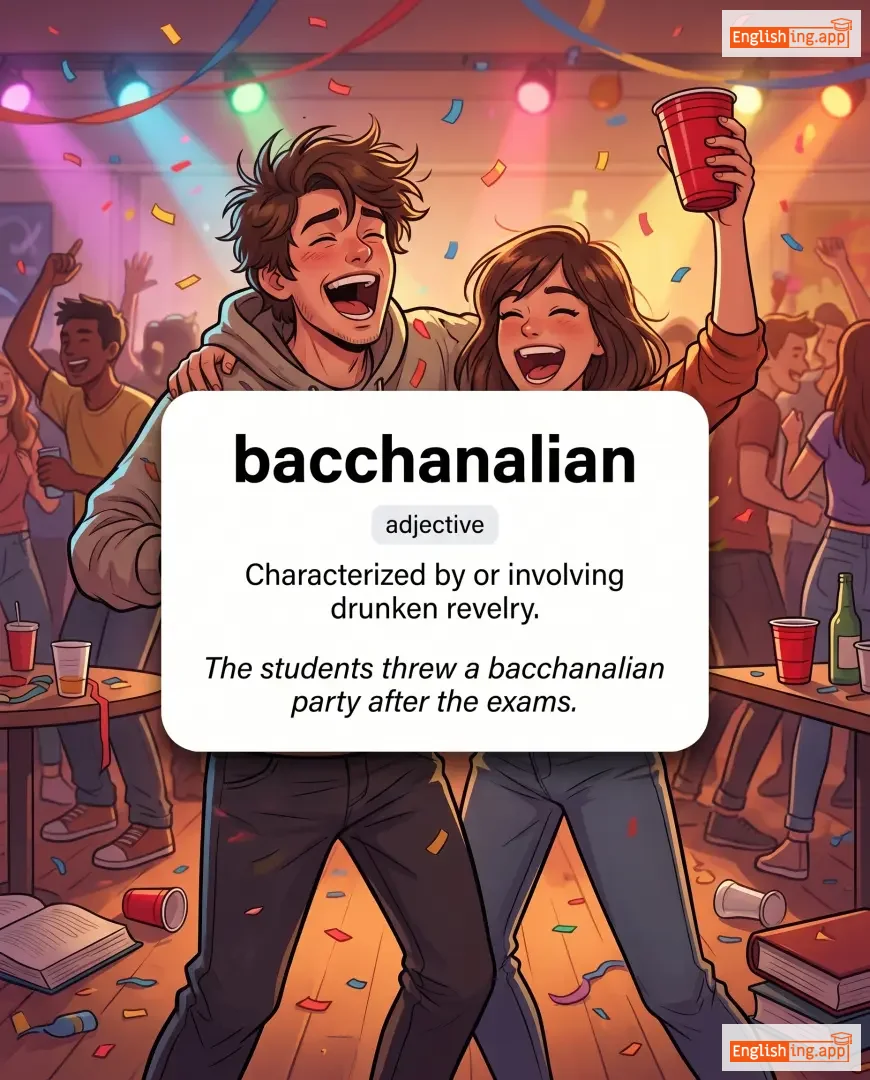
bacchanalian definition card — visual illustration of the meaning
adjective
/ˌbækəˈneɪliən/
মাতাল উত্সবমুখর (matal utsobmukhor)

Characterized by or involving drunken revelry.

"The students threw a bacchanalian party after the exams."

"শিক্ষার্থীরা পরীক্ষার পর একটি মাতাল উত্সবমুখর পার্টি দিল।" (Shikharthira porikkhar por ekti matal utsobmukhor party dilo.)
noun
/ˈbætʃələr/
কুমার; অবিবাহিত পুরুষ; স্নাতক; (kumar)

an unmarried man; a person who holds a first degree from a university

"He remained a bachelor all his life and earned a bachelor's degree in engineering."

"তিনি সারাজীবন অবিবাহিত ছিলেন এবং ইঞ্জিনিয়ারিংয়ে স্নাতক ডিগ্রি অর্জন করেছিলেন।" (Tini sharajibon obibaahito chhilen ebong engineering-e snatak digri orjon korechhilen.)
noun/verb/adverb/adjective
/bæk/
পিঠ / ফিরে যাওয়া (pith / fire jaoa)

the rear surface of the human body; to support; to return to a place

"He turned back to help his friend."

"সে তার বন্ধুকে সাহায্য করতে ফিরে গেল।" (Se tar bondhuke sahajyo korte fire gelo.)
phrasal verb
/bæk ʌp/
সমর্থন করা; ডেটার অনুলিপি রাখা; পেছনে সরা (somorthon kora; detar onulipi rakha; pechhone shora)

to support or help someone; to make a copy of data for safety; to move backward

"Please back up your files before updating the system."

"সিস্টেম আপডেট করার আগে অনুগ্রহ করে আপনার ফাইলগুলোর ব্যাক আপ নিন।" (sistem update korar age onugroho kore apnar file-gulor back up nin)
verb
/ˈbækbaɪt/
পরনিন্দা করা (poroninda kora)

to speak negatively about someone who is not present; to slander behind someone’s back

"It is wrong to backbite your colleagues behind their backs."

"সহকর্মীদের অনুপস্থিতিতে তাদের সম্পর্কে খারাপ কথা বলা ভুল।" (sohokormider onuposthitite tader somporke kharap kotha bola bhul)
noun
/ˈbækboʊn/
মেরুদণ্ড (merudondo)

the spine; the chief support or mainstay; strength of character

"Education is the backbone of a nation."

"শিক্ষা একটি জাতির মেরুদণ্ড।" (Shikkha ekti jatir merudondo.)
noun
/ˈbækdrɒp/
পটভূমি (potbhumi)

a painted cloth or other structure used behind a stage

"The backdrop for the play was a beautiful mountain scene."

"নাটকের ব্যাকড্রপ ছিল একটি সুন্দর পর্বত দৃশ্য।" (Natoker backdrop chhilo ekti shundor porbot drishyo.)
noun
/ˈbækɡraʊnd/
পটভূমি (potbhumi)

the circumstances, environment, or past history of a person or thing; the part behind the main subject in an image

"She comes from a strong academic background."

"সে একটি শক্তিশালী একাডেমিক পটভূমি থেকে এসেছে।" (Se ekti shoktishali academic potbhumi theke esheche.)
adjective
/ˈbækˌhændɪd/
পরোক্ষ বা ব্যঙ্গাত্মক (porokkh ba byangatmok)

Indirect or sarcastic, often appearing as praise but actually insulting.

"She gave him a backhanded compliment about his work."

"সে তার কাজের উপর একটি ব্যঙ্গাত্মক প্রশংসা করেছিল।" (Se tar kajer upor ekti byangatmok proshongsha korechilo.)
noun
/ˈbækɪŋ/
সমর্থন (somorthon)

support or approval for a plan, person, or idea

"The project received strong backing from the investors."

"প্রকল্পটি বিনিয়োগকারীদের কাছ থেকে শক্তিশালী সমর্থন পেয়েছে।" (Prokolpoti biniyogkarider kach theke shoktishali somorthon peyechhe.)
noun
/ˈbækˌsaɪd/
পিছন (pichon)

the rear part or surface of something; informal term for the buttocks

"The kids slid down the hill on their backside."

"শিশুরা পাহাড় থেকে তাদের পিছনে বসে নেমে এসেছিল।" (Shishura pahar theke tader pichone bose neme esechilo.)
verb
/ˈbækˌslaɪd/
অবনতি হওয়া (obonoti howa)

To relapse into bad habits, undesirable practices, or moral decline.

"After months of progress, he began to backslide into old habits."

"কয়েক মাস অগ্রগতির পর সে আবার পুরনো অভ্যাসে ফিরে যেতে শুরু করল।" (Koyek mash ogragotir por se abar purono obhash e fire jete shuru korlo.)
noun
/ˈbækʌp/
প্রতিরক্ষা কপি (protikorokkopi)

a copy of data stored separately to protect against loss

"Make sure to have a backup of your important files."

"আপনার গুরুত্বপূর্ণ ফাইলের একটি ব্যাকআপ রাখার জন্য নিশ্চিত করুন।" (Apnar goruttopurno file-er ekti backup rakhar jonno nishchit korun.)
adverb
/ˈbækwərdz/
পেছনের দিকে (pechon er dike)

Toward the back or in the reverse direction.

"He accidentally fell backwards into the chair."

"সে দুর্ঘটনাক্রমে পিছনের দিকে চেয়ারে পড়ে গেল।" (Se durghotonakrome pechon er dike cheyare pore gelo.)
noun
/ˌbækˈjɑːrd/
বাড়ির পেছনের আঙিনা (barir pechon er angina)

an area of land behind a house, typically used for recreation or gardening

"The children played football in the backyard."

"শিশুরা বাড়ির পেছনের আঙিনায় ফুটবল খেলছিল।" (Shishura barir pechon er angina te football khelchhilo.)
adjective
/beɪˈkoʊniən/
বেকনের দর্শন সম্পর্কিত (bekon er dorshon somprokito)

Relating to the philosopher Francis Bacon or his method of scientific reasoning.

"The researcher followed a Baconian approach to observation and experimentation."

"গবেষক পর্যবেক্ষণ ও পরীক্ষা-নিরীক্ষায় একটি বেকোনিয়ান পদ্ধতি অনুসরণ করেছিলেন।" (Gobeshok porjobekkhon o porikkha-nirikshae ekti Baconian poddhoti onushoron korechilen.)
bacteria definition card — visual illustration of the meaning
noun
/bækˈtɪəriə/
ব্যাকটেরিয়া (bakteria)

Microscopic single-celled organisms that can be beneficial or harmful.

"Some bacteria in the human gut help with digestion."

"মানব অন্ত্রে কিছু ব্যাকটেরিয়া হজমে সাহায্য করে।" (Manob ontre kichu bakteria hojome sahajjo kore.)
noun
/bækˈtɪəriəm/
ব্যাকটেরিয়া (bakteria)

A single microscopic organism belonging to the group of bacteria.

"The doctor explained that a single bacterium can multiply rapidly under the right conditions."

"ডাক্তার ব্যাখ্যা করলেন যে একটি ব্যাকটেরিয়া সঠিক পরিবেশে দ্রুত বৃদ্ধি পেতে পারে।" (Daktar byakkha korlen je ekti bakteria sothik poribese druto brid'dhi pete pare.)
adjective
/bæd/
খারাপ (kharap)

not good; unpleasant, harmful, or of poor quality

"The milk smells bad, so don’t drink it."

"দুধের গন্ধ খারাপ, তাই এটি পান করো না।" (Dudher gondho kharap, tai eti pan koro na.)
noun
/bædʒ/
চিহ্ন, প্রতীক (chinho, protik)

A small emblem or sign worn to show membership, authority, or achievement.

"The police officer showed his badge to identify himself."

"পুলিশ অফিসার নিজেকে পরিচিত করতে তার ব্যাজ দেখালেন।" (Police officer nije ke porichito korte tar badge dekhale.)
verb
/ˈbædʒər/
পীড়ন করা, বিরক্ত করা (piron kora, birokt kora)

To repeatedly ask or annoy someone with demands or questions.

"The reporter kept badgering the politician with questions."

"রিপোর্টার রাজনীতিবিদকে বারবার প্রশ্ন করে বিরক্ত করছিল।" (Reporter rajnitibidke bar bar proshno kore birokt korchilo.)
noun
/ˌbædɪˈnɑːʒ/
রসিকতা, মজার আলাপ (rosikota, mojar alap)

Playful and humorous conversation; banter.

"The friends enjoyed a light badinage over coffee."

"বন্ধুরা কফির সাথে হালকা মজার আলাপ উপভোগ করল।" (Bondhura kofir sathe halka mojar alap upovog korlo.)
adverb
/ˈbædli/
খারাপভাবে (kharapvabe)

in a way that is not good; poorly or severely

"He performed badly in the exam."

"সে পরীক্ষায় খারাপভাবে পারফর্ম করেছে।" (Se porikkhay kharapvabe perform koreche.)
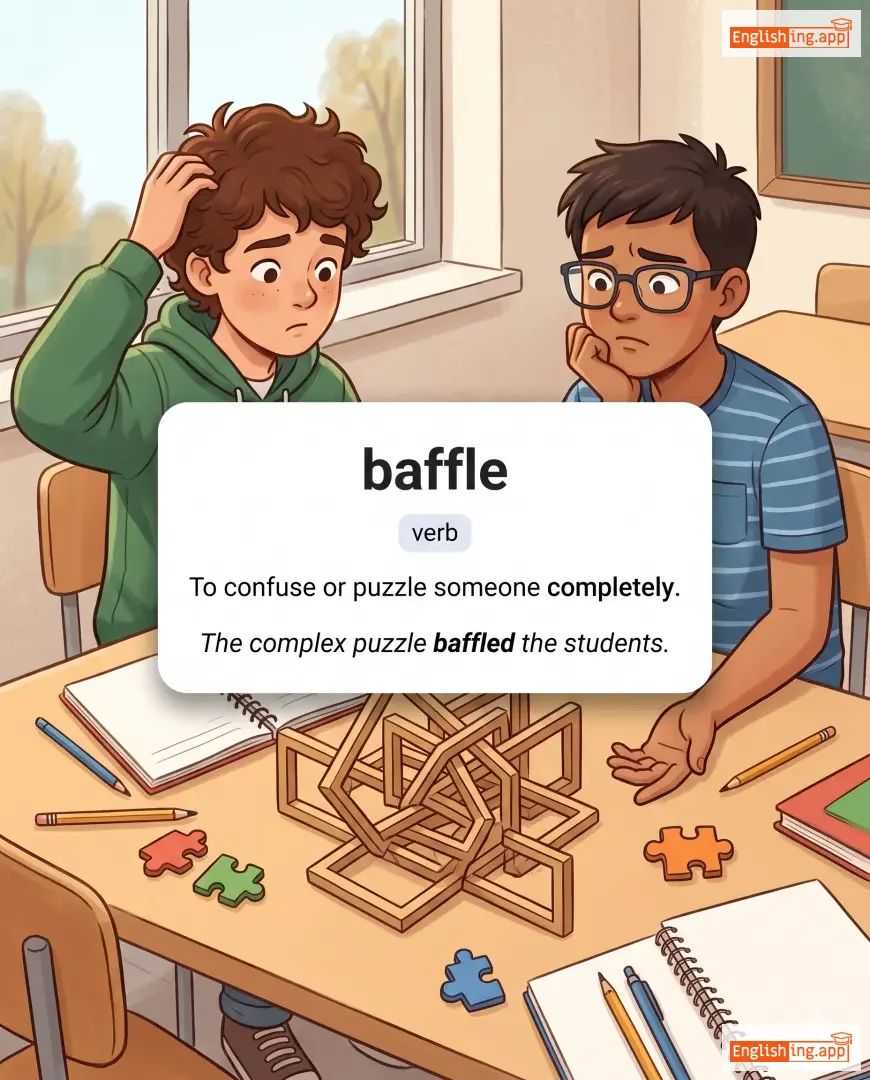
baffle definition card — visual illustration of the meaning
verb
/ˈbæfəl/
বিভ্রান্ত করা (bibhranto kora)

To confuse or puzzle someone completely.

"The complex puzzle baffled the students."

"জটিল ধাঁধা শিক্ষার্থীদের বিভ্রান্ত করেছিল।" (Jotil dhadha shikkharthider bibhranto korechhilo.)
noun
/bæɡ/
থলে (thole)

a container made of flexible material, used for carrying items

"She carried her books in a bag."

"সে তার বইগুলো একটি ব্যাগে বহন করেছিল।" (Se tar boigulo ekti bage bohon korechilo.)
noun
/ˈbæɡɪdʒ/
মালপত্র; যাত্রাপত্র; (maalpotra)

suitcases and bags containing personal belongings; past experiences or problems that affect behavior

"Please collect your baggage from the conveyor belt at the airport."

"অনুগ্রহ করে বিমানবন্দরের কনভেয়ার বেল্ট থেকে আপনার মালপত্র সংগ্রহ করুন।" (Onugroho kore bimanbondorer conveyor belt theke apnar maalpotra shongroho korun.)
noun
/beɪl/
বেইল (beil)

the temporary release of an accused person awaiting trial, often with a financial guarantee

"He was granted bail after his arrest."

"তার গ্রেফতারের পরে তাকে বেইল দেয়া হয়েছিল।" (Tar greftarer pore take bail dewa hoyechhilo.)
noun
/ˌbeɪˈliː/
অর্পিত সম্পত্তির গ্রহীতা (orpito shompotir grohita)

a person or party who temporarily receives possession of goods or property from another under a legal agreement

"The bailee must take reasonable care of the goods while they are in his possession."

"বেইলি তার কাছে থাকা পণ্যের যথাযথ যত্ন নিতে বাধ্য।" (beili tar kache thaka ponnyer jothajotho jotno nite baddho)