ভোকাবুলারিসমূহ

ইংরেজি শব্দের বাংলা অর্থ | English to Bangla Word Meaning Dictionary

noun
/ˌbæstərdaɪˈzeɪʃən/
বিকৃতি / অবক্ষয় (bikrity / obokkhyoy)

the act of corrupting, degrading, or misrepresenting something

"Critics called the remake a bastardization of the original film."

"সমালোচকরা রিমেকটিকে মূল চলচ্চিত্রের বিকৃতি বলেছে।" (Shomalochokra rimerktike mul cholocitrer bikriti boleche.)
verb
/ˈbæstərdaɪz/
বিকৃত করা (bikrito kora)

to corrupt or debase something by altering it from its original form; to change in a way that reduces quality or purity

"Critics argue that the remake bastardized the original novel."

"সমালোচকেরা বলেন যে রিমেকটি মূল উপন্যাসটিকে বিকৃত করেছে।" (somalochokera bolen je remake-ti mul uponnash-tike bikrito koreche)
verb
/beɪst/
তেল বা ঝোল ঢালা (tel ba jhol dhala)

to pour or brush melted fat, juices, or liquid over meat during cooking to keep it moist

"She basted the turkey every 30 minutes to keep it juicy."

"সে টার্কিটিকে রসালো রাখতে প্রতি ৩০ মিনিটে তেল ঢালছিল।" (Se tarkitike rosalo rakhte proti 30 minute tel dhalchilo.)
noun
/ˈbæs.ti.ən/
দুর্গ, শক্ত ঘাঁটি (durg, shokto ghati)

a stronghold or fortification; a place or institution strongly defending particular principles

"The castle stood as a bastion against enemy attacks."

"কেল্লাটি শত্রুর আক্রমণের বিরুদ্ধে একটি শক্ত দুর্গ হিসাবে দাঁড়িয়েছিল।" (Kellati shotrur akromoner biruddhe ekti shokto durg hishebe darie chhilo.)
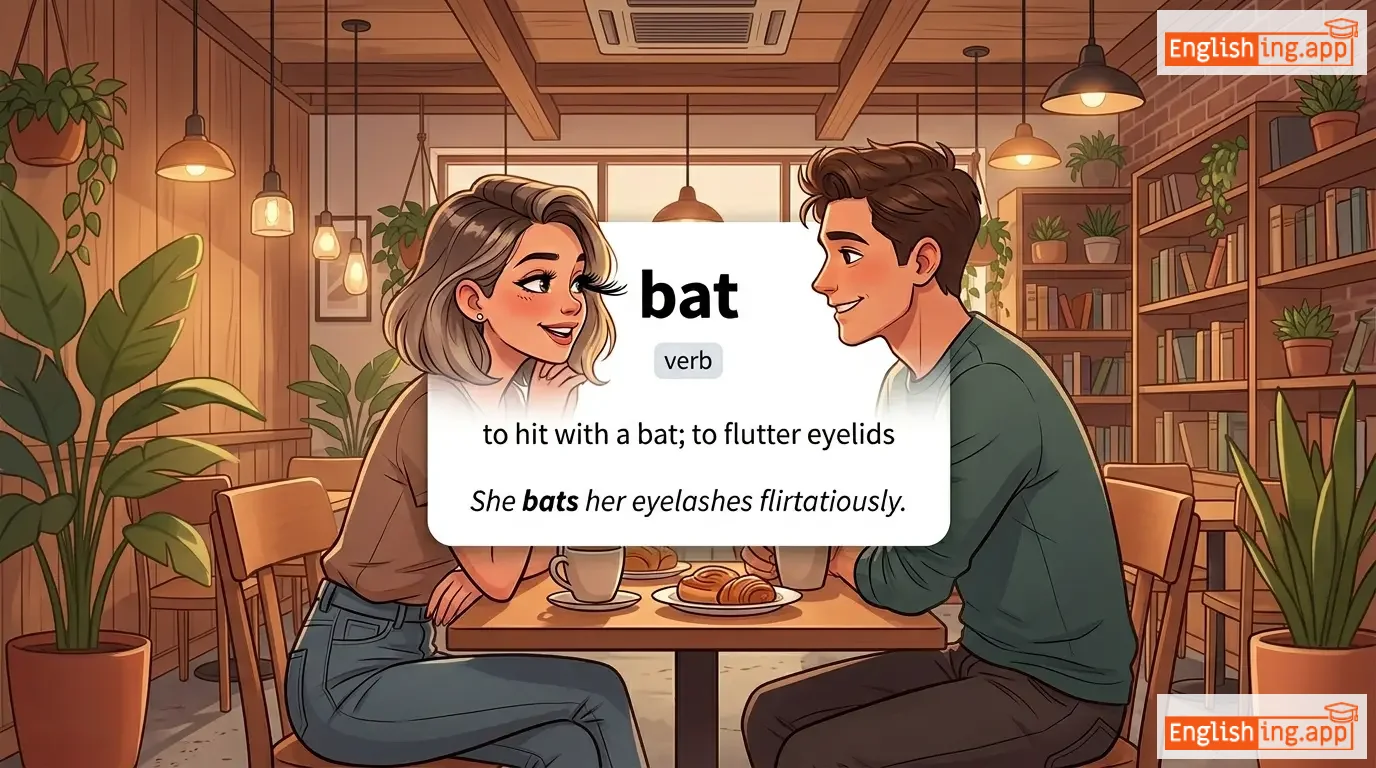
bat definition card — visual illustration of the meaning
noun
/bæt/
ব্যাট (bat)

a wooden or metal club used to hit a ball in sports like baseball or cricket

"He swung the bat and hit the ball hard."

"সে ব্যাট ঘুরিয়ে জোরে বল মারল।" (Se bat ghuriye jore bol marlo.)
noun
/bætʃ/
একসাথে তৈরি হওয়া সংখ্যা (eksathe toiri howa shongkha)

a quantity of items produced or processed at one time

"She baked a fresh batch of cookies this morning."

"সে আজ সকালে এক ব্যাচ কুকি বানিয়েছিল।" (Se aj sokale ek batch cookie baniyechhilo.)
verb
/beɪt/
দমন করা, কমানো (domon kora, komano)

to lessen or restrain; to diminish the force or intensity of something

"He spoke with bated breath as he waited for the result."

"সে ফলাফলের জন্য অপেক্ষা করছিল দমিত নিঃশ্বাসে।" (Se folafoler jonno opekkha korchhilo domito nisshase.)
noun
/bɑːθ/
স্নান (snan)

an act of washing the body in water; or the container used for this purpose

"She took a long bath after work."

"সে কাজের পর একটি দীর্ঘ স্নান নিল।" (Se kajer por ekti dirgho snan nilo.)
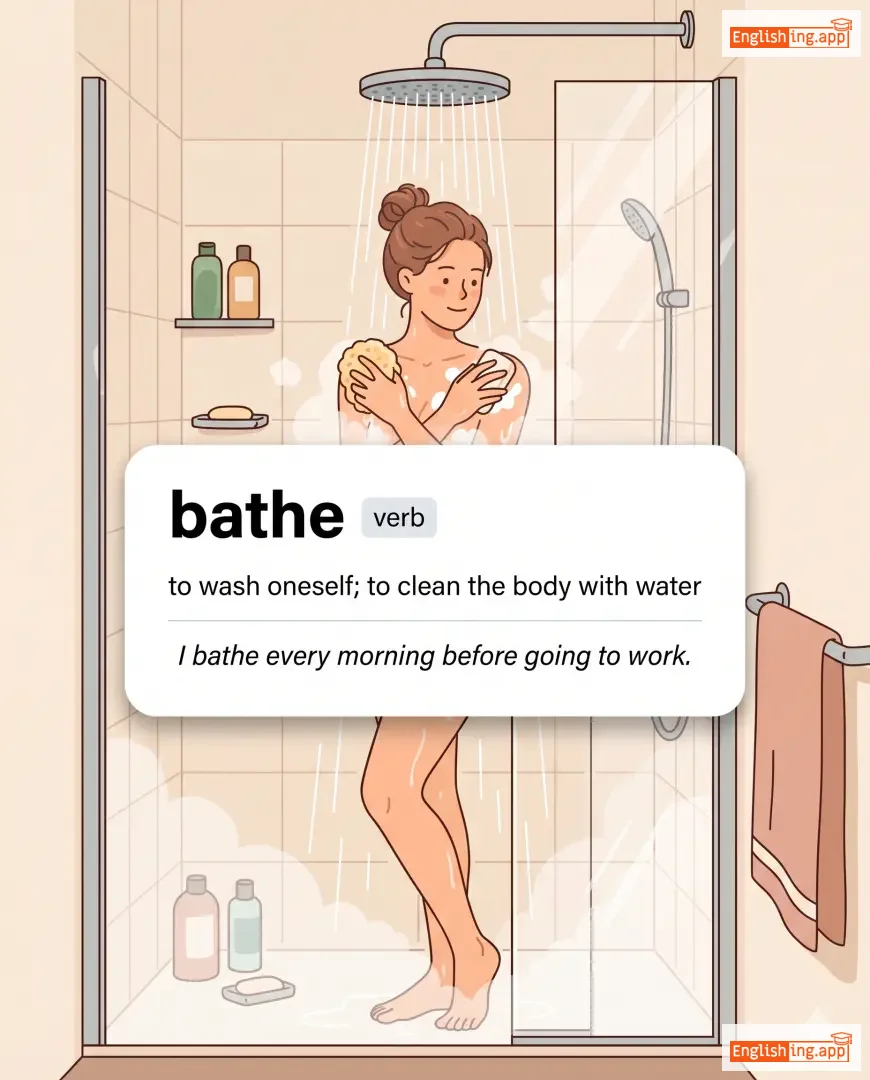
bathe definition card — visual illustration of the meaning
verb
/beɪð/
গোসল করা (goshol kora)

to wash oneself; to clean the body with water

"I bathe every morning before going to work."

"কাজে যাওয়ার আগে আমি প্রতি সকালে গোসল করি।" (Kaje jawar age ami proti shokale goshol kori)
adjective
/bəˈθɛt.ɪk/
তুচ্ছ আবেগপ্রবণ (tuchcho abegprobon)

displaying insincere or trivial emotion; producing an unintended ridiculous effect through sudden change from serious to silly

"The movie's ending was unintentionally bathetic rather than tragic."

"ছবিটির সমাপ্তি ট্র্যাজিকের বদলে অনিচ্ছাকৃতভাবে হাস্যকর হয়ে গিয়েছিল।" (Chhabitier somapti trajiker bodole onicchokrito vabe hashjokor hoye giyechhilo.)
noun
/ˈbɑːθruːm/
বাথরুম (bathroom)

a room containing a toilet and usually a sink or shower

"The bathroom is on the second floor."

"বাথরুমটি দ্বিতীয় তলায় রয়েছে।" (Bathrumti ditiyo tolay royeche.)
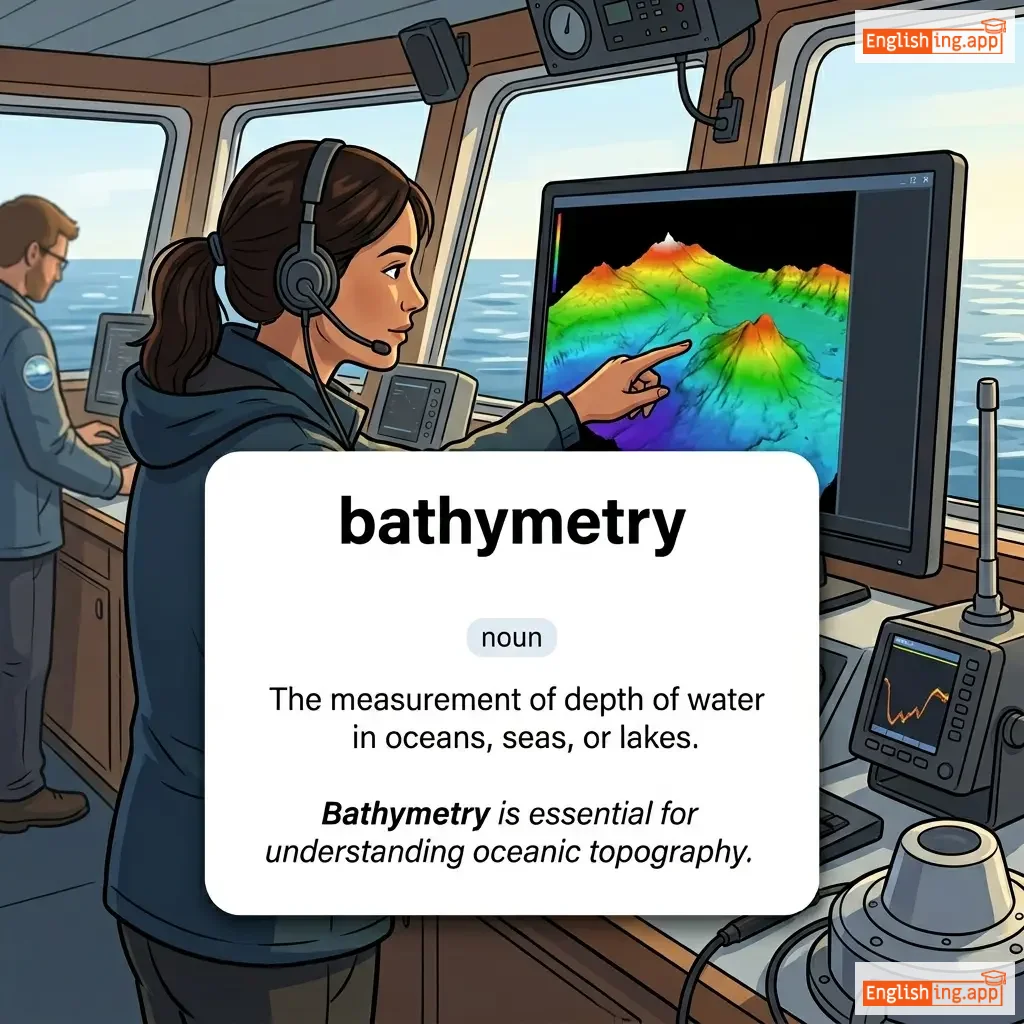
bathymetry definition card — visual illustration of the meaning
noun
/bəˈθɪm.ə.tri/
সমুদ্রের গভীরতা পরিমাপক বিদ্যা (shumdrer gobhirota porimap bidhya)

The measurement of depth of water in oceans, seas, or lakes.

"Bathymetry is essential for understanding oceanic topography."

"সমুদ্রের ভূপ্রকৃতি বোঝার জন্য ব্যাথিমেট্রি অপরিহার্য।" (Shumdrer bhuprokriti bojhar jonno bathymetry oporisharjo.)
noun
/bəˈtɒn/
লাঠি / নেতৃত্বের প্রতীক (lathi / netrittwer protik)

A thin stick carried by a conductor to direct an orchestra, or used as a symbol of authority.

"The conductor raised his baton to begin the symphony."

"কনডাক্টর সিম্ফনি শুরু করার জন্য তার ব্যাটন তুললেন।" (Conductor symphony shuru korar jonno tar baton tulen.)
noun
/bəˈtæljən/
সেনাদল (senadol)

A large body of soldiers ready for battle, typically consisting of several companies.

"The battalion was deployed to the front line."

"ব্যাটালিয়নকে ফ্রন্ট লাইনে মোতায়েন করা হয়েছিল।" (Battalionke front line e motayen kora hoyechilo.)
verb
/ˈbætn/
আটকে রাখা (atke rakha)

To fasten or secure something tightly.

"They battened down the hatches before the storm."

"তারা ঝড়ের আগে দরজাগুলো শক্তভাবে আটকে দিয়েছিল।" (Tara jhorer age dorjagulo shoktovabe atke diyechilo.)
verb
/ˈbætər/
প্রহার করা (prohar kora)

To strike repeatedly with force.

"The waves battered the shoreline all night."

"ঢেউগুলো সারারাত তীরে আঘাত করেছে।" (Dheugulo sararat tire aghat korechilo.)
noun
/ˈbætəri/
ব্যাটারি (byatari)

A device that stores and provides electrical energy; also refers to a group of similar things or repeated blows.

"The phone battery ran out after a long day."

"ফোনের ব্যাটারি দীর্ঘ দিনের পরে শেষ হয়ে গেল।" (Phoner byatari dirgho diner pore shesh hoye gelo.)
noun/verb
/ˈbætəl/
যুদ্ধ (juddho)

A fight between armed forces or a struggle to achieve or resist something.

"The soldiers prepared for the final battle."

"সেনারা চূড়ান্ত যুদ্ধের জন্য প্রস্তুতি নিল।" (Senara churanto juddher jonno prostuti nilo.)
noun
/ˈbætəlˌfiːld/
যুদ্ধক্ষেত্র (juddho khetra)

a place where a battle is fought

"The battlefield was covered with the remnants of the fight."

"যুদ্ধক্ষেত্রটি যুদ্ধের অবশিষ্টাংশ দিয়ে পূর্ণ ছিল।" (Juddho khetrṭi juddher oboshishtangsho diye purno chhilo.)
adjective
/ˈbæti/
পাগলাটে (paglate)

crazy or eccentric in behavior

"The old man down the street is a bit batty but harmless."

"রাস্তার কোণের বৃদ্ধ লোকটি একটু পাগলাটে কিন্তু ক্ষতিকর নয়।" (Rastar koner briddo lokti ektu paglate kintu khotikhor noy.)
noun
/ˈbɔːbəl/
তুচ্ছ অলঙ্কার (tuchcho alonkar)

A small, decorative trinket or ornament, often of little value.

"She wore a shiny bauble around her neck."

"সে তার গলায় একটি চকচকে তুচ্ছ অলঙ্কার পরেছিল।" (Se tar galay ekti chokchoke tuchcho alonkar porechilo.)
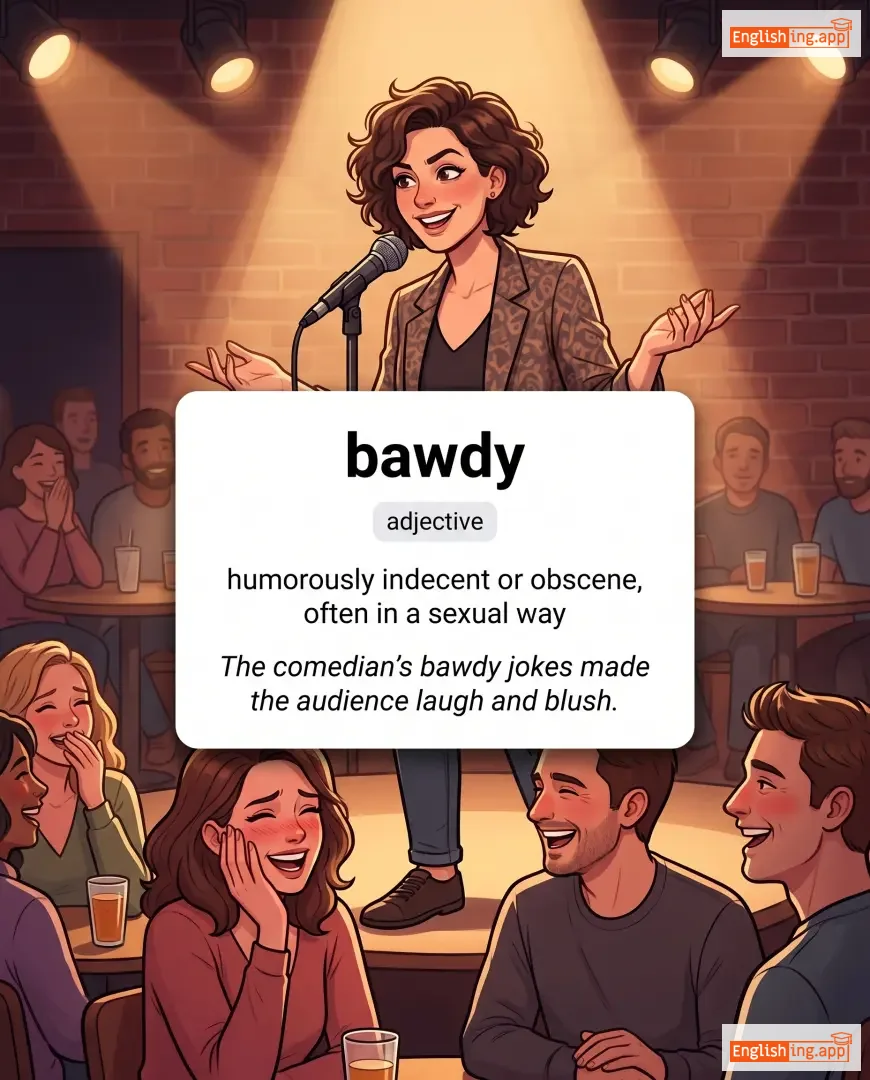
bawdy definition card — visual illustration of the meaning
adjective
/ˈbɔːdi/
অশ্লীল (oshleel)

humorously indecent or obscene, often in a sexual way

"The comedian’s bawdy jokes made the audience laugh and blush."

"কৌতুক অভিনেতার অশ্লীল রসিকতায় দর্শক হাসল এবং লজ্জা পেল।" (Koutuk abhinetar oshleel rosikotay dorshok haslo ebong lojja pelo.)
verb
/bɔːl/
জোরে কান্না করা (jore kanna kora)

to shout or cry loudly

"The baby bawled all night, keeping everyone awake."

"শিশুটি সারা রাত জোরে কেঁদেছিল, সবাইকে জাগিয়ে রেখেছিল।" (Shishuti sara rat jore kendetshilo, sobaike jagiye rekhechhilo.)
noun
/beɪ/
উপসাগর (uposhagor)

a broad inlet of the sea where the land curves inward

"The ship anchored safely in the bay."

"জাহাজটি উপসাগরে নিরাপদে নোঙর ফেলেছিল।" (Jahajti uposhagore nirapode nongor felchhilo.)
noun
/beɪ liːf/
তেজপাতা (tejpata)

dried aromatic leaf of the bay laurel tree used as a culinary herb

"Add a bay leaf to the soup for extra flavor."

"অতিরিক্ত স্বাদের জন্য স্যুপে একটি তেজপাতা যোগ করুন।" (otiriktô swader jonnô syupe ekti tejpata jog korun)
verb
/ˈbeɪɪŋ/
ঘেউঘেউ করা (gheugheu kora)

making a loud, prolonged barking or howling sound, especially of dogs

"The baying of the hounds echoed through the forest."

"কুকুরগুলির ঘেউঘেউ শব্দ বনে প্রতিধ্বনিত হচ্ছিল।" (Kukurgulir gheugheu shobdo bone protidhonito hochhilo.)
verb
/biː/
হওয়া (howa)

To exist, to occur, or to have a particular quality.

"She wants to be a doctor."

"সে একজন ডাক্তার হতে চায়।" (Se ekjon daktar hote chay.)
noun
/biːtʃ/
সৈকত (shoikot)

An area of sand or small stones beside the sea or a lake.

"They spent the day relaxing on the beach."

"তারা দিনটি সৈকতে আরাম করে কাটিয়েছিল।" (Tara din ti shoikote aram kore katiyechilo.)
noun
/biːd/
তসবির; জপমালা; (toshbir, jopmala)

a small round object with a hole through it for threading

"She made a necklace with colorful beads."

"তিনি রঙিন তসবির দিয়ে একটি হার তৈরি করেছিলেন।" (Tini rongin toshbir diye ekti har toiri koreche chilen.)
noun
/biːk/
পাখির ঠোঁট (pakhir thont)

the hard pointed part of a bird's mouth

"The eagle has a sharp beak for tearing meat."

"ঈগলের মাংস ছেড়ার জন্য একটি ধারালো ঠোঁট রয়েছে।" (eegaler mangsho chherar jonyo ekti dharalo thont royechhe)
noun
/biːm/
রশ্মি / বিম (roshmi / bim)

a ray or shaft of light; a long piece of wood or metal used to support weight

"A beam of sunlight entered through the window."

"একটি সূর্যালোকের রশ্মি জানালা দিয়ে প্রবেশ করল।" (Ekti suryaloker roshmi janala diye probesh korlo.)
noun
/biːn/
শিম (shim)

A seed that is eaten as a vegetable or used to make food products.

"She cooked a pot of bean soup."

"সে এক হাঁড়ি শিমের সূপ রান্না করেছিল।" (Se ek handi shimer sup ranna korechilo.)
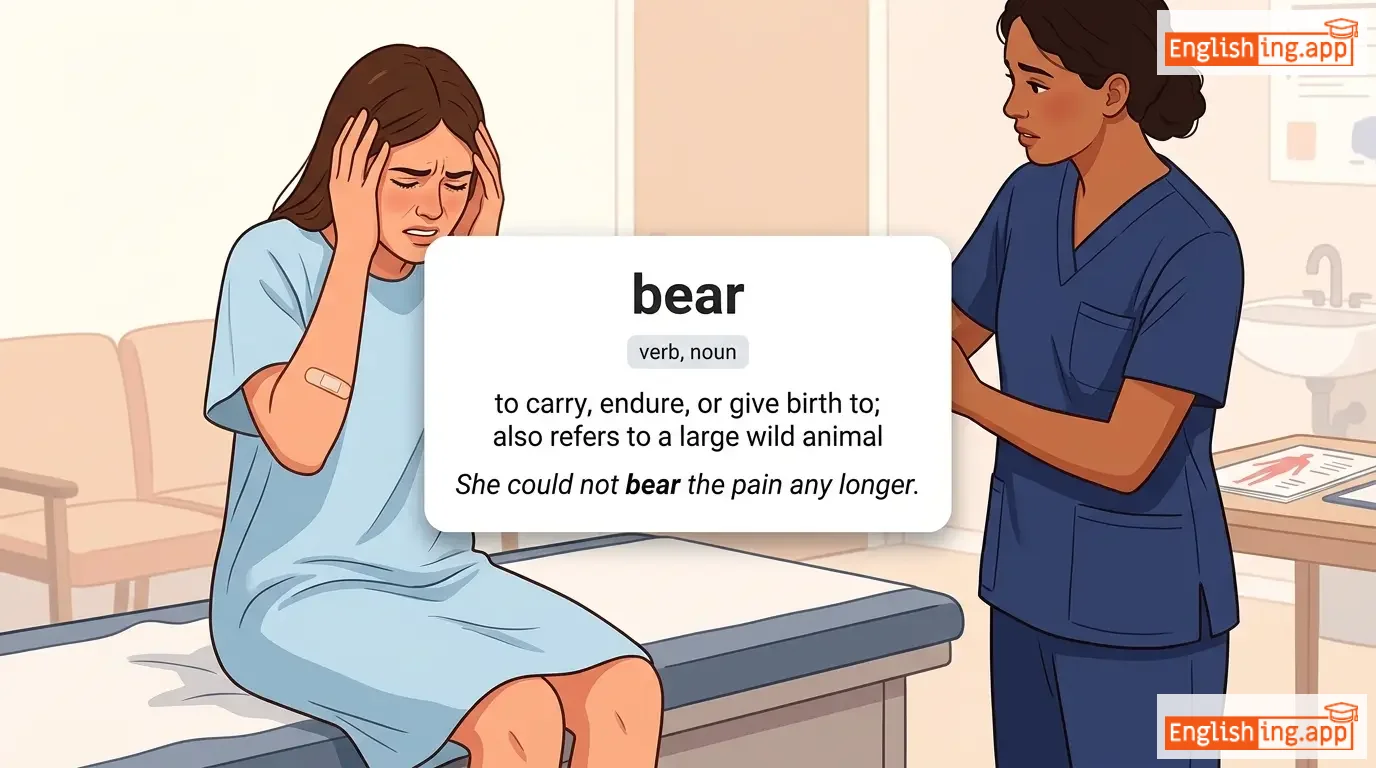
bear definition card — visual illustration of the meaning
verb, noun
/bɛər/
সহ্য করা / ভালুক (sohjo kora / bhaluk)

to carry, endure, or give birth to; also refers to a large wild animal

"She could not bear the pain any longer."

"সে আর ব্যথা সহ্য করতে পারছিল না।" (Se ar byatha sohjo korte parchhilo na.)
adjective
/ˈbeə.rə.bəl/
সহনীয়; ধারণযোগ্য; বরদাস্তযোগ্য; (beyarebol)

able to be endured; tolerable; not too unpleasant or painful

"The pain became bearable after taking the medicine."

"ওষুধ খাওয়ার পর ব্যথাটা সহনীয় হয়ে গেল।" (oshudh khawar por bythata shohoniyo hoye gelo.)
noun
/bɪəd/
দাড়ি (dari)

the hair growing on the lower part of a man's face

"He decided to grow a beard during his vacation."

"সে ছুটির সময় দাড়ি বাড়ানোর সিদ্ধান্ত নিল।" (Se chhutir somoy dari baranor siddhanto nilo.)
noun
/ˈbeə.rər/
পত্র-বাহক; বাহক; ভৃত্য; (potro-bahok, bahok, bhritto)

a person who carries or brings something; holder of a document

"The bearer of this message must deliver it quickly."

"এই বার্তার বাহককে অবশ্যই তা দ্রুত পৌঁছে দিতে হবে।" (Ei bartar bahok-ke obosshoy ta druto pouche dite hobe.)
noun
/ˈbɛərɪŋ/
আচরণ / ভঙ্গি (achoron / bhongi)

a person's way of standing or moving; relevance or connection to something

"Her calm bearing impressed everyone in the room."

"তার শান্ত ভঙ্গি ঘরে সবার উপর প্রভাব ফেলেছিল।" (Tar shanto bhongi ghore sobar upor probhab feliyechhilo.)
noun
/biːst/
পশু / জন্তু (poshu / jontu)

a large or dangerous animal; a cruel or brutal person

"The lion is known as the king of beasts."

"সিংহকে জন্তুর রাজা বলা হয়।" (Singhke jontur raja bola hoy.)
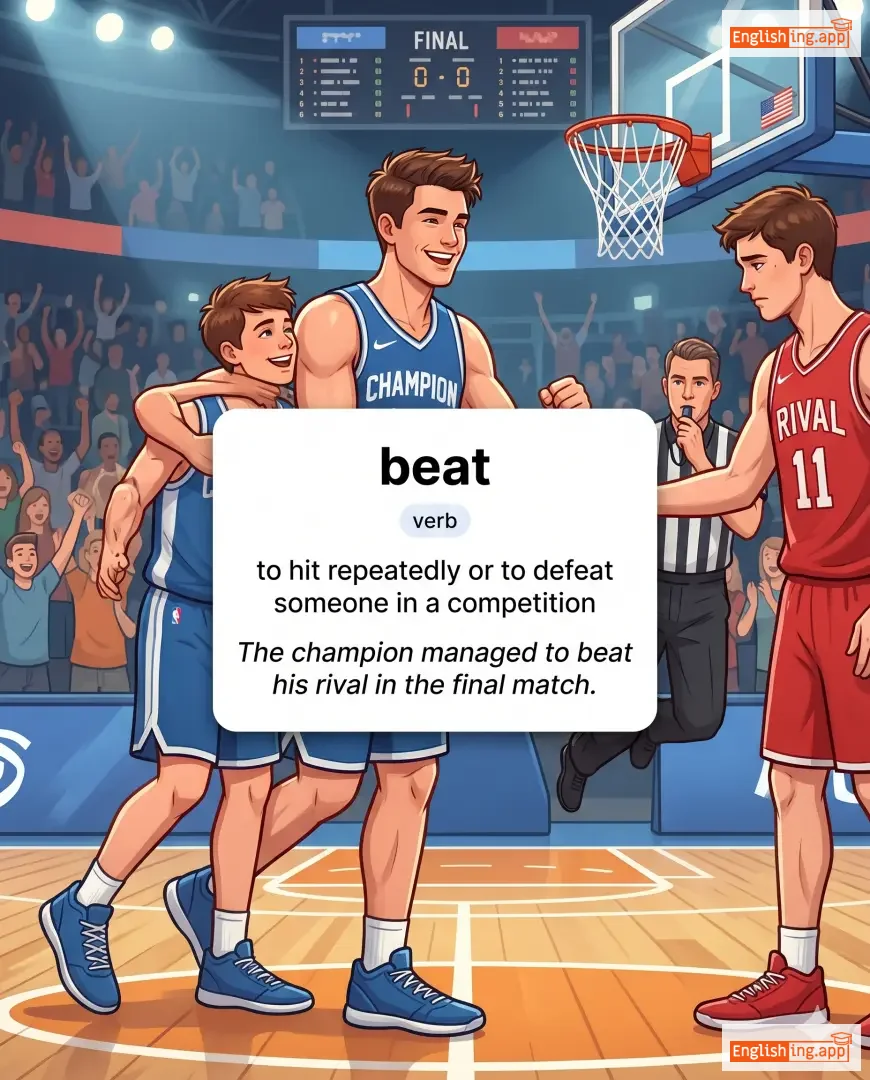
beat definition card — visual illustration of the meaning
verb
/biːt/
হারানো, আঘাত করা (harano, aghat kora)

to hit repeatedly or to defeat someone in a competition

"The champion managed to beat his rival in the final match."

"চ্যাম্পিয়ন ফাইনাল ম্যাচে তার প্রতিদ্বন্দ্বীকে হারাতে সক্ষম হয়েছিল।" (Champion final matche tar protiddondike harate sokkhom hoyechilo.)
noun
/ˈbiːtənd raɪs/
চিঁড়া (chira)

flattened rice; rice that has been parboiled, dried, and beaten into flat flakes

"Beaten rice is commonly eaten with milk and sugar for breakfast."

"চিঁড়া সাধারণত দুধ ও চিনি দিয়ে সকালের নাস্তায় খাওয়া হয়।" (chira sadharonoto dudh o chini diye sokaler nastay khawa hoy.)
adjective
/ˌbiːəˈtɪfɪk/
অত্যন্ত আনন্দিত (otonto anondito)

blissfully happy or showing great joy

"She had a beatific smile after hearing the good news."

"সুখবর শোনার পর তার মুখে আনন্দে ভরা হাসি ফুটে উঠল।" (Sukhobor shonar por tar mukhe anonde bhora hashi fute uthlo.)
beatify definition card — visual illustration of the meaning
verb
/biˈætɪfaɪ/
ধন্য ঘোষিত করা (dhonno ghosito kora)

to make blessed or holy, especially in the Roman Catholic Church, to declare a deceased person to be among the blessed

"The pope decided to beatify the martyr for his faith and sacrifice."

"পোপ বিশ্বাস ও ত্যাগের জন্য শহীদকে ধন্য ঘোষিত করার সিদ্ধান্ত নিলেন।" (Pop bishash o tyager jonno shohidke dhonno ghosito korar siddhanto nilen.)
noun
/biˈætɪtjuːd/
ধন্য অবস্থা (dhonno obostha)

supreme blessedness or happiness, often used in reference to the sayings of Jesus in the Sermon on the Mount

"She felt a state of beatitude after receiving the good news."

"ভালো খবর পাওয়ার পর সে ধন্য অবস্থায় অনুভব করল।" (Bhalo khobor pawar por se dhonno obosthaye onubhob korlo.)
noun
/boʊ/
প্রেমিক (premik)

a male admirer or boyfriend; a fashionable young man

"She arrived at the party with her beau."

"সে তার প্রেমিককে নিয়ে পার্টিতে এলো।" (Se tar premikke nie partite elo.)
adjective
/ˈbjuː.tɪ.fəl/
সুন্দর (shundor)

pleasing to the senses or mind; very attractive

"The garden looked beautiful in the morning sunlight."

"বাগানটি সকালের সূর্যের আলোতে সুন্দর দেখাচ্ছিল।" (Baganti sokaler surjer alote shundor dekhachchhilo.)
adverb
/ˈbjuːtɪfəli/
সুন্দরভাবে (shundorbhabe)

in a beautiful or pleasing manner; excellently or skillfully

"She sang beautifully at the concert."

"সে কনসার্টে সুন্দরভাবে গান গেয়েছিল।" (se konsarte shundorbhabe gan geyechilo)
verb
/ˈbjuːtɪfaɪ/
সুন্দর করা (shundor kora)

to make something more beautiful or attractive

"The city plans to beautify the old park with trees and lights."

"শহরটি গাছ ও আলো দিয়ে পুরোনো পার্কটি সুন্দর করার পরিকল্পনা করছে।" (shohorti gach o alo diye purono park ti shundor korar porikolpona korche)
noun
/ˈbjuːti/
সৌন্দর্য (saundorjo)

a combination of qualities that please the senses or mind

"The beauty of the sunset took her breath away."

"সূর্যাস্তের সৌন্দর্য তাকে মুগ্ধ করেছিল।" (Surjaster saundorjo take mugdho korechilo.)
verb
/bɪˈkɑːm/
শান্ত করা (shanto kora)

to make calm or still; to deprive a sailing vessel of wind

"The captain tried to becalm the anxious crew."

"ক্যাপ্টেন উদ্বিগ্ন নাবিকদের শান্ত করার চেষ্টা করলেন।" (Captain udbigno nabikder shanto korar cheshta korlen.)
conjunction
/bɪˈkɔːz/
কারণ (karon)

for the reason that; since

"He stayed home because it was raining."

"সে বাড়িতে ছিল কারণ বৃষ্টি হচ্ছিল।" (Se barite chilo karon brishti hochhilo.)