Словари

Словарь английского языка | Значения слов, определения и примеры

noun
/ˌbæstərdaɪˈzeɪʃən/
искажение / ухудшение (iskazhenie / ukhudshenie)

the act of corrupting, degrading, or misrepresenting something

"Critics called the remake a bastardization of the original film."

"Критики назвали ремейк извращением оригинального фильма." (Kritiki nazvali remeik izvrashcheniem original'nogo fil'ma.)
verb
/ˈbæstərdaɪz/
искажать (iskazhat)

to corrupt or debase something by altering it from its original form; to change in a way that reduces quality or purity

"Critics argue that the remake bastardized the original novel."

"Критики считают, что ремейк исказил оригинал." (Kritiki schitayut chto remake iskazil original)
verb
/beɪst/
поливать или смазывать расплавленным жиром, соками или жидкостью мясо во время готовки, чтобы оно оставалось влажным (polivat' ili smazyvat' rasplavlennym zhiri, sokami ili zhidkost'yu myaso vo vremya gotovki, chtoby ono ostavalos' vlazhny'm)

to pour or brush melted fat, juices, or liquid over meat during cooking to keep it moist

"She basted the turkey every 30 minutes to keep it juicy."

"Она подливала индейку каждые 30 минут, чтобы она оставалась сочной." (Ona podlivalá indeyku kazhdyye 30 minut, chtoby ona ostavalas' sochnoy.)
noun
/ˈbæs.ti.ən/
бастион, крепость (bastion, krepost)

a stronghold or fortification; a place or institution strongly defending particular principles

"The castle stood as a bastion against enemy attacks."
"Замок стоял как бастион против вражеских атак." (Zamok stoyal kak bastion protiv vrazheskikh atak.)
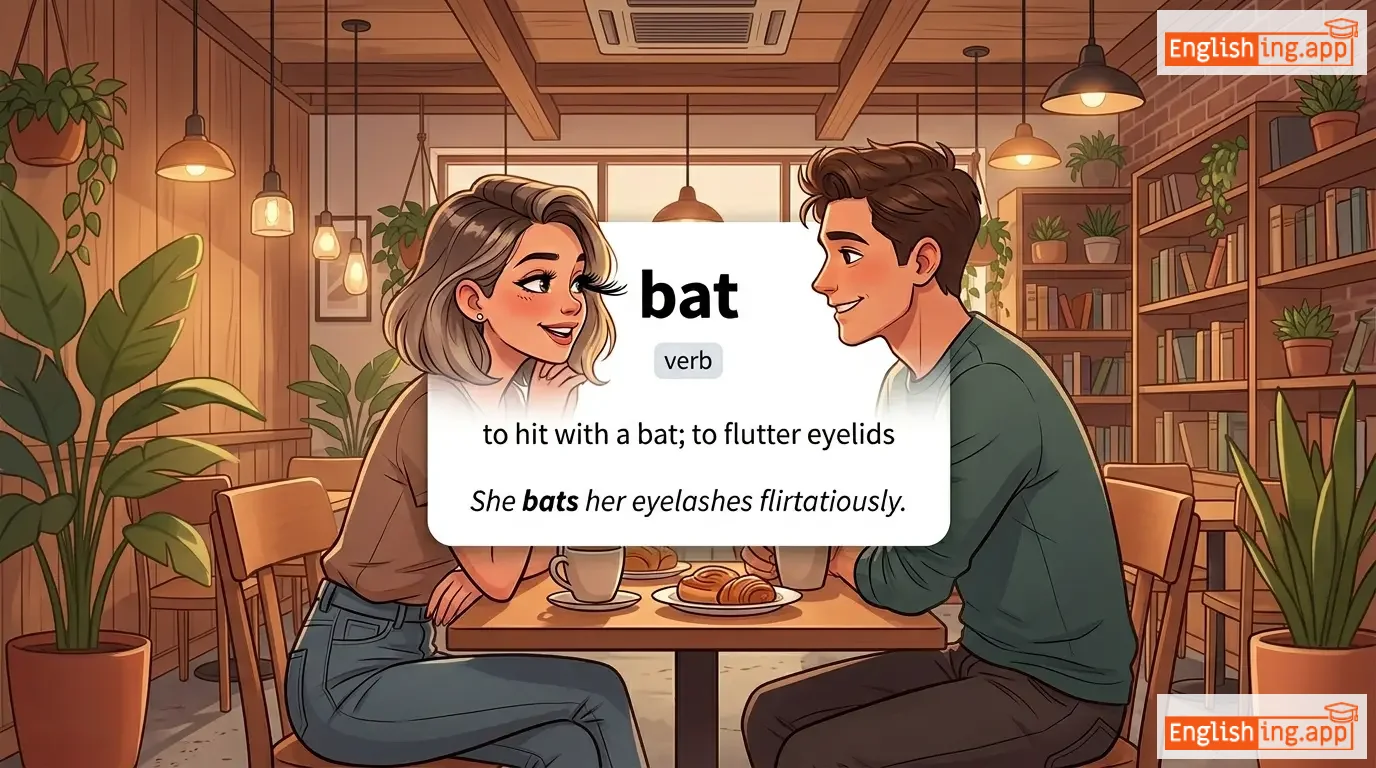
bat definition card — visual illustration of the meaning
noun
/bæt/
бита (bita)

a wooden or metal club used to hit a ball in sports like baseball or cricket

"He swung the bat and hit the ball hard."

"Он крутанул биту и сильно ударил по мячу." (On krutannul bitu i sil'no udaril po myachu.)
noun
/bætʃ/
количество предметов, произведённых или обработанных за одно время (kolichestvo predmetov, proizvedyonnykh ili obrabotannykh za odno vremya)

a quantity of items produced or processed at one time

"She baked a fresh batch of cookies this morning."

"Она испекла свежую партию печенья этим утром." (Ona ispekla svezhuyu partiyu pechen'ya etim utrom.)
😮‍💨

bate (бэйт)

verb
/beɪt/
уменьшить, ослабить (umenshit, oslabit)

to lessen or restrain; to diminish the force or intensity of something

"He spoke with bated breath as he waited for the result."

"Он говорил с затаенным дыханием, ожидая результат." (On govoril s zatayennym dykhaniyem, ozhidaya rezul'tat.)
noun
/bɑːθ/
ванна (vanna)

an act of washing the body in water; or the container used for this purpose

"She took a long bath after work."
"Она приняла длинную ванну после работы." (Ona prinяла dlinuyu vannu posle raboty.)
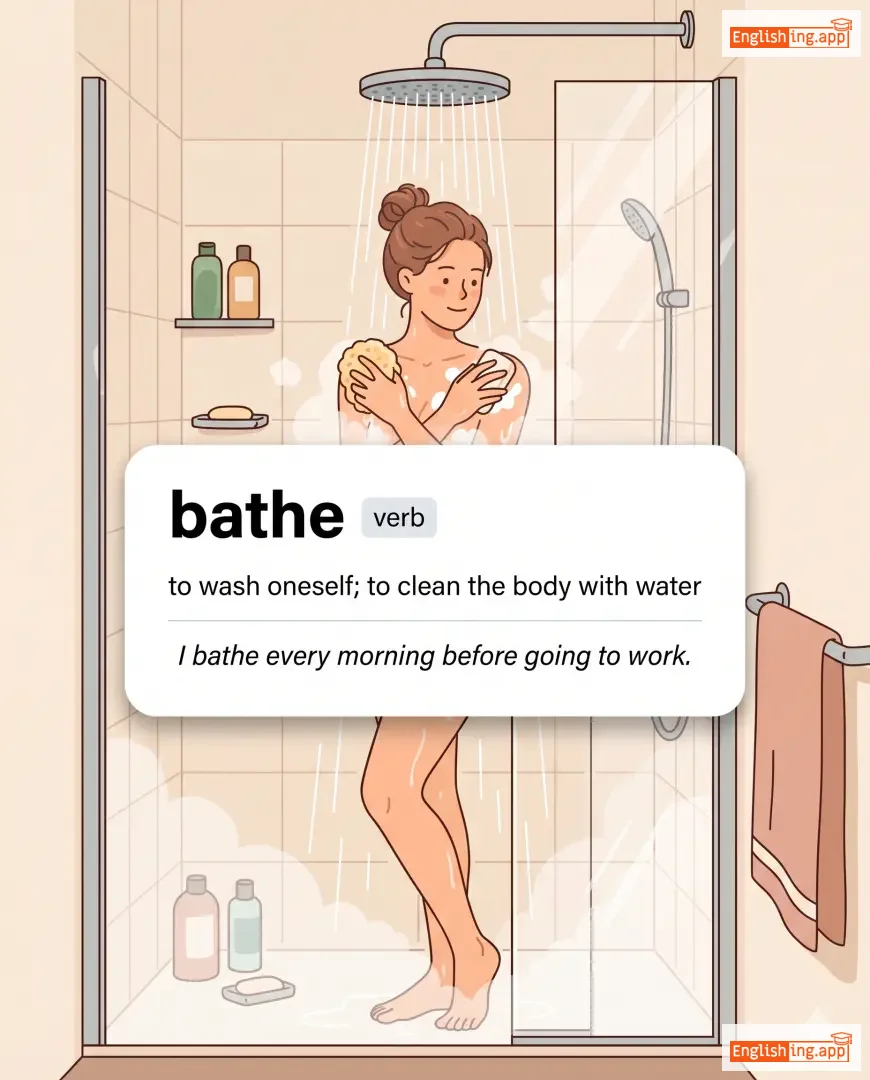
bathe definition card — visual illustration of the meaning
verb
/beɪð/
купаться (kupat'sya)

to wash oneself; to clean the body with water

"I bathe every morning before going to work."

"Я принимаю душ каждое утро перед тем, как идти на работу." (Ya prinimayu dush kazhdoe utro pered tem, kak idti na rabotu)
adjective
/bəˈθɛt.ɪk/
тривиальные эмоции (trivial'nye emocii)

displaying insincere or trivial emotion; producing an unintended ridiculous effect through sudden change from serious to silly

"The movie's ending was unintentionally bathetic rather than tragic."

"Конец фильма был батетичным, а не трагичным." (Konets fil'ma byl batetichnym, a ne tragichnym.)
noun
/ˈbɑːθruːm/
ванная комната (vannaya komnata)

a room containing a toilet and usually a sink or shower

"The bathroom is on the second floor."
"Ванная комната на втором этаже." (Vannaya komnata na vtorom etazhe.)
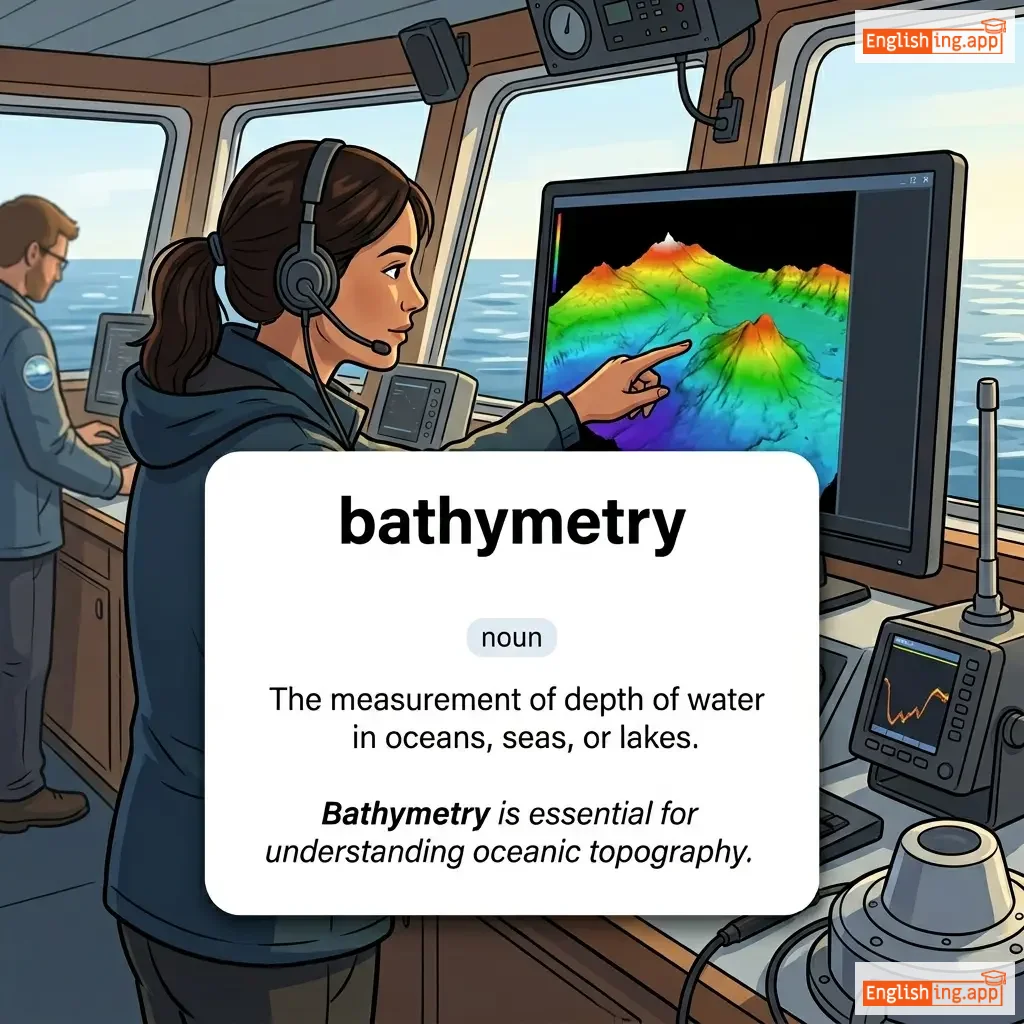
bathymetry definition card — visual illustration of the meaning
noun
/bəˈθɪm.ə.tri/
батиметрия (batimetria)

The measurement of depth of water in oceans, seas, or lakes.

"Bathymetry is essential for understanding oceanic topography."

"Батиметрия необходима для понимания океанской топографии." (Batimetria neobkhodima dlya ponimaniya okeanskoy topografii.)
noun
/bəˈtɒn/
палка / символ власти (palka / simvol vlasti)

A thin stick carried by a conductor to direct an orchestra, or used as a symbol of authority.

"The conductor raised his baton to begin the symphony."

"Дирижёр поднял свой батон, чтобы начать симфонию." (Dirizhyor podnyal svoi baton, chtoby nachat' simfoniyu.)
noun
/bəˈtæljən/
батальон (batal'yon)

A large body of soldiers ready for battle, typically consisting of several companies.

"The battalion was deployed to the front line."

"Батальон был развернут на передовую." (Batal'yon byl razvernut na peredovuyu.)
verb
/ˈbætn/
закрепить (zakrepit)

To fasten or secure something tightly.

"They battened down the hatches before the storm."

"Они закрепили люки перед бурей." (Oni zakrepili lyuki pered burey.)
verb
/ˈbætər/
ударять повторно (udaryat' povtornо)

To strike repeatedly with force.

"The waves battered the shoreline all night."

"Волны били побережье всю ночь." (Volny bili poberezh'ye vsyu noch'.)
noun
/ˈbætəri/
батарея (batareya)

A device that stores and provides electrical energy; also refers to a group of similar things or repeated blows.

"The phone battery ran out after a long day."

"Аккумулятор телефона разрядился после долгого дня." (Akkumulyator telefona razryadilsya posle dolgogo dnya.)
noun/verb
/ˈbætəl/
битва (bitva)

A fight between armed forces or a struggle to achieve or resist something.

"The soldiers prepared for the final battle."

"Солдаты готовились к последней битве." (Soldaty gotovilis' k posledney bitve.)
noun
/ˈbætəlˌfiːld/
поле битвы (pole bitvy)

a place where a battle is fought

"The battlefield was covered with the remnants of the fight."

"Поле битвы было покрыто остатками боя." (Pole bitvy bylo pokryto ostatkami boya.)
adjective
/ˈbæti/
чокнутый (choknutyy)

crazy or eccentric in behavior

"The old man down the street is a bit batty but harmless."

"Старик на улице немного чокнутый, но безвредный." (Starik na ulitse nemnogo choknutyy, no bezvrednyy.)
noun
/ˈbɔːbəl/
безделушка (bezdelooshka)

A small, decorative trinket or ornament, often of little value.

"She wore a shiny bauble around her neck."

"Она носила блестящую безделушку на шее." (Ona nosila blyestyashchuyu bezdelooshku na sheye.)
bawdy definition card — visual illustration of the meaning
adjective
/ˈbɔːdi/
непристойный (nepristoinyj)

humorously indecent or obscene, often in a sexual way

"The comedian’s bawdy jokes made the audience laugh and blush."

"Непристойные шутки комика заставили публику смеяться и краснеть." (Nepristoinye shutki komika zastavili publiku smejatsya i krasnet'.)
verb
/bɔːl/
кричать громко (krichat' gromko)

to shout or cry loudly

"The baby bawled all night, keeping everyone awake."

"Ребенок кричал всю ночь, не давая всем уснуть." (Rebenok krichal vsyu noch', ne davaya vsem usnut'.)
noun
/beɪ/
залив (zaliv)

a broad inlet of the sea where the land curves inward

"The ship anchored safely in the bay."

"Корабль безопасно встал на якорь в заливе." (Korabl' bezopasno vstal na yakor' v zalive.)
noun
/beɪ liːf/
лавровый лист (lavrovy list)

dried aromatic leaf of the bay laurel tree used as a culinary herb

"Add a bay leaf to the soup for extra flavor."

"Добавьте лавровый лист в суп для дополнительного аромата." (Dobav'te lavrovy list v sup dlya dopolnitel'nogo aromata)
verb
/ˈbeɪɪŋ/
лаять (layat')

making a loud, prolonged barking or howling sound, especially of dogs

"The baying of the hounds echoed through the forest."

"Лай гончих эхом разнесся по лесу." (Lay gonchikh ekhom raznes sya po lesu.)
verb
/biː/
быть (byt)

To exist, to occur, or to have a particular quality.

"She wants to be a doctor."

"Она хочет стать врачом." (Ona khochet stat' vrachom.)
noun
/biːtʃ/
пляж (plyazh)

An area of sand or small stones beside the sea or a lake.

"They spent the day relaxing on the beach."

"Они провели день, расслабляясь на пляже." (Oni proveli den', rasslablyayas' na plyazhe.)
noun
/biːd/
бусина (busina)

a small round object with a hole through it for threading

"She made a necklace with colorful beads."

"Она сделала ожерелье с разноцветными бусинами." (Ona sdelała ozherele s raznotsvetnymi businami.)
noun
/biːk/
клюв (klyuv)

the hard pointed part of a bird's mouth

"The eagle has a sharp beak for tearing meat."

"У орла острый клюв для разрывания мяса." (U orla ostry klyuv dlya razryvaniya myasa.)
noun
/biːm/
луч / балка (luch / balka)

a ray or shaft of light; a long piece of wood or metal used to support weight

"A beam of sunlight entered through the window."

"Луч света вошел в окно." (Luch sveta voshel v okno.)
noun
/biːn/
фасоль (fasol)

A seed that is eaten as a vegetable or used to make food products.

"She cooked a pot of bean soup."
"Она приготовила кастрюлю фасолевого супа." (Ona prigotovila kastryulyu fasolevogo supa.)
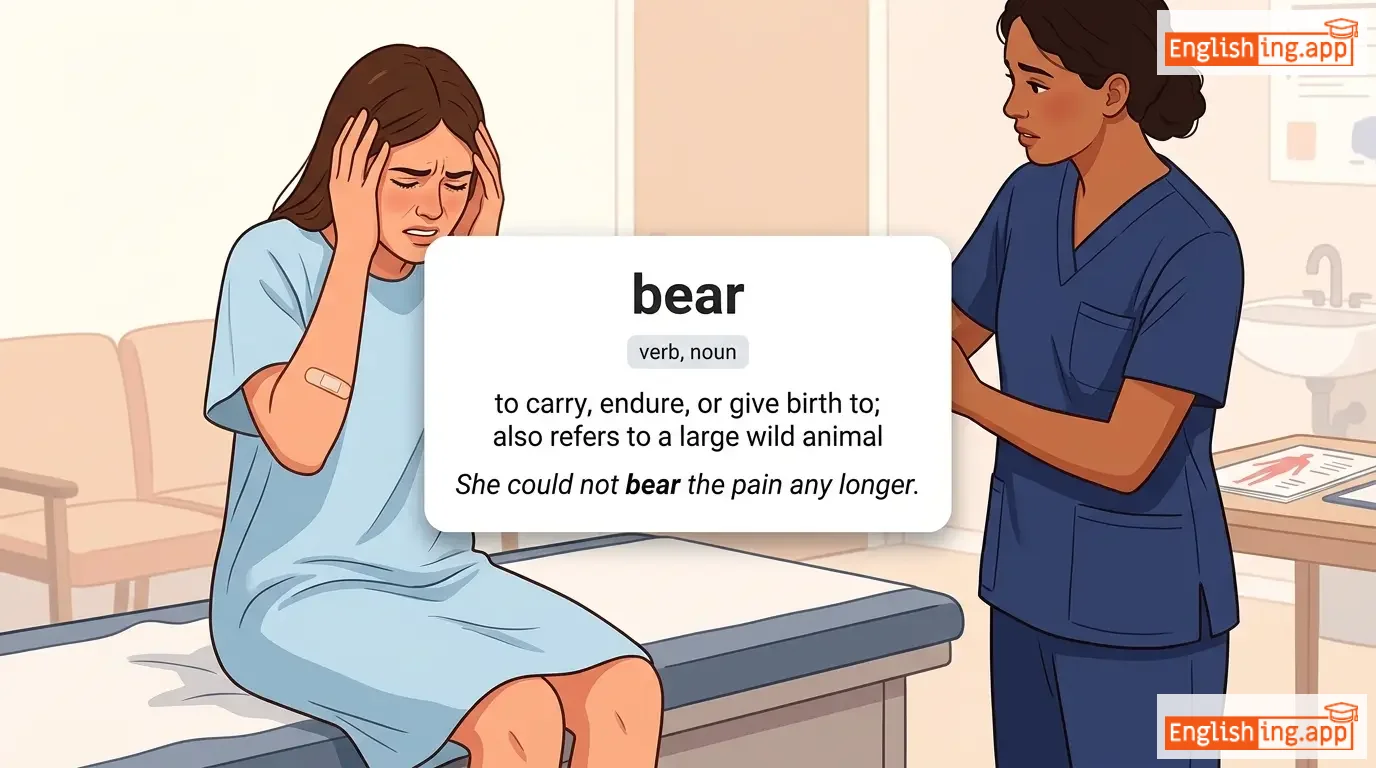
bear definition card — visual illustration of the meaning
verb, noun
/bɛər/
выносить / медведь (vynosit / medved)

to carry, endure, or give birth to; also refers to a large wild animal

"She could not bear the pain any longer."

"Она больше не могла терпеть боль." (Ona bol'she ne mogla terpet' bol'.)
adjective
/ˈbeə.rə.bəl/
выносимый; терпимый; не слишком неприятный или болезненный (bearable)

able to be endured; tolerable; not too unpleasant or painful

"The pain became bearable after taking the medicine."

"Боль стала терпимой после того, как он принял лекарство." (Bol' stala terpimoy posle togo, kak on prinyal lekarstvo.)
noun
/bɪəd/
счастье (schast'ye)

the hair growing on the lower part of a man's face

"He decided to grow a beard during his vacation."

"Она не могла скрыть своего счастья, когда получила награду." (Ona ne mogla skryt' svoego schast'ya, kogda poluchila nagradu.)
noun
/ˈbeə.rər/
носитель; держатель документа (nositel; derzhatel dokumenta)

a person who carries or brings something; holder of a document

"The bearer of this message must deliver it quickly."

"Носитель этого сообщения должен доставить его быстро." (Nositel etogo soobshcheniya dolzhen dostavit' ego bystro.)
noun
/ˈbɛərɪŋ/
поведение / осанка (povedenie / osanka)

a person's way of standing or moving; relevance or connection to something

"Her calm bearing impressed everyone in the room."

"Её спокойная осанка впечатлила всех в комнате." (Yeyo spokoynaya osanka vpechatlila vsekh v komnate.)
noun
/biːst/
зверь / животное (zver' / zhivotnoe)

a large or dangerous animal; a cruel or brutal person

"The lion is known as the king of beasts."
"Лев известен как король зверей." (Lev izvesten kak korol' zverej.)
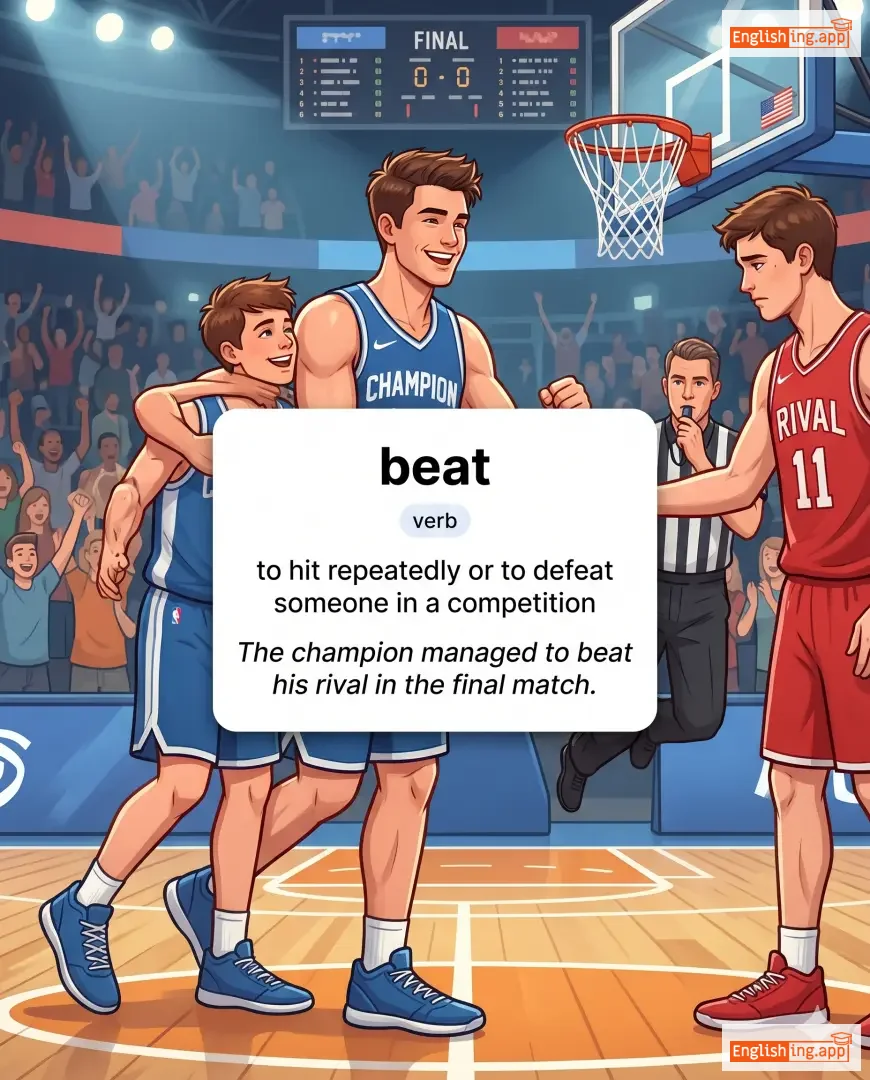
beat definition card — visual illustration of the meaning
verb
/biːt/
бить, побеждать (bit', pobezhdat')

to hit repeatedly or to defeat someone in a competition

"The champion managed to beat his rival in the final match."

"Чемпион смог победить своего соперника в финальном матче." (Chempion smog pobedit' svoego sopernika v final'nom matche.)
noun
/ˈbiːtənd raɪs/
сплющенный рис (splyushchennyy ris)

flattened rice; rice that has been parboiled, dried, and beaten into flat flakes

"Beaten rice is commonly eaten with milk and sugar for breakfast."

"Сплющенный рис часто едят с молоком и сахаром на завтрак." (Splyushchennyy ris chasto edyat s molokom i sakharom na zavtrak.)
adjective
/ˌbiːəˈtɪfɪk/
блаженный (blazhenny)

blissfully happy or showing great joy

"She had a beatific smile after hearing the good news."
"У неё была блаженная улыбка после того, как она услышала хорошие новости." (U neyo byla blazhennaya ulybka posle togo, kak ona uslyshala khoroshiye novosti.)
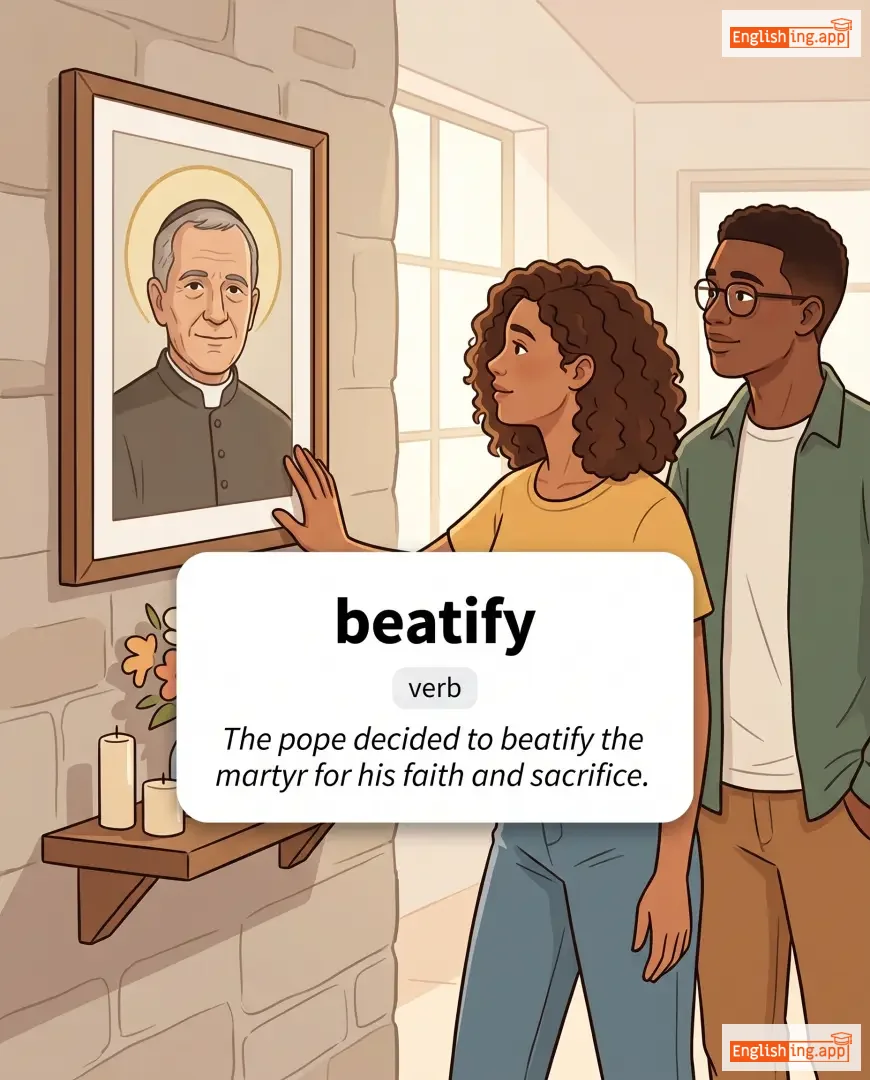
beatify definition card — visual illustration of the meaning
verb
/biˈætɪfaɪ/
беатифицировать (beatificirovat)

to make blessed or holy, especially in the Roman Catholic Church, to declare a deceased person to be among the blessed

"The pope decided to beatify the martyr for his faith and sacrifice."

"Папа решил беатифицировать мученика за его веру и жертву." (Papa reshil beatificirovat' muchenika za ego veru i zhertvu.)
noun
/biˈætɪtjuːd/
высшее блаженство или счастье, часто используется в отношении учений Иисуса на Нагорной проповеди (vyshee blazhenstvo ili schastye, chasto ispolzuyetsya v otnoshenii ucheniy Iisusa na Nagornoy propovedi)

supreme blessedness or happiness, often used in reference to the sayings of Jesus in the Sermon on the Mount

"She felt a state of beatitude after receiving the good news."

"Она почувствовала состояние блаженства после получения хороших новостей." (Ona pochuvstvovala sostoyanie blazhestva posle polucheniya khoroshikh novostey.)
noun
/boʊ/
возлюбленный (vozlyublennyy)

a male admirer or boyfriend; a fashionable young man

"She arrived at the party with her beau."

"Она пришла на вечеринку со своим возлюбленным." (Ona prishla na vecherinku so svoim vozlyublennym.)
adjective
/ˈbjuː.tɪ.fəl/
красивый (krasivyy)

pleasing to the senses or mind; very attractive

"The garden looked beautiful in the morning sunlight."

"Сад выглядел красивым на утреннем солнечном свете." (Sad vyglyadel krasivym na utrehnem solnechnom svete.)
adverb
/ˈbjuːtɪfəli/
красиво (krasivo)

in a beautiful or pleasing manner; excellently or skillfully

"She sang beautifully at the concert."

"Она красиво пела на концерте." (ona krasivo pela na kontserte)
verb
/ˈbjuːtɪfaɪ/
украшать (ukrashat)

to make something more beautiful or attractive

"The city plans to beautify the old park with trees and lights."

"Город планирует украсить старый парк деревьями и огнями." (Gorod planiruet ukrasit staryi park derevyami i ognyami)
noun
/ˈbjuːti/
красота (krasota)

a combination of qualities that please the senses or mind

"The beauty of the sunset took her breath away."

"Красота заката поразила её." (Krasota zakata porazila yeyo.)
verb
/bɪˈkɑːm/
успокаивать (uspokajivat)

to make calm or still; to deprive a sailing vessel of wind

"The captain tried to becalm the anxious crew."

"Капитан пытался успокоить беспокойную команду." (Kapitan pytalsya uspokoit' bespokoĭnuĭ komanduy.)
conjunction
/bɪˈkɔːz/
потому что (potomu chto)

for the reason that; since

"He stayed home because it was raining."

"Он остался дома, потому что шёл дождь." (On ostalsya doma, potomu chto shol dozhd'.)