वोकैबुलरीज

इंग्लिश वोकैबुलरी डिस्कवर, लर्न और मास्टर करें

noun
/ˌbæstərdaɪˈzeɪʃən/
विकृति / अवमूल्यन (vikriti / avmulyan)

the act of corrupting, degrading, or misrepresenting something

"Critics called the remake a bastardization of the original film."

"आलोचकों ने रिमेक को मूल फिल्म का विकृति बताया।" (Aalochako ne remake ko mul film ka vikriti bataya.)
verb
/ˈbæstərdaɪz/
विकृत करना (vikrit karna)

to corrupt or debase something by altering it from its original form; to change in a way that reduces quality or purity

"Critics argue that the remake bastardized the original novel."

"आलोचकों का कहना है कि रीमेक ने मूल उपन्यास को विकृत कर दिया।" (alochakon ka kehna hai ki remake ne mul upanyas ko vikrit kar diya)
verb
/beɪst/
पिघला हुआ वसा, रस या तरल पदार्थ मांस पर डालना (pighla hua vasa, ras ya taral padarth maans par daalna)

to pour or brush melted fat, juices, or liquid over meat during cooking to keep it moist

"She basted the turkey every 30 minutes to keep it juicy."

"उसने टर्की को हर 30 मिनट में बास्ट किया ताकि वह जूसी रहे।" (Usne turkey ko har 30 minute mein baste kiya taaki woh juicy rahe.)
noun
/ˈbæs.ti.ən/
किला, मजबूत क़िला (kila, majboot kila)

a stronghold or fortification; a place or institution strongly defending particular principles

"The castle stood as a bastion against enemy attacks."

"महल शत्रु के हमलों के खिलाफ एक किले के रूप में खड़ा था।" (mahal shatrun ke hamlon ke khilaf ek kile ke roop mein khada tha.)
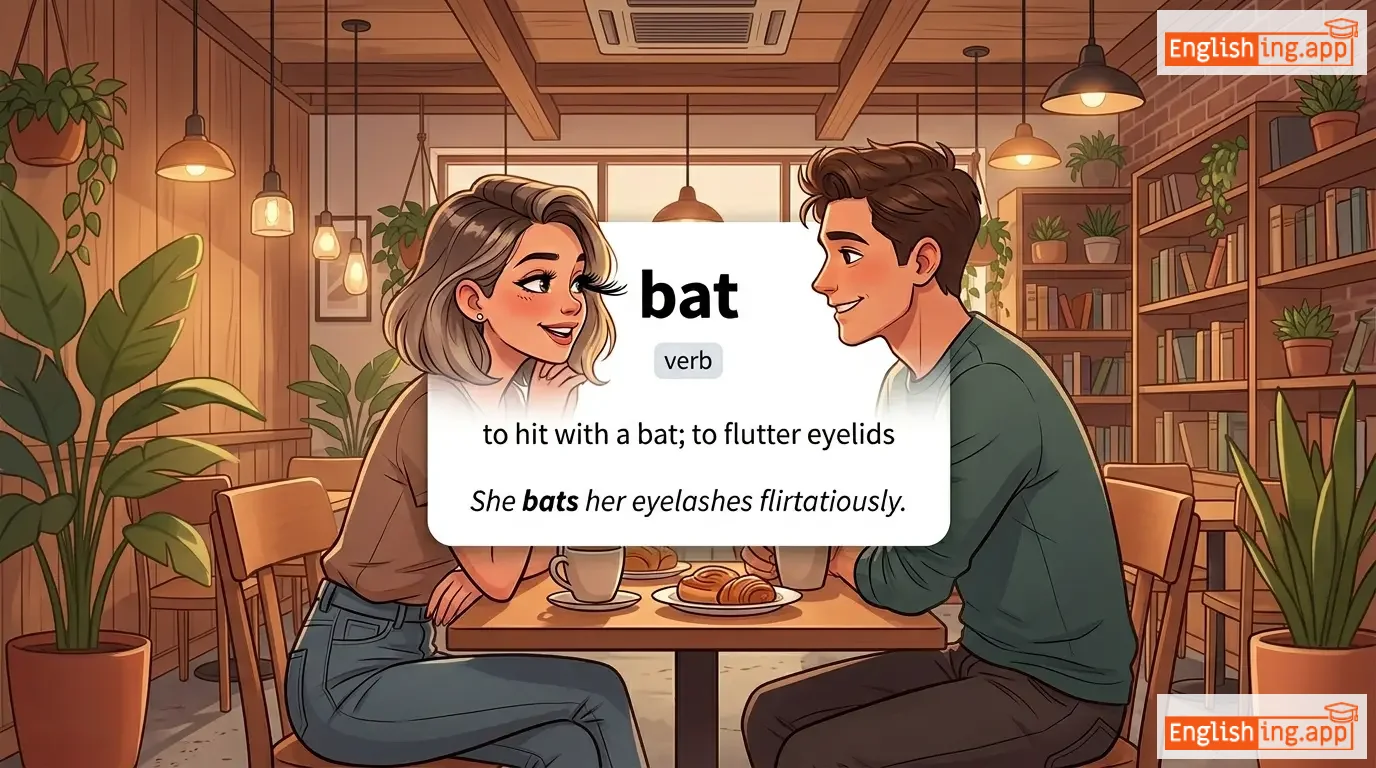
bat definition card — visual illustration of the meaning
noun
/bæt/
बैट (bat)

a wooden or metal club used to hit a ball in sports like baseball or cricket

"He swung the bat and hit the ball hard."

"उसने बैट घुमाया और बॉल को जोर से मारा।" (Usne bat ghumaya aur ball ko zor se maara.)
noun
/bætʃ/
एक बार में उत्पादित या संसाधित वस्तुओं की मात्रा (ek bar mein utpadit ya sansadit vastuon ki matra)

a quantity of items produced or processed at one time

"She baked a fresh batch of cookies this morning."

"उसने आज सुबह ताजा बैच कुकीज बेक किया।" (Usne aaj subah taza batch cookies bake kiya.)
😮‍💨

bate (बेट)

verb
/beɪt/
कम करना, दबाना (kam karna, dabana)

to lessen or restrain; to diminish the force or intensity of something

"He spoke with bated breath as he waited for the result."

"वह परिणाम का इंतजार करते हुए दबी हुई सांस के साथ बोला।" (Wah parinaam ka intezaar karte hue dabi hui saans ke saath bola.)
noun
/bɑːθ/
स्नान (snaan)

an act of washing the body in water; or the container used for this purpose

"She took a long bath after work."

"वह काम के बाद एक लंबा स्नान करने गई।" (Vah kaam ke baad ek lamba snaan karne gayi.)
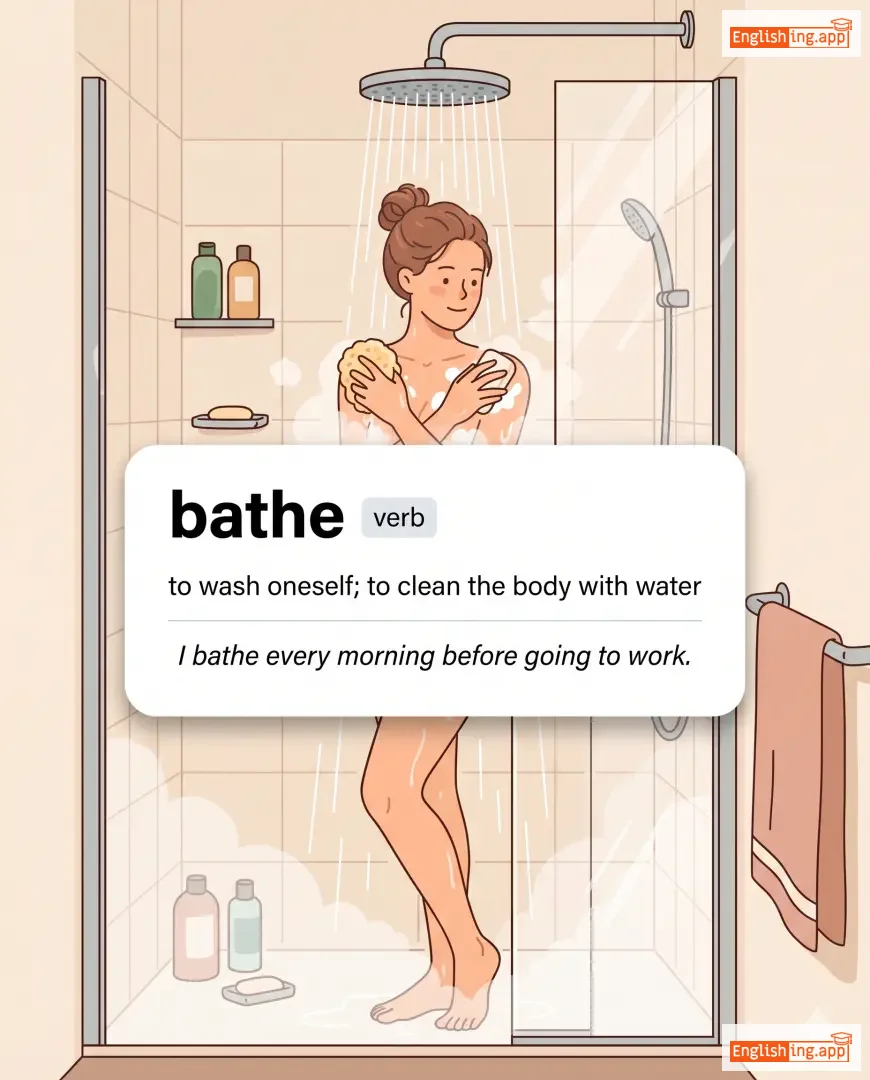
bathe definition card — visual illustration of the meaning
verb
/beɪð/
नहाना (nahana)

to wash oneself; to clean the body with water

"I bathe every morning before going to work."

"मैं हर सुबह काम पर जाने से पहले स्नान करता हूँ।" (Main har subah kaam par jaane se pehle snaan karta hoon)
adjective
/bəˈθɛt.ɪk/
तुच्छ भावना (tuchchh bhavna)

displaying insincere or trivial emotion; producing an unintended ridiculous effect through sudden change from serious to silly

"The movie's ending was unintentionally bathetic rather than tragic."

"फिल्म का अंत त्रासदी के बजाय अनायास ही तुच्छ और हास्यास्पद था।" (Film ka ant trasadi ke bajay anayas hi tuchchh aur hasyaspad tha.)
noun
/ˈbɑːθruːm/
बाथरूम (bathroom)

a room containing a toilet and usually a sink or shower

"The bathroom is on the second floor."

"बाथरूम दूसरे माले पर है।" (Bathroom doosre maale par hai.)
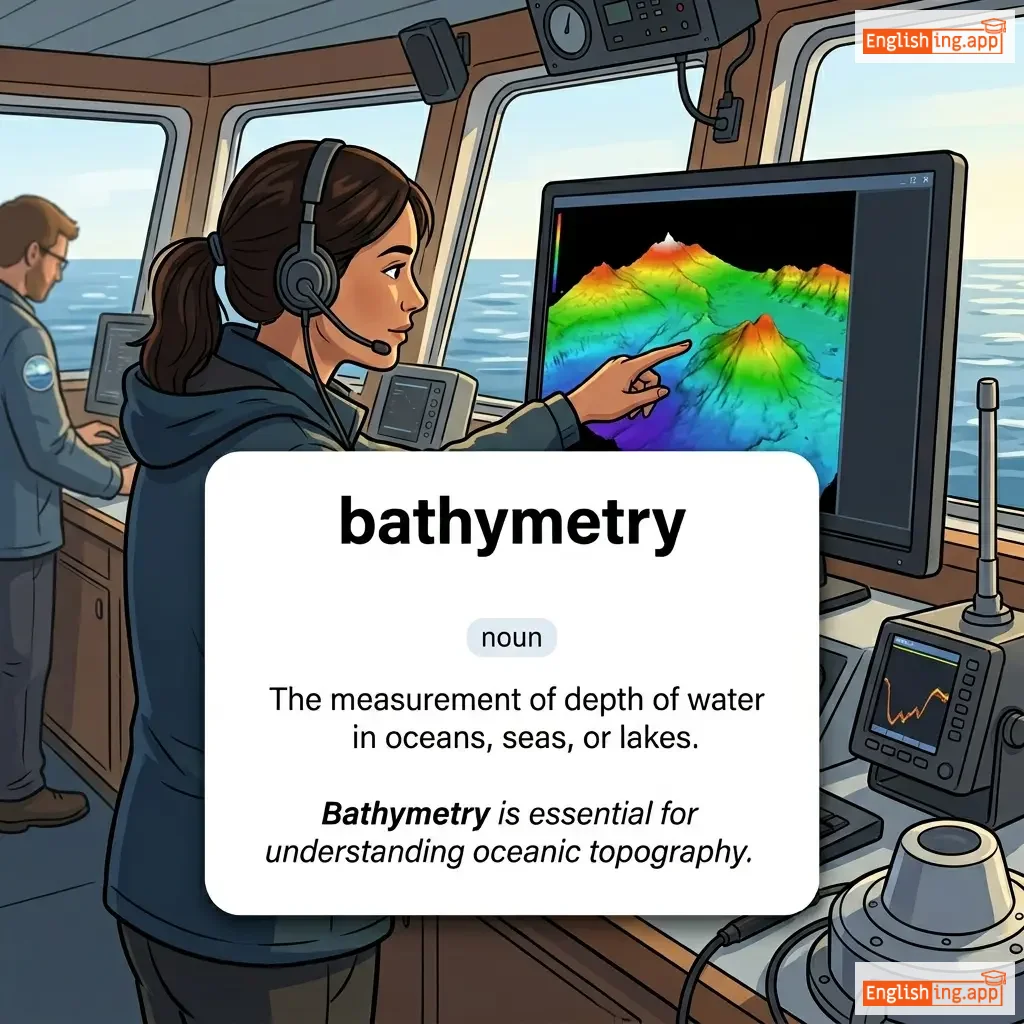
bathymetry definition card — visual illustration of the meaning
noun
/bəˈθɪm.ə.tri/
सागरमापी (sagarmaapi)

The measurement of depth of water in oceans, seas, or lakes.

"Bathymetry is essential for understanding oceanic topography."

"बैथीमेट्री महासागरीय स्थलरूप को समझने के लिए आवश्यक है।" (Bathymetry mahaasaagariya sthalaroop ko samajhne ke liye aavashyak hai.)
noun
/bəˈtɒn/
बटन / नेतृत्व का प्रतीक (baton / netritva ka prateek)

A thin stick carried by a conductor to direct an orchestra, or used as a symbol of authority.

"The conductor raised his baton to begin the symphony."

"कंडक्टर ने सिम्फनी शुरू करने के लिए अपनी बैटन उठाई।" (Conductor ne symphony shuru karne ke liye apni baton uthai.)
noun
/bəˈtæljən/
बटालियन (batalian)

A large body of soldiers ready for battle, typically consisting of several companies.

"The battalion was deployed to the front line."

"बटालियन को अग्रिम पंक्ति में तैनात किया गया था।" (Batalian ko agrim pankti mein tainat kiya gaya tha.)
verb
/ˈbætn/
सुरक्षित करना (surakshit karna)

To fasten or secure something tightly.

"They battened down the hatches before the storm."

"उन्होंने तूफान से पहले हैचेस को मजबूती से बंद किया।" (Unhone toofan se pehle hatches ko majbooti se band kiya.)
verb
/ˈbætər/
बार-बार जोर से मारना (baar-baar jor se maarna)

To strike repeatedly with force.

"The waves battered the shoreline all night."

"लहरों ने सारी रात तट को पीटते रहे।" (Lehron ne saari raat tat ko peet'te rahe.)
noun
/ˈbætəri/
बैटरी (battery)

A device that stores and provides electrical energy; also refers to a group of similar things or repeated blows.

"The phone battery ran out after a long day."

"फोन की बैटरी एक लंबे दिन के बाद खत्म हो गई।" (phone ki battery ek lambe din ke baad khatam ho gayi.)
noun/verb
/ˈbætəl/
युद्ध (yuddh)

A fight between armed forces or a struggle to achieve or resist something.

"The soldiers prepared for the final battle."

"सैनिकों ने अंतिम युद्ध के लिए तैयारी की।" (Sainikon ne antim yuddh ke liye taiyari ki.)
noun
/ˈbætəlˌfiːld/
युद्धभूमि (yuddhbhumi)

a place where a battle is fought

"The battlefield was covered with the remnants of the fight."

"युद्धभूमि युद्ध के अवशेषों से भरी हुई थी।" (Yuddhbhumi yuddh ke avasheshon se bhari hui thi.)
adjective
/ˈbæti/
पागल (pagal)

crazy or eccentric in behavior

"The old man down the street is a bit batty but harmless."

"सड़क के किनारे वाला बूढ़ा आदमी थोड़ा पागल है लेकिन हानिरहित है।" (Sadak ke kinare wala boodha aadmi thoda pagal hai lekin hanirhit hai.)
noun
/ˈbɔːbəl/
सजावटी गहना (sajavati gehna)

A small, decorative trinket or ornament, often of little value.

"She wore a shiny bauble around her neck."

"उसने अपनी गर्दन में एक चमचमाता सजावटी गहना पहना था।" (Usne apni gardan mein ek chamchamata sajavati gehna pehna tha.)
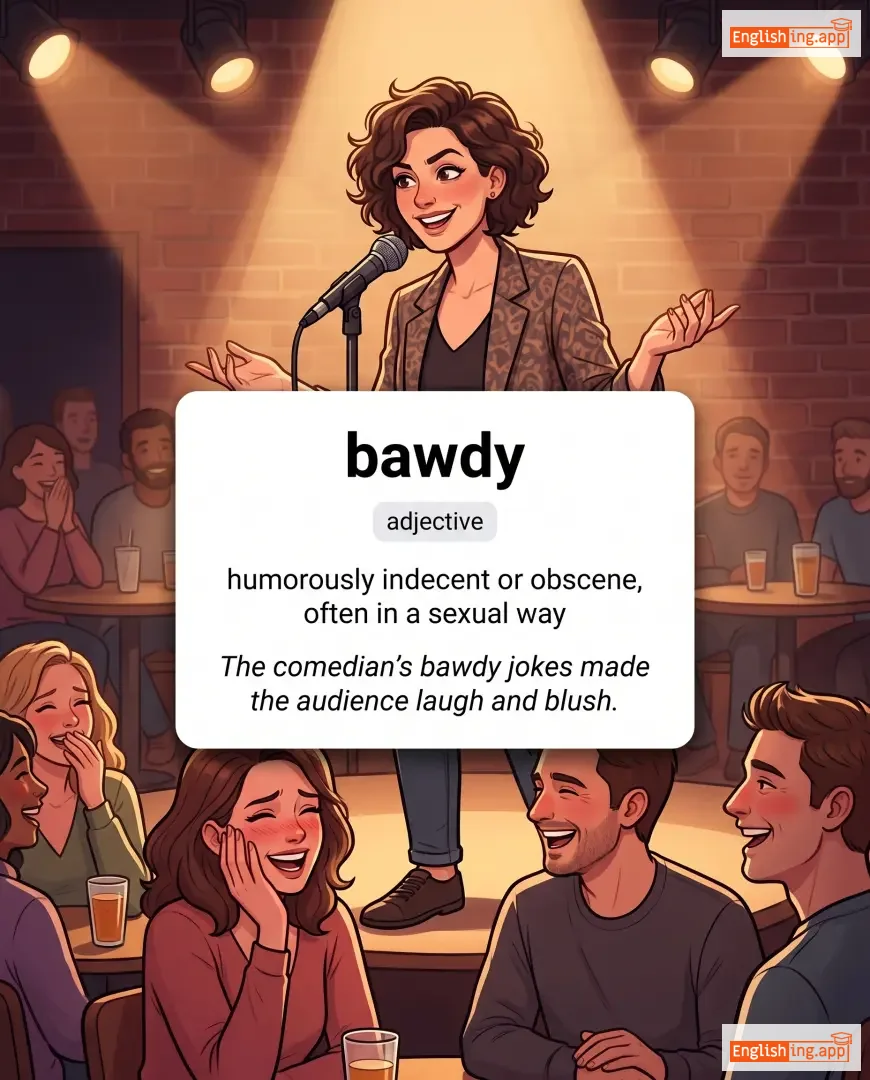
bawdy definition card — visual illustration of the meaning
adjective
/ˈbɔːdi/
अश्लील (ashleel)

humorously indecent or obscene, often in a sexual way

"The comedian’s bawdy jokes made the audience laugh and blush."

"कॉमेडियन के अश्लील चुटकुलों ने दर्शकों को हंसाया और शरमिंदा किया।" (Comedian ke asleel chutkulo ne darshako ko hansaya aur sharminda kiya.)
verb
/bɔːl/
जोर से चिल्लाना (jor se chillana)

to shout or cry loudly

"The baby bawled all night, keeping everyone awake."

"बेबी सारी रात जोर से रोता रहा, सबको जागते हुए रखा।" (Baby saari raat jor se rota raha, sabko jaagte hue rakha.)
noun
/beɪ/
खाड़ी (khadi)

a broad inlet of the sea where the land curves inward

"The ship anchored safely in the bay."

"जहाज ने खाड़ी में सुरक्षित रूप से लंगर डाला।" (Jahaj ne khadi mein surakshit roop se langar dala.)
noun
/beɪ liːf/
बे लीफ (be leaf)

dried aromatic leaf of the bay laurel tree used as a culinary herb

"Add a bay leaf to the soup for extra flavor."

"सूप में अतिरिक्त स्वाद के लिए एक बे लीफ डालें।" (soop mein atirikt swad ke liye ek be leaf daalen)
verb
/ˈbeɪɪŋ/
भौंकना (bhaunkna)

making a loud, prolonged barking or howling sound, especially of dogs

"The baying of the hounds echoed through the forest."

"हाउंड्स का भौंकना जंगल में गूंज रहा था।" (Hounds ka bhaunkna jangal mein goonj raha tha.)
verb
/biː/
होना (hona)

To exist, to occur, or to have a particular quality.

"She wants to be a doctor."

"वह डॉक्टर बनना चाहती है।" (Woh doctor banna chahti hai.)
noun
/biːtʃ/
समुद्रतट (samudratat)

An area of sand or small stones beside the sea or a lake.

"They spent the day relaxing on the beach."

"उन्होंने समुद्रतट पर आराम करते हुए पूरा दिन बिताया।" (Unhone samudratat par aaram karte hue poora din bitaya.)
noun
/biːd/
माला; बीन (maala, been)

a small round object with a hole through it for threading

"She made a necklace with colorful beads."

"उसने रंगीन बीड्स से एक हार बनाया।" (Usne rangeen beads se ek haar banaya.)
noun
/biːk/
चोंच (chonch)

the hard pointed part of a bird's mouth

"The eagle has a sharp beak for tearing meat."

"ईगल के पास मांस को फाड़ने के लिए एक तेज़ चोंच है।" (eegal ke paas maans ko faadne ke liye ek tez chonch hai)
noun
/biːm/
किरण / बीम (kiran / bim)

a ray or shaft of light; a long piece of wood or metal used to support weight

"A beam of sunlight entered through the window."

"एक किरण की रोशनी खिड़की से अंदर आई।" (Ek kiran ki roshni khidki se andar aayi.)
noun
/biːn/
बीन्स (beens)

A seed that is eaten as a vegetable or used to make food products.

"She cooked a pot of bean soup."

"उसने एक कटोरी बीन्स सूप पकाया।" (Usne ek katori beens soop pakaya.)
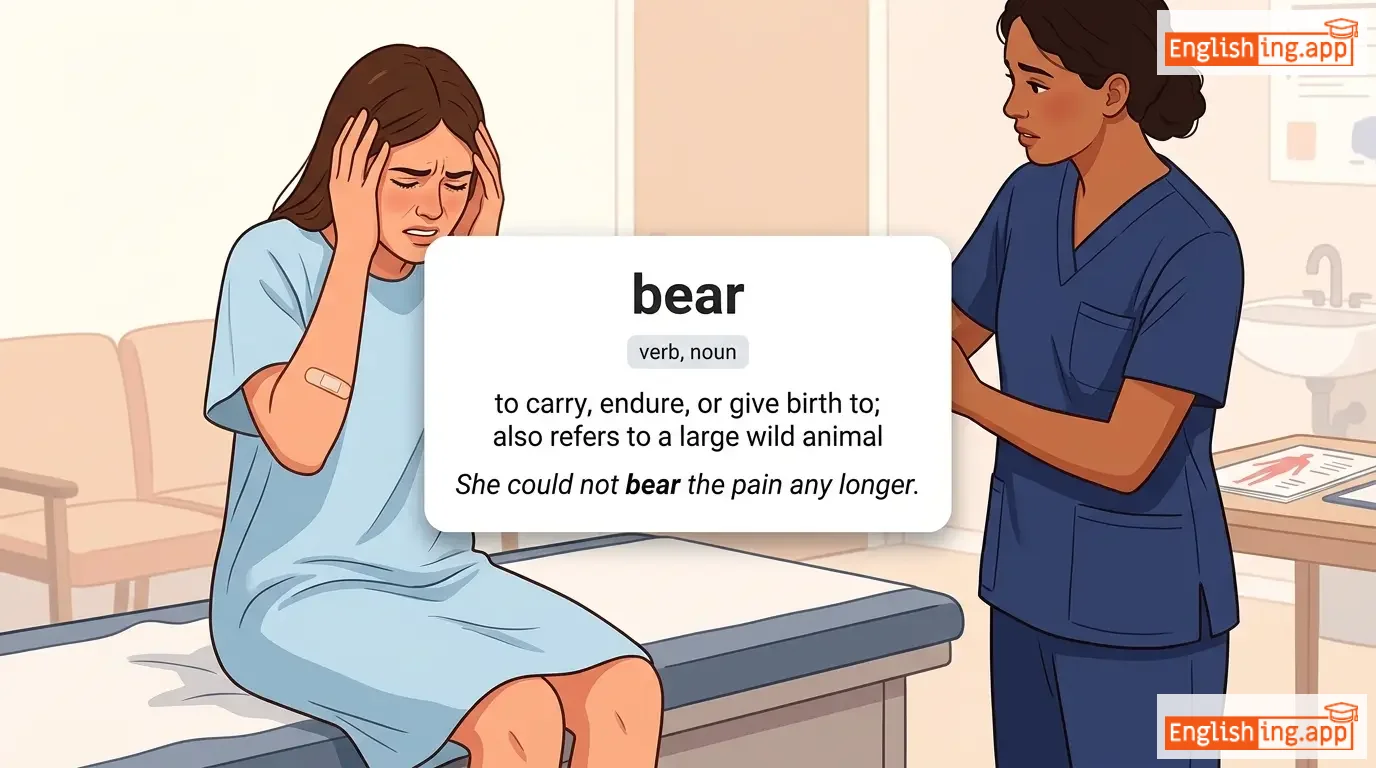
bear definition card — visual illustration of the meaning
verb, noun
/bɛər/
सहन करना / भालू (sahan karna / bhalu)

to carry, endure, or give birth to; also refers to a large wild animal

"She could not bear the pain any longer."

"वह अब और दर्द सहन नहीं कर सकती थी।" (Vah ab aur dard sahan nahin kar sakti thi.)
adjective
/ˈbeə.rə.bəl/
सहनशील; सहन करने योग्य; कष्टकारी नहीं (bierabal)

able to be endured; tolerable; not too unpleasant or painful

"The pain became bearable after taking the medicine."

"दवा लेने के बाद दर्द सहनीय हो गया।" (dawa lene ke baad dard sahanīya ho gaya.)
noun
/bɪəd/
खुशी (khushi)

the hair growing on the lower part of a man's face

"He decided to grow a beard during his vacation."

"वह पुरस्कार प्राप्त करने पर अपनी खुशी नहीं छुपा सकी।" (Wah puraskaar prapt karne par apni khushi nahin chhupa sakee.)
noun
/ˈbeə.rər/
वाहक; दस्तावेज़ का धारक (vahak; dastavez ka dharak)

a person who carries or brings something; holder of a document

"The bearer of this message must deliver it quickly."

"इस संदेश के वाहक को इसे जल्दी पहुंचाना होगा।" (Is sandesh ke vahak ko ise jaldi pahunchana hoga.)
noun
/ˈbɛərɪŋ/
आचरण / भंगिमा (acharan / bhangima)

a person's way of standing or moving; relevance or connection to something

"Her calm bearing impressed everyone in the room."

"उसकी शांत भंगिमा ने कमरे में सभी को प्रभावित किया।" (Uski shaant bhangima ne kamre mein sabhi ko prabhavit kiya.)
noun
/biːst/
जानवर / beast (jaanwar / beast)

a large or dangerous animal; a cruel or brutal person

"The lion is known as the king of beasts."

"शेर को जानवरों का राजा कहा जाता है।" (Sher ko janwaron ka raja kaha jata hai.)
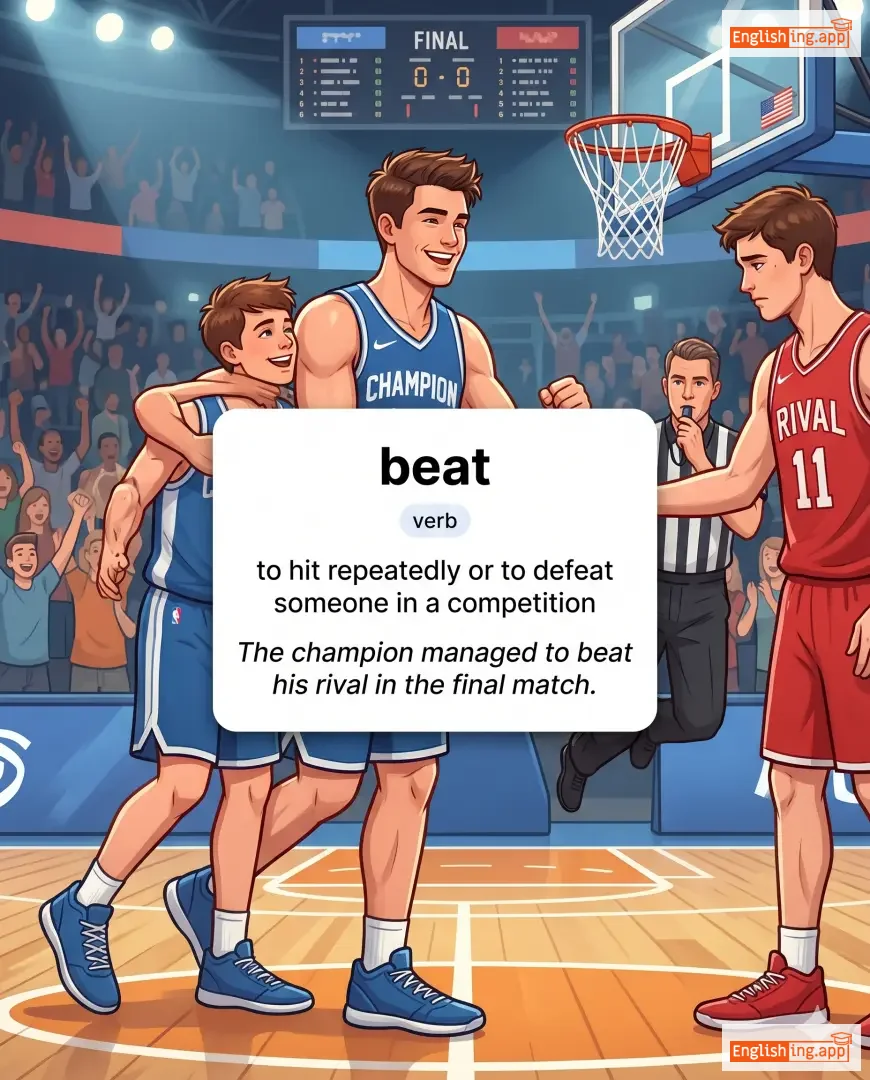
beat definition card — visual illustration of the meaning
verb
/biːt/
हारना, मारना (harna, maarna)

to hit repeatedly or to defeat someone in a competition

"The champion managed to beat his rival in the final match."

"चैंपियन ने फाइनल मैच में अपने प्रतिद्वंद्वी को हराया।" (Champion ne final match mein apne pratidvandvi ko haraaya.)
noun
/ˈbiːtənd raɪs/
चि़ड़ा (chira)

flattened rice; rice that has been parboiled, dried, and beaten into flat flakes

"Beaten rice is commonly eaten with milk and sugar for breakfast."

"चि़ड़ा आमतौर पर दूध और चीनी के साथ नाश्ते में खाया जाता है।" (chira aamtor par dudh aur chini ke sath nashtay mein khaya jata hai.)
adjective
/ˌbiːəˈtɪfɪk/
आध्यात्मिक रूप से खुश (adhyatmik roop se khush)

blissfully happy or showing great joy

"She had a beatific smile after hearing the good news."

"अच्छी खबर सुनने के बाद उसके चेहरे पर एक आध्यात्मिक खुशी थी।" (Achhi khabar sunne ke baad uske chehre par ek adhyatmik khushi thi.)
beatify definition card — visual illustration of the meaning
verb
/biˈætɪfaɪ/
धन्य घोषित करना (dhanya ghoshit karna)

to make blessed or holy, especially in the Roman Catholic Church, to declare a deceased person to be among the blessed

"The pope decided to beatify the martyr for his faith and sacrifice."

"पोप ने विश्वास और बलिदान के लिए शहीद को बीटिफाई करने का निर्णय लिया।" (Pop ne vishwas aur balidan ke liye shaheed ko beatify karne ka nirnay liya.)
noun
/biˈætɪtjuːd/
सर्वोत्तम आशीर्वाद या सुख, जो अक्सर यीशु के पर्वत पर उपदेश से संबंधित होता है (sarvottam aashirvad ya sukh, jo aksar Yeshu ke parvat par updesh se sambandhit hota hai)

supreme blessedness or happiness, often used in reference to the sayings of Jesus in the Sermon on the Mount

"She felt a state of beatitude after receiving the good news."

"वह अच्छी खबर मिलने के बाद एक आशीर्वाद की स्थिति में महसूस कर रही थी।" (Vah achhi khabar milne ke baad ek aashirvad ki sthiti mein mahsus kar rahi thi.)
noun
/boʊ/
प्रेमी (premee)

a male admirer or boyfriend; a fashionable young man

"She arrived at the party with her beau."

"वह अपने प्रेमी के साथ पार्टी में आई।" (Vah apne premee ke saath party mein aayi.)
adjective
/ˈbjuː.tɪ.fəl/
सौंदर्य (saundarya)

pleasing to the senses or mind; very attractive

"The garden looked beautiful in the morning sunlight."

"बग़ीचा सुबह की धूप में बहुत सुंदर दिख रहा था।" (Bagicha subah ki dhoop mein bahut sundar dikh raha tha.)
adverb
/ˈbjuːtɪfəli/
सुंदर ढंग से (sundar dhang se)

in a beautiful or pleasing manner; excellently or skillfully

"She sang beautifully at the concert."

"उसने कॉन्सर्ट में सुंदर ढंग से गाया।" (usne concert mein sundar dhang se gaya)
verb
/ˈbjuːtɪfaɪ/
सुंदर बनाना (sundar banana)

to make something more beautiful or attractive

"The city plans to beautify the old park with trees and lights."

"शहर पुराने पार्क को पेड़ों और रोशनी से सुंदर बनाने की योजना बना रहा है।" (shahar purane park ko pedon aur roshni se sundar banane ki yojana bana raha hai)
noun
/ˈbjuːti/
सुंदरता (sundarta)

a combination of qualities that please the senses or mind

"The beauty of the sunset took her breath away."

"सूर्यास्त की सुंदरता ने उसका दिल छू लिया।" (Suryasth ki sundarta ne uska dil chhoo liya.)
verb
/bɪˈkɑːm/
शांत करना (shaant karna)

to make calm or still; to deprive a sailing vessel of wind

"The captain tried to becalm the anxious crew."

"कप्तान ने घबराए हुए चालक दल को शांत करने की कोशिश की।" (Kaptaan ne ghabraaye hue chaalak dal ko shaant karne ki koshish ki.)
conjunction
/bɪˈkɔːz/
क्योंकि (kyonki)

for the reason that; since

"He stayed home because it was raining."

"वह घर पर रहा क्योंकि बारिश हो रही थी।" (Vah ghar par raha kyonki baarish ho rahi thi.)