Vocabularios

Descubra, aprenda y domine el vocabulario en inglés

noun
/ˌbæstərdaɪˈzeɪʃən/
degradación / distorsión (degradacion / distorsion)

the act of corrupting, degrading, or misrepresenting something

"Critics called the remake a bastardization of the original film."

"Los críticos llamaron al remake una bastardización de la película original." (Los criticos llamaron al remake una bastardizacion de la pelicula original.)
verb
/ˈbæstərdaɪz/
bastardizar (bastardizar)

to corrupt or debase something by altering it from its original form; to change in a way that reduces quality or purity

"Critics argue that the remake bastardized the original novel."

"Los críticos dicen que la adaptación bastardizó la obra original." (Los criticos dicen que la adaptacion bastardizo la obra original)
verb
/beɪst/
verter o untar grasa derretida, jugos o líquido sobre la carne mientras se cocina (verter o untar grasa derretida, jugos o liquido sobre la carne mientras se cocina)

to pour or brush melted fat, juices, or liquid over meat during cooking to keep it moist

"She basted the turkey every 30 minutes to keep it juicy."

"Ella bastó el pavo cada 30 minutos para mantenerlo jugoso." (Ella bastó el pavo cada 30 minutos para mantenerlo jugoso.)
noun
/ˈbæs.ti.ən/
baluarte, fortaleza (baluarte, fortaleza)

a stronghold or fortification; a place or institution strongly defending particular principles

"The castle stood as a bastion against enemy attacks."

"El castillo se erguía como un baluarte contra los ataques enemigos." (El castillo se erguia como un baluarte contra los ataques enemigos.)
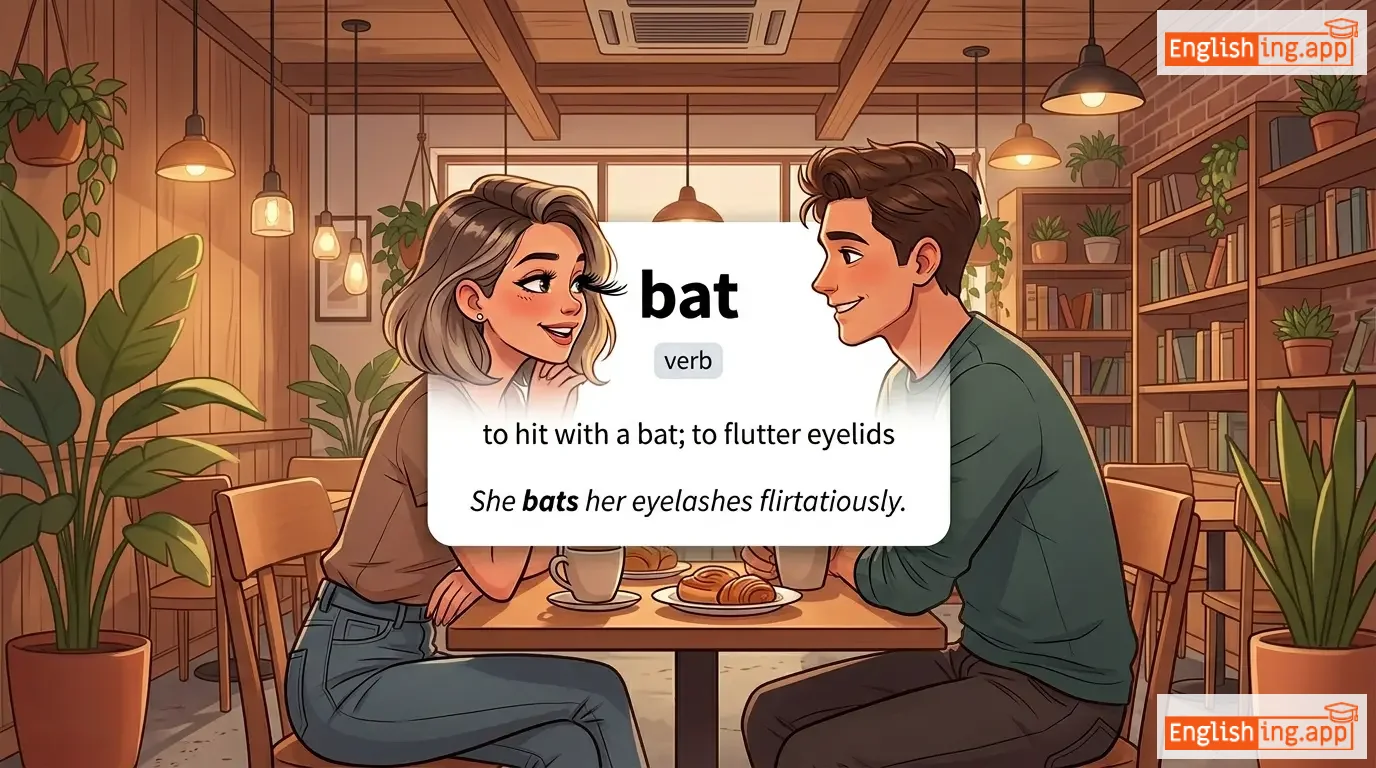
bat definition card — visual illustration of the meaning
noun
/bæt/
bate (bate)

a wooden or metal club used to hit a ball in sports like baseball or cricket

"He swung the bat and hit the ball hard."

"Él giró el bate y golpeó la pelota con fuerza." (El giro el bate y golpeo la pelota con fuerza.)
noun
/bætʃ/
una cantidad de elementos producidos o procesados a la vez (una cantidad de elementos producidos o procesados a la vez)

a quantity of items produced or processed at one time

"She baked a fresh batch of cookies this morning."

"Ella horneó un lote fresco de galletas esta mañana." (Ella horneó un lote fresco de galletas esta mañana.)
😮‍💨

bate (beit)

verb
/beɪt/
reducir, mitigar (reducir, mitigar)

to lessen or restrain; to diminish the force or intensity of something

"He spoke with bated breath as he waited for the result."

"Él habló con respiración contenida mientras esperaba el resultado." (Él habló con respiración contenida mientras esperaba el resultado.)
noun
/bɑːθ/
baño (banyo)

an act of washing the body in water; or the container used for this purpose

"She took a long bath after work."

"Ella se dio un largo baño después del trabajo." (Ella se dio un largo banyo despues del trabajo.)
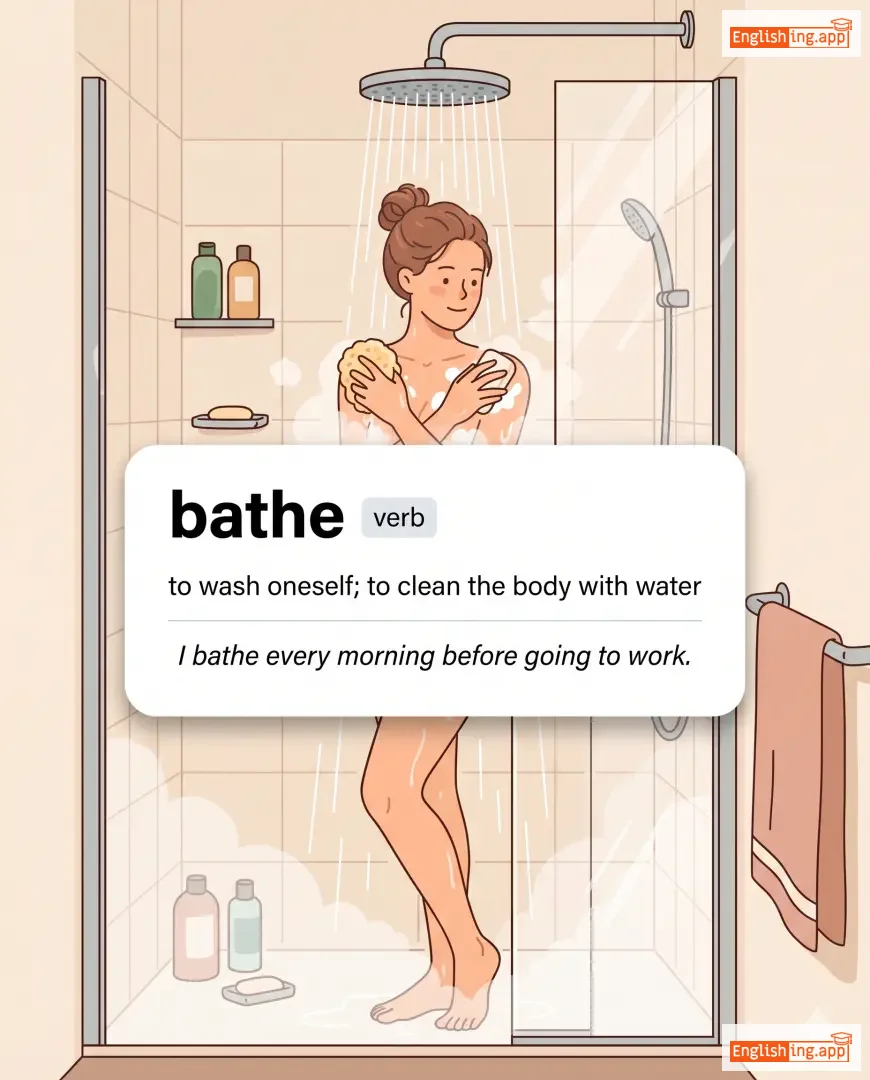
bathe definition card — visual illustration of the meaning
verb
/beɪð/
bañarse (banarse)

to wash oneself; to clean the body with water

"I bathe every morning before going to work."

"Me baño cada mañana antes de ir al trabajo." (Me bano cada manana antes de ir al trabajo)
adjective
/bəˈθɛt.ɪk/
sentimiento trivial (sentimiento trivial)

displaying insincere or trivial emotion; producing an unintended ridiculous effect through sudden change from serious to silly

"The movie's ending was unintentionally bathetic rather than tragic."

"El final de la película fue batético en lugar de trágico." (El final de la pelicula fue batetico en lugar de tragico.)
noun
/ˈbɑːθruːm/
cuarto de baño (cuarto de bano)

a room containing a toilet and usually a sink or shower

"The bathroom is on the second floor."

"El cuarto de baño está en el segundo piso." (El cuarto de bano esta en el segundo piso.)
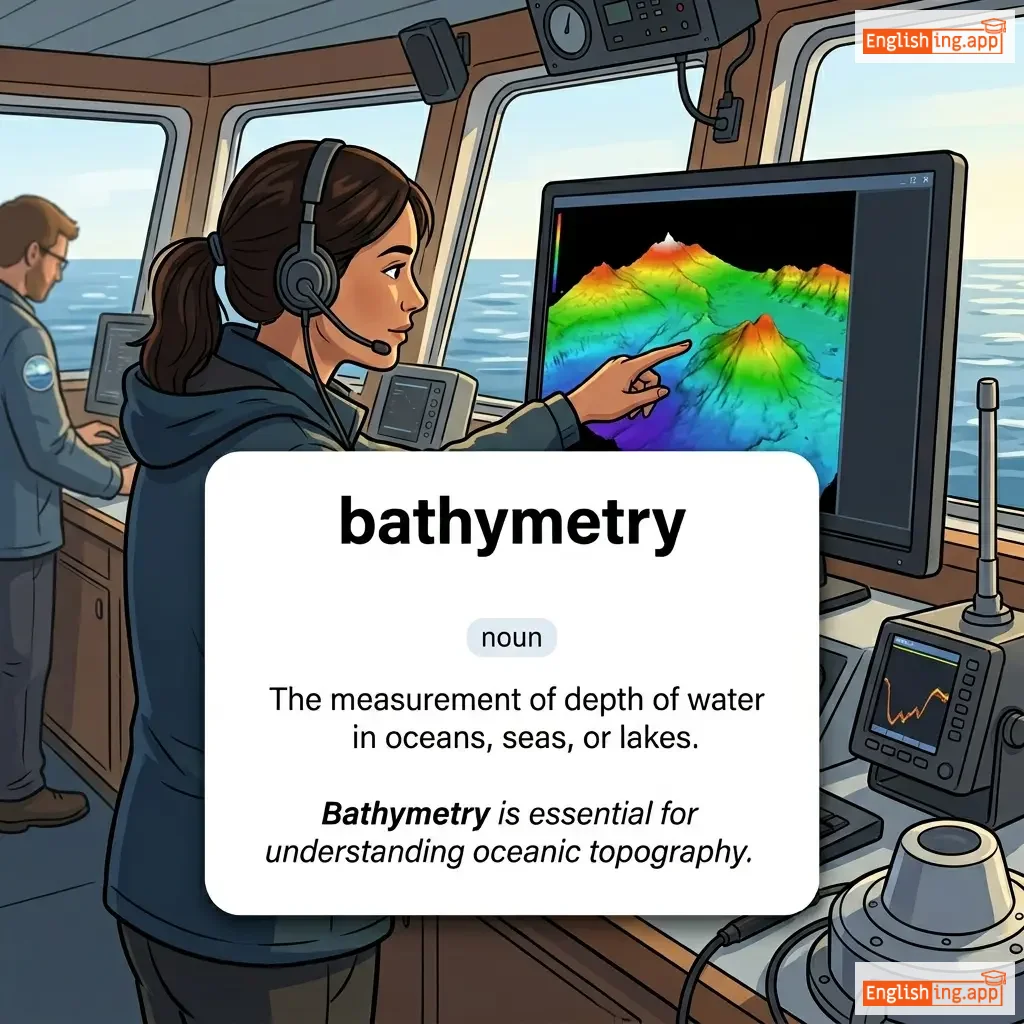
bathymetry definition card — visual illustration of the meaning
noun
/bəˈθɪm.ə.tri/
batimetría (batimetria)

The measurement of depth of water in oceans, seas, or lakes.

"Bathymetry is essential for understanding oceanic topography."

"La batimetría es esencial para comprender la topografía oceánica." (La batimetría es esencial para comprender la topografía oceánica.)
noun
/bəˈtɒn/
bastón / símbolo de autoridad (baston / simbolo de autoridad)

A thin stick carried by a conductor to direct an orchestra, or used as a symbol of authority.

"The conductor raised his baton to begin the symphony."

"El director levantó su batón para comenzar la sinfonía." (El director levanto su baton para comenzar la sinfonia.)
noun
/bəˈtæljən/
batallón (batallon)

A large body of soldiers ready for battle, typically consisting of several companies.

"The battalion was deployed to the front line."

"El batallón fue desplegado a la línea del frente." (El batallon fue desplegado a la linea del frente.)
verb
/ˈbætn/
asegurar (asegurar)

To fasten or secure something tightly.

"They battened down the hatches before the storm."

"Ellos aseguraron las trampillas antes de la tormenta." (Ellos aseguraron las trampillas antes de la tormenta.)
verb
/ˈbætər/
golpear repetidamente (golpear repetidamente)

To strike repeatedly with force.

"The waves battered the shoreline all night."

"Las olas golpearon la orilla toda la noche." (Las olas golpearon la orilla toda la noche.)
noun
/ˈbætəri/
batería (bateria)

A device that stores and provides electrical energy; also refers to a group of similar things or repeated blows.

"The phone battery ran out after a long day."

"La batería del teléfono se agotó después de un largo día." (La bateria del telefono se agoto despues de un largo dia.)
noun/verb
/ˈbætəl/
batalla (batalla)

A fight between armed forces or a struggle to achieve or resist something.

"The soldiers prepared for the final battle."

"Los soldados se prepararon para la batalla final." (Los soldados se prepararon para la batalla final.)
noun
/ˈbætəlˌfiːld/
campo de batalla (campo de batalla)

a place where a battle is fought

"The battlefield was covered with the remnants of the fight."

"El campo de batalla estaba cubierto con los restos de la pelea." (El campo de batalla estaba cubierto con los restos de la pelea.)
adjective
/ˈbæti/
loco (loco)

crazy or eccentric in behavior

"The old man down the street is a bit batty but harmless."

"El anciano de la calle es un poco loco pero inofensivo." (El anciano de la calle es un poco loco pero inofensivo.)
noun
/ˈbɔːbəl/
adorno pequeño (adorno pequeno)

A small, decorative trinket or ornament, often of little value.

"She wore a shiny bauble around her neck."

"Ella llevaba un adorno pequeño y brillante alrededor de su cuello." (Ella llevaba un adorno pequeno y brillante alrededor de su cuello.)
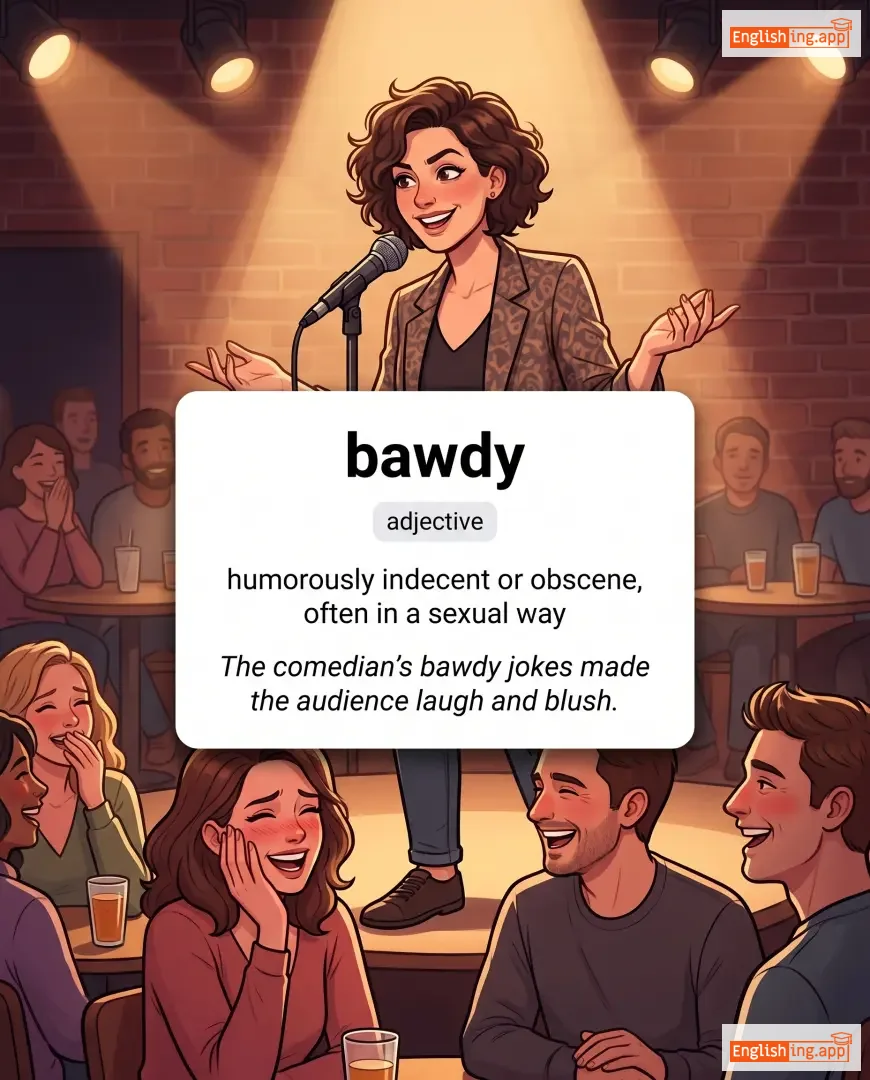
bawdy definition card — visual illustration of the meaning
adjective
/ˈbɔːdi/
obsceno (obsceno)

humorously indecent or obscene, often in a sexual way

"The comedian’s bawdy jokes made the audience laugh and blush."

"Los chistes obscenos del comediante hicieron reír a la audiencia y sonrojarse." (Los chistes obscenos del comediante hicieron reír a la audiencia y sonrojarse.)
verb
/bɔːl/
llorar fuertemente (llorar fuertemente)

to shout or cry loudly

"The baby bawled all night, keeping everyone awake."

"El bebé lloró toda la noche, manteniendo a todos despiertos." (El bebé lloró toda la noche, manteniendo a todos despiertos.)
noun
/beɪ/
bahía (bahiya)

a broad inlet of the sea where the land curves inward

"The ship anchored safely in the bay."

"El barco ancló de manera segura en la bahía." (El barco ancló de manera segura en la bahía.)
noun
/beɪ liːf/
hoja de laurel (hoja de laurel)

dried aromatic leaf of the bay laurel tree used as a culinary herb

"Add a bay leaf to the soup for extra flavor."

"Añade una hoja de laurel a la sopa para un sabor extra." (Añade una hoja de laurel a la sopa para un sabor extra.)
verb
/ˈbeɪɪŋ/
ladrar (ladrar)

making a loud, prolonged barking or howling sound, especially of dogs

"The baying of the hounds echoed through the forest."

"El ladrido de los sabuesos resonó en el bosque." (El ladrido de los sabuesos resonó en el bosque.)
verb
/biː/
ser (ser)

To exist, to occur, or to have a particular quality.

"She wants to be a doctor."

"Ella quiere ser doctora." (Ella quiere ser doctora.)
noun
/biːtʃ/
playa (playa)

An area of sand or small stones beside the sea or a lake.

"They spent the day relaxing on the beach."

"Pasaron el día relajándose en la playa." (Pasaron el dia relajandose en la playa.)
noun
/biːd/
piedra pequeña; cuenta (piedra pequena, cuenta)

a small round object with a hole through it for threading

"She made a necklace with colorful beads."

"Ella hizo un collar con cuentas de colores." (Ella hizo un collar con cuentas de colores.)
noun
/biːk/
pico (piko)

the hard pointed part of a bird's mouth

"The eagle has a sharp beak for tearing meat."

"El águila tiene un pico afilado para desgarrar carne." (El aguila tiene un pico afilado para desgarrar carne.)
noun
/biːm/
rayo / viga (rayo / viga)

a ray or shaft of light; a long piece of wood or metal used to support weight

"A beam of sunlight entered through the window."

"Un rayo de luz entró por la ventana." (Un rayo de luz entró por la ventana.)
noun
/biːn/
frijol (frijol)

A seed that is eaten as a vegetable or used to make food products.

"She cooked a pot of bean soup."

"Ella cocinó una olla de sopa de frijoles." (Ella cocinó una olla de sopa de frijoles.)
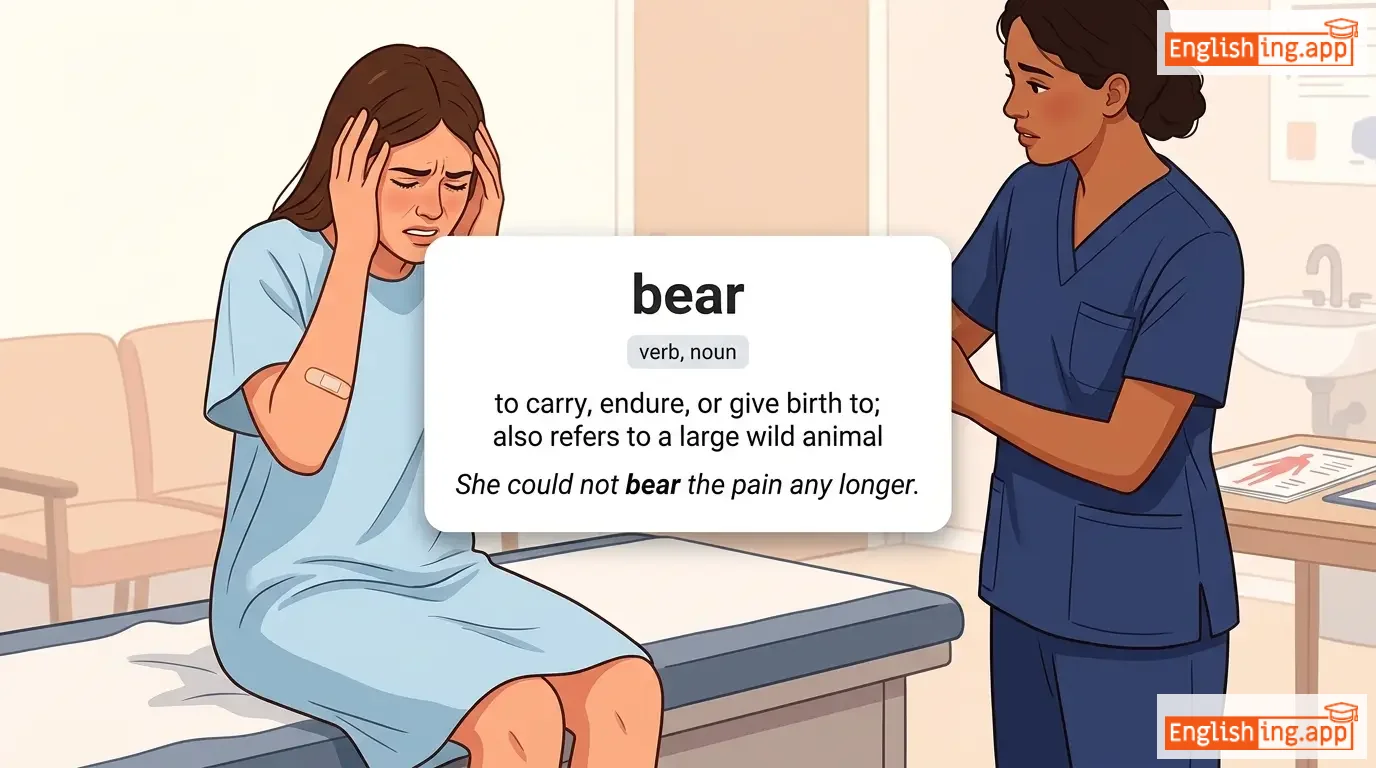
bear definition card — visual illustration of the meaning
verb, noun
/bɛər/
soportar / oso (soportar / oso)

to carry, endure, or give birth to; also refers to a large wild animal

"She could not bear the pain any longer."

"Ella ya no podía soportar el dolor." (Ella ya no podia soportar el dolor.)
adjective
/ˈbeə.rə.bəl/
soportable; tolerable; no demasiado desagradable o doloroso (bearable)

able to be endured; tolerable; not too unpleasant or painful

"The pain became bearable after taking the medicine."

"El dolor se volvió soportable después de tomar la medicina." (El dolor se volvió soportable después de tomar la medicina.)
noun
/bɪəd/
felicidad (felicidad)

the hair growing on the lower part of a man's face

"He decided to grow a beard during his vacation."

"Ella no podía ocultar su felicidad cuando recibió el premio." (Ella no podía ocultar su felicidad cuando recibió el premio.)
noun
/ˈbeə.rər/
portador; titular de un documento (portador; titular de un documento)

a person who carries or brings something; holder of a document

"The bearer of this message must deliver it quickly."

"El portador de este mensaje debe entregarlo rápidamente." (El portador de este mensaje debe entregarlo rápidamente.)
noun
/ˈbɛərɪŋ/
comportamiento / postura (comportamiento / postura)

a person's way of standing or moving; relevance or connection to something

"Her calm bearing impressed everyone in the room."

"Su comportamiento tranquilo impresionó a todos en la sala." (Su comportamiento tranquilo impresionó a todos en la sala.)
noun
/biːst/
bestia / animal (bestia / animal)

a large or dangerous animal; a cruel or brutal person

"The lion is known as the king of beasts."

"El león es conocido como el rey de las bestias." (El león es conocido como el rey de las bestias.)
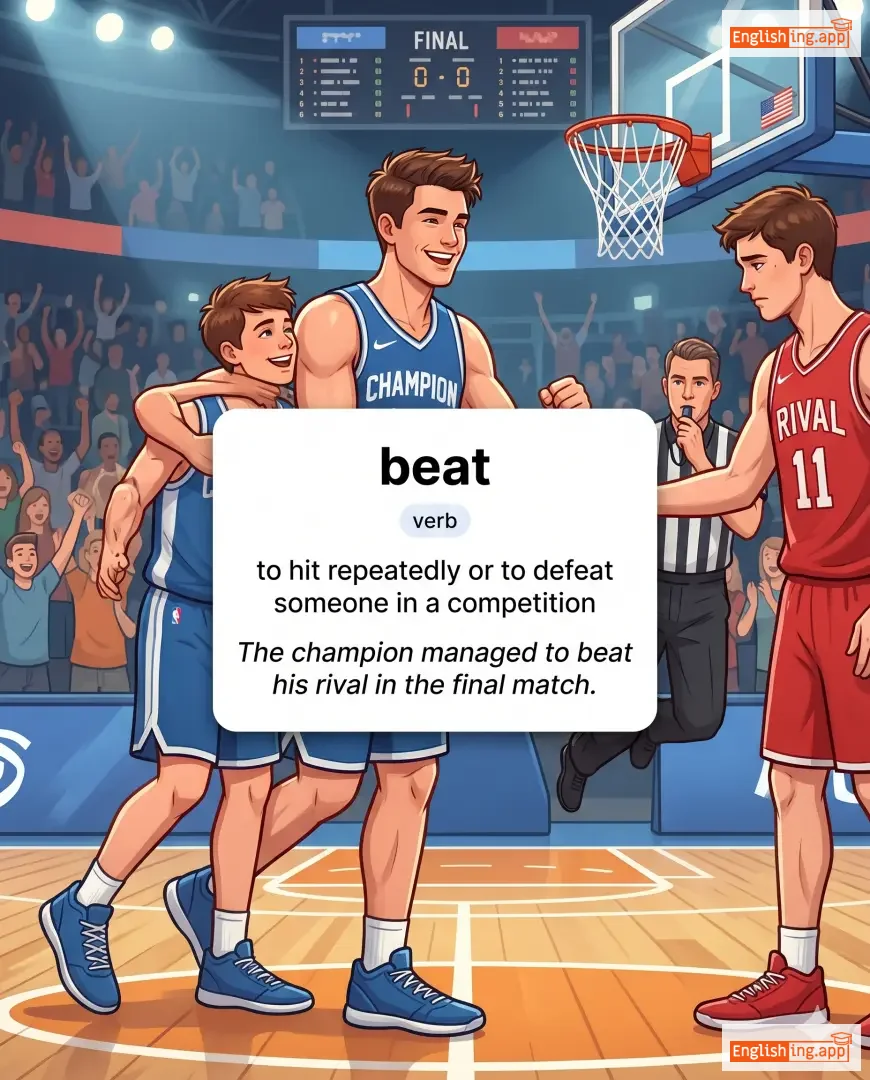
beat definition card — visual illustration of the meaning
verb
/biːt/
golpear, derrotar (golpear, derrotar)

to hit repeatedly or to defeat someone in a competition

"The champion managed to beat his rival in the final match."

"El campeón logró vencer a su rival en el partido final." (El campeón logró vencer a su rival en el partido final.)
noun
/ˈbiːtənd raɪs/
arroz machacado (arroz machacado)

flattened rice; rice that has been parboiled, dried, and beaten into flat flakes

"Beaten rice is commonly eaten with milk and sugar for breakfast."

"El arroz machacado se come comúnmente con leche y azúcar para el desayuno." (El arroz machacado se come comúnmente con leche y azúcar para el desayuno.)
adjective
/ˌbiːəˈtɪfɪk/
beatífico (beatifico)

blissfully happy or showing great joy

"She had a beatific smile after hearing the good news."

"Ella tenía una sonrisa beatífica después de escuchar las buenas noticias." (Ella tenía una sonrisa beatífica después de escuchar las buenas noticias.)
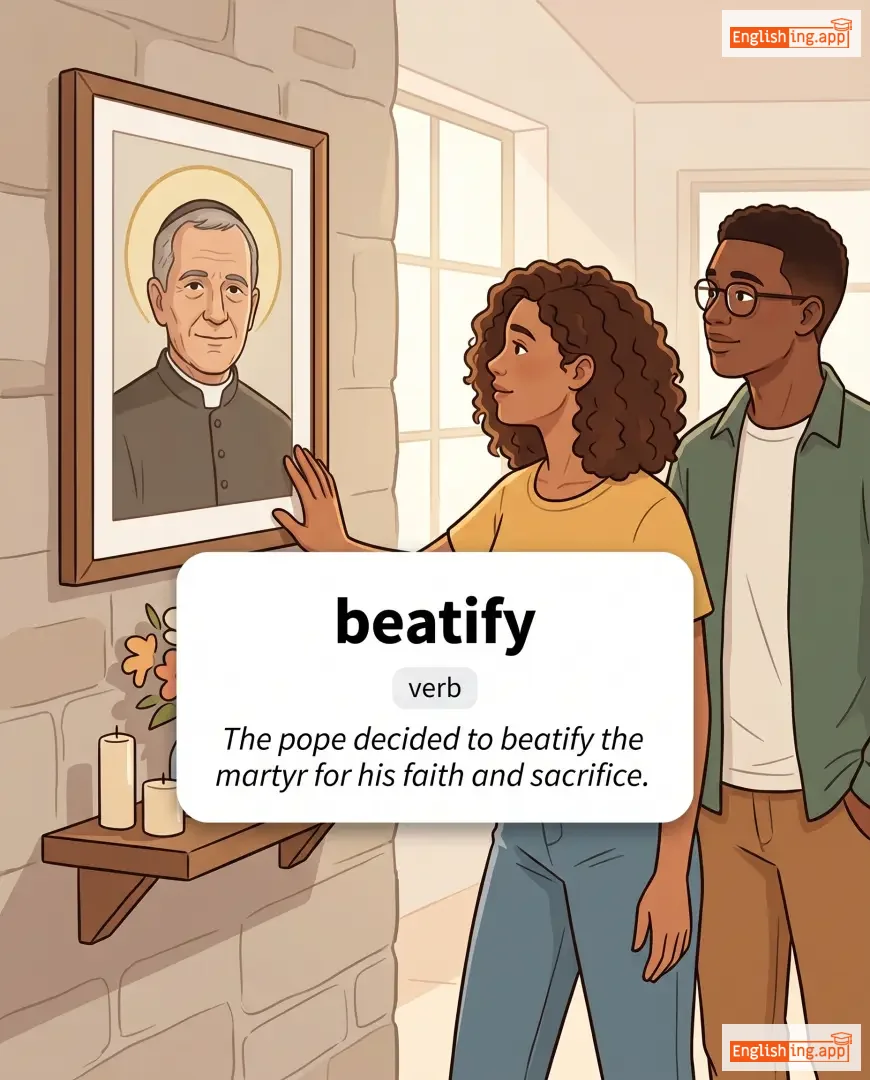
beatify definition card — visual illustration of the meaning
verb
/biˈætɪfaɪ/
beatificar (beatificar)

to make blessed or holy, especially in the Roman Catholic Church, to declare a deceased person to be among the blessed

"The pope decided to beatify the martyr for his faith and sacrifice."

"El papa decidió beatificar al mártir por su fe y sacrificio." (El papa decidió beatificar al mártir por su fe y sacrificio.)
noun
/biˈætɪtjuːd/
suprema bendición o felicidad, a menudo usada en referencia a las enseñanzas de Jesús en el Sermón de la Montaña (suprema bendicion o felicidad, a menudo usada en referencia a las ensenanzas de Jesus en el Sermon de la Montana)

supreme blessedness or happiness, often used in reference to the sayings of Jesus in the Sermon on the Mount

"She felt a state of beatitude after receiving the good news."

"Ella sintió un estado de beatitud después de recibir las buenas noticias." (Ella sintio un estado de beatitud despues de recibir las buenas noticias.)
noun
/boʊ/
novio (novio)

a male admirer or boyfriend; a fashionable young man

"She arrived at the party with her beau."

"Ella llegó a la fiesta con su novio." (Ella llego a la fiesta con su novio.)
adjective
/ˈbjuː.tɪ.fəl/
hermoso (hermoso)

pleasing to the senses or mind; very attractive

"The garden looked beautiful in the morning sunlight."

"El jardín se veía hermoso con la luz del sol de la mañana." (El jardín se veía hermoso con la luz del sol de la mañana.)
adverb
/ˈbjuːtɪfəli/
hermosamente (hermosamente)

in a beautiful or pleasing manner; excellently or skillfully

"She sang beautifully at the concert."

"Ella cantó hermosamente en el concierto." (ella canto hermosamente en el concierto)
verb
/ˈbjuːtɪfaɪ/
embellecer (embellecer)

to make something more beautiful or attractive

"The city plans to beautify the old park with trees and lights."

"La ciudad planea embellecer el parque antiguo con árboles y luces." (La ciudad planea embellecer el parque antiguo con arboles y luces)
noun
/ˈbjuːti/
belleza (belleza)

a combination of qualities that please the senses or mind

"The beauty of the sunset took her breath away."

"La belleza del atardecer le quitó el aliento." (La belleza del atardecer le quito el aliento.)
verb
/bɪˈkɑːm/
calmar (calmar)

to make calm or still; to deprive a sailing vessel of wind

"The captain tried to becalm the anxious crew."

"El capitán intentó calmar a la tripulación ansiosa." (El capitan intento calmar a la tripulacion ansiosa.)
conjunction
/bɪˈkɔːz/
porque (porque)

for the reason that; since

"He stayed home because it was raining."

"Se quedó en casa porque estaba lloviendo." (Se quedo en casa porque estaba lloviendo.)