词汇表

英语词汇词典 | 单词含义、定义和示例

noun
/ˌbæstərdaɪˈzeɪʃən/
扭曲 / 退化 (niuqie / tuihua)

the act of corrupting, degrading, or misrepresenting something

"Critics called the remake a bastardization of the original film."

"评论家称重拍版是原电影的扭曲。" (Pinglunjia cheng zhongpaiban shi yuan dianying de niuqie.)
verb
/ˈbæstərdaɪz/
歪曲 (waiqu)

to corrupt or debase something by altering it from its original form; to change in a way that reduces quality or purity

"Critics argue that the remake bastardized the original novel."

"评论家认为这次改编歪曲了原作。" (pinglun jia renwei zheci gaibian waiqu le yuanzuo)
verb
/beɪst/
在烹饪过程中将融化的脂肪、肉汁或液体倒在肉上,保持其湿润 (zai pengren guocheng zhong jiang ronghua de zhifang, rouzhi huo yedi dao zai rou shang, baochi qi shirun)

to pour or brush melted fat, juices, or liquid over meat during cooking to keep it moist

"She basted the turkey every 30 minutes to keep it juicy."

"她每30分钟给火鸡加油,以保持它的多汁。" (Tā měi 30 fēnzhōng gěi huǒ jī jiāyóu, yǐ bǎochí tā de duōzhī.)
noun
/ˈbæs.ti.ən/
堡垒, 防御工事 (baolei, fangyu gongshi)

a stronghold or fortification; a place or institution strongly defending particular principles

"The castle stood as a bastion against enemy attacks."

"这座城堡作为抵御敌人攻击的堡垒而屹立。" (Zhe zuo chengbao zuowei diyu diren gongji de baolei er yili.)
bat definition card — visual illustration of the meaning
noun
/bæt/
球棒 (qiú bàng)

a wooden or metal club used to hit a ball in sports like baseball or cricket

"He swung the bat and hit the ball hard."

"他挥动球棒,用力击打了球。" (Tā huī dòng qiú bàng, yòng lì jī dǎ le qiú.)
noun
/bætʃ/
一次性生产或处理的物品数量 (yi ci xing sheng chan huo chu li de wu pin shu liang)

a quantity of items produced or processed at one time

"She baked a fresh batch of cookies this morning."

"她今天早上烤了一批新鲜的饼干。" (Ta jintian zao shang kao le yi pi xinxian de binggan.)
😮‍💨

bate (贝特)

verb
/beɪt/
减轻,抑制 (jianqing, yizhi)

to lessen or restrain; to diminish the force or intensity of something

"He spoke with bated breath as he waited for the result."

"他屏住呼吸等待结果时说道。" (Ta ping zhu hu xi deng dai jie guo shi shuo dao.)
noun
/bɑːθ/
浴缸 (yùgāng)

an act of washing the body in water; or the container used for this purpose

"She took a long bath after work."
"她在工作后洗了一个长浴缸。" (Tā zài gōngzuò hòu xǐle yīgè cháng yùgāng.)
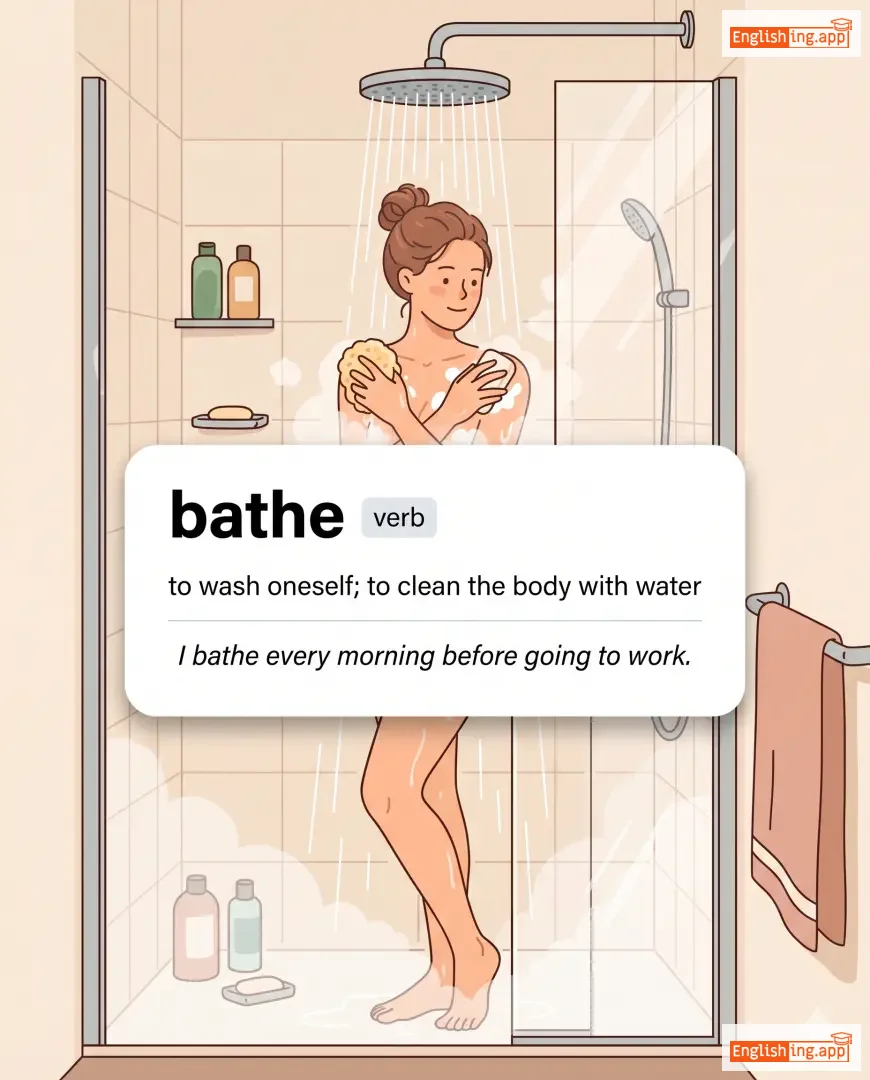
bathe definition card — visual illustration of the meaning
verb
/beɪð/
洗澡 (xizao)

to wash oneself; to clean the body with water

"I bathe every morning before going to work."

"我每天早上上班前洗澡。" (Wo meitian zaoshang shangban qian xizao)
adjective
/bəˈθɛt.ɪk/
琐碎的情感 (suǒsuì de qínggǎn)

displaying insincere or trivial emotion; producing an unintended ridiculous effect through sudden change from serious to silly

"The movie's ending was unintentionally bathetic rather than tragic."

"电影的结局是琐碎的,而不是悲剧性的。" (Diànyǐng de jiéjú shì suǒsuì de, ér bù shì bēijù xìng de.)
noun
/ˈbɑːθruːm/
浴室 (yù shì)

a room containing a toilet and usually a sink or shower

"The bathroom is on the second floor."
"浴室在二楼。" (Yù shì zài èr lóu.)
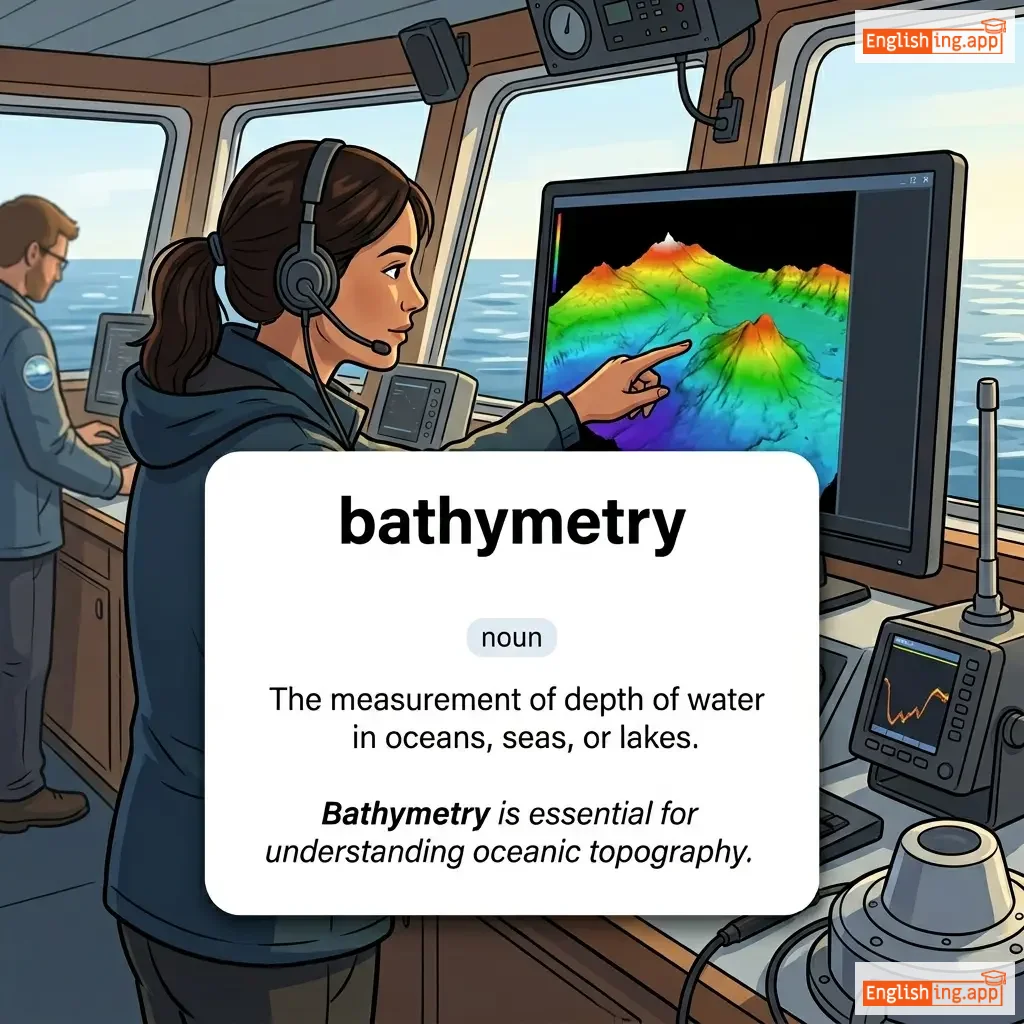
bathymetry definition card — visual illustration of the meaning
noun
/bəˈθɪm.ə.tri/
海洋测深学 (hǎi yáng cè shēn xué)

The measurement of depth of water in oceans, seas, or lakes.

"Bathymetry is essential for understanding oceanic topography."

"海洋测深学对于理解海洋地形至关重要。" (Hǎiyáng cè shēn xué duìyú lǐjiě hǎiyáng dìxíng zhì guān zhòngyào.)
🎶

baton

noun
/bəˈtɒn/

A thin stick carried by a conductor to direct an orchestra, or used as a symbol of authority.

"The conductor raised his baton to begin the symphony."

noun
/bəˈtæljən/
(yíng)

A large body of soldiers ready for battle, typically consisting of several companies.

"The battalion was deployed to the front line."

"这个营被部署到前线。" (Zhège yíng bèi bùshǔ dào qiánxiàn.)
verb
/ˈbætn/
固定 (gùdìng)

To fasten or secure something tightly.

"They battened down the hatches before the storm."

"他们在风暴之前把舱口牢牢固定。" (Tāmen zài fēngbào zhīqián bǎ cāngkǒu láoláo gùdìng.)
verb
/ˈbætər/
反复打击 (fǎn fù dǎ jí)

To strike repeatedly with force.

"The waves battered the shoreline all night."

"波浪整个晚上拍打着海岸线。" (Bōlàng zhěng gè wǎnshàng pāidǎ zhe hǎi'ànxiàn.)
noun
/ˈbætəri/
电池 (diànchí)

A device that stores and provides electrical energy; also refers to a group of similar things or repeated blows.

"The phone battery ran out after a long day."

"手机电池在长时间使用后耗尽了。" (Shǒujī diànchí zài cháng shíjiān shǐyòng hòu hàojìnle.)
noun/verb
/ˈbætəl/
战斗 (zhàndòu)

A fight between armed forces or a struggle to achieve or resist something.

"The soldiers prepared for the final battle."

"士兵们为最后的战斗做好了准备。" (Shìbīng men wèi zuìhòu de zhàndòu zuòhǎo le zhǔnbèi.)
noun
/ˈbætəlˌfiːld/
战场 (zhànchǎng)

a place where a battle is fought

"The battlefield was covered with the remnants of the fight."

"战场上布满了战斗的残余。" (Zhànchǎng shàng bùmǎnle zhàndòu de cányú.)
adjective
/ˈbæti/
疯狂 (fēngkuáng)

crazy or eccentric in behavior

"The old man down the street is a bit batty but harmless."

"街上的老人有点疯狂,但无害。" (Jiē shàng de lǎorén yǒudiǎn fēngkuáng, dàn wúhài.)
noun
/ˈbɔːbəl/
小饰品 (xiao shì pǐn)

A small, decorative trinket or ornament, often of little value.

"She wore a shiny bauble around her neck."

"她脖子上戴着一个闪亮的小饰品。" (Ta bo zi shang dai zhe yi ge shan liang de xiao shi pin.)
bawdy definition card — visual illustration of the meaning
adjective
/ˈbɔːdi/
猥亵 (wei xie)

humorously indecent or obscene, often in a sexual way

"The comedian’s bawdy jokes made the audience laugh and blush."

"喜剧演员的猥亵笑话让观众笑了并且脸红。" (Xi ju yan yuan de wei xie xiao hua rang guan zhong xiao le bing qie lian hong.)
verb
/bɔːl/
大声哭泣 (dà shēng kū qì)

to shout or cry loudly

"The baby bawled all night, keeping everyone awake."

"宝宝整晚哭个不停,吵醒了所有人。" (Bǎobǎo zhěng wǎn kū gè bù tíng, chǎo xǐng le suǒyǒu rén.)
noun
/beɪ/
海湾 (haiwan)

a broad inlet of the sea where the land curves inward

"The ship anchored safely in the bay."

"船安全地停泊在海湾中。" (chuan anquan de tingbo zai haiwan zhong.)
noun
/beɪ liːf/
月桂叶 (yuèguì yè)

dried aromatic leaf of the bay laurel tree used as a culinary herb

"Add a bay leaf to the soup for extra flavor."

"在汤中加入月桂叶,增添风味。" (zài tāng zhōng jiārù yuèguì yè, zēngtiān fēngwèi)
verb
/ˈbeɪɪŋ/
狂吠 (kuáng fèi)

making a loud, prolonged barking or howling sound, especially of dogs

"The baying of the hounds echoed through the forest."

"猎犬的叫声在森林中回响。" (Liè quǎn de jiào shēng zài sēn lín zhōng huí xiǎng.)
verb
/biː/
(shi)

To exist, to occur, or to have a particular quality.

"She wants to be a doctor."

"她想成为一名医生。" (Tā xiǎng chéngwéi yī míng yīshēng.)
noun
/biːtʃ/
沙滩 (shatan)

An area of sand or small stones beside the sea or a lake.

"They spent the day relaxing on the beach."

"他们在沙滩上度过了一整天,放松自己。" (Tamen zai shatan shang duoguo le yizheng tian, fangsong ziji.)
noun
/biːd/
珠子 (zhuzi)

a small round object with a hole through it for threading

"She made a necklace with colorful beads."

"她用彩色的珠子做了项链。" (Ta yong caise de zhuzi zuo le xianglian.)
noun
/biːk/
鸟嘴 (niao zui)

the hard pointed part of a bird's mouth

"The eagle has a sharp beak for tearing meat."

"鹰有一个锋利的鸟嘴来撕裂肉。" (Yīng yǒu yīgè fēnglì de niǎo zuǐ lái sīliè ròu.)
noun
/biːm/
光束 / 横梁 (guāngshù / héngliáng)

a ray or shaft of light; a long piece of wood or metal used to support weight

"A beam of sunlight entered through the window."

"一束阳光穿过窗户。" (Yī shù yángguāng chuānguò chuānghù.)
noun
/biːn/
(dou)

A seed that is eaten as a vegetable or used to make food products.

"She cooked a pot of bean soup."

"她做了一锅豆汤。" (Ta zuo le yi guo dou tang.)
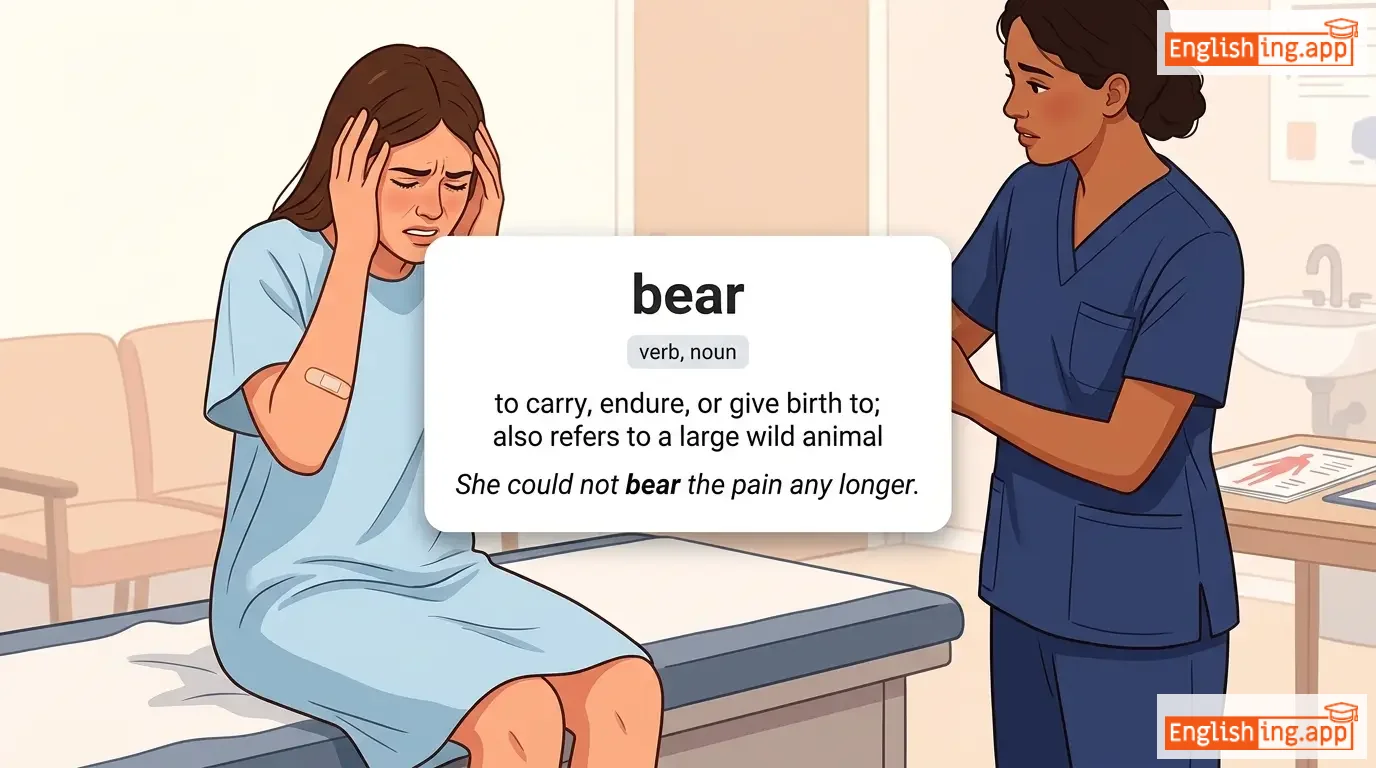
bear definition card — visual illustration of the meaning
verb, noun
/bɛər/
忍受 / 熊 (renshou / xiong)

to carry, endure, or give birth to; also refers to a large wild animal

"She could not bear the pain any longer."

"她再也无法忍受痛苦。" (Ta zai ye wu fa renshou tongku.)
adjective
/ˈbeə.rə.bəl/
可忍受的; 容忍的; 不太不愉快或痛苦 (kerenshou de; rongren de; bu tai buyu kuai huo tongku)

able to be endured; tolerable; not too unpleasant or painful

"The pain became bearable after taking the medicine."

"服药后,疼痛变得可以忍受。" (Fuyao hou, tengtong biande keyi renshou.)
🧔

Beard

noun
/bɪəd/

the hair growing on the lower part of a man's face

"He decided to grow a beard during his vacation."

noun
/ˈbeə.rər/
持有者;文件持有者 (chí yǒu zhě; wén jiàn chí yǒu zhě)

a person who carries or brings something; holder of a document

"The bearer of this message must deliver it quickly."

"这个信息的持有者必须快速送达它。" (Zhège xìnxī de chí yǒu zhě bìxū kuàisù sòng dá tā.)
noun
/ˈbɛərɪŋ/
举止 / 姿态 (juzhi / zhitai)

a person's way of standing or moving; relevance or connection to something

"Her calm bearing impressed everyone in the room."

"她平静的姿态给房间里的每个人留下了深刻印象。" (Ta pingjing de zhitai gei fangjian li de mei ge ren liuxia le shenke yinxiang.)
noun
/biːst/
野兽 / 动物 (yěshòu / dòngwù)

a large or dangerous animal; a cruel or brutal person

"The lion is known as the king of beasts."

"狮子被誉为兽中之王。" (Shīzi bèi yù wéi shòu zhōng zhī wáng.)
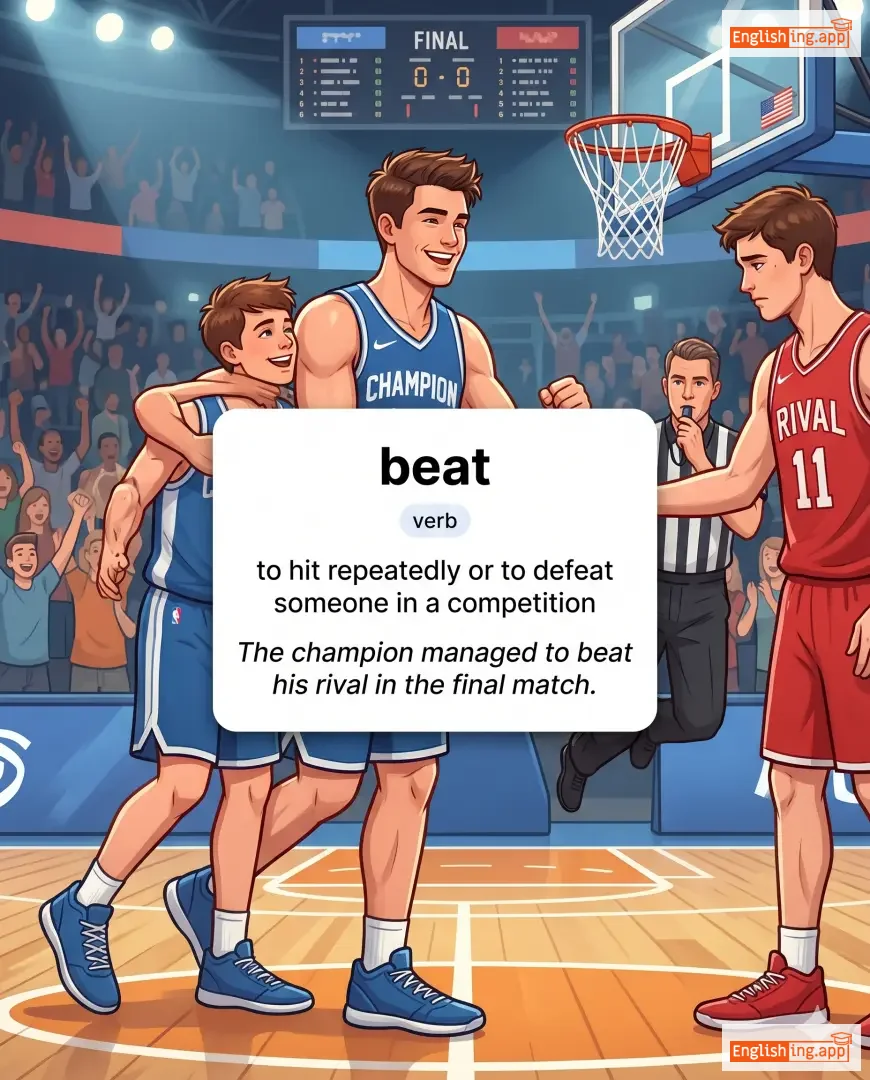
beat definition card — visual illustration of the meaning
verb
/biːt/
击打, 打败 (jī dǎ, dǎ bài)

to hit repeatedly or to defeat someone in a competition

"The champion managed to beat his rival in the final match."

"冠军在最后一场比赛中击败了他的对手。" (Guàn jūn zài zuì hòu yī chǎng bǐ sài zhōng jī bài le tā de duì shǒu.)
noun
/ˈbiːtənd raɪs/
拍打米 (paida mi)

flattened rice; rice that has been parboiled, dried, and beaten into flat flakes

"Beaten rice is commonly eaten with milk and sugar for breakfast."

"拍打米常与牛奶和糖一起食用作为早餐。" (Paida mi chang yu niunai he tang yiqi shiyong zuo wei zaocan.)
adjective
/ˌbiːəˈtɪfɪk/
极乐的 (jile de)

blissfully happy or showing great joy

"She had a beatific smile after hearing the good news."

"她在听到好消息后露出了极乐的微笑。" (Tā zài tīngdào hǎo xiāoxī hòu lùchūle jílè de wéixiào.)
beatify definition card — visual illustration of the meaning
verb
/biˈætɪfaɪ/
宣圣 (xuan sheng)

to make blessed or holy, especially in the Roman Catholic Church, to declare a deceased person to be among the blessed

"The pope decided to beatify the martyr for his faith and sacrifice."

"教皇决定因其信仰和牺牲而宣圣这位殉道者。" (Jiaohuang jue ding yin qi xinyang he xisheng er xuansheng zhe wei xundaozhe.)
noun
/biˈætɪtjuːd/
至高的祝福或幸福,常用于指耶稣在山上宝训中的教义 (zhigao de zhufo huo xingfu, chang yongyu zhi Yesu zai shanshang baoxun zhong de jiaoji)

supreme blessedness or happiness, often used in reference to the sayings of Jesus in the Sermon on the Mount

"She felt a state of beatitude after receiving the good news."

"收到好消息后,她感到一种祝福的状态。" (Shoudao hao xiaoxi hou, ta gandao yizhong zhufo de zhuangtai.)
noun
/boʊ/
男友 (nan you)

a male admirer or boyfriend; a fashionable young man

"She arrived at the party with her beau."

"她和她的男友一起到达了派对。" (Tā hé tā de nán yǒu yīqǐ dào dále pài duì.)
adjective
/ˈbjuː.tɪ.fəl/
美丽 (měilì)

pleasing to the senses or mind; very attractive

"The garden looked beautiful in the morning sunlight."

"花园在早晨的阳光下看起来很美。" (Huāyuán zài zǎochén de yángguāng xià kàn qǐlái hěn měi.)
adverb
/ˈbjuːtɪfəli/
优美地 (youmei de)

in a beautiful or pleasing manner; excellently or skillfully

"She sang beautifully at the concert."

"她在音乐会上唱得很优美。" (ta zai yinyuehui shang chang de hen youmei)
verb
/ˈbjuːtɪfaɪ/
美化 (meihua)

to make something more beautiful or attractive

"The city plans to beautify the old park with trees and lights."

"这座城市计划用树木和灯光美化旧公园。" (Zhe zuo chengshi jihua yong shumu he dengguang meihua jiu gongyuan)
noun
/ˈbjuːti/
美丽 (meili)

a combination of qualities that please the senses or mind

"The beauty of the sunset took her breath away."

"夕阳的美丽让她屏住了呼吸。" (Xiyang de meili rang ta ping zhu le huxi.)
verb
/bɪˈkɑːm/
平静 (pingjing)

to make calm or still; to deprive a sailing vessel of wind

"The captain tried to becalm the anxious crew."

"船长试图安抚焦虑的船员。" (Chuan zhang shitu anfu jiaolv de chuanyuan.)
conjunction
/bɪˈkɔːz/
因为 (yinwei)

for the reason that; since

"He stayed home because it was raining."

"他因为下雨待在家里。" (Ta yinwei xiayu daizai jiali.)