词汇表

英语词汇词典 | 单词含义、定义和示例

noun, verb
/bɑːr/
酒吧, 阻止 (jiuba, zuzhi)

a counter where drinks are served; to prevent or block

"They decided to meet at the bar after work."

"他们决定下班后在吧见面。" (Tamen jueding xiaban hou zai ba jianmian.)
noun
/bɑːrb/
刺, 尖锐的评论 (ci, jianrui de pinglun)

a sharp projection such as on a fishhook; a cutting remark

"The fishhook has a small barb to keep the fish from escaping."

"鱼钩上有一个小刺,以防止鱼逃脱。" (yuhook shang you yi ge xiao ci, yi fangzhi yu taotuo.)
noun
/ˈbɑːr.bər/
理发师 (lǐfàshī)

a person whose job is to cut men's hair and shave or trim beards

"The barber gave him a perfect haircut for his wedding."

"理发师为他的婚礼剪了一个完美的发型。" (Lǐfàshī wèi tā de hūnlǐ jiǎnle yīgè wánměi de fàxíng.)
noun
/bɑːrˈbeəriən/
野蛮人; 未开化者; (yěmán rén; wèi kāihuà zhě)

a person from an uncivilized group; someone who is cruel or brutal

"The ancient Romans considered anyone outside their empire to be barbarians."

"古罗马人认为所有在他们帝国之外的人都是野蛮人。" (Gǔ luómǎ rén rènwéi suǒyǒu zài tāmen dìguó zhī wài de rén dōu shì yěmán rén.)
noun
/ˈbɑːrbərɪzəm/
野蛮 (yěmán)

extreme cruelty or brutality; absence of culture and civilization

"The barbarism of the war crimes shocked the entire international community."

"战争罪行的野蛮行为震惊了整个国际社会。" (Zhànzhēng zuìxíng de yěmán xíngwéi zhènjīngle zhěnggè guójì shèhuì.)
adjective
/ˈbɑːr.bə.rəs/
野蛮的, 残忍的 (yěmán de, cánrěn de)

extremely cruel or uncivilized

"The prisoners were treated in a barbarous manner."

"囚犯们被以野蛮的方式对待。" (Qiúfàn men bèi yǐ yěmán de fāngshì duìdài.)
noun
/ˈbɑːr.kəˌroʊl/
巴尔卡罗尔 (balkaluoer)

a traditional Venetian boat song, often in 6/8 time

"The orchestra played a beautiful barcarole that reminded me of Venice."
"乐团演奏了一首美丽的巴尔卡罗尔,令我想起了威尼斯。" (yue tuan yanzou le yi shou mei li de balkaluoer, ling wo xiangqi le weinisi.)
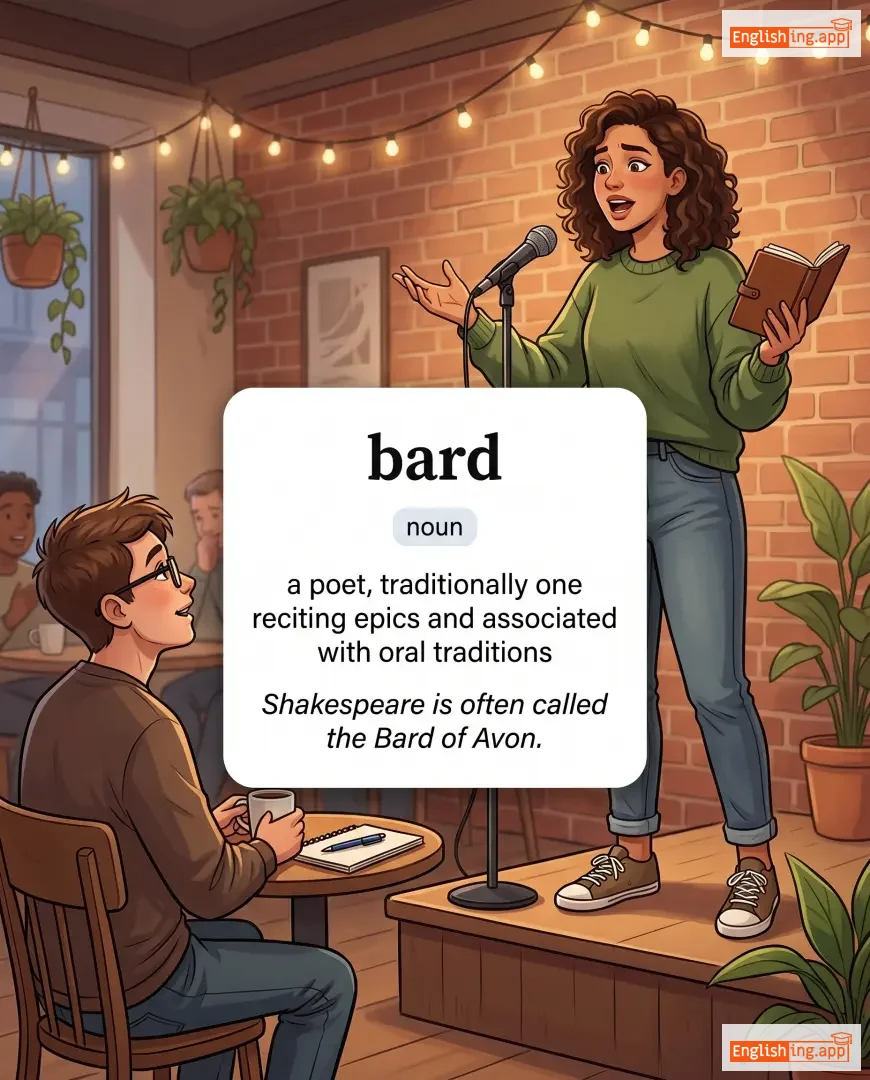
bard definition card — visual illustration of the meaning
noun
/bɑːrd/
诗人 (shiren)

a poet, traditionally one reciting epics and associated with oral traditions

"Shakespeare is often called the Bard of Avon."

"莎士比亚常被称为艾文的诗人。" (Shāshìbǐyà cháng bèi chēng wèi ài wén de shīrén.)
adjective
/beər/
(luo)

not covered by any clothing or decoration; simple and without addition

"He walked on the beach with bare feet."

"他赤脚走在沙滩上。" (Tā chìjiǎo zǒu zài shātān shàng.)
adjective
/ˈbɛərˌfeɪst/
厚颜无耻 (hòu yán wú chǐ)

shameless and undisguised; openly bold or unashamed

"He told a barefaced lie in front of everyone."

"他在大家面前说了个厚颜无耻的谎言。" (Tā zài dàjiā miànqián shuōle gè hòu yán wú chǐ de huǎngyán.)
adverb
/ˈbɛərli/
勉强 (miǎnqiǎng)

only just; almost not

"She barely passed the exam."

"她勉强通过了考试。" (Tā miǎnqiǎng tōngguòle kǎoshì.)
noun
/ˈbɛərnəs/
赤裸 (chilu)

the state of being bare or uncovered; lack of decoration, warmth, or concealment

"The bareness of the room made it feel cold and unwelcoming."

"房间的赤裸感让人觉得寒冷而不友好。" (fangjian de chilu gan rang ren juede hanleng er bu youhao)
bargain definition card — visual illustration of the meaning
noun, verb
/ˈbɑːrɡən/
交易 / 便宜货 (jiaoyi / pianyi huo)

an agreement between two or more parties; something bought at a good price

"We managed to get the car at a real bargain."

"我们设法以真正的便宜价格买到了车。" (Women shefa yi zhenzheng de pianyi jiage mai dao le che.)
noun
/ˈbærɪˌtoʊn/
低沉的男声 (dīchén de nánshēng)

a male singing voice between tenor and bass

"The singer’s baritone voice impressed the audience."
"歌手的男中音给观众留下了深刻印象。" (Gēshǒu de nán zhōng yīn gěi guānzhòng liúxià le shēnkè yìnxiàng.)
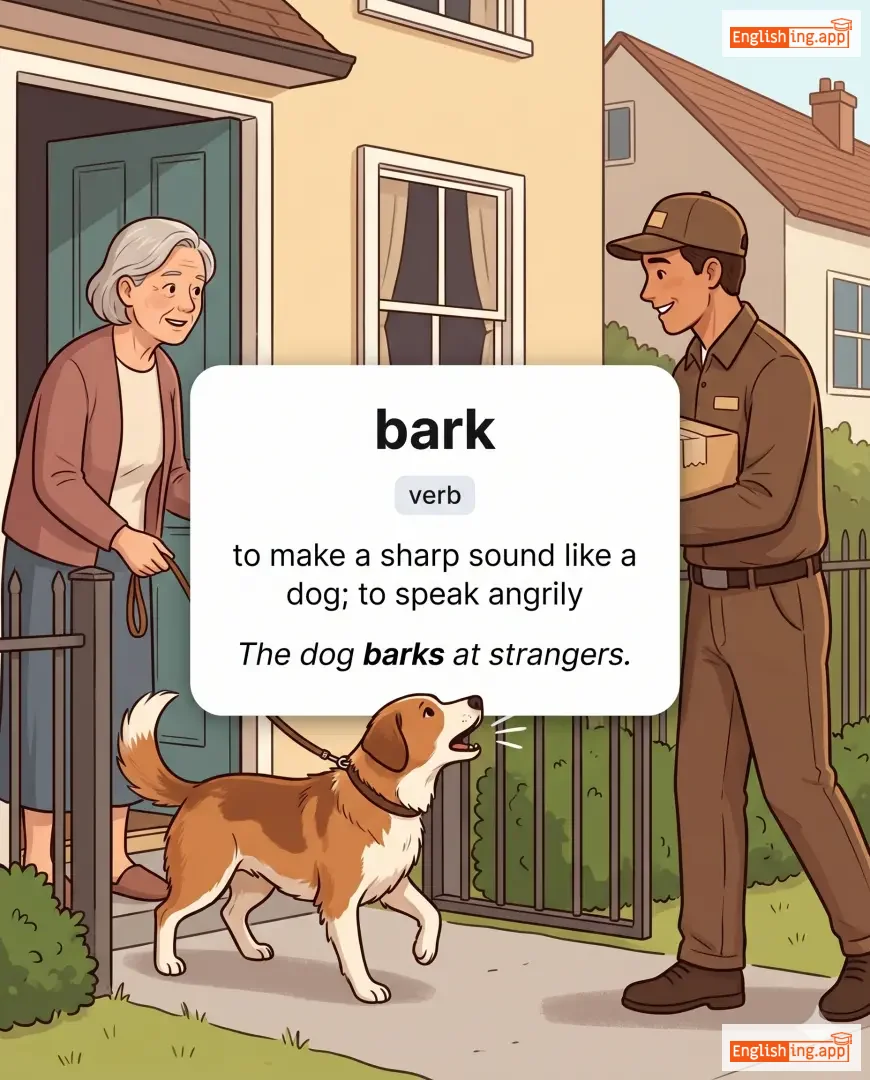
bark definition card — visual illustration of the meaning
verb
/bɑːrk/
吠叫 (feijiao)

to make a sharp sound like a dog; to speak angrily

"The dog barks at strangers."

"狗对陌生人大叫。" (Gǒu duì mòshēngrén dàjiào.)
noun
/ˈbɑː.li/
大麦 (dà mài)

a cereal grain used for food, brewing beer, and animal feed

"The farmer harvested barley from his fields in autumn."

"农民在秋天从他的田地里收获了大麦。" (Nóngmín zài qiūtiān cóng tā de tiándì lǐ shōuhuòle dà mài.)
noun
/bɑːn/
谷仓 (gǔ cāng)

a large building used for storing grain or housing farm animals

"The farmer keeps his cows in the barn."

"农民把他的牛放在谷仓里。" (nóngmín bǎ tā de niú fàng zài gǔ cāng lǐ)
noun
/ˈbɑːr.nɪ.kəl/
藤壶 (ténghú)

a marine crustacean that attaches itself permanently to underwater surfaces

"The old ship's hull was covered with barnacles."

"那艘旧船的船体上布满了藤壶。" (nà sōu jiù chuán de chuántǐ shàng bùmǎnle ténghú.)
noun
/ˈbærəˌɡræf/
记录气压变化的仪器 (jilu qiya bianhua de yiqi)

an instrument that records changes in atmospheric pressure

"The scientist checked the barograph for pressure variations."

"科学家检查了气压计以查看压力变化。" (Kexuejia jiancha le qiyaji yi chakan yali bianhua.)
noun
/bəˈrɒmɪtər/
气压计 (qiyaji)

an instrument that measures atmospheric pressure

"The barometer indicated a storm was approaching."

"气压计显示暴风雨即将来临。" (qiyaji xianshi baofengyu jijiang lailin.)
adjective
/bəˈroʊk/
巴洛克风格 (bā luò kè fēng gé)

relating to a highly ornate and extravagant style of art, architecture, or music from the 17th and early 18th centuries; excessively elaborate or complex

"The church was decorated in a baroque style with intricate details."

"教堂以复杂的巴洛克风格装饰,细节繁复。" (Jiàotáng yǐ fùzá de bā luò kè fēnggé zhuāngshì, xìjié fánfù.)
noun
/bəˈrɑːʒ/
弹幕或快速攻击 (bā lā rì)

a concentrated outpouring of questions, criticisms, or blows; a rapid, continuous attack

"The politician faced a barrage of tough questions from reporters."

"政治家面对记者们一连串尖锐的问题。" (Zhèng zhì jiā miàn duì jì zhě men yī lián chuàn jiān ruì de wèn tí.)
noun
/ˈbærəl/
大桶 (da tong)

a large cylindrical container used to hold liquids

"The wine was stored in a wooden barrel."

"酒被储存在一个木制的大桶中。" (Jiu bei chu cun zai yi ge mu zhi de da tong zhong.)
adjective
/ˈbærən/
贫瘠 (pínjí)

too poor to produce much or any vegetation; unproductive or empty

"The land was barren and could not support crops."

"这片土地贫瘠,无法支持作物生长。" (Zhè piàn tǔdì pínjí, wúfǎ zhīchí zuòwù shēngzhǎng.)
noun/verb
/ˌbærɪˈkeɪd/
障碍物 (zhàng ài wù)

a barrier erected to block or defend against movement; to block a passage with obstacles

"Protesters built a barricade across the street."
"抗议者在街道上建造了一个障碍物。" (Kàngyì zhě zài jiēdào shàng jiànzào le yīgè zhàng ài wù.)
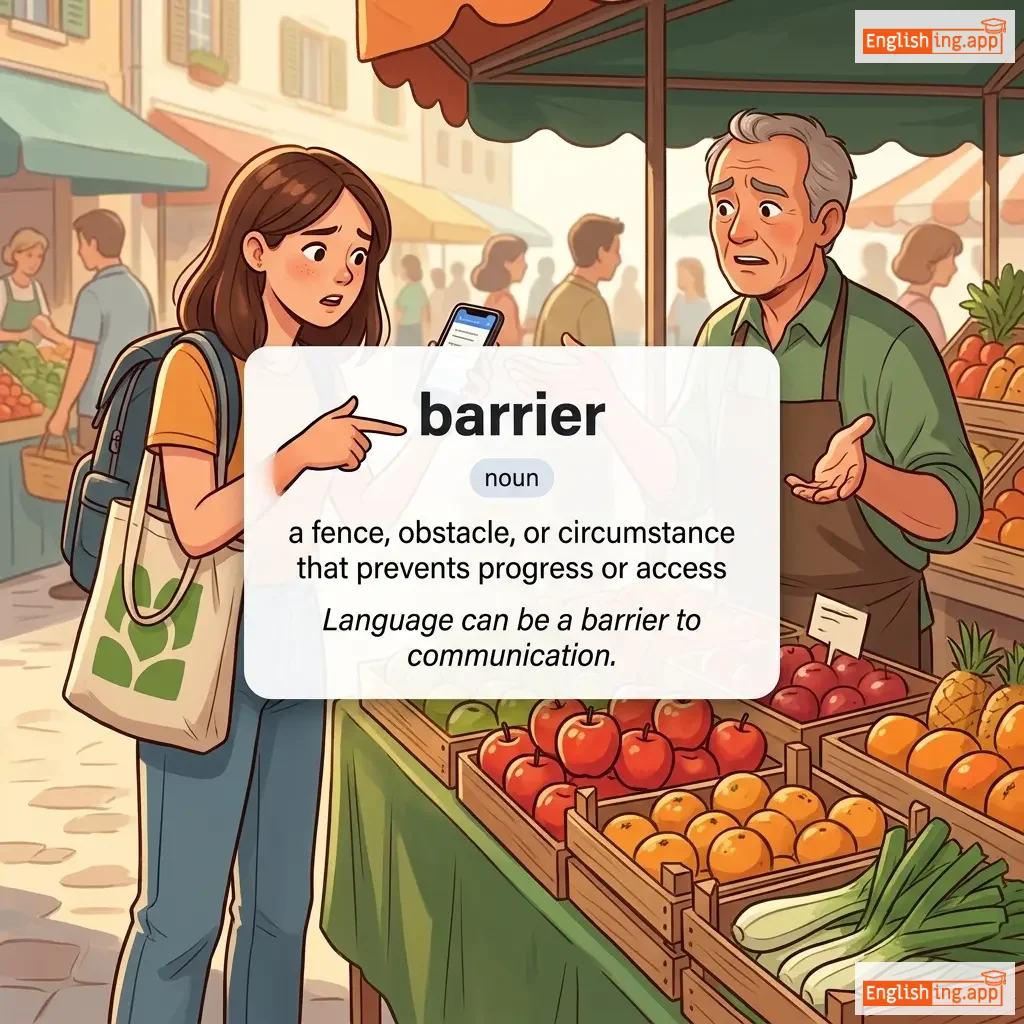
barrier definition card — visual illustration of the meaning
noun
/ˈbæriər/
障碍 (zhàng'ài)

a fence, obstacle, or circumstance that prevents progress or access

"Language can be a barrier to communication."
"语言可能是沟通的障碍。" (Yǔyán kěnéng shì gōutōng de zhàng'ài.)
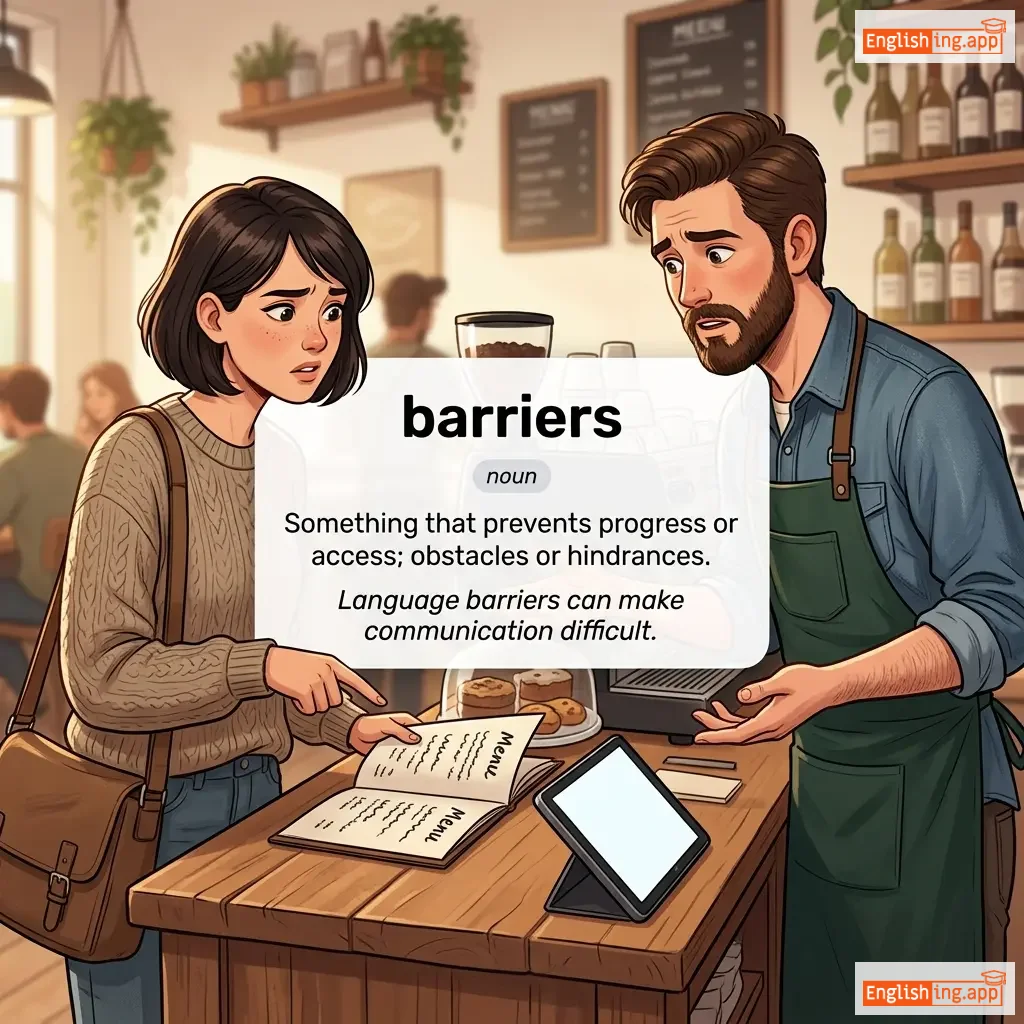
barriers definition card — visual illustration of the meaning
noun
/ˈbæɹɪəz/
障碍 (zhàng'ài)

Something that prevents progress or access; obstacles or hindrances.

"Language barriers can make communication difficult."

"语言障碍可能会使沟通变得困难。" (Yǔyán zhàng'ài kěnéng huì shǐ gōutōng biàn dé kùnnán.)
preposition
/ˈbɑːrɪŋ/
除非,除了 (chúfēi, chúle)

except for; if not for

"Barring a miracle, the team will not win the championship."

"除非有奇迹发生,否则团队将无法赢得冠军。" (Chúfēi yǒu qíjī fāshēng, fǒuzé tuánduì jiāng wúfǎ yíngdé guànjūn.)
noun
/ˈbærɪstər/
律师 (lǜshī)

A type of lawyer in certain legal systems who specializes in courtroom advocacy and litigation.

"The barrister argued the case passionately before the judge."
"律师在法官面前激情澎湃地辩论案件。" (Lǜshī zài fǎguān miànqián jīqíng péngpài de biànlùn ànjiàn.)
verb
/ˈbɑːrtər/

To exchange goods or services without using money.

"They bartered their crops for handmade tools."

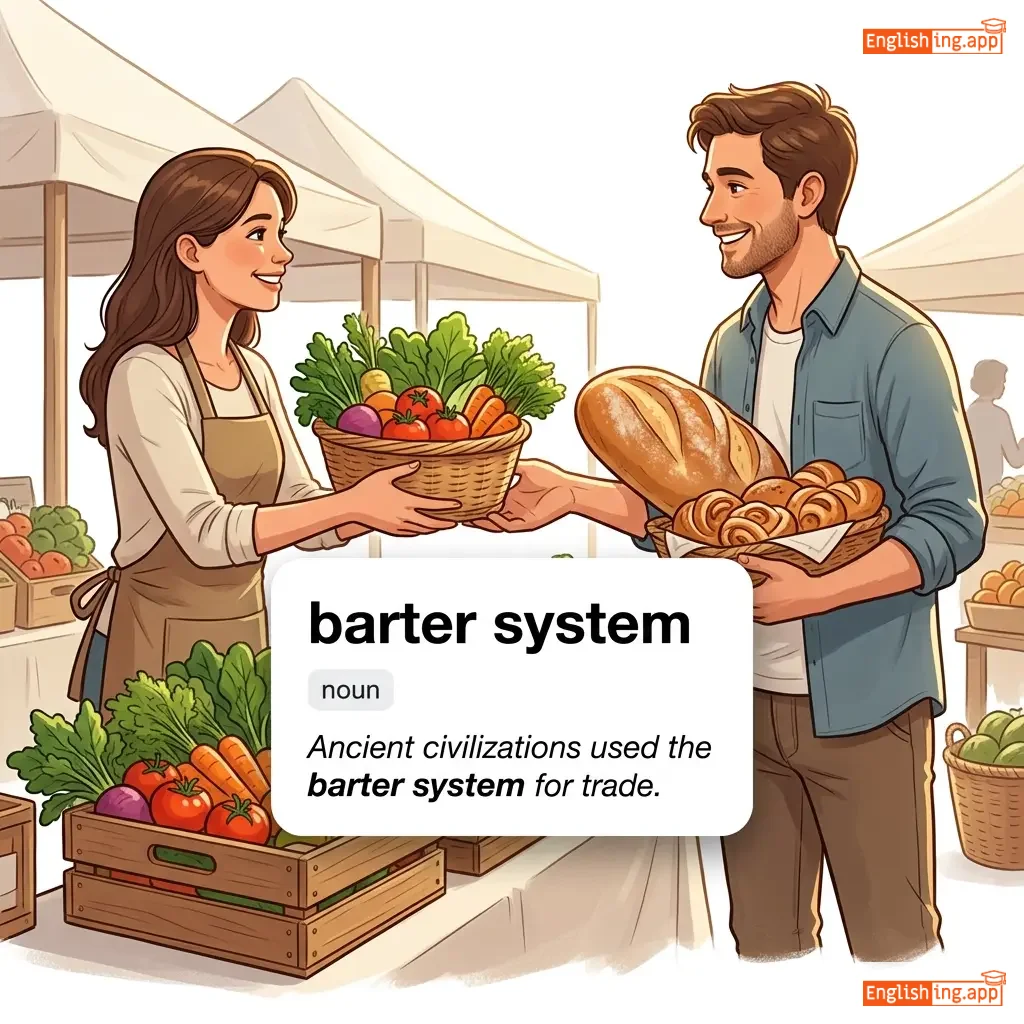
barter system definition card — visual illustration of the meaning
noun
/ˈbɑːr.tər ˌsɪs.təm/
物物交换 (wù wù jiāohuàn)

A system of exchange where goods and services are traded directly without using money.

"Ancient civilizations used the barter system for trade."

"古代文明使用物物交换系统进行贸易。" (Gu dai wenming shi yong wu wu jiao huan xi tong jin xing mao yi.)
noun
/ˈbɑːrtərər/
易货商 (yì huò shāng)

A person who trades goods or services without using money.

"The barterer exchanged fruits for some pottery."
"易货商用水果交换了一些陶器。" (Yì huò shāng yòng shuǐguǒ jiāohuànle yīxiē táoqì.)
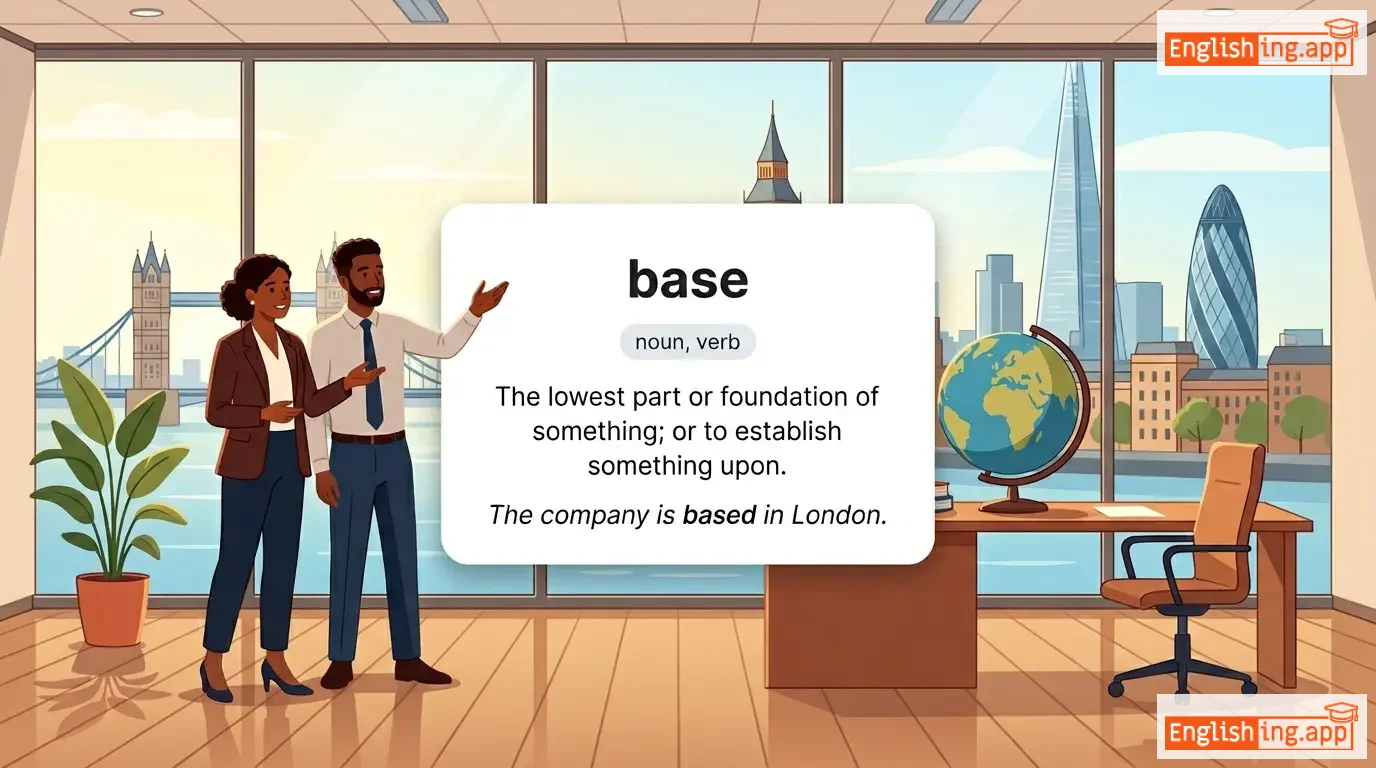
base definition card — visual illustration of the meaning
noun, verb
/beɪs/
基础 (jichu)

The lowest part or foundation of something; or to establish something upon.

"The company is based in London."

"公司总部位于伦敦。" (Gōngsī zǒngbù wèiyú lúndūn.)
noun
/ˈbeɪsˌbɔːl/
棒球 (bangqiu)

a sport in which two teams try to score runs by hitting a ball and running around bases

"He loves watching baseball games on TV."

"他喜欢在电视上观看棒球比赛。" (Tā xǐhuān zài diànshì shàng guānkàn bàngqiú bǐsài.)
noun
/ˈbeɪsbɔːrd/
踢脚线 (tī jiǎo xiàn)

A narrow board running along the bottom of an interior wall, covering the joint between wall and floor.

"The carpenter painted the baseboard white."

"木匠把踢脚线涂成了白色。" (Mùjiàng bǎ tī jiǎo xiàn tú chéng le báisè.)
adjective
/ˈbeɪs.ləs/
没有根据的; 无根据的; 不合理的 (méiyǒu gēnjù de; wú gēnjù de; bù hélǐ de)

without foundation; groundless; unfounded

"The accusations against him were completely baseless."

"对他的指控完全没有根据。" (duì tā de zhǐkòng wánquán méiyǒu gēnjù.)
noun
/ˈbeɪsmənt/
地下室 (dixiashi)

the lowest floor of a building, usually partly or completely below ground

"The laundry room is in the basement."

"洗衣房在地下室。" (Xǐyīfáng zài dìxiàshì.)
adjective
/ˈbæʃ.fəl/
害羞 (haixiu)

shy, easily embarrassed, or reluctant to draw attention

"She gave a bashful smile when he complimented her."

"当他称赞她时,她露出了害羞的微笑。" (Dang ta chengzan ta shi, ta luchu le haixiu de weixiao.)
adjective
/ˈbeɪsɪk/
基本的 (jiben de)

forming the most important or simplest part of something

"She taught me the basic rules of chess."

"她教会了我国际象棋的基本规则。" (Ta jiaohui le wo guojixiangqi de jiben guize.)
adverb
/ˈbeɪsɪkli/
基本上 (jiben shang)

in the most important or fundamental way; essentially

"Basically, the project was a success despite some small issues."

"基本上,尽管有一些小问题,项目仍然是成功的。" (Jiben shang, jinguan you yixie xiao wenti, xiangmu rengran shi chenggong de.)
noun
/ˈbeɪ.zəl/
罗勒 (luó lè)

an aromatic herb with green leaves used in cooking, especially Italian cuisine

"The pasta sauce was flavored with fresh basil."

"意大利面酱料中加入了新鲜的罗勒。" (Yìdàlì miàn jiàngliào zhōng jiārù le xīnxiān de luó lè.)
noun
/ˈbeɪ.zəl siːdz/
罗勒种子 (luo le zhong zi)

small black seeds from the basil plant, often used in drinks and desserts

"I added basil seeds to my lemonade for a refreshing drink."

"我在柠檬水中加入了罗勒种子,制作了一种清爽的饮品。" (Wo zai ningmeng shui zhong jiaru le luo le zhongzi, zhizuole yizhong qingshuang de yinpin.)
noun
/ˈbeɪsɪs/
基础 (jichu)

the underlying support or foundation for an idea, argument, or process

"Trust is the basis of any strong relationship."

"信任是任何强大关系的基础。" (Xìnrèn shì rènhé qiángdà guānxì de jīchǔ.)
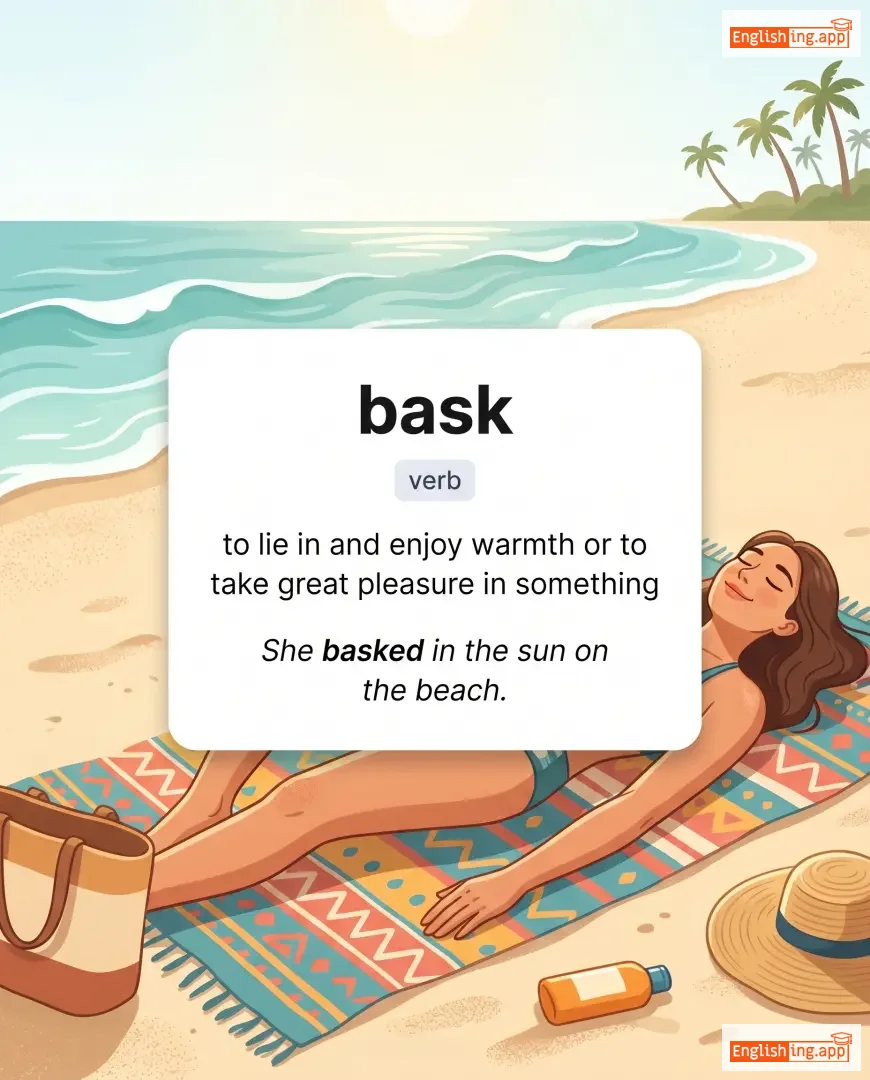
bask definition card — visual illustration of the meaning
☀️

bask

verb
/bæsk/

to lie in and enjoy warmth or to take great pleasure in something

"She basked in the sun on the beach."

noun
/ˈbæskɪt/
篮子 (lanzi)

a container made of woven materials used for carrying or storing things

"She carried the apples in a basket."

"她把苹果放在篮子里。" (Ta ba pingguo fang zai lanzi li.)
noun
/ˈbæskɪtbɔːl/

a game played by two teams who try to score points by throwing a ball through a hoop

"He loves playing basketball with his friends."

noun
/beɪs/
低沉的男性嗓音 / 贝斯吉他 (dīchén de nánxìng sǎngyīn / bèisī jí tā)

the lowest adult male singing voice; also, low-frequency sounds in music or a type of fish

"He played the bass guitar at the concert."

"他在音乐会弹奏了贝斯吉他。" (Tā zài yīnyuè huì tánzòu le bèisī jí tā.)
noun
/bəˈsuːn/
一种大号木管乐器 (yī zhǒng dà hào mù guǎn yuèqì)

a large woodwind instrument with a deep sound

"The orchestra featured a beautiful bassoon solo."

"乐团演奏了美妙的巴松独奏。" (Yuètuán yǎnzòu le měimiào de bāsōng dúzòu.)
noun/adjective
/ˈbæstərd/
私生子 (sī shēng zǐ)

a child born to unmarried parents (offensive); also used informally as an insult or to describe something unpleasant

"He called him a bastard in anger."

"他生气时骂他是私生子。" (Tā shēngqì shí mà tā shì sī shēng zǐ.)
noun
/ˈbæs.tərd tiːk/
黄花檀 (huanghua tan)

A flowering tree with bright orange-red flowers, also known as flame of the forest

"The bastard teak tree blooms with vibrant orange flowers in spring."

"黄花檀树在春天开出鲜艳的橙色花朵。" (Huanghua tan shu zai chuntian kaichu xianyan de chengse huaduo.)