語彙集

英単語辞書 | 単語の意味、定義、例文

noun, verb
/bɑːr/
バー, ブロックする (ba, burokkusuru)

a counter where drinks are served; to prevent or block

"They decided to meet at the bar after work."

"仕事の後、バーで会うことに決めました。" (Shigoto no ato, bā de au koto ni kimemashita.)
noun
/bɑːrb/
とげ、鋭いコメント (toge, surudoi komento)

a sharp projection such as on a fishhook; a cutting remark

"The fishhook has a small barb to keep the fish from escaping."

"釣り針には、魚が逃げないように小さなとげがあります。" (Tsuribari ni wa, sakana ga nigenai you ni chiisana toge ga arimasu.)
noun
/ˈbɑːr.bər/
理髪師 (rihatsushi)

a person whose job is to cut men's hair and shave or trim beards

"The barber gave him a perfect haircut for his wedding."

"理髪師は彼の結婚式のために完璧なヘアカットをしました。" (Rihatsushi wa kare no kekkonshiki no tame ni kanpeki na heakatto o shimashita.)
noun
/bɑːrˈbeəriən/
野蛮人; 未開人; (yebanjin; mikajin)

a person from an uncivilized group; someone who is cruel or brutal

"The ancient Romans considered anyone outside their empire to be barbarians."

"古代ローマ人は自分たちの帝国の外にいる者たちを野蛮人と見なしていた。" (Kodai Rōmajin wa jibuntachi no teikoku no soto ni iru mono-tachi o yebanjin to minasiteita.)
noun
/ˈbɑːrbərɪzəm/
野蛮 (yaban)

extreme cruelty or brutality; absence of culture and civilization

"The barbarism of the war crimes shocked the entire international community."

"戦争犯罪の野蛮さは国際社会全体を衝撃に陥れた。" (Sensō hanzai no yaban-sa wa kokusai shakai zentai o shōgeki ni ochiireta.)
adjective
/ˈbɑːr.bə.rəs/
野蛮な, 残虐な (yaban na, zankyō na)

extremely cruel or uncivilized

"The prisoners were treated in a barbarous manner."

"囚人たちは野蛮な方法で扱われました。" (Shūjin-tachi wa yaban na hōhō de atsukaware mashita.)
noun
/ˈbɑːr.kəˌroʊl/
バルカロール (barukarooru)

a traditional Venetian boat song, often in 6/8 time

"The orchestra played a beautiful barcarole that reminded me of Venice."
"オーケストラは美しいバルカロールを演奏し、私にヴェネツィアを思い出させました。" (ookesutora wa utsukushii barukarooru wo ensou shi, watashi ni venetsuia wo omoidasaasemashita.)
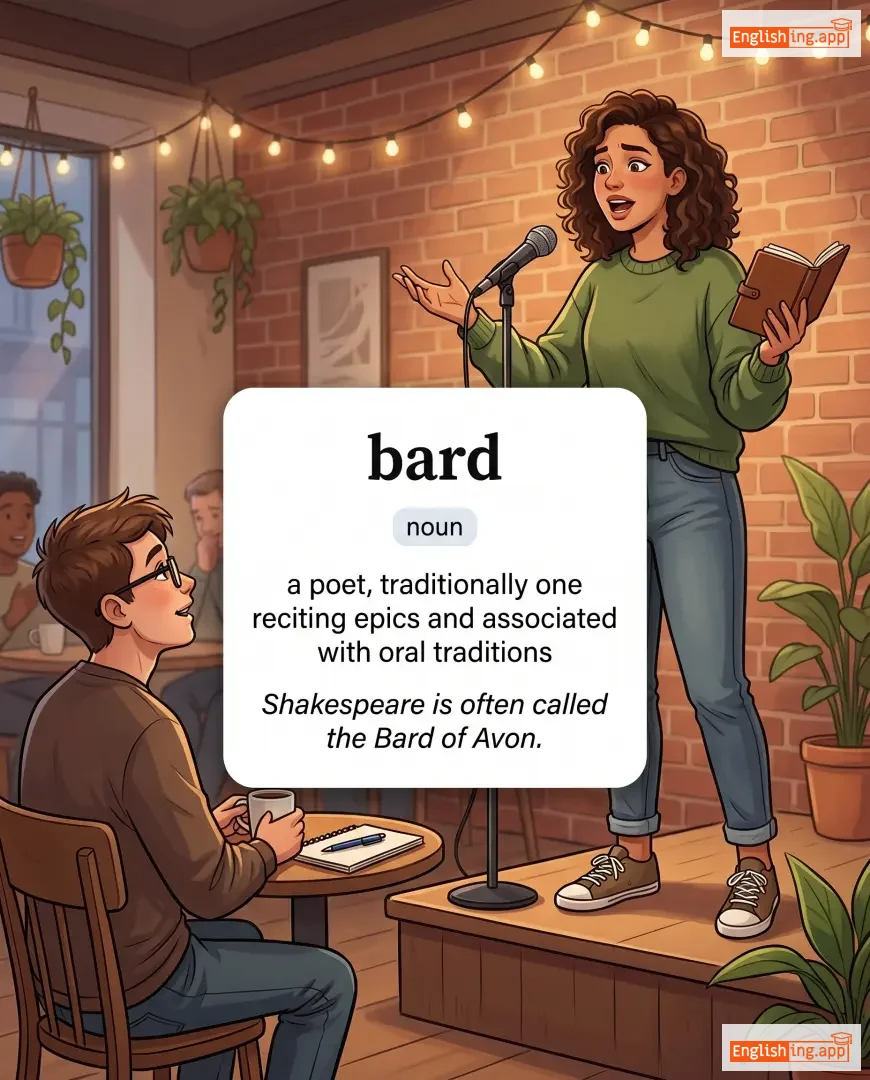
bard definition card — visual illustration of the meaning
noun
/bɑːrd/
詩人 (shijin)

a poet, traditionally one reciting epics and associated with oral traditions

"Shakespeare is often called the Bard of Avon."

"シェイクスピアはしばしばアヴォンの詩人と呼ばれます。" (Sheikusupia wa shibashiba Avon no shijin to yobaremasu.)
adjective
/beər/
(hadaka)

not covered by any clothing or decoration; simple and without addition

"He walked on the beach with bare feet."

"彼は裸足でビーチを歩いた。" (Kare wa hadashi de bīchi o aruita.)
adjective
/ˈbɛərˌfeɪst/
厚かましい (atsukamashī)

shameless and undisguised; openly bold or unashamed

"He told a barefaced lie in front of everyone."

"彼はみんなの前で厚かましい嘘をついた。" (Kare wa minna no mae de atsukamashī uso o tsuita.)
adverb
/ˈbɛərli/
かろうじて (karōjite)

only just; almost not

"She barely passed the exam."

"彼女はギリギリ試験に合格しました。" (Kanojo wa girigiri shiken ni gōkaku shimashita.)
noun
/ˈbɛərnəs/
裸の状態 (hada no joutai)

the state of being bare or uncovered; lack of decoration, warmth, or concealment

"The bareness of the room made it feel cold and unwelcoming."

"部屋の裸の状態が冷たく居心地の悪い感じを与えた。" (heya no hada no joutai ga tsumetakaku igokochi no warui kanji o ataeta)
bargain definition card — visual illustration of the meaning
noun, verb
/ˈbɑːrɡən/
取引 / お得な買い物 (torihiki / otoku na kaimono)

an agreement between two or more parties; something bought at a good price

"We managed to get the car at a real bargain."

"私たちは本当に良いバーゲンで車を手に入れました。" (Watashitachi wa hontou ni yoi baagen de kuruma o te ni iremashita.)
noun
/ˈbærɪˌtoʊn/
低い男性の声 (hikui dansei no koe)

a male singing voice between tenor and bass

"The singer’s baritone voice impressed the audience."
"歌手のバリトンの声は観客に感銘を与えました。" (Kashu no bariton no koe wa kankyaku ni kanmei o ataemashita.)
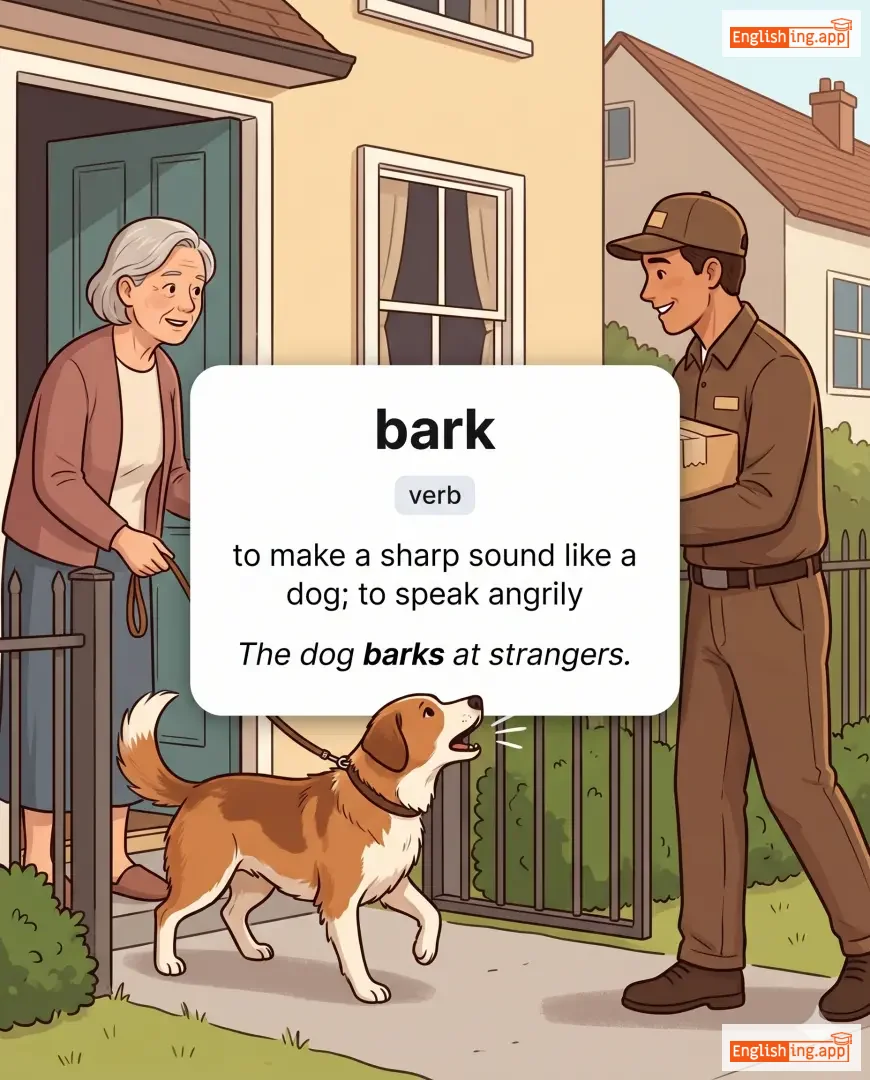
bark definition card — visual illustration of the meaning
verb
/bɑːrk/
吠える (hoeru)

to make a sharp sound like a dog; to speak angrily

"The dog barks at strangers."

"犬は見知らぬ人に吠える。" (Inu wa mishiranu hito ni hoeru.)
noun
/ˈbɑː.li/
大麦 (ōmugi)

a cereal grain used for food, brewing beer, and animal feed

"The farmer harvested barley from his fields in autumn."

"農夫は秋に彼の畑から大麦を収穫した。" (Nōfu wa aki ni kare no hatake kara ōmugi o shūkaku shita.)
noun
/bɑːn/
納屋 (nōya)

a large building used for storing grain or housing farm animals

"The farmer keeps his cows in the barn."

"農夫は牛を納屋に入れています。" (Nōfu wa ushi o nōya ni ireteimasu.)
noun
/ˈbɑːr.nɪ.kəl/
フジツボ (fujitsubo)

a marine crustacean that attaches itself permanently to underwater surfaces

"The old ship's hull was covered with barnacles."

"古い船の船体にはフジツボがびっしりと付いていた。" (furui fune no sentai ni wa fujitsubo ga bisshiri to tsuite ita.)
noun
/ˈbærəˌɡræf/
大気圧の変化を記録する機器 (taikiatsu no henka o kiroku suru kiki)

an instrument that records changes in atmospheric pressure

"The scientist checked the barograph for pressure variations."

"科学者は圧力の変動を調べるためにバログラフを確認した。" (Kagakusha wa atsuryoku no hendou o shiraberu tame ni barogurafu o kakunin shita.)
noun
/bəˈrɒmɪtər/
気圧計 (kiatsukei)

an instrument that measures atmospheric pressure

"The barometer indicated a storm was approaching."

"バロメーターは嵐が近づいていることを示しました。" (Barometaa wa arashi ga chikadzuite iru koto o shimeshimashita.)
adjective
/bəˈroʊk/
バロック様式 (barokku yōshiki)

relating to a highly ornate and extravagant style of art, architecture, or music from the 17th and early 18th centuries; excessively elaborate or complex

"The church was decorated in a baroque style with intricate details."

"教会はバロック様式で複雑な詳細で飾られていました。" (Kyōkai wa barokku yōshiki de fukuzatsu na shōsai de kazararete imashita.)
noun
/bəˈrɑːʒ/
集中攻撃または速攻 (barāji)

a concentrated outpouring of questions, criticisms, or blows; a rapid, continuous attack

"The politician faced a barrage of tough questions from reporters."

"政治家は記者からの厳しい質問の集中攻撃に直面していました。" (Seijika wa kishā kara no kibishī shitsumon no shūchū kōgeki ni chokumen shite imashita.)
noun
/ˈbærəl/
大樽 (o-taru)

a large cylindrical container used to hold liquids

"The wine was stored in a wooden barrel."

"ワインは木製の大樽に保管されていた。" (Wain wa mokusei no o-taru ni hokan sarete ita.)
adjective
/ˈbærən/
不毛 (fumou)

too poor to produce much or any vegetation; unproductive or empty

"The land was barren and could not support crops."

"その土地は不毛で、作物を育てることができませんでした。" (Sono tochi wa fumou de, sakumotsu o sodateru koto ga dekimasen deshita.)
noun/verb
/ˌbærɪˈkeɪd/
バリケード (barikēdo)

a barrier erected to block or defend against movement; to block a passage with obstacles

"Protesters built a barricade across the street."
"抗議者たちは通りにバリケードを作った。" (Kōgisha-tachi wa tōri ni barikēdo o tsukutta.)
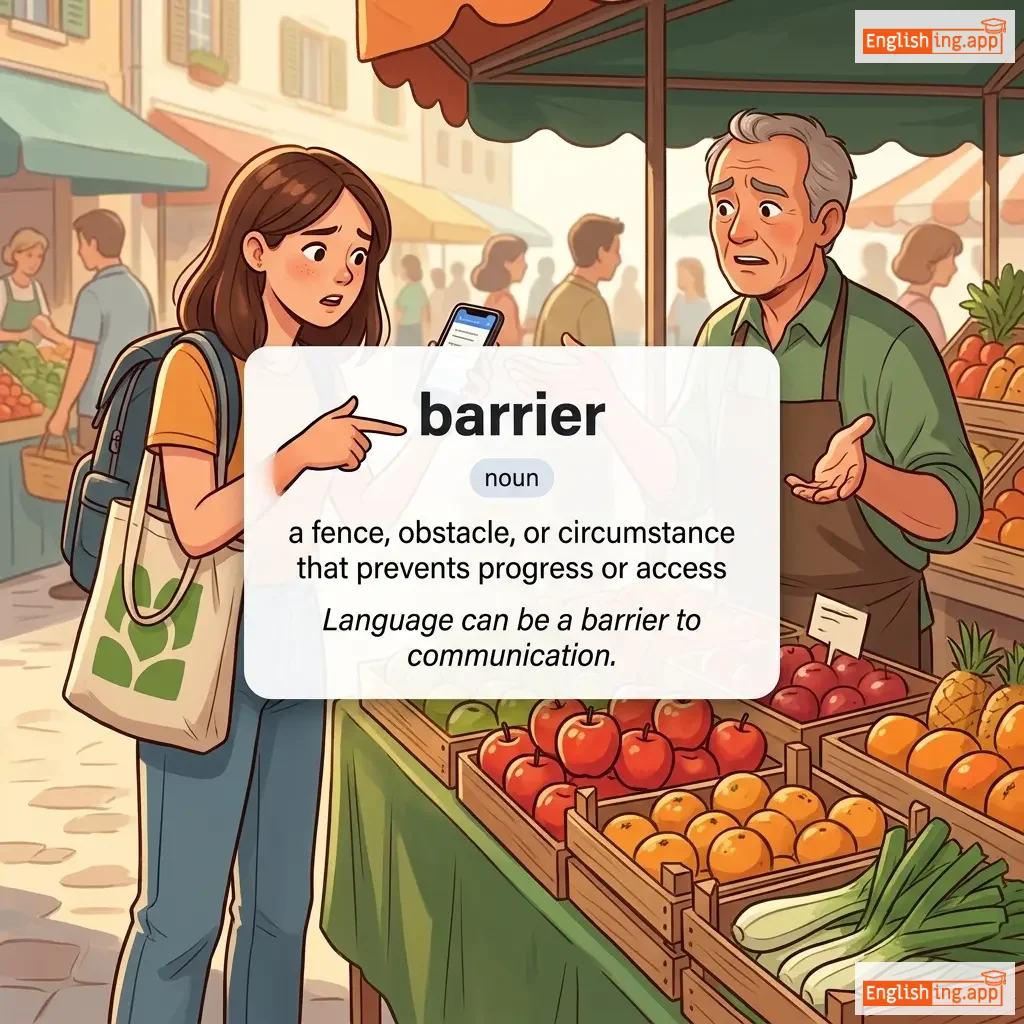
barrier definition card — visual illustration of the meaning
noun
/ˈbæriər/
障壁 (shōheki)

a fence, obstacle, or circumstance that prevents progress or access

"Language can be a barrier to communication."
"言語はコミュニケーションの障壁となることがあります。" (Gengo wa komyunikēshon no shōheki to naru koto ga arimasu.)
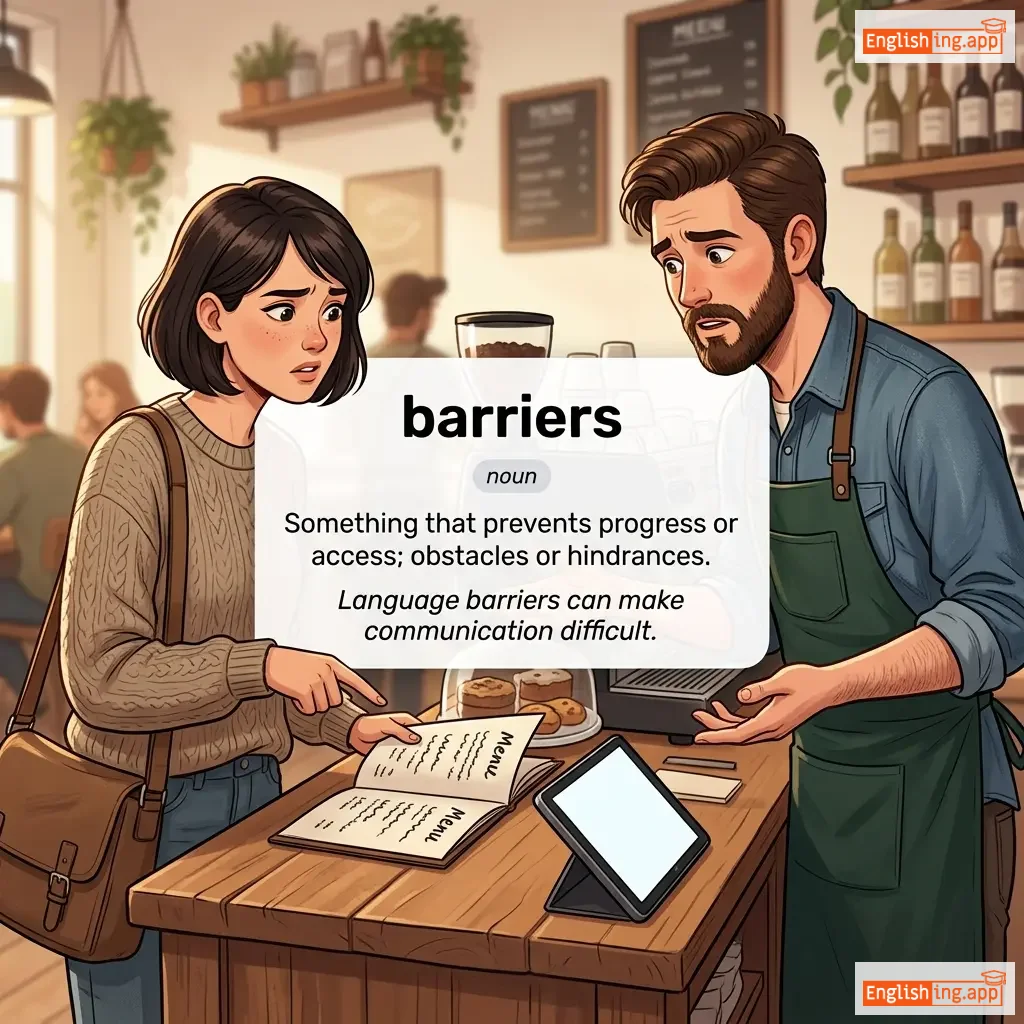
barriers definition card — visual illustration of the meaning
noun
/ˈbæɹɪəz/
障壁 (shōheki)

Something that prevents progress or access; obstacles or hindrances.

"Language barriers can make communication difficult."

"言語の壁がコミュニケーションを困難にすることがあります。" (Gengo no kabe ga komyunikēshon o kon'nan ni suru koto ga arimasu.)
preposition
/ˈbɑːrɪŋ/
を除いて、を除く (wo nozoite, wo nozoku)

except for; if not for

"Barring a miracle, the team will not win the championship."

"奇跡を除いて、チームはチャンピオンシップを勝ち取らない。" (Kiseki wo nozoite, chīmu wa chanpionship wo kachitoranai.)
noun
/ˈbærɪstər/
弁護士 (bengoshi)

A type of lawyer in certain legal systems who specializes in courtroom advocacy and litigation.

"The barrister argued the case passionately before the judge."
"弁護士は裁判官の前で情熱的にケースを弁論しました。" (Bengoshi wa saibankan no mae de jōnetsuteki ni kēsu o benron shimashita.)
verb
/ˈbɑːrtər/

To exchange goods or services without using money.

"They bartered their crops for handmade tools."

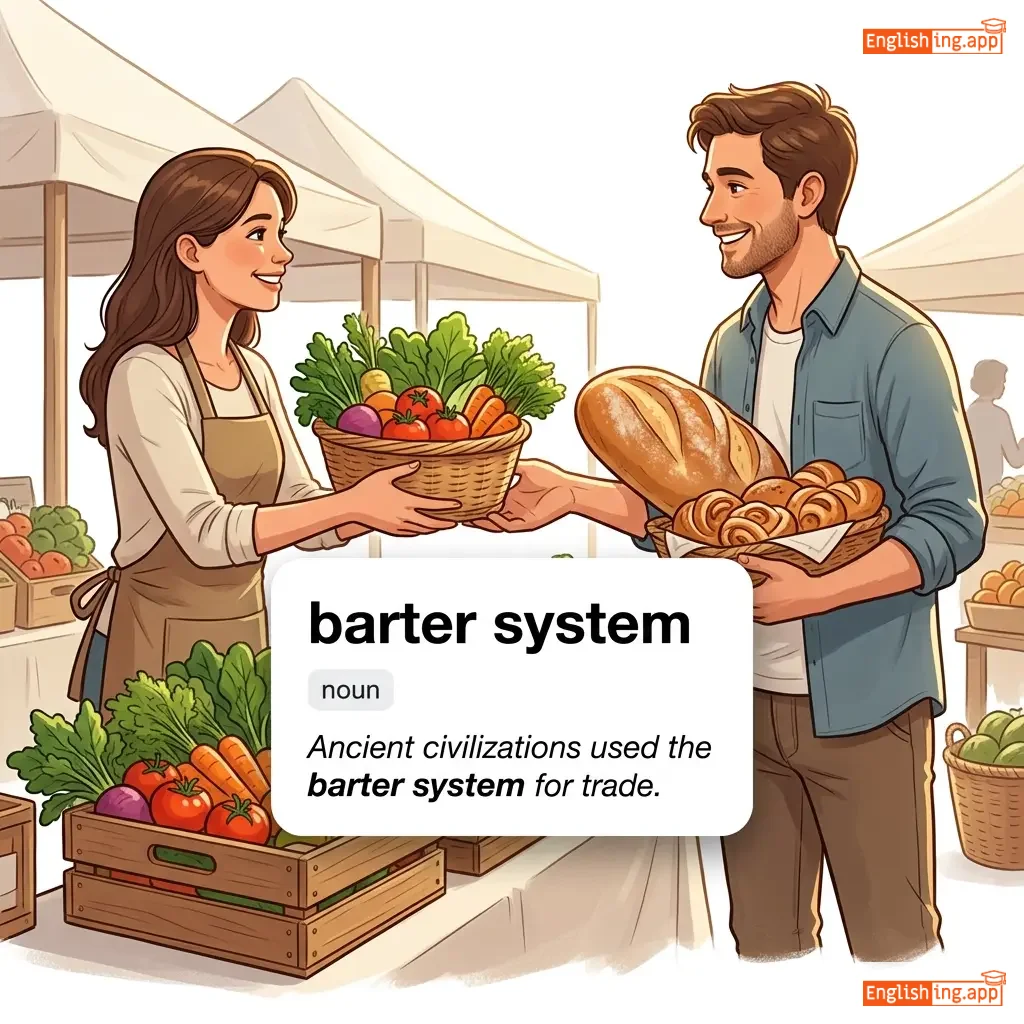
barter system definition card — visual illustration of the meaning
noun
/ˈbɑːr.tər ˌsɪs.təm/
物々交換システム (butsubutsu kōkan shisutemu)

A system of exchange where goods and services are traded directly without using money.

"Ancient civilizations used the barter system for trade."

"古代の文明は貿易のために物々交換システムを使用していました。" (Kodai no bunmei wa bōeki no tame ni butsubutsu kōkan shisutemu o shiyou shite imashita.)
noun
/ˈbɑːrtərər/
物々交換者 (monomono koukan-sha)

A person who trades goods or services without using money.

"The barterer exchanged fruits for some pottery."
"物々交換者は果物を陶器と交換しました。" (Monomono koukan-sha wa kudamono o tōki to kōkan shimashita.)
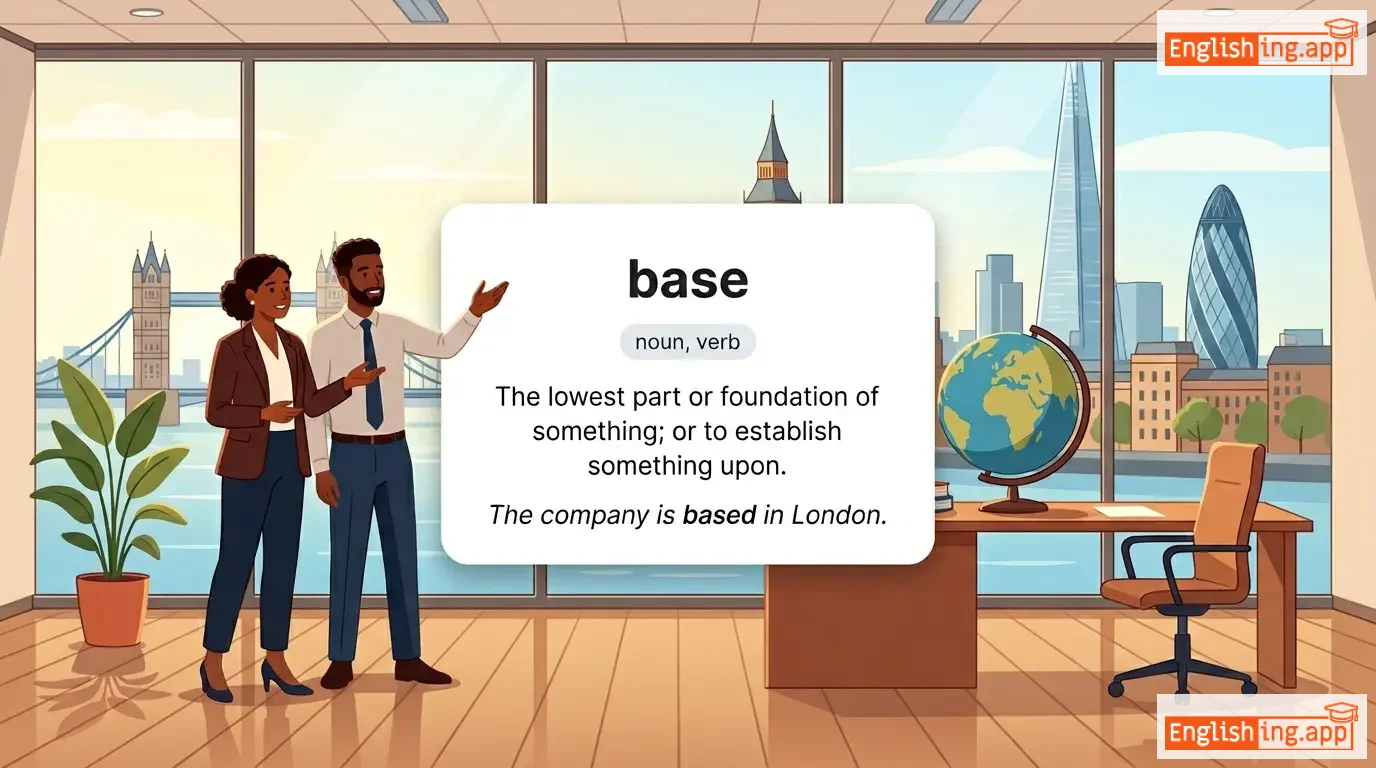
base definition card — visual illustration of the meaning
noun, verb
/beɪs/
基盤 (kiban)

The lowest part or foundation of something; or to establish something upon.

"The company is based in London."

"その会社はロンドンに拠点を置いています。" (Sono kaisha wa Rondon ni kyoten o oiteimasu.)
noun
/ˈbeɪsˌbɔːl/
ベースボール (bēsubōru)

a sport in which two teams try to score runs by hitting a ball and running around bases

"He loves watching baseball games on TV."

"彼はテレビで野球の試合を見るのが好きです。" (Kare wa terebi de yakyū no shiai o miru no ga suki desu.)
noun
/ˈbeɪsbɔːrd/
基板 (kiban)

A narrow board running along the bottom of an interior wall, covering the joint between wall and floor.

"The carpenter painted the baseboard white."

"大工は基板を白く塗った。" (Daiku wa kiban o shiroku nitta.)
adjective
/ˈbeɪs.ləs/
根拠のない; 事実無根の; 無根拠の (konkyo no nai; jijitsu mukon no; mukonkyo no)

without foundation; groundless; unfounded

"The accusations against him were completely baseless."

"彼に対する告発は完全に根拠のないものでした。" (Kare ni taisuru kokuhatsu wa kanzen ni konkyo no nai mono deshita.)
noun
/ˈbeɪsmənt/
地下室 (chikashitsu)

the lowest floor of a building, usually partly or completely below ground

"The laundry room is in the basement."

"ランドリールームは地下室にあります。" (Randorī rūmu wa chikashitsu ni arimasu.)
adjective
/ˈbæʃ.fəl/
恥ずかしがり屋 (hazukashigariya)

shy, easily embarrassed, or reluctant to draw attention

"She gave a bashful smile when he complimented her."

"彼が彼女を褒めたとき、彼女は恥ずかしそうに微笑んだ。" (Kare ga kanojo wo hometa toki, kanojo wa hazukashisou ni bishounda.)
adjective
/ˈbeɪsɪk/
基本的 (kibanteki)

forming the most important or simplest part of something

"She taught me the basic rules of chess."

"彼女は私にチェスの基本的なルールを教えてくれました。" (Kanojo wa watashi ni chesu no kibanteki na ruuru wo oshiete kuremashita.)
adverb
/ˈbeɪsɪkli/
基本的に (kihon teki ni)

in the most important or fundamental way; essentially

"Basically, the project was a success despite some small issues."

"基本的に、いくつかの小さな問題があったにもかかわらず、そのプロジェクトは成功でした。" (Kihon teki ni, ikutsuka no chiisana mondai ga atta ni mo kakawarazu, sono purojekuto wa seikou deshita.)
noun
/ˈbeɪ.zəl/
バジル (bajiru)

an aromatic herb with green leaves used in cooking, especially Italian cuisine

"The pasta sauce was flavored with fresh basil."

"パスタソースには新鮮なバジルが加えられていました。" (Pasuta sōsu ni wa shinsen na bajiru ga kuwaerarete imashita.)
noun
/ˈbeɪ.zəl siːdz/
バジルシード (bajiru shīdo)

small black seeds from the basil plant, often used in drinks and desserts

"I added basil seeds to my lemonade for a refreshing drink."

"私はレモネードにバジルシードを加えて、さっぱりとした飲み物を作りました。" (Watashi wa remonēdo ni bajiru shīdo o kuwaete, sappari to shita nomimono o tsukurimashita.)
noun
/ˈbeɪsɪs/
基礎 (kiso)

the underlying support or foundation for an idea, argument, or process

"Trust is the basis of any strong relationship."

"信頼は強い関係の基礎です。" (Shinrai wa tsuyoi kankei no kiso desu.)
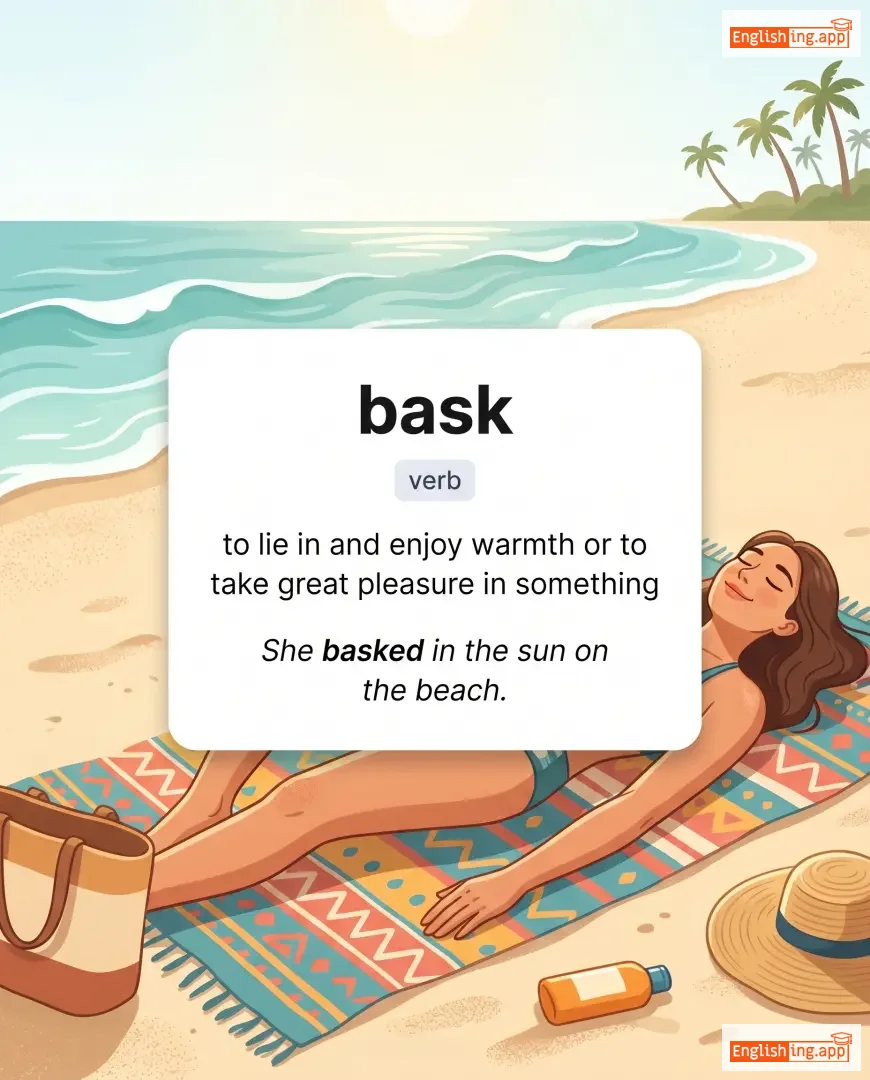
bask definition card — visual illustration of the meaning
☀️

bask

verb
/bæsk/

to lie in and enjoy warmth or to take great pleasure in something

"She basked in the sun on the beach."

noun
/ˈbæskɪt/
かご (kago)

a container made of woven materials used for carrying or storing things

"She carried the apples in a basket."

"彼女はバスケットにリンゴを入れて運んだ。" (Kanojo wa basuketto ni ringo o irete hakonda.)
noun
/ˈbæskɪtbɔːl/

a game played by two teams who try to score points by throwing a ball through a hoop

"He loves playing basketball with his friends."

noun
/beɪs/
低い男性の声 / ベースギター (hikui dansei no koe / bēsu gitā)

the lowest adult male singing voice; also, low-frequency sounds in music or a type of fish

"He played the bass guitar at the concert."

"彼はコンサートでベースギターを弾いた。" (Kare wa konsāto de bēsu gitā o hīta.)
noun
/bəˈsuːn/
一種の大型木管楽器 (isshu no ōgata mokukan gakki)

a large woodwind instrument with a deep sound

"The orchestra featured a beautiful bassoon solo."

"オーケストラは素晴らしいバスーンのソロを披露しました。" (Ōkesutora wa subarashī basūn no soro o hirō shimashita.)
noun/adjective
/ˈbæstərd/
私生児 (shiseiji)

a child born to unmarried parents (offensive); also used informally as an insult or to describe something unpleasant

"He called him a bastard in anger."

"彼は怒りで彼をバスタードと呼んだ。" (Kare wa ikari de kare o basutādo to yonda.)
noun
/ˈbæs.tərd tiːk/
バスタードティーク (basutādo tīku)

A flowering tree with bright orange-red flowers, also known as flame of the forest

"The bastard teak tree blooms with vibrant orange flowers in spring."

"バスタードティークの木は春に鮮やかなオレンジ色の花を咲かせます。" (Basutādo tīku no ki wa haru ni azayakana orenji-iro no hana o sakasemasu.)