Словари

Словарь английского языка | Значения слов, определения и примеры

noun
/ˈboʊlər/
боулер (bouler)

a person who delivers the ball in cricket; also a type of hard felt hat with a rounded crown

"The bowler took three wickets in the first over."

"Боулер взял три вики в первом овере." (Bouler vzyal tri viki v pervom overe.)
noun
/əˈwɛərnəs/

knowledge or perception of a situation, fact, or issue

"Public awareness of climate change is increasing."

adjective
/əˈwɒʃ/
затопленный (zatoplenniy)

covered or flooded with water or something in large quantities

"The market was awash with cheap imported goods."

"Рынок был затоплен дешевыми импортными товарами." (Rynok byl zatoplen deshevoy importnymi tovarami.)
🏃‍♂️

Away (uh-veh)

adverb
/əˈweɪ/
далеко (daleko)

at a distance from a particular place, person, or thing

"She walked away without saying a word."

"Она ушла, не сказав ни слова." (Ona ushla, ne skazav ni slova.)
noun
/ɔː/
изумление (izumlenie)

a feeling of deep respect mixed with fear or wonder

"The children looked at the fireworks in awe."

"Дети смотрели на фейерверки с изумлением." (Deti smotreli na feyerverki s izumleniem.)
adjective
/ˈɔːfəl/
ужасный (uzhasnyy)

very bad or unpleasant

"The weather was awful during our trip."

"Погода была ужасной во время нашего путешествия." (Pogoda byla uzhasnoy vo vremya nashego puteshestviya.)
adverb
/ˈɔːfəli/
ужасно (uzhasno)

in a very great degree; extremely; in a way that is very bad or unpleasant

"I am awfully glad to see you again."

"Я ужасно рад снова тебя видеть." (ya uzhasno rad snova tebya videt)
adjective
/ˈɔːkwəd/
неловкий (nelovkiy)

causing or feeling embarrassment; difficult to deal with

"There was an awkward silence after his joke."

"После его шутки наступила неловкая тишина." (Posle ego shutki nastupila nelovkaya tishina.)
🛠️

awl (ол)

noun
/ɔːl/
шило (shilo)

a small pointed tool used for making holes, especially in leather

"The cobbler used an awl to punch holes in the leather."

"Сапожник использовал шило, чтобы пробить отверстия в коже." (Sapozhnik ispol'zoval shilo, chtoby probit' otverstiya v kozhe.)
noun
/ˈɔːnɪŋ/
тент (tent)

a sheet of canvas or material stretched on a frame to shelter a place from the sun or rain

"We sat under the awning to avoid the heavy rain."

"Мы сидели под тентом, чтобы избежать сильного дождя." (My sidelí pod tentom, chtoby izbezhat' sil'nogo dozhdya.)
adverb
/əˈraɪ/
неправильно (nepravil'no)

away from the expected or proper direction; wrong or amiss

"The plan went awry when the weather suddenly changed."

"План пошел не так, когда погода внезапно изменилась." (Plan poshel ne tak, kogda pogoda vnezapno izmenilas'.)
noun
/æks/
топор (topor)

a tool with a heavy blade for cutting wood

"The lumberjack swung his axe to chop the tree."
"Лесоруб размахивал своим топором, чтобы срубить дерево." (Lesorub ramakhival svoim toporom, chtoby srubit derevo.)
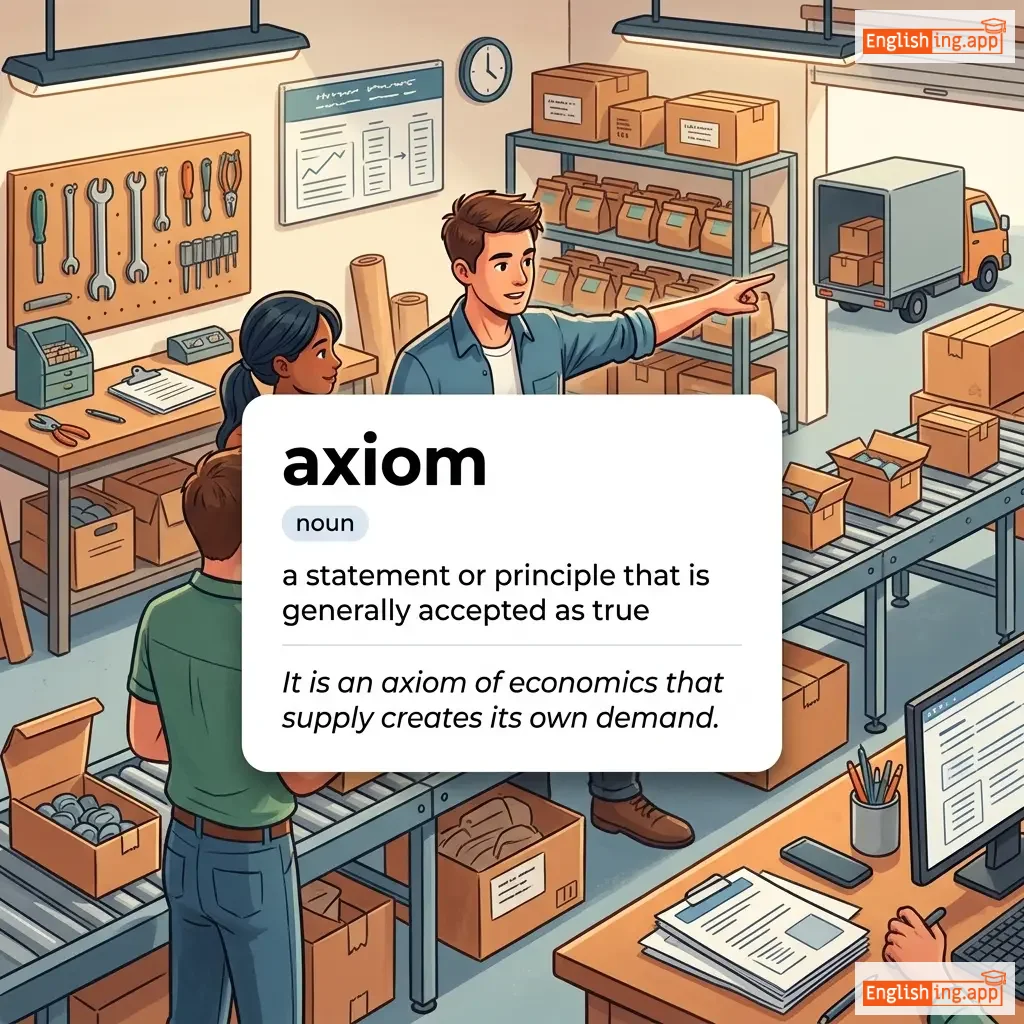
axiom definition card — visual illustration of the meaning
noun
/ˈæk.si.əm/
аксиома (aksioma)

a statement or principle that is generally accepted as true

"It is an axiom of economics that supply creates its own demand."

"Это аксиома экономики, что предложение создает собственный спрос." (Eto aksioma ekonomiki, chto predlozhenie sozdajet sobstvennyy spros.)
axiomatic definition card — visual illustration of the meaning
adjective
/ˌæk.si.əˈmæt.ɪk/
аксиоматический (aksiomatičeskij)

self-evident or unquestionable

"It is axiomatic that hard work leads to success."

"Это аксиома, что тяжелая работа приводит к успеху." (Eto aksioma, chto tyazhelaya rabota privodit k uspekhu.)
noun
/aɪ/
да (da)

an affirmative vote or expression of agreement

"The committee voted aye on the proposal."

"Комитет проголосовал за предложение." (Komitet progolosoval za predlozheniye.)
noun
/əˈzeɪ.li.ə/
азалия (azaliya)

a flowering shrub with brightly colored blooms, often grown ornamentally

"The garden was full of blooming azaleas in spring."

"Сад был полон цветущих азалий весной." (Sad byl polon tsvetushchikh azali v vesnoy.)
adjective
/ˈæʒər/
азурный (azurnyy)

A bright blue color like that of a clear sky.

"The clear sky was painted in a deep shade of azure."
"Чистое небо было окрашено в глубокий оттенок азурного." (Chistoye nebo bylo okrasheno v glubokiy otyenok azurnogo.)
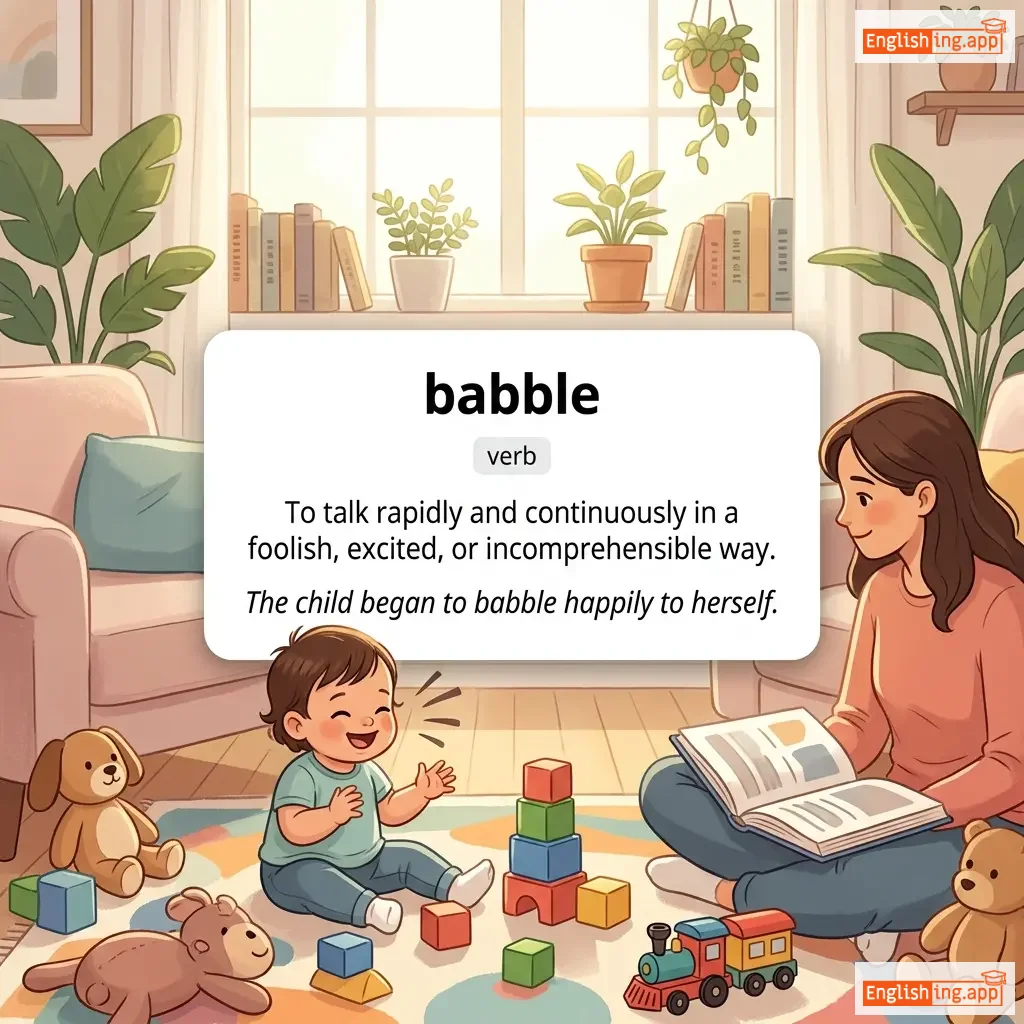
babble definition card — visual illustration of the meaning
🗣️

babble

verb
/ˈbæbəl/

To talk rapidly and continuously in a foolish, excited, or incomprehensible way.

"The child began to babble happily to herself."

noun
/bəˈbuːn/
бабуин (babuin)

a large African and Arabian primate with a dog-like snout and colorful buttocks

"The baboon troop gathered around the watering hole in the savanna."

"Группа бабуинов собралась вокруг водяной ямы в саванне." (Gruppa babuinov sobralas' vokrug vodyanoi iamy v savanne.)
noun
/ˈbeɪbi/
младенец (mladenets)

a very young child, especially one newly or recently born

"The baby is sleeping peacefully in the crib."

"Младенец спокойно спит в кроватке." (Mladenets spokoyno spit v krovate.)
noun
/ˈbækənæl/
дикая вечеринка (dikaya vecherinka)

A noisy party involving drinking and revelry.

"The festival turned into a wild bacchanal by midnight."

"Фестиваль превратился в дикую вечеринку к полуночи." (Festival prevratilsya v dikuyu vecherinku k polunochi.)
noun
/ˌbækəˈneɪliə/
пьянка (pyanka)

A Roman festival of Bacchus celebrated with dancing, drinking, and revelry; any occasion of wild and drunken revelry.

"The novel describes the party as a bacchanalia of excess and joy."
"Роман описывает вечеринку как бакканалию избыточности и радости." (Roman opisyvayet vecherinku kak bakkanaliyu izbytochnosti i radosti.)
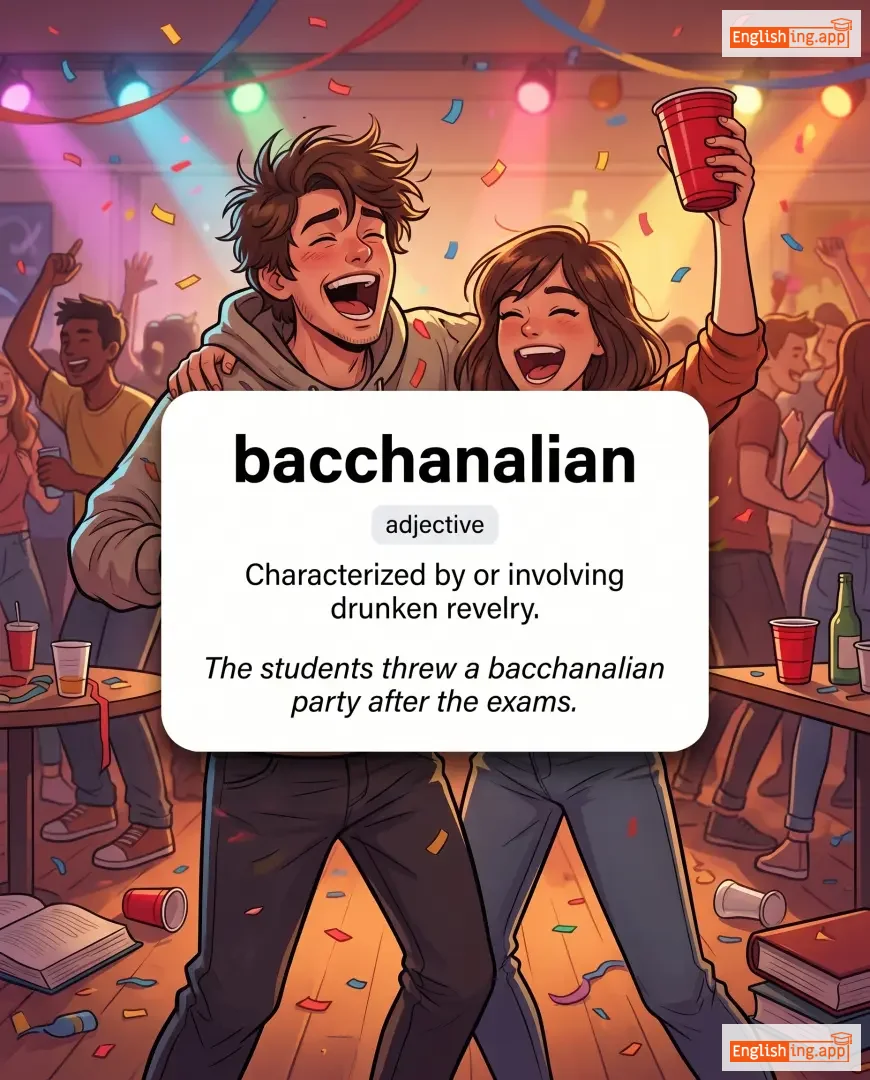
bacchanalian definition card — visual illustration of the meaning
adjective
/ˌbækəˈneɪliən/
связанный с пьянством (svyazannyy s pyanstvom)

Characterized by or involving drunken revelry.

"The students threw a bacchanalian party after the exams."

"Студенты устроили пьяную вечеринку после экзаменов." (Studenty ustroili p'yanyu vecherinku posle ekzamenov.)
noun
/ˈbætʃələr/
холостяк; человек с университетской степенью (kholostyak; chelovek s universitetskoy stepen'yu)

an unmarried man; a person who holds a first degree from a university

"He remained a bachelor all his life and earned a bachelor's degree in engineering."

"Он оставался холостяком всю свою жизнь и получил диплом инженера." (On ostavalsya kholostyakom vsyu svoyu zhizn' i poluchil diplom inzhenera.)
noun/verb/adverb/adjective
/bæk/
спина / вернуться (spina / vernut'sya)

the rear surface of the human body; to support; to return to a place

"He turned back to help his friend."

"Он вернулся, чтобы помочь своему другу." (On vernulsya, chtoby pomoch' svoemu drugu.)
phrasal verb
/bæk ʌp/
поддерживать; делать резервную копию; отступать (podderzhivat; delat rezervnuyu kopiyu; otstupat)

to support or help someone; to make a copy of data for safety; to move backward

"Please back up your files before updating the system."

"Пожалуйста, сделайте резервную копию файлов перед обновлением системы." (Pozhaluysta, sdelayte rezervnuyu kopiyu failov pered obnovleniem sistemy)
verb
/ˈbækbaɪt/
злословить (zloslovit)

to speak negatively about someone who is not present; to slander behind someone’s back

"It is wrong to backbite your colleagues behind their backs."

"Неправильно злословить о коллегах за их спиной." (Nepravilno zloslovit o kollegakh za ikh spinoy)
noun
/ˈbækboʊn/
позвоночник (pozvonochnik)

the spine; the chief support or mainstay; strength of character

"Education is the backbone of a nation."

"Образование — это позвоночник нации." (Obrazovanie — eto pozvonochnik natsii.)
noun
/ˈbækdrɒp/
задник (zadnik)

a painted cloth or other structure used behind a stage

"The backdrop for the play was a beautiful mountain scene."

"Задник для пьесы был красивым горным пейзажем." (Zadnik dlya pyesy byl krasivym gornym peyzazhem.)
noun
/ˈbækɡraʊnd/
фон (fon)

the circumstances, environment, or past history of a person or thing; the part behind the main subject in an image

"She comes from a strong academic background."

"Она пришла из сильного академического фона." (Ona prishla iz sil'nogo akademicheskogo fona.)
adjective
/ˈbækˌhændɪd/
косвенный или саркастический (kosvennyy ili sarkasticheskiy)

Indirect or sarcastic, often appearing as praise but actually insulting.

"She gave him a backhanded compliment about his work."

"Она сделала ему косвенный комплимент по поводу его работы." (Ona sdelala yemu kosvennyy kompliment po povodu yego raboty.)
noun
/ˈbækɪŋ/
поддержка (podderzhka)

support or approval for a plan, person, or idea

"The project received strong backing from the investors."

"Проект получил сильную поддержку от инвесторов." (Proyekt poluchil sil'nuyu podderzhku ot investirov.)
noun
/ˈbækˌsaɪd/
задняя часть (zadnyaya chast)

the rear part or surface of something; informal term for the buttocks

"The kids slid down the hill on their backside."

"Дети скатились с холма на своем заднем." (Deti skatilis' s kholma na svoem zadnem.)
verb
/ˈbækˌslaɪd/
регресс (regress)

To relapse into bad habits, undesirable practices, or moral decline.

"After months of progress, he began to backslide into old habits."

"После нескольких месяцев прогресса, он начал возвращаться к старым привычкам." (Posle neskol'kikh mesyatsev progressa, on nachal vozvrashchat'sya k starym privychkam.)
noun
/ˈbækʌp/
резервная копия (rezervnaya kopiya)

a copy of data stored separately to protect against loss

"Make sure to have a backup of your important files."

"Убедитесь, что у вас есть резервная копия ваших важных файлов." (Ubedites', chto u vas est' rezervnaya kopiya vashikh vazhnykh faylov.)
adverb
/ˈbækwərdz/
назад (nazad)

Toward the back or in the reverse direction.

"He accidentally fell backwards into the chair."

"Он случайно упал назад на стул." (On sluchayno upal nazad na stul.)
noun
/ˌbækˈjɑːrd/
счастье (schastye)

an area of land behind a house, typically used for recreation or gardening

"The children played football in the backyard."

"Она не могла скрыть своего счастья, когда получила награду." (Ona ne mogla skryt' svoego schast'ya, kogda poluchila nagradu.)
adjective
/beɪˈkoʊniən/
беконианский (bekonianskiy)

Relating to the philosopher Francis Bacon or his method of scientific reasoning.

"The researcher followed a Baconian approach to observation and experimentation."

"Исследователь следовал беконианскому подходу к наблюдениям и экспериментированию." (Issledovatel' sleduval bekonianskomu podkhodu k nablyudeniem i eksperimentirovaniyu.)
bacteria definition card — visual illustration of the meaning
noun
/bækˈtɪəriə/
бактерии (bakterii)

Microscopic single-celled organisms that can be beneficial or harmful.

"Some bacteria in the human gut help with digestion."

"Некоторые бактерии в человеческом кишечнике помогают с пищеварением." (Nekotorye bakterii v chelovecheskom kishechnike pomogayut s pishchevareniem.)
noun
/bækˈtɪəriəm/
бактерия (bakteriya)

A single microscopic organism belonging to the group of bacteria.

"The doctor explained that a single bacterium can multiply rapidly under the right conditions."

"Врач объяснил, что одна бактерия может быстро размножаться при правильных условиях." (Vrach obyasnil, chto odna bakteriya mozhet bystro razmnozhatsya pri pravil'nykh usloviyakh.)
adjective
/bæd/
плохой (plokhoi)

not good; unpleasant, harmful, or of poor quality

"The milk smells bad, so don’t drink it."

"Молоко пахнет плохо, так что не пей его." (Moloko pakhnet plokho, tak chto ne pei ego.)
noun
/bædʒ/
значок (znachok)

A small emblem or sign worn to show membership, authority, or achievement.

"The police officer showed his badge to identify himself."

"Полицейский показал свой значок, чтобы идентифицировать себя." (Politseyskiy pokazal svoy znachok, chtoby identifitsirovat' sebya.)
verb
/ˈbædʒər/
докучать, приставать (dokuchat, pristavat)

To repeatedly ask or annoy someone with demands or questions.

"The reporter kept badgering the politician with questions."

"Журналист продолжал докучать политику вопросами." (Zhurnalist prodolzhal dokuchat' politiku voprosami.)
noun
/ˌbædɪˈnɑːʒ/
шутка, игривая беседа (shutka, igrivaya beseda)

Playful and humorous conversation; banter.

"The friends enjoyed a light badinage over coffee."

"Друзья наслаждались легким шутками за чашкой кофе." (Druz'ya naslazhdalis' legkim shutkami za chashkoy kofe.)
adverb
/ˈbædli/
плохо (plokho)

in a way that is not good; poorly or severely

"He performed badly in the exam."
"Он плохо выступил на экзамене." (On plokho vystupil na ekzamene.)
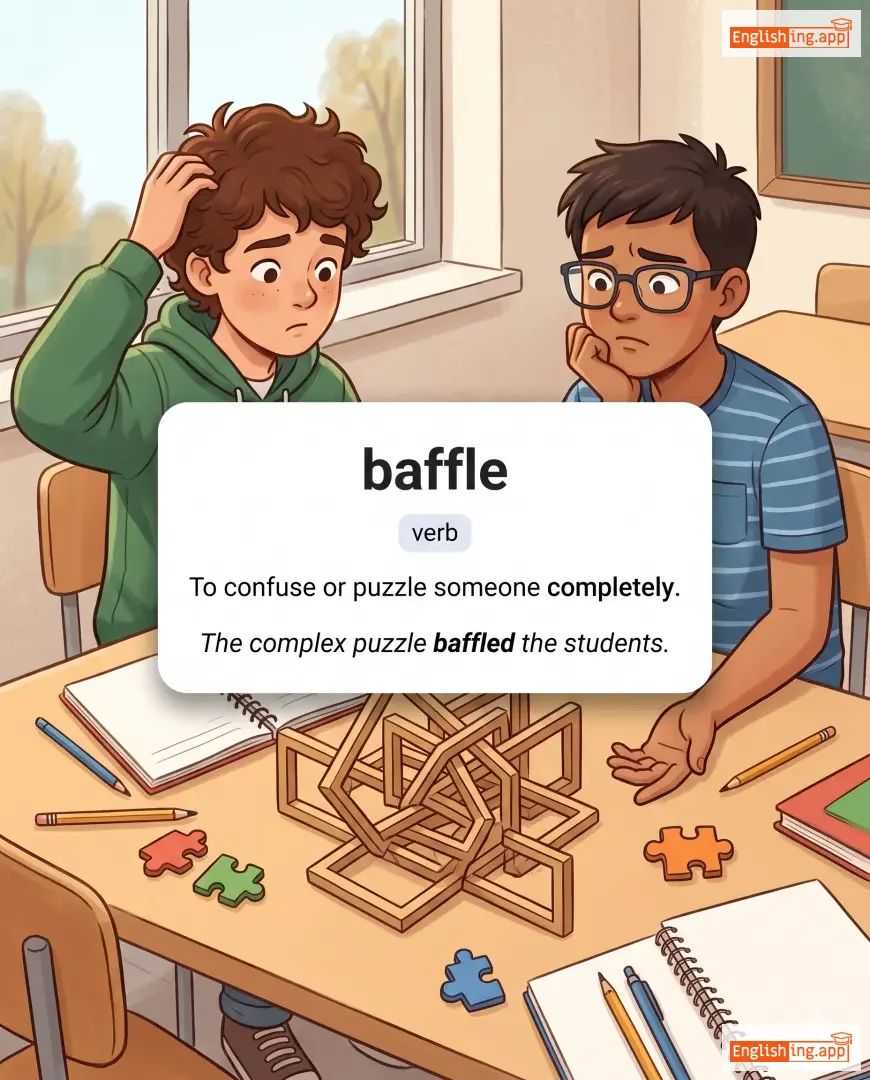
baffle definition card — visual illustration of the meaning
verb
/ˈbæfəl/
сбивать с толку (sbivat' s tolkou)

To confuse or puzzle someone completely.

"The complex puzzle baffled the students."

"Сложная головоломка сбила с толку студентов." (Slozhnaya golovolomka sbila s tolku studentov.)
noun
/bæɡ/
сумка (sumka)

a container made of flexible material, used for carrying items

"She carried her books in a bag."

"Она носила свои книги в сумке." (Ona nosila svoi knigi v sumke.)
noun
/ˈbæɡɪdʒ/
багаж; личные вещи; (bagazh; lichnye veshchi;)

suitcases and bags containing personal belongings; past experiences or problems that affect behavior

"Please collect your baggage from the conveyor belt at the airport."

"Пожалуйста, заберите свой багаж с конвейерной ленты в аэропорту." (Pozhaluysta, zaberite svoy bagazh s konveyernoy lenty v aeroportu.)
noun
/beɪl/
залог (zalog)

the temporary release of an accused person awaiting trial, often with a financial guarantee

"He was granted bail after his arrest."

"Ему предоставили залог после ареста." (Emu predostavili zalog posle aresta.)
noun
/ˌbeɪˈliː/
хранитель (khranitel)

a person or party who temporarily receives possession of goods or property from another under a legal agreement

"The bailee must take reasonable care of the goods while they are in his possession."

"Хранитель обязан бережно относиться к имуществу." (khranitel obyazan berezhno otnositsya k imushchestvu)