語彙集

英単語辞書 | 単語の意味、定義、例文

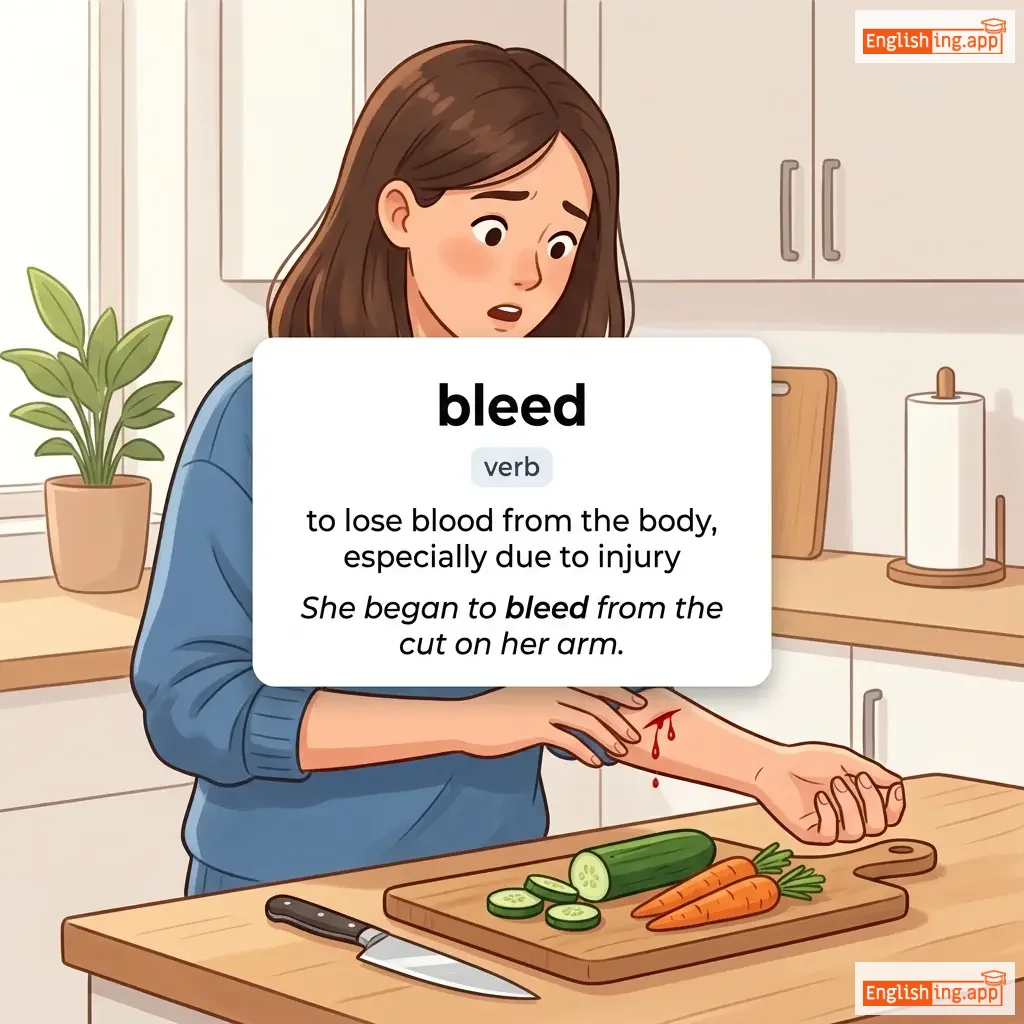
bleed definition card — visual illustration of the meaning
verb
/bliːd/
出血する (shukketsu suru)

to lose blood from the body, especially due to injury

"She began to bleed from the cut on her arm."
"彼女は腕の切り傷から血を流し始めた。" (Kanojo wa ude no kirikizu kara chi wo nagashihajimeta.)
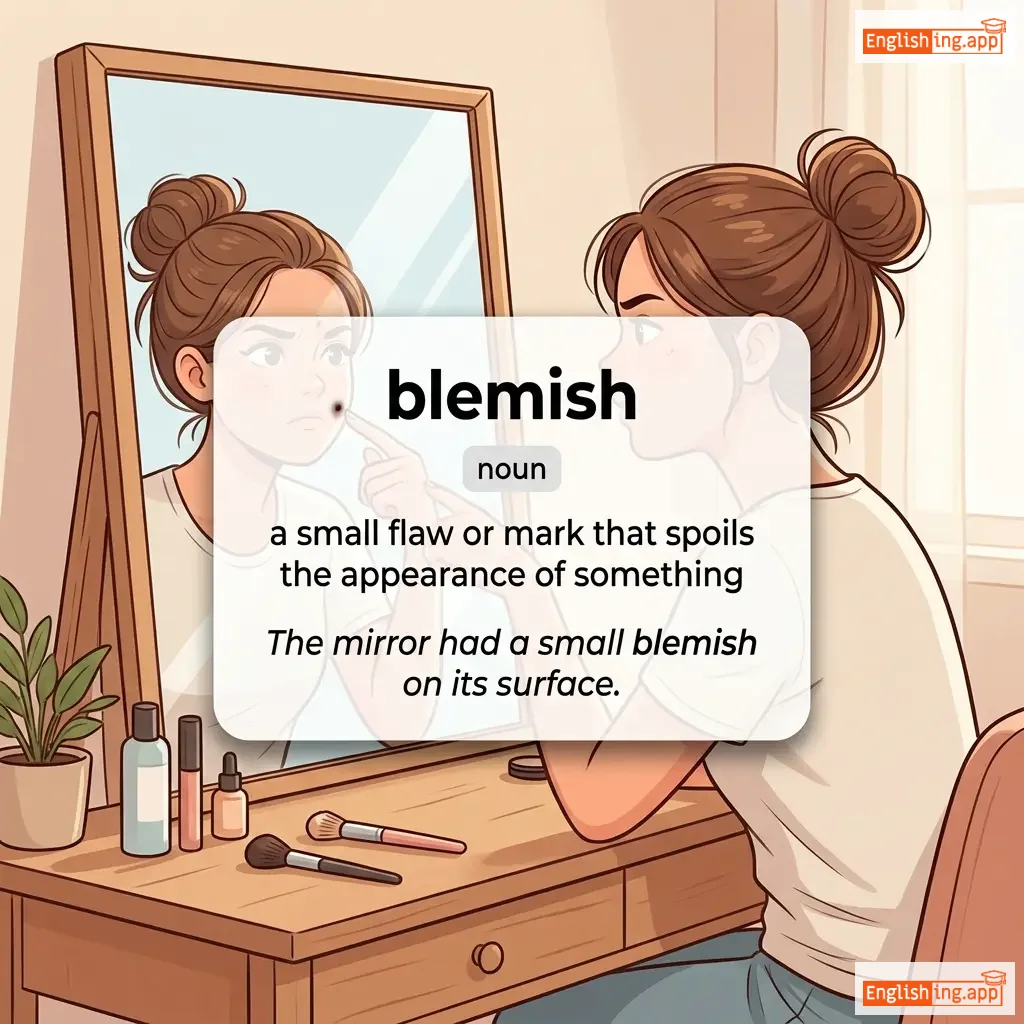
blemish definition card — visual illustration of the meaning
noun
/ˈblɛmɪʃ/

a small flaw or mark that spoils the appearance of something

"The mirror had a small blemish on its surface."

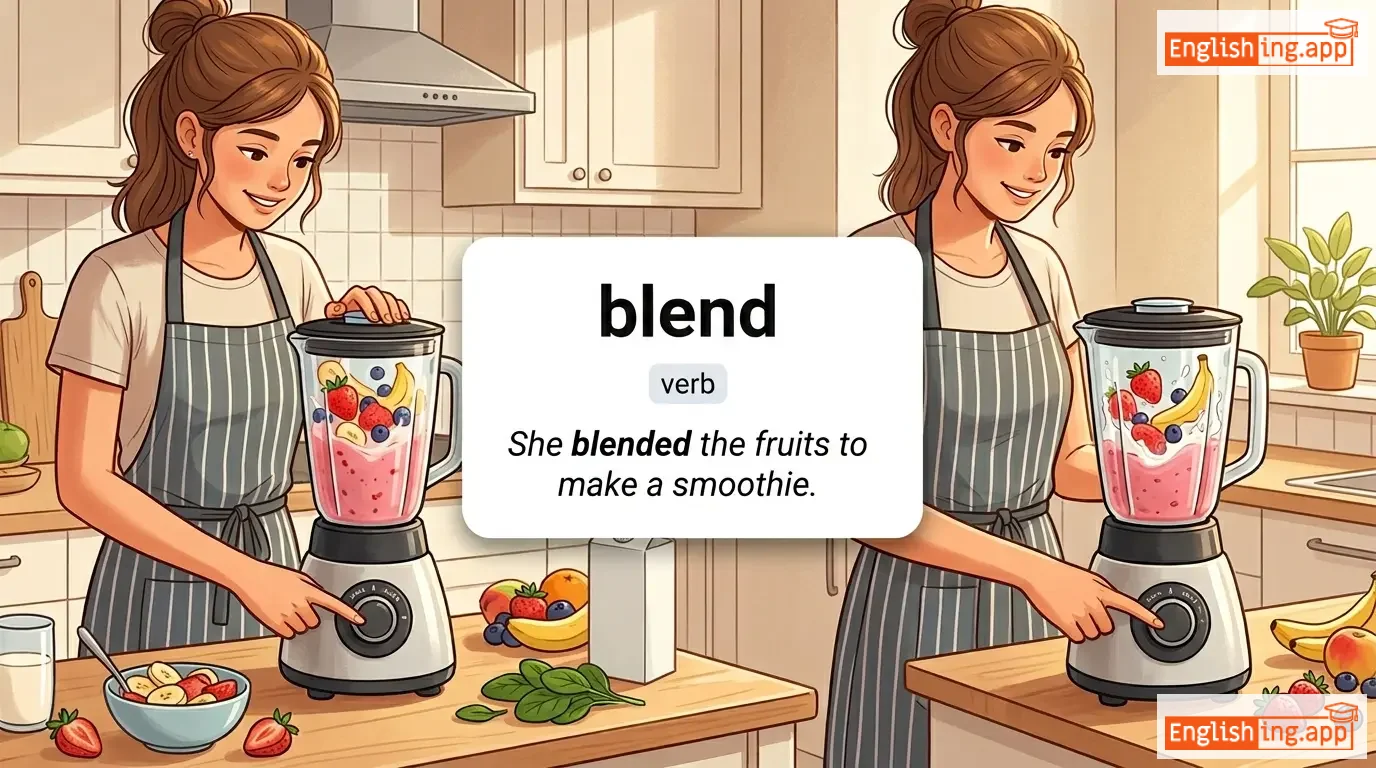
blend definition card — visual illustration of the meaning
verb
/blɛnd/
混ぜる (mazeru)

to mix different substances or elements together so that they form a smooth combination

"She blended the fruits to make a smoothie."

"彼女はスムージーを作るために果物をブレンドしました。" (Kanojo wa sumūjī o tsukuru tame ni kudamono o burendo shimashita.)
noun
/ˈblen.dər/
ブレンダー (burendā)

an electric kitchen appliance used to mix, purée, or emulsify food and liquids

"She used the blender to make a delicious smoothie."
"彼女は美味しいスムージーを作るためにブレンダーを使いました。" (Kanojo wa oishī sumūjī o tsukuru tame ni burendā o tsukaimashita.)
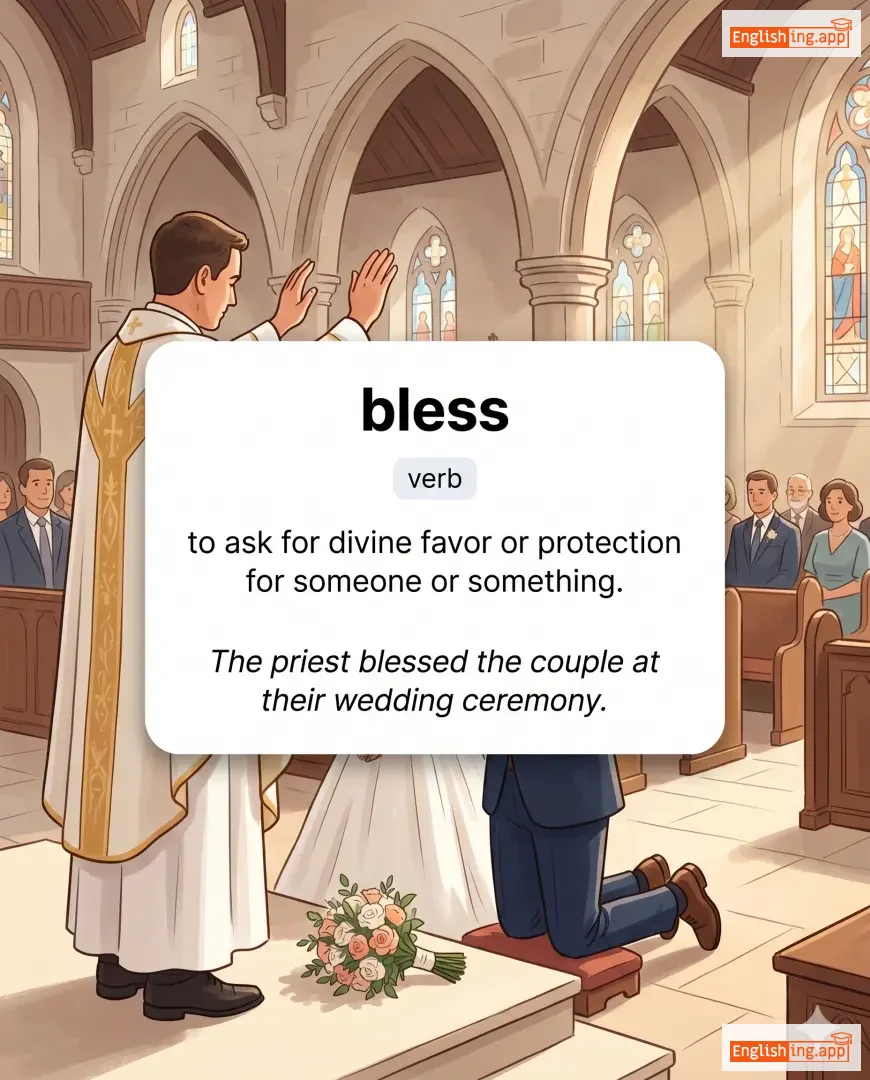
bless definition card — visual illustration of the meaning
verb
/blɛs/
祝福する (shukufuku suru)

to ask for divine favor or protection for someone or something.

"The priest blessed the couple at their wedding ceremony."

"司祭は結婚式でカップルを祝福しました。" (Shisai wa kekkonshiki de kappuru o shukufuku shimashita.)
noun
/ˈblɛsɪŋ/
祝福 (shukufuku)

a prayer asking for divine favor; something that brings happiness or benefit.

"Good health is a blessing we often take for granted."

"健康は私たちが当然のように見過ごす祝福です。" (Kenkou wa watashitachi ga touzen no you ni misugosu shukufuku desu.)
noun
/blaɪt/
枯れ病 (karebyō)

A disease or condition that causes plants to wither; something that spoils or damages.

"The drought was a blight on the farmer’s crops."

"干ばつは農家の作物にとって枯れ病でした。" (Kambatsu wa nōka no sakumotsu ni totte karebyō deshita.)
adjective
/ˈblaɪtɪd/
荒廃した (kouhaishita)

Spoiled, damaged, or destroyed.

"The blighted neighborhood was abandoned by most residents."

"荒廃した地域はほとんどの住民によって放棄されました。" (Kouhaishita chiiki wa hotondo no juumin ni yotte houki saremashita.)
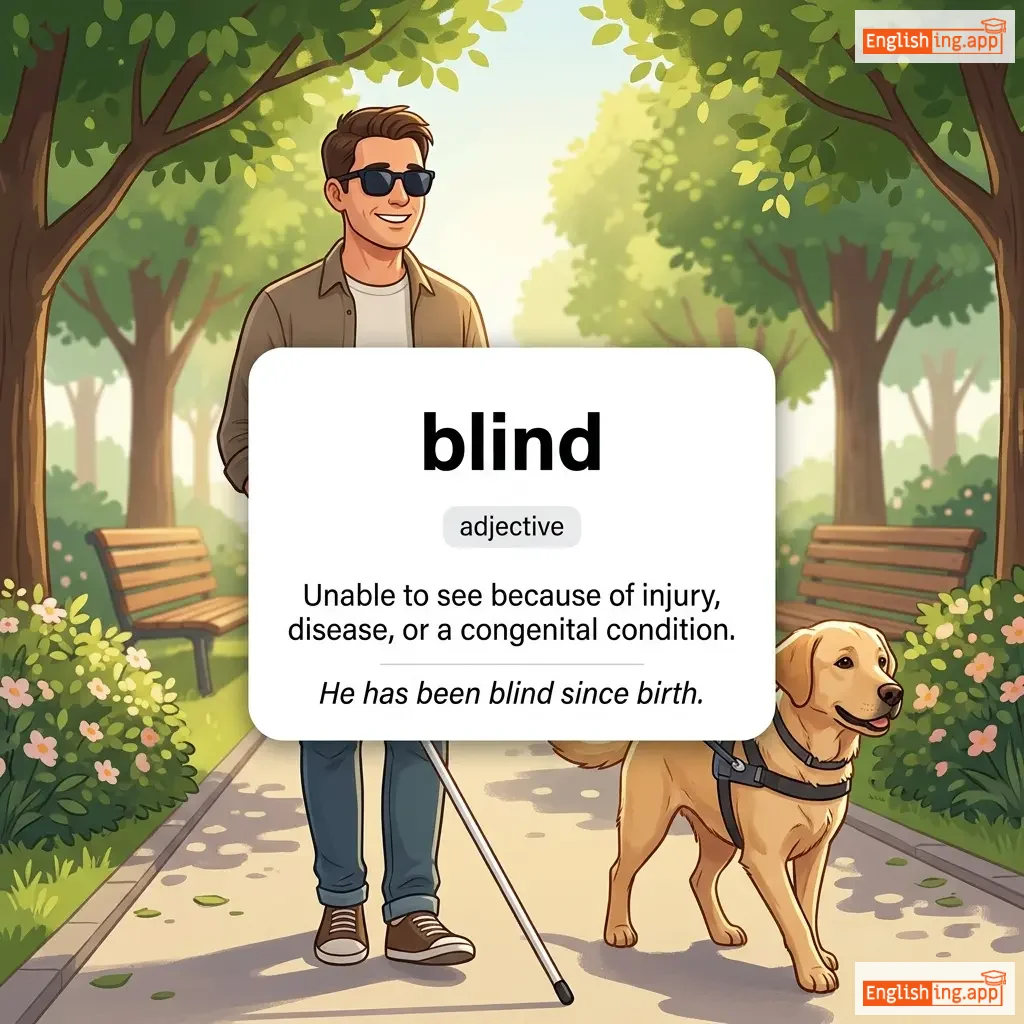
blind definition card — visual illustration of the meaning
🙈

blind

adjective
/blaɪnd/

Unable to see because of injury, disease, or a congenital condition.

"He has been blind since birth."

verb
/blɪŋk/
まばたきする (mabataki suru)

to close and open the eyes quickly.

"She blinked rapidly to clear the dust from her eyes."

"彼女は目からほこりを取り除くために素早く瞬きをした。" (Kanojo wa me kara hokori o torinozoku tame ni subayaku mabataki shita.)
adjective
/ˈblɪŋkəd/
視野が狭い (shiya ga semai)

Having a limited or narrow outlook; unable or unwilling to consider other perspectives.

"His blinkered attitude stopped him from seeing the bigger picture."

"彼の視野が狭い態度は、より大きな絵を見せなかった。" (Kare no shiya ga semai taido wa, yori ōkina e o misenakatta.)
noun
/blɪs/
至福 (shifuku)

Perfect happiness or great joy.

"The couple enjoyed a moment of pure bliss on their wedding day."

"そのカップルは結婚式の日に純粋な至福の瞬間を楽しみました。" (Sono kappuru wa kekkonshiki no hi ni junsuina shifuku no shunkan o tanoshimimashita.)
noun
/ˈblɪs.tər/
水ぶくれ (mizubukure)

a small bubble on the skin filled with serum and caused by friction, burning, or other damage

"The new shoes gave her a painful blister on her heel."

"新しい靴が彼女のかかとに痛い水ぶくれを作った。" (Atarashī kutsu ga kanojo no kakato ni itai mizubukure o tsukutta.)
adjective
/blaɪð/
無頓着 (mutonjaku)

Showing a casual and cheerful indifference considered improper or carefree happiness.

"She had a blithe disregard for the rules."

"彼女はルールを無頓着に無視した。" (Kanojo wa ruuru o mutonjaku ni mushi shita.)
adjective
/ˈblaɪðsəm/
陽気 (youki)

cheerful, carefree, and full of joy

"She entered the room with a blithesome smile that lifted everyone's spirits."

"彼女は陽気な笑顔で部屋に入り、皆の気分を盛り上げました。" (Kanojo wa youki na egao de heya ni hairi, mina no kibun wo moriagemashita.)
verb
/bloʊt/
膨らむ (fukuramu)

to swell or cause to swell, often due to fluid or gas

"Eating too much junk food can bloat your stomach."

"ジャンクフードを食べすぎると、あなたの胃が膨らむことがあります。" (Janku fudo o tabesugiru to, anata no i ga fukuramu koto ga arimasu.)
adjective
/ˈbloʊtɪd/
膨れた (fukureta)

swollen or puffed up, often unpleasantly

"After the big meal, he felt bloated and uncomfortable."
"大きな食事の後、彼は膨れた感じで不快に感じていた。" (Ooki na shokuji no ato, kare wa fukureta kanji de fukai ni kanjite ita.)
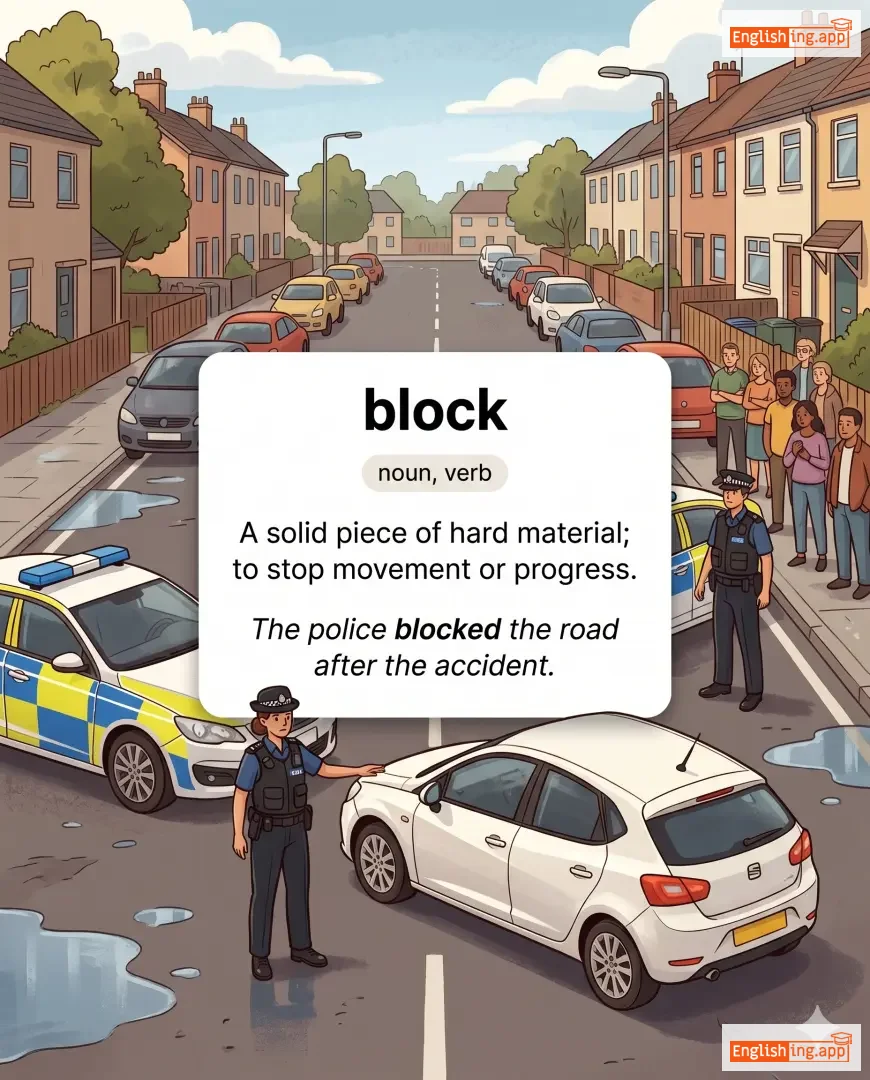
block definition card — visual illustration of the meaning
noun, verb
/blɑːk/
ブロック (burokku)

A solid piece of hard material; to stop movement or progress.

"The police blocked the road after the accident."

"警察は事故後に道路をブロックしました。" (Keisatsu wa jiko go ni dōro o burokkushimashita.)
noun
/blɑːˈkeɪd/
封鎖 (fusa)

an act of sealing off a place to prevent goods or people from entering or leaving

"The navy set up a blockade around the harbor."

"海軍は港の周りに封鎖を設置しました。" (Kaigun wa minato no mawari ni fusa o setchi shimashita.)
noun
/ˈblɒk.ɪdʒ/
詰まり (tsumari)

an obstruction that makes movement or flow difficult or impossible

"The drain blockage caused water to overflow in the kitchen."

"排水の詰まりがキッチンで水があふれた原因となりました。" (Haisui no tsumari ga kicchin de mizu ga afureta gen'in to narimashita.)
blockchain definition card — visual illustration of the meaning
noun
/ˈblɒkˌtʃeɪn/
ブロックチェーン (burokku chēn)

A system of recording information in a way that makes it difficult or impossible to change, hack, or cheat the system

"Blockchain technology ensures transparency in financial transactions."
"ブロックチェーン技術は金融取引の透明性を保証します。" (Burokku chēn gijutsu wa kin'yū torihiki no tōmeisei o hoshō shimasu.)
👱‍♀️

blond

adjective
/blɒnd/

having light-colored hair, typically pale yellow or golden.

"She has long blond hair that shines in the sunlight."

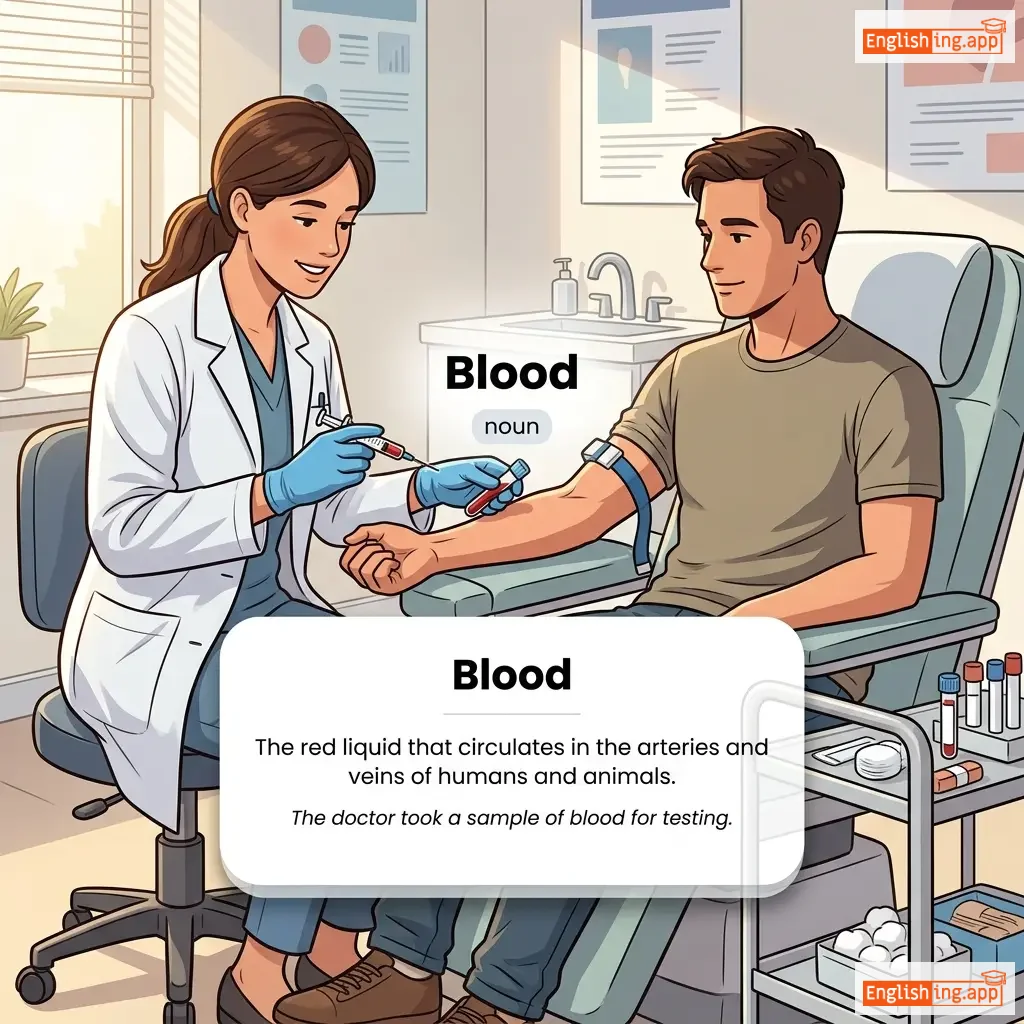
Blood definition card — visual illustration of the meaning
noun
/blʌd/
血液 (ketsueki)

The red liquid that circulates in the arteries and veins of humans and animals.

"The doctor took a sample of blood for testing."

"医師はテストのために血液サンプルを取った。" (Ishi wa tesuto no tame ni ketsueki sanpuru o totta.)
noun
/ˈblʌdˌbæθ/
血の大惨事 (chi no daisanji)

an event in which a lot of people are killed or injured, especially in a violent conflict

"The war turned into a bloody bloodbath."

"戦争は血まみれの大虐殺に変わった。" (Sensō wa chi mamire no daigyaku satsuni kawatta.)
adjective
/ˈblʌdləs/
血のない (chi no nai)

without bloodshed; lacking violence or vitality

"The revolution was surprisingly bloodless."

"革命は驚くべきことに血を流さなかった。" (Kakumei wa odorokubeki koto ni chi o nagasanakatta.)
noun
/ˈblʌd.ʃed/
流血; 大虐殺 (ryūketsu; daigyakusatsu)

the killing or wounding of people, typically in large numbers during a conflict

"The peace treaty was signed to prevent further bloodshed."

"平和条約はさらなる流血を防ぐために署名されました。" (Heiwa jōyaku wa saranaru ryūketsu o fusegu tame ni shomei saremashita.)
adjective
/ˈblʌdi/
血まみれ (chimamire)

covered in, involving, or containing blood; also used informally for emphasis in British English.

"The soldier returned from battle with a bloody arm."

"兵士は戦いから血まみれの腕で帰還しました。" (Heishi wa tatakai kara chimamire no ude de kikan shimashita.)
noun, verb
/bluːm/
咲く;繁栄する (saku; han'eisuru)

to produce flowers; to develop or flourish; a flower or the state of flowering

"The roses bloom beautifully every spring."

"バラは毎年春に美しく咲きます。" (Bara wa maitoshi haru ni utsukushiku sakimasu)
noun, verb
/ˈblɒsəm/
花が咲く (hana ga saku)

a flower or mass of flowers on a tree or plant; to develop or flourish

"The small garden began to blossom in spring."

"小さな庭は春に花が咲き始めた。" (Chiisana niwa wa haru ni hana ga saki hajimeta)
noun
/blɑːtʃ/
しみ (shimi)

a large, irregular spot or stain, often on skin or fabric

"His shirt had a red blotch from the spilled juice."

"彼のシャツにはこぼれたジュースで赤いしみがついていた。" (Kare no shatsu ni wa koboreta jūsu de akai shimi ga tsuite ita.)
noun
/blaʊz/
ブラウス (burausu)

a woman's loose upper garment resembling a shirt

"She wore a beautiful silk blouse to the party."
"彼女はパーティーに美しいシルクのブラウスを着て行った。" (Kanojo wa pātii ni utsukushii shiruku no burausu o kite itta.)
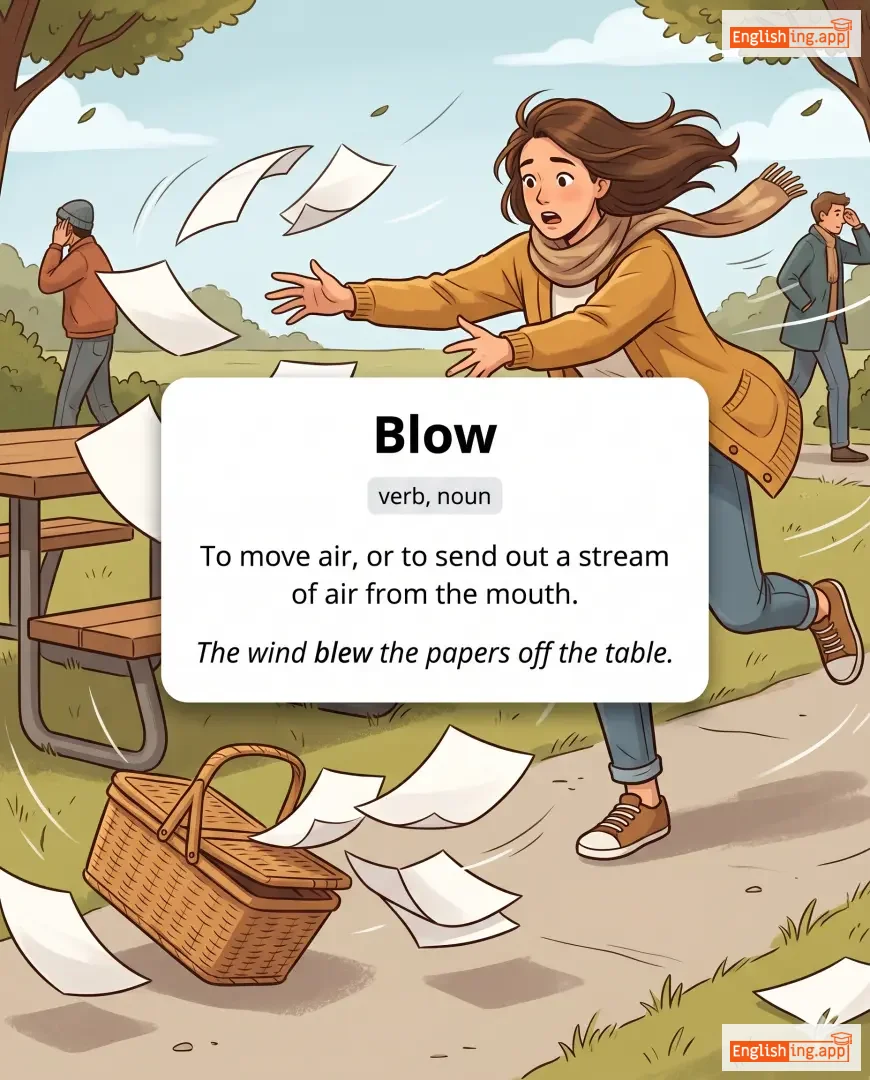
Blow definition card — visual illustration of the meaning
verb, noun
/bloʊ/
吹く / 打つ (fuku / utsu)

To move air, or to send out a stream of air from the mouth.

"The wind blew the papers off the table."

"風がテーブルから紙を吹き飛ばした。" (Kaze ga tēburu kara kami wo fukitobashita.)
phrasal verb
/bloʊ aʊt/
吹き消す (fukikesu)

to extinguish by blowing; to fail suddenly or burst; to expand or exceed limits dramatically

"She blew out the candles on her birthday cake."

"彼女は誕生日ケーキのろうそくを吹き消した。" (kanojo wa tanjoubi keeki no rousoku o fukikeshita)
noun
/ˈbloʊˌhɑrd/
自慢話をする人 (jimanbanashi o suru hito)

a person who brags a lot or talks in a boastful way

"Everyone avoided the blowhard at the party because he wouldn't stop bragging."

"パーティーでみんなはその自慢話をする人を避けた。なぜなら、彼は自慢を止めなかったから。" (Pātī de minna wa sono jimanbanashi o suru hito o saketa. Nazenara, kare wa jiman o tomenakatta kara.)
verb
/ˈblʌdʒən/
鈍器で殴る (donki de naguru)

to hit someone with a heavy object; to force someone into doing something

"The guard was bludgeoned by the attacker in the alley."

"ガードは小道で攻撃者に鈍器で殴られた。" (Gādo wa komichi de kōgekisha ni donki de nagurareta.)
adjective
/bluː/
(ao)

the color of the clear sky; feeling sad or depressed

"She wore a bright blue dress to the party."

"彼女はパーティーに明るい青いドレスを着ていました。" (Kanojo wa pātī ni akarui aoi doresu o kite imashita.)
noun
/ˌbluː ˈblʌd/
ブルーブラッド (blue-blood)

a person of noble birth; aristocrat

"She came from a family of blue-bloods with centuries of royal heritage."

"彼女は数世代にわたる王室の遺産を持つブルーブラッドの家族から来ました。" (Kanojo wa sūsedai ni wataru ōshitsu no isan o motsu burūburaddo no kazoku kara kimashita.)
noun
/ˈbluː.ber.i/
ブルーベリー (blueberry)

a small round blue fruit that grows on bushes

"She picked fresh blueberries for the pie."

"彼女はパイのために新鮮なブルーベリーを摘んだ。" (kanojo wa pai no tame ni shinsen na blueberry wo tsunda)
blueprint definition card — visual illustration of the meaning
noun
/ˈbluːˌprɪnt/
設計図 (sekkeizu)

a detailed plan or design; a guide for making something

"The architect shared the blueprint of the new building with the team."

"建築家は新しい建物の設計図をチームと共有しました。" (Kenchikuka wa atarashī tatemono no sekkeizu o chīmu to kyōyū shimashita.)
noun
/bluːz/
ブルース (burūsu)

a feeling of sadness; a style of music with melancholy themes

"Listening to blues music always calms him down."

"ブルース音楽を聴くと、いつも彼を落ち着かせる。" (Burūsu ongaku o kiku to, itsumo kare o ochitsukaseru.)
🃏

bluff

verb
/blʌf/

to deceive someone by pretending to have strength, knowledge, or resources that one does not actually possess

"He tried to bluff his way into the exclusive club."

noun
/ˈblʌfər/
はったり屋 (hattariya)

a person who pretends to be more confident, skilled, or knowledgeable than they really are; someone who deceives others by bluffing

"Everyone eventually realized that he was just a bluffer with no real experience."
"彼がただのはったり屋だと皆が気づいた。" (kare ga tada no hattariya da to mina ga kizuita)
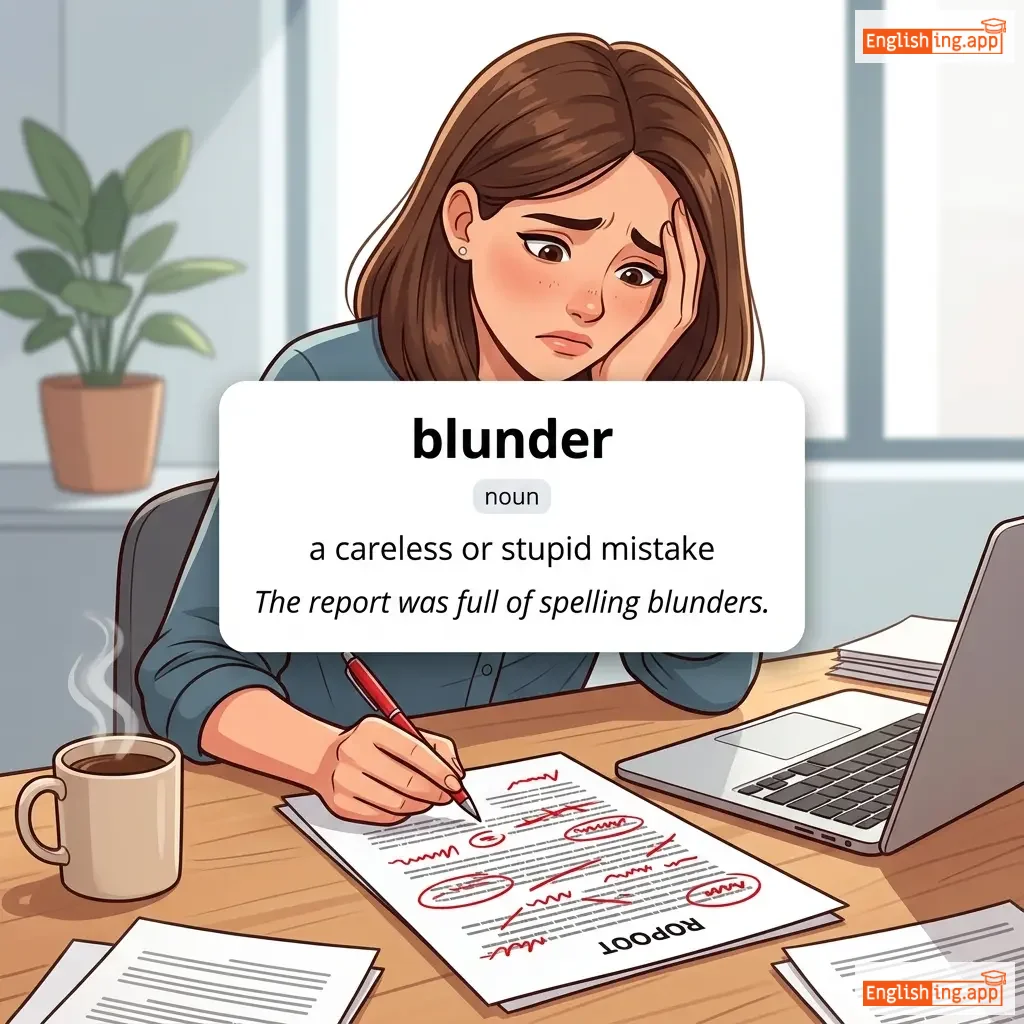
blunder definition card — visual illustration of the meaning
noun
/ˈblʌndər/
誤り (ayamari)

a careless or stupid mistake

"The report was full of spelling blunders."

"報告書には多くのスペルミスがありました。" (Houkokusho ni wa ooku no superu misu ga arimashita.)
adjective
/blʌnt/
鈍い、率直な (nibui, sassokuna)

not sharp; direct and straightforward in speech

"Her blunt remarks offended some people."

"彼女の率直な言葉は何人かの人々を傷つけた。" (Kanojo no sassokuna kotoba wa nannin ka no hitobito o kizutsuketa.)
adverb
/ˈblʌnt.li/
率直に; ぶっきらぼうに (sotchokuni; bukkirabouni)

in a direct way without trying to be polite; frankly

"He told her bluntly that she was wrong."

"彼は彼女に正直に間違っていると言った。" (Kare wa kanojo ni shoujiki ni machigatteiru to itta.)
verb
/blɜːr/
ぼやける (boyakeru)

to make something unclear or difficult to see

"Tears blurred her vision."

"涙が彼女の視界をぼやけさせた。" (Namida ga kanojo no shikai o boyakesaseta.)
noun
/blɜːrb/
宣伝文 (sendenbun)

a short promotional description of a book, product, or service

"The back cover had a blurb praising the novel."

"本の裏表紙にはその小説を称賛する宣伝文があった。" (Hon no ura hyōshi ni wa sono shōsetsu o shōsan suru sendenbun ga atta.)
blurt definition card — visual illustration of the meaning
verb
/blɜːrt/
思わず言う (omowazu iu)

to say something suddenly and without careful consideration

"He blurted out the secret before he could stop himself."

"彼は自分が止められる前に秘密を口走った。" (Kare wa jibun ga tomerareru mae ni himitsu o kuchibashitta.)
verb
/blʌʃ/
顔を赤らめる (kao wo akarameru)

to become red in the face due to embarrassment or shyness

"She blushed when he complimented her."

"彼女は彼に褒められた時、顔が赤くなった。" (Kanojo wa kare ni homerareta toki, kao ga akaku natta.)
verb
/ˈblʌstər/
大声で自慢する (ōgoe de jimansuru)

to speak loudly in an aggressive or threatening way, often without real power

"The manager blustered about firing people but did nothing."

"マネージャーは人を解雇すると大声で言ったが、何もしなかった。" (Manējā wa hito o kaiko suru to ōgoe de itta ga, nanimo shinakatta.)