Словари

Словарь английского языка | Значения слов, определения и примеры

ascend definition card — visual illustration of the meaning
verb
/əˈsɛnd/
восходить (voskhodit)

to move upward or rise to a higher position or level

"The hikers began to ascend the steep mountain trail."

"Путешественники начали восхождение по крутой горной тропе." (Puteshestvenniki nachali voskhozhdeniye po krutoy gornoy trope.)
noun
/əˈsɛndənsi/
асценденция, господство (asstsendentsiya, gospodstvo)

A position of power, influence, or control over others.

"The company gained ascendancy in the market through innovation."

"Компания достигла асценденции на рынке через инновации." (Kompaniya dostigla assendentsii na rynke cherez innovatsii.)
adjective
/əˈsɛndənt/
восходящий, доминирующий (voskhodyashchiy, dominiruyushchiy)

Rising in power or influence; dominant.

"She is an ascendant leader in the political party."

"Она является восходящей лидером в политической партии." (Ona yavlyayetsya voskhodyashchim liderom v politicheskoy partii.)
noun
/əˈsɛnʃən/
вознесение (voznesenie)

The act of rising or going up, often to an important position or a higher place.

"His rapid ascension in the company surprised everyone."

"Его быстрый подъем в компании удивил всех." (Ego bystryy pod'yem v kompanii udivil vsekh.)
noun
/əˈsɛnt/
восхождение, подъём (voshodzhdeniye, podyem)

The act of rising or climbing to a higher position or level.

"The climbers began their ascent to the mountain peak at dawn."
"Альпинисты начали своё восхождение к вершине горы на рассвете." (Al'pinisty nachali svoe voskhodzhdeniye k vershine gory na rassvete.)
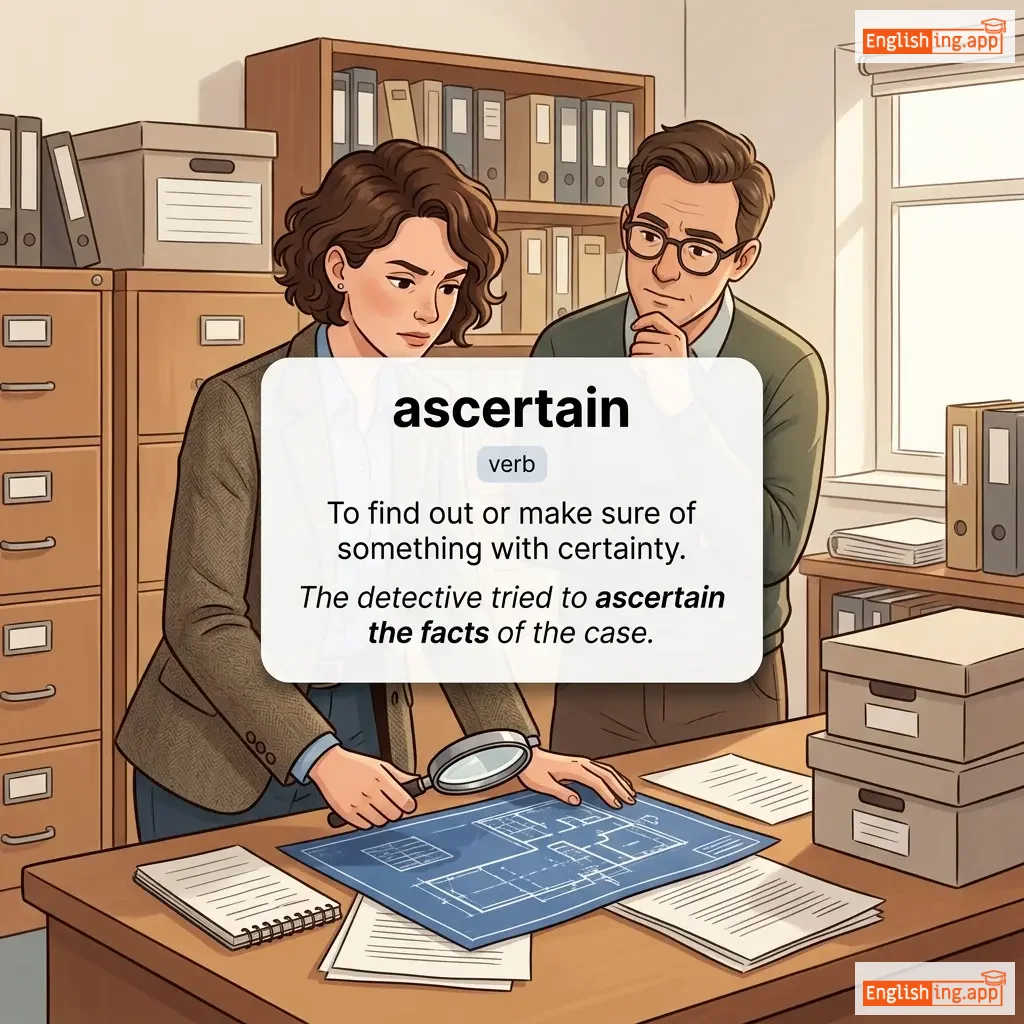
ascertain definition card — visual illustration of the meaning
verb
/ˌæs.ərˈteɪn/
установить, определить (ustanovit, opredelit)

To find out or make sure of something with certainty.

"The detective tried to ascertain the facts of the case."

"Детектив пытался установить факты дела." (Detektiv pytalsya ustanovit' fakty dela.)
ascetic definition card — visual illustration of the meaning
adjective
/əˈsɛt.ɪk/
аскетический (asketicheskiy)

Practicing strict self-denial and abstaining from worldly pleasures, often for religious reasons.

"He lived an ascetic life in the mountains, far from worldly comforts."

"Он вел аскетическую жизнь в горах, вдали от мирских удобств." (On vel asketicheskuyu zhizn' v gorakh, vdali ot mirskikh udobstv.)
noun
/əˈsɛt.ɪˌsɪz.əm/
аскетизм, самодисциплина (asketizm, samodistsiplina)

The practice of severe self-discipline and abstaining from indulgence, typically for religious or spiritual reasons.

"Asceticism has been a part of many religious traditions throughout history."

"Аскетизм был частью многих религиозных традиций на протяжении всей истории." (Askhetizm byl chastyu mnogikh religioznykh traditsij na protyazhenii vsej istorii.)
verb
/əˈskraɪb/
приписывать, относить (pripisyvat', otnosit')

To attribute something to a cause, source, or person.

"Many scholars ascribe the poem to an unknown author."

"Многие учёные приписывают это стихотворение неизвестному автору." (Mnogie uchnyye pritisyivayut eto stikhotvoreniye neizvestnomu avtoru.)
adjective
/eɪˈsɛptɪk/
стерильный (steril'nyy)

Free from contamination caused by harmful microorganisms; sterile.

"Surgeons must work in an aseptic environment to prevent infection."

"Хирурги должны работать в асептической среде, чтобы предотвратить инфекции." (Khirurgi dolzhny rabotat' v asepticheskoy srede, chtoby predotvratit' infektsii.)
adjective
/ˌeɪˈsɛkʃuəl/
асексуальный (aseksual'nyj)

Without sexual feelings, associations, or reproduction through sex.

"Many plants reproduce through asexual methods like budding or splitting."

"Многие растения размножаются с помощью асексуальных методов, таких как почкование или деление." (Mnogie rastenija razmnozhayutsya s pomoshch'yu asexual'nykh metodov, takikh kak pochkovanie ili delenie.)
noun
/æʃ/
пепел (pepel)

the powdery residue left after the burning of a substance

"After the fire, only ash remained of the house."

"После пожара остался только пепел от дома." (Posle pozhara ostalsia tol'ko pepel ot doma.)
adjective
/æʃ ˈkʌl.ər/
пепельный цвет (pepel'nyy tsvet)

a grayish color resembling ash

"The old building had ash-colour walls that needed painting."

"Старое здание имело пепельные стены, которые нужно было покрасить." (Staroye zdaniye imelo pepel'nye steny, kotoryye nuzhno bylo pokrasit')
noun
/ˈæʃ.treɪ/
пепельница (pepel'nitsa)

a receptacle for tobacco ash and cigarette butts

"Please use the ash tray for your cigarette."

"Пожалуйста, используйте пепельницу для своей сигареты." (Pozhaluysta, ispol'zuyte pepel'nitsu dlya svoey sigarety.)
adjective
/əˈʃeɪmd/
постыдный (postydny)

feeling embarrassed or guilty because of one's actions

"He was ashamed of his poor performance."

"Он был постыдным из-за своей плохой работы." (On byl postydnym iz-za svoei plokhoi raboty.)
adjective
/ˈæʃən/
бледный (bledny)

Very pale in appearance, often due to shock, fear, or illness.

"His face turned ashen when he heard the terrible news."

"Его лицо побледнело, когда он услышал ужасные новости." (Ego litso poblednelo, kogda on uslyshal uzhasnye novosti.)
adjective, noun
/ˈeɪʒən/
азиатский (aziatskiy)

relating to Asia or its people

"She loves Asian culture."

"Она любит азиатскую культуру." (Ona lyubit aziatskuyu kul'turu.)
noun
/ˈeɪʒən siː bæs/
азиатский морской окунь (aziatski morskoj okunj)

a large predatory fish found in coastal waters and estuaries of the Indo-Pacific region, prized for its white meat

"Asian sea bass is highly valued in aquaculture for its fast growth."

"Азиатский морской окунь высоко ценится в аквакультуре за быстрый рост." (aziatski morskoj okunj vysoko tsenitsya v akvakulture za bystry rost)
noun
/ˈeɪʒən swɒmp iːl/
азиатский болотный угорь (aziatski bolotny ugor)

a snake-like freshwater fish that can survive in muddy waters and is considered a delicacy in South Asian cuisine

"Asian swamp eel can breathe air and survive in shallow muddy waters."

"Азиатский болотный угорь может дышать воздухом и выживать в мелкой грязной воде." (aziatski bolotny ugor mozhet dyshat vozdukhom i vyzhivat v melkoi gryaznoi vode)
adverb, noun
/əˈsaɪd/
в сторону (v storonu)

to or on one side; a remark not intended for everyone

"He stepped aside to let her pass."

"Он отошел в сторону, чтобы пропустить ее." (On oteshel v storonu, chtoby propustit ee.)
adjective
/ˈæsɪnaɪn/
глупый (glupy)

Extremely foolish or stupid.

"It was an asinine idea to drive into the storm without checking the weather."

"Это была глупая идея ехать в шторм, не проверив погоду." (Eto byla glupaya ideya yehat' v shtorm, ne proverya pogodu.)
verb
/æsk/
спрашивать (sprashivat)

to request information or seek an answer

"She asked him about his new job."

"Она спросила его о его новой работе." (Ona sprosila ego o ego novoy rabote.)
adverb
/əˈskæns/
с недоверием (s nedoveriem)

With suspicion, mistrust, or disapproval.

"She looked askance at his unusual proposal."

"Она посмотрела на его необычное предложение с недоверием." (Ona posmotrela na ego neobychnoye predlozheniye s nedoveriem.)
adjective
/əˈskjuː/
криво (krivo)

Not in a straight or level position; crooked or tilted.

"The picture on the wall hung slightly askew."

"Картина на стене висела немного криво." (Kartina na stene visela nemnogo krivo.)
adjective
/əˈsliːp/
спящий (spyashchiy)

in a state of sleep

"The baby is fast asleep."

"Малыш крепко спит." (Malysh krepkо spit.)
noun
/əˈspær.ə.ɡəs biːn/
аспарагус боб (asparagus bob)

a long, thin green vegetable pod that grows on vines; also known as yard-long bean

"The asparagus bean grows up to three feet long and is commonly used in Asian cooking."

"Аспарагус боб вырастает до трех футов в длину и часто используется в азиатской кухне." (asparagus bob vyrastaet do tryokh futov v dlinu i chasto ispol'zuyetsya v aziatskoy kukhne.)
noun
/ˈæs.pekt/
аспект (aspekt)

A particular part, feature, or view of something.

"One important aspect of health is regular exercise."
"Один важный аспект здоровья — это регулярные физические упражнения." (Odin vazhnyy aspekt zdorov'ya — eto regulyarnye fizicheskie uprazhneniya.)
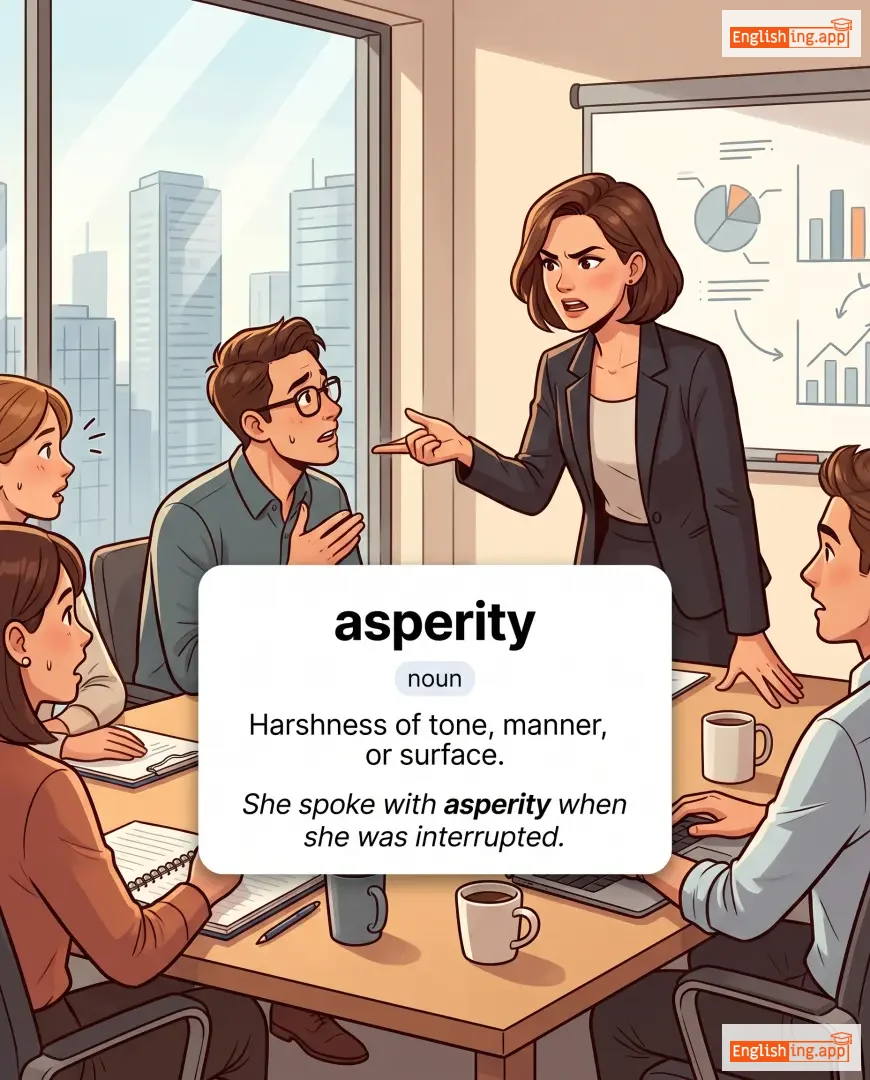
asperity definition card — visual illustration of the meaning
noun
/əˈsper.ɪ.ti/
резкость (uhsperitee)

Harshness of tone, manner, or surface.

"She spoke with asperity when she was interrupted."
"Она говорила с резкостью, когда её прервали." (Ona govorila s rezkost, kogda eyo prervali.)
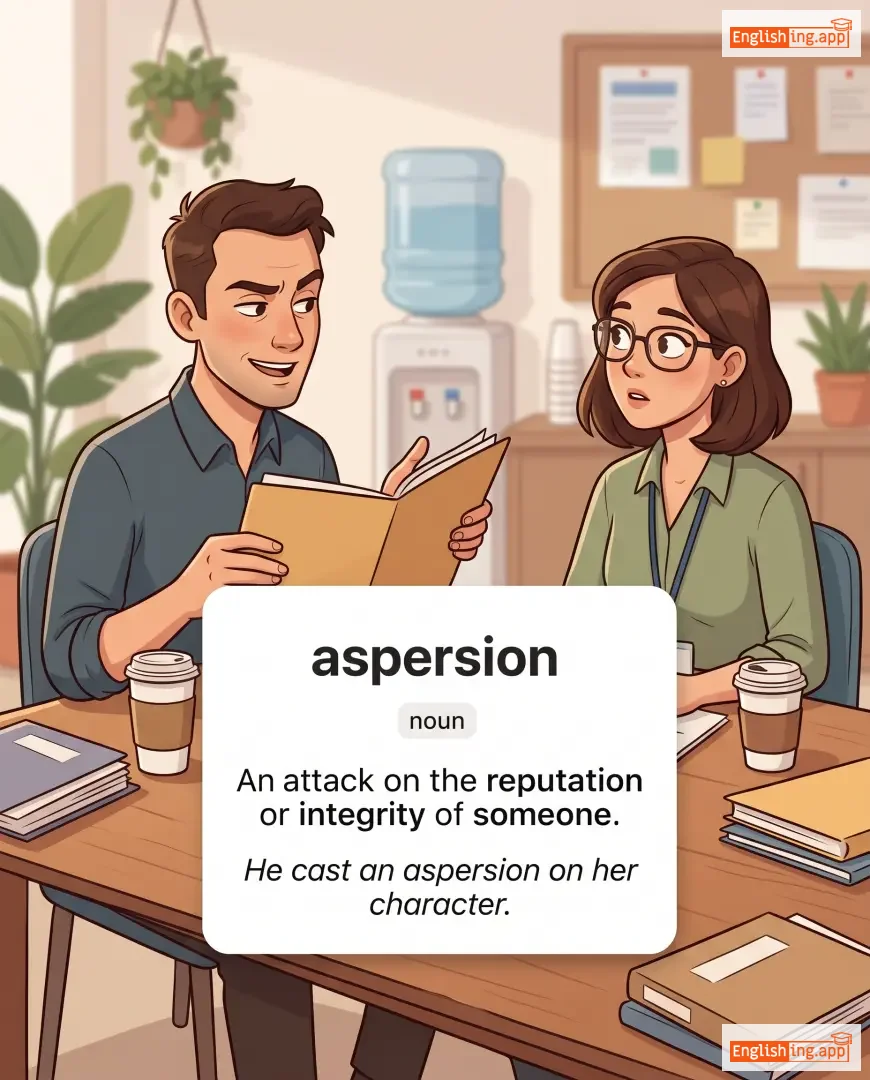
aspersion definition card — visual illustration of the meaning
noun
/əˈspɜːr.ʒən/
клевета (kleveta)

An attack on the reputation or integrity of someone.

"He cast an aspersion on her character."

"Он бросил клевету на её характер." (On brosil klevetu na yeye kharakter.)
noun (plural)
/əˈspɜːr.ʒənz/
клевета (kleveta)

Critical or slanderous remarks; multiple attacks on reputation.

"The politician rejected the aspersions cast against him."

"Политик отклонил клевету, выдвинутую против него." (Politik otklonil klevetu, vydvinutuyu protiv nego.)
noun
/ˈæspɪrənt/
аспирант (aspirant)

a person who seeks or hopes to achieve a position of honor or advancement

"She is an aspirant for the university's top scholarship."

"Она является претендентом на стипендию университета." (Ona yavlyaetsya pretendentom na stipendiyu universiteta.)
aspiration definition card — visual illustration of the meaning
noun
/ˌæspəˈreɪʃən/
стремление (stremlenie)

a strong desire to achieve something; ambition

"Her aspiration is to become a doctor."

"Её стремление — стать врачом." (Eyo stremlenie — stat' vrachom.)
verb
/əˈspaɪər/
стремиться (stremitsya)

to have a strong desire to achieve something

"Many students aspire to study abroad."

"Многие студенты стремятся учиться за границей." (Mnogie studenty stremyatsya uchit'sya za granitsey.)
noun
/æs/
осел (osel)

a donkey; also an informal term for a foolish person or one's buttocks

"He acted like an ass during the meeting."

"Он вел себя как осел во время встречи." (On vel sebya kak osel vo vremya vstrechi.)
verb
/əˈseɪl/
атаковать (atakovat)

to attack violently, either physically or with words

"The politician was assailed with difficult questions."

"Политика атаковали трудными вопросами." (Politika atakovali trudnymi voprosami.)
noun
/əˈseɪlənt/
нападающий (napadayushchiy)

a person who attacks another

"The police arrested the assailant at the scene."

"Полиция арестовала нападающего на месте преступления." (Politsiya arestovala napadayushchego na meste prestupleniya.)
noun
/əˈsæsɪn/
убийца (ubiytsa)

A person who kills someone, usually for political or religious reasons, often secretly.

"The assassin fled the scene after carrying out the attack."

"Убийца убежал с места происшествия после совершения атаки." (Ubiytsa ubezhalsya s mesta proisshestviya posle soversheniya ataki.)
verb
/əˈsæsɪneɪt/
убить (ubit)

To murder someone important, often a political or religious leader, usually by surprise attack.

"The rebels planned to assassinate the king."

"Повстанцы планировали убить короля." (Povstantsy planirovali ubit' korolya.)
noun
/əˌsæsɪˈneɪʃən/
убийство (ubijstvo)

The act of killing someone important, often for political or ideological reasons.

"The assassination of the president shocked the nation."

"Убийство президента потрясло нацию." (Ubijstvo prezidentsya potryaslo natsiyu.)
noun, verb
/əˈsɔːlt/
нападение (napadeniye)

a physical attack or to attack someone violently

"He was charged with assault after the fight."

"Он был обвинен в нападении после драки." (On byl obvinyony v napadenii posle draki.)
noun, verb
/ˈæseɪ/
анализ (analiz)

To test or analyze the quality, purity, or content of a substance; the act of such testing.

"The scientists assayed the mineral sample for gold content."

"Учёные проанализировали образец минерала на содержание золота." (Uchyonye proanalizirovali obrazets minerala na soderzhaniye zolota.)
verb
/əˈsɛmbəl/
собрать (sobrat)

to gather or bring together in one place

"The students assembled in the hall for the meeting."

"студенты собрались в зале для встречи." (studenty sobrali v zale dlya vstrechi.)
noun
/əˈsɛmbli/
собрание (sobranie)

a group of people gathered together for a common purpose or the act of putting parts together to form something

"The school held an assembly to discuss the new rules."

"Школа провела собрание для обсуждения новых правил." (Shkola provedla sobranie dlya obshchushteniya novykh pravil.)
assembly session definition card — visual illustration of the meaning
noun
/əˈsem.bli ˈseʃ.ən/
сессия собрания (sessiya sobraniya)

A formal meeting where representatives gather to discuss and make decisions on important matters.

"The assembly session discussed global challenges."

"Сессия собрания обсудила глобальные вызовы." (Sessiya sobraniya obsudila global'nye vyzovy.)
noun, verb
/əˈsɛnt/
согласие (soglasie)

To agree to something, especially after careful consideration; an expression of approval.

"She nodded her head in silent assent."
"Она кивнула головой в молчаливом согласии." (Ona kivnula golovoy v molchalivom soglasiye.)
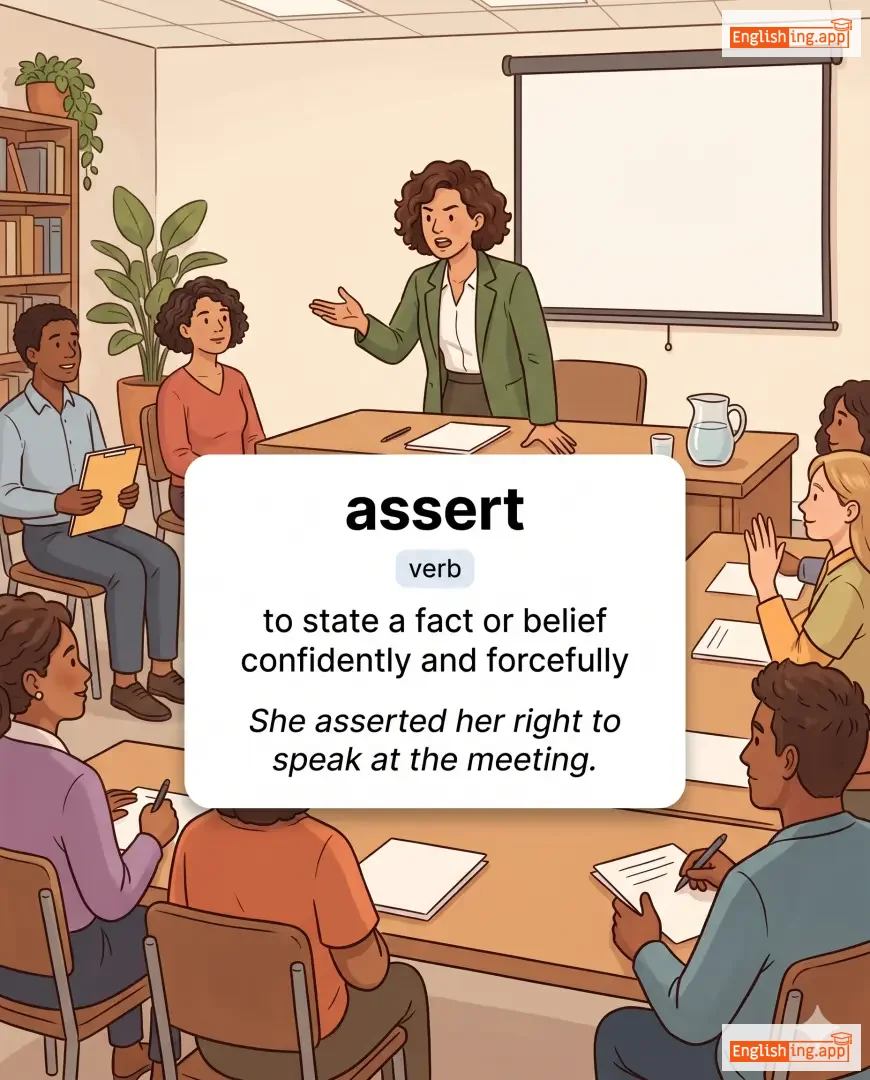
assert definition card — visual illustration of the meaning
verb
/əˈsɜːrt/
утверждать (utverzhdat)

to state a fact or belief confidently and forcefully

"She asserted her right to speak at the meeting."

"Она утвердила свое право говорить на собрании." (Ona utverdila svoe pravo govorit' na sobranii.)
noun
/əˈsɜːʃən/
утверждение (utverzhdenie)

a confident and forceful statement of fact or belief

"Her assertion that she was right was met with silence."

"Ее утверждение, что она была права, было встречено молчанием." (Eeyo utverzhdeniye, chto ona byla prava, bylo vstrecheno molchaniem.)
adjective
/əˈsɜːrtɪv/
уверенный (uverennyy)

having or showing a confident and forceful personality

"He is very assertive in expressing his opinions."

"Он очень уверен в выражении своего мнения." (On ochen' uveren v vyyazhenii svoego mneniya.)
verb
/əˈsɛs/
оценить (otsenit)

to evaluate or estimate the nature, ability, or quality of something

"The teacher assessed the students' progress."
"Учитель оценил прогресс студентов." (Uchitel' otsenil progress studentov.)
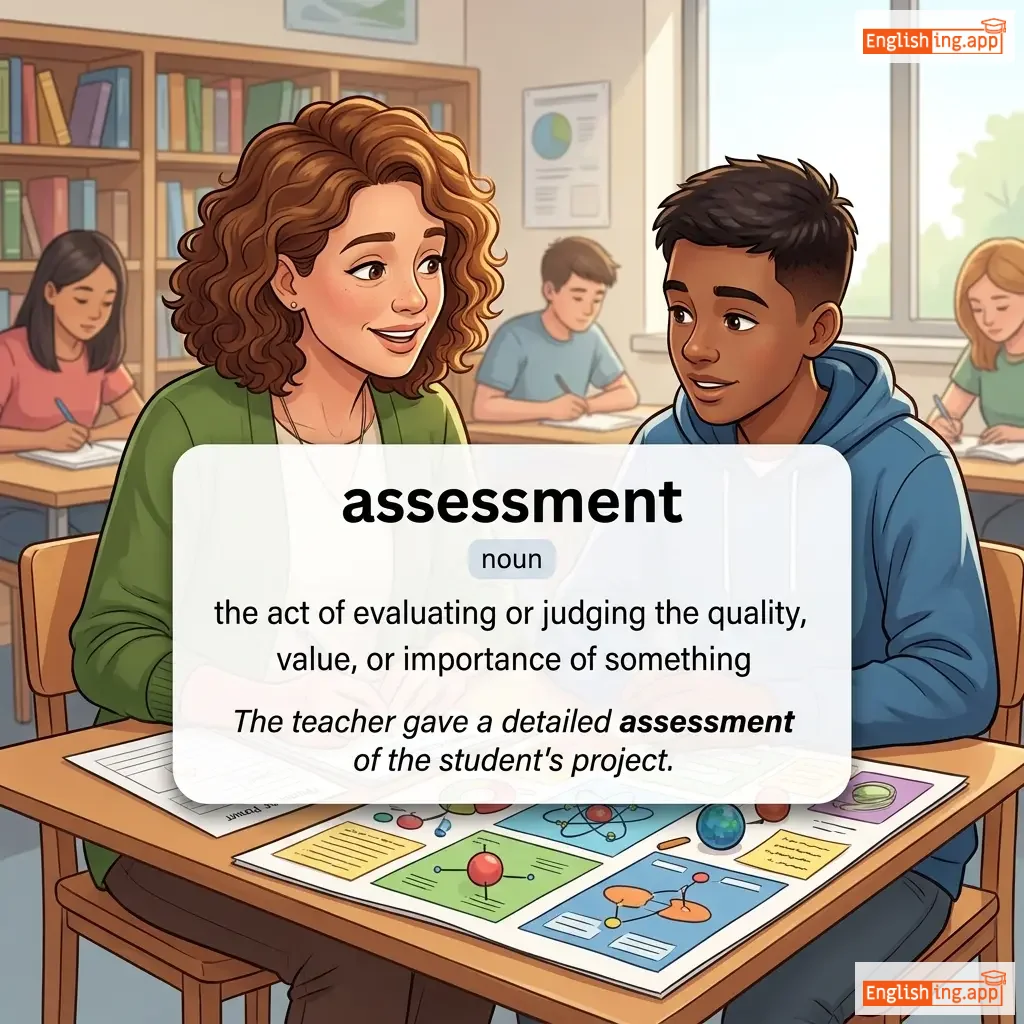
assessment definition card — visual illustration of the meaning
noun
/əˈsɛsmənt/
оценка (otsenka)

the act of evaluating or judging the quality, value, or importance of something

"The teacher gave a detailed assessment of the student's project."

"Учитель дал подробную оценку проекта студента." (Uchitel dal podrobnuyu otsenku proyektu studenta.)