ভোকাবুলারিসমূহ

ইংরেজি শব্দের বাংলা অর্থ | English to Bangla Word Meaning Dictionary

ascend definition card — visual illustration of the meaning
verb
/əˈsɛnd/
উর্ধ্বগমন করা (urdhbogomon kora)

to move upward or rise to a higher position or level

"The hikers began to ascend the steep mountain trail."

"হাইকাররা খাড়া পাহাড়ি পথে উঠতে শুরু করল।" (Haikara khara paharir pothe uthte shuru korlo.)
noun
/əˈsɛndənsi/
প্রাধান্য, আধিপত্য (pradhanno, adhipotto)

A position of power, influence, or control over others.

"The company gained ascendancy in the market through innovation."

"কোম্পানিটি নতুনত্বের মাধ্যমে বাজারে প্রাধান্য অর্জন করেছিল।" (companyti notunnoter maddhome bajar e pradhanno arjon korechilo.)
adjective
/əˈsɛndənt/
উদীয়মান, প্রভাবশালী (udiyoman, prabhabsali)

Rising in power or influence; dominant.

"She is an ascendant leader in the political party."

"তিনি রাজনৈতিক দলে একজন উদীয়মান নেতা।" (tini rajnaitik dole ekti udiyoman neta.)
noun
/əˈsɛnʃən/
উদীয়মানতা, আরোহণ (udiyomanota, arohon)

The act of rising or going up, often to an important position or a higher place.

"His rapid ascension in the company surprised everyone."

"কোম্পানিতে তার দ্রুত আরোহণ সবাইকে অবাক করেছিল।" (companyte tar druto arohon sobaike obak korechilo.)
noun
/əˈsɛnt/
উদয়, আরোহণ (udoy, arohon)

The act of rising or climbing to a higher position or level.

"The climbers began their ascent to the mountain peak at dawn."

"আরোহীরা ভোরে পাহাড়ের চূড়ায় ওঠা শুরু করল।" (Arohira bhore paharer churay otha suru korlo.)
ascertain definition card — visual illustration of the meaning
verb
/ˌæs.ərˈteɪn/
নিশ্চিত করা, নির্ধারণ করা (nischit kora, nirdharon kora)

To find out or make sure of something with certainty.

"The detective tried to ascertain the facts of the case."

"গোয়েন্দা মামলার তথ্য নিশ্চিত করার চেষ্টা করল।" (Goyenda mamlar tothyo nischit korar chesta korlo.)
ascetic definition card — visual illustration of the meaning
adjective
/əˈsɛt.ɪk/
সংযমী, তপস্বী (songjomi, toposhwi)

Practicing strict self-denial and abstaining from worldly pleasures, often for religious reasons.

"He lived an ascetic life in the mountains, far from worldly comforts."

"সে পাহাড়ে জাগতিক আরামের বাইরে এক সংযমী জীবন যাপন করত।" (Se pahare jagotik aramer baire ek songjomi jibon jopon korto.)
noun
/əˈsɛt.ɪˌsɪz.əm/
তপস্যা, সংযম (topossha, songjom)

The practice of severe self-discipline and abstaining from indulgence, typically for religious or spiritual reasons.

"Asceticism has been a part of many religious traditions throughout history."

"ইতিহাস জুড়ে অনেক ধর্মীয় প্রথায় তপস্যা বিদ্যমান।" (Itihash jure onek dhormiyo prothay topossha bidyoman.)
verb
/əˈskraɪb/
আরোপ করা, দায়ী করা (arop kora, dayi kora)

To attribute something to a cause, source, or person.

"Many scholars ascribe the poem to an unknown author."

"অনেক গবেষক কবিতাটি একজন অজানা লেখকের প্রতি আরোপ করেন।" (Onek gobeshok kobitati ekjon ojana lekhoker proti arop koren.)
adjective
/eɪˈsɛptɪk/
জীবাণুমুক্ত (jibanmukto)

Free from contamination caused by harmful microorganisms; sterile.

"Surgeons must work in an aseptic environment to prevent infection."

"সার্জনদের সংক্রমণ প্রতিরোধ করতে জীবাণুমুক্ত পরিবেশে কাজ করতে হয়।" (Sarjonder songkromon protirodh korte jibanmukto poribese kaj korte hoy.)
adjective
/ˌeɪˈsɛkʃuəl/
যৌনবিহীন (jounobihin)

Without sexual feelings, associations, or reproduction through sex.

"Many plants reproduce through asexual methods like budding or splitting."

"অনেক গাছ যৌনবিহীন উপায়ে যেমন কুঁড়ি বা বিভাজনের মাধ্যমে বংশবিস্তার করে।" (Onek gach jounobihin upaye jemon kudi ba bivajoner maddhome bongshobistar kore.)
noun
/æʃ/
ছাই (chai)

the powdery residue left after the burning of a substance

"After the fire, only ash remained of the house."

"আগুনের পরে বাড়ির শুধু ছাইটাই অবশিষ্ট ছিল।" (Aguner pore barir shudhu chhaitai oboshishto chhilo.)
adjective
/æʃ ˈkʌl.ər/
ছাই রং (chai rong)

a grayish color resembling ash

"The old building had ash-colour walls that needed painting."

"পুরানো বিল্ডিংটির ছাই রঙের দেয়াল ছিল যা রং করা প্রয়োজন।" (purano building-er chai ronger deyal chilo ja rong kora proyojon)
noun
/ˈæʃ.treɪ/
ছাইদানি (chaidani)

a receptacle for tobacco ash and cigarette butts

"Please use the ash tray for your cigarette."

"দয়া করে তোমার সিগারেটের জন্য ছাইদানি ব্যবহার করো।" (doya kore tomar sigareter jonno chaidani bebhohar koro.)
adjective
/əˈʃeɪmd/
লজ্জিত; অপমানিত; (ashamed)

feeling embarrassed or guilty because of one's actions

"He was ashamed of his poor performance."

"সে তার খারাপ পারফরমেন্সের জন্য লজ্জিত ছিল।" (she tar kharap performancer jonyo lojjito chhilo.)
adjective
/ˈæʃən/
ম্লান (mlan)

Very pale in appearance, often due to shock, fear, or illness.

"His face turned ashen when he heard the terrible news."

"ভয়ানক খবর শুনে তার মুখ ম্লান হয়ে গেল।" (Voyank khobor shune tar mukh mlan hoye gelo.)
adjective, noun
/ˈeɪʒən/
এশীয় (eshiya)

relating to Asia or its people

"She loves Asian culture."

"সে এশীয় সংস্কৃতি ভালোবাসে।" (Se eshiya sonkrito bhalobashe.)
noun
/ˈeɪʒən siː bæs/
ভেটকি মাছ (bhetki machh)

a large predatory fish found in coastal waters and estuaries of the Indo-Pacific region, prized for its white meat

"Asian sea bass is highly valued in aquaculture for its fast growth."

"ভেটকি মাছ দ্রুত বৃদ্ধির জন্য মৎস্য চাষে অত্যন্ত মূল্যবান।" (bhetki machh druto briddhir jonno motsho chashe ottyonto mulyoban)
noun
/ˈeɪʒən swɒmp iːl/
কুঁচিয়া (kuchiya)

a snake-like freshwater fish that can survive in muddy waters and is considered a delicacy in South Asian cuisine

"Asian swamp eel can breathe air and survive in shallow muddy waters."

"কুঁচিয়া বাতাস থেকে অক্সিজেন নিতে পারে এবং অগভীর কাদা পানিতে বাঁচতে পারে।" (kuchiya batash theke oxygen nite pare ebong ogobhir kada panite banchte pare)
adverb, noun
/əˈsaɪd/
একপাশে (ekpashe)

to or on one side; a remark not intended for everyone

"He stepped aside to let her pass."

"সে তাকে যেতে দিতে একপাশে দাঁড়াল।" (Se take jete dite ekpashe daralo.)
adjective
/ˈæsɪnaɪn/
বোকামি (bokami)

Extremely foolish or stupid.

"It was an asinine idea to drive into the storm without checking the weather."

"আবহাওয়া না দেখে ঝড়ের মধ্যে গাড়ি চালানো ছিল বোকামি ধারণা।" (Abahawa na dekhe jhorer moddhe gari chalano chilo bokami dharona.)
verb
/æsk/
জিজ্ঞাসা করা (jiggasha kora)

to request information or seek an answer

"She asked him about his new job."

"সে তাকে তার নতুন কাজ সম্পর্কে জিজ্ঞাসা করল।" (Se take tar notun kaj somporke jiggasha korlo.)
adverb
/əˈskæns/
সন্দেহভরে (sondehbore)

With suspicion, mistrust, or disapproval.

"She looked askance at his unusual proposal."

"সে তার অদ্ভুত প্রস্তাবের দিকে সন্দেহভরে তাকাল।" (Se tar oddhuto prostaber dike sondehbore takalo.)
adjective
/əˈskjuː/
বাঁকা (banka)

Not in a straight or level position; crooked or tilted.

"The picture on the wall hung slightly askew."

"দেয়ালে ছবিটি সামান্য কাত হয়ে ঝুলছিল।" (Deyale chobiti samanjo kata hoye jhulchhilo.)
adjective
/əˈsliːp/
ঘুমন্ত (ghumonto)

in a state of sleep

"The baby is fast asleep."

"শিশুটি গভীর ঘুমে আছে।" (Shishuti gobhir ghume ache.)
noun
/əˈspær.ə.ɡəs biːn/
বরবটি (boroboti)

a long, thin green vegetable pod that grows on vines; also known as yard-long bean

"The asparagus bean grows up to three feet long and is commonly used in Asian cooking."

"বরবটি তিন ফুট পর্যন্ত লম্বা হয় এবং এশিয়ান রান্নায় সাধারণত ব্যবহৃত হয়।" (boroboti tin fut porjonto lomba hoy ebong asian rannay sadharonoto bebhritto hoy.)
noun
/ˈæs.pekt/
দিক (dik)

A particular part, feature, or view of something.

"One important aspect of health is regular exercise."

"স্বাস্থ্যের একটি গুরুত্বপূর্ণ দিক হলো নিয়মিত ব্যায়াম।" (Shasther ekti guruttopurno dik holo niyomito byayam.)
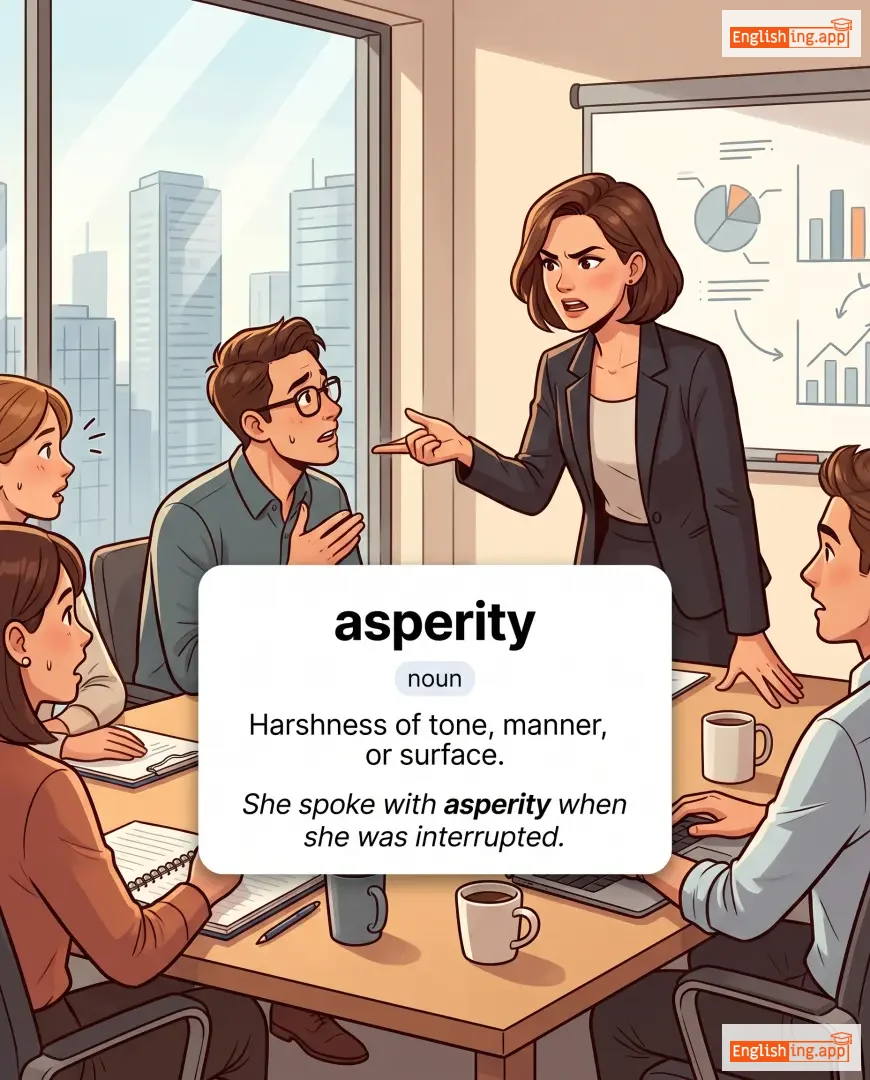
asperity definition card — visual illustration of the meaning
noun
/əˈsper.ɪ.ti/
কঠোরতা (kothorota)

Harshness of tone, manner, or surface.

"She spoke with asperity when she was interrupted."

"তিনি বাধা পেলে কঠোর স্বরে কথা বললেন।" (Tini badha pele kothor swore kotha bollen.)
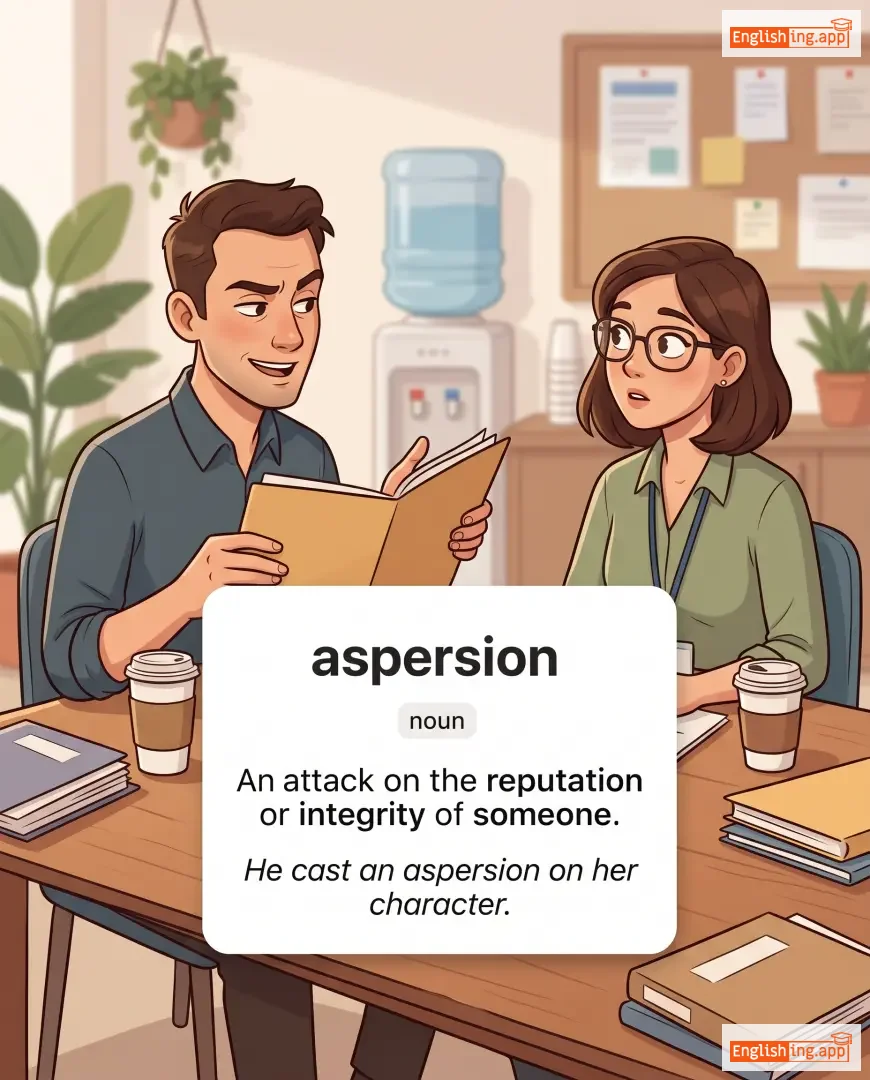
aspersion definition card — visual illustration of the meaning
noun
/əˈspɜːr.ʒən/
কলঙ্ক (kolonko)

An attack on the reputation or integrity of someone.

"He cast an aspersion on her character."

"সে তার চরিত্রের উপর কলঙ্ক ছুঁড়ে দিল।" (Se tar choritrer upor kolonko chure dilo.)
noun (plural)
/əˈspɜːr.ʒənz/
অপবাদসমূহ (opobadsomuho)

Critical or slanderous remarks; multiple attacks on reputation.

"The politician rejected the aspersions cast against him."

"রাজনীতিবিদ তার বিরুদ্ধে আনা অপবাদসমূহ প্রত্যাখ্যান করলেন।" (Rajnitybid tar biruddhe ana opobadsomuho prottakkhan korlen.)
noun
/ˈæspɪrənt/
প্রার্থী (prarthi)

a person who seeks or hopes to achieve a position of honor or advancement

"She is an aspirant for the university's top scholarship."

"সে বিশ্ববিদ্যালয়ের শীর্ষ বৃত্তির প্রার্থী।" (Se bishwobidyaloyer shirsyo brittir prarthi.)
aspiration definition card — visual illustration of the meaning
noun
/ˌæspəˈreɪʃən/
আকাঙ্ক্ষা (akankkha)

a strong desire to achieve something; ambition

"Her aspiration is to become a doctor."

"তার আকাঙ্ক্ষা একজন ডাক্তার হওয়া।" (Tar akankkha ekjon daktar howa.)
verb
/əˈspaɪər/
অভিলাষী হওয়া (abhilashi howa)

to have a strong desire to achieve something

"Many students aspire to study abroad."

"অনেক শিক্ষার্থী বিদেশে পড়াশোনা করতে চায়।" (Onek shikkharthi bideshe porashona korte chay.)
noun
/æs/
গাধা (gadha)

a donkey; also an informal term for a foolish person or one's buttocks

"He acted like an ass during the meeting."

"সে মিটিংয়ে একেবারে গাধার মতো আচরণ করেছিল।" (Se miting-e ekebare gadhar moto acharon korechhilo.)
verb
/əˈseɪl/
আক্রমণ করা (akromon kora)

to attack violently, either physically or with words

"The politician was assailed with difficult questions."

"রাজনীতিবিদকে কঠিন প্রশ্নে আক্রমণ করা হয়েছিল।" (Rajnaitibidke kothin proshne akromon kora hoyechilo.)
noun
/əˈseɪlənt/
আক্রমণকারী (akromonkari)

a person who attacks another

"The police arrested the assailant at the scene."

"পুলিশ ঘটনাস্থলেই আক্রমণকারীকে গ্রেপ্তার করে।" (Police ghotonastolei akromonkari ke greptar kore.)
noun
/əˈsæsɪn/
খুনী (khuni)

A person who kills someone, usually for political or religious reasons, often secretly.

"The assassin fled the scene after carrying out the attack."

"আক্রমণ চালানোর পর খুনী ঘটনাস্থল থেকে পালিয়ে গেল।" (Akromon chalanor por khuni ghotonastol theke paliye gelo.)
verb
/əˈsæsɪneɪt/
হত্যা করা (hotya kora)

To murder someone important, often a political or religious leader, usually by surprise attack.

"The rebels planned to assassinate the king."

"বিদ্রোহীরা রাজাকে হত্যা করার পরিকল্পনা করেছিল।" (Bidrohi ra rajake hotya korar porikalpona korechilo.)
noun
/əˌsæsɪˈneɪʃən/
হত্যা (hotya)

The act of killing someone important, often for political or ideological reasons.

"The assassination of the president shocked the nation."

"রাষ্ট্রপতির হত্যা পুরো জাতিকে স্তম্ভিত করেছিল।" (Rastrapotir hotya puro jatikey stombhito korechilo.)
noun, verb
/əˈsɔːlt/
আক্রমণ (akromon)

a physical attack or to attack someone violently

"He was charged with assault after the fight."

"মারামারির পর তাকে আক্রমণের অভিযোগে অভিযুক্ত করা হয়েছিল।" (Maramarir por take akromoner obhijoge obhijukto kora hoyechilo.)
noun, verb
/ˈæseɪ/
পরীক্ষা (porikkha)

To test or analyze the quality, purity, or content of a substance; the act of such testing.

"The scientists assayed the mineral sample for gold content."

"বিজ্ঞানীরা সোনার উপস্থিতির জন্য খনিজ নমুনা পরীক্ষা করেছিলেন।" (Bigganira sonar uposthitir jonno khonij nomuna porikkha korechilen.)
verb
/əˈsɛmbəl/
একত্রিত করা (ektrito kora)

to gather or bring together in one place

"The students assembled in the hall for the meeting."

"ছাত্ররা মিটিংয়ের জন্য হলে একত্রিত হয়েছিল।" (Chhatro ra mitinger jonno hole ektrito hoyechhilo.)
noun
/əˈsɛmbli/
সমাবেশ (somabesh)

a group of people gathered together for a common purpose or the act of putting parts together to form something

"The school held an assembly to discuss the new rules."

"স্কুলটি নতুন নিয়ম নিয়ে আলোচনা করার জন্য একটি সমাবেশ করেছে।" (Schoolti notun niyom niye alochona korar jonno ekti somabesh korechilo.)
assembly session definition card — visual illustration of the meaning
noun
/əˈsem.bli ˈseʃ.ən/
অধিবেশনের সভা (odhibeshoner shobha)

A formal meeting where representatives gather to discuss and make decisions on important matters.

"The assembly session discussed global challenges."

"অধিবেশনের সভায় বৈশ্বিক চ্যালেঞ্জ নিয়ে আলোচনা হয়।" (Odhibeshoner shobhay boishwik challenge niye alochona hoy.)
noun, verb
/əˈsɛnt/
সম্মতি (sommoti)

To agree to something, especially after careful consideration; an expression of approval.

"She nodded her head in silent assent."

"সে নীরব সম্মতিতে মাথা নেড়েছিল।" (Se nirob sommotite matha neregachilo.)
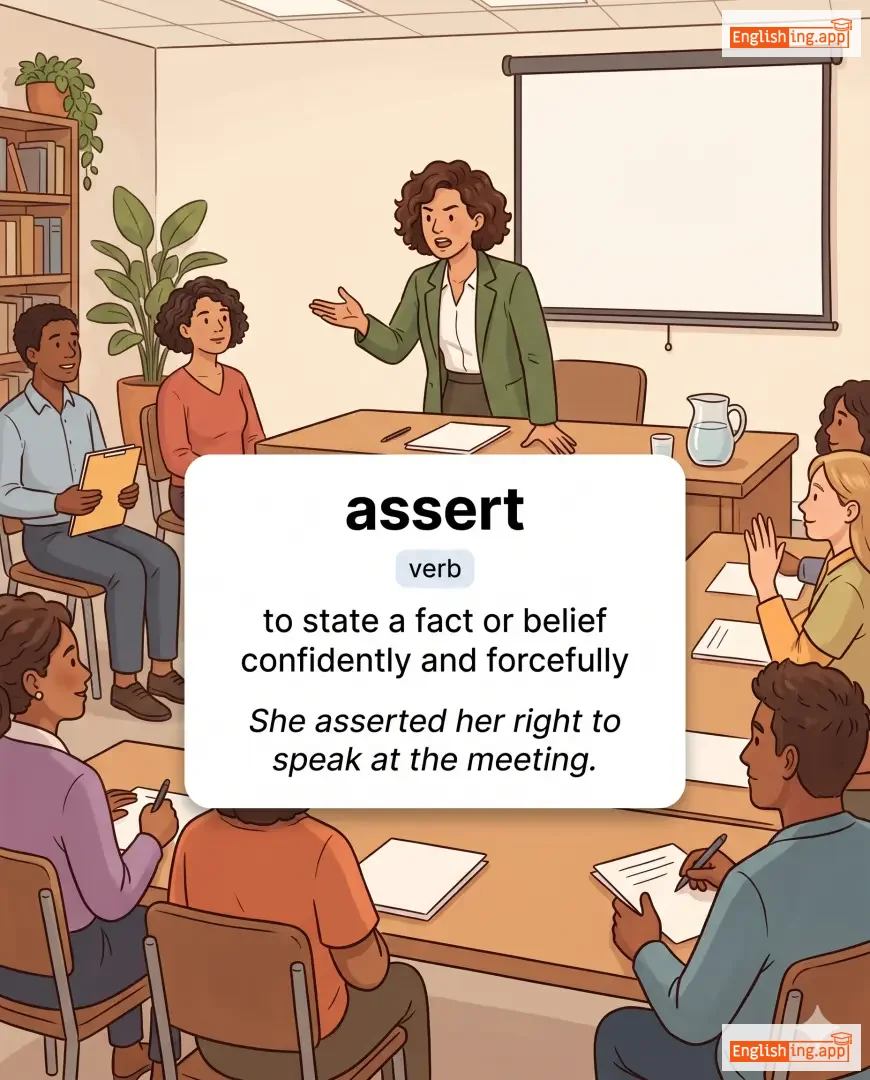
assert definition card — visual illustration of the meaning
verb
/əˈsɜːrt/
জোর দিয়ে বলা (jor diye bola)

to state a fact or belief confidently and forcefully

"She asserted her right to speak at the meeting."

"সে মিটিংয়ে কথা বলার অধিকার জাহির করেছিল।" (Se meetinge kotha bolar odhikar jahir korechilo.)
noun
/əˈsɜːʃən/
দাবী (dabi)

a confident and forceful statement of fact or belief

"Her assertion that she was right was met with silence."

"তার দাবী যে সে সঠিক ছিল নীরবতায় সম্মুখীন হয়েছিল।" (Tar dabi je se sothik chhilo nirobata sammonkhin hoyechhilo.)
adjective
/əˈsɜːrtɪv/
আত্মবিশ্বাসী (atmobishwashi)

having or showing a confident and forceful personality

"He is very assertive in expressing his opinions."

"সে তার মতামত প্রকাশে খুব আত্মবিশ্বাসী।" (Se tar motamot prokashe khub atmobishwashi.)
verb
/əˈsɛs/
মূল্যায়ন করা (mulayon kora)

to evaluate or estimate the nature, ability, or quality of something

"The teacher assessed the students' progress."

"শিক্ষক শিক্ষার্থীদের অগ্রগতি মূল্যায়ন করেছিলেন।" (Shikkhok shikharthider ogradoti mulayon korechilen.)
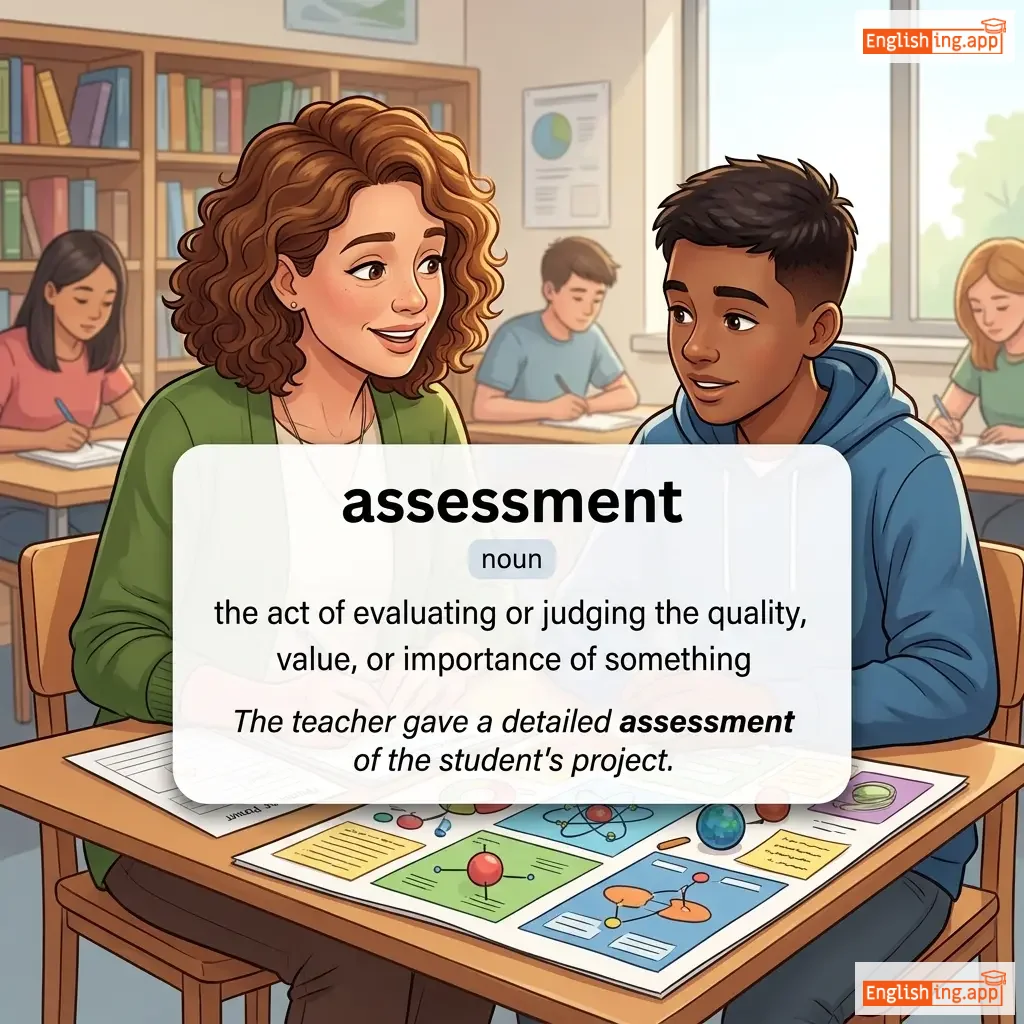
assessment definition card — visual illustration of the meaning
noun
/əˈsɛsmənt/
মূল্যায়ন (mulyayon)

the act of evaluating or judging the quality, value, or importance of something

"The teacher gave a detailed assessment of the student's project."

"শিক্ষক শিক্ষার্থীর প্রজেক্টের বিস্তারিত মূল্যায়ন দিয়েছিলেন।" (Shikkhok shikkharthir projecter bistarit mulyayon diyechilen.)