語彙集

英単語辞書 | 単語の意味、定義、例文

amicable definition card — visual illustration of the meaning
adjective
/ˈæmɪkəbəl/
友好的 (yuukouteki)

Friendly and peaceful, especially in resolving conflicts.

"The two companies reached an amicable agreement after months of negotiation."

"両社は数ヶ月の交渉の末、友好的な合意に達しました。" (Ryousha wa suukagetsu no koushou no sue, yuukouteki na goui ni tasshimashita.)
adverb
/ˈæm.ɪ.kə.bli/
友好的に (yuukouteki ni)

in a friendly way without anger or resentment

"The divorce was settled amicably between both parties."

"離婚は両者の間で友好的に解決されました。" (Rikon wa ryousha no aida de yuukouteki ni kaiketsu saremashita.)
preposition
/əˈmɪd/
中で (naka de)

in the middle of or surrounded by something

"The team stayed calm amid the chaos."

"チームは混乱の中で冷静を保った。" (Chīmu wa konran no naka de reisei o tamotta.)
adjective/adverb
/əˈmɪs/
間違った (machigatta)

Not quite right; inappropriate or out of place.

"Something seems amiss with the car's engine."

"車のエンジンに何か間違ったことがあるようです。" (Kuruma no enjin ni nanika machigatta koto ga aru yōdesu.)
noun
/ˈæmɪti/
友情 (yūjō)

A friendly relationship between people or countries.

"The treaty helped maintain amity between the neighboring nations."

"条約は隣国間の友情を維持するのに役立ちました。" (Jōyaku wa ringoku-kan no yūjō o iji suru no ni yakudachimashita.)
noun
/æmˈniːʒə/
健忘症 (kenbō-shō)

A partial or total loss of memory, usually caused by injury, illness, or psychological trauma.

"After the accident, she suffered from amnesia and could not remember her own name."

"事故後、彼女はアムネジアに苦しみ、自分の名前を思い出せなかった。" (Jiko-go, kanojo wa amnesia ni kurushimi, jibun no namae o omoidase nakatta.)
noun
/ˈæmnəsti/
アムネスティ (amunesuti)

An official pardon granted to people who have been convicted of political offenses.

"The government announced an amnesty for all political prisoners."

"政府はすべての政治犯に対してアムネスティを発表しました。" (Seifu wa subete no seijihan ni taishite amunesuti o happyō shimashita.)
adverb
/əˈmʌk/
制御不能 (segyo funou)

Behaving uncontrollably and disruptively.

"The angry mob ran amok after the verdict was announced."

"怒った群衆は判決が発表された後、制御不能で走り回った。" (Okotta gunshuu wa hanketsu ga happyou sareta ato, segyo funou de hashirimatta.)
preposition
/əˈmʌŋ/
の中で (no naka de)

surrounded by; in the middle of a group

"He was sitting among his friends."

"彼は友達の中に座っていた。" (Kare wa tomodachi no naka ni suwatte ita.)
adjective
/ˌeɪˈmɔːrəl/
アモラル (amoral)

Lacking a moral sense; unconcerned with rightness or wrongness of something.

"The character in the novel was portrayed as completely amoral."

"小説の登場人物は完全にアモラルとして描かれた。" (Shōsetsu no tōjō jinbutsu wa kanzen ni amoral to shite egakareta.)
adverb
/ˌeɪˈmɔːrəli/
非道徳的に (hidōtoku-teki ni)

In a way that shows no concern about whether behavior is morally right or wrong.

"He acted amorally, ignoring the consequences of his actions."

"彼は非道徳的に行動し、自分の行動の結果を無視した。" (Kare wa hidōtoku-teki ni kōdō shi, jibun no kōdō no kekka o mushi shita.)
adjective
/ˈæmərəs/
情熱的 (jōnetsuteki)

Showing, feeling, or relating to romantic love or desire.

"He sent her an amorous letter filled with declarations of love."

"彼は愛の宣言でいっぱいのアモロスな手紙を彼女に送った。" (Kare wa ai no sengen de ippai no amorosuna tegami o kanojo ni okutta.)
adjective
/əˈmɔːrfəs/
無定形 (mutēkei)

Lacking a clear shape or form; without a defined structure.

"The plan remained amorphous and lacked concrete details."
"その計画は無定形のままで、具体的な詳細が欠けていました。" (Sono keikaku wa mutēkei no mamade, gutaiteki na shōsai ga kaketeimashita.)
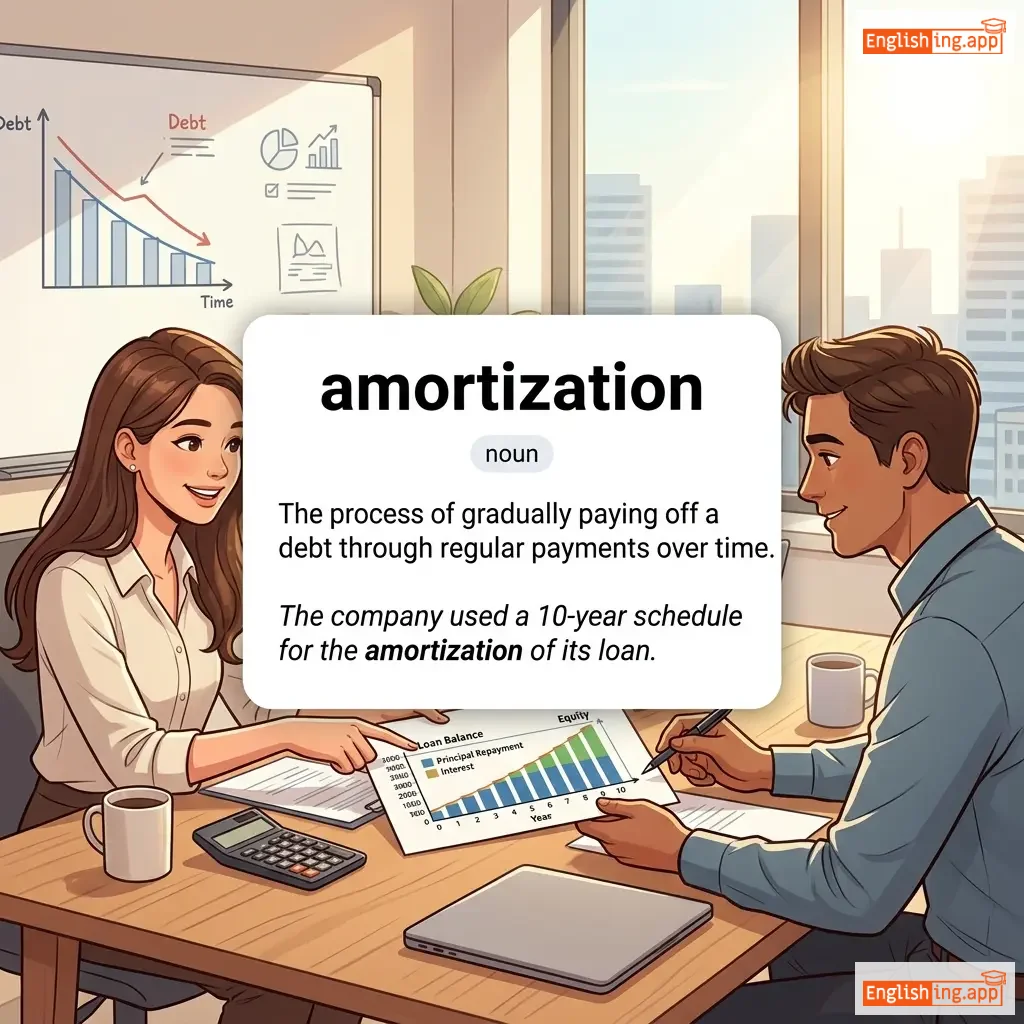
amortization definition card — visual illustration of the meaning
noun
/əˌmɔːrtəˈzeɪʃən/
借金償却 (shakkin shoukyaku)

The process of gradually paying off a debt through regular payments over time.

"The company used a 10-year schedule for the amortization of its loan."

"会社は10年間のローン償却計画を使用しました。" (Kaisha wa 10 nenkan no rōn shoukyaku keikaku wo shiyou shimashita.)
verb
/ˈæmərˌtaɪz/
償却 (shōkyaku)

To gradually reduce or pay off a debt with regular payments.

"They plan to amortize the mortgage over 20 years."

"彼らは20年間で住宅ローンをアモーティゼする予定です。" (Karera wa 20 nenkan de jūtaku rōn o amōtize suru yotei desu.)
noun/verb
/əˈmaʊnt/
金額 (kingaku)

a quantity of something, typically the total of a thing or things in number, size, value, or extent

"The total amount of money is not enough."

"お金の合計額は十分ではありません。" (Okane no goukei-gaku wa juubun de wa arimasen.)
noun
/əˈmʊr/
秘密の愛 (himitsu no ai)

A secret or illicit love affair.

"The novel tells the story of a forbidden amour between two characters."

"その小説は、二人の登場人物の間の禁じられたアムールの物語を語っています。" (Sono shōsetsu wa, futari no tōjō jinbutsu no aida no kinjiranareta amūru no monogatari o katatteimasu.)
noun
/ˈæmpɛər/
アンペア (ampea)

A unit of electric current in the International System of Units (SI), symbolized as A.

"The current flowing through the wire is measured in amperes."

"ワイヤーを流れる電流はアンペアで測定されます。" (Waiyā o nagareru denryū wa anpea de sokutei saremasu.)
noun
/ˈæmpərˌsænd/
アンパーサンド (ampersand)

The symbol '&' used to represent the word 'and'.

"Use an ampersand instead of writing the word 'and' in the company name."

"会社名に'and'の代わりにアンパーサンドを使用してください。" (Kaisha-mei ni 'and' no kawari ni ampersand o shiyō shite kudasai.)
noun
/æmˈfɪbiən/

A cold-blooded vertebrate animal that can live both on land and in water.

"A frog is a common amphibian that lives both in water and on land."

adjective
/æmˈfɪbiəs/
両生類 (ryōseirui)

Able to live or operate both on land and in water.

"The army used amphibious vehicles to cross the river."

"軍隊は川を渡るために両生類車両を使用しました。" (Guntai wa kawa o wataru tame ni ryōseirui sharyō o shiyō shimashita.)
noun
/ˈæmfɪˌθiətər/
円形劇場 (enkei gekijou)

A large open circular or oval building with rising tiers of seats, used for public events.

"The concert was held in an ancient amphitheater."

"コンサートは古代の円形劇場で行われました。" (Konsāto wa kodai no enkei gekijou de okonawaremashita.)
adjective
/ˈæmpəl/
十分 (jūbun)

more than enough; plentiful; abundant

"There was ample food for everyone at the party."

"パーティーには全員のために十分な食べ物がありました。" (Pātī ni wa zen'in no tame ni jūbun na tabemono ga arimashita.)
noun
/ˌæmplɪfɪˈkeɪʃən/
増幅 (zoufuku)

the act or process of making something stronger, louder, or more intense; an expansion or elaboration of details

"The microphone provides amplification of the speaker’s voice."
"マイクは話者の声を増幅する。" (maiku wa washa no koe o zoufuku suru)
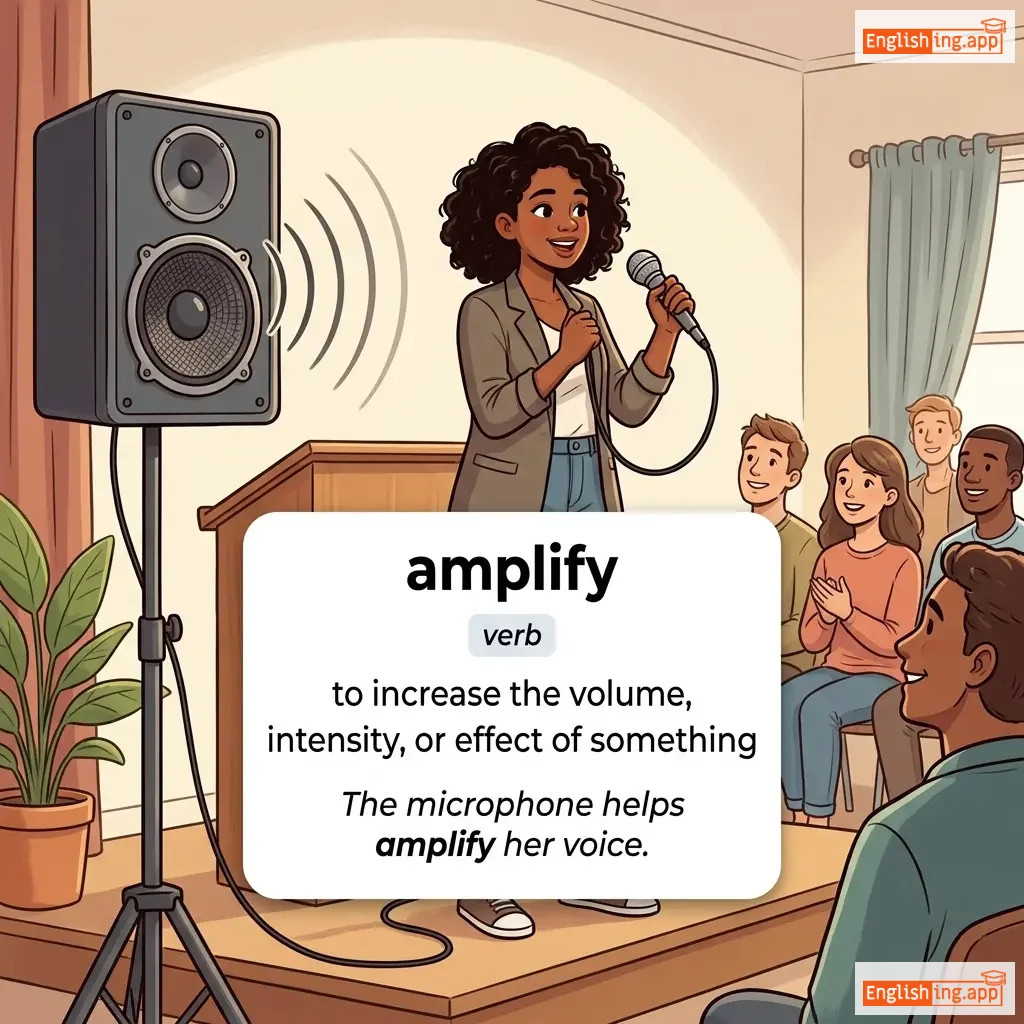
amplify definition card — visual illustration of the meaning
verb
/ˈæmplɪfaɪ/
増幅する (zoufuku suru)

to increase the volume, intensity, or effect of something

"The microphone helps amplify her voice."

"マイクは彼女の声を増幅するのに役立ちます。" (Maiku wa kanojo no koe wo zoufuku suru no ni yakudachimasu.)
noun
/ˈæmplɪtjuːd/
振幅 (shinpu)

the maximum extent of a vibration or oscillation, or the size of something

"The amplitude of the earthquake was measured on the Richter scale."

"地震の振幅はリヒター・スケールで測定されました。" (Jishin no shinpu wa Rihitaa sukeeru de sokutei saremashita.)
adverb
/ˈæmpli/
十分に (jūbun ni)

more than sufficiently; generously

"She was amply rewarded for her hard work."

"彼女は努力の結果、十分に報われました。" (Kanojo wa doryoku no kekka, jūbun ni mukuwarimashita.)
verb
/ˈæmpjʊteɪt/
切断する (setsudan suru)

to cut off a limb from the body by surgery

"The doctors had to amputate his leg after the accident."

"事故の後、医師は彼の足を切断しなければなりませんでした。" (Jiko no ato, ishi wa kare no ashi o setsudan shinakereba narimasen deshita.)
adverb
/əˈmʌk/
無秩序に (muchi tsujoni)

in a frenzied, uncontrolled, or chaotic manner

"The bull ran amuck through the village."
"雄牛は村を無秩序に走り回った。" (Oushi wa mura wo muchitsu joni hashirimawatta.)
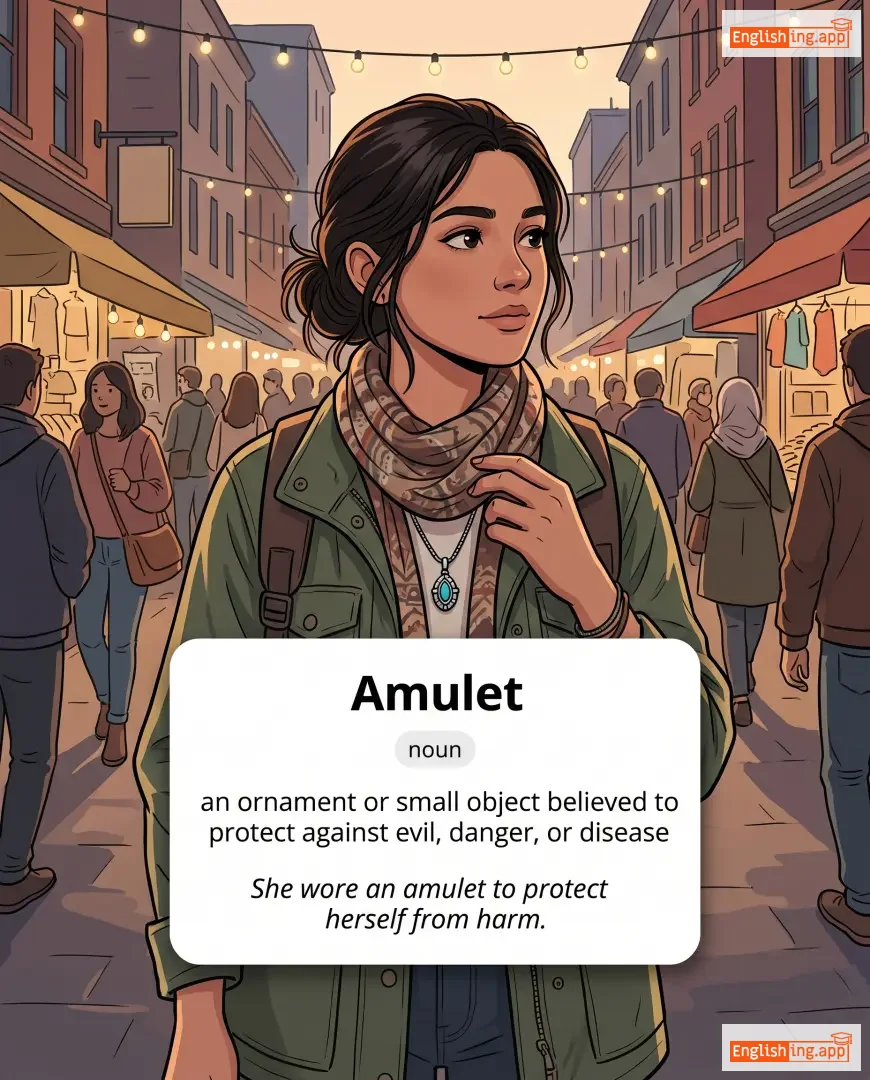
Amulet definition card — visual illustration of the meaning
noun
/ˈæmjʊlət/
お守り (omamori)

an ornament or small object believed to protect against evil, danger, or disease

"She wore an amulet to protect herself from harm."

"彼女は自分を守るためにお守りを身につけていました。" (Kanojo wa jibun o mamoru tame ni omamori o mi ni tsukete imashita.)
verb
/əˈmjuːz/
楽しませる (tanoshimaseru)

to entertain or make someone laugh or smile; to occupy pleasantly

"The clown amused the children at the party."

"道化師はパーティーで子供たちを楽しませた。" (doukeshi wa paatii de kodomotachi o tanoshimaseta)
noun
/əˈmjuːzmənt/

the state of being entertained or finding something funny

"The children watched the clown with great amusement."

adjective
/əˈmjuːzɪŋ/
面白い (omoshiroi)

causing laughter or amusement

"The movie was very amusing, and I laughed a lot."
"その映画はとても面白くて、私はたくさん笑いました。" (Sono eiga wa totemo omoshirokute, watashi wa takusan waraimashita.)
article
/æn/
一つの(不定冠詞) (hitotsu no (futei kanshi))

used before a noun to refer to a non-specific item that begins with a vowel sound

"She ate an apple for breakfast."

"彼女は朝食にリンゴを一つ食べた。" (kanojo wa choshoku ni ringo o hitotsu tabeta)
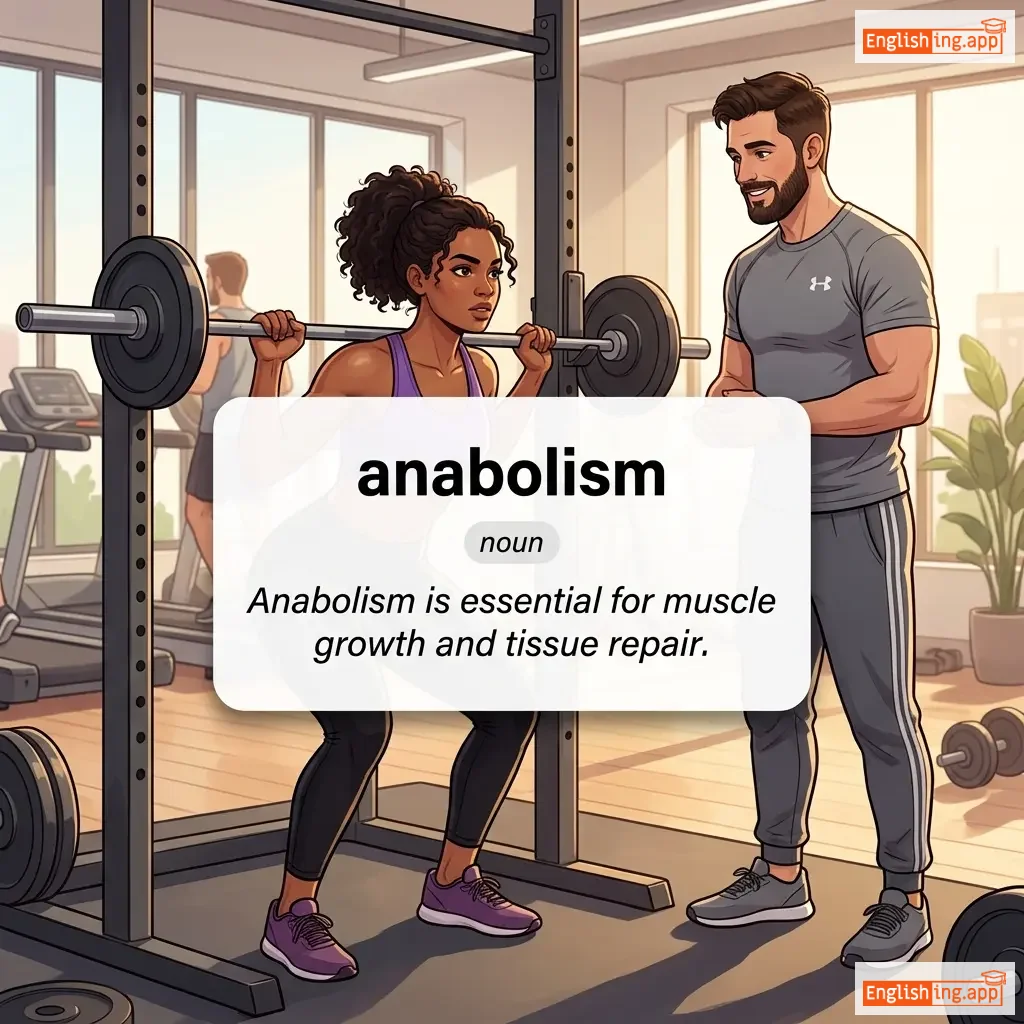
anabolism definition card — visual illustration of the meaning
noun
/əˈnæb.ə.lɪ.zəm/
アナボリズム (anaborizumu)

The set of metabolic pathways that construct molecules from smaller units, involving tissue repair and growth.

"Anabolism is essential for muscle growth and tissue repair."
"アナボリズムは筋肉の成長と組織の修復に不可欠です。" (Anaborizumu wa kinniku no seichou to soshiki no shuufuku ni fukaketsu desu.)
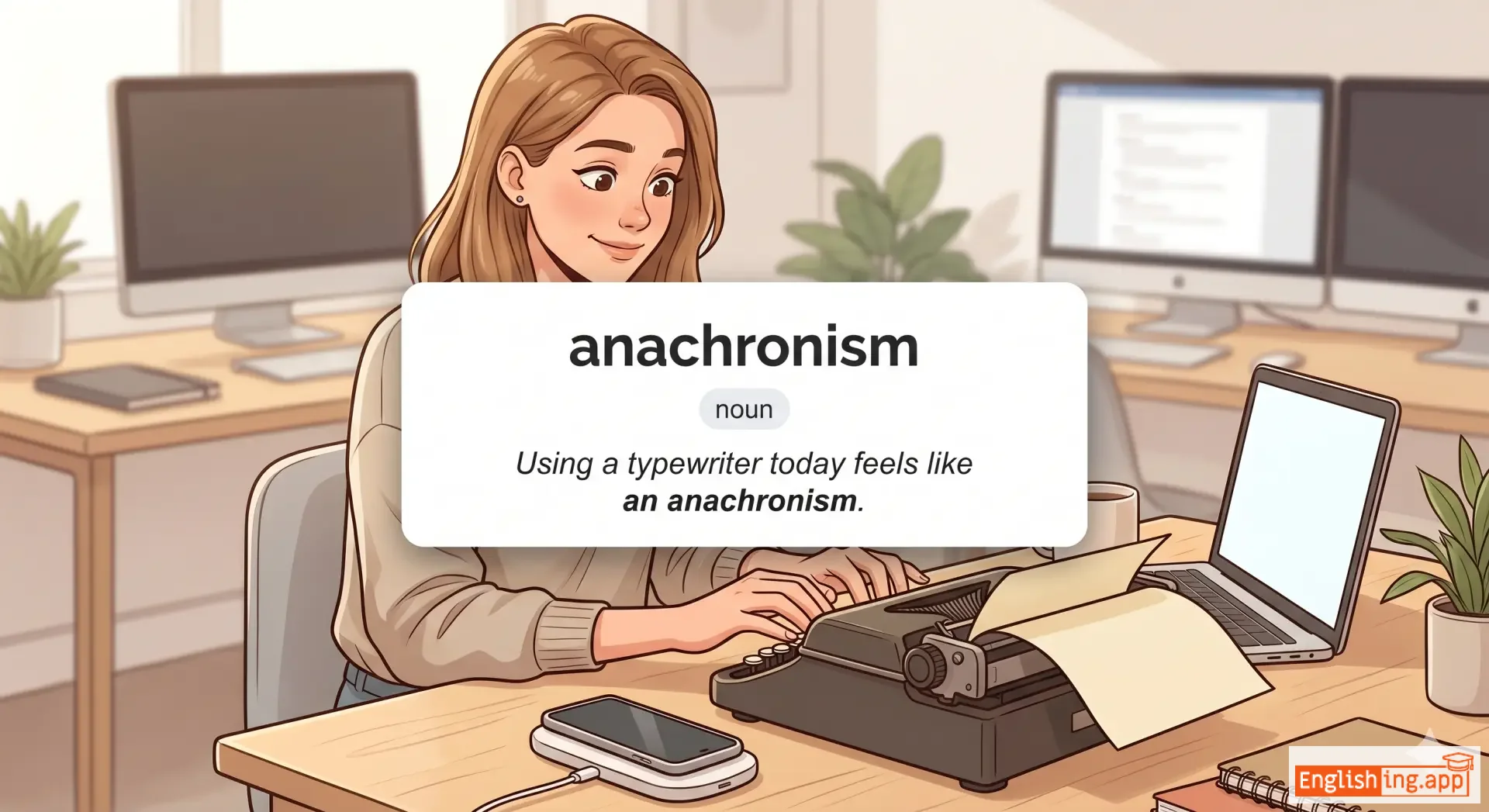
anachronism definition card — visual illustration of the meaning
noun
/əˈnækrəˌnɪzəm/

something that is out of its proper time period, especially something old-fashioned in a modern context

"Using a typewriter today feels like an anachronism."

adjective
/əˌnækrəˈnɪstɪk/
時代錯誤の (jidai sakugo no)

belonging to a period other than that being portrayed; old-fashioned or outdated

"His views on gender roles are considered anachronistic."

"彼の性別役割に関する見解は時代遅れと見なされている。" (Kare no seibetsu yakuwari ni kansuru kenkai wa jidaiokure to minasareteiru.)
noun
/ˈænəɡræm/
他の単語やフレーズの文字を並べ替えて作られた単語またはフレーズ。 (hoka no tango ya furezu no moji o narabekaete tsukurareta tango matawa furezu)

A word or phrase formed by rearranging the letters of another word or phrase.

"The word 'listen' is an anagram of 'silent'."

"'listen' は 'silent' のアナグラムです。" ('listen' wa 'silent' no anagram desu.)
noun
/ˌænəlˈdʒiːziə/
鎮痛 (chintsū)

The inability to feel pain while still conscious.

"The doctor induced analgesia before performing the procedure."
"医者は手術を行う前に鎮痛を誘発した。" (Isha wa shujutsu o okonau mae ni chintsū o yūhatsu shita.)
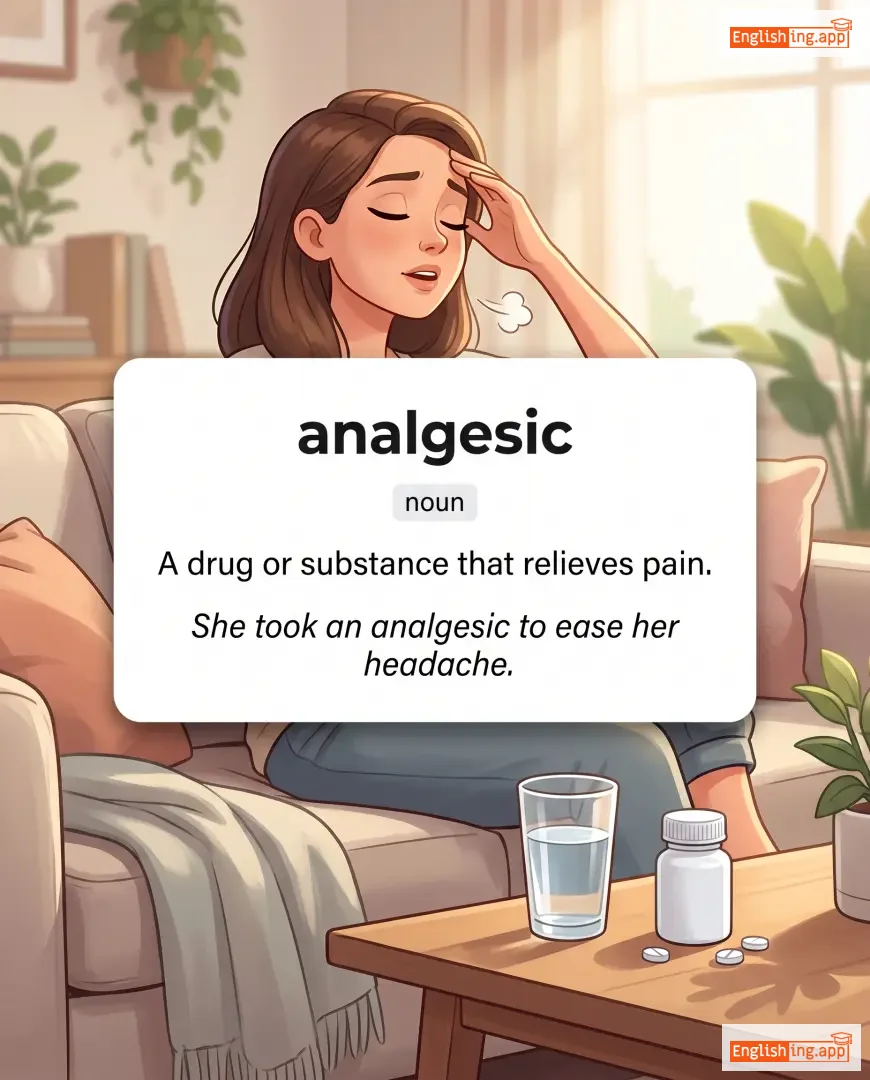
analgesic definition card — visual illustration of the meaning
noun
/ˌænəlˈdʒiːzɪk/
鎮痛剤 (chintsūzai)

A drug or substance that relieves pain.

"She took an analgesic to ease her headache."

"彼女は頭痛を和らげるために鎮痛剤を飲みました。" (Kanojo wa zutsū o yawarageru tame ni chintsūzai o nomimashita.)
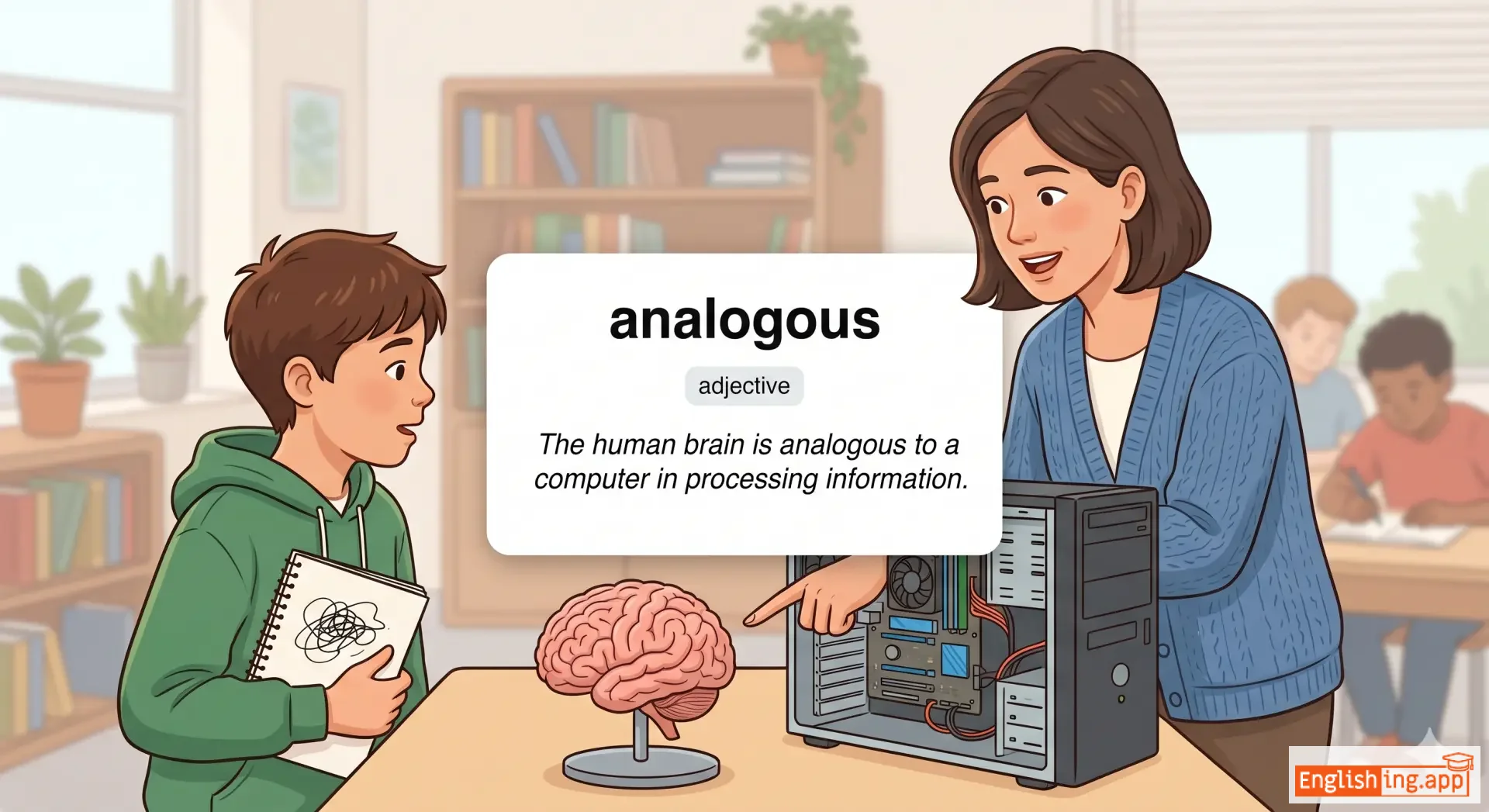
analogous definition card — visual illustration of the meaning
adjective
/əˈnæləɡəs/

Comparable in certain respects, typically in a way that makes clearer the nature of the things compared.

"The human brain is analogous to a computer in processing information."

noun
/əˈnælədʒi/
類推 (ruisui)

A comparison between two things for the purpose of explanation or clarification.

"The teacher used the analogy of a tree to explain the structure of an essay."
"先生はエッセイの構造を説明するために木の類推を使いました。" (Sensei wa essei no kōzō o setsumei suru tame ni ki no ruisui o tsukaimashita.)
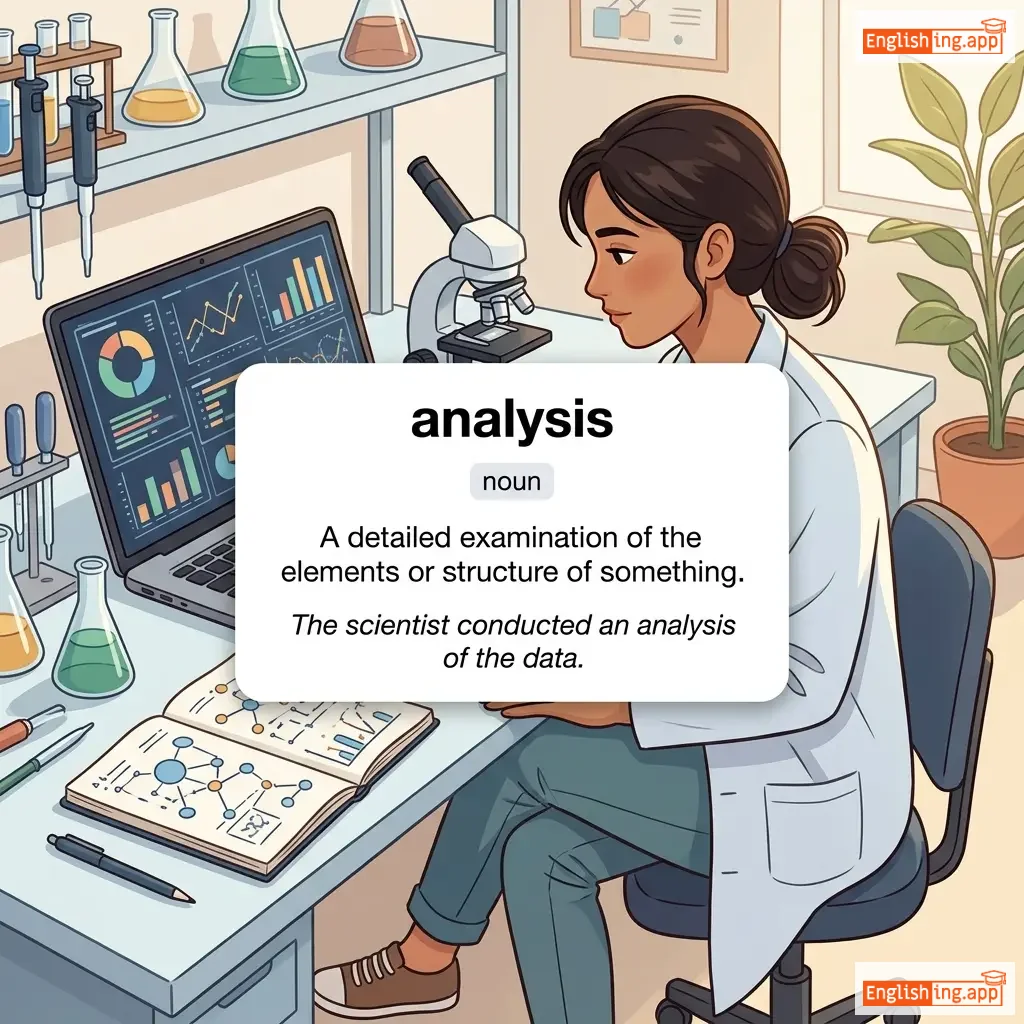
analysis definition card — visual illustration of the meaning
noun
/əˈnæləsɪs/
分析 (bunseki)

A detailed examination of the elements or structure of something.

"The scientist conducted an analysis of the data."

"科学者はデータの分析を行った。" (Kagakusha wa dēta no bunseki o okonatta.)
noun
/ˈænəlɪst/
アナリスト (anaristo)

a person who studies or examines something carefully to understand it or make decisions

"The financial analyst predicted a rise in the stock market."

"金融アナリストは株式市場の上昇を予測しました。" (Kinyuu anaristo wa kabushiki shijou no joushou wo yosoku shimashita.)
analytical definition card — visual illustration of the meaning
adjective
ˌæn.əˈlɪt.ɪ.kəl
分析的 (bunsenteki)

Using analysis or logical reasoning; characterized by the use of analysis.

"His analytical approach helped solve the problem."

"彼の分析的アプローチは問題解決に役立ちました。" (Kare no bunsenteki apurōchi wa mondai kaiketsu ni yakudachimashita.)
verb
/ˈænəlaɪz/
分析する (bunseki suru)

to examine something in detail to understand it better or draw conclusions

"Scientists analyze data to discover new patterns."

"科学者たちは新しいパターンを発見するためにデータを分析しています。" (Kagakusha-tachi wa atarashii patān wo hakken suru tame ni dēta wo bunseki shiteimasu.)
noun
/ˈænərkɪst/
アナーキスト (anākisuto)

a person who believes in or promotes the absence of government or authority

"The anarchist group protested against state control."
"アナーキストのグループは国家の支配に反対して抗議しました。" (Anākisuto no gurūpu wa kokka no shihai ni hantai shite kōgi shimashita.)
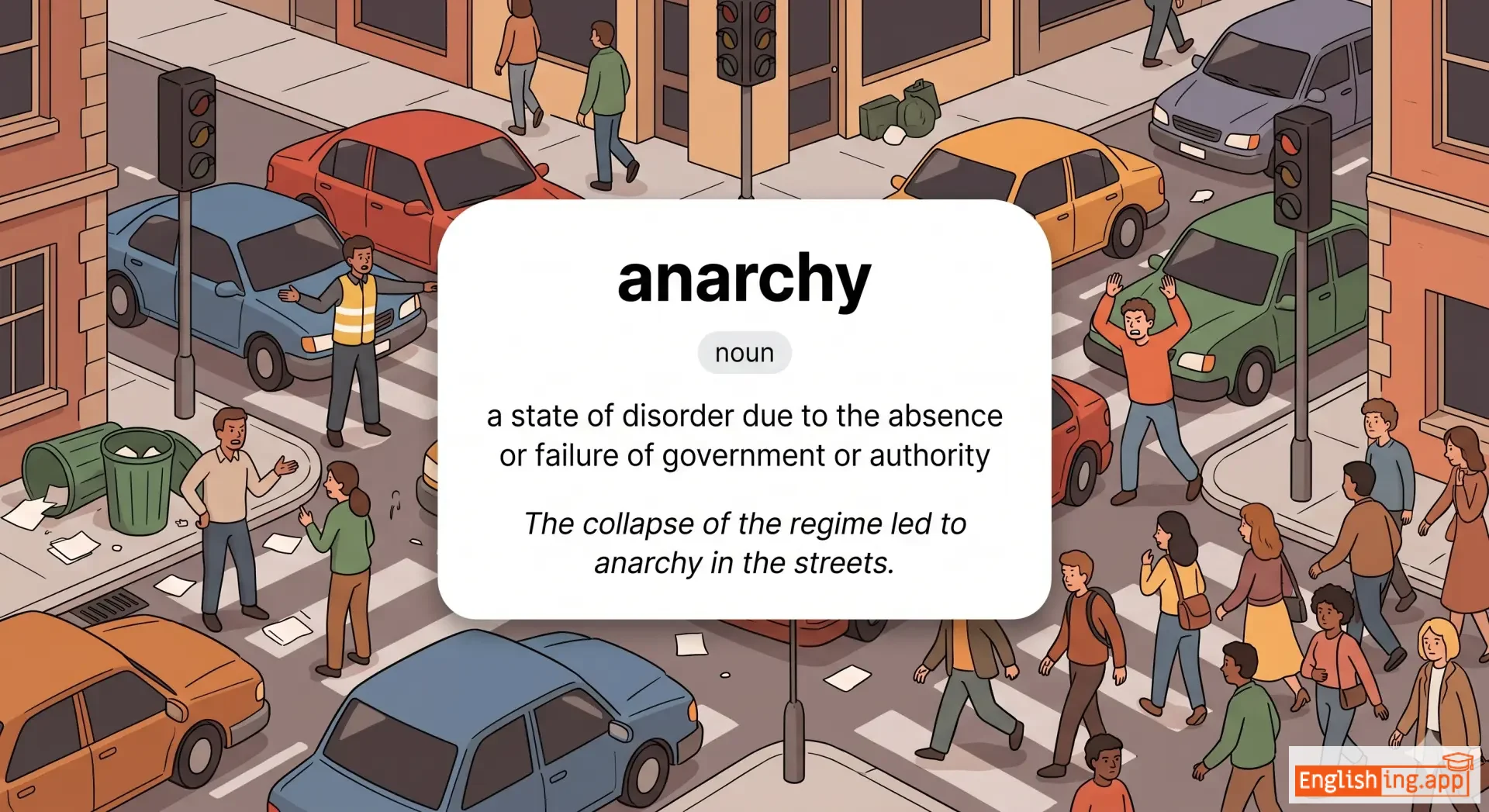
anarchy definition card — visual illustration of the meaning
noun
/ˈænərki/
無政府状態 (museifu jōtai)

a state of disorder due to the absence or failure of government or authority

"The collapse of the regime led to anarchy in the streets."

"政権の崩壊は街中に無政府状態を引き起こした。" (Seiken no hōkai wa machi-jū ni museifu jōtai o hikiokoshita.)
noun
/əˈnæθəmə/
アナセマ / 嫌悪された物 (anasema / ken'o sareta mono)

something or someone intensely disliked or strongly condemned

"Violence is anathema to her peaceful nature."

"暴力は彼女の平和的な性格にはアナセマです。" (Bōryoku wa kanojo no heiwateki na seikaku ni wa anasema desu.)
noun
/əˈnætəmi/
解剖学 (kaibōgaku)

the study of the structure of living things, especially the human body

"She is studying human anatomy at medical school."

"彼女は医学校で人体解剖学を学んでいます。" (Kanojo wa igakkō de jintai kaibōgaku o manandeimasu.)