Словари

Словарь английского языка | Значения слов, определения и примеры

amicable definition card — visual illustration of the meaning
adjective
/ˈæmɪkəbəl/
дружеский (druzheskiy)

Friendly and peaceful, especially in resolving conflicts.

"The two companies reached an amicable agreement after months of negotiation."

"Обе компании пришли к дружескому соглашению после нескольких месяцев переговоров." (Obe kompanii prishli k druzheskomu soglasheniyu posle neskol'kikh mesyatsev peregovorov.)
adverb
/ˈæm.ɪ.kə.bli/
дружелюбно (druzhelyubno)

in a friendly way without anger or resentment

"The divorce was settled amicably between both parties."

"Развод был урегулирован дружелюбно между обеими сторонами." (Razvod byl uregulirovan druzhelyubno mezhdu obeyimi storonami.)
preposition
/əˈmɪd/
среди (sredi)

in the middle of or surrounded by something

"The team stayed calm amid the chaos."

"Команда осталась спокойной среди хаоса." (Komanda ostalas' spokojnoy sredi khaosa.)
adjective/adverb
/əˈmɪs/
неправильный (nepravil'nyy)

Not quite right; inappropriate or out of place.

"Something seems amiss with the car's engine."

"Кажется, с двигателем машины что-то не так." (Kazhetsya, s dvizhkom mashiny chto-to ne tak.)
noun
/ˈæmɪti/
дружба (druzhba)

A friendly relationship between people or countries.

"The treaty helped maintain amity between the neighboring nations."

"Договор помог поддержать дружбу между соседними странами." (Dogovor pomog podderzhat' druzhbu mezhdu sosednimi stranami.)
noun
/æmˈniːʒə/
амнезия (amneziya)

A partial or total loss of memory, usually caused by injury, illness, or psychological trauma.

"After the accident, she suffered from amnesia and could not remember her own name."

"После аварии она страдала от амнезии и не могла вспомнить свое имя." (Posle avarii ona stradala ot amnezii i ne mogla vspomnit' svoe imya.)
noun
/ˈæmnəsti/
амнистия (amnistiya)

An official pardon granted to people who have been convicted of political offenses.

"The government announced an amnesty for all political prisoners."

"Правительство объявило амнистию для всех политических заключенных." (Pravitel'stvo ob'yavilo amnistiyu dlya vsekh politicheskikh zaklyuchennykh.)
adverb
/əˈmʌk/
неуправляемо (neupravlyaemo)

Behaving uncontrollably and disruptively.

"The angry mob ran amok after the verdict was announced."

"Разъярённая толпа бегала неуправляемо после того, как было объявлено решение." (Raz'yerennaya tolpa begala neupravlyaemo posle togo, kak bylo obyavleno reshenie.)
preposition
/əˈmʌŋ/
среди (sredi)

surrounded by; in the middle of a group

"He was sitting among his friends."

"Он сидел среди своих друзей." (On sidel sredi svoikh druzey.)
adjective
/ˌeɪˈmɔːrəl/
аморальный (amoral'nyy)

Lacking a moral sense; unconcerned with rightness or wrongness of something.

"The character in the novel was portrayed as completely amoral."

"Персонаж в романе был изображён как полностью аморальный." (Personazh v romane byl izobrazhyon kak polnost'yu amoral'nyy.)
adverb
/ˌeɪˈmɔːrəli/
аморально (amoralno)

In a way that shows no concern about whether behavior is morally right or wrong.

"He acted amorally, ignoring the consequences of his actions."

"Он действовал аморально, игнорируя последствия своих действий." (On deystvoval amoral'no, ignoriruya posledstviya svoikh deystviy.)
adjective
/ˈæmərəs/
амурный (amurnyj)

Showing, feeling, or relating to romantic love or desire.

"He sent her an amorous letter filled with declarations of love."

"Он послал ей амурное письмо, полное деклараций любви." (On poshal yey amurnoye pismo, polnoye deklaratsiy lyubvi.)
adjective
/əˈmɔːrfəs/
аморфный (amorfniy)

Lacking a clear shape or form; without a defined structure.

"The plan remained amorphous and lacked concrete details."
"План оставался аморфным и не имел четких деталей." (Plan ostavalsya amorfnym i ne imel chetkikh detalei.)
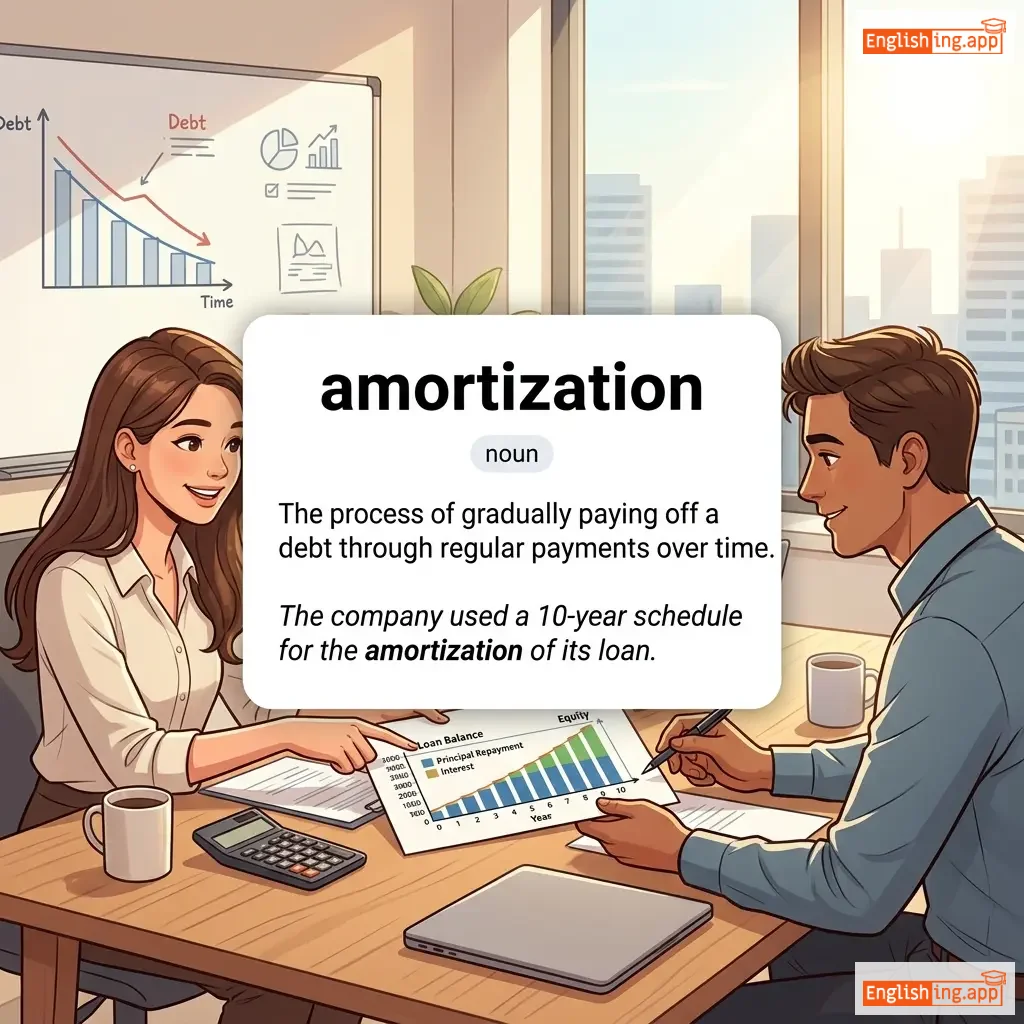
amortization definition card — visual illustration of the meaning
noun
/əˌmɔːrtəˈzeɪʃən/
погашение долга (pogashenie dolga)

The process of gradually paying off a debt through regular payments over time.

"The company used a 10-year schedule for the amortization of its loan."

"Компания использовала 10-летний график амортизации для своего кредита." (Kompaniya ispol'zovala 10-letniy grafik amortizatsii dlya svoego kredita.)
verb
/ˈæmərˌtaɪz/
амортизировать (amortizirovat)

To gradually reduce or pay off a debt with regular payments.

"They plan to amortize the mortgage over 20 years."

"Они планируют амортизировать ипотеку в течение 20 лет." (Oni planiruyut amortizirovat' ipoteku v techeniye 20 let.)
noun/verb
/əˈmaʊnt/
сумма (summa)

a quantity of something, typically the total of a thing or things in number, size, value, or extent

"The total amount of money is not enough."

"Общая сумма денег недостаточна." (Obshchaya summa deneg nedostatochna.)
noun
/əˈmʊr/
секретная любовь (sekretnaya lyubov)

A secret or illicit love affair.

"The novel tells the story of a forbidden amour between two characters."

"Роман рассказывает историю о запретной любви между двумя персонажами." (Roman rasskazyvayet istoriyu o zapretnoy lyubvi mezhdu dvumya personazhami.)
noun
/ˈæmpɛər/
ампер (amper)

A unit of electric current in the International System of Units (SI), symbolized as A.

"The current flowing through the wire is measured in amperes."

"Ток, протекающий через провод, измеряется в амперах." (Tok, protekayushchiy cherez provod, izmeryaetsya v amperakh.)
noun
/ˈæmpərˌsænd/
амперсанд (ampersand)

The symbol '&' used to represent the word 'and'.

"Use an ampersand instead of writing the word 'and' in the company name."

"Используйте амперсанд вместо слова 'и' в названии компании." (Ispol'zuyte ampersand vmesto slova 'i' v nazvanii kompanii.)
noun
/æmˈfɪbiən/

A cold-blooded vertebrate animal that can live both on land and in water.

"A frog is a common amphibian that lives both in water and on land."

adjective
/æmˈfɪbiəs/
амфибия (amfibiya)

Able to live or operate both on land and in water.

"The army used amphibious vehicles to cross the river."

"Армия использовала амфибийные машины для пересечения реки." (Armiya ispol'zovala amfibiynye mashiny dlya peresecheniya reki.)
noun
/ˈæmfɪˌθiətər/
амфитеатр (amfiteatr)

A large open circular or oval building with rising tiers of seats, used for public events.

"The concert was held in an ancient amphitheater."

"Концерт состоялся в древнем амфитеатре." (Kontsert sostoyalsya v drevnem amfiteatre.)
adjective
/ˈæmpəl/
обильный (obil'nyy)

more than enough; plentiful; abundant

"There was ample food for everyone at the party."

"На вечеринке было достаточно еды для всех." (Na vecherinke bylo dostatochno yedy dlya vsekh.)
noun
/ˌæmplɪfɪˈkeɪʃən/
усиление (usilenie)

the act or process of making something stronger, louder, or more intense; an expansion or elaboration of details

"The microphone provides amplification of the speaker’s voice."
"Микрофон обеспечивает усиление голоса говорящего." (mikrofon obespechivaet usilenie golosa govoryashchego)
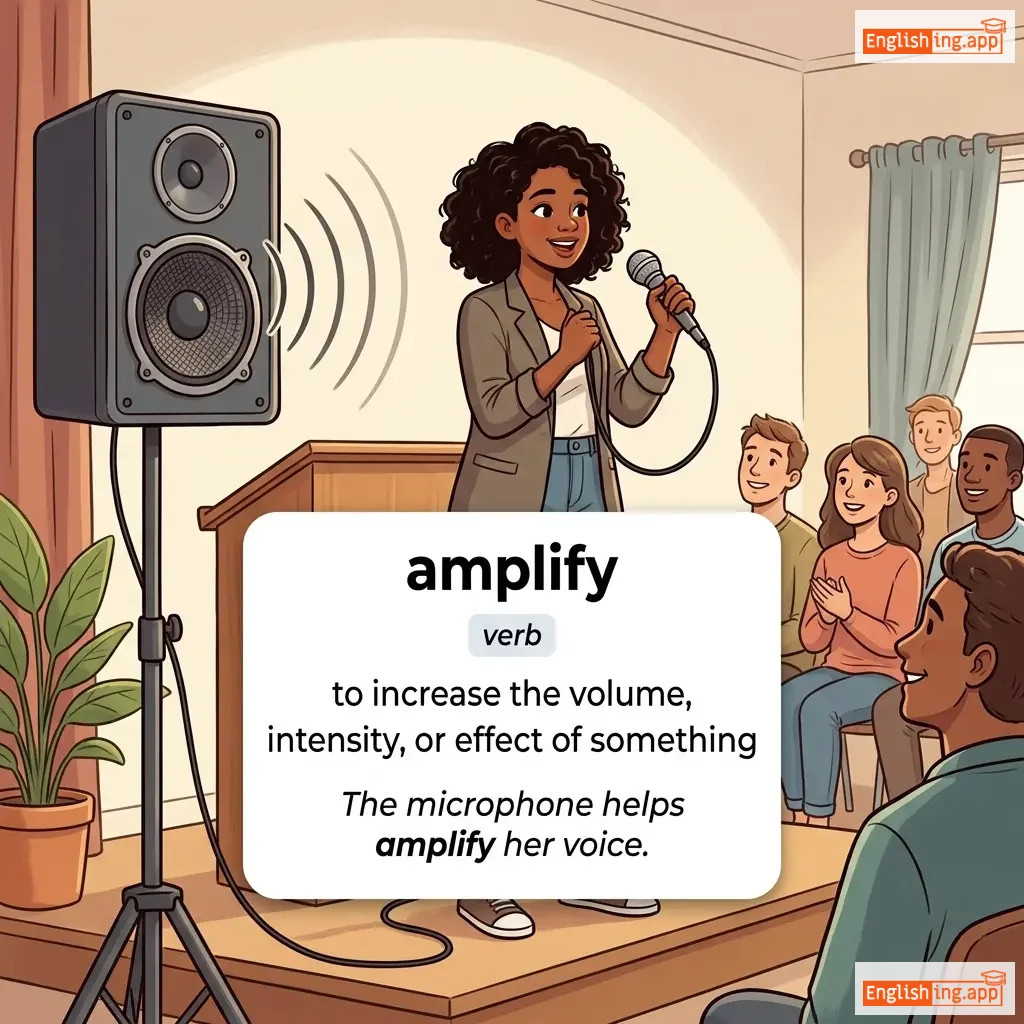
amplify definition card — visual illustration of the meaning
verb
/ˈæmplɪfaɪ/
усиливать (usilivat')

to increase the volume, intensity, or effect of something

"The microphone helps amplify her voice."

"Микрофон помогает усилить её голос." (Mikrofon pomogaet usilit' yeyo golos.)
noun
/ˈæmplɪtjuːd/
амплитуда (amplituda)

the maximum extent of a vibration or oscillation, or the size of something

"The amplitude of the earthquake was measured on the Richter scale."

"Амплитуда землетрясения была измерена по шкале Рихтера." (Amplituda zemletryaseniya byla izmerena po shkale Rikhtera.)
adverb
/ˈæmpli/
щедро (shchedro)

more than sufficiently; generously

"She was amply rewarded for her hard work."

"Она была щедро вознаграждена за свою тяжелую работу." (Ona byla shchedro voz-nagrazh-dena za svoyu tyazhuyu rabotu.)
verb
/ˈæmpjʊteɪt/
ампутировать (amputirovat)

to cut off a limb from the body by surgery

"The doctors had to amputate his leg after the accident."

"Врачи должны были ампутировать его ногу после аварии." (Vrachi dolzhny byli amputirovat' ego nogu posle avarii.)
adverb
/əˈmʌk/
неистово (neistovo)

in a frenzied, uncontrolled, or chaotic manner

"The bull ran amuck through the village."
"Бык неистово бегал по деревне." (Byk neistovo begal po derevne.)
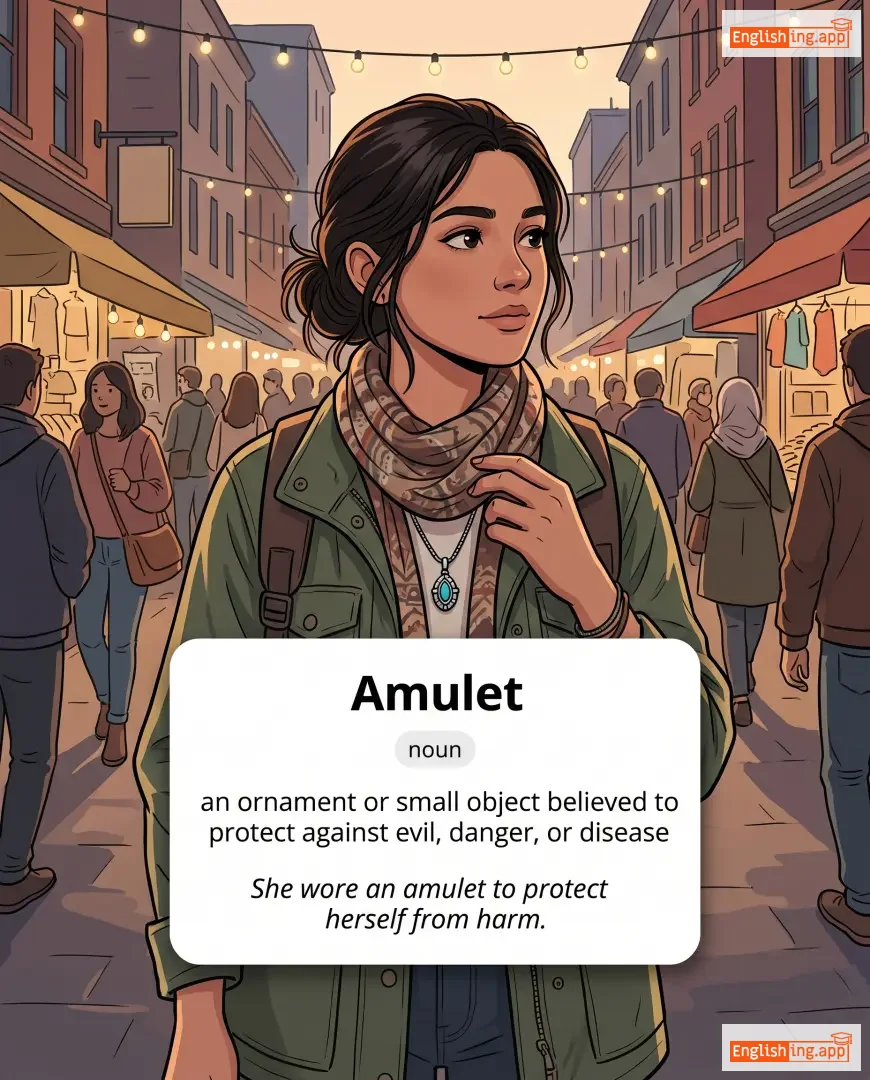
Amulet definition card — visual illustration of the meaning
noun
/ˈæmjʊlət/
амулет (amulet)

an ornament or small object believed to protect against evil, danger, or disease

"She wore an amulet to protect herself from harm."

"Она носила амулет, чтобы защитить себя от вреда." (Ona nosila amulet, chtoby zashchitit' sebya ot vreda.)
verb
/əˈmjuːz/
развлекать (razvlekat)

to entertain or make someone laugh or smile; to occupy pleasantly

"The clown amused the children at the party."

"Клоун развлекал детей на вечеринке." (kloun razvlekal detei na vecherinke)
noun
/əˈmjuːzmənt/

the state of being entertained or finding something funny

"The children watched the clown with great amusement."

adjective
/əˈmjuːzɪŋ/
забавный (zabavnyy)

causing laughter or amusement

"The movie was very amusing, and I laughed a lot."

"Фильм был очень забавным, и я много смеялся." (Film byl ochen' zabavnym, i ya mnogo smeyalsya.)
🅰️

an (эн)

article
/æn/
неопределённый артикль (neopredelyonnyy artikl)

used before a noun to refer to a non-specific item that begins with a vowel sound

"She ate an apple for breakfast."
"Она съела яблоко на завтрак." (ona syela yabloko na zavtrak)
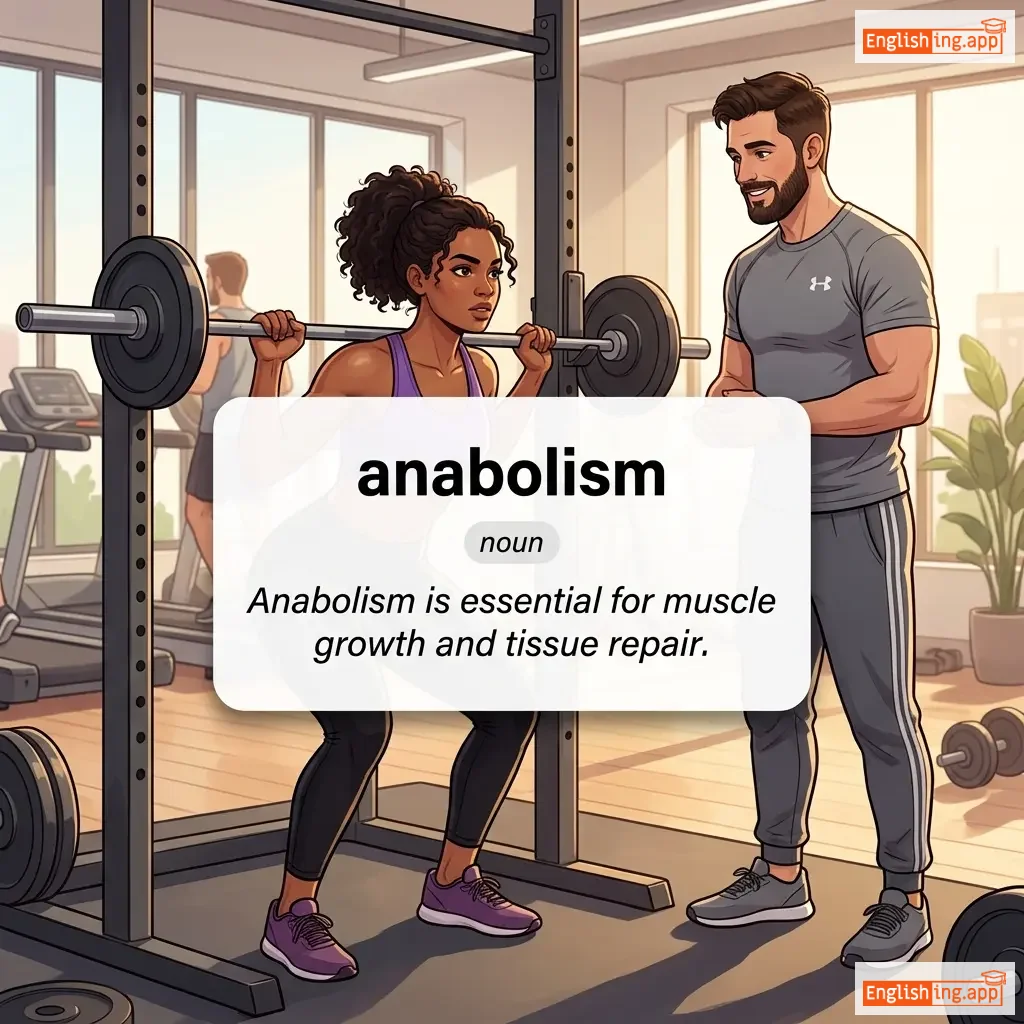
anabolism definition card — visual illustration of the meaning
noun
/əˈnæb.ə.lɪ.zəm/
анаболизм (anabolizm)

The set of metabolic pathways that construct molecules from smaller units, involving tissue repair and growth.

"Anabolism is essential for muscle growth and tissue repair."

"Анаболизм необходим для роста мышц и восстановления тканей." (Anabolizm neobkhodim dlya rosta myshch i vosstanovleniya tkanei.)
anachronism definition card — visual illustration of the meaning
noun
/əˈnækrəˌnɪzəm/

something that is out of its proper time period, especially something old-fashioned in a modern context

"Using a typewriter today feels like an anachronism."

adjective
/əˌnækrəˈnɪstɪk/
анахронистический (anakhronisticheskiy)

belonging to a period other than that being portrayed; old-fashioned or outdated

"His views on gender roles are considered anachronistic."

"Его взгляды на гендерные роли считаются анахронистическими." (Ego vzglyady na gendernye roli schitayutsya anakhronisticheskimi.)
noun
/ˈænəɡræm/
слово или фраза, образованная перестановкой букв другого слова или фразы. (slovo ili fraza, obrazovannaya perestanovkoy bukv drugogo slova ili frazy)

A word or phrase formed by rearranging the letters of another word or phrase.

"The word 'listen' is an anagram of 'silent'."

"'listen' — это анаграмма слова 'silent'." ('listen' — eto anagramma slova 'silent'.)
noun
/ˌænəlˈdʒiːziə/
анальгезия (analgeziya)

The inability to feel pain while still conscious.

"The doctor induced analgesia before performing the procedure."
"Врач вызвал анальгезию перед проведением процедуры." (Vrach vyzval analgeziyu pered provedeniem protsedury.)
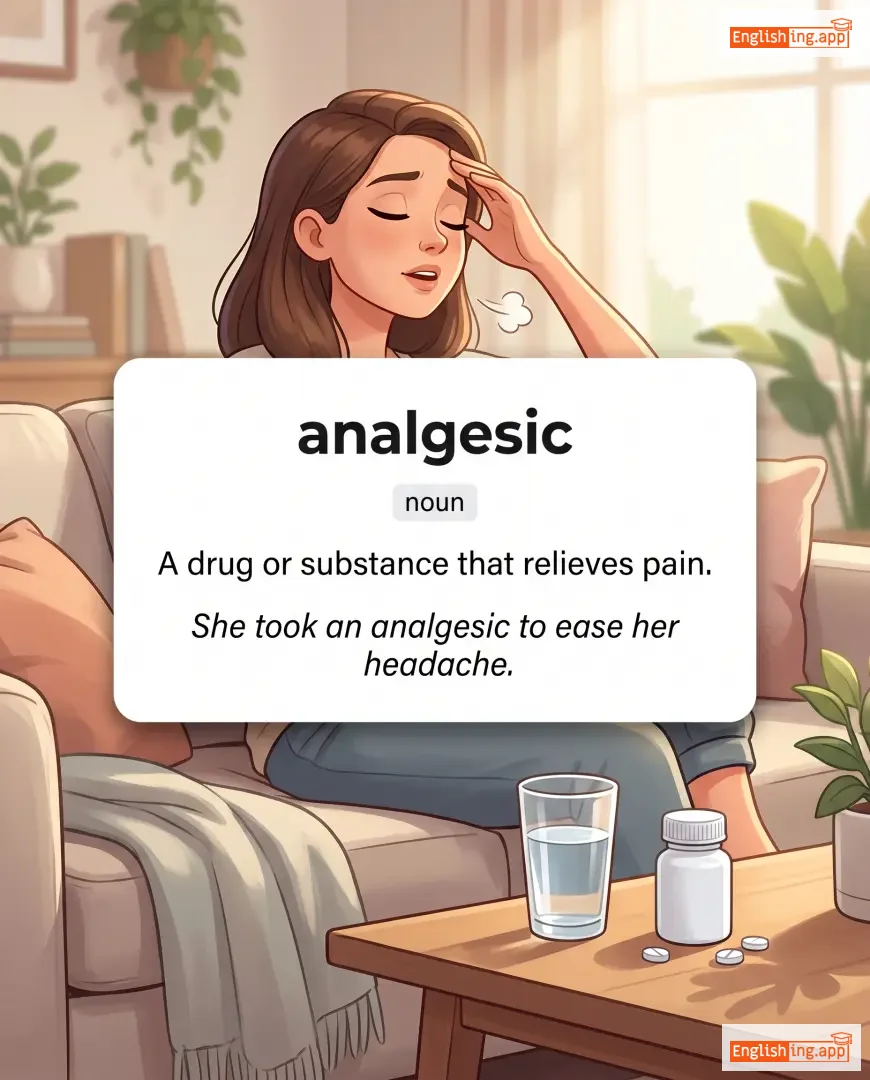
analgesic definition card — visual illustration of the meaning
noun
/ˌænəlˈdʒiːzɪk/
обезболивающее средство (obezbolivayushchee sredstvo)

A drug or substance that relieves pain.

"She took an analgesic to ease her headache."
"Она приняла обезболивающее средство, чтобы облегчить головную боль." (Ona prinjala obezbolivayushchee sredstvo, chtoby oblegchit' golovnuyu bol'.)
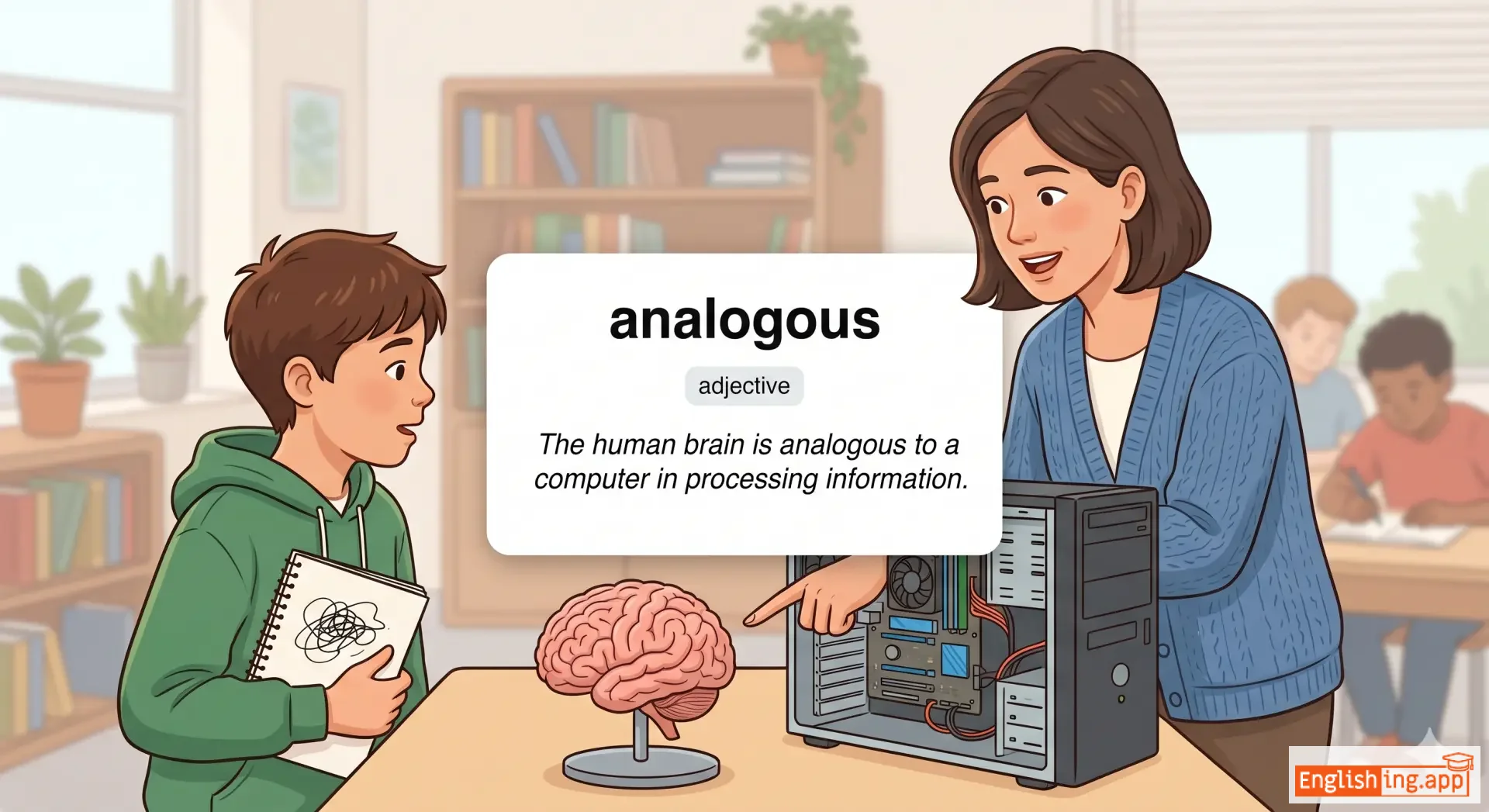
analogous definition card — visual illustration of the meaning
adjective
/əˈnæləɡəs/

Comparable in certain respects, typically in a way that makes clearer the nature of the things compared.

"The human brain is analogous to a computer in processing information."

noun
/əˈnælədʒi/
аналогия (analogiia)

A comparison between two things for the purpose of explanation or clarification.

"The teacher used the analogy of a tree to explain the structure of an essay."
"Учитель использовал аналогию с деревом, чтобы объяснить структуру эссе." (Uchitel' ispol'zoval analogiiu s derevom, chtoby ob'iasnit' strukturu esse.)
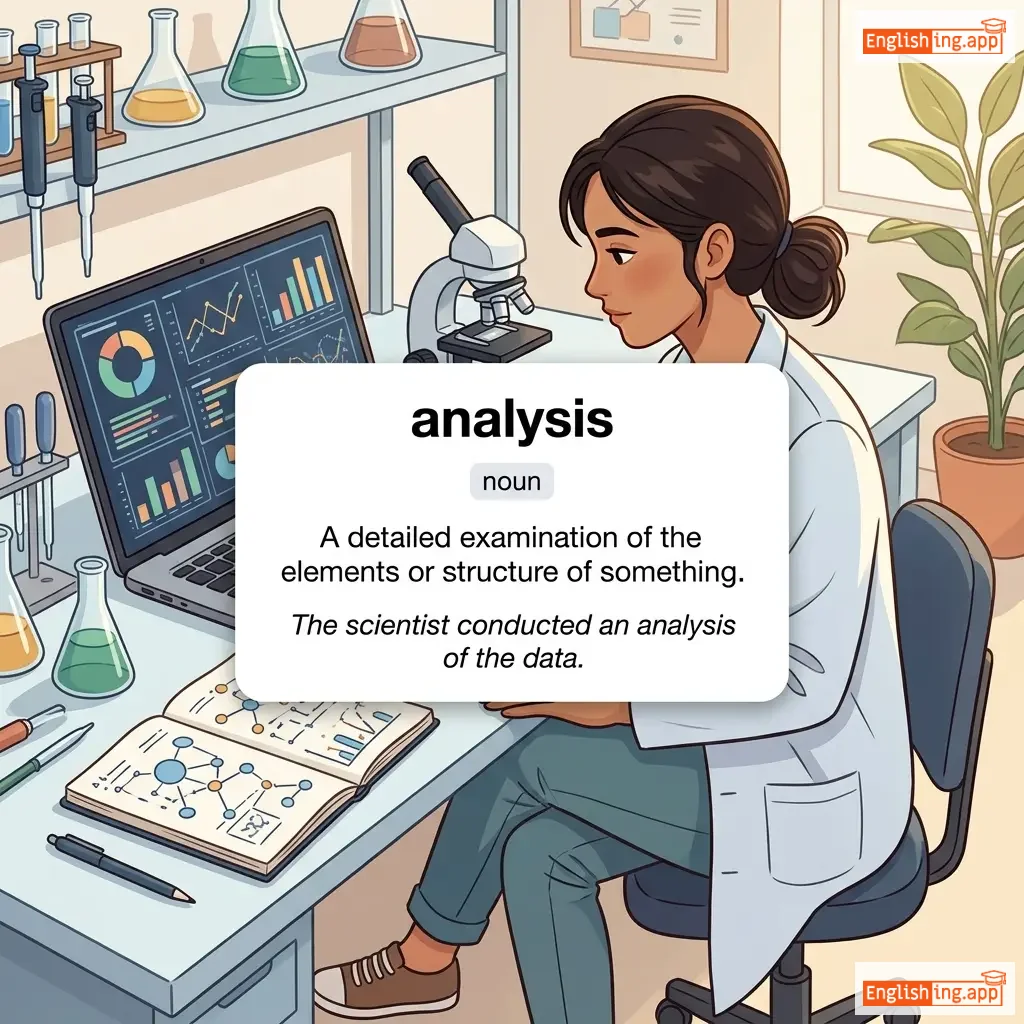
analysis definition card — visual illustration of the meaning
noun
/əˈnæləsɪs/
анализ (analiz)

A detailed examination of the elements or structure of something.

"The scientist conducted an analysis of the data."

"Учёный провёл анализ данных." (Uchonyy provyol analiz dannykh.)
noun
/ˈænəlɪst/
аналитик (analitik)

a person who studies or examines something carefully to understand it or make decisions

"The financial analyst predicted a rise in the stock market."

"Финансовый аналитик предсказал рост фондового рынка." (Finansovyy analitik predskazal rost fondovogo rynka.)
analytical definition card — visual illustration of the meaning
adjective
ˌæn.əˈlɪt.ɪ.kəl
аналитический (analiticheskiy)

Using analysis or logical reasoning; characterized by the use of analysis.

"His analytical approach helped solve the problem."

"Его аналитический подход помог решить проблему." (Ego analiticheskiy podkhod pomog reshit' problemu.)
verb
/ˈænəlaɪz/
анализировать (analizirovat)

to examine something in detail to understand it better or draw conclusions

"Scientists analyze data to discover new patterns."

"Ученые анализируют данные, чтобы обнаружить новые закономерности." (Uchenye analiziruyut dannye, chtoby obnaruzhit' novye zakonomernosti.)
noun
/ˈænərkɪst/
анархист (anarkhist)

a person who believes in or promotes the absence of government or authority

"The anarchist group protested against state control."
"Анархистская группа протестовала против государственного контроля." (Anarkhistskaya gruppa protestovala protiv gosudarstvennogo kontrolya.)
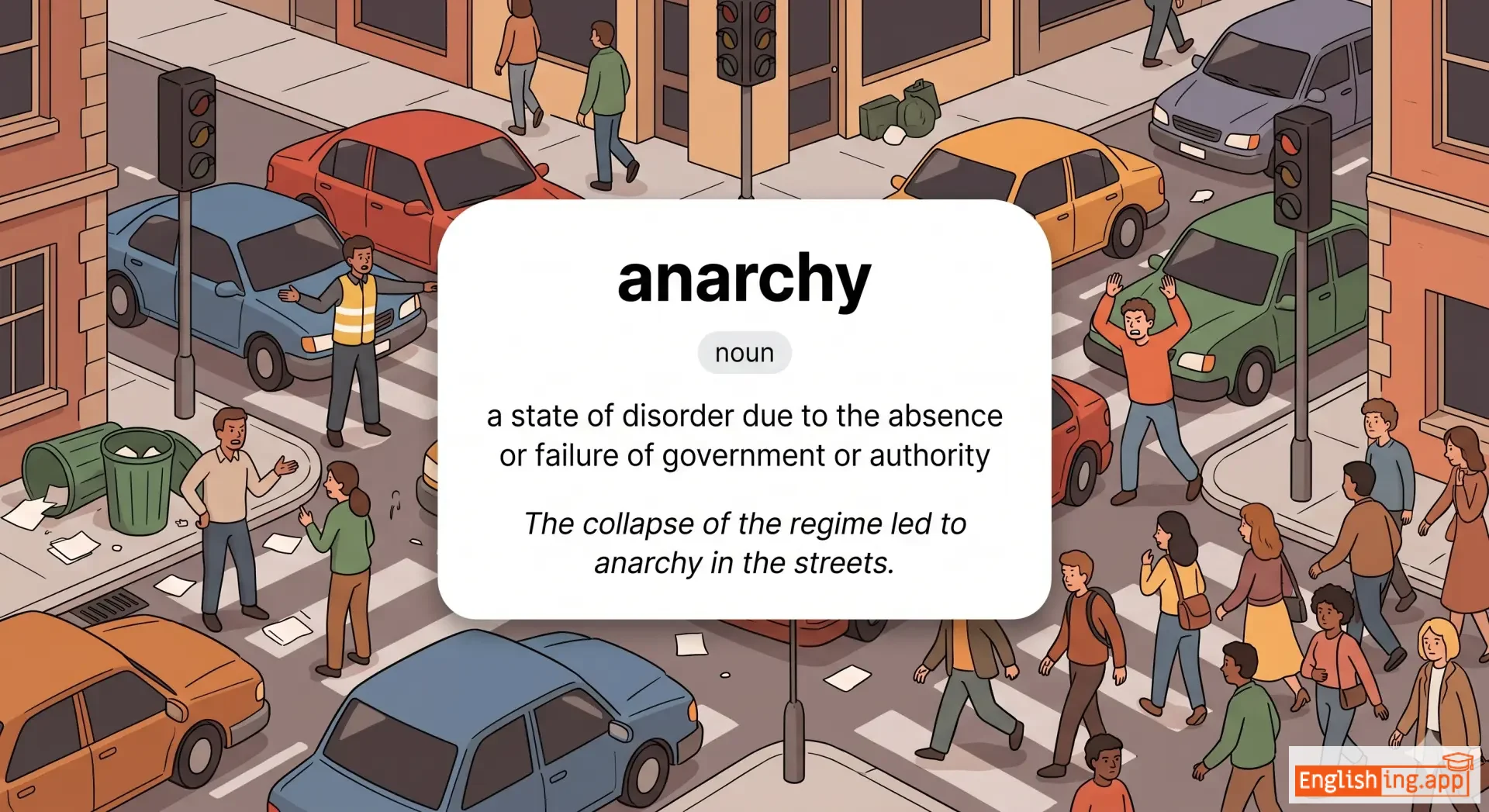
anarchy definition card — visual illustration of the meaning
noun
/ˈænərki/
анархия (anarkhiya)

a state of disorder due to the absence or failure of government or authority

"The collapse of the regime led to anarchy in the streets."

"Крах режима привел к анархии на улицах." (Krah rezhima privyol k anarkhii na ulitsakh.)
noun
/əˈnæθəmə/
анатэма / невыносимая вещь (anatema / nevynosimaya veshch)

something or someone intensely disliked or strongly condemned

"Violence is anathema to her peaceful nature."

"Насилие — это анафема для ее мирной природы." (Nasilie — eto anathema dlya yeye mirnoy prirody.)
noun
/əˈnætəmi/
анатомия (anatomiya)

the study of the structure of living things, especially the human body

"She is studying human anatomy at medical school."

"Она изучает человеческую анатомию в медицинском университете." (Ona izuchayet chelovecheskuyu anatomiyu v meditsinskom universitete.)