Словари

Словарь английского языка | Значения слов, определения и примеры

noun
/ˈænsɛstər/
предок (predok)

a person in your family who lived a long time ago

"Our ancestors built these temples hundreds of years ago."
"Наши предки построили эти храмы сотни лет назад." (Nashi predki postroili eti khramy sotni let nazad.)
Ancestors definition card — visual illustration of the meaning
noun
ˈænsɛstərz
предок (predok)

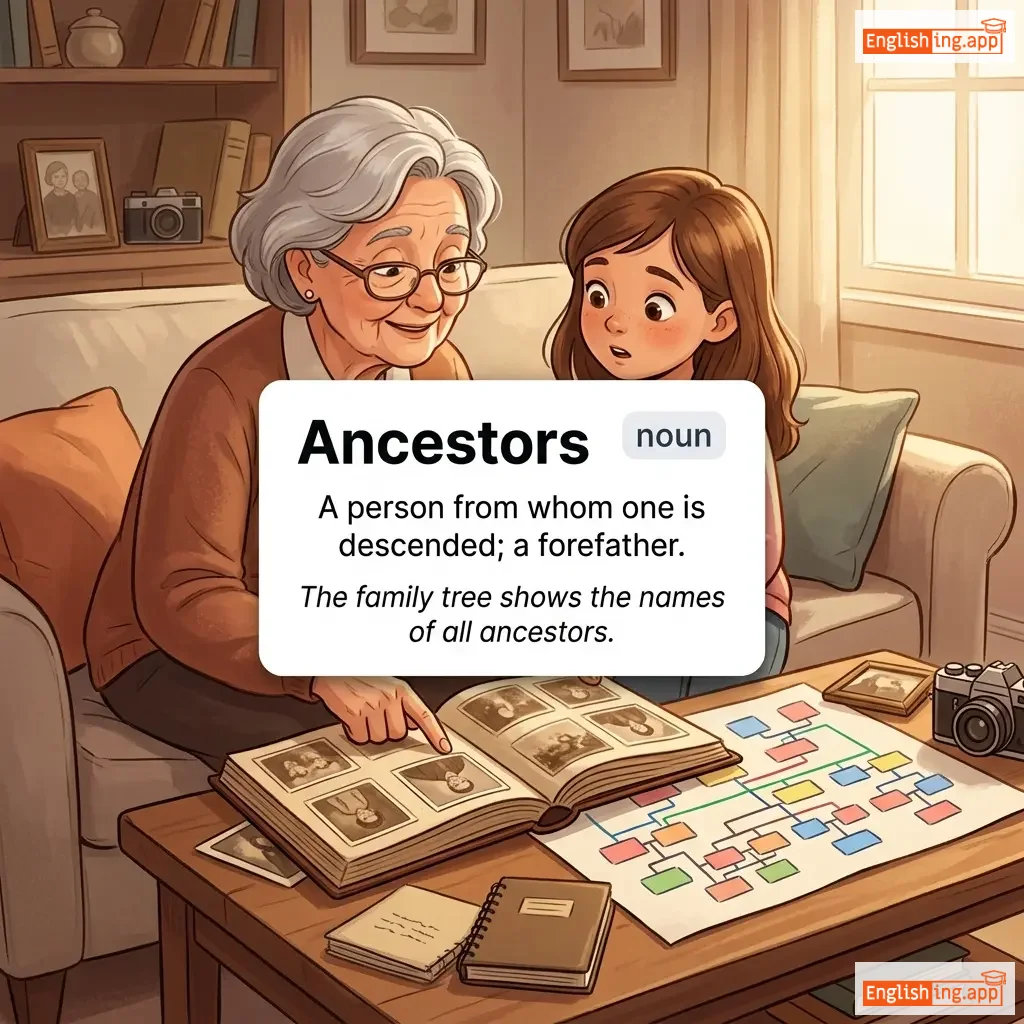
A person from whom one is descended; a forefather.

"The family tree shows the names of all ancestors."

"Семейное древо показывает имена всех предков." (Semeynoye drevo pokazyvayet imena vsekh predkov.)
noun
/ˈænsɛstrɪs/
прародительница (praroditelnitsa)

a female ancestor; a woman from whom one is descended

"She discovered that her ancestress came from a small village in Bengal."

"Она обнаружила, что её прародительница была из небольшой деревни в Бенгалии." (ona obnaruzhila chto eyo praroditelnitsa byla iz nebolshoi derevni v Bengalii)
noun
/ˈænsestri/
родословная (rodoslovnaya)

one’s family origins or lineage

"He is proud of his royal ancestry."

"Он гордится своей королевской родословной." (On gorditsya svoey korolevskoy rodoslovnoy.)
noun, verb
/ˈæŋkər/
якорь (yakor)

a heavy object used to hold a ship in place; also to secure firmly

"The ship dropped its anchor near the shore."
"Корабль бросил якорь у берега." (Korabl' brosil yakor' u berega.)
anchorage definition card — visual illustration of the meaning
noun
ˈæŋkərɪdʒ
якорная стоянка (yakor'naya stoyanka)

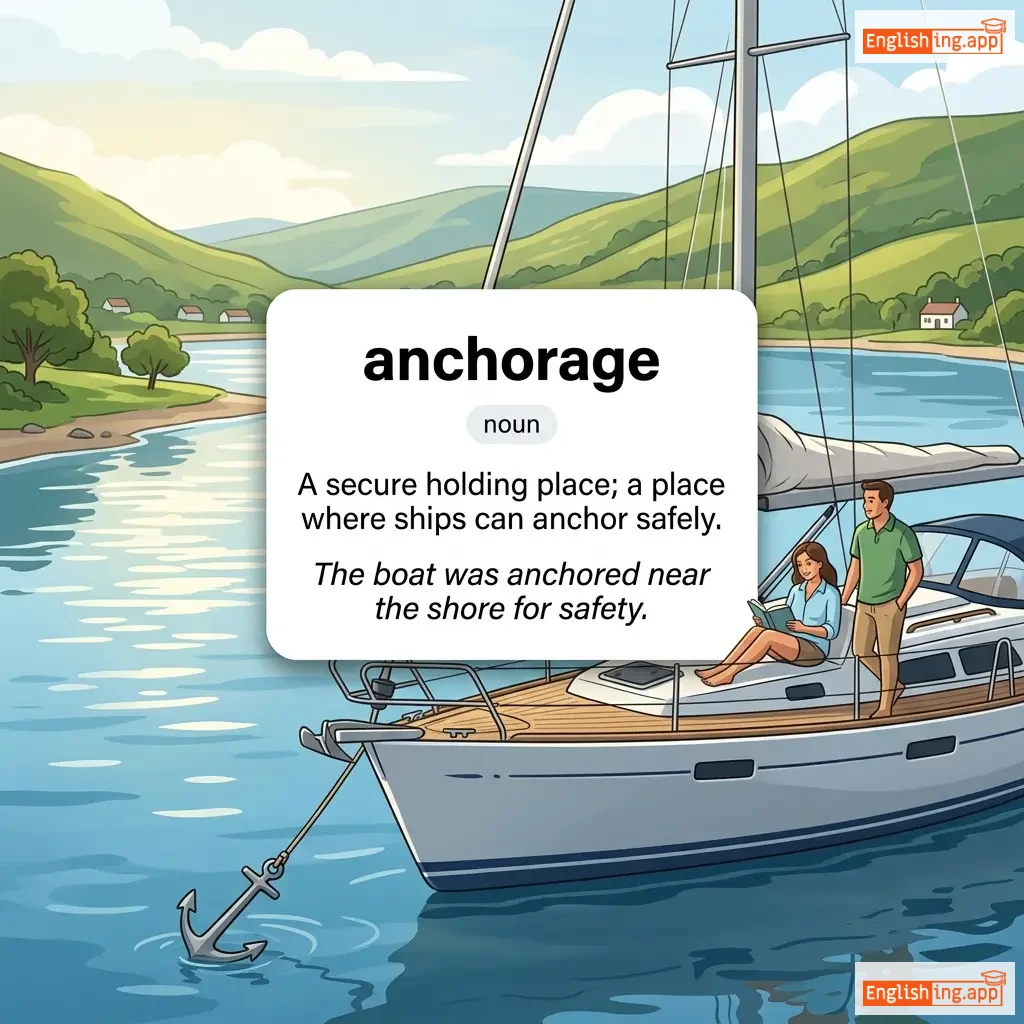
A secure holding place; a place where ships can anchor safely.

"The boat was anchored near the shore for safety."

"Чёлн был поставлен на якорь рядом с берегом для безопасности." (Chyoln byl postavlen na yakor' ryadom s beregom dlya bezopasnosti.)
adjective
/ˈeɪnʃənt/
древний (drevniy)

Belonging to the very distant past; very old.

"They visited the ruins of an ancient city."

"Они посетили руины древнего города." (Oni posetili ruyiny drevnego goroda.)
adjective
/ˈænsɪləri/
вспомогательный (vspomogatel'nyy)

providing necessary support to the main system or organization

"The company provides ancillary services to the healthcare industry."

"Компания предоставляет вспомогательные услуги для здравоохранения." (Kompaniya predostavlyayet vspomogatel'nyye uslugi dlya zdravookhranenija.)
conjunction
/ænd/
и (i)

Used to connect words or sentences that are to be taken jointly.

"She bought apples and oranges."

"Она купила яблоки и апельсины." (Ona kupila yabloki i apelsiny.)
noun
/ˈændaɪərn/
металлическая подставка для дров (metalliziruyushchaya podstavka dlya drov)

a metal support used in a fireplace to hold logs

"The logs rested on the andirons in the old fireplace."

"Дрова покоились на андирах в старом камине." (Drovа pokoyilis' na andirakh v starom kamine.)
adjective
/ænˈdrɒdʒɪnəs/
андрогинный (androginnyy)

Having both male and female characteristics; not clearly masculine or feminine.

"The fashion show featured models with an androgynous look."
"Модное шоу представило моделей с андрогинным внешним видом." (Modnoye shou predstavilo modeley s androginnym vneshnim vidom.)
anecdotal definition card — visual illustration of the meaning
adjective
/ˌæn.ɪkˈdoʊ.t̬əl/
основывается на личных рассказах, а не на фактах или исследованиях, характеризуется анекдотами (osnovyvaetsya na lichnykh rasskazakh, a ne na faktykh ili issledovaniyakh, kharakterizuyetsya anekdotami)

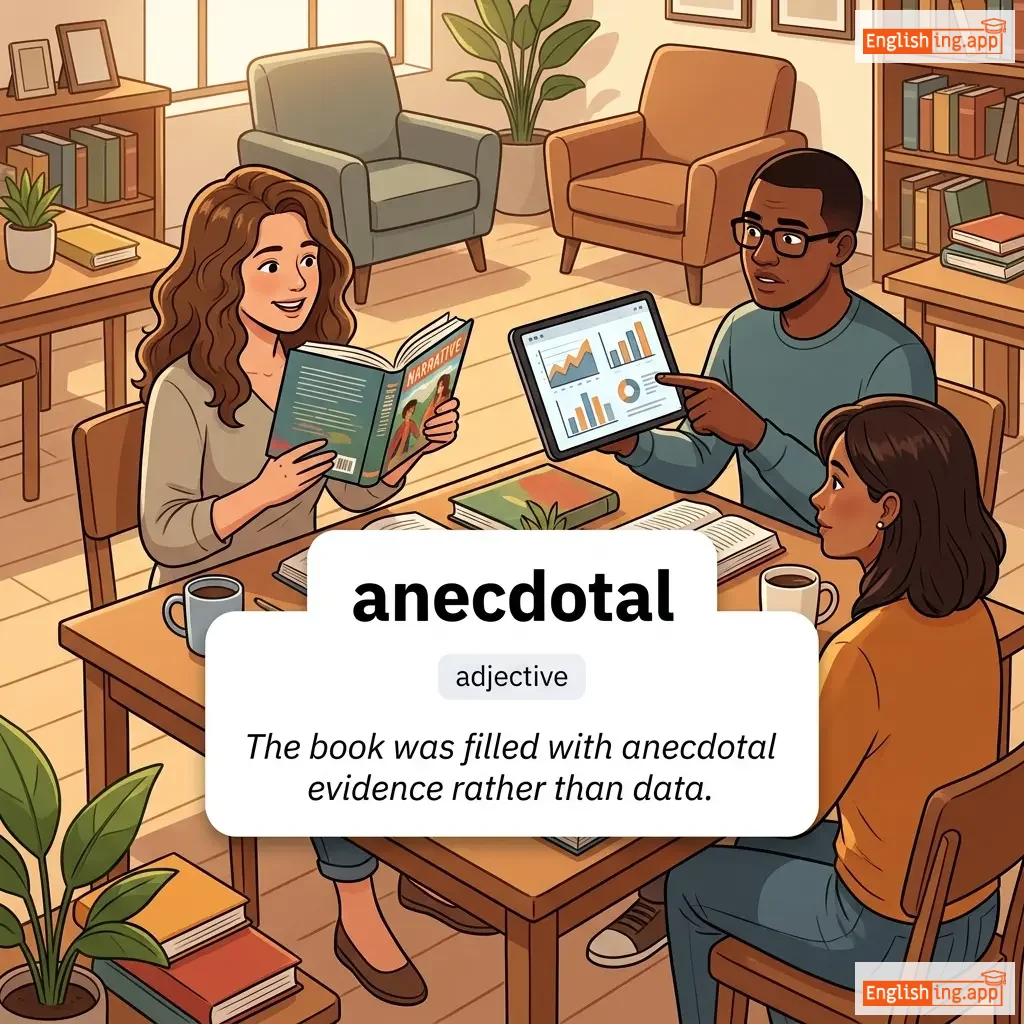
Based on personal accounts rather than facts or research; characterized by anecdotes.

"The book was filled with anecdotal evidence rather than data."
"Книга была наполнена анекдотическими доказательствами вместо данных." (Kniga byla napolnena anekdoticheskimi dokazahtel'stvami vmesto dannykh.)
anecdote definition card — visual illustration of the meaning
noun
/ˈænɪkˌdoʊt/
анекдот (anekdot)

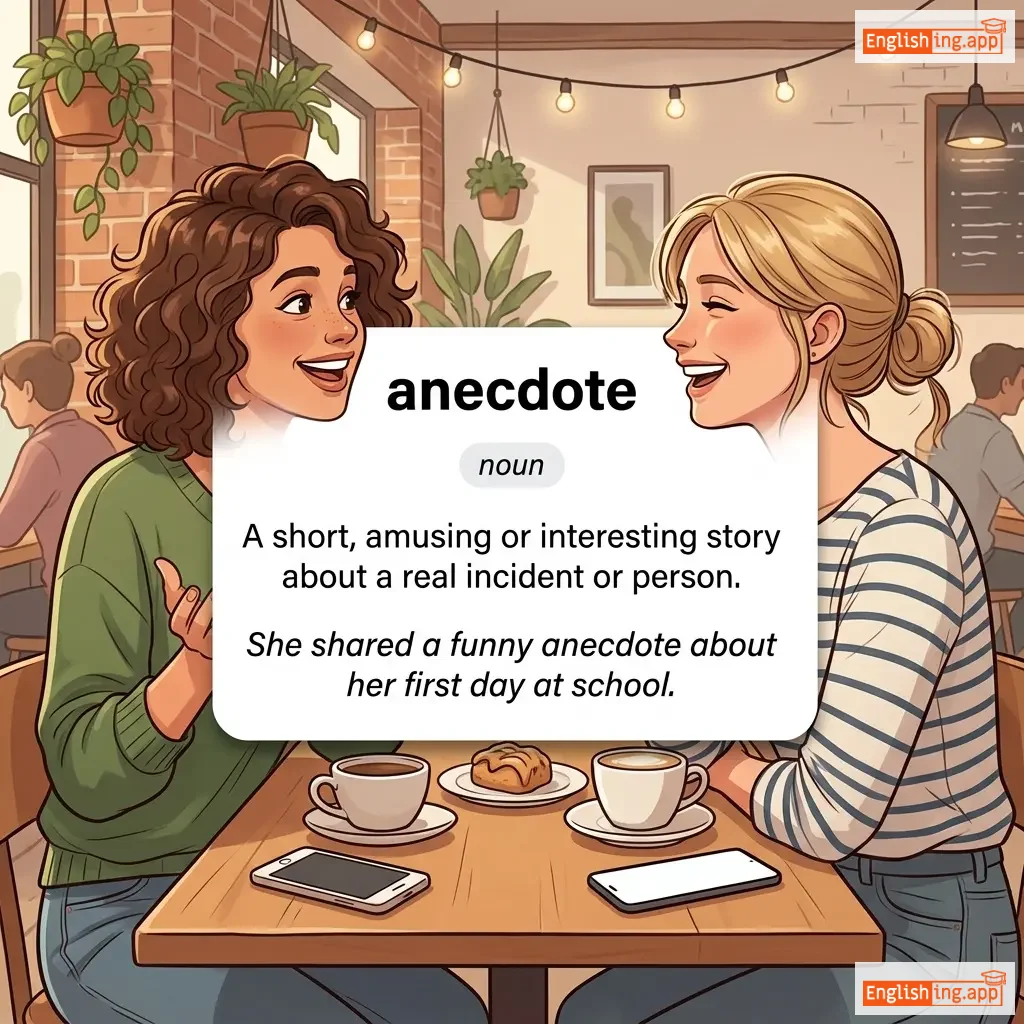
A short, amusing or interesting story about a real incident or person.

"She shared a funny anecdote about her first day at school."
"Она рассказала забавный анекдот о своем первом дне в школе." (Ona rasskazala zabavnyy anekdot o svoem pervom dne v shkole.)
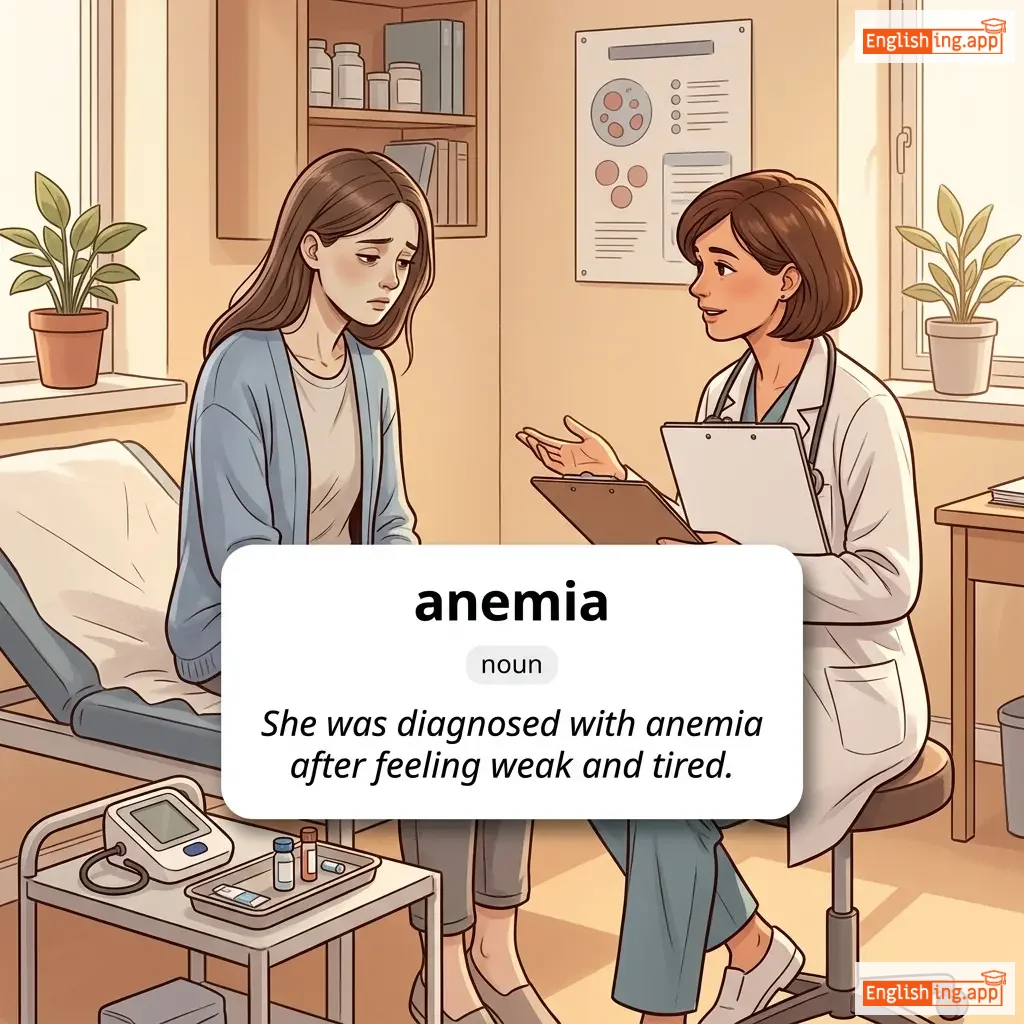
anemia definition card — visual illustration of the meaning
noun
/əˈniːmiə/
анемия (anemiya)

A condition in which there is a deficiency of red cells or hemoglobin in the blood.

"She was diagnosed with anemia after feeling weak and tired."

"Ей поставили диагноз анемия после того, как она почувствовала слабость и усталость." (Ey postavili diangnoz anemiya posle togo, kak ona pochuvstvovala slabost i ustalost.)
adjective
/əˈniːmɪk/
анемичный (anemichny)

Suffering from anemia; lacking in vitality, strength, or color.

"The doctor prescribed iron supplements for her anemic condition."

"Врач прописал железные добавки для её анемичного состояния." (Vrach prislal zheleznyye dobavki dlya yeye anemichnogo sostoyaniya.)
noun
/ˌænɪˈmɒmɪtər/
анемометр (anemometr)

An instrument used to measure the speed and direction of wind.

"The scientist used an anemometer to record the wind speed during the storm."

"Учёный использовал анемометр для записи скорости ветра во время шторма." (Uchonyi ispol'zoval anemometr dlya zapisi skorosti vetra vo vremya shtorma.)
noun
/ˌænəsˈθetɪk/
анестетик (anestetik)

A substance that causes loss of sensation or consciousness, especially used during surgery.

"The doctor administered a local anesthetic before stitching the wound."

"Доктор ввел местный анестетик перед тем, как наложить швы на рану." (Doktor vvel mestnyy anestetik pered tem, kak nalozhit' shvy na ranu.)
adverb
/əˈnjuː/
заново (zanovo)

In a new or different way; once more.

"After the failure, she decided to start her life anew."

"После неудачи она решила начать свою жизнь заново." (Posle neudachi ona reshila nachat' svoju zhizn' zanovo.)
noun
/ˈeɪndʒəl/
ангел (angel)

a spiritual being believed to act as a messenger or servant of God

"She believed her mother was watching over her like an angel."

"Она верила, что её мама наблюдает за ней, как ангел." (Ona verila, chto yeye mama nablyudayet za ney, kak angel.)
adjective
/ænˈdʒelɪk/
ангельский (angelskiy)

Like or characteristic of an angel; pure, kind, or innocent.

"The child had an angelic smile."

"У ребенка была ангельская улыбка." (U rebenka byla angelskaya ulybka.)
noun
/ˈæŋɡər/
гнев (gnev)

A strong feeling of displeasure or hostility.

"He couldn't control his anger after the argument."
"Он не смог контролировать свой гнев после ссоры." (On ne smog kontrol'irovat' svoi gnev posle ssory.)
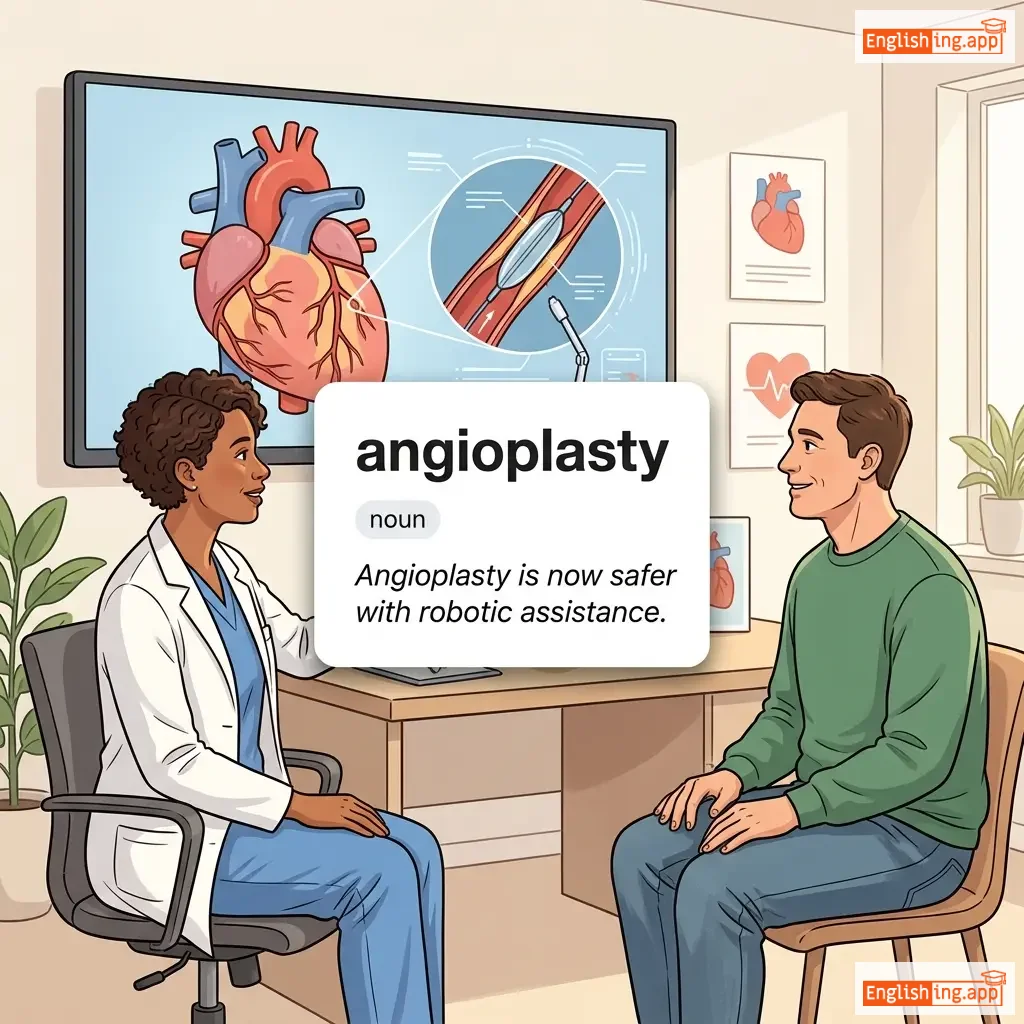
angioplasty definition card — visual illustration of the meaning
noun
/ˈæn.dʒi.əʊ.plæs.ti/
медицинская процедура для открытия заблокированных или суженных кровеносных сосудов, которые поставляют кровь к сердцу (meditsinskaya protsedura dlya otkrytiya zablokirovannykh ili suzhennykh krovenosnykh sosudov, kotorye postavlyayut krovi k serdtsu)

A medical procedure to open blocked or narrowed blood vessels that supply blood to the heart.

"Angioplasty is now safer with robotic assistance."

"Ангиопластика теперь безопаснее с роботизированной помощью." (Angioplastika teper' bezopasnee s robotizirovannoy pomoshch'yu.)
noun
/ˈæŋɡl/
угол (ugol)

The space between two intersecting lines or surfaces at the point where they meet.

"The teacher explained how to measure an angle in geometry."

"Учитель объяснил, как измерить угол в геометрии." (Uchitel' ob'yasnil, kak izmerit' ugol v geometrii.)
noun
/ˌæŋɡloʊ ˈsæksən/

A member of the Germanic peoples who settled in England in the early Middle Ages; also relating to their language or culture.

"The Anglo-Saxon period greatly influenced English culture and language."

noun
/ˌæŋɡləˈfoʊbiə/
англофобия (anglofobiya)

Dislike or fear of England, English people, or English culture.

"The politician was accused of promoting Anglophobia in his speeches."

"Политика обвиняли в пропаганде англофобии в его речах." (Politika obvinnyali v propagande anglofobii v ego rechakh.)
adverb
/ˈæŋɡrɪli/
сердито (serdito)

in a manner showing anger or strong displeasure

"She spoke angrily when she heard the news."

"Она сердито говорила, услышав новость." (ona serdito govorila uslyshav novost)
adjective
/ˈæŋɡri/
злой (zloy)

feeling or showing strong displeasure or hostility

"She was angry when she found out the truth."

"Она была злой, когда узнала правду." (Ona byla zloy, kogda uznala pravdu.)
noun
/ˈæŋɡwɪʃ/
мучение (muchenie)

Severe mental or physical pain or suffering.

"She was in deep anguish after hearing the tragic news."

"Она была в глубоком мучении после того, как услышала трагическую новость." (Ona byla v glubokom muchenii posle togo kak uslyshala tragicheskuyu novost.)
adjective
/ˈæŋɡjələr/
угловой (uglovoy)

Having angles or sharp corners; lean or bony in appearance.

"The building has a very angular design."

"Здание имеет очень угловой дизайн." (Zdanie imeet ochen' uglovoy dizajn.)
adjective
/ænˈhaɪdrəs/

Containing no water.

"The chemist used anhydrous ammonia for the experiment."

noun
/ˈænɪ siːd/
анис (anis)

Small aromatic seeds used as a spice and for medicinal purposes, with a sweet licorice-like flavor

"Anise seeds are often used in traditional desserts and teas."

"Семена аниса часто используются в традиционных десертах и чаях." (Semena anisa chasto ispol'zuyutsya v traditsionnykh desyertakh i chayah.)
noun
/ˌænɪmædˈvɜːʒən/
критика (kritika)

Strong criticism or censure.

"The policy attracted severe animadversion from the public."

"Политика вызвала сильную критику со стороны общественности." (Politika vyzvala sil'nuyu kritiku so storony obshchestvennosti.)
verb
/ˌænɪmədˈvɜːt/
критиковать (kritikovat)

To comment critically or unfavorably.

"The teacher animadverted on the student's careless mistakes."

"Учитель критиковал небрежные ошибки студента." (Uchitel' kritikovav nebrezhnyye oshibki studenta.)
noun
/ˈænɪməl/
животное (zhivotnoe)

a living organism that feeds on organic matter and usually has senses and mobility

"The tiger is a wild animal."

"Тигр — дикая животное." (Tigr — dikaya zhivotnoe.)
noun
/ˈænɪməlˌkjuːl/
анималкул (animalkul)

A microscopic animal, especially a protozoan or other minute organism.

"The scientist observed an animalcule moving under the microscope."

"Ученый наблюдал за анималкулем, движущимся под микроскопом." (Uchenyy nablyudal za animalculem, dvizhushchimsya pod mikroskopom.)
verb
/ˈænɪmeɪt/
оживить (ozhivit)

To bring to life or give movement to something; to inspire or enliven.

"The teacher tried to animate the lesson with exciting activities."

"Учитель пытался оживить урок с помощью увлекательных активностей." (Uchitel' pytalsya ozhivit' urok s pomoshch'yu uvekayushchikh aktivnosti.)
adjective
/ˈænɪmeɪtɪd/
анимированный (animirovannyy)

Full of life or excitement; made using animation techniques.

"The animated film was loved by children and adults alike."

"Анимированный фильм был любим детьми и взрослыми." (Animirovannyy film byl lyubim det'mi i vzroslymi.)
noun
/ˌænɪˈmeɪʃən/

the technique of creating moving images from still pictures or models

"The animation in the movie was incredible."

noun
/ˌænɪˈmɒsɪti/
враждебность (animositi)

A strong feeling of hostility or active dislike.

"There was a long history of animosity between the two families."

"Между двумя семьями существовала давняя вражда." (Mezhdu dvumya semyami sushchestvovala davnyaya vrazhda.)
noun
/ˈænɪməs/
враждебность / цель (vrazhdebnost / tsel)

A strong feeling of hostility; motivation or purpose behind an action.

"His speech was driven by animus against the policy."

"Его речь была движима враждебностью против политики." (Ego rech' byla dvizhima vrazhdebnost'yu protiv politiki.)
noun
/ˈæŋkəl/
щиколотка (shhikolotka)

the joint connecting the foot with the leg

"He twisted his ankle while playing football."

"Он подвернул щиколотку, играя в футбол." (On podvernul shhikolotku, igraya v futbol.)
noun
/ˈæŋk.lət/
браслет на щиколотку (braslet na shchikolotku)

a piece of jewelry worn around the ankle

"She wore a beautiful silver anklet on her left foot."

"Она носила красивый серебряный браслет на левой лодыжке." (Ona nosila krasivyy serebryanyy braslet na levoy lodyzhke.)
noun
/ˈæn.ə.lɪst/
летописец (letopisez)

A person who writes annals or records events year by year.

"The annalist carefully documented the events of the king's reign."

"Летописец тщательно задокументировал события правления короля." (Letopisez tchatel'no zadokumentiroval sobytiya pravleniya korolya.)
noun
/ˈæn.əlz/
анналы (annaly)

Historical records of events, usually arranged chronologically.

"Her name will be remembered in the annals of science."

"Её имя будет помнить в анналах науки." (Yeyo imya budet pomnit v annalakh nauki.)
verb
/əˈniːl/
закалить нагревом (zakalit' nagrevom)

To heat and cool metal or glass to make it stronger or less brittle.

"The blacksmith annealed the steel to improve its durability."

"Кузнец закалил сталь, чтобы улучшить её прочность." (Kuznets zakalil stal', chtoby uluchshit' yeyo prochnost'.)
verb
/ˈæn.ɛks/
аннексировать (anneksirovat')

To take control of a territory and add it to one's own.

"The empire annexed the neighboring kingdom after the war."

"Империя аннексировала соседнее королевство после войны." (Imperiya anneksirovala sosedneye korolevstvo posle voyny.)
noun
/ˌænɛkˈseɪʃən/
аннексия (anneksiya)

the act of adding or taking control of territory or property, especially by a state

"The annexation of the region led to international condemnation."
"Аннексия региона вызвала международное осуждение." (anneksiya regiona vyzvala mezhdunarodnoe osuzhdenie)
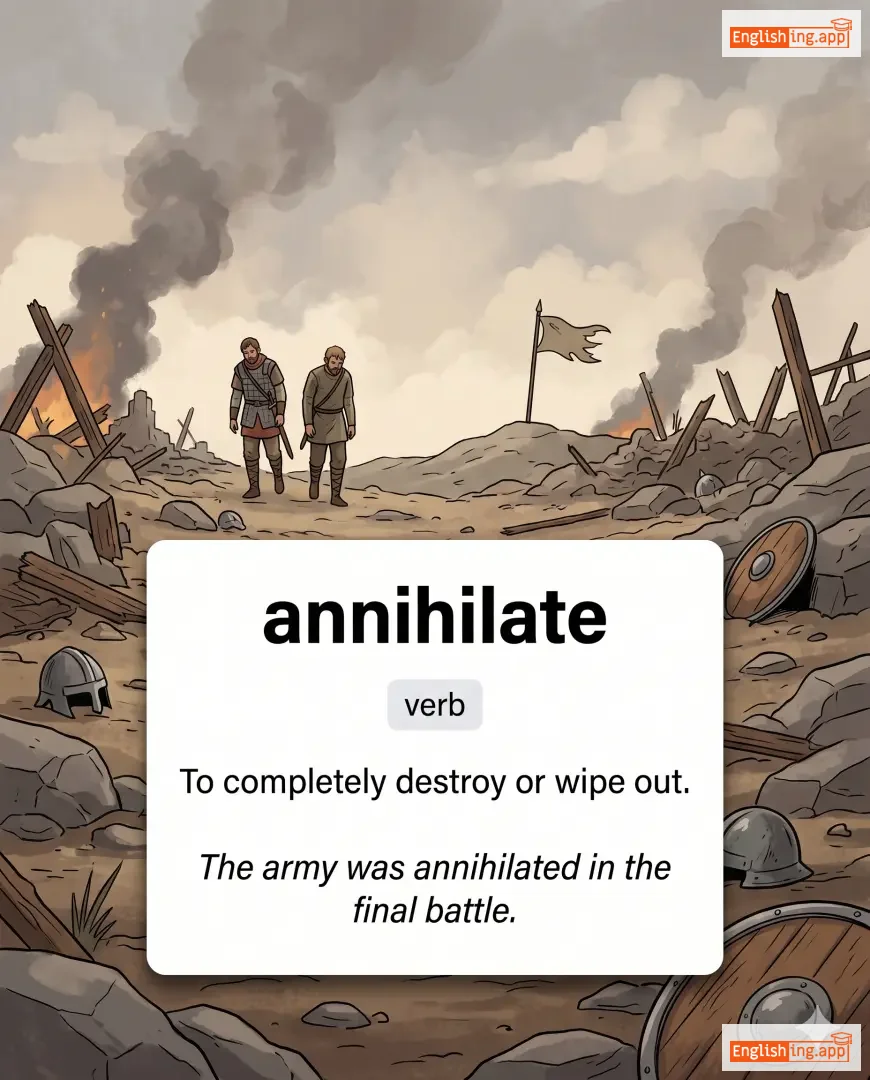
annihilate definition card — visual illustration of the meaning
verb
/əˈnaɪ.ə.leɪt/
уничтожить (unichtozhit)

To completely destroy or wipe out.

"The army was annihilated in the final battle."

"Армия была уничтожена в последней битве." (Armija byla unichtozhena v posledney bitve.)
noun
/ˌænɪˈvɜːrsəri/
годовщина (godovshchina)

the yearly recurrence of a date marking a past event

"They celebrated their wedding anniversary with a dinner."

"Они отпраздновали свою годовщину свадьбы ужином." (Oni otprazdnovali svoyu godovshchinu svad'by uzhinom.)
verb
/ˈæn.ə.teɪt/
dobavlyat' primetchaniya ili kommentarii (dobavlyat primetshaniya ili kommentarii)

to add notes or comments to a text, diagram, or document for explanation or clarification

"The teacher asked the students to annotate the poem with their interpretations."

"Uchitel' poprosil studentov anotirovat' stikhotvorenie so svoimi tolkovaniyami." (Uchitel' poprosil studentov anotirovat' stikhotvorenie so svoimi tolkovaniyami.)