वोकैबुलरीज

इंग्लिश वोकैबुलरी डिस्कवर, लर्न और मास्टर करें

noun
/ˈænsɛstər/
पूर्वज (purvaj)

a person in your family who lived a long time ago

"Our ancestors built these temples hundreds of years ago."

"हमारे पूर्वजों ने ये मंदिर सैकड़ों साल पहले बनवाए थे।" (Hamare purvajon ne ye mandir saikdon saal pehle banwaye the.)
Ancestors definition card — visual illustration of the meaning
noun
ˈænsɛstərz
पूर्वज (purvaj)

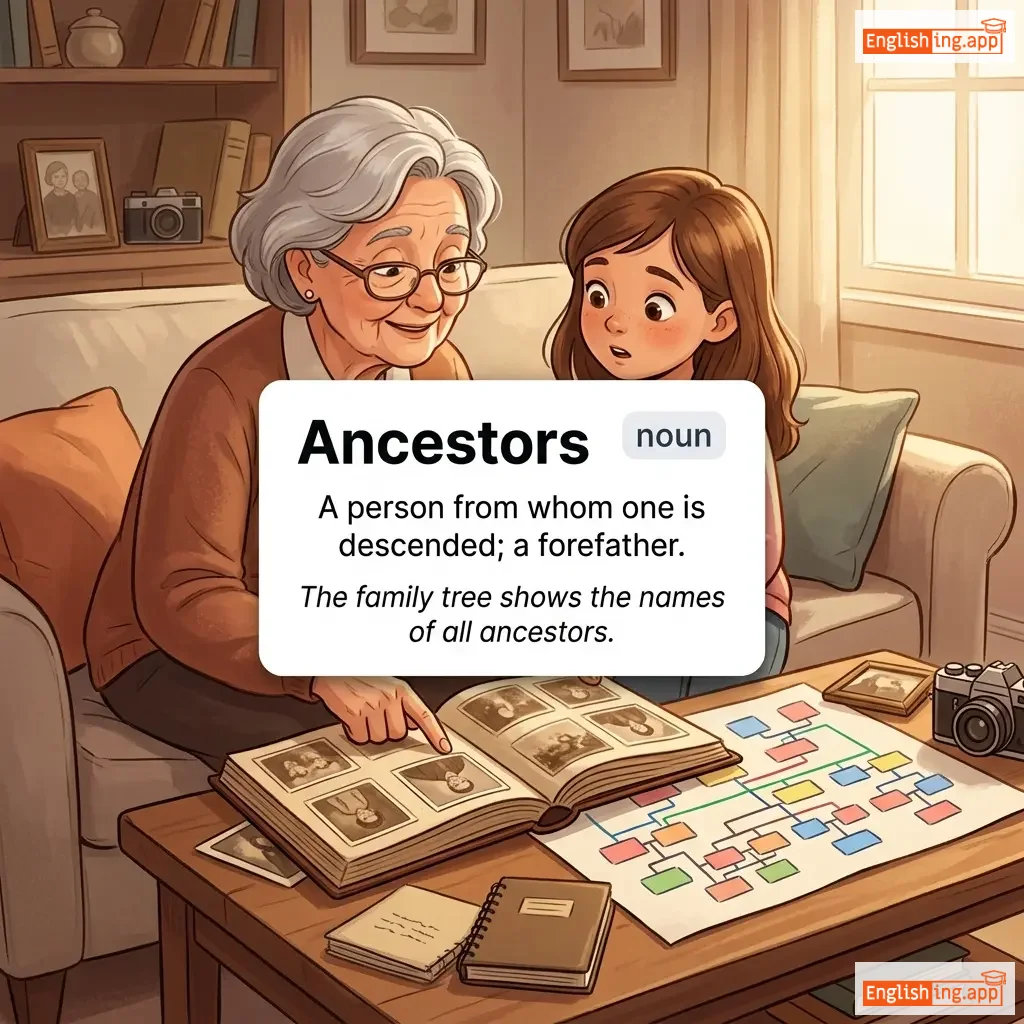
A person from whom one is descended; a forefather.

"The family tree shows the names of all ancestors."

"परिवार वृक्ष सभी पूर्वजों के नाम दिखाता है।" (Parivaar vriksh sabhi purvajon ke naam dikhata hai.)
noun
/ˈænsɛstrɪs/
महिला पूर्वज (mahila purvaj)

a female ancestor; a woman from whom one is descended

"She discovered that her ancestress came from a small village in Bengal."

"उसने पाया कि उसकी महिला पूर्वज बंगाल के एक छोटे गाँव से थीं।" (usne paya ki uski mahila purvaj bangal ke ek chhote gaon se thin)
noun
/ˈænsestri/
वंशावली (vanshavali)

one’s family origins or lineage

"He is proud of his royal ancestry."

"वह अपनी शाही वंशावली पर गर्व करता है।" (Vah apni shahī vanshavali par garv karta hai.)
noun, verb
/ˈæŋkər/
लंगर (langar)

a heavy object used to hold a ship in place; also to secure firmly

"The ship dropped its anchor near the shore."

"जहाज ने तट के पास अपना लंगर डाला।" (Jahaz ne tat ke paas apna langar dala.)
anchorage definition card — visual illustration of the meaning
noun
ˈæŋkərɪdʒ
बंदरगाह (bandargah)

A secure holding place; a place where ships can anchor safely.

"The boat was anchored near the shore for safety."

"नाव सुरक्षा के लिए तट के पास लंगर डाली गई थी।" (Naav suraksha ke liye tat ke paas langar daali gayi thi.)
adjective
/ˈeɪnʃənt/
प्राचीन (prachin)

Belonging to the very distant past; very old.

"They visited the ruins of an ancient city."

"वे एक प्राचीन शहर के खंडहरों का दौरा करते थे।" (Ve ek prachin shahar ke khandharon ka daura karte the.)
adjective
/ˈænsɪləri/
सहायक (sahayak)

providing necessary support to the main system or organization

"The company provides ancillary services to the healthcare industry."

"कंपनी स्वास्थ्य सेवा उद्योग को सहायक सेवाएं प्रदान करती है।" (Kampani swasthya seva udyog ko sahayak sevaayein pradan karti hai.)
conjunction
/ænd/
और (aur)

Used to connect words or sentences that are to be taken jointly.

"She bought apples and oranges."

"उसने सेब और संतरे खरीदे।" (Usne seb aur santre kharide.)
noun
/ˈændaɪərn/
लकड़ी रखने का धातु स्टैंड (lakdi rakhne ka dhatu stand)

a metal support used in a fireplace to hold logs

"The logs rested on the andirons in the old fireplace."

"पुराने फायरप्लेस में लकड़ियाँ ऐंडआयरोन पर रखी थीं।" (Purane fireplace mein lakdiyaan andairon par rakhi thi.)
adjective
/ænˈdrɒdʒɪnəs/
एंड्रोजिनस (androjinas)

Having both male and female characteristics; not clearly masculine or feminine.

"The fashion show featured models with an androgynous look."

"फैशन शो में एंड्रोजिनस लुक के साथ मॉडल्स को पेश किया गया था।" (Fashion show mein androgynous look ke saath models ko pesh kiya gaya tha.)
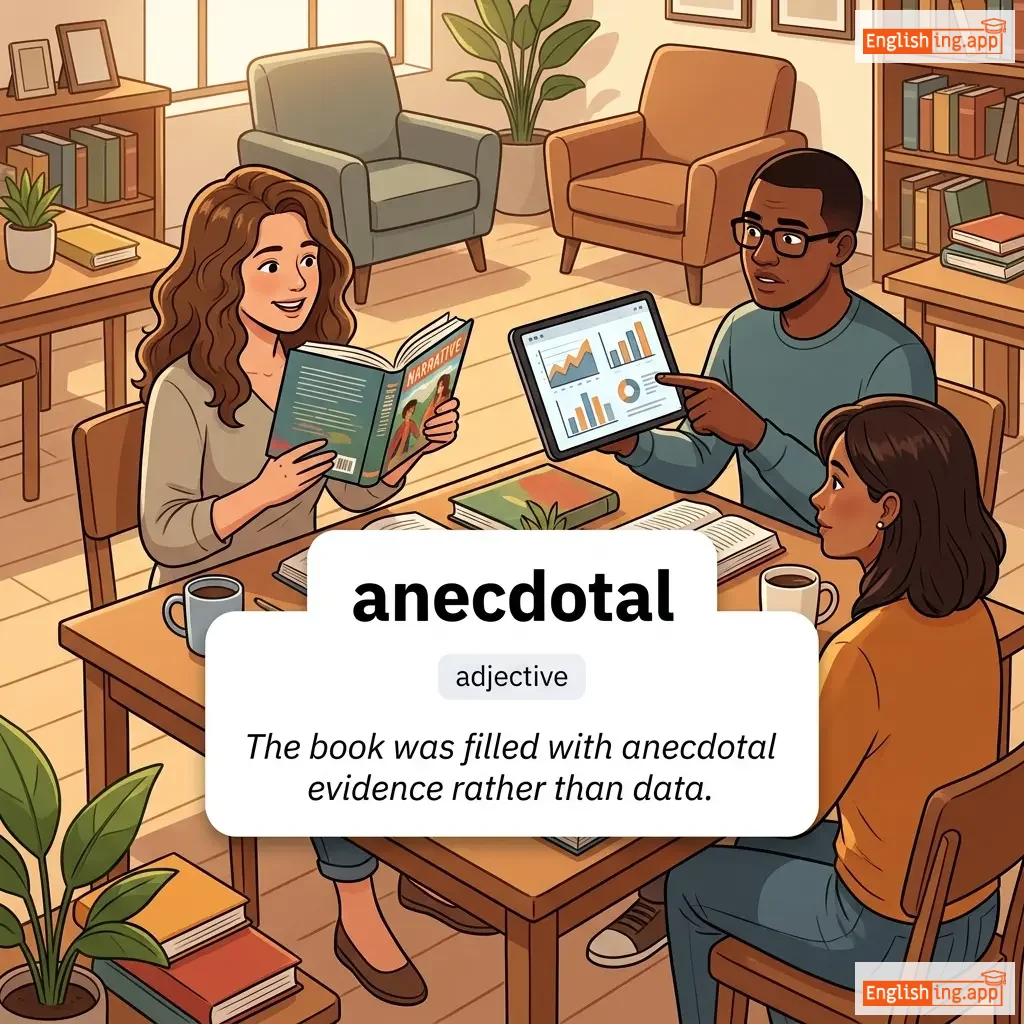
anecdotal definition card — visual illustration of the meaning
adjective
/ˌæn.ɪkˈdoʊ.t̬əl/
किसी व्यक्तिगत खाते पर आधारित, तथ्यों या शोध से अधिक, उपाख्यानात्मक (kisi vyaktigat khate par adharit, tathyon ya shodh se adhik, upakhyanatmak)

Based on personal accounts rather than facts or research; characterized by anecdotes.

"The book was filled with anecdotal evidence rather than data."

"किताब में डेटा के बजाय उपाख्यानात्मक प्रमाण था।" (Kitaab mein data ke bajaye upakhyanatmak pramaan tha.)
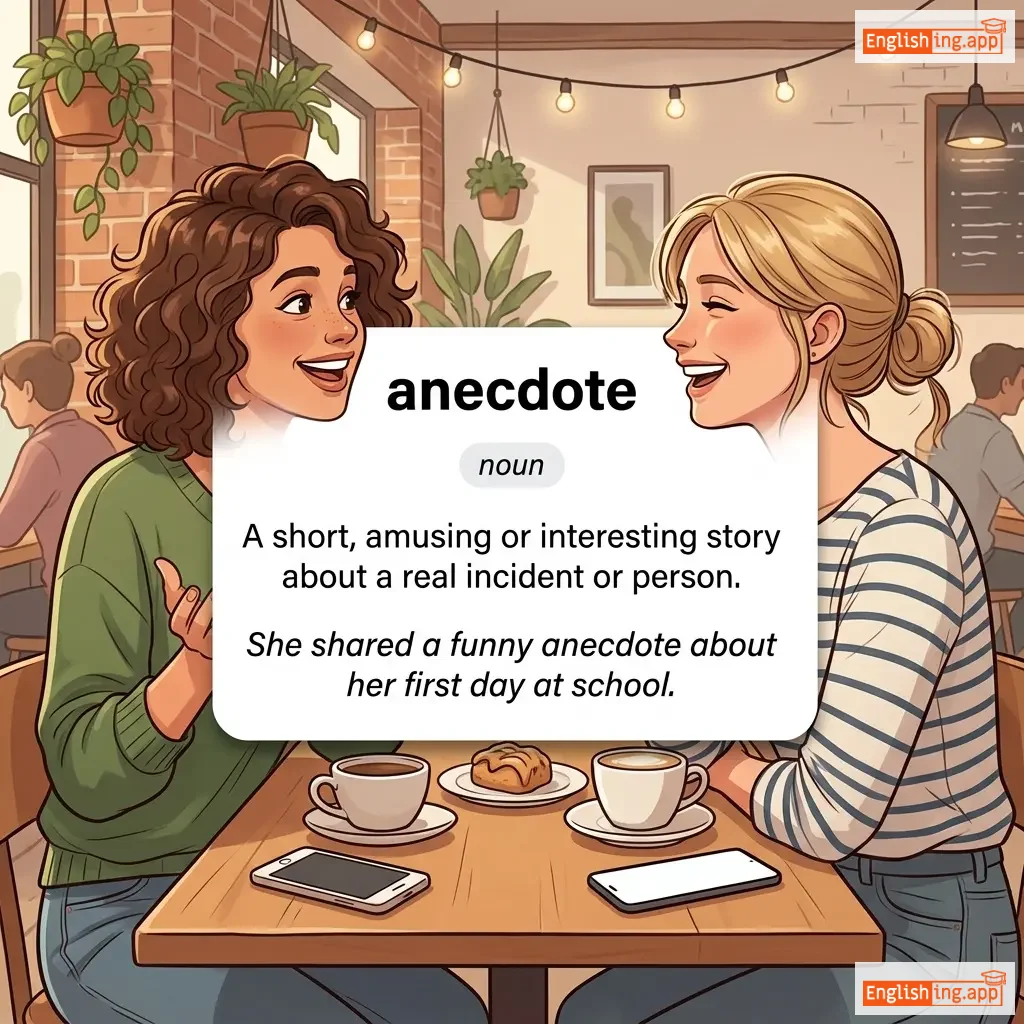
anecdote definition card — visual illustration of the meaning
noun
/ˈænɪkˌdoʊt/
किस्सा (kissa)

A short, amusing or interesting story about a real incident or person.

"She shared a funny anecdote about her first day at school."

"उसने अपने स्कूल के पहले दिन के बारे में एक मजेदार किस्सा साझा किया।" (Usne apne school ke pehle din ke baare mein ek mazedaar kissa saajha kiya.)
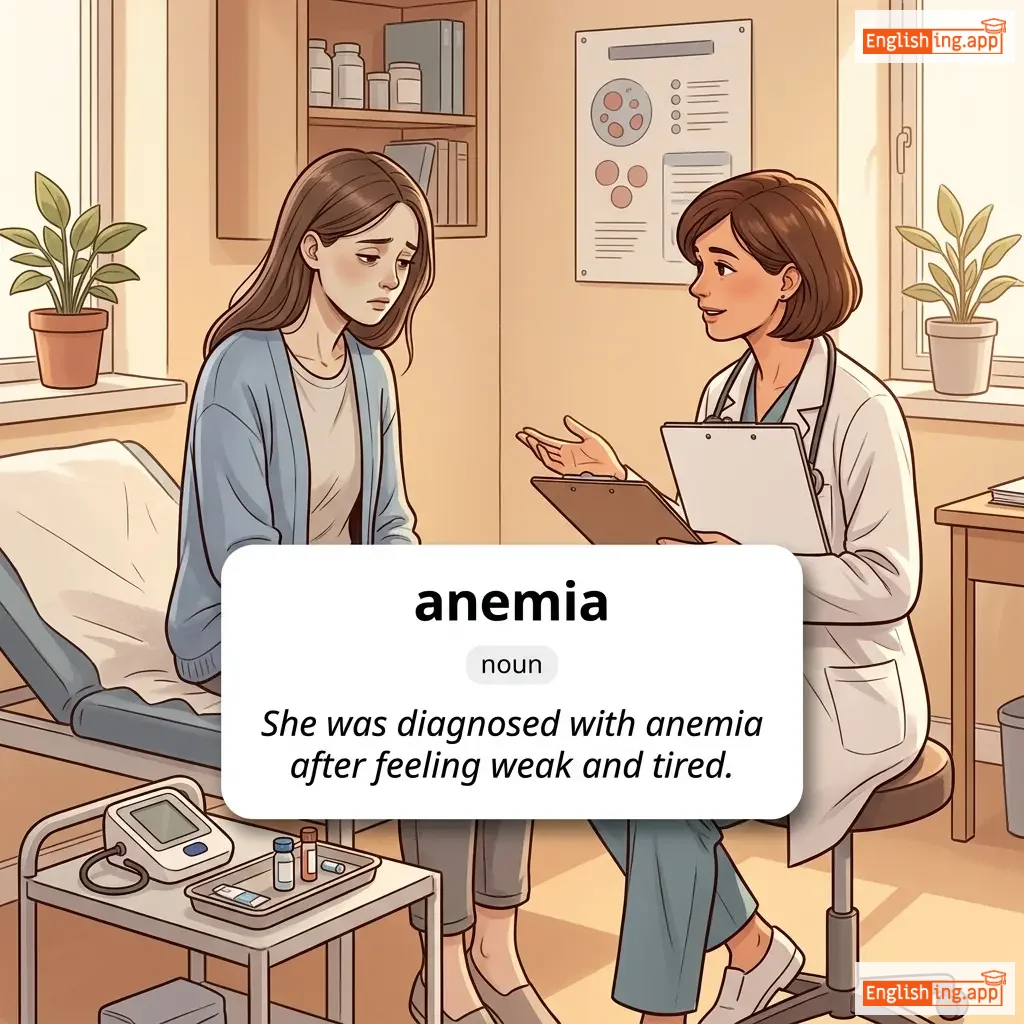
anemia definition card — visual illustration of the meaning
noun
/əˈniːmiə/
रक्ताल्पता (raktalpata)

A condition in which there is a deficiency of red cells or hemoglobin in the blood.

"She was diagnosed with anemia after feeling weak and tired."

"उसे कमजोरी और थकान महसूस होने के बाद एनीमिया का पता चला था।" (Use kamzori aur thakan mahsus hone ke baad anemia ka pata chala tha.)
adjective
/əˈniːmɪk/
एनीमिक (anemic)

Suffering from anemia; lacking in vitality, strength, or color.

"The doctor prescribed iron supplements for her anemic condition."

"डॉक्टर ने उसकी एनीमिक स्थिति के लिए आयरन सप्लीमेंट्स लिखे।" (Doktar ne uski anemic sthiti ke liye iron supplements likhe.)
noun
/ˌænɪˈmɒmɪtər/
एनीमोमीटर (anemometer)

An instrument used to measure the speed and direction of wind.

"The scientist used an anemometer to record the wind speed during the storm."

"वैज्ञानिक ने तूफान के दौरान हवा की गति रिकॉर्ड करने के लिए एक ऐनीमोमीटर का इस्तेमाल किया।" (Vaigyanik ne toofan ke dauran hawa ki gati record karne ke liye ek anemometer ka istemal kiya.)
noun
/ˌænəsˈθetɪk/
एनेस्थेटिक (anesthetic)

A substance that causes loss of sensation or consciousness, especially used during surgery.

"The doctor administered a local anesthetic before stitching the wound."

"डॉक्टर ने घाव को सिलने से पहले एक स्थानीय एनेस्थेटिक दिया।" (Daktar ne ghaav ko silne se pehle ek sthaneya anesthetic diya.)
adverb
/əˈnjuː/
नया तरीके से (naya tareeke se)

In a new or different way; once more.

"After the failure, she decided to start her life anew."

"विफलता के बाद, उसने अपनी जिंदगी फिर से शुरू करने का निर्णय लिया।" (Vifalta ke baad, usne apni zindagi phir se shuru karne ka nirnay liya.)
noun
/ˈeɪndʒəl/
देवदूत (devdoot)

a spiritual being believed to act as a messenger or servant of God

"She believed her mother was watching over her like an angel."

"वह मानती थी कि उसकी माँ उसकी देखभाल करने के लिए एक देवदूत की तरह उसके ऊपर निगरानी रख रही है।" (Woh maanti thi ki uski maa uski dekhbhal karne ke liye ek devdoot ki tarah uske upar nigraani rakh rahi hai.)
adjective
/ænˈdʒelɪk/
स्वर्गदूत जैसा (swargdoot jaisa)

Like or characteristic of an angel; pure, kind, or innocent.

"The child had an angelic smile."

"बच्चे के पास एक स्वर्गदूत जैसा मुस्कान था।" (Bachche ke paas ek swargdoot jaisa muskaan tha.)
noun
/ˈæŋɡər/
ग़ुस्सा (gussa)

A strong feeling of displeasure or hostility.

"He couldn't control his anger after the argument."

"वह तर्क के बाद अपने ग़ुस्से को नियंत्रित नहीं कर सका।" (vah tark ke baad apne gussa ko niyantrit nahin kar saka.)
angioplasty definition card — visual illustration of the meaning
noun
/ˈæn.dʒi.əʊ.plæs.ti/
धमनी चौड़ीकरण की चिकित्सा (dhamani chaurikaran ki chikitsa)

A medical procedure to open blocked or narrowed blood vessels that supply blood to the heart.

"Angioplasty is now safer with robotic assistance."

"एंजियोप्लास्टी अब रोबोटिक सहायता से अधिक सुरक्षित है।" (Angioplasty ab robotic sahayata se adhik surakshit hai.)
noun
/ˈæŋɡl/
कोण (kon)

The space between two intersecting lines or surfaces at the point where they meet.

"The teacher explained how to measure an angle in geometry."

"शिक्षक ने जियोमेट्री में कोण मापने का तरीका समझाया।" (Shikshak ne geometry mein kon mapne ka tareeka samjhaaya.)
noun
/ˌæŋɡloʊ ˈsæksən/
एंग्लो-सैक्सन (anglo-saxon)

A member of the Germanic peoples who settled in England in the early Middle Ages; also relating to their language or culture.

"The Anglo-Saxon period greatly influenced English culture and language."

"एंग्लो-सैक्सन काल ने अंग्रेज़ी संस्कृति और भाषा पर गहरा प्रभाव डाला।" (englo-sayksan kaal ne angrezi sanskriti aur bhasha par gehra prabhav dala.)
noun
/ˌæŋɡləˈfoʊbiə/
एंग्लोफोबिया (anglophobia)

Dislike or fear of England, English people, or English culture.

"The politician was accused of promoting Anglophobia in his speeches."

"राजनेता पर अपने भाषणों में एंग्लोफोबिया को बढ़ावा देने का आरोप था।" (Rajnetā par apne bhāṣaṇoṅ meṅ anglophobia ko baṛhāvā dene kā ārop thā.)
adverb
/ˈæŋɡrɪli/
गुस्से में (gusse mein)

in a manner showing anger or strong displeasure

"She spoke angrily when she heard the news."

"खबर सुनकर उसने गुस्से में बात की।" (khabar sunkar usne gusse mein baat ki)
adjective
/ˈæŋɡri/
गुस्से में (gusse mein)

feeling or showing strong displeasure or hostility

"She was angry when she found out the truth."

"वह सच्चाई जानकर गुस्से में थी।" (Vah sachai jaankar gusse mein thi.)
noun
/ˈæŋɡwɪʃ/
पीड़ा (peeda)

Severe mental or physical pain or suffering.

"She was in deep anguish after hearing the tragic news."

"दुखद समाचार सुनकर वह गहरी पीड़ा में थी।" (dukhad samachar sunkar vah gahri peeda mein thi.)
adjective
/ˈæŋɡjələr/
कोणीय (koniya)

Having angles or sharp corners; lean or bony in appearance.

"The building has a very angular design."

"इमारत का डिज़ाइन बहुत कोणीय है।" (imarat ka dizain bahut koniya hai.)
adjective
/ænˈhaɪdrəs/
जलरहित (anhydrous)

Containing no water.

"The chemist used anhydrous ammonia for the experiment."

"रसायनज्ञ ने प्रयोग के लिए जलरहित अमोनिया का प्रयोग किया।" (Rasayanagya ne prayog ke liye jalrahit amoniya ka prayog kiya.)
noun
/ˈænɪ siːd/
सौंफ (saunf)

Small aromatic seeds used as a spice and for medicinal purposes, with a sweet licorice-like flavor

"Anise seeds are often used in traditional desserts and teas."

"ऐनिस सीड्स को पारंपरिक मिठाई और चाय में अक्सर उपयोग किया जाता है।" (ainis seeds ko paaramparik mithai aur chay mein aksar upyog kiya jata hai.)
noun
/ˌænɪmædˈvɜːʒən/
आलोचना (aalochana)

Strong criticism or censure.

"The policy attracted severe animadversion from the public."

"नीति को जनता से कड़ी आलोचना मिली।" (niti ko janata se kadi aalochana mili.)
verb
/ˌænɪmədˈvɜːt/
आलोचना करना (aalochana karna)

To comment critically or unfavorably.

"The teacher animadverted on the student's careless mistakes."

"टीचर ने छात्र की लापरवाह गलतियों पर आलोचना की।" (teacher ne chhatra ki laaparwah galtiyon par aalochana ki.)
noun
/ˈænɪməl/
प्राणी (prani)

a living organism that feeds on organic matter and usually has senses and mobility

"The tiger is a wild animal."

"बाघ एक जंगली प्राणी है।" (Bagh ek jangli prani hai.)
noun
/ˈænɪməlˌkjuːl/
सूक्ष्मजीव (sookshmjeev)

A microscopic animal, especially a protozoan or other minute organism.

"The scientist observed an animalcule moving under the microscope."

"वैज्ञानिक ने माइक्रोस्कोप के तहत एक सूक्ष्मजीव को चलते हुए देखा" (Vaigyanik ne microscope ke tahat ek sookshmjeev ko chalte hue dekha)
verb
/ˈænɪmeɪt/
जीवित करना (jeevit karna)

To bring to life or give movement to something; to inspire or enliven.

"The teacher tried to animate the lesson with exciting activities."

"टीचर ने रोचक गतिविधियों के साथ पाठ को जीवित करने की कोशिश की।" (Teacher ne rochak gatividhiyon ke saath path ko jeevit karne ki koshish ki.)
adjective
/ˈænɪmeɪtɪd/
एनिमेटेड (animated)

Full of life or excitement; made using animation techniques.

"The animated film was loved by children and adults alike."

"एनीमेटेड फिल्म को बच्चों और बड़ों ने समान रूप से पसंद किया।" (Animated film ko bachon aur baron ne samaan roop se pasand kiya.)
noun
/ˌænɪˈmeɪʃən/
ए니मेशन (enimeshan)

the technique of creating moving images from still pictures or models

"The animation in the movie was incredible."

"फिल्म में एनीमेशन अद्भुत था।" (film mein enimeshan adbhut tha.)
noun
/ˌænɪˈmɒsɪti/
दुश्मनी (enimositi)

A strong feeling of hostility or active dislike.

"There was a long history of animosity between the two families."

"दो परिवारों के बीच दुश्मनी का लंबा इतिहास था।" (Do parivaron ke beech dushmani ka lamba itihaas tha)
noun
/ˈænɪməs/
द्वेष / उद्देश्य (dwesh / uddeshya)

A strong feeling of hostility; motivation or purpose behind an action.

"His speech was driven by animus against the policy."

"उसका भाषण नीति के खिलाफ द्वेष द्वारा प्रेरित था।" (Uska bhashan niti ke khilaf dwesh dwara prerit tha.)
noun
/ˈæŋkəl/
टखना (takhna)

the joint connecting the foot with the leg

"He twisted his ankle while playing football."

"वह फुटबॉल खेलते समय अपना टखना मोड़ बैठा।" (Vah football khelte samay apna takhna mod baitha.)
noun
/ˈæŋk.lət/
पायल (payal)

a piece of jewelry worn around the ankle

"She wore a beautiful silver anklet on her left foot."

"उसने अपनी बाएं पैर में एक सुंदर चांदी की पायल पहनी।" (usne apni baaye pair mein ek sundar chaandi ki payal pehni.)
noun
/ˈæn.ə.lɪst/
इतिहासकार (itihaskar)

A person who writes annals or records events year by year.

"The annalist carefully documented the events of the king's reign."

"इतिहासकार ने राजा के शासनकाल की घटनाओं का ध्यानपूर्वक दस्तावेजीकरण किया।" (Itihaskar ne raja ke shashankal ki ghatnaon ka dhyanpoorvak dastavejikaran kiya.)
noun
/ˈæn.əlz/
वार्षिक इतिहास (varshik itihas)

Historical records of events, usually arranged chronologically.

"Her name will be remembered in the annals of science."

"उसका नाम विज्ञान के ऐनल्स में याद रखा जाएगा।" (Uska naam vigyan ke annals mein yaad rakha jayega.)
verb
/əˈniːl/
ताप से मजबूत करना (taap se majboot karna)

To heat and cool metal or glass to make it stronger or less brittle.

"The blacksmith annealed the steel to improve its durability."

"लोहार ने स्टील को मजबूत करने के लिए उसे एनील किया।" (Lohar ne steel ko majboot karne ke liye use anneal kiya.)
verb
/ˈæn.ɛks/
जोड़ना (jodna)

To take control of a territory and add it to one's own.

"The empire annexed the neighboring kingdom after the war."

"युद्ध के बाद साम्राज्य ने पड़ोसी राज्य को जोड़ लिया।" (Yudh ke baad samrajya ne padosi rajya ko jod liya.)
noun
/ˌænɛkˈseɪʃən/
विलय (vilay)

the act of adding or taking control of territory or property, especially by a state

"The annexation of the region led to international condemnation."

"क्षेत्र के विलय से अंतरराष्ट्रीय निंदा हुई।" (kshetra ke vilay se antarashtriya ninda hui)
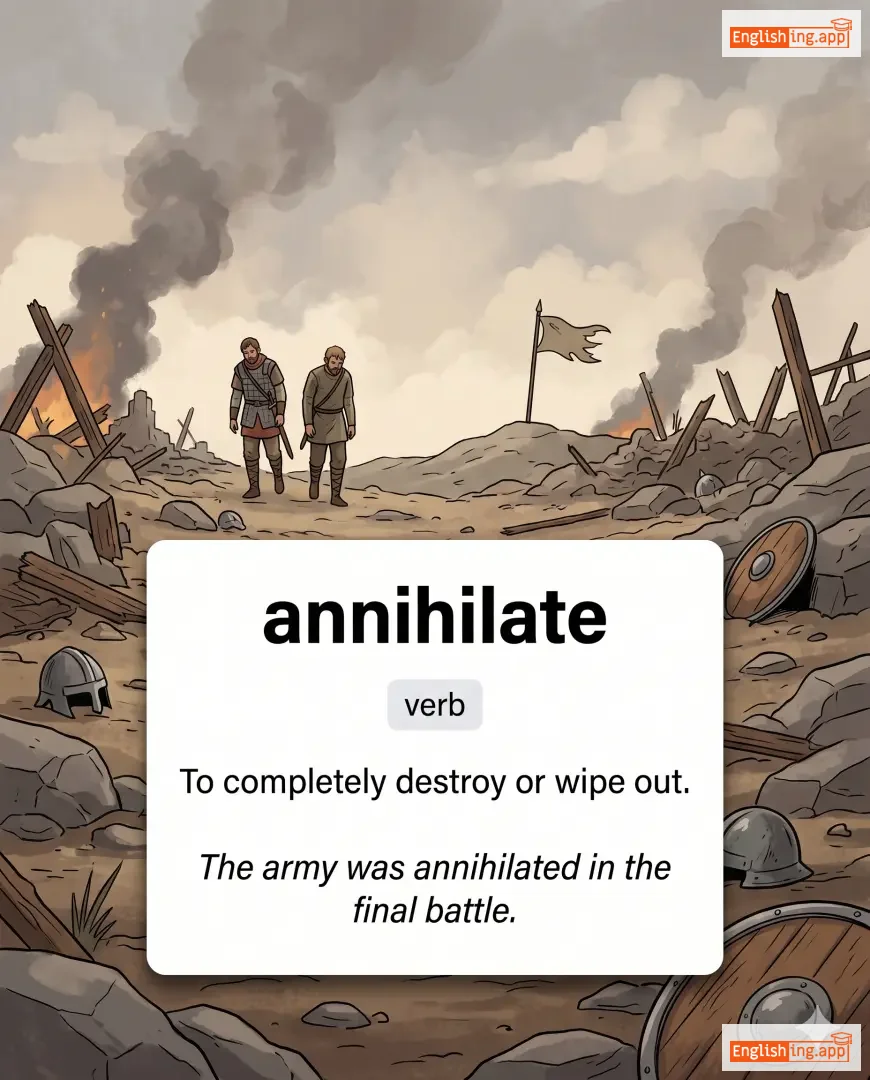
annihilate definition card — visual illustration of the meaning
verb
/əˈnaɪ.ə.leɪt/
पूर्ण रूप से नष्ट करना (poorn roop se nasht karna)

To completely destroy or wipe out.

"The army was annihilated in the final battle."

"आर्मी अंतिम युद्ध में पूरी तरह से नष्ट हो गई।" (Aarme antim yudh mein poori tarah se nasht ho gayi.)
noun
/ˌænɪˈvɜːrsəri/
वर्षगांठ (varshganth)

the yearly recurrence of a date marking a past event

"They celebrated their wedding anniversary with a dinner."

"उन्होंने अपने विवाह की वर्षगांठ को एक रात्रिभोज के साथ मनाया।" (Unhone apne vivah ki varshganth ko ek raatribhoj ke saath manaya.)
verb
/ˈæn.ə.teɪt/
टिप्पणियाँ या नोट्स जोड़ना (tippaniyan ya nots jodna)

to add notes or comments to a text, diagram, or document for explanation or clarification

"The teacher asked the students to annotate the poem with their interpretations."

"शिक्षक ने छात्रों से कविता में अपनी व्याख्याओं के साथ एन्नोटेट करने को कहा।" (Shikshak ne chatron se kavita mein apni vyakhyaon ke saath annotate karne ko kaha.)