Vocabularios

Descubra, aprenda y domine el vocabulario en inglés

noun
/ˈænsɛstər/
antepasado (antepasado)

a person in your family who lived a long time ago

"Our ancestors built these temples hundreds of years ago."

"Nuestros antepasados construyeron estos templos hace cientos de años." (Nuestros antepasados construyeron estos templos hace cientos de años.)
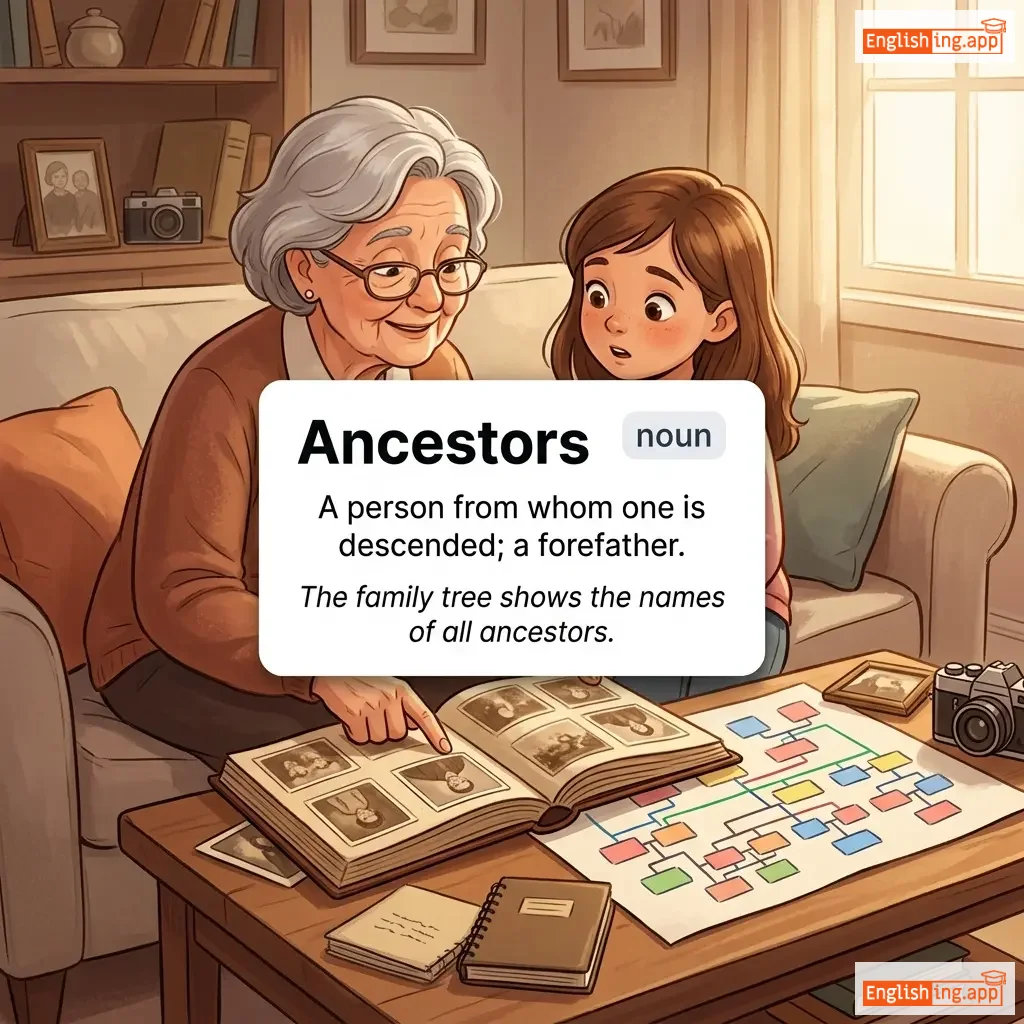
Ancestors definition card — visual illustration of the meaning
noun
ˈænsɛstərz
antepasado (antepasado)

A person from whom one is descended; a forefather.

"The family tree shows the names of all ancestors."

"El árbol genealógico muestra los nombres de todos los antepasados." (El árbol genealógico muestra los nombres de todos los antepasados.)
noun
/ˈænsɛstrɪs/
ancestro femenina (ancestro femenina)

a female ancestor; a woman from whom one is descended

"She discovered that her ancestress came from a small village in Bengal."

"Descubrió que su ancestro femenina provenía de un pequeño pueblo de Bengala." (descubrio que su ancestro femenina provenia de un pequeno pueblo de bengala)
noun
/ˈænsestri/
ascendencia (ascendencia)

one’s family origins or lineage

"He is proud of his royal ancestry."

"Él está orgulloso de su ascendencia real." (Él está orgulloso de su ascendencia real.)
noun, verb
/ˈæŋkər/
ancla (ancla)

a heavy object used to hold a ship in place; also to secure firmly

"The ship dropped its anchor near the shore."

"El barco dejó caer su ancla cerca de la orilla." (El barco dejó caer su ancla cerca de la orilla.)
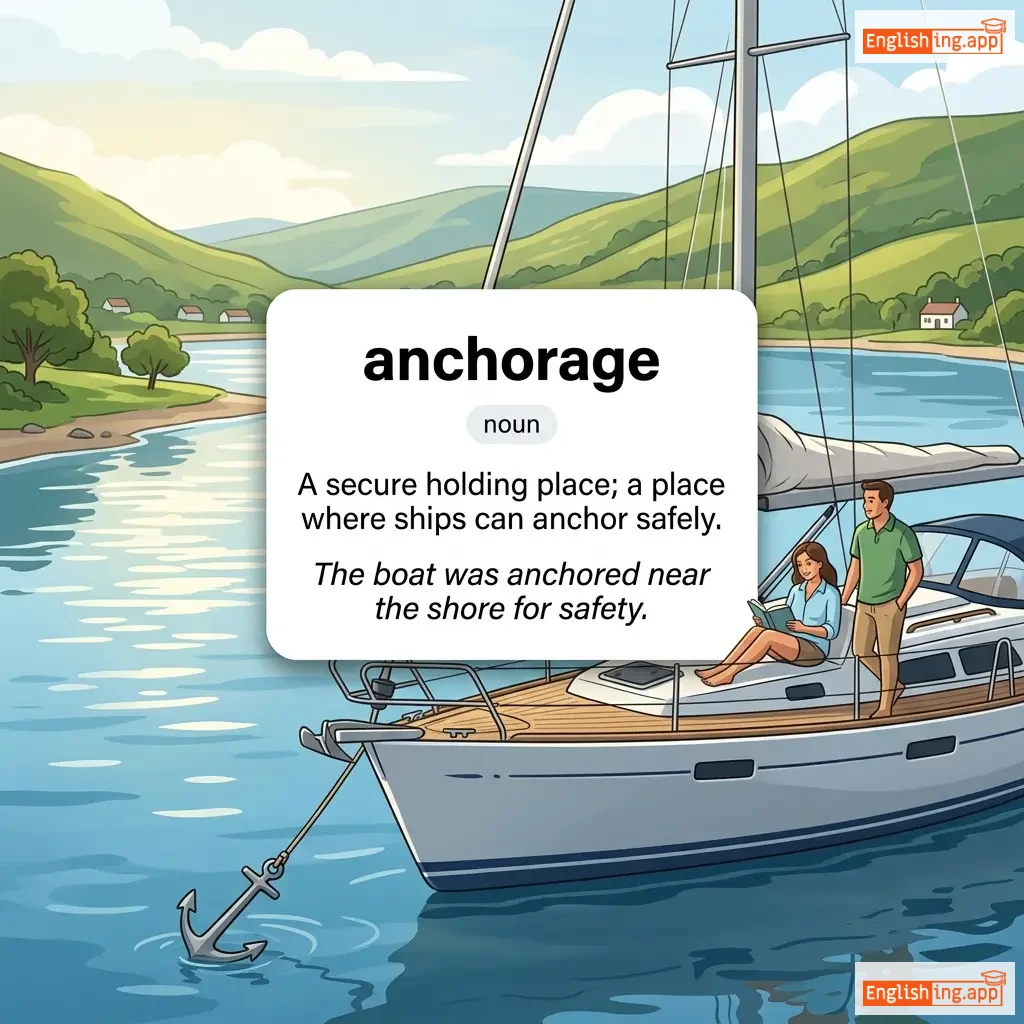
anchorage definition card — visual illustration of the meaning
noun
ˈæŋkərɪdʒ
ancoraje (ancoraje)

A secure holding place; a place where ships can anchor safely.

"The boat was anchored near the shore for safety."

"El bote fue anclado cerca de la orilla por seguridad." (El bote fue anclado cerca de la orilla por seguridad.)
adjective
/ˈeɪnʃənt/
antiguo (antiguo)

Belonging to the very distant past; very old.

"They visited the ruins of an ancient city."

"Ellos visitaron las ruinas de una ciudad antigua." (Ellos visitaron las ruinas de una ciudad antigua.)
adjective
/ˈænsɪləri/
auxiliar (auxiliar)

providing necessary support to the main system or organization

"The company provides ancillary services to the healthcare industry."

"La empresa proporciona servicios auxiliares a la industria de la salud." (La empresa proporciona servicios auxiliares a la industria de la salud.)
conjunction
/ænd/
y (y)

Used to connect words or sentences that are to be taken jointly.

"She bought apples and oranges."

"Ella compró manzanas y naranjas." (Ella compró manzanas y naranjas.)
noun
/ˈændaɪərn/
soporte de metal para madera (soporte de metal para madera)

a metal support used in a fireplace to hold logs

"The logs rested on the andirons in the old fireplace."

"Los troncos descansaban sobre los ándiros en la vieja chimenea." (Los troncos descansaban sobre los ándiros en la vieja chimenea.)
adjective
/ænˈdrɒdʒɪnəs/
andrógino (androgino)

Having both male and female characteristics; not clearly masculine or feminine.

"The fashion show featured models with an androgynous look."

"El desfile de moda presentó modelos con un look andrógino." (El desfile de moda presento modelos con un look androgeno.)
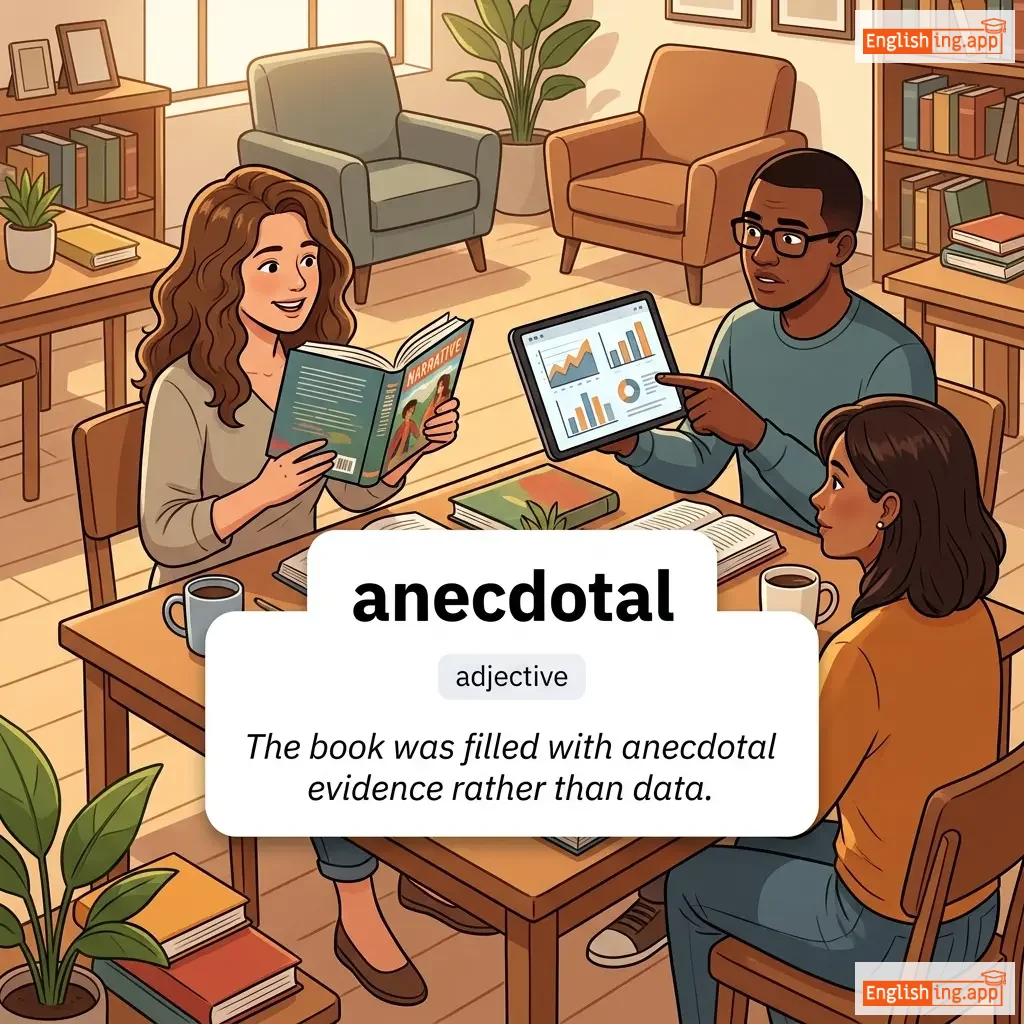
anecdotal definition card — visual illustration of the meaning
adjective
/ˌæn.ɪkˈdoʊ.t̬əl/
basado en relatos personales más que en hechos o investigaciones, caracterizado por anécdotas (basado en relatos personales más que en hechos o investigaciones, caracterizado por anécdotas)

Based on personal accounts rather than facts or research; characterized by anecdotes.

"The book was filled with anecdotal evidence rather than data."

"El libro estaba lleno de evidencia anecdótica en lugar de datos." (El libro estaba lleno de evidencia anecdótica en lugar de datos.)
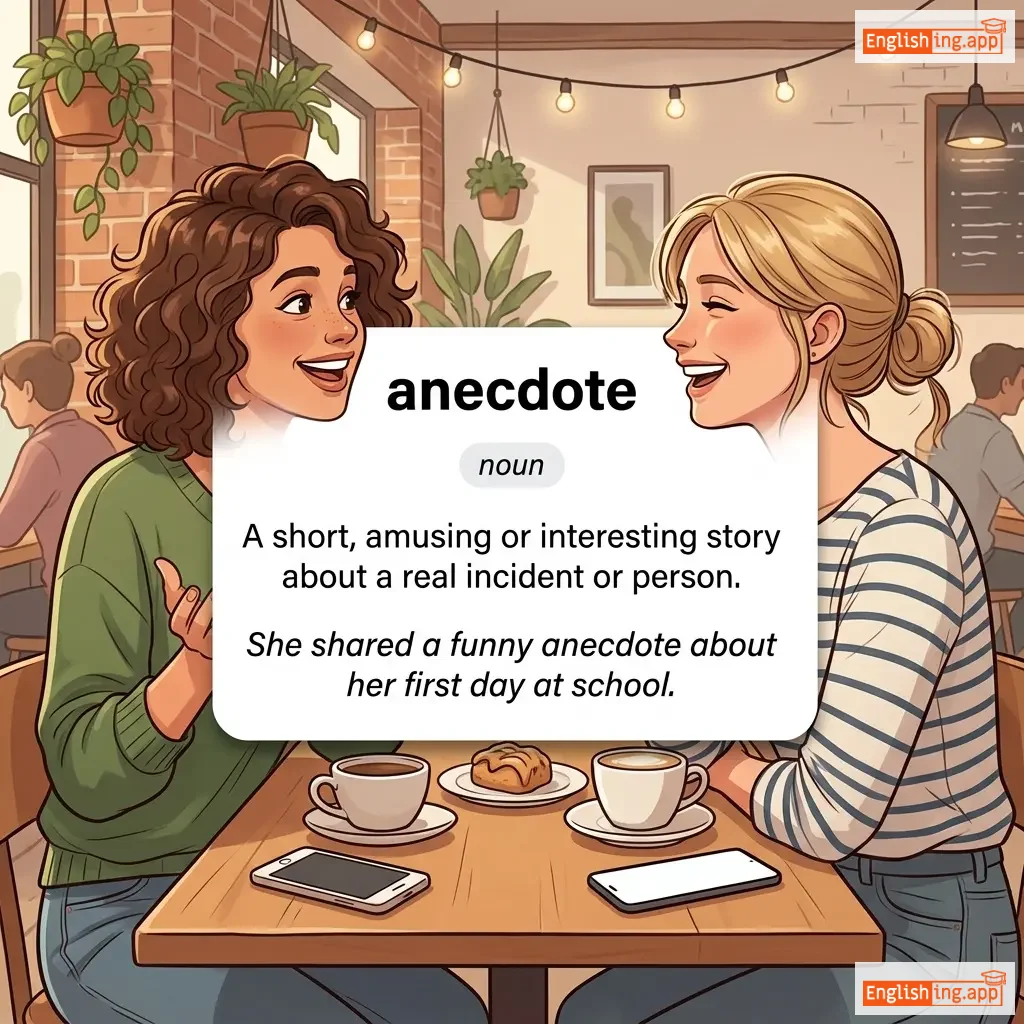
anecdote definition card — visual illustration of the meaning
noun
/ˈænɪkˌdoʊt/
anécdota (anecdota)

A short, amusing or interesting story about a real incident or person.

"She shared a funny anecdote about her first day at school."

"Ella compartió una anécdota divertida sobre su primer día en la escuela." (Ella compartió una anécdota divertida sobre su primer día en la escuela.)
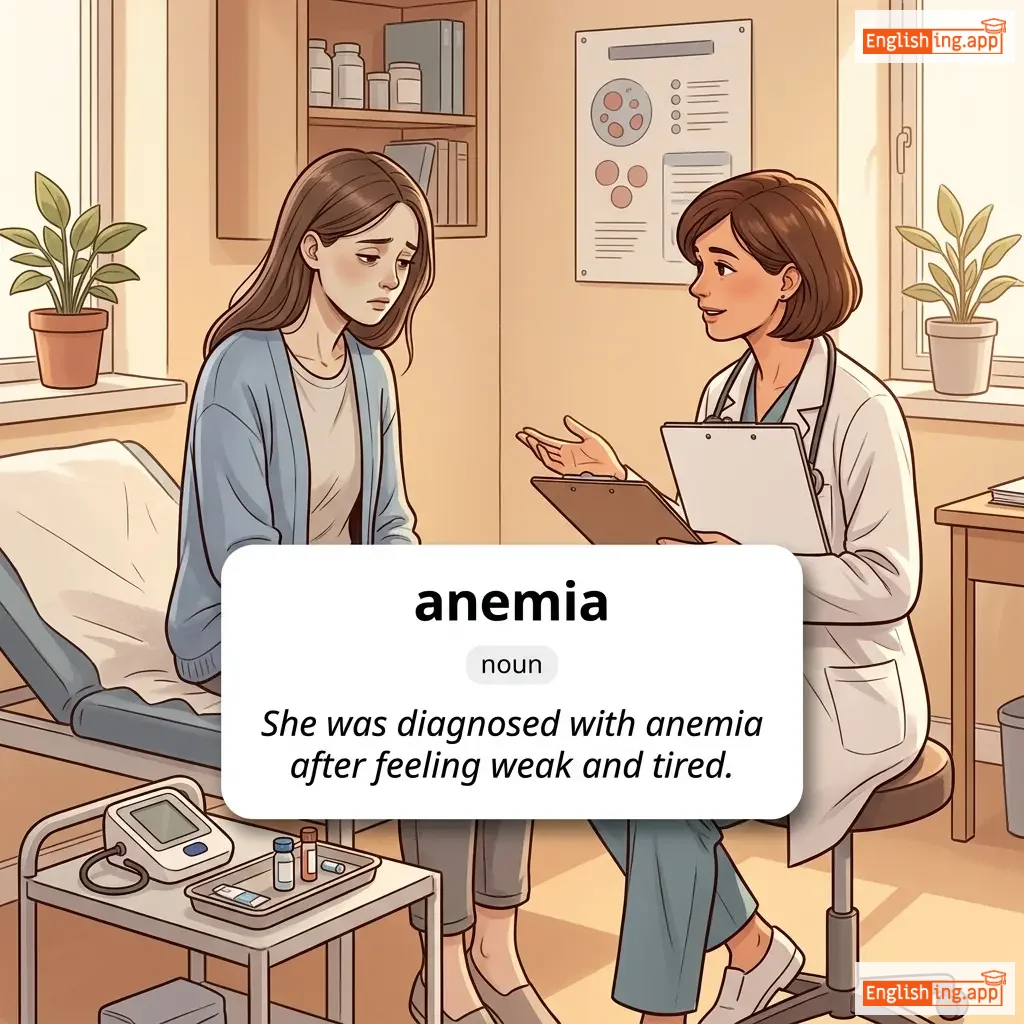
anemia definition card — visual illustration of the meaning
noun
/əˈniːmiə/
anemia (anemia)

A condition in which there is a deficiency of red cells or hemoglobin in the blood.

"She was diagnosed with anemia after feeling weak and tired."

"Le diagnosticaron anemia después de sentirse débil y cansada." (Le diagnosticaron anemia despues de sentirse debil y cansada.)
adjective
/əˈniːmɪk/
anémico (anemico)

Suffering from anemia; lacking in vitality, strength, or color.

"The doctor prescribed iron supplements for her anemic condition."

"El doctor recetó suplementos de hierro para su condición anémica." (El doctor recetó suplementos de hierro para su condición anémica.)
noun
/ˌænɪˈmɒmɪtər/
anemómetro (anemometro)

An instrument used to measure the speed and direction of wind.

"The scientist used an anemometer to record the wind speed during the storm."

"El científico utilizó un anemómetro para registrar la velocidad del viento durante la tormenta." (El cientifico utilizo un anemometro para registrar la velocidad del viento durante la tormenta.)
noun
/ˌænəsˈθetɪk/
anestésico (anestesico)

A substance that causes loss of sensation or consciousness, especially used during surgery.

"The doctor administered a local anesthetic before stitching the wound."

"El doctor administró un anestésico local antes de suturar la herida." (El doctor administro un anestesico local antes de suturar la herida.)
adverb
/əˈnjuː/
de nuevo (de nuevo)

In a new or different way; once more.

"After the failure, she decided to start her life anew."

"Después del fracaso, decidió comenzar su vida de nuevo." (Después del fracaso, decidió comenzar su vida de nuevo.)
noun
/ˈeɪndʒəl/
ángel (angel)

a spiritual being believed to act as a messenger or servant of God

"She believed her mother was watching over her like an angel."

"Ella creía que su madre la estaba observando como un ángel." (Ella creía que su madre la estaba observando como un ángel.)
adjective
/ænˈdʒelɪk/
angelical (angelical)

Like or characteristic of an angel; pure, kind, or innocent.

"The child had an angelic smile."

"El niño tenía una sonrisa angelical." (El niño tenía una sonrisa angelical.)
noun
/ˈæŋɡər/
ira (ira)

A strong feeling of displeasure or hostility.

"He couldn't control his anger after the argument."

"No pudo controlar su ira después de la discusión." (No pudo controlar su ira después de la discusión.)
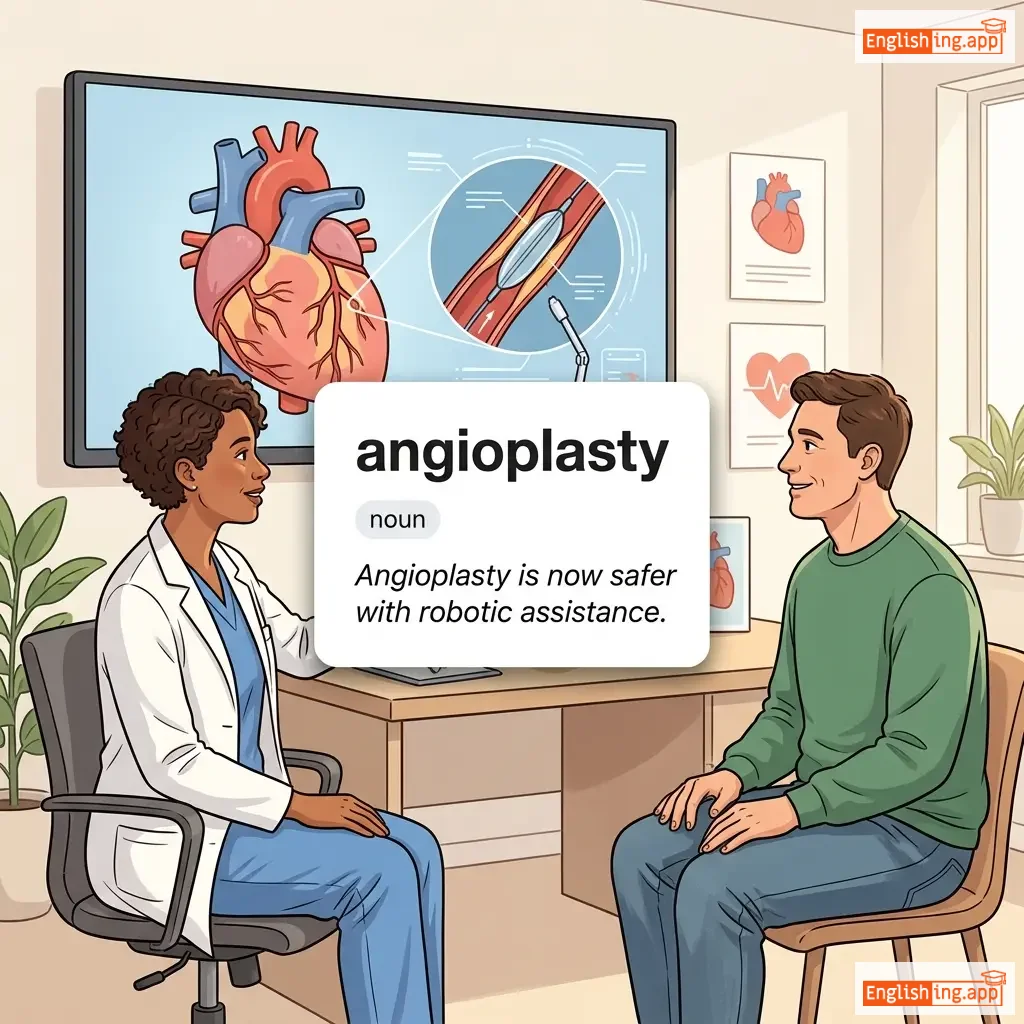
angioplasty definition card — visual illustration of the meaning
noun
/ˈæn.dʒi.əʊ.plæs.ti/
procedimiento médico para abrir vasos sanguíneos bloqueados o estrechados que suministran sangre al corazón (procedimiento medico para abrir vasos sanguíneos bloqueados o estrechados que suministran sangre al corazon)

A medical procedure to open blocked or narrowed blood vessels that supply blood to the heart.

"Angioplasty is now safer with robotic assistance."

"La angioplastia ahora es más segura con asistencia robótica." (La angioplastia ahora es mas segura con asistencia robotica.)
noun
/ˈæŋɡl/
ángulo (angulo)

The space between two intersecting lines or surfaces at the point where they meet.

"The teacher explained how to measure an angle in geometry."

"El maestro explicó cómo medir un ángulo en geometría." (El maestro explico como medir un angulo en geometria.)
noun
/ˌæŋɡloʊ ˈsæksən/
anglosajón (anglo-saxon)

A member of the Germanic peoples who settled in England in the early Middle Ages; also relating to their language or culture.

"The Anglo-Saxon period greatly influenced English culture and language."

"El periodo anglosajón influyó enormemente en la cultura y la lengua inglesa." (El periodo anglosajon influyo enormemente en la cultura y la lengua inglesa.)
noun
/ˌæŋɡləˈfoʊbiə/
anglofobia (anglofobia)

Dislike or fear of England, English people, or English culture.

"The politician was accused of promoting Anglophobia in his speeches."

"El político fue acusado de promover la anglofobia en sus discursos." (El político fue acusado de promover la anglofobia en sus discursos.)
adverb
/ˈæŋɡrɪli/
enojadamente (enojadamente)

in a manner showing anger or strong displeasure

"She spoke angrily when she heard the news."

"Ella habló enojadamente cuando escuchó la noticia." (ella hablo enojadamente cuando escucho la noticia)
adjective
/ˈæŋɡri/
enojado (enojado)

feeling or showing strong displeasure or hostility

"She was angry when she found out the truth."

"Ella estaba enojada cuando descubrió la verdad." (Ella estaba enojada cuando descubrió la verdad.)
noun
/ˈæŋɡwɪʃ/
angustia (angustia)

Severe mental or physical pain or suffering.

"She was in deep anguish after hearing the tragic news."

"Ella estaba en profunda angustia después de escuchar la trágica noticia." (Eya estaba en profunda angustia despues de escuchar la tragica noticia.)
adjective
/ˈæŋɡjələr/
angular (angular)

Having angles or sharp corners; lean or bony in appearance.

"The building has a very angular design."

"El edificio tiene un diseño muy angular." (El edificio tiene un diseno muy angular.)
adjective
/ænˈhaɪdrəs/
anhídrido (anhaydruhs)

Containing no water.

"The chemist used anhydrous ammonia for the experiment."

"El químico usó amoníaco anhidro para el experimento." (El quimico uso amonico anhidro para el experimento)
noun
/ˈænɪ siːd/
anís (anis)

Small aromatic seeds used as a spice and for medicinal purposes, with a sweet licorice-like flavor

"Anise seeds are often used in traditional desserts and teas."

"Las semillas de anís se usan con frecuencia en postres y tés tradicionales." (Las semillas de anis se usan con frecuencia en postres y tes tradicionales.)
noun
/ˌænɪmædˈvɜːʒən/
crítica (kritika)

Strong criticism or censure.

"The policy attracted severe animadversion from the public."

"La política atrajo una severa crítica del público." (La politica atrajo una severa critica del publico.)
verb
/ˌænɪmədˈvɜːt/
criticar (kritikar)

To comment critically or unfavorably.

"The teacher animadverted on the student's careless mistakes."

"El maestro criticó los errores descuidados del estudiante." (El maestro kritiko los errores deskuidados del estudiante.)
noun
/ˈænɪməl/
animal (animal)

a living organism that feeds on organic matter and usually has senses and mobility

"The tiger is a wild animal."

"El tigre es un animal salvaje." (El tigre es un animal salvaje.)
noun
/ˈænɪməlˌkjuːl/
animalcule (animalcule)

A microscopic animal, especially a protozoan or other minute organism.

"The scientist observed an animalcule moving under the microscope."

"El científico observó un animalcule moviéndose bajo el microscopio." (El cientifico observo un animalcule moviendose bajo el microscopio.)
verb
/ˈænɪmeɪt/
animar (animar)

To bring to life or give movement to something; to inspire or enliven.

"The teacher tried to animate the lesson with exciting activities."

"El maestro trató de animar la lección con actividades emocionantes." (El maestro trato de animar la leccion con actividades emocionantes.)
adjective
/ˈænɪmeɪtɪd/
animado (animado)

Full of life or excitement; made using animation techniques.

"The animated film was loved by children and adults alike."

"La película animada fue amada por niños y adultos por igual." (La pelicula animada fue amada por ninos y adultos por igual.)
noun
/ˌænɪˈmeɪʃən/
animación (animacion)

the technique of creating moving images from still pictures or models

"The animation in the movie was incredible."

"La animación de la película fue increíble." (La animacion de la pelicula fue increible.)
noun
/ˌænɪˈmɒsɪti/
animosidad (animosidad)

A strong feeling of hostility or active dislike.

"There was a long history of animosity between the two families."

"Hubo una larga historia de animosidad entre las dos familias." (Hubo una larga historia de animosidad entre las dos familias.)
noun
/ˈænɪməs/
animosidad / propósito (animosidad / proposito)

A strong feeling of hostility; motivation or purpose behind an action.

"His speech was driven by animus against the policy."

"Su discurso fue impulsado por animosidad contra la política." (Su discurso fue impulsado por animosidad contra la politica.)
noun
/ˈæŋkəl/
tobillo (tobiyo)

the joint connecting the foot with the leg

"He twisted his ankle while playing football."

"Se torció el tobillo mientras jugaba al fútbol." (Se torció el tobillo mientras jugaba al fútbol.)
noun
/ˈæŋk.lət/
tobillera (tobillera)

a piece of jewelry worn around the ankle

"She wore a beautiful silver anklet on her left foot."

"Ella llevaba una hermosa tobillera plateada en su pie izquierdo." (Ella llevaba una hermosa tobillera plateada en su pie izquierdo.)
noun
/ˈæn.ə.lɪst/
análisis histórico (analisis historico)

A person who writes annals or records events year by year.

"The annalist carefully documented the events of the king's reign."

"El analista documentó cuidadosamente los eventos del reinado del rey." (El analista documentó cuidadosamente los eventos del reinado del rey.)
noun
/ˈæn.əlz/
anales (anales)

Historical records of events, usually arranged chronologically.

"Her name will be remembered in the annals of science."

"Su nombre será recordado en los anales de la ciencia." (Su nombre sera recordado en los anales de la ciencia.)
verb
/əˈniːl/
endurecer con calor (endurecer con calor)

To heat and cool metal or glass to make it stronger or less brittle.

"The blacksmith annealed the steel to improve its durability."

"El herrero aniló el acero para mejorar su durabilidad." (El herrero aniló el acero para mejorar su durabilidad.)
verb
/ˈæn.ɛks/
anexar (anexar)

To take control of a territory and add it to one's own.

"The empire annexed the neighboring kingdom after the war."

"El imperio anexó el reino vecino después de la guerra." (El imperio anexó el reino vecino después de la guerra.)
noun
/ˌænɛkˈseɪʃən/
anexión (anexion)

the act of adding or taking control of territory or property, especially by a state

"The annexation of the region led to international condemnation."

"La anexión de la región provocó condena internacional." (la anexion de la region provoco condena internacional)
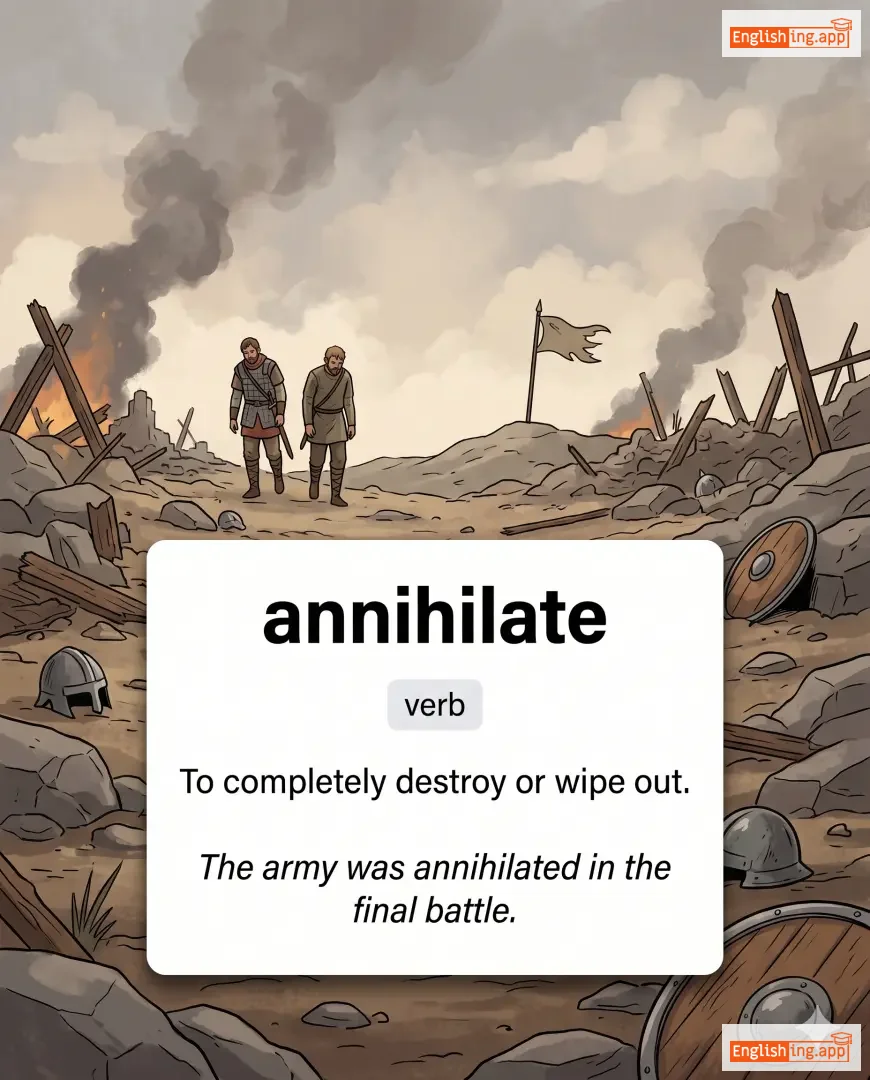
annihilate definition card — visual illustration of the meaning
verb
/əˈnaɪ.ə.leɪt/
aniquilar (aniquilar)

To completely destroy or wipe out.

"The army was annihilated in the final battle."

"El ejército fue aniquilado en la batalla final." (El ejército fue aniquilado en la batalla final.)
noun
/ˌænɪˈvɜːrsəri/
aniversario (aniversario)

the yearly recurrence of a date marking a past event

"They celebrated their wedding anniversary with a dinner."

"Celebraron su aniversario de bodas con una cena." (Celebraron su aniversario de bodas con una cena.)
verb
/ˈæn.ə.teɪt/
añadir notas o comentarios (anadir notas o comentarios)

to add notes or comments to a text, diagram, or document for explanation or clarification

"The teacher asked the students to annotate the poem with their interpretations."

"El maestro pidió a los estudiantes que anotaran el poema con sus interpretaciones." (El maestro pidio a los estudiantes que anotaran el poema con sus interpretaciones.)