词汇表

英语词汇词典 | 单词含义、定义和示例

noun
/ˈænsɛstər/
祖先 (zuxian)

a person in your family who lived a long time ago

"Our ancestors built these temples hundreds of years ago."
"我们的祖先在几百年前建造了这些寺庙。" (Wo men de zuxian zai ji bai nian qian jianzao le zhexie simiao.)
Ancestors definition card — visual illustration of the meaning
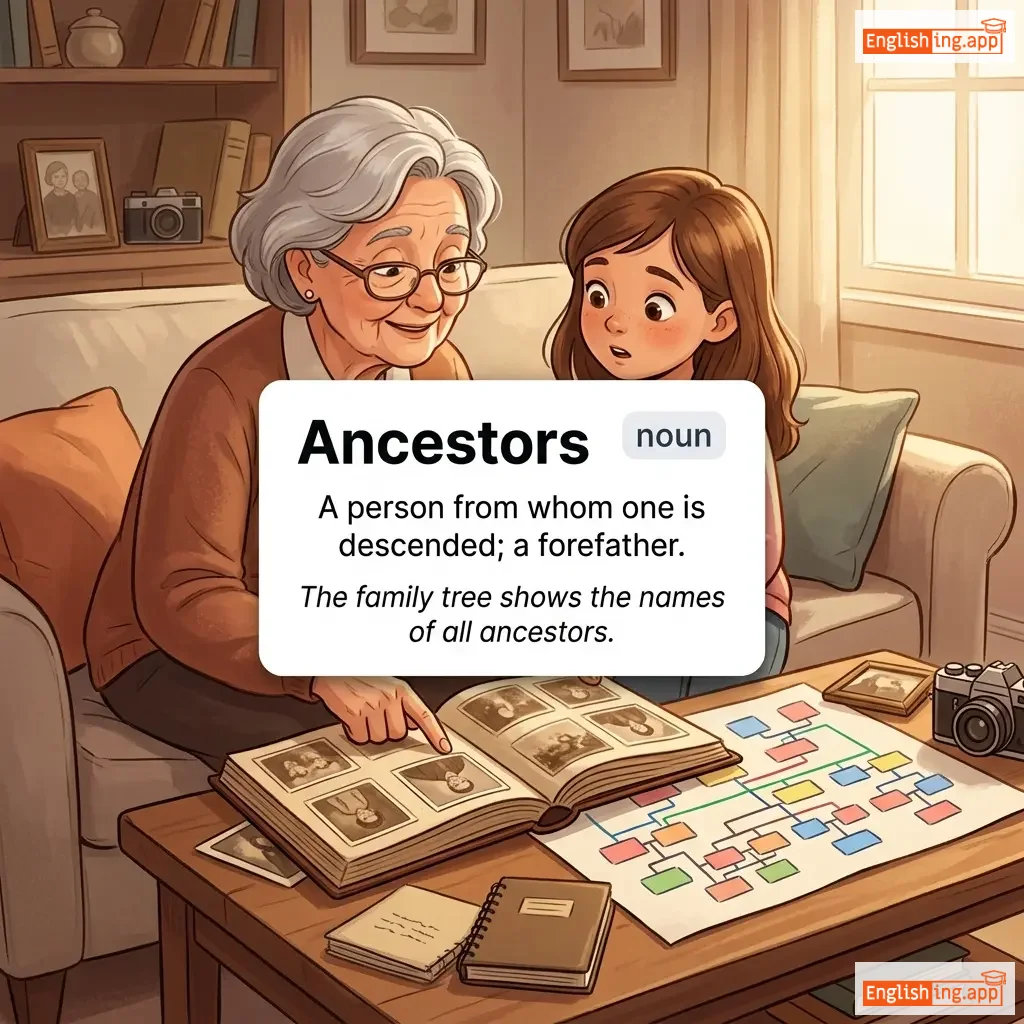
noun
ˈænsɛstərz
祖先 (zuxian)

A person from whom one is descended; a forefather.

"The family tree shows the names of all ancestors."

"家谱显示所有祖先的名字。" (Jiāpǔ xiǎnshì suǒyǒu zǔxiān de míngzì.)
noun
/ˈænsɛstrɪs/
女祖先 (nu zuxian)

a female ancestor; a woman from whom one is descended

"She discovered that her ancestress came from a small village in Bengal."

"她发现自己的女祖先来自孟加拉的一个小村庄。" (ta faxian zijide nu zuxian laizi Mengjiala de yi ge xiao cunzhuang)
noun
/ˈænsestri/
家谱 (jiā pǔ)

one’s family origins or lineage

"He is proud of his royal ancestry."

"他为自己的皇室家谱感到自豪。" (Tā wèi zìjǐ de huángshì jiāpǔ gǎndào zìháo.)
noun, verb
/ˈæŋkər/
(mó)

a heavy object used to hold a ship in place; also to secure firmly

"The ship dropped its anchor near the shore."

"船只在海岸附近投下了锚。" (Chuánzhī zài hǎi'àn fùjìn tóu xiàle mó.)
anchorage definition card — visual illustration of the meaning
noun
ˈæŋkərɪdʒ
停泊处 (tíng bó chù)

A secure holding place; a place where ships can anchor safely.

"The boat was anchored near the shore for safety."

"船只为了安全停靠在岸边。" (Chuánzhī wèile ānquán tíngkào zài àn biān.)
adjective
/ˈeɪnʃənt/
古老的 (gǔlǎo de)

Belonging to the very distant past; very old.

"They visited the ruins of an ancient city."

"他们参观了一个古老城市的遗址。" (Tāmen cānguānle yīgè gǔlǎo chéngshì de yízhǐ.)
adjective
/ˈænsɪləri/
附属的 (fùshǔ de)

providing necessary support to the main system or organization

"The company provides ancillary services to the healthcare industry."

"公司为医疗行业提供附加服务。" (Gōngsī wèi yīliáo hángyè tígōng fùjiā fúwù.)
conjunction
/ænd/
(he)

Used to connect words or sentences that are to be taken jointly.

"She bought apples and oranges."

"她买了苹果和橙子。" (Tā mǎile píngguǒ hé chéngzi.)
noun
/ˈændaɪərn/
金属木柴支架 (jinshu mùchái zhījià)

a metal support used in a fireplace to hold logs

"The logs rested on the andirons in the old fireplace."

"木柴安放在旧壁炉的安迪龙上。" (Mùchái ān fàng zài jiù bìlú de āndílóng shàng.)
adjective
/ænˈdrɒdʒɪnəs/
双性人 (shuāngxìngrén)

Having both male and female characteristics; not clearly masculine or feminine.

"The fashion show featured models with an androgynous look."

"时装秀展示了拥有双性人外观的模特。" (Shízhuāng xiù zhǎnshìle yǒngyǒu shuāngxìngrén wàiguān de mótè.)
anecdotal definition card — visual illustration of the meaning
adjective
/ˌæn.ɪkˈdoʊ.t̬əl/
基于个人叙述而非事实或研究,特点是轶事 (ji yu ge ren xu shu er fei shi shi huo yan jiu, te dian shi yi shi)

Based on personal accounts rather than facts or research; characterized by anecdotes.

"The book was filled with anecdotal evidence rather than data."

"这本书充满了轶事性证据,而不是数据。" (Zhe ben shu chongman le yishi xing zhengju, er bu shi shuju.)
anecdote definition card — visual illustration of the meaning
noun
/ˈænɪkˌdoʊt/
趣闻 (qu wen)

A short, amusing or interesting story about a real incident or person.

"She shared a funny anecdote about her first day at school."
"她分享了一个关于她上学第一天的有趣故事。" (Ta fenxiang le yi ge guanyu ta shangxue di yi tian de youqu gushi.)
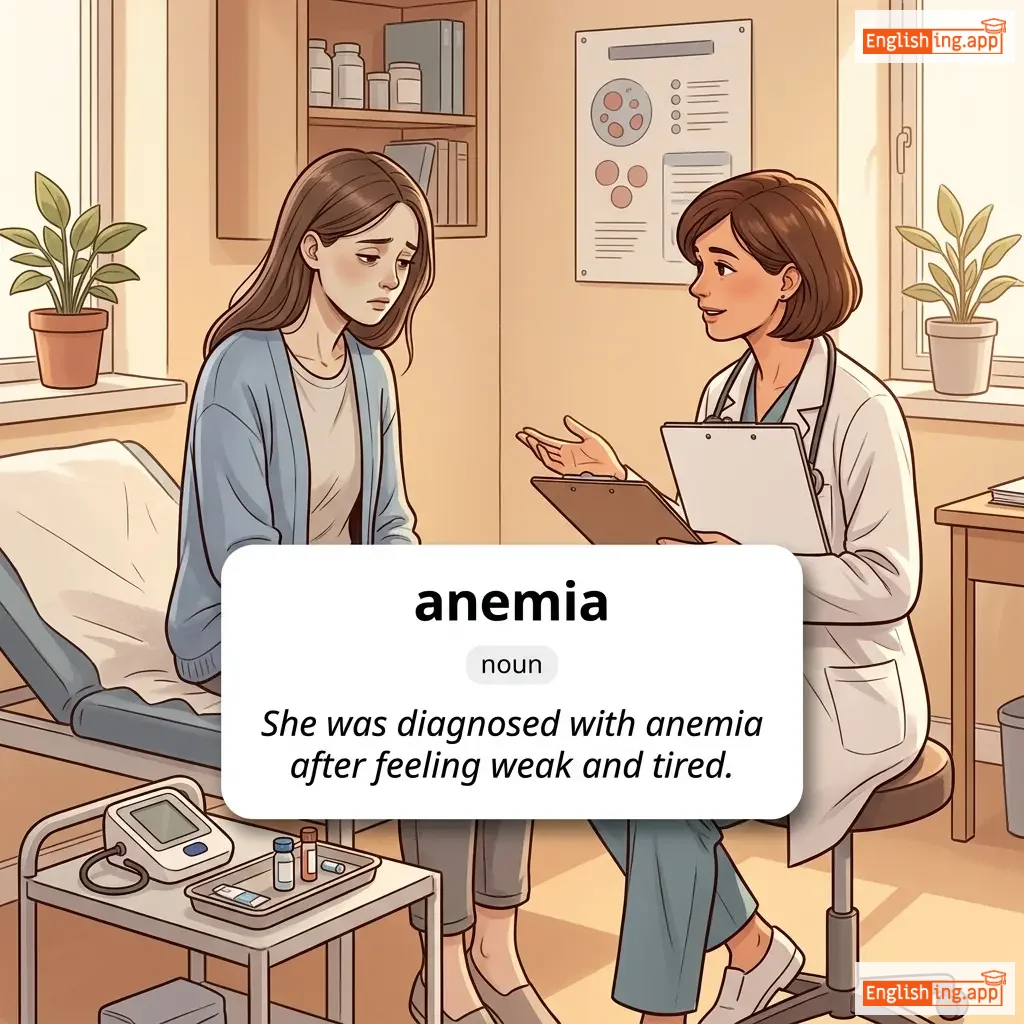
anemia definition card — visual illustration of the meaning
noun
/əˈniːmiə/
贫血 (pinqie)

A condition in which there is a deficiency of red cells or hemoglobin in the blood.

"She was diagnosed with anemia after feeling weak and tired."

"她在感到虚弱和疲倦后被诊断为贫血。" (Ta zai gandao xuruo he pijuang hou bei zhenduan wei pinxue.)
adjective
/əˈniːmɪk/
贫血 (pín xuè)

Suffering from anemia; lacking in vitality, strength, or color.

"The doctor prescribed iron supplements for her anemic condition."

"医生为她的贫血状态开了铁补充剂。" (Yīshēng wèi tā de pín xuè zhuàngtài kāile tiě bǔchōngjì.)
noun
/ˌænɪˈmɒmɪtər/
风速计 (fēngsùjì)

An instrument used to measure the speed and direction of wind.

"The scientist used an anemometer to record the wind speed during the storm."

"科学家使用风速计记录风速,在风暴期间。" (Kēxuéjiā shǐyòng fēngsùjì jìlù fēngsù, zài fēngbào qījiān.)
noun
/ˌænəsˈθetɪk/
麻醉剂 (mázuì jì)

A substance that causes loss of sensation or consciousness, especially used during surgery.

"The doctor administered a local anesthetic before stitching the wound."

"医生在缝合伤口之前使用了局部麻醉剂。" (Yīshēng zài fènghé shāngkǒu zhīqián shǐyòngle júbù mázuì jì.)
adverb
/əˈnjuː/
重新 (chong xin)

In a new or different way; once more.

"After the failure, she decided to start her life anew."

"失败后,她决定重新开始她的生活。" (Shībài hòu, tā juédìng chóngxīn kāishǐ tā de shēnghuó.)
noun
/ˈeɪndʒəl/
天使 (tian shi)

a spiritual being believed to act as a messenger or servant of God

"She believed her mother was watching over her like an angel."

"她相信她的母亲像天使一样在看着她。" (Ta xiangxin ta de muqin xiang tian shi yīyàng zài kànzhe tā.)
adjective
/ænˈdʒelɪk/
天使般的 (tiānshǐ bān de)

Like or characteristic of an angel; pure, kind, or innocent.

"The child had an angelic smile."

"那个孩子有一个天使般的微笑。" (Nàgè háizi yǒu yīgè tiānshǐ bān de wéixiào.)
noun
/ˈæŋɡər/
愤怒 (fèn nù)

A strong feeling of displeasure or hostility.

"He couldn't control his anger after the argument."

"他在争吵后无法控制自己的愤怒。" (Tā zài zhēngchǎo hòu wúfǎ kòngzhì zìjǐ de fèn nù.)
angioplasty definition card — visual illustration of the meaning
noun
/ˈæn.dʒi.əʊ.plæs.ti/
一种医疗程序,用于打开阻塞或狭窄的血管,这些血管向心脏输送血液。 (yī zhǒng yīliáo chéngxíng shù, yòng yú dǎkāi zǔsè huò xiázhǎi de xiěguǎn, zhèxiē xiěguǎn xiàng xīnzàng shūchū xuèyè.)

A medical procedure to open blocked or narrowed blood vessels that supply blood to the heart.

"Angioplasty is now safer with robotic assistance."

"现在,通过机器人辅助,血管成形术更加安全。" (Xiànzài, tōngguò jīqìrén fùzhù, xuèguǎn chéngxíng shù gèngjiā ānquán.)
noun
/ˈæŋɡl/
角度 (jiaodu)

The space between two intersecting lines or surfaces at the point where they meet.

"The teacher explained how to measure an angle in geometry."

"老师解释了如何在几何学中测量角度。" (Lǎoshī jiěshìle rúhé zài jǐhéxué zhōng cèliàng jiǎodù.)
noun
/ˌæŋɡloʊ ˈsæksən/

A member of the Germanic peoples who settled in England in the early Middle Ages; also relating to their language or culture.

"The Anglo-Saxon period greatly influenced English culture and language."

noun
/ˌæŋɡləˈfoʊbiə/
盎格鲁恐惧症 (àngélǔ kǒngjù zhèng)

Dislike or fear of England, English people, or English culture.

"The politician was accused of promoting Anglophobia in his speeches."

"这位政治家被指控在他的演讲中宣传盎格鲁恐惧症。" (Zhè wèi zhèngzhìjiā bèi zhǐkòng zài tā de yǎnjiǎng zhōng xuānchuán àngélǔ kǒngjù zhèng.)
adverb
/ˈæŋɡrɪli/
愤怒地 (fennu de)

in a manner showing anger or strong displeasure

"She spoke angrily when she heard the news."

"她听到这个消息后愤怒地说话。" (ta tingdao zhege xiaoxi hou fennu de shuohua)
adjective
/ˈæŋɡri/
生气 (shengqi)

feeling or showing strong displeasure or hostility

"She was angry when she found out the truth."

"她知道真相后生气了。" (Tā zhīdào zhēnxiàng hòu shēngqì le.)
noun
/ˈæŋɡwɪʃ/
痛苦 (tongku)

Severe mental or physical pain or suffering.

"She was in deep anguish after hearing the tragic news."

"听到悲惨的消息后,她陷入了深深的痛苦。" (tingdao beican de xiaoxi hou ta xianru le shenshen de tongku.)
adjective
/ˈæŋɡjələr/
角度的 (jiaodude)

Having angles or sharp corners; lean or bony in appearance.

"The building has a very angular design."

"这座建筑有一个非常角度的设计。" (Zhezuo jianzhu you yige feichang jiaodu de sheji.)
adjective
/ænˈhaɪdrəs/

Containing no water.

"The chemist used anhydrous ammonia for the experiment."

noun
/ˈænɪ siːd/
八角 (bājiǎo)

Small aromatic seeds used as a spice and for medicinal purposes, with a sweet licorice-like flavor

"Anise seeds are often used in traditional desserts and teas."

"八角种子常用于传统的甜点和茶中。" (Bājiǎo zhǒngzi cháng yòng yú chuántǒng de tiándiǎn hé chá zhōng.)
noun
/ˌænɪmædˈvɜːʒən/
批评 (piping)

Strong criticism or censure.

"The policy attracted severe animadversion from the public."

"该政策遭到公众的严厉批评。" (Gai zhengce zaodao gongzhong de yanli piping.)
verb
/ˌænɪmədˈvɜːt/
批评 (pīpíng)

To comment critically or unfavorably.

"The teacher animadverted on the student's careless mistakes."

"老师批评了学生的粗心错误。" (Lǎoshī pīpíngle xuéshēng de cūxīn cuòwù.)
noun
/ˈænɪməl/
动物 (dongwu)

a living organism that feeds on organic matter and usually has senses and mobility

"The tiger is a wild animal."

"老虎是一种野生动物。" (lǎohǔ shì yī zhǒng yěshēng dòngwù.)
noun
/ˈænɪməlˌkjuːl/
微生物 (wēi shēng wù)

A microscopic animal, especially a protozoan or other minute organism.

"The scientist observed an animalcule moving under the microscope."

"科学家在显微镜下观察到一个微生物在移动。" (Kēxuéjiā zài xiǎn wēi jìng xià guānchá dào yī gè wēi shēng wù zài yídòng.)
verb
/ˈænɪmeɪt/
动画 (donghua)

To bring to life or give movement to something; to inspire or enliven.

"The teacher tried to animate the lesson with exciting activities."

"老师试图通过令人兴奋的活动来动画化课程。" (Laoshi shitu tongguo lingren xingfen de huodong lai donghua kecheng.)
adjective
/ˈænɪmeɪtɪd/
动画的 (donghua de)

Full of life or excitement; made using animation techniques.

"The animated film was loved by children and adults alike."

"这部动画电影受到儿童和成人的喜爱。" (Zhe bu donghua dianying shoudao ertong he chengren de xihuan.)
noun
/ˌænɪˈmeɪʃən/

the technique of creating moving images from still pictures or models

"The animation in the movie was incredible."

noun
/ˌænɪˈmɒsɪti/

A strong feeling of hostility or active dislike.

"There was a long history of animosity between the two families."

noun
/ˈænɪməs/
敌意 / 目的 (díyì / mùdì)

A strong feeling of hostility; motivation or purpose behind an action.

"His speech was driven by animus against the policy."

"他的演讲是由对政策的敌意驱动的。" (Tā de yǎnjiǎng shì yóu duì zhèngcè de díyì qūdòng de.)
noun
/ˈæŋkəl/
脚踝 (jiaohai)

the joint connecting the foot with the leg

"He twisted his ankle while playing football."

"他在踢足球时扭伤了脚踝。" (Ta zai ti zuqiu shi niushang le jiaohai.)
noun
/ˈæŋk.lət/
脚链 (jiaolian)

a piece of jewelry worn around the ankle

"She wore a beautiful silver anklet on her left foot."

"她在左脚上戴着一个漂亮的银脚链。" (Tā zài zuǒ jiǎo shàng dàizhe yīgè piàoliang de yín jiǎoliàn.)
noun
/ˈæn.ə.lɪst/
编年史家 (bian nian shi jia)

A person who writes annals or records events year by year.

"The annalist carefully documented the events of the king's reign."

"编年史家仔细记录了国王统治时期的事件。" (Bian nian shi jia zi xi ji lu le guo wang tong zhi shi qi de shi jian.)
noun
/ˈæn.əlz/
年鉴 (nianjian)

Historical records of events, usually arranged chronologically.

"Her name will be remembered in the annals of science."

"她的名字将在科学年鉴中被铭记。" (Tā de míngzì jiāng zài kēxué niánjiàn zhōng bèi míngjì.)
verb
/əˈniːl/
通过加热使硬化 (tongguo jiare shi yinghua)

To heat and cool metal or glass to make it stronger or less brittle.

"The blacksmith annealed the steel to improve its durability."

"铁匠为了提高钢的耐久性进行了退火。" (Tiexiang weile tigao gang de naijiu xing jinxing le tuihuo.)
verb
/ˈæn.ɛks/
吞并 (tūn bìng)

To take control of a territory and add it to one's own.

"The empire annexed the neighboring kingdom after the war."

"帝国在战争后吞并了邻国的王国。" (Dìguó zài zhànzhēng hòu tūn bìngle lín guó de wángguó.)
noun
/ˌænɛkˈseɪʃən/
吞并 (tunbing)

the act of adding or taking control of territory or property, especially by a state

"The annexation of the region led to international condemnation."
"该地区的吞并引发了国际谴责。" (gai diqu de tunbing yinfa le guoji qianze)
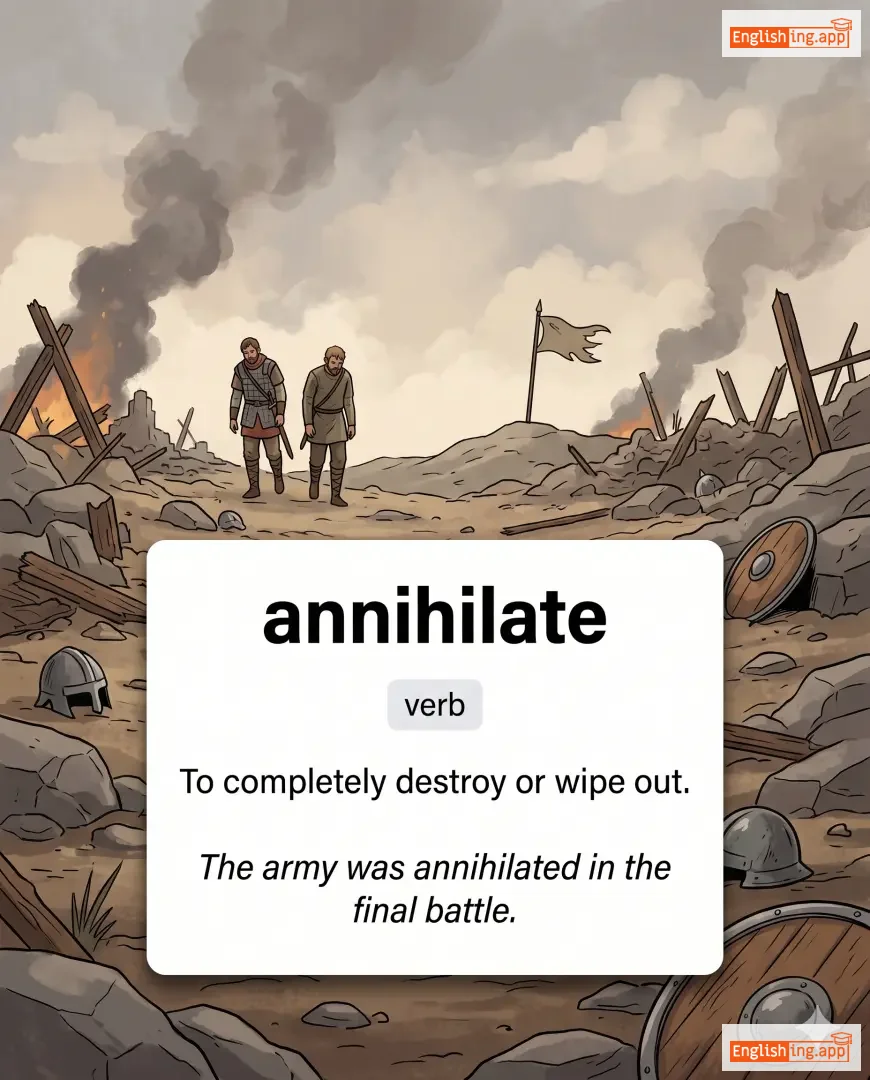
annihilate definition card — visual illustration of the meaning
verb
/əˈnaɪ.ə.leɪt/
摧毁 (cuīhuǐ)

To completely destroy or wipe out.

"The army was annihilated in the final battle."

"军队在最后一战中被摧毁。" (Jūnduì zài zuìhòu yī zhàn zhōng bèi cuīhuǐ.)
noun
/ˌænɪˈvɜːrsəri/
周年纪念 (zhōunián jìniàn)

the yearly recurrence of a date marking a past event

"They celebrated their wedding anniversary with a dinner."

"他们用一顿晚餐庆祝了他们的结婚周年纪念。" (Tāmen yòng yī dùn wǎncān qìngzhùle tāmen de jiéhūn zhōunián jìniàn.)
verb
/ˈæn.ə.teɪt/
添加注释或评论 (tiānjiā zhùshì huò pínglùn)

to add notes or comments to a text, diagram, or document for explanation or clarification

"The teacher asked the students to annotate the poem with their interpretations."

"Lǎoshī yāoqiú xuéshēng zài shī cí zhōng tiānjiā tāmen de jiěshì." (Laoshi yaoqiu xuesheng zai shici zhong tianjia tamen de jieshi.)