词汇表

英语词汇词典 | 单词含义、定义和示例

adjective
/əˈtjuːnd/
敏感的 / 调整好的 (mǐn'gǎn de / tiáozhěng hǎo de)

Being receptive or sensitive to something; well adjusted or in harmony.

"She is attuned to the needs of her students."
"她对学生的需求很敏感。" (Tā duì xuéshēng de xūqiú hěn mǐn'gǎn.)
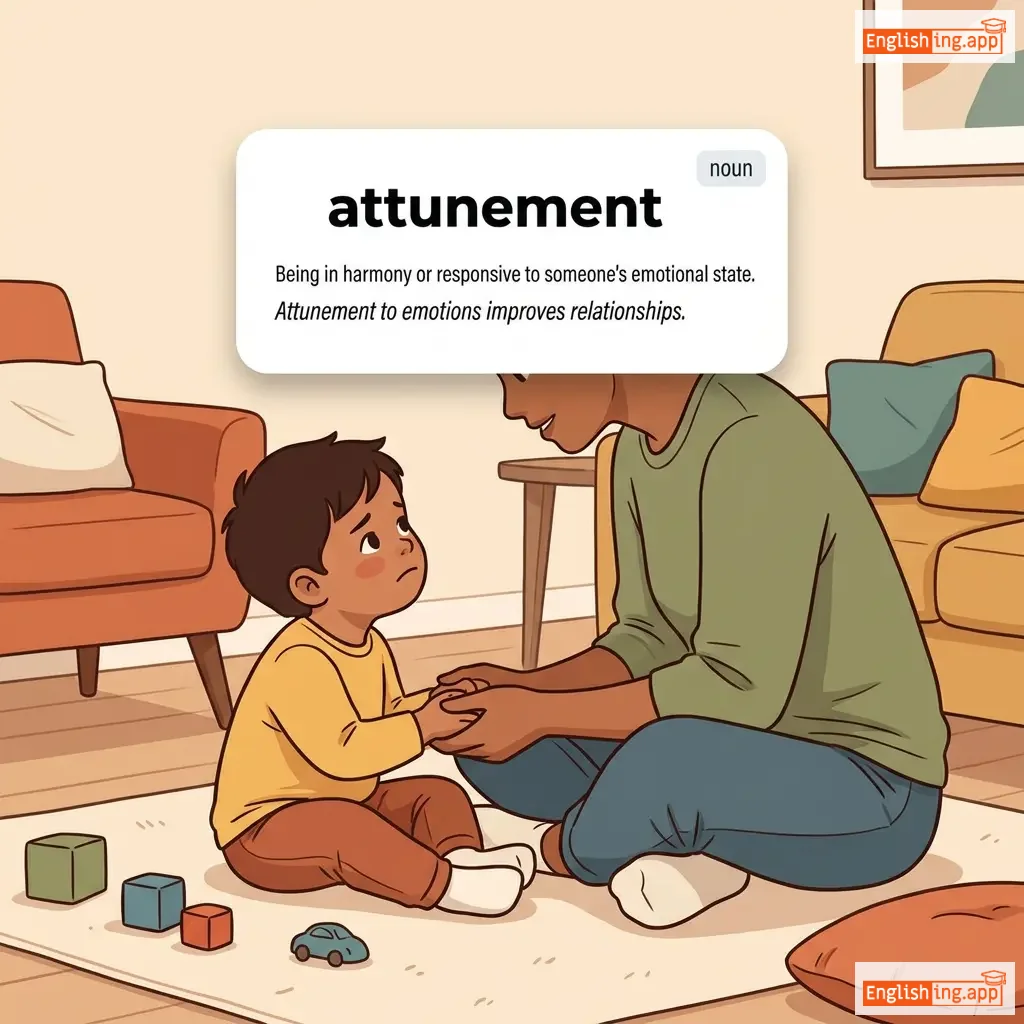
attunement definition card — visual illustration of the meaning
noun
/əˈtjuːn.mənt/
契合 (qi he)

Being in harmony or responsive to someone's emotional state.

"Attunement to emotions improves relationships."

"对情绪的契合改善了关系。" (dui qingxu de qi he gaishan le guanxi)
adjective
/ˌeɪˈtɪpɪkəl/
非典型 (fēi diǎn xíng)

not representative of a type, group, or class; unusual or abnormal

"The doctor said it was an atypical case of the disease."

"医生说这是一个非典型的病例。" (Yīshēng shuō zhè shì yīgè fēi diǎn xíng de bìnglì.)
adjective
/ˈɔːbərn/
红棕色 (hong zong se)

reddish-brown in color, especially used to describe hair

"She has long auburn hair that shines in the sunlight."

"她有一头长长的红棕色头发,在阳光下闪闪发光。" (Ta you yi tou chang chang de hong zong se tou fa, zai yang guang xia shan shan fa guang.)
noun
/ˈɔːkʃən/
拍卖 (pāimài)

a public sale where goods are sold to the highest bidder

"The painting was sold at an auction for a record price."

"这幅画以创纪录的价格在拍卖会上售出。" (Zhè fú huà yǐ chuàng jìlù de jiàgé zài pāimài huì shàng shòuchū.)
noun
/ˌɔːkʃəˈnɪər/
拍卖师 (paimaishi)

a person who conducts auctions by calling out bids and selling items to the highest bidder

"The auctioneer quickly raised the price as bidders competed for the painting."

"拍卖师在竞价过程中迅速提高了价格。" (paimaishi zai jingjia guocheng zhong xunsu tigao le jiage)
Audacious definition card — visual illustration of the meaning
adjective
/ɔːˈdeɪʃəs/
大胆的 (dà dǎn de)

showing a willingness to take bold risks; daring

"It was an audacious plan to climb the mountain in winter."
"这是一个大胆的计划,在冬天爬山。" (Zhè shì yī gè dà dǎn de jì huà, zài dōng tiān pá shān.)
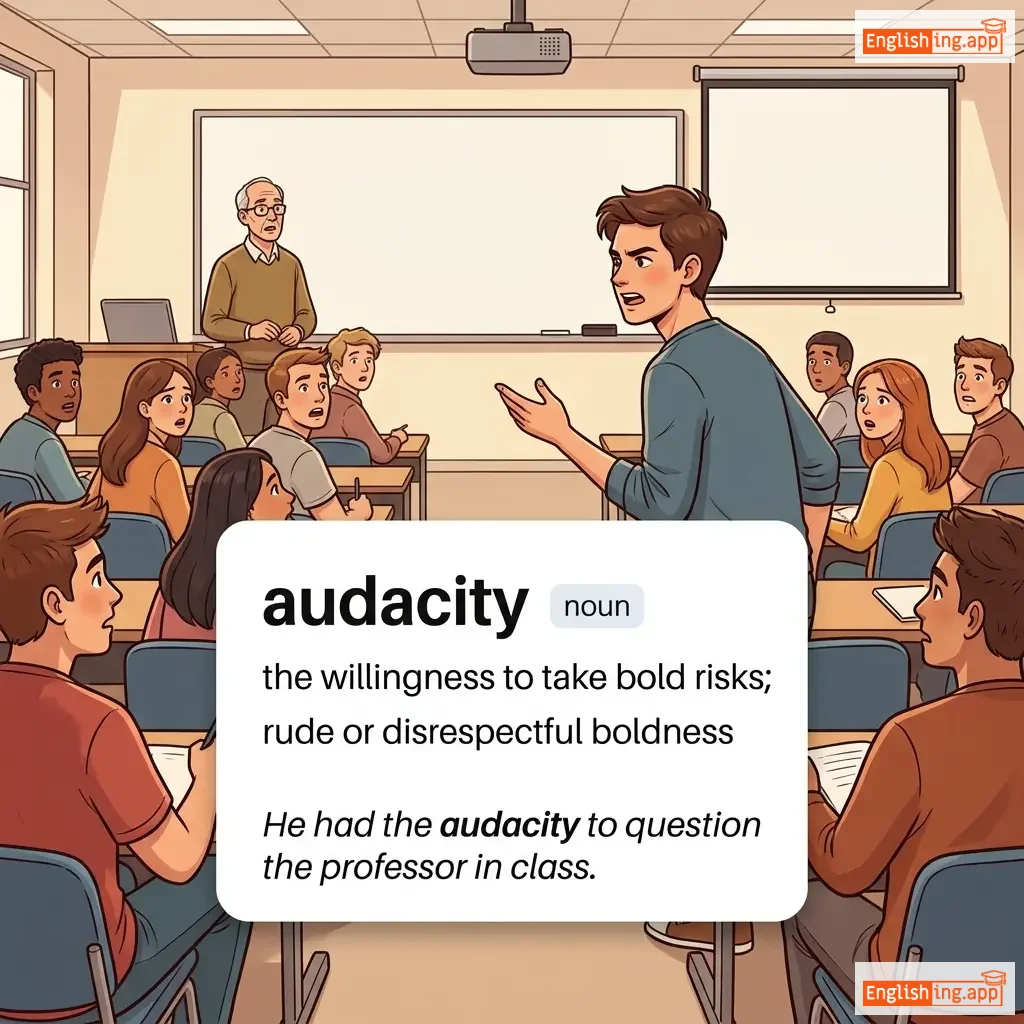
audacity definition card — visual illustration of the meaning
noun
/ɔːˈdæsəti/
大胆 (dadan)

the willingness to take bold risks; rude or disrespectful boldness

"He had the audacity to question the professor in class."

"他有胆量在课堂上向教授提问。" (Ta you danliang zai kètáng shàng xiàng jiàoshòu tíwèn.)
adjective
/ˈɔːdəbl/
可听见的 (ke tingjian de)

able to be heard

"Her voice was barely audible over the noise of the crowd."

"她的声音几乎听不见,背景是人群的嘈杂声。" (Ta de shengyin jihu ting bu jian, beijing shi renqun de caoshaosheng.)
noun
/ˈɔːdiəns/
观众 (guānzhòng)

A group of people who gather to watch, listen to, or experience a performance, event, or broadcast.

"The audience clapped loudly after the performance."

"表演结束后,观众热烈鼓掌。" (Biǎoyǎn jiéshù hòu, guānzhòng rèliè gǔzhǎng.)
noun
/ˈɔːdiəʊ/
声音 (shengyin)

sound, especially when recorded or transmitted

"The audio quality of the podcast was excellent."
"播客的音频质量非常好。" (Bokè de yīnpín zhìliàng fēicháng hǎo.)
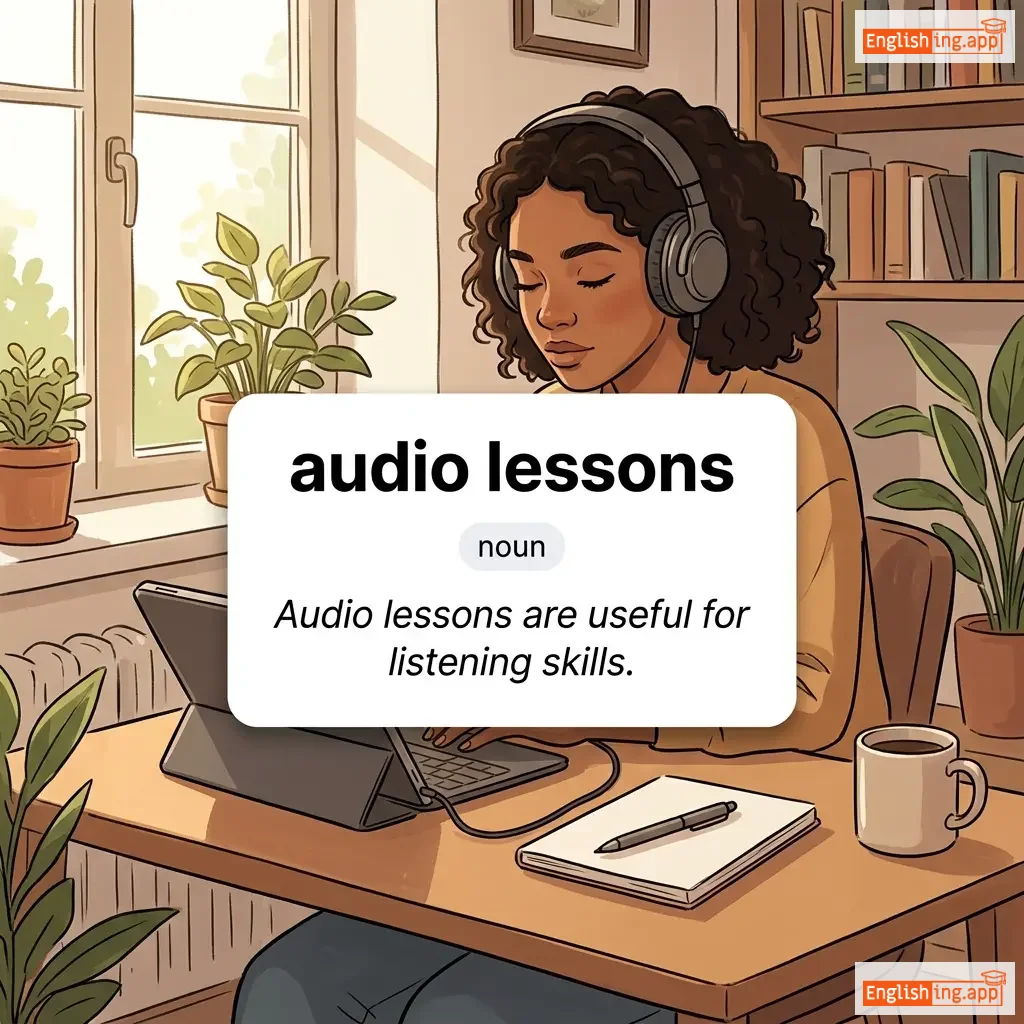
audio lessons definition card — visual illustration of the meaning
noun
ˈɔːdioʊ ˈlɛsənz
音频课程 (yinpin kecheng)

Educational content delivered through sound recordings, typically used for language learning and skill development.

"Audio lessons are useful for listening skills."

"音频课程对于听力技能非常有用。" (Yinpin kecheng dui yu tingli jineng feichang youyong.)
audit definition card — visual illustration of the meaning
noun/verb
/ˈɔːdɪt/
审计 (shenji)

A formal examination of accounts or processes to ensure accuracy and compliance.

"The company hired an external firm to audit its financial statements."

"公司雇佣了一家外部公司来审计其财务报表。" (Gōngsī gùyōngle yījiā wàibù gōngsī lái shěnjì qí cáiwù bàobiǎo.)
noun/verb
/ɔːˈdɪʃən/
试镜 (shì jìng)

A trial performance by an actor, singer, or musician to demonstrate suitability for a role.

"She auditioned for the lead role in the school play."
"她为学校的主角试镜。" (Tā wèi xuéxiào de zhǔjiǎo shì jìng.)
adjective
/ˈɔːdəˌtɔːri/

Relating to the sense of hearing.

"The lecture was designed to enhance students' auditory learning skills."

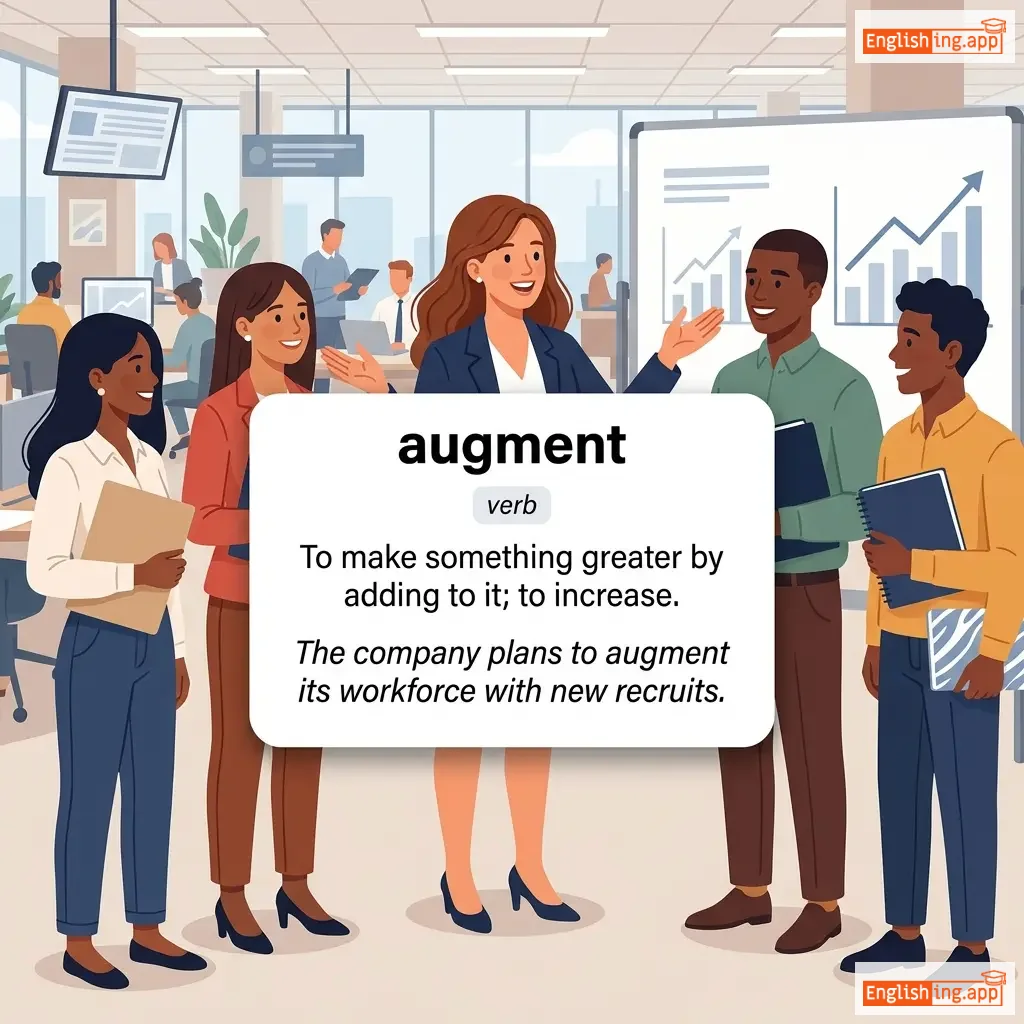
augment definition card — visual illustration of the meaning
verb
/ɔːɡˈmɛnt/
增加 (zengjia)

To make something greater by adding to it; to increase.

"The company plans to augment its workforce with new recruits."

"公司计划通过新招聘来增加劳动力。" (Gongsi jihua tongguo xin zhaopin lai zengjia laodongli.)
augmentation definition card — visual illustration of the meaning
noun
/ˌɔːɡ.mɛnˈteɪ.ʃən/
增强 (zēngqiáng)

Enhancing or increasing the effectiveness or quality of something.

"Augmented reality (AR) enables augmentation of real-world experiences."
"增强现实(AR)使现实世界的体验得以增强。" (Zēngqiáng xiànshí (AR) shǐ xiànshí shìjiè de tǐyàn dé yǐ zēngqiáng.)
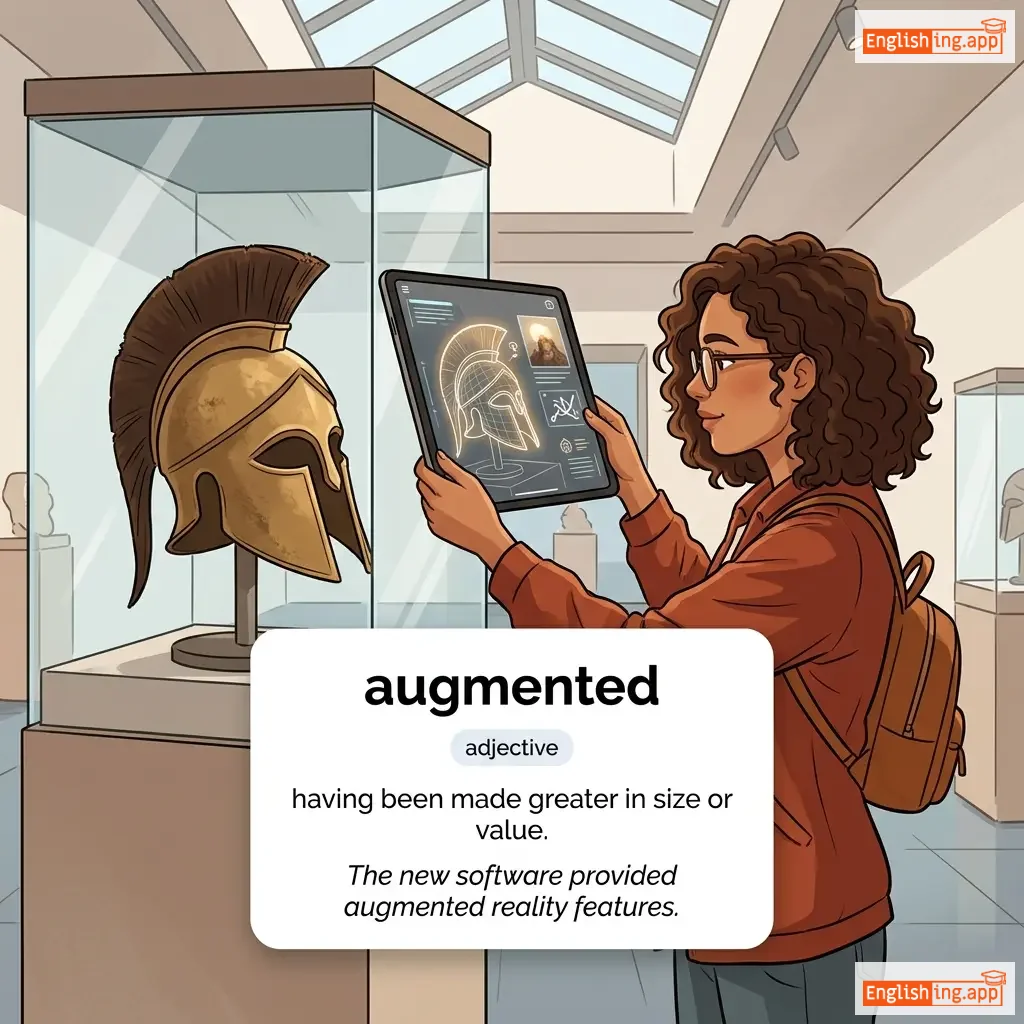
augmented definition card — visual illustration of the meaning
adjective
ɔːɡˈmen.tɪd
增强的, 改进的, 扩展的 (zēngqiáng de, gǎijìn de, kuòzhǎn de)

having been made greater in size or value.

"The new software provided augmented reality features."
"新软件提供了增强现实功能。" (Xīn ruǎnjiàn tígōngle zēngqiáng xiànshí gōngnéng.)
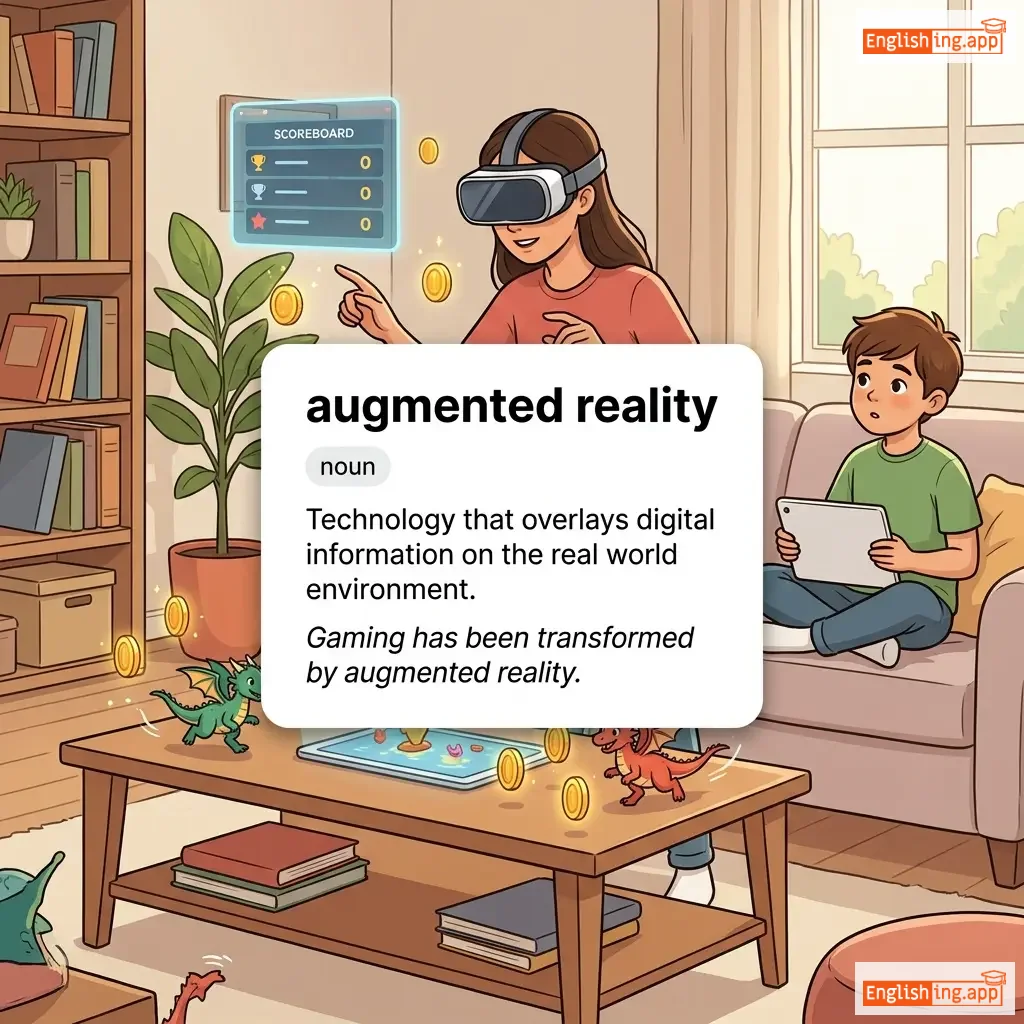
augmented reality definition card — visual illustration of the meaning
noun
ɔːɡˈmɛn.tɪd riˈæl.ɪ.ti
增强现实,虚拟与现实世界的结合 (zengqiang xianshi, xuni yu xianshi shijie de jiehe)

Technology that overlays digital information on the real world environment.

"Gaming has been transformed by augmented reality."
"增强现实改变了游戏。" (Zengqiang xianshi gaibianle youxi.)
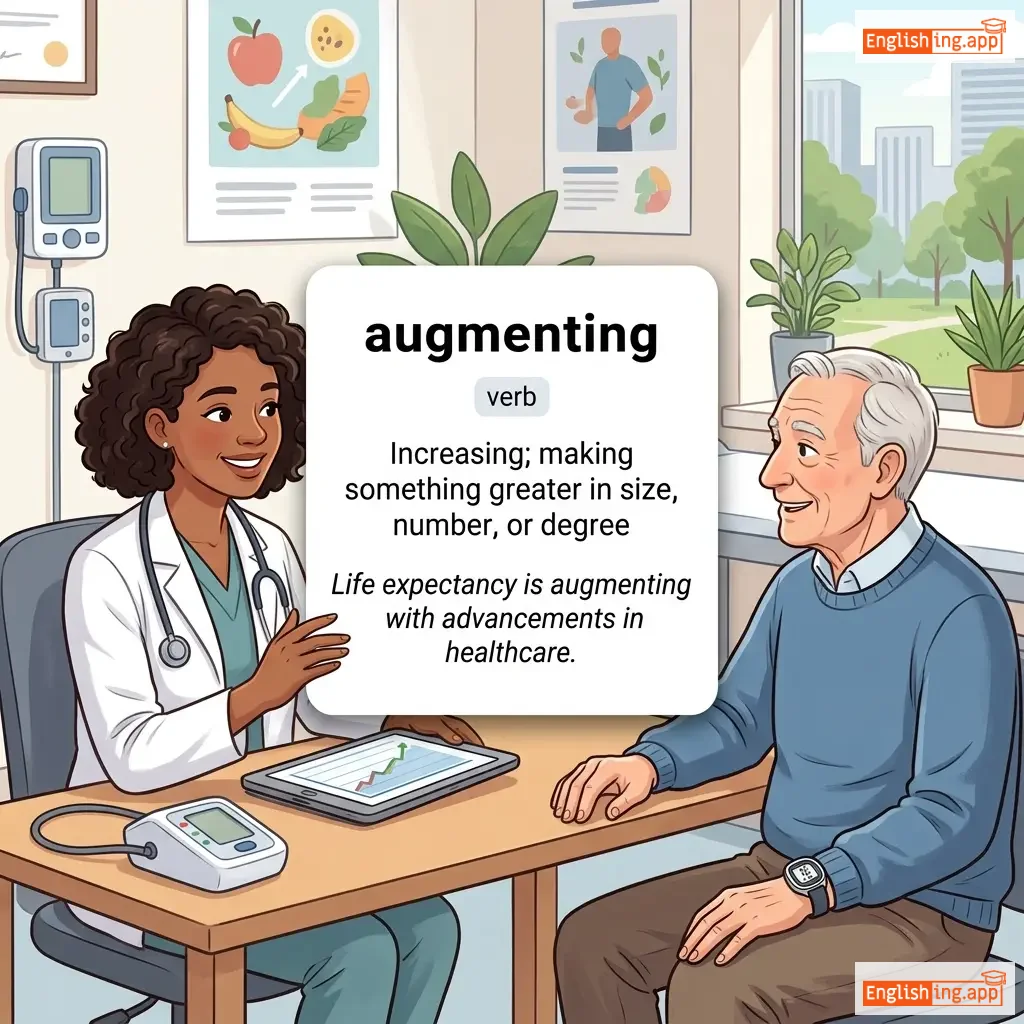
augmenting definition card — visual illustration of the meaning
verb
ɔːɡˈmɛntɪŋ
增加 (zēngjiā)

Increasing; making something greater in size, number, or degree

"Life expectancy is augmenting with advancements in healthcare."

"随着医疗保健的进步,预期寿命正在增加。" (Suízhe yīliáo bǎojiàn de jìnbù, yùqī shòumìng zhèngzài zēngjiā.)
verb
/ˈɔːɡər/
预示 (yùshì)

To be a sign of something to come; to predict or foretell.

"Dark clouds augur a coming storm."

"乌云预示着即将来临的风暴。" (Wuyun yùshì zhe jíjiāng láilín de fēngbào.)
noun
/ˈɔːɡjʊri/
预兆 (yùzhào)

A sign or omen that is believed to predict future events.

"The dark clouds were seen as an augury of an approaching storm."

"黑云被视为即将到来的风暴的预兆。" (Hēi yún bèi shì wéi jíjiāng dàolái de fēngbào de yùzhào.)
adjective
/ɔːˈɡʌst/
庄严 (zhuangyan)

Respected and impressive; inspiring reverence or admiration.

"The king entered the hall with an august presence."

"国王以庄严的姿态走进了大厅。" (Guówáng yǐ zhuāngyán de zītài zǒu jìnle dàtīng.)
👩‍🦳

aunt (ænt)

noun
/ænt/
阿姨 (āyí)

the sister of your father or mother, or the wife of your uncle

"My aunt always gives me gifts on my birthday."

"我的阿姨总是在我生日时给我礼物。" (Wǒ de āyí zǒng shì zài wǒ shēngrì shí gěi wǒ lǐwù.)
noun
/ˈɑːnti/
阿姨 (ayi)

the sister of one’s father or mother; a term of respectful address for an older woman, especially in South Asian usage

"My aunty lives near our house and often visits us."

"我的阿姨住在我们家附近,经常来看我们。" (wo de ayi zhu zai women jia fujin jingchang lai kan women)
adjective
/ˈɔːrəl/
听觉的 (tingjue de)

Relating to the ear or the sense of hearing.

"The lecture was an aural experience as well as an intellectual one."

"讲座是一次听觉体验,和一次智力体验一样。" (Jiangzuo shi yici tingjue tiyan, he yici zhili tiyan yiyang.)
noun
/ˈɔːriˌoʊl/
光环 (guānghuán)

A halo or radiance surrounding the head or body, often in religious art.

"The painting showed the saint with an aureole around his head."

"这幅画展示了圣人头上方的光环。" (Zhè fú huà zhǎnshìle shèngrén tóushàng fāng de guānghuán.)
noun
/ˈɔːrɪkl̩/
耳朵的外部部分 (ěrduǒ de wàibù bùfen)

The external part of the ear; also an upper chamber of the heart in anatomy.

"The doctor examined the patient’s auricle for signs of infection."

"医生检查了病人的耳朵外部部分是否有感染迹象。" (Yīshēng jiǎnchále bìngrén de ěrduǒ wàibù bùfen shìfǒu yǒu gǎnrǎn jìxiàng.)
adjective
/ɔːˈrɪkjʊlər/
与耳朵有关 (yu erduo youguan)

Relating to the ear or hearing.

"The doctor used an auricular thermometer to check the patient's temperature."

"医生使用耳廓温度计来检查病人的体温。" (Yisheng shiyong erkuo wendujì lái jiǎnchá bìngrén de tǐwēn.)
adjective
/ɔːˈrɪfərəs/
含金的 (hán jīn de)

Containing or producing gold.

"The miners discovered an auriferous vein in the mountains."

"矿工在山中发现了一个含金的矿脉。" (Kuànggōng zài shān zhōng fāxiànle yīgè hán jīn de kuàngmài.)
noun
/ɔːˈrɔːrə/
极光 (jiguang)

A natural display of lights in the sky, usually seen in polar regions.

"We traveled to Norway to see the northern aurora."

"我们去了挪威看北极光。" (Wǒmen qùle Nuówēi kàn běijíguāng.)
adjective
/ɔːˈrɔːrəl/
与极光相关 (yǔ jíguāng xiāngguān)

Relating to or resembling the aurora, especially the northern lights.

"The scientists observed auroral activity in the night sky."

"科学家们在夜空中观察到了欧若拉活动。" (Kēxuéjiāmen zài yèkōng zhōng guānchá dào le ōuruòlā huódòng.)
noun
/ˌɔːskʌlˈteɪʃən/
听诊 (tingzhen)

The act of listening to internal sounds of the body, typically using a stethoscope.

"The doctor performed auscultation to check the patient’s lungs."

"医生进行了听诊,以检查病人的肺部。" (Yisheng jinxing le tingzhen, yi jiancha bingren de feibu.)
noun
/ˈɔːspɪs/
预兆, 保护 (yùzhào, bǎohù)

A sign, omen, or divine token; also refers to protection or support.

"The project was launched under the auspice of the government."

"该项目在政府的保护下启动。" (Gai xiàngmù zài zhèngfǔ de bǎohù xià qǐdòng.)
noun (plural)
/ˈɔːspɪsɪz/
庇护 (bihu)

Patronage, support, or guidance, often used in the phrase 'under the auspices of'.

"The conference was held under the auspices of the United Nations."
"会议在联合国的支持下举行。" (Huiyi zai lianheguo de zhichi xia juxing.)
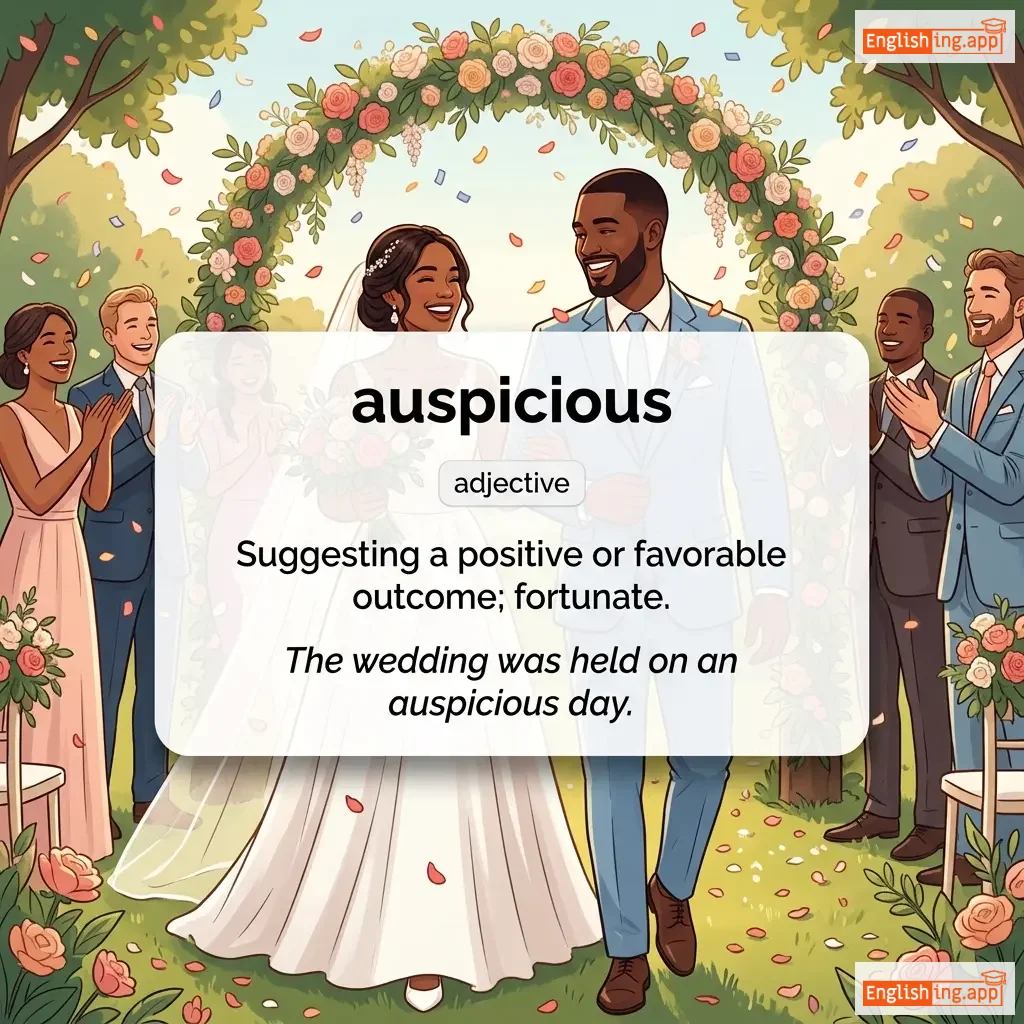
auspicious definition card — visual illustration of the meaning
adjective
/ɔːˈspɪʃəs/
吉祥 (jíxiáng)

Suggesting a positive or favorable outcome; fortunate.

"The wedding was held on an auspicious day."

"婚礼在一个吉祥的日子举行。" (Hūnlǐ zài yīgè jíxiáng de rìzi jǔxíng.)
austere definition card — visual illustration of the meaning
adjective
/ɔːˈstɪə/
严格,简朴 (ying2 ge2, jian3 pu3)

Severe or strict in manner, attitude, or appearance; plain and simple.

"The monk lived an austere life in the mountains."
"和尚在山中过着严格的生活。" (He shang zai shan zhong guo zhe ying2 ge2 de shenghuo.)
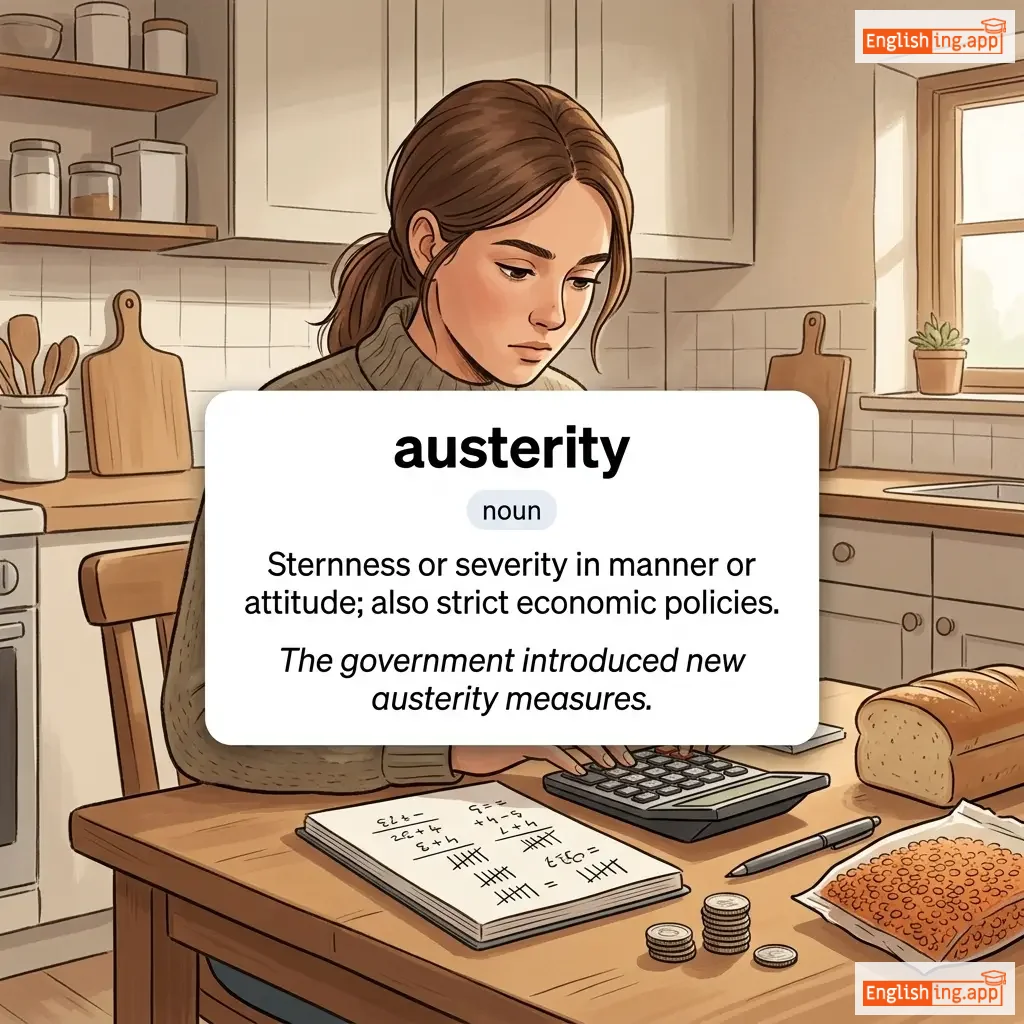
austerity definition card — visual illustration of the meaning
noun
/ɒˈstɛrɪti/
紧缩,经济紧缩政策 (jǐn suō, jīng jì jǐn suō zhèng cè)

Sternness or severity in manner or attitude; also strict economic policies.

"The government introduced new austerity measures."

"政府推出了新的紧缩措施。" (Zhèngfǔ tuīchūle xīn de jǐnsuō cuòshī.)
noun
/ˈɔːtɑːrki/
自给自足 (ziji zizhu)

A system of self-sufficiency where a state or community is economically independent.

"The nation attempted autarchy to reduce reliance on imports."

"这个国家试图实现自给自足,以减少对进口的依赖。" (Zhe ge guojia shitu shixian ziji zizhu, yi jian shao dui jin kou de yilai.)
autarky definition card — visual illustration of the meaning
noun
ˈɔː.tɑː.ki
自给自足, 经济独立 (ziji zizu, jingji duli)

Economic independence or self-sufficiency; a policy of establishing a self-sufficient national economy.

"Some nations aim for autarky to reduce reliance on imports."

"一些国家通过减少对进口的依赖,追求自给自足。" (Yixie guojia tongguo jianshao dui import de yilai, zhuiqiu ziji zizu.)
adjective
/ɔːˈθɛntɪk/
正宗 (zhèngzōng)

Genuine and real; not fake or copied.

"The museum displayed an authentic painting by Picasso."

"博物馆展示了毕加索的正宗画作。" (Bówùguǎn zhǎnshìle bìjiāsuǒ de zhèngzōng huàzuò.)
adverb
/ɔːˈθentɪkli/
真实地 (zhenshi de)

in a genuine, real, or true manner; in a way that reflects true character or origin

"She speaks authentically about her experiences."

"她真实地谈论自己的经历。" (ta zhenshi de tanlun ziji de jingli)
verb
/ɔːˈθɛntɪkeɪt/
认证 (renzheng)

To prove or show that something is genuine or true.

"The bank uses advanced technology to authenticate online transactions."

"银行使用先进的技术来认证在线交易。" (Yinhang shiyong xianjin de jishu lai renzheng zaixian jiaoyi.)
authenticity definition card — visual illustration of the meaning
noun
/ˌɔːθɛnˈtɪsɪti/
真实性 (zhen shi xing)

The quality of being genuine or real.

"The authenticity of the ancient manuscript was confirmed by experts."

"古代手稿的真实性得到了专家的确认。" (Gu dai shou gao de zhen shi xing de dao le zhuan jia de que ren.)
noun
/ˈɔːθər/
作者 (zuòzhě)

A person who writes books, articles, or other literary works.

"She is the author of several bestselling novels."

"她是几本畅销小说的作者。" (Tā shì jǐ běn chàngxiāo xiǎoshuō de zuòzhě.)
authoritarian definition card — visual illustration of the meaning
adjective
/əˌθɔːrɪˈtɛəriən/
威权主义 (weiquan zhuyi)

Favouring or enforcing strict obedience to authority, often at the expense of personal freedom.

"The regime was highly authoritarian, suppressing all forms of dissent."

"该政权极为威权,压制所有形式的异见。" (Gāi zhèngquán jí wèi wēiquán, yāzhì suǒyǒu xíngshì de yìjiàn.)
adjective
/əˈθɔːrɪtətɪv/
权威的 (quánwēi de)

Having or showing authority; commanding and self-confident; reliable as a source of information.

"She spoke in an authoritative tone that silenced the room."
"她用权威的语气说话,令房间安静下来。" (Tā yòng quánwēi de yǔqì shuōhuà, lìng fángjiān ānjìng xiàlái.)
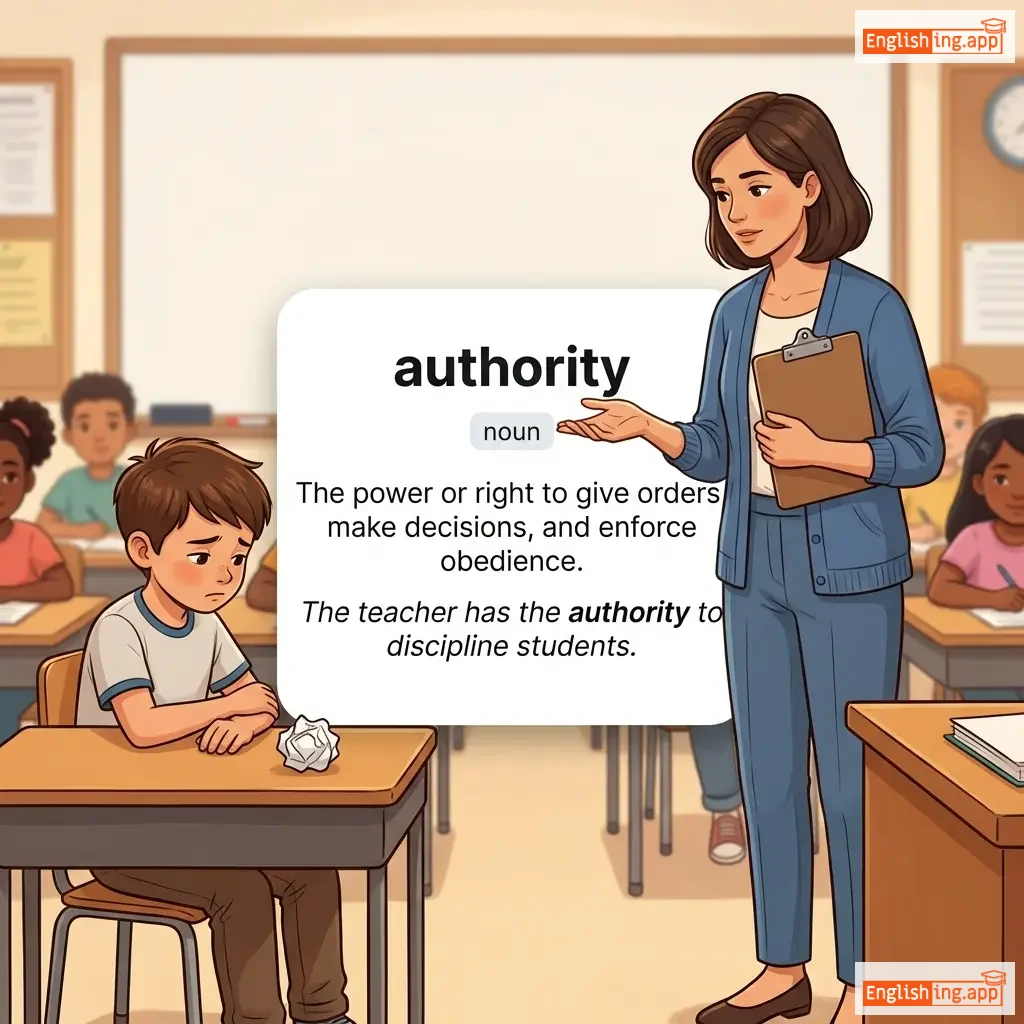
authority definition card — visual illustration of the meaning
noun
/əˈθɔːrəti/
权威 (quanwei)

The power or right to give orders, make decisions, and enforce obedience.

"The teacher has the authority to discipline students."

"老师有权利惩罚学生。" (Laoshi you quanli chengfa xuesheng.)
authorize definition card — visual illustration of the meaning
verb
/ˈɔːθəraɪz/
授权 (shòuquán)

to give official permission or approval for something

"The manager authorized the refund after reviewing the complaint."

"经理在审查投诉后授权了退款。" (Jīnglǐ zài shěnchá tóusù hòu shòuquánle tuìkuǎn.)
noun
/ˈɔːtoʊ/
汽车 (qiche)

A motor vehicle, especially a car.

"He drove his auto to the market."

"他开车去了市场。" (Ta kaiche qule shichang.)