词汇表

英语词汇词典 | 单词含义、定义和示例

noun
/ˈæntɪk/
滑稽 (huá jī)

a playful, funny, or silly act or gesture

"The children laughed at the clown’s antics."

"孩子们笑着看小丑的滑稽动作。" (Háizimen xiàozhe kàn xiǎo chǒu de huá jī dòngzuò.)
noun
/ˈæntiˌkraɪst/
敌基督 (dí jīdū)

A person regarded as the supreme opponent of Christ, often seen as a figure of ultimate evil.

"Some people fear the rise of an Antichrist in the future."

"有些人害怕未来出现敌基督。" (Yǒuxiē rén hàipà wèilái chūxiàn dí jīdū.)
verb
/ænˈtɪsɪˌpeɪt/
预期 (yùqī)

to expect or look forward to something; to realize or foresee in advance

"We anticipate a large crowd at the event."
"我们预期活动中会有大量人群。" (Wǒmen yùqī huódòng zhōng huì yǒu dàliàng rénqún.)
anticipated definition card — visual illustration of the meaning
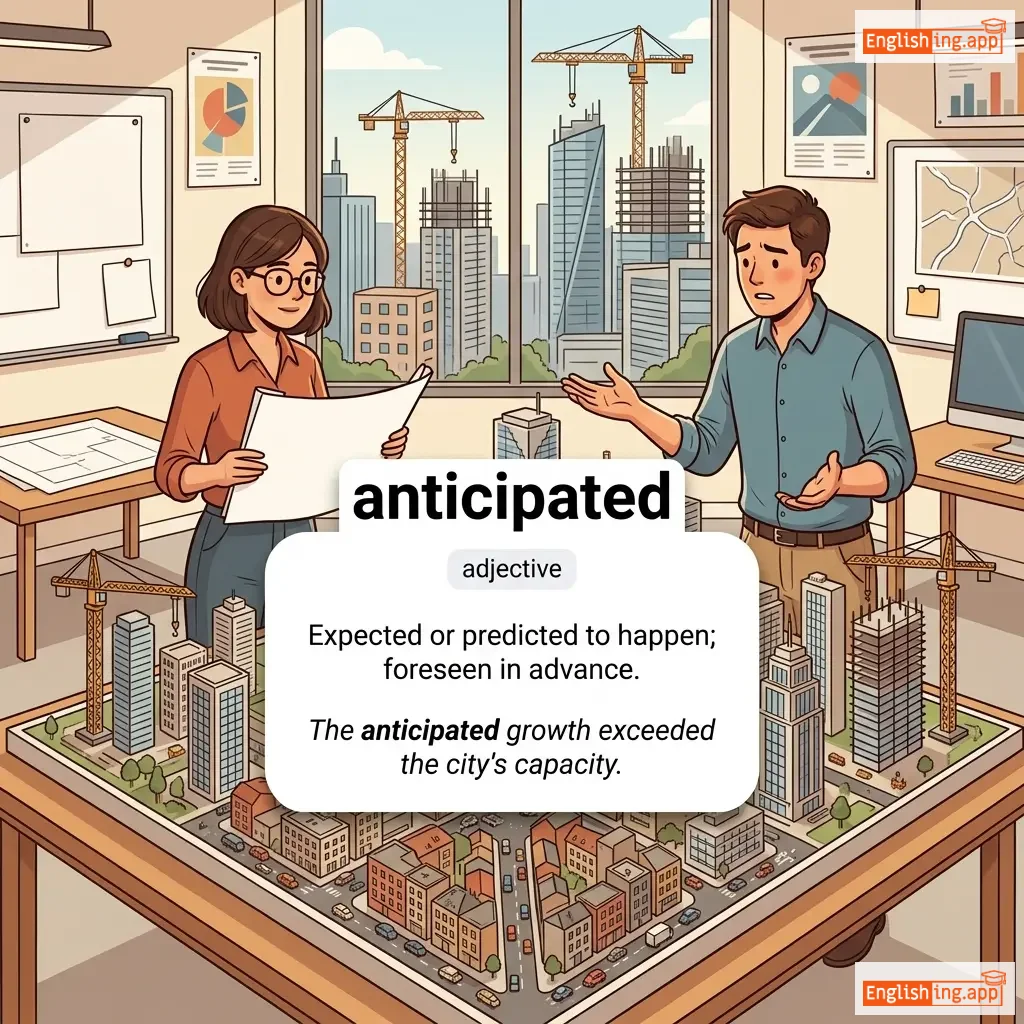
adjective
ænˈtɪsɪpeɪtɪd
预期的 (yùqī de)

Expected or predicted to happen; foreseen in advance.

"The anticipated growth exceeded the city's capacity."

"预期的增长超出了城市的容量。" (Yùqī de zēngzhǎng chāo chūle chéngshì de róngliàng.)
noun
/ˌæntiˈklaɪmæks/
反高潮 (fǎn gāo cháo)

A disappointing end after a big build-up of excitement or expectation.

"The movie's ending was an anticlimax after such a thrilling story."

"电影的结局是一个反高潮,在如此激动人心的故事之后。" (Diànyǐng de jiéjú shì yīgè fǎn gāo cháo, zài rúcǐ jīdòng rénxīn de gùshì zhīhòu.)
noun
/ˌæntiˈsaɪkloʊn/
反气旋 (fǎnqìxuán)

A weather system with high atmospheric pressure at its center, usually bringing calm and clear conditions.

"An anticyclone brought sunny weather across the region."

"一个反气旋带来了晴朗的天气。" (Yīgè fǎnqìxuán dàilái le qínglǎng de tiānqì.)
noun
/ˈæntɪˌdoʊt/
解毒药 (jiědú yào)

A substance that neutralizes the effects of a poison; something that relieves or counteracts.

"The doctor quickly administered an antidote to the snake venom."

"医生迅速给蛇毒注射了解毒药。" (Yīshēng xùnsù gěi shé dú zhùshè le jiědú yào.)
noun
/ænˈtɪlədʒi/
矛盾论 (maodun lun)

A contradiction in terms or ideas; inconsistency in speech or writing.

"The politician's statement was criticized for its antilogy."
"这位政治家的声明因其矛盾论而受到批评。" (Zhè wèi zhèngzhì jiā de shēngmíng yīn qí máodùn lùn ér shòudào pīpíng.)
antioxidant definition card — visual illustration of the meaning
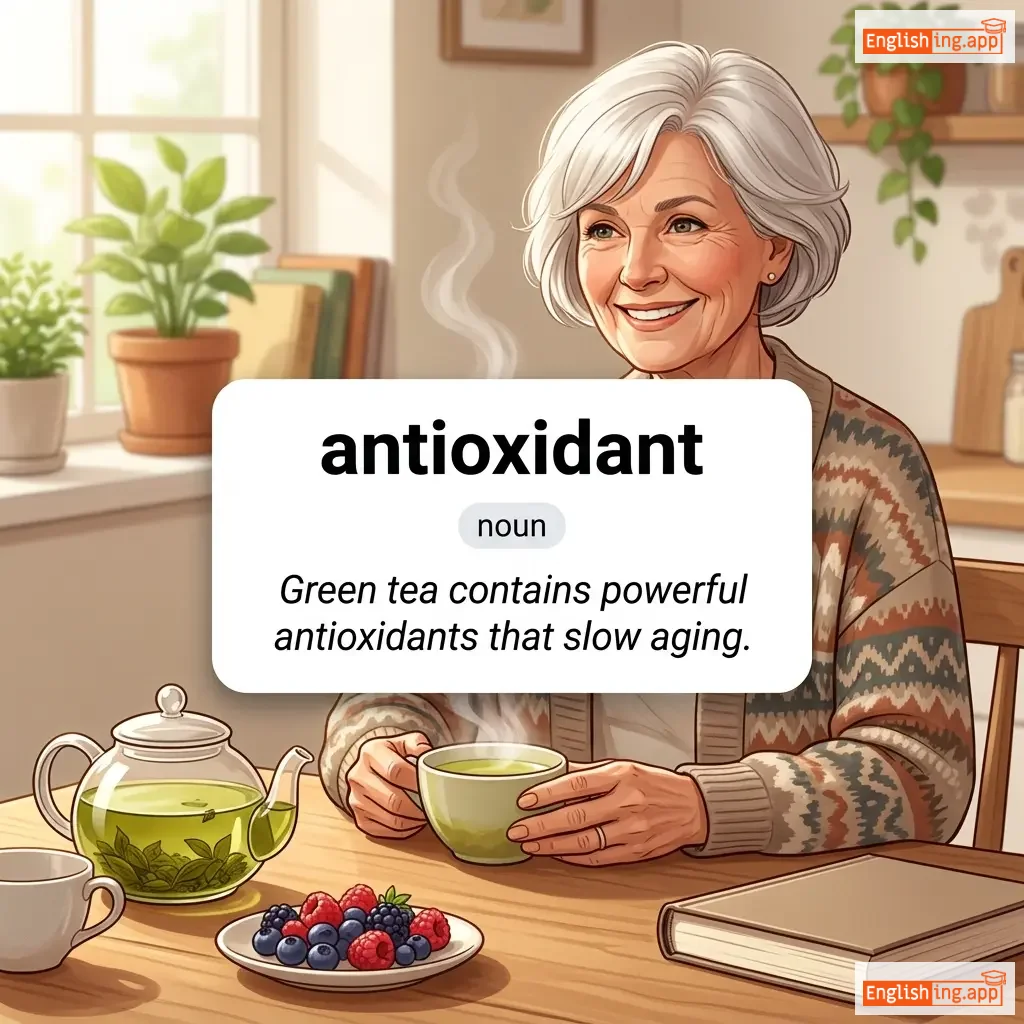
noun
ˌæn.tiˈɒk.sɪ.dənt
抗氧化剂 (kàng yǎng huà jì)

A substance that may prevent or delay some types of cell damage by neutralizing free radicals.

"Green tea contains powerful antioxidants that slow aging."
"绿茶含有强效的抗氧化剂,可以减缓衰老。" (Lǜ chá hányǒu qiángxiào de kàng yǎng huà jì, kěyǐ jiǎnhuǎn shuāilǎo.)
antioxidants definition card — visual illustration of the meaning
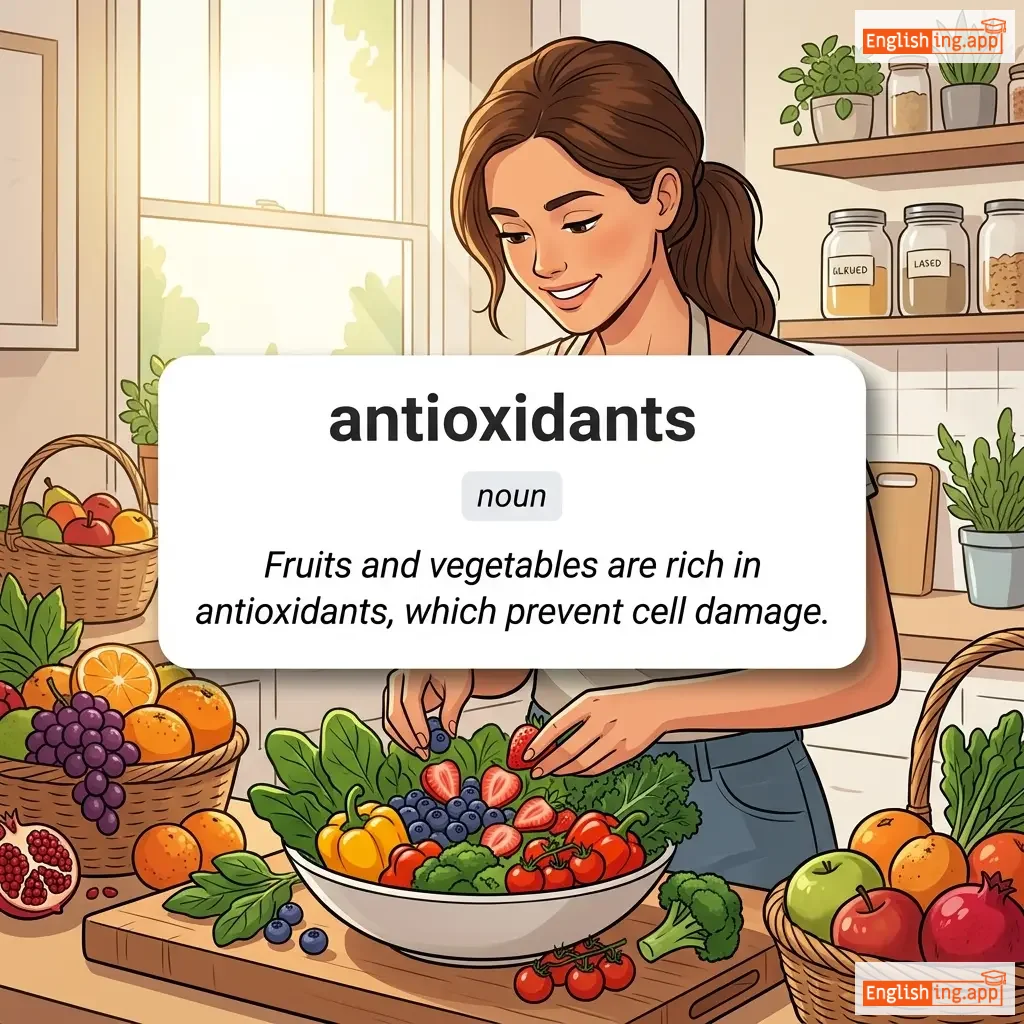
noun
/ˌæn.tiˈɒk.sɪ.dənts/
抗氧化剂 (kang yang hua ji)

Substances that may prevent or delay cell damage caused by free radicals, potentially reducing the risk of certain diseases.

"Fruits and vegetables are rich in antioxidants, which prevent cell damage."

"水果和蔬菜富含抗氧化剂,能够防止细胞损伤。" (shuiguo he shucai fuhan kangyanghuaji nenggou fangzhi xibao sunshang)
verb
/ænˈtɪpəθaɪz/
反感 (fǎn gǎn)

to feel or express a strong dislike or aversion toward something or someone

"He seemed to antipathize with the new management's approach."
"他似乎对新管理方法持反感态度。" (Tā shìhū duì xīn guǎnlǐ fāngfǎ chí fǎn gǎn tàidù.)
antipathy definition card — visual illustration of the meaning
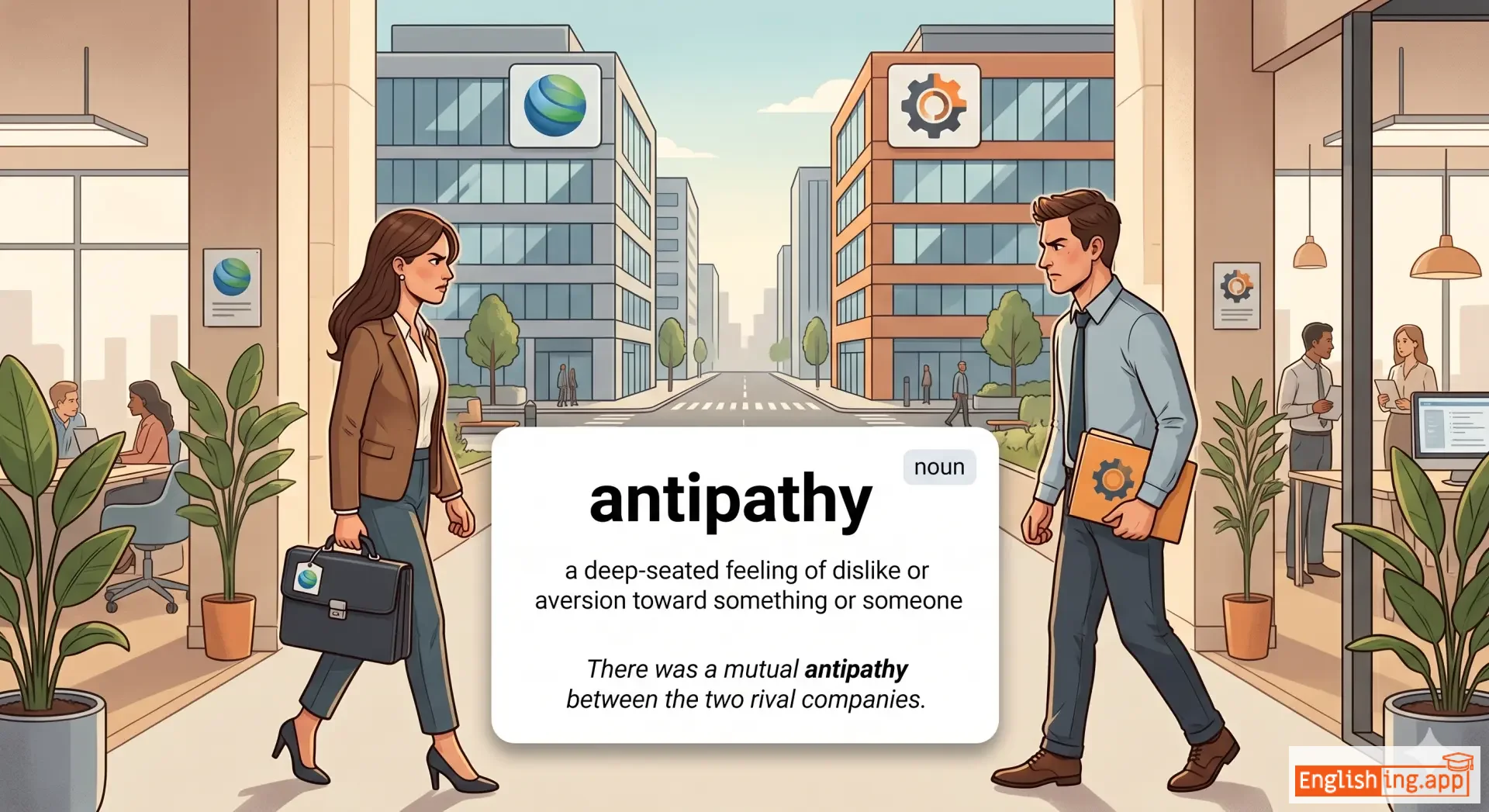
noun
/ænˈtɪpəθi/
反感 (fǎn gǎn)

a deep-seated feeling of dislike or aversion toward something or someone

"There was a mutual antipathy between the two rival companies."

"两家竞争对手之间存在相互的反感。" (Liǎng jiā jìngzhēng duìshǒu zhījiān cúnzài xiānghù de fǎn gǎn.)
noun
/ˈæntɪfɒn/
反诗 (fǎnshī)

a short chant or verse sung responsively in Christian worship, typically sung before or after a psalm or canticle

"The choir sang the antiphon before beginning the main hymn."

"合唱团在开始主要圣歌之前唱了反诗。" (Héchàngtuán zài kāishǐ zhǔyào shènggē zhīqián chàngle fǎnshī.)
noun
/ænˈtɪfəni/
对唱 (duìchàng)

a form of music in which two or more groups or choirs sing alternately in response to each other

"The cathedral's architecture was designed to enhance the effect of antiphony."

"大教堂的建筑旨在增强对唱的效果。" (dà jiàotáng de jiànzhú zhǐ zài zēngqiáng duìchàng de xiàoguǒ.)
noun
/ænˈtɪpədiːz/

places on opposite sides of the Earth; also refers to things that are direct opposites

"Australia and Britain are often considered antipodes of each other."

noun
/ˈæntɪkwɛri/
古董商 (gǔdǒng shāng)

A person who studies, collects, or deals in antiques or ancient objects.

"The antiquary spent years collecting rare manuscripts from the medieval period."

"这位古物商花了多年时间收集来自中世纪的稀有手稿。" (Zhè wèi gǔwù shāng huāle duōnián shíjiān shōují láizì zhōng shìjì de xīyǒu shǒugǎo.)
verb
/ˈæntɪkweɪt/
过时 (guò shí)

To make something old-fashioned or obsolete.

"The rise of digital cameras antiquated traditional film photography."

"数字相机的崛起使传统胶片摄影过时。" (Shùzì xiàngjī de juéqǐ shǐ chuántǒng jiāopiàn shèyǐng guò shí.)
adjective
/ˈæntɪkweɪtɪd/
过时的 (guòshí de)

Old-fashioned or outdated.

"The office still uses an antiquated filing system."

"办公室仍在使用过时的归档系统。" (Bàngōngshì réng zài shǐyòng guòshí de guīdǎng xìtǒng.)
noun
/ænˈtiːk/
古董物品 (gǔdǒng wùpǐn)

An old collectible item that has high value because of its age and rarity.

"She bought an antique vase from the market."
"她从市场上买了一只古董花瓶。" (Tā cóng shìchǎng shàng mǎile yī zhī gǔdǒng huāpíng.)
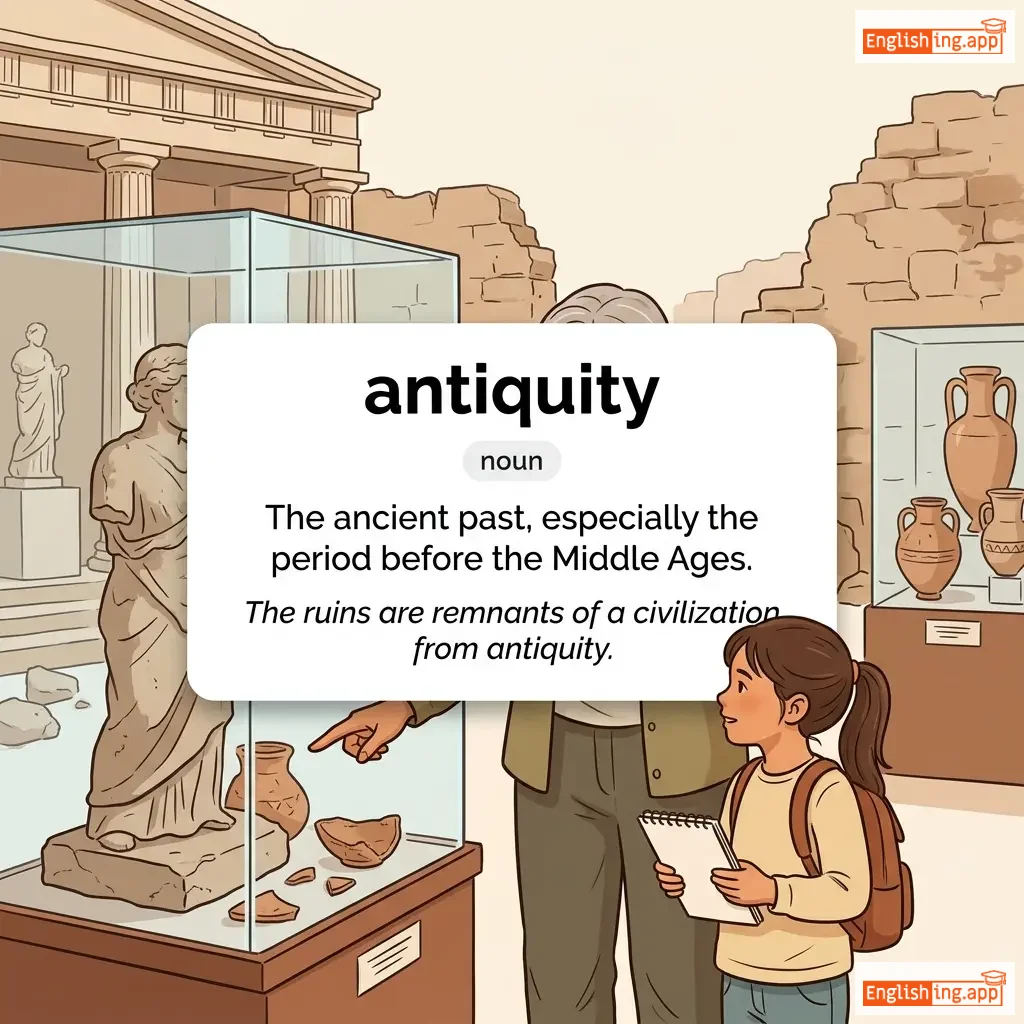
antiquity definition card — visual illustration of the meaning
noun
/ænˈtɪkwɪti/
古代 (gǔdài)

The ancient past, especially the period before the Middle Ages.

"The ruins are remnants of a civilization from antiquity."

"这些废墟是古代文明的遗迹。" (Zhèxiē fèixū shì gǔdài wénmíng de yíjì.)
noun, adjective
/ˌæntiˈsɛptɪk/

A substance that prevents the growth of disease-causing microorganisms; clean and free from germs.

"The nurse applied an antiseptic to the wound."

adjective
/ˌæntiˈsleɪvəri/
反奴隶制 (fǎn núlì zhì)

Opposed to the practice or system of slavery.

"The antislavery movement gained momentum in the 19th century."

"反奴隶制运动在19世纪获得了动力。" (Fǎn núlì zhì yùndòng zài 19 shìjì huòdé le dònglì.)
adjective
/ˌæn.tiˈsoʊ.ʃəl/
反社会的;对社会秩序敌对 (fǎn shèhuì de; duì shèhuì zhìxù díduì)

avoiding social interaction; hostile to social order

"His antisocial behavior made it difficult for him to make friends."

"他的反社会行为让他很难交到朋友。" (Tā de fǎn shèhuì xíngwéi ràng tā hěn nán jiāo dào péngyǒu.)
noun, adjective
/ˌæntiˌspæzˈmɒdɪk/
抗痉挛药 (kàng jìngluán yào)

A drug or agent that relieves or prevents muscle spasms.

"The doctor prescribed an antispasmodic to ease the pain."

"医生开了一种抗痉挛药来缓解疼痛。" (Yīshēng kāile yī zhǒng kàng jìngluán yào lái huǎnjiě téngtòng.)
noun
/ænˈtɪstrəfi/
反歌式 (一种修辞手法) (fǎn gē shì)

A rhetorical device in which a word or phrase is repeated at the end of successive clauses; in Greek choral poetry, the part of the ode sung by the chorus in return movement.

"The poet used antistrophe to emphasize the repeated phrase."

"诗人使用反歌式来强调重复的短语。" (Shīrén shǐyòng fǎn gē shì lái qiángdiào chóngfù de duǎnyǔ.)
noun
/ænˈtɪθəsɪs/
对立面 (duìlìmiàn)

A person, thing, or idea that is the direct opposite of another; a rhetorical device contrasting opposing ideas in parallel structure.

"Love is the antithesis of hate."

"爱是仇恨的对立面。" (Ài shì chóuhèn de duìlìmiàn.)
adjective
/ˌæntɪˈθɛtɪkəl/
对立的 (duìlì de)

Directly opposed or contrasted; mutually incompatible.

"His views were antithetical to the values of the organization."

"他的观点与组织的价值观完全对立。" (Tā de guāndiǎn yǔ zǔzhī de jiàzhíguān wánquán duìlì.)
noun
/ˌæntɪˈtɒksɪn/
抗毒素 (kàng dú sù)

A substance that neutralizes a specific toxin in the body.

"The doctor administered an antitoxin to counter the snake venom."

"医生注射了抗毒素来中和蛇毒。" (Yīshēng zhùshè le kàng dú sù lái zhōnghé shé dú.)
noun
/ˈæntlɚ/
鹿角 (lu jiao)

The branched horns on the head of a deer or similar animal, usually shed and regrown annually.

"The deer’s antlers grew larger each year."

"鹿角每年都会变得更大。" (Lu jiao mei nian dou hui bian de geng da.)
noun
/ˈæntənɪm/
反义词 (fǎn yì cí)

A word opposite in meaning to another.

"‘Hot’ is the antonym of ‘cold’."

"‘Hot’ 是 ‘cold’ 的反义词。" ('Hot' shì 'cold' de fǎn yì cí.)
noun
/ˈeɪ.nəs/
肛门 (gāngmén)

the opening at the end of the digestive tract through which waste leaves the body

"The doctor examined the patient's anus during the medical checkup."

"医生在体检期间检查了病人的肛门。" (Yīshēng zài tǐjiǎn qījiān jiǎnchále bìngrén de gāngmén.)
noun
/ˈænvɪl/
铁砧 (tie zhen)

A heavy iron block used by blacksmiths for hammering and shaping metal.

"The blacksmith placed the hot iron on the anvil."
"铁匠将热铁放在铁砧上。" (Tiejiang jiang re tie fang zai tie zhen shang.)
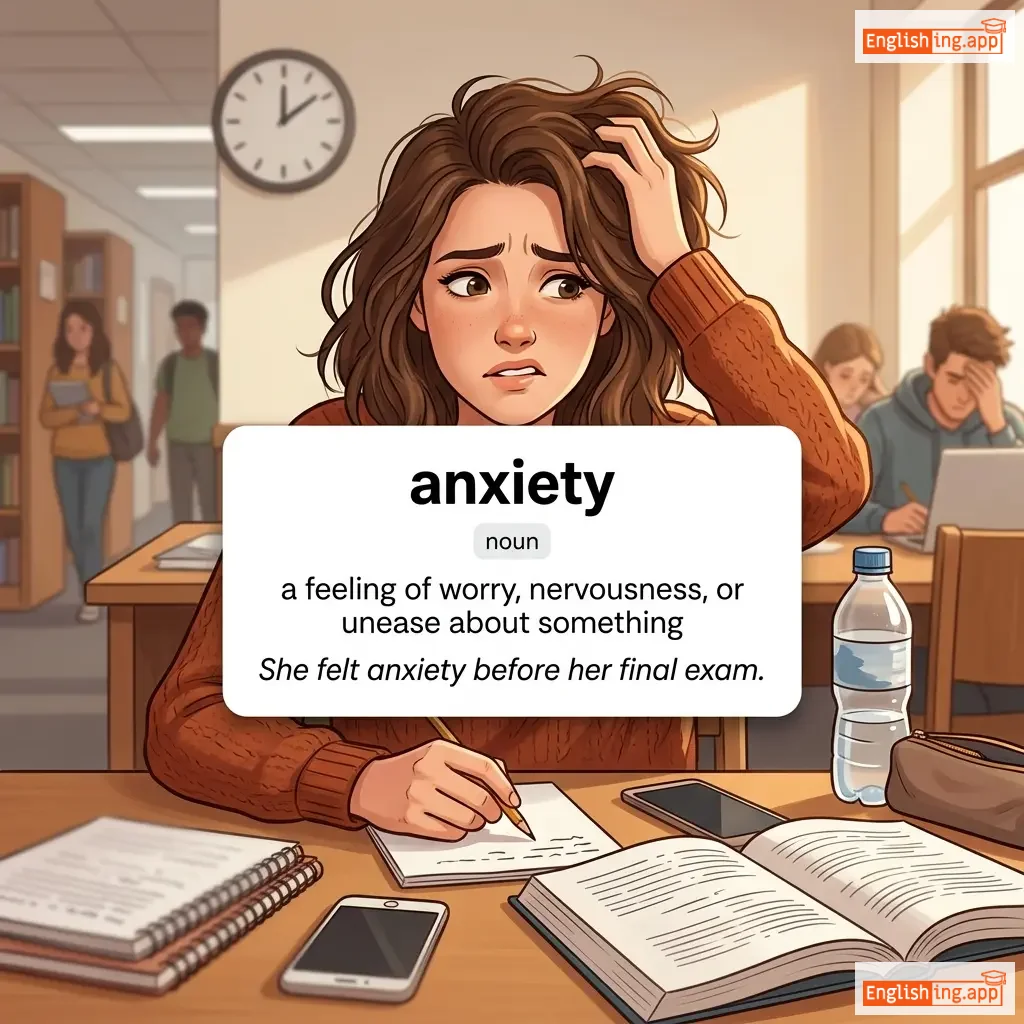
anxiety definition card — visual illustration of the meaning
noun
/æŋˈzaɪəti/
焦虑 (jiaolü)

a feeling of worry, nervousness, or unease about something

"She felt anxiety before her final exam."

"她在期末考试前感到焦虑。" (Ta zai qimou kaoshi qian gandao jiaolu.)
adjective
/ˈæŋkʃəs/
焦虑的 (jiaolü de)

feeling worried, nervous, or uneasy about something

"She felt anxious before her job interview."

"她在面试前感到焦虑。" (Ta zai mianshi qian gandao jiaolü.)
adverb
/ˈæŋkʃəsli/
焦急地 (jiaojide)

in a worried, nervous, or uneasy manner; with anxious anticipation

"She waited anxiously for the exam results."

"她焦急地等待考试结果。" (ta jiaojide dengdai kaoshi jieguo)
determiner/pronoun
/ˈɛni/
任何 (rènhé)

one, some, or all, without specifying which

"Do you have any questions?"

"你有任何问题吗?" (nǐ yǒu rènhé wèntí ma?)
pronoun
/ˈɛniˌbɒdi/
任何人 (rènhé rén)

any person; anyone

"Anybody can join the club."

"任何人都可以加入俱乐部。" (Rènhé rén dōu kěyǐ jiārù jùlèbù.)
adverb
/ˌɛniˈmɔr/
不再 (bù zài)

used to refer to the present time, typically to mean no longer

"He doesn’t live here anymore."

"他不再住在这里。" (Tā bù zài zhù zài zhèlǐ.)
pronoun
/ˈɛniwʌn/
某人 (mǒu rén)

any person at all; used to refer to an unspecified person

"Does anyone know the answer to this question?"

"有人知道这个问题的答案吗?" (yǒu rén zhīdào zhège wèntí de dá'àn ma?)
pronoun
/ˈɛnɪθɪŋ/
任何事物 (ren he shi wu)

any object, event, or matter; whatever thing

"You can ask me anything about the project."

"你可以问我关于项目的任何问题。" (Ni keyi wen wo guanyu xiangmu de renhe wenti.)
adverb
/ˈɛniweɪ/
无论如何 (wúlùn rúhé)

used to emphasize a statement or to return to a previous subject; regardless of what happened

"I was tired, but I went to the meeting anyway."

"我很累,但我还是去了会议。" (Wǒ hěn lèi, dàn wǒ háishì qùle huìyì.)
adverb
/ˈɛnɪwɛər/

in, at, or to any place

"You can find good food anywhere in this city."

↔️

Apart

adverb
/əˈpɑːrt/

separated by distance or time; into pieces

"They live miles apart from each other."

noun
/əˈpɑːrtmənt/
公寓 (gongyu)

a set of rooms forming a residence within a building

"She rented an apartment in the city center."
"她在市中心租了一套公寓。" (Ta zai shi zhongxin zu le yi tao gongyu.)
adjective
/ˌæpəˈθɛtɪk/

showing or feeling little or no interest, enthusiasm, or concern

"He was apathetic about the outcome of the match."

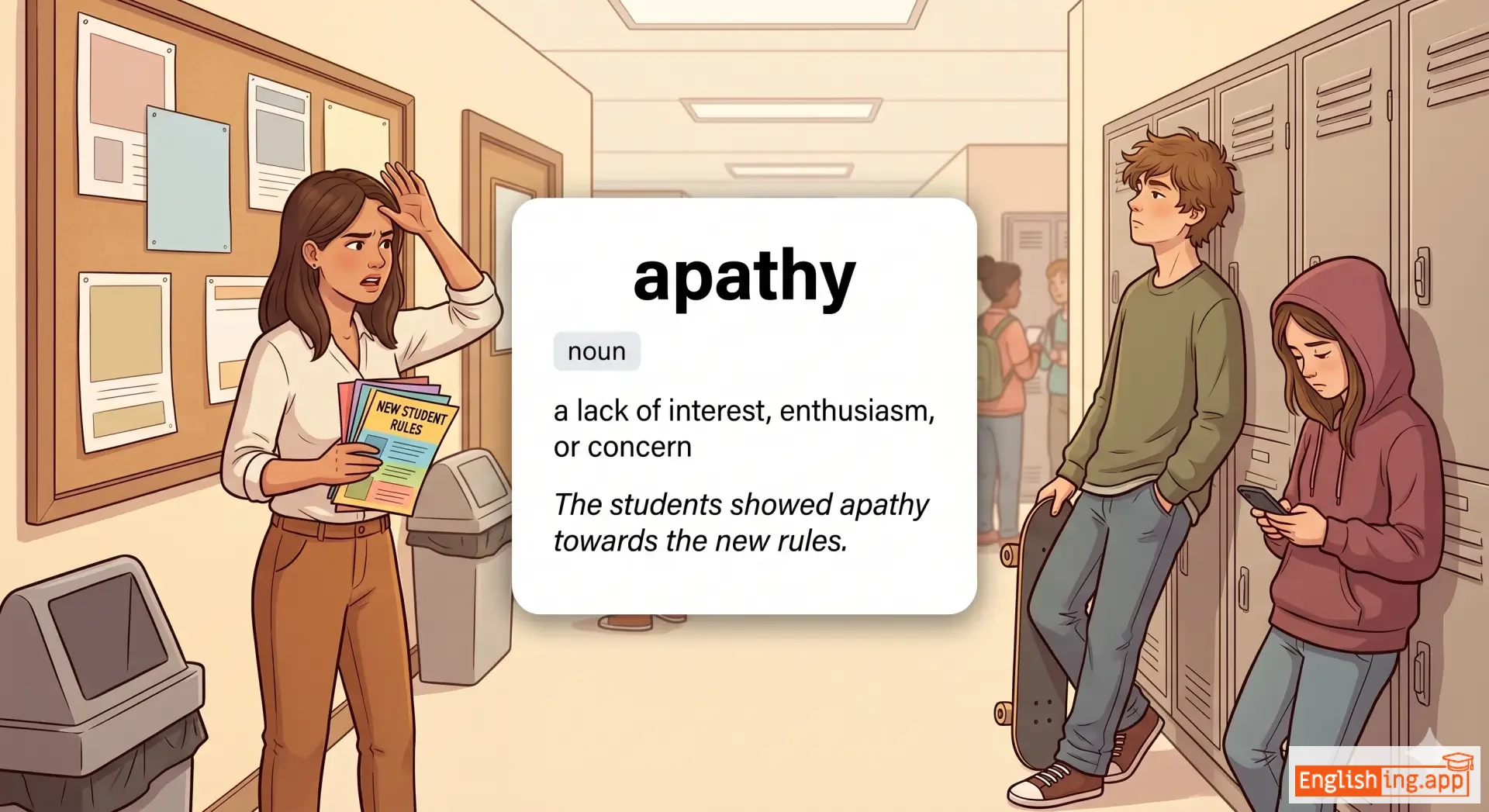
apathy definition card — visual illustration of the meaning
noun
/ˈæpəθi/
冷漠 (lěngmò)

a lack of interest, enthusiasm, or concern

"The students showed apathy towards the new rules."

"学生们对新规则表现出冷漠。" (Xuéshēng men duì xīn guīzé biǎoxiàn chū lěngmò.)
noun/verb
/eɪp/
一种类似猴子的大家伙 / 模仿 (yī zhǒng lèi shì hóuzi de dà jiā huǒ / mó fǎng)

a large primate similar to a monkey but without a tail; as a verb, to imitate or mimic

"Children often ape the behavior of adults."

"孩子们经常模仿大人的行为。" (Háizimen jīngcháng mófǎng dàrén de xíngwéi.)
noun
/ˈæpərtʃər/
孔洞 / 缝隙 (kǒngdòng / fèngxì)

an opening, hole, or gap, especially one that lets in light

"Light entered through the small aperture in the wall."
"光线通过墙上的小孔径进入。" (Guāngxiàn tōngguò qiáng shàng de xiǎo kǒngdòng jìnrù.)
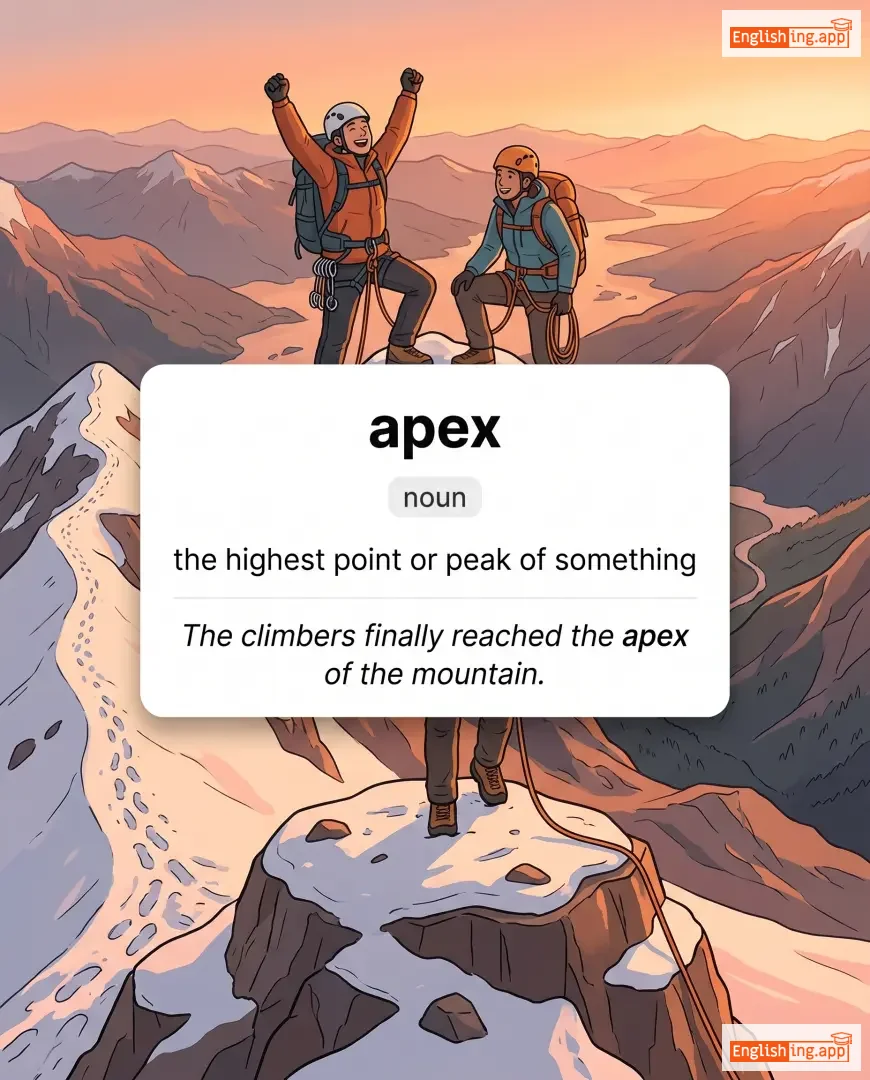
apex definition card — visual illustration of the meaning
noun
/ˈeɪ.pɛks/
顶点 (dingdian)

the highest point or peak of something

"The climbers finally reached the apex of the mountain."

"登山者最终到达了山顶。" (Dēngshān zhě zuìzhōng dào dá le shāndǐng.)
noun
/əˈfeɪ.ʒə/

a medical condition that causes loss of ability to speak or understand language

"After the stroke, she was diagnosed with aphasia."