語彙集

英単語辞書 | 単語の意味、定義、例文

noun
/ˈæntɪk/
ユーモア (yuumoa)

a playful, funny, or silly act or gesture

"The children laughed at the clown’s antics."

"子供たちはクラウンのユーモアに笑いました。" (Kodomotachi wa kuraun no yuumoa ni waraimashita.)
noun
/ˈæntiˌkraɪst/
反キリスト (hankirisuto)

A person regarded as the supreme opponent of Christ, often seen as a figure of ultimate evil.

"Some people fear the rise of an Antichrist in the future."

"一部の人々は未来に反キリストが現れることを恐れている。" (Ichibu no hitobito wa mirai ni hankirisuto ga arawareru koto o osorete iru.)
verb
/ænˈtɪsɪˌpeɪt/
予期する (yoki suru)

to expect or look forward to something; to realize or foresee in advance

"We anticipate a large crowd at the event."
"イベントには大勢の人が来ると予想しています。" (Ibento ni wa ōzei no hito ga kuru to yosō shiteimasu.)
anticipated definition card — visual illustration of the meaning
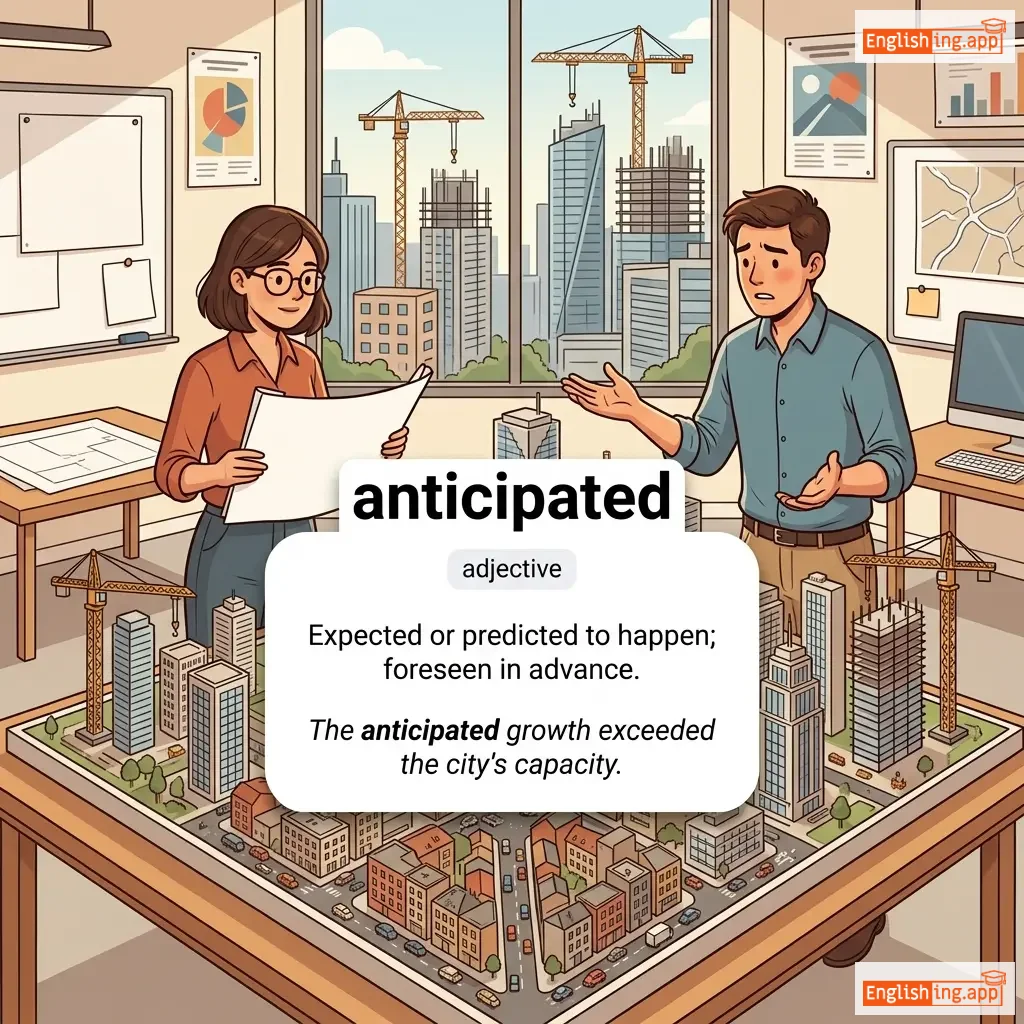
adjective
ænˈtɪsɪpeɪtɪd
予測された (yosokusareta)

Expected or predicted to happen; foreseen in advance.

"The anticipated growth exceeded the city's capacity."

"予測された成長は都市の容量を超えました。" (Yosokusareta seichou wa toshi no youryou wo koemashita.)
noun
/ˌæntiˈklaɪmæks/
アンチクライマックス (anchikuraimakkusu)

A disappointing end after a big build-up of excitement or expectation.

"The movie's ending was an anticlimax after such a thrilling story."

"映画の終わりは、そんなにエキサイティングなストーリーの後のアンチクライマックスでした。" (Eiga no owari wa, sonna ni ekisaitingu na sutōrī no ato no anchikuraimakkusu deshita.)
noun
/ˌæntiˈsaɪkloʊn/
反気旋 (hankisen)

A weather system with high atmospheric pressure at its center, usually bringing calm and clear conditions.

"An anticyclone brought sunny weather across the region."

"アンチサイクロンは地域全体に晴れた天気をもたらしました。" (Antisaikuron wa chiiki zentai ni haretatenki o motarashimashita.)
noun
/ˈæntɪˌdoʊt/
解毒剤 (kaidokuzai)

A substance that neutralizes the effects of a poison; something that relieves or counteracts.

"The doctor quickly administered an antidote to the snake venom."

"医者は素早く蛇の毒に解毒剤を投与した。" (Isha wa subayaku hebi no doku ni kaidokuzai o tōyo shita.)
noun
/ænˈtɪlədʒi/
アンチロジー (anchirojī)

A contradiction in terms or ideas; inconsistency in speech or writing.

"The politician's statement was criticized for its antilogy."

"政治家の発言はそのアンチロジーにより批判されました。" (Seijika no hatsugen wa sono anchirojī ni yori hihan saremashita.)
antioxidant definition card — visual illustration of the meaning
noun
ˌæn.tiˈɒk.sɪ.dənt
抗酸化物質 (kōsankabushitsu)

A substance that may prevent or delay some types of cell damage by neutralizing free radicals.

"Green tea contains powerful antioxidants that slow aging."
"緑茶には老化を遅らせる強力な抗酸化物質が含まれています。" (Ryokucha ni wa rōka o okuraseru kyōryoku na kōsankabushitsu ga fukumareteimasu.)
antioxidants definition card — visual illustration of the meaning
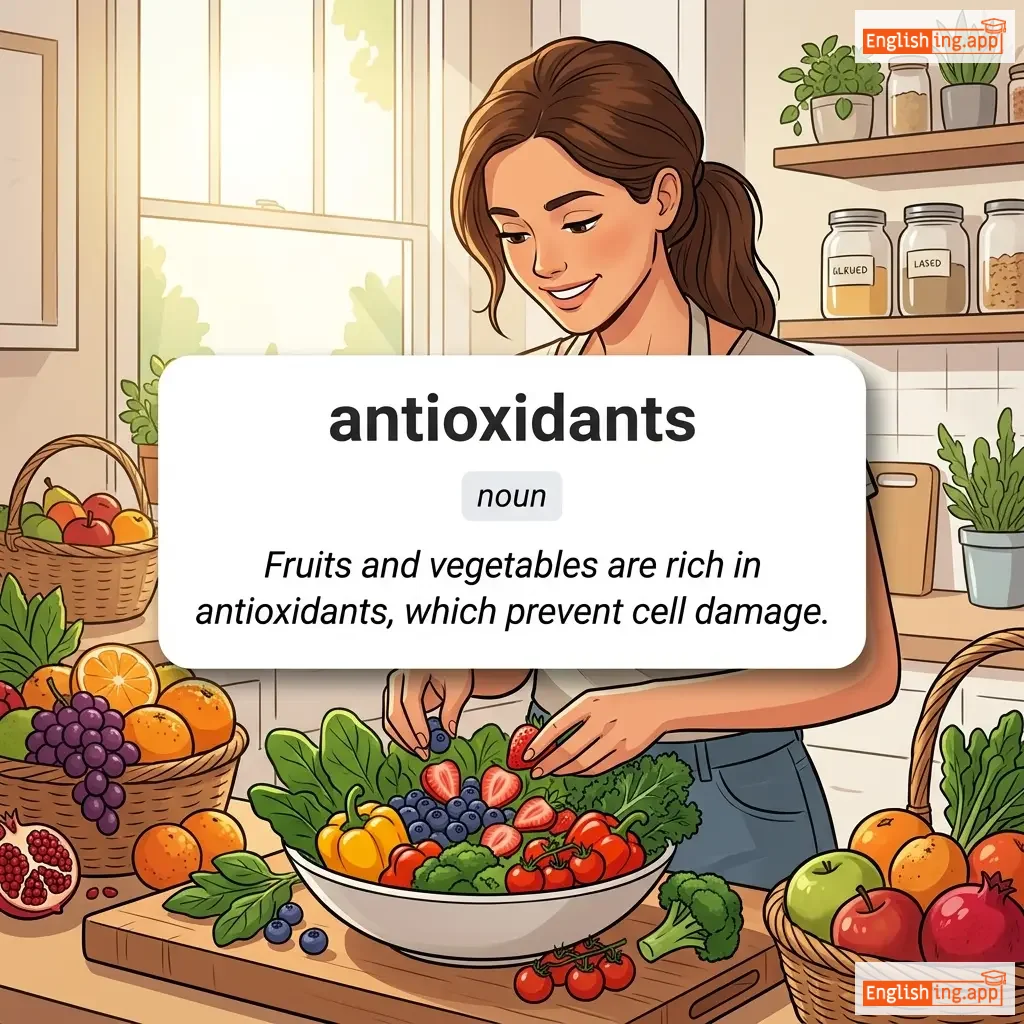
noun
/ˌæn.tiˈɒk.sɪ.dənts/
抗酸化物質 (kousankabushitsu)

Substances that may prevent or delay cell damage caused by free radicals, potentially reducing the risk of certain diseases.

"Fruits and vegetables are rich in antioxidants, which prevent cell damage."

"果物や野菜には抗酸化物質が豊富で、それらは細胞の損傷を防ぎます。" (Kudamono ya yasai wa kousankabushitsu o ooku fukunde ori, sorera ga saibou no sonshou o yobou mata wa okuraseru.)
verb
/ænˈtɪpəθaɪz/
反感 (hankan)

to feel or express a strong dislike or aversion toward something or someone

"He seemed to antipathize with the new management's approach."
"彼は新しい経営陣のアプローチに反感を示しているようだった。" (Kare wa atarashī keieijin no apurōchi ni hankan o shimeshite iru yō datta.)
antipathy definition card — visual illustration of the meaning
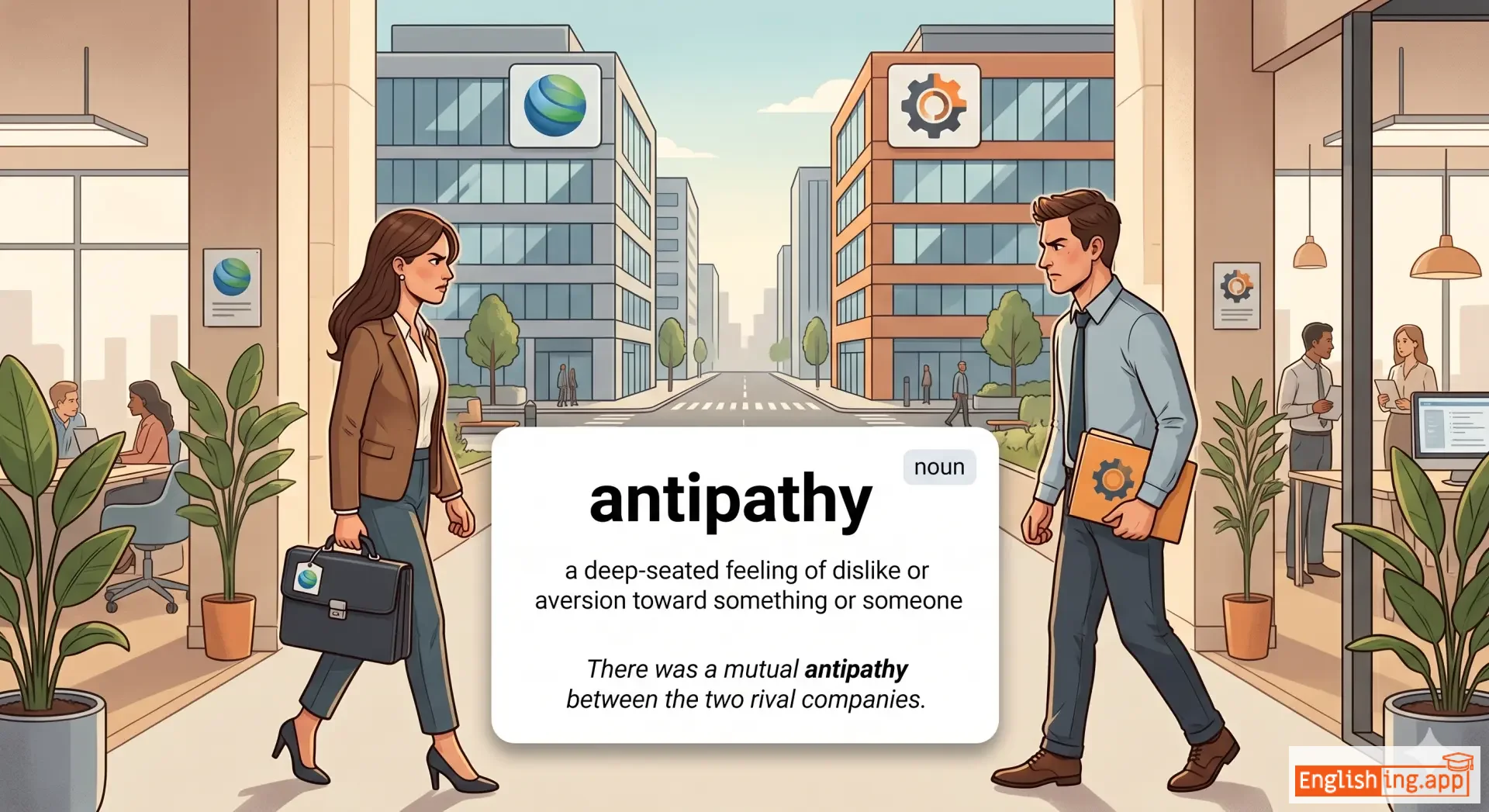
noun
/ænˈtɪpəθi/
アンチパシー (anchipashī)

a deep-seated feeling of dislike or aversion toward something or someone

"There was a mutual antipathy between the two rival companies."

"二つの競争する企業の間に相互のアンチパシーがありました。" (Futatsu no kyōsō suru kigyō no aida ni sōgo no anchipashī ga arimashita.)
noun
/ˈæntɪfɒn/
アンティフォン (antifon)

a short chant or verse sung responsively in Christian worship, typically sung before or after a psalm or canticle

"The choir sang the antiphon before beginning the main hymn."

"合唱団は主の賛歌を始める前にアンティフォンを歌いました。" (Gasshoudan wa shu no sanka o hajimeru mae ni antifon o utaimashita.)
noun
/ænˈtɪfəni/
アンティフォニー (antifoni)

a form of music in which two or more groups or choirs sing alternately in response to each other

"The cathedral's architecture was designed to enhance the effect of antiphony."

"大聖堂の建築は、アンティフォニーの効果を高めるために設計されました。" (daiseidō no kenchiku wa, antifoni no kōka o takameru tame ni sekkei saremashita.)
noun
/ænˈtɪpədiːz/

places on opposite sides of the Earth; also refers to things that are direct opposites

"Australia and Britain are often considered antipodes of each other."

noun
/ˈæntɪkwɛri/
骨董品商 (kottouhin shou)

A person who studies, collects, or deals in antiques or ancient objects.

"The antiquary spent years collecting rare manuscripts from the medieval period."

"アンティクアリーは中世の貴重な手稿を集めるのに何年も費やしました。" (Antiquary wa chūsei no kichōna shukō o atsumeru no ni nannen mo tsuiyashimashita.)
verb
/ˈæntɪkweɪt/
時代遅れにする (jidaiokure ni suru)

To make something old-fashioned or obsolete.

"The rise of digital cameras antiquated traditional film photography."

"デジタルカメラの台頭は、従来のフィルム写真を時代遅れにした。" (Dejitaru kamera no taitou wa, juurai no firumu shashin o jidaiokure ni shita.)
adjective
/ˈæntɪkweɪtɪd/
時代遅れ (jidaiokure)

Old-fashioned or outdated.

"The office still uses an antiquated filing system."

"オフィスはまだ古くなったファイリングシステムを使用しています。" (Ofisu wa mada furukunatta fairingu shisutemu o shiyō shiteimasu.)
noun
/ænˈtiːk/
アンティーク物 (antīku butsu)

An old collectible item that has high value because of its age and rarity.

"She bought an antique vase from the market."
"彼女は市場でアンティークの花瓶を買いました。" (Kanojo wa ichiba de antīku no kabin o kaimashita.)
antiquity definition card — visual illustration of the meaning
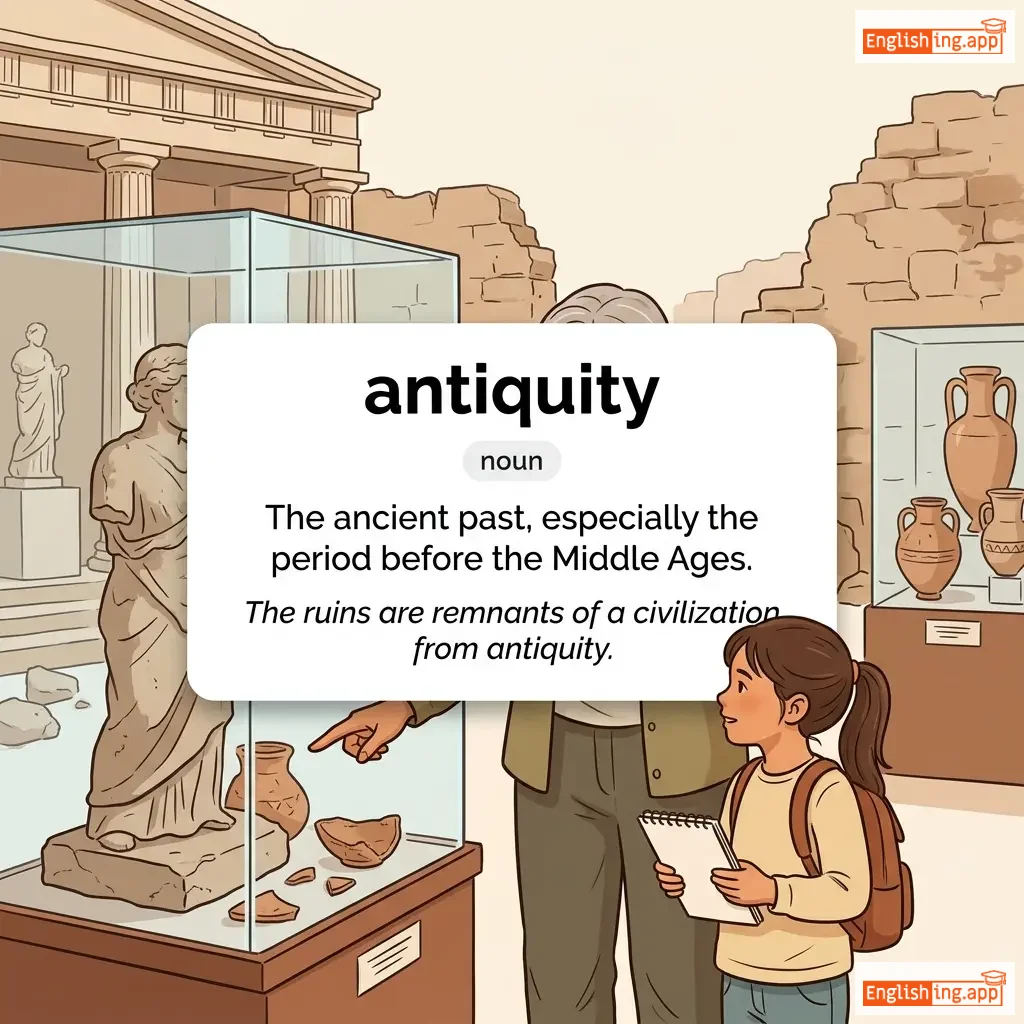
noun
/ænˈtɪkwɪti/
古代 (kodai)

The ancient past, especially the period before the Middle Ages.

"The ruins are remnants of a civilization from antiquity."

"遺跡は古代の文明の名残です。" (Iseki wa kodai no bunmei no nagori desu.)
noun, adjective
/ˌæntiˈsɛptɪk/

A substance that prevents the growth of disease-causing microorganisms; clean and free from germs.

"The nurse applied an antiseptic to the wound."

adjective
/ˌæntiˈsleɪvəri/
奴隷制度反対 (dorei seido hantai)

Opposed to the practice or system of slavery.

"The antislavery movement gained momentum in the 19th century."

"奴隷制度反対運動は19世紀に勢いを増した。" (Dorei seido hantai undō wa 19 seiki ni ikioi o mashita.)
adjective
/ˌæn.tiˈsoʊ.ʃəl/
反社会的な; 社会秩序に敵対的 (hanshakai-teki na; shakai chitsujo ni tekitaiteki)

avoiding social interaction; hostile to social order

"His antisocial behavior made it difficult for him to make friends."

"彼の反社会的な行動は、友達を作るのを難しくしました。" (Kare no hanshakai-teki na kōdō wa, tomodachi o tsukuru no o muzukashiku shimashita.)
noun, adjective
/ˌæntiˌspæzˈmɒdɪk/
抗痙攣薬 (kō keiren-yaku)

A drug or agent that relieves or prevents muscle spasms.

"The doctor prescribed an antispasmodic to ease the pain."

"医者は痛みを和らげるために抗痙攣薬を処方しました。" (Isha wa itami o yawarageru tame ni kō keiren-yaku o shohō shimashita.)
noun
/ænˈtɪstrəfi/
アンチストロフィー (修辞法の一つ) (antisutorofī)

A rhetorical device in which a word or phrase is repeated at the end of successive clauses; in Greek choral poetry, the part of the ode sung by the chorus in return movement.

"The poet used antistrophe to emphasize the repeated phrase."

"詩人は繰り返されるフレーズを強調するためにアンチストロフィーを使用しました。" (Shijin wa kurikaesareru fūrēzu o kyōchō suru tame ni antisutorofī o shiyō shimashita.)
noun
/ænˈtɪθəsɪs/
アンチテーゼ (anchitēze)

A person, thing, or idea that is the direct opposite of another; a rhetorical device contrasting opposing ideas in parallel structure.

"Love is the antithesis of hate."

"愛は憎しみのアンチテーゼです。" (Ai wa nikushimi no anchitēze desu.)
adjective
/ˌæntɪˈθɛtɪkəl/
対照的な (taishō-teki na)

Directly opposed or contrasted; mutually incompatible.

"His views were antithetical to the values of the organization."

"彼の見解は組織の価値観と真逆でした。" (Kare no kenkai wa soshiki no kachikan to shingyaku deshita.)
noun
/ˌæntɪˈtɒksɪn/
抗毒素 (kōdokusō)

A substance that neutralizes a specific toxin in the body.

"The doctor administered an antitoxin to counter the snake venom."

"医師は蛇の毒を無効にするために抗毒素を投与しました。" (Ishi wa hebi no doku o mukō ni suru tame ni kōdokusō o tōyo shimashita.)
noun
/ˈæntlɚ/
鹿の角 (shika no tsuno)

The branched horns on the head of a deer or similar animal, usually shed and regrown annually.

"The deer’s antlers grew larger each year."

"鹿の角は毎年大きくなります。" (Shika no tsuno wa maitoshi ookiku narimasu.)
noun
/ˈæntənɪm/
反意語 (han'igo)

A word opposite in meaning to another.

"‘Hot’ is the antonym of ‘cold’."

"‘Hot’ は ‘cold’ の反意語です。" ('Hot' wa 'cold' no han'igo desu.)
noun
/ˈeɪ.nəs/
肛門 (kōmon)

the opening at the end of the digestive tract through which waste leaves the body

"The doctor examined the patient's anus during the medical checkup."

"医者は診察中に患者の肛門を調べました。" (Isha wa shinsatsuchū ni kanja no kōmon o shirabemashita.)
noun
/ˈænvɪl/
鉄製の金床 (tessē no kinzoko)

A heavy iron block used by blacksmiths for hammering and shaping metal.

"The blacksmith placed the hot iron on the anvil."
"鍛冶屋は熱い鉄をアンヴィルに置きました。" (Kajiya wa atsui tetsu o anvīru ni okimashita.)
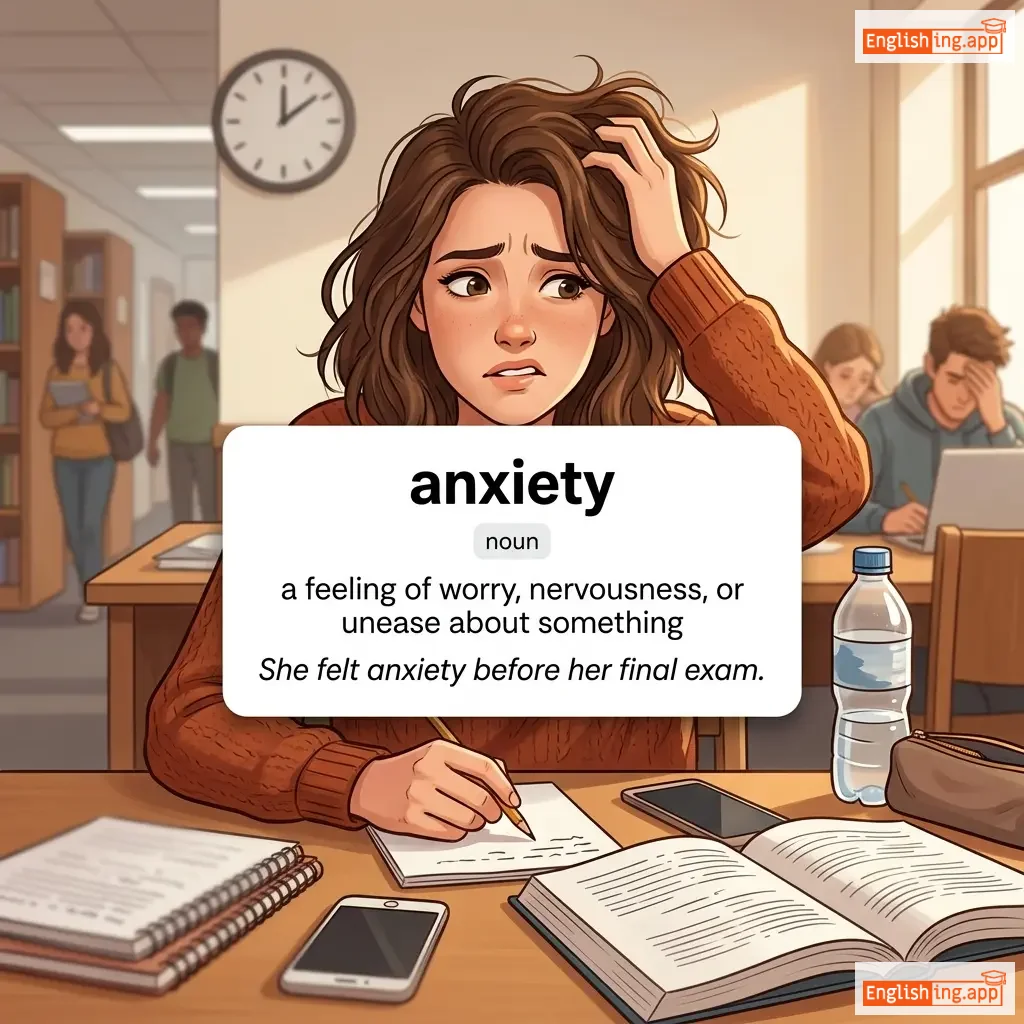
anxiety definition card — visual illustration of the meaning
noun
/æŋˈzaɪəti/
不安 (fuan)

a feeling of worry, nervousness, or unease about something

"She felt anxiety before her final exam."

"彼女は期末試験の前に不安を感じていた。" (Kanojo wa kimatsu shiken no mae ni fuan wo kanjite ita.)
adjective
/ˈæŋkʃəs/
不安な (fuan na)

feeling worried, nervous, or uneasy about something

"She felt anxious before her job interview."

"彼女は面接前に不安を感じていた。" (Kanojo wa mensetsu mae ni fuan o kanjite ita.)
adverb
/ˈæŋkʃəsli/
不安そうに (fuansou ni)

in a worried, nervous, or uneasy manner; with anxious anticipation

"She waited anxiously for the exam results."

"彼女は試験の結果を不安そうに待っていた。" (kanojo wa shiken no kekka o fuansou ni matte ita)
determiner/pronoun
/ˈɛni/
いずれかの (izureka no)

one, some, or all, without specifying which

"Do you have any questions?"

"何か質問はありますか?" (Nanika shitsumon wa arimasu ka?)
pronoun
/ˈɛniˌbɒdi/
誰でも (dare demo)

any person; anyone

"Anybody can join the club."

"誰でもクラブに参加できます。" (Dare demo kurabu ni sanka dekimasu.)
adverb
/ˌɛniˈmɔr/
もう〜ない (mou nai)

used to refer to the present time, typically to mean no longer

"He doesn’t live here anymore."

"彼はもうここに住んでいません。" (Kare wa mou koko ni sundeimasen.)
pronoun
/ˈɛniwʌn/
誰か (dareka)

any person at all; used to refer to an unspecified person

"Does anyone know the answer to this question?"

"誰かこの質問の答えを知っていますか?" (dareka kono shitsumon no kotae o shitte imasu ka?)
pronoun
/ˈɛnɪθɪŋ/
何でも (nandemo)

any object, event, or matter; whatever thing

"You can ask me anything about the project."

"プロジェクトについて何でも聞いてください。" (Purojekuto ni tsuite nandemo kiite kudasai.)
adverb
/ˈɛniweɪ/
とにかく (tonikaku)

used to emphasize a statement or to return to a previous subject; regardless of what happened

"I was tired, but I went to the meeting anyway."

"疲れていたが、それでも会議に行った。" (Tsukarete ita ga, sore demo kaigi ni itta.)
adverb
/ˈɛnɪwɛər/

in, at, or to any place

"You can find good food anywhere in this city."

↔️

Apart

adverb
/əˈpɑːrt/

separated by distance or time; into pieces

"They live miles apart from each other."

noun
/əˈpɑːrtmənt/
アパートメント (apātomento)

a set of rooms forming a residence within a building

"She rented an apartment in the city center."
"彼女は市の中心にアパートメントを借りました。" (Kanojo wa shi no chūshin ni apātomento o karimashita.)
adjective
/ˌæpəˈθɛtɪk/

showing or feeling little or no interest, enthusiasm, or concern

"He was apathetic about the outcome of the match."

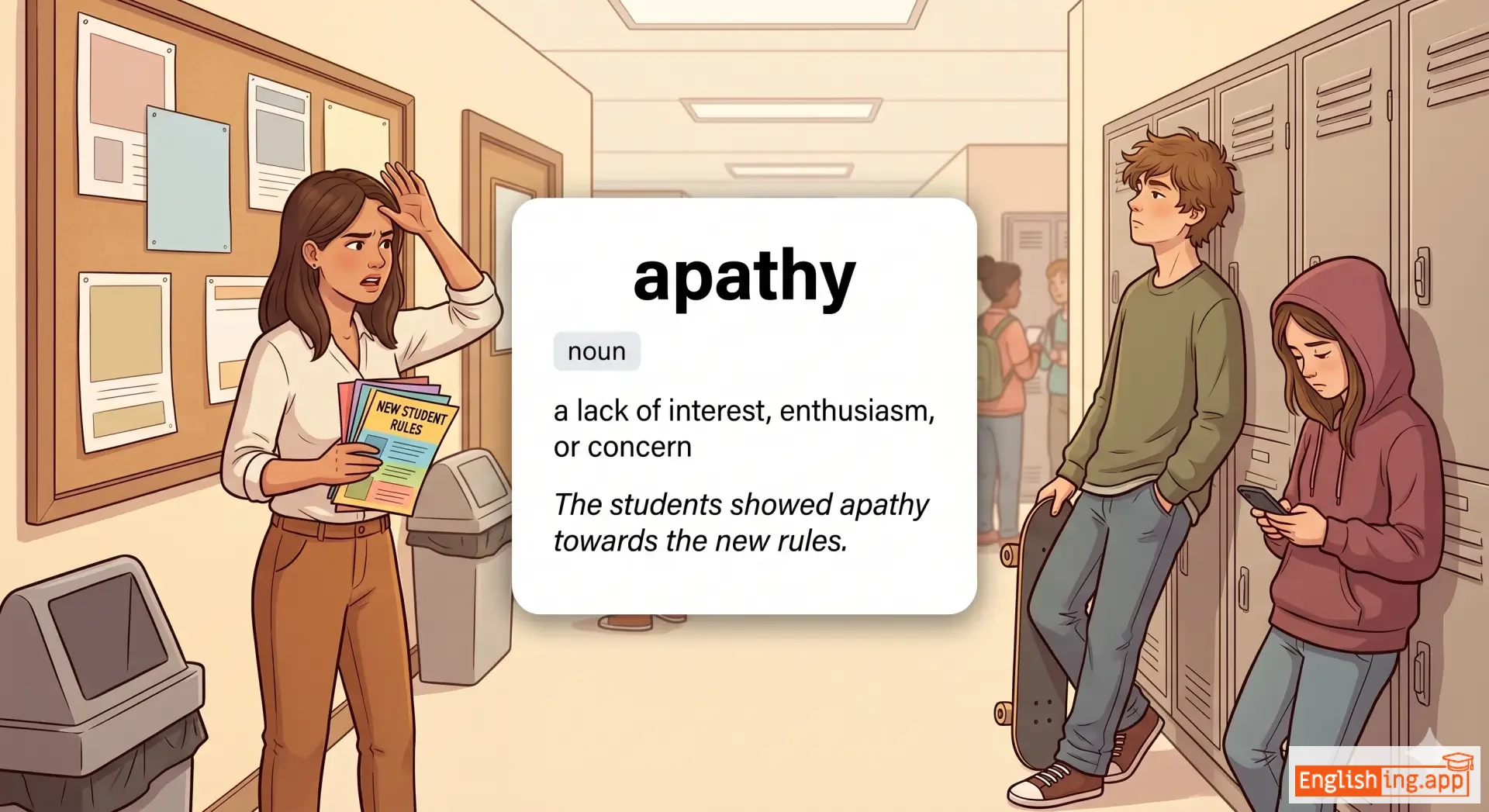
apathy definition card — visual illustration of the meaning
noun
/ˈæpəθi/
無関心 (mukanshin)

a lack of interest, enthusiasm, or concern

"The students showed apathy towards the new rules."

"学生たちは新しいルールに無関心を示しました。" (Gakusei-tachi wa atarashī rūru ni mukanshin o shimeshimashita.)
noun/verb
/eɪp/
尾のない猿に似た大型の霊長類 / まねする (o no nai saru ni nita ōgata no reichōrui / manesuru)

a large primate similar to a monkey but without a tail; as a verb, to imitate or mimic

"Children often ape the behavior of adults."

"子供たちは大人の行動をよくまねします。" (Kodomotachi wa otona no kōdō o yoku maneshimasu.)
noun
/ˈæpərtʃər/
開口部 / 穴 (kaikōbu / ana)

an opening, hole, or gap, especially one that lets in light

"Light entered through the small aperture in the wall."
"光は壁の小さな開口部を通って入った。" (Hikari wa kabe no chiisana kaikōbu wo tōtte haitta.)
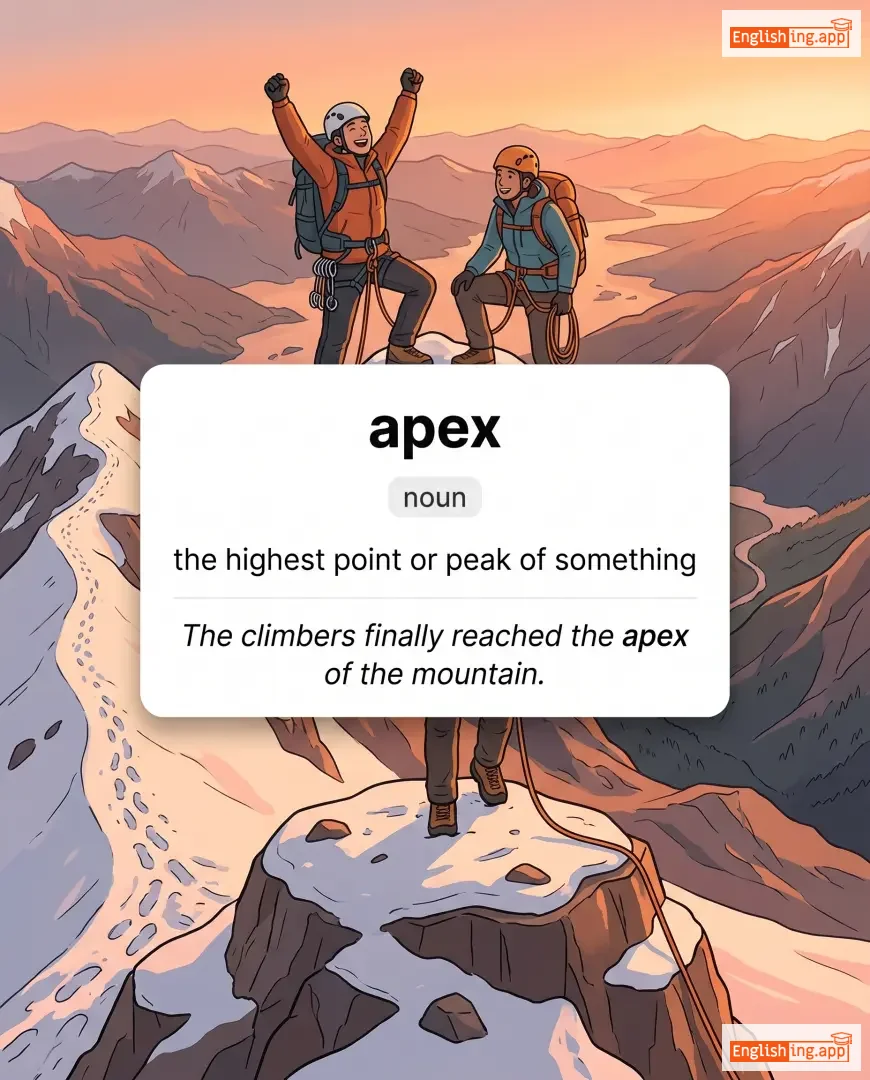
apex definition card — visual illustration of the meaning
noun
/ˈeɪ.pɛks/
頂点 (chouten)

the highest point or peak of something

"The climbers finally reached the apex of the mountain."

"登山者たちは最終的に山の頂点に達しました。" (Tozanshatachi wa saishūteki ni yama no chōten ni tasshimashita.)
noun
/əˈfeɪ.ʒə/

a medical condition that causes loss of ability to speak or understand language

"After the stroke, she was diagnosed with aphasia."