語彙集

英単語辞書 | 単語の意味、定義、例文

verb
/əˈnaʊns/
発表する (happyou suru)

to make a formal public statement about something

"The company will announce the new product tomorrow."

"会社は明日新しい製品をアナウンスします。" (Kaisha wa ashita atarashī seihin o anōnsu shimasu.)
announced definition card — visual illustration of the meaning
verb
əˈnaʊnst
発表された (happyou sareta)

To make a public and typically formal declaration about a fact, occurrence, or intention.

"The mission was announced publicly."

"ミッションは公開で発表されました。" (Misshon wa koukai de happyou saremashita.)
noun
/əˈnaʊnsmənt/
発表 (happyo)

a public or formal statement giving information

"The principal made an important announcement about the new schedule."

"校長は新しいスケジュールについて重要な発表をしました。" (Kouchou wa atarashii sukeju-ru ni tsuite juuyou na happyou wo shimashita.)
verb
/əˈnɔɪ/
イライラさせる (iraira saseru)

to irritate or bother someone and make them feel a little angry or uncomfortable

"His constant humming started to annoy everyone in the room."

"彼の絶え間ないハミングが部屋の中でみんなをイライラさせ始めた。" (Kare no taezu nai hamingu ga heya no naka de minna wo iraira sase hajimeta.)
adjective
/əˈnɔɪd/
いらいらした (iraira shita)

feeling slightly angry or irritated

"She felt annoyed by the constant noise."

"彼女は絶え間ない騒音にいらいらした。" (kanojo wa taemanai souon ni iraira shita)
adjective
/əˈnɔɪɪŋ/
うるさい (urusai)

causing irritation or mild anger; bothersome or troublesome

"The constant noise from the street was extremely annoying."

"通りからの絶え間ない騒音はとてもいらいらした。" (toori kara no taemanai souon wa totemo iraira shita)
adjective
/ˈæn.ju.əl/
年次 (nenji)

happening once every year

"The company holds an annual meeting for all its shareholders."

"会社は毎年、すべての株主のために年次総会を開催します。" (Kaisha wa mainen, subete no kabunushi no tame ni nenji sōkai o kaisai shimasu.)
adverb
/ˈænjuəli/
年次 (nenji)

once every year; yearly

"The company holds a general meeting annually."

"その会社は毎年年次総会を開きます。" (Sono kaisha wa mainen nenji soukai wo hirakimasu.)
noun
/əˈnjuː.ɪ.ti/
年金 (nenkin)

a fixed sum of money paid to someone each year, typically for the rest of their life

"She receives an annuity from her late husband's insurance policy."

"彼女は故夫の保険契約から年金を受け取っています。" (Kanojo wa kōfu no hoken keiyaku kara nenkin o uketotte imasu.)
verb
/əˈnʌl/
取り消す (torikesu)

to declare something legally invalid or cancel it

"The court decided to annul the marriage due to fraud."

"裁判所は詐欺のために結婚を取り消すことを決定しました。" (Saibansho wa sagi no tame ni kekkon o torikesu koto o kettei shimashita.)
noun
/əˌnʌn.siˈeɪ.ʃən/
発表、良い知らせ (happyou, yoi shirase)

The announcement of something; in Christianity, the announcement by the angel Gabriel to Mary that she would conceive Jesus.

"The church celebrated the Feast of the Annunciation with a special service."

"教会は特別なサービスでアナンシエーションの祝祭を祝いました。" (Kyoukai wa tokubetsu na saabisu de Annunciation no shukusai o iwimashita.)
noun
/ˈæn.oʊd/
正極 (seikyoku)

The positive electrode in a device such as a battery, where current flows into a polarized electrical device.

"The anode of the battery was corroded after long use."
"バッテリーの正極は長期間の使用後に腐食していました。" (Batterī no seikyoku wa chōkikan no shiyōgo ni fushoku shite imashita.)
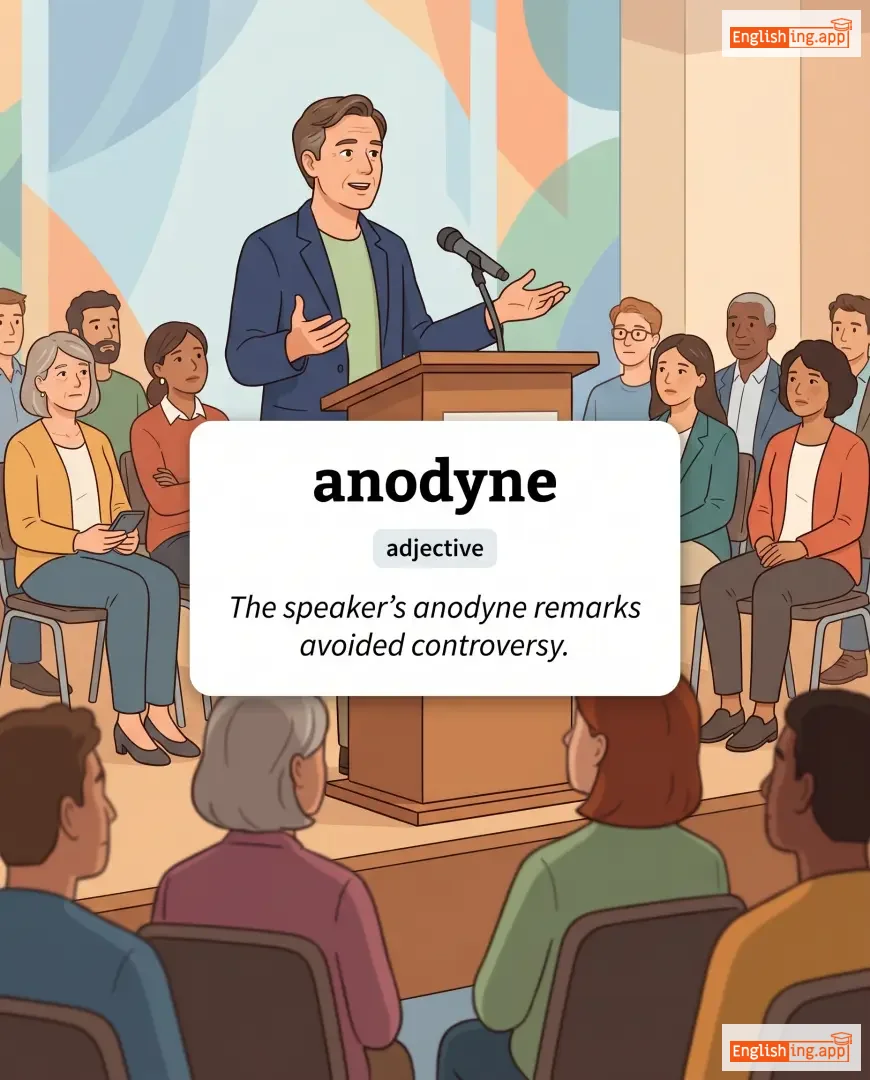
anodyne definition card — visual illustration of the meaning
adjective
/ˈæn.ə.daɪn/
無害な、痛みを和らげる (mugaina, itami o yawarageru)

Not likely to cause offense; bland or harmless. Also refers to something that relieves pain.

"The speaker’s anodyne remarks avoided controversy."

"スピーカーの無害なコメントは論争を避けました。" (Supīkā no mugaina komento wa ronsō o sake mashita.)
verb
/əˈnɔɪnt/
油を塗る, 祝福する (abura o nuru, shukufuku suru)

To smear or rub with oil, often as part of a religious ceremony or as a sign of consecration.

"The priest anointed the king with holy oil."

"神父は聖油で王を塗りました。" (Shinpū wa sei yudō de ō o nurimashita.)
noun
/əˈnɔɪnt.mənt/
塗油の儀式 (toyu no gishiki)

The act of anointing, usually with oil, as part of a ritual or ceremony.

"The anointment of the new leader was a sacred ritual."
"新しいリーダーの塗油の儀式は神聖な儀式でした。" (Atarashī rīdā no toyu no gishiki wa shinsei na gishiki deshita.)
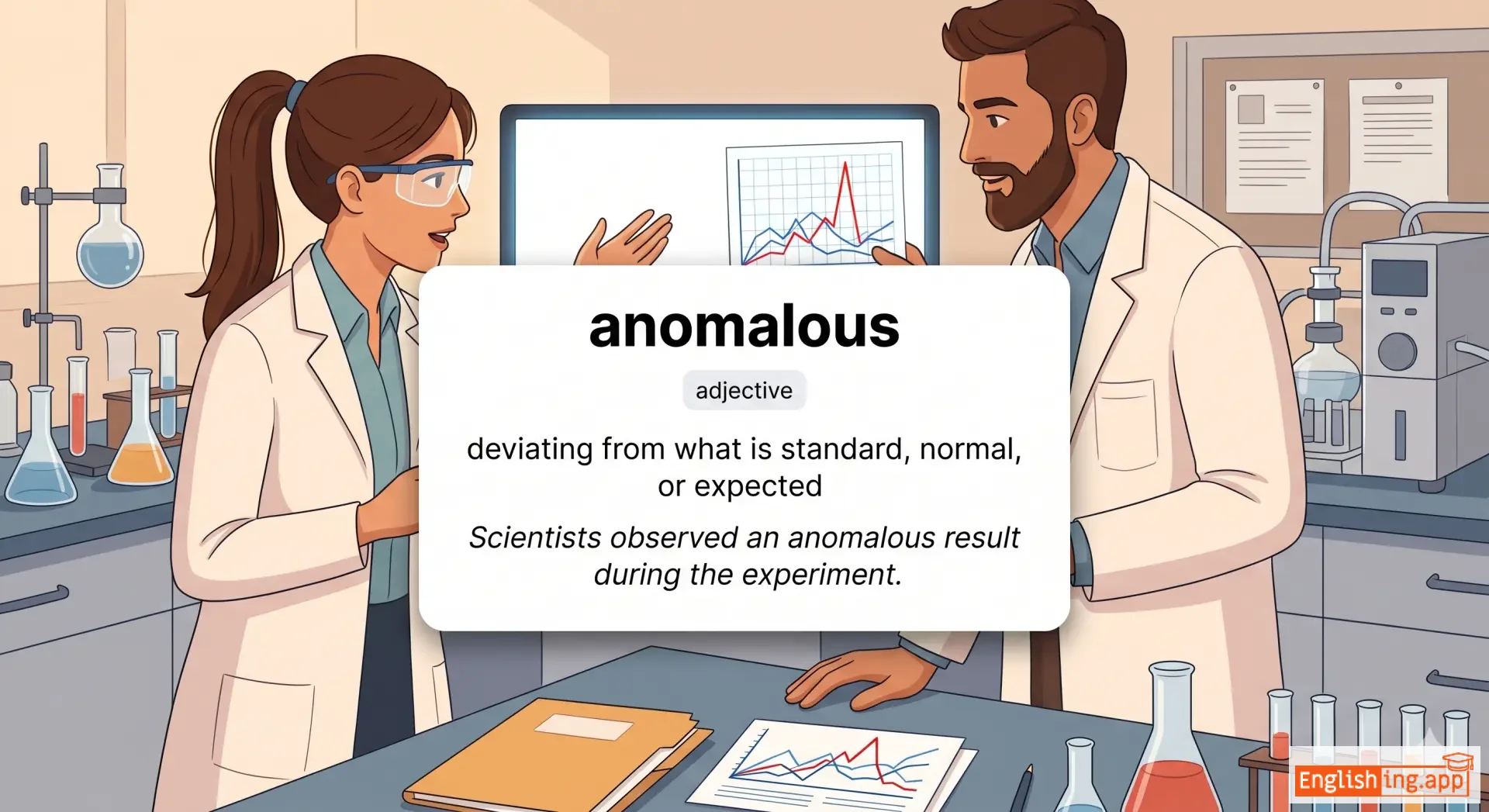
anomalous definition card — visual illustration of the meaning
adjective
/əˈnɒmələs/
異常 (ijou)

deviating from what is standard, normal, or expected

"Scientists observed an anomalous result during the experiment."

"科学者たちは実験中に異常な結果を観察しました。" (Kagakusha-tachi wa jikken-chuu ni ijou na kekka o kansatsu shimashita.)
noun
/əˈnɒməli/
異常 (ijou)

something that deviates from the norm or expected result

"The sudden drop in temperature was considered an anomaly."
"温度の急激な低下は異常と見なされました。" (Ondo no kyūgeki na teika wa ijou to minasaremashita.)
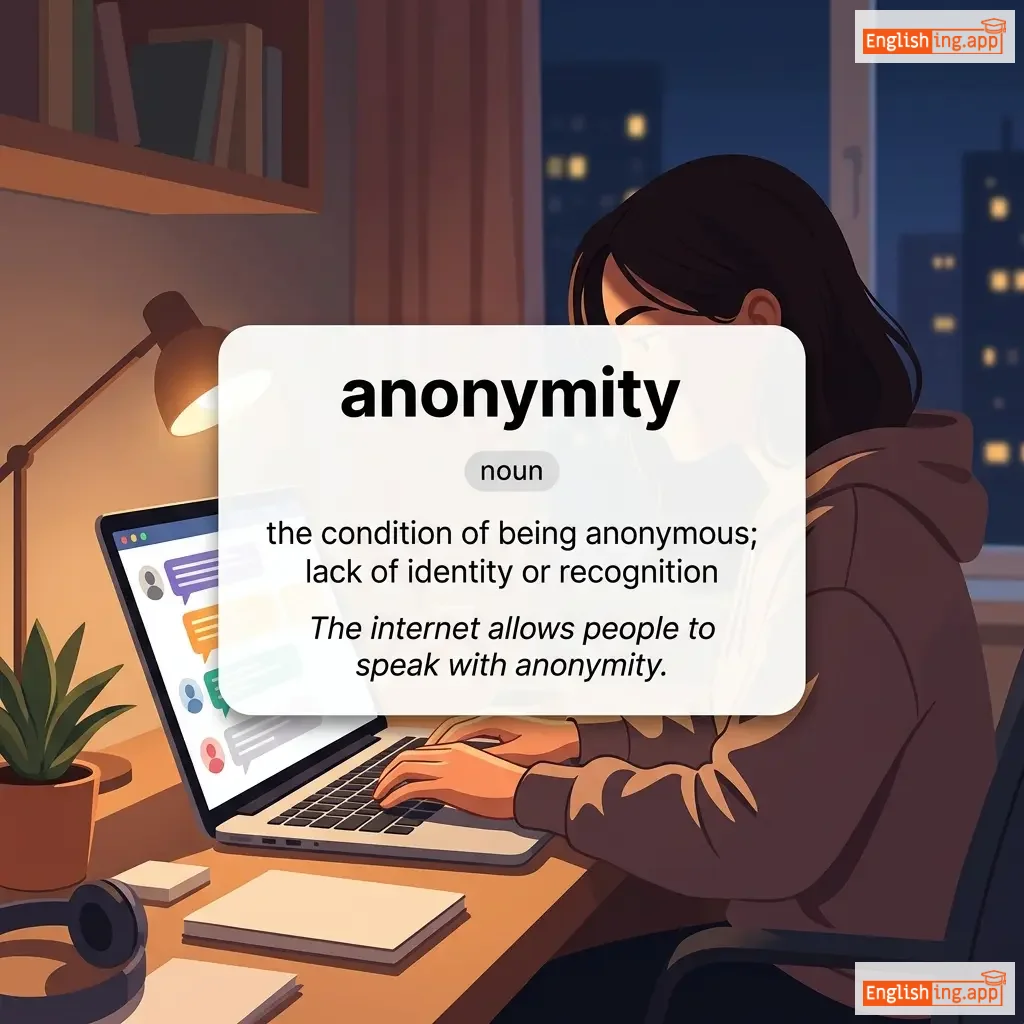
anonymity definition card — visual illustration of the meaning
noun
/ˌænəˈnɪməti/
匿名性 (tokumeisei)

the condition of being anonymous; lack of identity or recognition

"The internet allows people to speak with anonymity."

"インターネットは人々が匿名で話すことを可能にします。" (Intānetto wa hitobito ga tokumei de hanasu koto o kanō ni shimasu.)
adjective
/əˈnɒnɪməs/
匿名 (tokumei)

without a name; not identified by name

"The donation was made by an anonymous benefactor."

"寄付は匿名の支援者によって行われました。" (Kifu wa tokumei no shien-sha ni yotte okonawaremashita.)
determiner/pronoun
/əˈnʌðər/
もう一つ (mou hitotsu)

one more person or thing of the same type

"Can I have another cup of tea?"
"もう一杯の紅茶をいただけますか?" (Mou ippai no koucha o itadakemasu ka?)
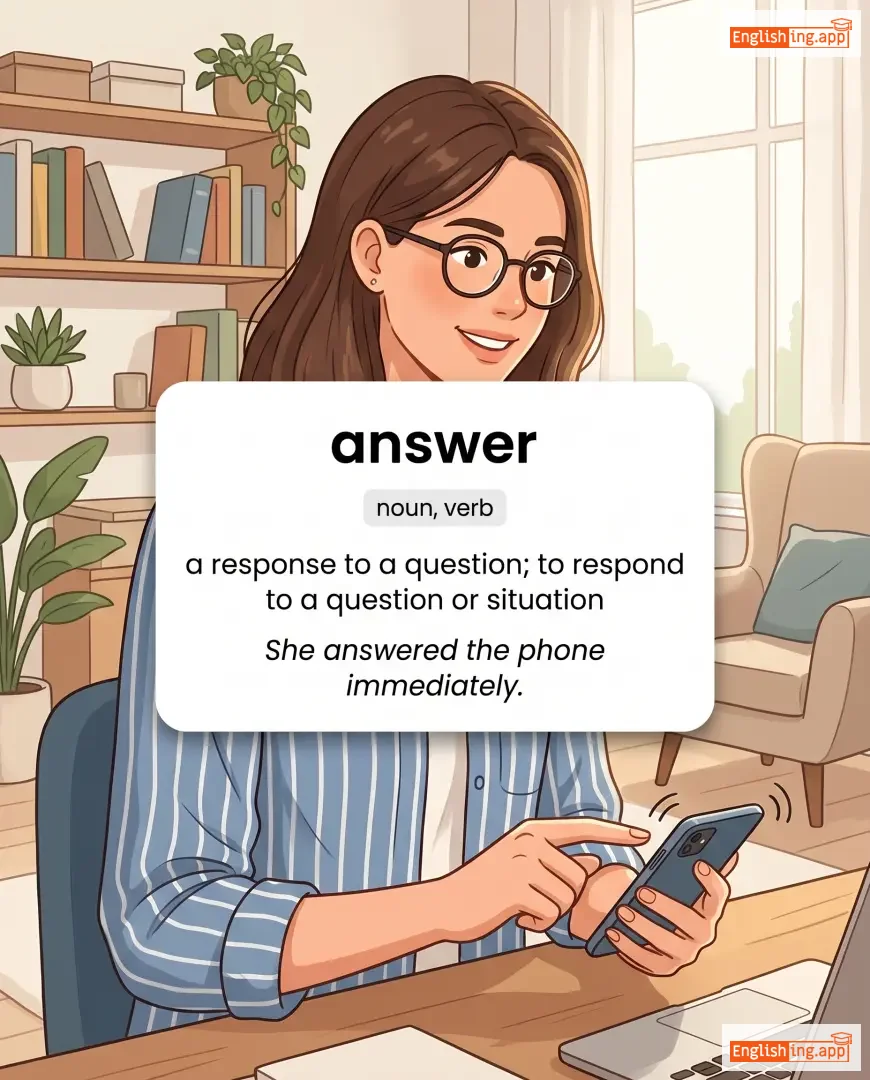
answer definition card — visual illustration of the meaning
noun, verb
/ˈænsər/
答え (kotae)

a response to a question; to respond to a question or situation

"She answered the phone immediately."

"彼女はすぐに電話に出ました。" (Kanojo wa sugu ni denwa ni demashita.)
noun
/ænt/
アリ (ari)

a small insect that lives in organized colonies and is known for hard work

"The ant carried a crumb that was twice its size."

"アリは自分のサイズの2倍のパンくずを運びました。" (Ari wa jibun no saizu no nibai no pankuzu wo hakobimashita)
noun
/ænˈtæɡənɪzəm/
対立 (tairitsu)

active hostility or opposition

"There was clear antagonism between the two political parties."

"二つの政党の間には明らかな対立があった。" (Futatsu no seitō no aida ni wa akirakana tairitsu ga atta.)
verb
/ænˈtæɡənaɪz/
挑発する (chouhatsu suru)

to cause someone to become hostile or angry; to provoke opposition

"His rude remarks only served to antagonize his colleagues."

"彼の失礼な言葉は彼の同僚をアンタゴナイズすることにしかならなかった。" (Kare no shitsurei na kotoba wa kare no dōryō o antagonaizu suru koto ni shika naranakatta.)
adjective
/ænˈtɑːrktɪk/
南極の (nankyoku no)

relating to the region around the South Pole

"The Antarctic region is known for its extreme cold and icy landscapes."

"南極地域はその極寒と氷のような景色で知られています。" (Nankyoku chiiki wa sono kyokkan to kōri no yō na keshiki de shirareteimasu.)
🎲

ante

noun
/ˈænti/

a stake put up by a player in poker or similar games before receiving cards; also used figuratively to mean an initial investment or contribution

"Each player placed an ante before the game began."

verb
/ˌæntɪˈsiːd/
前に来る (mae ni kuru)

to come before in time or order

"A short introduction usually antecedes the main text."
"短い紹介は通常、本文の前に来ます。" (Mijikai shōkai wa tsūjō, honbun no mae ni kimasu.)
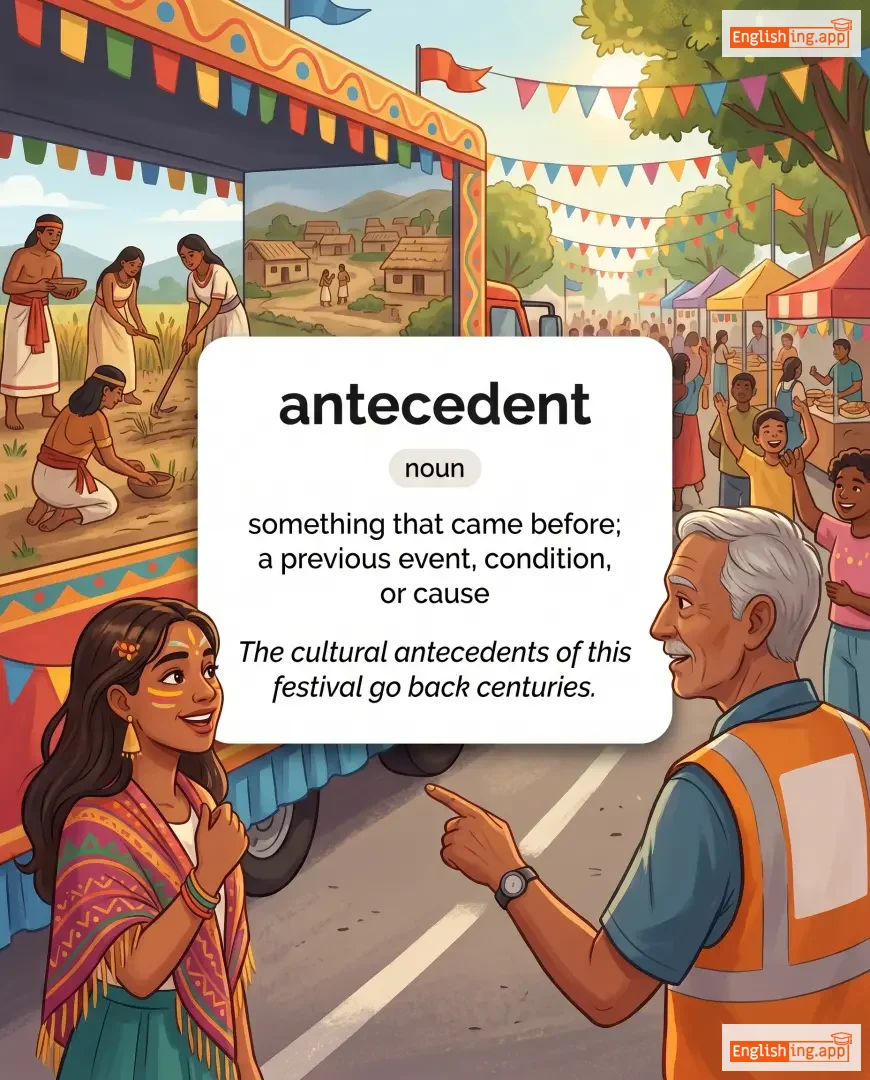
antecedent definition card — visual illustration of the meaning
noun
/ˌæntɪˈsiːdənt/
先例 (senrei)

something that came before; a previous event, condition, or cause

"The cultural antecedents of this festival go back centuries."

"この祭りの文化的な先例は何世紀も前に遡ります。" (Kono matsuri no bunka-tekina senrei wa nan seiki mo mae ni sakanoborimasu.)
noun
/ˌæntɪˈsiːdənts/
先例 (senrei)

previous events, conditions, or people that influence or serve as a basis for something that follows

"The lawyer examined the criminal antecedents of the suspect."

"弁護士は容疑者の犯罪歴を調べました。" (Bengoshi wa yōgisha no hanzai-reki o shirabemashita.)
noun
/ˈæntɪˌtʃeɪmbər/
待合室 (taiaishitsu)

a small room serving as an entry to a larger one

"The guests waited in the antechamber before being admitted to the hall."

"ゲストはホールに入る前に待合室で待っていました。" (Gesuto wa hōru ni hairu mae ni taiaishitsu de matteimashita.)
verb
/ˈæntɪdeɪt/
前日付け (zenjitsuke)

to be earlier in time; to assign a date earlier than the actual one

"The manuscript antedates the modern printing press."

"その原稿は現代の印刷機よりも前の時代にあります。" (Sono genkou wa gendai no insatsu-ki yori mo mae no jidai ni arimasu.)
verb
/ˈæntɪdeɪtɪd/
以前の日付 (izen no hidsuke)

assigned to an earlier date than the actual one; happened earlier

"The letter was antedated to appear more official."
"手紙はもっと公式に見えるように日付が遡って記入されました。" (Tegami wa motto koushiki ni mieru you ni hizuke ga sakamoto kinyuu saremashita.)
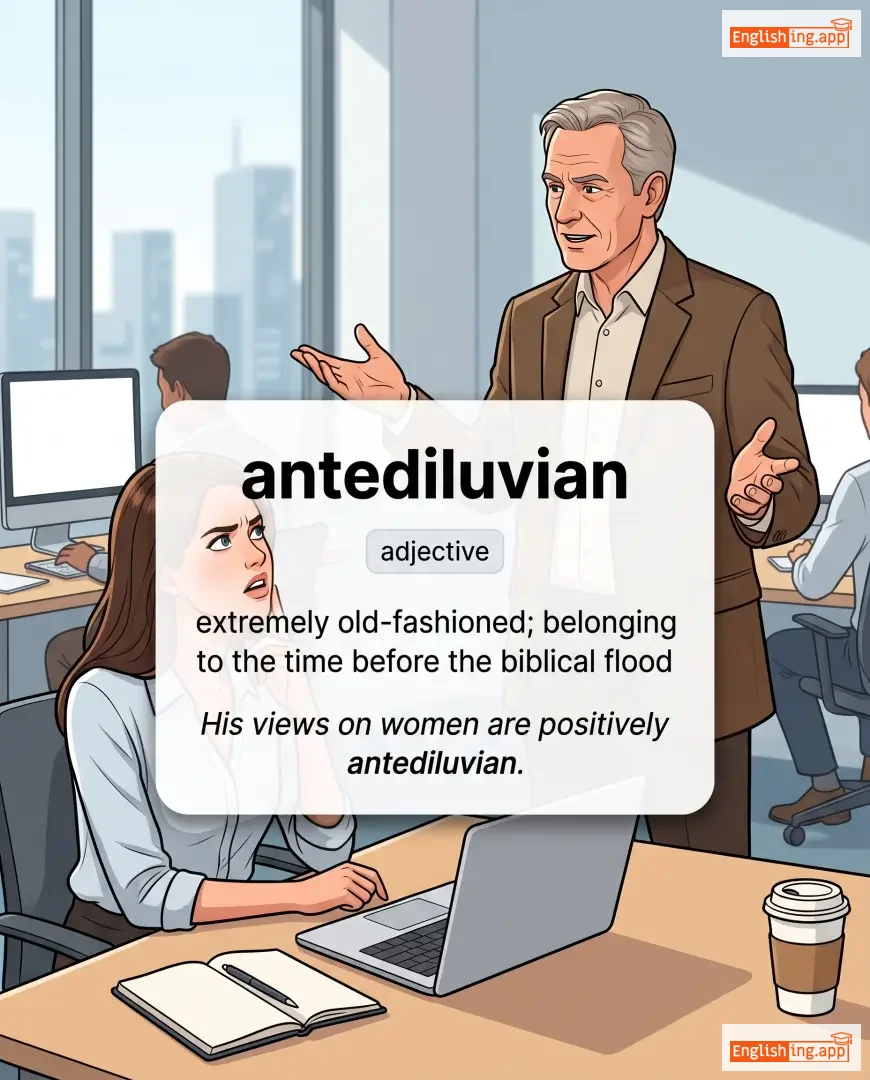
antediluvian definition card — visual illustration of the meaning
adjective
/ˌæntɪdəˈluːviən/
非常に古臭い (hijō ni furusai)

extremely old-fashioned; belonging to the time before the biblical flood

"His views on women are positively antediluvian."

"彼の女性に対する見解は完全に時代遅れです。" (Kare no josei ni taisuru kenkai wa kanzen ni jidaiokure desu.)
adjective
/ˌæntɪməˈrɪdiən/
昼前の時間 (hirumae no jikan)

Relating to the time before noon; occurring in the morning.

"She scheduled all her important meetings during the antemeridian hours."

"彼女はすべての重要な会議を昼前の時間にスケジュールしました。" (Kanojo wa subete no juuyou na kaigi o hirumae no jikan ni sukejuuru shimashita.)
adjective
/ˌæntɪˈmʌndeɪn/
世界創造前 (sekai souzou mae)

Existing or occurring before the creation of the world.

"Some myths speak of an antemundane chaos before order was established."

"いくつかの神話では、秩序が確立される前のアンテムンダンの混乱について語られています。" (Ikutsuka no shinwa de wa, chitsujo ga kakuritsu sareru mae no antemundan no konran ni tsuite katarareteimasu.)
adjective
/ˌæntiˈneɪtl/
産前 (sanzen)

Relating to the medical care and treatment given to a pregnant woman before the birth of her child.

"She attended regular antenatal checkups throughout her pregnancy."

"彼女は妊娠中に定期的な産前検診を受けていました。" (Kanojo wa ninshin-chū ni teikitekina sanzen kenshin o uketeimashita.)
adjective
/ænˈtɪriər/
前部の (zenbu no)

Situated at or toward the front; coming before in position or time.

"The anterior part of the brain controls logical thinking."

"脳の前部は論理的思考を制御します。" (Nō no zenbu wa ronriteki shikō o seigyo shimasu.)
noun
/ˈæntiruːm/
控えの間 (hikae no ma)

A small room leading to a main one, often used as a waiting area.

"The guests waited in the anteroom before being called inside."

"客たちは中に呼ばれる前に控えの間で待っていた。" (kyaku tachi wa naka ni yobareru mae ni hikae no ma de matteita.)
noun
/ˈænθəm/
国歌 (kokka)

A song that is identified with a particular group, movement, or nation, often expressing pride or unity.

"The national anthem was played before the football match."

"サッカーの試合の前に国歌が演奏されました。" (Sakkā no shiai no mae ni kokka ga ensō saremashita.)
noun
/ænˈθɒlədʒi/
アンソロジー (ansoroji)

A collection of literary works, such as poems, short stories, or essays, compiled into one volume.

"She contributed a poem to the new poetry anthology."

"彼女は新しい詩のアンソロジーに詩を寄稿した。" (Kanojo wa atarashii shi no ansoroji ni shi o kiko shita.)
noun
/ˈænθrəsaɪt/
硬質石炭 (kōshitsu sekitan)

A hard, shiny form of coal that burns with little smoke and a high heat value.

"The factory used anthracite as its primary fuel source."

"工場はアンブラサイトを主な燃料源として使用していました。" (Kōjō wa anburasaito o omona nenryōgen toshite shiyō shiteimashita.)
noun
/ˌænθrəpəˈsɛntrɪzəm/
人間中心主義 (ningen chūshin shugi)

The belief that human beings are the most important or central element of existence.

"Anthropocentrism often shapes environmental policies."
"人間中心主義はしばしば環境政策を形作る。" (Ningen chūshin shugi wa shibashiba kankyō seisaku o katachi zukuru.)
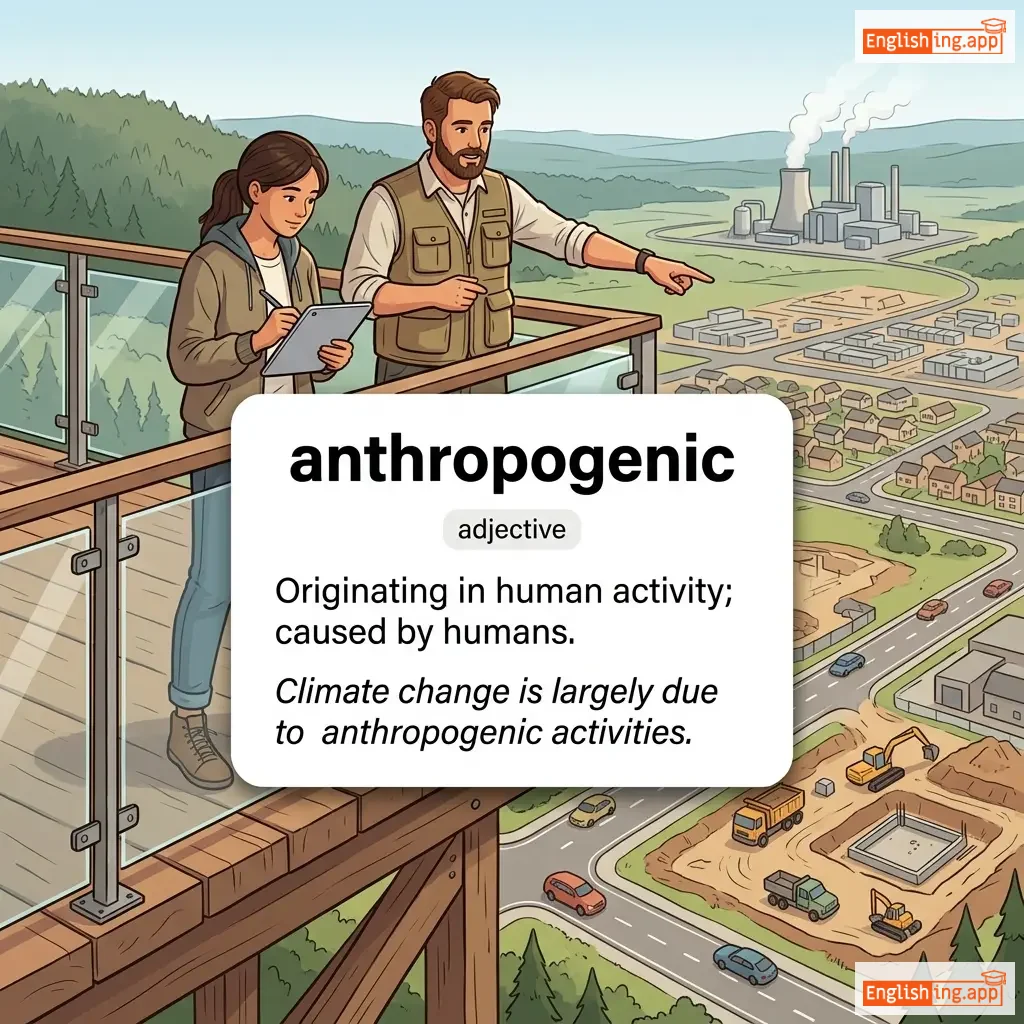
anthropogenic definition card — visual illustration of the meaning
adjective
/ˌæn.θrə.pəˈdʒen.ɪk/
人為的 (jin'iteki)

Originating in human activity; caused by humans.

"Climate change is largely due to anthropogenic activities."

"気候変動は主に人為的な活動によるものです。" (Kikō hendō wa omoni jin'iteki na katsudō ni yoru mono desu.)
adjective, noun
/ˈænθrəpɔɪd/
人類型 (jinrui-gata)

Resembling a human being in form; a primate such as apes and monkeys.

"The gorilla is considered an anthropoid ape."

"ゴリラは人類型の猿と見なされている。" (Gorira wa jinrui-gata no saru to minasareteiru.)
noun
/ˌænθrəˈpɒlədʒɪst/
人類学者 (jinruigakusha)

a person who studies human societies, cultures, and their development

"The anthropologist spent years studying the tribal community."

"人類学者は部族コミュニティを研究するのに何年も費やしました。" (Jinruigakusha wa buzoku komyuniti o kenkyū suru no ni nan-nen mo tsuiyashimashita.)
noun
/ˌænθrəˈpɒlədʒi/
人類学 (jinruigaku)

the scientific study of humans, their societies, cultures, and development

"She decided to major in anthropology at university."

"彼女は大学で人類学を専攻することに決めました。" (Kanojo wa daigaku de jinruigaku o senkō suru koto ni kimemashita.)
adjective
/ˌænθrəpəˈmɔːrfɪk/
擬人化 (gijinka)

attributing human characteristics to non-human things, like animals or objects

"The cartoon shows an anthropomorphic cat walking on two legs."

"そのアニメでは、二本足で歩く擬人化された猫が登場します。" (Sono anime de wa, nihon ashi de aruku gijinka sareta neko ga toujou shimasu.)
adjective
/ˌænθrəpəˈmɔːrfəs/
人間的な (ningen-teki na)

having the form or attributes of a human

"The statue had an anthropomorphous shape resembling a human."

"その像は人間のような形をしていた。" (Sono zō wa ningen no yō na katachi o shite ita.)
noun
/ˈænti ˈeəkræft ɡʌn/
対空砲 (taikūhō)

a weapon designed to attack aircraft from the ground

"The anti-aircraft gun was positioned to defend the military base."
"対空砲は軍事基地を守るために配置されました。" (Taikūhō wa gunji kichi wo mamoru tame ni haichi saremashita.)
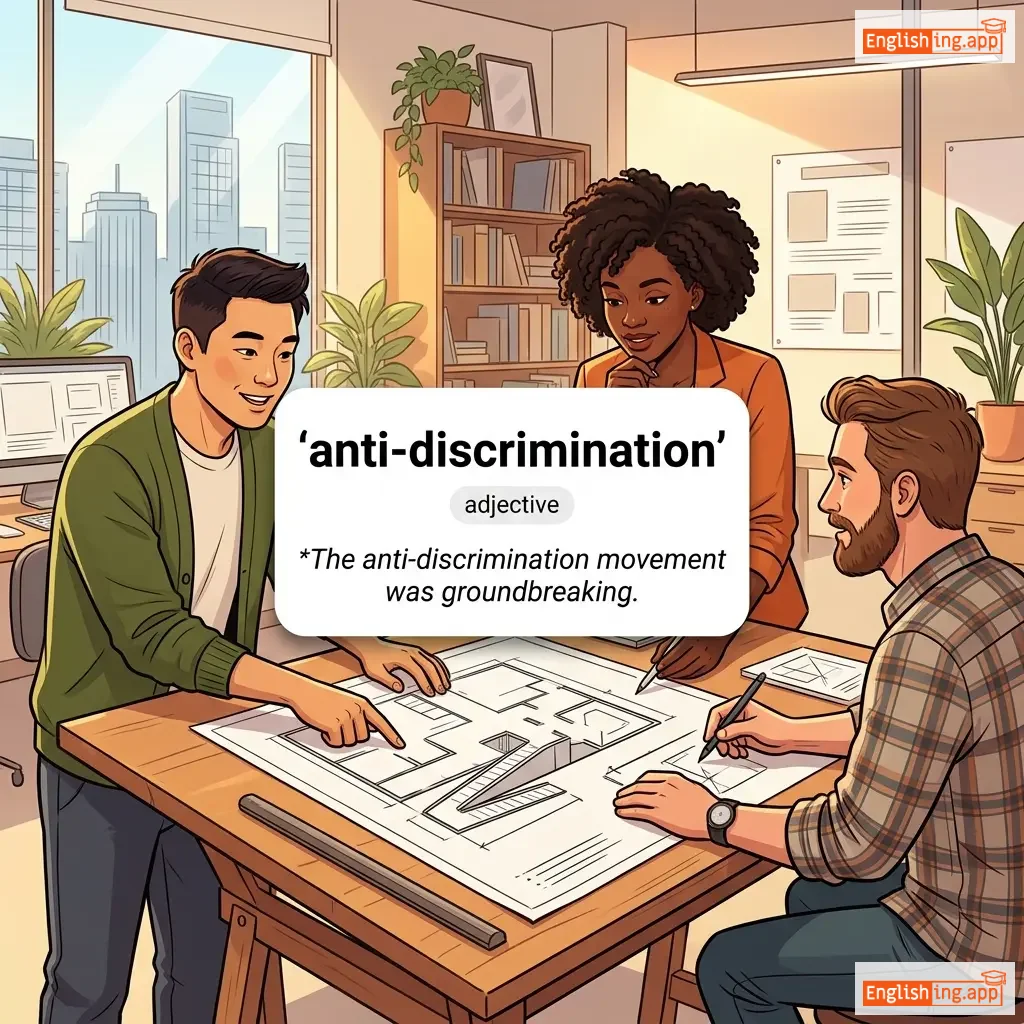
anti-discrimination definition card — visual illustration of the meaning
adjective
ˌæn.tiˌdɪs.krɪˈmɪn.eɪ.ʃən
反差別的 (hansabetsuteki)

Opposed to or working against discrimination; promoting equal treatment regardless of differences.

"The anti-discrimination movement was groundbreaking."

"反差別的運動は画期的でした。" (Hansabetsuteki undou wa kakiteki deshita.)