語彙集

英単語辞書 | 単語の意味、定義、例文

noun
/ˈænsɛstər/
先祖 (senzo)

a person in your family who lived a long time ago

"Our ancestors built these temples hundreds of years ago."
"私たちの先祖は何百年も前にこれらの寺院を建てました。" (Watashitachi no senzo wa nanbyaku nen mo mae ni korera no jiin o tatemashita.)
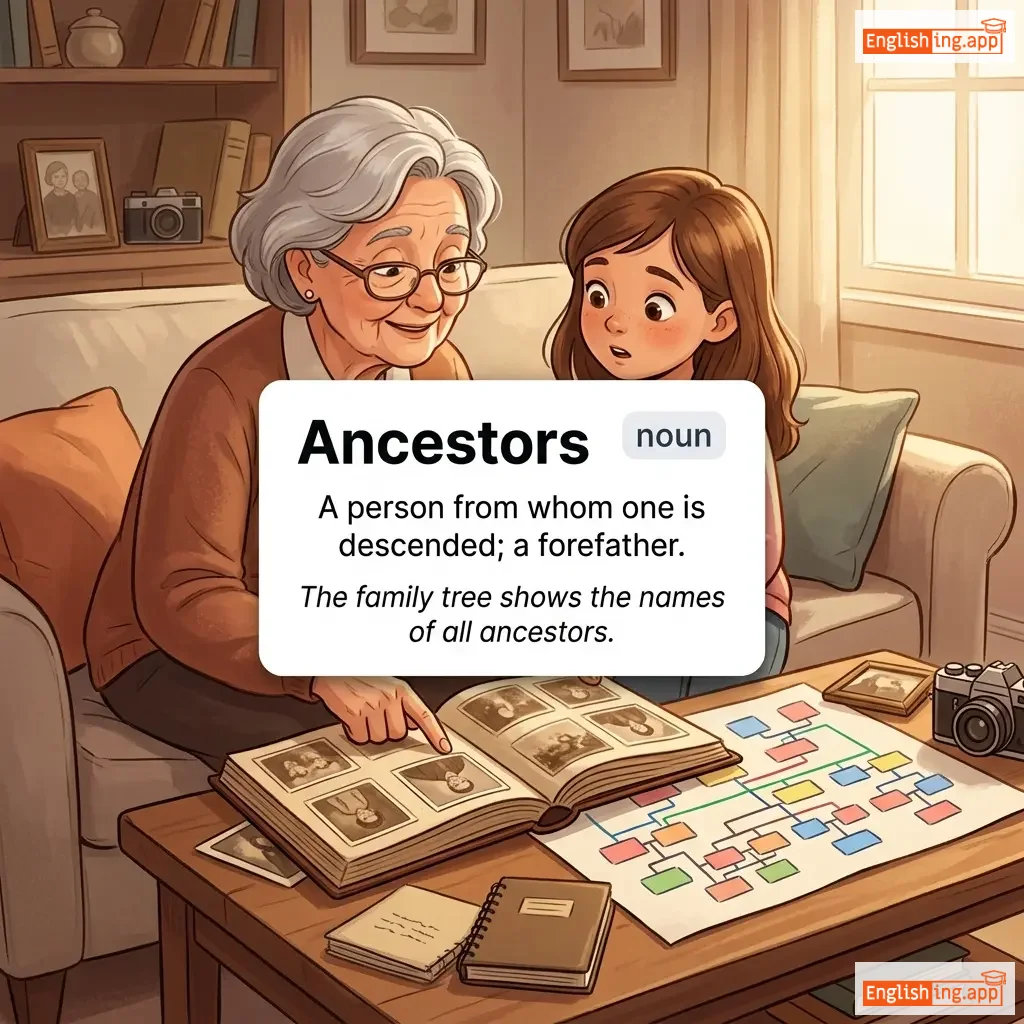
Ancestors definition card — visual illustration of the meaning
noun
ˈænsɛstərz
先祖 (senzo)

A person from whom one is descended; a forefather.

"The family tree shows the names of all ancestors."

"家族の木はすべての先祖の名前を示しています。" (Kazoku no ki wa subete no senzo no namae o shimeshiteimasu.)
noun
/ˈænsɛstrɪs/
女性の祖先 (josei no sosen)

a female ancestor; a woman from whom one is descended

"She discovered that her ancestress came from a small village in Bengal."

"彼女は自分の女性の祖先がベンガルの小さな村出身だと知った。" (kanojo wa jibun no josei no sosen ga Bengaru no chiisana mura shusshin da to shitta)
noun
/ˈænsestri/
家系 (kakei)

one’s family origins or lineage

"He is proud of his royal ancestry."

"彼は自分の王室の家系を誇りに思っています。" (Kare wa jibun no ōshitsu no kakei o hokori ni omotteimasu.)
noun, verb
/ˈæŋkər/
アンカー (ankā)

a heavy object used to hold a ship in place; also to secure firmly

"The ship dropped its anchor near the shore."
"船は岸近くにアンカーを投げた。" (Fune wa kishi chikaku ni ankā o nageta.)
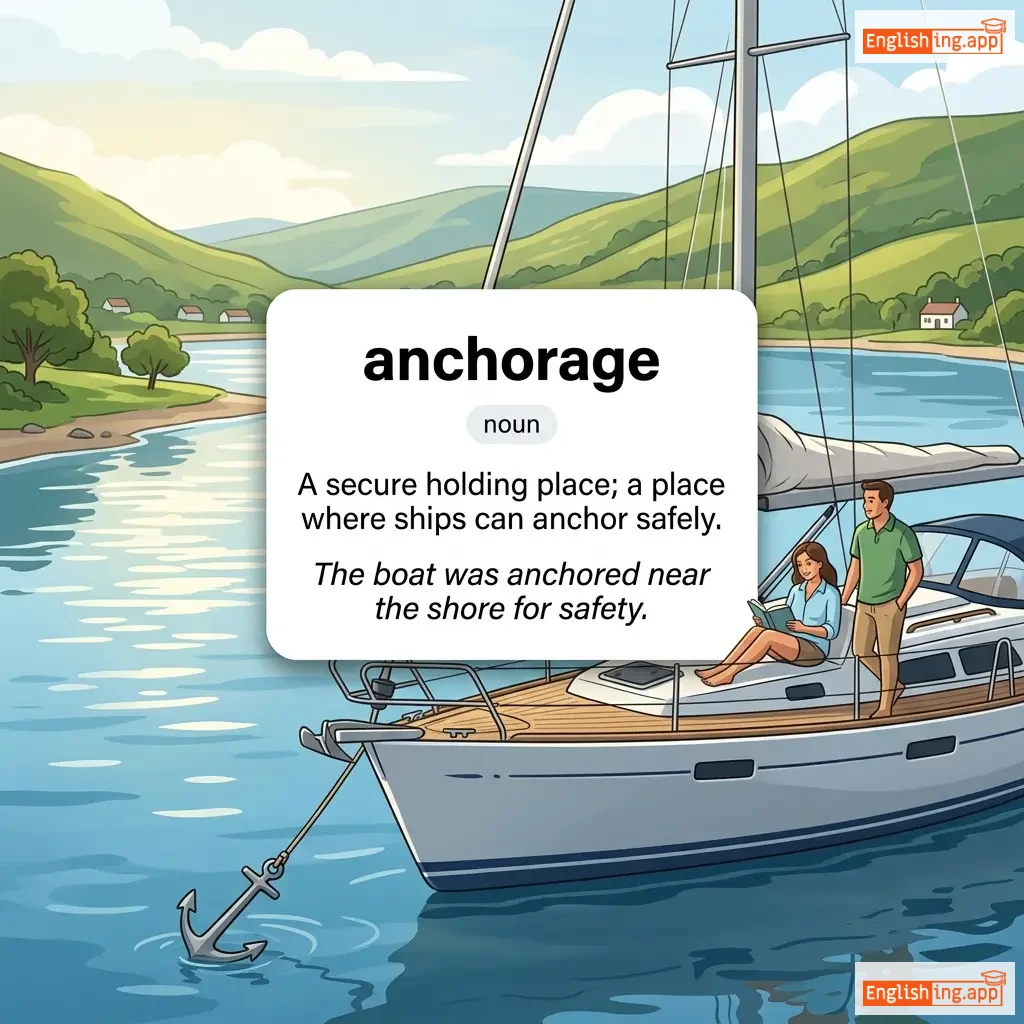
anchorage definition card — visual illustration of the meaning
noun
ˈæŋkərɪdʒ
停泊地 (teibakuchi)

A secure holding place; a place where ships can anchor safely.

"The boat was anchored near the shore for safety."

"ボートは安全のために岸辺に停泊されました。" (Bōto wa anzen no tame ni kishibe ni teibaku saremashita.)
adjective
/ˈeɪnʃənt/
古代の (kodai no)

Belonging to the very distant past; very old.

"They visited the ruins of an ancient city."

"彼らは古代都市の遺跡を訪れました。" (Karera wa kodai toshi no iseki o otozuremashita.)
adjective
/ˈænsɪləri/
補助的な (hojotekina)

providing necessary support to the main system or organization

"The company provides ancillary services to the healthcare industry."

"その会社は医療業界に補助的なサービスを提供しています。" (Sono kaisha wa iryō gyōkai ni hojotekina sābisu o teikyō shiteimasu.)
conjunction
/ænd/
(to)

Used to connect words or sentences that are to be taken jointly.

"She bought apples and oranges."

"彼女はリンゴとオレンジを買いました。" (Kanojo wa ringo to orenji o kaimashita.)
noun
/ˈændaɪərn/
木材を支える金属製のスタンド (mokuzai o sasaeru kinzoku-sei no sutando)

a metal support used in a fireplace to hold logs

"The logs rested on the andirons in the old fireplace."

"古い暖炉のアンダイロンの上に木材が置かれていた。" (Furui danro no andairon no ue ni mokuzai ga okarete ita.)
adjective
/ænˈdrɒdʒɪnəs/
アンドロジナス (andorojinasu)

Having both male and female characteristics; not clearly masculine or feminine.

"The fashion show featured models with an androgynous look."
"ファッションショーではアンドロジナスなルックのモデルが登場しました。" (Fasshon shō de wa andorojinasu na rukku no moderu ga tōjō shimashita.)
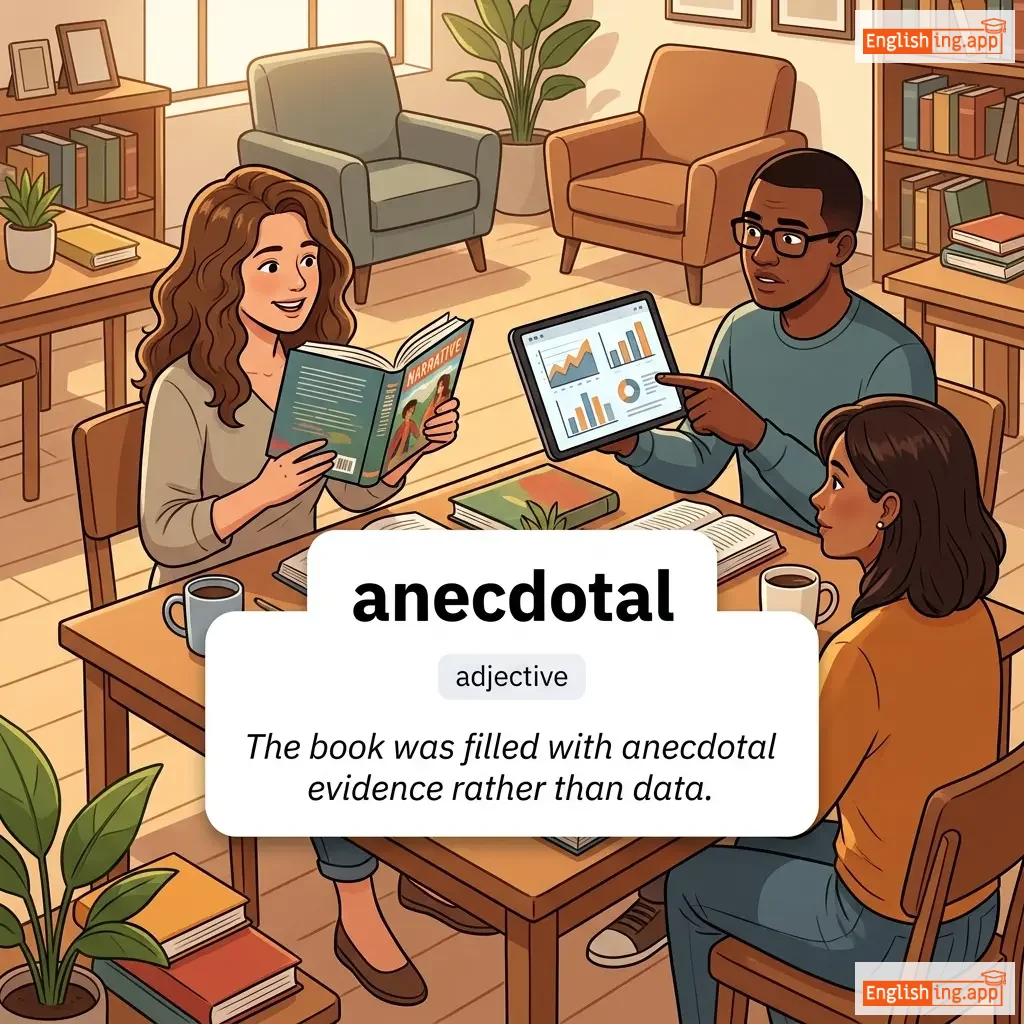
anecdotal definition card — visual illustration of the meaning
adjective
/ˌæn.ɪkˈdoʊ.t̬əl/
事実や調査ではなく、個人的な話に基づく、逸話的な (jijitsu ya chousa dewa naku, kojinteki na hanashi ni motozuku, itsuwateki na)

Based on personal accounts rather than facts or research; characterized by anecdotes.

"The book was filled with anecdotal evidence rather than data."
"その本はデータではなく、逸話的証拠で満たされていました。" (Sono hon wa deeta dewa naku, itsuwateki shouko de mitasareteimashita.)
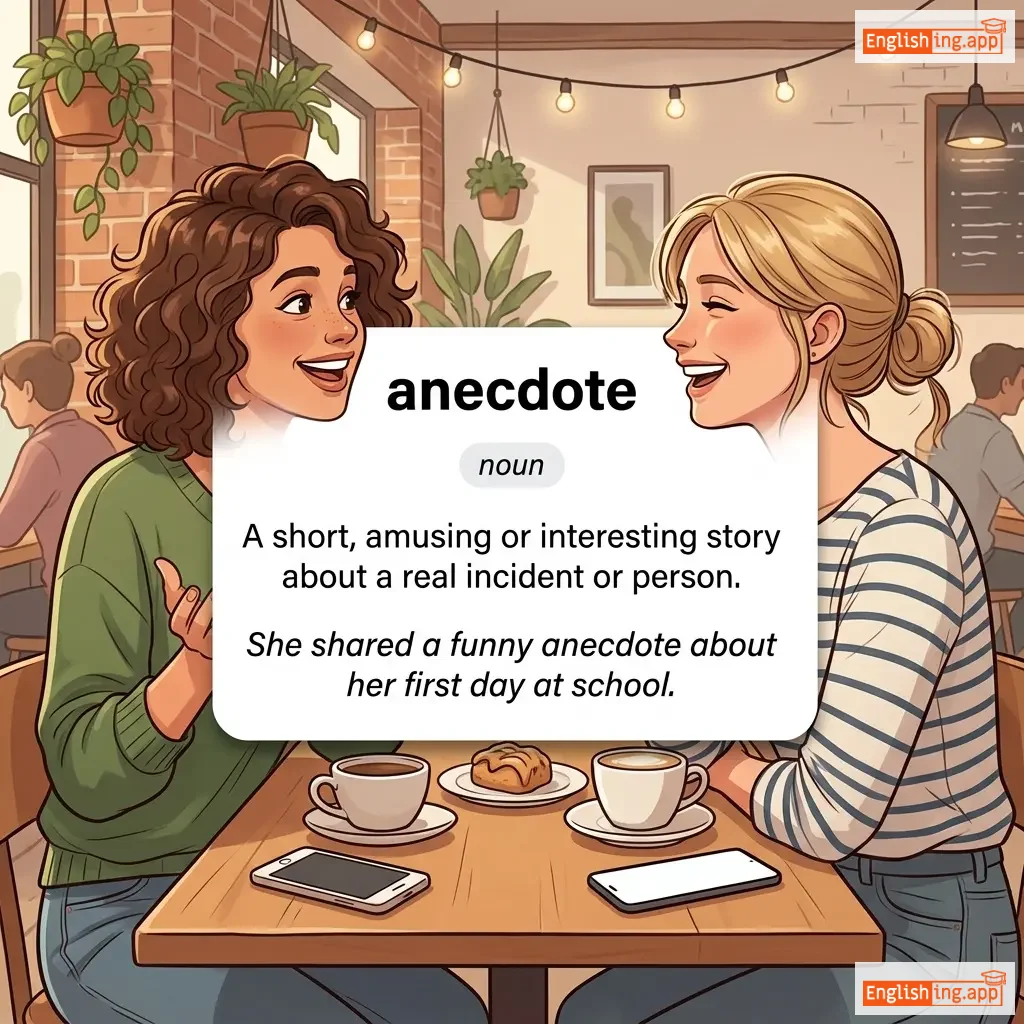
anecdote definition card — visual illustration of the meaning
noun
/ˈænɪkˌdoʊt/
逸話 (itsuwa)

A short, amusing or interesting story about a real incident or person.

"She shared a funny anecdote about her first day at school."
"彼女は学校の初日についての面白い逸話を共有しました。" (Kanojo wa gakkou no shonichi ni tsuite no omoshiroi itsuwa wo kyoyu shimashita.)
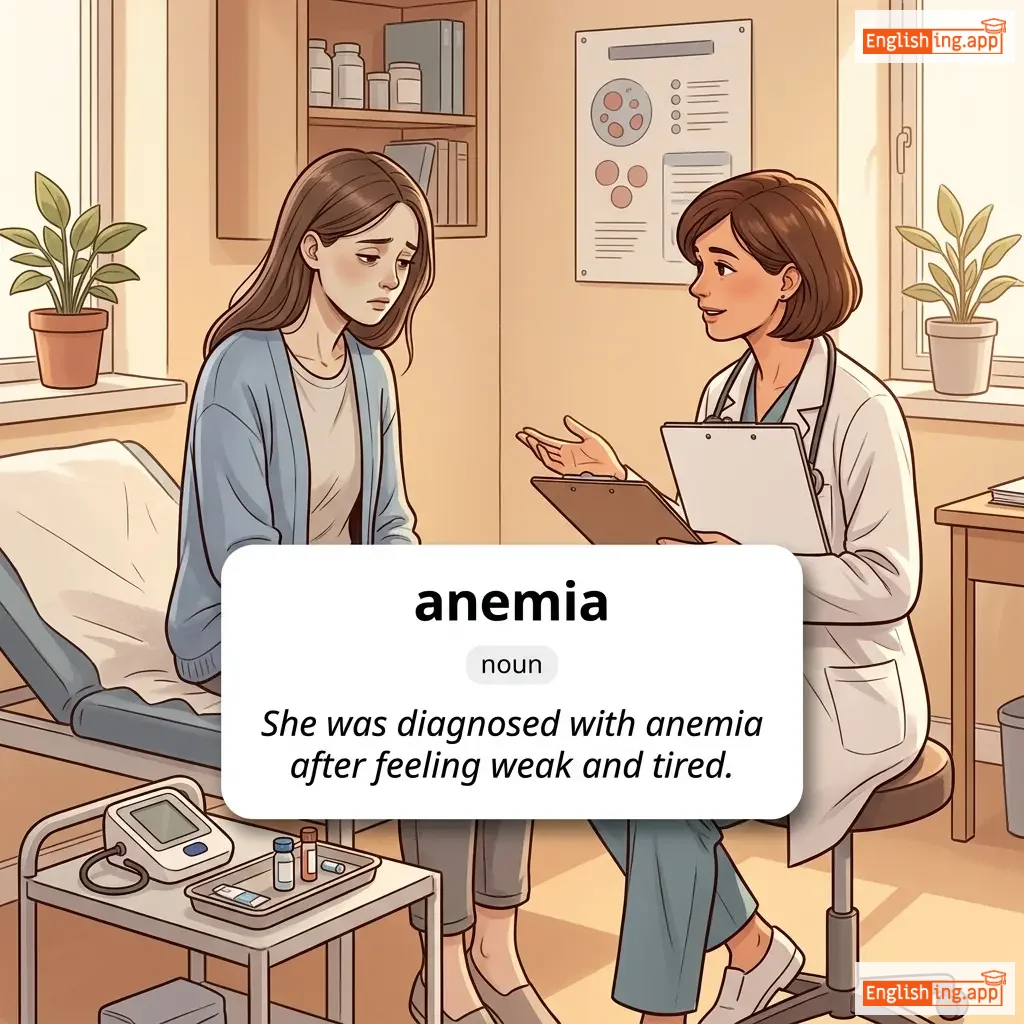
anemia definition card — visual illustration of the meaning
noun
/əˈniːmiə/
貧血 (hinketsu)

A condition in which there is a deficiency of red cells or hemoglobin in the blood.

"She was diagnosed with anemia after feeling weak and tired."

"彼女は弱さと疲れを感じた後、貧血と診断されました。" (Kanojo wa yowasa to tsukare wo kanjita ato, hinketsu to shindan saremashita.)
adjective
/əˈniːmɪk/
貧血 (hinketsu)

Suffering from anemia; lacking in vitality, strength, or color.

"The doctor prescribed iron supplements for her anemic condition."

"医者は彼女の貧血状態のために鉄分補充剤を処方しました。" (Isha wa kanojo no hinketsu joutai no tame ni tetsubun hojuuzai o shohou shimashita.)
noun
/ˌænɪˈmɒmɪtər/
アネモメーター (anemometā)

An instrument used to measure the speed and direction of wind.

"The scientist used an anemometer to record the wind speed during the storm."

"科学者は嵐の間に風速を記録するためにアネモメーターを使用しました。" (Kagakusha wa arashi no aida ni fūsoku o kiroku suru tame ni anemometā o shiyō shimashita.)
noun
/ˌænəsˈθetɪk/
麻酔薬 (masuikyaku)

A substance that causes loss of sensation or consciousness, especially used during surgery.

"The doctor administered a local anesthetic before stitching the wound."

"医者は傷を縫う前に局所麻酔を施しました。" (Isha wa kizu o nuu mae ni kyokusho masui o hodokoshimashita.)
adverb
/əˈnjuː/
新たに (aratani)

In a new or different way; once more.

"After the failure, she decided to start her life anew."

"失敗後、彼女は新たに人生を始めることを決意した。" (Shippai go, kanojo wa aratani jinsei o hajimeru koto o ketsui shita.)
noun
/ˈeɪndʒəl/
天使 (tenshi)

a spiritual being believed to act as a messenger or servant of God

"She believed her mother was watching over her like an angel."

"彼女は母親が天使のように彼女を見守っていると信じていました。" (Kanojo wa hahaoya ga tenshi no yō ni kanojo o mimamotte iru to shinjite imashita.)
adjective
/ænˈdʒelɪk/
天使のような (tenshi no you na)

Like or characteristic of an angel; pure, kind, or innocent.

"The child had an angelic smile."

"その子供は天使のような笑顔をしていました。" (Sono kodomo wa tenshi no you na egao o shite imashita.)
noun
/ˈæŋɡər/
怒り (ikari)

A strong feeling of displeasure or hostility.

"He couldn't control his anger after the argument."

"彼は議論の後、自分の怒りを制御できなかった。" (Kare wa giron no ato, jibun no ikari o seiryō dekinakatta.)
angioplasty definition card — visual illustration of the meaning
noun
/ˈæn.dʒi.əʊ.plæs.ti/
血管を開くための医療手術で、心臓に血液を供給する血管が閉塞または狭窄している場合に行われます。 (kekkan o hiraku tame no iryō shujutsu de, shinzō ni ketsueki o kyōkyū suru kekkan ga heisoku matawa kyōsaku shite iru baai ni okonawaremasu.)

A medical procedure to open blocked or narrowed blood vessels that supply blood to the heart.

"Angioplasty is now safer with robotic assistance."

"ロボット支援で、アンジオプラスティは現在より安全です。" (Robotto shien de, anjiopurasuti wa genzai yori anzen desu.)
noun
/ˈæŋɡl/
角度 (kakudo)

The space between two intersecting lines or surfaces at the point where they meet.

"The teacher explained how to measure an angle in geometry."

"先生は数学で角度を測る方法を説明しました。" (Sensei wa sūgaku de kakudo o hakaru hōhō o setsumei shimashita.)
noun
/ˌæŋɡloʊ ˈsæksən/

A member of the Germanic peoples who settled in England in the early Middle Ages; also relating to their language or culture.

"The Anglo-Saxon period greatly influenced English culture and language."

noun
/ˌæŋɡləˈfoʊbiə/
アングロフォビア (angurofobia)

Dislike or fear of England, English people, or English culture.

"The politician was accused of promoting Anglophobia in his speeches."

"その政治家は演説でアングロフォビアを促進したとして非難されました。" (Sono seijika wa enzetsu de angurofobia o sokushin shita toshite hinan saremashita.)
adverb
/ˈæŋɡrɪli/
怒って (okotte)

in a manner showing anger or strong displeasure

"She spoke angrily when she heard the news."

"彼女はその知らせを聞いて怒って話した。" (kanojo wa sono shirasem o kiite okotte hanashita)
adjective
/ˈæŋɡri/
怒っている (okotteiru)

feeling or showing strong displeasure or hostility

"She was angry when she found out the truth."

"彼女は真実を知って怒っていた。" (Kanojo wa shinjitsu o shitte okotte ita.)
noun
/ˈæŋɡwɪʃ/
苦悩 (kunou)

Severe mental or physical pain or suffering.

"She was in deep anguish after hearing the tragic news."

"悲しい知らせを聞いて、彼女は深い苦悩に沈んだ。" (kanashii shirase o kiite kanojo wa fukai kunou ni shizunda.)
adjective
/ˈæŋɡjələr/
角ばった (kakubatta)

Having angles or sharp corners; lean or bony in appearance.

"The building has a very angular design."

"その建物には非常に角ばったデザインがあります。" (Sono tatemono ni wa hijou ni kakubatta dezain ga arimasu.)
adjective
/ænˈhaɪdrəs/

Containing no water.

"The chemist used anhydrous ammonia for the experiment."

noun
/ˈænɪ siːd/
アニス (anis)

Small aromatic seeds used as a spice and for medicinal purposes, with a sweet licorice-like flavor

"Anise seeds are often used in traditional desserts and teas."

"アニスの種は伝統的なデザートやお茶にしばしば使われます。" (Anisu no tane wa dentouteki na dezaato ya ocha ni shibashiba tsukawaremasu.)
noun
/ˌænɪmædˈvɜːʒən/
批判 (hihan)

Strong criticism or censure.

"The policy attracted severe animadversion from the public."

"その政策は公衆から厳しい批判を受けた。" (Sono seisaku wa koushuu kara kibishii hihan o uketa.)
verb
/ˌænɪmədˈvɜːt/
批判する (hihan suru)

To comment critically or unfavorably.

"The teacher animadverted on the student's careless mistakes."

"教師は生徒の不注意なミスを批判しました。" (Kyōshi wa seito no fuchūina misu o hihan shimashita.)
noun
/ˈænɪməl/
動物 (doubutsu)

a living organism that feeds on organic matter and usually has senses and mobility

"The tiger is a wild animal."

"虎は野生の動物です。" (Tora wa yasei no dōbutsu desu.)
noun
/ˈænɪməlˌkjuːl/
動物微生物 (dōbutsu biseibutsu)

A microscopic animal, especially a protozoan or other minute organism.

"The scientist observed an animalcule moving under the microscope."

"科学者は顕微鏡の下で動物微生物が動いているのを観察しました。" (Kagakusha wa kenbikyō no shita de dōbutsu biseibutsu ga ugōite iru no o kansatsu shimashita.)
verb
/ˈænɪmeɪt/
アニメートする (animeeto suru)

To bring to life or give movement to something; to inspire or enliven.

"The teacher tried to animate the lesson with exciting activities."

"先生はエキサイティングな活動で授業をアニメートしようとしました。" (Sensei wa ekisaitingu na katsudou de jugyou wo animeeto shiyou to shimashita.)
adjective
/ˈænɪmeɪtɪd/
アニメーションされた (animēshon sareta)

Full of life or excitement; made using animation techniques.

"The animated film was loved by children and adults alike."

"そのアニメーション映画は子供たちと大人たちに愛されました。" (Sono animēshon eiga wa kodomotachi to otonatachi ni aisaremashita.)
noun
/ˌænɪˈmeɪʃən/

the technique of creating moving images from still pictures or models

"The animation in the movie was incredible."

noun
/ˌænɪˈmɒsɪti/

A strong feeling of hostility or active dislike.

"There was a long history of animosity between the two families."

noun
/ˈænɪməs/
敵意 / 目的 (teki-i / mokuteki)

A strong feeling of hostility; motivation or purpose behind an action.

"His speech was driven by animus against the policy."

"彼のスピーチは政策に対する敵意によって駆り立てられた。" (Kare no supīchi wa seisaku ni taisuru teki-i ni yotte karitaterareta.)
noun
/ˈæŋkəl/
足首 (ashikubi)

the joint connecting the foot with the leg

"He twisted his ankle while playing football."

"彼はサッカーをしているときに足首を捻った。" (Kare wa sakkaa o shiteiru toki ni asikubi o netta.)
noun
/ˈæŋk.lət/
足首飾り (ashikubi kazari)

a piece of jewelry worn around the ankle

"She wore a beautiful silver anklet on her left foot."

"彼女は左足に美しい銀のアンクレットを着けていた。" (Kanojo wa hidari ashi ni utsukushī gin no ankuretto o tsukete ita.)
noun
/ˈæn.ə.lɪst/
年表作成者 (nenhyo sakuseisha)

A person who writes annals or records events year by year.

"The annalist carefully documented the events of the king's reign."

"アナリストは王の統治期間の出来事を慎重に記録しました。" (Anarisuto wa ō no tōchi kikan no dekigoto o shinchō ni kiroku shimashita.)
noun
/ˈæn.əlz/
年鑑 (nenkan)

Historical records of events, usually arranged chronologically.

"Her name will be remembered in the annals of science."

"彼女の名前は科学の年鑑に記録されるだろう。" (Kanojo no namae wa kagaku no nenkan ni kiroku sareru darou.)
verb
/əˈniːl/
熱処理で硬化する (netsu shori de koka suru)

To heat and cool metal or glass to make it stronger or less brittle.

"The blacksmith annealed the steel to improve its durability."

"鍛冶屋は鋼を熱処理してその耐久性を向上させました。" (Kajiya wa hagane o netsu shori shite sono taikyusei o kojo sasemashita.)
verb
/ˈæn.ɛks/
併合する (heigou suru)

To take control of a territory and add it to one's own.

"The empire annexed the neighboring kingdom after the war."

"帝国は戦争後、隣国を併合した。" (Teikoku wa sensōgo, ringoku o heigō shita.)
noun
/ˌænɛkˈseɪʃən/
併合 (heigou)

the act of adding or taking control of territory or property, especially by a state

"The annexation of the region led to international condemnation."
"その地域の併合は国際的な非難を招いた。" (sono chiiki no heigou wa kokusaiteki na hinan o manaita)
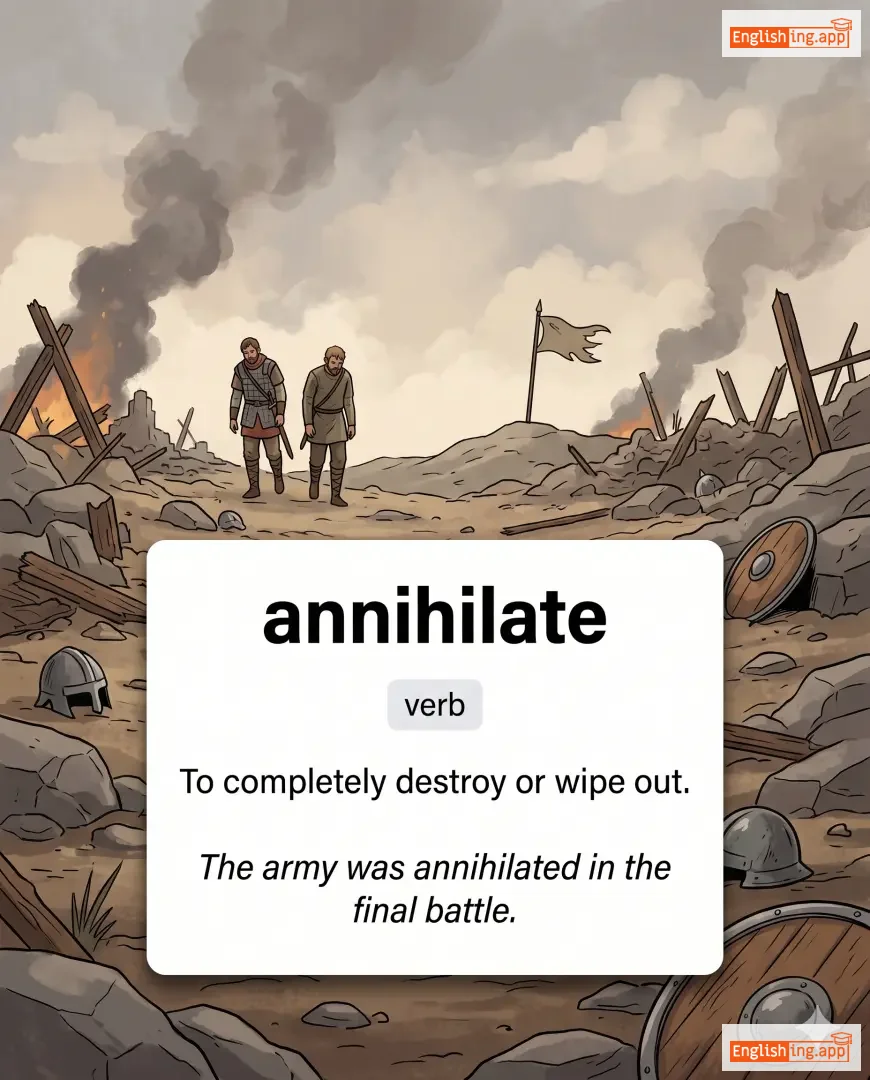
annihilate definition card — visual illustration of the meaning
verb
/əˈnaɪ.ə.leɪt/
壊滅させる (kaimetsu saseru)

To completely destroy or wipe out.

"The army was annihilated in the final battle."

"軍隊は最後の戦いで壊滅しました。" (Guntai wa saigo no tatakai de kaimetsu shimashita.)
noun
/ˌænɪˈvɜːrsəri/
記念日 (kinenbi)

the yearly recurrence of a date marking a past event

"They celebrated their wedding anniversary with a dinner."

"彼らは結婚記念日をディナーで祝いました。" (Karera wa kekkon kinenbi o dinā de iwaimashita.)
verb
/ˈæn.ə.teɪt/
注釈を加える (chūshaku o kakeru)

to add notes or comments to a text, diagram, or document for explanation or clarification

"The teacher asked the students to annotate the poem with their interpretations."

"先生は学生に詩を解釈して注釈をつけるように頼みました。" (Sensei wa gakusei ni shi o kaishaku shite chūshaku o tsukeru yō ni tanomimashita.)