वोकैबुलरीज

इंग्लिश वोकैबुलरी डिस्कवर, लर्न और मास्टर करें

noun
/ˌɔːtəbaɪˈɒɡrəfi/
आत्मकथन (aatmakathan)

An account of a person's life written by that person.

"She published an autobiography about her journey to success."

"उसने अपनी सफलता की यात्रा पर एक आत्मकथन प्रकाशित किया।" (Usne apni safalta ki yatra par ek aatmakathan prakaashit kiya.)
noun
/ɔːˈtɒkrəsi/
तानाशाही (tanashahi)

A system of government in which one person has absolute power.

"The country suffered under decades of autocracy."

"देश दशकों तक तानाशाही के तहत पीड़ित रहा।" (Desh dashko tak tanashahi ke tahat peedit raha.)
noun
/ˈɔːtəkræt/
तानाशाह (tanashah)

A ruler with absolute power.

"The autocrat controlled the country with an iron fist."

"तानाशाह ने लोहे की मुट्ठी से देश पर शासन किया।" (Tanashah ne lohe ki mutthi se desh par shasan kiya.)
adjective
/ˌɔːtəˈkrætɪk/
तानाशाही (tanashahi)

Relating to a ruler who has absolute power and does not consult others.

"The manager’s autocratic style discouraged employees from sharing their ideas."

"प्रबंधक की तानाशाही शैली कर्मचारियों को उनके विचारों को साझा करने से हतोत्साहित करती थी।" (Prabandhak ki tanashahi shaili karyakartao ko unke vicharon ko saanjha karne se hatotsahit karti thi.)
automate definition card — visual illustration of the meaning
verb
/ˈɔːtəmeɪt/
स्वचालित करना (swachalit karna)

To use machines or computers to control or operate a process, making it automatic.

"The company decided to automate its customer service operations."

"कंपनी ने अपने कस्टमर सर्विस ऑपरेशंस को ऑटोमेट करने का फैसला किया।" (Kampani ne apne customer service operations ko automate karne ka faisla kiya.)
adjective
/ˌɔːtəˈmætɪk/
स्वचालित (swachalit)

working by itself without direct human control

"This car has an automatic transmission."

"इस कार में स्वचालित गियर सिस्टम है।" (Is car mein swachalit gear system hai.)
adverb
/ˌɔːtəˈmætɪkli/
स्वचालित रूप से (svachalit roop se)

without human control or intervention; done by itself

"The door closes automatically after you enter."

"द्वार अपने आप बंद हो जाता है जब आप प्रवेश करते हैं।" (Dwaar apne aap band ho jaata hai jab aap pravesh karte hain.)
automation definition card — visual illustration of the meaning
noun
ˌɔː.təˈmeɪ.ʃən
स्वचालन (swachalan)

The use of machines or computers to do work that was previously done by people.

"Automation has increased efficiency in industries."

"ऑटोमेशन ने उद्योगों में दक्षता बढ़ाई है।" (Automation ne udyogon mein dakshata badhai hai.)
noun
/ɔːˈtɒmətən/
स्वचालित यंत्र (swachalit yantra)

A machine that works automatically; also refers to a person who behaves like a machine, without thinking.

"He worked like an automaton, without showing any emotion."

"वह एक ऑटोमेटन की तरह काम करता था, बिना कोई भावना दिखाए।" (Wah ek automaton ki tarah kaam karta tha, bina koi bhavana dikhaye.)
noun
/ˈɔːtəmoʊbiːl/
गाड़ी (gaadi)

a road vehicle powered by an engine, typically with four wheels

"He bought a new automobile last week."

"उसने पिछले हफ्ते एक नई गाड़ी खरीदी।" (Usne pichhle hafte ek nai gaadi khareedi.)
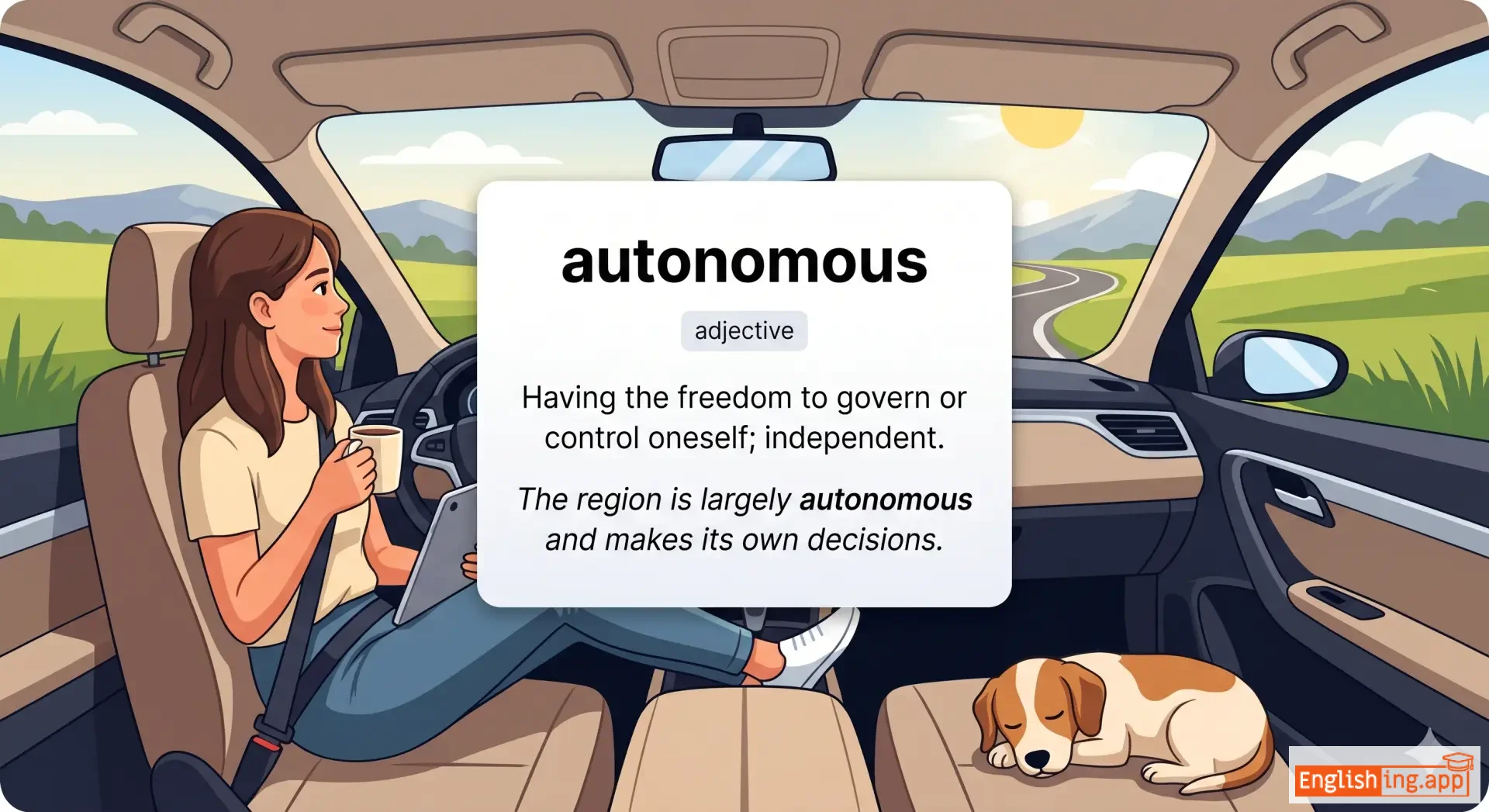
autonomous definition card — visual illustration of the meaning
adjective
/ɔːˈtɒnəməs/
स्वायत्त (svayatt)

Having the freedom to govern or control oneself; independent.

"The region is largely autonomous and makes its own decisions."

"क्षेत्र अधिकांशतः स्वायत्त है और अपने निर्णय स्वयं लेता है।" (kshetra adhikanshatah svayatt hai aur apne nirnay svayam leta hai.)
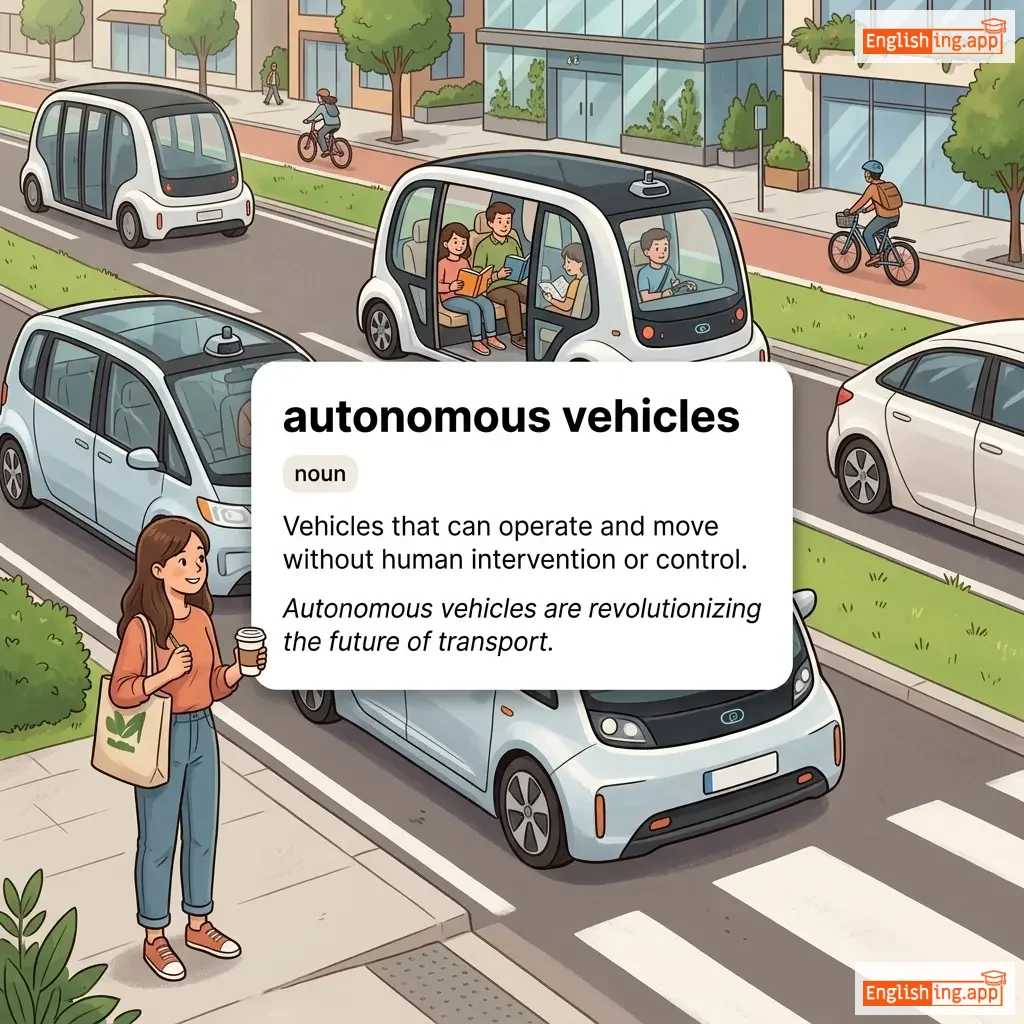
autonomous vehicles definition card — visual illustration of the meaning
noun
/ɔːˈtɒn.ə.məs ˈviː.ɪ.kəlz/
स्वायत्त वाहन (svayatt vahan)

Vehicles that can operate and move without human intervention or control.

"Autonomous vehicles are revolutionizing the future of transport."

"स्वायत्त वाहन परिवहन के भविष्य में क्रांति ला रहे हैं।" (Svayatt vahan parivahan ke bhavishya mein kranti la rahe hain.)
adverb
/ɔːˈtɒnəməsli/
स्वतंत्र रूप से (svatantra roop se)

In an independent or self-governing manner.

"The robot can operate autonomously without human intervention."

"रोबोट मानव हस्तक्षेप के बिना स्वतंत्र रूप से काम कर सकता है।" (Robot maanav hastakshep ke bina svatantra roop se kaam kar sakta hai.)
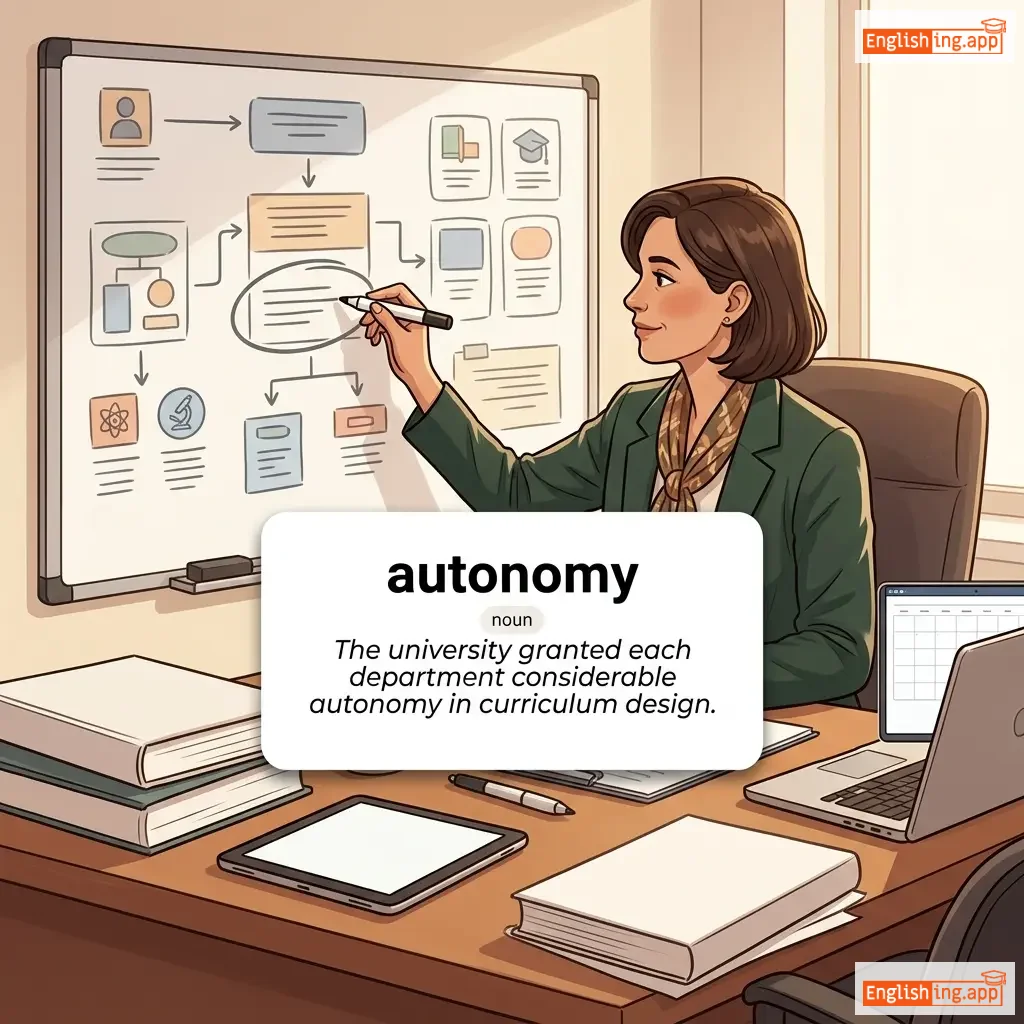
autonomy definition card — visual illustration of the meaning
noun
/ɔːˈtɒnəmi/
स्वायत्तता (svayattata)

the right or condition of self-government; independence or freedom to act or make decisions

"The university granted each department considerable autonomy in curriculum design."

"विश्वविद्यालय ने प्रत्येक विभाग को पाठ्यक्रम डिज़ाइन में पर्याप्त स्वायत्तता दी।" (Vishwavidyalay ne pratyek vibhag ko pathyokram design mein paryapt svayattata di.)
noun, verb
/ˈɔːtɒpsi/
पोस्टमॉर्टम (postmortem)

a post-mortem examination to discover the cause of death or the extent of disease

"The autopsy revealed that the victim had died from poisoning."

"पोस्टमॉर्टम ने यह खुलासा किया कि शिकार जहर से मरा था।" (Postmortem ne yah khulasa kiya ki shikar zehar se mara tha.)
noun
/ˈɔːtəm/
पतझड़ (patjhad)

the season between summer and winter, when leaves fall from trees

"The trees look beautiful in autumn, with colorful leaves falling."

"पेड़ ऑटम में सुंदर लगते हैं, रंगीन पत्तियाँ गिर रही हैं।" (Ped autumn mein sundar lagte hain, rangeen pattiyan gir rahi hain.)
adjective
/ɔːˈtʌmnəl/
शरदकालीन (sharadkaleen)

relating to or characteristic of autumn; occurring in autumn

"The autumnal colors of red and gold filled the forest."

"लाल और सुनहरे शरदकालीन रंगों ने जंगल को भर दिया।" (Laal aur sunahare sharadkaleen rangon ne jangalon ko bhar diya.)
adjective, noun
/ɔːɡˈzɪliəri/
सहायक (sahayak)

(adjective) providing supplementary or additional help and support; (noun) a person or thing that provides auxiliary support

"The hospital has an auxiliary power generator in case of emergencies."

"अस्पताल में आपातकाल के लिए एक सहायक बिजली जनरेटर है।" (aspataal mein aapaatkaal ke liye ek sahayak bijli janarator hai.)
verb
/əˈveɪl/
लाभ उठाना (labh uthana)

to make use of something; to be of use or benefit

"You should avail yourself of this opportunity."

"तुम्हें इस अवसर का लाभ उठाना चाहिए।" (tumhein is avsar ka labh uthana chahiye)
noun
/əˌveɪləˈbɪləti/
उपलब्धता (uplabdhata)

the state of being able to be used or obtained

"The availability of clean water is crucial for health."

"स्वच्छ पानी की उपलब्धता स्वास्थ्य के लिए महत्वपूर्ण है।" (Swachh paani ki uplabdhata swasthya ke liye mahatvapurn hai.)
adjective
/əˈveɪləbl/
उपलब्ध (uplabdh)

Able to be used, obtained, or accessed.

"The product is now available in all stores."

"उत्पाद अब सभी स्टोर्स में उपलब्ध है।" (Utpad ab sabhi stores mein uplabdh hai.)
noun, verb
/ˈævəlæntʃ/
बर्फीला ल्हासा (barphila lhasa)

(noun) a mass of snow, ice, and rocks falling rapidly down a mountainside; a sudden overwhelming quantity; (verb) to descend like an avalanche

"The avalanche buried the mountain road under tons of snow."

"बर्फीला ल्हासा बर्फ की टनों के नीचे पहाड़ी सड़क को दबा दिया।" (Barphila lhasa barf ki tonon ke neeche parvati sadak ko daba diya.)
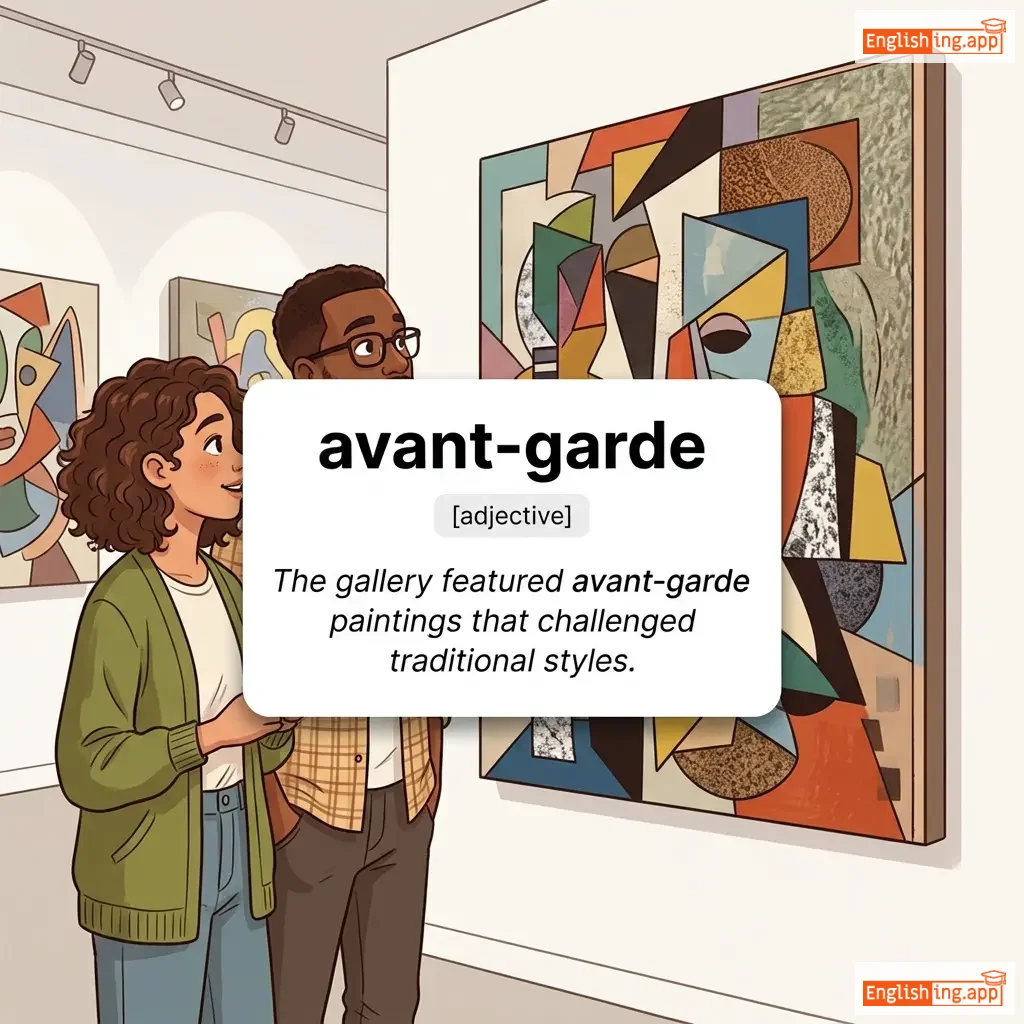
avant-garde definition card — visual illustration of the meaning
adjective
/ˌævɒ̃ˈɡɑːrd/
आधुनिक कला (aadhunik kala)

innovative, experimental, or ahead of its time, especially in the arts and culture

"The gallery featured avant-garde paintings that challenged traditional styles."

"गैलरी में आधुनिक कला की पेंटिंग्स प्रदर्शित की गई थीं जो पारंपरिक शैलियों को चुनौती देती थीं।" (Gallery mein aadhunik kala ki paintings pradarshit ki gayi thi jo paramparik shailiyon ko chunauti deti thi.)
noun
/ˌævɒ̃ˈɡɑːrd/
अग्रगामी (agragami)

people or works that are innovative, experimental, and ahead of their time

"The avantgarde of the 20th century reshaped modern art."

"20वीं सदी का अग्रगामी आधुनिक कला को नया रूप दे रहा था।" (20vi sadi ka agragami aadhunik kala ko naya roop de raha tha.)
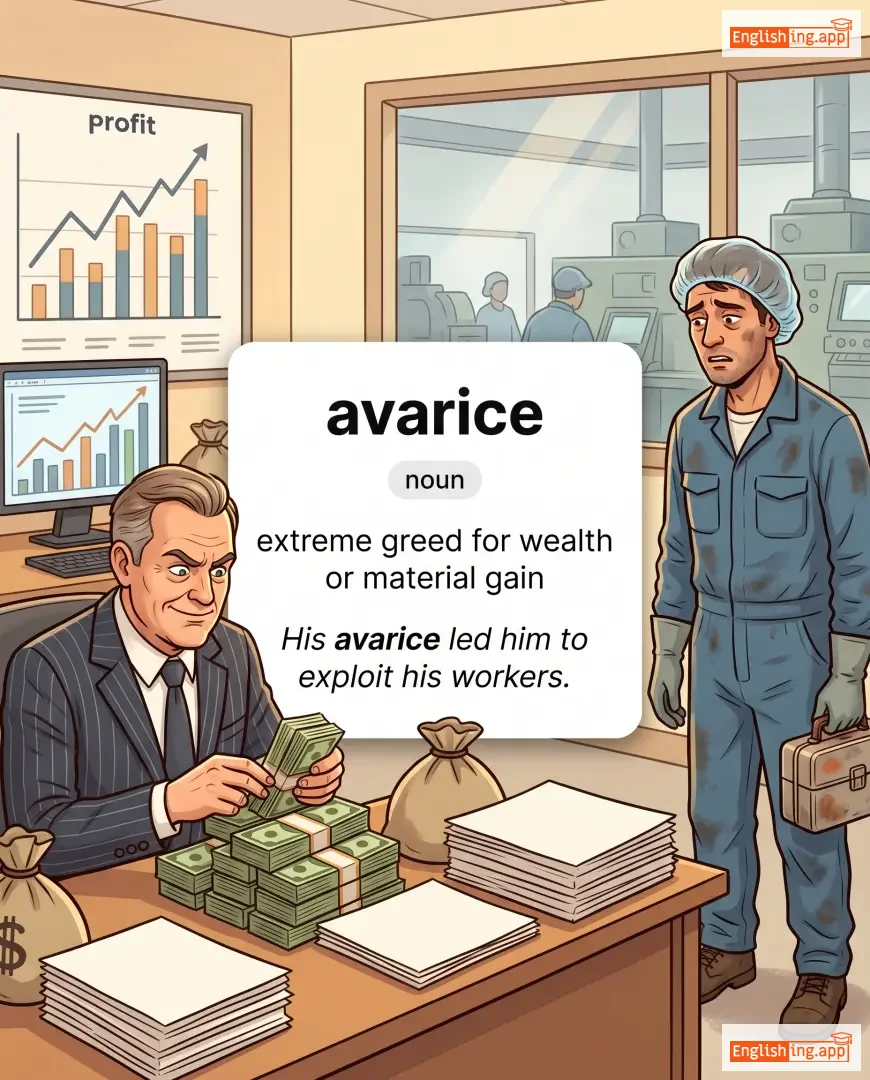
avarice definition card — visual illustration of the meaning
noun
/ˈævərɪs/
लोभ (lobh)

extreme greed for wealth or material gain

"His avarice led him to exploit his workers."

"उसका लोभ उसे अपने कर्मचारियों का शोषण करने के लिए प्रेरित करता था।" (Uska lobh use apne karyakartao ka shoshan karne ke liye prerith karta tha.)
adjective
/ˌævəˈrɪʃəs/
लालची (laalchi)

having or showing extreme greed for wealth or material gain

"The avaricious landlord increased the rent unfairly."

"लालची मकान मालिक ने अनैतिक रूप से किराया बढ़ा दिया।" (Laalchi makaan malik ne anaitik roop se kiraya badha diya.)
noun
/ˈævətɑːr/
अवतार (avatar)

an icon or figure representing a person in digital contexts; in Hinduism, a divine incarnation

"She changed her social media avatar to a new cartoon image."

"उसने अपनी सोशल मीडिया अवतार को एक नए कार्टून चित्र में बदल दिया।" (Usne apni social media avatar ko ek naye cartoon chitra mein badal diya.)
verb
/əˈvɛndʒ/
प्रतिशोध लेना (pratishodh lena)

to inflict harm in return for an injury or wrong done to oneself or another

"He vowed to avenge his brother's death."

"उसने अपने भाई की मौत का बदला लेने की कसम खाई।" (Usne apne bhai ki maut ka badla lene ki kasam khai.)
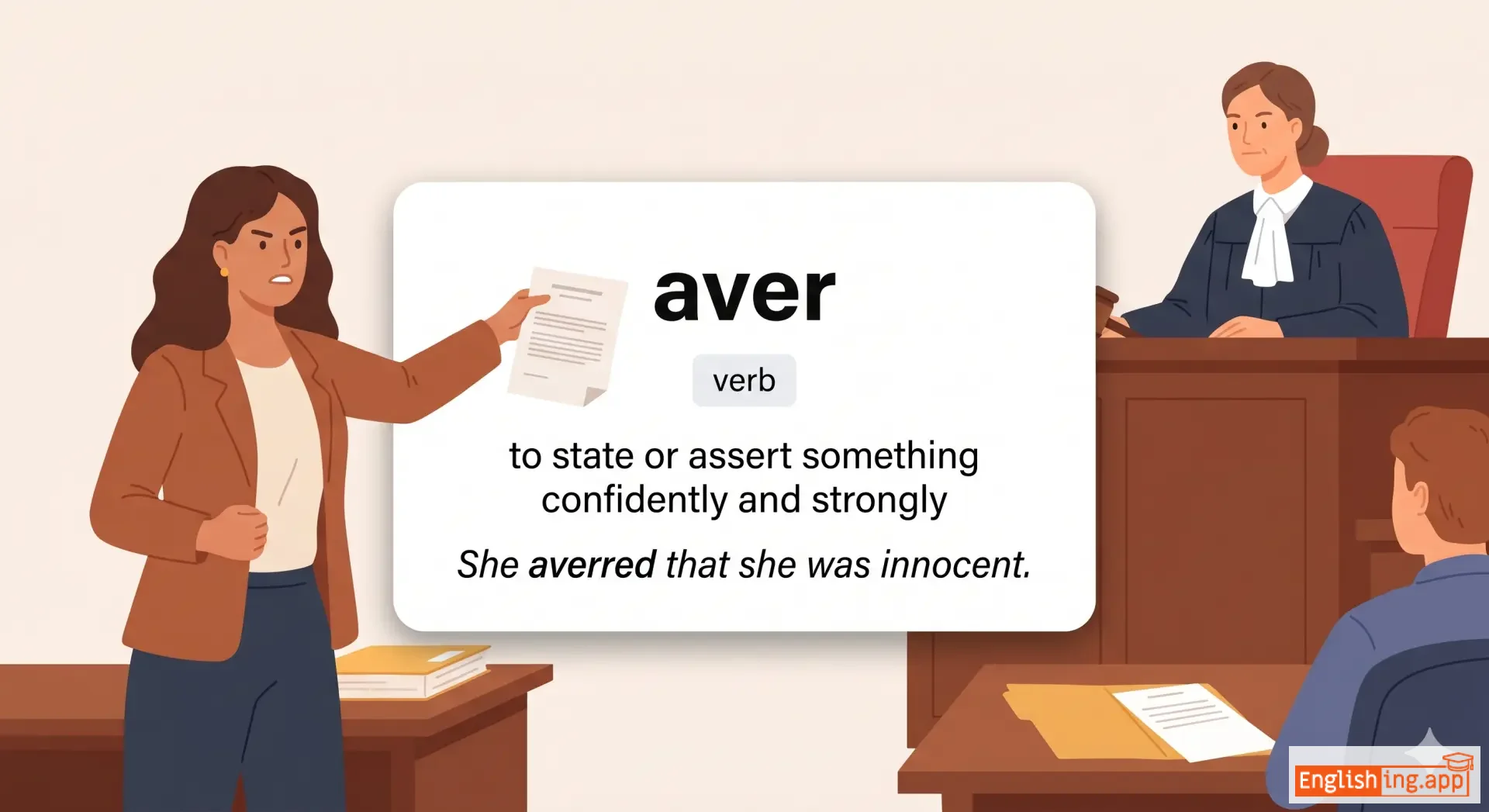
aver definition card — visual illustration of the meaning
verb
/əˈvɜːr/
दृढ़ता से कहना (dridhta se kehna)

to state or assert something confidently and strongly

"She averred that she was innocent."

"वह कह रही थी कि वह निर्दोष थी।" (Vah keh rahi thi ki vah nirdosh thi.)
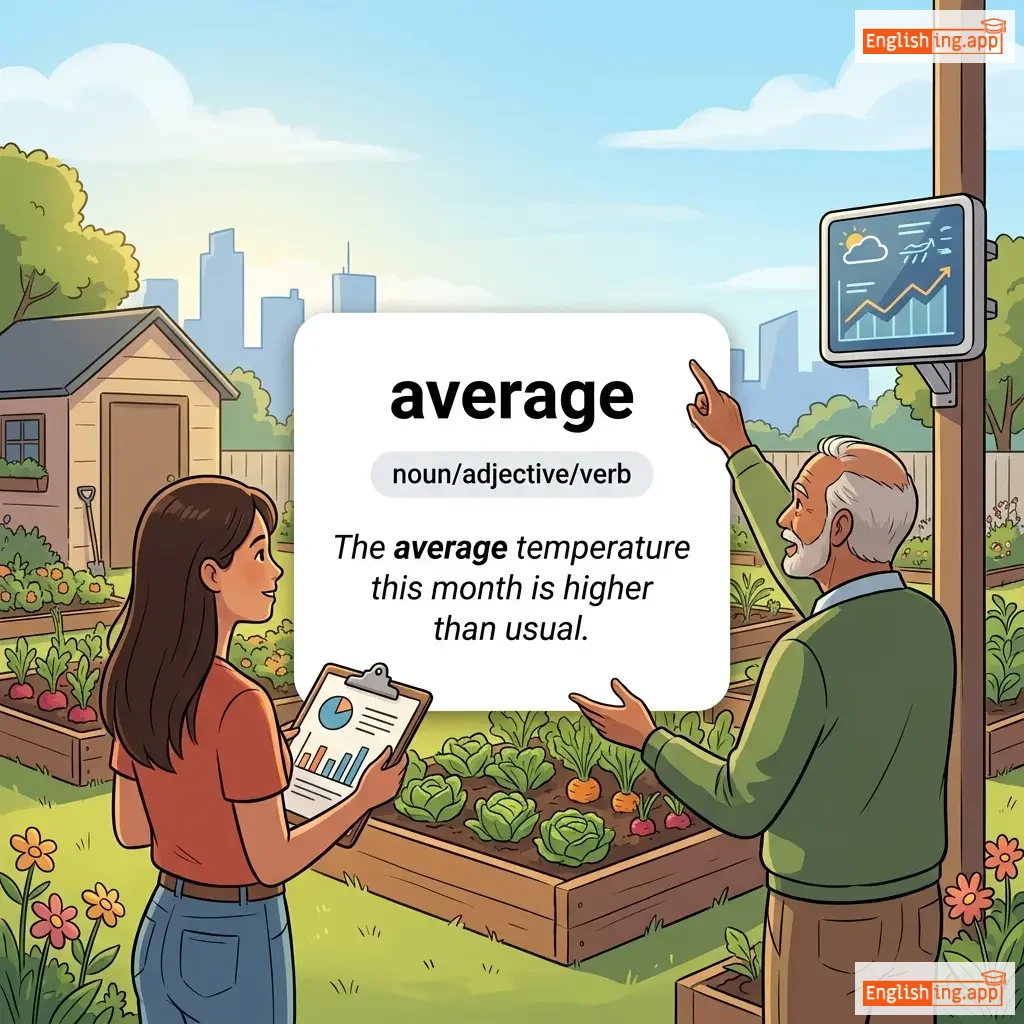
average definition card — visual illustration of the meaning
noun/adjective/verb
/ˈævərɪdʒ/
औसत (ausat)

the result obtained by adding several quantities together and then dividing by the number of quantities; typical or normal level

"The average temperature this month is higher than usual."

"इस महीने का औसत तापमान सामान्य से अधिक है।" (Is mahine ka ausat taapmaan saadharan se adhik hai.)
adjective
/əˈvɜːrs/
अवर्स (avers)

having a strong dislike of or opposition to something

"He was averse to taking unnecessary risks."

"वह अनावश्यक जोखिम लेने के लिए अवर्स था।" (Vah anavashyak jokhim lene ke liye avers tha.)
noun
/əˈvɜːrʒən/
नफ़रत (nafrat)

a strong feeling of dislike or unwillingness towards something

"She has a strong aversion to smoking."

"वह धूम्रपान के प्रति एक मजबूत नफ़रत रखती है।" (Wah dhumrapan ke prati ek majboot nafrat rakhti hai.)
verb
/əˈvɜːrt/
रोकना (rokna)

to prevent something bad from happening or to turn away one's eyes or thoughts

"Quick action helped avert a disaster."

"क्विक एक्शन ने एक आपदा को अवर्ट किया।" (Quick action ne ek aapda ko avert kiya.)
noun
/ˈeɪ.viˌɛr.i/
पक्षीगृह (paksheegrih)

a large enclosure for keeping birds

"The zoo built a new aviary for exotic parrots."

"चिड़ियाघर ने विदेशी तोते के लिए एक नया पक्षीगृह बनाया।" (Chidiyaaghar ne videshi tote ke liye ek naya paksheegrih banaya.)
adjective
/ˈæv.ɪd/
उत्साही (utsahi)

having an eager desire or enthusiasm for something

"She is an avid reader of mystery novels."

"वह रहस्य उपन्यासों की एक उत्साही पाठक है।" (Vah rahasya upanyason ki ek utsahi pathak hai.)
noun
/əˈvɪdəti/
उत्साह (utsah)

extreme eagerness or enthusiasm

"He accepted the offer with avidity."

"उसने उत्साह के साथ प्रस्ताव को स्वीकार किया।" (Usne utsah ke saath prastav ko svikaar kiya.)
noun
/ˌæv.əˈkɑː.doʊ/
एवोकाडो (evokado)

a green pear-shaped fruit with creamy flesh and high fat content, often used in healthy diets

"Avocado is rich in healthy fats and is popular in salads and toast."

"एवोकाडो स्वस्थ वसा से भरपूर है और सलादों और टोस्ट में लोकप्रिय है." (evokado swasth vasa se bharpoor hai aur saladon aur toast me lokpriya hai)
avocation definition card — visual illustration of the meaning
noun
/ˌæv.oʊˈkeɪ.ʃən/
शौकिया काम (shaukiya kaam)

a hobby or minor occupation pursued in addition to one's main work

"Painting is his avocation after office hours."

"पेंटिंग उसके ऑफिस के घंटों के बाद उसका शौकिया काम है।" (Painting uske office ke ghanton ke baad uska shaukiya kaam hai.)
verb
/əˈvɔɪd/
बचना (bachna)

To keep away from or stop oneself from doing something.

"He tries to avoid junk food."

"वह जंक फूड से बचने की कोशिश करता है।" (Vah junk food se bachne ki koshish karta hai.)
adjective
/əˈvɔɪdəbl/
जिससे बचा जा सकता है (jisse bacha ja sakta hai)

able to be prevented or avoided

"Most of the damage was avoidable with proper planning."

"सही योजना से अधिकतर नुकसान टाला जा सकता था।" (sahi yojana se adhiktar nuksan tala ja sakta tha)
noun
/əˈvɔɪdəns/
परहेज़ (parhez)

the act of staying away from something; deliberate prevention of contact or confrontation

"Avoidance of difficult conversations can create bigger problems later."

"कठिन बातचीत से परहेज़ बाद में बड़ी समस्याएँ पैदा कर सकता है।" (kathin baatcheet se parhez baad mein badi samasyaen paida kar sakta hai)
verb
/əˈvaʊtʃ/
घोषणा करना (ghoshna karna)

to affirm or assert something as true

"He avouched his innocence before the judge."

"उसने न्यायाधीश के सामने अपनी निर्दोषिता को स्वीकार किया।" (Usne nyayadhish ke samne apni nirdoshita ko sweekar kiya.)
verb
/əˈvaʊ/
खुलकर स्वीकार करना (khulkar sveekar karna)

to openly declare or admit something, often publicly and firmly

"He avowed his loyalty to the cause without hesitation."

"उसने बिना हिचकिचाहट के कारण अपनी निष्ठा खुलेआम स्वीकार की।" (Usne bina hichkichahat ke karan apni nishtha khule aam sveekar ki.)
verb
/əˈvʌls/
जबरदस्ती फाड़ना (jabardasti faadna)

to tear away or separate forcibly, especially in medical or geological contexts

"The surgeon had to avulse the damaged tissue during the operation."

"ऑपरेशन के दौरान सर्जन को क्षतिग्रस्त ऊतक को जबरदस्ती फाड़ना पड़ा।" (Operation ke dauran surgeon ko kshatigrist ootak ko jabardasti faadna pada.)
avuncular definition card — visual illustration of the meaning
adjective
/əˈvʌŋkjələr/
काका जैसा दयालु (kaka jaisa dayalu)

kind and friendly, like an uncle

"He had an avuncular manner that made everyone feel comfortable."

"उसका अवंकुलर अंदाज सभी को आरामदायक महसूस कराता था।" (Uska avunkular andaaz sabhi ko aaraamdayak mahsus karaata tha.)
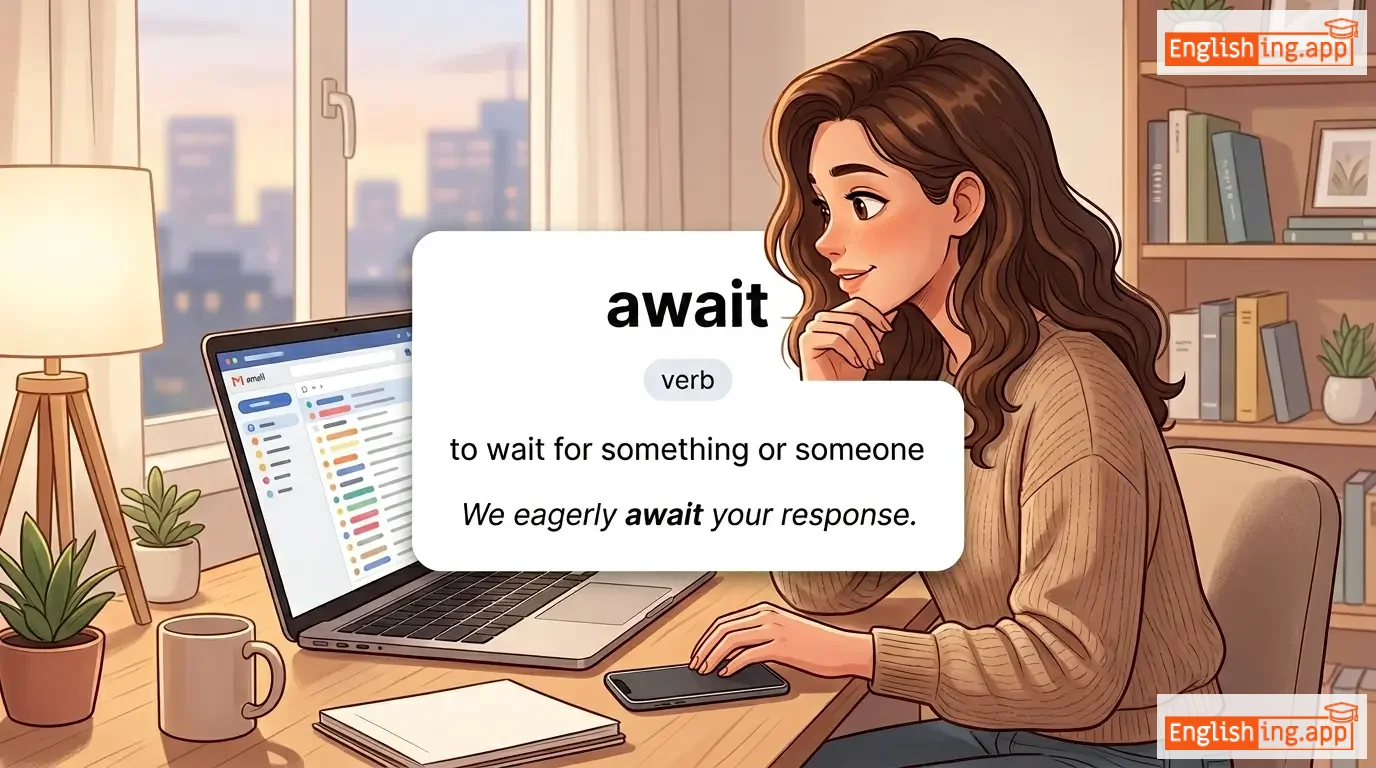
await definition card — visual illustration of the meaning
verb
/əˈweɪt/
इंतजार करना (intezaar karna)

to wait for something or someone

"We eagerly await your response."

"हम आपकी प्रतिक्रिया का उत्सुकता से इंतजार कर रहे हैं।" (Hum aapki pratikriya ka utsukta se intezaar kar rahe hain.)
verb/adjective
/əˈweɪk/
जागृत (jagrut)

to stop sleeping; not asleep

"She was still awake when I got home."

"वह जब मैं घर आया तब भी जाग रही थी।" (Vah jab main ghar aaya tab bhi jaag rahi thi.)
verb
/əˈweɪkən/
जगाना (jagana)

to stop sleeping; to cause to become aware

"The loud noise awakened the entire neighborhood."

"तेज आवाज़ ने पूरे मोहल्ले को जगा दिया।" (Tez awaaz ne poore mohalla ko jaga diya.)
noun/verb
/əˈwɔːrd/
पुरस्कार (purskaar)

a prize or recognition given for an achievement; to give a prize or recognition

"She received an award for her outstanding performance."

"उसने अपनी उत्कृष्ट प्रदर्शन के लिए एक पुरस्कार प्राप्त किया।" (Usne apni utkrsht pradarshan ke liye ek purskaar prapt kiya.)
adjective
/əˈwɛər/
सचेत (sachet)

having knowledge or perception of a situation or fact

"She is aware of the risks involved."

"वह जोखिमों के बारे में सचेत है।" (Vah jokhimon ke baare mein sachet hai.)