Словари

Словарь английского языка | Значения слов, определения и примеры

noun
/ˈeɪlmənt/
недуг (nedug)

An illness, typically a minor one.

"He went to the doctor for a minor stomach ailment."

"Он пошел к врачу с легким заболеванием желудка." (On poshel k vrachu s legkim zabolevaniem zheludka.)
verb
/eɪm/
прицеливаться (pritselivat'sya)

to direct a weapon, object, or effort at a target; to intend or plan

"He aimed the ball at the goal."

"Он прицелился в мяч в сторону цели." (On pritselilsya v myach v storonu tsely.)
adjective
/ˈeɪmləs/
бессмысленный; без цели (eymles)

without purpose or direction; lacking a goal

"He wandered around the city in an aimless manner."

"Он бродил по городу бессмысленно." (On brodil po gorodu bessmyslenno.)
noun
/ɛər/
воздух (vozdukh)

The invisible mixture of gases that surrounds the earth and is breathed in by people and animals.

"The air is fresh after the rain."

"Воздух свежий после дождя." (Vozdukh svezhiy posle dozhdya.)
noun
/ˈeər kənˈdɪʃ.ən.ər/
кондиционер (konditsioner)

a system that controls the temperature, humidity, and air quality in a building or room

"We turned on the air conditioner because it was too hot outside."

"Мы включили кондиционер, потому что на улице было слишком жарко." (My vklyuchili konditsioner, potomu chto na ulice bylo slishkom zharko)
noun
/ˈeər fɔːrs/
воздушные силы (vozdushnye sily)

the military organization of a country that uses aircraft for fighting

"The air force conducted a training exercise over the mountains."
"Воздушные силы провели тренировочное задание над горами." (Vozdushnye sily proveli trenirovochnoe zadanie nad gorami.)
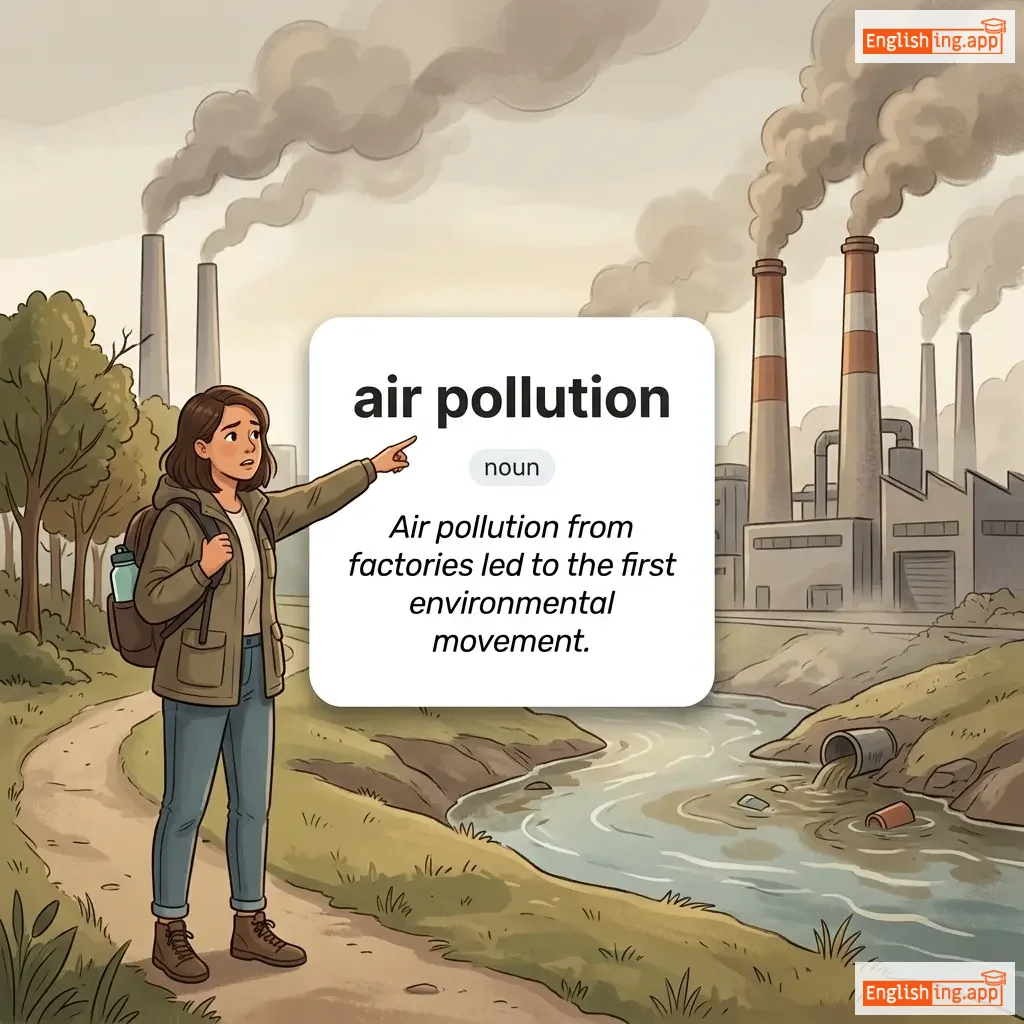
air pollution definition card — visual illustration of the meaning
noun
/ɛr pəˈluːʃən/
загрязнение воздуха (zagrjaznenie vozduha)

The presence of harmful or poisonous substances in the air, typically caused by industrial processes, vehicle emissions, or other human activities.

"Air pollution from factories led to the first environmental movement."

"Загрязнение воздуха от фабрик привело к первому экологическому движению." (Zagrjaznenie vozdukha ot fabrik privedlo k pervomu ekologicheskomu dvizhheniyu.)
noun
/ˈɛər.kræft/
самолет (samolet)

A vehicle, such as an airplane or helicopter, that can fly in the air.

"The military aircraft flew over the city."

"Военный самолет пролетел над городом." (Voennyy samolet proletel nad gorodom.)
noun
/ˈɛər.laɪn/
авиакомпания (aviakompaniya)

A company that provides regular flights for passengers and goods.

"The airline announced a discount on international tickets."

"Авиакомпания объявила о скидке на международные билеты." (Aviakompaniya ob'yavila o skidke na mezhdunarodnye bilety.)
noun
/ˈɛərpleɪn/
самолет (samolet)

a powered flying vehicle with fixed wings and engines

"The airplane took off smoothly from the runway."

"Самолет взлетел плавно с взлетной полосы." (Samolet vzletel plavno s vzletnoy polosyy.)
noun
/ˈɛər.pɔːrt/
аэропорт (aeroport)

A place where airplanes take off and land, with buildings for passengers and cargo.

"We arrived at the airport two hours before the flight."

"Мы прибыли в аэропорт за два часа до рейса." (My pribyli v aeroport za dva chasa do reysa.)
adjective
/ˈɛərˌtaɪt/
герметичный (germetichny)

Completely sealed so that no air can get in or out.

"Store the cookies in an airtight container to keep them fresh."

"Храните печенье в герметичной упаковке, чтобы сохранить их свежими." (Khrinite pechen'ye v germetichnoy upakovke, chtoby sokhranit' ikh svezhimi.)
adjective
/ˈɛəri/
проветриваемый (provetriyaemyy)

Spacious and well-ventilated; light and breezy.

"The new apartment is bright and airy."

"Новая квартира яркая и проветриваемая." (Novaya kvartira yarkaya i provetriyaemaya.)
noun
/aɪl/
проход (prokhod)

a passage between rows of seats or shelves

"She walked down the aisle to find her seat."

"Она шла по проходу, чтобы найти свое место." (Ona shla po prokhodu, chtoby nayti svoe mesto.)
adjective
/əˈkɪn/
похожие (pokhozhie)

Of similar character or related by blood.

"His reaction was akin to shock."

"Его реакция была похожа на шок." (Yego reaktsiya byla pokhozha na shok.)
noun/adjective
/ˈæl.əˌbæs.tər/
алебастр (белый минерал, похожий на камень) (alebastr)

A fine-grained, usually white variety of gypsum, often used for carving; also describes something smooth and pale like alabaster.

"The statue was carved from pure alabaster."

"Статуя была вырезана из чистого алебастра." (Statua byla vyrezana iz chistogo alebastura.)
alacrity definition card — visual illustration of the meaning
noun
/əˈlæk.rə.ti/
расторопность (alacrity)

Cheerful willingness, eagerness, or readiness to do something.

"She accepted the invitation with alacrity."
"Она приняла приглашение с расторопностью." (Ona prinjala priglashenie s rastoropnost'yu.)
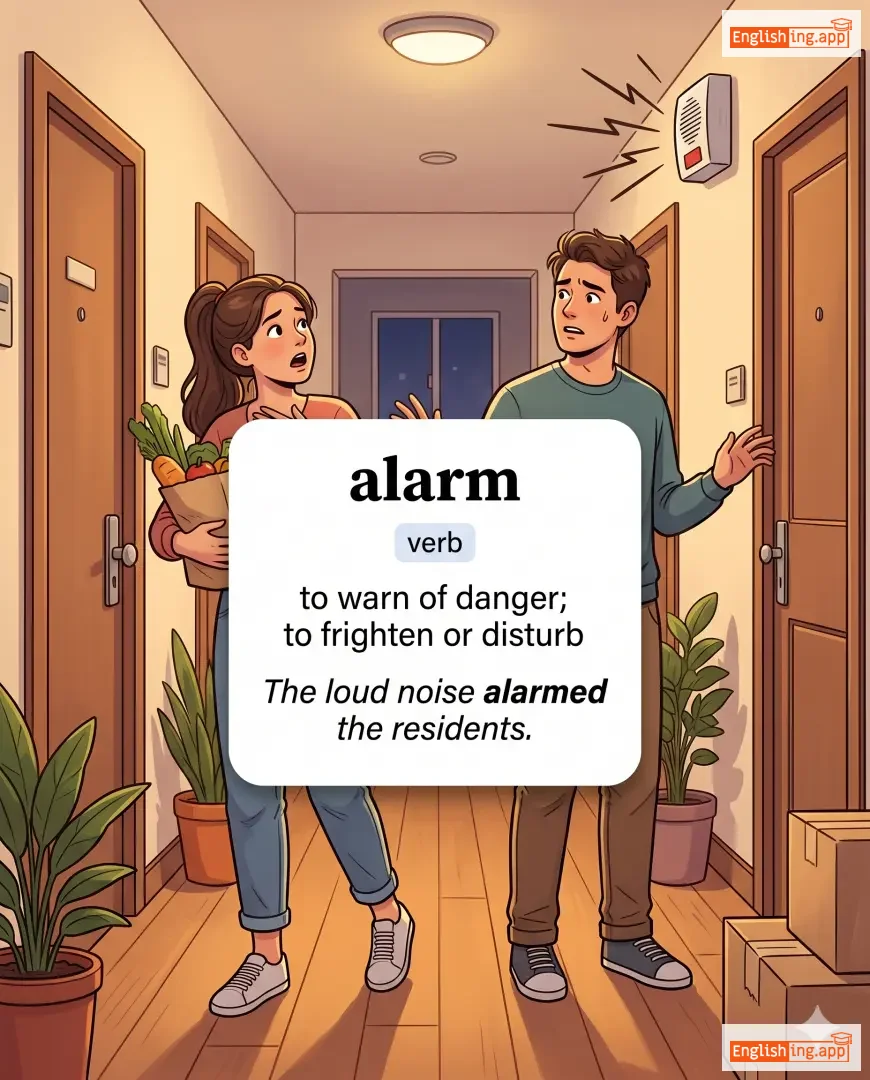
alarm definition card — visual illustration of the meaning
noun
/əˈlɑːrm/
сигнал тревоги (signal trevogi)

a signal or sound that warns people of danger or alerts them to take action

"The fire alarm went off in the middle of the night."
"Пожарная сигнализация сработала посреди ночи." (Pozharnaya signalizatsiya srabotala posredi nochi.)
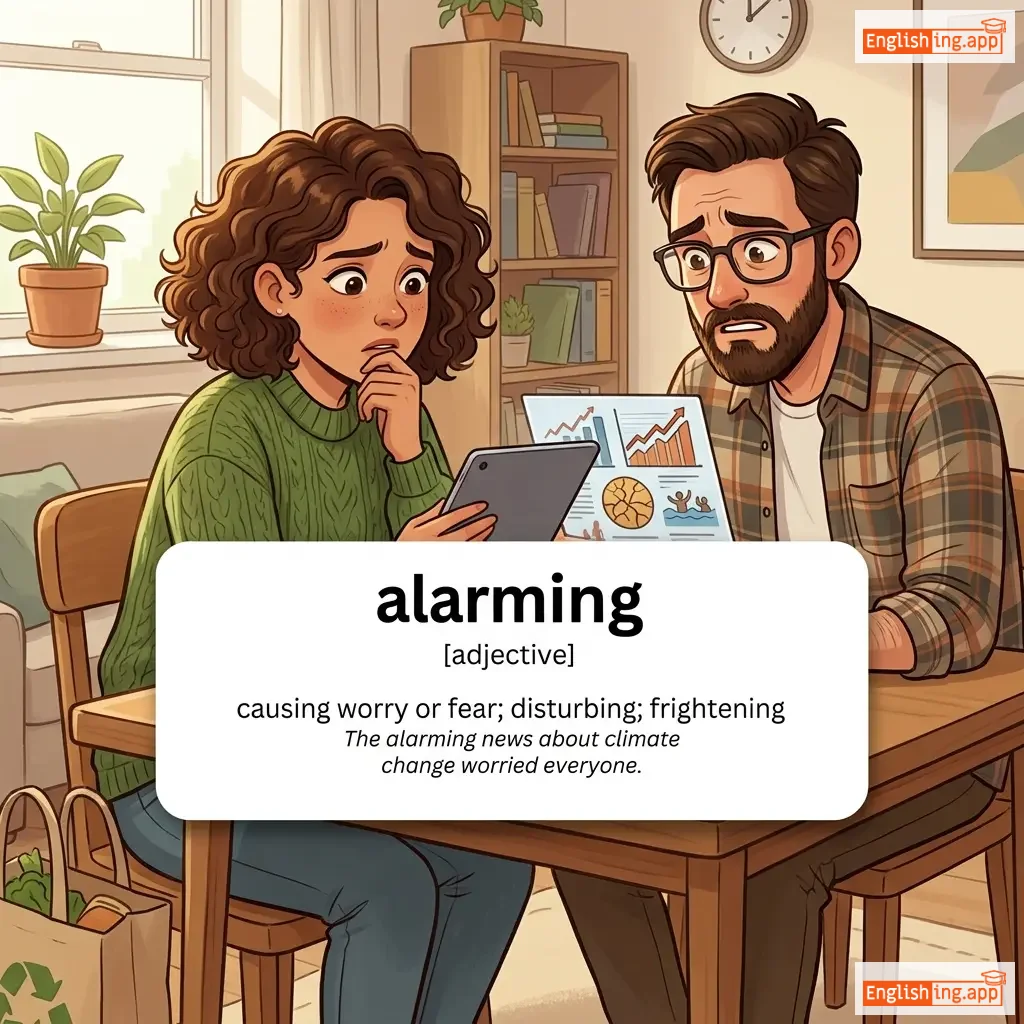
alarming definition card — visual illustration of the meaning
adjective
/əˈlɑrmɪŋ/
тревожный; пугающий; беспокоящий (trevozhnyy; pugayushchiy; bespokoystvuyushchiy)

causing worry or fear; disturbing; frightening

"The alarming news about climate change worried everyone."

"Тревожные новости о климатических изменениях обеспокоили всех." (Trevozhnyye novosti o klimatičeskikh izmeneniyakh obespokoili vsekh.)
conjunction
/ˌɔːlˈbiː.ɪt/
хотя (khotya)

Although; even though.

"He finally agreed, albeit reluctantly."

"Он наконец согласился, хотя и неохотно." (On nakonec soglasilся, khotya i neokhotno.)
noun/adjective
/ælˈbaɪ.noʊ/
альбино (человек/животное без пигментации) (albino)

A person, animal, or plant lacking normal pigmentation, resulting in pale skin, hair, and eyes.

"The albino rabbit had white fur and pink eyes."

"Альбино кролик имел белую шерсть и розовые глаза." (Albino krolik imel beluyu sherst' i rozovye glaza.)
noun
/ˈæl.baɪt/
албит (albit)

A white or colorless mineral of the feldspar group, often found in igneous rocks.

"Geologists discovered albite crystals in the rock sample."

"Геологи обнаружили кристаллы альбита в образце породы." (Geologi obnaruzhili kristally albita v obrazets porody.)
noun
/ˈælbəm/
альбом (al'bom)

A collection of songs or photographs compiled into a single book, record, or digital file.

"She showed me her travel album full of beautiful pictures."

"Она показала мне свой туристический альбом с красивыми фотографиями." (Ona pokazala mne svoy turistskiy al'bom s krasivymi fotografiyami.)
alchemy definition card — visual illustration of the meaning
noun
/ˈælkəmi/
алхимия (alkhimiya)

A medieval practice combining elements of chemistry and philosophy, aimed at transforming matter, especially turning base metals into gold.

"Medieval scientists devoted their lives to alchemy."

"Средневековые ученые посвятили свою жизнь алхимии." (Srednevekovye uchenye posvyatili svoyu zhizn' alkhimii.)
noun
/ˈælkəhɒl/

A colorless volatile liquid that is the intoxicating constituent of wine, beer, spirits, and other drinks.

"Too much alcohol can damage your liver."

noun
/ˈælkəhɒlɪzəm/
алкоголизм (alkogolizm)

A chronic disease characterized by uncontrolled drinking and preoccupation with alcohol.

"His alcoholism affected both his health and his family life."

"Его алкоголизм повлиял как на его здоровье, так и на семейную жизнь." (Ego alkogolizm povliyal kak na ego zdorov'ye, tak i na semeynuyu zhizn'.)
noun
/ˈælkoʊv/
ниша (nisha)

A small recessed section of a room or a nook.

"She placed a reading chair in the alcove near the window."

"Она поставила кресло для чтения в нише возле окна." (Ona postavila kreslo dlya chteniya v nishe vozle okna.)
noun
/ˈɔːldər/
Ольховое дерево (Ol'khovoe derevo)

A type of tree from the birch family that typically grows in wet ground and has simple, serrated leaves.

"The alder trees grew thick along the riverbank."

"Ольховые деревья росли густо вдоль берега реки." (Ol'khovye derev'ya rosli gustо vdol' berega reki.)
noun
/ˈɔːldərmən/
член муниципального совета (chlen municipal'nogo soveta)

An elected member of a municipal council in certain cities and towns.

"The alderman proposed a new plan for community parks."

"Алдерман предложил новый план для общественных парков." (Alderman predlozhil novyy plan dlya obshchestvennykh parkov.)
noun
/ˈɔːldərmənʃɪp/
должность альдермана (dolzhnost' aldermana)

The office, position, or dignity of an alderman.

"He was honored with aldermanship after years of service."

"Его наградили должностью альдермана после многих лет службы." (Ego nagradili dolzhnost'yu aldermana posle mnogikh let sluzhby.)
adjective
/əˈlɜːrt/
бдительный (bditel'nyy)

quick to notice and respond to potential danger or issues; aware and attentive

"The alert dog barked at the stranger approaching the house."

"Бдительная собака залаяла на незнакомца, подходящего к дому." (Bditelnaya sobaka zalayala na neznakomtsa, podkhodyashchego k domu.)
adverb
/əˈlɜːrtli/
бдительно (bditelno)

in a watchful, attentive, and quick-to-notice manner

"She listened alertly to every sound in the dark forest."

"Она бдительно прислушивалась к каждому звуку в тёмном лесу." (ona bditelno prislushivalas k kazhdomu zvuku v temnom lesu)
noun
/əˈlɜːrtnəs/
бдительность (bditelnost)

the state of being mentally aware and quick to notice or respond; vigilance

"The driver maintained a high level of alertness during the long journey."
"Водитель сохранял высокий уровень бдительности во время поездки." (voditel sokhranyal vysokiy uroven bditelnosti vo vremya poezdki)
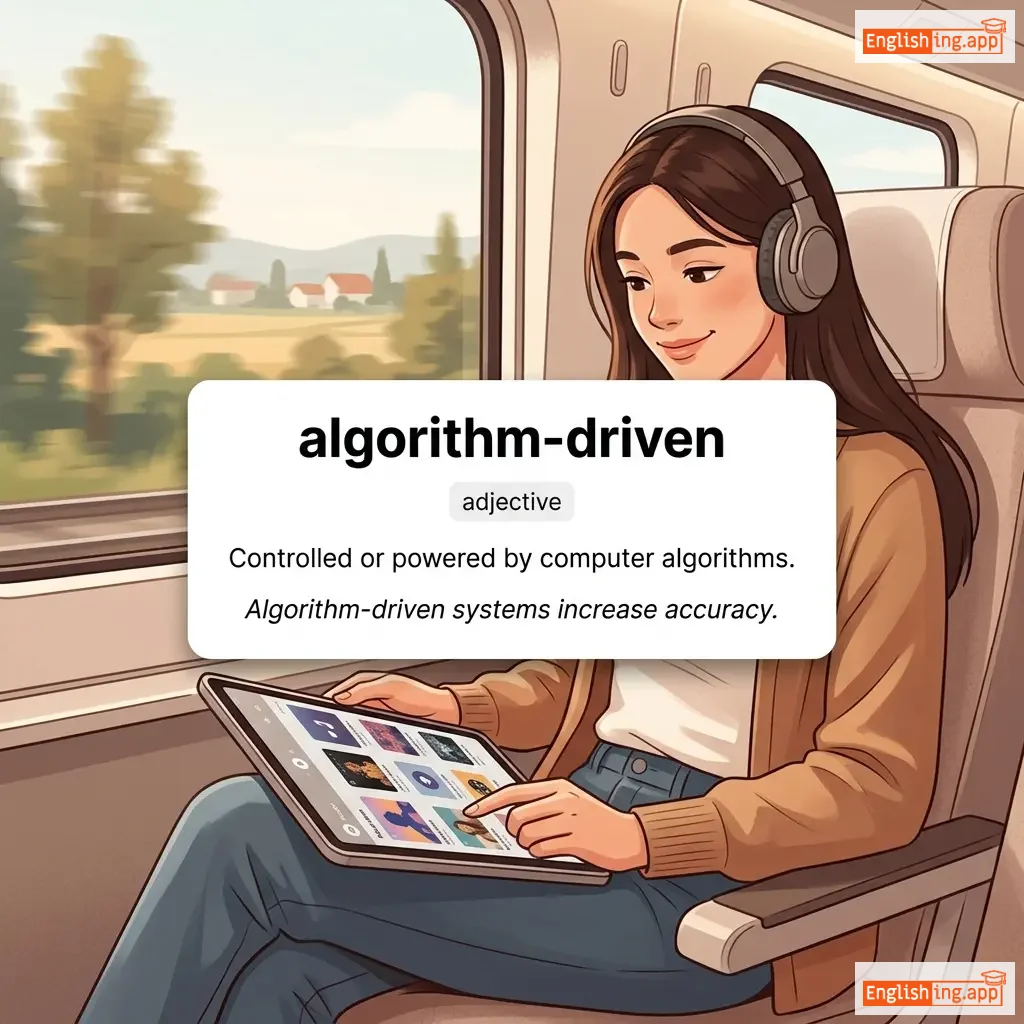
algorithm-driven definition card — visual illustration of the meaning
adjective
ˈæl.ɡə.rɪ.ðəm drɪv.ən
управляемый алгоритмами. (upravlyaemyy algoritmami.)

Controlled or powered by computer algorithms.

"Algorithm-driven systems increase accuracy."
"Системы, управляемые алгоритмами, увеличивают точность." (Sistemy, upravlyayemye algoritmami, uvelichivayut tochnost'.)
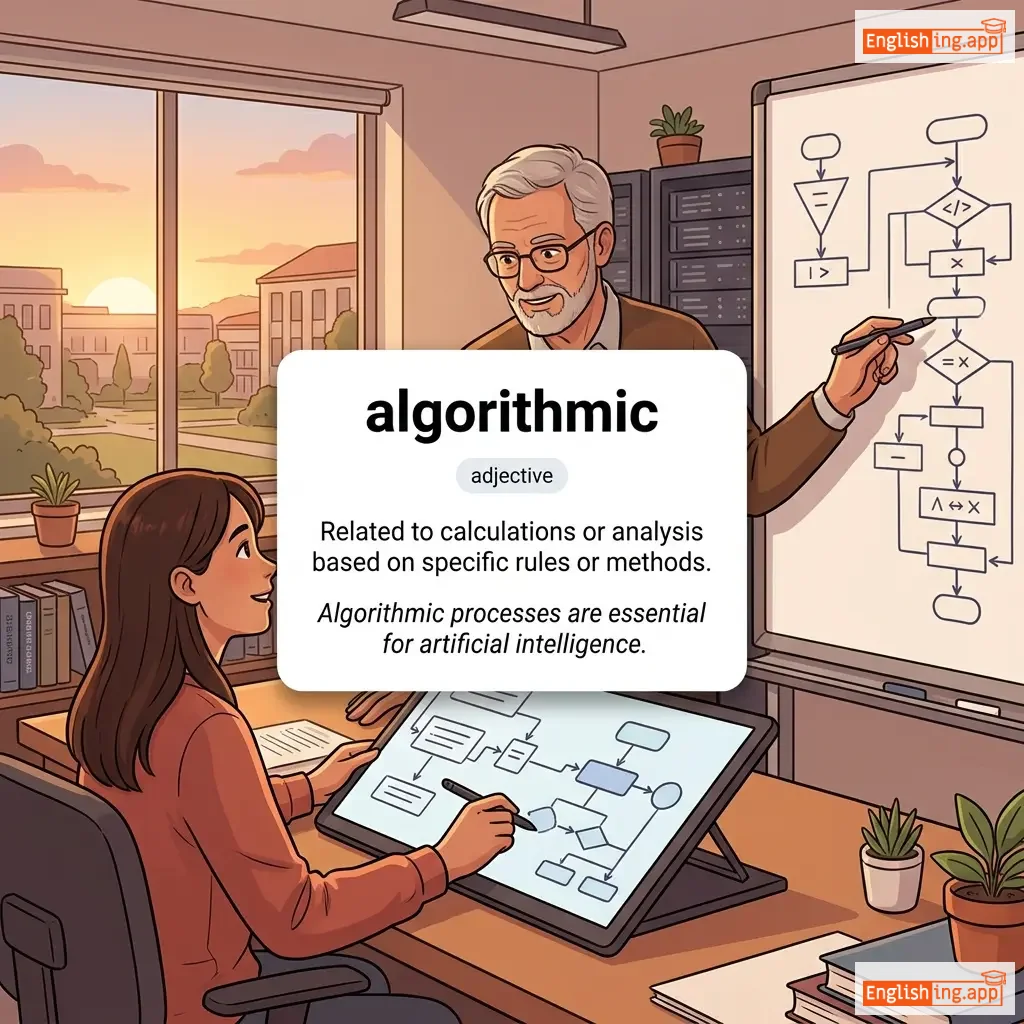
algorithmic definition card — visual illustration of the meaning
adjective
ˌæl.ɡəˈrɪð.mɪk
алгоритмический (algoritmicheskiy)

Related to calculations or analysis based on specific rules or methods.

"Algorithmic processes are essential for artificial intelligence."

"Алгоритмические процессы необходимы для искусственного интеллекта." (Algoritmicheskie protsessy neobkhodimy dlya iskusstvennogo intellekta.)
noun, adverb
/ˈeɪliəs/
псевдоним (psevdonim)

A false or assumed identity; also used to mean 'otherwise called'.

"The criminal was known by the alias 'Shadow'."

"Преступник был известен под псевдонимом 'Тень'." (Prestuupnik byl izvesten pod psevdonimom 'Ten'.)
noun
/ˈælɪbaɪ/
алиби (alibi)

A claim or piece of evidence that one was elsewhere when an act, typically a crime, was committed.

"She had a strong alibi that proved she was at the cinema during the theft."

"У нее было крепкое алиби, которое доказало, что она была в кино во время кражи." (U nee bylo krepkoye alibi, kotoroye dokazalo, chto ona byla v kino vo vremya krazhi.)
alien definition card — visual illustration of the meaning
noun, adjective
/ˈeɪ.li.ən/
инопланетянин (inoplanetyanin)

A being from another world; or something foreign, unfamiliar, or strange.

"The movie featured an alien from a distant galaxy."

"Фильм показывал инопланетянина из далекой галактики." (Film pokazyval inoplanetyanina iz dalekoy galaktiki.)
adjective
/ˈeɪ.li.ə.nə.bəl/
передаваемый (peredavayemyy)

Able to be transferred or surrendered, usually referring to rights or property.

"Property rights are alienable and can be sold or transferred."

"Права на имущество могут быть переданы и могут быть проданы или переданы." (Prava na imushchestvo mogut byt' peredany i mogut byt' prodany ili peredany.)
verb
/ˈeɪ.li.ə.neɪt/
отчуждать (otchuzhdat)

To make someone feel isolated or estranged; to cause someone to become unfriendly.

"His rude behavior alienated many of his friends."
"Его грубое поведение отчуждало многих его друзей." (Ego gruboye povedeniye otchuzhdalo mnogikh ego druzey.)
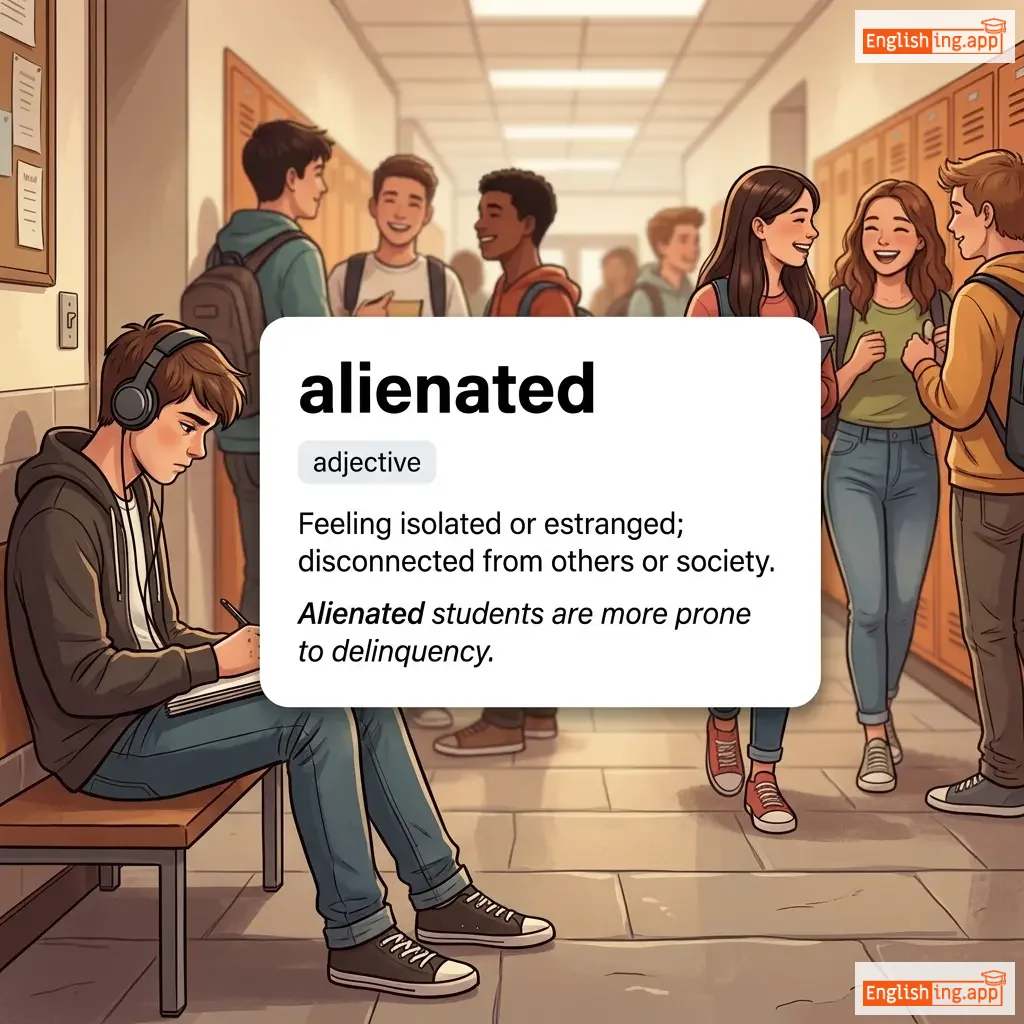
alienated definition card — visual illustration of the meaning
adjective
ˈeɪlɪəneɪtɪd
отчужденный (otchuzhdenny)

Feeling isolated or estranged; disconnected from others or society.

"Alienated students are more prone to delinquency."

"Отчужденные студенты более склонны к правонарушениям." (Otchuzhdennye studenty boleye sklonny k pravanarusheniyam.)
noun
/ˌeɪ.li.əˈneɪ.ʃən/
отчуждение (otchuzhdenie)

The state of being isolated or estranged from a group or activity.

"The new policies created a sense of alienation among employees."

"Новые политики создали чувство отчуждения среди сотрудников." (Novye politiki sozdali chuvstvo otchuzhdeniya sredi sotrudnikov.)
verb
/əˈlaɪn/
выравнивать / ставить в прямую линию (vyravnivat' / stavit' v pryamuyu liniyu)

To arrange things in a straight line; to adjust or bring into proper relation or agreement.

"The manager asked the team to align their goals with the company's mission."

"Менеджер попросил команду привести их цели в соответствие с миссией компании." (Menedzher poprosil komandу privedit' ikh tseli v sootvetstvie s missiyey kompanii.)
aligning definition card — visual illustration of the meaning
verb
əˈlaɪn.ɪŋ
выравнивать (viravnivat)

Placing or arranging things in a straight line or in correct relative positions.

"Aligning education with global standards is vital."

"Выравнивание образования с глобальными стандартами имеет жизненно важное значение." (Viravnivanie obrazovaniya s global'nymi standartami imeyet zhiznennoye vazhnoe znacheniye.)
noun
/əˈlaɪnmənt/
выравнивание (vyravnivanie)

arrangement in a straight line or in proper position

"The alignment of the planets was perfect for the celestial event."

"Выравнивание планет было идеальным для небесного события." (Vyravnivanie planet bylo ideal'nym dlya nebesnogo sobytiya.)
👯‍♀️

Alike (ah-layk)

adjective
/əˈlaɪk/
похожие (pokhozhie)

similar in appearance, nature, or character

"The two sisters look very alike."

"Две сестры выглядят очень похожими." (Dve sestry vyglyadyat ochen' pokhozhimi.)
noun
/ˈæl.ɪ.mənt/
пища (pishcha)

food or nourishment that sustains life

"Fruits and vegetables are important aliments for a healthy body."

"Фрукты и овощи - важные продукты для здорового тела." (Frukty i ovoshchi - vazhnyye produkty dlya zdorovogo tela.)
adjective
/ˌæl.ɪˈmen.tər.i/
связанный с пищеварением (svyazannyy s pishchevareniyem)

relating to nourishment or the organs of digestion

"The doctor explained the role of the alimentary canal in digestion."

"Врач объяснил роль пищеварительного канала в пищеварении." (Vrach obyasnil rol' pishchevaritelnogo kanala v pishchevarenii.)
noun
/ˈæl.ɪ.moʊ.ni/
алименты (alimenty)

financial support that a person is ordered by a court to give to their spouse after separation or divorce

"He was ordered by the court to pay monthly alimony to his ex-wife."

"Суд обязал его платить ежемесячное алименты своей бывшей жене." (Sud obazal ego platit' ezhemesyachnoe alimenty svoey byvshey zhene.)
adjective
/əˈlaɪv/
живой (zhivoy)

Living, not dead.

"The rescue team found the missing child alive."

"Спасательная команда нашла пропавшего ребенка живым." (Spasatelnaya komanda nashla propavshego rebenka zhivym.)