Словари

Словарь английского языка | Значения слов, определения и примеры

noun
/ˈæl.kə.laɪ/
щелочь (shcheloch)

a soluble base substance, typically with a pH greater than 7, that neutralizes acids

"Soap contains alkali which helps remove grease."
"Мыло содержит щелочь, которая помогает удалить жир." (Mylo soderzhit shcheloch, kotoraya pomogaet udalit zhir.)
Alkali Act definition card — visual illustration of the meaning
noun
/ˈæl.kə.laɪ ækt/
Акт об алкалиях (Akt ob alkaliyakh)

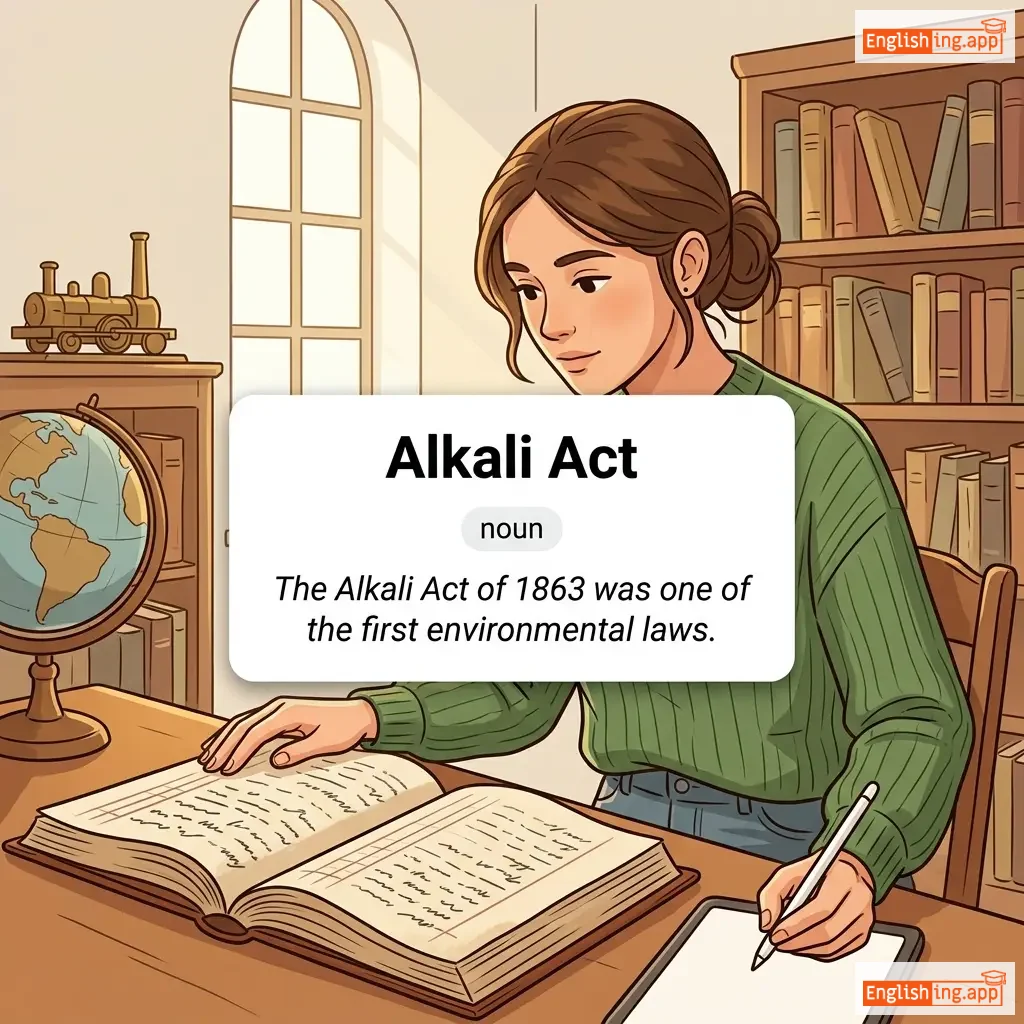
A British law passed in 1863 to regulate the emission of hydrochloric acid gas from alkali works, representing one of the first pieces of environmental legislation.

"The Alkali Act of 1863 was one of the first environmental laws."

"Акт об алкалиях 1863 года был одним из первых экологических законов." (Akt ob alkaliyakh 1863 goda byl odnim iz pervykh ekologicheskikh zakonov.)
determiner, pronoun, adverb
/ɔːl/
все (vse)

the whole quantity or extent of something; every one of something

"She spent all her money on books."
"Она потратила все свои деньги на книги." (Ona potratila vse svoi den'gi na knigi.)
allay definition card — visual illustration of the meaning
verb
/əˈleɪ/
успокаивать (uspokaiwat)

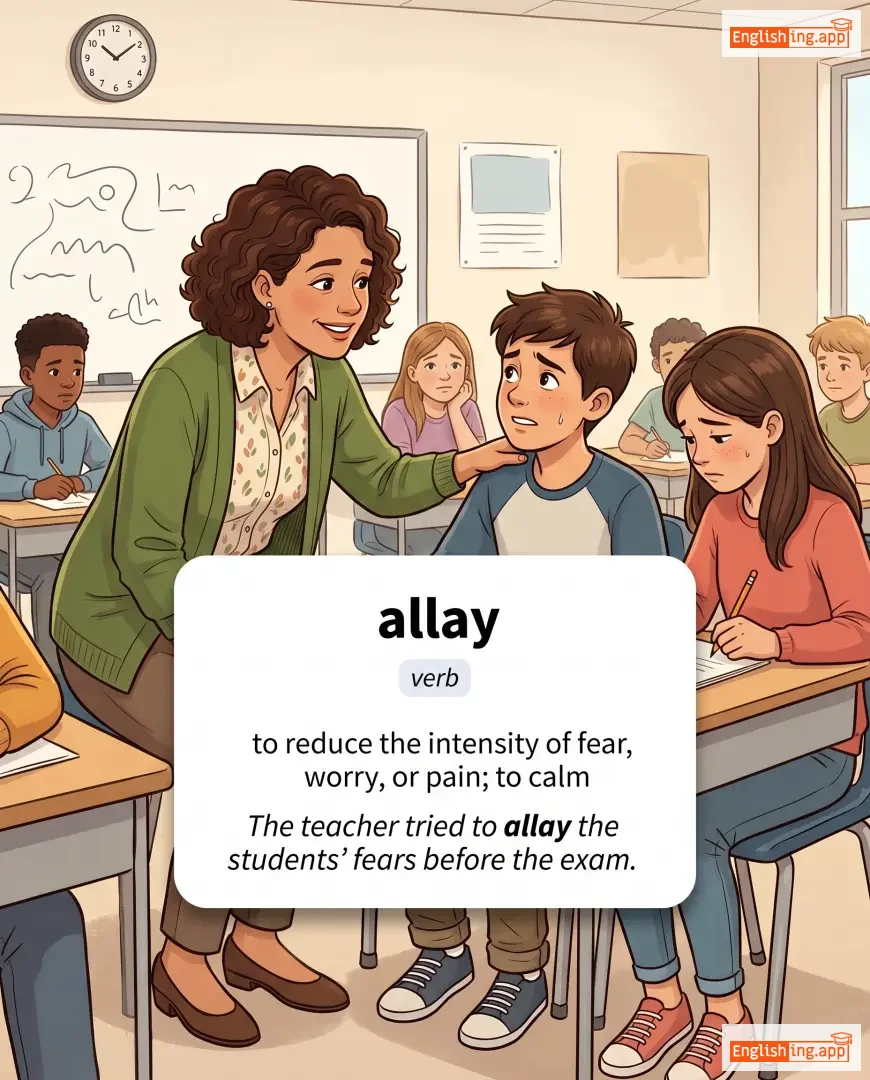
to reduce the intensity of fear, worry, or pain; to calm

"The teacher tried to allay the students’ fears before the exam."

"Учитель пытался успокоить страхи студентов перед экзаменом." (Uchitel' pytalsya uspokoit' strakhy studentov pered ekzamenom.)
noun
/ˌælɪˈɡeɪʃən/
обвинение (obvinienie)

a claim or assertion that someone has done something illegal or wrong, typically without proof

"The politician denied the allegation of corruption."

"Политик отверг обвинение в коррупции." (Politik otverg obvinienie v korrupcii.)
allegations definition card — visual illustration of the meaning
noun
ˌæl.ɪˈɡeɪ.ʃənz
обвинения (obvineniya)

Claims or assertions that someone has done something illegal or wrong, typically without proof.

"The allegations were investigated by an international body."

"Обвинения были расследованы международным органом." (Obvineniya byli rassledovany mezhdunarodnym organom.)
verb
/əˈlɛdʒ/
утверждать (utverzhdat)

to claim or assert something, typically without proof

"The witness alleged that the man was at the crime scene."

"Свидетель утверждал, что мужчина был на месте преступления." (Svidetel' utverzhdal, chto muzhchina byl na meste prestupleniya.)
adjective
/əˈlɛdʒd/
предполагаемый (predpolagayemyy)

said or thought to be true, but not proven

"The alleged thief was caught by the police."

"Предполагаемый вор был пойман полицией." (Predpolagayemyy vor byl poyman politsiey.)
adverb
/əˈlɛdʒɪdli/
предположительно (predpolozhitel'no)

used to say that something is claimed to be true, though not proven

"He was allegedly involved in the robbery."

"Он предположительно был замешан в ограблении." (On predpolozhitel'no byl zameshan v ograblenii.)
allegiance definition card — visual illustration of the meaning
noun
/əˈliːdʒəns/
верность (vernost)

loyalty or commitment to a group, cause, or leader

"The soldiers swore allegiance to their country."

"Солдаты принесли клятву верности своей стране." (Soldaty prinesli klyatvu vernosti svoey strane.)
noun
/ˈælɪɡəri/
аллегория (allegoriya)

a story, poem, or picture that can be interpreted to reveal a hidden meaning, often moral or political

"The novel is an allegory of the struggle between good and evil."
"Роман является аллегорией борьбы между добром и злом." (Roman yavyayetsya allegoriyey boyby mezhdu dobrom i zlom.)
allergen definition card — visual illustration of the meaning
noun
ˈælərdʒən
вещества, вызывающие аллергическую реакцию (veshchestva vyzyvayushchie allergicheskuyu reaktsiyu)

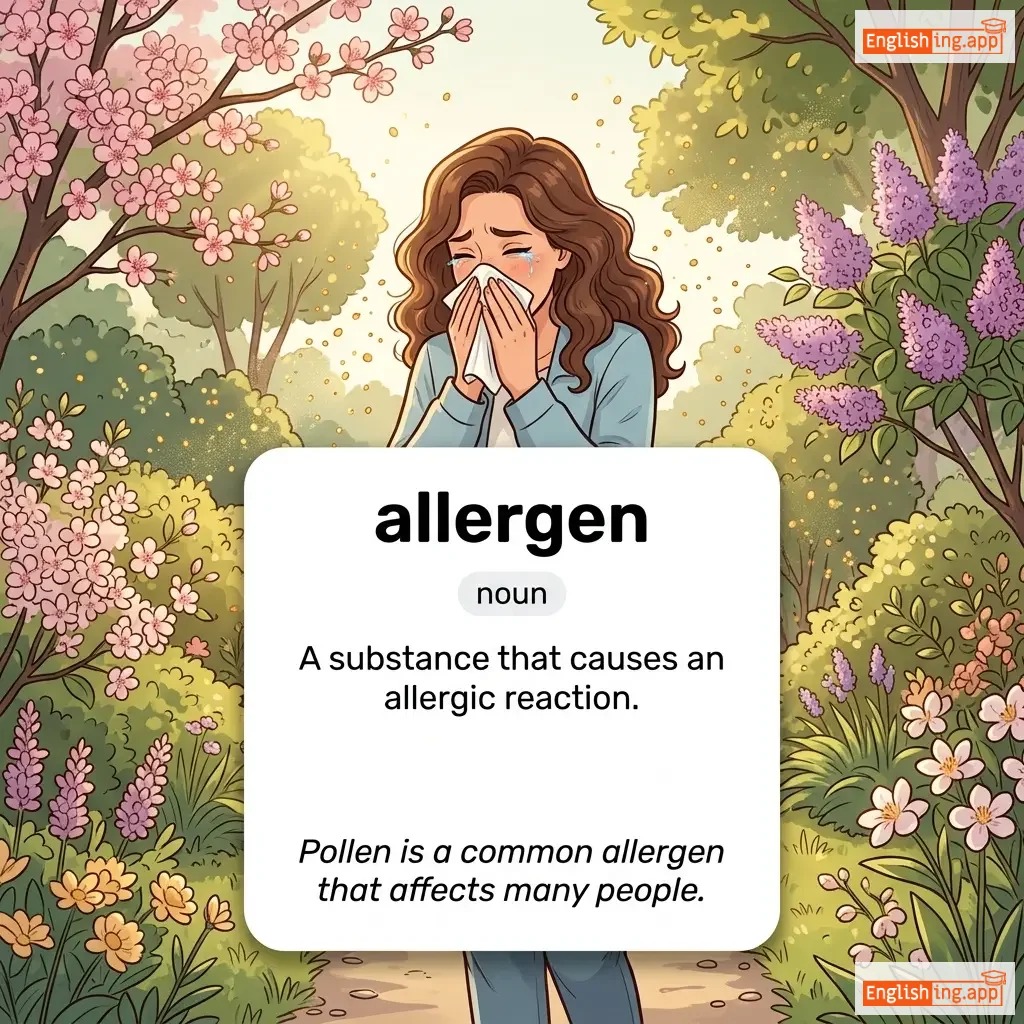
A substance that causes an allergic reaction.

"Pollen is a common allergen that affects many people."

"Пыльца — это обычный аллерген, который влияет на многих людей." (Pyl'tsa — eto obychnyy allergen, kotoryy vliyaet na mnogikh lyudey.)
alleviate definition card — visual illustration of the meaning
verb
/əˈliːvieɪt/
облегчить (oblegchit)

to make suffering, pain, or a problem less severe

"The medicine helped alleviate her headache."

"Медикамент помог облегчить ее головную боль." (Medikament pomog oblegchit yeye golovnuyu bol'.)
noun
/ˈæli/
переулок (pereulok)

a narrow passageway between or behind buildings

"They walked through a dark alley to reach the main road."

"Они прошли через темный переулок, чтобы добраться до главной улицы." (Oni proshli cherez temnyy pereulok, chtoby dobratsya do glavnoj ulitsy.)
alliance definition card — visual illustration of the meaning
noun
/əˈlaɪəns/
альянс (alyans)

a formal agreement or union between groups, countries, or organizations for mutual benefit

"The two countries formed an alliance to strengthen their defense."

"Две страны сформировали альянс для укрепления своей обороны." (Dve strany sformirovali alyans dlya ukrepleniya svoey oborony.)
adjective
/əˈlaɪd/
союзный; ассоциированный; связанный (allied)

joined by agreement or treaty; associated; connected

"The allied forces worked together during the war."

"Союзные войска работали вместе во время войны." (Soyuznye voyska rabotali vmeste vo vremya voyny.)
noun
/ˈæl.ɪ.ɡeɪ.tər/
аллигатор (alligator)

a large reptile similar to a crocodile but with a shorter, wider head

"The alligator basked in the sun on the riverbank."

"Аллигатор загорал на берегу реки." (Alligator zagoral na beregu reki.)
verb
/əˈlɪtəreɪt/
использовать аллитерацию (ispol'zovat' alliteratsiyu)

to repeat the same consonant sound at the beginning of words in a phrase or sentence

"The poet often alliterates words to create rhythm."

"Поэт часто аллитерирует слова, чтобы создать ритм." (Poet chasto alliteriruet slova, chtoby sozdать ritm.)
noun
/əˌlɪtəˈreɪʃən/
аллитерация (alliteratsiya)

the occurrence of the same consonant sound at the beginning of words in close succession

"She used alliteration in her poem to add musicality."

"Она использовала аллитерацию в своем стихотворении, чтобы добавить музыкальность." (Ona ispol'zovala alliteratsiyu v svoem stikhotvorenii, chtoby dobavit' muzykal'nost'.)
verb
/ˈæləkeɪt/
распределять (raspredelyat)

to distribute or assign resources, duties, or responsibilities for a specific purpose

"The manager allocated funds for the new project."
"Менеджер выделил средства для нового проекта." (Menedzher vydelil sredstva dlya novogo proekta.)
allocation definition card — visual illustration of the meaning
noun
/ˌæləˈkeɪʃən/
распределение (raspredelenie)

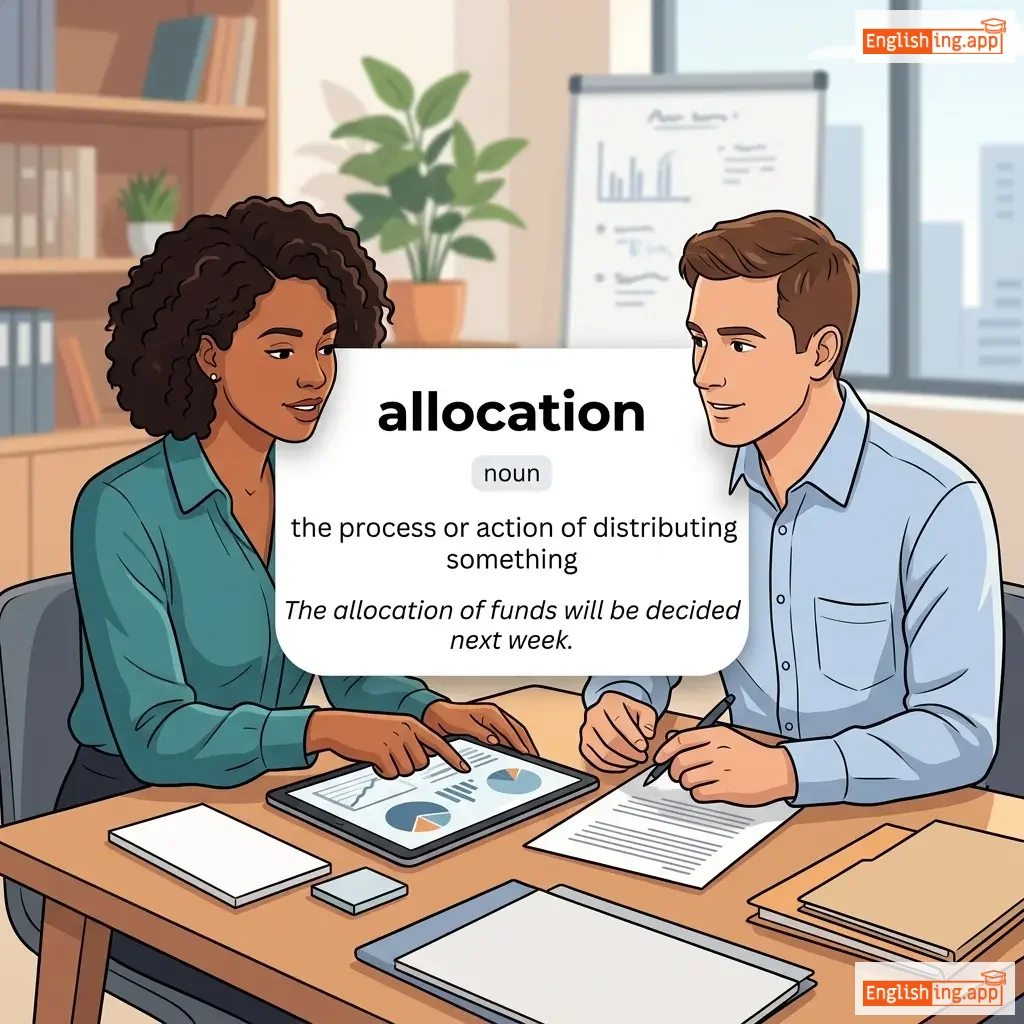
the process or action of distributing something

"The allocation of funds will be decided next week."

"Распределение средств будет решено на следующей неделе." (Raspredelenie sredstv budet resheno na sleduyushchey nedele.)
verb
/əˈlɒt/
счастье (schast'ye)

to give or assign something, often a share or portion, to someone

"Each student was allotted ten minutes to present."
"Она не могла скрыть своего счастья, когда она получила награду." (Ona ne mogla skryt' svoego schast'ya, kogda ona poluchila nagradu.)
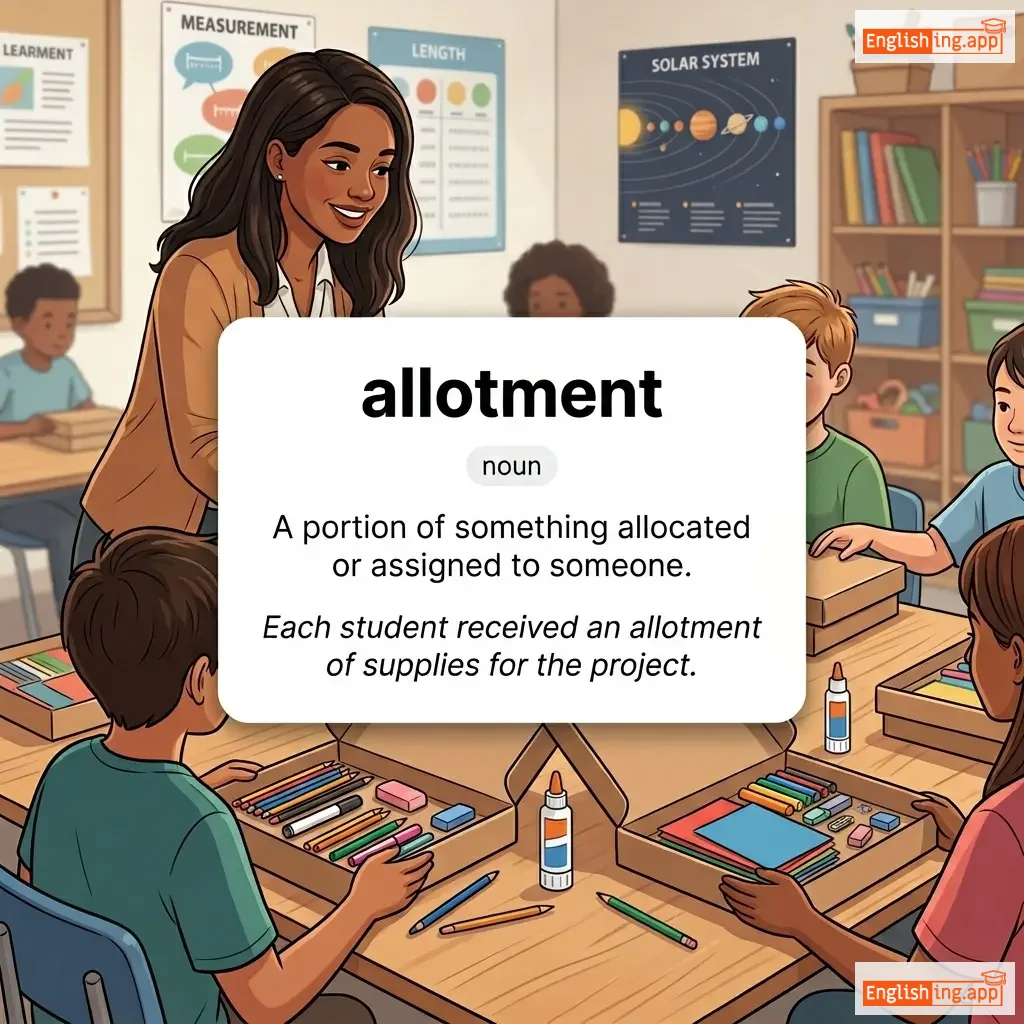
allotment definition card — visual illustration of the meaning
noun
/əˈlɒtmənt/
распределение (raspredelenie)

A portion of something allocated or assigned to someone.

"Each student received an allotment of supplies for the project."

"Каждый студент получил распределение материалов для проекта." (Kazhdyi student poluchil raspredelenie materialov dlya proekta.)
verb
/əˈlaʊ/
разрешать (razreshat)

to give permission for something to happen or someone to do something

"The teacher did not allow phones in class."

"Учитель не разрешил телефоны в классе." (Uchitel' ne razreshil telefoni v klasse.)
noun
/əˈlaʊəns/
пособие (posobie)

a sum of money given regularly, typically for a specific purpose

"He gets a weekly allowance from his parents."
"Он получает еженедельное пособие от своих родителей." (On poluchayet yezhenedel'noe posobie ot svoikh roditeley.)
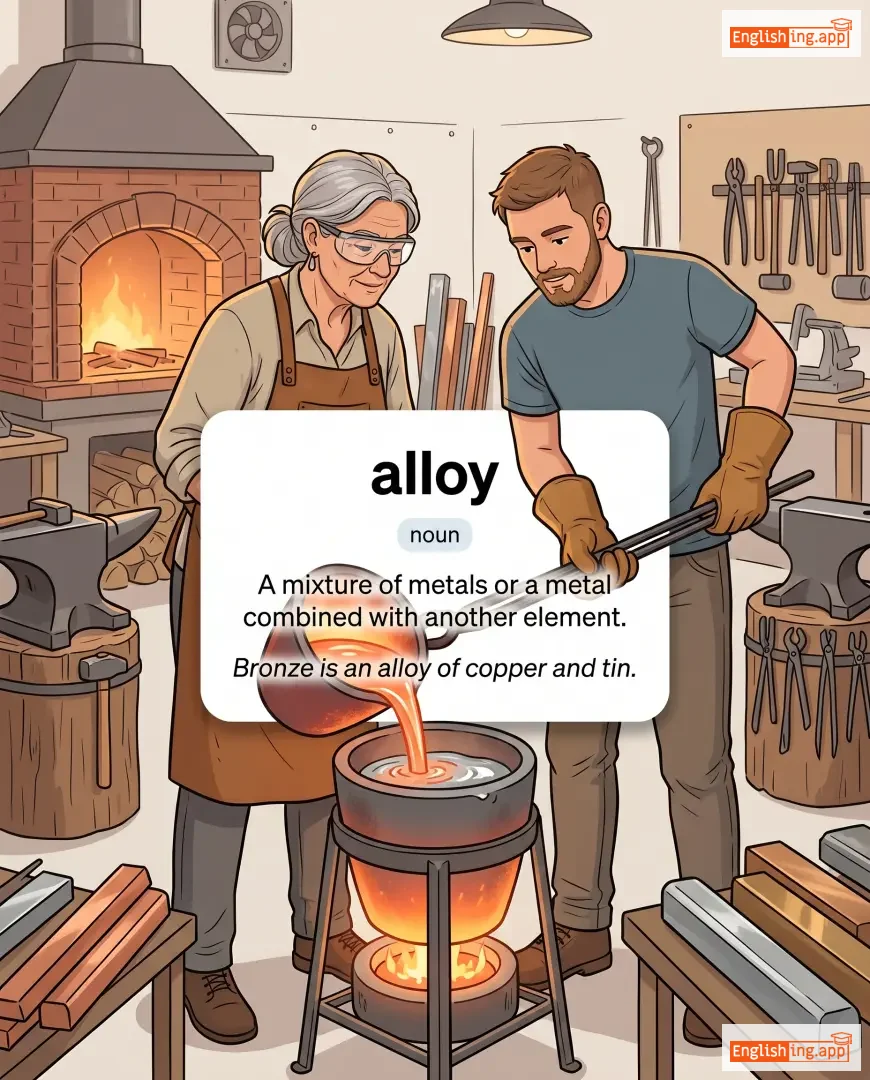
alloy definition card — visual illustration of the meaning
noun
/ˈælɔɪ/
сплав (splav)

A mixture of metals or a metal combined with another element.

"Bronze is an alloy of copper and tin."

"Бронза — это сплав меди и олова." (Bronza - eto splav medi i olova.)
verb
/əˈluːd/
намекать (namekat)

To refer to something indirectly or casually.

"The professor alluded to Shakespeare during the lecture."
"Профессор упомянул Шекспира во время лекции." (Professor upomyanul Shekspira vo vremya lektsii.)
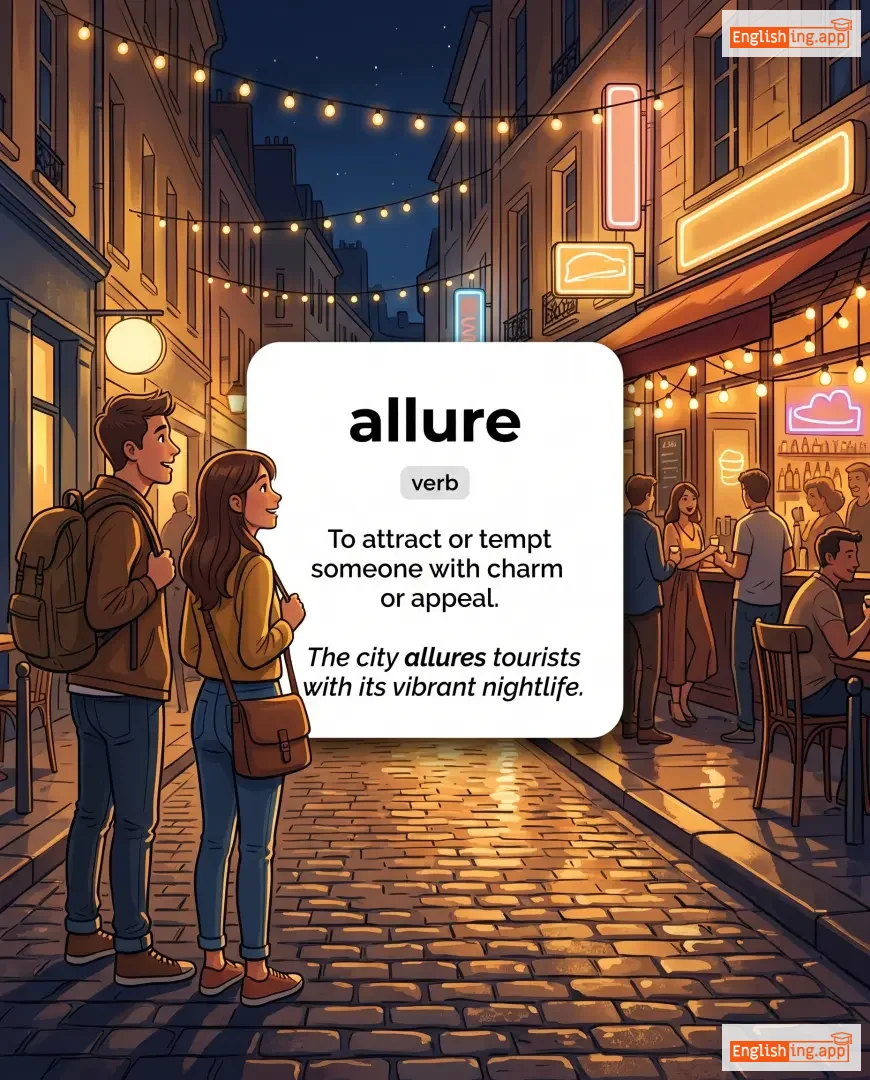
allure definition card — visual illustration of the meaning
verb
/əˈlʊr/
привлекательность (privelakatel'nost')

To attract or tempt someone with charm or appeal.

"The city allures tourists with its vibrant nightlife."

"Город привлекает туристов своей яркой ночной жизнью." (Gorod privlekaet turistov svoey yarkoy noch'yu zhiznyu.)
adjective
/əˈlʊr.ɪŋ/
привлекательный и заманчивый; очаровательный (privlekatel'nyy i zammchivyy; ocharovatel'nyy)

attractive and tempting; fascinating

"The alluring fragrance of roses filled the garden."

"Привлекательный аромат роз наполнил сад." (Privlekatel'nyy aromat roz napolnil sad.)
noun
/əˈluːʒən/
намёк (namyok)

An indirect reference to something without mentioning it explicitly.

"Her story contained an allusion to a famous myth."

"Её рассказ содержал намёк на знаменитый миф." (Yeyo rasskaz soderzhal namyok na znamenityy mif.)
adjective
/əˈluːsɪv/
аллюзивный (allyuzivny)

Making indirect references or hints; suggestive without being explicit.

"The novel is full of allusive passages that point to classical literature."

"Роман полон аллюзивных отрывков, которые указывают на классическую литературу." (Roman polon allyuzivnykh otryvkov, kotoryye ukazyvayut na klassicheskuyu literaturu.)
adjective
/əˈluːviəl/
аллювиальный (allyuvialnyy)

Relating to or derived from alluvium (loose soil or sediment deposited by rivers).

"The farmers cultivate crops on the fertile alluvial plains."

"Фермеры выращивают культуры на плодородных аллювиальных равнинах." (fermery vyrashchivayut kultury na plodorodnykh allyuvialnykh ravninakh)
noun
/əˈluːviən/
аллювион (allyuvion)

The gradual increase of land by the deposit of soil from water; also, a flood or overflow of water.

"The river’s alluvion added new fertile land to the village fields."
"Аллювион реки добавил новую плодородную землю в поля деревни." (Allyuvion reki dobavil novuyu plodorodnuyu zemlyu v polya derevni.)
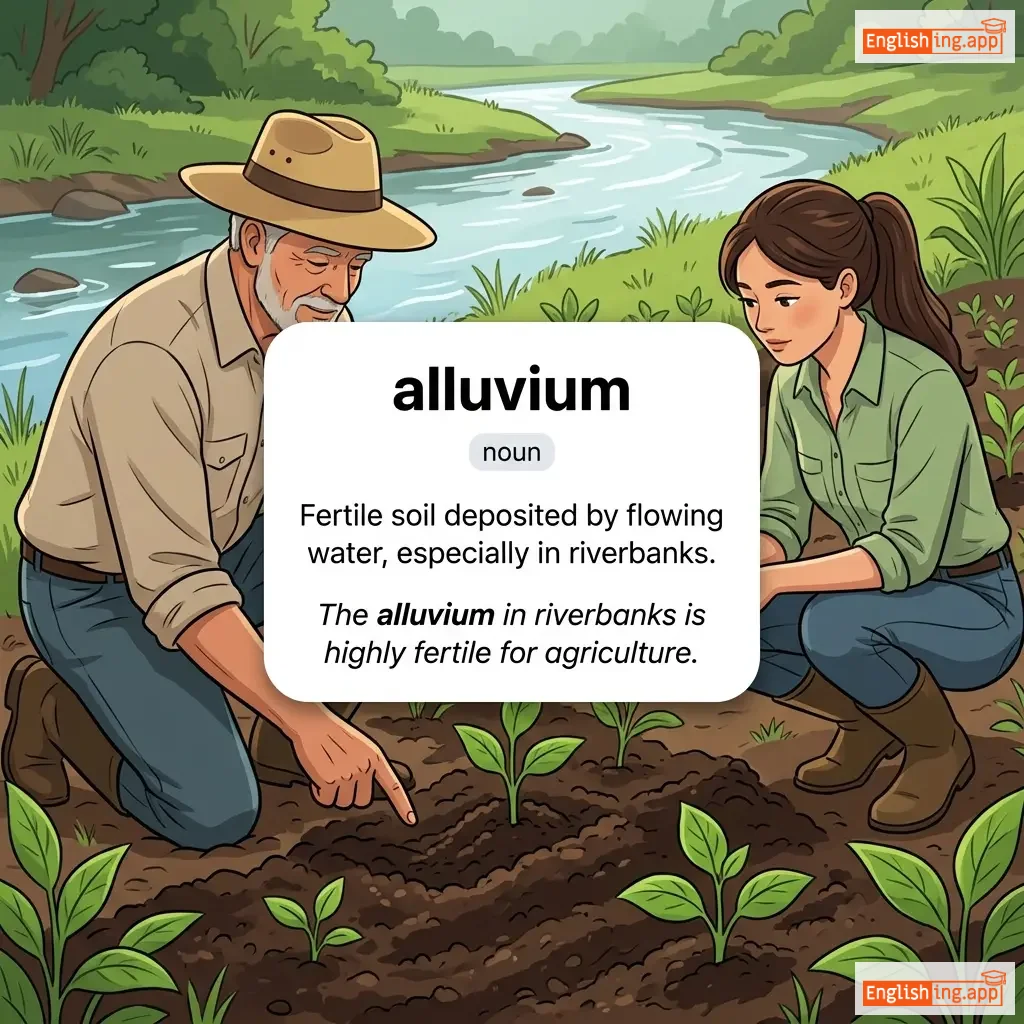
alluvium definition card — visual illustration of the meaning
noun
/əˈluː.vi.əm/
аллювий (allyuviy)

Fertile soil deposited by flowing water, especially in riverbanks.

"The alluvium in riverbanks is highly fertile for agriculture."

"Аллювий на берегах рек очень плодороден для сельского хозяйства." (Allyuviy na beregah rek ochen' plodoroden dlya selskokhozyaystva.)
verb
/ˈælaɪ/
союзник (soiuznik)

To unite or form a connection or partnership with another person, group, or nation.

"The two countries decided to ally against their common enemy."

"Две страны решили объединиться против общего врага." (Dve strany reshili ob'edinit'sya protiv obshchego vraga.)
noun
/ˈɔːlmənæk/
альманах (al'manakh)

An annual publication containing calendars, weather forecasts, astronomical data, and other useful information.

"He consulted the almanac to check the phases of the moon."

"Он консультировался с альманахом, чтобы проверить фазы луны." (On konsul'tirovalsya s al'manakhom, chtoby proverit' fazy luny.)
adjective
/ɔːlˈmaɪ.ti/
всемогущий (vsemogushchiy)

having unlimited power; omnipotent

"The almighty storm destroyed everything in its path."

"Могущественный шторм уничтожил все на своем пути." (Mogushchestvennyy shtorm unichtozhil vse na svoem puti.)
noun
/ˈæl.mɪ.rə/
шкаф (shkaf)

a large cupboard or wardrobe used for storing clothes and other items

"I keep all my clothes in the wooden almirah."

"Я храню всю свою одежду в деревянном шкафу." (Ya khranyu vsyu svoiu odezhdu v derevyannom shkafu.)
noun
/ˈɑːmənd/
миндаль (mindal)

edible seed of the almond tree, rich in protein and healthy fats

"She eats almonds every morning for breakfast."

"Она ест миндаль каждое утро на завтрак." (ona yest' mindal' kazhdoe utro na zavtrak.)
adverb
/ˈɔːlmoʊst/
почти (pochti)

very nearly, but not exactly or completely

"He almost missed the train."

"Он почти опоздал на поезд." (On pochti opozdal na poezd.)
noun
/ɑːmz/
милостыня (milostynya)

Money, food, or goods given to the poor as charity.

"The monk distributed alms to the needy villagers."

"Монах раздал милостыню бедным деревенским жителям." (Monakh razdal milostyny bednym derevenskim zhityelyam.)
noun
/ˈæl.oʊ ˈvɪər.ə/
алоэ вера (aloe vera)

a succulent plant with thick fleshy leaves and medicinal properties; produces tubular flowers

"The aloe vera plant blooms with orange or yellow tubular flowers."

"Растение алоэ вера цветет оранжевыми или желтыми трубчатыми цветами." (Rastenie aloe vera tsvetet oranzhevymi ili zhelytymi trubchatymi tsvetami.)
adverb
/əˈlɒft/
высоко (vysoko)

Up in or into the air; overhead.

"The kite was flying aloft in the clear sky."

"Воздушный змей летал высоко в ясном небе." (Vozdushnyy zmei letal vysoko v yasnom nebe.)
adjective, adverb
/əˈloʊn/
один (odin)

having no one else present; on one's own

"She prefers to live alone in her apartment."

"Она предпочитает жить одна в своей квартире." (Ona predpochitayet zhit' odna v svoey kvartire.)
preposition, adverb
/əˈlɔːŋ/
вдоль (vdol)

moving in a constant direction on (a road, path, or surface)

"We walked along the river."

"Мы шли вдоль реки." (My shli vdol' reki.)
preposition
/əˈlɔːŋsaɪd/
рядом с (ryadom s)

next to or together with someone or something

"She worked alongside her brother in the family business."

"Она работала рядом с своим братом в семейном бизнесе." (Ona rabotala ryadom s svoim bratom v semeynnom biznesye.)
adjective
/əˈluːf/
отстраненный (otstranennyy)

Not friendly or forthcoming; cool and distant.

"He remained aloof during the entire discussion."

"Он оставался отстраненным на протяжении всей дискуссии." (On ostavalsya otstranennym na protyazhenii vsey diskussii.)
adverb
/əˈlaʊd/
громко (gromko)

in a voice that can be heard; not silently

"Please read the instructions aloud so everyone can hear."

"Пожалуйста, читайте инструкции вслух, чтобы все могли услышать." (Pozhaluysta, chitayte instruktsii vslukh, chtoby vse mogli uslyshat'.)
noun
/ˈæl.fə.bɛt/
алфавит (alfavit)

a set of letters or symbols in a fixed order used to represent the sounds of a language

"Children usually learn the alphabet before learning to read words."

"Дети обычно учат алфавит перед тем, как читать слова." (deti obychno uchat alfavit pered tem kak chitat slova)
adjective
/ˌælfəˈbɛtɪkəl/
алфавитный (alfavitny)

Arranged in the order of the letters of the alphabet.

"The names were listed in alphabetical order."

"Имена были перечислены в алфавитном порядке." (Imena byli perechislenny v alfavitnom poryadke.)