वोकैबुलरीज

इंग्लिश वोकैबुलरी डिस्कवर, लर्न और मास्टर करें

noun
/ˈeɪlmənt/
रोग (rog)

An illness, typically a minor one.

"He went to the doctor for a minor stomach ailment."

"वह एक हल्की पेट की बीमारी के लिए डॉक्टर के पास गया।" (Vah ek halki pet ki bimari ke liye doktor ke paas gaya.)
verb
/eɪm/
लक्ष्य करना (lakshya karna)

to direct a weapon, object, or effort at a target; to intend or plan

"He aimed the ball at the goal."

"उसने गेंद को गोल की ओर लक्षित किया।" (Usne gend ko gol ki or lakshit kiya.)
adjective
/ˈeɪmləs/
उद्देश्यहीन; लक्ष्यहीन; (emles)

without purpose or direction; lacking a goal

"He wandered around the city in an aimless manner."

"वह शहर में उद्देश्यहीन तरीके से घूम रहा था।" (vah shahar mein uddeshyahin tareeke se ghoom raha tha.)
noun
/ɛər/
वायु (vayu)

The invisible mixture of gases that surrounds the earth and is breathed in by people and animals.

"The air is fresh after the rain."

"बारिश के बाद हवा ताजगी से भरपूर होती है।" (Barish ke baad hawa taazgi se bharpur hoti hai.)
noun
/ˈeər kənˈdɪʃ.ən.ər/
एयर कंडीशनर (eyar kandishnar)

a system that controls the temperature, humidity, and air quality in a building or room

"We turned on the air conditioner because it was too hot outside."

"हमने एयर कंडीशनर चालू किया क्योंकि बाहर बहुत गर्मी थी।" (hamne eayar kandishnar chalu kiya kyunki baahar bahut garmi thi)
noun
/ˈeər fɔːrs/
वायु सेना (vayu sena)

the military organization of a country that uses aircraft for fighting

"The air force conducted a training exercise over the mountains."

"वायु सेना ने पहाड़ों के ऊपर एक प्रशिक्षण अभ्यास किया।" (vayu sena ne pahadon ke upar ek prashikshan abhyas kiya.)
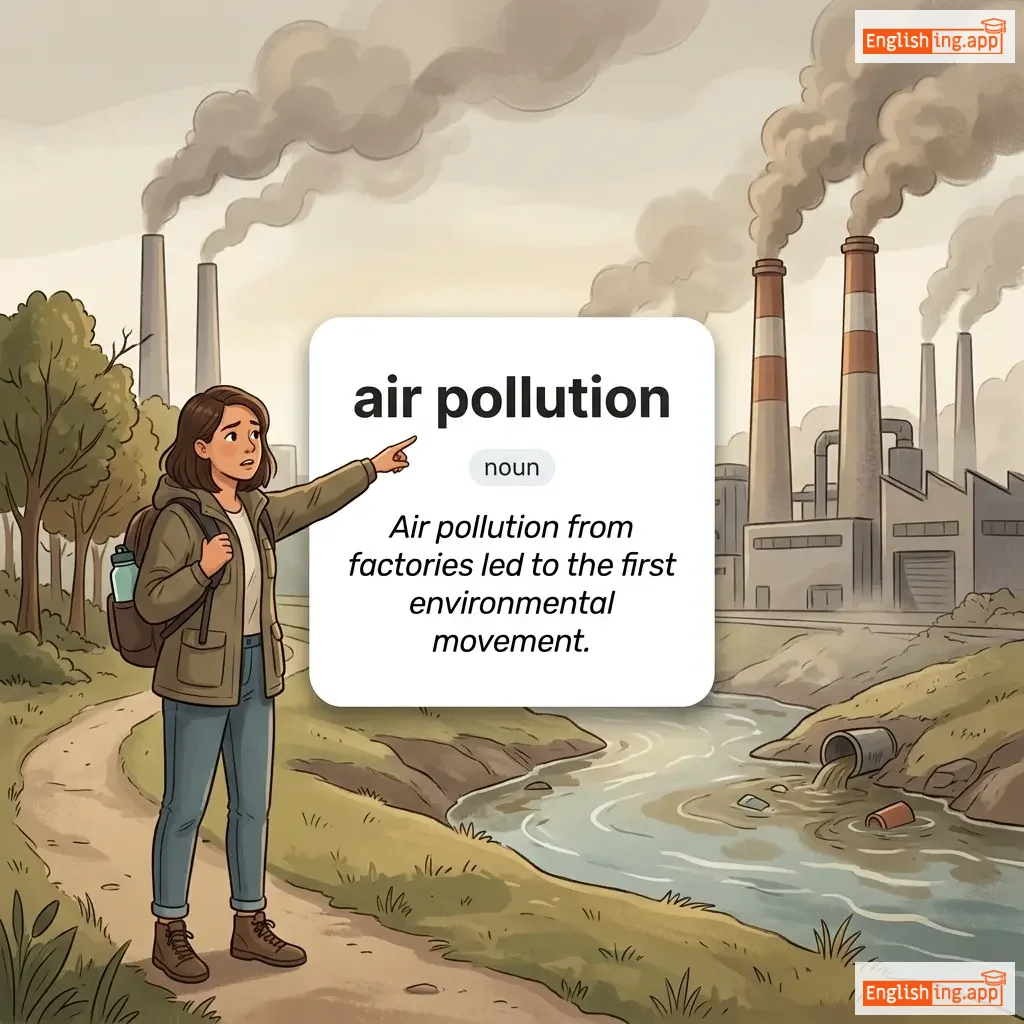
air pollution definition card — visual illustration of the meaning
noun
/ɛr pəˈluːʃən/
वायु प्रदूषण (vaayu pradooshan)

The presence of harmful or poisonous substances in the air, typically caused by industrial processes, vehicle emissions, or other human activities.

"Air pollution from factories led to the first environmental movement."

"कारखानों से वायु प्रदूषण ने पहले पर्यावरणीय आंदोलन को जन्म दिया।" (Kaarkhaanon se vaayu pradooshan ne pehle paryavaranik aandolan ko janm diya.)
noun
/ˈɛər.kræft/
विमान (viman)

A vehicle, such as an airplane or helicopter, that can fly in the air.

"The military aircraft flew over the city."

"सैन्य विमान शहर के ऊपर उड़ रहा था।" (Sainya viman shahar ke upar ud raha tha.)
noun
/ˈɛər.laɪn/
एयरलाइन कंपनी (airline company)

A company that provides regular flights for passengers and goods.

"The airline announced a discount on international tickets."

"एयरलाइन ने अंतर्राष्ट्रीय टिकटों पर छूट की घोषणा की।" (Airline ne antarraashtreey ticketon par chhoot ki ghoshna ki.)
noun
/ˈɛərpleɪn/
विमान (viman)

a powered flying vehicle with fixed wings and engines

"The airplane took off smoothly from the runway."

"विमान रनवे से smoothly उड़ गया।" (Viman runway se smoothly ud gaya.)
noun
/ˈɛər.pɔːrt/
हवाई अड्डा (hawaai adda)

A place where airplanes take off and land, with buildings for passengers and cargo.

"We arrived at the airport two hours before the flight."

"हम दो घंटे पहले हवाई अड्डे पर पहुंचे थे।" (Ham do ghante pehle hawaai addae par pahunche the.)
adjective
/ˈɛərˌtaɪt/
वायु-रोधक (vayu-rodhak)

Completely sealed so that no air can get in or out.

"Store the cookies in an airtight container to keep them fresh."

"कुकीज़ को ताजगी बनाए रखने के लिए एक वायु-रोधक डिब्बे में रखें।" (Cookies ko tajgi banaye rakhne ke liye ek vayu-rodhak dibbe mein rakhin.)
adjective
/ˈɛəri/
हवादार (havadar)

Spacious and well-ventilated; light and breezy.

"The new apartment is bright and airy."

"नया अपार्टमेंट उज्जवल और हवादार है।" (Naya apartment ujwal aur havadar hai.)
noun
/aɪl/
गलियारा (galiyara)

a passage between rows of seats or shelves

"She walked down the aisle to find her seat."

"वह अपनी सीट खोजने के लिए गलियारे से चली।" (vah apni seat khojne ke liye galiyare se chali.)
adjective
/əˈkɪn/
समान (samaan)

Of similar character or related by blood.

"His reaction was akin to shock."

"उसकी प्रतिक्रिया सदमे के समान थी।" (Uski pratikriya sadme ke samaan thi.)
noun/adjective
/ˈæl.əˌbæs.tər/
एलबास्टर (सफेद पत्थर की तरह खनिज) (alabastar)

A fine-grained, usually white variety of gypsum, often used for carving; also describes something smooth and pale like alabaster.

"The statue was carved from pure alabaster."

"प्रतिमा को शुद्ध एलबास्टर से तराशा गया था।" (Pratima ko shuddh alabastar se tarasha gaya tha.)
alacrity definition card — visual illustration of the meaning
noun
/əˈlæk.rə.ti/
आनंदपूर्ण तत्परता (alacrity)

Cheerful willingness, eagerness, or readiness to do something.

"She accepted the invitation with alacrity."

"उसने आमंत्रण को खुशी से स्वीकार किया।" (Usne amantran ko khushi se sviikar kiya.)
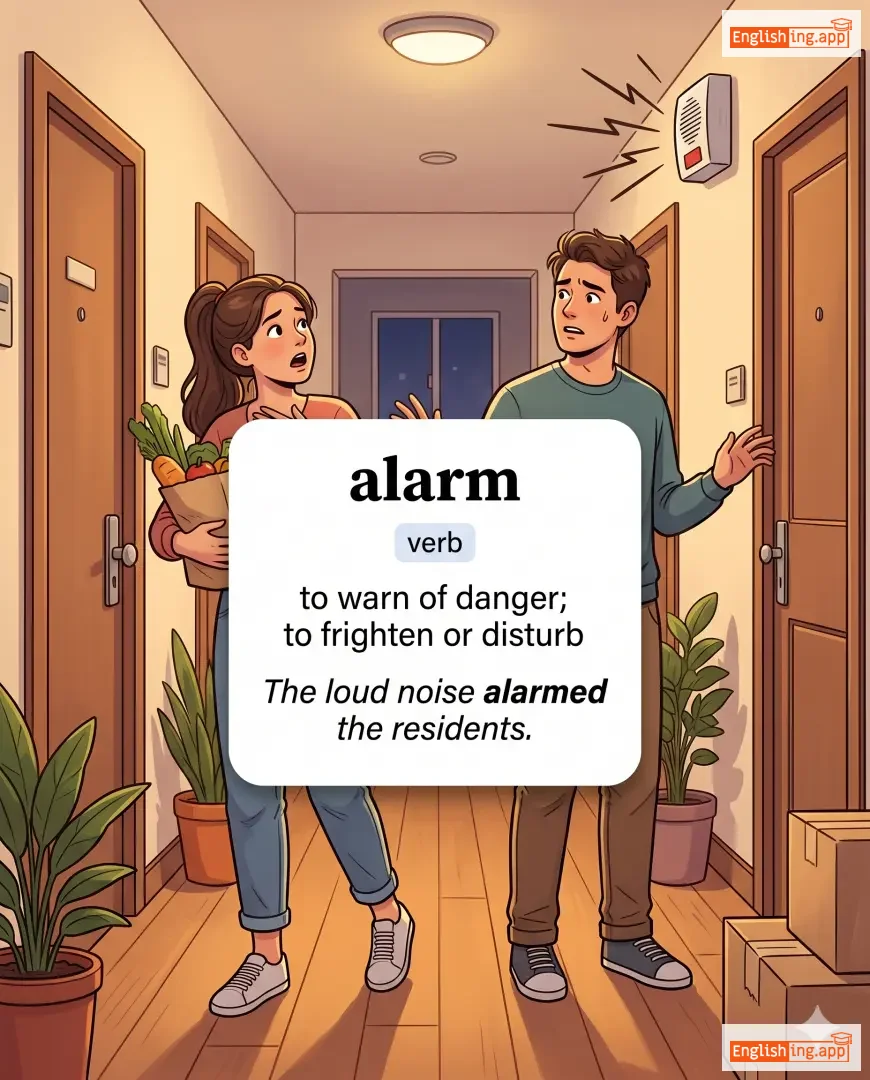
alarm definition card — visual illustration of the meaning
noun
/əˈlɑːrm/
सतर्कता संकेत (satarkata sanket)

a signal or sound that warns people of danger or alerts them to take action

"The fire alarm went off in the middle of the night."

"रात के मध्य में आग का अलार्म बज उठा।" (Raat ke madhya mein aag ka alarm baj uthha.)
alarming definition card — visual illustration of the meaning
adjective
/əˈlɑrmɪŋ/
चिंताजनक; डरावना; चिंतित करने वाला (chintajanak; darawna; chintit karne wala)

causing worry or fear; disturbing; frightening

"The alarming news about climate change worried everyone."

"जलवायु परिवर्तन के बारे में चिंताजनक खबर ने सभी को परेशान कर दिया।" (jalvayu parivartan ke baare mein chintajanak khabar ne sabhi ko pareshan kar diya.)
conjunction
/ˌɔːlˈbiː.ɪt/
हालाँकि (haalanki)

Although; even though.

"He finally agreed, albeit reluctantly."

"वह अंततः सहमत हुआ, हालाँकि अनिच्छा से।" (vah antatah sahmat hua, haalanki anichchha se.)
noun/adjective
/ælˈbaɪ.noʊ/
एल्बिनो (रंगहीन व्यक्ति/पशु) (albino)

A person, animal, or plant lacking normal pigmentation, resulting in pale skin, hair, and eyes.

"The albino rabbit had white fur and pink eyes."

"एल्बिनो खरगोश के सफेद फर और गुलाबी आंखें थीं।" (Albino khargosh ke safed far aur gulabi aankhen thin.)
noun
/ˈæl.baɪt/
एल्बाइट (albit)

A white or colorless mineral of the feldspar group, often found in igneous rocks.

"Geologists discovered albite crystals in the rock sample."

"भूवैज्ञानिकों ने चट्टान के नमूने में एल्बाइट क्रिस्टल्स खोजे।" (jiyolojists diskvarid elbait kristrals in di rok saimpl)
noun
/ˈælbəm/
एल्बम (elbam)

A collection of songs or photographs compiled into a single book, record, or digital file.

"She showed me her travel album full of beautiful pictures."

"उसने मुझे अपनी यात्रा एल्बम में खूबसूरत तस्वीरें दिखाईं।" (Usne mujhe apni yatra elbam mein khoobsurat tasveerain dikhayi.)
alchemy definition card — visual illustration of the meaning
noun
/ˈælkəmi/
रसायनशास्त्र (rasayanashastra)

A medieval practice combining elements of chemistry and philosophy, aimed at transforming matter, especially turning base metals into gold.

"Medieval scientists devoted their lives to alchemy."

"मध्यकालीन वैज्ञानिकों ने अपनी ज़िन्दगी रसायनशास्त्र में समर्पित की।" (Madhyakalīn vaigyanikon ne apni zindagi rasayanashastra mein samarpit ki.)
noun
/ˈælkəhɒl/
शराब (elkohaal)

A colorless volatile liquid that is the intoxicating constituent of wine, beer, spirits, and other drinks.

"Too much alcohol can damage your liver."

"बहुत अधिक शराब आपके जिगर को नुकसान पहुँच सकता है।" (bahut adhik sharaab aapke jigar ko nuksan pahunch sakta hai)
noun
/ˈælkəhɒlɪzəm/
शराबीपन (sharaabeepan)

A chronic disease characterized by uncontrolled drinking and preoccupation with alcohol.

"His alcoholism affected both his health and his family life."

"उसकी शराबीपन ने उसके स्वास्थ्य और पारिवारिक जीवन को प्रभावित किया।" (Uski sharabeepan ne uske swasthya aur parivarik jeevan ko prabhavit kiya.)
noun
/ˈælkoʊv/
कोने (kone)

A small recessed section of a room or a nook.

"She placed a reading chair in the alcove near the window."

"उसने खिड़की के पास कोने में एक पढ़ने की कुर्सी रखी थी।" (Usne khidki ke paas kone mein ek padhne ki kursi rakhi thi.)
noun
/ˈɔːldər/
आल्डर वृक्ष (Alder vriksh)

A type of tree from the birch family that typically grows in wet ground and has simple, serrated leaves.

"The alder trees grew thick along the riverbank."

"आल्डर वृक्ष नदी के किनारे घने हो गए थे।" (Alder vriksh nadi ke kinare ghane ho gaye the.)
noun
/ˈɔːldərmən/
नगर निगम सदस्य (nagar nigam sadasya)

An elected member of a municipal council in certain cities and towns.

"The alderman proposed a new plan for community parks."

"ऑल्डरमैन ने सामुदायिक पार्क के लिए एक नई योजना प्रस्तावित की।" (Alderman ne samudaayik park ke liye ek nai yojana prastaavit ki.)
noun
/ˈɔːldərmənʃɪp/
आल्डरमैन की पदवी (Alderman ki padvi)

The office, position, or dignity of an alderman.

"He was honored with aldermanship after years of service."

"वह कई वर्षों की सेवा के बाद आल्डरमैनशिप से सम्मानित हुए।" (Vah kai varshon ki seva ke baad aldermanship se sammanit hue.)
adjective
/əˈlɜːrt/
चेतावनी (chetaavani)

quick to notice and respond to potential danger or issues; aware and attentive

"The alert dog barked at the stranger approaching the house."

"चेतावनी कुत्ता उस अजनबी पर भौंक रहा था जो घर के पास आ रहा था।" (Chetavani kutta us ajnabi par bhonk raha tha jo ghar ke paas aa raha tha.)
adverb
/əˈlɜːrtli/
सतर्कता से (satarkta se)

in a watchful, attentive, and quick-to-notice manner

"She listened alertly to every sound in the dark forest."

"वह अंधेरे जंगल में हर आवाज़ को सतर्कता से सुन रही थी।" (vah andhere jangal mein har aavaaz ko satarkta se sun rahi thi)
noun
/əˈlɜːrtnəs/
सतर्कता (satarkata)

the state of being mentally aware and quick to notice or respond; vigilance

"The driver maintained a high level of alertness during the long journey."

"लंबी यात्रा के दौरान चालक ने उच्च स्तर की सतर्कता बनाए रखी।" (lambi yatra ke dauran chalak ne ucch star ki satarkata banaye rakhi)
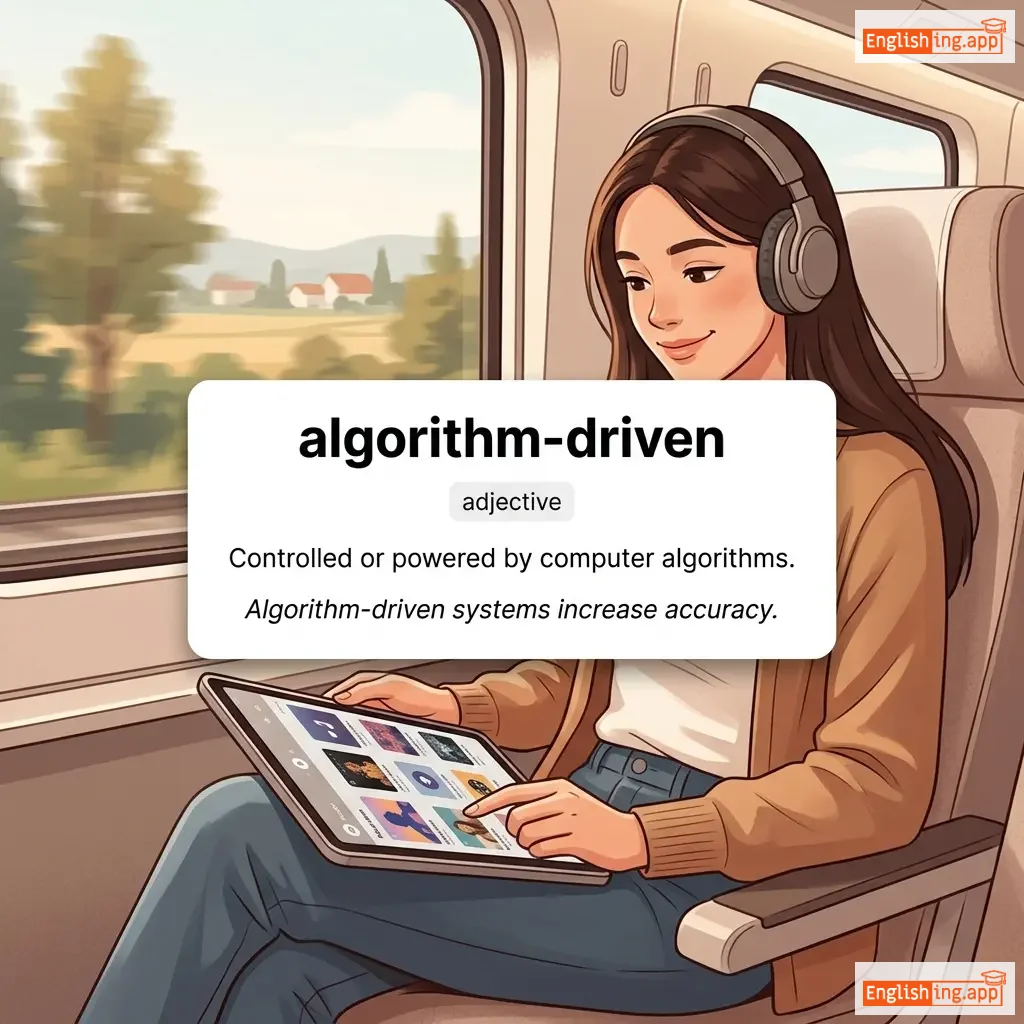
algorithm-driven definition card — visual illustration of the meaning
adjective
ˈæl.ɡə.rɪ.ðəm drɪv.ən
एल्गोरिथम-ड्रिवन। कंप्यूटर एल्गोरिदम द्वारा नियंत्रित। (algorithm-driven. computer algorithm dwara niyantrit.)

Controlled or powered by computer algorithms.

"Algorithm-driven systems increase accuracy."

"एल्गोरिथम-ड्रिवन सिस्टम सटीकता बढ़ाते हैं।" (Algorithm-driven system sathikta badhate hain.)
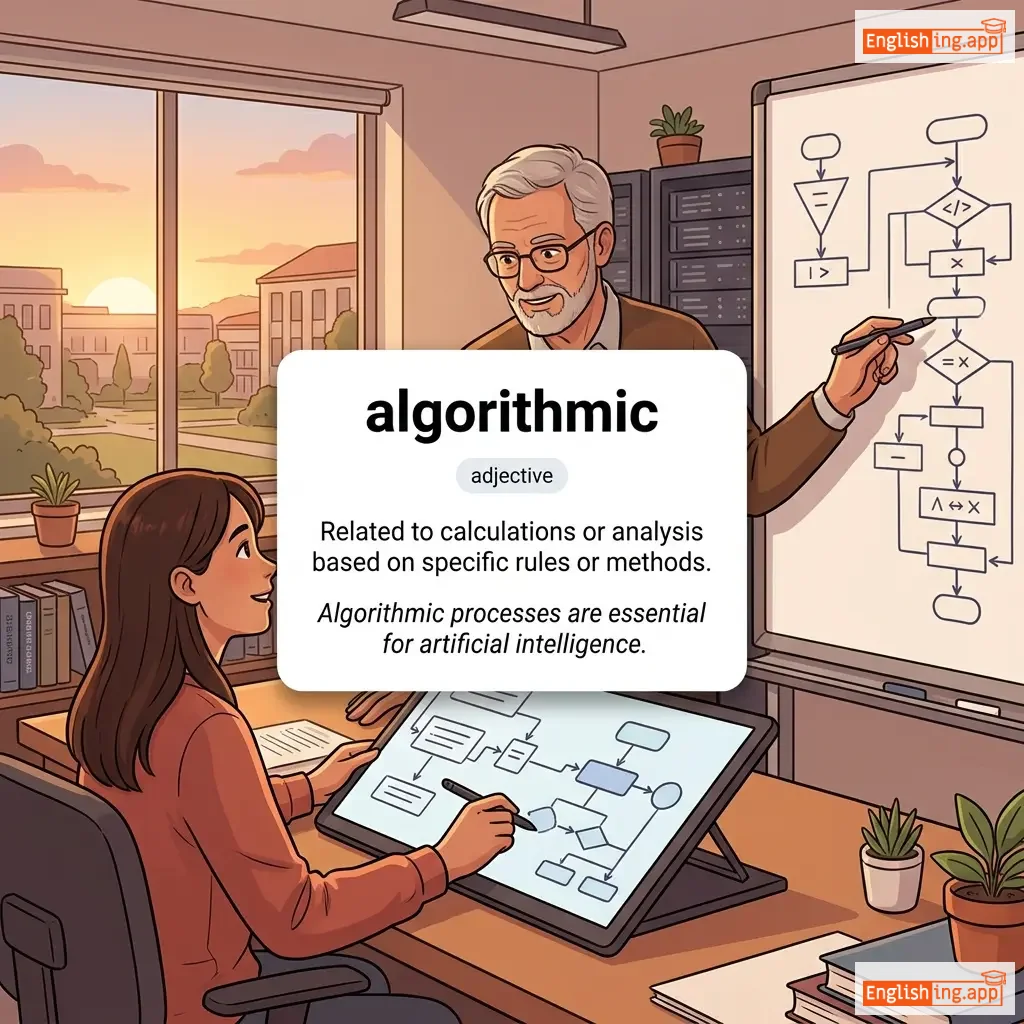
algorithmic definition card — visual illustration of the meaning
adjective
ˌæl.ɡəˈrɪð.mɪk
एल्गोरिदमिक (algoridmik)

Related to calculations or analysis based on specific rules or methods.

"Algorithmic processes are essential for artificial intelligence."

"एल्गोरिदमिक प्रक्रियाएँ कृत्रिम बुद्धिमत्ता के लिए आवश्यक हैं।" (Algoridmik prakriyaen kritrim buddhimatta ke liye avashyak hain.)
noun, adverb
/ˈeɪliəs/
उपनाम (upnaam)

A false or assumed identity; also used to mean 'otherwise called'.

"The criminal was known by the alias 'Shadow'."

"अपराधी को 'शैडो' उपनाम से जाना जाता था।" (Aparadhi ko 'Shadow' upnaam se jaana jaata tha.)
noun
/ˈælɪbaɪ/
बहाना (bahana)

A claim or piece of evidence that one was elsewhere when an act, typically a crime, was committed.

"She had a strong alibi that proved she was at the cinema during the theft."

"उसके पास एक मजबूत एलीबाई था जो साबित करता था कि वह चोरी के समय सिनेमा में थी।" (Uske paas ek majboot alibai tha jo sabit karta tha ki vah chori ke samay cinema mein thi.)
alien definition card — visual illustration of the meaning
noun, adjective
/ˈeɪ.li.ən/
परग्रही (pargrahi)

A being from another world; or something foreign, unfamiliar, or strange.

"The movie featured an alien from a distant galaxy."

"मूवी में एक दूर के गैलेक्सी से एक परग्रही दिखाया गया।" (Movie mein ek door ke galaxy se ek pargrahi dikhaya gaya.)
adjective
/ˈeɪ.li.ə.nə.bəl/
हस्तांतरणीय (hastantraneey)

Able to be transferred or surrendered, usually referring to rights or property.

"Property rights are alienable and can be sold or transferred."

"संपत्ति अधिकार हस्तांतरणीय हैं और इन्हें बेचा या स्थानांतरित किया जा सकता है।" (Sampatti adhikar hastantraneey hain aur inhein becha ya sthantantrit kiya ja sakta hai.)
verb
/ˈeɪ.li.ə.neɪt/
परायापन करना (parayapan karna)

To make someone feel isolated or estranged; to cause someone to become unfriendly.

"His rude behavior alienated many of his friends."

"उसका रुखा व्यवहार कई दोस्तों को उससे दूर कर दिया।" (Uska rukha vyavhaar kai doston ko usse door kar diya.)
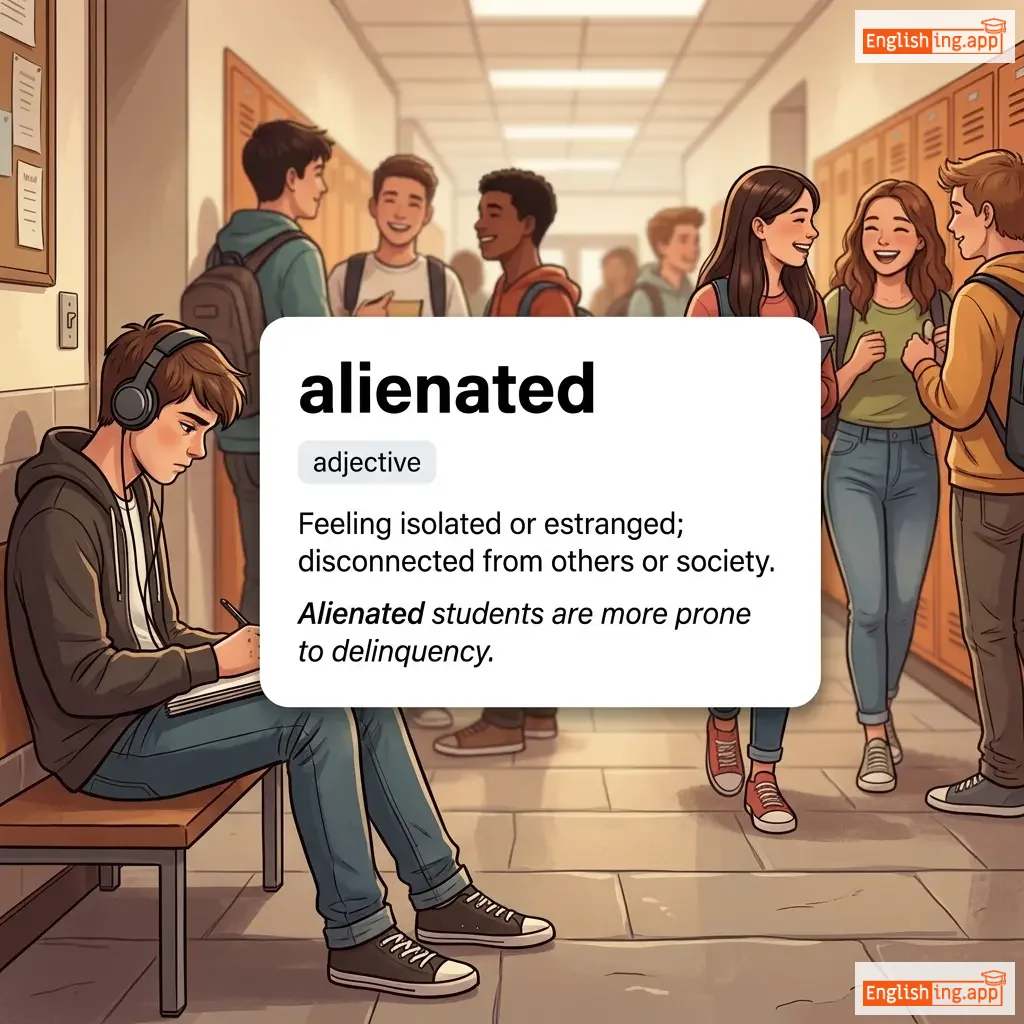
alienated definition card — visual illustration of the meaning
adjective
ˈeɪlɪəneɪtɪd
परायापन (parayapan)

Feeling isolated or estranged; disconnected from others or society.

"Alienated students are more prone to delinquency."

"परायापन महसूस करने वाले छात्र अपराध की ओर अधिक प्रवृत्त होते हैं।" (Parayapan mehsoos karne wale chhatra aparadh ki aur adhik pravritto hote hain.)
noun
/ˌeɪ.li.əˈneɪ.ʃən/
परायापन (parayapan)

The state of being isolated or estranged from a group or activity.

"The new policies created a sense of alienation among employees."

"नई नीतियों ने कर्मचारियों के बीच परायापन की भावना पैदा की।" (Nayi neetiyon ne karyakarion ke beech parayapan ki bhavana paida ki.)
verb
/əˈlaɪn/
समीकरण करना / सीधी रेखा में लाना (sameekaran karna / seedhi rekha mein lana)

To arrange things in a straight line; to adjust or bring into proper relation or agreement.

"The manager asked the team to align their goals with the company's mission."

"मैनेजर ने टीम से उनके लक्ष्यों को कंपनी के मिशन के साथ संरेखित करने को कहा।" (Manager ne team se unke lakshyon ko company ke mission ke saath sanrekhit karne ko kaha.)
aligning definition card — visual illustration of the meaning
verb
əˈlaɪn.ɪŋ
सामंजस्य करना (samanjasya karna)

Placing or arranging things in a straight line or in correct relative positions.

"Aligning education with global standards is vital."

"शिक्षा को वैश्विक मानकों के साथ संरेखित करना महत्वपूर्ण है।" (Shiksha ko vaishvik mankon ke saath sanrekhit karna mahatvapurn hai.)
noun
/əˈlaɪnmənt/
सामंजस्य (samanjasya)

arrangement in a straight line or in proper position

"The alignment of the planets was perfect for the celestial event."

"ग्रहों की स्थिति आकाशीय घटना के लिए उत्तम थी।" (Grahon ki sthiti aakaasheey ghatna ke liye uttam thi.)
adjective
/əˈlaɪk/
समान (samaan)

similar in appearance, nature, or character

"The two sisters look very alike."

"दो बहनें बहुत समान दिखती हैं।" (Do bahanen bahut samaan dikhti hain.)
noun
/ˈæl.ɪ.mənt/
आहार (aahar)

food or nourishment that sustains life

"Fruits and vegetables are important aliments for a healthy body."

"फruits और vegetables एक स्वस्थ शरीर के लिए महत्वपूर्ण आहार हैं।" (Fruits aur vegetables ek swasth sharir ke liye mahatvapurn aahar hain.)
adjective
/ˌæl.ɪˈmen.tər.i/
पाचन संबंधी (pachan sambandhi)

relating to nourishment or the organs of digestion

"The doctor explained the role of the alimentary canal in digestion."

"डॉक्टर ने पाचन तंत्र की भूमिका को समझाया।" (Doktor ne pachan tantr ki bhumika ko samjhaya.)
noun
/ˈæl.ɪ.moʊ.ni/
अलिमनी (alimony)

financial support that a person is ordered by a court to give to their spouse after separation or divorce

"He was ordered by the court to pay monthly alimony to his ex-wife."

"उसे अदालत द्वारा अपनी पूर्व पत्नी को मासिक ऐलिमनी देने का आदेश दिया गया था।" (Use adalat dwara apni purv patni ko masik alimony dene ka aadesh diya gaya tha.)
adjective
/əˈlaɪv/
जीवित (jeevit)

Living, not dead.

"The rescue team found the missing child alive."

"राहत टीम ने लापता बच्चे को जीवित पाया।" (Raahat team ne laapata bachche ko jeevit paaya.)