वोकैबुलरीज

इंग्लिश वोकैबुलरी डिस्कवर, लर्न और मास्टर करें

amend definition card — visual illustration of the meaning
verb
/əˈmɛnd/
सुधारना (sudharna)

to make changes or improvements, often in a legal or written text

"The constitution was amended to reflect the new policies."

"नए नीतियों को दर्शाने के लिए संविधान में बदलाव किया गया।" (Naye neetiyon ko darshane ke liye samvidhan mein badlaav kiya gaya.)
amendment definition card — visual illustration of the meaning
noun
/əˈmɛndmənt/
खुशी (khushi)

a change or addition designed to improve a text, law, or document

"The government proposed an amendment to the constitution."

"जब उसे पुरस्कार मिला, तो वह अपनी खुशी को छुपा नहीं पाई।" (Jab use puraskar mila, to vah apni khushi ko chhupa nahi pai.)
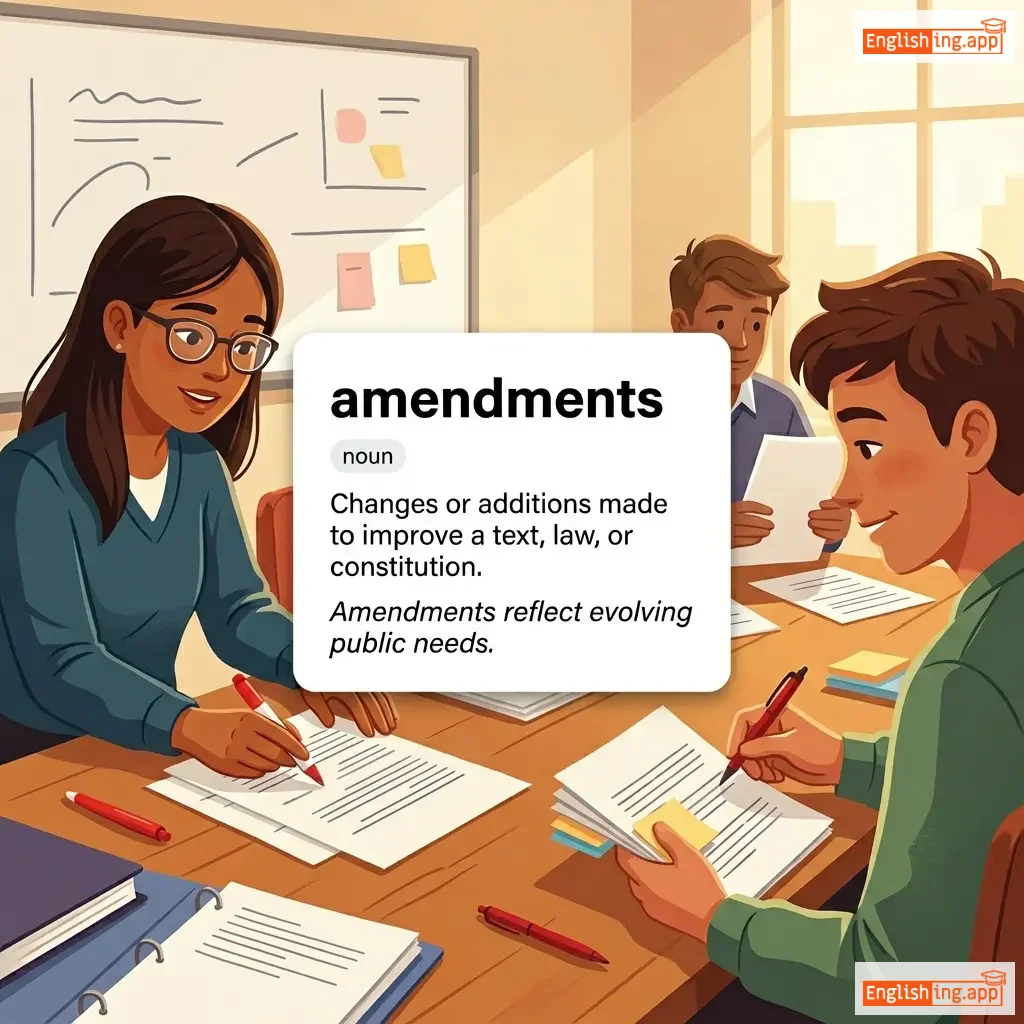
amendments definition card — visual illustration of the meaning
noun
əˈmend.mənts
संशोधन (sanshodhan)

Changes or additions made to improve a text, law, or constitution.

"Amendments reflect evolving public needs."

"संशोधन सार्वजनिक आवश्यकताओं के विकसित होने को दर्शाते हैं।" (Sanshodhan sarvjanik avashyaktaon ke viksit hone ko darshate hain.)
noun
/əˈmɛnətiz/
सुविधाएँ (suvidhaen)

useful or pleasant facilities and services provided for comfort or convenience

"The hotel offers modern amenities such as free Wi-Fi and a swimming pool."

"होटल फ्री वाई-फाई और स्विमिंग पूल जैसी आधुनिक सुविधाएँ प्रदान करता है।" (Hotel free wi-fi aur swimming pool jaisi aadhunik suvidhaen pradan karta hai.)
amenity definition card — visual illustration of the meaning
noun
/əˈmɛnəti/
सुविधा (suvidha)

a useful or pleasant facility or feature of a place

"The apartment has every amenity needed for comfortable living."

"अपार्टमेंट में आरामदायक जीवन के लिए सभी सुविधाएं हैं।" (Apartment mein aramdayak jeevan ke liye sabhi suvidhaayein hain.)
noun/adjective
/əˈmerɪkən/
अमेरिकन (amerikan)

relating to the United States or its people

"She is an American citizen."

"वह एक अमेरिकी नागरिक है।" (Vah ek ameriki nagrik hai.)
noun
/əˈmɛrɪkəˌnɪzəm/
अमेरिकीपन (amerikanizm)

A word, phrase, or practice characteristic of American English or culture.

"The term 'sidewalk' is an Americanism, while 'pavement' is used in British English."

"शब्द 'sidewalk' एक अमेरिकी शब्द-प्रचलन है, जबकि 'pavement' ब्रिटिश अंग्रेजी में प्रयोग किया जाता है." (shabd 'sidewalk' ek ameriki shabd-prachlan hai, jabki 'pavement' british angrezi mein prayog kiya jata hai.)
adjective
/ˈeɪmiəbəl/
मिलनसार (milansar)

Having a friendly and pleasant manner.

"She has an amiable personality that makes her well-liked by everyone."

"उसका मिलनसार स्वभाव उसे सभी द्वारा पसंद किया जाता है।" (uska milansar svabhaav use sabhi dwara pasand kiya jata hai.)
adverb
/ˈeɪ.mi.ə.bli/
दोस्ताना ढंग से, स्नेहपूर्वक (dostana dhang se, snehpurvak)

in a friendly and pleasant manner

"They discussed the issue amiably without any arguments."

"उन्होंने बिना किसी तर्क के दोस्ताना तरीके से मुद्दे पर चर्चा की।" (unhone bina kisi tark ke dostana tareeke se mudde par charcha ki)
adverb
/əˈbæk/
चौंकाने वाला (chaunkane wala)

by surprise; unexpectedly

"I was taken aback by his sudden announcement."

"मैं उसके अचानक घोषणा से चौंक गया था।" (Main uske achanak ghoshna se chaunk gaya tha.)
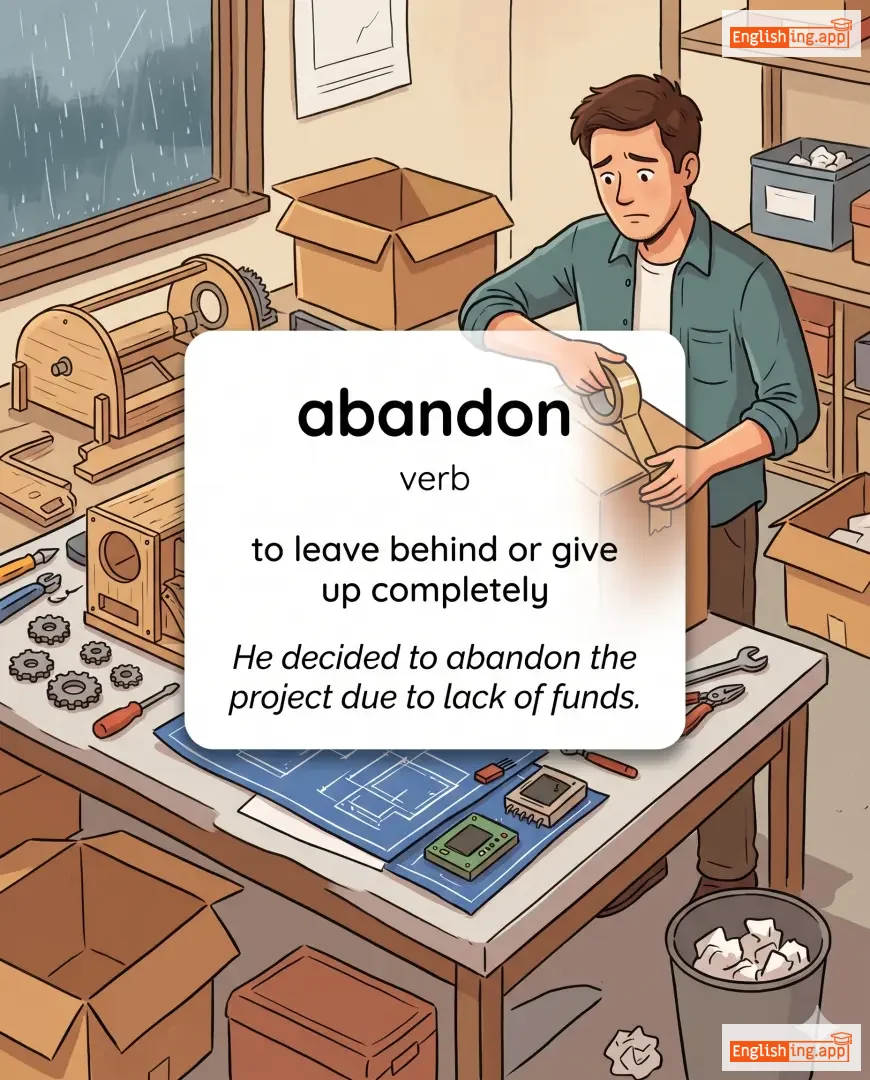
abandon definition card — visual illustration of the meaning
verb
/əˈbændən/
त्यागना (tyagna)

to leave behind or give up completely

"He decided to abandon the project due to lack of funds."

"उसने फंड्स की कमी के कारण प्रोजेक्ट को त्यागने का निर्णय लिया।" (Usne funds ki kami ke karan project ko tyagne ka nirnay liya.)
noun
/əˈbændənmənt/
परित्याग (parityag)

the act of leaving someone or something behind completely; the state of being deserted

"The child suffered deep emotional pain because of abandonment."

"परित्याग के कारण बच्चे को गहरा भावनात्मक दर्द हुआ।" (parityag ke karan bachche ko gehra bhavnatmak dard hua)
verb
/əˈbeɪs/
नीचा दिखाना (neecha dikhana)

to belittle or degrade someone

"He refused to abase himself before the king."

"उसने राजा के सामने खुद को नीचा दिखाने से मना कर दिया।" (Usne raja ke samne khud ko neecha dikhane se mana kar diya.)
verb
/əˈbæʃ/
शर्मिंदा करना (sharminda karna)

to make someone feel embarrassed or ashamed

"Her sudden question seemed to abash him."

"उसका अचानक सवाल उसे शर्मिंदा कर गया।" (Uska achanak sawaal use sharminda kar gaya.)
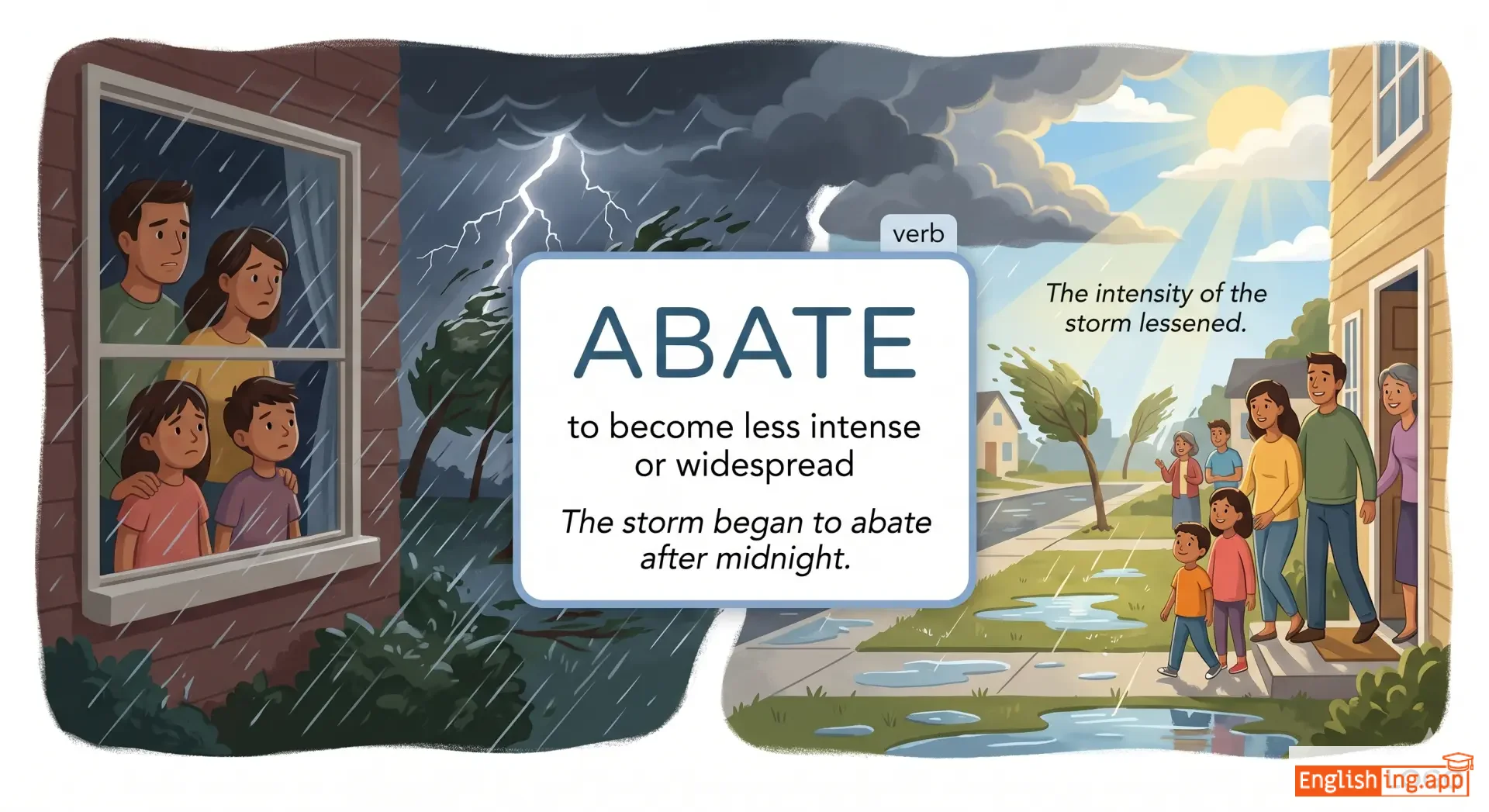
abate definition card — visual illustration of the meaning
verb
/əˈbeɪt/
कम होना (kam hona)

to become less intense or widespread

"The storm began to abate after midnight."

"आंधी आधी रात के बाद कम होने लगी।" (Aandhi aadhi raat ke baad kam hone lagi.)
noun
/ˈæbɪs/
अध्यक्ष (महिला मठ प्रमुख) (adhyaksh (mahila math pramukh))

the woman in charge of a convent of nuns

"The abbess welcomed the visitors to the convent."

"अध्यक्ष ने आगंतुकों का मठ में स्वागत किया।" (Adhyaksh ne aagantukon ka math mein swagat kiya.)
noun
/ˈæbi/
मठ (math)

A large church building or monastery where monks or nuns live, work, and worship.

"The old abbey on the hill attracts many tourists each year."

"पहाड़ी पर पुराना मठ हर साल कई पर्यटकों को आकर्षित करता है।" (Pahaadi par purana math har saal kai paryatakoon ko aakarshit karta hai.)
noun
/ˈæbət/
अभट (abhat)

The head of a monastery for monks.

"The abbot welcomed the visitors to the monastery."

"अभट ने मठ के आगंतुकों का स्वागत किया।" (Abhat ne math ke aagantukon ka swagat kiya.)
verb
/əˈbriːvieɪt/
संक्षिप्त करना (sankshipt karna)

To shorten a word, phrase, or text by leaving out letters or parts.

"We often abbreviate 'Doctor' to 'Dr'."

"हम अक्सर 'डॉक्टर' को 'डॉ' में संक्षेपित करते हैं।" (Ham aksar 'doctor' ko 'Dr' mein sankshipt karte hain.)
noun
/əˌbriːviˈeɪʃən/
संक्षिप्त रूप (sankshipt roop)

a shortened form of a word or phrase

"NASA is an abbreviation for National Aeronautics and Space Administration."

"NASA, National Aeronautics and Space Administration का एक संक्षिप्त रूप है।" (NASA, National Aeronautics and Space Administration ka ek sankshipt roop hai.)
abdicate definition card — visual illustration of the meaning
verb
/ˈæbdɪkeɪt/
राजगद्दी छोड़ना (raajgaddi chhodna)

To give up a position of power or responsibility, especially a throne.

"The king decided to abdicate the throne."

"राजा ने राजगद्दी छोड़ने का निर्णय लिया।" (Raja ne raajgaddi chhodne ka nirnay liya.)
noun
/ˈæbdəmən/
पेट (pet)

The part of the body below the chest and above the hips that contains the stomach and other organs.

"He complained of pain in his abdomen."

"उसने अपने पेट में दर्द की शिकायत की।" (Usne apne pet mein dard ki shikayat ki.)
adjective
/æbˈdɑː.mə.nəl/
पेट से संबंधित (pet se sambandhit)

relating to the abdomen (the part of the body between the chest and pelvis)

"He complained of severe abdominal pain."

"उसने गंभीर पेट दर्द की शिकायत की।" (Usne gambhir pet dard ki shikayat ki.)
verb
/əbˈdʌkt/
अपहरण करना (apaharan karna)

to take someone away illegally by force or deception

"The criminal tried to abduct the child in broad daylight."

"अपराधी ने दिनदहाड़े बच्चे का अपहरण करने की कोशिश की।" (aparadhi ne dindahade bachche ka apaharan karne ki koshish ki)
noun
/æbˈdʌk.ʃən/
अपहरण (apaharan)

the act of taking someone away illegally by force; kidnapping

"The police are investigating the abduction of the child."

"पुलिस बच्चे के अपहरण की जांच कर रही है।" (Police bachche ke apaharan ki jaanch kar rahi hai.)
noun
/əbˈdʌktər/
अपहरणकर्ता (apaharanakarta)

a person who kidnaps or forcibly takes someone away

"The police arrested the abductor after a nationwide search."

"लंबी तलाश के बाद पुलिस ने अपहरणकर्ता को गिरफ्तार किया।" (lambi talash ke bad police ne apharanakarta ko giraftar kiya)
adverb
/əˈbɛd/
बिस्तर में (bistar mein)

in bed

"She stayed abed all day due to illness."

"वह बीमारी के कारण पूरा दिन बिस्तर में पड़ी रही।" (Vah bimari ke karan poora din bistar mein padi rahi.)
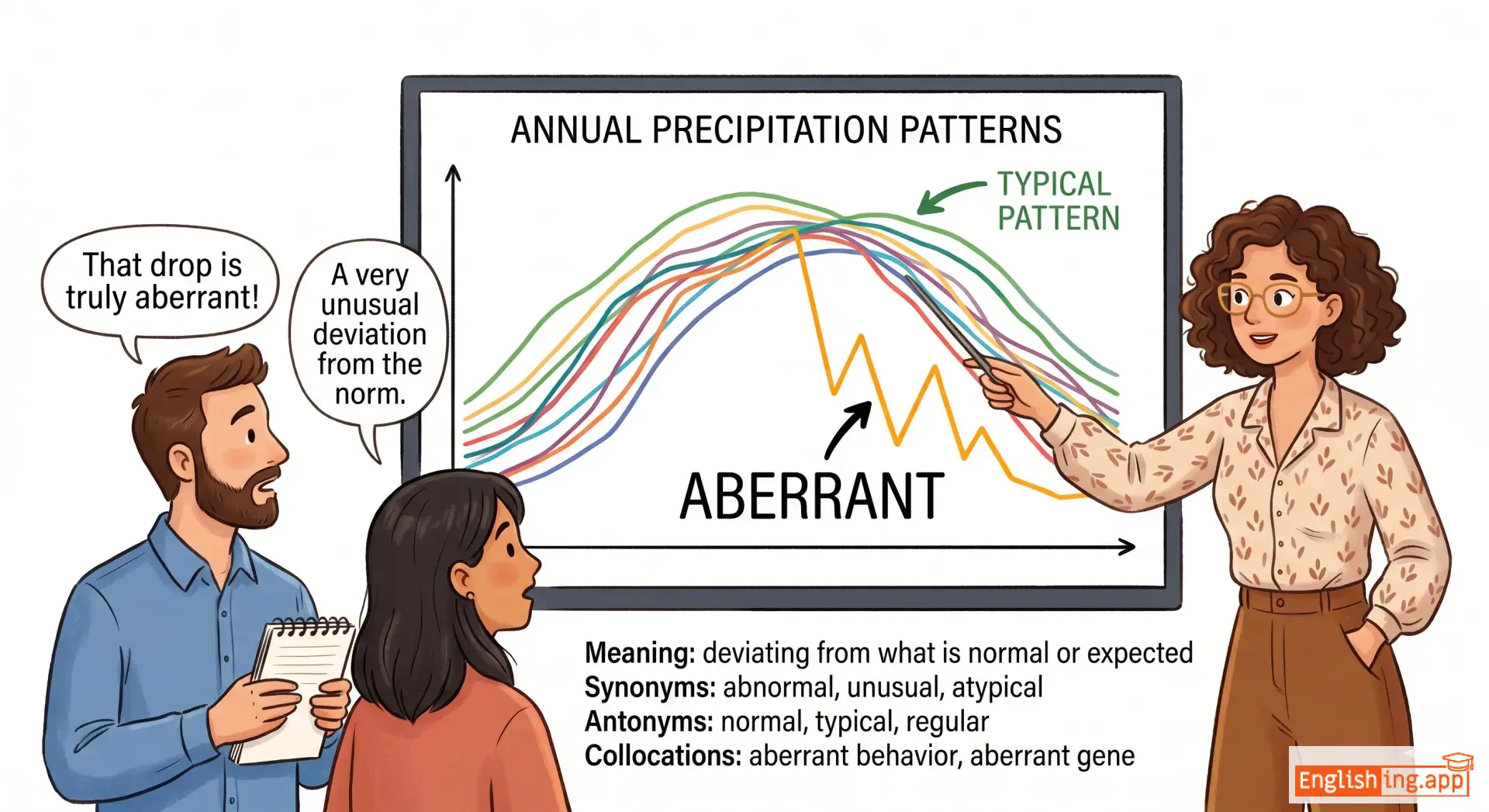
aberrant definition card — visual illustration of the meaning
adjective
/ˈæb.ə.rənt/
विकृत (vikrit)

deviating from what is normal or expected; abnormal

"His aberrant behavior shocked everyone at the meeting."

"उसका विकृत व्यवहार बैठक में सभी को चौंका दिया।" (Uska vikrit vyavhaar baithak mein sabhi ko chonka diya.)
aberration definition card — visual illustration of the meaning
noun
/ˌæb.əˈreɪ.ʃən/
विचलन (vichlan)

a departure from what is normal, usual, or expected; an anomaly

"The sudden drop in temperature was an aberration for this season."

"इस सीजन में अचानक तापमान में गिरावट एक विचलन था।" (Is season mein achanak taapmaan mein girawat ek vichlan tha.)
verb
/əˈbɛt/
अपराध करने के लिए प्रोत्साहित करना (apraadha karne ke liye protsaahit karna)

to encourage or assist someone to commit a crime or wrongdoing

"He was accused of abetting the criminals in their escape."

"वह अपराधियों को उनकी भागने में सहायता करने के आरोप में था।" (Wah apradhiyon ko unki bhagne mein sahayata karne ke aarop mein tha.)
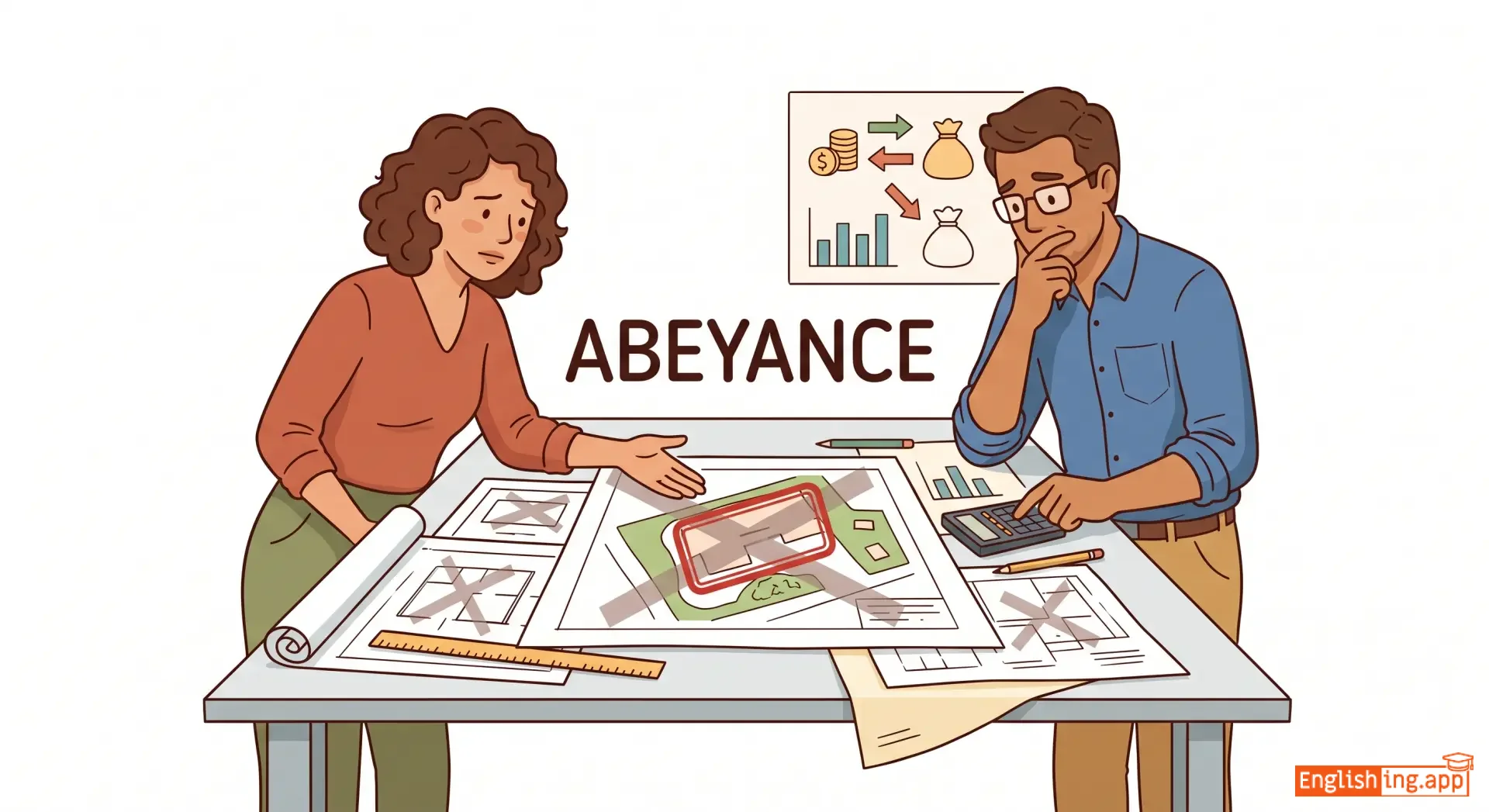
abeyance definition card — visual illustration of the meaning
noun
/əˈbeɪəns/
अस्थायी स्थगित (asthayi sthagit)

a state of temporary suspension or inactivity

"The project was held in abeyance until funds became available."

"प्रकल्प को फंड्स मिलने तक अस्थायी रूप से निलंबित रखा गया था।" (Prakalp ko funds milne tak asthayi roop se nilambit rakha gaya tha.)
verb
/əbˈhɔːr/
नफरत करना (nafrat karna)

to regard with disgust and hatred

"She abhors cruelty to animals."

"वह जानवरों के प्रति क्रूरता को नफरत करती है।" (Wah janwaron ke prati krurta ko nafrat karti hai.)
noun
/əbˈhɒrəns/
घृणा (ghrina)

a feeling of strong disgust or hatred

"He expressed his abhorrence of racial discrimination."

"उसने जातिवाद के खिलाफ अपनी घृणा व्यक्त की।" (Usne jaativad ke khilaf apni ghrina vyakt ki.)
adjective
/əbˈhɒrənt/
नफ़रत से भरपूर (nafrat se bharpoor)

causing or deserving strong dislike or hatred

"Such cruelty is abhorrent to civilized society."

"ऐसी क्रूरता सभ्य समाज के लिए घृणास्पद है।" (Aisi kroorta sabhy samaaj ke liye ghrinaaspad hai.)
noun
/əˈbaɪdəns/
आज्ञापालन (aajyapalan)

the act of following, accepting, or complying with something

"Her abidance by the rules impressed the committee."

"उसका नियमों का पालन समिति को प्रभावित किया।" (uska niyamon ka paalan samiti ko prabhavit kiya.)
verb
/əˈbaɪd/
पालन करना (paalan karna)

to accept, tolerate, or remain faithful to something

"Citizens must abide by the laws of their country."

"नागरिकों को अपने देश के कानूनों का पालन करना चाहिए।" (Nagarikon ko apne desh ke kanoonon ka paalan karna chahiye.)
adjective
/əˈbaɪdɪŋ/
स्थायी (sthaayi)

lasting for a long time; enduring

"She had an abiding love for her hometown."

"उसके अपने शहर के लिए एक स्थायी प्रेम था।" (Uske apne shahar ke liye ek sthaayi prem tha.)
noun
/əˈbɪləti/
क्षमता (kshamata)

the power, skill, or capacity to do something

"Her ability to solve problems quickly impressed everyone."

"समस्याओं को जल्दी हल करने की उसकी क्षमता ने सभी को प्रभावित किया।" (Samasyayon ko jaldi hal karne ki uski kshamata ne sabhi ko prabhavit kiya.)
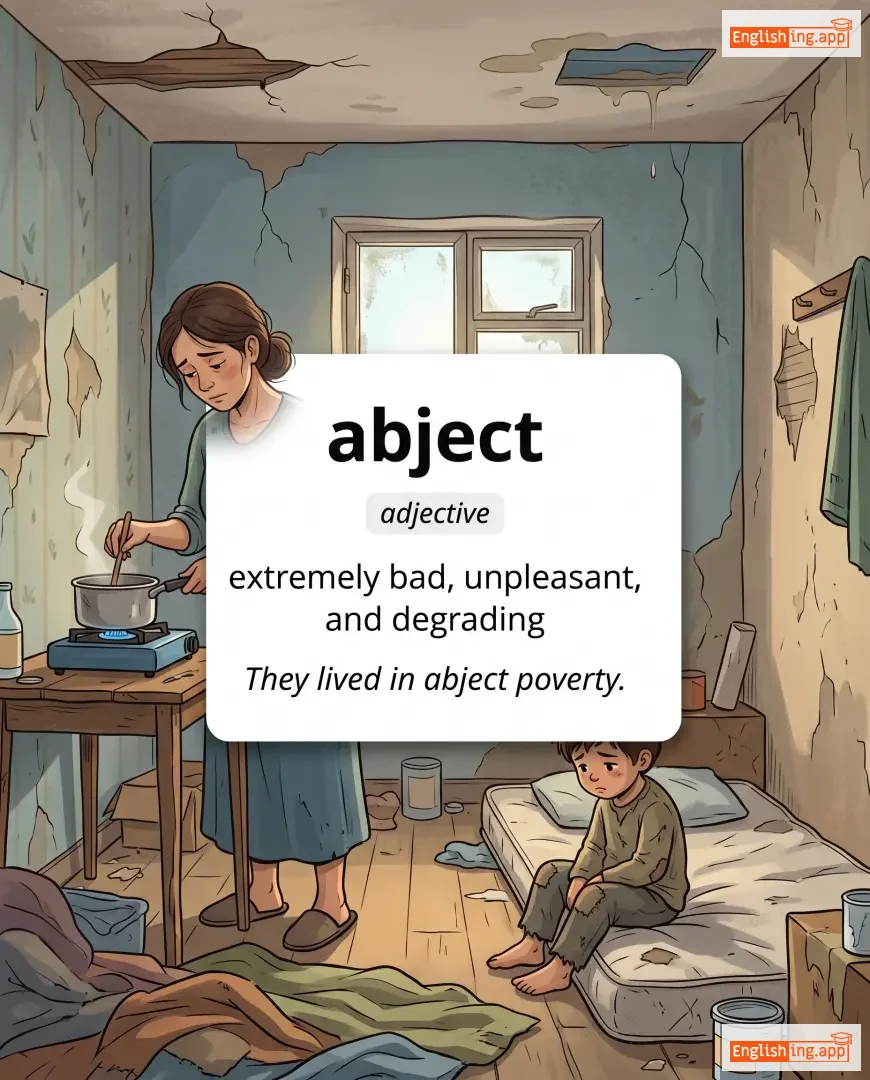
abject definition card — visual illustration of the meaning
adjective
/ˈæbdʒɛkt/
निराशाजनक (niraashajanak)

extremely bad, unpleasant, and degrading

"They lived in abject poverty."

"वे निराशाजनक गरीबी में जी रहे थे।" (ve niraashajanak gareebi mein jee rahe the.)
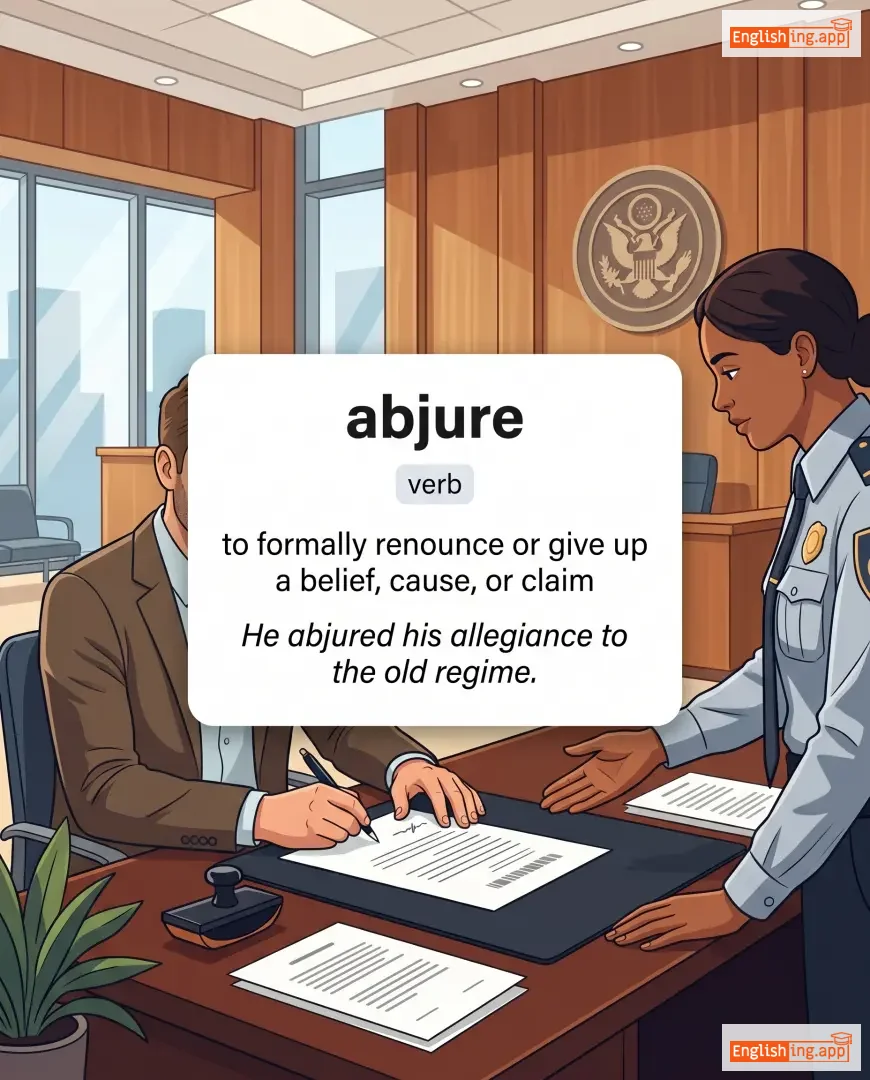
abjure definition card — visual illustration of the meaning
verb
/æbˈdʒʊər/
त्याग करना (tyag karna)

to formally renounce or give up a belief, cause, or claim

"He abjured his allegiance to the old regime."

"उसने पुराने शासन के प्रति अपनी निष्ठा त्याग दी थी।" (Usne purane shasan ke prati apni nishtha tyag di thi.)
adjective
/ˈeɪbl/
सक्षम (saksham)

having the power, skill, or means to do something

"She is able to speak three languages fluently."

"वह तीन भाषाएँ धाराप्रवाह बोलने में सक्षम है।" (Woh teen bhashaen dhaaraprawah bolne mein saksham hai.)
adjective
/ˌeɪ.bəlˈbɒd.id/
सशक्त (sashakt)

physically strong and healthy, not disabled

"The company is looking for able-bodied workers for the construction site."

"कंपनी निर्माण स्थल के लिए सशक्त श्रमिकों की तलाश कर रही है।" (Company nirmaan sthal ke liye sashakt shramikon ki talash kar rahi hai.)
noun
/əˈbluːʃən/
स्नान (snaan)

the act of washing oneself, often for religious purposes

"He performed his morning ablution before the prayer."

"उसने प्रार्थना से पहले अपनी सुबह की स्नान की।" (Usne prarthana se pehle apni subah ki snaan ki.)
verb
/ˈæbnɪˌɡeɪt/
त्याग करना (tyag karna)

to deny or renounce something, especially a right or desire

"She chose to abnegate her personal interests for the sake of the team."

"उसने टीम के भले के लिए अपनी व्यक्तिगत इच्छाओं को त्याग करने का चयन किया।" (Usne team ke bhale ke liye apni vyaktigat ichhaon ko tyag karne ka chayan kiya.)
noun
/ˌæbnɪˈɡeɪʃən/
त्याग (tyag)

the act of renouncing or rejecting something, especially self-denial

"The monk’s life was one of complete abnegation of worldly pleasures."

"संत का जीवन सांसारिक सुखों के पूर्ण त्याग का था।" (Sant ka jeevan sansarik sukhon ke purn tyag ka tha.)
adjective
/æbˈnɔːr.məl/
असामान्य (asamanya)

deviating from what is normal or usual, typically in a way that is undesirable

"The doctor noticed an abnormal growth in the patient’s lung."

"डॉक्टर ने मरीज के फेफड़े में असामान्य वृद्धि देखी।" (Doktar ne mareez ke fefde mein asamanya vruddhi dekhi.)
noun
/əˈboʊd/
आवास (aavas)

a place of residence; a home

"They invited us to their humble abode."

"उन्होंने हमें उनके साधारण आवास में आमंत्रित किया।" (Unhone humein unke saadharan aavaas mein aamantrit kiya.)
verb
/əˈbɑː.lɪʃ/
समाप्त करना (samaapt karna)

to formally put an end to a system, practice, or institution

"The government decided to abolish the old tax system."

"सरकार ने पुराने कर प्रणाली को समाप्त करने का निर्णय लिया।" (Sarkar ne purane kar pranali ko samaapt karne ka nirnay liya.)
noun
/ˌæbəˈlɪʃən/
उन्मूलन (unmoolan)

the act of formally ending or eliminating a system, practice, or institution

"The abolition of slavery was a major milestone in human rights history."

"दास प्रथा का उन्मूलन मानव अधिकारों के इतिहास में एक बड़ा मील का पत्थर था।" (daas pratha ka unmoolan manav adhikaron ke itihas mein ek bada meel ka patthar tha)
adjective
/əˈbɑː.mə.nə.bəl/
घृणित (ghrit)

causing moral revulsion; extremely unpleasant

"The prisoners were kept in abominable conditions."

"कैदियों को घृणित परिस्थितियों में रखा गया था।" (Kaidiyon ko ghrinit paristhitiyon mein rakha gaya tha.)