ভোকাবুলারিসমূহ

ইংরেজি শব্দের বাংলা অর্থ | English to Bangla Word Meaning Dictionary

verb
/əˈbɑː.mə.neɪt/
অতিশয় ঘৃণা করা (otishoy ghryna kora)

to feel hatred or loathing for something

"She abominates cruelty to animals."

"সে প্রাণীদের প্রতি নিষ্ঠুরতাকে ঘৃণা করে।" (Se pranider proti nisthurtake ghryna kore.)
noun
/əˌbɑː.məˈneɪ.ʃən/
জঘন্য বস্তু (jaghonno bostu)

a thing that causes disgust or hatred

"Slavery was considered an abomination."

"দাসপ্রথাকে একটি জঘন্য বিষয় হিসেবে গণ্য করা হত।" (Dasprothake ekti jaghonno bishoy hisebe gonno kora hoto.)
adjective
/ˌæbəˈrɪdʒənəl/
আদিবাসী (adibashi)

Relating to the original inhabitants of a region.

"The museum has a large collection of aboriginal art."

"যাদুঘরে আদিবাসী শিল্পের একটি বড় সংগ্রহ রয়েছে।" (Jadughore adibashi shilper ekti boro songroho royeche.)
noun
/ˌæbəˈrɪdʒəniːz/
আদিবাসী জনগোষ্ঠী (adibashi jonogosthi)

The original inhabitants of a land, especially in Australia.

"The aborigines have preserved their traditions for thousands of years."

"অ্যাবরিজিনিস হাজার হাজার বছর ধরে তাদের ঐতিহ্য সংরক্ষণ করেছে।" (Aborigines hajar hajar bochor dhore tader oitihho songrokkhon koreche.)
verb
/əˈbɔːrt/
বাতিল করা; গর্ভপাত করা (batil kora; gorbopat kora)

to stop a process or action before it is completed; to end a pregnancy deliberately

"The pilot decided to abort the mission due to bad weather."

"খারাপ আবহাওয়ার কারণে পাইলট মিশনটি বাতিল করার সিদ্ধান্ত নেন।" (kharap abohawar karone pilot mishonti batil korar siddhanto nen)
noun
/əˈbɔːrʃən/
গর্ভপাত (gorbopat)

The deliberate termination of a human pregnancy, usually performed during the first 28 weeks.

"The debate about abortion continues to divide public opinion."

"গর্ভপাত নিয়ে বিতর্ক জনমতকে বিভক্ত করে চলেছে।" (Gorbopat niye bitork jonmotke bivokto kore cholche.)
adjective
/əˈbɔːrtɪv/
ব্যর্থ (byartho)

Failing to produce the intended result; unsuccessful.

"Their abortive attempt to climb the mountain ended in retreat."

"তাদের পাহাড়ে ওঠার ব্যর্থ প্রচেষ্টা পিছু হটায় শেষ হয়েছিল।" (Tader pahare othar byartho prochesta pichu hotay shesh hoyechilo.)
verb
/əˈbaʊnd/
প্রচুর পরিমাণে থাকা (prochur porimane thaka)

To exist in large numbers or amounts.

"Opportunities abound in the field of technology."

"প্রযুক্তির ক্ষেত্রে সুযোগ প্রচুর পরিমাণে রয়েছে।" (Projuktiro khetre sujog prochur porimane royeche.)
preposition, adverb
/əˈbaʊt/
সম্পর্কে (somproke)

concerning; on the subject of; approximately

"We talked about the new project yesterday."

"আমরা গতকাল নতুন প্রকল্প সম্পর্কে কথা বলেছিলাম।" (Amra gotokal notun prokolpo somproke kotha bolechilam.)
preposition, adverb
/əˈbʌv/
উপরে (upore)

at a higher place or position than something

"The picture hangs above the fireplace."

"ছবিটি অগ্নিকুণ্ডের উপরে ঝুলছে।" (Chobiti agnikunder upore jhulche.)
adjective, adverb
/əˈbʌvˌbɔːrd/
সৎ ও খোলামেলা (shotto o kholamela)

Open and honest; without deception or trickery.

"The business deal was completely aboveboard."

"ব্যবসায়িক চুক্তিটি সম্পূর্ণ সৎ ও খোলামেলা ছিল।" (Byabshaik chuktiti sompurno shotto o kholamela chilo.)
verb
/əˈbreɪd/
ঘষে ক্ষয় করা (ghoshe khoy kora)

to scrape or wear away the surface by friction or erosion

"The rough cloth can easily abrade the skin."

"রুক্ষ কাপড় সহজেই ত্বককে ঘষে ক্ষয় করতে পারে।" (Rukh kapor sohojei tokke ghoshe khoy korte pare.)
noun
/əˈbreɪʒən/
ঘষা লেগে ক্ষত (ghosha lege khoto)

a scrape or wearing away of the skin or surface due to friction

"He suffered a minor abrasion on his knee after falling."

"পড়ে গিয়ে তার হাঁটুতে একটি সামান্য ঘষা লেগে ক্ষত হয়েছিল।" (Pore giye tar hature ekti samanno ghosha lege khoto hoyechilo.)
adjective
/əˈbreɪsɪv/
রূক্ষ, ঘষা দেয়ার যোগ্য (rukh, ghosha deyar joggo)

harsh, rough, or capable of wearing down by rubbing

"His abrasive tone made everyone uncomfortable."

"তার রূক্ষ স্বর সবার অস্বস্তি তৈরি করেছিল।" (Tar rukh swor sobar ashosti toiri korechilo.)
🚶‍♂️🚶‍♂️

abreast (আব্রেস্ট)

adverb
/əˈbrɛst/
পাশাপাশি (pashapashi)

side by side and facing the same direction; informed about something

"The soldiers marched two abreast down the street."

"সৈন্যরা রাস্তায় দুজন পাশাপাশি কুচকাওয়াজ করল।" (Soinyora rastay dujon pashapashi kuchkawaj korlo.)
verb
/əˈbrɪdʒ/
সংক্ষেপ করা (songkhep kora)

to shorten a text without losing its meaning

"The editor decided to abridge the long novel for young readers."

"সম্পাদক দীর্ঘ উপন্যাসটি তরুণ পাঠকদের জন্য সংক্ষেপ করার সিদ্ধান্ত নিলেন।" (Shompaddok dirgho uponnastiti torun pathokder jonno songkhep korar siddhanto nilen.)
noun
/əˈbrɪdʒmənt/
সংক্ষেপিত রূপ (songkhepit rup)

A shortened version of a larger work, such as a book or speech.

"The publisher released an abridgment of the lengthy novel for students."

"প্রকাশক ছাত্রদের জন্য দীর্ঘ উপন্যাসের একটি সংক্ষেপিত রূপ প্রকাশ করেছিল।" (Prokashok chatroder jonno dirgho uponnaser ekti songkhepit rup prokash korechilo.)
adverb
/əˈbrɔːd/
বিদেশে (bideshe)

In or to a foreign country or countries.

"She studied abroad for two years in Germany."

"সে দুই বছর জার্মানিতে বিদেশে পড়াশোনা করেছে।" (Se dui bochor Jarmani te bideshe porashona koreche.)
verb
/ˈæbrəɡeɪt/
রদ করা (rod kora)

To formally repeal, cancel, or abolish a law, agreement, or custom.

"The government decided to abrogate the outdated treaty."

"সরকার পুরানো চুক্তিটি রদ করার সিদ্ধান্ত নিয়েছিল।" (Sorkar purano chuktiti rod korar siddhanto niyechilo.)
adjective
/əˈbrʌpt/
হঠাৎ (hothat)

Sudden or unexpected, often without warning.

"The car came to an abrupt stop in the middle of the road."

"গাড়িটি রাস্তার মাঝখানে হঠাৎ থেমে গেল।" (Gariti rastar majkhane hothat theme gelo.)
adverb
/əˈbrʌptli/
আকস্মিকভাবে; অপ্রত্যাশিতভাবে; (akasmikbhabe)

suddenly and unexpectedly; without warning

"The meeting ended abruptly when the power went out."

"বিদ্যুৎ চলে গেলে সভাটি আকস্মিকভাবে শেষ হয়ে গেল।" (bidyut chole gele shobhati akasmikbhabe shesh hoye gelo)
noun
/ˈæbsɛs/
ফোঁড়া (phora)

A swollen area within body tissue containing pus, usually caused by infection.

"The dentist treated the abscess in his tooth."

"দাঁতের ডাক্তার তার দাঁতে ফোঁড়াটি চিকিৎসা করেছিলেন।" (Dater daktar tar dante phorati chikitsa korechilen.)
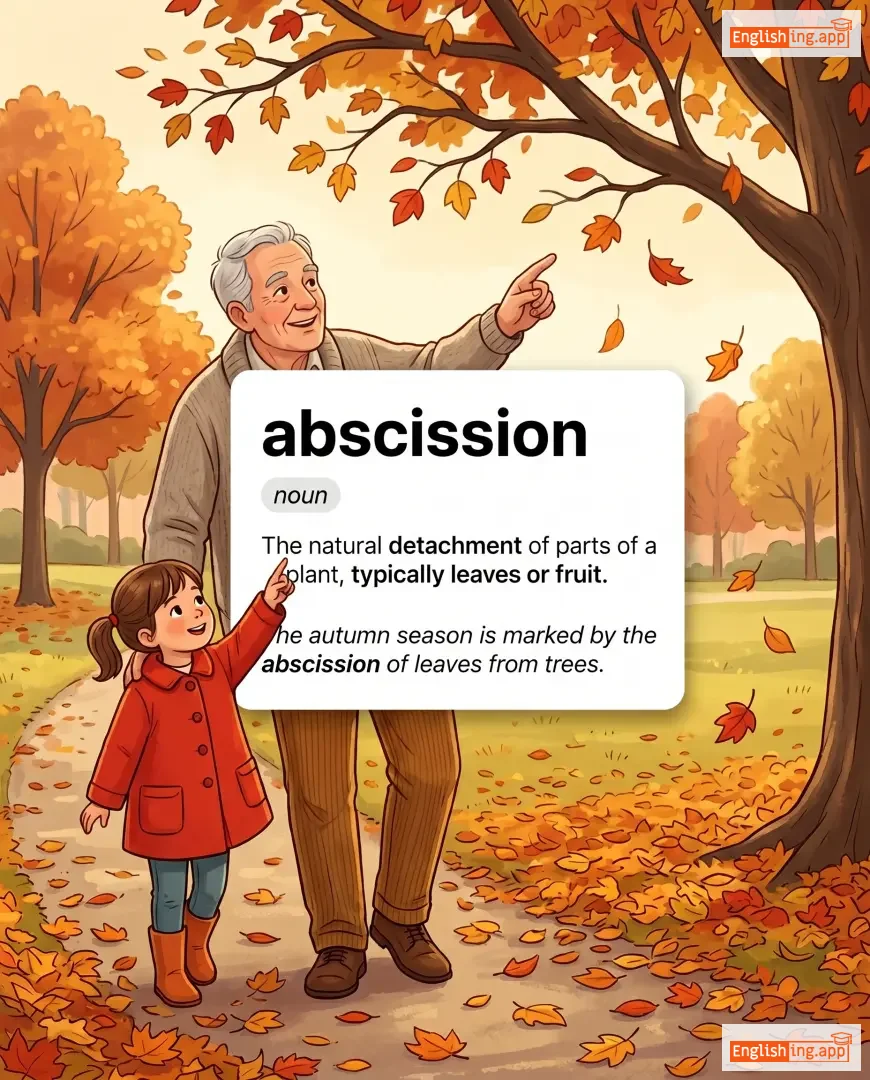
abscission definition card — visual illustration of the meaning
noun
/æbˈsɪʒən/
ঝরে পড়া (jhore pora)

The natural detachment of parts of a plant, typically leaves or fruit.

"The autumn season is marked by the abscission of leaves from trees."

"শরৎ ঋতু গাছের পাতা ঝরে পড়ার মাধ্যমে চিহ্নিত হয়।" (Shorot ritu gacher pata jhore porar maddhome chihnit hoy.)
abscond definition card — visual illustration of the meaning
verb
/əbˈskɒnd/
পলায়ন করা (palayan kora)

to leave secretly and quickly, often to avoid arrest or punishment

"The thief tried to abscond with the stolen jewelry."

"চোর চুরি করা গহনা নিয়ে পালাতে চেষ্টা করেছিল।" (Chor churi kora gohona niye palate chesta korechilo.)
noun
/ˈæbsəns/
অনুপস্থিতি (onuposthiti)

the state of being away from a place or person

"His absence from the meeting was noticed by everyone."

"মিটিংয়ে তার অনুপস্থিতি সবাই লক্ষ্য করেছিল।" (Meeting e tar onuposthiti sobai lokkho korechilo.)
adjective
/ˈæbsənt/
উপস্থিত নয় (uposthit noy)

not present at a place or event

"She was absent from the meeting yesterday."

"সে গতকাল সভায় উপস্থিত ছিল না।" (Se gôtkal sobhay uposthit chilo na.)
adjective
/ˌæbsənt ˈmaɪndɪd/
অমনোযোগী (amonojogi)

often forgetting things or not paying attention

"He is so absent-minded that he often forgets his keys."

"সে এতটাই অমনোযোগী যে প্রায়ই তার চাবি ভুলে যায়।" (Se etotai amonojogi je prayoi tar chabi vule jai.)
adjective
/ˈæbsəluːt/
সম্পূর্ণ (shampurno)

total, complete, or without restriction

"The dictator had absolute power over the nation."

"স্বৈরশাসকের জাতির উপর সম্পূর্ণ ক্ষমতা ছিল।" (Shoirashasker jatiro upor shampurno khomota chhilo.)
adverb
/ˈæbsəluːtli/
সম্পূর্ণভাবে (sompunno vabe)

Completely; without qualification or restriction.

"I absolutely agree with your decision."

"আমি তোমার সিদ্ধান্তের সাথে সম্পূর্ণভাবে একমত।" (Ami tomar siddhant er sathe sompunno vabe ekmot.)
noun
/ˌæbsəˈluːʃən/
পাপমোচন (papmochon)

formal release from guilt, obligation, or punishment

"The priest granted him absolution for his sins."

"পুরোহিত তাকে তার পাপের জন্য পাপমোচন দিয়েছিলেন।" (Purohit take tar paper jonno papmochon diyechilen.)
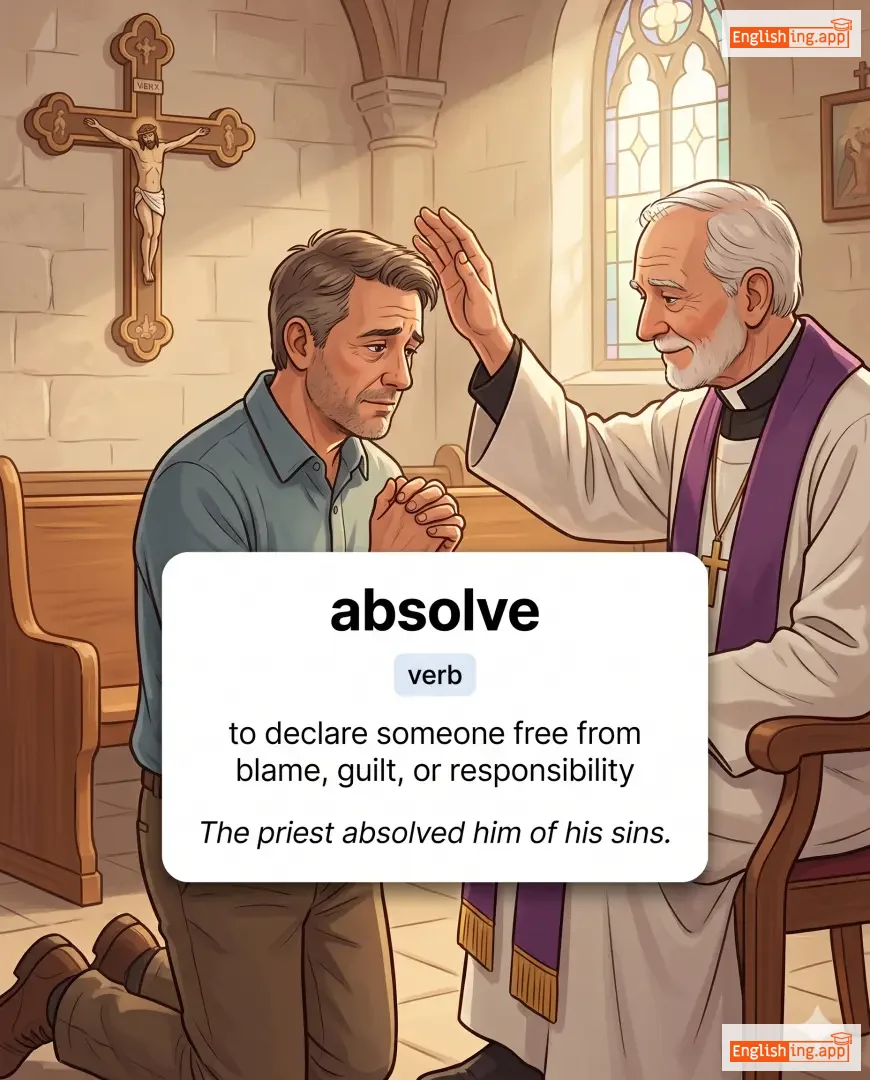
absolve definition card — visual illustration of the meaning
verb
/əbˈzɒlv/
দোষমুক্ত করা (doshmukto kora)

to declare someone free from blame, guilt, or responsibility

"The priest absolved him of his sins."

"যাজক তাকে তার পাপ থেকে দোষমুক্ত করলেন।" (Jajak take tar pap theke doshmukto korlen.)
verb
/əbˈzɔːrb/
শোষণ করা (shoson kora)

to take in or soak up a liquid, energy, or information

"The sponge absorbed all the water."

"স্পঞ্জ সব পানি শোষণ করল।" (Sponj shob pani shoson korlo.)
adjective, noun
/əbˈzɔːrbənt/
শোষণক্ষম (shoshonkshom)

able to soak up liquid, moisture, or energy easily; a material or substance that absorbs

"This towel is highly absorbent and dries quickly."

"এই তোয়ালেটি খুব শোষণক্ষম এবং দ্রুত শুকিয়ে যায়।" (ei toyaleti khub shoshonkshom ebong druto shukiye jay)
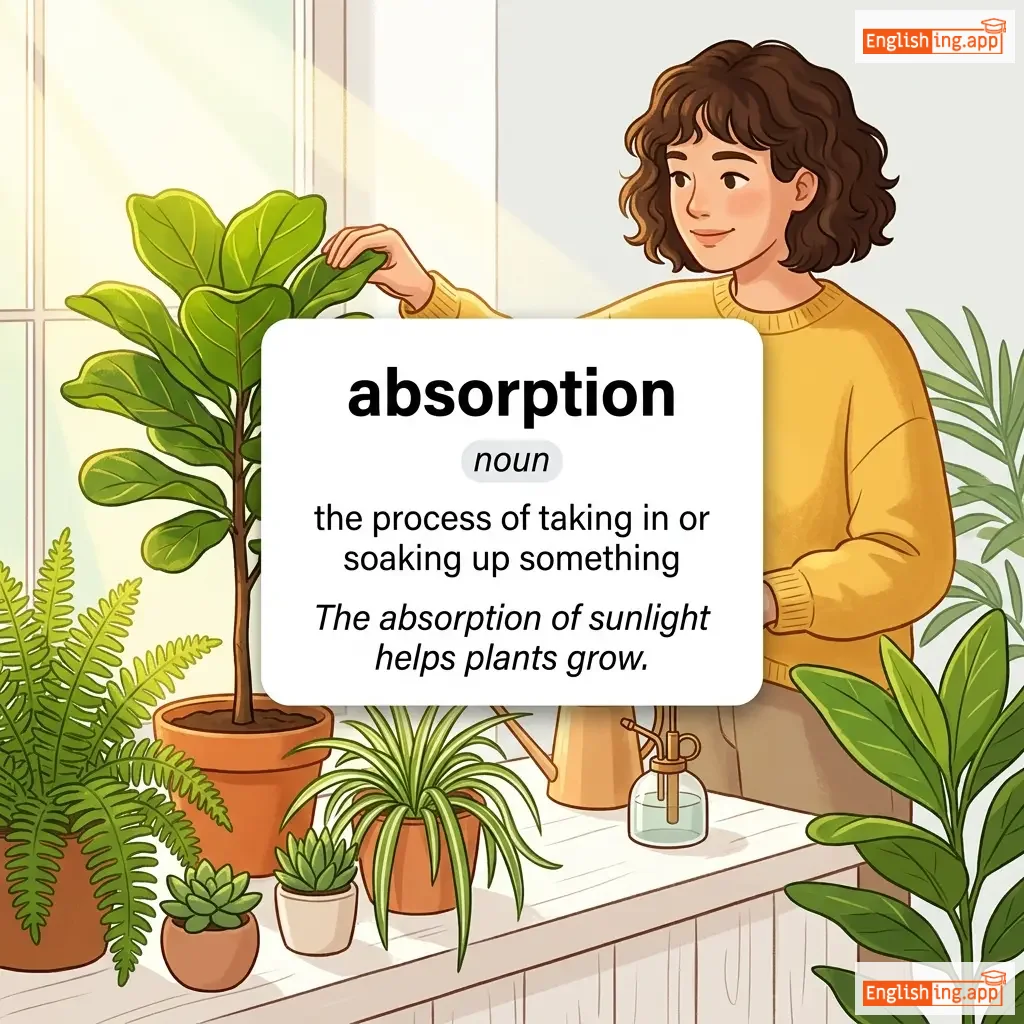
absorption definition card — visual illustration of the meaning
noun
/əbˈzɔːrpʃən/
শোষণ (shoson)

the process of taking in or soaking up something

"The absorption of sunlight helps plants grow."

"সূর্যালোকের শোষণ উদ্ভিদের বৃদ্ধি সাহায্য করে।" (Surjyaloker shoson udbhider brid'dhi sahajyo kore.)
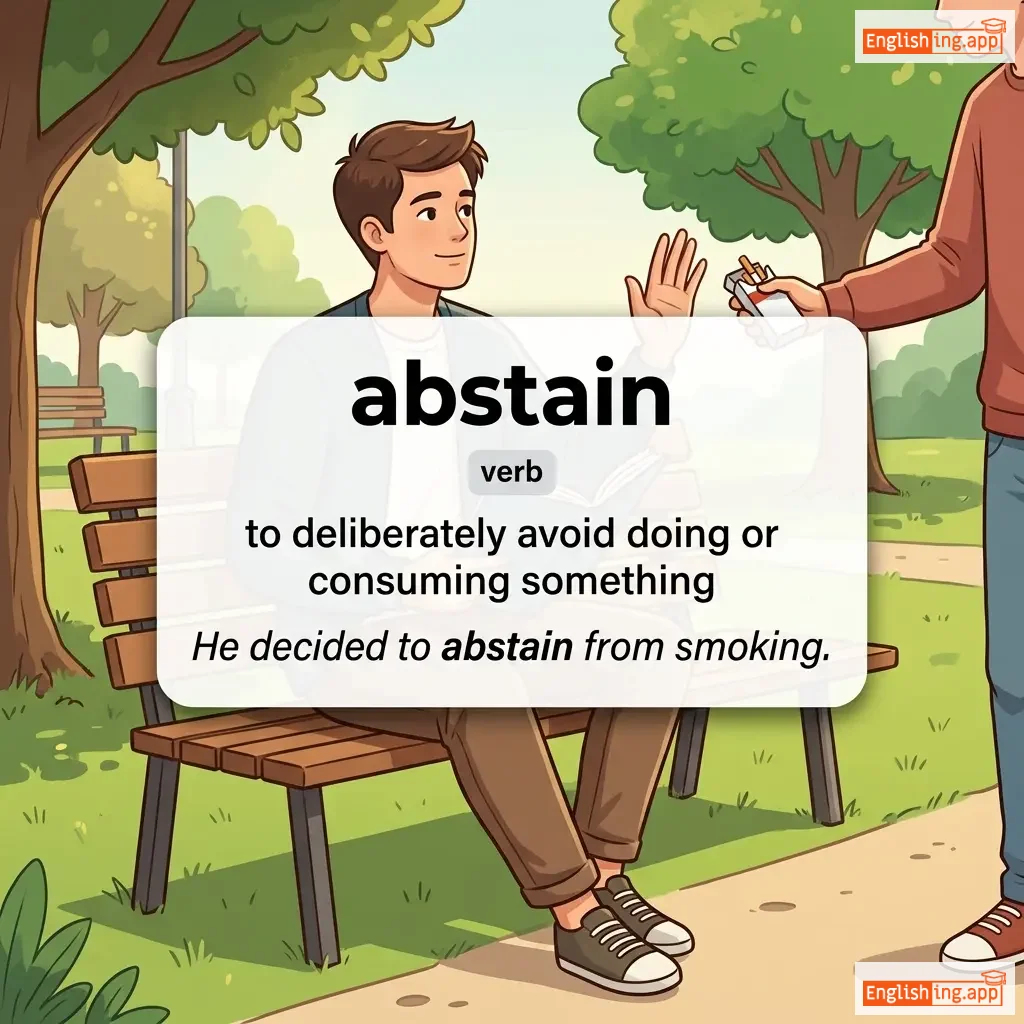
abstain definition card — visual illustration of the meaning
verb
/əbˈsteɪn/
বিরত থাকা (biroto thaka)

to deliberately avoid doing or consuming something

"He decided to abstain from smoking."

"সে ধূমপান থেকে বিরত থাকার সিদ্ধান্ত নিয়েছিল।" (Se dhumpan theke birot thakar siddhanto niechhilo.)
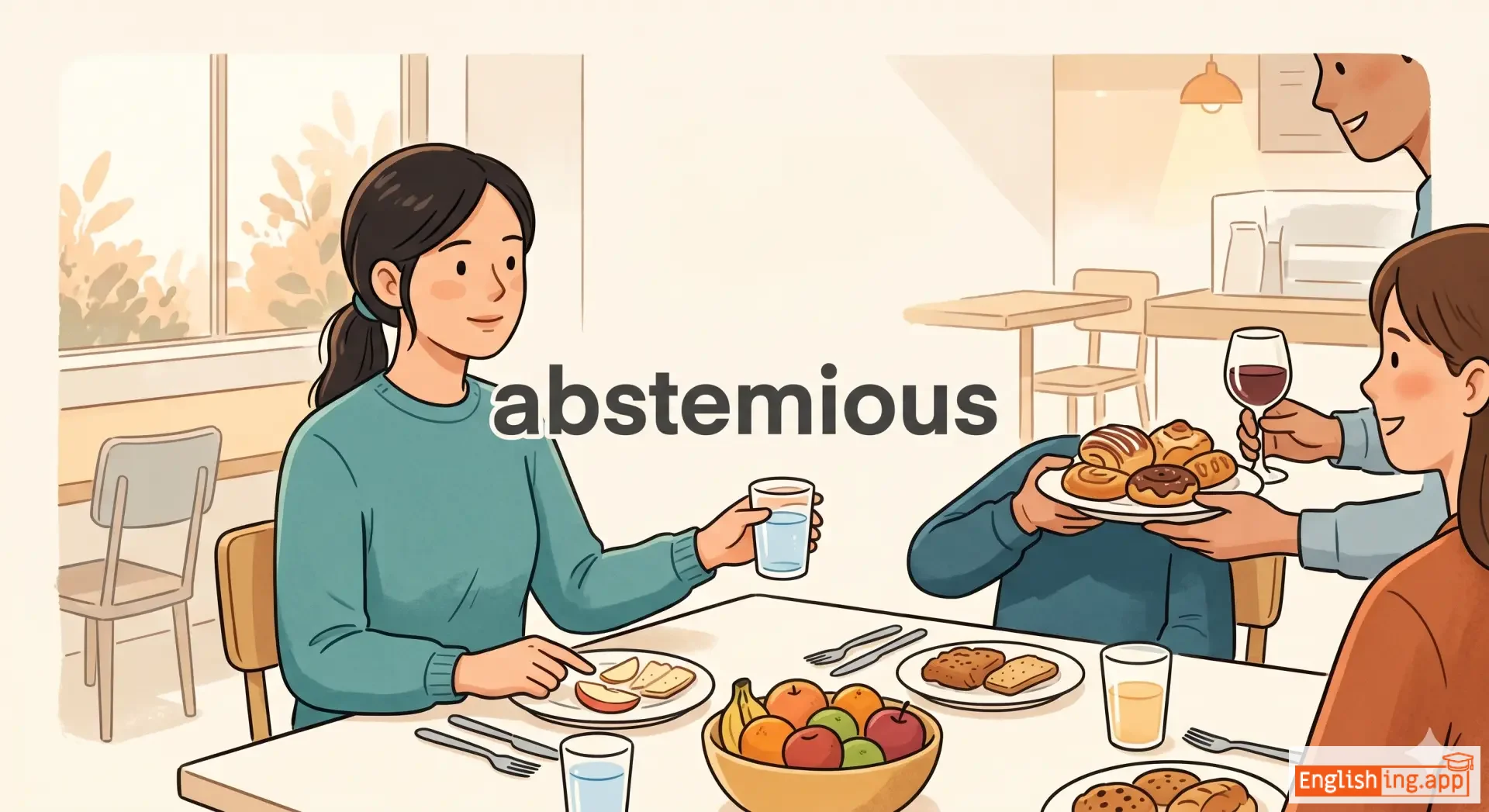
abstemious definition card — visual illustration of the meaning
adjective
/æbˈstiːmiəs/
সংযমী (songjomi)

not allowing oneself much food or drink; marked by moderation

"She lived an abstemious life, avoiding all luxuries."

"তিনি একটি সংযমী জীবন যাপন করতেন, সব বিলাসিতা এড়িয়ে।" (Tini ekti songjomi jibon japons korten, shob bilashita eriye.)
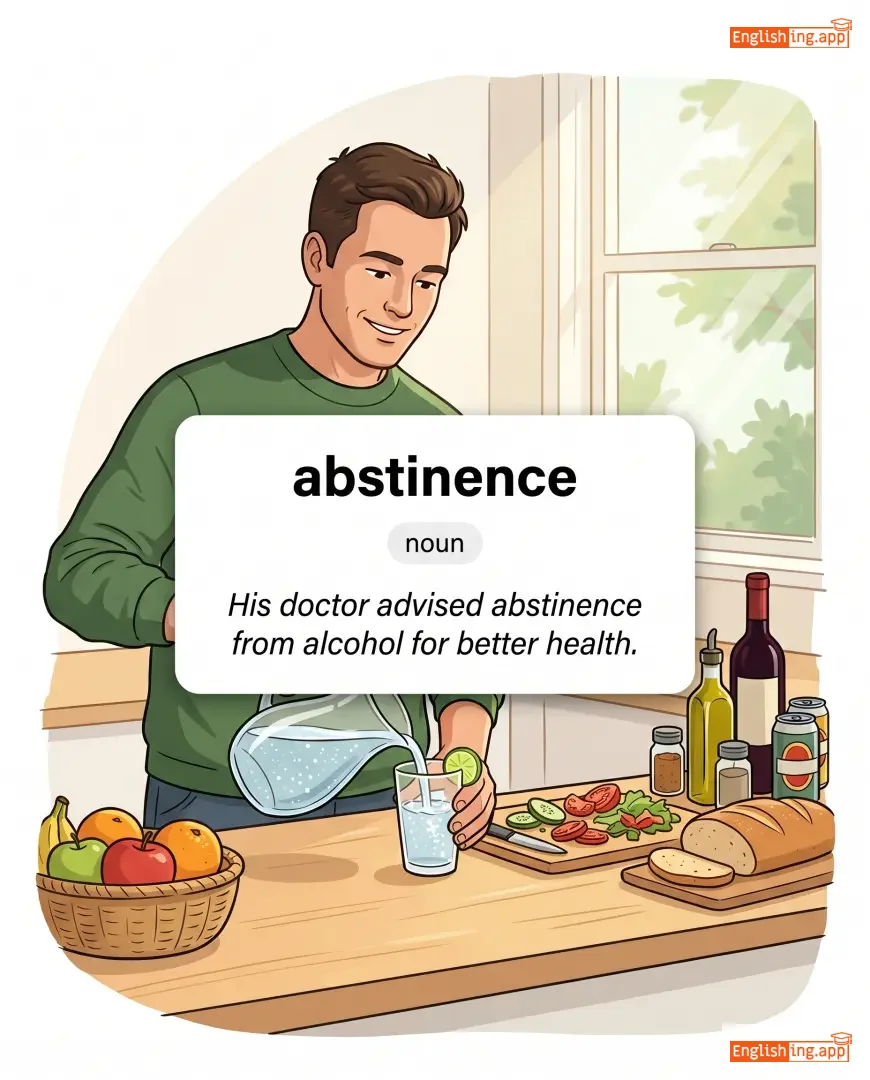
abstinence definition card — visual illustration of the meaning
noun
/ˈæb.stɪ.nəns/
সংযম, বিরত থাকা (songjom, birat thaka)

the practice of restraining oneself from indulging in something, typically alcohol or sex

"His doctor advised abstinence from alcohol for better health."

"তার ডাক্তার ভালো স্বাস্থ্যের জন্য মদ্যপান থেকে বিরত থাকতে বলেছেন।" (Tar daktar bhalo shasther jonno modyopan theke birat thakte bolechen.)
adjective, noun, verb
/ˈæb.strækt/
অমূর্ত, সারসংক্ষেপ (omurt, sarangsokkhep)

existing in thought or as an idea but not having physical or concrete existence; a summary of a text

"The artist is known for her abstract paintings."

"শিল্পী তার অমূর্ত চিত্রকর্মের জন্য পরিচিত।" (Shilpi tar omurt chitrakormer jonno porichito.)
noun
/æbˈstrækʃən/
বিমূর্ততা (bimurtota)

the process of forming general ideas by removing specific details; an abstract concept or idea

"Abstraction allows complex ideas to be represented in a simplified form."

"বিমূর্ততা জটিল ধারণাগুলোকে সহজ রূপে উপস্থাপন করতে সাহায্য করে।" (bimurtota jotil dharonagulo ke sohoj rupe uposthapon korte sahajjo kore)
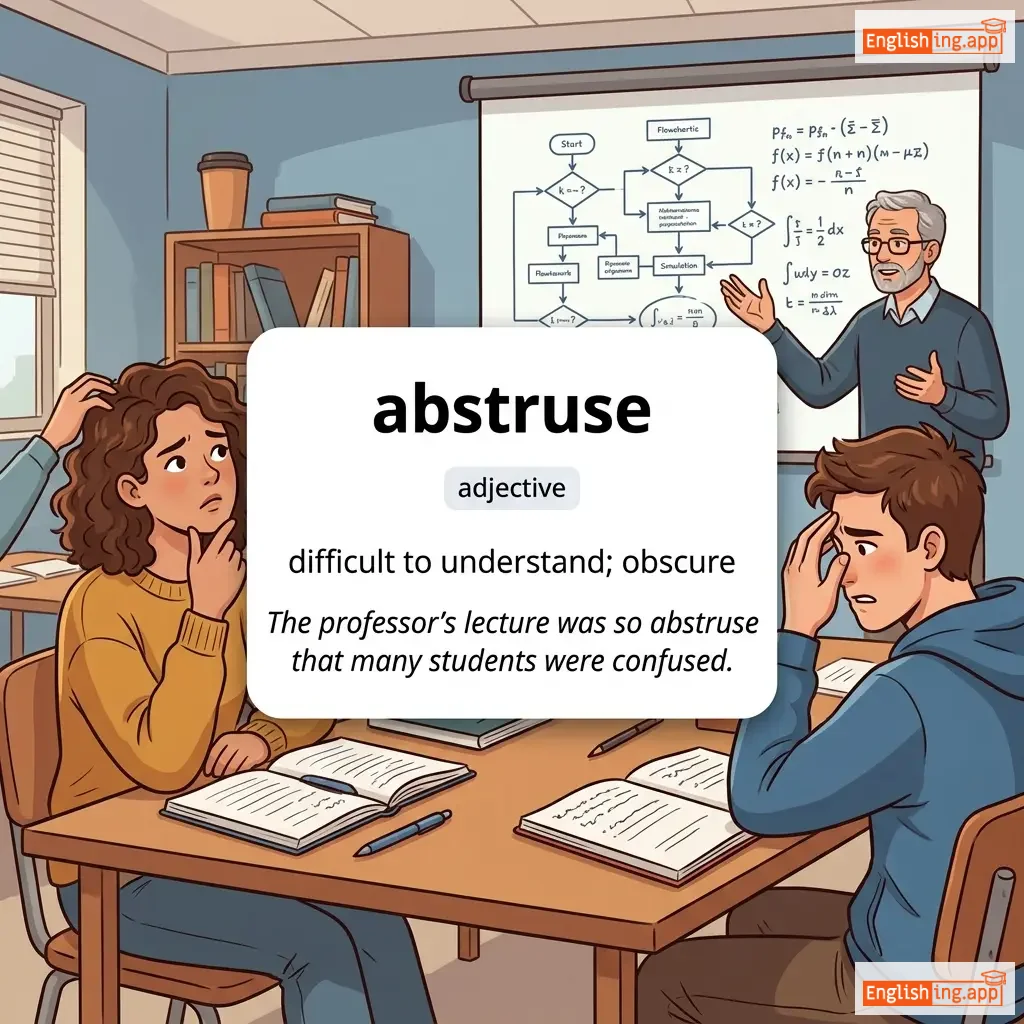
abstruse definition card — visual illustration of the meaning
adjective
/æbˈstruːs/
দুর্বোধ্য (durboidhyo)

difficult to understand; obscure

"The professor’s lecture was so abstruse that many students were confused."

"অধ্যাপকের লেকচার এত দুর্বোধ্য ছিল যে অনেক ছাত্র বিভ্রান্ত হয়েছিল।" (Odhapoker lecture eto durboidhyo chhilo je onek chatro bivhranto hoyechhilo.)
adjective
/əbˈsɜːrd/
হাস্যকর, অযৌক্তিক (hashjokor, ojouktik)

wildly unreasonable, illogical, or inappropriate

"It is absurd to think that the earth is flat."

"পৃথিবী সমতল এই ধারণা সম্পূর্ণ অযৌক্তিক।" (Prithibi somotal ei dharana sompurno ojouktik.)
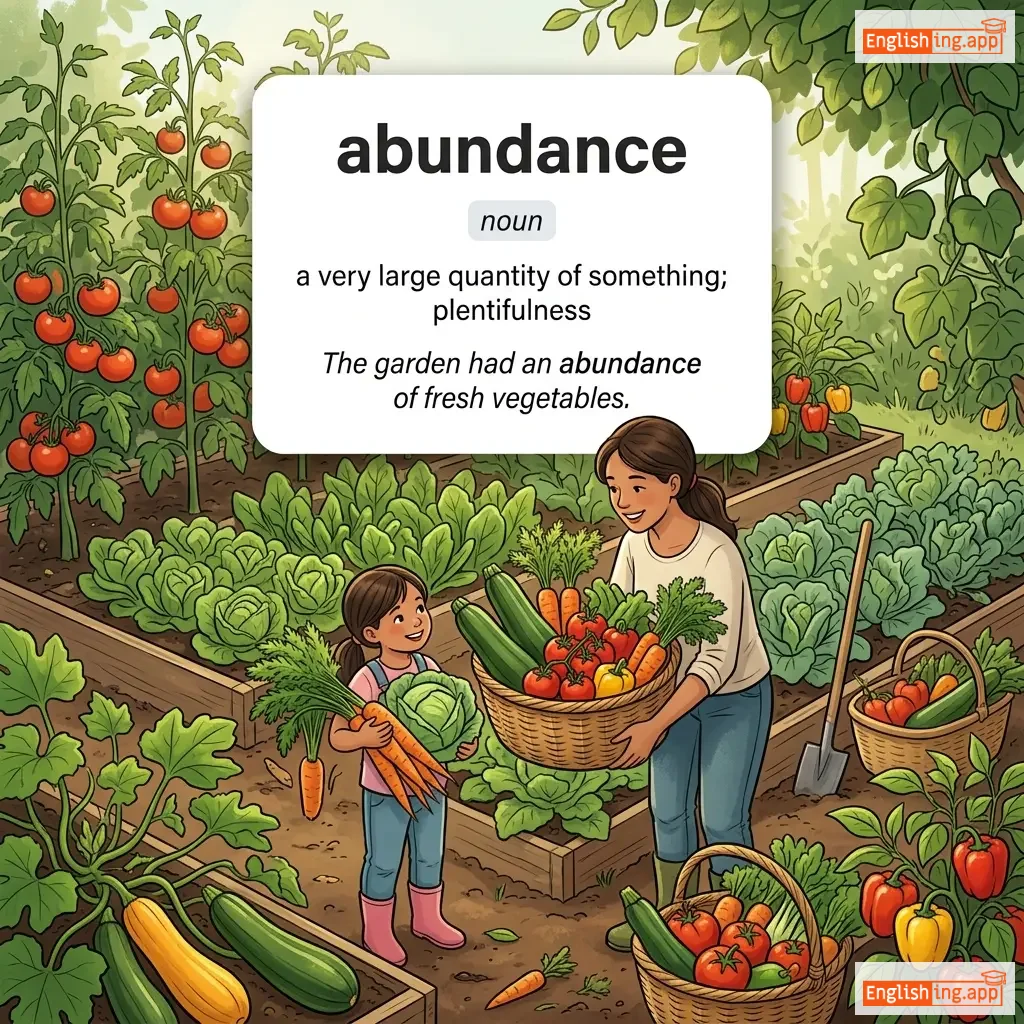
abundance definition card — visual illustration of the meaning
noun
/əˈbʌndəns/
প্রাচুর্য; অনেক বেশি পরিমাণ তেজেদি; (prachuryo)

a very large quantity of something; plentifulness

"The garden had an abundance of fresh vegetables."

"বাগানে প্রচুর তাজা সবজি ছিল।" (bagane prochur taja shobji chhilo.)
adjective
/əˈbʌndənt/
প্রচুর (prochur)

existing or available in large quantities; plentiful

"The garden was abundant with colorful flowers."

"বাগানে রঙিন ফুলে ভরা ছিল।" (Bagane rongin phule vora chhilo.)
verb, noun
/əˈbjuːs/ (verb), /əˈbjuːs/ (noun)
অপব্যবহার / নির্যাতন (opobebohar / niroyaton)

to use something in a harmful way; to treat someone badly or cruelly

"He was accused of abusing his power."

"তাকে ক্ষমতার অপব্যবহারের অভিযোগে অভিযুক্ত করা হয়েছিল।" (Take khomotar opobeboharer abhijoge abhijukto kora hoyechilo.)
adjective
/əˈbjuːsɪv/
অপমানজনক / নির্যাতনমূলক (opmanjonok / niroyatonmulok)

extremely offensive or insulting; involving physical or verbal harm

"She left her job because of her abusive boss."

"অপমানজনক বসের কারণে সে চাকরি ছেড়ে দিয়েছিল।" (Opmanjonok boser karone se chakri chhere diyechhilo.)
verb
/əˈbʌt/
সংলগ্ন হওয়া (songlogno howa)

to be next to or share a border with

"The park abuts the river on the north side."

"উত্তর দিকে পার্কটি নদীর সংলগ্ন।" (Uttor dike parkti nodir songlogno.)
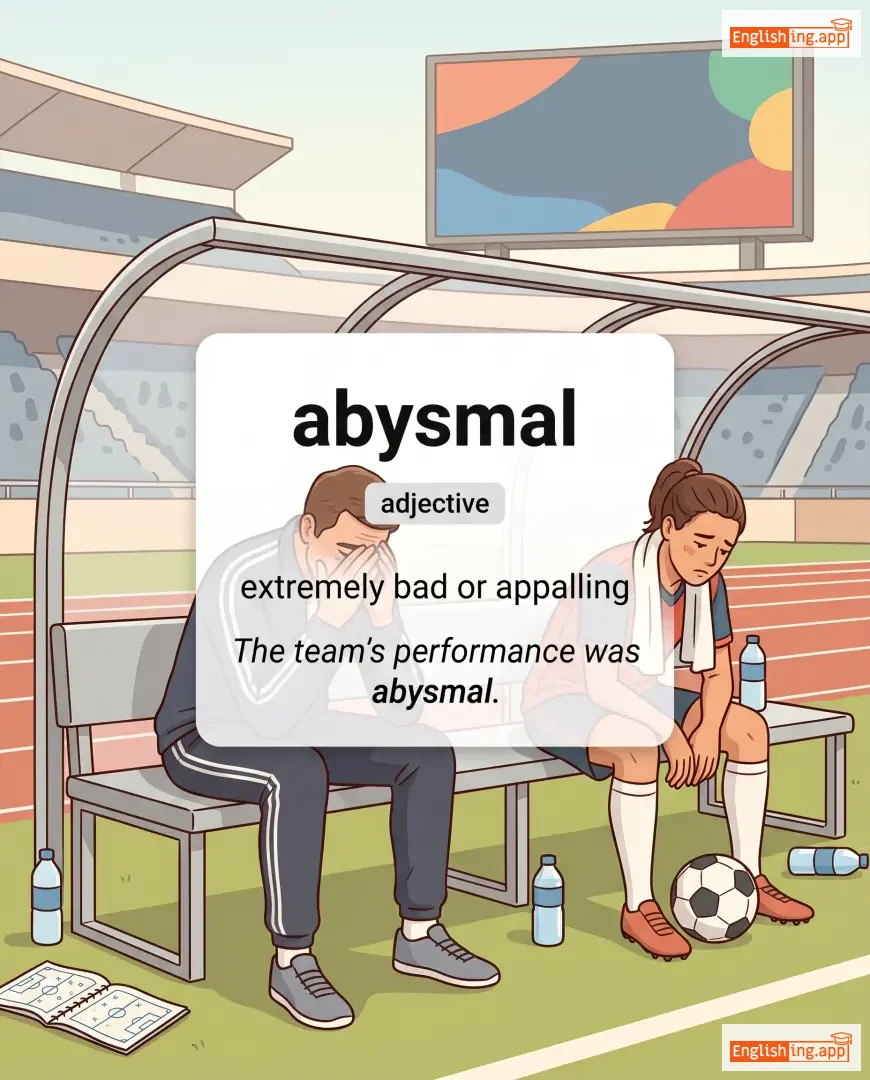
abysmal definition card — visual illustration of the meaning
adjective
/əˈbɪzməl/
ভয়াবহ / ভয়ঙ্কর (bhoyaboh / bhoyonkor)

extremely bad or appalling

"The team's performance was abysmal."

"দলের পারফরম্যান্স ছিল ভয়াবহ।" (Doler performance chhilo bhoyaboh.)
noun
/əˈbɪs/
অগাধ গহ্বর (ogadh gohbor)

a deep, immeasurable space, chasm, or void; something seemingly without end

"The climbers looked down into the dark abyss below."

"পর্বতারোহীরা নিচের অন্ধকার গহ্বরে তাকাল।" (Porbotarohira nicher andhokar gohbore takalo.)
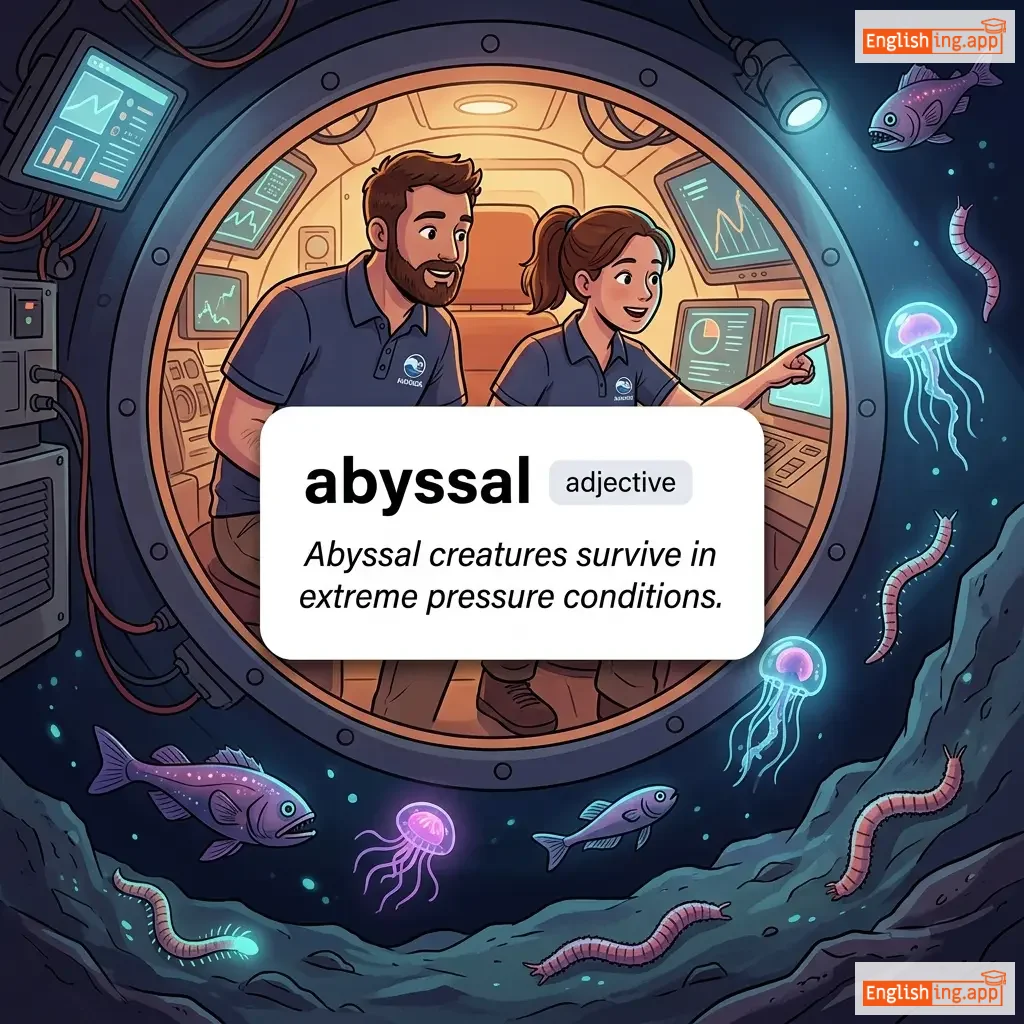
abyssal definition card — visual illustration of the meaning
adjective
/əˈbɪs.əl/
অতল, গভীর সমুদ্র সংক্রান্ত (otol, gobhir shomudro shongkranto)

Related to or characteristic of the deep ocean, especially the zone below 4000 meters.

"Abyssal creatures survive in extreme pressure conditions."

"অতল প্রাণীগুলো চরম চাপের পরিবেশে বেঁচে থাকে।" (Otol pranigulo chorom chaper poribeshey beche thake.)
adjective
/ˌækəˈdɛmɪk/
শিক্ষাগত (shikkhagoto)

related to education, learning, or scholarly activities

"She has an outstanding academic record."

"তার একটি অসাধারণ শিক্ষাগত রেকর্ড রয়েছে।" (Tar ekti osadharon shikkhagoto record royeche.)