

Upgrade für Zugriff auf alle Vokabeln
Erhalten Sie unbegrenzten Zugriff auf alle Vokabeln mit Pro-Mitgliedschaft
Upgrade auf ProÜbersetzung
Vergangenheit
Partizip Perfekt
Dritte Person Singular
Gerundium
Bedeutung
Beispielsatz
Übersetzung Beispielsatz
Synonyme
Antonyme
Kollokationen
Eselsbrücke
Swipe left or right, or use the buttons. Tap image to zoom.
Upgrade für Zugriff auf alle Sätze
Erhalten Sie unbegrenzten Zugriff auf alle Sätze mit Pro-Mitgliedschaft
Upgrade auf ProÜbersetzung Beispielsatz
Wort
Lesson 107Lesson 107 - Maske umschalten
|
Emoji
|
Wort | Images | Übersetzung | Vergangenheit | Partizip Perfekt | Dritte Person Singular | Gerundium | Bedeutung | Beispielsatz | Übersetzung Beispielsatz | Beispielausdruck | Bedeutung Beispielausdruck | Übersetzung Beispielausdruck | Synonyme | Antonyme | Kollokationen | Eselsbrücke |
|---|---|---|---|---|---|---|---|---|---|---|---|---|---|---|---|---|---|
|
#5075
🎀
|
/taɪ/
verb
(tai)
••••••
|
|
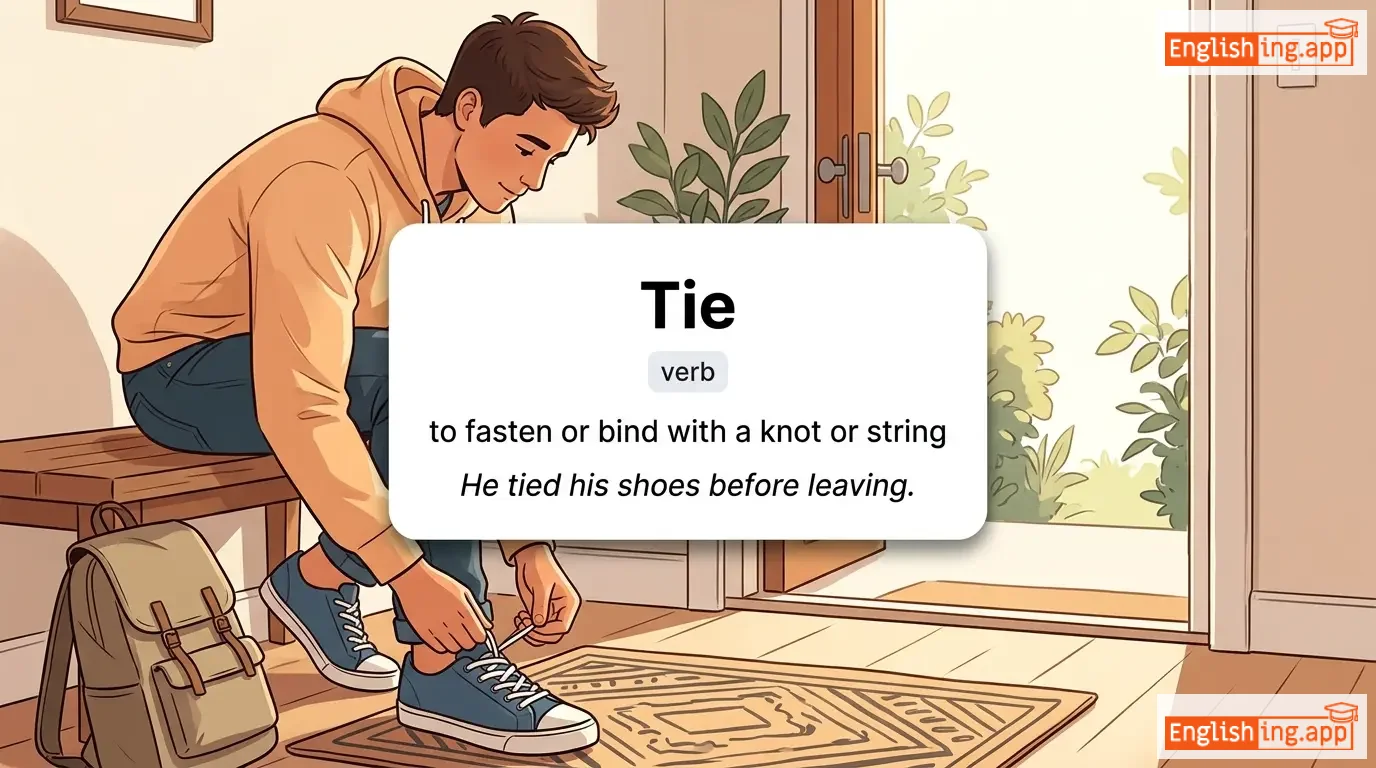
binden
binden
••••••
|
tied
taid
••••••
|
tied
taid
••••••
|
ties
taiz
••••••
|
tying
taing
••••••
|
to fasten or bind with a knot or string
••••••
|
He tied his shoes before leaving.
Er band seine Schuhe, bevor er ging.
••••••
|
Er band seine Schuhe, bevor er ging.
Er band seine Schuhe, bevor er ging.
••••••
|
tie the knot
den Knoten machen
••••••
|
to get married
••••••
|
heiraten
heiraten
••••••
|
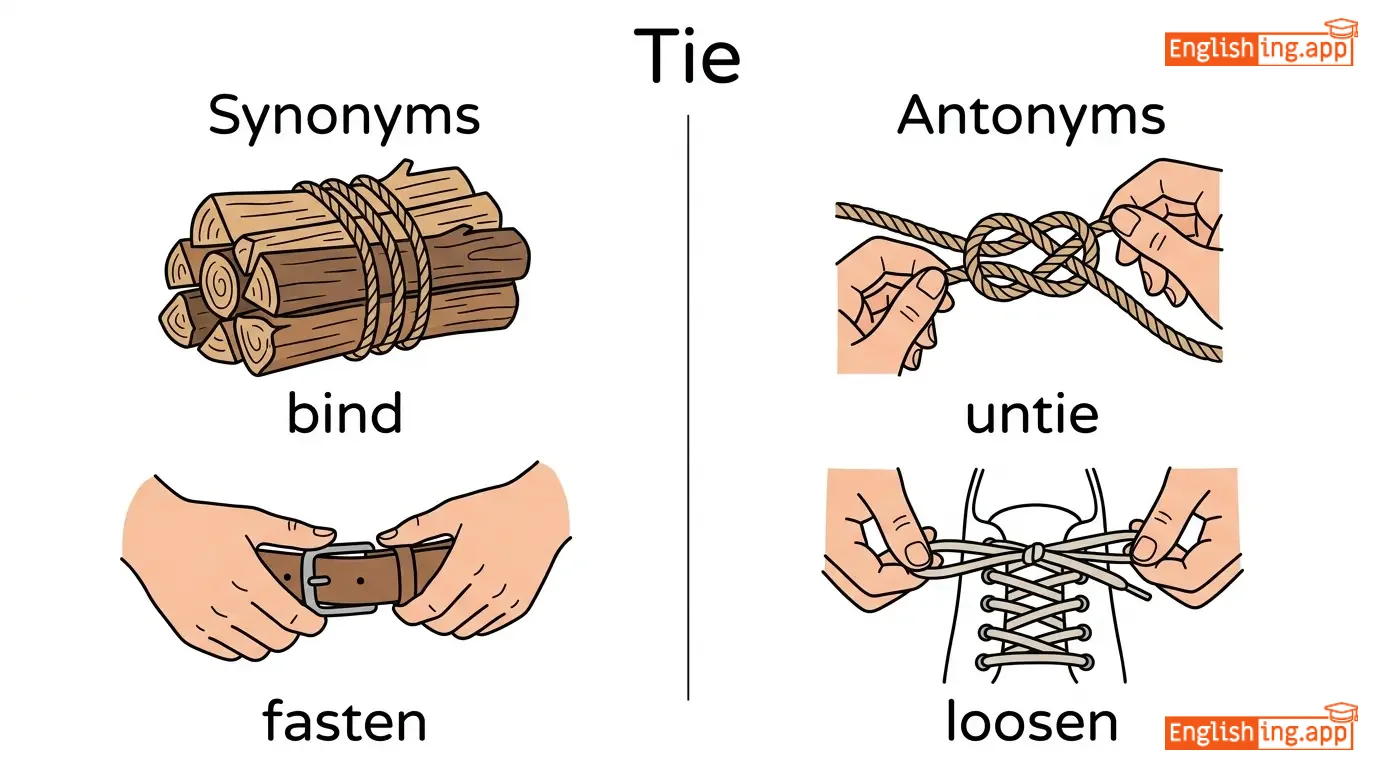
bind, fasten, knot, secure
••••••
|
untie, loosen
••••••
|
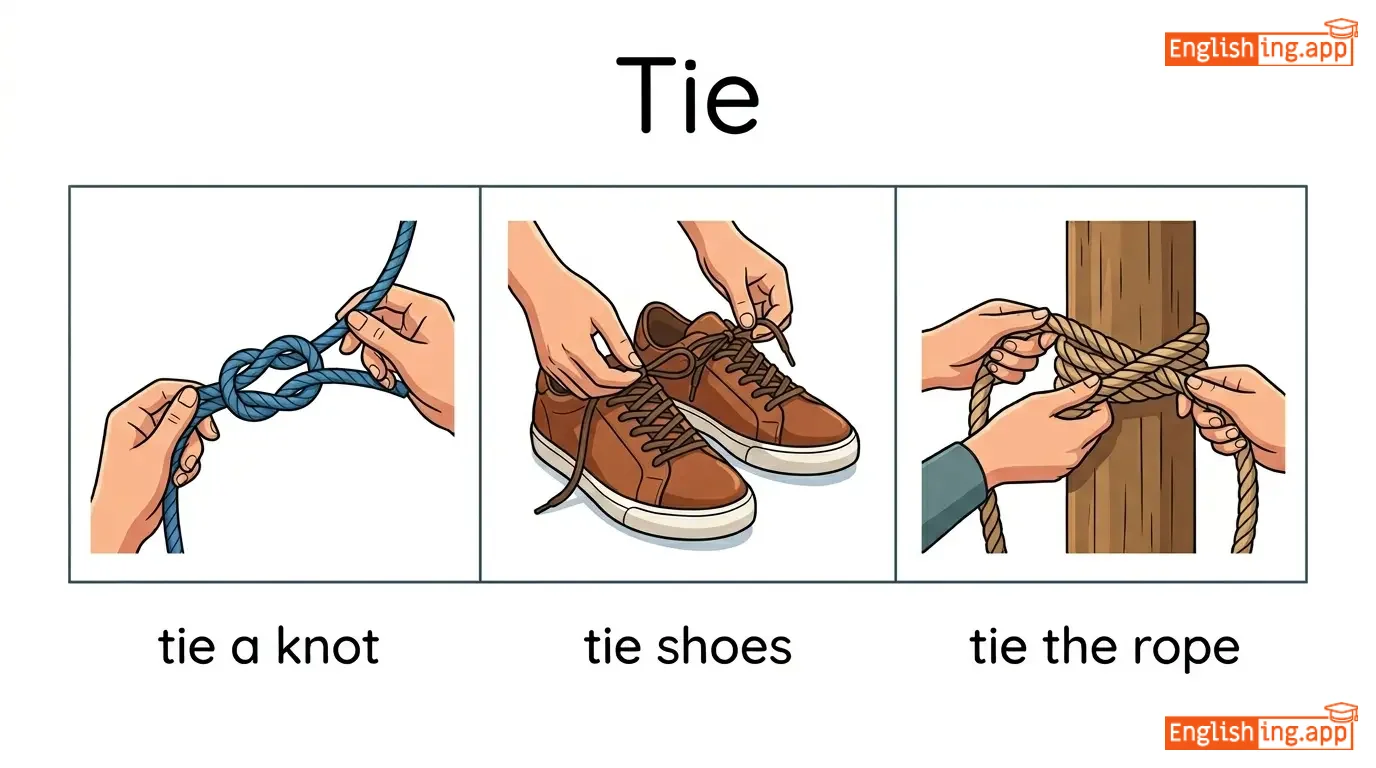
tie a knot, tie shoes, tie the rope
••••••
|
Binde den Knoten und beginne dein neues Leben!
••••••
|
|
#5076
🪢
|
/taɪt/
adjective
(taɪt)
••••••
|
- •••••• |
eng
eng
••••••
|
- •••••• | - •••••• | - •••••• | - •••••• |
firmly held in place, not loose or slack
••••••
|
The knot was too tight to untie. |
Der Knoten war zu eng, um ihn zu lösen.
Der Knoten war zu eng, um ihn zu lösen.
••••••
|
- •••••• | - •••••• | - •••••• |
firm, secure, stiff, taut
••••••
|
loose, slack
••••••
|
tight grip, tight fit, tight knot
••••••
|
Eng (tight) - alles festzurren!
••••••
|
|
#5077
🔩
|
/ˈtaɪtən/
verb
(taɪtn)
••••••
|
|
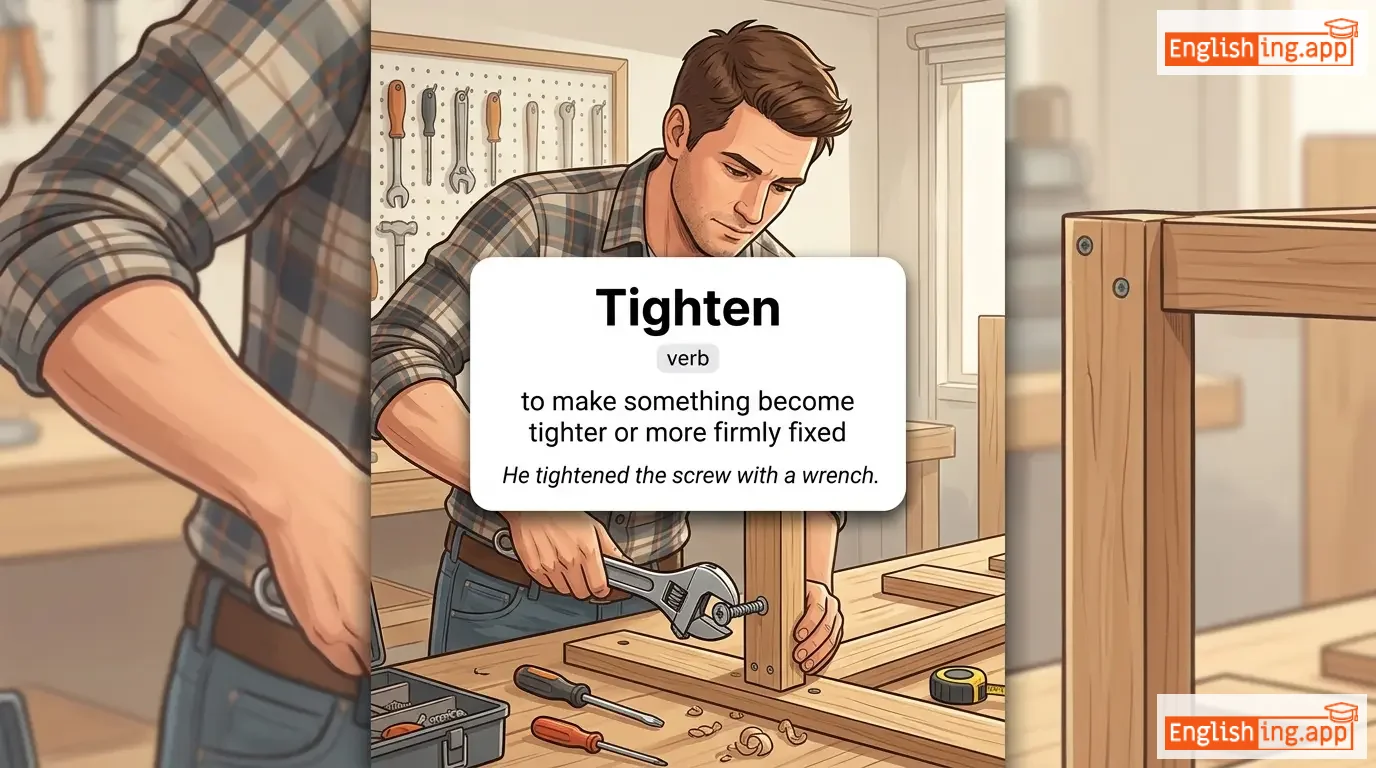
anziehen
anziehen
••••••
|
tightened
taɪtend
••••••
|
tightened
taɪtend
••••••
|
tightens
taɪtens
••••••
|
tightening
taɪtening
••••••
|
to make something become tighter or more firmly fixed
••••••
|
He tightened the screw with a wrench.
Er zog die Schraube mit einem Schraubenschlüssel fest.
••••••
|
Er zog die Schraube mit einem Schraubenschlüssel fest.
Er zog die Schraube mit einem Schraubenschlüssel fest.
••••••
|
tighten one's belt
den Gürtel enger schnallen
••••••
|
to spend less money; to be more economical
••••••
|
den Gürtel enger schnallen
den Gürtel enger schnallen
••••••
|
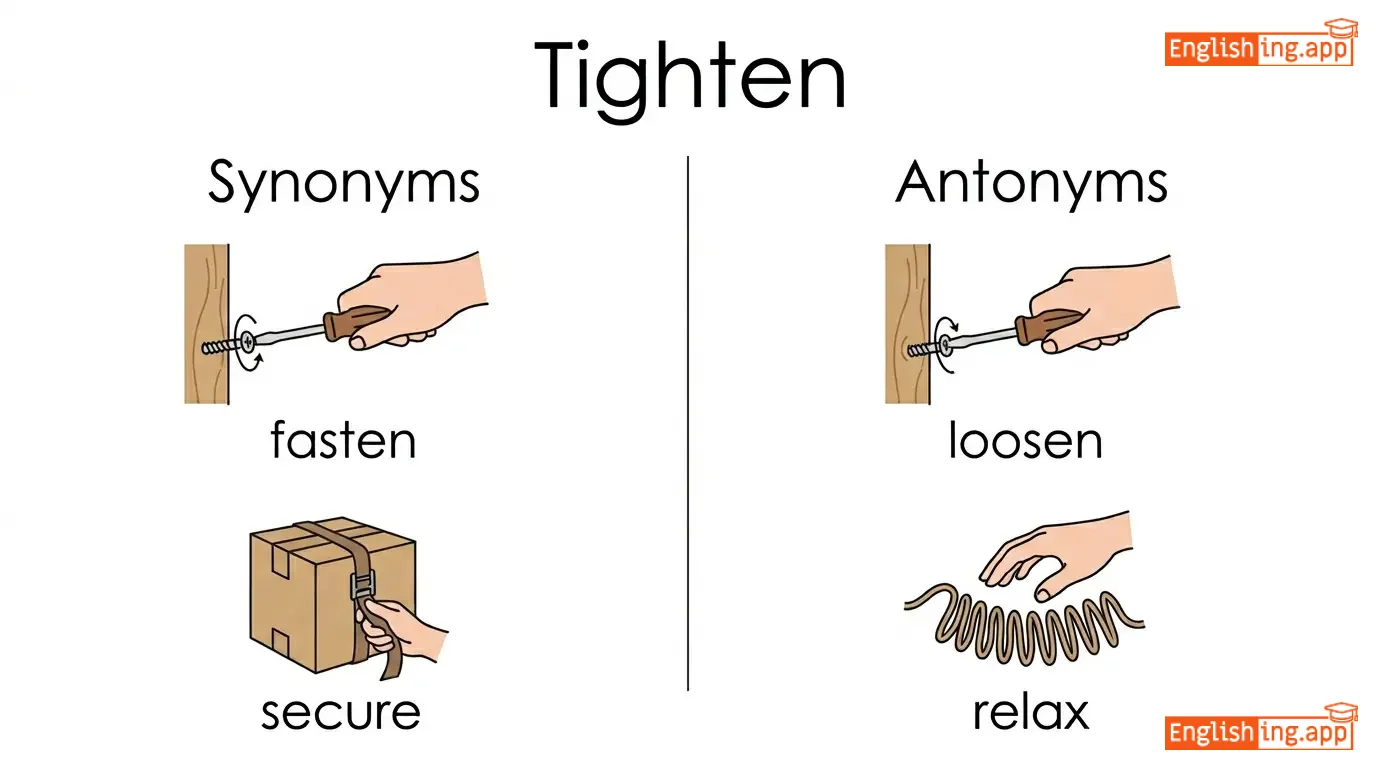
fasten, secure, stiffen, contract, strengthen
••••••
|
loosen, relax, slacken
••••••
|
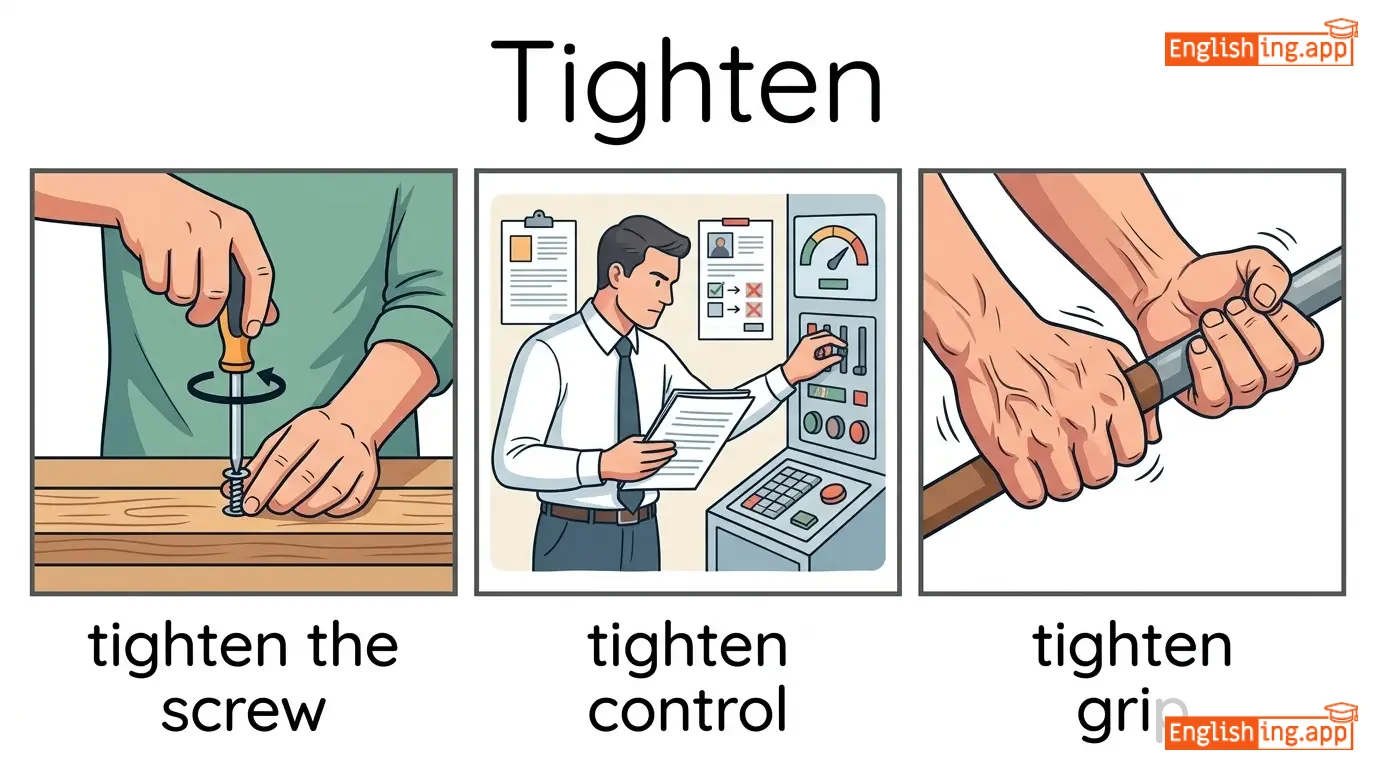
tighten the screw, tighten control, tighten grip, tighten security
••••••
|
anziehen (tight) bedeutet, es noch fester zu machen 🔩
••••••
|
|
#5078
🤏
|
/ˈtaɪtli/
adverb
(taitli)
••••••
|
- •••••• |
fest; eng
fest; eng
••••••
|
- •••••• | - •••••• | - •••••• | - •••••• |
in a tight manner; firmly; securely
••••••
|
Hold the rope tightly so you don't fall.
halte das Seil fest, damit du nicht fällst.
••••••
|
Halte das Seil fest, damit du nicht fällst.
Halte das Seil fest, damit du nicht fällst.
••••••
|
- •••••• | - •••••• | - •••••• |
firmly, securely, closely, strongly
••••••
|
loosely, weakly, gently, lightly
••••••
|
hold tightly, grip tightly, packed tightly
••••••
|
Halte das Seil fest, um den Fall zu verhindern.
••••••
|
|
#5079
⏰
|
/tɪl/
preposition
(til)
••••••
|
- •••••• |
bis
bis
••••••
|
- •••••• | - •••••• | - •••••• | - •••••• |
up to the time of; until
••••••
|
She waited till midnight for his call.
Sie wartete bis Mitternacht auf seinen Anruf.
••••••
|
Sie wartete bis Mitternacht auf seinen Anruf.
Sie wartete bis Mitternacht auf seinen Anruf.
••••••
|
- •••••• | - •••••• | - •••••• |
until, up to, before, pending
••••••
|
after, since
••••••
|
till now, till late, till tomorrow, wait till
••••••
|
Till bedeutet 'bis' — warten bis Mitternacht auf den Anruf.
••••••
|
|
#5080
🌲
|
/ˈtɪmbər/
noun
(timbā)
••••••
|
- •••••• |
Holz
Holz
••••••
|
- •••••• | - •••••• | - •••••• | - •••••• |
wood prepared for use in building and carpentry
••••••
|
The house was built entirely from local timber. |
Das Haus wurde vollständig aus lokalem Holz gebaut.
Das Haus wurde vollstaendig aus lokalem Holz gebaut.
••••••
|
shiver me timbers |
an expression of surprise or astonishment
••••••
|
Ausdruck des Staunens oder Erstaunens
Ausdruck des Staunens oder Erstaunens
••••••
|
wood, lumber, logs, planks, beam
••••••
|
metal, concrete
••••••
|
timber industry, timber house, cut timber, timber supply
••••••
|
Timber bedeutet Holz 🌲 — denk daran, ‘Timber house’ bedeutet Holzhaus.
••••••
|
|
#5081
⏰
|
/taɪm/
noun
(taim)
••••••
|
- •••••• |
Zeit
zeit
••••••
|
- •••••• | - •••••• | - •••••• | - •••••• |
a measured or measurable period during which an action, process, or condition exists or continues
••••••
|
I don’t have enough time to finish the project. |
Ich habe nicht genug Zeit, um das Projekt zu beenden.
Ich habe nicht genug Zeit, um das Projekt zu beenden.
••••••
|
- •••••• | - •••••• | - •••••• |
moment, duration, period, interval
••••••
|
eternity, infinity
••••••
|
spend time, waste time, save time, take time
••••••
|
ZEIT (time) flies when you're having fun!
••••••
|
|
#5082
⏰
|
/ˈtaɪmli/
adjective
(taimli)
••••••
|
- •••••• |
rechtzeitig
rechtzeitig
••••••
|
- •••••• | - •••••• | - •••••• | - •••••• |
Done or occurring at a favorable or useful time; opportune.
••••••
|
Her timely advice helped me avoid a big mistake.
her taimli advais helpd mi avoid a big mistake.
••••••
|
Ihr rechtzeitiger Rat half mir, einen großen Fehler zu vermeiden.
ihr rechtzeitiger rat half mir einen grossen fehler zu vermeiden.
••••••
|
timely intervention
taimli intervenchon
••••••
|
An action taken at the right moment to prevent harm or improve a situation
••••••
|
rechtzeitiges Eingreifen
rechtzeitiges eingreifen
••••••
|
prompt, punctual, appropriate, suitable, convenient
••••••
|
late, delayed, untimely
••••••
|
timely manner, timely advice, timely response, timely action
••••••
|
Timely → 'time' + 'ly' means 'on time' → in German 'rechtzeitig'.
••••••
|
|
#5083
📅
|
/ˈtaɪm.teɪ.bəl/
noun
(taɪmˈteɪbəl)
••••••
|
- •••••• |
fahrplan
fahrplan
••••••
|
- •••••• | - •••••• | - •••••• | - •••••• |
a schedule showing planned activities or events at particular times
••••••
|
Please check the train timetable for departure times.
Bitte überprüfen Sie den Fahrplan des Zuges für die Abfahrtszeiten.
••••••
|
Bitte überprüfen Sie den Fahrplan des Zuges für die Abfahrtszeiten.
Bitte überprüfen Sie den Fahrplan des Zuges für die Abfahrtszeiten.
••••••
|
- •••••• | - •••••• | - •••••• |
schedule, agenda, program, itinerary
••••••
|
spontaneity, improvisation
••••••
|
train timetable, school timetable, bus timetable
••••••
|
Der Fahrplan zeigt Ihnen die Zeiten der Zugabfahrten.
••••••
|
|
#5084
⏰
|
/ˈtaɪmɪŋ/
noun
(taiming)
••••••
|
- •••••• |
Zeitpunkt
Zeitpunkt
••••••
|
- •••••• | - •••••• | - •••••• | - •••••• |
the choice, judgment, or control of when something should be done
••••••
|
Good timing is essential in business negotiations. |
Gutes Timing ist in Geschäftsgesprächen entscheidend.
Gutes Timing ist in Geschäftsgesprächen entscheidend.
••••••
|
perfect timing |
doing something at exactly the right moment
••••••
|
perfektes Timing
perfektes Timing
••••••
|
scheduling, coordination, planning, arrangement, rhythm
••••••
|
delay, misjudgment
••••••
|
good timing, bad timing, timing issue, timing control
••••••
|
Time + ing = Timing ⏰ — den richtigen Moment abwarten!
••••••
|
|
#5085
🥫
|
/tɪn/
noun
(tin)
••••••
|
- •••••• |
Dose
Dose
••••••
|
- •••••• | - •••••• | - •••••• | - •••••• |
a metal container; a chemical element (Sn)
••••••
|
She bought a tin of biscuits from the store.
Sie kaufte eine Dose Kekse im Laden.
••••••
|
Sie kaufte eine Dose Kekse im Laden.
Sie kaufte eine Dose Kekse im Laden.
••••••
|
in a tin
in einer Dose
••••••
|
packed or contained in a tin container
••••••
|
in einer Dose
in einer Dose
••••••
|
can, container, box, metal case
••••••
|
plastic container, bag
••••••
|
tin can, tin foil, tin box, tin of cookies
••••••
|
Dose = tin, einfach zu merken.
••••••
|
|
#5086
🐭
|
/ˈtaɪ.ni/
adjective
(taɪni)
••••••
|
- •••••• |
sehr klein; winzig
zehr klain; vintsig
••••••
|
- •••••• | - •••••• | - •••••• | - •••••• |
extremely small in size or amount
••••••
|
The baby bird was tiny and helpless.
ðə beɪbi bɜːrd wəz ˈtaɪni ənd ˈhɛlpləs.
••••••
|
Das Babyvögelchen war sehr klein und hilflos.
Das Babyvögelchen war sehr klein und hilflos.
••••••
|
- •••••• | - •••••• | - •••••• |
small, miniature, microscopic, minute, little
••••••
|
huge, enormous, gigantic, massive, large
••••••
|
tiny house, tiny amount, tiny details, tiny steps
••••••
|
Tiny in German is 'sehr klein', think of a tiny little German bird!
••••••
|
|
#5087
💡
|
/tɪp/
noun
(tip)
••••••
|
- •••••• |
tipp
tipp
••••••
|
- •••••• | - •••••• | - •••••• | - •••••• |
a small but useful piece of advice
••••••
|
I received a tip on how to improve my presentation. |
Ich habe einen Tipp erhalten, wie ich meine Präsentation verbessern kann.
Ich habe einen Tipp erhalten, wie ich meine Praesentation verbessern kann.
••••••
|
- •••••• | - •••••• | - •••••• |
hint, suggestion, advice, clue
••••••
|
misguidance
••••••
|
give a tip, follow a tip, valuable tip
••••••
|
Remember the tip of your pen for clear writing!
••••••
|
|
#5088
🚗
|
/taɪər/
noun
(taier)
••••••
|
- •••••• |
Reifen
Reifen
••••••
|
- •••••• | - •••••• | - •••••• | - •••••• |
a rubber covering around a wheel
••••••
|
The car’s tire burst on the highway.
Der Reifen des Autos platzte auf der Autobahn.
••••••
|
Der Reifen des Autos platzte auf der Autobahn.
Der Reifen des Autos platzte auf der Autobahn.
••••••
|
- •••••• | - •••••• | - •••••• |
wheel, rubber, rim
••••••
|
- •••••• |
flat tire, spare tire, tire pressure
••••••
|
Reifen helfen Ihrem Auto, sanft zu rollen!
••••••
|
|
#5089
😴
|
/taɪəd/
adjective
(taɪəd)
••••••
|
- •••••• |
müde
müde
••••••
|
- •••••• | - •••••• | - •••••• | - •••••• |
feeling exhausted; in need of sleep or rest
••••••
|
I am too tired to continue working.
Ich bin zu müde, um weiterzuarbeiten.
••••••
|
Ich bin zu müde, um weiterzuarbeiten.
Ich bin zu müde, um weiterzuarbeiten.
••••••
|
- •••••• | - •••••• | - •••••• |
exhausted, weary, fatigued, drained, worn out
••••••
|
energetic, refreshed, alert, vigorous, rested
••••••
|
tired eyes, tired voice, feel tired, getting tired
••••••
|
müde = zu müde, um weiterzuarbeiten
••••••
|
|
#5090
😴
|
/ˈtaɪə.səm/
adjective
(ˈtaɪərsəm)
••••••
|
- •••••• |
ermüdend; langweilig
ermüdend; langweilig
••••••
|
- •••••• | - •••••• | - •••••• | - •••••• |
causing weariness or boredom; tedious
••••••
|
The long lecture was tiresome and repetitive. |
Die lange Vorlesung war ermüdend und wiederholend.
Die lange Vorlesung war ermüdend und wiederholend.
••••••
|
- •••••• | - •••••• | - •••••• |
boring, tedious, wearisome, dull
••••••
|
interesting, exciting, engaging, stimulating
••••••
|
tiresome task, tiresome journey, tiresome work
••••••
|
Ermüdung und Langeweile helfen, sich an dieses Wort zu erinnern.
••••••
|
|
#5091
😫
|
/ˈtaɪərɪŋ/
adjective
(tairing)
••••••
|
- •••••• |
anstrengend
anstrengend
••••••
|
- •••••• | - •••••• | - •••••• | - •••••• |
causing someone to feel exhausted or in need of rest
••••••
|
The long journey was extremely tiring.
Die lange Reise war äußerst tiring.
••••••
|
Die lange Reise war äußerst anstrengend.
Die lange Reise war aeußerst anstrengend
••••••
|
- •••••• | - •••••• | - •••••• |
exhausting, fatiguing, draining, wearying
••••••
|
refreshing, invigorating
••••••
|
tiring day, tiring task, tiring journey
••••••
|
Anstrengend = exhausting; remember DE 'strengend' sounds like 'straining'
••••••
|
|
#5092
🧻
|
/ˈtɪʃ.uː/
noun
(tissju)
••••••
|
- •••••• |
Taschentuch
taschentuch
••••••
|
- •••••• | - •••••• | - •••••• | - •••••• |
a piece of soft absorbent paper or fabric
••••••
|
She used a tissue to wipe her nose. |
Sie benutzte ein Taschentuch, um ihre Nase abzuwischen.
Sie benutzte ein Taschentuch, um ihre Nase abzuwischen.
••••••
|
- •••••• | - •••••• | - •••••• |
paper, napkin, cloth, handkerchief
••••••
|
none
••••••
|
tissue paper, facial tissue, soft tissue
••••••
|
Taschentuch für die Nase - Tissue for wiping your nose
••••••
|
|
#5093
📖
|
/ˈtaɪ.təl/
noun
(taɪtəl)
••••••
|
- •••••• |
Titel; Rang; Würde
taitel
••••••
|
- •••••• | - •••••• | - •••••• | - •••••• |
the name of a book, movie, or other work; a word used before someone's name to show rank or status
••••••
|
The title of the book is very interesting. |
Der Titel des Buches ist sehr interessant.
Der Titel des Buches ist sehr interessant
••••••
|
- •••••• | - •••••• | - •••••• |
heading, name, caption, designation
••••••
|
subtitle, content, body
••••••
|
book title, job title, movie title
••••••
|
Der Titel eines Buches ist entscheidend, genauso wie der Titel eines Adligen.
••••••
|
|
#5094
➡️
|
/tuː/
preposition
(tu)
••••••
|
- •••••• |
zu
zu
••••••
|
- •••••• | - •••••• | - •••••• | - •••••• |
used for expressing motion or direction
••••••
|
She is going to the market.
Sie geht zum Markt.
••••••
|
Sie geht zum Markt.
Sie geht zum Markt.
••••••
|
- •••••• | - •••••• | - •••••• |
toward, towards, in the direction of
••••••
|
from
••••••
|
go to, travel to, turn to
••••••
|
To - Zu (zu) gehen - You go
••••••
|
|
#5095
🚬
|
/təˈbækoʊ/
noun
(tabak)
••••••
|
- •••••• |
tabak
tabak
••••••
|
- •••••• | - •••••• | - •••••• | - •••••• |
a plant grown for its leaves, which are used in making cigarettes and cigars
••••••
|
He stopped smoking tobacco after his health scare. |
Er hörte auf, Tabak zu rauchen, nachdem er gesundheitliche Probleme hatte.
Er hörte auf, Tabak zu rauchen, nachdem er gesundheitliche Probleme hatte.
••••••
|
- •••••• | - •••••• | - •••••• |
cigarettes, cigars, nicotine
••••••
|
none
••••••
|
tobacco leaves, tobacco smoke, chewing tobacco
••••••
|
Tabak = Tabak rauchen macht den Kopf rau!
••••••
|
|
#5096
📅
|
/təˈdeɪ/
noun, adverb
(toʊˈdeɪ)
••••••
|
- •••••• |
heute
heute
••••••
|
- •••••• | - •••••• | - •••••• | - •••••• |
on this present day
••••••
|
She has a meeting today.
Sie hat heute ein Treffen.
••••••
|
Sie hat heute ein Treffen.
Sie hat heute ein Treffen.
••••••
|
here today, gone tomorrow
hier heute, morgen weg
••••••
|
something temporary or short-lived
••••••
|
hier heute, morgen weg
hier heute, morgen weg
••••••
|
now, currently, presently, nowadays
••••••
|
yesterday, tomorrow
••••••
|
today only, happening today, today morning, today evening
••••••
|
HEUTE ist heute - erinnere dich heute.
••••••
|
|
#5097
🦶
|
/toʊ/
noun
(toh)
••••••
|
- •••••• |
Zehe
zehe
••••••
|
- •••••• | - •••••• | - •••••• | - •••••• |
any of the five digits at the end of the human foot
••••••
|
He injured his toe while playing football. |
Er verletzte sich seinen Zeh, als er Fußball spielte.
Er verletzte sich seinen Zeh, als er Fußball spielte.
••••••
|
- •••••• | - •••••• | - •••••• |
foot, digit, appendage
••••••
|
none
••••••
|
toe injury, big toe, pinky toe
••••••
|
Toe = Zehe, er hat den Ball mit der Zehe getroffen.
••••••
|
|
#5098
🤝
|
/təˈɡeðər/
adverb
(together)
••••••
|
- •••••• |
zusammen
zusammen
••••••
|
- •••••• | - •••••• | - •••••• | - •••••• |
with each other; in unity; at the same time
••••••
|
We should work together to solve this problem.
Wir sollten zusammenarbeiten, um dieses Problem zu lösen.
••••••
|
Wir sollten zusammenarbeiten, um dieses Problem zu lösen.
Wir sollten zusammenarbeiten, um dieses Problem zu lösen.
••••••
|
- •••••• | - •••••• | - •••••• |
jointly, collectively, unitedly
••••••
|
separately, apart, alone
••••••
|
work together, come together, live together
••••••
|
In German, 'zusammen' means together, like working together in a 'Zentrum.'
••••••
|
|
#5099
🚽
|
/ˈtɔɪlət/
noun
(toilet)
••••••
|
- •••••• |
toilette
toilette
••••••
|
- •••••• | - •••••• | - •••••• | - •••••• |
a fixture used for the disposal of human waste
••••••
|
The public toilet was clean and well maintained. |
Die öffentliche Toilette war sauber und gut gepflegt.
Die oeffentliche toilette war sauber und gut gepflegt.
••••••
|
- •••••• | - •••••• | - •••••• |
lavatory, restroom, bathroom, washroom, loo
••••••
|
kitchen, bedroom
••••••
|
public toilet, flush toilet, toilet paper, toilet seat
••••••
|
Toilette 🚽, erinner dich, auch auf Deutsch heißt es so!
••••••
|
|
#5100
🤲
|
/ˈtɒlərəns/
noun
(tolerants)
••••••
|
- •••••• |
Toleranz
Toleranz
••••••
|
- •••••• | - •••••• | - •••••• | - •••••• |
The ability or willingness to accept or endure differences, behaviors, or opinions without hostility.
••••••
|
Her tolerance for different cultures impressed everyone. |
Ihre Toleranz gegenüber verschiedenen Kulturen beeindruckte alle.
Ihre Toleranz gegenueber verschiedenen Kulturen beeindruckte alle.
••••••
|
zero tolerance |
A policy of not allowing any violation of rules or standards.
••••••
|
null Toleranz
null Toleranz
••••••
|
acceptance, patience, endurance, open-mindedness, leniency
••••••
|
intolerance, rejection, prejudice
••••••
|
cultural tolerance, religious tolerance, show tolerance, promote tolerance
••••••
|
Toleranz bedeutet Akzeptanz ohne Feindseligkeit.
••••••
|
|
#5101
😐
|
/ˈtɒləreɪt/
verb
(tolerieren)
••••••
|
|
tolerieren
tolerieren
••••••
|
tolerated
toleriert
••••••
|
tolerated
toleriert
••••••
|
tolerates
toleriert
••••••
|
tolerating
tolerierend
••••••
|
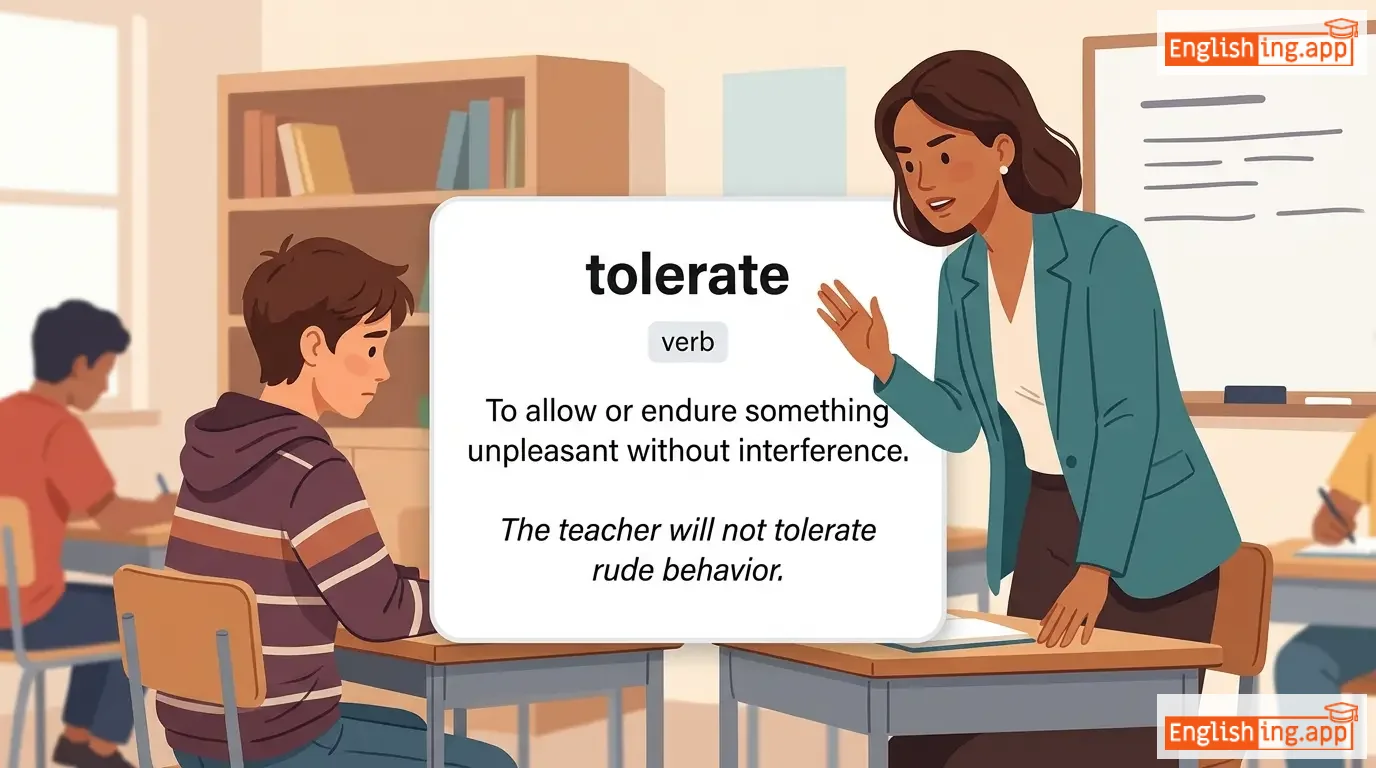
To allow or endure something unpleasant without interference.
••••••
|
The teacher will not tolerate rude behavior.
Der Lehrer wird kein unhöfliches Verhalten tolerieren.
••••••
|
Der Lehrer wird kein unhöfliches Verhalten tolerieren.
Der Lehrer wird kein unhöfliches Verhalten tolerieren.
••••••
|
tolerate no nonsense
keinen Unsinn tolerieren
••••••
|
To be strict and not allow foolish or improper behavior.
••••••
|
keinen Unsinn tolerieren
keinen Unsinn tolerieren
••••••
|
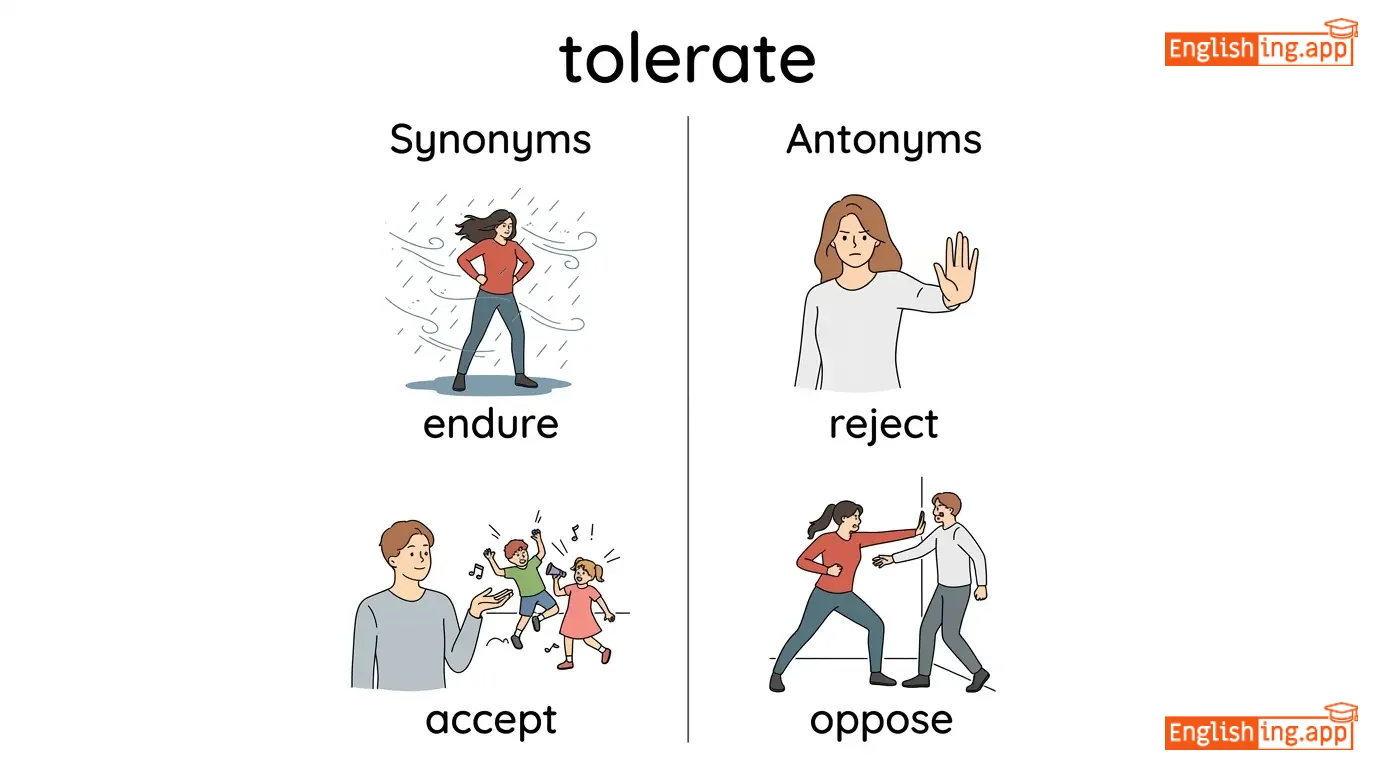
endure, accept, allow, permit, withstand
••••••
|
reject, oppose, forbid
••••••
|
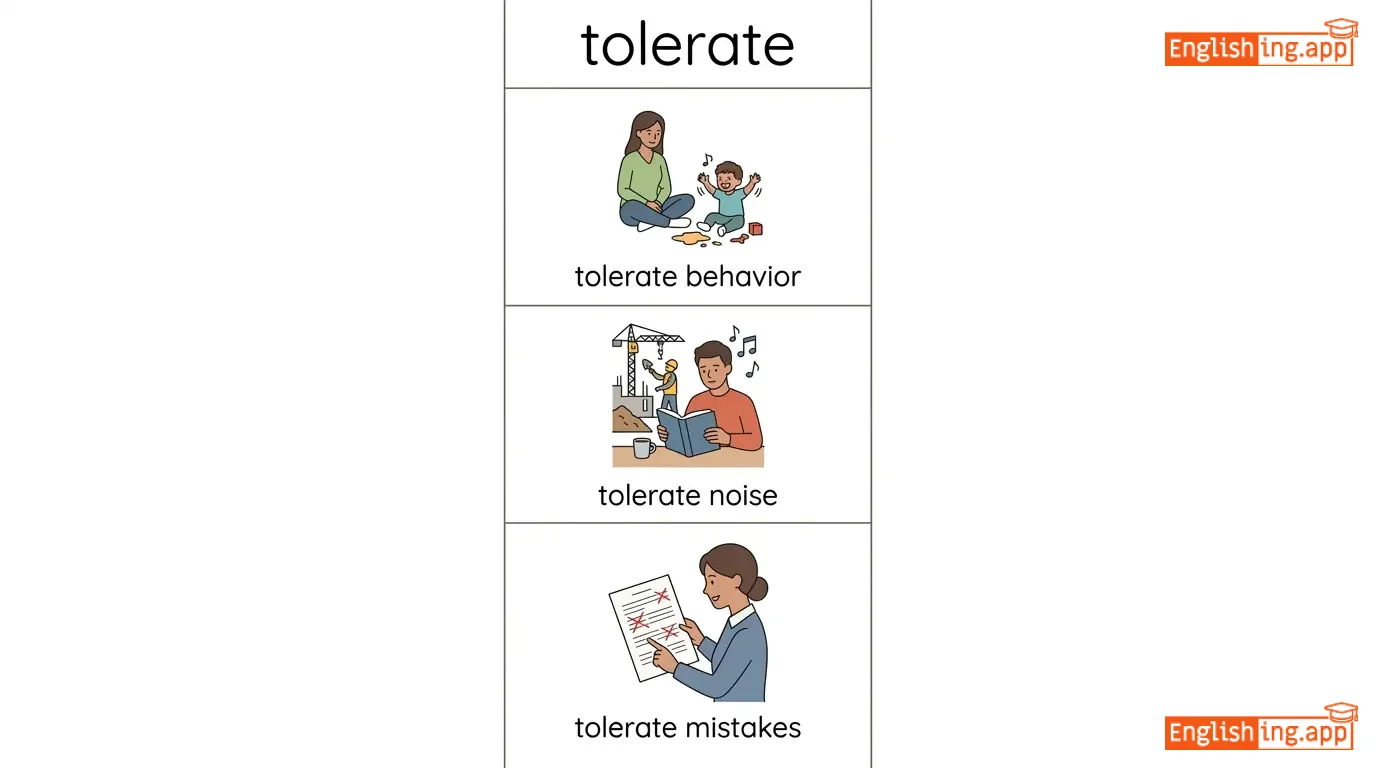
tolerate behavior, tolerate noise, tolerate mistakes, refuse to tolerate
••••••
|
Der Lehrer toleriert unhöfliches Verhalten
••••••
|
|
#5102
💰
|
/toʊl/
noun
(Toll)
••••••
|
- •••••• |
Maut / Schaden
Maut / Schaden
••••••
|
- •••••• | - •••••• | - •••••• | - •••••• |
A charge payable for using a road or bridge; also the extent of damage or suffering caused by something.
••••••
|
The flood took a heavy toll on the village.
Die Flut hat einen hohen Tribut im Dorf gefordert.
••••••
|
Die Flut hat einen hohen Schaden im Dorf verursacht.
Die Flut hat einen hohen Schaden im Dorf verursacht.
••••••
|
take a toll
einen Tribut fordern
••••••
|
To cause harm, damage, or suffering over time.
••••••
|
Schaden verursachen
Schaden verursachen
••••••
|
fee, charge, cost, damage, burden
••••••
|
relief, benefit
••••••
|
pay toll, heavy toll, death toll, take a toll
••••••
|
Toll bedeutet, wenn du nicht zahlst, gibt es Schaden. (take a toll)
••••••
|
|
#5103
🍅
|
/təˈmeɪtoʊ/
noun
(toˈmaːto)
••••••
|
- •••••• |
Tomate
tomate
••••••
|
- •••••• | - •••••• | - •••••• | - •••••• |
a red or yellowish fruit that is typically eaten as a vegetable
••••••
|
I added some tomato to the salad. |
Ich habe etwas Tomate zum Salat hinzugefügt.
Ich habe etwas Tomate zum Salat hinzugefügt.
••••••
|
- •••••• | - •••••• | - •••••• |
fruit, vegetable, berry
••••••
|
none
••••••
|
tomato sauce, tomato soup, tomato paste
••••••
|
Tomate klingt wie 'morgen', also stell dir vor, du isst morgen eine Tomate!
••••••
|
|
#5104
📆
|
/təˈmɒroʊ/
adverb
(tomorrow)
••••••
|
- •••••• |
morgen
morgen
••••••
|
- •••••• | - •••••• | - •••••• | - •••••• |
on the day after today; in the future
••••••
|
Tomorrow we will visit the museum. |
Morgen werden wir das Museum besuchen.
Morgen werden wir das Museum besuchen.
••••••
|
- •••••• | - •••••• | - •••••• |
next day, following day
••••••
|
today, yesterday
••••••
|
tomorrow morning, by tomorrow, tomorrow's meeting
••••••
|
Morgen ist der Tag nach heute
••••••
|
|
#5105
🛻
|
/tʌn/
noun
(ton)
••••••
|
- •••••• |
Tonne
Tonne
••••••
|
- •••••• | - •••••• | - •••••• | - •••••• |
A unit of weight equal to 2,000 pounds (US) or 1,000 kilograms (metric); a large amount of something
••••••
|
The truck carried a ton of apples to the market.
Der LKW transportierte eine Tonne Äpfel zum Markt.
••••••
|
Der LKW transportierte eine Tonne Äpfel zum Markt.
Der LKW transportierte eine Tonne Apfel zum Markt.
••••••
|
a ton of
eine Tonne
••••••
|
a large amount of something
••••••
|
eine Tonne
eine Tonne
••••••
|
load, heap, mass, bulk, weight
••••••
|
none, little
••••••
|
ton of bricks, ton of work, a ton of money
••••••
|
Picture a 'Tonne' of bratwurst in Germany.
••••••
|
|
#5106
🎶
|
/toʊn/
noun, verb
(Ton)
••••••
|
- •••••• |
Ton
ton
••••••
|
- •••••• | - •••••• |
tones
Töne
••••••
|
toning
tonen
••••••
|
the general character or attitude of a place, piece of writing, situation, etc.
••••••
|
The tone of the letter was very formal.
Der Ton des Briefes war sehr formell.
••••••
|
Der Ton des Briefes war sehr formell.
Der Ton des Briefes war sehr formell.
••••••
|
- •••••• | - •••••• | - •••••• |
style, manner, attitude, approach
••••••
|
discord, harshness
••••••
|
tone of voice, tone of conversation, tone of the message
••••••
|
Tone in music is like the tone in your voice!
••••••
|
|
#5107
👅
|
/tʌŋ/
noun
(tʌŋ)
••••••
|
- •••••• |
Zunge
Zunge
••••••
|
- •••••• | - •••••• | - •••••• | - •••••• |
a fleshy muscular organ in the mouth used for tasting, swallowing, and speaking
••••••
|
She stuck out her tongue playfully. |
Sie streckte spielerisch ihre Zunge heraus.
Sie streckte spielerisch ihre Zunge heraus.
••••••
|
Cat got your tongue? |
used when someone is unexpectedly silent or unable to speak
••••••
|
Hat der Katze die Zunge verschlagen?
Hat der Katze die Zunge verschlagen?
••••••
|
mouth, speech organ, language
••••••
|
none
••••••
|
tongue tied, tongue twister, tongue of a shoe
••••••
|
Die Zunge ist ein Werkzeug zum Schmecken, genau wie Katzen oft still sind.
••••••
|
|
#5108
🌙
|
/təˈnaɪt/
adverb
(tonait)
••••••
|
- •••••• |
heute Abend
heute abend
••••••
|
- •••••• | - •••••• | - •••••• | - •••••• |
during the night of today; this evening
••••••
|
Tonight we are going to watch a movie. |
Heute Abend schauen wir einen Film.
Heute Abend schauen wir einen Film.
••••••
|
- •••••• | - •••••• | - •••••• |
this evening, this night
••••••
|
this morning, last night
••••••
|
tonight's show, see you tonight, tonight only
••••••
|
Heute Abend gibt es einen Film zu sehen.
••••••
|
|
#5109
😔
|
/tuː/
adverb
(tu)
••••••
|
- •••••• |
zu viel
zu viel
••••••
|
- •••••• | - •••••• | - •••••• | - •••••• |
to a higher degree than is desirable, permissible, or possible
••••••
|
She is too tired to continue working. |
Sie ist zu müde, um weiterzuarbeiten.
Sie ist zu müde, um weiterzuarbeiten.
••••••
|
too good to be true |
something that seems so perfect that it is hard to believe it is real
••••••
|
zu gut, um wahr zu sein
zu gut, um wahr zu sein
••••••
|
excessively, overly, extremely, very
••••••
|
barely, slightly, moderately
••••••
|
too much, too late, too many, too hard
••••••
|
Zu viel Tee macht dich 'zu' müde – Zu viel Tee macht dich 'zu' müde.
••••••
|
|
#5110
🔧
|
/tuːl/
noun
(tuhl)
••••••
|
- •••••• |
Werkzeug
Werkzeug
••••••
|
- •••••• | - •••••• | - •••••• | - •••••• |
a device or implement used to carry out a particular function
••••••
|
He used a hammer as a tool to fix the chair. |
Er benutzte einen Hammer als Werkzeug, um den Stuhl zu reparieren.
Er benutzte einen Hammer als Werkzeug, um den Stuhl zu reparieren.
••••••
|
- •••••• | - •••••• | - •••••• |
instrument, device, gadget, implement
••••••
|
toy, decoration
••••••
|
power tool, hand tool, tool kit, garden tool
••••••
|
Tools help you ‘tool’ your way through problems – Werkzeuge helfen Ihnen, Probleme zu lösen.
••••••
|
|
#5111
🦷
|
/tuːθ/
noun
(tuːθ)
••••••
|
- •••••• |
Zahn
tsahn
••••••
|
- •••••• | - •••••• | - •••••• | - •••••• |
each of the hard, pointed structures in the mouth used for biting and chewing food
••••••
|
He has a toothache and needs to see the dentist. |
Er hat Zahnschmerzen und muss zum Zahnarzt gehen.
Er hat Zahnschmerzen und muss zum Zahnarzt gehen.
••••••
|
a tooth for a tooth |
an eye for an eye; retribution
••••••
|
Auge um Auge
Auge um Auge
••••••
|
fang, molar, incisor, canine
••••••
|
gum
••••••
|
toothbrush, tooth paste, tooth decay, tooth fairy
••••••
|
Zahnweh ist schlimm – Zahn = schlimm
••••••
|
|
#5112
🔝
|
/tɒp/
noun
(top)
••••••
|
- •••••• |
Spitze
spitze
••••••
|
- •••••• | - •••••• | - •••••• | - •••••• |
the highest or uppermost point, part, or surface of something
••••••
|
The book is on the top shelf.
Das Buch ist auf dem obersten Regal.
••••••
|
Das Buch ist auf dem obersten Regal.
Das Buch ist auf dem obersten Regal.
••••••
|
top of the world
an der Spitze der Welt
••••••
|
feeling extremely happy or successful
••••••
|
an der Spitze der Welt
an der spitze der welt
••••••
|
summit, peak, pinnacle, apex
••••••
|
bottom, base
••••••
|
top priority, top scorer, top rated, top of the list
••••••
|
Top of the world, where happiness reaches – an der Spitze der Welt, wo das Glück erreicht.
••••••
|
|
#5113
💬
|
/ˈtɒpɪk/
noun
(tʰɔːpɪk)
••••••
|
- •••••• |
Thema
thema
••••••
|
- •••••• | - •••••• | - •••••• | - •••••• |
a subject of conversation, discussion, or writing
••••••
|
The topic of the meeting was company expansion. |
Das Thema der Besprechung war die Erweiterung des Unternehmens.
Das Thema der Besprechung war die Erweiterung des Unternehmens.
••••••
|
- •••••• | - •••••• | - •••••• |
subject, theme, issue, matter
••••••
|
digression, aside
••••••
|
discussion topic, popular topic, hot topic, main topic
••••••
|
Topics make discussions tick – Themen machen Diskussionen lebendig.
••••••
|
|
#5114
🔦
|
/tɔːrtʃ/
noun
(Torsch)
••••••
|
- •••••• |
Taschenlampe / Fackel
taschenlampe / fackel
••••••
|
- •••••• | - •••••• | - •••••• | - •••••• |
a portable electric lamp powered by batteries; a flaming stick used for light
••••••
|
Use the torch to find your way in the dark.
Benutze die Taschenlampe, um dich im Dunkeln zurechtzufinden.
••••••
|
Benutze die Taschenlampe, um dich im Dunkeln zurechtzufinden.
benutze die taschenlampe um dich im dunkeln zurechtzufinden
••••••
|
- •••••• | - •••••• | - •••••• |
flashlight, lamp, beacon
••••••
|
darkness, blackout
••••••
|
electric torch, pocket torch, torch light, shine the torch
••••••
|
TorCH dein Weg ins Licht: Tor = gate, CH = ch sound, mix deutsch und english to remember Taschenlampe
••••••
|
|
#5115
🌪️
|
/tɔːrˈneɪdoʊ/
noun
(tornado)
••••••
|
- •••••• |
tornado
tornado
••••••
|
- •••••• | - •••••• | - •••••• | - •••••• |
a rapidly rotating column of air in contact with the ground and clouds, often destructive
••••••
|
The tornado destroyed several houses in the village. |
Der Tornado zerstörte mehrere Häuser im Dorf
Der Tornado zerstorte mehrere Häuser im Dorf
••••••
|
- •••••• | - •••••• | - •••••• |
twister, cyclone, whirlwind, storm
••••••
|
calm, stillness
••••••
|
violent tornado, tornado warning, tornado path, tornado damage
••••••
|
Tornado - alles wird herumgewirbelt, wie in einem Sturm
••••••
|
|
#5116
🐢
|
/ˈtɔːr.təs/
noun
(tortoise)
••••••
|
- •••••• |
Schildkröte
Schildkroete
••••••
|
- •••••• | - •••••• | - •••••• | - •••••• |
A slow-moving land reptile with a hard shell.
••••••
|
The tortoise slowly crossed the garden.
Die Schildkröte überquerte langsam den Garten
••••••
|
Die Schildkröte überquerte langsam den Garten.
Die Schildkroete ueberquerte langsam den Garten.
••••••
|
slow as a tortoise
langsam wie eine Schildkröte
••••••
|
very slow
••••••
|
langsam wie eine Schildkröte
langsam wie eine Schildkroete
••••••
|
terrapin, chelonian, testudine, shelled reptile
••••••
|
hare, rabbit
••••••
|
tortoise shell, tortoise race, tortoise pace
••••••
|
Denke an 'Schildkroete', die langsam geht
••••••
|
|
#5117
😣
|
/ˈtɔːtʃər/
noun
(tortur)
••••••
|
- •••••• |
Folter
folter
••••••
|
- •••••• | - •••••• | - •••••• | - •••••• |
the action or practice of inflicting severe pain on someone as a punishment or to force them to do something
••••••
|
He was subjected to torture during the interrogation.
Er wurde während des Verhörs gefoltert.
••••••
|
Er wurde während des Verhörs gefoltert.
Er wurde während des Verhörs gefoltert.
••••••
|
- •••••• | - •••••• | - •••••• |
torment, agony, suffering, pain
••••••
|
comfort, relief
••••••
|
subject to torture, torture methods, inflicted torture
••••••
|
Folter als extreme Strafe, die Schmerzen verursacht.
••••••
|
|
#5118
🎲
|
/tɔs/
verb
(tɔs)
••••••
|
- •••••• |
leicht werfen
leicht werfen
••••••
|
tossed
tɔst
••••••
|
tossed
tɔst
••••••
|
tosses
tɔses
••••••
|
tossing
tɔsɪŋ
••••••
|
To throw something lightly or casually; to move or turn suddenly.
••••••
|
He tossed the keys onto the table.
Er warf die Schlüssel auf den Tisch.
••••••
|
Er warf die Schlüssel auf den Tisch.
Er warf die Schluessel auf den Tisch.
••••••
|
toss and turn
sich hin und her wälzen
••••••
|
to move around restlessly in bed without being able to sleep
••••••
|
sich hin und her wälzen
sich hin und her waelzen
••••••
|
throw, fling, pitch, hurl
••••••
|
catch, hold, retain
••••••
|
toss a coin, toss away, toss out, toss salad
••••••
|
Toss wie der Münzwurf im Fußball.
••••••
|
|
#5119
🧮
|
/ˈtoʊ.təl/
adjective, noun, verb
(total)
••••••
|
- •••••• |
gesamt
gesamt
••••••
|
totaled
totalisiert
••••••
|
totaled
totalisiert
••••••
|
totals
totals
••••••
|
totaling
totalisierend
••••••
|
the whole amount; complete
••••••
|
The total cost was too high.
Die Gesamtkosten waren zu hoch.
••••••
|
Die Gesamtkosten waren zu hoch.
Die Gesamtkosten waren zu hoch.
••••••
|
a total loss
ein totaler Verlust
••••••
|
completely destroyed or ruined
••••••
|
ein totaler Verlust
ein totaler Verlust
••••••
|
whole, complete, sum, entire
••••••
|
partial, incomplete
••••••
|
total cost, total amount, total failure, grand total
••••••
|
Total bedeutet vollständig – denke daran, dass total das Ganze umfasst.
••••••
|
|
#5120
💯
|
/ˈtoʊtəli/
adverb
(totali)
••••••
|
- •••••• |
vollständig
vollständig
••••••
|
- •••••• | - •••••• | - •••••• | - •••••• |
completely; entirely; absolutely
••••••
|
I totally agree with your opinion. |
Ich stimme deiner Meinung völlig zu.
Ich stimme deiner Meinung voellig zu.
••••••
|
- •••••• | - •••••• | - •••••• |
completely, entirely, absolutely
••••••
|
partially, partly, incompletely
••••••
|
totally different, totally wrong, totally agree
••••••
|
Vollständig zustimmen bedeutet total zustimmen!
••••••
|
|
#5121
👆
|
/tʌtʃ/
verb
(tʌtʃ)
••••••
|
|
berühren
beruehren
••••••
|
touched
tʌtʃd
••••••
|
touched
tʌtʃd
••••••
|
touches
tʌtʃiz
••••••
|
touching
tʌtʃɪŋ
••••••
|
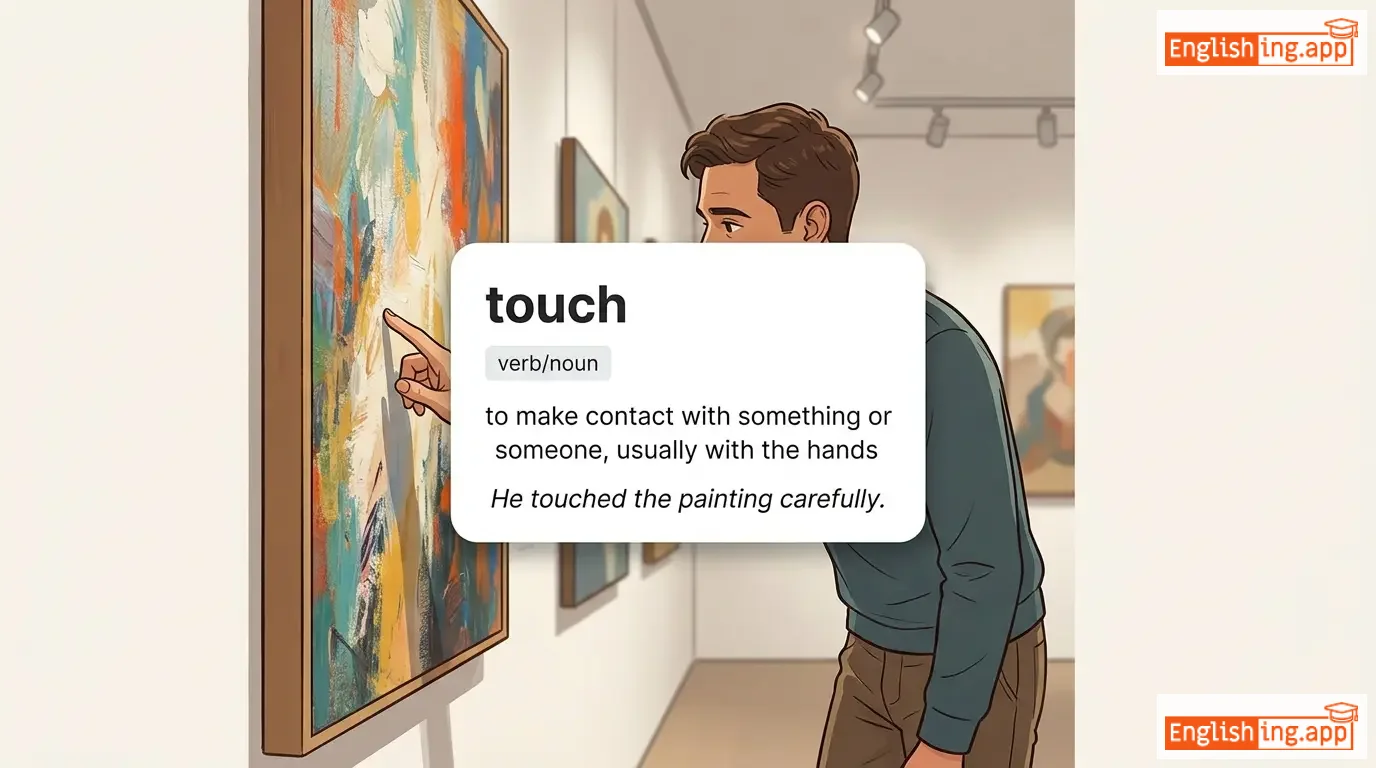
to put your hand or finger on something; to make physical contact
••••••
|
Please don't touch the wet paint.
Bitte berühren Sie nicht die nasse Farbe.
••••••
|
Bitte berühren Sie nicht die nasse Farbe.
Bitte beruehren Sie nicht die nasse Farbe.
••••••
|
- •••••• | - •••••• | - •••••• |
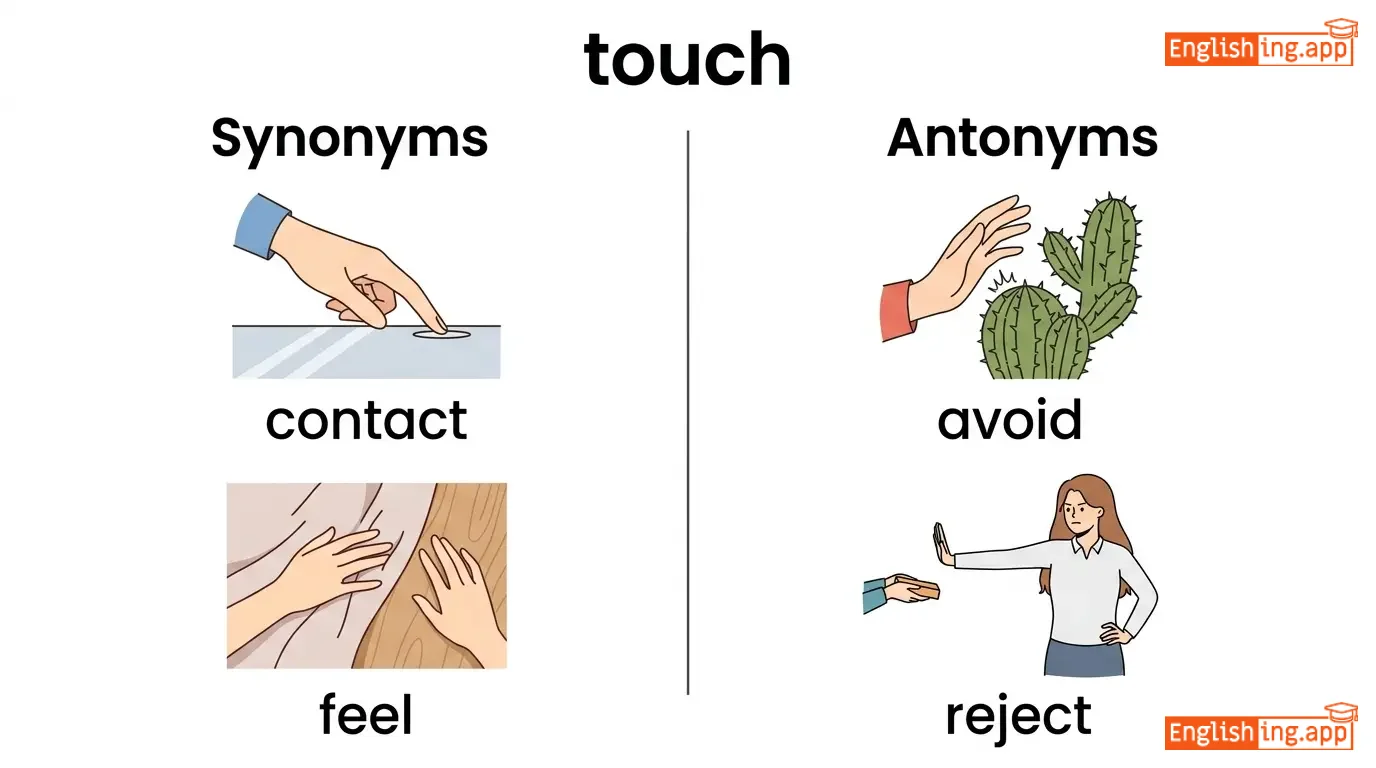
feel, handle, contact, brush
••••••
|
avoid, miss
••••••
|
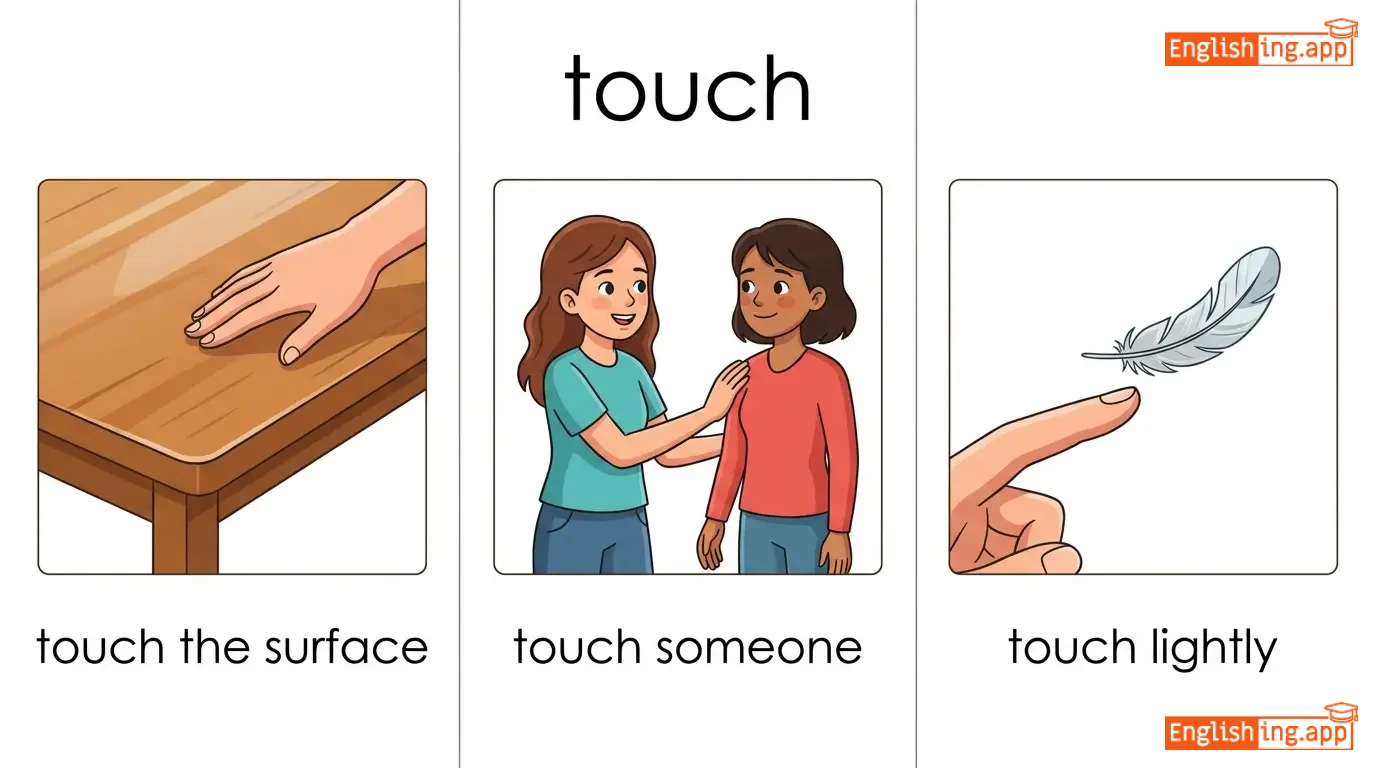
touch screen, touch gently, lose touch, get in touch
••••••
|
Berühren (to touch) brings a connection!
••••••
|
|
#5122
💪
|
/tʌf/
adjective
(taff)
••••••
|
- •••••• |
zäh
zaeh
••••••
|
- •••••• | - •••••• | - •••••• | - •••••• |
strong, durable, and difficult to break or deal with
••••••
|
He had a tough day at work. |
Er hatte einen harten Tag bei der Arbeit.
Er hatte einen harten Tag bei der Arbeit.
••••••
|
tough luck |
a phrase used to express sympathy for someone's unfortunate situation
••••••
|
Pech gehabt
Pech gehabt
••••••
|
hard, durable, strong, resilient
••••••
|
soft, weak
••••••
|
tough decision, tough time, tough job
••••••
|
Zäh wie ein Felsen!
••••••
|
|
#5123
🧳
|
/tʊr/
noun/verb
(Tour)
••••••
|
|
Tour
Tour
••••••
|
toured
tured
••••••
|
toured
tured
••••••
|
tours
Tours
••••••
|
touring
Touring
••••••
|
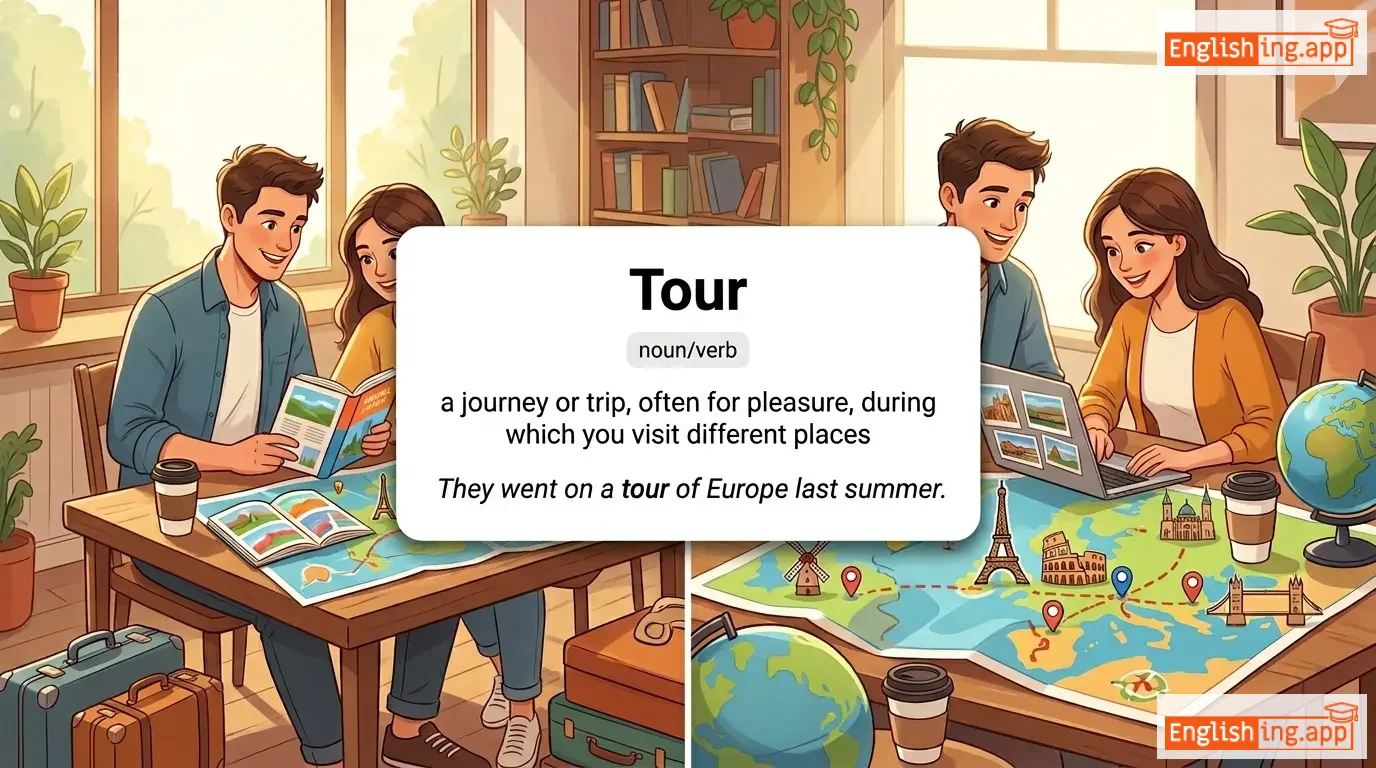
a journey or trip, often for pleasure, during which you visit different places
••••••
|
They went on a tour of Europe last summer.
Sie gingen letzten Sommer auf eine Tour durch Europa.
••••••
|
Sie gingen letzten Sommer auf eine Tour durch Europa.
Sie gingen letzten Sommer auf eine Tour durch Europa.
••••••
|
grand tour
große Tour
••••••
|
an extended journey through Europe, traditionally taken by wealthy young men in the past
••••••
|
große Tour
große Tour
••••••
|
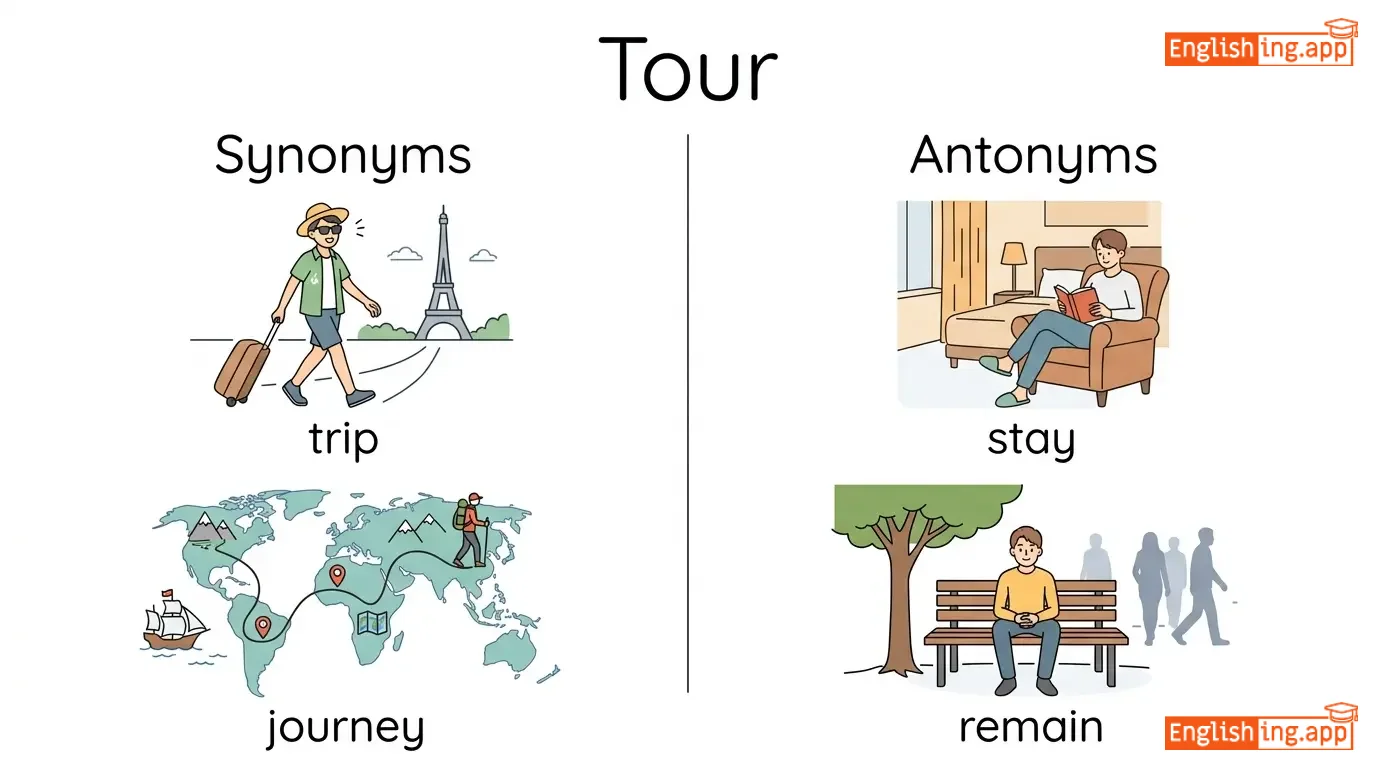
trip, journey, excursion, voyage, travel
••••••
|
stay, remain
••••••
|
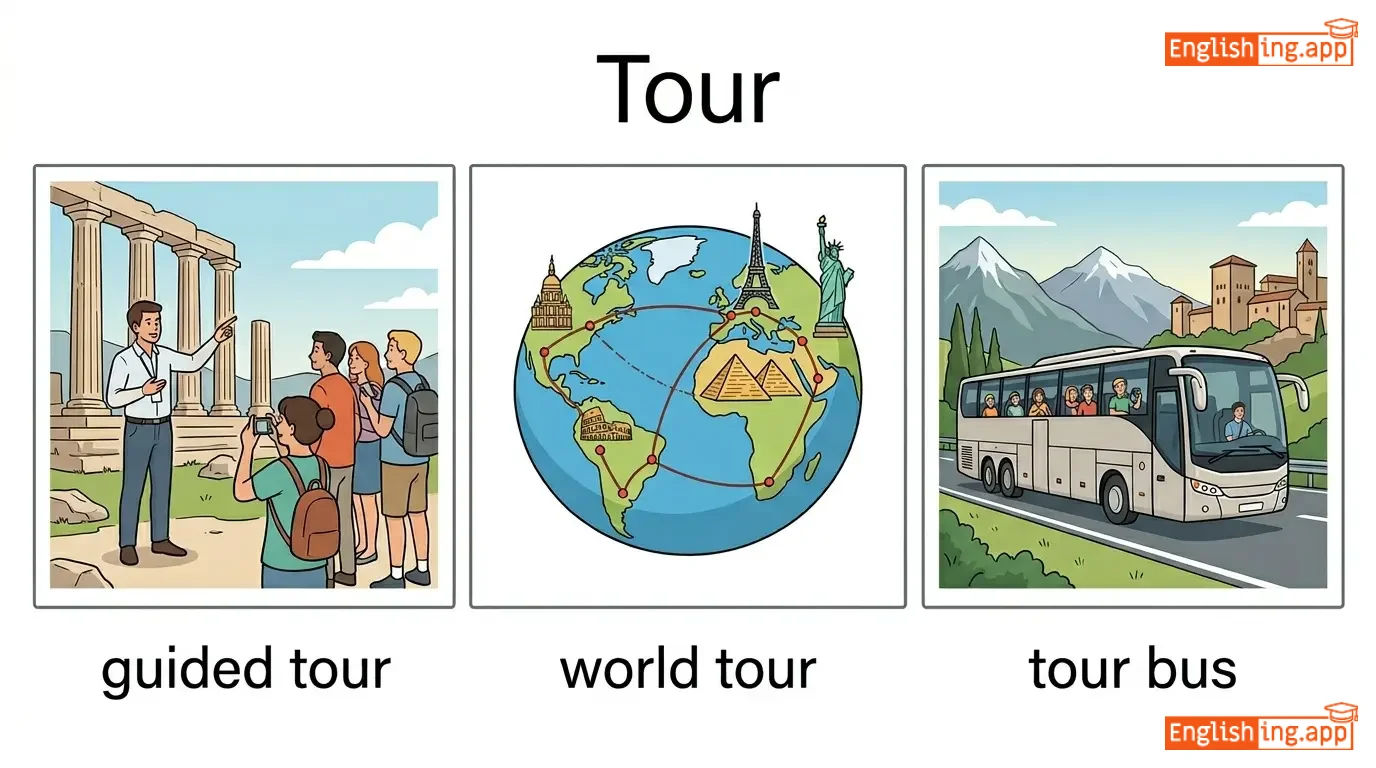
guided tour, world tour, tour bus, tour guide, cultural tour
••••••
|
Tour bedeutet Rundreise — ein Tour bringt dich zu neuen Orten
••••••
|
|
#5124
🏆
|
/ˈtʊənəmənt/
noun
(turn-ah-ment)
••••••
|
|
Turnier
Turnier
••••••
|
- •••••• | - •••••• | - •••••• | - •••••• |
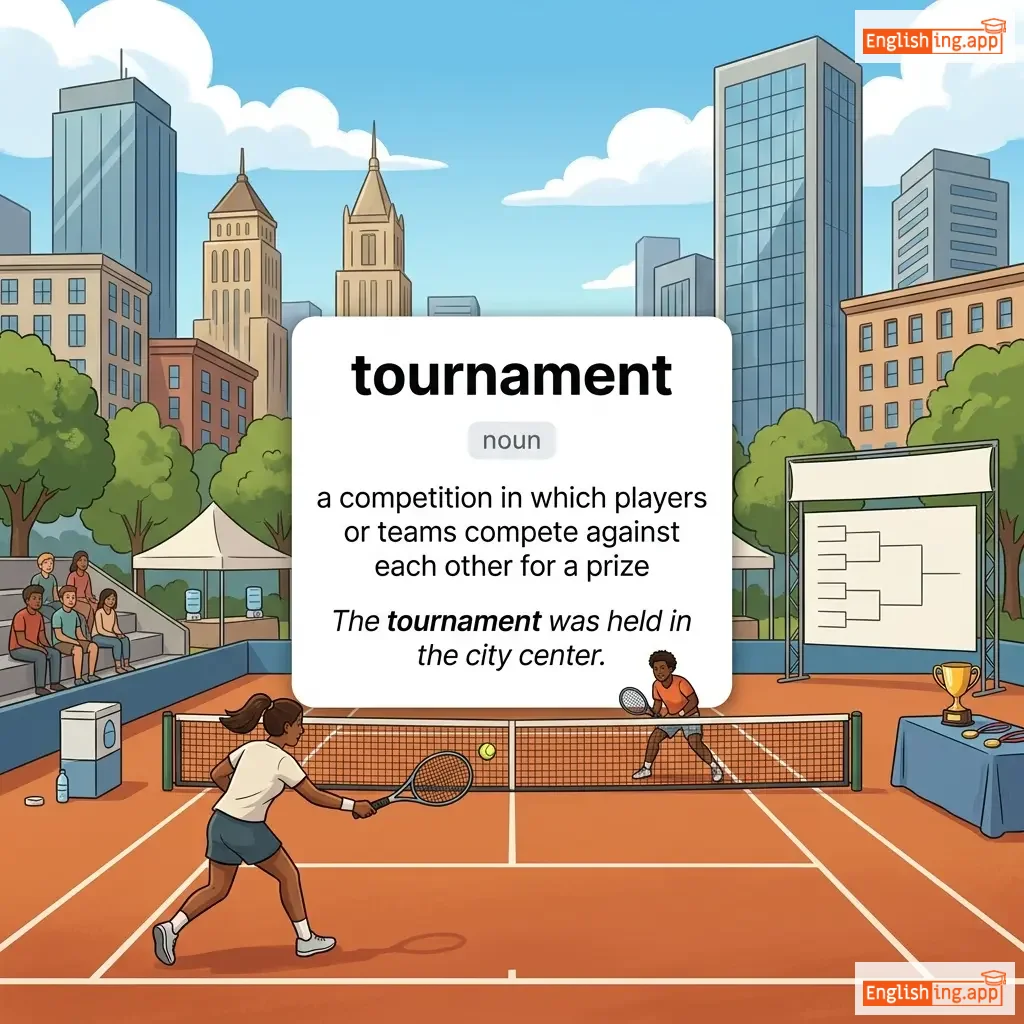
a competition in which players or teams compete against each other for a prize
••••••
|
The tournament was held in the city center. |
Das Turnier fand im Stadtzentrum statt.
Das Turnier fand im Stadtzentrum statt.
••••••
|
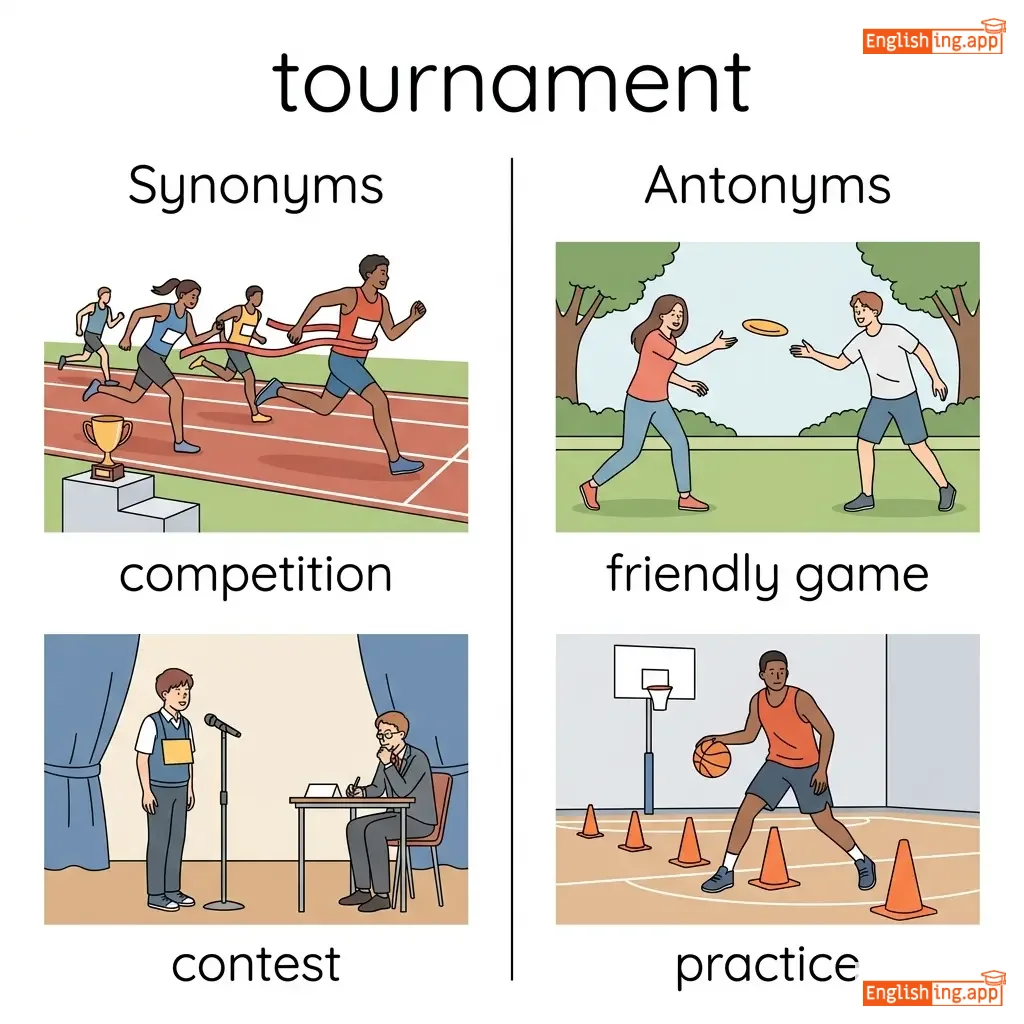
- •••••• | - •••••• | - •••••• |
competition, contest, match, championship
••••••
|
friendly game
••••••
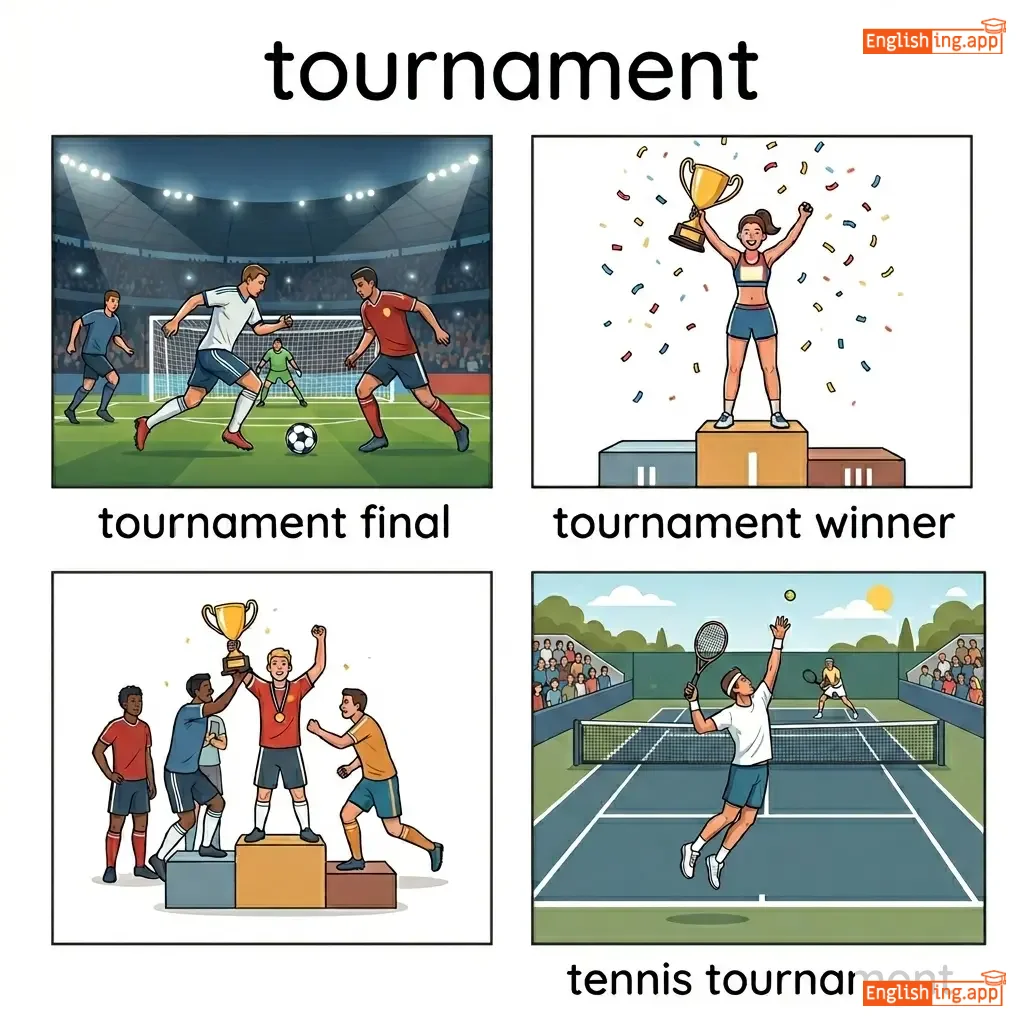
|
tournament final, tournament winner, tennis tournament
••••••
|
Ein Turnier ist ein Wettbewerb, bei dem die Spieler um den Preis kämpfen!
••••••
|
Vocabulary Quiz
Test your vocabulary by matching words with their translations or meanings.
Login to take the quiz
Comments (0)
Share your thoughts and join the discussion.
Join the discussion by logging in
Login to CommentNo comments yet
Be the first to share your thoughts!