

Upgrade für Zugriff auf alle Vokabeln
Erhalten Sie unbegrenzten Zugriff auf alle Vokabeln mit Pro-Mitgliedschaft
Upgrade auf ProÜbersetzung
Vergangenheit
Partizip Perfekt
Dritte Person Singular
Gerundium
Bedeutung
Beispielsatz
Übersetzung Beispielsatz
Synonyme
Antonyme
Kollokationen
Eselsbrücke
Swipe left or right, or use the buttons. Tap image to zoom.
Upgrade für Zugriff auf alle Sätze
Erhalten Sie unbegrenzten Zugriff auf alle Sätze mit Pro-Mitgliedschaft
Upgrade auf ProÜbersetzung Beispielsatz
Wort
Lesson 73Lesson 73 - Maske umschalten
|
Emoji
|
Wort | Images | Übersetzung | Vergangenheit | Partizip Perfekt | Dritte Person Singular | Gerundium | Bedeutung | Beispielsatz | Übersetzung Beispielsatz | Beispielausdruck | Bedeutung Beispielausdruck | Übersetzung Beispielausdruck | Synonyme | Antonyme | Kollokationen | Eselsbrücke |
|---|---|---|---|---|---|---|---|---|---|---|---|---|---|---|---|---|---|
|
#3464
👑
|
/ˈnoʊbəl/
adjective
(nobel)
••••••
|
- •••••• |
von hohem Rang oder Auszeichnung, der hohe persönliche Qualitäten oder hohe moralische Prinzipien zeigt
von hohem Rang oder Auszeichnung, der hohe personliche Qualitaten oder hohe moralische Prinzipien zeigt
••••••
|
- •••••• | - •••••• | - •••••• | - •••••• |
Having or showing fine personal qualities, high moral principles, or being of high social rank.
••••••
|
He is admired for his noble character and generosity. |
Er wird für seinen edlen Charakter und seine Großzügigkeit bewundert.
Er wird fur seinen edlen Charakter und seine Grosszuegigkeit bewundert.
••••••
|
noble cause |
A morally good or worthwhile reason or objective
••••••
|
edles Ziel
edles Ziel
••••••
|
honorable, dignified, virtuous, aristocratic
••••••
|
dishonorable, ignoble, base
••••••
|
noble cause, noble family, noble effort, noble character
••••••
|
Nobel bedeutet noble-Person — wie ein König.
••••••
|
|
#3465
🙅♂️
|
/ˈnoʊˌbɑːdi/
pronoun
(nobody)
••••••
|
- •••••• |
niemand
niemand
••••••
|
- •••••• | - •••••• | - •••••• | - •••••• |
no person; not anyone
••••••
|
Nobody came to the party.
Niemand kam zur Party.
••••••
|
Niemand kam zur Party.
Niemand kam zur Party.
••••••
|
- •••••• | - •••••• | - •••••• |
no one, none, not a soul
••••••
|
someone, anybody
••••••
|
nobody knows, nobody cares, nobody else
••••••
|
Niemand kommt, wenn niemand zuhört - Nobody comes if nobody listens
••••••
|
|
#3466
👍
|
/nɒd/
verb
(nod)
••••••
|
|
nicken
nicken
••••••
|
nodded
nodded
••••••
|
nodded
nodded
••••••
|
nods
nodd
••••••
|
nodding
nodding
••••••
|
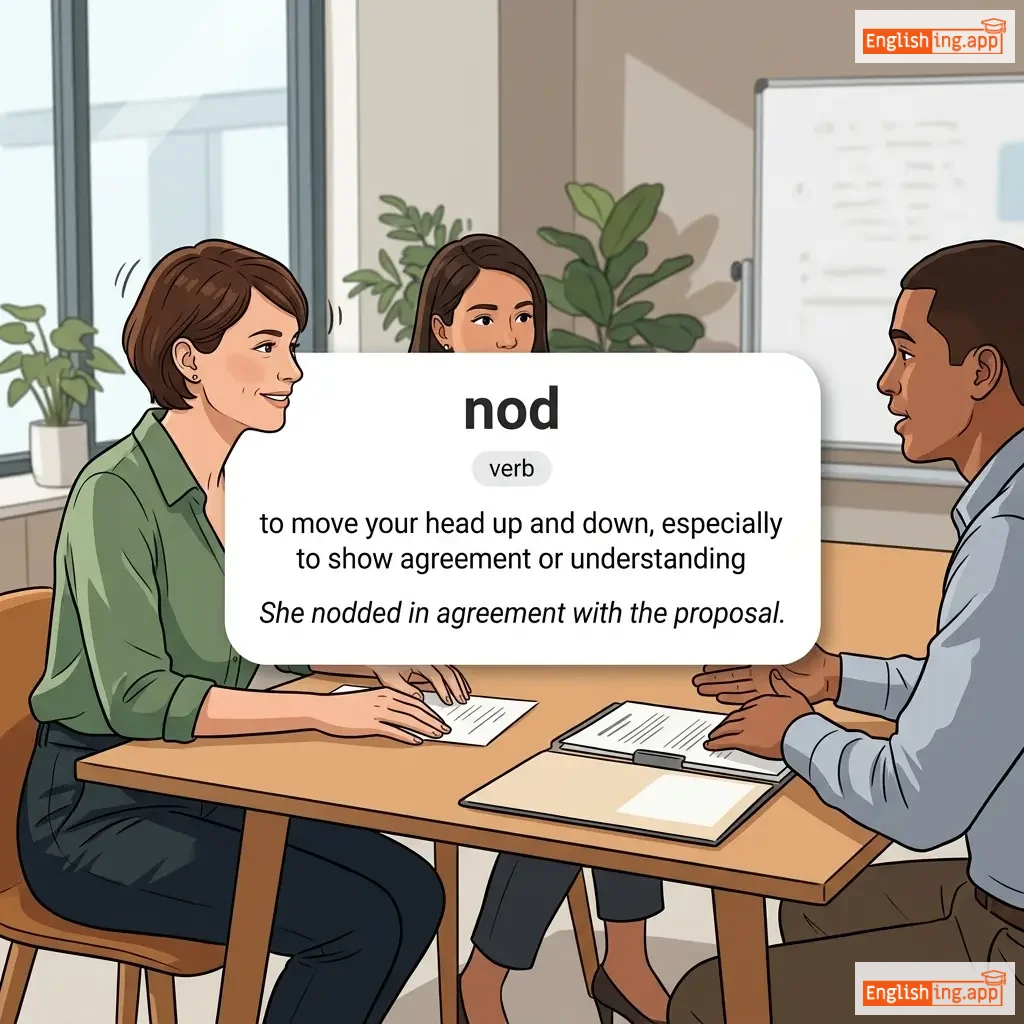
to move one's head down and up to show agreement or acknowledgment
••••••
|
She nodded in agreement with the proposal.
Sie nickte zustimmend mit dem Kopf zu dem Vorschlag.
••••••
|
Sie nickte zustimmend mit dem Kopf zu dem Vorschlag.
Sie nickte zustimmend mit dem Kopf zu dem Vorschlag.
••••••
|
- •••••• | - •••••• | - •••••• |
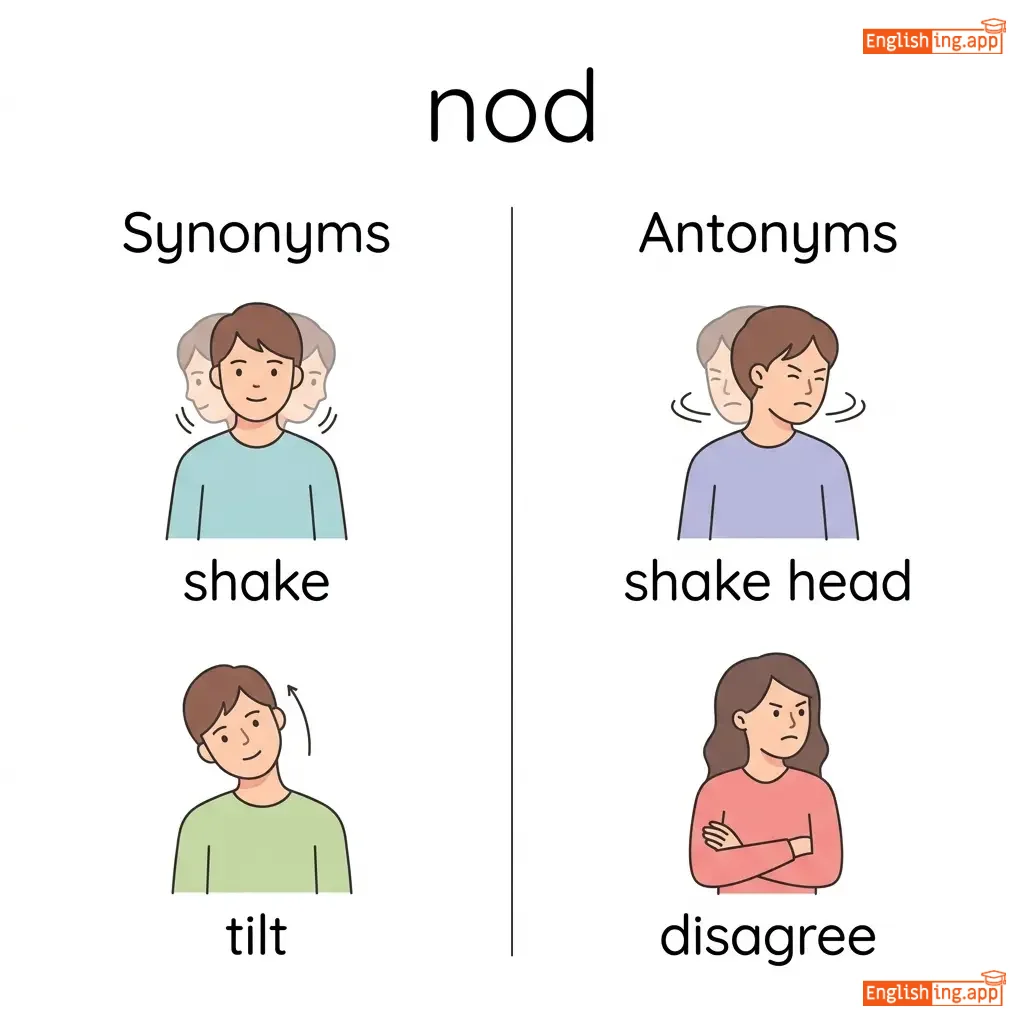
agree, acknowledge, approve, confirm
••••••
|
shake, disagree, deny
••••••
|
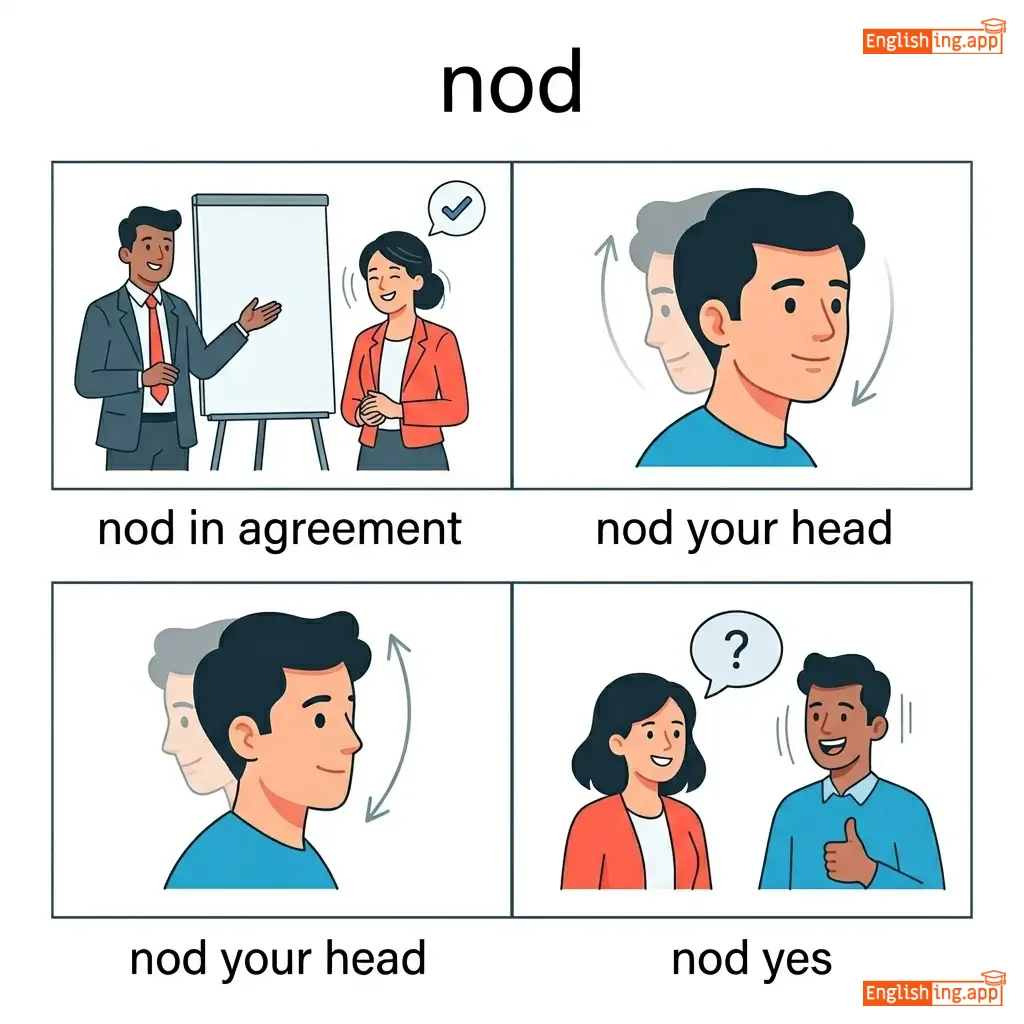
nod agreement, nod slowly, nod approvingly, nod politely, nod understanding
••••••
|
Nicke mit dem Kopf, wenn du zustimmst
••••••
|
|
#3467
🔊
|
/nɔɪz/
noun
(nɔɪz)
••••••
|
- •••••• |
lärm
laerm
••••••
|
- •••••• | - •••••• | - •••••• | - •••••• |
a sound, especially one that is loud or unpleasant
••••••
|
The noise from the construction site was very disturbing.
Der Lärm von der Baustelle war sehr störend.
••••••
|
Der Lärm von der Baustelle war sehr störend.
Der Laerm von der Baustelle war sehr stoerend.
••••••
|
- •••••• | - •••••• | - •••••• |
sound, din, racket, clamor
••••••
|
silence, quiet, peace, stillness
••••••
|
loud noise, background noise, noise pollution
••••••
|
Lärm und noise sind störende Geräusche.
••••••
|
|
#3468
🔊
|
/ˈnɔɪzi/
adjective
(noi-zi)
••••••
|
- •••••• |
laut
laut
••••••
|
- •••••• | - •••••• | - •••••• | - •••••• |
Making a lot of loud sounds; full of noise.
••••••
|
The children were noisy during the party. |
Die Kinder waren laut während der Party.
Die Kinder waren laut während der Party.
••••••
|
noisy as a market |
Extremely loud and chaotic.
••••••
|
laut wie ein Markt
laut wie ein Markt
••••••
|
loud, boisterous, rowdy, clamorous, raucous
••••••
|
quiet, silent, calm
••••••
|
noisy children, noisy street, noisy crowd
••••••
|
Noisy bedeutet voller Lärm - laut.
••••••
|
|
#3469
🏆
|
/ˈnɒmɪneɪt/
verb
(nominéit)
••••••
|
|
nominieren
nominieren
••••••
|
nominated
nominéted
••••••
|
nominated
nominéted
••••••
|
nominates
nominéts
••••••
|
nominating
nominéiting
••••••
|
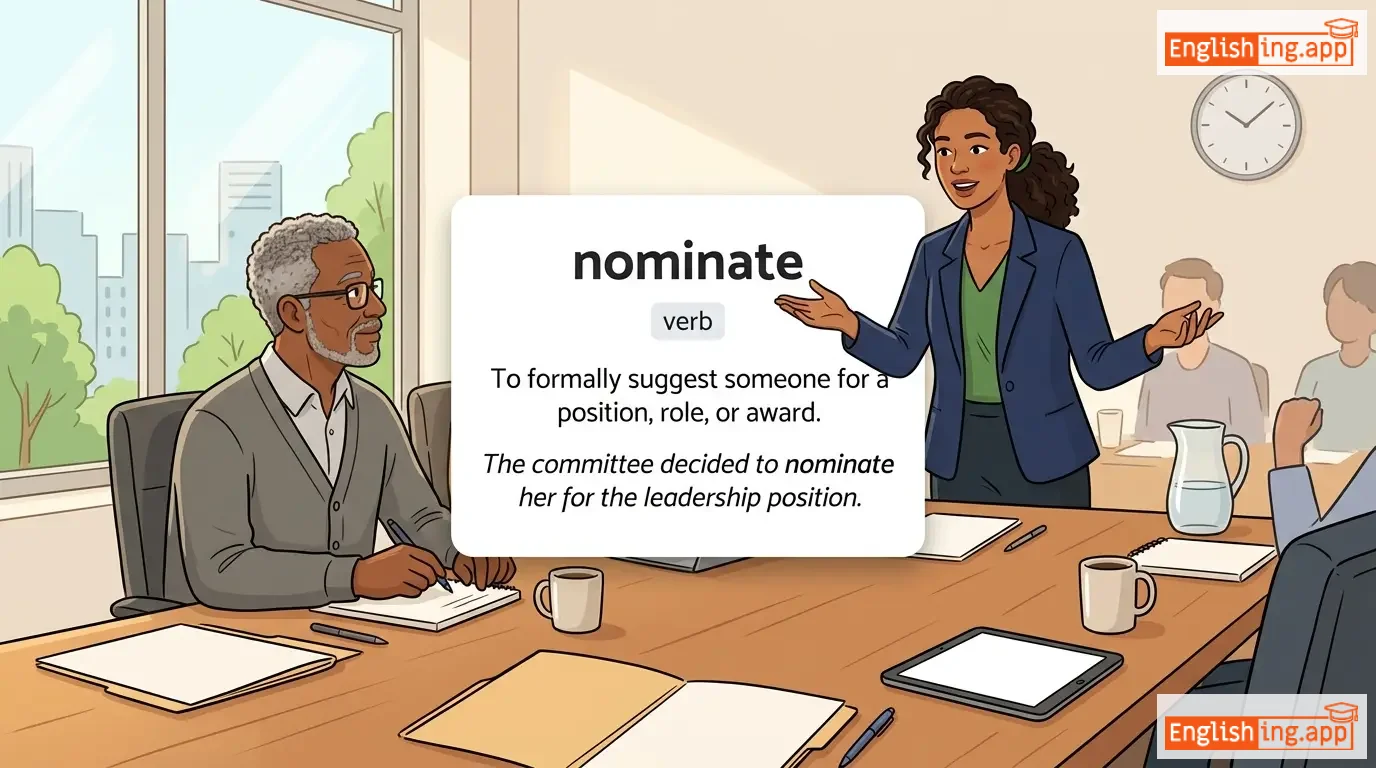
to propose someone for a position or award
••••••
|
The committee decided to nominate her for the award.
Das Komitee entschied, sie für den Preis zu nominieren.
••••••
|
Das Komitee entschied, sie für den Preis zu nominieren.
Das Komitee entschied, sie für den Preis zu nominieren.
••••••
|
- •••••• | - •••••• | - •••••• |
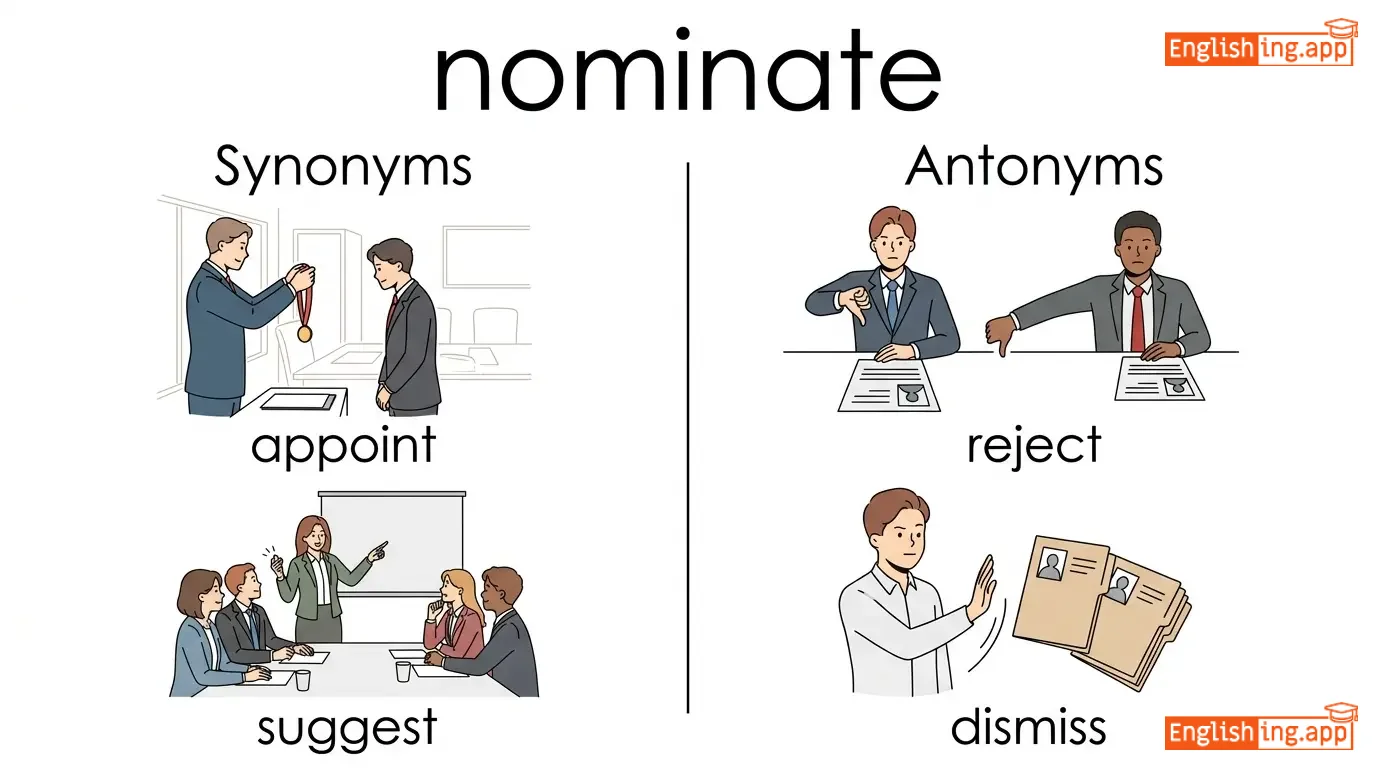
propose, suggest, recommend, appoint
••••••
|
reject, dismiss, withdraw
••••••
|
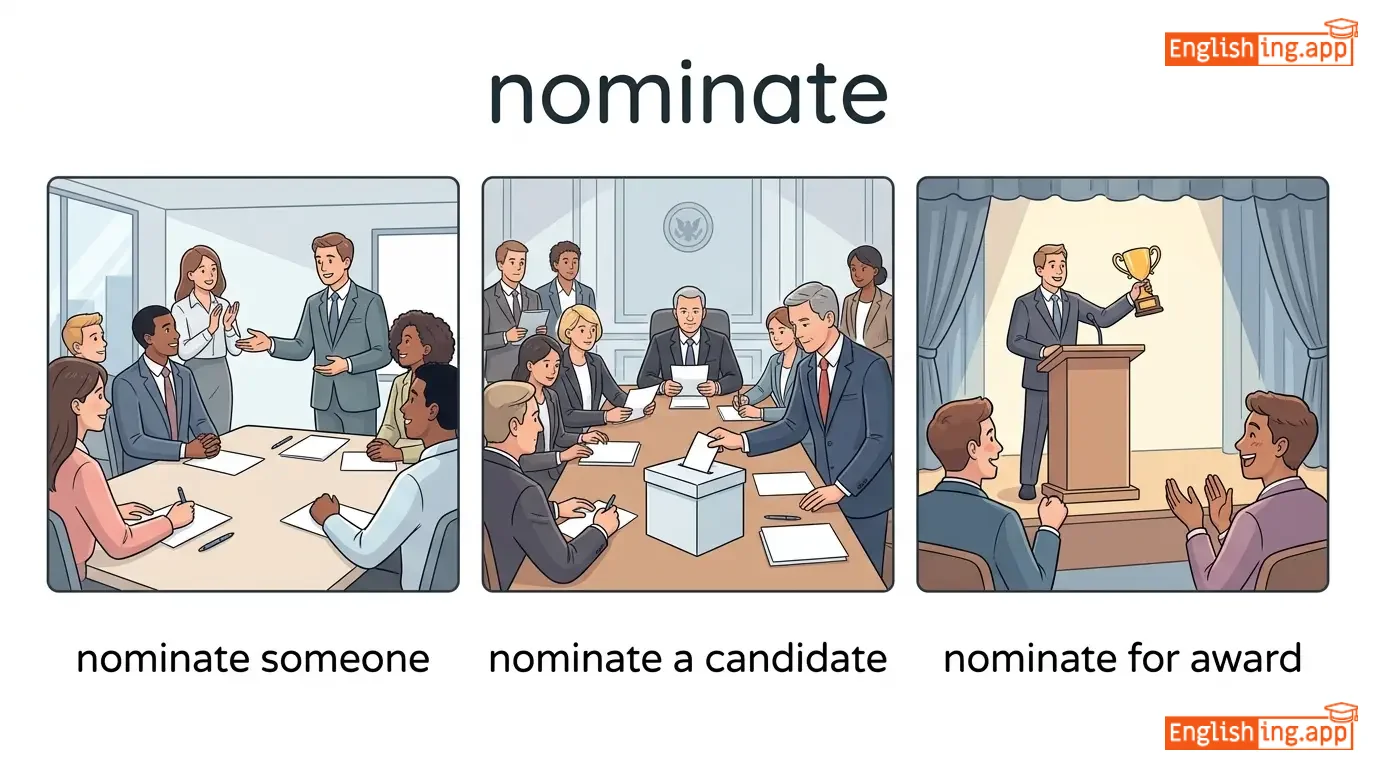
nominate candidates, nominate for award, officially nominate, nominate someone, nominate unanimously
••••••
|
Nominate = Nominieren - Think of the German word ‘nominieren’ which is very close to the English word.
••••••
|
|
#3470
📜
|
/ˌnɒməˈneɪʃən/
noun
(nominierung)
••••••
|
- •••••• |
nominierung
nominierung
••••••
|
- •••••• | - •••••• | - •••••• | - •••••• |
The act of formally proposing someone for a role, position, or award.
••••••
|
Her nomination for the award surprised everyone. |
Ihre Nominierung für den Preis überraschte alle.
Ihre Nominierung für den Preis überraschte alle.
••••••
|
- •••••• | - •••••• | - •••••• |
appointment, proposal, suggestion, designation
••••••
|
rejection, dismissal, exclusion
••••••
|
receive nomination, award nomination, political nomination, official nomination
••••••
|
Nominierung bedeutet, jemanden für eine Auszeichnung zu benennen.
••••••
|
|
#3471
💼
|
/ˌnɑm.əˈni/
noun
(nominie)
••••••
|
- •••••• |
nominiert
nominiert
••••••
|
- •••••• | - •••••• | - •••••• | - •••••• |
a person who is nominated for an office, award, or honor
••••••
|
She was the nominee for the Best Actress award. |
Sie war die nominierte für den besten Schauspielerpreis.
Sie war die nominierte für den besten Schauspielerpreis.
••••••
|
- •••••• | - •••••• | - •••••• |
candidate, contender, designee
••••••
|
disqualified person, rejected candidate
••••••
|
presidential nominee, award nominee, party nominee
••••••
|
Der nominierte ist die Person, die für etwas Großes ausgewählt wurde.
••••••
|
|
#3472
🤝
|
/ˌnɒnˈprɒfɪt/
noun; adjective
(non-profit)
••••••
|
- •••••• |
gemeinnützig
gemeinnuetzig
••••••
|
- •••••• | - •••••• | - •••••• | - •••••• |
an organization that does not operate for profit and reinvests surplus to achieve social goals; not intended to make financial profit
••••••
|
She works for a non-profit that provides free education to underprivileged children.
Shi works for a non-profit dat provaits fri edukéishon.
••••••
|
Sie arbeitet für eine gemeinnützige Organisation, die kostenlose Bildung anbietet.
sie arbeitet fuer eine gemeinnuetzige organisation die kostenlose bildung anbietet
••••••
|
non-profit organization
gemeinnützige Organisation
••••••
|
an organization that uses its income to pursue social or charitable objectives rather than profit
••••••
|
gemeinnützige Organisation
gemeinnuetzige organisation
••••••
|
charitable, not-for-profit, voluntary, philanthropic, altruistic
••••••
|
for-profit, commercial, profit-making
••••••
|
non-profit organization, non-profit sector, non-profit work, non-profit foundation, non-profit charity
••••••
|
Non-profit = kein Profit, sondern Gemeinwohl – gemeinnützig.
••••••
|
|
#3473
🚫
|
/nʌn/
pronoun
(non)
••••••
|
- •••••• |
keiner
keiner
••••••
|
- •••••• | - •••••• | - •••••• | - •••••• |
not any; no one; not one
••••••
|
None of the students passed the exam. |
Keiner der Studenten hat die Prüfung bestanden.
Keiner der Studenten hat die Pruefung bestanden.
••••••
|
- •••••• | - •••••• | - •••••• |
nothing, nobody, nil
••••••
|
all, some, everyone
••••••
|
none of, none left, none at all
••••••
|
None sounds like 'keiner'.
••••••
|
|
#3474
🌧️➡️🏞️
|
/ˌnʌnðəˈlɛs/
adverb
(nonetheless)
••••••
|
- •••••• |
dennoch
dennoch
••••••
|
- •••••• | - •••••• | - •••••• | - •••••• |
in spite of that; nevertheless
••••••
|
It was raining, but nonetheless, they went hiking. |
Es regnete, aber trotzdem gingen sie wandern.
Es regnete, aber trotzdem gingen sie wandern.
••••••
|
- •••••• | - •••••• | - •••••• |
nevertheless, however, still, yet
••••••
|
therefore, hence
••••••
|
nonetheless important, nonetheless true, nonetheless, despite that
••••••
|
Noneth- like 'none-the-less' means despite.
••••••
|
|
#3475
🙃
|
/ˈnɒnsəns/
noun
(nonsens)
••••••
|
- •••••• |
Unsinn
Unsinn
••••••
|
- •••••• | - •••••• | - •••••• | - •••••• |
Words or ideas that have no meaning or make no sense.
••••••
|
His explanation was pure nonsense. |
Seine Erklärung war purer Unsinn.
Seine Erklärung war purer Unsinn.
••••••
|
talk nonsense |
to say things that are not true or make no sense
••••••
|
Unsinn reden
Unsinn reden
••••••
|
rubbish, absurdity, foolishness, drivel, gibberish
••••••
|
truth, sense, logic
••••••
|
utter nonsense, talk nonsense, complete nonsense, pure nonsense
••••••
|
Nonsense = NO SENSE → Wörter ohne Bedeutung → Unsinn
••••••
|
|
#3476
🍜
|
/ˈnuːdəlz/
noun (plural)
(nudels)
••••••
|
- •••••• |
Nudeln
Nudeln
••••••
|
- •••••• | - •••••• | - •••••• | - •••••• |
long, thin strips of dough made from flour, water, or eggs, cooked and eaten as food
••••••
|
She cooked noodles with vegetables for dinner.
Sie kochte Nudeln mit Gemüse zum Abendessen.
••••••
|
Sie kochte Nudeln mit Gemüse zum Abendessen.
sie kochte Nudeln mit Gemuese zum Abendessen
••••••
|
use your noodle
benutz dein noodle
••••••
|
to think carefully; to use your brain
••••••
|
benutz dein Gehirn
benutz dein Gehirn
••••••
|
pasta, ramen, vermicelli, spaghetti, soba
••••••
|
rice, bread
••••••
|
instant noodles, rice noodles, fried noodles, noodle soup, bowl of noodles
••••••
|
Nudeln klingt fast wie noodles
••••••
|
|
#3477
☀️
|
/nuːn/
noun
(nun)
••••••
|
- •••••• |
Mittag
Mittag
••••••
|
- •••••• | - •••••• | - •••••• | - •••••• |
12 o'clock in the daytime; midday
••••••
|
The meeting will start at noon. |
Das Treffen beginnt um Mittag.
Das Treffen beginnt um Mittag.
••••••
|
high noon |
exactly midday; sometimes used to describe a decisive confrontation
••••••
|
Mittag
Mittag
••••••
|
midday, twelve o'clock, middaytime
••••••
|
midnight
••••••
|
at noon, by noon, until noon, high noon
••••••
|
Noon bedeutet Mittag, die Sonne ☀️ steht direkt oben
••••••
|
|
#3478
🚫➡️🚫
|
/nɔːr/
conjunction
(nor)
••••••
|
- •••••• |
noch
noch
••••••
|
- •••••• | - •••••• | - •••••• | - •••••• |
used to introduce a negative clause after a negative statement
••••••
|
He didn't call, nor did he send a message. |
Er hat nicht angerufen, noch hat er eine Nachricht gesendet.
Er hat nicht angerufen, noch hat er eine Nachricht gesendet.
••••••
|
- •••••• | - •••••• | - •••••• |
and not, neither
••••••
|
and, or
••••••
|
nor did, nor have
••••••
|
Nor - 'Not' after a negative statement.
••••••
|
|
#3479
📏
|
/nɔːrm/
noun
(norm)
••••••
|
- •••••• |
Norme
Norme
••••••
|
- •••••• | - •••••• | - •••••• | - •••••• |
An accepted standard or a usual practice.
••••••
|
Wearing uniforms is the norm in many schools. |
Das Tragen von Uniformen ist die Norm in vielen Schulen.
Das Tragen von Uniformen ist die Norm in vielen Schulen.
••••••
|
against the norm |
not typical or standard
••••••
|
gegen die Norm
gegen die Norm
••••••
|
standard, rule, custom, practice, convention
••••••
|
exception, deviation, anomaly
••••••
|
social norm, cultural norm, become the norm, accepted norm
••••••
|
Norm bedeutet der Standard oder das Übliche im täglichen Leben.
••••••
|
|
#3480
📏
|
/ˈnɔː.məl/
adjective
(nɔʁmal)
••••••
|
- •••••• |
normal
normal
••••••
|
- •••••• | - •••••• | - •••••• | - •••••• |
conforming to a standard; usual, typical, or expected
••••••
|
It is normal to feel nervous before an interview. |
Es ist normal, vor einem Interview nervös zu sein.
Es ist normal, vor einem Interview nervos zu sein.
••••••
|
back to normal |
returning to a usual or typical state
••••••
|
zur Normalität zurückkehren
zur Normalitat zuruckkehren
••••••
|
usual, ordinary, typical, standard, regular
••••••
|
abnormal, unusual, strange
••••••
|
normal life, normal situation, normal condition, back to normal
••••••
|
Normal = normal, alles in Ordnung 📏
••••••
|
|
#3481
⚖️
|
/ˈnɔːrməlaɪz/
verb
(নরমালাইজ)
••••••
|
- •••••• |
normalisieren
normalisieren
••••••
|
normalized
নরমালাইজড
••••••
|
normalized
নরমালাইজড
••••••
|
normalizes
নরমালাইজেস
••••••
|
normalizing
নরমালাইজিং
••••••
|
to bring something back to a normal or standard condition; to make something conform to a standard
••••••
|
The government took steps to normalize relations with neighboring countries.
Die Regierung unternahm Schritte, um die Beziehungen zu normalisieren.
••••••
|
Die Regierung unternahm Schritte, um die Beziehungen zu normalisieren.
Die Regierung unternahm Schritte um die Beziehungen zu normalisieren
••••••
|
normalize relations
normalize relations
••••••
|
to restore normal diplomatic or social relations
••••••
|
Beziehungen normalisieren
Beziehungen normalisieren
••••••
|
standardize, regularize, stabilize, harmonize, adjust
••••••
|
disrupt, destabilize, abnormalize
••••••
|
normalize data, normalize relations, normalize behavior, normalize process
••••••
|
Normal + isieren = normalisieren
••••••
|
|
#3482
📅
|
/ˈnɔːməli/
adverb
(nɔʁməli)
••••••
|
- •••••• |
normalerweise
normalerweise
••••••
|
- •••••• | - •••••• | - •••••• | - •••••• |
in the usual way; under normal circumstances
••••••
|
I normally wake up at 7 AM every day. |
Ich wache normalerweise jeden Tag um 7 Uhr auf.
ich wache normalerweise jeden Tag um 7 Uhr auf
••••••
|
- •••••• | - •••••• | - •••••• |
usually, typically, generally
••••••
|
abnormally, unusually, rarely
••••••
|
normally do, normally happen, normally work
••••••
|
In German, 'normalerweise' is very close to 'normally', just like the meaning stays the same.
••••••
|
|
#3483
🧭
|
/nɔːrθ/
noun
(nɔʁt)
••••••
|
- •••••• |
norden
norden
••••••
|
- •••••• | - •••••• | - •••••• | - •••••• |
the direction toward the top of a map or the opposite of south
••••••
|
We traveled north to reach the mountains. |
Wir reisten nach Norden, um die Berge zu erreichen.
Wir reisten nach Norden, um die Berge zu erreichen.
••••••
|
- •••••• | - •••••• | - •••••• |
up, northern direction
••••••
|
south, downward
••••••
|
north pole, north wind, go north, head north
••••••
|
North is UP on a map, just like 'Norden' is UP in German!
••••••
|
|
#3484
🌨️
|
/ˈnɔːðərn/
adjective
(nòrdarn)
••••••
|
- •••••• |
des Nordens
des Nordens
••••••
|
- •••••• | - •••••• | - •••••• | - •••••• |
relating to the north or situated in the north
••••••
|
The northern part of the country is known for its cold climate. |
Der nördliche Teil des Landes ist für sein kaltes Klima bekannt.
Der nördliche Teil des Landes ist für sein kaltes Klima bekannt.
••••••
|
- •••••• | - •••••• | - •••••• |
northerly, northernmost
••••••
|
southern
••••••
|
northern lights, northern regions, northern hemisphere
••••••
|
Imagine the cold northern winds – 'des Nordens' means of the north in German!
••••••
|
|
#3485
👃
|
/noʊz/
noun
(noʊz)
••••••
|
- •••••• |
Nase
Nase
••••••
|
- •••••• | - •••••• | - •••••• | - •••••• |
the part of the face that contains the nostrils and is used for breathing and smelling
••••••
|
He has a sharp nose and can smell things from far away. |
Er hat eine scharfe Nase und kann Dinge aus der Ferne riechen.
Er hat eine scharfe Nase und kann Dinge aus der Ferne riechen.
••••••
|
- •••••• | - •••••• | - •••••• |
nostrils, snout
••••••
|
mouth
••••••
|
runny nose, pick your nose, nose ring
••••••
|
Nose (Nase) – The German word 'Nase' rhymes with 'Nose'!
••••••
|
|
#3486
🚫
|
/nɒt/
adverb
(nɔt)
••••••
|
- •••••• |
nicht
nicht
••••••
|
- •••••• | - •••••• | - •••••• | - •••••• |
used to make a word or phrase negative
••••••
|
I do not like spicy food. |
Ich mag kein scharfes Essen.
Ich mag kein scharfes Essen.
••••••
|
- •••••• | - •••••• | - •••••• |
no, never
••••••
|
yes
••••••
|
not sure, not at all, not yet, not going
••••••
|
Not (nicht) – 'Nicht' negates anything.
••••••
|
|
#3487
⭐
|
/ˈnoʊtəbl/
adjective
(noʊtebl)
••••••
|
- •••••• |
bemerkenswert
bemerkenswert
••••••
|
- •••••• | - •••••• | - •••••• | - •••••• |
worthy of attention or notice; remarkable
••••••
|
She made a notable contribution to the project.
Sie leistete einen bemerkenswerten Beitrag zum Projekt.
••••••
|
Sie leistete einen bemerkenswerten Beitrag zum Projekt.
Sie leistete einen bemerkenswerten Beitrag zum Projekt.
••••••
|
- •••••• | - •••••• | - •••••• |
remarkable, significant, outstanding, important, noteworthy
••••••
|
ordinary, insignificant, unremarkable
••••••
|
notable achievement, notable figure, notable difference, notable contribution
••••••
|
Notable auf Deutsch bedeutet bemerkenswert, wie ein bemerkenswerter Beitrag.
••••••
|
|
#3488
⭐
|
/ˈnoʊtəbli/
adverb
(nohtabli)
••••••
|
- •••••• |
bemerkenswert
bemerkenswert
••••••
|
- •••••• | - •••••• | - •••••• | - •••••• |
used to indicate something worthy of attention or significant
••••••
|
She is notably talented in painting.
Sie ist bemerkenswert talentiert in der Malerei.
••••••
|
Sie ist bemerkenswert talentiert in der Malerei.
Sie ist bemerkenswert talentiert in der Malerei.
••••••
|
- •••••• | - •••••• | - •••••• |
particularly, especially, significantly, remarkably
••••••
|
insignificantly, unremarkably
••••••
|
notably skilled, notably successful, notably different
••••••
|
Bemerkenswert bedeutet etwas, das herausragt und beachtet werden sollte.
••••••
|
|
#3489
📝
|
/noʊt/
noun, verb
(not)
••••••
|
|
Notiz
notiz
••••••
|
noted
notiert
••••••
|
noted
notiert
••••••
|
notes
notiert
••••••
|
noting
notierend
••••••
|
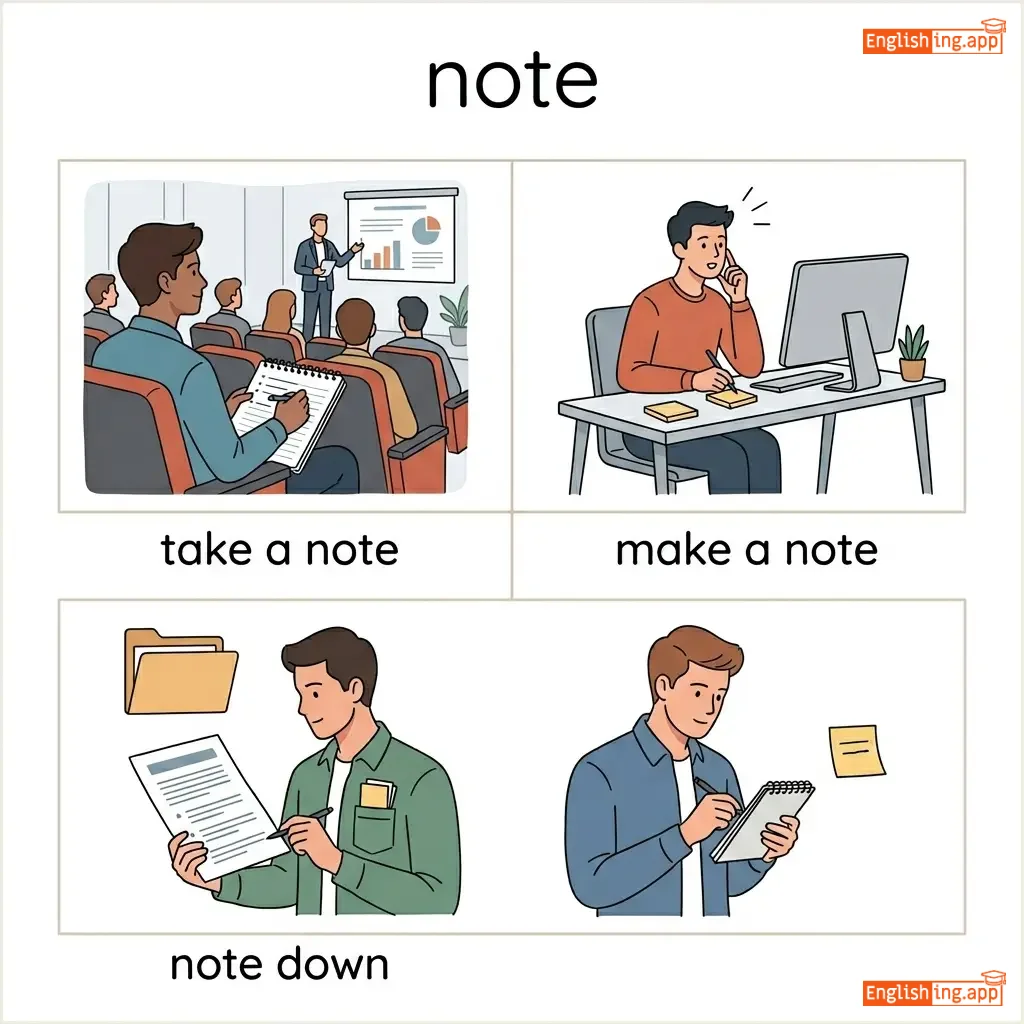
a brief record of facts, topics, or thoughts written down; to observe or remark upon something
••••••
|
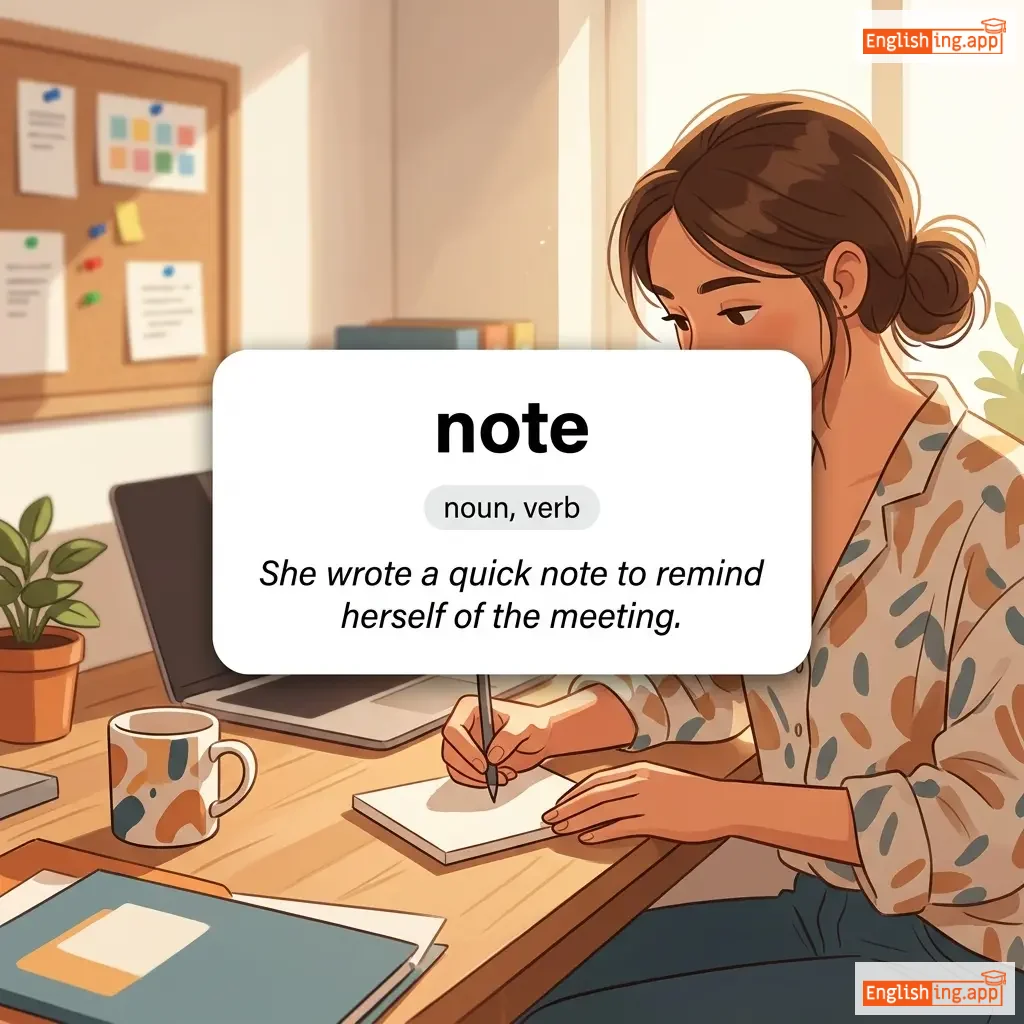
She wrote a quick note to remind herself of the meeting.
Sie schrieb eine schnelle Notiz, um sich an das Meeting zu erinnern.
••••••
|
Sie schrieb eine schnelle Notiz, um sich an das Meeting zu erinnern.
Sie schrieb eine schnelle Notiz, um sich an das Meeting zu erinnern.
••••••
|
take note
eine Notiz machen
••••••
|
to pay attention or give special consideration
••••••
|
aufpassen
aufpassen
••••••
|
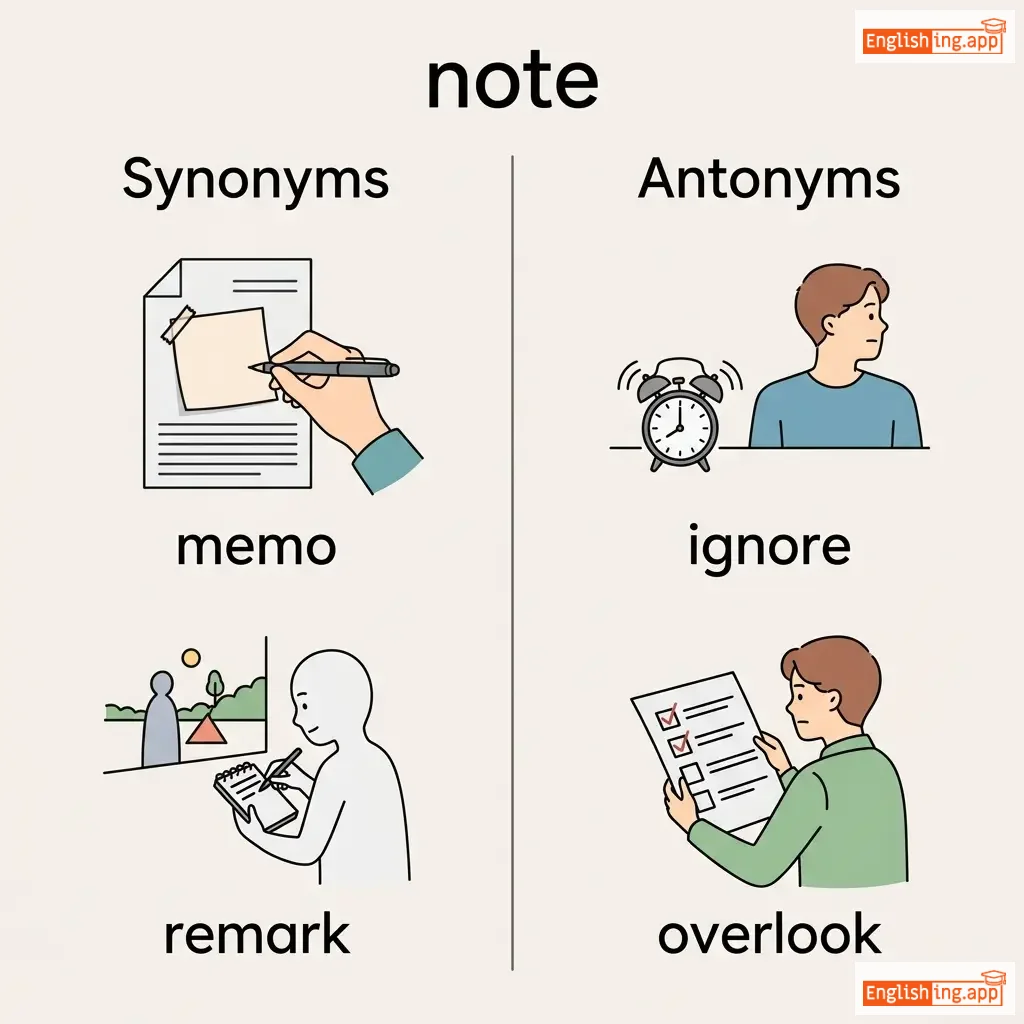
memo, remark, message, record, observation
••••••
|
ignore, overlook
••••••
|
take a note, make a note, note down, note carefully
••••••
|
Notiz — etwas schreiben, um es nicht zu vergessen.
••••••
|
|
#3490
📒
|
/ˈnoʊtbʊk/
noun
(Notizbuch)
••••••
|
- •••••• |
Notizbuch
Notizbuch
••••••
|
- •••••• | - •••••• | - •••••• | - •••••• |
a small book with blank or ruled pages for writing notes; also a portable computer
••••••
|
She opened her notebook to jot down some ideas.
Sie öffnete ihr Notizbuch, um einige Ideen aufzuschreiben.
••••••
|
Sie öffnete ihr Notizbuch, um einige Ideen aufzuschreiben.
Sie oeffnete ihr Notizbuch, um einige Ideen aufzuschreiben.
••••••
|
open your notebook
Öffne dein Notizbuch.
••••••
|
to prepare to take notes or start writing
••••••
|
Öffne dein Notizbuch.
Oeffne dein Notizbuch.
••••••
|
journal, pad, diary, laptop, logbook
••••••
|
none, emptiness, blankness
••••••
|
open notebook, write in notebook, spiral notebook, leather notebook, notebook computer
••••••
|
note + buch = Notizbuch; Notiz = note, Buch = book in German; write to remember
••••••
|
|
#3491
❌
|
/ˈnʌθɪŋ/
pronoun
(nʌθɪŋ)
••••••
|
- •••••• |
nichts
nichts
••••••
|
- •••••• | - •••••• | - •••••• | - •••••• |
not anything; no thing
••••••
|
She has nothing to worry about. |
Sie hat nichts, worüber sie sich Sorgen machen müsste.
Sie hat nichts, worüber sie sich Sorgen machen müsste.
••••••
|
- •••••• | - •••••• | - •••••• |
zero, nil, nought
••••••
|
everything
••••••
|
nothing to do, nothing at all, nothing left
••••••
|
Nothing (nichts) – Think of having nothing to do!
••••••
|
|
#3492
👀
|
/ˈnoʊtɪs/
verb
(nóutis)
••••••
|
|
bemerken
bemerken
••••••
|
noticed
nóutis-ed
••••••
|
noticed
nóutis-ed
••••••
|
notices
nóutis-es
••••••
|
noticing
nóutis-ing
••••••
|
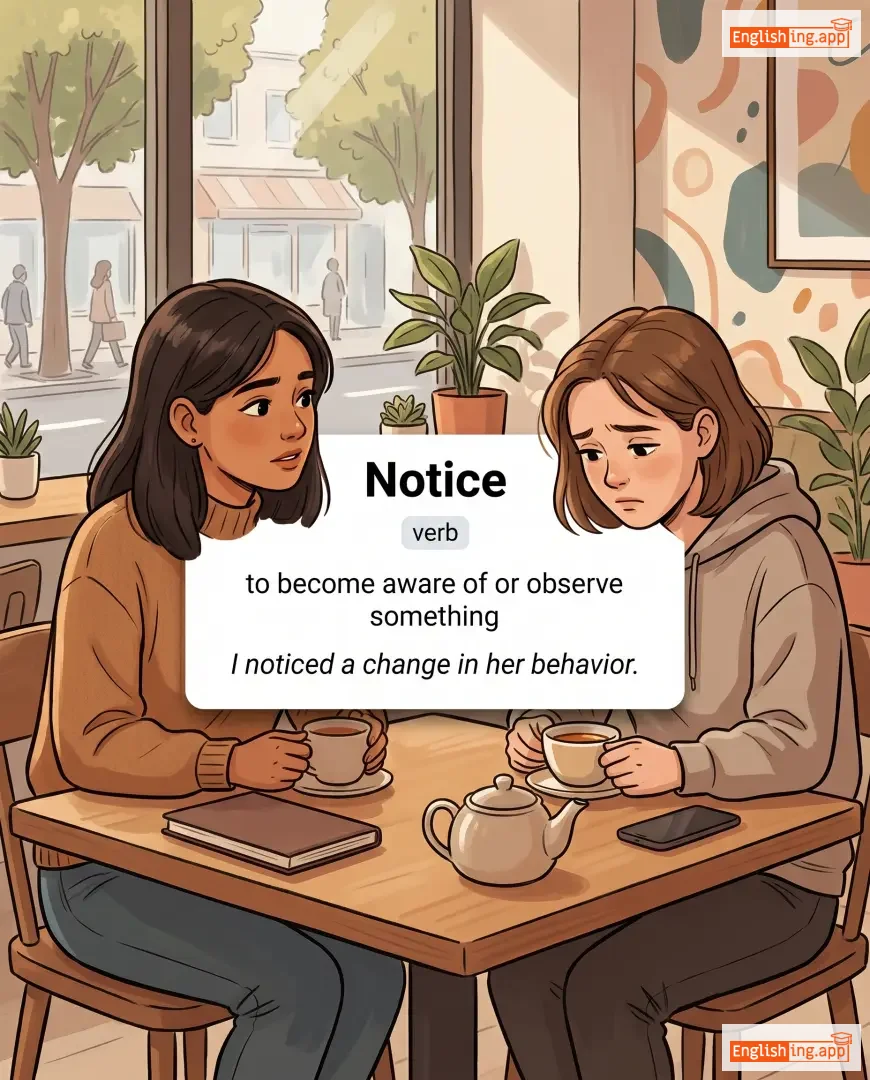
to become aware of or observe something
••••••
|
I noticed a change in her behavior.
Ich habe eine Veränderung in ihrem Verhalten bemerkt.
••••••
|
Ich habe eine Veränderung in ihrem Verhalten bemerkt.
Ich habe eine Veränderung in ihrem Verhalten bemerkt.
••••••
|
- •••••• | - •••••• | - •••••• |
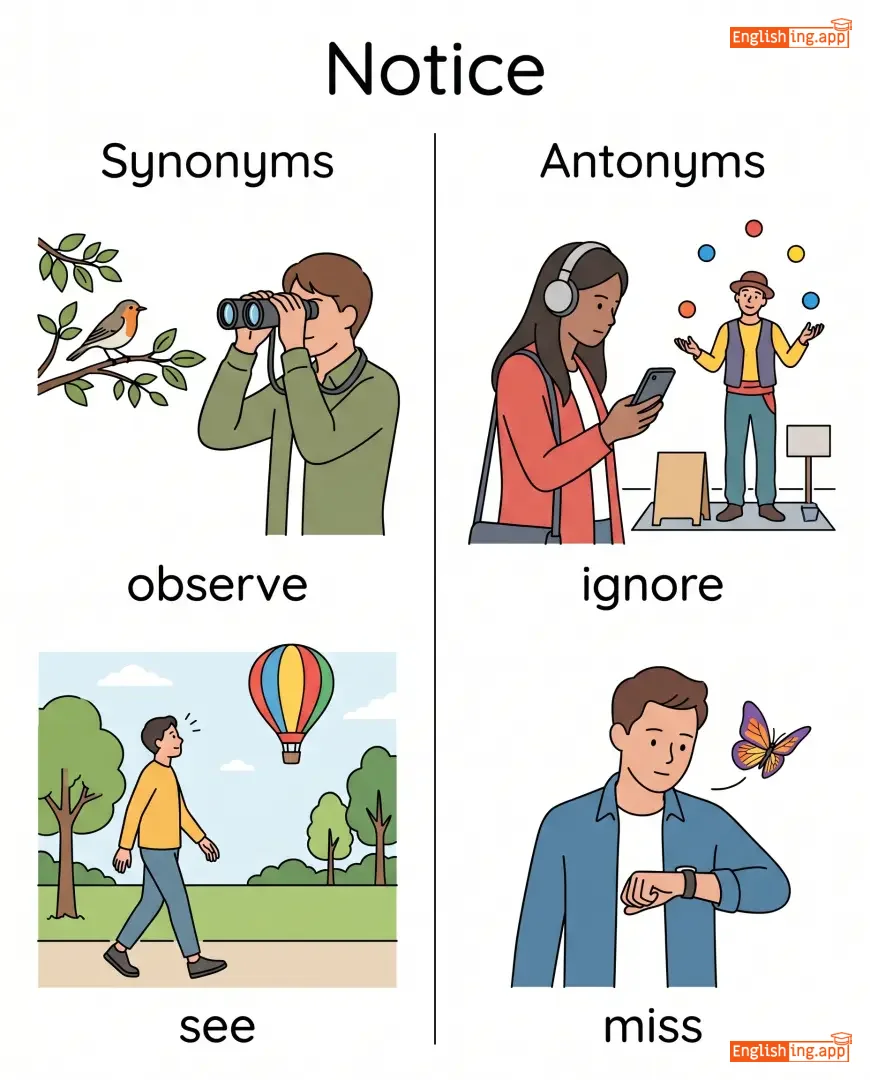
observe, see, spot, detect
••••••
|
ignore, miss, overlook
••••••
|
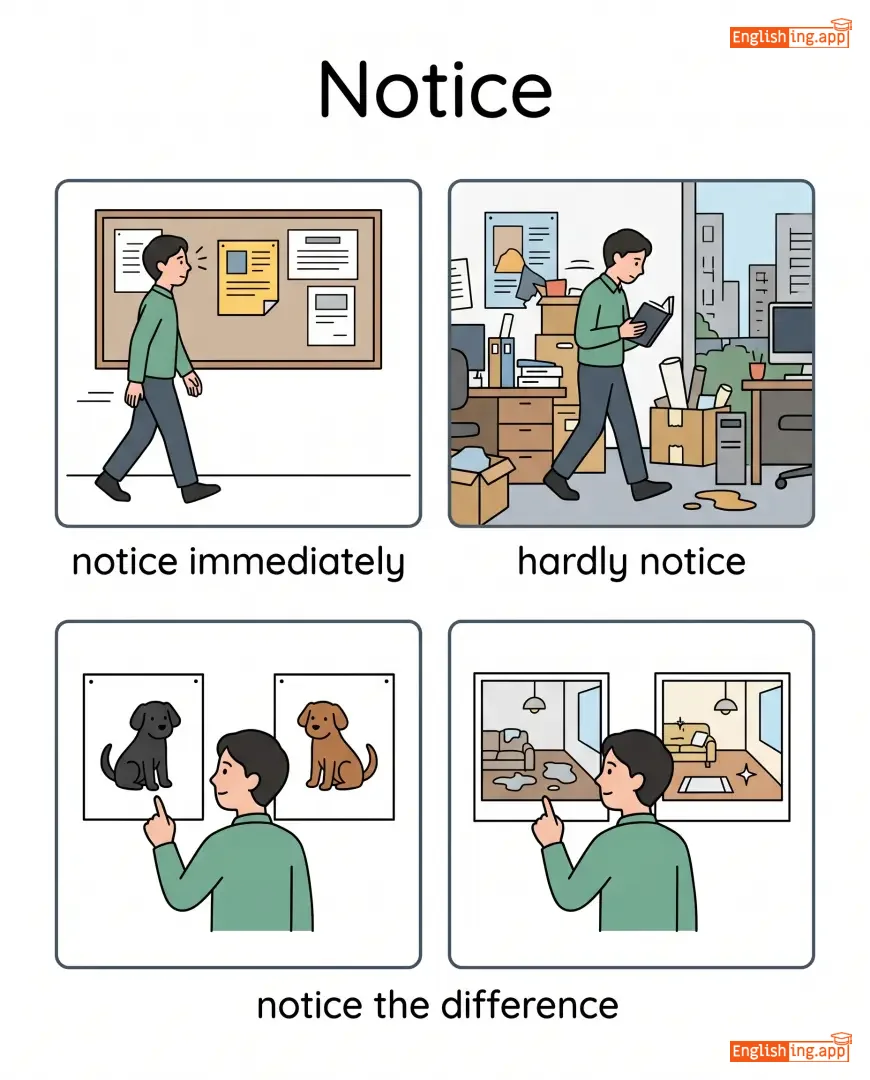
notice immediately, hardly notice, notice the difference, take notice, advance notice
••••••
|
Noticing something is like 'bemerken' in German, just like when you notice things instantly!
••••••
|
|
#3493
👀
|
/ˈnoʊtɪsəbl/
adjective
(notizabl)
••••••
|
- •••••• |
beachtlich
beachtlich
••••••
|
- •••••• | - •••••• | - •••••• | - •••••• |
Easily seen, observed, or recognized.
••••••
|
There was a noticeable improvement in her performance.
Es gab eine bemerkenswerte Verbesserung in ihrer Leistung.
••••••
|
Es gab eine bemerkenswerte Verbesserung in ihrer Leistung.
Es gab eine bemerkenswerte Verbesserung in ihrer Leistung.
••••••
|
- •••••• | - •••••• | - •••••• |
obvious, visible, evident, clear, apparent
••••••
|
hidden, invisible, unnoticeable
••••••
|
noticeable change, noticeable difference, noticeable improvement, become noticeable
••••••
|
Notice + able bedeutet etwas, das leicht bemerkt werden kann, also beachtlich.
••••••
|
|
#3494
🔔
|
/ˌnəʊtɪfɪˈkeɪʃən/
noun
(notifikeshon)
••••••
|
- •••••• |
Benachrichtigung
Benachrichtigung
••••••
|
- •••••• | - •••••• | - •••••• | - •••••• |
an official or formal notice or message informing someone of something; an alert delivered by a system or device
••••••
|
You will receive a notification when your application is approved.
ju wil risiv a notifikeshon wen jor aeplikeshon iz apruuvd
••••••
|
Sie erhalten eine Benachrichtigung, wenn Ihr Antrag genehmigt wird.
Sie erhalten eine Benachrichtigung wenn Ihr Antrag genehmigt wird
••••••
|
push notification
push notifikeshon
••••••
|
an automatic alert sent to a device from an app or service
••••••
|
Push-Benachrichtigung
Push-Benachrichtigung
••••••
|
alert, notice, message, announcement, advisory
••••••
|
silence, concealment
••••••
|
send a notification, receive a notification, system notification, official notification, push notification
••••••
|
Notification = Nachricht → Benachrichtigung bringt die Nachricht
••••••
|
|
#3495
📢
|
/ˈnoʊtɪfaɪ/
verb
(nəʊtɪfaɪ)
••••••
|
- •••••• |
benachrichtigen
benachrichtigen
••••••
|
notified
nəʊtɪfaɪd
••••••
|
notified
nəʊtɪfaɪd
••••••
|
notifies
nəʊtɪfaɪz
••••••
|
notifying
nəʊtɪfaɪɪŋ
••••••
|
to inform someone officially about something
••••••
|
The manager will notify the staff about the schedule change.
Der Manager wird das Personal über die Zeitplanänderung benachrichtigen.
••••••
|
Der Manager wird das Personal über die Zeitplanänderung benachrichtigen.
Der Manager wird das Personal über die Zeitplanänderung benachrichtigen.
••••••
|
notify of
benachrichtigen von
••••••
|
to inform about something specific
••••••
|
benachrichtigen von
benachrichtigen von
••••••
|
inform, alert, announce, communicate
••••••
|
hide, conceal
••••••
|
notify immediately, notify customers, notify authorities, notify in writing
••••••
|
Notify bedeutet benachrichtigen — Eine Benachrichtigung ist eine wichtige Nachricht.
••••••
|
|
#3496
💡
|
/ˈnoʊʃən/
noun
(noʃən)
••••••
|
- •••••• |
Vorstellung
vorstellung
••••••
|
- •••••• | - •••••• | - •••••• | - •••••• |
An idea, belief, or concept about something.
••••••
|
He had a vague notion of what she wanted. |
Er hatte eine vage Vorstellung davon, was sie wollte.
Er hatte eine vage Vorstellung davon, was sie wollte.
••••••
|
fancy notion |
An unrealistic or fanciful idea.
••••••
|
fantasievolle Vorstellung
fantasievolle Vorstellung
••••••
|
idea, concept, belief, impression, thought
••••••
|
reality, fact
••••••
|
notion of, vague notion, challenge the notion, false notion
••••••
|
Vorstellung = Ideen vorstellen und merken.
••••••
|
|
#3497
😈
|
/nəˈtɔːriəs/
adjective
(noˈtɔːriəs)
••••••
|
- •••••• |
berüchtigt
beruechtigt
••••••
|
- •••••• | - •••••• | - •••••• | - •••••• |
Famous or well-known for something bad or undesirable
••••••
|
The area is notorious for its high crime rate. |
Das Gebiet ist berüchtigt wegen seiner hohen Kriminalitätsrate.
Das Gebiet ist beruechtigt wegen seiner hohen Kriminalitaetsrate.
••••••
|
notorious for |
well-known because of a negative reason
••••••
|
berüchtigt für
beruechtigt fuer
••••••
|
infamous, disreputable, scandalous, dishonorable, ill-famed
••••••
|
respectable, reputable, honorable
••••••
|
notorious criminal, notorious case, notorious gang, notorious history
••••••
|
Notorious = 'No Torie Ous' - Keine Torie (Vögel) bedeutet ein schlechter Ort = beruechtigt
••••••
|
|
#3498
📖
|
/ˈnɒvəl/
noun/adjective
(novel)
••••••
|
- •••••• |
Roman / neu
Roman / neu
••••••
|
- •••••• | - •••••• | - •••••• | - •••••• |
A long fictional narrative; also something new or unusual.
••••••
|
She spent the weekend reading a historical novel. |
Sie verbrachte das Wochenende damit, einen historischen Roman zu lesen.
Sie verbrachte das Wochenende damit, einen historischen Roman zu lesen.
••••••
|
novel idea |
A new and original thought or plan.
••••••
|
neue Idee
neue Idee
••••••
|
book, story, narrative, tale, fiction
••••••
|
fact, reality, history
••••••
|
write a novel, bestselling novel, novel approach, novel idea
••••••
|
Novel bedeutet Roman, und novel idea bedeutet neue Idee, beides ist neu!
••••••
|
|
#3499
📚
|
/ˈnɒvəlɪst/
noun
(novelist)
••••••
|
- •••••• |
romanautor
romanautor
••••••
|
- •••••• | - •••••• | - •••••• | - •••••• |
a person who writes novels
••••••
|
The novelist spent years writing his new book. |
Der Romanautor verbrachte Jahre damit, sein neues Buch zu schreiben.
Der Romanautor verbrachte Jahre damit, sein neues Buch zu schreiben.
••••••
|
- •••••• | - •••••• | - •••••• |
author, writer, fiction writer, storyteller
••••••
|
non-writer, reader
••••••
|
famous novelist, best-selling novelist, contemporary novelist
••••••
|
Romanautor, der Schöpfer von Geschichten, die die Fantasie beflügeln.
••••••
|
|
#3500
🍂
|
/noʊˈvɛmbər/
noun
(november)
••••••
|
- •••••• |
November
November
••••••
|
- •••••• | - •••••• | - •••••• | - •••••• |
the eleventh month of the year in the Gregorian calendar
••••••
|
November is often cool and quiet before winter begins.
november is often cool and quiet before winter begins
••••••
|
Der November ist oft kühl und ruhig, bevor der Winter beginnt.
der November ist oft kuehl und ruhig bevor der Winter beginnt
••••••
|
November rain
november rain
••••••
|
rainy or gloomy weather associated with late autumn
••••••
|
Novemberregen
Novemberregen
••••••
|
Nov., eleventh month, late autumn month
••••••
|
May, June, July
••••••
|
early November, late November, November weather, November rain
••••••
|
November = neuer Winter vor der Tür
••••••
|
|
#3501
⏰
|
/naʊ/
adverb
(naʊ)
••••••
|
- •••••• |
jetzt
jetzt
••••••
|
- •••••• | - •••••• | - •••••• | - •••••• |
at the present moment or time
••••••
|
I am studying now. |
Ich studiere jetzt.
Ich studiere jetzt.
••••••
|
- •••••• | - •••••• | - •••••• |
currently, at present, at this moment
••••••
|
later, then
••••••
|
right now, as of now, now or never
••••••
|
Now is like ‘Naa oo!’ – It’s NOW or never!
••••••
|
|
#3502
🕒
|
/ˈnaʊədeɪz/
adverb
(naʊədeɪz)
••••••
|
- •••••• |
heutzutage
heutzutage
••••••
|
- •••••• | - •••••• | - •••••• | - •••••• |
At the present time; in contrast with the past.
••••••
|
Nowadays, many people prefer shopping online. |
Heutzutage bevorzugen viele Menschen, online einzukaufen.
Heutzutage bevorzugen viele Menschen, online einzukaufen.
••••••
|
- •••••• | - •••••• | - •••••• |
currently, presently, these days, today
••••••
|
formerly, previously, once
••••••
|
nowadays people, nowadays it is common, nowadays trend
••••••
|
Nowadays bedeutet heutzutage – es verbindet die Gegenwart mit der Vergangenheit.
••••••
|
|
#3503
🚫
|
/ˈnoʊˌwɛr/
adverb
(noʊwɛr)
••••••
|
- •••••• |
nirgendwo
nirgendwo
••••••
|
- •••••• | - •••••• | - •••••• | - •••••• |
in or to no place; not anywhere
••••••
|
The missing keys were nowhere to be found.
Die verlorenen Schlüssel waren nirgendwo zu finden.
••••••
|
Die verlorenen Schlüssel waren nirgendwo zu finden.
Die verlorenen Schlüssel waren nirgendwo zu finden.
••••••
|
going nowhere
nirgendwo hin gehen
••••••
|
making no progress or achieving nothing
••••••
|
keinen Fortschritt machen
keinen Fortschritt machen
••••••
|
not anywhere, absent, missing, lost
••••••
|
everywhere, somewhere
••••••
|
nowhere else, lead nowhere, from nowhere, go nowhere
••••••
|
Nirgendwo hier, nirgendwo da, nirgendwo (nowhere)
••••••
|
|
#3504
☢️
|
/ˈnuːkliər/
adjective
(nuklear)
••••••
|
- •••••• |
nuklear
nuklear
••••••
|
- •••••• | - •••••• | - •••••• | - •••••• |
relating to the nucleus of an atom or to nuclear energy
••••••
|
The country is developing nuclear energy. |
Das Land entwickelt Kernenergie.
Das Land entwickelt Kernenergie.
••••••
|
- •••••• | - •••••• | - •••••• |
atomic, radioactive
••••••
|
non-nuclear
••••••
|
nuclear energy, nuclear power, nuclear weapon
••••••
|
Nuclear = New Clear! Imagine new, clear energy coming from atoms!
••••••
|
|
#3505
🔢
|
/ˈnʌmbər/
noun
(nʌmbər)
••••••
|
- •••••• |
Nummer
nummer
••••••
|
- •••••• | - •••••• | - •••••• | - •••••• |
a mathematical value used to count, measure, or label
••••••
|
She gave me her phone number.
Sie gab mir ihre Telefonnummer.
••••••
|
Sie gab mir ihre Telefonnummer.
Sie gab mir ihre Telefonnummer.
••••••
|
- •••••• | - •••••• | - •••••• |
digit, figure, numeral
••••••
|
letter, word
••••••
|
phone number, lucky number, large number
••••••
|
Number is a sequence – Imagine numbering all the steps in your life!
••••••
|
|
#3506
🔢
|
/ˈnjuː.mər.əs/
adjective
(njuːmɛrəs)
••••••
|
- •••••• |
zahlreich; viele; reichlich
zahlreich; viele; reichlich
••••••
|
- •••••• | - •••••• | - •••••• | - •••••• |
existing in large numbers; many; abundant
••••••
|
There are numerous benefits to exercising regularly.
Es gibt zahlreiche Vorteile, regelmäßig Sport zu treiben.
••••••
|
Es gibt zahlreiche Vorteile, regelmäßig Sport zu treiben.
Es gibt zahlreiche Vorteile, regelmäßig Sport zu treiben.
••••••
|
- •••••• | - •••••• | - •••••• |
many, countless, abundant, plentiful
••••••
|
few, scarce, limited
••••••
|
numerous occasions, numerous benefits, numerous examples
••••••
|
Regelmäßiger Sport bringt zahlreiche Vorteile.
••••••
|
|
#3507
👩⚕️
|
/nɜːrs/
noun, verb
(nɜːrs)
••••••
|
|
Krankenschwester, Pflegekraft
krankenschwester, pflegekraft
••••••
|
nursed
nɜːrsd
••••••
|
nursed
nɜːrsd
••••••
|
nurses
nɜːrsɪz
••••••
|
nursing
nɜːrsɪŋ
••••••
|
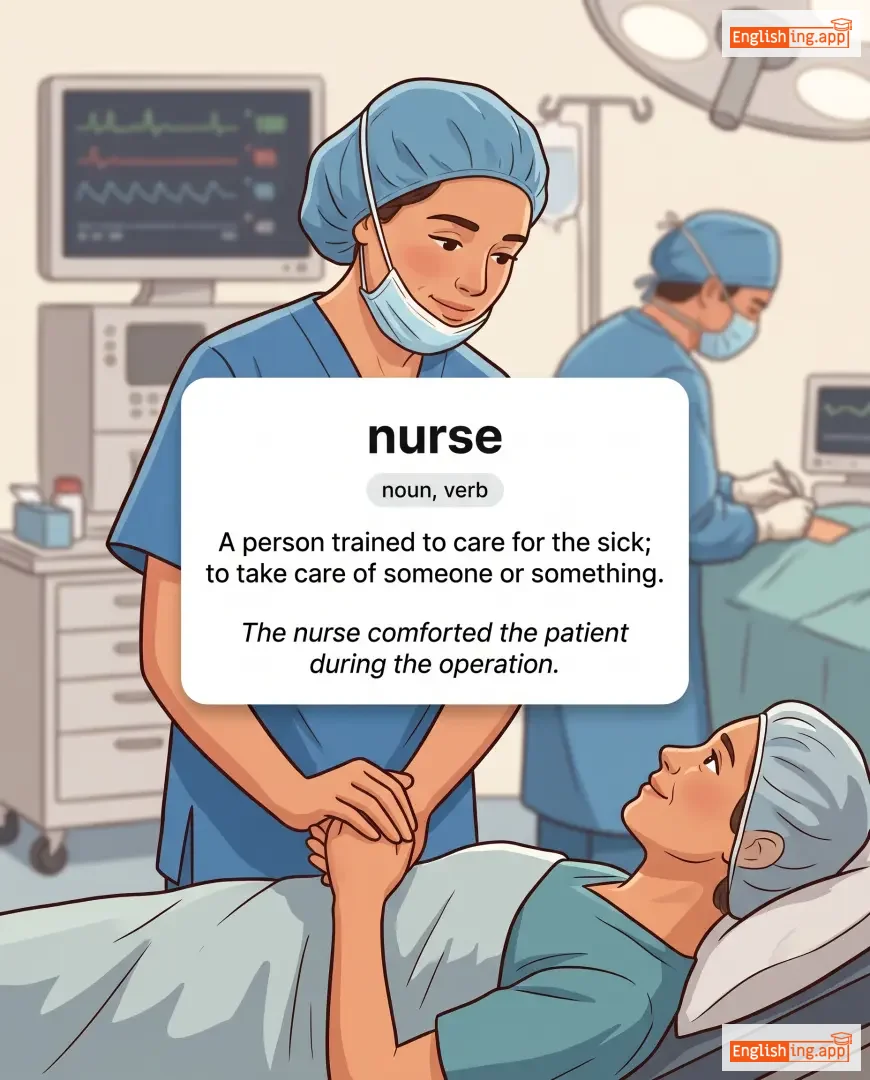
A person trained to care for the sick; to take care of someone or something.
••••••
|
The nurse comforted the patient during the operation.
Die Krankenschwester tröstete den Patienten während der Operation.
••••••
|
Die Krankenschwester tröstete den Patienten während der Operation.
Die Krankenschwester tröstete den Patienten während der Operation.
••••••
|
nurse a grudge
einen Groll hegen
••••••
|
to keep resentment or anger in mind for a long time
••••••
|
einen Groll hegen
einen Groll hegen
••••••
|
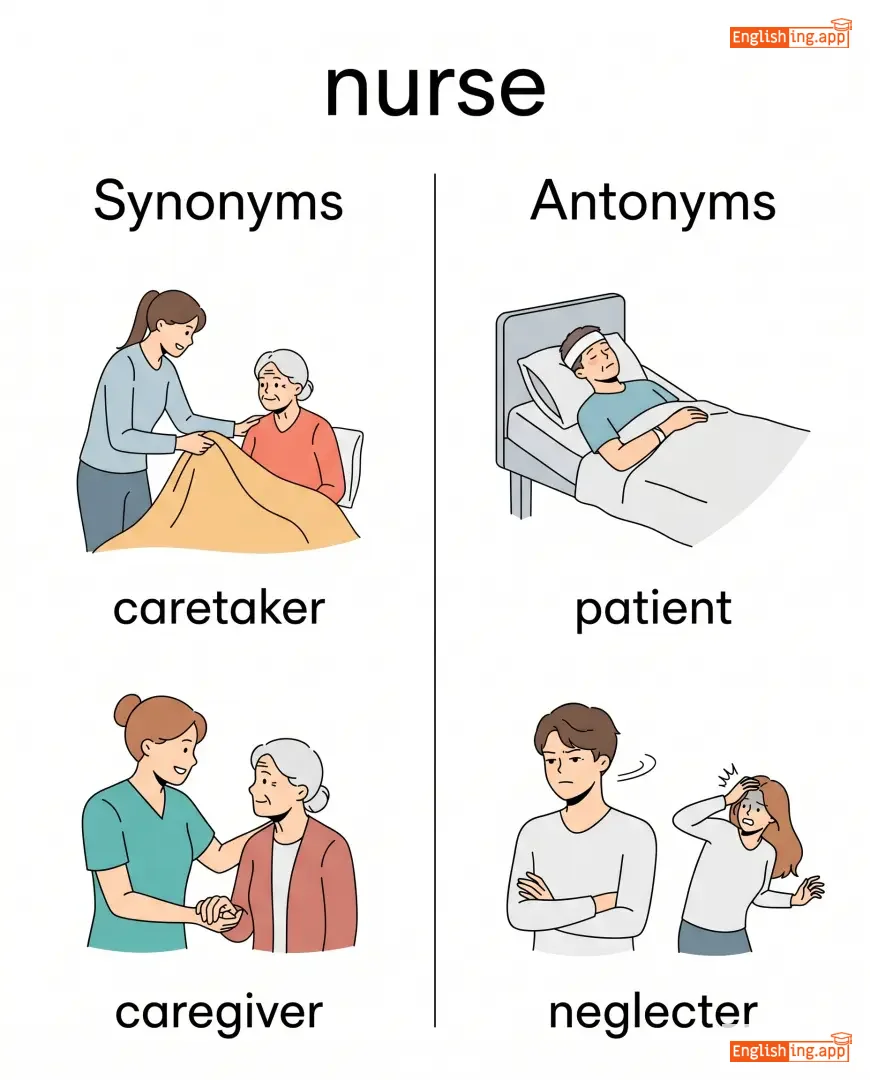
caretaker, caregiver, attendant, healer, medic
••••••
|
patient, neglecter
••••••
|
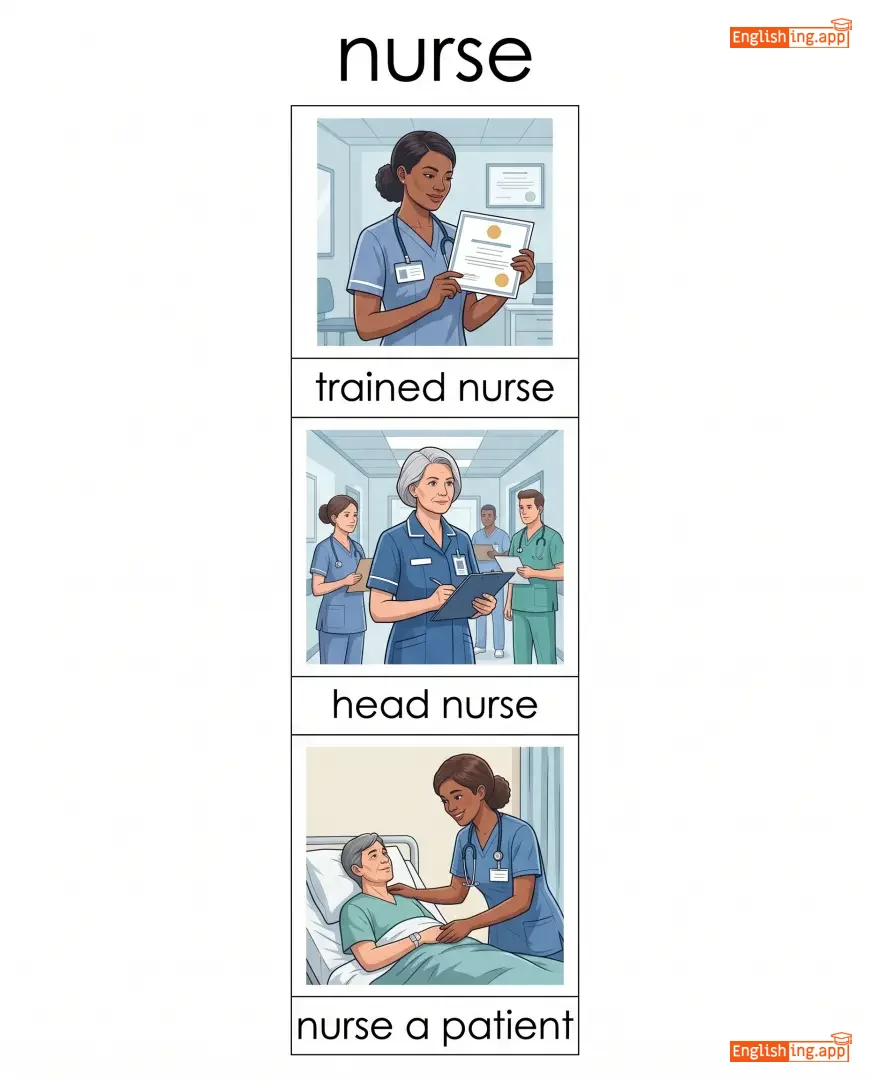
trained nurse, head nurse, nurse a patient, nurse back to health
••••••
|
NURSE bedeutet 'Krankenschwester' – im Krankenhaus ist die Krankenschwester diejenige, die hilft.
••••••
|
|
#3508
🍼
|
/ˈnɜːrsəri/
noun
(nɜːrsəri)
••••••
|
- •••••• |
Kindergarten
Kindergarten
••••••
|
- •••••• | - •••••• | - •••••• | - •••••• |
a room or place where young children are cared for
••••••
|
She works in a nursery, taking care of infants. |
Sie arbeitet in einem Kindergarten und kümmert sich um Kleinkinder.
Sie arbeitet in einem Kindergarten und kümmert sich um Kleinkinder.
••••••
|
- •••••• | - •••••• | - •••••• |
daycare, preschool, kindergarten
••••••
|
school, home
••••••
|
nursery school, nursery teacher, nursery care
••••••
|
Kindergarten: der Ort, an dem Kinder in jungen Jahren lernen und spielen
••••••
|
|
#3509
👩⚕️
|
/ˈnɜːrsɪŋ/
noun
(nursing)
••••••
|
- •••••• |
Pflege
pflege
••••••
|
- •••••• | - •••••• | - •••••• | - •••••• |
the profession or practice of caring for the sick or injured
••••••
|
She is studying nursing to become a healthcare professional.
Sie studiert Pflege, um eine Gesundheitsfachkraft zu werden.
••••••
|
Sie studiert Pflege, um eine Gesundheitsfachkraft zu werden.
Sie studiert Pflege, um eine Gesundheitsfachkraft zu werden.
••••••
|
- •••••• | - •••••• | - •••••• |
healthcare, caregiving, medical care
••••••
|
neglect, abandonment
••••••
|
nursing home, nursing career, nursing profession
••••••
|
Pflege (pflege) bedeutet, Menschen zu helfen, die krank oder verletzt sind.
••••••
|
Vocabulary Quiz
Test your vocabulary by matching words with their translations or meanings.
Login to take the quiz
Comments (0)
Share your thoughts and join the discussion.
Join the discussion by logging in
Login to CommentNo comments yet
Be the first to share your thoughts!